
21 Large Laundry Room Ideas to Make the Most of All That Wonderful Space

You have more laundry room space than most people dream about, and somehow it still feels like a mess. Stuff piled in corners, wasted wall space, no system for anything. You’d think a bigger room would mean fewer problems, but it just means more room to be disorganized. That’s the frustrating thing nobody talks about.
These 21 large laundry room ideas come from real homeowners, real renovations, and a lot of hours on forums, design boards, and home improvement groups. Every idea on this list was picked because it solves an actual problem. I covered storage, workflow, finishes, lighting, and layout, with options ranging from $30 DIY fixes to $400 cabinet installs. Some ideas work for renters, some are built for homeowners ready to go all in.
This list is for people with a laundry room that’s roughly 100 square feet or more who want to get real use out of every inch. It’s not for anyone looking for a luxury spa-laundry fantasy. The ideas here are real, practical, and achievable without hiring a contractor.
If you’re already thinking about vertical space, there are some clever ways to reclaim wall space that pair well with everything on this list.
By the end of this, you’ll know exactly what to change first and how to turn all that square footage into a room that actually works for you.
What to Know Before You Start Your Large Laundry Room Makeover
- Large laundry rooms over 100 sq ft lose efficiency fast without a clear zone layout planned first.
- Map your workflow: dirty in, wash, dry, fold, store, out. Build around that sequence.
- Cabinet installation typically runs $150 to $400 for pre-built flat-pack options, not custom.
- Most people forget to plan overhead lighting, which causes eyestrain during sorting tasks.
- Vinyl plank flooring holds up better than tile grout in humid laundry rooms long-term.
- Don’t install open shelving directly above the washer, steam causes warping within a year.
- A utility sink adds roughly $200 to $500 installed and is the number one thing owners say they wished they’d added sooner.
- Deep clean the dryer exhaust duct every 12 months. In a large room it’s easy to forget, and it’s a fire risk.
1. Build a Folding Station with a Full Countertop Run

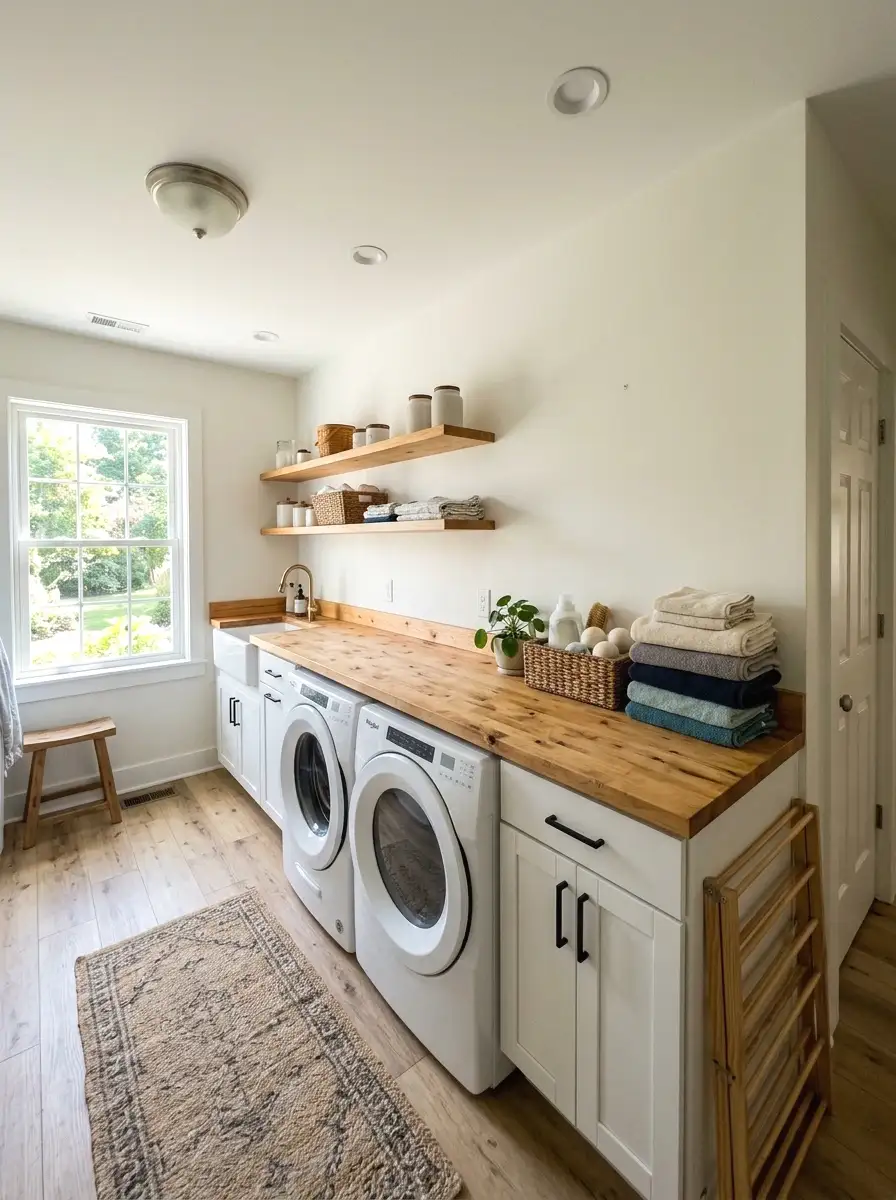
The single biggest upgrade I made in a large laundry room was adding a long countertop along one full wall. When you’ve got the space, go the full length, even if that’s 8 or 10 feet. A butcher block counter from a home improvement store runs about $120 to $200 for an 8-foot section, and it gives you actual room to fold king-size sheets without fighting the edges. That’s a game changer.
Mount it at 36 inches high, the same height as a kitchen counter, so it’s comfortable to stand at. Below it you can slide in the washer and dryer, add a pull-out hamper cabinet, or just leave open storage. Either way, you now have a real workspace instead of just a pile zone. Do it once, and you’ll wonder how you managed without it.
Before you buy materials, there are some countertop ideas worth considering first that cover different materials, heights, and configurations.
2. Add a Built-In Drying Rack System
So many large laundry rooms have zero spot for air drying, which means clothes end up draped over every door in the house. A wall-mounted fold-out drying rack fixes that completely. The wooden or metal wall mount versions run $30 to $70 and extend out when you need them, then fold flat against the wall when you don’t.
In a large room, I’d go a step further and install two side by side. You get enough horizontal bar space to dry a full load of delicates at once without any overcrowding. Mount them at about 66 inches from the floor so hanging items clear the baskets below. It takes maybe 20 minutes to install and costs almost nothing compared to the floor space it saves.
For more on fold-out drying setups that actually work in different room sizes, it’s worth a look before you commit to a wall location.
3. Use Upper Cabinets All the Way to the Ceiling
Here’s what most people miss in a large laundry room: they stop cabinets at 7 feet and waste the space above. If you’ve got 9 or 10-foot ceilings, run cabinets all the way up. Those top shelves hold seasonal items, extra bulk detergent, or rarely-used things you don’t need regular access to.
Pre-built upper cabinets from IKEA or Home Depot run about $60 to $120 per cabinet depending on width. A run of four 24-inch wide cabinets covers 8 feet and costs around $300 total. They’re not hard to install if you find the studs and have a second person to help hold them. The room goes from feeling like a storage afterthought to feeling like a real, planned space.
If you’re mapping out the full run, looking at cabinet layout options for laundry rooms can help you figure out the right combination before anything gets drilled into the wall.
4. Create a Drop Zone for Dirty Laundry by Category
The chaos usually starts before the wash cycle. Clothes pile up in one big heap and you spend ten minutes sorting before every load. In a large laundry room you have room to fix that at the source. Set up three labeled canvas hampers or pull-out bins: lights, darks, and colors. Each one lives in its spot, and sorting happens as people drop things off.
When I tried this in my own space, I thought my family would ignore it. They didn’t. Within a week it just became the habit. A set of three canvas laundry hampers runs about $40 to $60. If you want built-in pull-out hamper drawers under your counter, that’s closer to $100 to $180 for a cabinet-style unit. Either way, you stop doing the pre-sort shuffle.
5. Install a Utility Sink with a Prep Counter Beside It
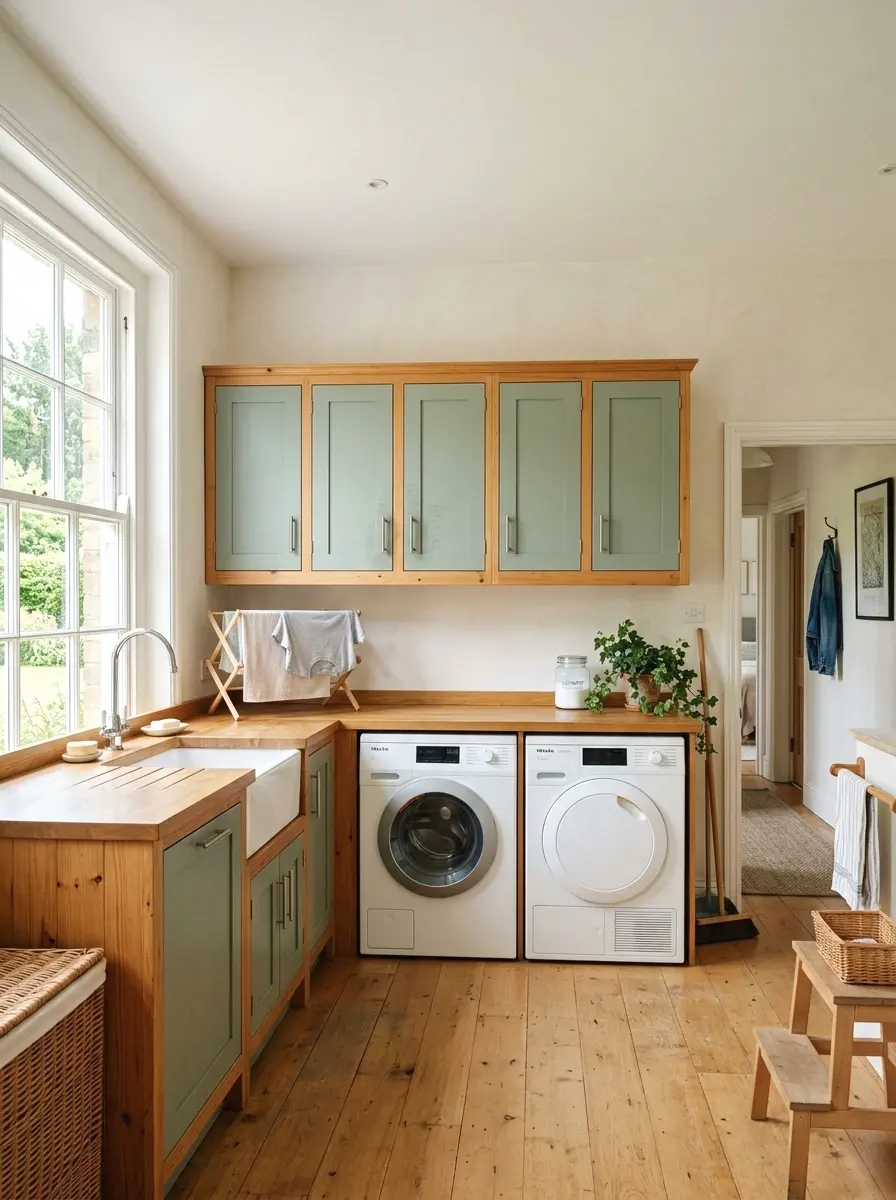
A utility sink in a large laundry room is one of those things that sounds optional until you have one. Pre-treating stains, hand washing wool, rinsing muddy sports gear, cleaning paint brushes, all of that suddenly has a dedicated spot. Freestanding utility sinks start around $80 to $150. Getting a plumber to hook it up runs another $100 to $200 depending on your setup.
Put a 24-inch prep counter right next to it. That small counter gives you a place to set a bucket, a bottle of stain remover, or a folded item waiting to be inspected. I was skeptical about this one, but it genuinely changes how functional the room feels. The sink earns its square footage every single week.
6. Run a Rod for Hang-Dry Clothes Right Out of the Dryer
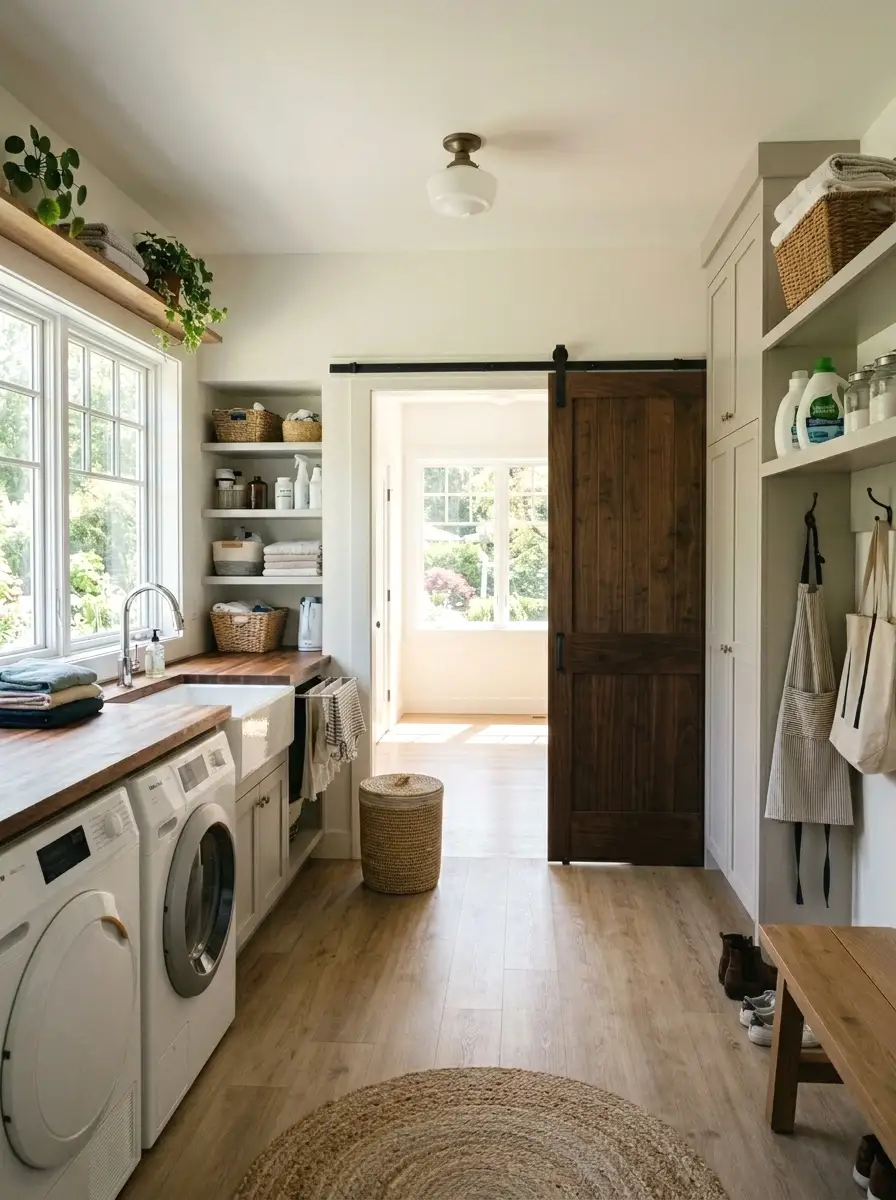
This is so underrated. A hanging rod mounted above or beside the dryer means clothes that can’t go in the dryer get hung immediately instead of wadded on top of a hamper. All you need is a tension rod or a wall-mounted curtain rod. Steel rods with wall brackets run about $15 to $30.
Place it at 68 to 72 inches from the floor so dress shirts and blouses hang without dragging. In a large room, you can run it the full width of an alcove or a wall section. The rod keeps wrinkle-prone items looking better and cuts down on the ironing pile significantly. It’s one of those tiny changes that earns its keep every single laundry day.
7. Add Open Shelving for Everyday Supplies
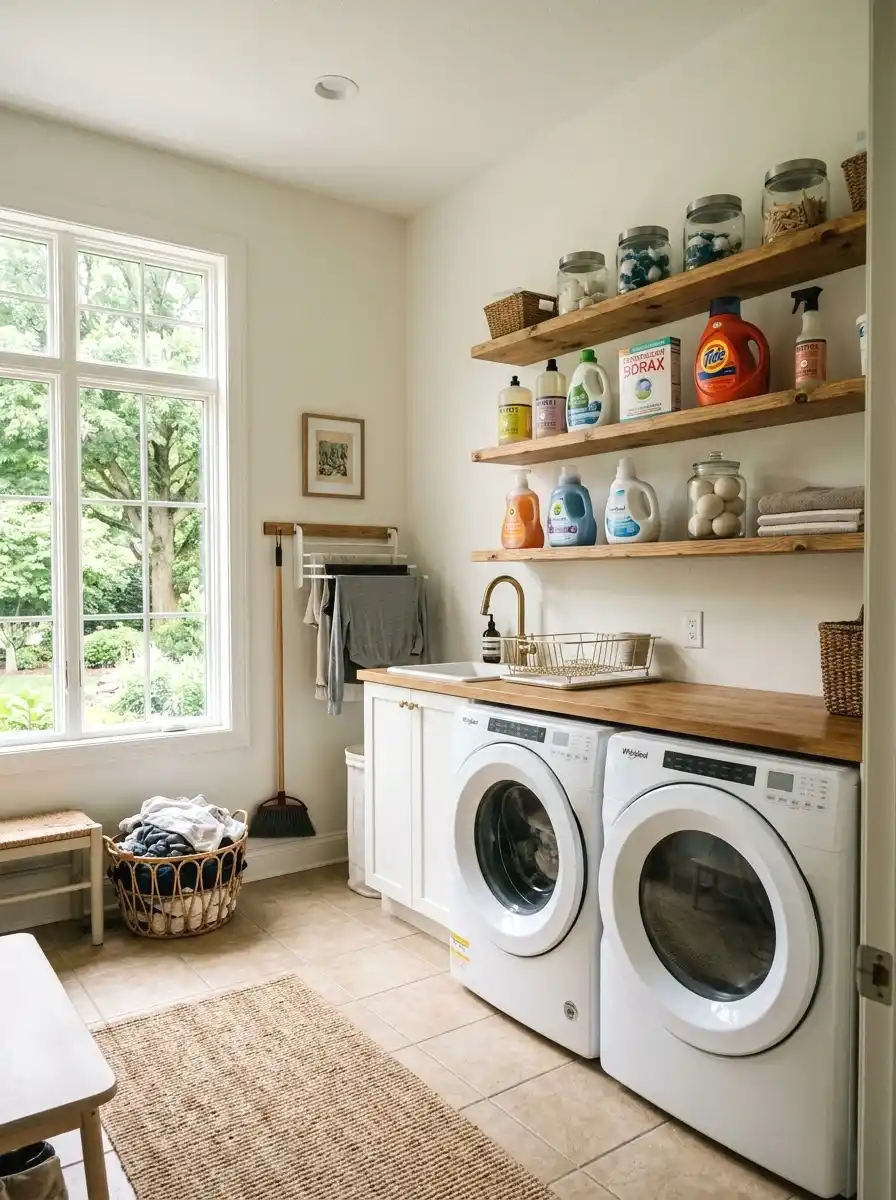
Floating shelves in a laundry room look good and they actually work. Put them within easy reach, between 48 and 66 inches from the floor, and stock them with the things you grab every time: detergent, dryer sheets, stain spray, a lint roller. No digging through cabinets mid-cycle.
Floating shelf brackets and boards run about $15 to $40 per shelf depending on material. Pine boards work fine in a laundry room, just seal them to handle the humidity. Three shelves stacked on one wall can hold everything you use on a daily basis while keeping the look clean. Label the shelves if you have multiple people using the room so things actually go back where they belong.
There are some good floating shelf builds for humid rooms that go into material choices and bracket spacing in more detail.
8. Lay Durable Vinyl Plank Flooring Over Your Existing Floor
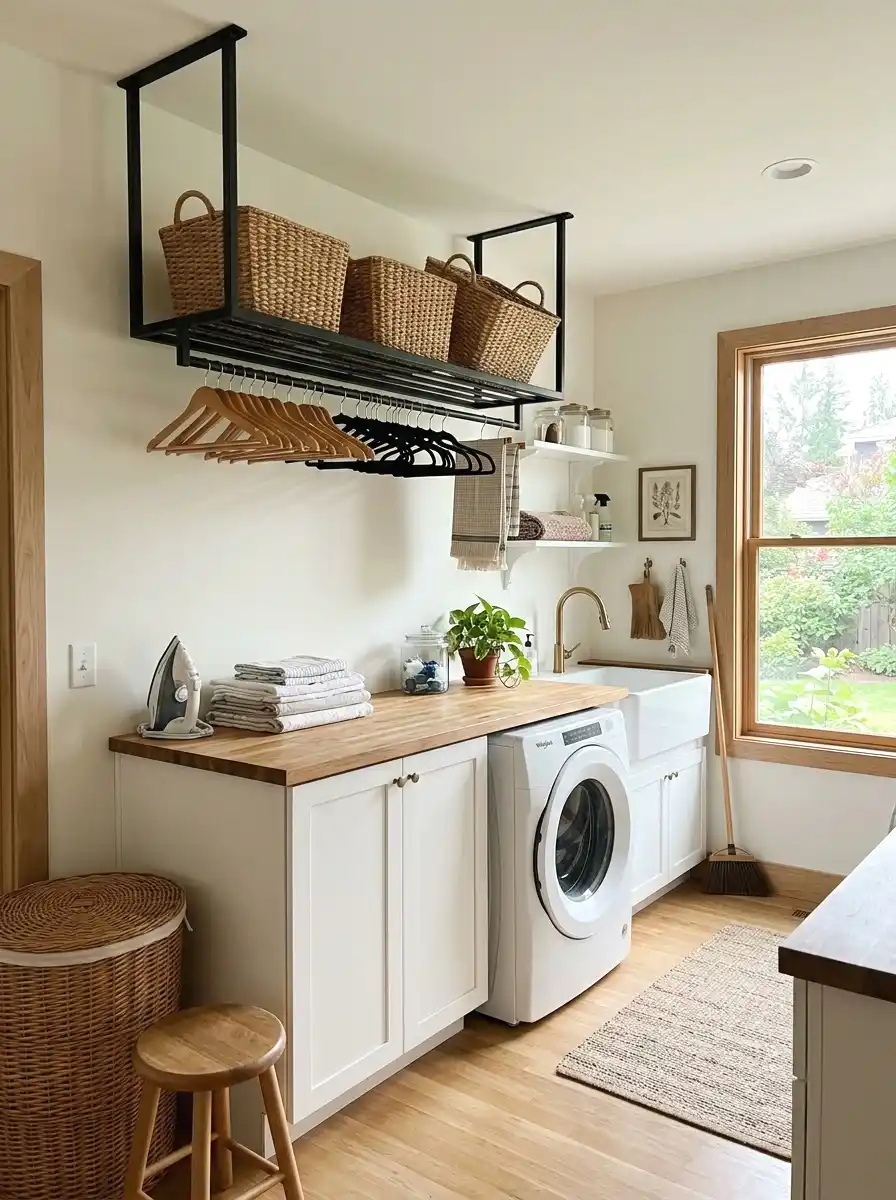
Laundry rooms take a beating from water, humidity, dropped detergent bottles, and constant foot traffic. If your current floor is tired linoleum or cracked tile, vinyl plank flooring is the upgrade that makes the whole room feel different. It handles moisture well, it’s comfortable underfoot, and it clicks together without glue or nails.
Good quality vinyl plank runs $1.50 to $3.00 per square foot for materials. A 10 by 12-foot laundry room costs about $180 to $360 in flooring. Most homeowners can install it in a weekend. Pick a wood-tone or stone-look finish and suddenly the room doesn’t look like a utility space anymore. It actually looks like a room someone cared about.
9. Paint an Accent Wall Behind the Machines
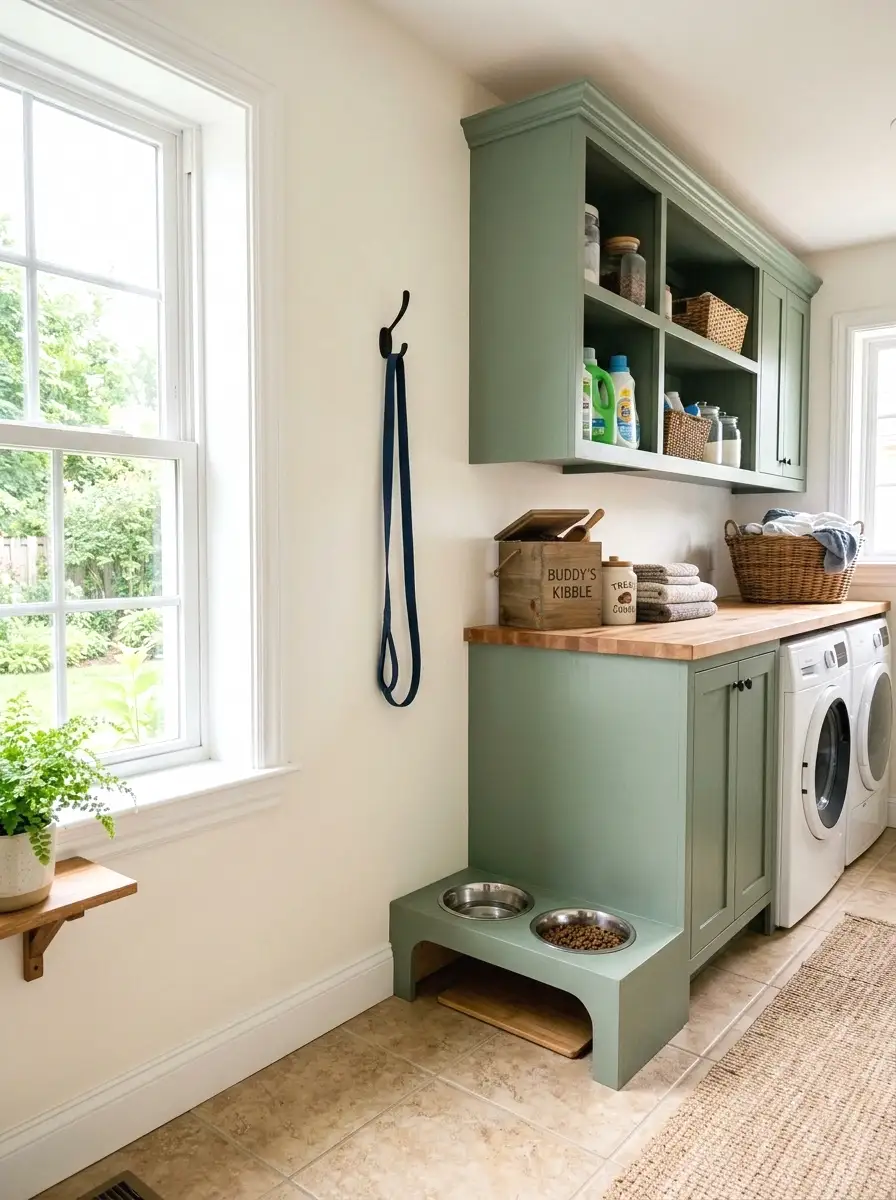
You’ve got the wall space, use it. A bold accent wall behind the washer and dryer adds a lot of visual interest for almost no money. A deep navy, sage green, or charcoal gray reads as intentional and finished, even if the rest of the room is simple white. One quart of paint covers about 100 square feet and costs $12 to $20.
The color ties everything together and makes the machines look placed rather than dumped in a corner. If you want to take it further, add a peel-and-stick wallpaper to that wall instead. It costs a bit more, around $30 to $60 for a wall panel set, but the pattern adds texture and personality that flat paint can’t match. Either way, it’s a one-afternoon project.
10. Set Up a Dedicated Ironing Station with Storage

Dragging the ironing board out of a closet every time is a known annoyance in most homes. In a large laundry room, you can fix it permanently. A wall-mounted ironing board that folds flat takes up about 6 inches of depth when closed and swings out to full size in seconds. They run $80 to $150 at most home stores.
Mount it beside the dryer so the workflow is direct: dry, hang, iron, done. Add a small shelf above it for the iron itself and a heat-resistant pad so you’re not scrambling for a safe surface between uses. Took me ages to figure out this placement, but it cuts the whole ironing process down because everything is already in one spot, already ready.
11. Install Track Lighting or Under-Cabinet LED Strips

Bad lighting in a laundry room is one of those overlooked problems that makes everything harder. Sorting dark socks, catching stains before they go in the wash, reading care labels, all of it requires decent light. A single overhead fixture in a large room casts shadows everywhere. Track lighting lets you direct light exactly where you need it.
A basic track lighting kit runs $60 to $120 and mounts to any standard ceiling junction box. For the countertop work area, add LED strip lights under the upper cabinets. A 10-foot LED strip costs about $20 to $35 and plugs into a standard outlet. The combination of overhead track and under-cabinet strips removes every shadow in the room and makes the whole space feel brighter and more controlled.
12. Add a Window or Improve an Existing One

Natural light makes a laundry room feel less like a utility closet and more like a room you don’t mind spending time in. If you already have a window, update it. Replace heavy blinds with a simple white roller shade or a light linen panel that diffuses daylight without blocking it.
If you don’t have a window but have an exterior wall, adding a single casement window runs $300 to $600 installed and is usually worth it for the ventilation and light gain. A window also helps with humidity control, which matters in a room where steam is a daily occurrence. You spend real time in a large laundry room. It should feel like a space with air in it.
13. Build a Pet Station Corner into the Layout

A large laundry room almost always ends up being the pet zone too, whether you plan it or not. Lean into that. Dedicate one corner to a built-in pet feeding station, a spot for the pet food bin, and hooks for leashes. A simple cabinet with a cutout for food and water bowls runs about $80 to $150 in flat-pack form.
Mount a few hooks on the wall above it for leashes and dog coats. Add a wall-mounted bin with a lid for food storage, around $25 to $40. Now the pet stuff has a real home instead of spreading across the laundry room floor. It also keeps the rest of the room cleaner because food and gear stay contained in one spot.
14. Use the Ceiling for Hanging Storage

Most people stop at wall storage and forget the ceiling. In a large laundry room with high ceilings, a mounted ceiling rack adds a huge amount of storage without touching any floor space. Pot rack-style ceiling mounts or wooden hanging shelf ladders work well for items like extra hangers, baskets, or even drying herbs if you’re into that.
A basic ceiling-mounted hanging rack runs $40 to $90. Make sure to mount it into joists, not just drywall, because the weight matters. Keep it within a comfortable reach, ideally no higher than 84 inches for frequently used items. For rarely accessed seasonal storage you can go higher. The ceiling is basically free space in most laundry rooms. Use it.
15. Create a Sewing and Mending Corner
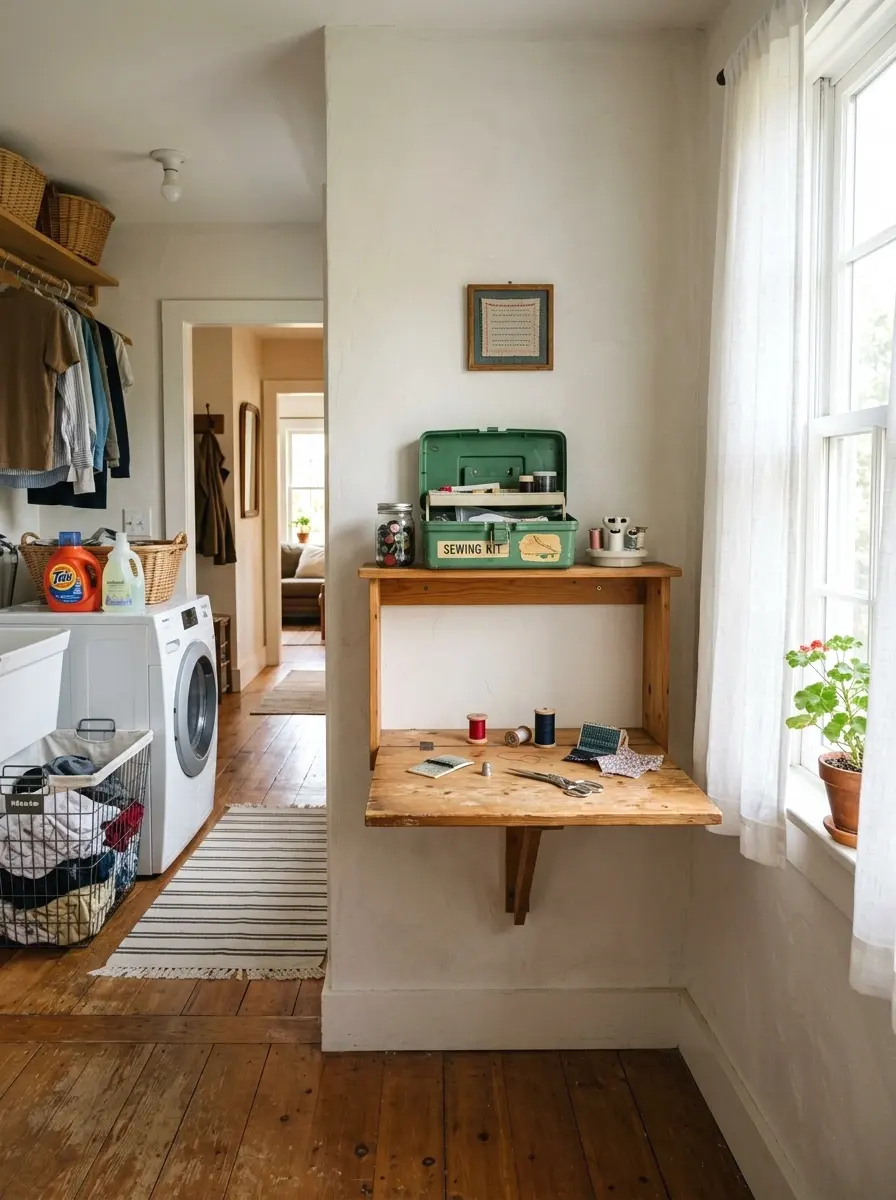
A large laundry room is actually the perfect spot for a small mending station because that’s where you find the problem in the first place. A torn seam, a missing button, a hem that needs fixing, it all gets noticed during the wash-and-fold routine. Set up a small table or a wall-mounted fold-down desk in one corner, $30 to $60 for a basic wall-mount desk, and keep a tackle box with thread, needles, scissors, and replacement buttons on the shelf above it.
You don’t need a sewing machine to make this useful. A hand-sewing kit handles 90% of laundry-related repairs. The fix-it station means clothes actually get repaired instead of sitting in the “I’ll deal with it later” pile for six months. And it takes up maybe 4 square feet of floor space in a room that probably has plenty to spare.
16. Add a Folding Pocket Door or Barn Door to Separate the Space

In a home where the laundry room connects to a mudroom or hallway, a barn door or pocket door gives you the option to close it off when guests arrive without permanently separating it. A sliding barn door kit runs $100 to $250 depending on size and material, and installation is manageable for an intermediate DIYer.
There’s a solid breakdown of barn door styles for utility spaces that covers panel types, hardware weight limits, and what actually reduces noise between rooms.
The door doesn’t just hide the laundry chaos, it also contains washer noise during cycles, which matters if the room is near a living space. Go with a solid panel for noise reduction or a slatted wood panel if you want some airflow. Either way, the ability to open or close the space at will makes a large laundry room much more flexible as a whole-house utility room.
17. Paint Cabinets a Different Color Than the Walls

White cabinets on white walls in a large room can feel flat and institutional. Try painting the cabinet fronts a different color. Deep olive green, dusty blue, warm terracotta, these all look really nice against a white or cream wall and cost only the price of a quart of cabinet-specific paint, usually $20 to $30.
Use a furniture or cabinet paint that’s formulated for slick surfaces so it doesn’t chip with regular use. Lightly sand the doors before painting and wipe them down with a degreaser first. Two coats and you’ve got a room that feels designed rather than just functional. It’s one of the best returns per dollar of any laundry room update you can do.
If you’re still deciding on a shade, this guide on paint colors that shift a whole room breaks down which tones work best on cabinet surfaces specifically.
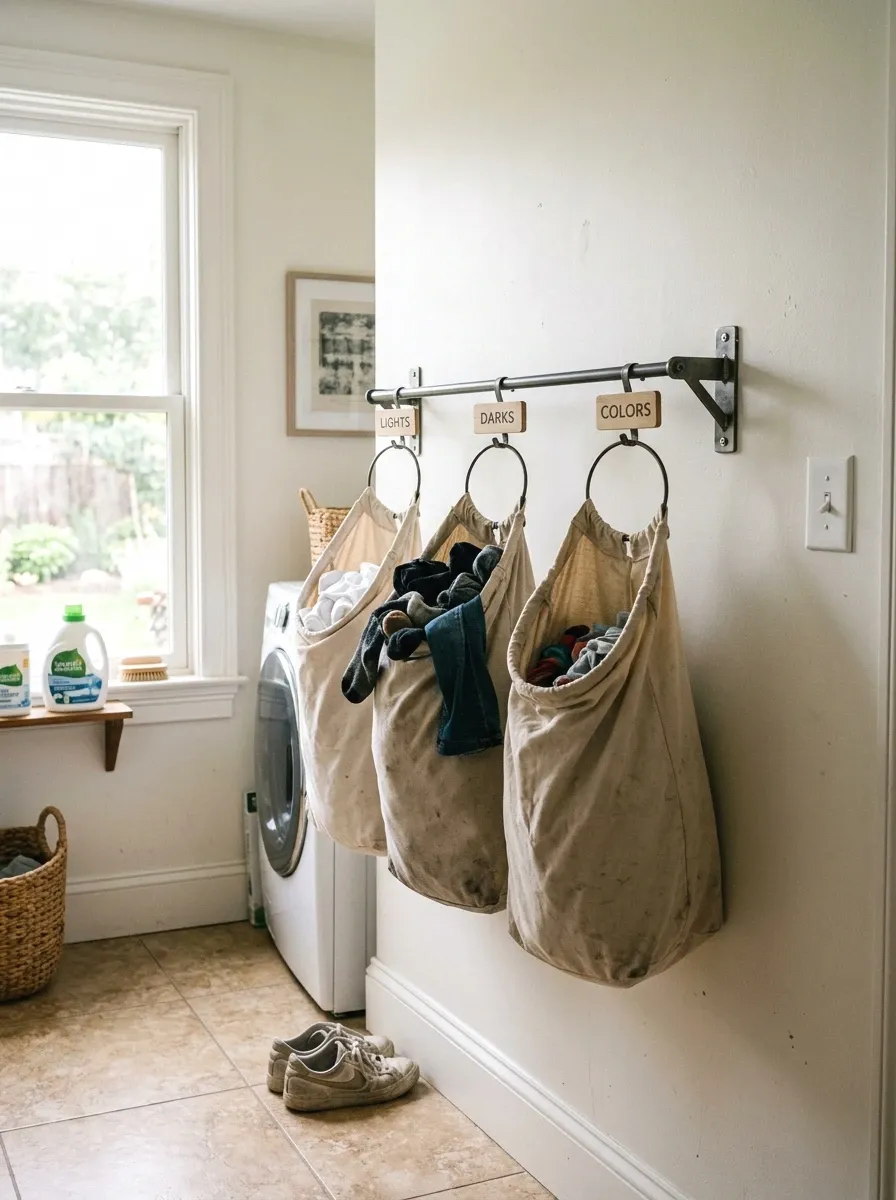
18. Install a Wall-Mounted Hamper Sorting System

A wall-mounted hamper sorter keeps the floor clear and puts dirty laundry sorting on autopilot. The frame-mounted canvas bag systems with two or three bags run $50 to $90 and mount directly to the wall. Each bag has its label. Clothes go straight in as people walk through.
In a large laundry room, position it right at the entry point so sorting happens before anything hits the floor. When a bag is full, it unclips and goes directly to the machine. You don’t carry a hamper. You carry the bag. It sounds like a small thing but it genuinely speeds up the process and keeps the room looking less chaotic between laundry days.
If you want to go deeper on full laundry room organization systems, there’s a lot more on sorting, labeling, and workflow that ties directly into what a wall-mounted sorter starts.
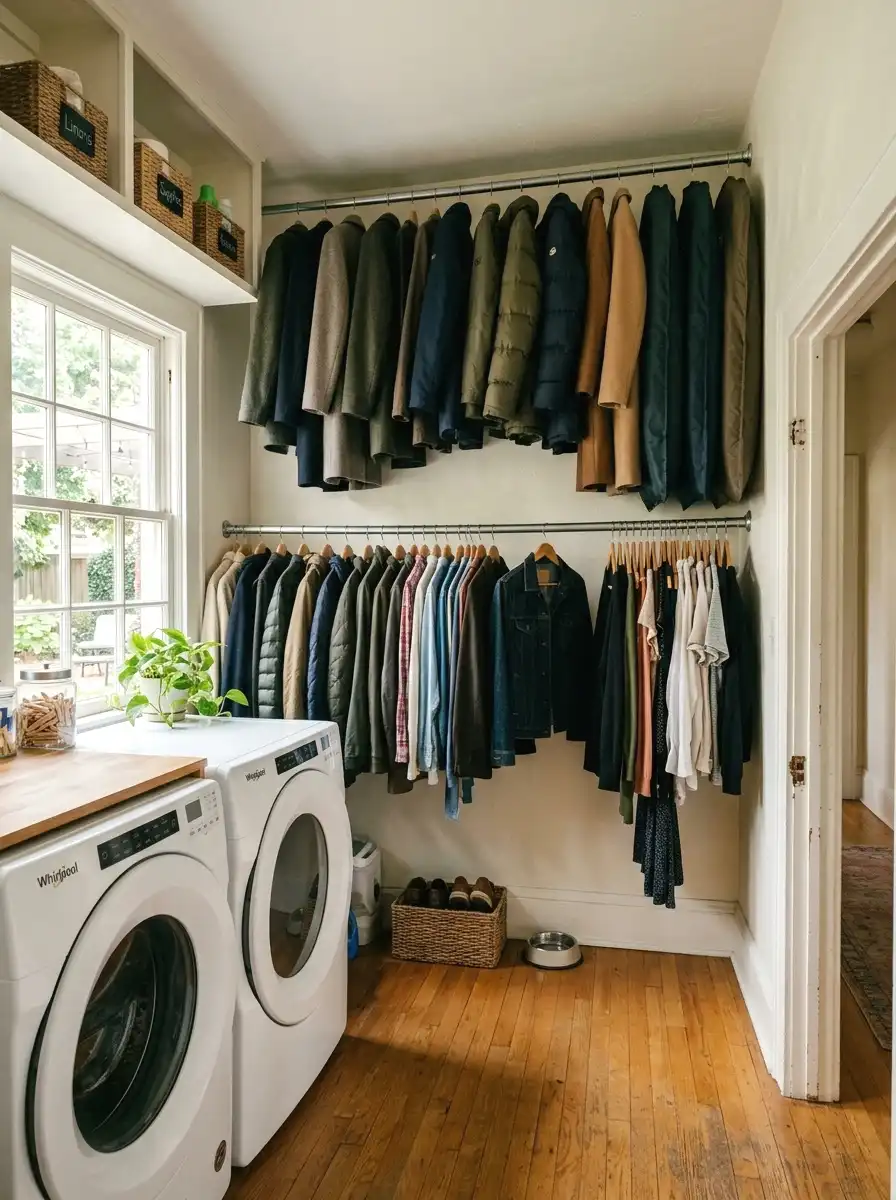
19. Add a Second Rod for In-Season Closet Overflow

Here’s something a lot of large laundry rooms end up being used for anyway: seasonal clothing storage. If your primary closets are always packed, install a double rod system on one wall of the laundry room for overflow. Two rods stacked, the top at 80 inches and the bottom at 42 inches, gives you double the hanging capacity on a single wall section.
A double rod kit runs about $25 to $50. You can hang off-season coats, dress clothes, or anything that needs to be kept but doesn’t fit in the main bedroom closet. A laundry room with 10 feet of hanging rod suddenly takes serious pressure off every other closet in the house. It’s practical and basically free to implement once you’ve got the wall space.
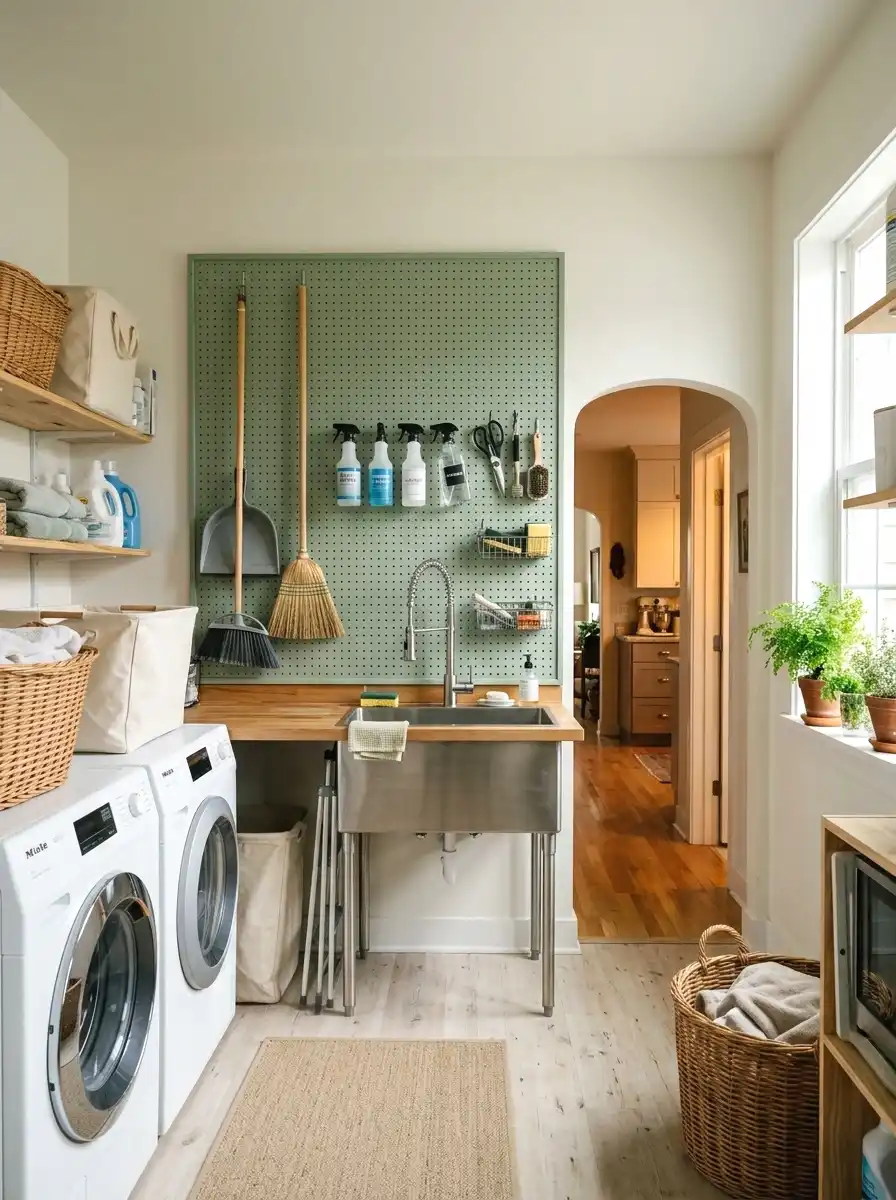
20. Use a Pegboard Wall for Flexible Tool and Supply Storage

A pegboard wall is one of the most adaptable storage surfaces you can install and it costs almost nothing. A 4 by 8-foot sheet of pegboard runs $25 to $40 and can be painted any color before mounting. Hook in whatever you need: brooms, mops, a dustpan, spray bottles, extra hangers, scissors, stain sticks.
The hooks and attachments are cheap and completely rearrangeable, so the layout changes as your needs change. In a large laundry room, pegboard works especially well on a wall near the utility sink or the cleaning supply zone. It keeps everything visible and off the floor without requiring any cabinet installation. If you’ve never used pegboard storage before, try it here first. You’ll end up putting it everywhere else too.
21. Add a Bench with Under-Seat Storage at the Entry
If your large laundry room has any entry function, like mudroom crossover or a side door connection, a bench with built-in storage underneath is the right finishing touch. You can sit and take off shoes, store extra blankets or seasonal linens in the bench seat, and hang coats and bags on hooks mounted above it.
A storage bench with a hinged seat runs $80 to $180 at most home stores. Pair it with three or four wall-mounted hooks above, about $15 to $30 for a hook rail, and you’ve built a complete entry zone that also serves the laundry function. The room becomes genuinely multi-use rather than just a big single-purpose space. That’s what a large laundry room should be.
If the laundry room doubles as a mudroom entry, there are storage bench and mudroom entry ideas that go further on combining both functions cleanly.
Final Thoughts on Large Laundry Room Ideas
You’ve got something most people wish for: actual space. What these 21 ideas come down to is using that space with a plan instead of letting it fill up randomly. The biggest themes here are good storage systems, a clear workflow from dirty to clean, and a few finishes that make the room feel like it was actually designed. When those things come together, the laundry room stops being a place you avoid and starts being a room that makes the rest of the house run better.
Start with one thing. Honestly, just one. If I had to pick, I’d say build that countertop first. Even a simple butcher block run from one end of the machine wall to the other changes how every other task feels in that room. You’ll notice it immediately.
If you want more room-by-room ideas like these, homelypop.com has a lot more to explore. Real homes, real budgets, no fluff.