

20 Laundry Clothes Hanging Ideas to Keep Your Laundry Room Organized

Your laundry room is a disaster and you already know it. Clothes pile up on the dryer, hangers get tangled, and anything that needs to air dry ends up draped over a door handle or a chair somewhere else in the house. It’s not a decor problem. It’s a system problem.
This list of 20 laundry clothes hanging ideas was put together after going through dozens of real homeowner setups on Reddit, Houzz, and Pinterest, specifically looking at what actually gets used every day, not what looks good in a styled photo. Each idea had to pass a simple test: does it solve a real problem, and does it work in a normal-sized space? Most fall in the $100 to $300 total range, with several options under $50.
This is for people who have a dedicated laundry room or a laundry closet with at least a few feet of wall space. If you’re working from a stackable unit tucked in a hallway with no room at all, some of these won’t apply. But if you have even a small wall to work with, you’ll find something useful here.
By the end, you’ll have a clear picture of which hanging setup actually fits your space and your laundry routine.
If you’re starting from scratch or want to rethink your whole setup, there are some solid approaches worth looking at before you buy anything.
What to Know Before You Start Hanging in Your Laundry Room
- Wall studs in laundry rooms are often 24 inches apart, not the standard 16 inches. Check before drilling.
- A single 48-inch hanging rod holds roughly 20 to 24 adult garments before sagging becomes a problem.
- Budget reality: a solid wall-mounted rod and bracket system runs $30 to $80. Retractable versions start around $25.
- Most people underestimate vertical space. The ceiling in a laundry room is often the most useful surface you’re ignoring.
- Common mistake: mounting rods too low. Aim for at least 72 inches from the floor so long dresses clear the surface below.
- If you rent, adhesive hook rails rated for 10 to 15 lbs hold more than you’d think, no holes needed.
- Stainless steel and powder-coated rods hold up to humidity far better than chrome or raw wood over time.
1. Wall-Mounted Hanging Rod Above the Washer
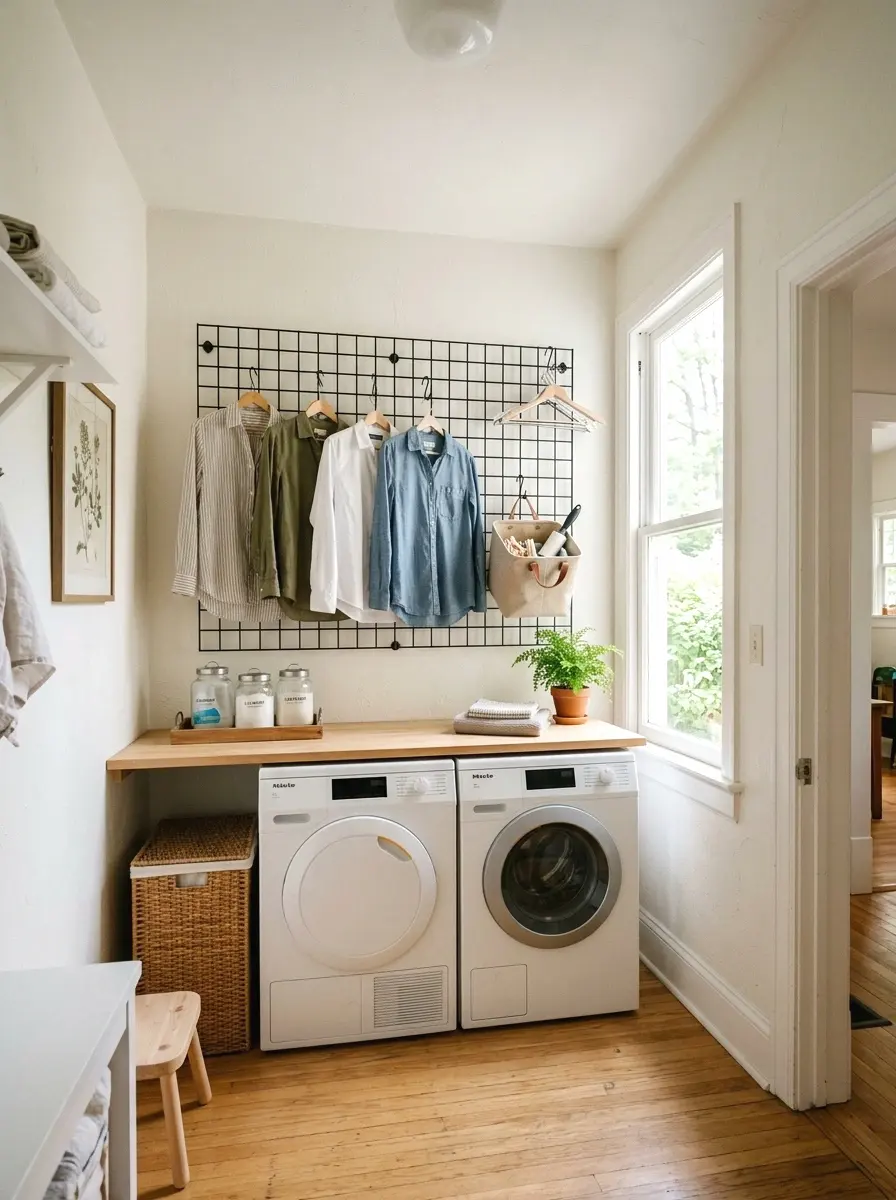
The wall space above your washer and dryer is wasted in most laundry rooms. A simple wall-mounted rod installed about 70 to 72 inches up gives you instant hang space for shirts, blouses, and anything that comes out of the dryer needing to finish drying on a hanger. It costs maybe $30 to $60 for a basic rod and bracket set from a hardware store, and the install takes under an hour.
When I tried this in my own space, I was shocked by how much it changed my routine. Things that used to get tossed on a chair now go straight from the dryer onto a hanger, directly onto the rod. No ironing needed for most shirts if you hang them while still warm. That one habit shift saves me time every single week.
2. Retractable Clothesline for Small Spaces
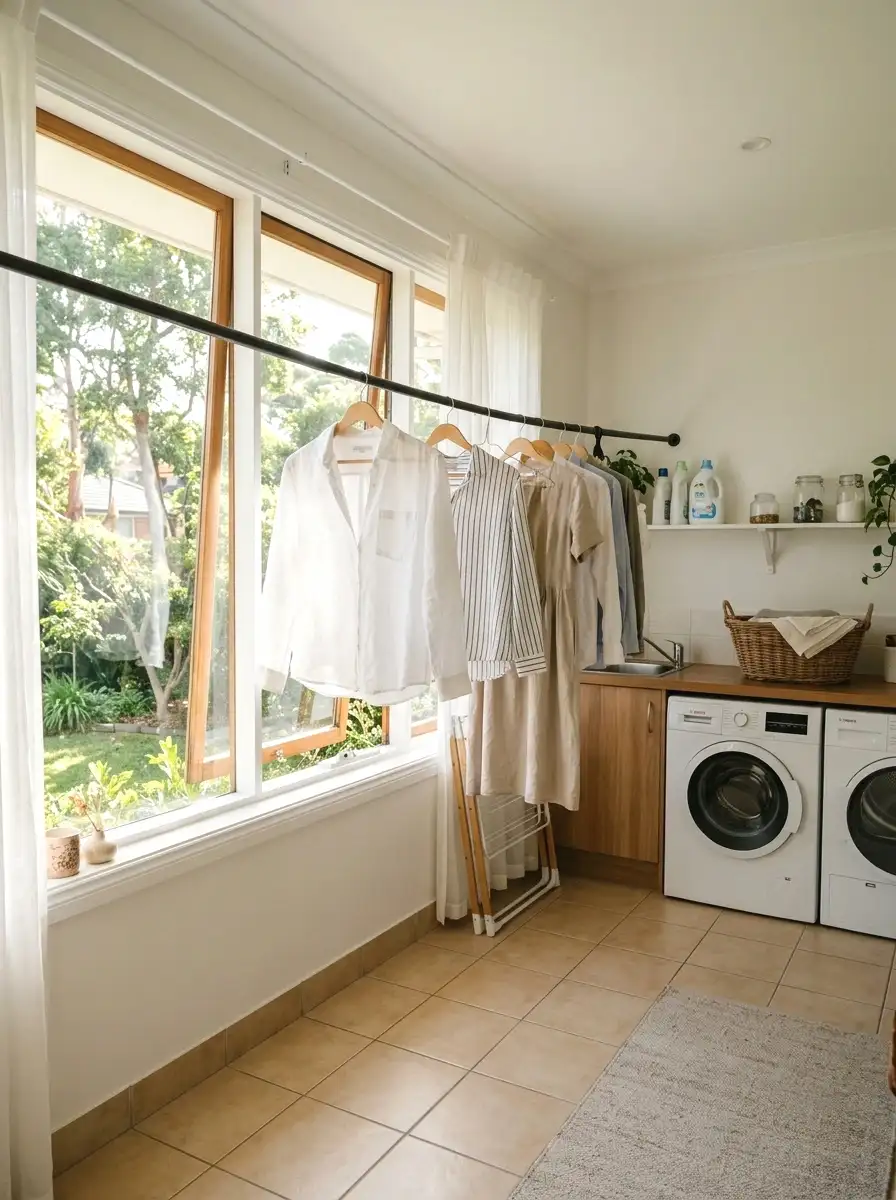
You can get a retractable clothesline for around $20 to $35 that mounts on two walls and pulls out when you need it, then retracts flat when you don’t. It’s one of those things that sounds too simple but genuinely works. Great for hand-wash items, activewear, and anything you don’t want going in the dryer at all.
The best versions hold up to 30 lbs of wet laundry per line, and some come with two or three parallel cords so you can hang a full load at once. Pull it out on laundry day, hang everything up, push it back in when it’s dry. No extra furniture taking up floor space.
More Ideas:




3. Over-the-Door Rod System
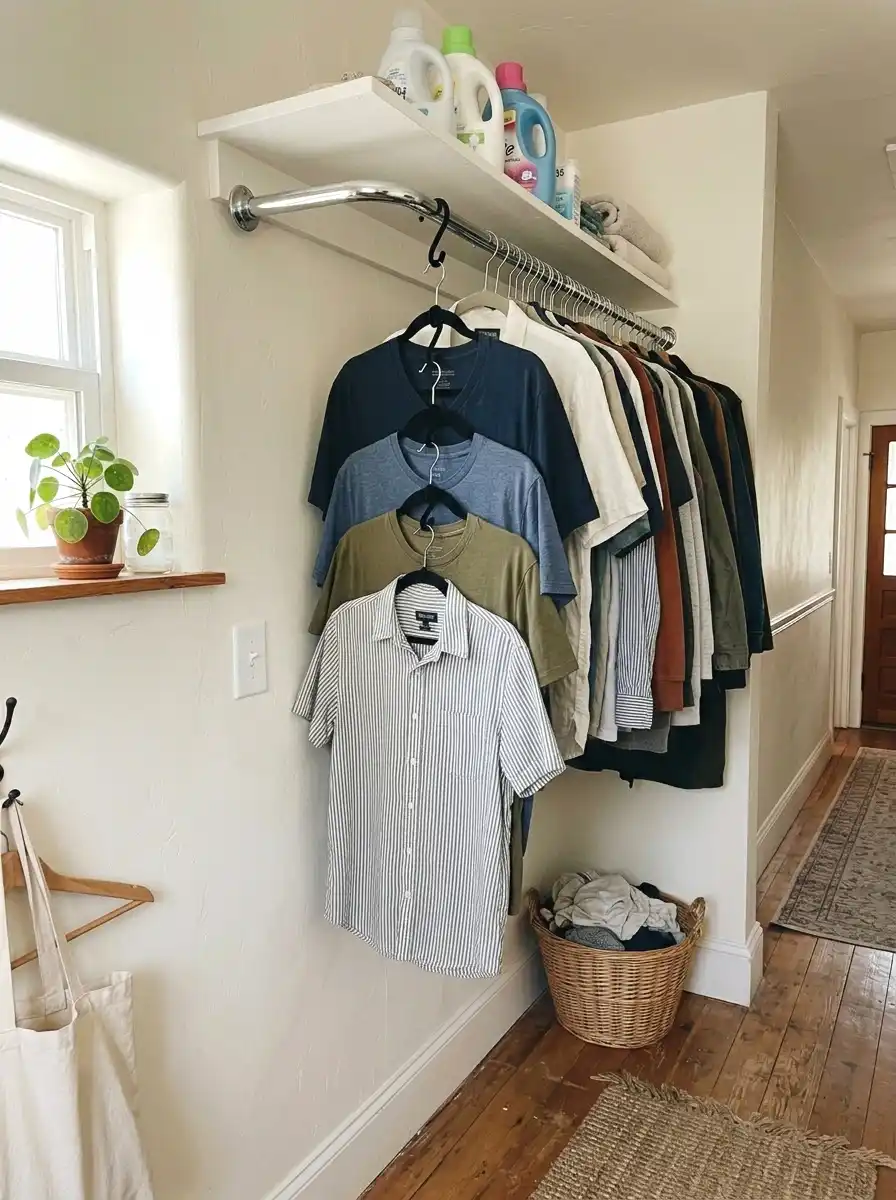
Here’s a setup that renters love: a rod that hooks over the top of a door, no drilling required. These usually run $15 to $35 and hold anywhere from 10 to 20 garments depending on the build. It uses space that was completely dead before, and you can take it down in 10 seconds if you need to.
It’s not the sturdiest option for heavy items, but for lightweight shirts, pants on hangers, or delicates it does the job. The main thing to watch is door clearance. Make sure your door opens and closes fully with the rod attached before you load it up.
4. Ceiling-Mounted Pulley Drying Rack
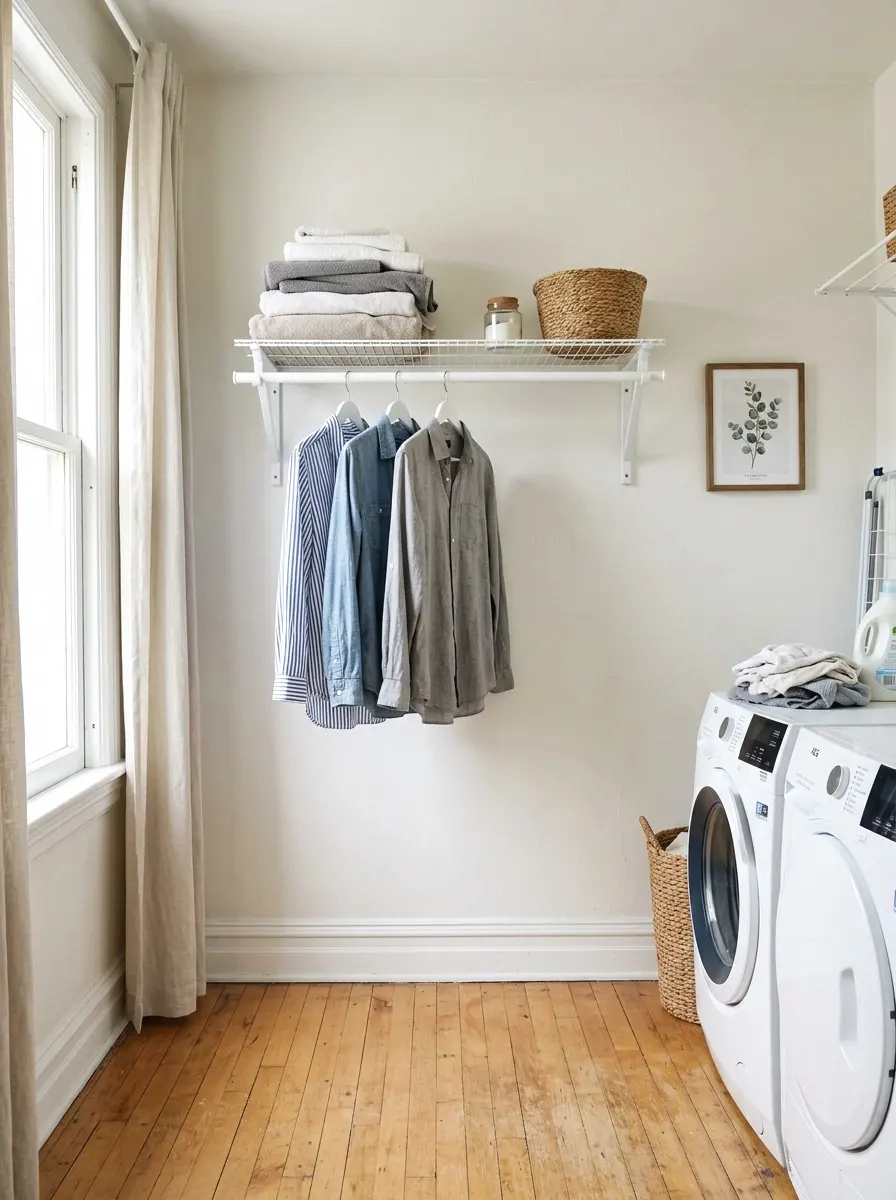
A ceiling-mounted pulley rack is one of the most underrated things you can put in a laundry room. (this one is so underrated) It hangs up near the ceiling when not in use, and you lower it down to hang clothes, then pull it back up out of the way. Traditional versions called “ceiling airers” or “Sheila Maids” have been around for over 100 years because they genuinely work.
Prices run from $50 for a basic wooden version to around $150 for a wider stainless steel model. They typically hold 5 to 9 horizontal bars, each one around 36 to 48 inches wide. For a small laundry room with low floor space but decent ceiling height, this is one of the smartest buys you can make.
5. Built-In Cubby with a Hanging Bar
A small cubby unit mounted on the wall with a hanging bar underneath gives you a two-in-one setup: folded items go in the shelves, hung items go on the bar below. You can find wall-mount cubby units with integrated rods for $80 to $150, or build a simple version with two floating shelves and a tension rod between them for around $40.
The shelf above the bar is great for stacking folded towels, storing laundry pods, or keeping a basket for items that need to be sorted. It keeps the whole wall doing double duty instead of just holding one rod.
There are plenty of shelf and rod combinations worth considering if you want to make a full wall work harder than a single bar ever could.
6. Tension Rod Between Cabinets or Walls
A tension rod costs $10 to $20 and requires zero installation. If you have two walls or two cabinet sides that face each other at a reasonable distance, you can stretch a tension rod between them and have a full hanging setup in about 30 seconds.
The trick is getting one rated for the weight you plan to hang. A cheap spring tension rod will sag under a full load of wet clothes. Look for a heavy-duty version with a max load rating of at least 20 lbs. These work surprisingly well in laundry closets where the walls are only 24 to 30 inches apart.
Organizing the space around your machines with the right hardware makes a bigger difference than most people expect before they try it.
More Ideas:
7. Wall-Mounted Foldable Drying Rack
A wall-mounted foldable rack swings out flat when you need it and folds back against the wall when you don’t. Most are 18 to 24 inches wide and hold 5 to 10 bars for hanging individual garments or draping flat items. They mount with just four screws and cost $25 to $60 depending on size and material.
The powder-coated steel versions hold up the best in humid laundry rooms. I’ve seen the raw wood ones warp and split after a year of regular use from moisture, so pay the extra $15 for metal if you can.
8. Pipe and Flange Industrial Rod
A black iron pipe rod with wall flanges gives you a hanging setup that’s stronger than most retail rods and costs about the same. You’re looking at $40 to $70 for the pipe, flanges, and mounting hardware depending on length. Install it at ceiling height for maximum garment clearance, and it’ll hold 30 or more hangers without flexing at all.
The industrial look works well in modern laundry rooms, and honestly it just feels more solid than a thin chrome rod. Cut the pipe to whatever length you need at a hardware store, screw the flanges into studs, and you’re done.
9. Ladder-Style Drying Stand Inside the Room
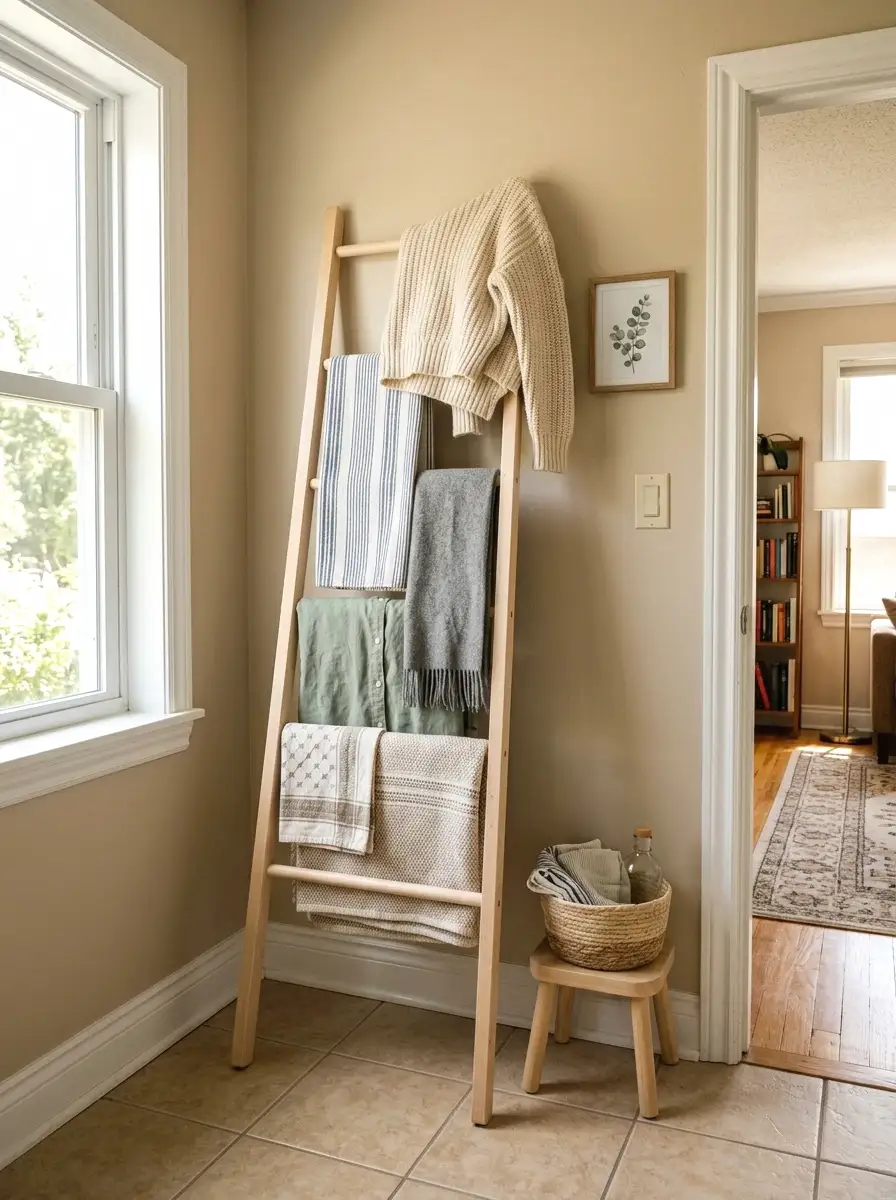
A freestanding ladder rack leans against the wall and holds garments on each rung, no mounting required. These run $30 to $80 and come in wood, bamboo, or metal. The compact A-frame versions fit in a corner and hold more than you’d expect for the footprint.
So here’s the thing: this is the easiest option if you’re renting and don’t want to touch a single wall. You can also move it to another room on days when you need more space in the laundry room itself. It’s not a permanent system, but for light laundry loads it does everything you need.
10. Hanging Rod Inside a Cabinet
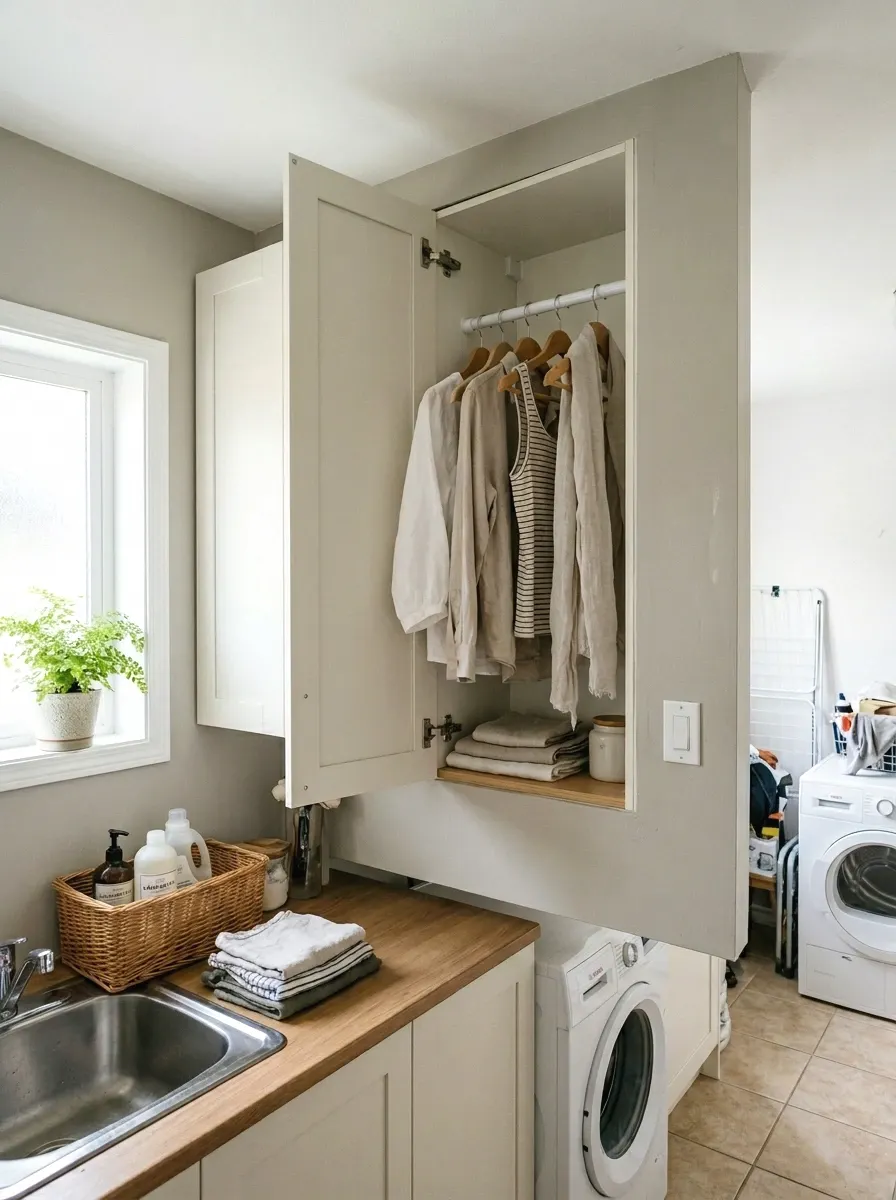
If your laundry room has upper cabinets, adding a hanging rod inside one of them turns dead cabinet space into a mini closet. Remove the middle shelf, install a rod at the top, and now you have a spot to hang delicate items away from humidity and dust. It costs almost nothing if you already have the cabinet, just $8 to $15 for a tension rod or a simple rod cup set.
This works especially well for items you wash by hand and need to dry flat or hang dry slowly over 24 to 48 hours. They stay out of the way, out of sight, and protected.
If hidden storage appeals to you, there are cabinet ideas that keep things tidy while doubling as hang space in a room where clutter builds fast.
More Ideas:
11. Pull-Out Hanging Rail in a Drawer
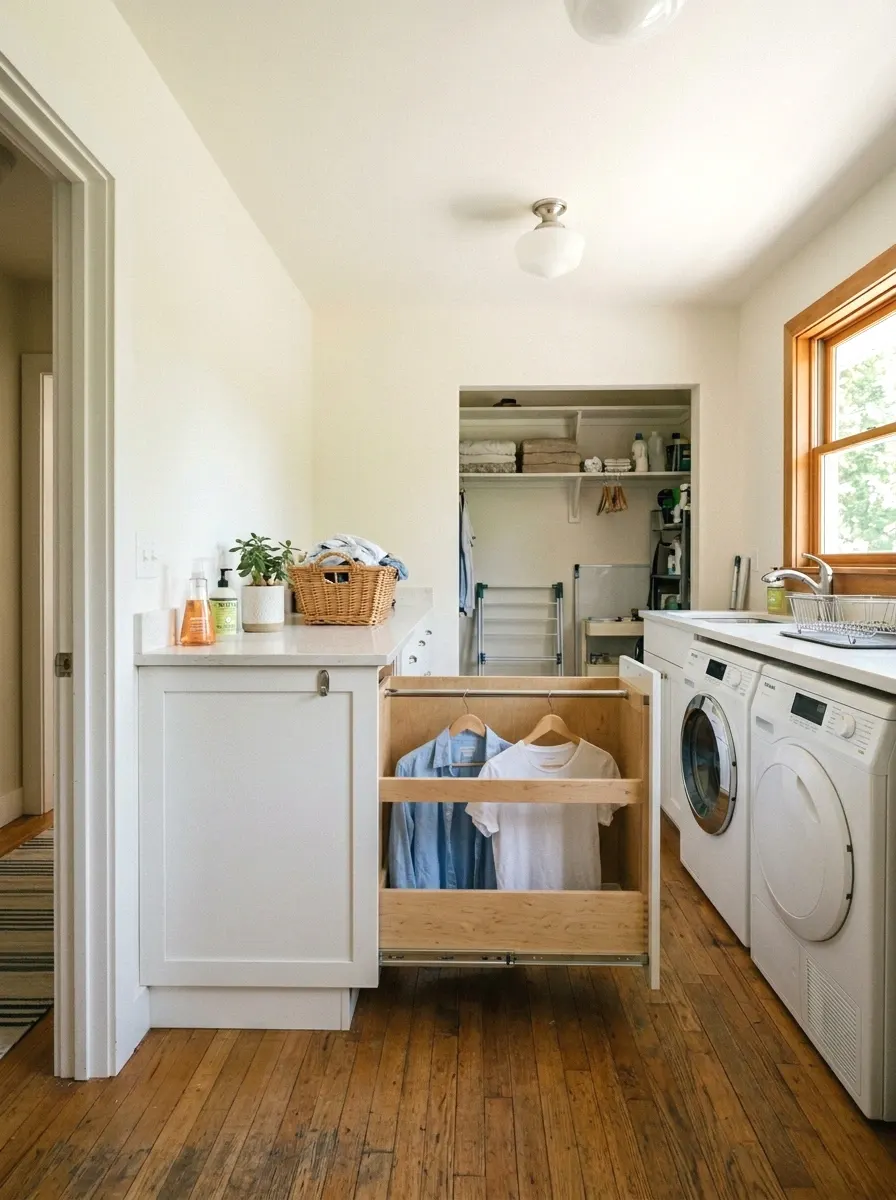
A pull-out rail that installs inside a deep drawer or cabinet pulls forward when you need it and disappears when you don’t. (took me ages to figure this out) These are common in closet systems but almost nobody thinks to use them in a laundry room. They run $20 to $45 for the hardware and slide in with minimal installation.
The pull-out design is great for shirts or pants that you want to keep wrinkle-free after ironing. Pull it out, hang what you need, push it back in. No permanent rod visible in the room when it’s not in use.
12. Magnetic or Adhesive Hook Rail
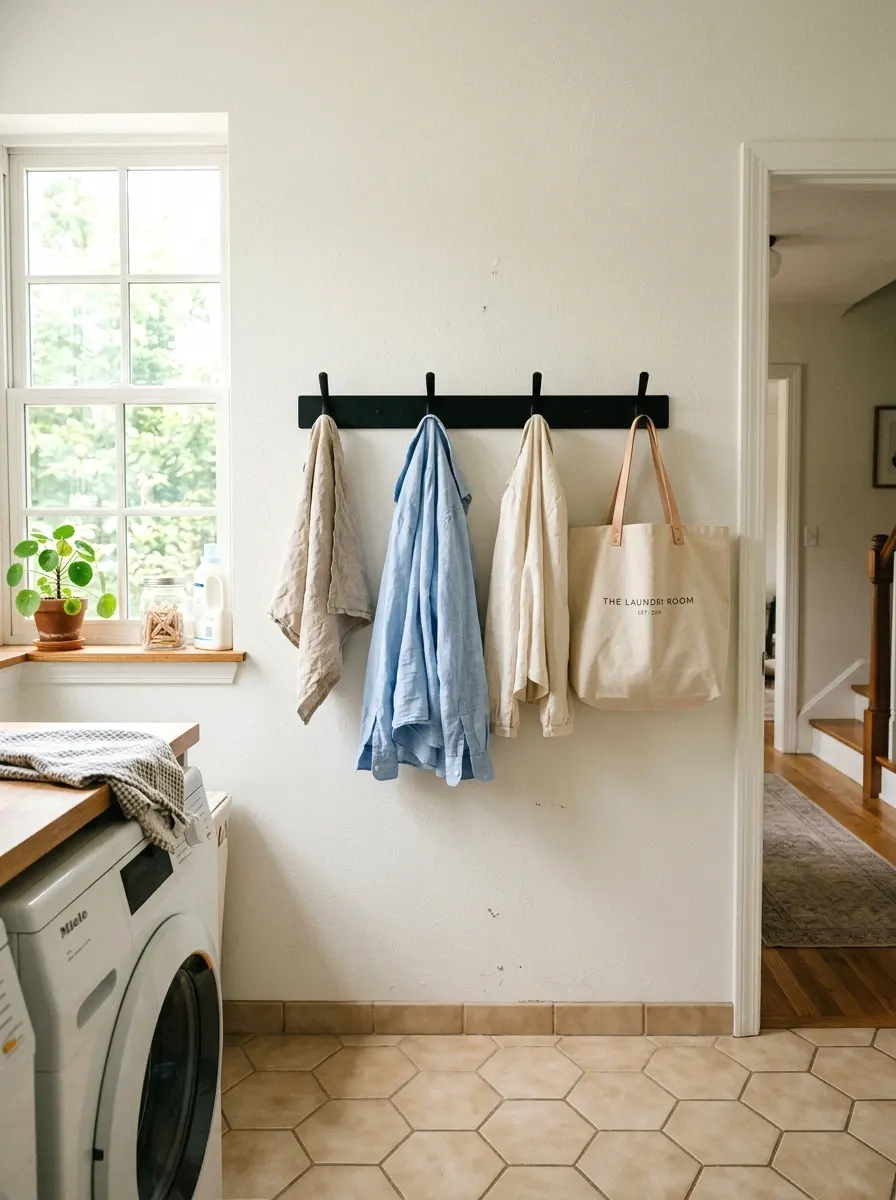
A strip of adhesive or magnetic hooks along one wall gives you quick individual hang spots without any drilling. A 24-inch adhesive hook rail rated for 15 to 20 lbs runs about $15 to $30. Use it for single garments, bags, or hanger sets that don’t need a full rod.
The key is surface prep. Clean the wall with rubbing alcohol before sticking anything on. Adhesive hooks on unprepared walls peel off within days. Done right, they stay up for years and come off cleanly when you move out.
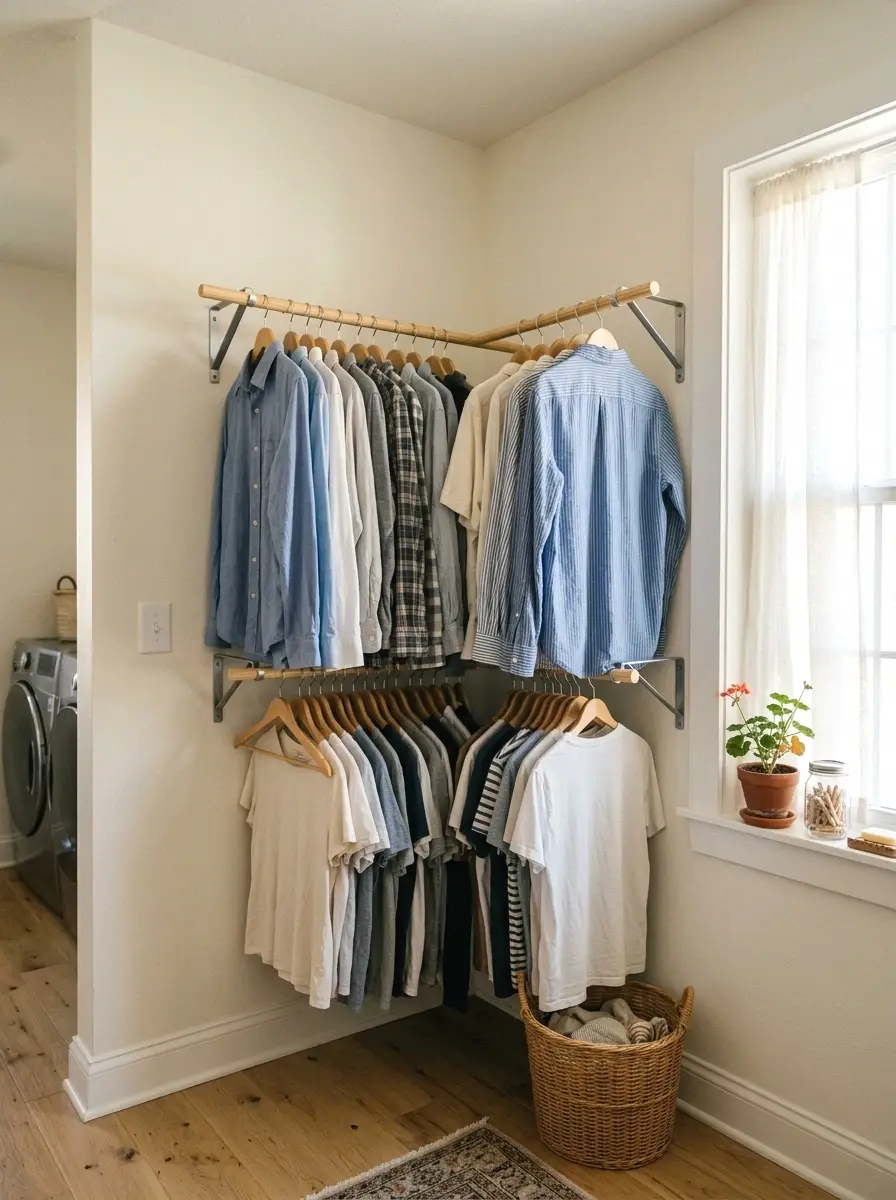
13. Corner Hanging Rod Setup
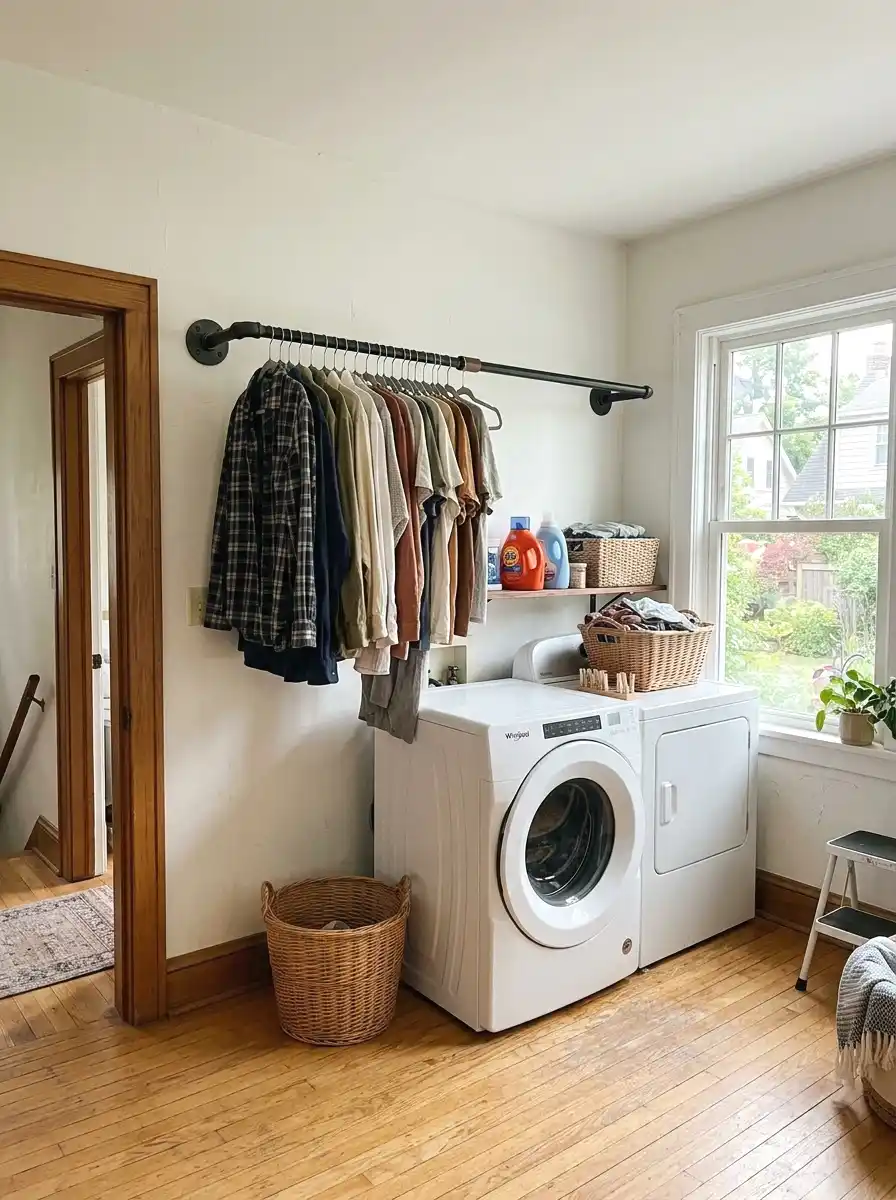
Most laundry rooms have corners that do absolutely nothing. A corner rod system uses two angled brackets to run a rod into the corner, doubling the wall space you’re using without adding length. These brackets cost $15 to $35 and work with any standard closet rod.
It’s a small change but it adds 10 to 18 inches of hang space in a spot that was completely unused before. For a tight laundry room, that extra foot of rod is meaningful.
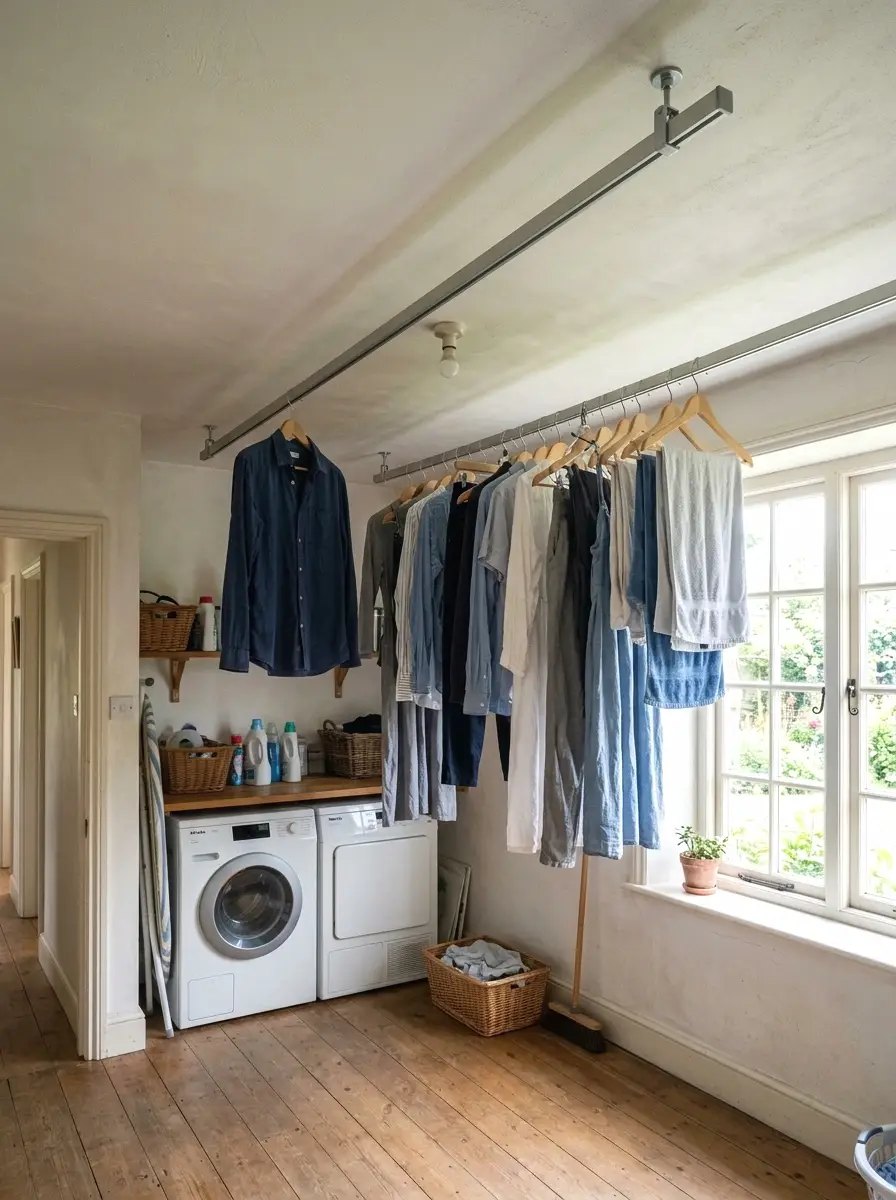
14. Ceiling Track Rail System
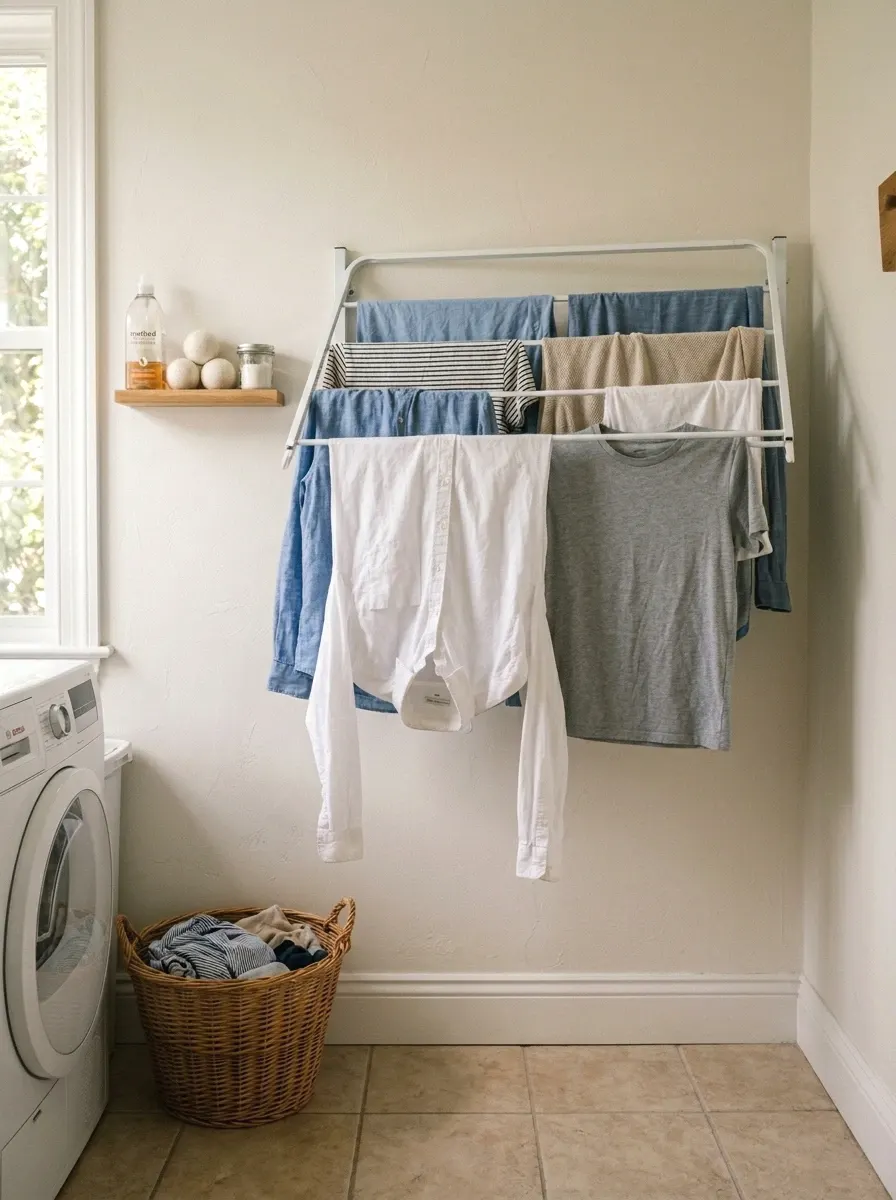
A ceiling track rail is exactly what it sounds like: a track mounted to the ceiling with hooks or carriers that slide along it. Garments hang from the carriers and can be moved along the track as needed. These are common in commercial laundries and dry cleaners but work just as well at home.
Systems start around $60 and can run up to $150 for longer setups. The big advantage is flexibility. You can slide everything to one side when you need ceiling clearance, or spread things out to maximize drying airflow. Great for rooms with good ceiling height.
More Ideas:
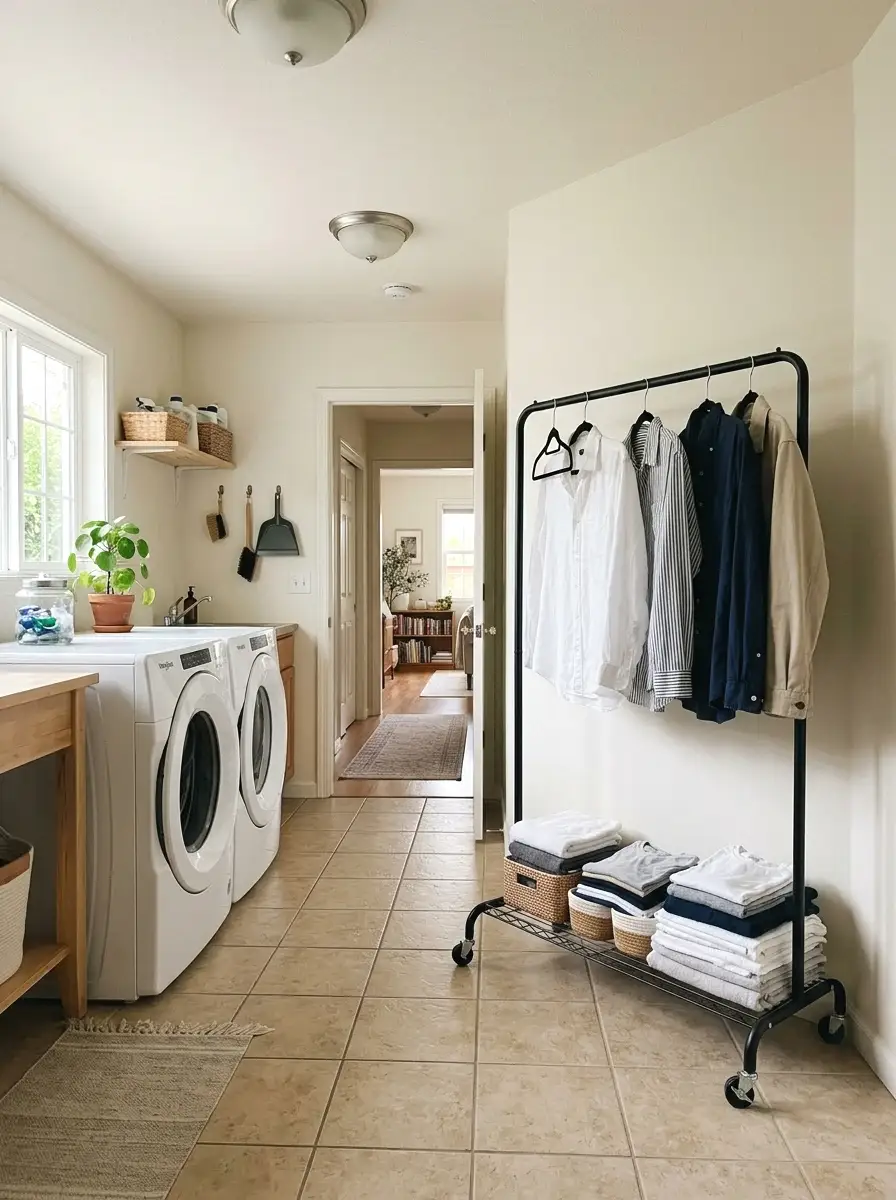
15. Slim Rolling Garment Rack
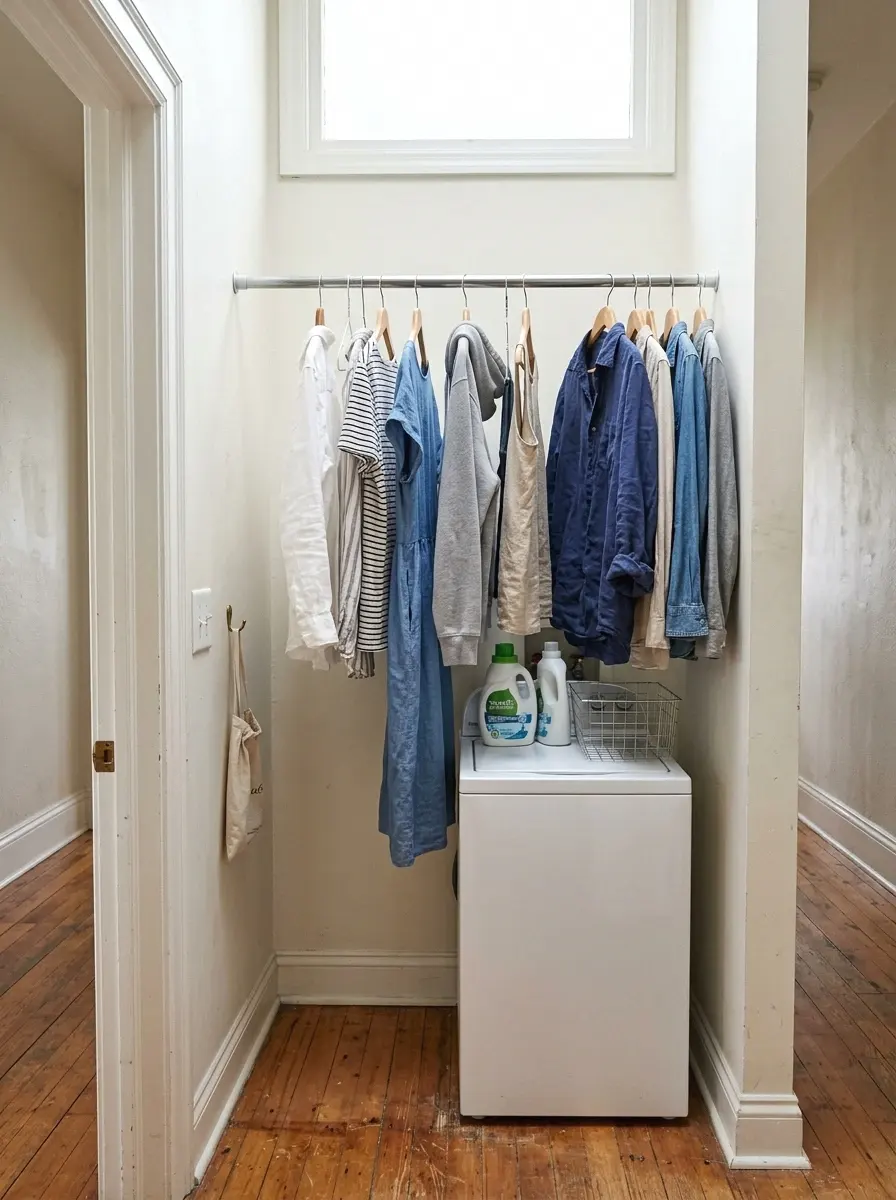
A rolling garment rack on wheels can be wheeled in on laundry day and rolled out when you need floor space back. A slim version, around 18 to 24 inches wide, fits in a laundry room corner without taking over the space. These run $30 to $80 depending on build quality.
The ones with a lower shelf are the most useful because you get hang space on top and a spot for folded items or a laundry basket below. Roll it to wherever the clothes need to be sorted, load it up, roll it back.
If your room is especially tight, there are rolling solutions for tighter rooms that work even when you’re dealing with a few square feet of usable floor.
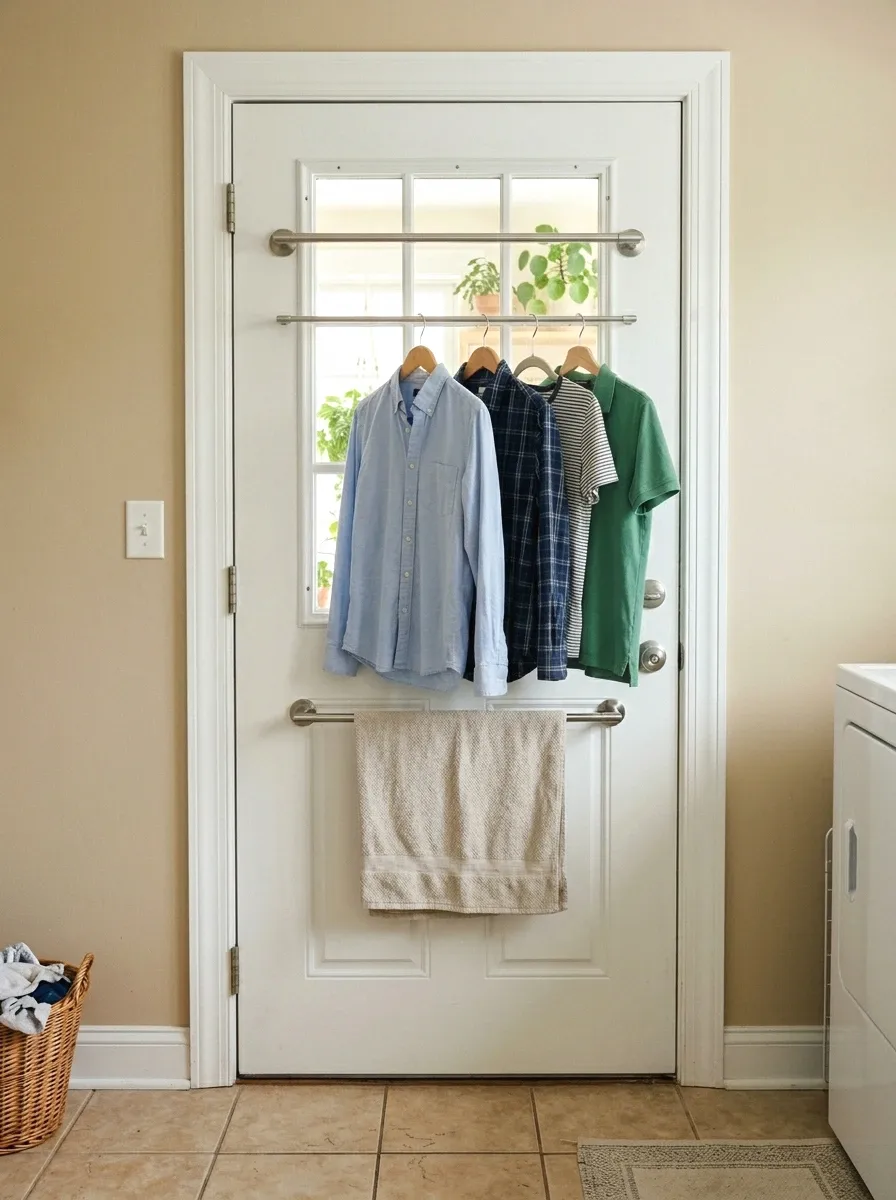
16. Behind-the-Door Towel Bar as Hang Space
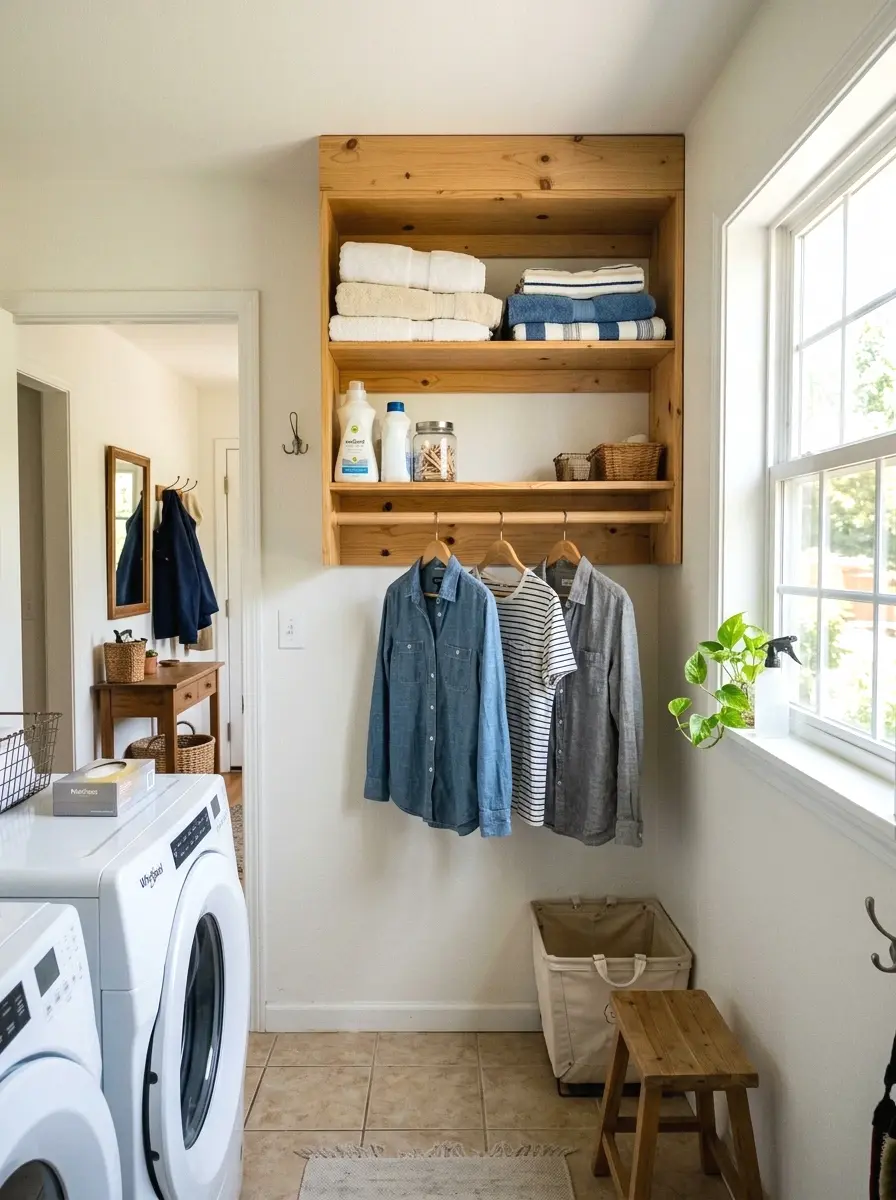
A towel bar or two mounted on the back of your laundry room door gives you extra hang space for items on hangers without adding any rods to your walls. Standard towel bars mount with two screws each and cost $10 to $30. Mount two bars at different heights and you can hang multiple rows of items.
The back of the door is one of the most ignored surfaces in any room. In a laundry room, it’s prime real estate. Hang shirts, dry towels flat, or keep a few extra hangers there within easy reach.
17. Adjustable Shelving with an Integrated Rod
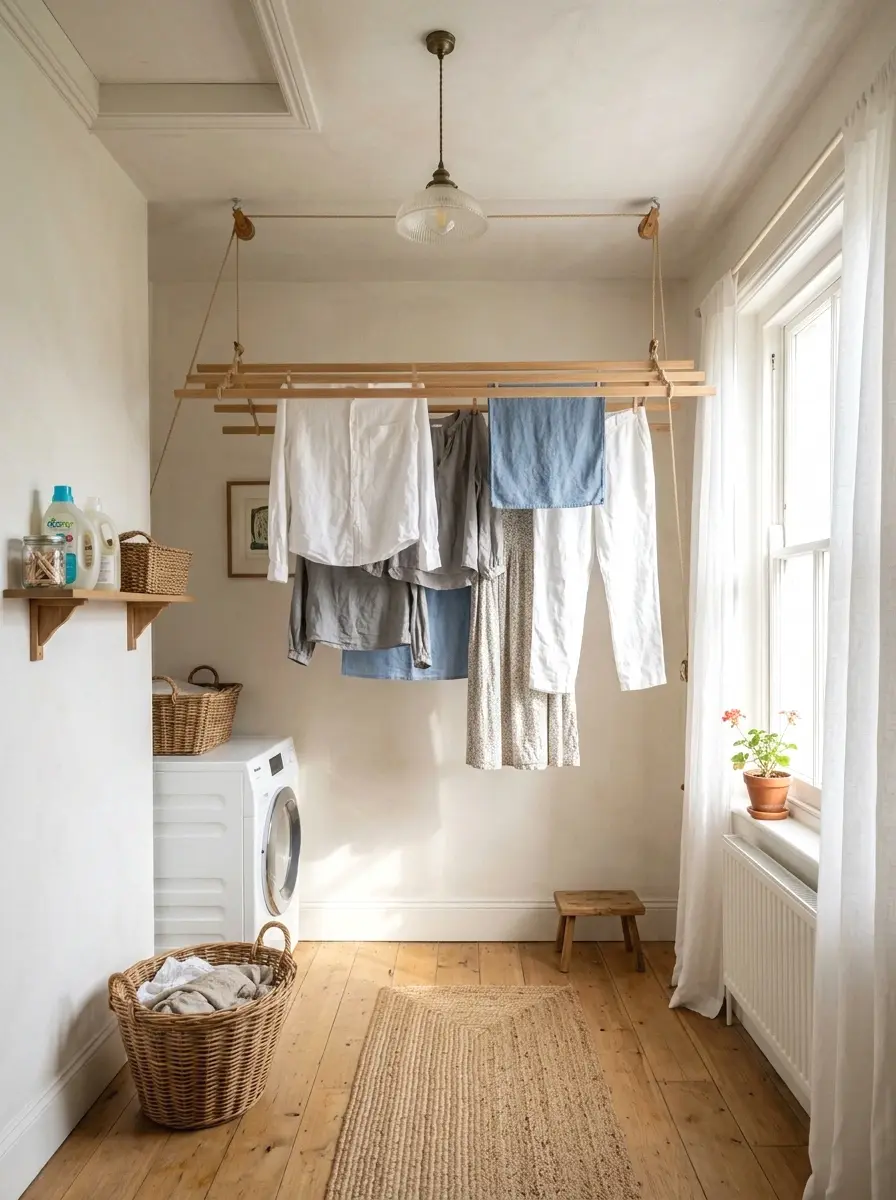
An adjustable wall shelving system with a rod bracket gives you a setup you can reconfigure as your storage needs change. Brands like Elfa or IKEA’s Boaxel system let you move shelves and rods up or down as needed. A basic setup with two shelves and a rod runs $80 to $150.
The flexibility matters more than it seems. What works for your laundry routine today might need to shift a year from now, and with an adjustable system you just move a few brackets instead of re-drilling the whole wall.
Adjustable wall systems for evolving spaces make the most sense when your routine isn’t locked in yet and you don’t want to commit to a fixed layout.
18. Hanger Stacker or Cascading Hooks
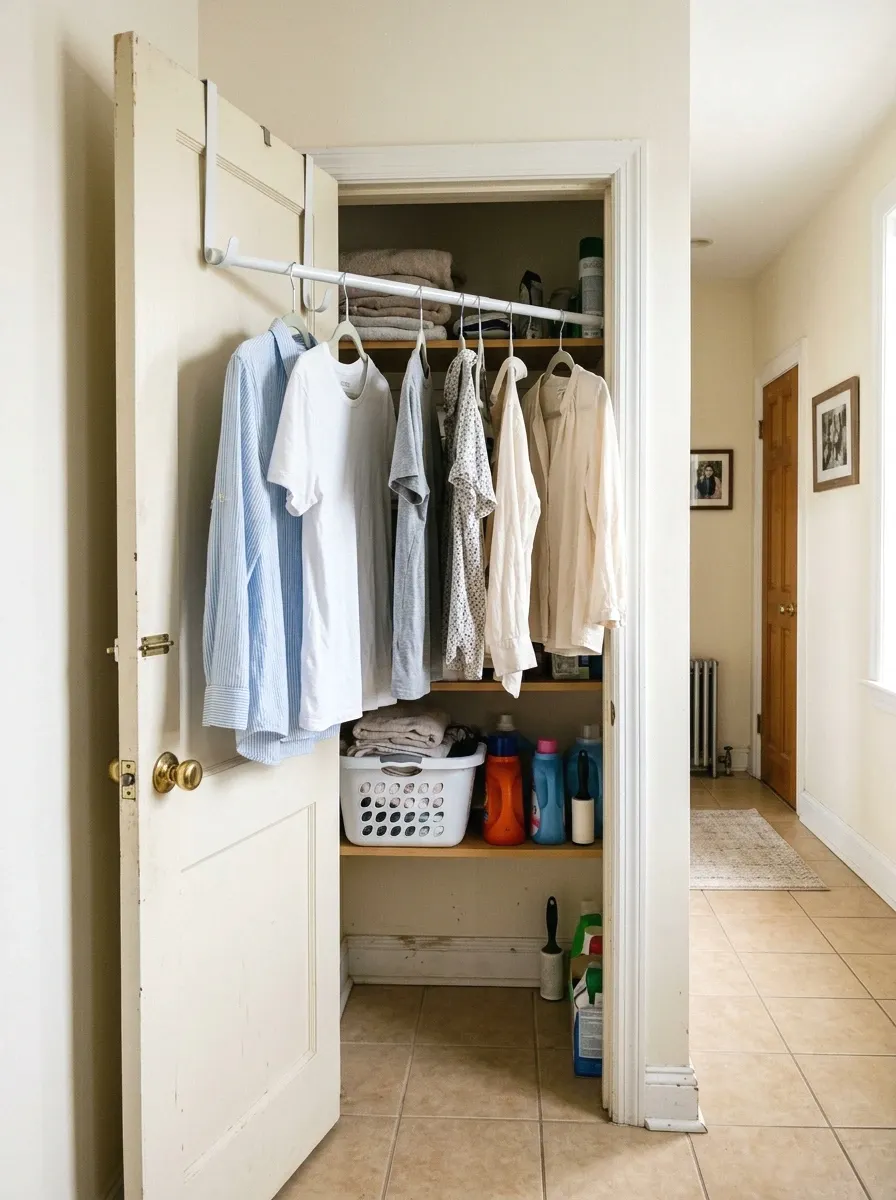
Cascading hanger hooks let you stack multiple hangers vertically from one hanging point, so one rod spot holds four or five garments instead of one. A set of 10 cascading hooks costs $8 to $15 and takes about 10 seconds to set up. And honestly, this is one of those things that seems too basic to mention, but it genuinely multiplies your rod capacity without any installation at all.
The velvet-style cascading hooks grip the hanger bar better than plain plastic ones and keep things from sliding around. Use them for shirts you rotate through regularly so you always see what’s there.
More Ideas:
19. Window or Doorframe Hang Bar
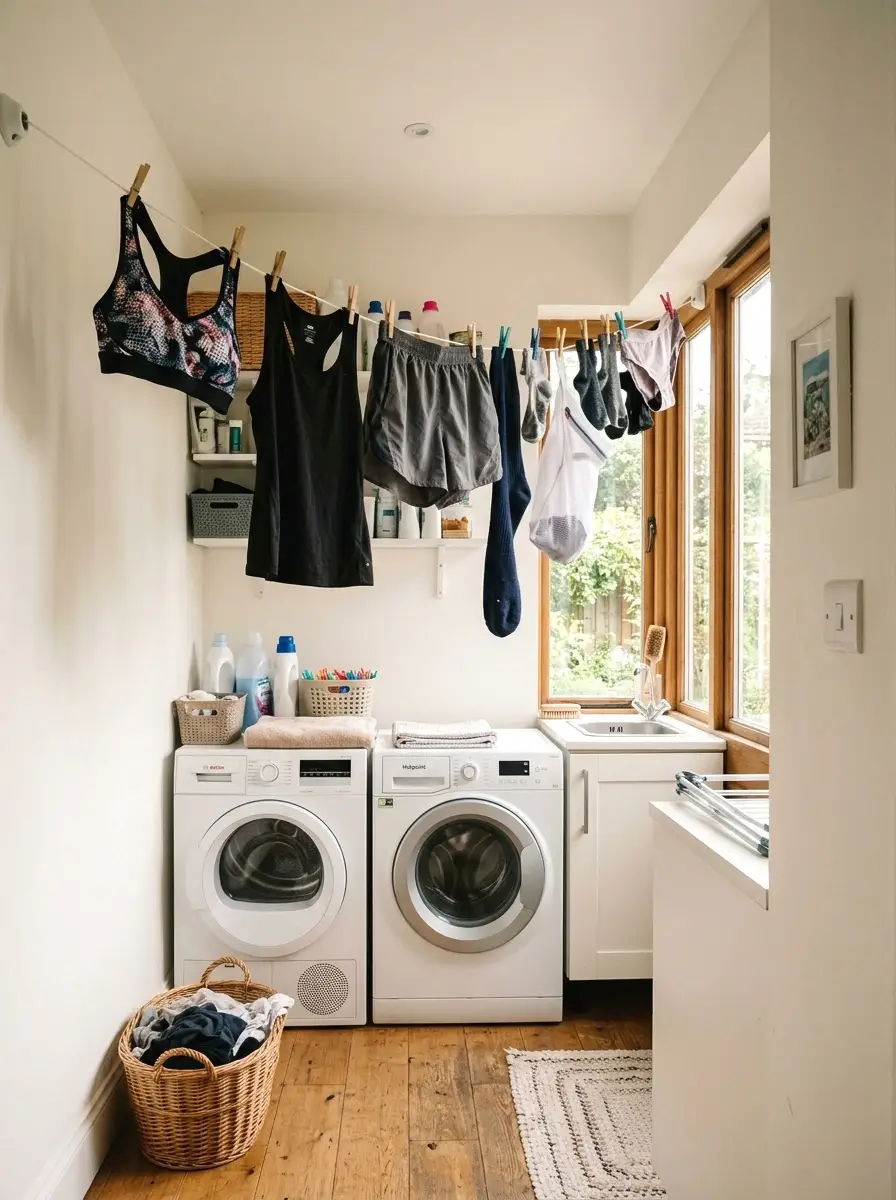
If your laundry room has a window, a tension rod installed across the window frame gives you a hanging spot that gets natural airflow, which speeds up drying for anything that’s air drying. Cost is $10 to $20 for a basic tension rod. Pull-back curtains, if you have them, can stay in place on either side.
The airflow benefit is real. Items hung near a window with natural air circulation dry noticeably faster than items in a closed cabinet or closet. For activewear and thicker fabrics, this makes a difference.
On that note, how lighting changes a small room is worth thinking about too, since good overhead light makes sorting and checking fabrics a lot easier in a windowless space.
20. Vertical Wall Grid Panel with S-Hooks
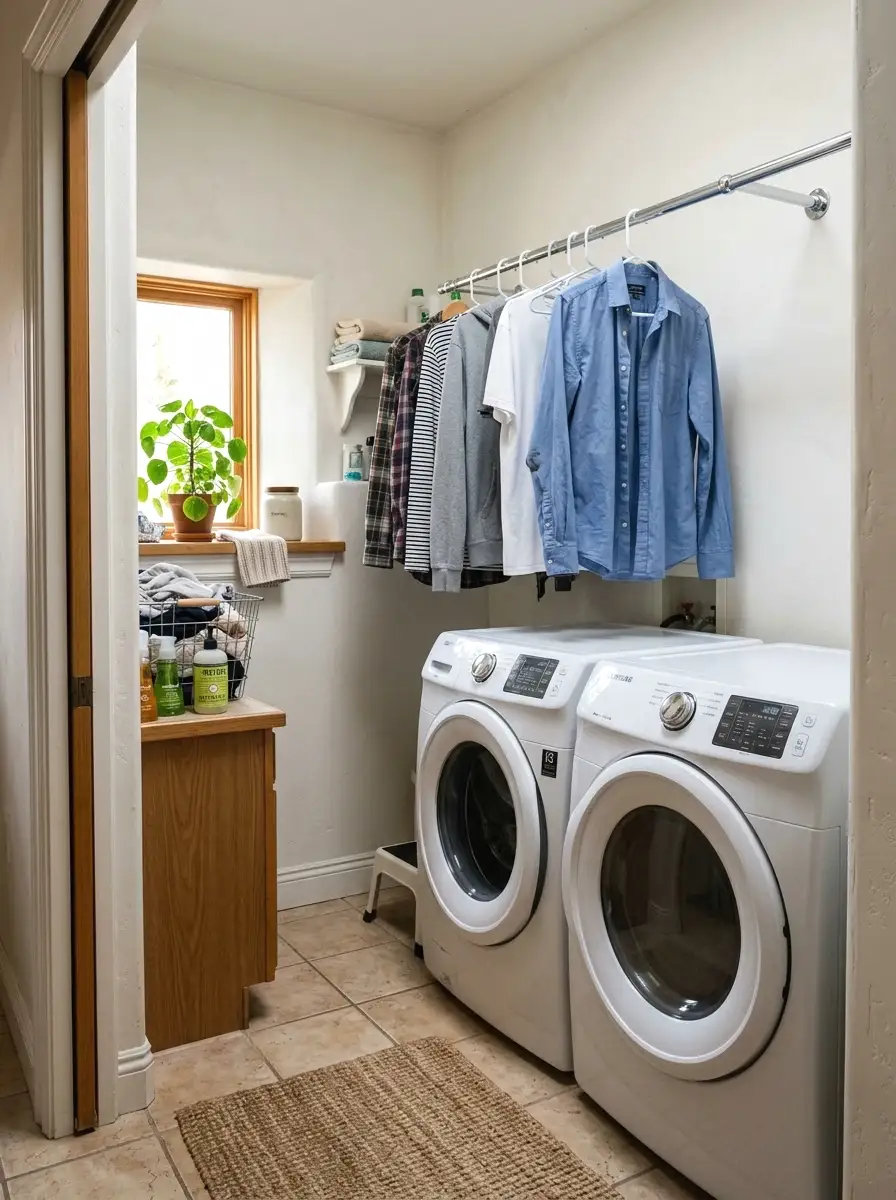
A metal grid panel mounted vertically on a wall gives you a totally flexible hanging surface. Add S-hooks anywhere on the grid, and you can hang garments, baskets, tools, or accessories wherever they fit. Grid panels run $20 to $50 for a 16 x 24-inch version. The density of the grid means you can rearrange the whole setup in minutes.
This is a good option if you’re still figuring out what your laundry routine actually needs. Start with a few hooks in the spots that feel right, see what works over a few weeks, and adjust from there. No drilling new holes every time you change your mind.
Final Thoughts on Laundry Clothes Hanging Ideas
You now have 20 real options, not just one “right answer.” What ties most of these together is the same basic idea: use your vertical space, stop ignoring your walls and ceiling, and pick a system that fits how you actually do laundry. Some people need a permanent rod and nothing else. Others need a retractable setup that disappears when guests come over.
Start with one thing. Don’t plan the whole room at once. Pick the single change that solves your biggest daily frustration, whether that’s nowhere to hang shirts from the dryer or no spot for air-dry items. Do that one thing this weekend. See how it changes your routine.
While you’re making changes, flooring choices that handle moisture well are another upgrade that pays off quickly in a room where spills and humidity are a given.
If you want more ideas like this, homelypop.com has plenty of room-by-room guides that go just as deep without making things more complicated than they need to be.
The room-by-room storage breakdowns on shelving are a good next stop if you want to keep building out the space beyond just the hanging setup.