

24 Apartment Decor for Cat Owners — How to Hide the Litter Box and Still Look Good

Your apartment looks decent. Then guests spot the litter box in the corner and the whole vibe shifts. It’s the one thing cat owners dread. No judgment. It’s real.
This guide covers 24 apartment decor ideas for cat owners, specifically built around the litter box problem. Every idea was picked based on what real people in small spaces have actually tried, from DIY cabinet hacks to furniture pieces you can order today. Budget ranges are spread across $100 to $700, so there’s something here for every situation, whether you’re renting a studio or decorating a one-bedroom you plan to stay in for a while.
These ideas are for people who want a put-together apartment and also happen to love their cat. If you want a no-effort solution or you’re fine with the box sitting out in the open, this one isn’t for you. But if you want results that actually hold up, you’re in the right place.
By the end, you’ll know exactly where to hide the litter box and how to make that corner look like it belongs.
What to Know Before Hiding a Litter Box in an Apartment
- Ventilation matters more than looks: a sealed box with no airflow causes odor buildup fast.
- Measure your litter box before buying any furniture to hide it. Standard boxes run 18 to 22 inches long.
- Budget reality: a good-looking litter box solution costs $80 to $300 on average at IKEA or Wayfair.
- Most cats won’t use a hidden box if the entry opening is smaller than 8 inches wide.
- Common mistake: placing hidden boxes in closets with no light. Cats often refuse them.
- Odor-absorbing inserts like carbon filters add about $10 to $15 per month but really help.
- Long-term tip: choose furniture with wipe-clean interiors. Cat litter scratches painted wood over time.
1. IKEA KALLAX Cube Hack
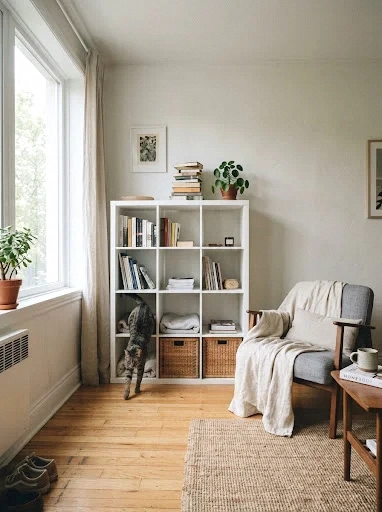
The KALLAX shelf is probably the most used piece of furniture in cat-owner apartments right now, and for good reason. It’s a cube storage unit that costs around $65 to $130 depending on size, and one of the cubes can be left open at the bottom with a cat door insert to hold the litter box inside. You get storage on top, clean lines on the outside, and your cat gets a private bathroom. It looks completely intentional, not like a workaround.
The insert kits specifically made for KALLAX litter box conversions run about $20 to $40 on Amazon and include a pre-cut entry hole with a rounded edge so your cat doesn’t get scratched going in. The cube interior is about 13 by 13 by 15 inches, so you’ll want a smaller litter box for this one. Lots of people add a curtain or magnetic closure to the opening for extra odor control.
2. Wicker Storage Basket with a Cut Entry
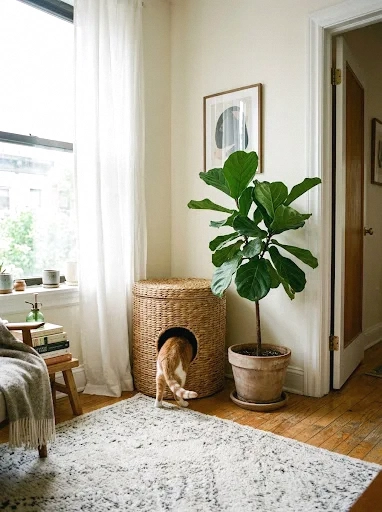
A large round wicker basket from Target or World Market costs between $35 and $80, and with a simple hole cut into the side using a jigsaw, it becomes one of the most natural-looking litter box covers you can make. I was skeptical about this one because I figured wicker would hold smells, but if you keep the top open or add a loose-fitting lid, airflow stays good.
The look reads as a boho accent piece, not a cat toilet. Place it in a corner near a plant and most guests assume it’s decorative. The interior of most large baskets fits a standard 18-inch box just fine. The downside is wicker doesn’t wipe clean easily, so line the inside with a plastic tray for easy maintenance and to protect the weave from litter scratching.
3. Bench with Hidden Interior Storage
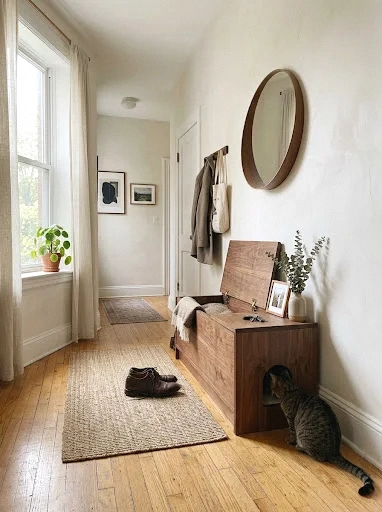
An entryway bench with a hinged top is one of those dual-purpose buys that earns its space in a small apartment. You use it to sit and put shoes on, and the interior holds the litter box. Prices range from $120 to $280 at Wayfair or Home Depot. The key is cutting a discreet entry hole into the side panel, which takes about 20 minutes with a hand saw.
Choose a bench that’s at least 18 inches deep and 24 inches wide so there’s enough room for the box plus some litter scatter. I tried this in my own space near the front door and the cat took to it within two days. Benches in espresso wood, white, or warm walnut finishes blend into almost any apartment style without calling attention to themselves.
If you want more ideas on how to keep a small entryway looking pulled together, there’s a lot of inspiration worth browsing before you commit to a layout.
4. Repurposed Nightstand
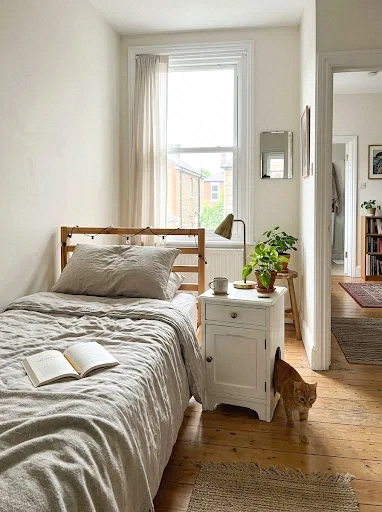
An old nightstand with a door, picked up secondhand for $15 to $40 at thrift stores or Facebook Marketplace, works better than most people expect. Remove the drawer, cut an entry hole in the side or back, and the cat walks in while the whole thing looks like a normal piece of bedroom furniture. This is especially useful if the litter box is in a bedroom and you want it totally out of sight.
Paint it to match your existing furniture and nobody will guess what’s inside. The resale value of your apartment staging goes up when there’s nothing clashing visually. Opt for a nightstand that’s at least 20 inches wide and 16 inches deep. Add adhesive weather-stripping to the inside of the door to help contain odors between cleanings.
This setup is especially popular with single women living with cats who want the bedroom to feel calm and uncluttered without sacrificing function.
5. Dedicated Cat Litter Cabinet
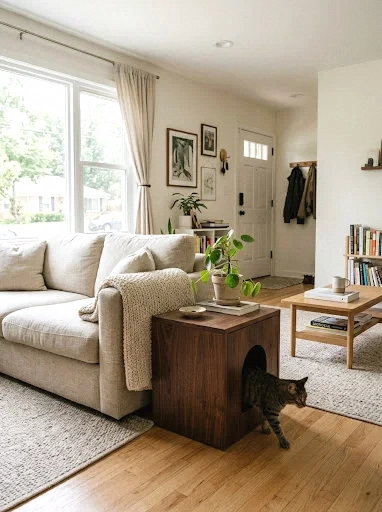
If you want a proper piece made for this purpose, companies like Merry Pet Products, Way Basics, and PawHut make litter box furniture that looks like side tables or small cabinets. Prices run $150 to $350 and include ventilation holes, removable shelves, and entry cutouts already done for you. These are the easiest option and they’re honestly the most polished looking.
The wood veneer or MDF construction holds up fine for a few years with regular cleaning. The entry openings are usually around 9 inches, which fits most cats comfortably. What I like about buying purpose-built pieces is that the cat tends to adapt faster because the interior space is sized correctly and the entry is smooth, not a rough DIY cut.
6. Curtained Alcove or Recessed Shelf
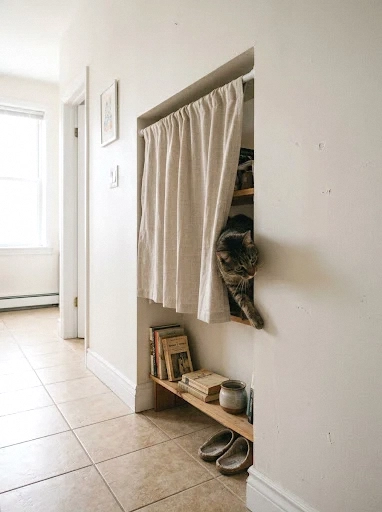
If your apartment has a small recessed wall, an alcove, or a built-in shelf area, that space is a natural spot to tuck the litter box behind a short curtain panel. A tension rod costs $5 to $12 and a half-yard of linen or cotton fabric costs another $10 to $15. Total investment under $30. The look is clean and intentional and the curtain allows full airflow.
This approach works especially well in kitchens and hallways where there’s a natural nook. You can match the curtain to existing textiles in your space, which makes the whole corner feel designed rather than improvised. No drilling required for the tension rod, which is good news for renters who care about their deposit.
7. Under-Sink Cabinet in Bathroom
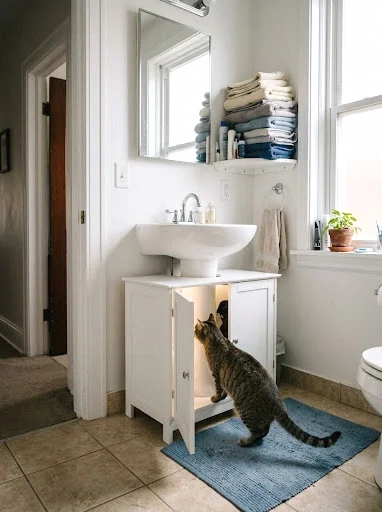
The cabinet under a bathroom sink is genuinely one of the most underrated litter box spots in any apartment. It’s out of sight, it’s ventilated through the existing cabinet gaps, and it doesn’t take up any living space. Most under-sink cabinets have enough depth for a standard litter box. Leave the cabinet door slightly ajar or add a small magnetic closure that the cat can nudge open.
Some people worry about humidity from the pipes, but as long as there are no active leaks, it stays dry. Add a small battery-powered LED inside for about $8 so the cat has some light to navigate. The only catch is this spot works best for smaller cats and standard-depth boxes, nothing jumbo-sized.
8. Barn Door Closet Conversion
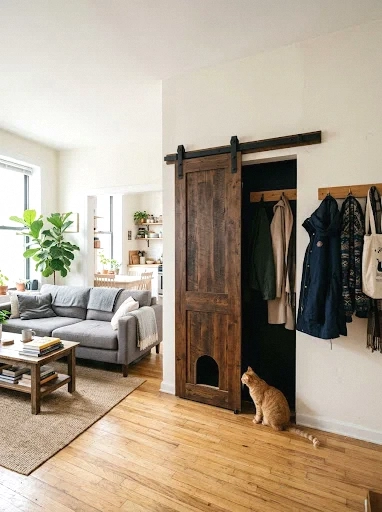
Here’s what actually happens when you give up one small closet section to the litter box: the rest of your apartment suddenly feels a lot more organized. Sliding barn door closet panels with cat cutouts are sold at Etsy shops for around $180 to $400. They mount to an existing closet opening, look like a design feature, and fully conceal everything inside.
The cutout is usually in the lower corner of one panel, just large enough for the cat to pass through. Because it’s inside a real closet, odor is contained much better than in open room solutions. Add a small fan inside to push air through the closet vents. This is a higher-budget option but the look adds genuine visual interest to the room.
9. Stacked Book Surround
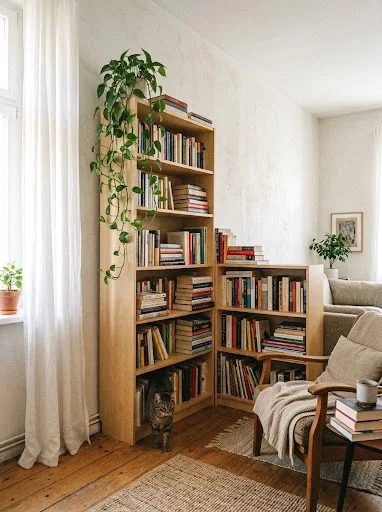
So here’s the thing: if you arrange a cluster of tall bookshelves around a corner and angle them slightly, you can create a small enclosed pocket that hides the litter box without any cabinetry at all. Two IKEA BILLY shelves cost about $80 to $100 total and arranged in an L-shape create a nook that reads as a reading corner with a small gap entry for the cat.
Style the shelves with real books and a few plants and the corner looks like a considered design decision. The cat enters through the gap at the bottom corner. It’s open enough for airflow and contained enough to hide the visual mess. This one took me ages to figure out but it’s become one of my favorites for small apartments with open floor plans.
10. Litter Box Inside a Vintage Trunk
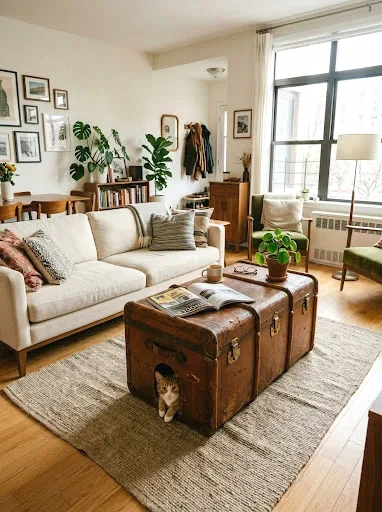
A large vintage trunk or steamer chest, found at estate sales or antique stores for $40 to $120, has enough interior volume for a full-size litter box with room to spare. Drill or cut a small entry hole in the front panel near the floor, line the inside with a plastic sheet, and the outside reads as a stylish storage piece or coffee table base.
Trunks in brown leather, distressed wood, or canvas all work well depending on your apartment style. The lid stays on for regular viewing, and you flip it open only for cleaning. Ventilation is the one thing to manage here. Drill at least 4 small holes in the back panel to keep air moving through, or the odor builds fast.
11. Custom Cabinet with Louvered Doors
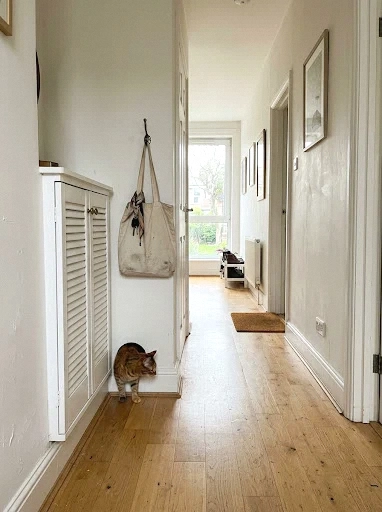
Louvered cabinet doors are one of those details that quietly solves the ventilation problem while looking intentional. A small cabinet with louvered doors, about 24 inches wide and 30 inches tall, costs $150 to $280 at Home Depot or through a local cabinet shop. The horizontal slats allow constant airflow while blocking the view completely.
Cut the cat entry into the side panel rather than the front so the cabinet looks completely closed from the front. Paint it to match the wall for a built-in feel or go in a contrasting color as an accent piece. This works really well in hallways where you want the litter box close to the living area but completely out of sight.
12. Rattan Laundry Hamper Hack
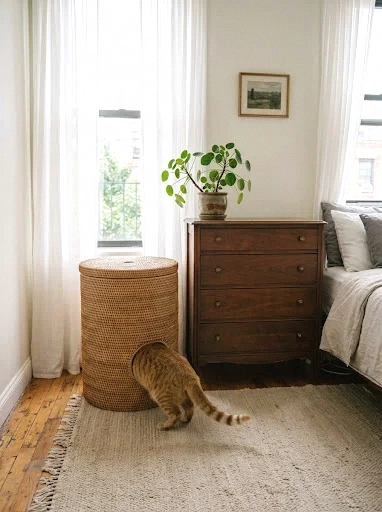
A tall rattan laundry hamper with a lid costs $30 to $60 at Target or HomeGoods, and with a single hole cut into the lower front, it holds the litter box cleanly. The natural material, open weave construction means ventilation is already built in. No drilling needed, no modifications beyond the entry hole.
Stand it in a corner of the bedroom or bathroom and it reads as a normal storage piece. Add a small plant on top to draw the eye upward. The one real downside is height: most litter boxes sit directly on the floor and tall cats sometimes don’t love crouching, so watch to see if your cat is comfortable before committing to this long term.
13. Built-In Shelving Pocket
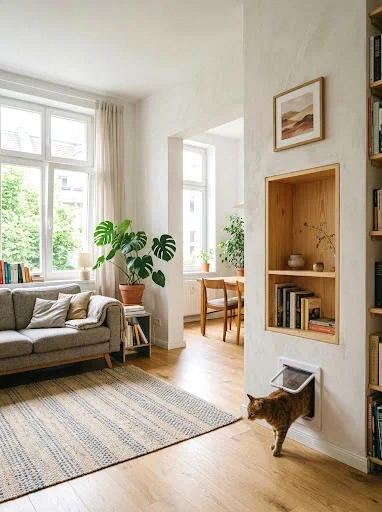
If you’re staying in an apartment long term and the landlord allows minor modifications, a simple recessed shelving pocket built from plywood is a project you can do for $60 to $100 in materials. It goes into an existing wall cavity, which most interior walls have, and creates a fully flush built-in space for the litter box.
Frame it out with a simple wood surround and add a cat-door insert. From the outside it looks like a designed architectural detail. Resale value doesn’t go down with this addition because it looks intentional and clean. You do need a jigsaw and basic drywall tools. If you’re comfortable with a DIY project, this gives the most polished result of any option on this list.
14. Plant Cluster Privacy Screen
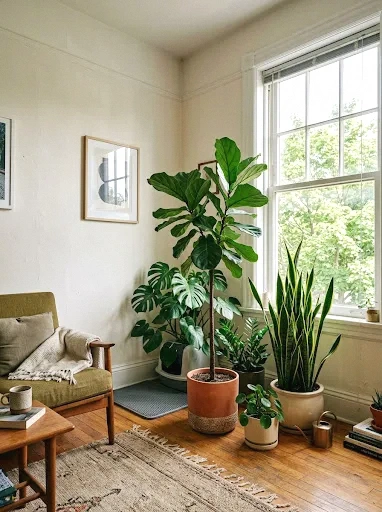
A cluster of large potted plants, fiddle leaf figs, snake plants, monsteras, placed in a deliberate grouping can create a visual privacy screen that hides the litter box behind them without any furniture at all. Keep the box on a mat at the base of the plants and the green foliage does the concealing.
Cost for three large statement plants runs $60 to $150. This approach works best in bright apartments with south or east-facing windows where the plants thrive. The obvious downside is that cats sometimes dig in plant soil, so use pots with covers or top the soil with decorative stone. And double-check that all plants in the grouping are non-toxic to cats. Lilies, pothos, and many common houseplants are toxic.
15. Floating Cabinet with Cat Entry
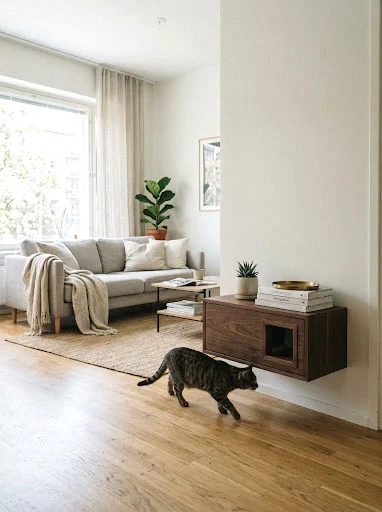
A floating wall-mounted cabinet at floor level, which sounds unusual but looks very clean, holds the litter box off the ground slightly, making cleaning easier and giving the space a modern feel. Floating cabinets run $120 to $300 at IKEA or Wayfair. Mount it at about 6 inches off the floor and cut the entry from below.
This is a renter-friendly option if you use heavy-duty wall anchors rather than permanent mounting hardware, and patch the holes properly when you leave. The raised position keeps the litter box away from floor drafts and makes scooping easier on your back. Lots of people in minimalist apartments prefer this look because the floating effect makes the room feel lighter.
16. Repurposed TV Console
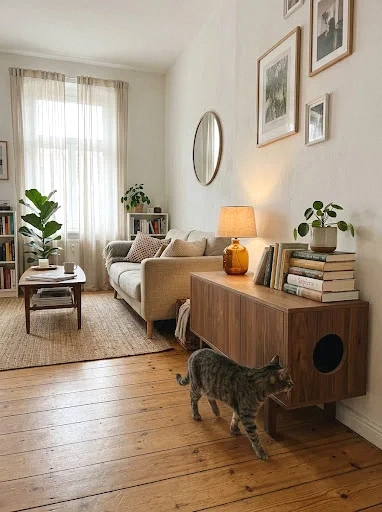
A low TV console with closed cabinet doors, the kind you might find secondhand for $30 to $80, is one of the best litter box hiders for living rooms. The piece is wide enough to hold a full-size box, sits at a height that’s easy for all cats to enter, and already has enclosed cabinetry that hides everything inside.
Cut the cat entry into one side panel. Keep the other cabinet doors functional for storage. On top, style it like a normal media console with a lamp, some books, and a small plant. Nobody will guess what’s behind door number one. This is a good starting project if you’re new to DIY modifications because the cut is simple and the piece is easy to replace if you make a mistake.
17. Linen Closet Bottom Shelf Conversion
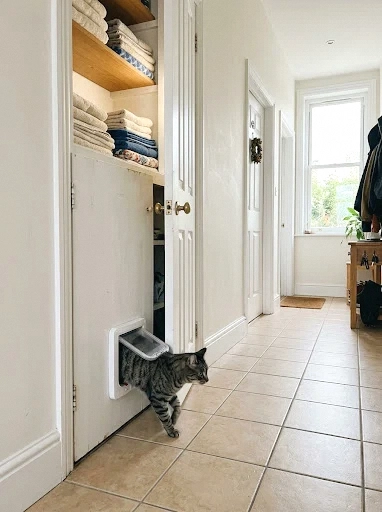
If your apartment has a linen closet, that bottom shelf is almost always wasted space. Clear it out, place the litter box there, and cut a small entry hole in the lower corner of the closet door. Leave the door slightly open using a door stopper or add a cat flap insert. Everything else in the closet stays normal.
Cost for a cat flap insert is about $15 to $25 and installation takes under an hour. The closet space manages odor naturally because it’s enclosed and the door controls access. This is the most budget-friendly option on the entire list, and it genuinely works. The only real requirement is having a linen closet you can dedicate the bottom portion of.
Building good storage habits in a small space makes solutions like this one even easier to maintain long term.
18. Decorative Room Divider Screen
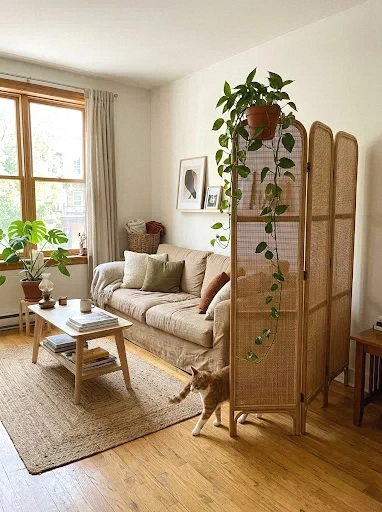
A three-panel room divider screen placed in a corner at an angle creates a small enclosed zone that hides the litter box completely from the main room view. Prices range from $60 to $200 at IKEA, World Market, and Amazon. Wood lattice or rattan screens work best because they allow some airflow while blocking sightlines.
The cat walks behind the screen through the natural gap at one side. No modifications needed. This is the most renter-friendly option because nothing is altered or cut. The divider also adds a layered visual depth to the room, which makes small apartments feel larger. Style the top edge of the screen with a trailing plant for extra effect.
19. Bathroom Vanity Under-Counter
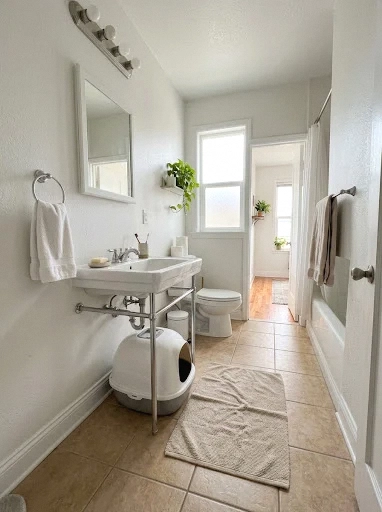
Some bathroom vanities have open under-counter space, not a cabinet, just a sink on legs with space beneath. That open space is actually a good spot for a covered litter box if the bathroom is large enough to allow cat access. A covered litter box like the Petmate Booda Dome or the Modkat Flip runs $40 to $90 and has a domed top that reduces scatter.
Tuck it under the vanity, put a mat beneath it to catch litter, and close the bathroom door just enough that only the cat can push through. It stays out of the main living space entirely and the bathroom’s natural ventilation handles most of the odor. If you already have a small bathroom, this probably won’t work, but for larger layouts it’s a clean solution.
20. Painted Accent Corner with Dedicated Box Nook
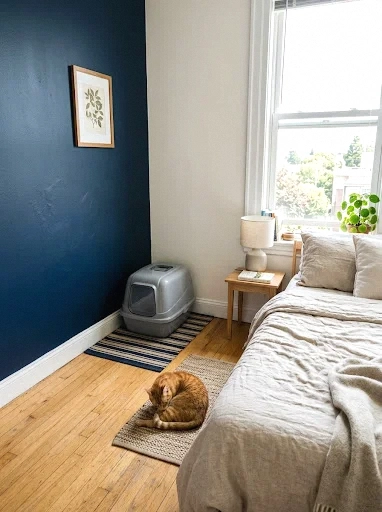
This one is about making the litter box area look like a deliberate design decision. Paint one corner of a room, often a hallway corner or a bedroom corner, in a contrasting color. Dark green, warm terracotta, or deep navy all work well. Within that painted corner, place the litter box on a coordinating mat, add a small framed print above it, and the whole corner reads as a styled accent zone.
Total cost for paint and decor is $40 to $80. The litter box is still visible but it’s been absorbed into a composed vignette that looks intentional. This works best in modern and eclectic apartments where bold corners are already a design feature. It won’t work as well in minimalist or all-white spaces.
21. Sideboard Cabinet
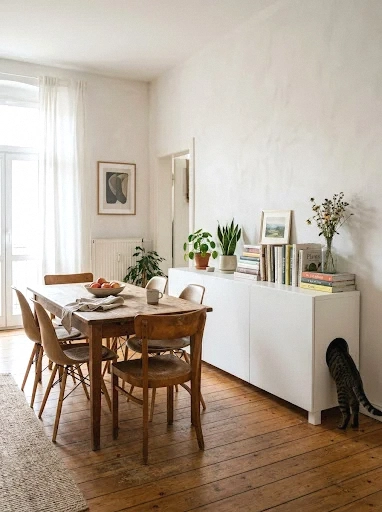
A sideboard, the long low cabinet usually used in dining rooms, is one of the most visually substantial litter box hiders you can use. At 48 to 60 inches long, it has plenty of interior volume. Cut the cat entry into one end panel. The cat gets a dedicated zone inside and you get a full surface on top for décor. Prices at IKEA and Wayfair run $200 to $450.
This works especially well in open-plan apartments where the living and dining space blend together. The sideboard serves its normal function and hides the litter box at the same time. Add a lined basket inside to make cleaning easier. The piece adds real visual weight to the room and can genuinely improve the look of the space rather than just solving a problem.
22. Cat-Specific Furniture from Specialist Brands
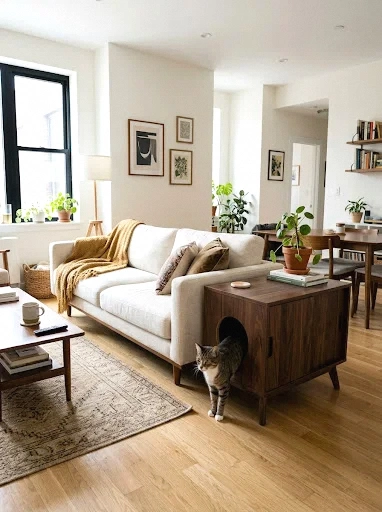
The market for cat furniture that actually looks good has grown a lot. Brands like Tuft and Paw, The Refined Feline, and Catastrophic Creations make litter box enclosures that look like modern accent tables, mid-century cabinets, and even small credenzas. Prices run $200 to $600 and they’re worth it if you want zero DIY involved.
The construction is solid, the finishes are real wood veneer or powder-coated steel, and the ventilation and entry dimensions are designed specifically for cats. I was wrong about this category for a long time because I thought all cat furniture looked like pet store stock. These pieces genuinely hold their own as décor. If your budget allows it, this is the most sustainable long-term option because quality construction lasts.
If you share the apartment with a dog as well, there are decorating ideas for dog owners too that solve similar space and furniture challenges.
23. Mudroom Bench Cabinet Combo
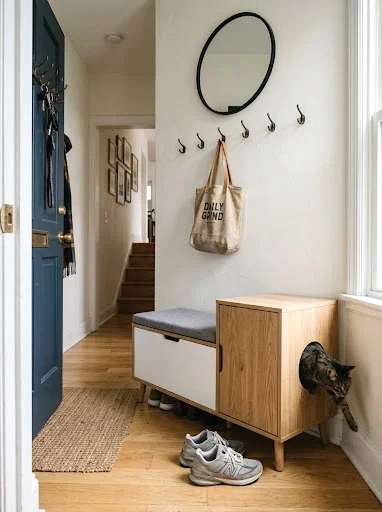
In apartments with a dedicated entry or a mudroom-adjacent hallway, a built-in bench and cabinet combo conceals the litter box in the most natural way possible. Mud areas are already the designated messy zone, so the litter box belongs there. A freestanding bench-cabinet combo from Wayfair costs $180 to $320. The cat enters through a side panel cutout and the rest of the piece functions as entry storage.
Hang hooks above for bags and coats. Use the bench top for shoes or folded blankets. The whole entry zone becomes a styled and functional corner that happens to include a cat bathroom. Guests walking in see a put-together entry, not a pet area. It’s the most seamless integration you can get in a typical apartment layout.
Styling a functional apartment entry zone is one of the highest-impact changes you can make, and the bench combo fits right into that goal.
24. Floating Shelf System with Hidden Lower Cabinet
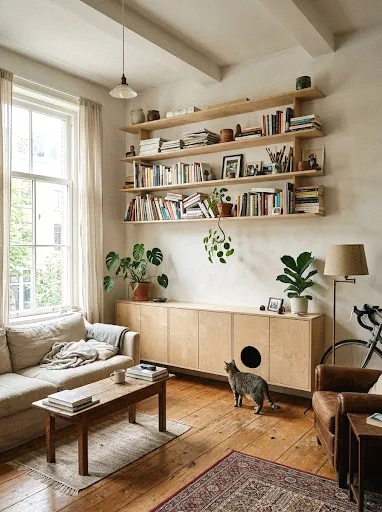
The last idea is also one of the most polished. A floating shelf system that includes both open display shelves above and a closed cabinet below, with the lower cabinet holding the litter box, gives you a full wall feature that reads as custom storage. Companies like Semihandmade and IKEA’s PAX system can be configured this way for $250 to $700 depending on size.
The cat entry goes into the lower cabinet panel. The open shelves above display books, plants, and objects, drawing the eye upward so nobody even looks at the base. This approach works especially well for renters who plan to stay a few years and want to invest in the look of the space. When you move, the shelving comes with you and the cabinet can be repurposed.
Final Thoughts on Apartment Decor for Cat Owners
The litter box doesn’t have to be the thing you apologize for every time someone comes over. Most of these ideas cost less than a single piece of new furniture and some cost almost nothing if you work with what you already have. The hidden box is solvable. So is the scattered litter, the corner that never looks right, and the feeling that having a cat means giving up on your apartment looking decent.
Pick one. Start small if you need to. The IKEA KALLAX hack or a rattan basket can be done this weekend for under $100. Start there and see how it changes the whole feel of the room.


