
21 Small Studio Apartment Design Ideas That Actually Work

Living in a studio apartment means every square foot has to pull double duty, and that’s genuinely exhausting to figure out on your own.
This list of 21 small studio apartment design ideas was put together after looking at what real people in similar spaces actually tried, not just what looks good on Pinterest. Each idea was picked because it solves a real problem, fits within a $100 to $300 budget, and works in a rented space where you can’t knock down walls. A few ideas cost under $30. None require a contractor.
This is for renters and first-time apartment dwellers working with 300 to 600 square feet and a limited budget. It’s not for people who want a full renovation. But if you want a space that feels intentional and actually livable, these ideas are very much achievable.
By the end, you’ll have a clear picture of what to change first and how to make your studio feel like a real home.
If you’re starting from scratch, there’s a solid foundation of tips on apartment living done on a budget that pairs well with everything here.
What to Know Before You Start Small Studio Apartment Design
- Vertical space is almost always wasted. Most studio renters only use the bottom 5 feet of wall height.
- Plan your zones first on paper before buying anything. Furniture placed wrong kills flow instantly.
- Budget reality: a full studio refresh can be done for $150 to $300 if you prioritize smart, multi-use pieces.
- Most people overlook the impact of light color on ceiling height. Light walls can add perceived inches.
- Common mistake: buying a sofa that’s too large. A loveseat under 60 inches fits most studios better.
- Renters: use command strips rated for 5+ lbs. They hold more than you think and leave no marks.
- Multi-function furniture lasts longer when it has solid wood or metal frames. Particle board breaks fast.
1. Use a Room Divider to Create Zones
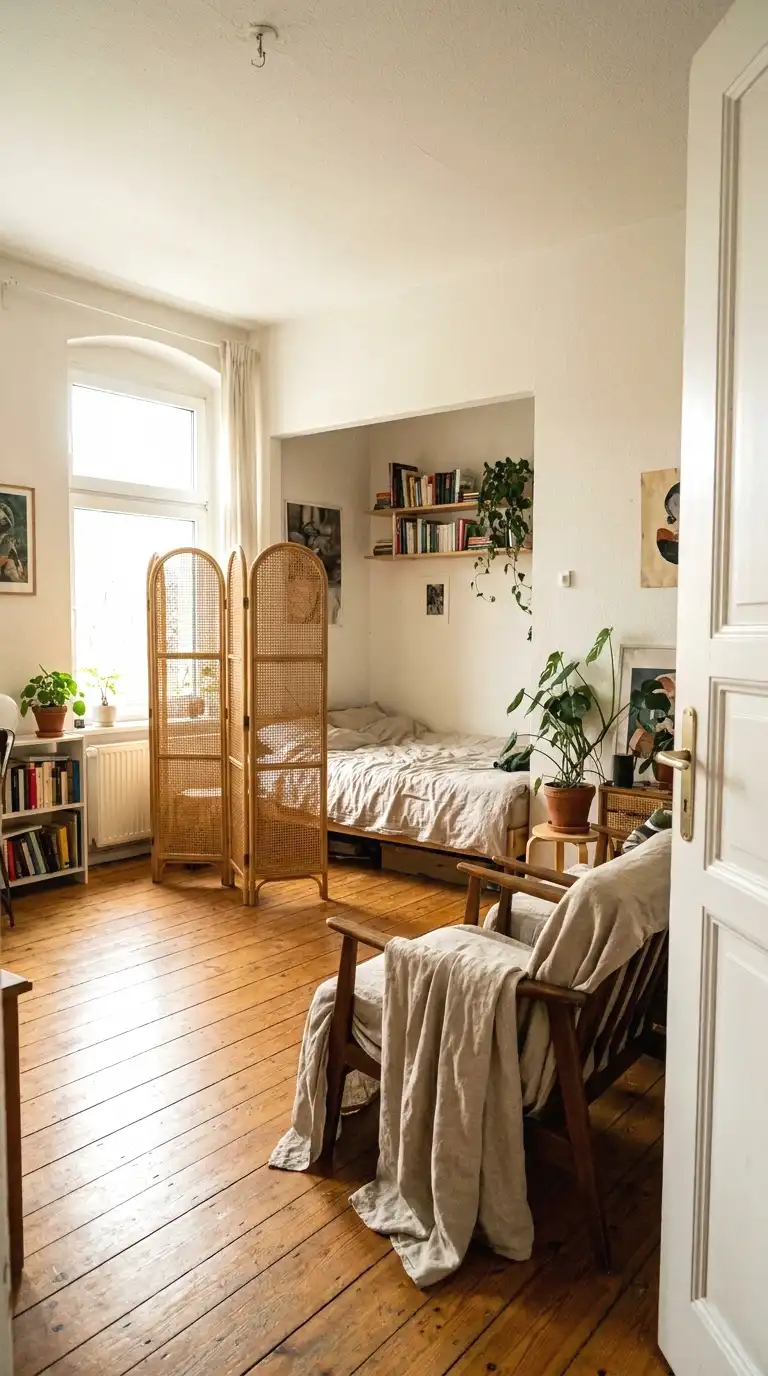
A studio without zones just feels like one big messy room, and that’s one of the first things most people complain about. A room divider, whether it’s a bookcase, curtain panel, or folding screen, creates the visual separation your brain needs to actually relax in the bedroom area without staring at your work desk.
I went with a 4-panel folding screen from a thrift store for about $25 and painted it a matte warm white. It immediately made the sleeping corner feel like its own room. You can find lattice screens, rattan panels, or even a hanging curtain rod with linen drapes for $40 to $80. The psychological effect is worth every dollar.
If you want more inspiration on ways to carve out a sleeping nook, there are some genuinely clever setups worth looking at.
2. Get a Bed with Built-In Storage

So here’s something almost every studio dweller figures out late: the space under your bed is some of the most valuable real estate in the whole apartment. A platform bed with drawers underneath can hold linens, out-of-season clothes, and all the things that usually pile up in corners.
Beds with built-in storage run from $150 to $300 for a queen, and many come with two to four large drawers. That easily replaces a separate dresser, which saves you both money and floor space. Measure your room before ordering because a queen frame with drawers typically adds 2 to 3 inches to each side.
There are more storage solutions hiding under your bed and around your apartment than most people ever take advantage of.
More Ideas:



3. Mount Your TV on the Wall

The TV stand takes up floor space you don’t have. Wall-mounting the TV frees up that entire footprint, which in a studio might be 3 to 4 square feet of usable room. That’s not nothing. It also makes the whole wall look intentional instead of cluttered.
A basic TV wall mount costs $20 to $40 and most come with everything you need. If you’re renting and worried about the holes, fill them with spackling paste and touch-up paint when you leave. Most landlords won’t charge you for two or three properly patched holes. The clean look is worth the minor repair.
4. Add a Murphy Bed or Wall Bed

This one’s a bigger investment, but if your studio is under 400 square feet, a Murphy bed can genuinely change how the space functions. During the day, it folds flat against the wall and you get a full living area. At night, it drops down and becomes a proper bed.
Murphy bed kits from IKEA or Wayfair range from $300 to $700 depending on size and built-ins. (took me ages to figure this out) The ones with a fold-down desk panel built in are the smartest option for work-from-home situations. You get a desk by day and a bed by night, all in one wall unit.
5. Use Curtains to Fake High Ceilings

Here’s what nobody tells you: where you hang the curtain rod matters more than the curtains themselves. Most people hang the rod just above the window frame. Hang it 4 to 6 inches below the ceiling instead, and use floor-length panels. The eye follows the fabric from ceiling to floor and reads the whole thing as height.
Curtain rods with panels run about $30 to $70 for a standard window. Stick to solid linen, cotton, or light-blocking panels in cream, white, or soft gray for the most visual impact. Busy patterns on curtains make small rooms feel even smaller. Simple and long is the move.
It’s one of those small styling choices — like how curtain length shapes a room — that costs almost nothing but completely changes the feel.
6. Pick a Loveseat Instead of a Full Sofa

My first studio apartment had a 90-inch sofa and I could barely open the front door without bumping into it. A loveseat under 60 inches gives you seating without eating the whole room. It also makes the space feel less jammed, even though you might think the bigger couch would be more comfortable.
You can find solid loveseats on Facebook Marketplace for $50 to $150, or buy new from IKEA for around $200. Look for ones with removable washable covers since studio life gets messy fast. If you want more seating, two small accent chairs give you more flexibility than one oversized couch.
More Ideas:
7. Put Mirrors on the Wall Strategically

A large mirror or a gallery wall of smaller mirrors does something genuinely useful in a small space: it bounces light and makes the room look twice as deep. This isn’t just an aesthetic thing. The depth perception shift is real, and it works in even the darkest studios.
A single full-length mirror leaned against the wall costs $30 to $80. A large framed wall mirror runs $50 to $150. Place it across from a window for maximum light bounce. Avoid putting it directly across from the bed if that bothers you at night. Side walls or behind a reading chair tend to be the most effective spots.
8. Float Your Furniture Away from the Walls

Almost everyone pushes all their furniture against the walls in a small apartment, thinking it makes the room bigger. It actually makes it feel more cramped. Floating pieces a few inches away from the wall creates a more intentional layout and gives the room better visual flow.
Even pulling a sofa 4 to 6 inches from the wall makes a difference. The negative space between furniture and wall reads as breathing room. This costs nothing. It’s just a furniture rearrangement. If your room allows it, angle a chair at 45 degrees in a corner. That trick alone opens up a surprising amount of perceived space.
9. Install Floating Shelves for Storage and Style

Floating shelves go up on the wall, which means they hold your stuff without touching your floor. In a studio, that’s a big deal. You can stack them high, go corner to corner, or do a single long shelf above the sofa to hold books, plants, and small objects without a bookcase eating up square footage.
A set of two or three floating shelves costs $25 to $60 depending on material and length. White shelves disappear into the wall. Wood shelves add warmth. Don’t overfill them. A shelf that’s 70% full looks intentional. A shelf that’s 100% full looks like storage, which is the opposite of what you want.
10. Use a Folding Dining Table

A fixed dining table in a studio is almost always too large for the space. A folding or drop-leaf table folds flat against the wall when you’re not eating and opens up when you need it. This is one of those ideas that sounds like a compromise but actually works better in practice than a standard table.
Drop-leaf tables run from $60 to $150. Wall-mounted fold-down tables (which attach to the wall and fold completely flat) cost $80 to $200. Either option saves you 10 to 15 square feet of floor space when folded. That’s almost a full room’s worth of breathing room in a small studio.
For more on dining setups that don’t crowd the space, there are some smart compact options worth browsing.
More Ideas:
11. Go Vertical with a Tall Bookcase
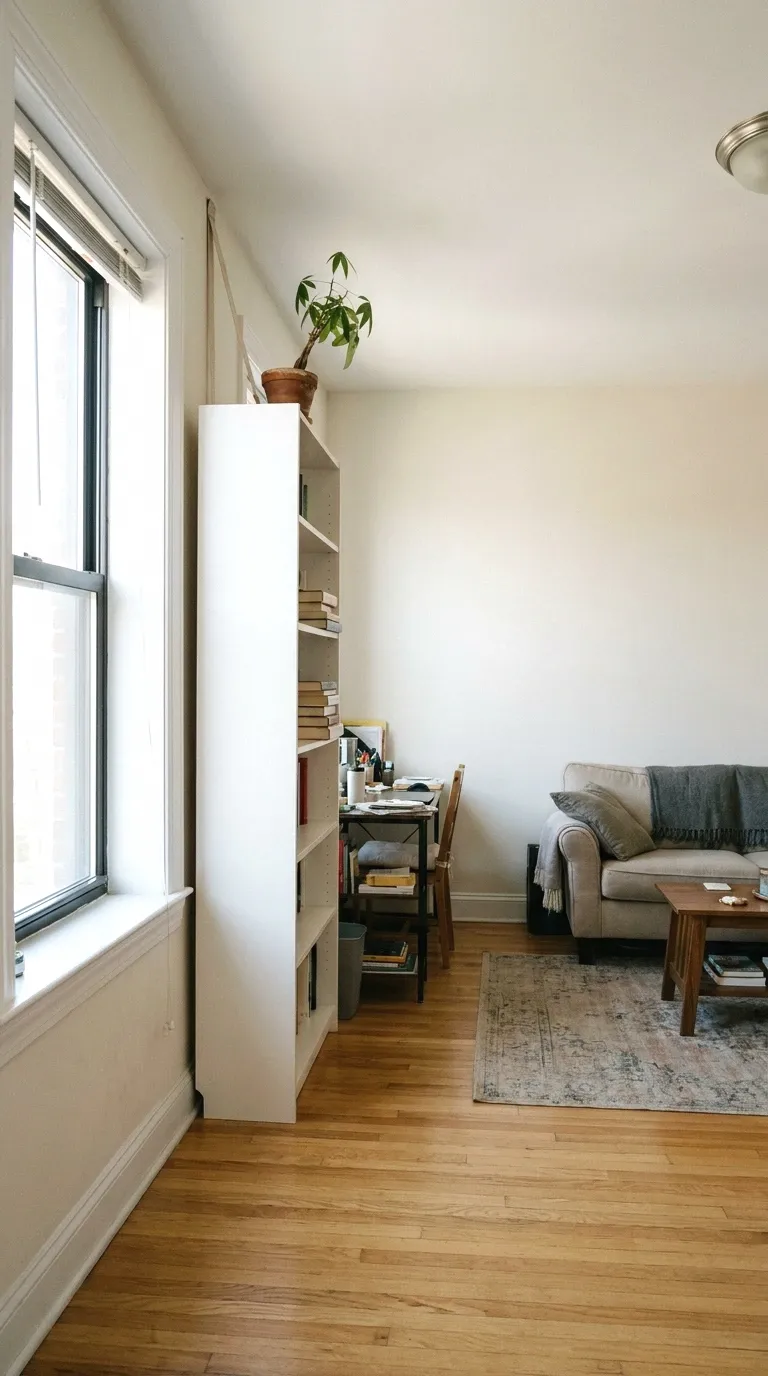
Instead of a wide, low bookcase, get a tall narrow one. A unit that goes from floor to nearly ceiling holds far more than a short wide one, and it takes up less floor space. IKEA’s Billy bookcase is only 11 inches deep, which means it barely eats into the room at all.
Tall bookcases run from $60 to $150. If you’re renting, secure it to the wall with a furniture anti-tip strap ($10 to $15) for safety. You can also use the top of a tall bookcase as additional display space, which gets things off your counters and floor. This one is so underrated in small apartment design.
12. Add Under-Shelf Basket Storage

Anywhere you have a shelf, you can add hanging basket organizers underneath it. These clip on and let you use the space below the shelf that would otherwise just be dead air. Works in kitchens, bathrooms, closets, and on floating shelves in the main room.
A set of two to four under-shelf baskets costs $15 to $30. They’re wire or fabric and most hold 5 to 10 pounds. In a kitchen, use them for fruit, dish towels, or cutting boards. In a closet, they’re great for folded shirts or accessories. It’s extra storage that appears out of nowhere without touching the floor.
13. Replace Overhead Lighting with Layered Lamps

The overhead light in most apartments is harsh and flat. One ceiling light illuminates everything equally, which flattens the room and makes it feel institutional. Layered lighting, using a floor lamp in one corner and a table lamp near the bed, creates warmth and makes the space feel much more like a home.
A decent floor lamp runs $30 to $80. A table lamp is $20 to $60. Switch the bulbs to warm white (2700K) and suddenly the whole room feels different at night. When I tried this in my own space, I was genuinely surprised at how much the mood shifted just from changing where the light was coming from.
Lighting is one of the most underrated tools in the kit — there are more lighting ideas that make a room feel warm without any rewiring involved.
14. Hang a Pegboard for Flexible Wall Storage
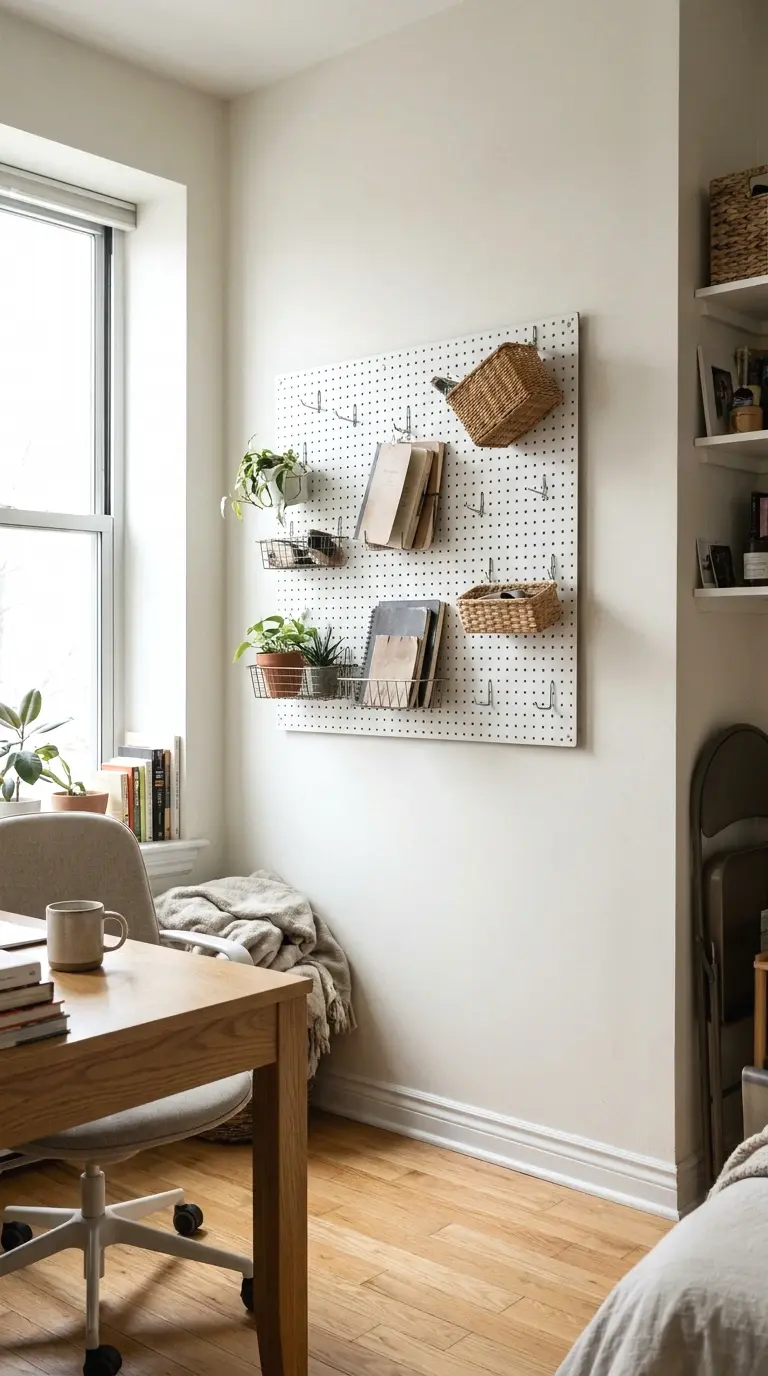
A pegboard on the wall gives you hooks, shelves, and holders that you can rearrange any time without new holes. In a studio kitchen or home office corner, it keeps things off surfaces and makes the space feel more organized without buying a single extra piece of furniture.
A 2×4 foot pegboard costs $15 to $30. The hooks and baskets add another $10 to $20. Paint it the same color as your wall if you want it to blend in, or make it a feature with a bold color. Mount it with standoffs (small spacers that hold it off the wall) so the hooks have room to fit properly. Total cost is usually under $60.
More Ideas:
15. Use a Bench at the Foot of the Bed

The foot of the bed is usually dead space in a studio. A storage bench there gives you a place to sit while putting on shoes, hold extra blankets or pillows inside, and visually anchor the sleeping zone. It also stops clothes from piling up on the bed, which is a small but genuinely useful win.
A storage bench runs $60 to $150 depending on size and material. Look for one that’s 36 to 48 inches wide for a queen or full bed. Upholstered tops add a finished look. If you’re on a tight budget, a vintage chest or trunk from a thrift store does the same job for $20 to $50 and has more character.
16. Hang Artwork at the Right Height

Most people hang artwork too high. Eye level is the rule, and eye level is roughly 57 to 60 inches from the floor to the center of the frame. When art is hung too high, it disconnects from the furniture below and makes the ceiling feel lower, not higher. It’s a small thing that makes a real difference.
You don’t need expensive art. A framed poster from a free download site or a thrifted print in a $10 IKEA frame looks genuinely good if it’s hung correctly and in the right spot. A gallery wall of 4 to 6 small frames can be put together for $30 to $60 total and adds a lot of personality to an otherwise plain wall.
17. Add Plants to Bring in Life

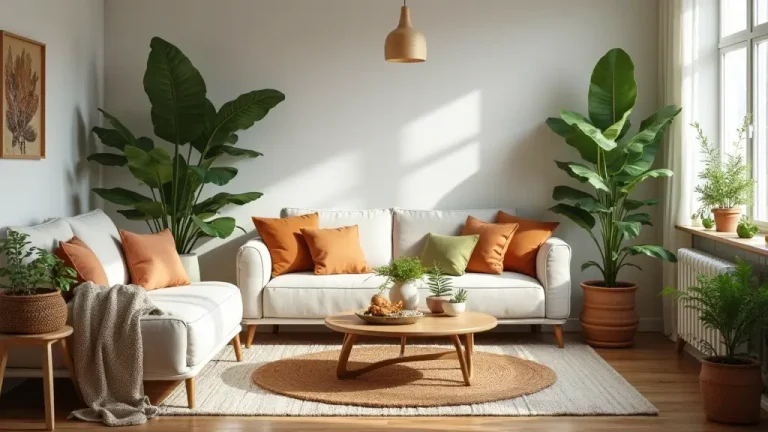
Plants do something to a room that no piece of furniture can replicate. They add softness, color, and a sense that someone actually lives there. In a studio, a few well-placed plants break up the hard edges of furniture and walls and make the whole space feel warmer without adding visual clutter.
A pothos, snake plant, or ZZ plant runs $10 to $20 at most garden centers and requires almost no maintenance. One large plant in a floor planter makes a bigger statement than several tiny ones scattered around. If your studio gets low light, snake plants and ZZ plants are your best friends. They thrive on neglect.
If you want to see how plant styling in tight living quarters can look intentional rather than cluttered, there’s some real inspiration out there.
18. Use a Light Color Palette on Walls and Furniture
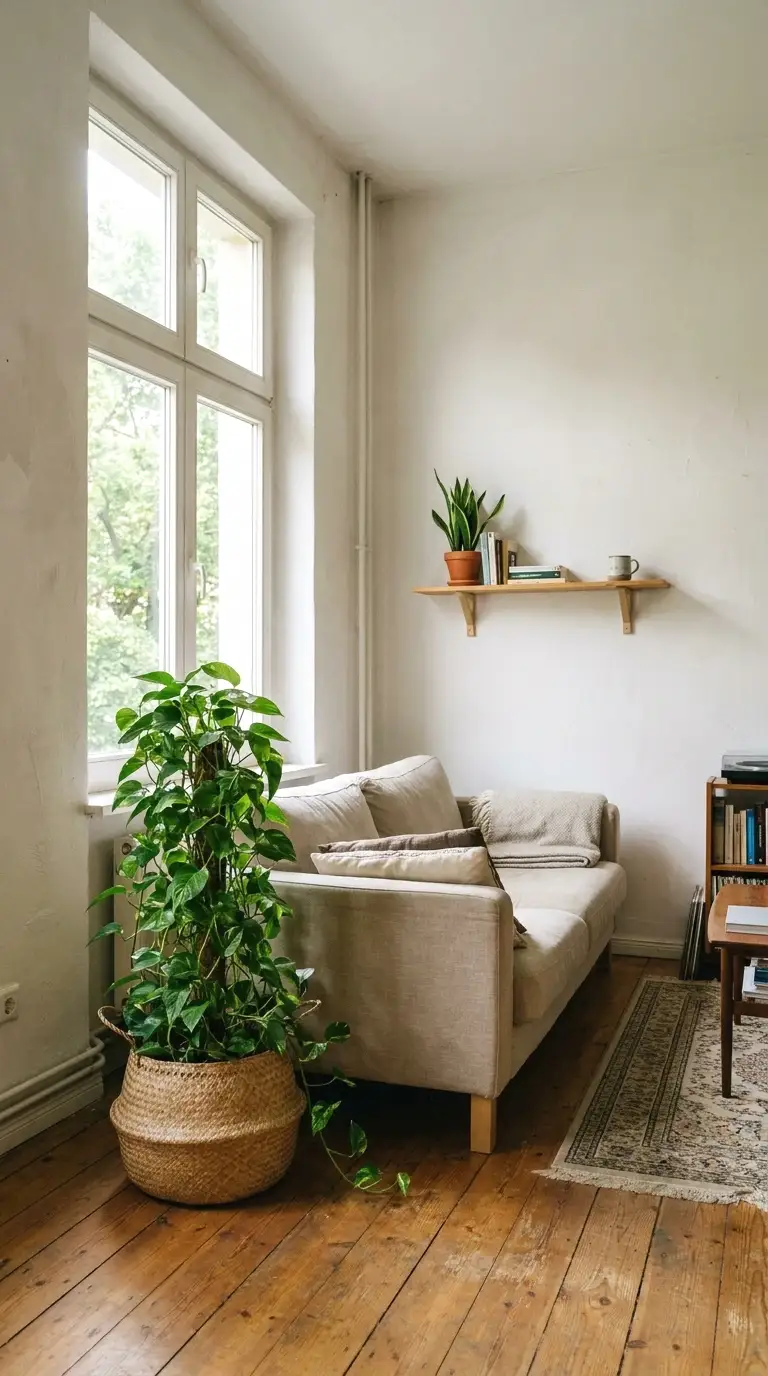
Dark colors shrink a small space visually, and in a studio that’s already under 500 square feet, that’s the last thing you want. Light walls in white, off-white, or soft warm cream reflect more light and make the room read as larger than it is. The same goes for large furniture pieces.
If you can paint, go with Benjamin Moore White Dove or Sherwin-Williams Alabaster. Both are off-white with warm undertones that don’t feel sterile. If you can’t paint, you can add a large light-colored area rug and keep your sofa and main furniture in neutral tones. The overall effect is similar even without touching the walls.
More Ideas:
19. Put a Rug Under the Furniture to Define Zones

An area rug does two things in a studio: it defines a zone visually, and it makes the room feel more intentional. A rug under the sofa and coffee table says “this is the living area” without needing a wall to make the point. It’s one of the fastest ways to make a studio feel more like a real apartment.
Go larger than you think. A 5×7 rug usually looks too small. An 8×10 rug under a sofa and chairs is the right call for most studios. Rugs in those sizes run $80 to $200 at IKEA, Amazon, or Ruggable. Ruggable’s washable rugs are worth the slightly higher price if you have pets or eat in the living area.
20. Create a Dedicated Work Corner

And if you work from home, not having a dedicated work spot in a studio is a real problem. Working from your bed kills your sleep and your productivity. Even a small corner with a wall-mounted desk and a proper chair creates enough mental separation to make work feel like work and rest feel like rest.
A wall-mounted fold-down desk runs $80 to $150 and takes up zero floor space when not in use. Add a comfortable chair for $60 to $120 and you have a functional home office corner for under $300. A small floating shelf above the desk holds supplies. Keep the area visually separate with a different wall color or a piece of art directly above it.
If you want to go further with this, there’s a full breakdown of home office corner built for small rooms that covers layout and gear together.
21. Use Multifunctional Ottoman Instead of a Coffee Table

The last piece in most studio setups is a coffee table, and a standard one is just a surface that collects clutter. A large square ottoman with a tray on top does everything a coffee table does but also gives you extra seating, a footrest, and hidden storage inside. That’s four functions from one piece of furniture.
Storage ottomans run from $60 to $180. Look for ones with firm, flat tops so they’re comfortable to sit on and useful as a table surface. Place a round wood tray on top to create a stable surface for drinks and books. I was skeptical about this one but after swapping my old coffee table out, I genuinely don’t miss it.
Final Thoughts on Small Studio Apartment Design
You now have 21 real ideas you can actually use in a small studio, most of them under $150 and all of them renter-friendly. The through-lines here are vertical thinking, multi-use furniture, and light. Those three things will carry you further in a small space than any single design trick.
Start somewhere specific. Hang the curtains higher this weekend. Or pull the sofa away from the wall and see how it feels. You don’t need to do all 21 things at once. Pick one, do it, and let that small win build momentum toward the next one.
And if you want to keep going, there are more ideas for making a studio feel complete without starting over from scratch.
If you want more ideas like these, homelypop.com has a lot more where this came from. Everything on the site is written for real spaces and real budgets.