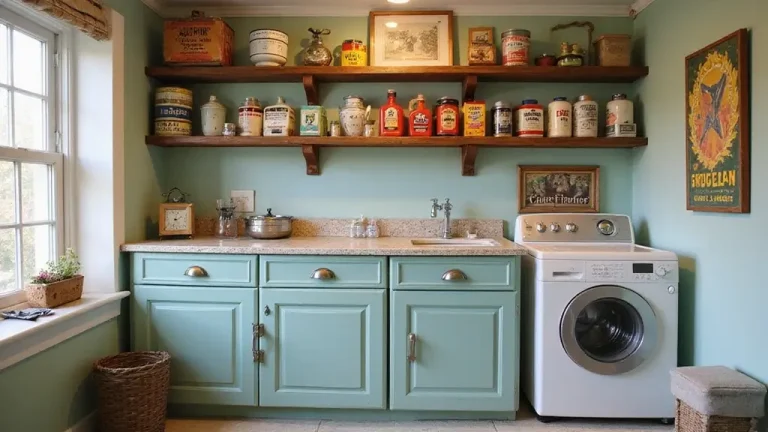

Single Guy Apartment Decor: 20 Ideas That Actually Make It Look Like You Live There

Your apartment looks like you just moved in. Boxes are gone, sure, but nothing on the walls, a random lamp in the corner, and furniture that doesn’t quite go together. It’s not bad. It’s just blank.
This list covers 20 ideas picked after going through real Reddit threads, Houzz Q&As, and what guys who’ve actually done this on tight budgets said worked. Every idea fits a budget between $100 and $300 total, or you can tackle them one at a time for $15 to $60 a piece. Categories include lighting, walls, furniture arrangement, storage, and a few finishing touches that make the biggest difference in a small apartment.
This is for guys with a normal apartment, renting or owning, who want it to look like an adult lives there without hiring anyone or spending a lot. It’s not for people who want a showroom. Results are real and repeatable.
By the end of this, you’ll know exactly where to start and what to buy first so the space actually feels like yours.
What to Know Before You Start Single Guy Apartment Decor
- Warm white bulbs (2700K) do more for a room’s feel than any furniture swap.
- Measure your wall before buying art. A 16×20″ print on a big wall looks like a stamp.
- Most guys spend $200 to $400 total getting an apartment from blank to put-together.
- Rugs anchor furniture. Without one, a sofa just floats. Aim for 8×10 ft minimum in a living room.
- Command strips hold up to 16 lbs. You don’t need to drill for most wall art.
- Dark furniture in a small room works if you keep the walls and rug light.
- Cheap curtains drag on the floor and look off. Measure from ceiling to floor, not window to sill.
- One consistent wood tone across furniture pulls a room together faster than matching colors.
1. Swap Your Lightbulbs to Warm White

The fastest, cheapest fix in any apartment. Most places come with cool white or daylight bulbs that make everything look like a CVS at 11pm. Replacing them with warm white LED bulbs, specifically 2700K, costs about $12 for a four-pack and changes the whole feel of a room in five minutes.
I did this in my own place before touching anything else and couldn’t believe the difference. The living room stopped feeling like an office. You don’t need new lamps or new fixtures. Just different bulbs. Do every room at once so the light feels consistent throughout the apartment.
2. Add a Floor Lamp in the Corner
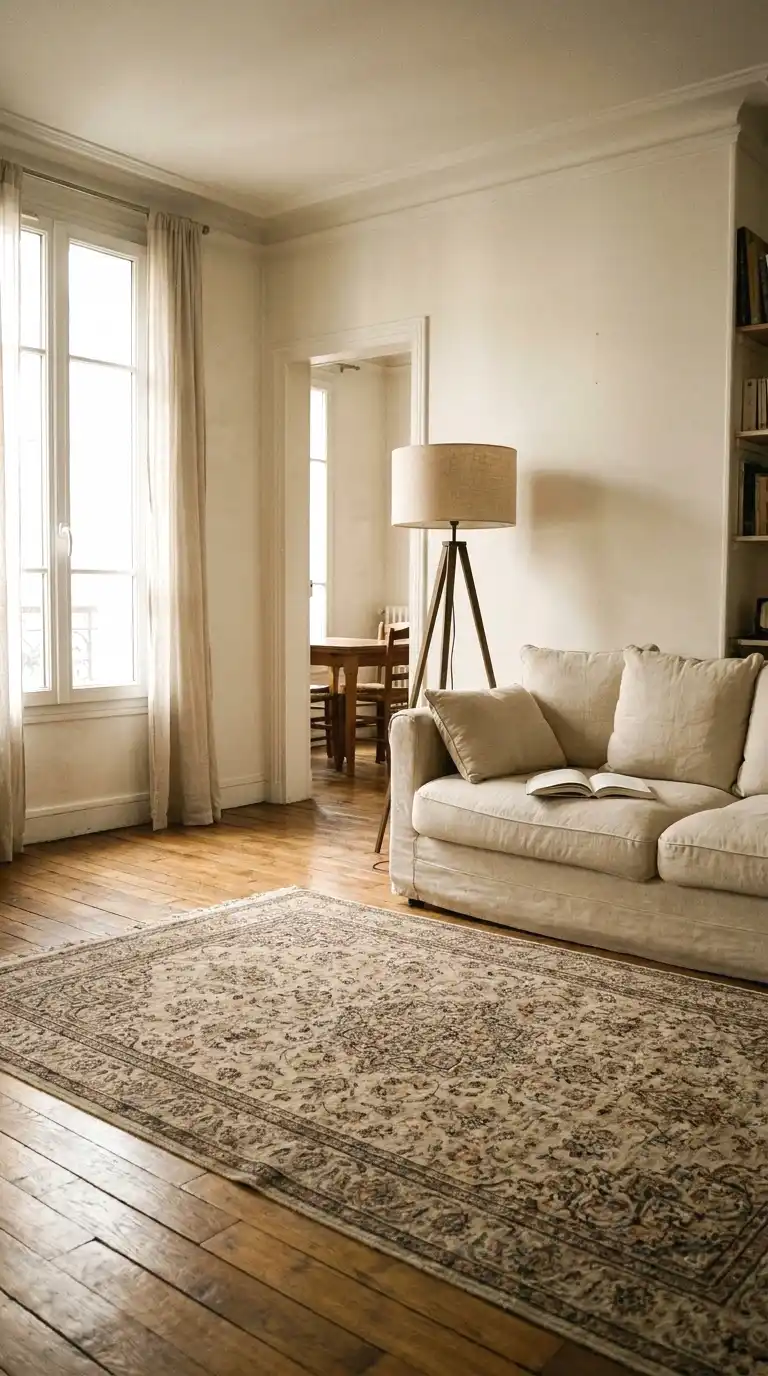
Overhead lighting is harsh. That one fixture in the center of the ceiling gives off energy that feels institutional. A floor lamp in the corner behind your sofa or chair adds what designers call “layered lighting,” which just means light that comes from different heights and makes a room feel more lived-in.
You can find a solid arc floor lamp or tripod style for $40 to $80 on Amazon or at Target. Pair it with that warm white bulb from tip one and the combination is genuinely good. Keep it on in the evening instead of the overhead light and notice how much more relaxed the room feels.
If you want to see how layered lighting comes together in a small space, there are some solid examples of [corner lamp placement that works] worth a look.
More Ideas:

3. Get a Rug That’s Actually Big Enough
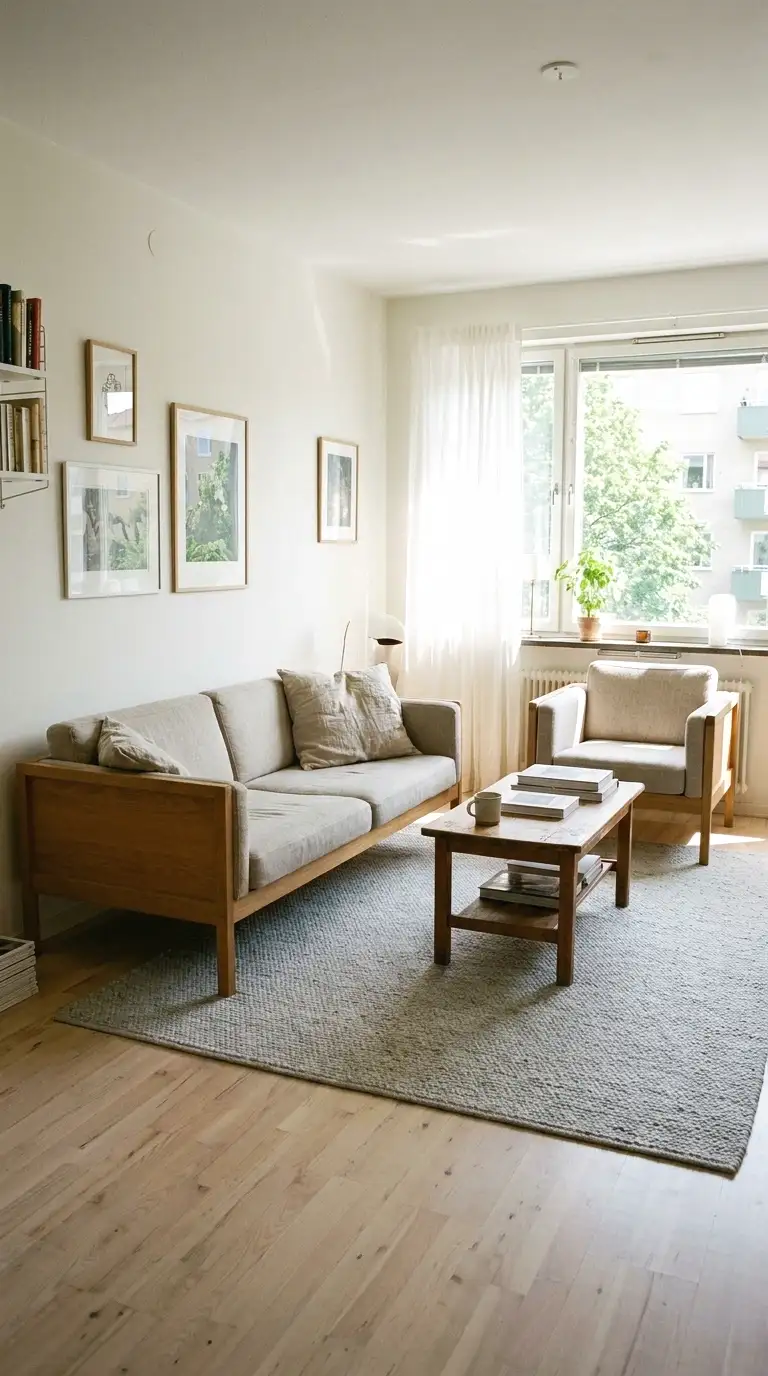
This one gets ignored more than anything else. Most guys buy a 5×7 rug, put it in front of the sofa, and wonder why the room still looks off. The front legs of your sofa and chair both need to be on the rug. That’s the rule. A 8×10 rug for a standard living room costs $80 to $150 at Ruggable, Amazon, or IKEA.
Go for solid colors or simple geometric patterns. A light gray, off-white, or dark charcoal works with almost anything. The rug is the base layer of a room. Get this right and everything on top of it starts to look more intentional.
For more on sizing and placement, this guide on [rugs that anchor a small room] breaks it down clearly.
4. Hang One Large Piece of Wall Art
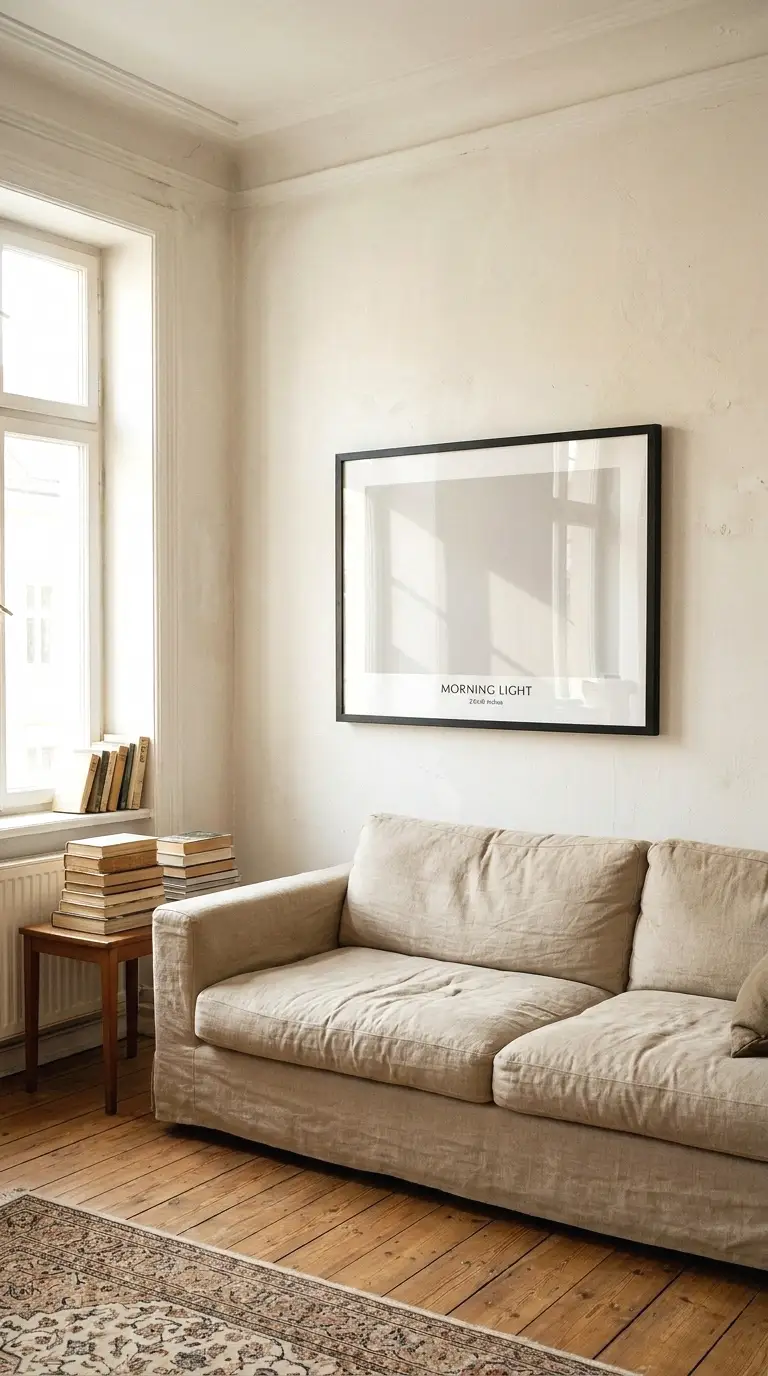
A gallery wall sounds good but takes effort to pull off without looking random. One large piece of art, something at least 24×36 inches, does more work with less risk. It gives the eye somewhere to go. And a blank wall above a sofa or bed signals that nobody actually lives there.
You don’t need to spend a lot. Society6, Etsy digital downloads, and Desenio all have quality prints under $30. Add a simple black frame from IKEA’s RIBBA line for another $15 to $20. Hang it centered above your sofa with the middle of the print at eye level, around 57 to 60 inches from the floor. That’s the standard, and it works.
If you want to go further than a single print, there are [simple ways to style bare walls] that still don’t require much effort.
5. Put Curtains at Ceiling Height
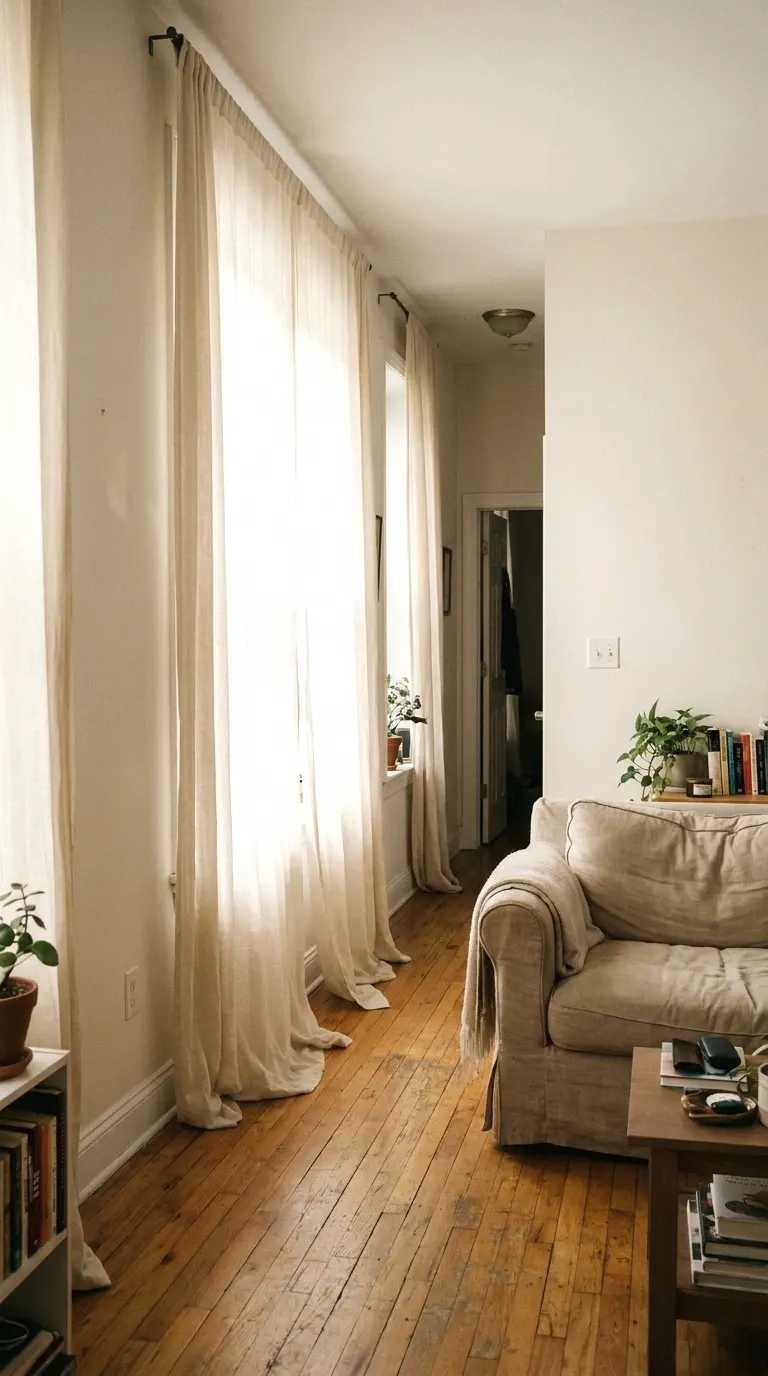
Most guys hang curtains right above the window frame. It makes the ceiling feel low and the window feel small. Hang the rod 4 to 6 inches below the ceiling instead and let the curtains drop to the floor. Same apartment. It suddenly looks taller and more pulled together.
IKEA’s LENDA curtains run about $25 to $40 per pair and come in cream, gray, and white. A tension rod or simple brackets work fine. If your windows are short and your ceilings aren’t, this is the single highest-impact swap on this list. I was skeptical about this one, but it’s one of the best things you can do for zero design skill required.
6. Use a Full-Length Mirror
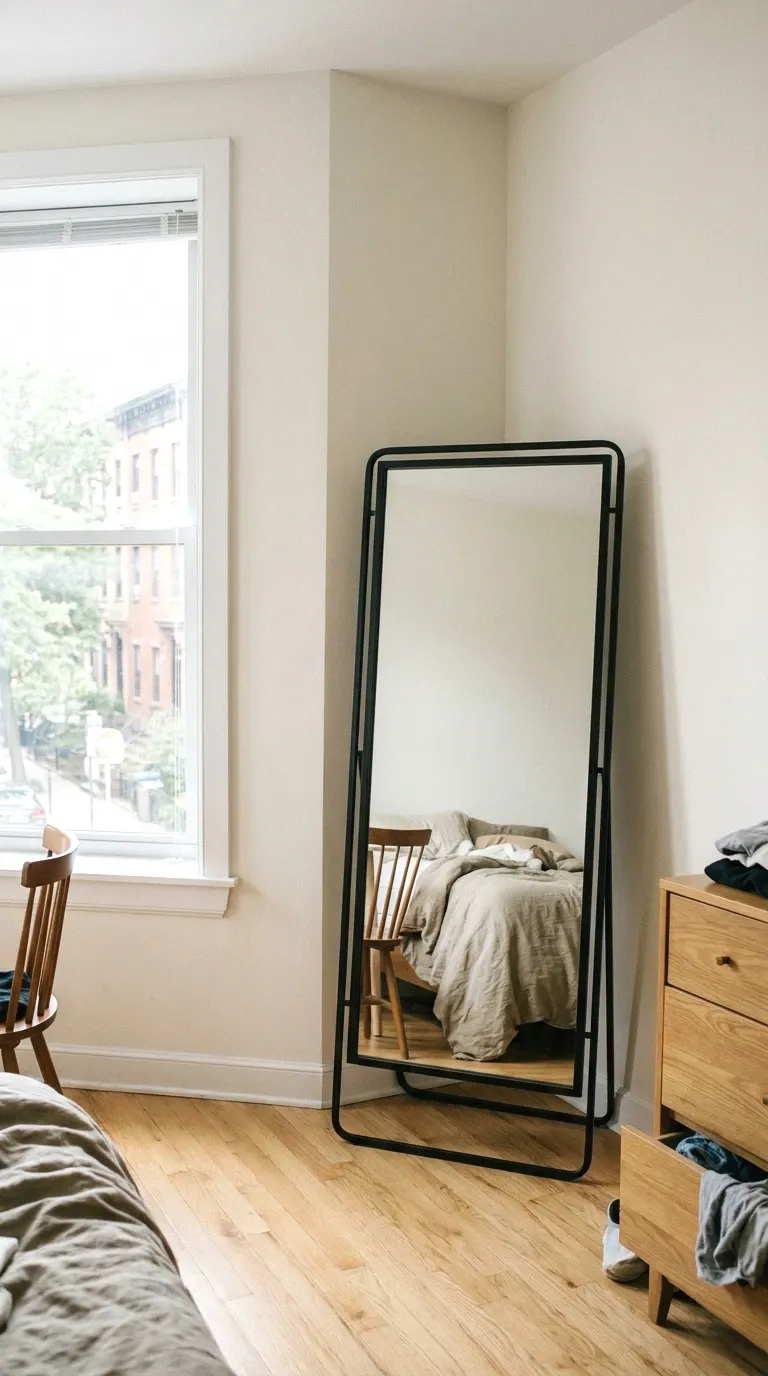
Mirrors do two things: they make a space feel bigger and they bounce light around. A full-length mirror leaned against the wall in a corner or a narrow hallway is one of the easiest ways to make a small apartment feel less closed in. You don’t need to hang it.
IKEA’s HOVET or LINDBYN mirrors run from $30 to $80. A simple black or wood frame works in most apartments. Put it in the bedroom if the living room feels okay, or lean it beside a dresser. It also gives you an actual place to check your outfit before leaving, which a guy living alone often doesn’t have.
More Ideas:
7. Consolidate Your Tech and Cables
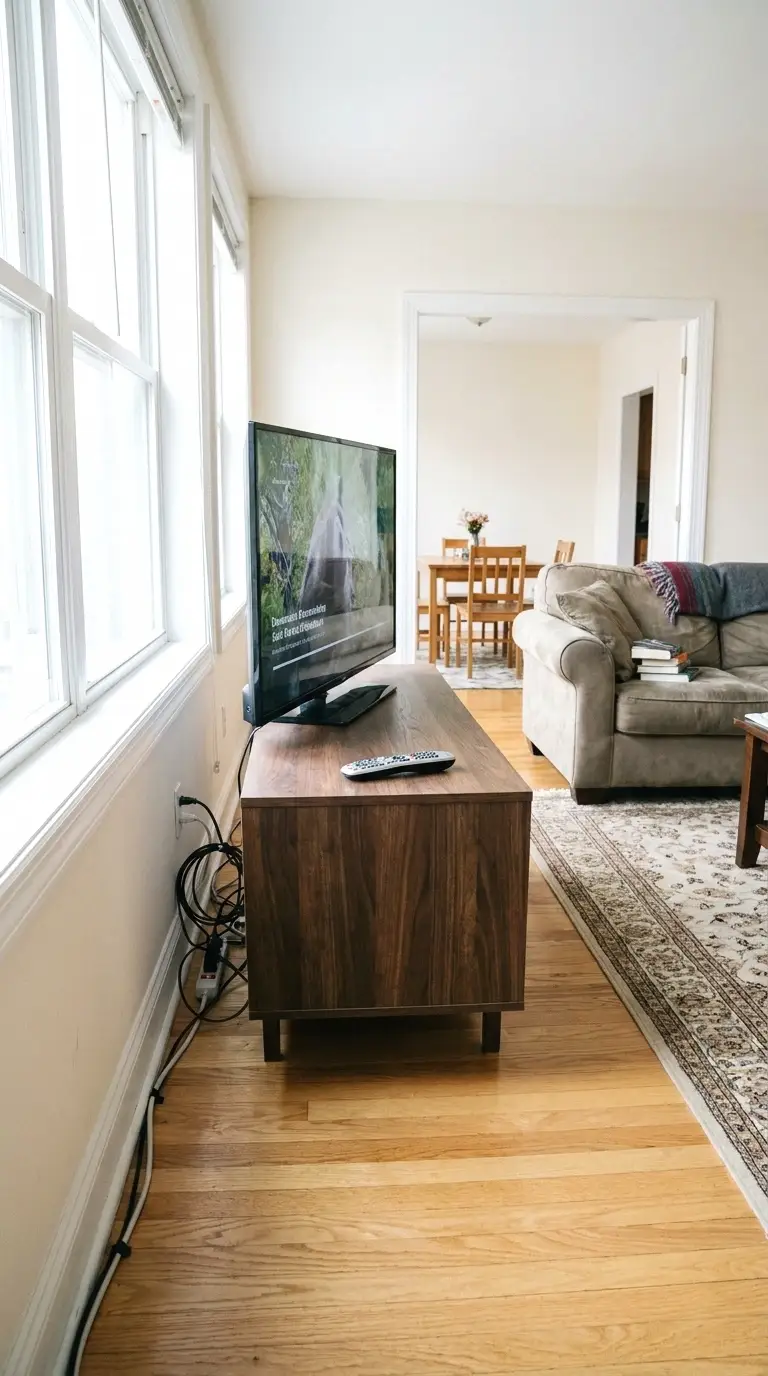
Cables are visual noise. A TV with five cords dangling down the wall makes the whole setup look sloppy even if everything else is clean. Cable management clips, a small cable box, and a power strip tucked behind furniture cost about $15 to $25 total and make a real difference.
Gather your cords, zip-tie the ones behind the TV stand, and route the rest along baseboards using adhesive cable clips. If you’re mounting your TV, a recessed in-wall cable kit runs about $25 and hides everything cleanly. This takes maybe an hour. Not exciting, but the before and after is obvious.
8. Add a Real Throw Blanket
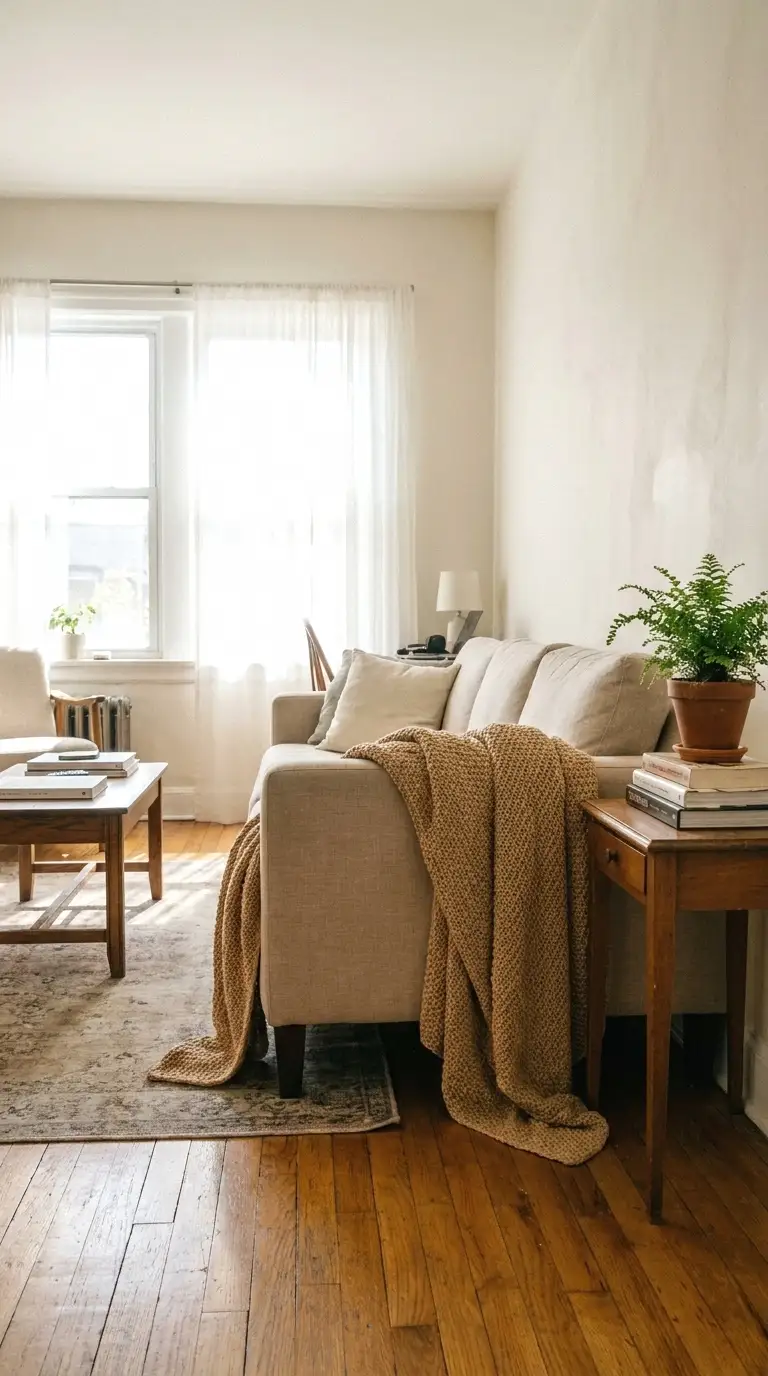
A throw blanket draped over the arm of a sofa or folded at the foot of a bed does something specific: it makes the space look like someone actually relaxes there. It signals comfort. A room without any soft texture reads as incomplete.
Go for a chunky knit or a simple cotton waffle blanket in a neutral or earth tone. Cream, tan, sage green, or dark gray all work. Brands like H&M Home, Amazon Basics, and Target’s Threshold line have solid options for $20 to $45. Don’t overthink the drape. Just toss it naturally and leave it.
9. Buy One Good-Looking Tray
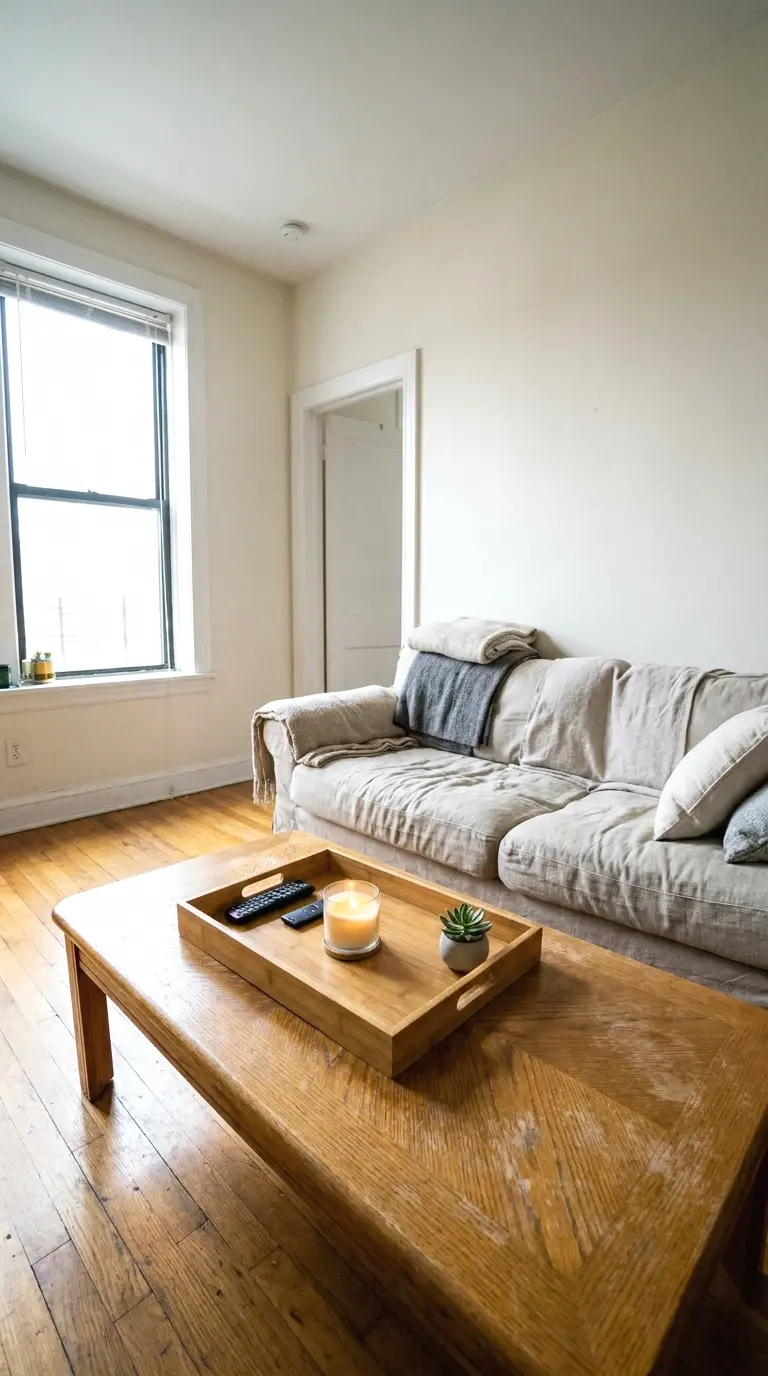
A tray on a coffee table or a dresser top groups small items together and makes them look like a decision instead of clutter. Your remote, a coaster, a candle, and your keys in a tray look collected. The same items scattered look like you just got home and dropped stuff.
Bamboo trays, leather trays, and marble-look acrylic trays all cost between $15 and $35. Put it on your coffee table with three to four items max. One candle, the remote, a small plant or a book. That’s it. (This one is so underrated.) It’s the easiest way to make a surface look like you thought about it.
10. Swap Out Your Bathroom Mirror
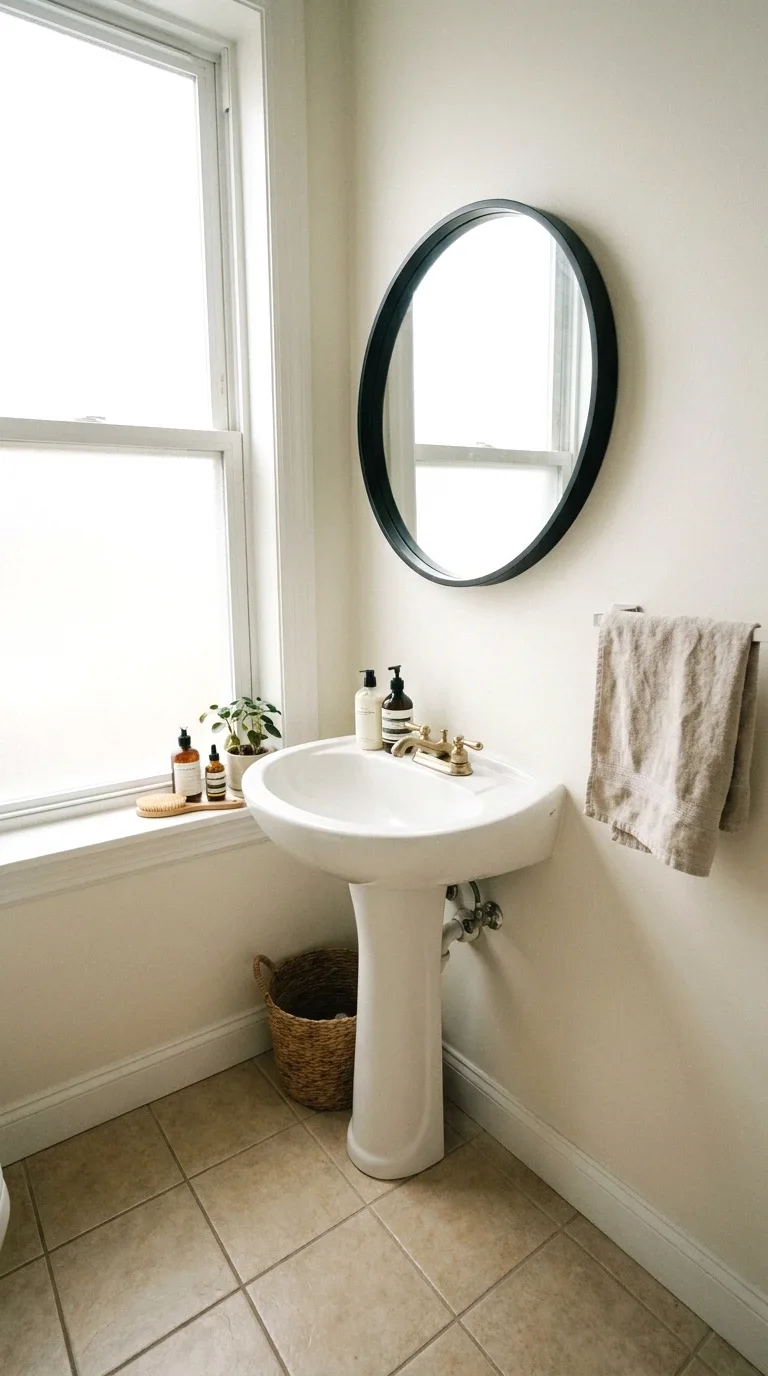
Apartment bathrooms almost always come with a basic builder-grade mirror screwed into the wall with no frame. It’s not offensive, but it’s forgettable. Swapping it for a framed mirror or adding a mirror frame kit changes the whole feel of the bathroom for $25 to $60.
Frame kits like those from MirrorMate or similar brands on Amazon stick directly over your existing mirror without removing anything. They come in wood, metal, and composite finishes. If you’re renting and can’t remove the existing mirror, a frame kit is your best option. Go with a matte black or brushed nickel finish to match your hardware.
More Ideas:
11. Get a Wooden Cutting Board for Your Kitchen Counter
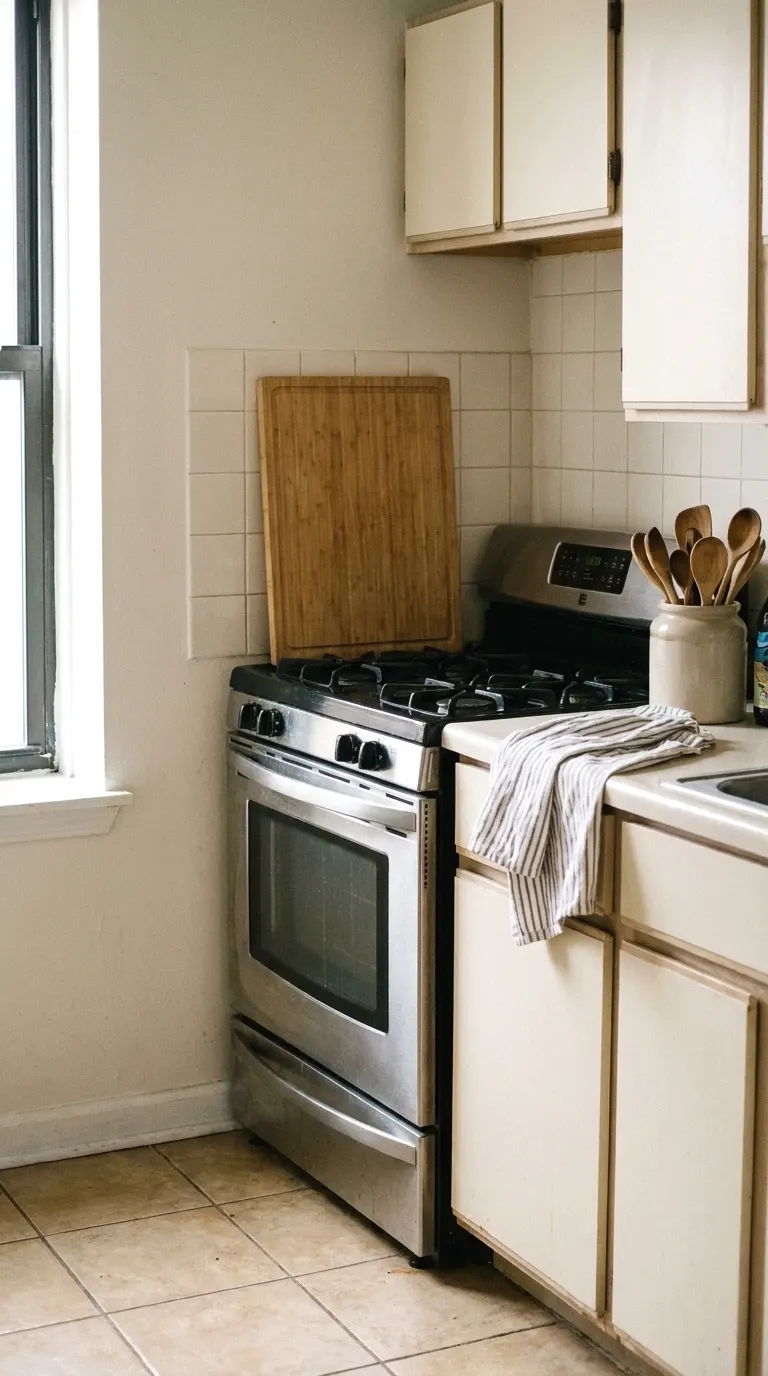
Hear me out. A wooden or bamboo cutting board left out on the counter as a display piece is something a lot of interior people do and most guys have never thought about. It adds natural texture and warm tone to a kitchen that otherwise looks bare or cold.
A large board, around 12×18 inches, propped against the backsplash beside the stove costs $20 to $40 on Amazon. It’s also actually useful, which is a bonus. Pair it with a small jar of wooden spoons or a simple dish towel folded on the counter and the kitchen goes from functional to looked-after.
12. Add One Low Maintenance Plant
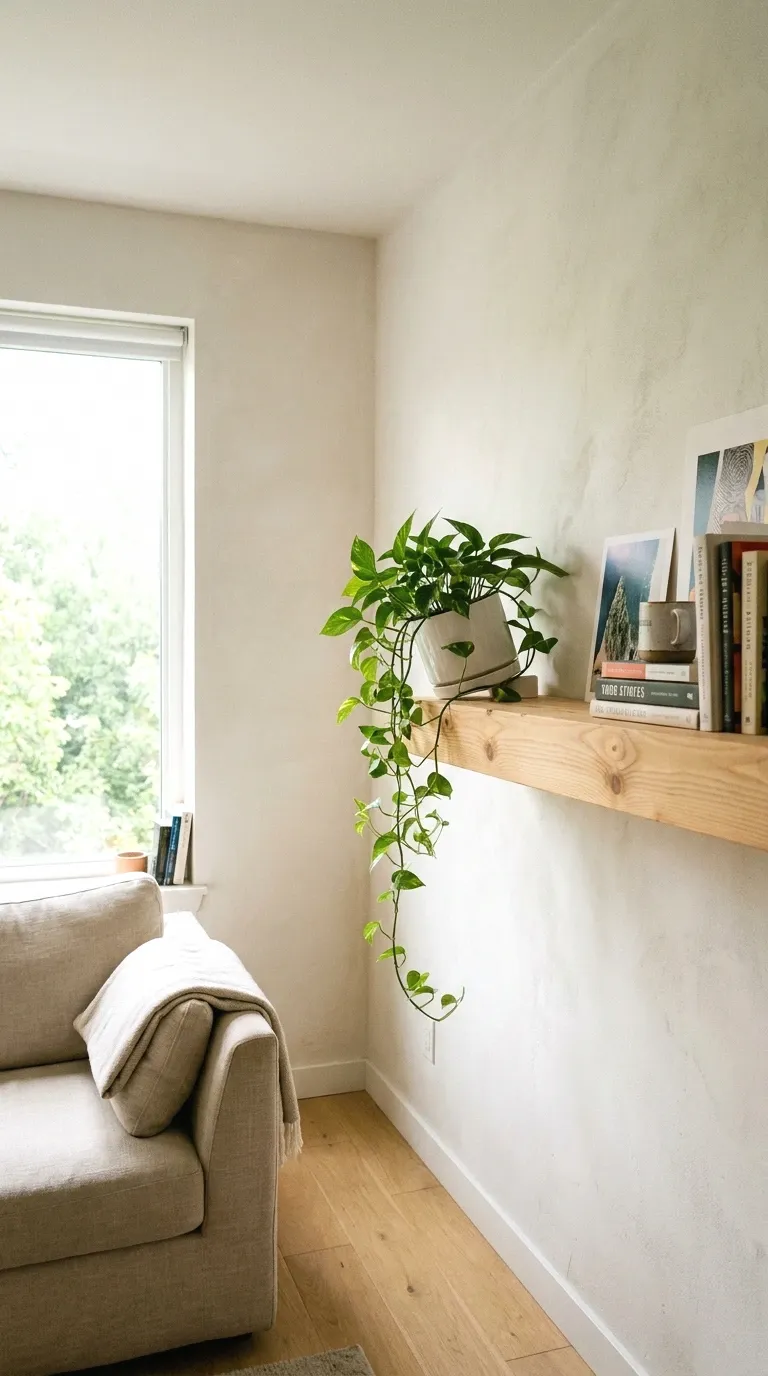
You don’t have to be a plant person to keep one alive. Pothos, snake plants, and ZZ plants survive almost anything. Low light, irregular watering, and inconsistent care. Any of them in a $15 to $25 pot on a shelf or a windowsill brings life into a room in a way that no decor item replicates.
A pothos can hang from a hook on the wall, trail across a shelf, or sit in the corner in a plain pot. A snake plant in a white or black ceramic pot on the floor beside a sofa looks clean and intentional. Start with one. See if it stays alive. Odds are it will, and you’ll want another.
13. Use Floating Shelves
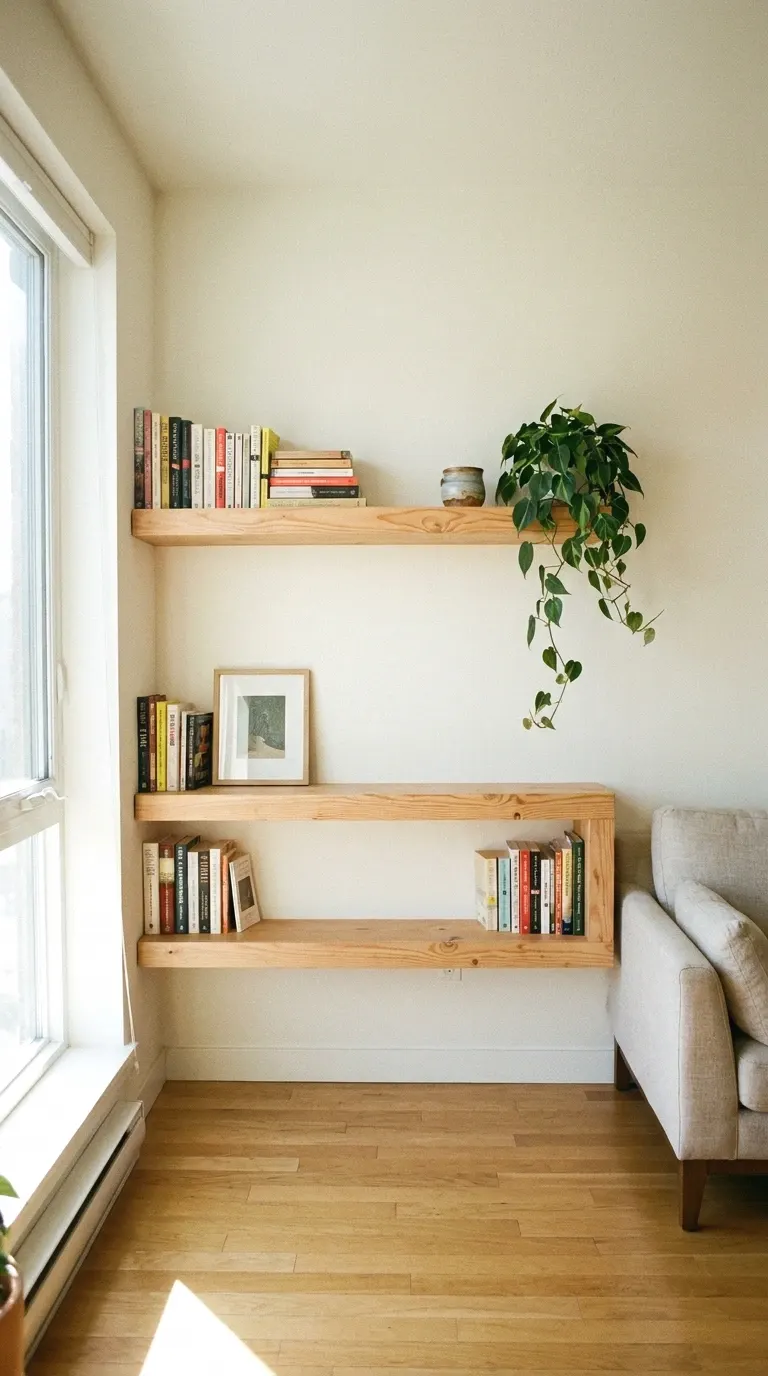
Wall space is free real estate in a small apartment and most guys leave it empty. Two or three floating shelves arranged vertically or in an offset pattern give you storage and visual interest at the same time. They’re also one of the few places to display things that give a room personality.
IKEA LACK shelves run about $8 each. Pipe shelf brackets with a wooden plank from a hardware store give a more substantial look for $30 to $50 per shelf. Style them with two to three items max per shelf: a plant, a book, a small object. That’s the rule most people ignore. Less is more here.
For ideas on what to actually put up there, this piece on [shelf styling that looks intentional] has practical examples.
14. Upgrade Your Bedding
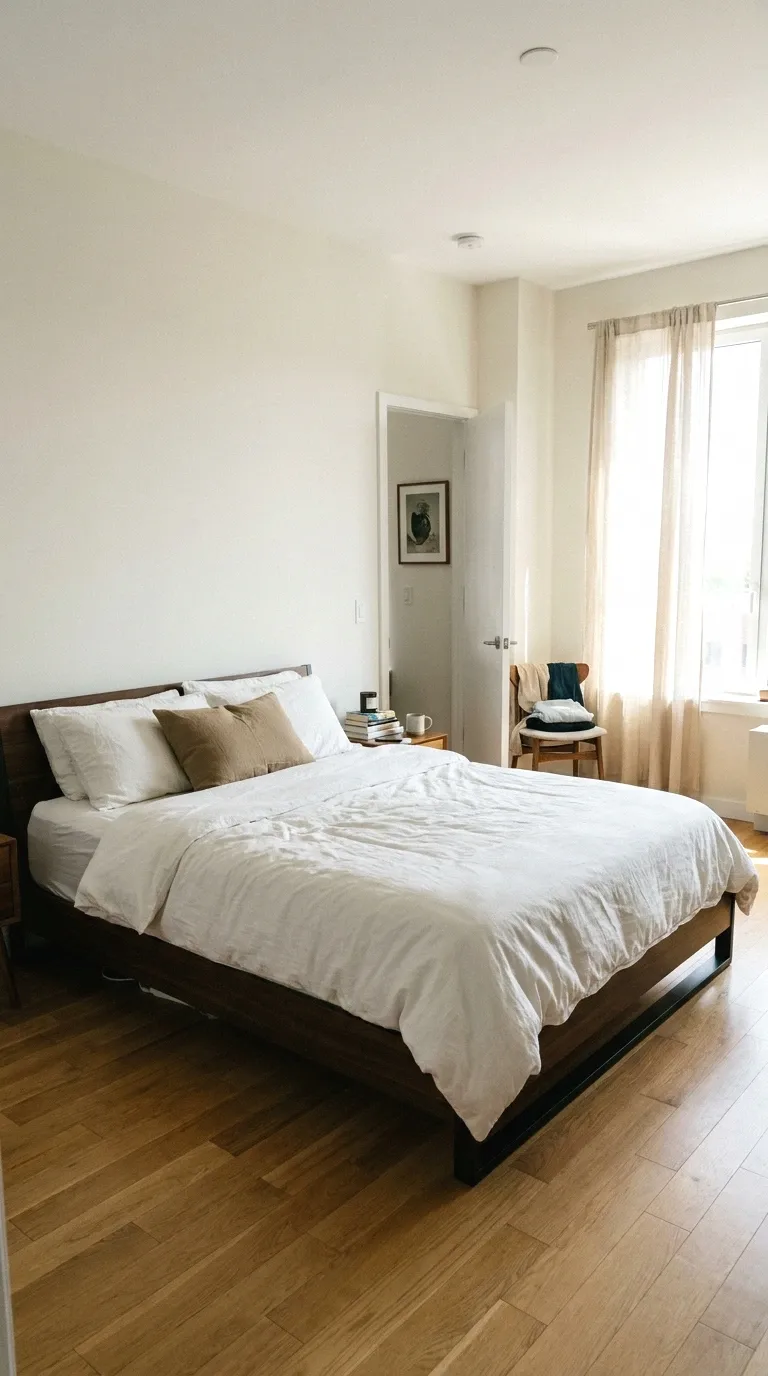
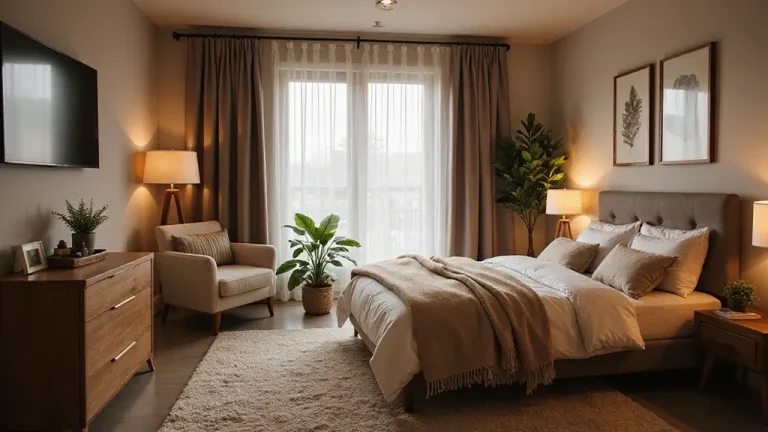
The bed is usually the biggest piece of furniture in the bedroom. If the bedding looks like a dorm room, the whole room looks like a dorm room. A solid duvet cover in white, gray, navy, or a dark earthy green makes the bed look like something a functioning adult sleeps in.
IKEA, Casper, and Parachute all have solid options. The IKEA ULLVIDE or DVALA sets run $30 to $60 and hold up well. You don’t need a headboard or a bed frame upgrade to make this work. Just the duvet cover and two matching pillowcases is enough. Add one or two throw pillows in a complementary color and stop there.
If the bedroom still feels incomplete after that, there’s a solid roundup of [bedroom upgrade that changes everything] without overspending.
More Ideas:
15. Put a Doormat at Your Entrance
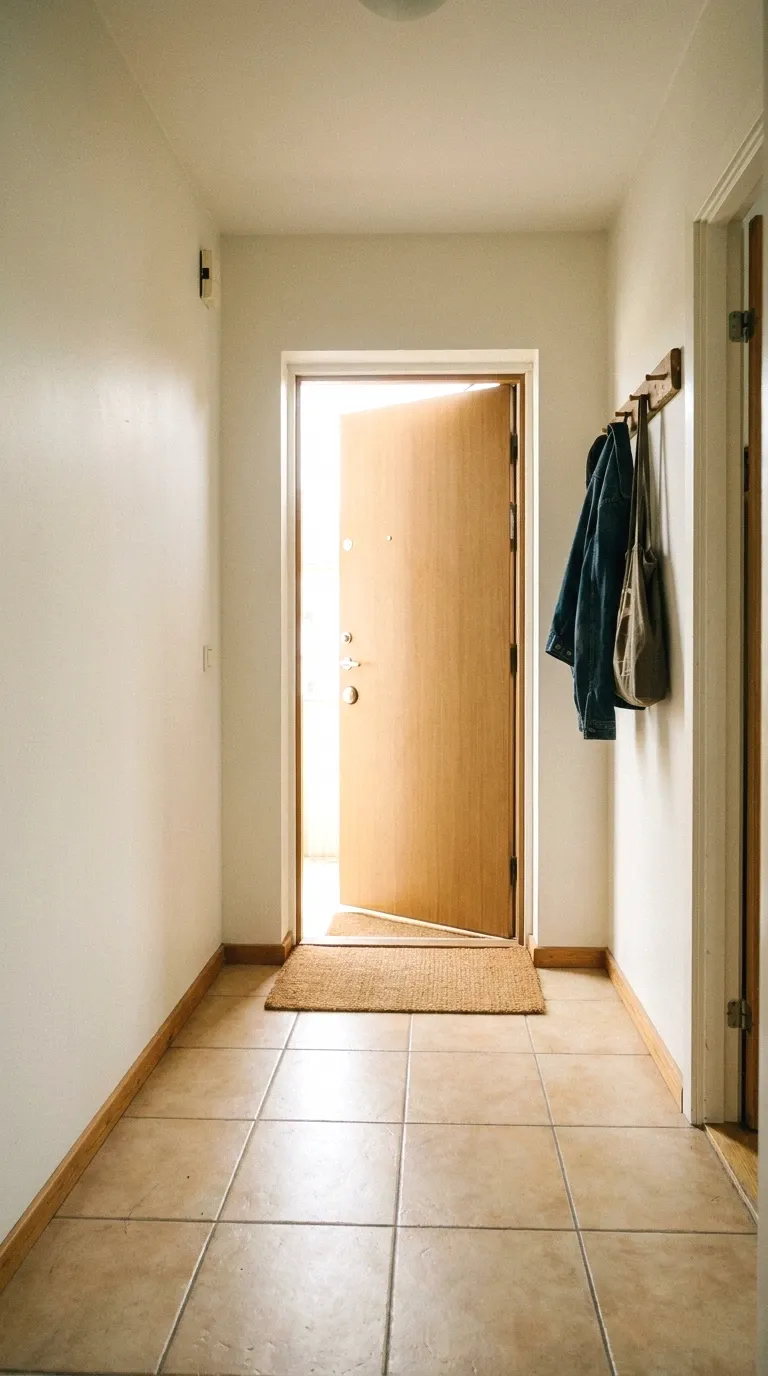
The entrance of an apartment sets a tone. A bare floor in the entryway says nobody thought about this space. A doormat, even a simple jute or rubber one, signals that the apartment starts here and someone considered it.
A clean, simple mat runs $15 to $30. Ruggable makes washable options for $40 to $60 if you want something that holds up long term. Go for dark tones or natural textures that won’t show dirt. Avoid welcome mats with words or novelty prints unless that’s genuinely your thing. Simple and textured is always the better call.
16. Try a Dark Accent Wall

Most guys think painting is too much work for a renter. But one dark accent wall, usually behind the sofa or the bed, changes the entire feel of a room and is easy to paint back to white when you move out. Deep navy, charcoal, forest green, and slate gray all work without making a small space feel smaller if you keep everything else light.
A single gallon of paint covers about 400 square feet and runs $30 to $50. Tape the edges, apply two coats, done in a weekend. The wall becomes an anchor for the room. Art and furniture stand out against it in a way they never do against white.
17. Organize Your Bookshelf or Media Unit
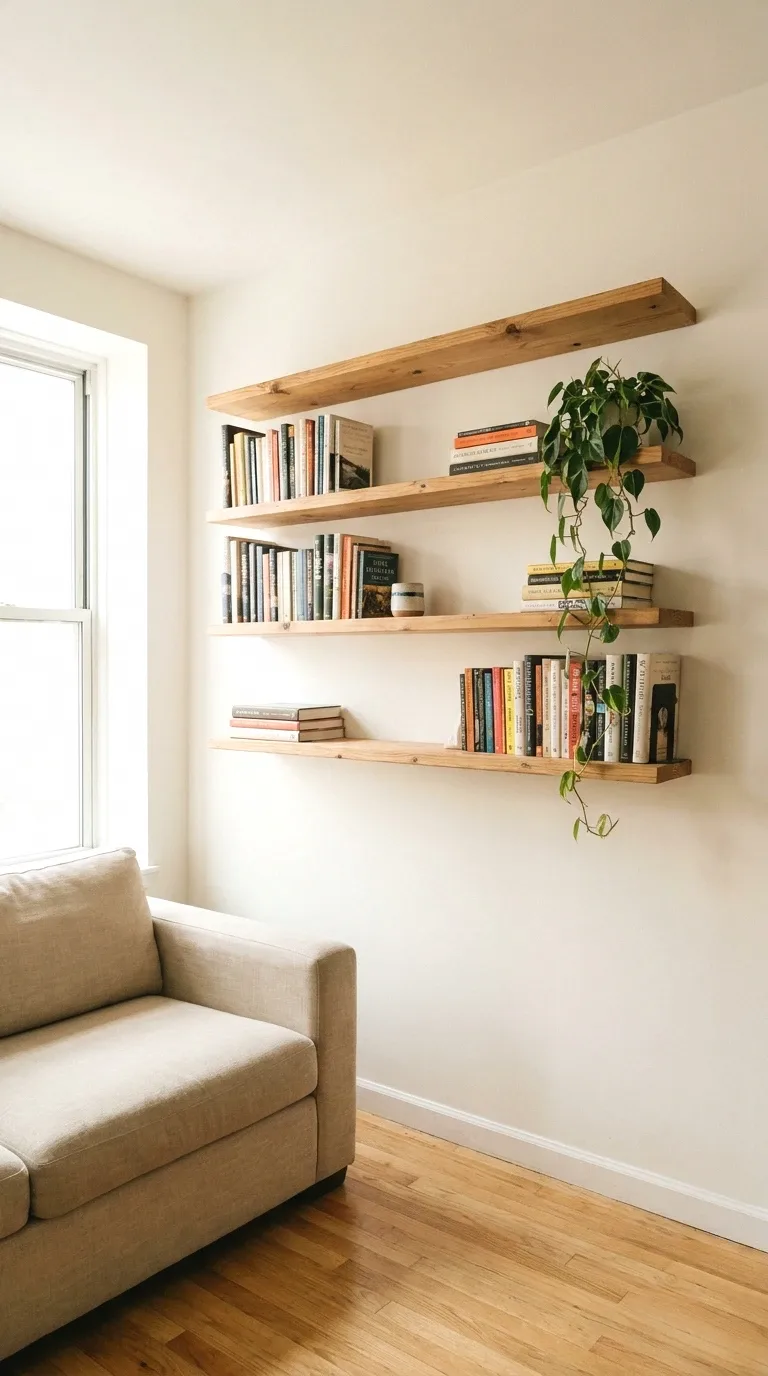
A shelf full of random stuff pushed together looks chaotic. The same shelf with books grouped by height, a plant at one end, and a few intentional objects mixed in looks like it belongs in an apartment that someone actually cares about. This costs nothing if you already have a shelf.
Pull everything off, wipe it down, and put it back with intention. Group books vertically and maybe one stack of horizontals. Leave gaps. Put something non-book in two or three spots. A candle, a small figure, a plant. The empty space is not wasted. It’s what makes the objects on the shelf read as picked.
18. Add a Scent
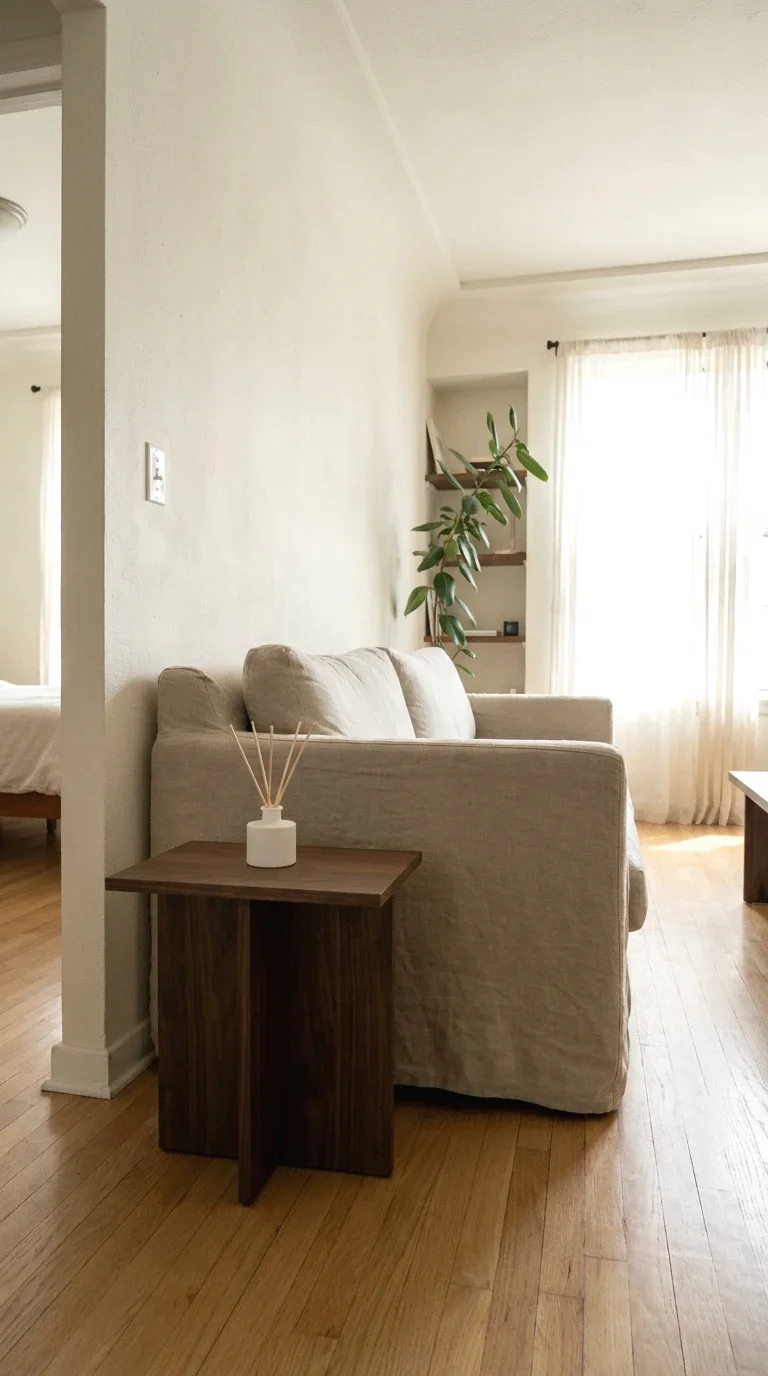
Scent is the one design element that most apartment guides skip and it’s one of the most impactful. A room that smells clean and intentional feels completely different from one that just smells neutral. And a bad smell undoes everything else on this list.
A soy candle or a reed diffuser in a subtle scent costs $15 to $35 and lasts months. Good scent directions for a guy’s apartment: cedar, sandalwood, clean linen, black tea, or light eucalyptus. Avoid anything that smells like a department store or someone’s grandmother’s house. Light a candle before people come over. It’s a detail nobody names but everyone notices.
More Ideas:
19. Hide or Organize Your Entryway
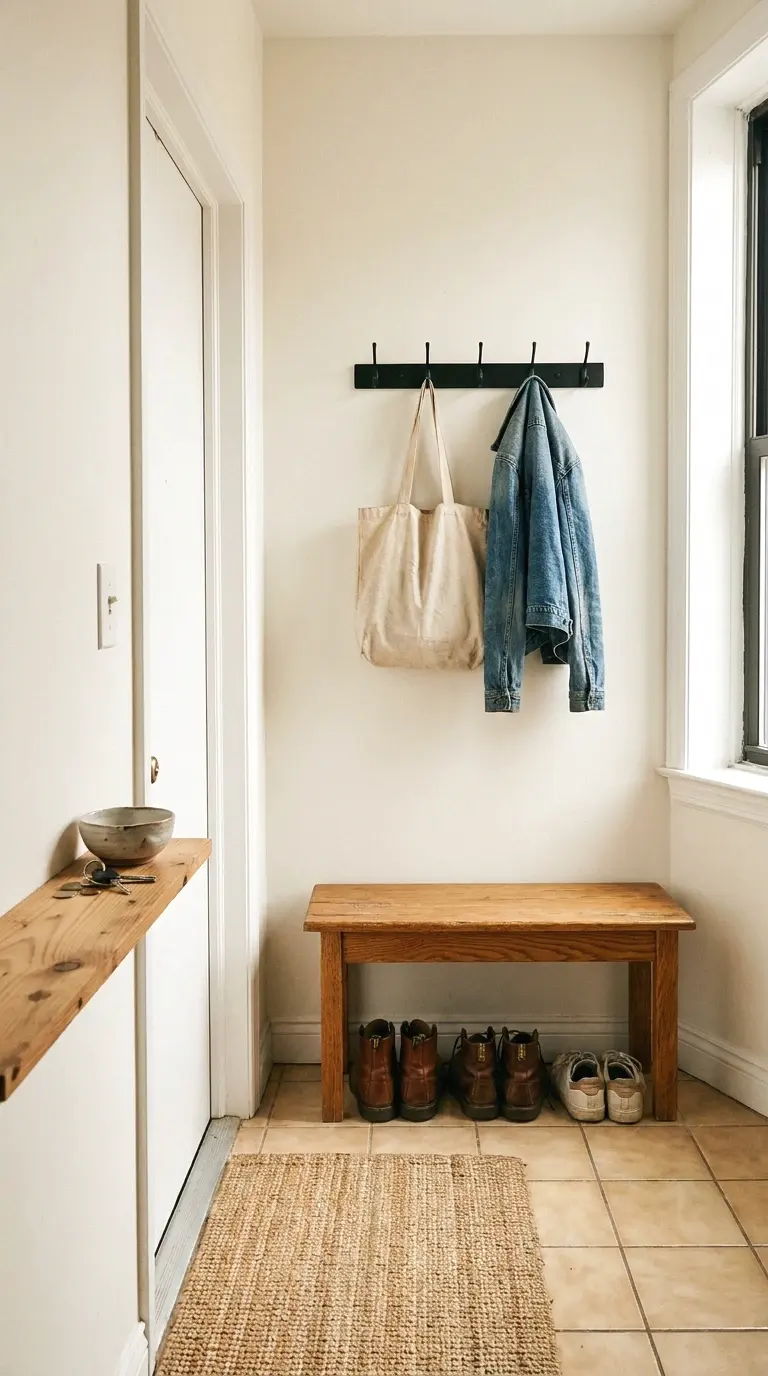
Most apartments have no real entryway. There’s just a door and then the rest of the apartment. But the area right inside the door does a lot of work. Shoes piled up, bags dropped on the floor, and keys on a random surface make the whole place feel disorganized even when everything else is clean.
A small entryway bench with shoe storage underneath runs $40 to $80. A wall-mounted hook strip for coats and bags costs $15 to $25. A small tray or bowl on a console table or shelf near the door for keys and wallet takes it from “I just got home” to “I have a system.” This area is the first thing you see every time you walk in. It’s worth the effort.
There’s a dedicated guide on [entryway setup for small apartments] if you want to see exactly how to make a tight space work.
20. Add Personal Objects That Actually Mean Something
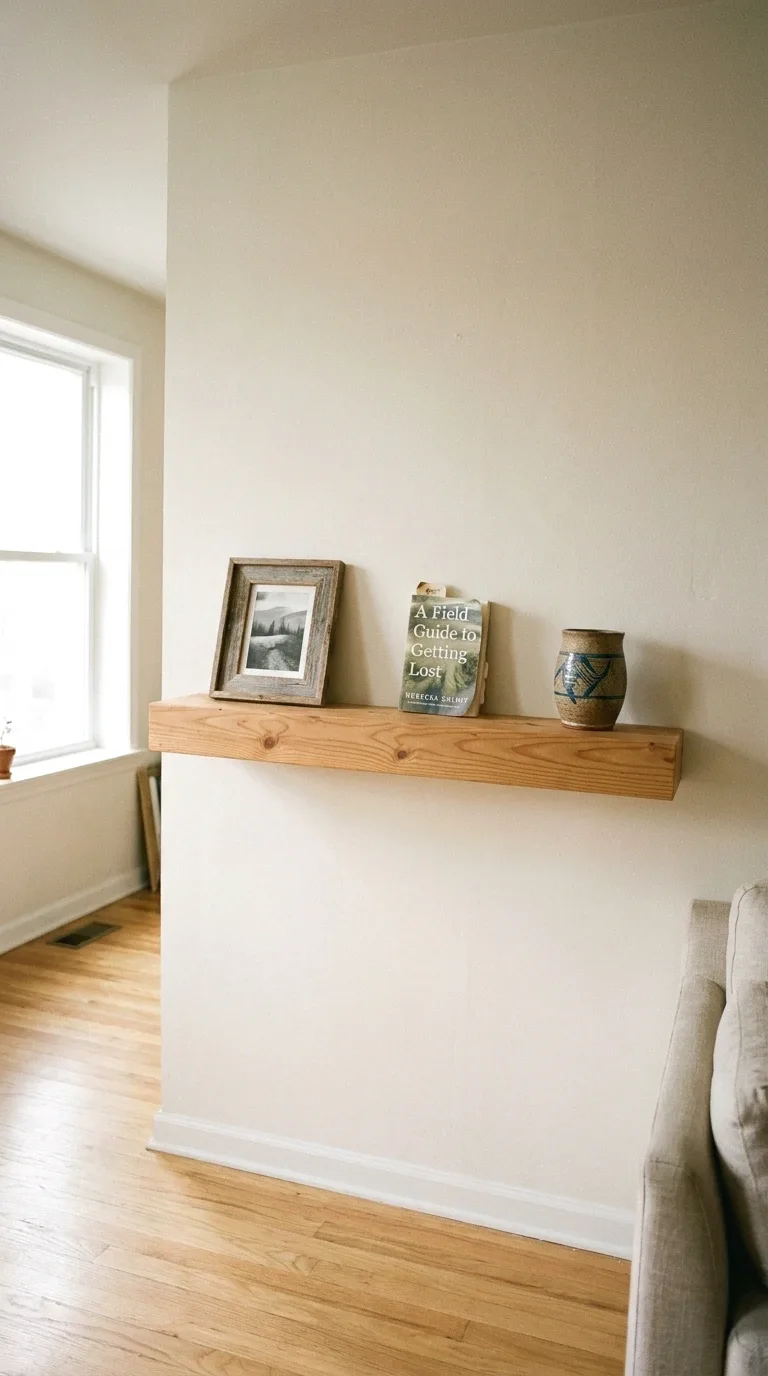
This is the one most people skip because it sounds vague, but it’s what separates a place that looks decent from one that looks like yours. A framed photo, a book you actually read, a piece from a trip, something from a hobby. These aren’t decoration in the traditional sense. They’re information about who lives there.
Pick two or three objects that mean something and give them a real home on a shelf or a table. Don’t shove them in a drawer. You’re not trying to make a museum. You’re just putting a few things out that a stranger could look at and get a sense of you. That’s what makes an apartment feel like it belongs to someone.
If you need inspiration for what that actually looks like pulled together, this collection of [personal touches that define a space] is worth browsing.
Final Thoughts on Single Guy Apartment Decor
You’ve got 20 solid moves here and most of them cost less than a night out. The themes that run through all of them are the same: light, texture, and intention. Fix the lighting first. Get a rug that fits. Put something on the walls. Those three changes alone will take the space from blank to lived-in.
Start with the lightbulbs. That’s it. Go buy a four-pack of 2700K warm white LEDs this weekend and swap them out. Then look around and see which other thing on this list jumps out. You don’t have to do all 20. Pick five that fit your budget right now and do those.
And if you want a broader view of what’s possible without spending much, this guide to a [full apartment refresh on a budget] covers a lot of the same ground.
If you want more ideas like this, homelypop.com covers every room and every budget. Real ideas, real homes, no design degree required.