
21 Dining Area Decor Ideas That Look Good Without Costing a Fortune

Your dining area feels off and you can’t figure out why. The table is fine. The chairs work. But something about the whole space looks unfinished, and every meal feels like you’re eating inside a showroom that gave up halfway through.
This list covers 21 dining area decor ideas I pulled from real homeowners, forum threads, and a lot of trial and error in actual dining rooms, not staged ones. Each idea earned its spot by being doable, affordable, and genuinely worth trying. Most fall between $10 and $250, and I mixed in both renter-friendly picks and ideas that work if you own the place.
This is for people working with $100 to $300 total, or stretching that budget across a few changes over time. It’s not for anyone chasing a full designer renovation. If you’re happy with your space and just want one or two small touches, that’s totally fine too. These ideas work either way. Results are real and achievable.
By the end of this, you’ll have a clear picture of what to change first and why it will actually make a difference in how your dining area looks and feels day to day.
If you want a broader visual reference before diving in, there are plenty of ideas worth stealing from real spaces that show how small changes stack up.
What to Know Before You Start Dining Area Decor
- Lighting is the single biggest factor in how a dining room feels, more than paint or furniture.
- Measure your table before buying a rug. The rug should extend at least 24 inches beyond each side so chairs don’t catch the edge.
- A basic gallery wall can cost under $40 if you print your own art at home using a standard inkjet printer.
- Most people overlook the ceiling. A simple pendant swap can run $35 to $80 and changes the whole feel of the room.
- Common mistake: pushing furniture too close to walls. Pull pieces forward 6 to 10 inches for a more intentional layout.
- Candles in glass holders are a fire-safe way to add warmth without wiring or permits.
- Wicker and rattan accessories hold up better long-term than painted wood in humid climates, especially near kitchens.
1. Swap the Overhead Light Fixture

The light fixture above your table does more work than any single piece of decor in the room. If it’s a basic builder-grade flush mount from 2009, it’s quietly dragging everything else down. A new pendant or semi-flush fixture from a big-box store can run between $40 and $120, and most take less than an hour to swap out if you’re even slightly comfortable with a screwdriver.
When I tried this in my own space, I went from a flat white dome light to a rattan-shade pendant and the whole room looked like something from a real design blog overnight. The shadow patterns it casts at dinner make everything feel warmer. Look for fixtures with warm-white bulb compatibility, around 2700K, for the best result.
2. Add a Statement Rug Under the Table
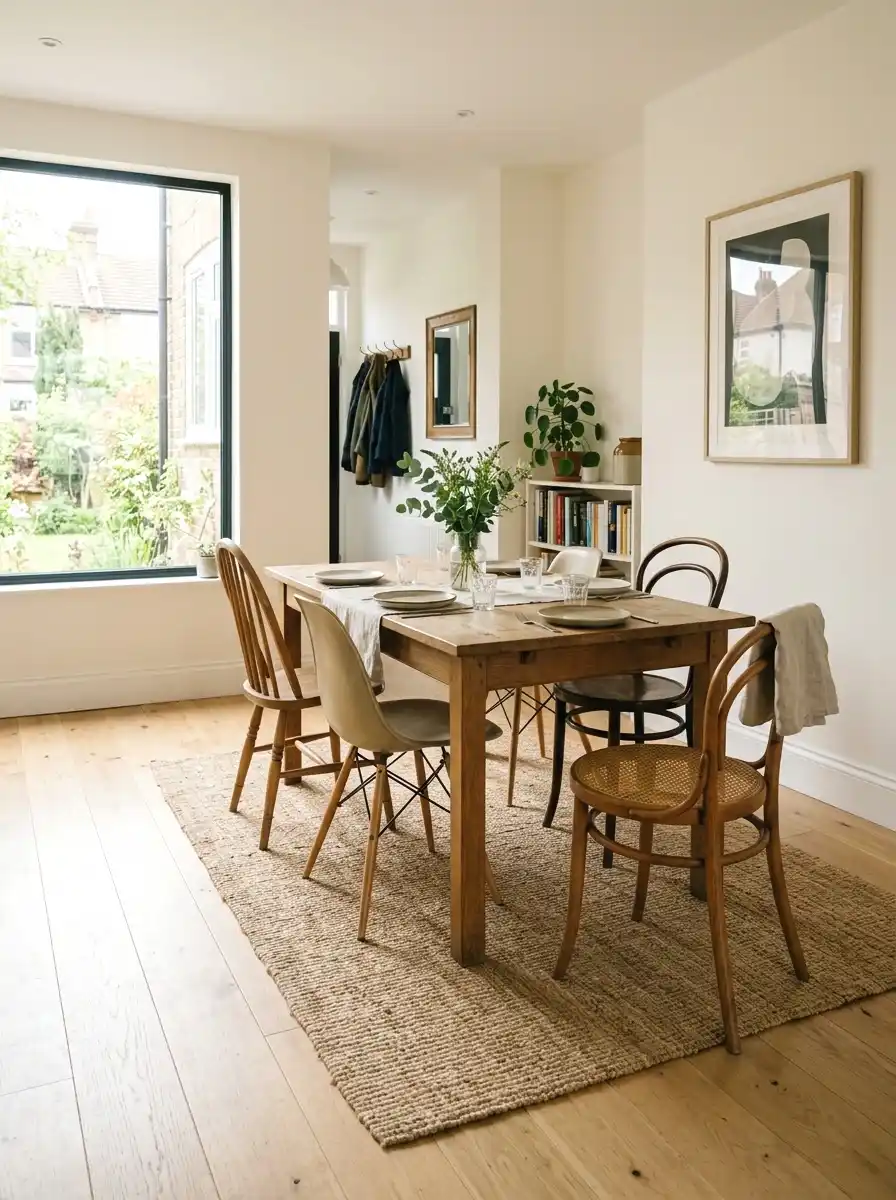
A rug under a dining table is one of those things that seems unnecessary until you try it. It anchors the whole space, defines the eating area, and adds texture to what’s usually the most bare part of the room. You need one that’s big enough. For a four-person table, aim for at least 5×8 feet. For six, go 8×10 if your space allows.
Budget rugs from discount home stores or even some online shops run $60 to $150 for a decent size. Flatweave styles are your best bet here because they’re easy to vacuum and chairs don’t snag on them. Avoid shag in a dining area. You’ll be picking out crumbs forever. Jute and low-pile wool blends hold up really well.
Farmhouse-leaning dining rooms in particular benefit from flatweave styles that hold up well under everyday chair traffic.
More Ideas:


3. Hang a Large Mirror on One Wall
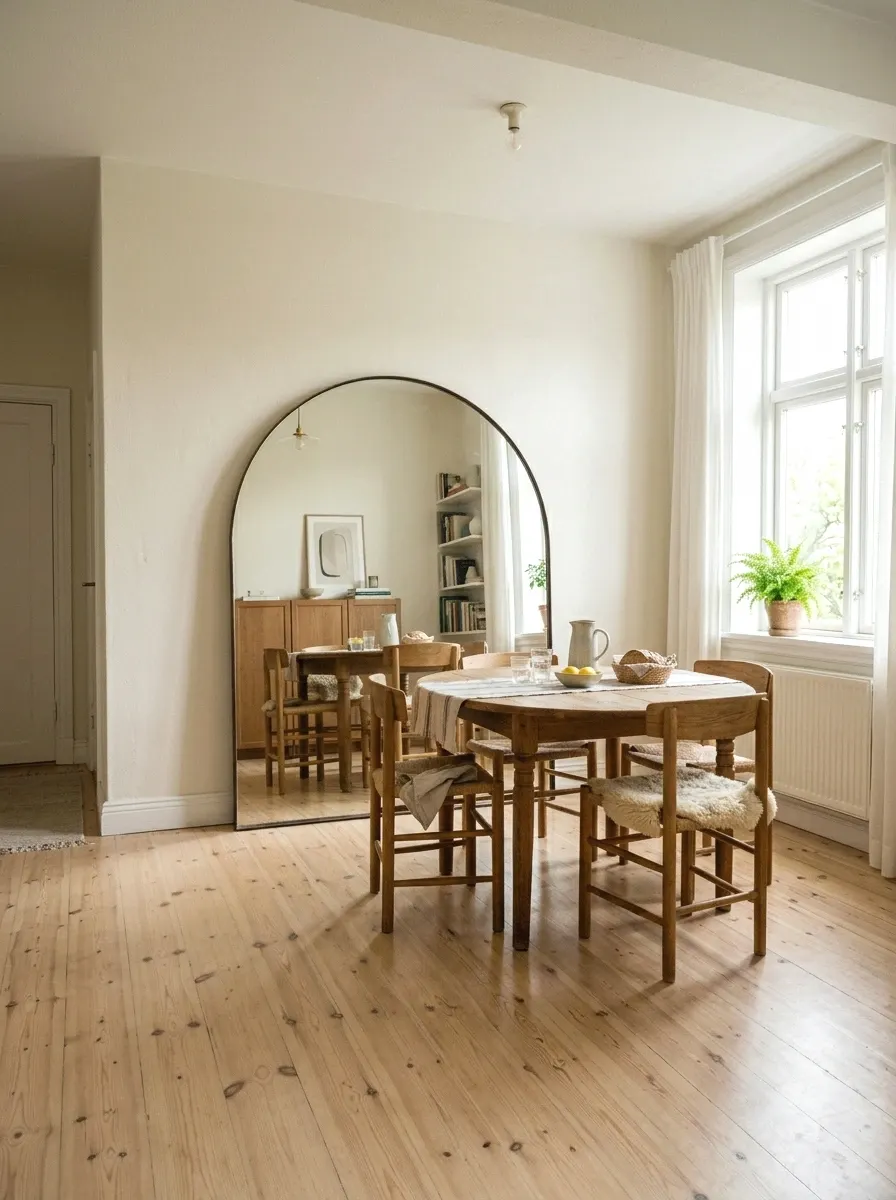
Here’s a simple rule: if a room feels small or dull, add a large mirror. It bounces light, makes the space feel bigger, and gives the eye somewhere to land. In a dining area specifically, a mirror on the wall opposite a window doubles the natural light you already have. That’s hard to replicate with any other single item.
Large round mirrors in a simple metal or wood frame go for $35 to $90 at most home stores. Lean it against the wall if drilling isn’t an option. A 30 to 36-inch round mirror works well in most dining rooms without overwhelming the wall. Arched mirrors are big right now and read as polished without trying too hard.
4. Layer the Table with a Linen Runner
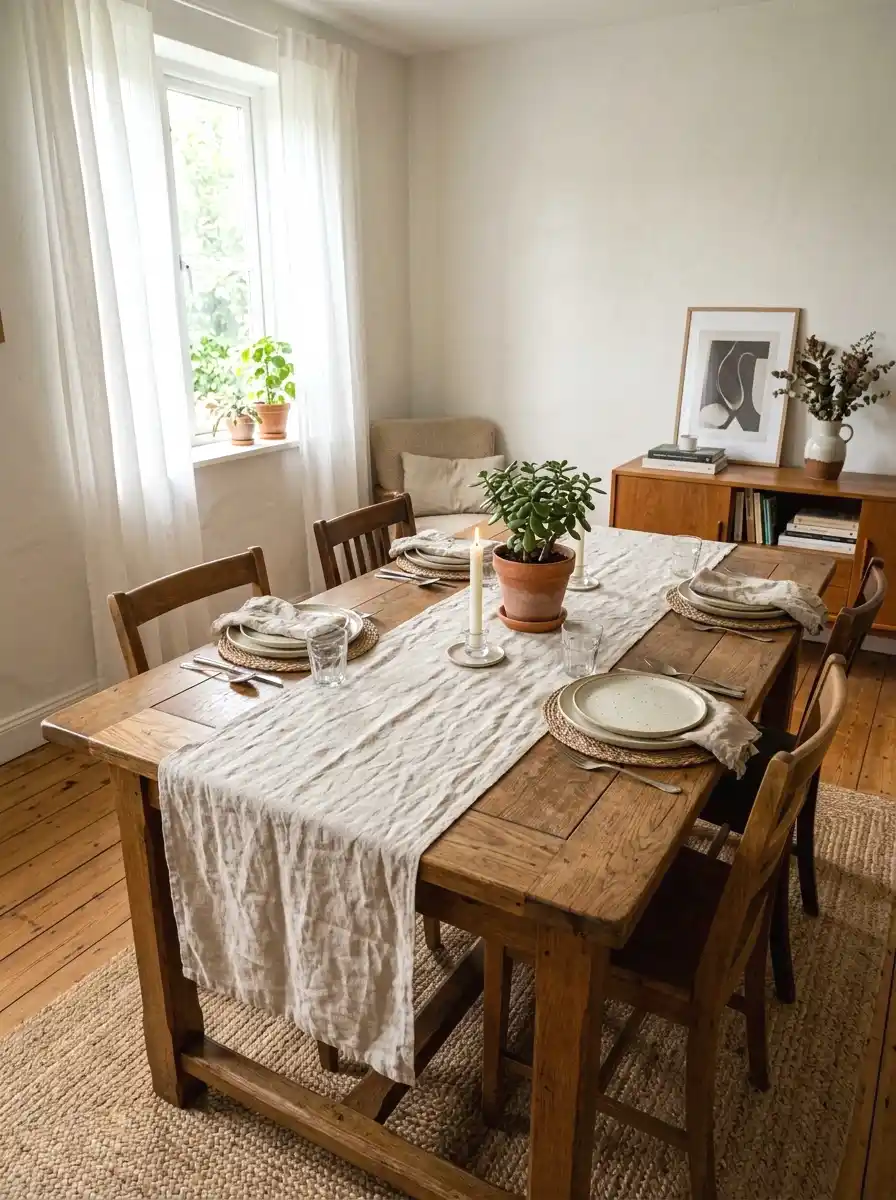
A table runner takes a plain dining table and makes it feel set without being formal. Linen is the best material for everyday use because it’s relaxed, washes well, and gets softer over time. Go for a natural, undyed linen or a muted stripe if you want some pattern. Avoid anything too stiff or synthetic looking.
You can find linen runners for $15 to $35. Layer one down the center and add a small plant, a candle, or a simple bowl on top for a complete centerpiece without spending much. The trick is keeping everything within a similar color story. Warm neutrals, warm wood tones, and natural textures all sit well together. It doesn’t need to be complicated.
5. Use a Credenza or Sideboard for Storage and Style

A sideboard or credenza against one wall does two things at once. It gives you actual storage for serving dishes, table linens, or wine, and it creates a surface to style with plants, art, or a lamp. Most dining rooms are missing a piece of furniture like this, and the absence makes the room feel like it’s just a table floating in a box.
Secondhand sideboards are everywhere on marketplace apps, usually $50 to $150 for something solid wood. New ones from furniture chains run $150 to $300. You don’t need anything fancy. A clean, simple shape in a medium-toned wood or white finish works in most dining spaces. Style the top with three items max to keep it from looking cluttered.
For a more grounded, natural feel, sideboard styling done right often leans on wood tones, aged textures, and simple greenery.
6. Bring in a Potted Plant or Two

Plants in a dining area do something no decor item can fully replace. They add life, literally, to a room that can otherwise feel static. A single large plant in the corner, like a fiddle leaf fig, a monstera, or a pothos in a hanging planter, shifts the whole energy of the space. And honestly, even a small herb pot on the table counts.
Low-light tolerant plants work best in dining rooms since many don’t get great window access. Pothos, ZZ plants, and snake plants all do well without direct sun. A decent nursery pot runs $8 to $20 and a simple ceramic planter adds another $10 to $25. Keep the planter color neutral so it doesn’t compete with your other decor. That’s all it takes.
Wabi-sabi dining rooms lean into this beautifully, and they’re full of low-light plant picks for interiors that feel lived-in rather than styled.
More Ideas:
7. Switch to Warm-Toned Edison Bulbs

This one is so underrated. If your dining area has overhead lighting with replaceable bulbs, swapping to warm Edison-style bulbs in the 2200K to 2700K range changes the whole mood of every meal. Cool white or daylight bulbs make food look washed out and the room feel clinical. Warm bulbs do the opposite.
A four-pack of decent LED Edison bulbs runs about $10 to $18. That’s one of the cheapest improvements with one of the biggest visible payoffs. If you have a dimmer switch, warm bulbs get even better when dimmed down. If you don’t have a dimmer, some smart bulbs let you control brightness from your phone for around $12 to $20 each.
8. Hang Curtains Higher and Wider Than the Window

Most people hang curtains at the window frame. If you move the rod up to 4 to 6 inches below the ceiling and extend it 8 to 12 inches past the window on each side, the room looks taller and the windows look bigger. It’s one of the most common tricks in interior design and it costs almost nothing if you’re just repositioning hardware you already own.
The same curtain tricks that open up a room apply in any space where low ceilings or narrow windows make things feel closed in.
New curtain panels in a natural linen or cotton blend run $25 to $60 per panel. Go floor length every time. Anything that stops mid-wall looks awkward and visually shrinks the space. For dining rooms, soft whites, creams, or warm grays work well. Sheer panels let in light during the day while still giving some definition to the window.
9. Create a Simple Gallery Wall
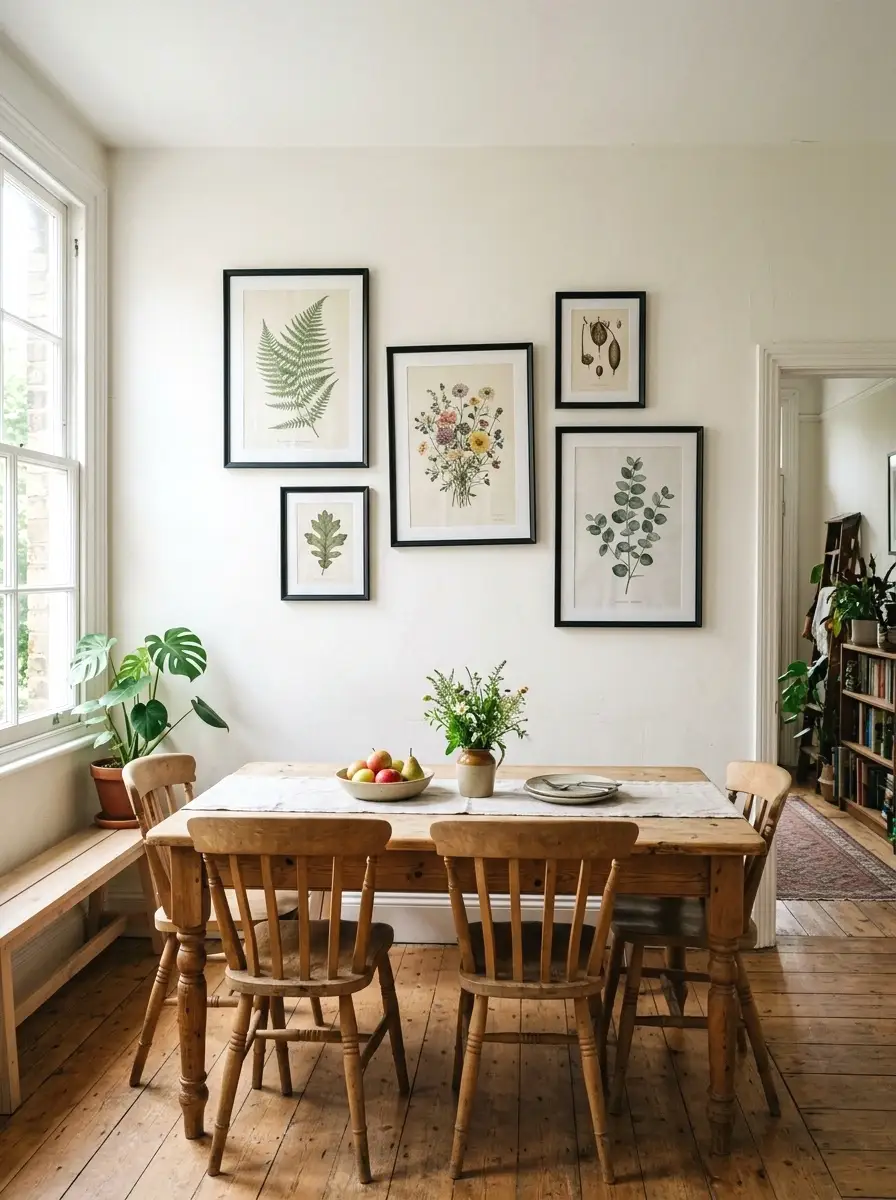
A gallery wall doesn’t need to be a big project. Five to seven frames in a mix of sizes, hung in a roughly rectangular cluster on one wall, does the job well. You can fill them with printed artwork, botanical illustrations downloaded for free, or even pages from a book you like. The frames don’t need to match exactly, but keeping them in a similar finish, like all black or all natural wood, ties it together.
I was skeptical about this one but a $40 gallery wall using frames from a thrift store and free art printed at home looked better than a single large piece I paid $80 for. Lay the frames out on the floor first to plan the arrangement before you put anything on the wall. Measure the center points so the spacing stays even.
If you want more inspiration before committing, browsing gallery wall layouts that actually work can save you a lot of rehang time.
10. Add a Bar Cart or Drinks Station
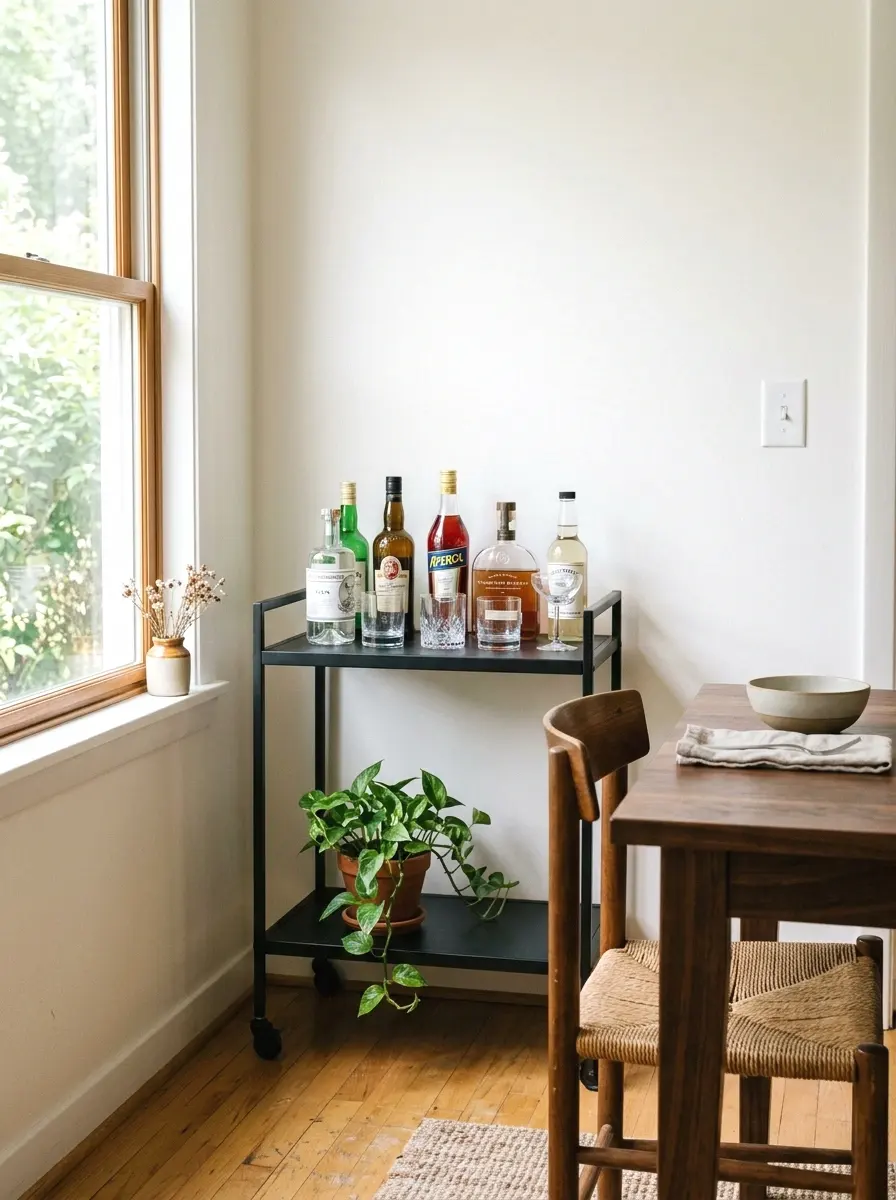
A bar cart in a dining room serves the same purpose as a sideboard but with more personality. It gives you a spot to keep drinks, glasses, and a small plant or candle, and it becomes a natural gathering point during dinner parties. Plus, it’s portable, which matters if you’re renting and your layout changes.
Bar carts in a simple metal or black frame with two shelves run $60 to $130. Style it with a few bottles, one or two mismatched glasses you actually like, a small tray, and a plant. Keep it curated. Three to four items per shelf. Any more and it starts to look like clutter. A warm-toned lamp or small LED strip underneath the top shelf adds a lot of atmosphere for very little cost.
More Ideas:
11. Paint Just One Accent Wall

If you’re open to painting, do one wall behind the head of the table or behind the sideboard. You don’t need to do the whole room. One wall in a deeper color, like a terracotta, slate blue, forest green, or warm charcoal, gives the room a focal point without committing to a full repaint. It’s one of the easiest ways to make a plain dining area feel finished.
A quart of paint is usually enough for one accent wall and runs $15 to $30. That’s it. Tape, a small roller, and two coats on a Saturday afternoon. Darker accent walls also make art and plants in front of them pop more. If you’re renting, check your lease. Some landlords are okay with paint if you restore it on move-out.
Color choice matters more than most people expect, and studying one wall color that changes everything in similar spaces helps narrow the decision fast.
12. Use Placemats to Add Texture and Color
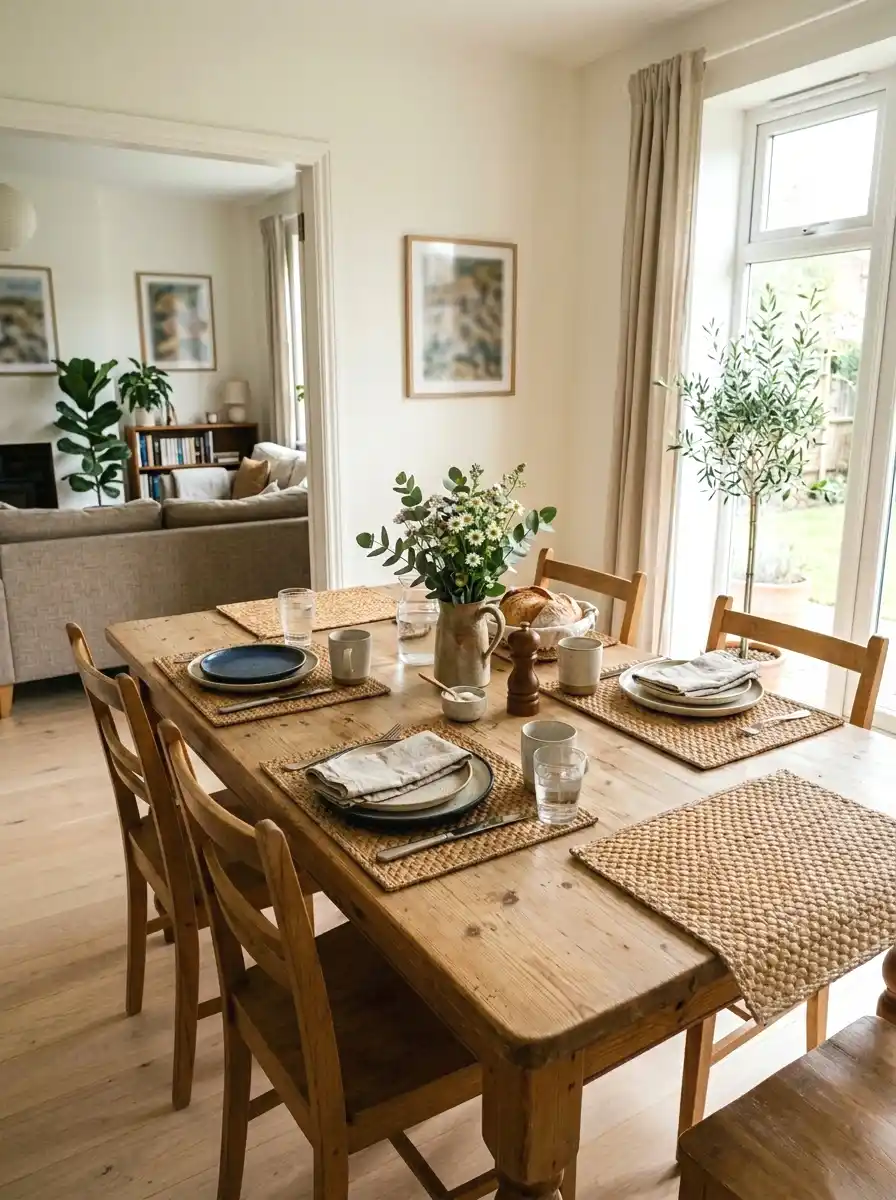
Placemats are one of those everyday items that people either ignore or rush to buy in a matching set that they kind of hate but use anyway. A set of woven rattan or raffia placemats, natural fiber ones, instantly adds texture to the table without any extra effort. Swap them seasonally if you want, or keep one set year-round.
A set of four woven placemats runs $18 to $40. Natural fiber ones work better than vinyl or foam because they photograph well, wear better, and don’t slide around as much. If you want more color, try a bold terracotta, deep green, or a warm slate blue. Even one color addition through the placemats can pull the room together.
13. Hang Art at the Right Height

Took me ages to figure this out. Art should hang with its center at eye level, which for most people is about 57 to 60 inches from the floor. Most people hang it too high, at eye level when standing, when you’re actually sitting at a dining table most of the time. Lower placement reads as more intentional and makes the room feel more connected.
Over a sideboard, leave 6 to 8 inches between the top of the furniture and the bottom of the frame. For a grouping, the center of the whole arrangement should still sit at that 57 to 60-inch mark. This works for any size print or painting. One properly hung piece looks better than three hung at random heights.
14. Try a Pendant Light Over the Table
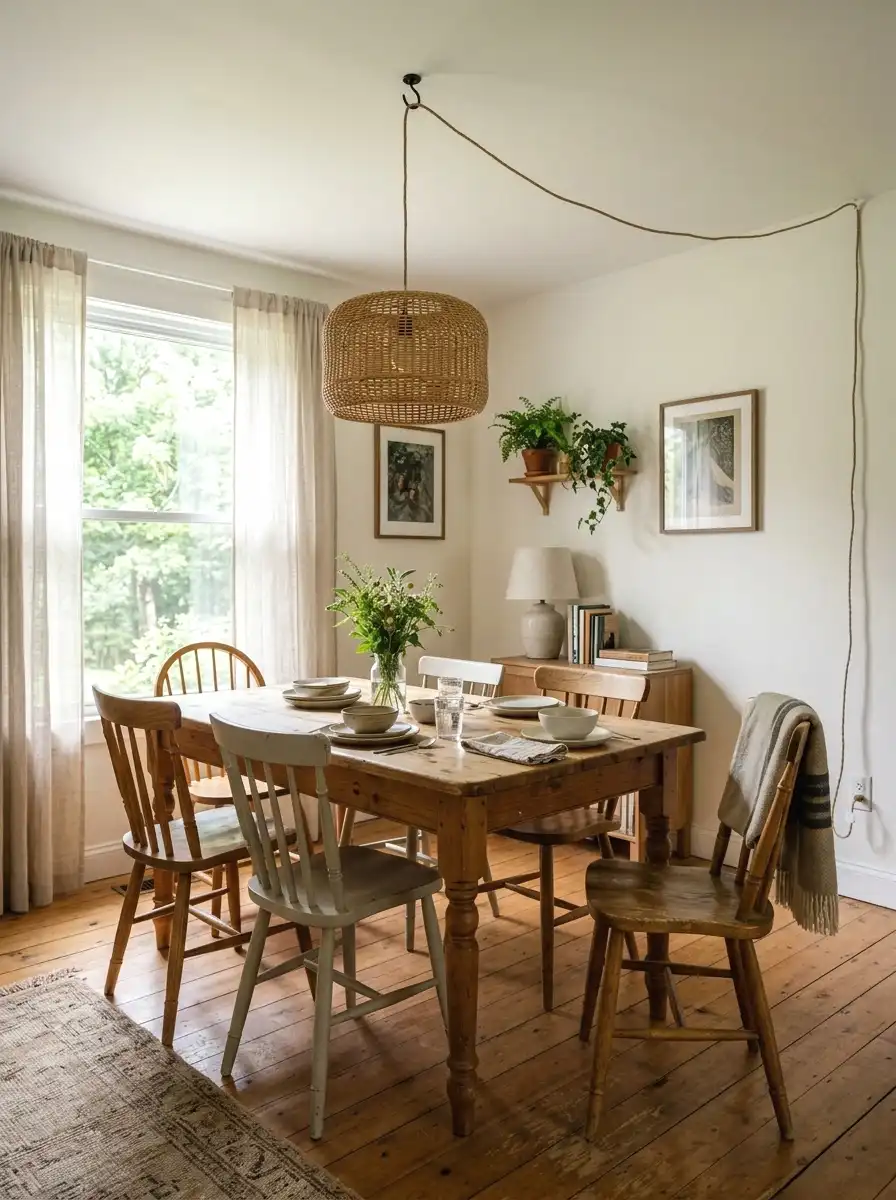
So if you can’t fully swap the main fixture, adding a pendant on a swag hook is a good middle ground. A swag pendant hangs from a simple ceiling hook and plugs into an outlet. No wiring required. You can position it directly over your table for that centered, intentional look without touching the electrical box at all.
Plug-in swag pendants run $35 to $90. You’ll need a ceiling hook and possibly a hook to guide the cord along the ceiling to the nearest wall outlet. The cord can be wrapped in fabric cover for a cleaner look, which runs about $10 to $15 extra. It looks like a hardwired light to anyone who isn’t inspecting it closely.
More Ideas:
15. Layer Lighting with a Candle Arrangement

The table itself is a lighting zone. A cluster of candles in varying heights down the center of the table, in simple glass or ceramic holders, makes every dinner look intentional. You don’t need it to be a holiday or a special occasion. Candles at dinner just make the whole experience better.
Real wax candles in votives or pillar holders run $5 to $20 for a set. If you’re nervous about open flames, LED flameless candles have gotten really good and now flicker realistically. A set of three in different sizes runs $12 to $25. Mix in a small plant or some dried eucalyptus and you have a centerpiece that costs almost nothing and looks like you spent a lot of time on it.
16. Replace Basic Chair Cushions

If your dining chairs are hard, people don’t linger. One of the simplest ways to make a dining area feel more welcoming is to add or replace seat cushions. Tied-on cushions in a fabric that coordinates with your rug or curtains pull everything together while also making the chairs more comfortable for long dinners.
A set of four chair cushions runs $30 to $80 depending on size and fabric. Look for machine-washable ones because they will get stained. Solid colors in cream, sage, terracotta, or navy work with most wood tones. If you want pattern, keep it to one pattern in the room total, either the cushion or the rug, not both.
17. Add a Floating Shelf for Display
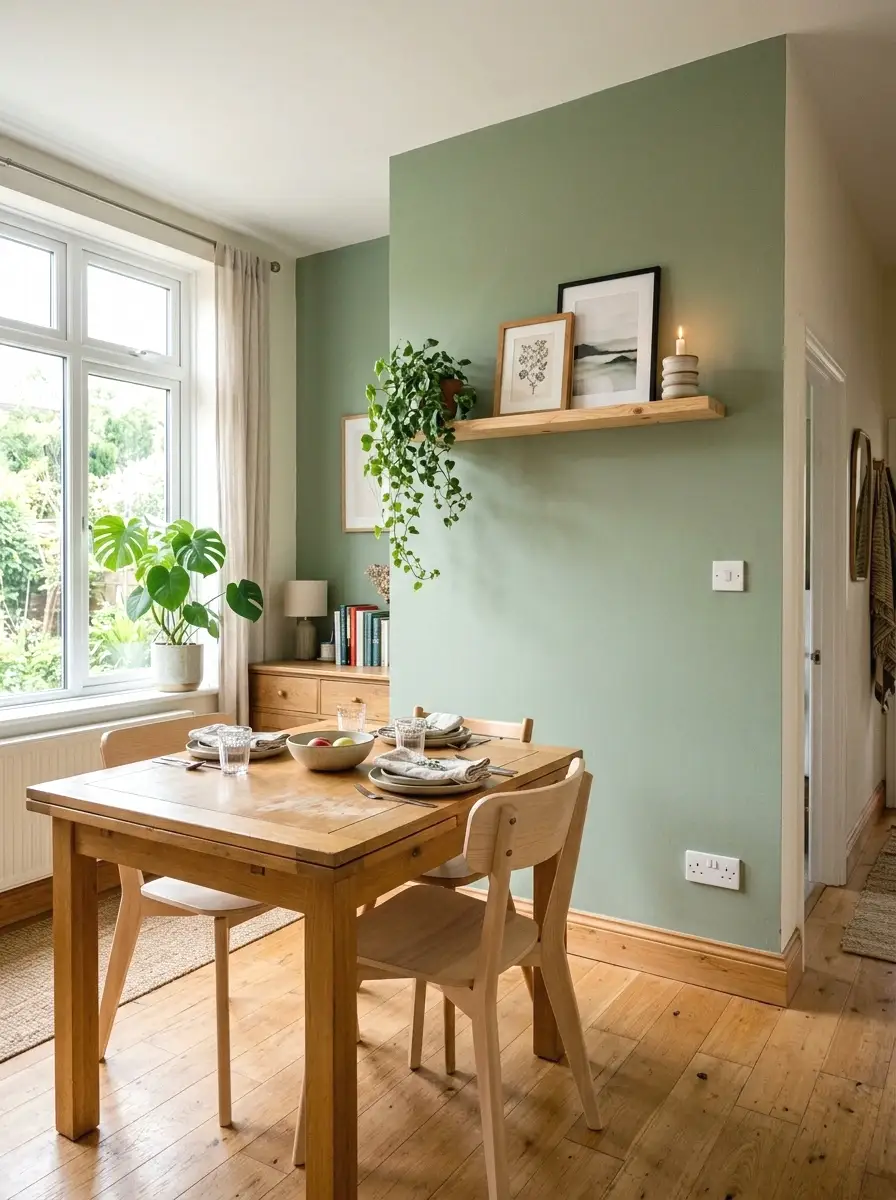
A single floating shelf on one wall gives you vertical space to display items that would otherwise clutter a surface. Styled with a mix of plants, small framed art, and a candle or two, a floating shelf becomes a mini display that adds depth to the room without taking up floor space. It works especially well in smaller dining areas.
A basic floating shelf in pine or MDF runs $15 to $35. The bracket and hardware are usually included. Style it with an odd number of items, three or five, and vary the heights. A trailing plant that spills over the edge adds softness. Keep the items loosely related in tone or color so it reads as picked rather than random.
18. Use a Tablecloth for Everyday Texture
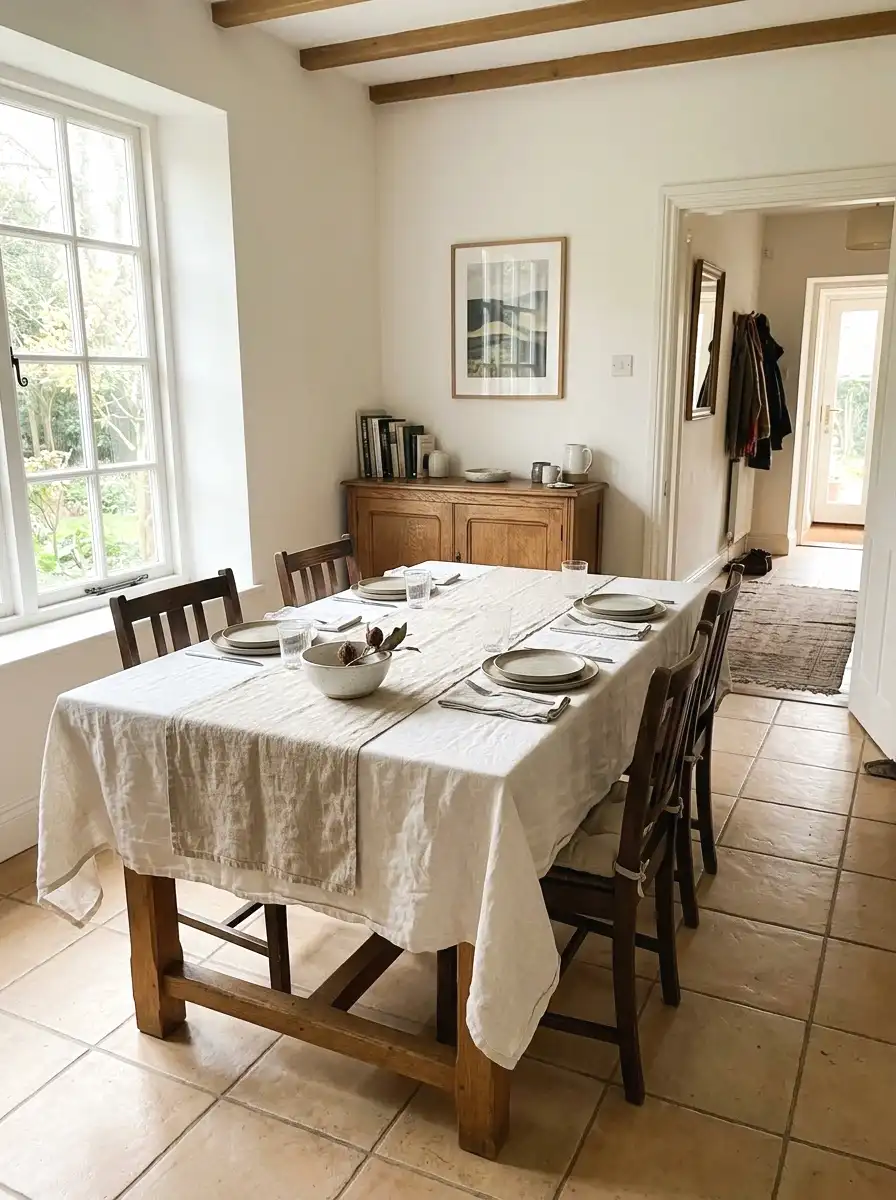
A tablecloth doesn’t have to mean formal. A relaxed linen or cotton tablecloth in a warm neutral makes a plain table look finished and also protects the surface. For everyday use, a slightly oversized cloth that drapes 8 to 12 inches on each side looks more relaxed than one that’s cut exactly to the table edge.
Linen-look tablecloths run $20 to $50 for a standard rectangle. Go for off-white, warm white, or a soft oat color if you’re not sure what tone to choose. Those shades work with almost every wood tone and wall color. Layer a runner on top for more visual interest. And yes, you can put it in the washing machine. That’s the whole point.
More Ideas:
19. Bring in a Tall Floor Lamp
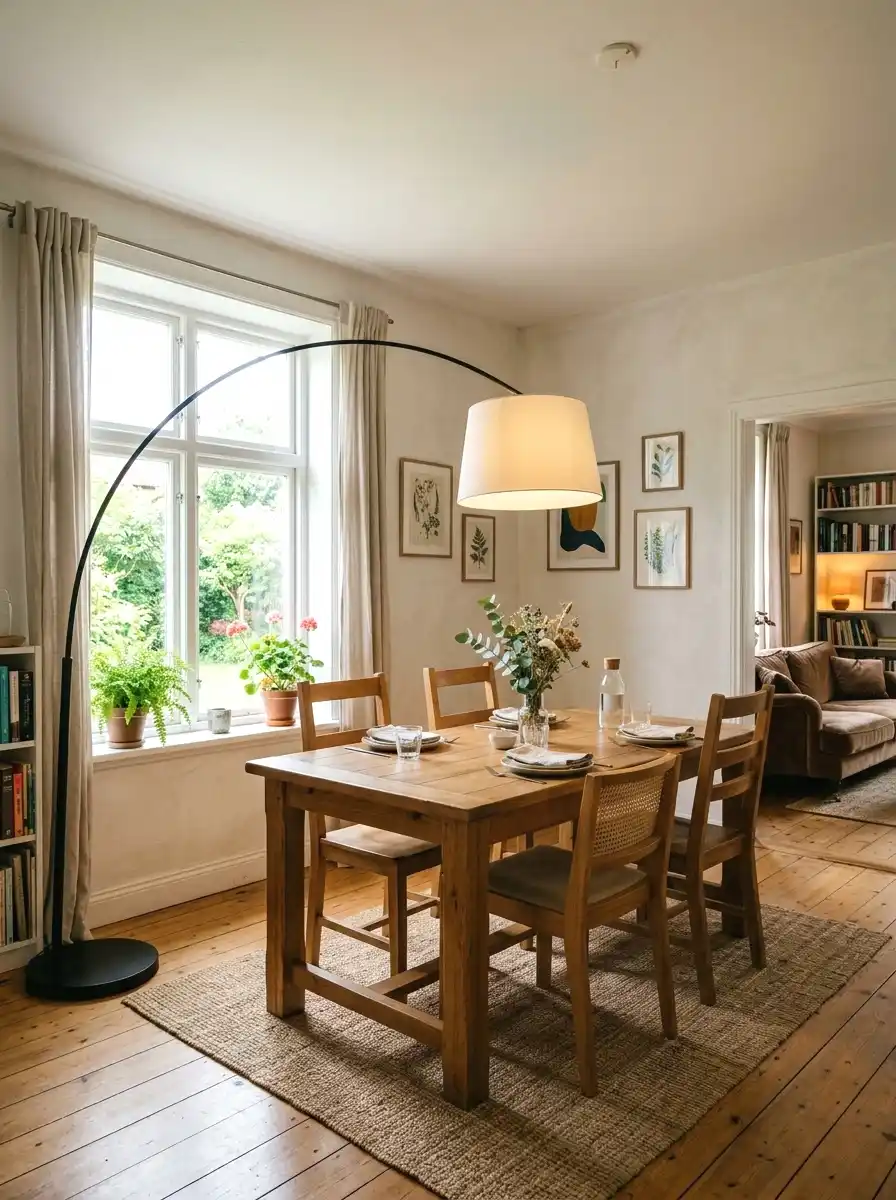
Most dining areas rely entirely on the overhead light. Adding a tall floor lamp in one corner, turned on at dinner instead of the overhead, completely shifts the mood. Floor lamps create lower, softer light that pools around the room rather than blasting down from above. It makes the space feel more like a restaurant and less like a cafeteria.
Higher-end dining rooms almost always use lighting layers for a warmer atmosphere rather than relying on a single overhead source.
An arc floor lamp or a simple column lamp with a warm fabric shade runs $45 to $120. Position it in the corner nearest the table so it casts light toward the eating area. The shade color matters. White or cream shades let more light through. A darker shade adds drama but less overall brightness. Use a warm-white bulb at 2700K or lower.
20. Frame a Chalkboard or Corkboard as Art

A framed chalkboard or corkboard hung on the dining room wall does double duty. It’s functional and it adds personality. Write a weekly menu, a quote, or just leave it blank and let it be a texture element. On a corkboard, pin a rotating collection of photos, postcards, or small prints. It keeps the wall from feeling static.
Large framed chalkboards run $30 to $60. If you want to DIY it, a piece of MDF painted with chalkboard paint and fitted into a thrift store frame runs under $20 total. Corkboard sheets in a simple frame go for about the same. Either option works better in casual, everyday dining rooms than in more formal spaces. Keep the frame finish consistent with your other frames in the room.
21. Style the Table Like It’s Always Set

The easiest long-term shift you can make in any dining area is to treat the table like it’s always partially set. That means a centerpiece of some kind is always there. A small plant, a candle, a bowl with some fruit, a stack of books. Something. An empty table reads as an unused room, not a dining room. Keep it simple but keep something there.
A small terracotta pot with a plant runs $8 to $15. A wooden bowl from a thrift store is $4 to $10. A cluster of three mismatched candleholders costs almost nothing and lasts for years. You don’t need to spend anything beyond what you already have in your kitchen. Pull it together intentionally and the room will look like someone actually lives there.
Coastal dining rooms are especially good at showing simple centerpiece ideas that last all year without needing seasonal swaps.
Final Thoughts on Dining Area Decor
You don’t need to do all 21 of these. What you need is a starting point, a few changes that work together and actually shift how the room feels. The biggest wins tend to come from three things: fixing the lighting, anchoring the space with a rug, and giving the walls something to look at. Those three alone can change a dining area completely, and you can do all three for under $200 if you shop smart.
Pick one thing this week. Not tomorrow, not eventually. This week. If I had to tell you which one to start with, it’s the bulbs. Swap your overhead bulbs to warm-white Edison style. It takes ten minutes and costs under $20. See what the room looks like at dinner tonight versus last night.
If you want more ideas like this, homelypop.com covers every room with the same approach: real budgets, real homes, and nothing that requires a designer or a contractor to pull off.