

20 Small Apartment Entryway Ideas For a Polished Look

Your entryway is the size of a closet, and somehow it’s supposed to hold coats, shoes, bags, keys, and still look like you have your life together. It doesn’t. Right now it probably looks like a pile exploded near your front door. That’s fine. That’s where we start.
This list has 20 small apartment entryway ideas, researched from real renters who’ve dealt with the same 4-by-6-foot problem you’re staring at. Every idea here was picked because it works in tight spaces, costs real money (not “designer budget” money), and doesn’t require a landlord’s permission or a drill you don’t own. Most of the ideas fall between $20 and $300, with a lot sitting comfortably under $100.
This is for renters and apartment dwellers working with 15 to 40 square feet or less. If you’ve got a proper mudroom or a double-door entry, this isn’t your list. But if you’re working with a narrow strip of floor between your front door and your living room, you’re exactly who I wrote this for. Results are completely doable.
By the end, you’ll have a clear picture of what your entryway actually needs and a realistic plan to fix it this weekend.
If you’re thinking beyond just the entry, there are plenty of ways to pull a space together throughout the rest of your apartment too.
What to Know Before You Start Your Entryway Makeover
- Most apartment entryways measure 3 to 6 feet wide. Measure yours before buying anything.
- Vertical space is almost always wasted. The wall above 5 feet is usually empty and usable.
- A $25 rug alone makes the space feel more “on purpose” than almost any other single change.
- Most renters skip a mirror because they think they don’t have room. A narrow 12-inch mirror takes less space than a coat.
- Command hooks hold up to 7.5 lbs each. That’s enough for a bag, umbrella, or light jacket.
- The most common mistake: buying furniture that’s too deep. Look for pieces under 12 inches deep.
- Cheap hooks rip paint when removed. Use Command brand or 3M strips to protect your deposit.
- A durable indoor-outdoor rug in the entryway lasts two to three times longer than a standard rug.
1. Hang a Narrow Floating Shelf With Hooks Below
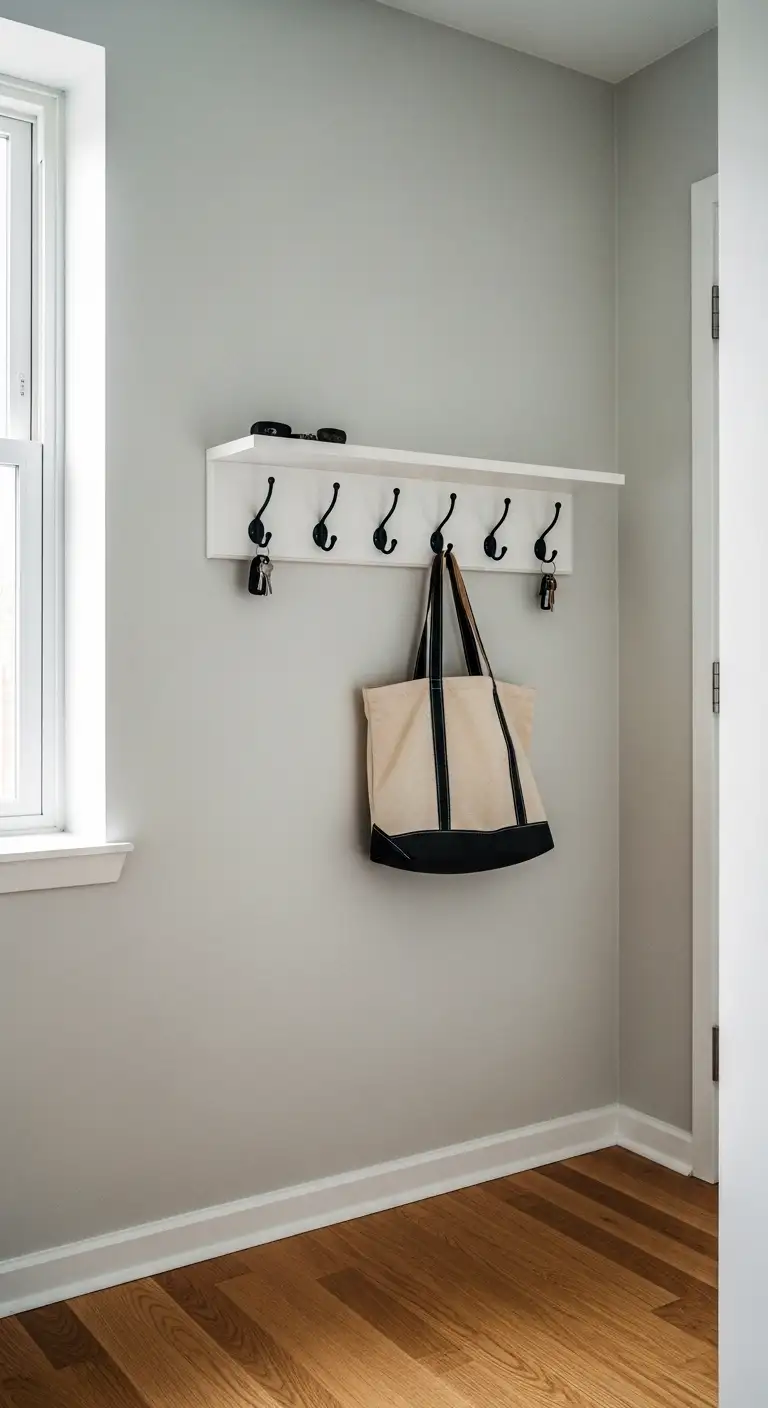
The wall next to your front door is doing nothing for you right now. A floating shelf with hooks underneath gives you two layers of storage without touching any floor space. You get a spot for your keys and wallet on top, and your bags and coats hang below.
I tried this in my own space with a 24-inch shelf from IKEA and a strip of five simple hooks underneath. The total cost was around $35. The shelf sits at about 60 inches high so the bags clear the floor completely. It sounds minimal but it completely changes the feel of coming home. Your hands aren’t full anymore the second you walk in.
For more approaches to vertical storage done right in tight apartments, there’s a lot of creative territory worth exploring.
2. Add a Slim Console Table (12 Inches Deep or Less)
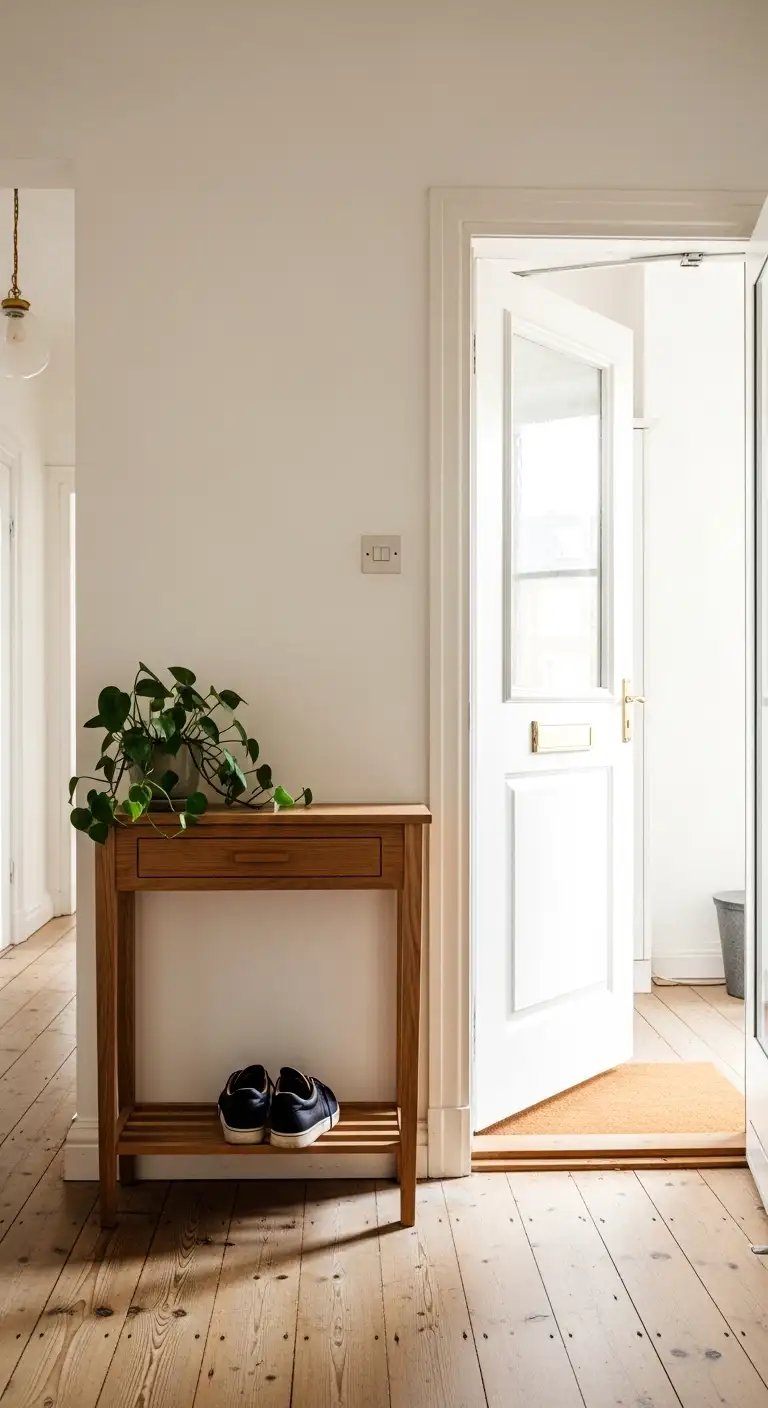
You might think a table sounds too big for a small entry. But a slim console at 10 to 12 inches deep takes less room than you’d expect and gives you a landing spot for everything you carry in. Look for one with a lower shelf or small drawer for extra storage.
West Elm and Target both carry options in the $80 to $180 range. But honestly, I’ve seen people find near-identical versions at HomeGoods or Facebook Marketplace for $30 to $50. A cream or off-white finish makes the space feel less cramped than dark wood. That one detail matters more than most people think.
More Ideas:



3. Use a Tall Narrow Bookshelf as a Shoe Cabinet
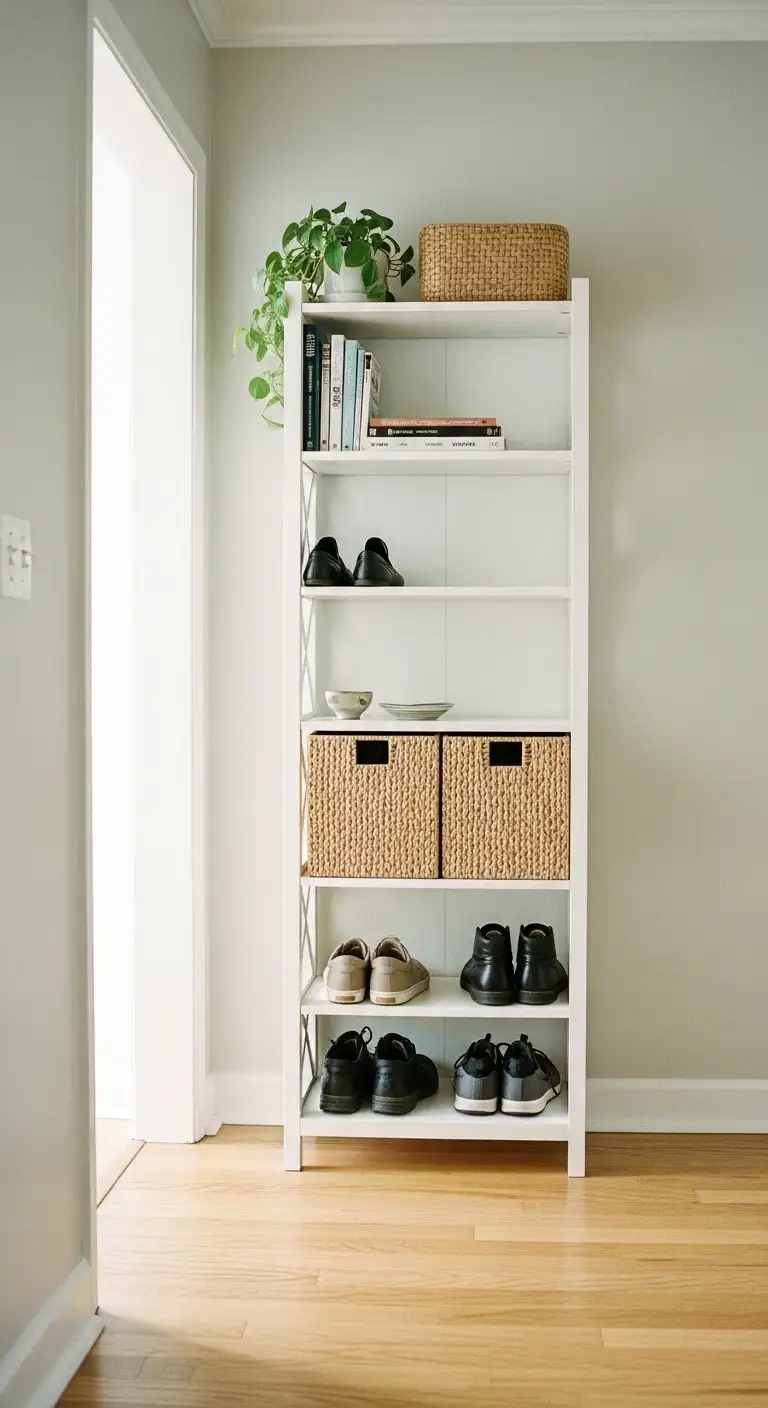
Here’s one I was skeptical about but it works really well. A tall narrow bookshelf, around 14 inches wide and 70 inches tall, fits in almost any entryway and holds way more than a traditional shoe rack. Turn the shelves into organized rows for shoes, add a basket on one shelf, done.
The IKEA Billy bookcase has a narrow version that runs about $60 to $80. You can add fabric bins to the shelves so the inside looks clean even when it’s not. This setup handles eight to ten pairs of shoes without anything looking stuffed. It’s not obvious that it’s a shoe situation when you walk by.
4. Stick Up a Full-Length Mirror
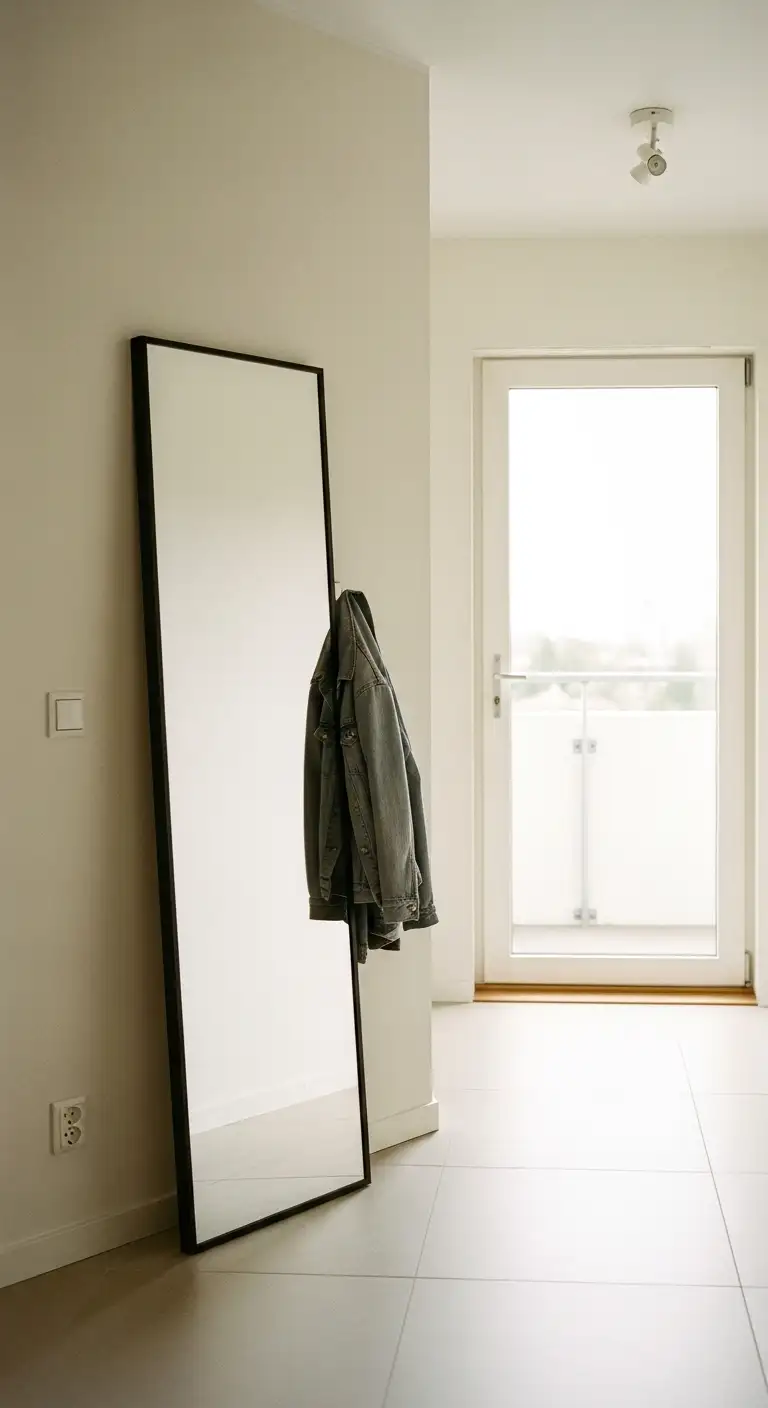
A full-length mirror in a small entryway isn’t just for checking your outfit. It bounces light around the space and makes the area feel at least twice as wide as it is. The visual trick is real and it costs almost nothing to try.
Look for a leaner mirror about 48 to 65 inches tall and 14 to 18 inches wide. These show up at TJ Maxx and HomeGoods constantly for $25 to $60. If you can’t lean it, most leaner mirrors also come with basic wall hardware. A simple black or brass frame looks polished without going overboard. This one change genuinely surprises people every time.
It’s one of those mirror tricks that open up rooms in ways that feel almost too simple to be real.
5. Layer a Flat Woven Rug Over Your Building’s Floor
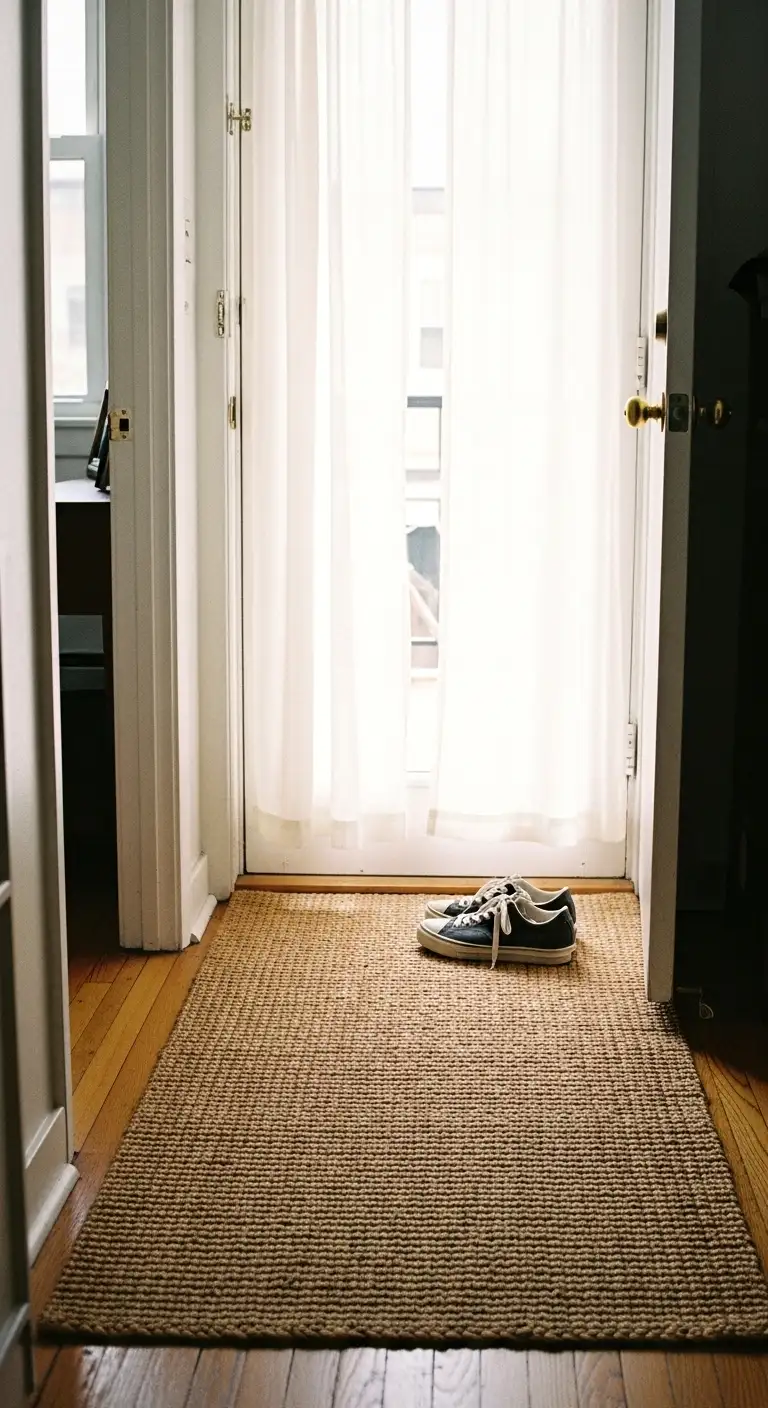
Most apartment floors near the front door are either vinyl, tile, or sad carpet. A flat-woven rug in a warm pattern or solid color makes the entry feel intentional immediately. Flat weave is key because it doesn’t curl up at the door.
Something around 2×3 feet or 2×4 feet works well in most narrow entries without blocking the door swing. These start at around $20 from Amazon or IKEA and go up to $80 for something better quality. A jute or cotton flatweave holds up well to daily foot traffic. (This one is so underrated. It’s the fastest change on this whole list.)
The same principle applies to rugs that define a small area anywhere in an open-plan apartment layout.
6. Mount a Key and Mail Organizer on the Wall
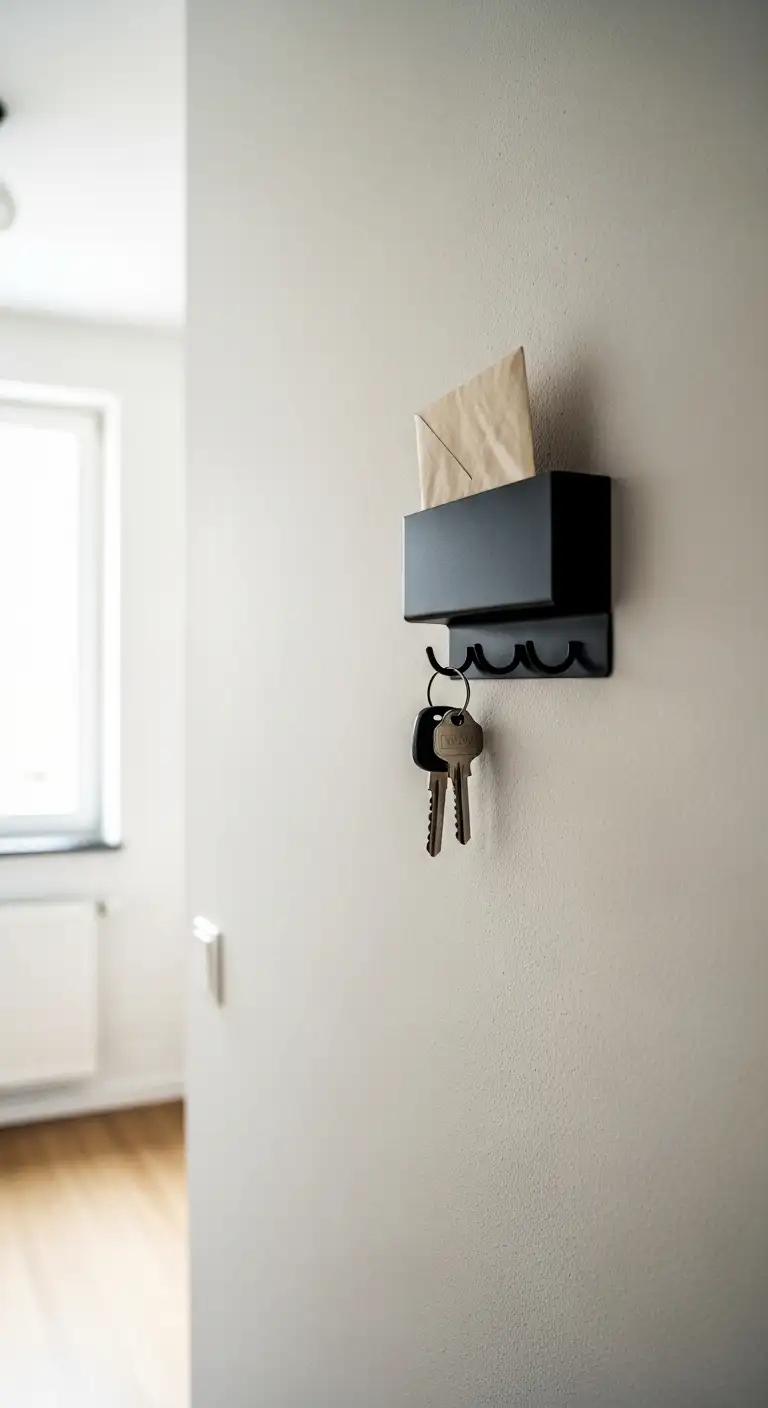
So here’s the thing about counters and tables in small entries. They collect whatever you put down and never let it go. Mounting a wall organizer gives everything a designated spot off the surface and off the floor.
Look for a combo piece that has hooks for keys, a small ledge for mail, and maybe a slot for your phone. These run $15 to $45 on Amazon. Mount it at eye level, about 60 to 66 inches off the floor. Once you put your keys in the same spot every single time, the whole entryway feels less chaotic. That sounds small but it’s actually a big deal.
More Ideas:
7. Add a Hanging Coat Rack With a Bench Below
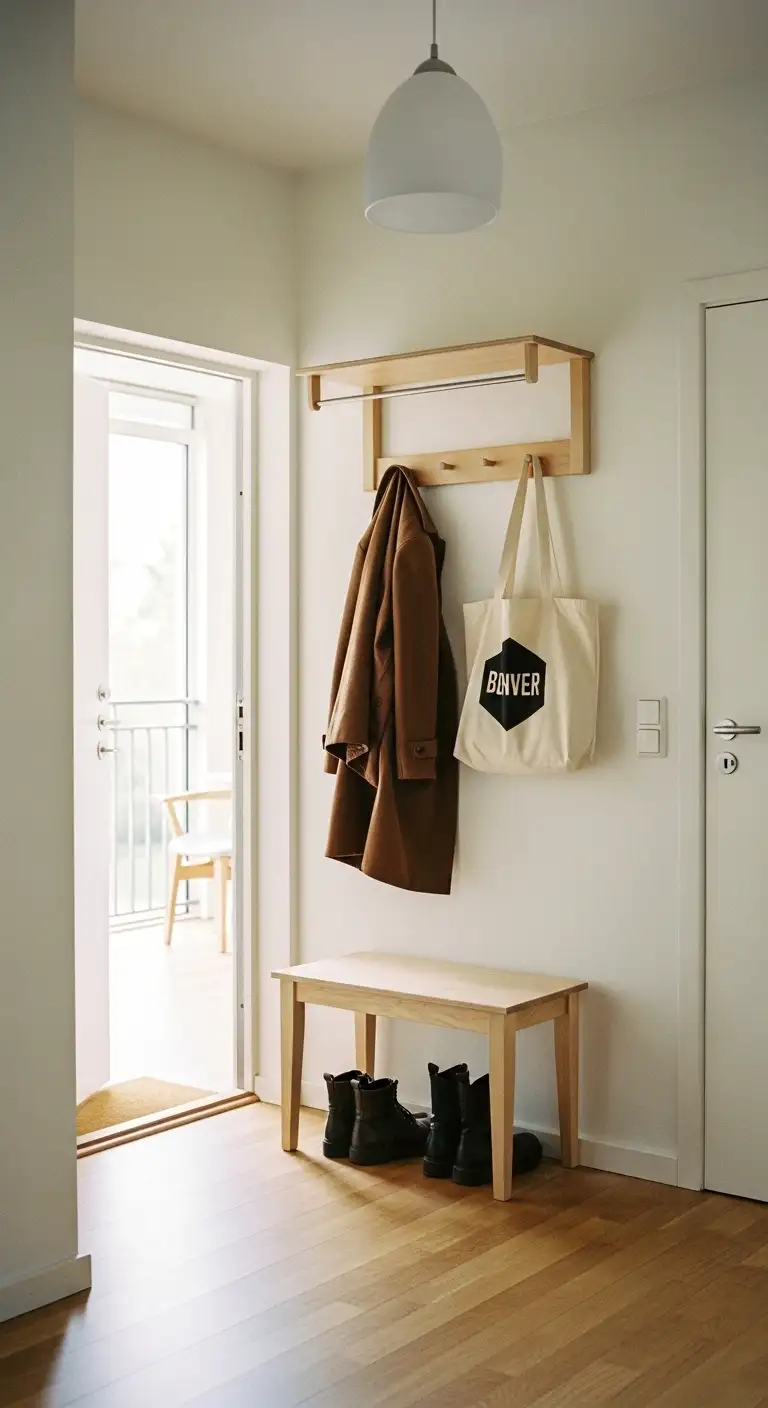
This combo does two jobs with one footprint. A wall-mounted coat rack at about 60 inches handles bags and outerwear. A small bench below, about 18 to 20 inches tall, gives you somewhere to sit and tuck shoes underneath. Together they use wall height instead of floor space.
You can buy these as a set for around $80 to $150 on Amazon or Wayfair. Or mix and match pieces you already own. The bench doesn’t need to be fancy. A simple cube stool from Target works perfectly. Tuck shoes underneath and you’ve solved two problems at once.
8. Try Peel-and-Stick Wallpaper on One Wall
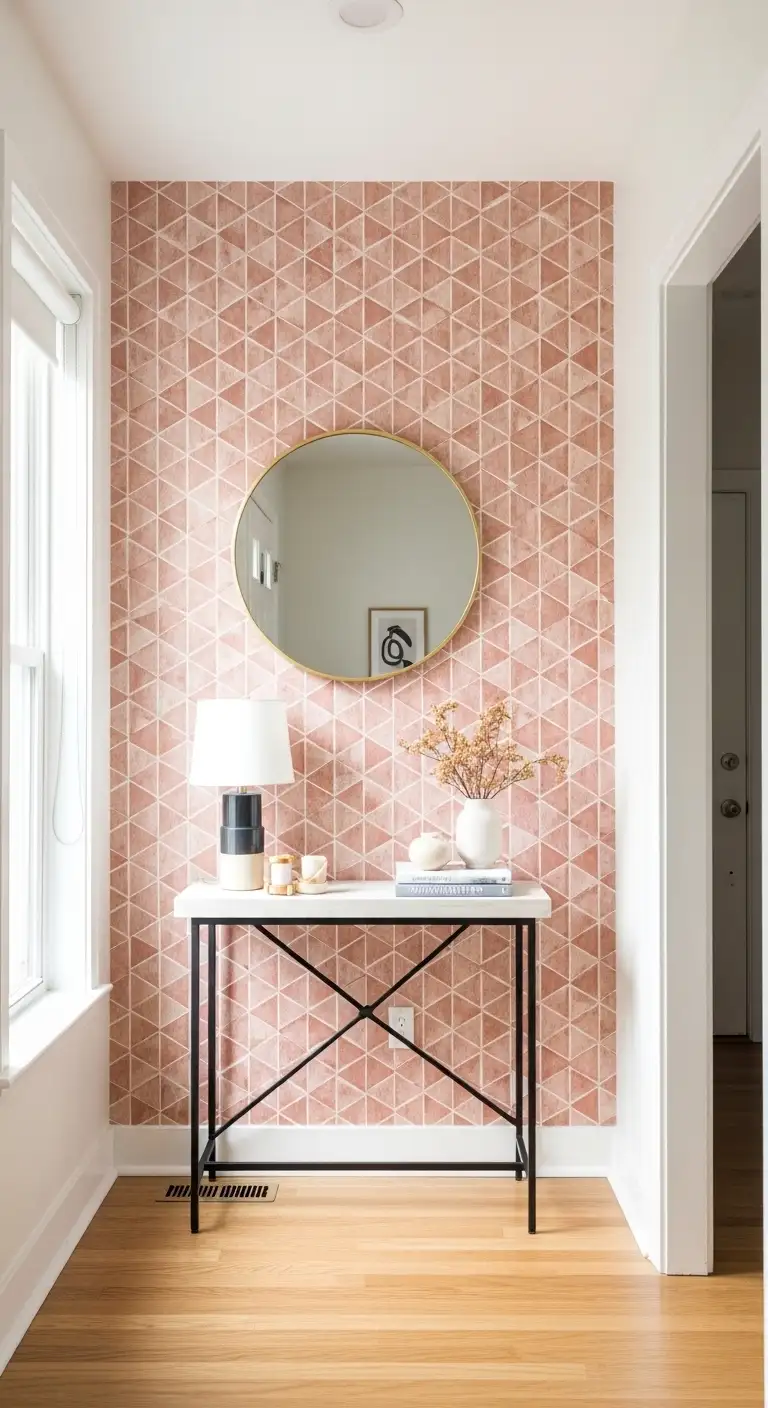
One accent wall in a small entry doesn’t need paint or permission. Peel-and-stick wallpaper goes up in an hour and comes down without damaging walls. It’s renter-safe and makes a plain entryway feel like it was designed on purpose.
A 2-foot-wide accent strip down one side of the entry or one full wall in a graphic pattern works well. Brands like Chasing Paper and RoomMates make good options for $30 to $80 for a small roll. Go for something with a small pattern or simple geometric. Big patterns can make tight spaces feel busier, not better.
If you like the idea, there are more peel-and-stick ideas for renters that work just as well in other rooms.
9. Use an Over-the-Door Organizer for Extra Storage
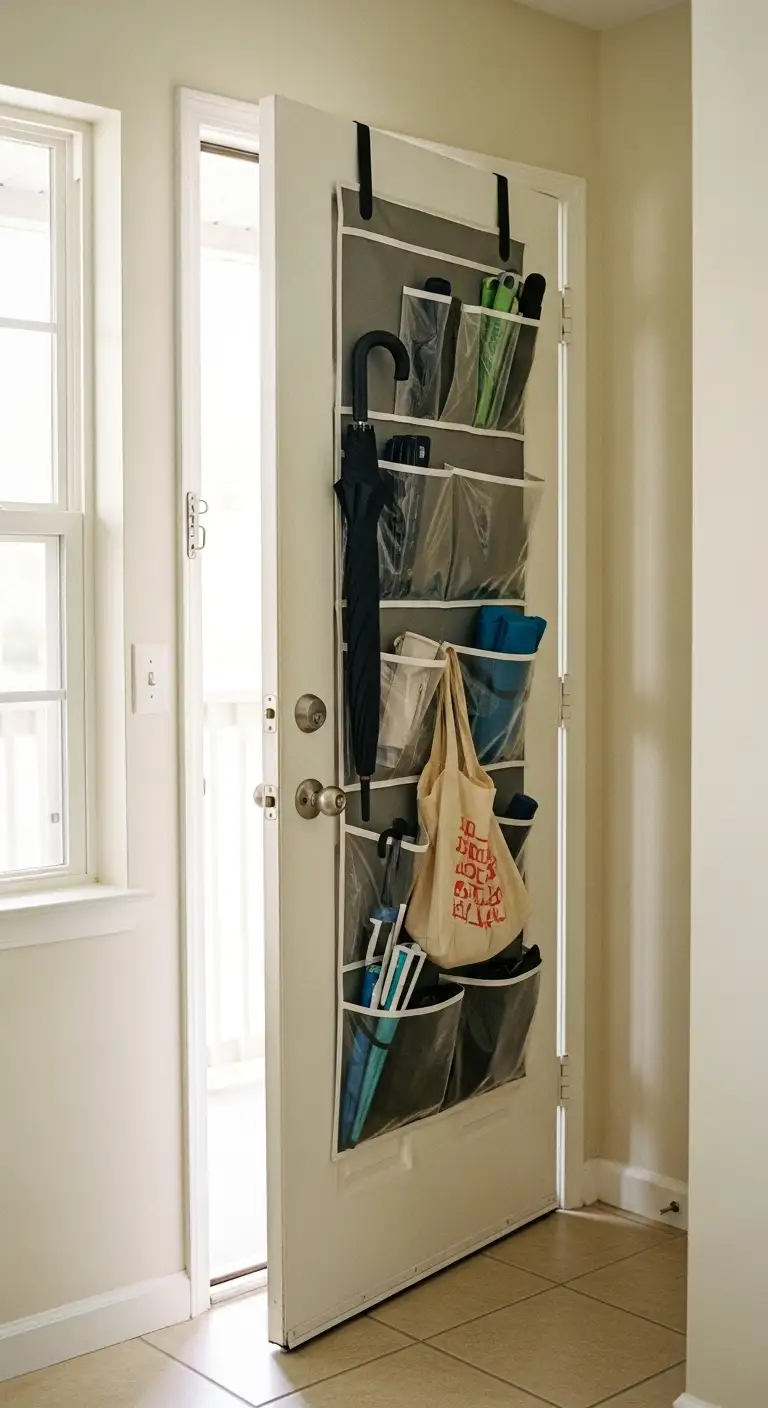
The back of your front door is untouched storage. An over-the-door organizer with pockets or hooks adds serious capacity without drilling a single hole. Most apartments have hollow-core front doors that hold over-the-door hooks easily.
These organizers run $15 to $40 and hold umbrellas, reusable bags, scarves, cleaning supplies, whatever you’re currently throwing on the floor. Look for one with clear pockets so you can actually find things. The good ones don’t bang against the door when it closes. Check reviews for that specific detail before buying.
10. Swap Out Your Overhead Bulb for Warm Light
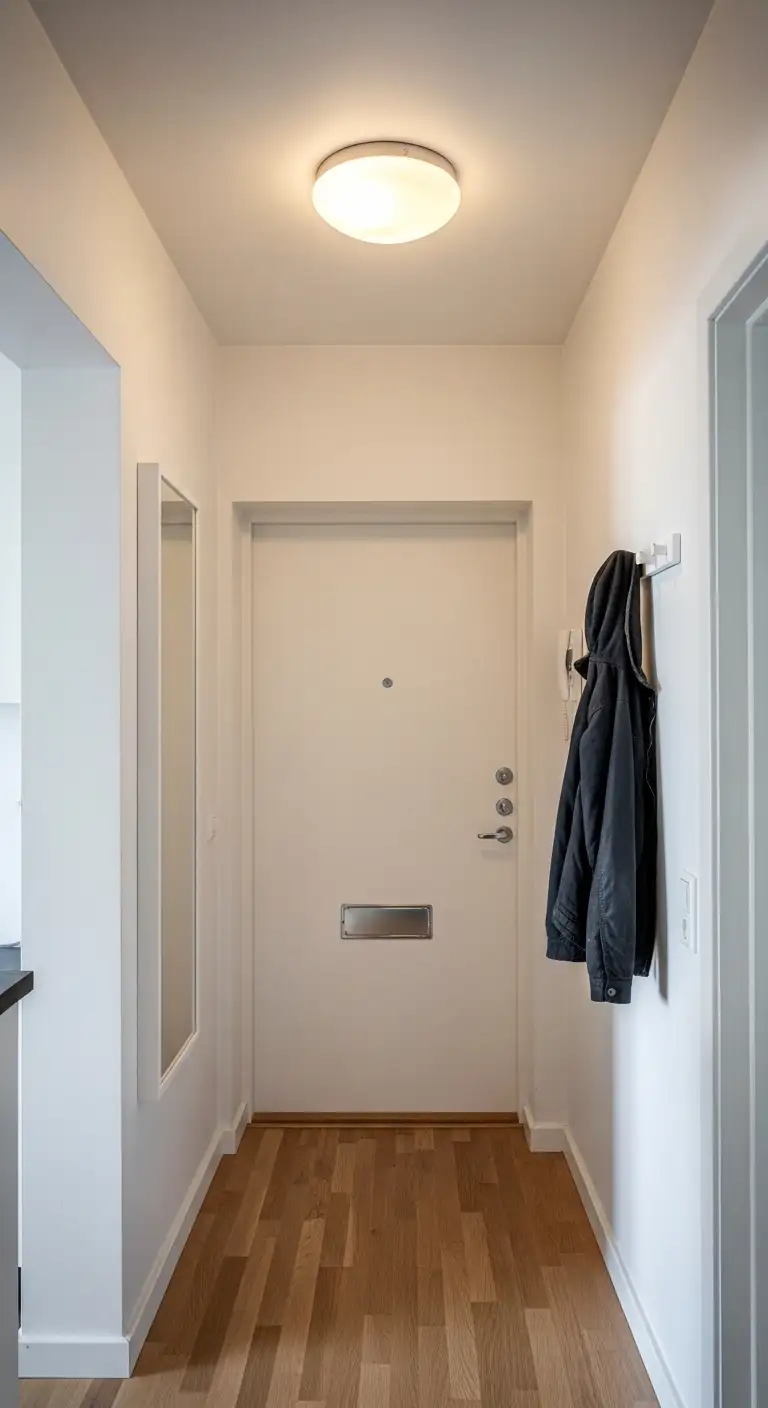
The lighting in most apartment entryways is either a bare bulb or a builder-grade flush mount with a cold white light. It makes the space feel clinical and unwelcoming. One bulb swap fixes this for under $10.
A 2700K warm white LED bulb in the existing fixture is all you need. That’s the number to look for on the box. Warm light makes a small space feel intentional rather than exposed. And honestly, it makes you look better when you check the mirror on the way out. If you want to go further, a plug-in sconce on the wall runs $25 to $60 and makes a huge difference.
Warm lighting is one of those small shifts that speaks to a broader approach to lighting that transforms a room’s mood without touching a single piece of furniture.
11. Put Down a Boot Tray to Corral Shoes
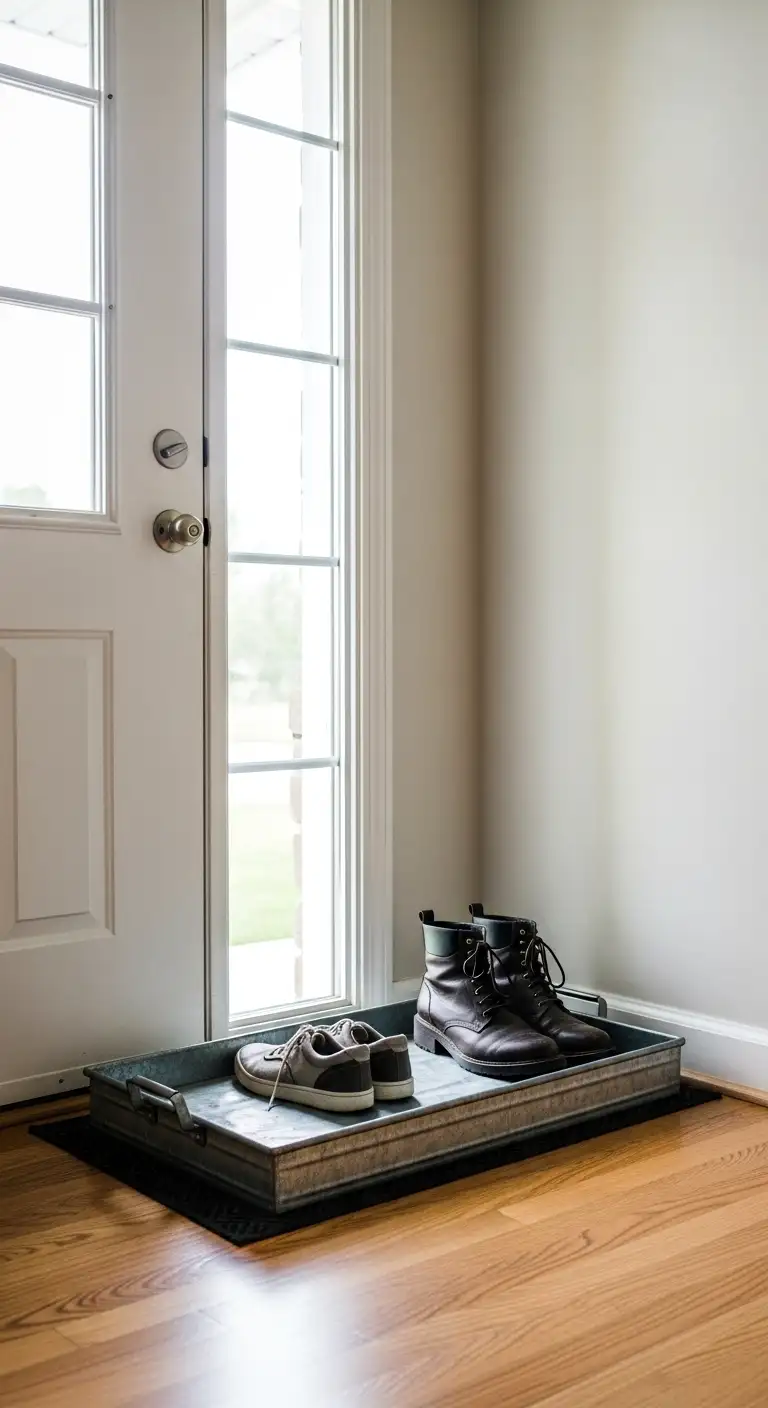
Shoes on the floor look messy even when they’re organized. A boot tray gives them a boundary. Everything inside the tray looks contained. Everything outside looks like a pile. It’s a mental trick but it genuinely works.
A basic galvanized steel boot tray runs $20 to $35 and holds three to four pairs. Look for one that’s about 15×30 inches. Line the inside with a thin rubber mat if you want to protect your shoes from pooling water. This is a low-investment first step that works immediately. No assembly, no tools, no decisions to make.
12. Hang a Small Floating Shelf for Your Plant
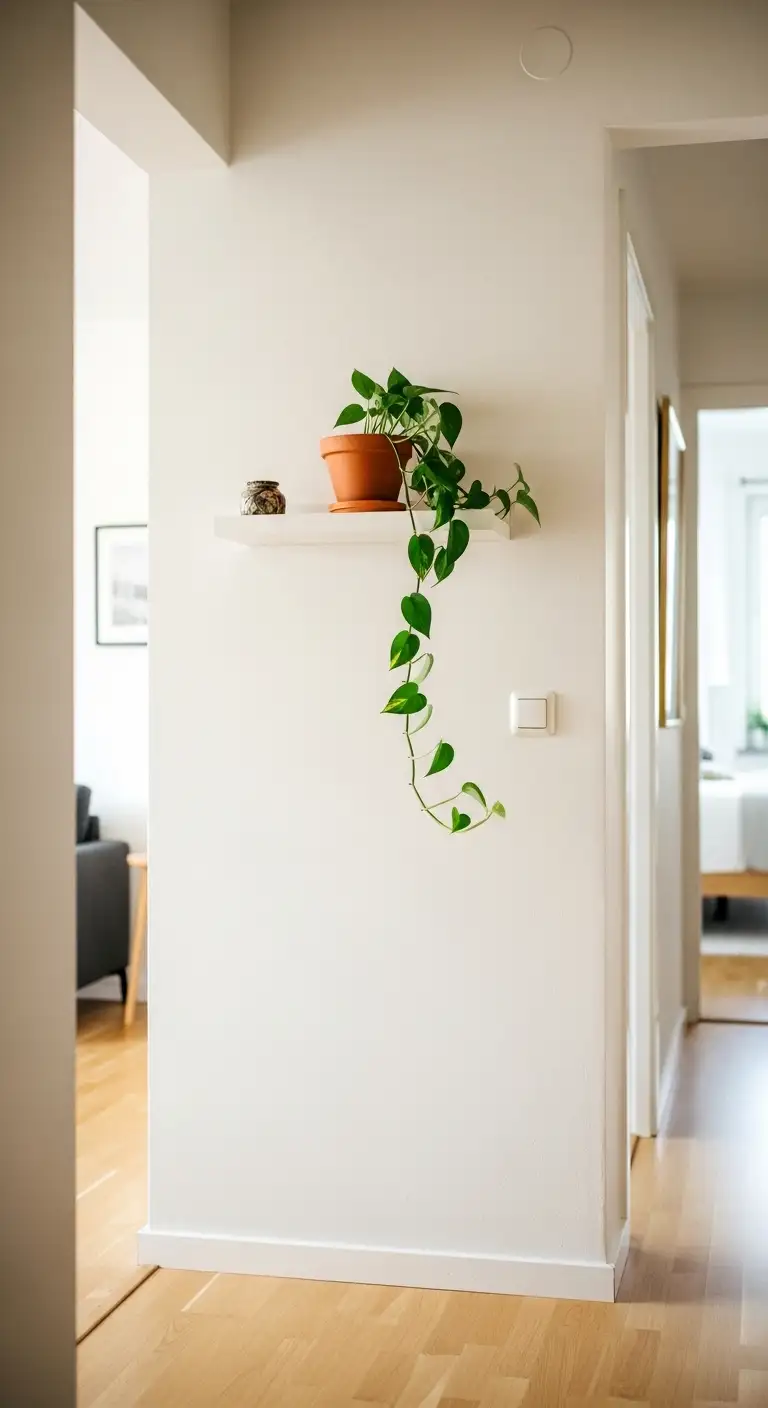
A trailing plant on a small shelf near the entry makes the space feel alive without adding visual clutter to the floor. Pothos, heartleaf philodendrons, and string of pearls all trail downward and look great against a plain wall.
A small 8-inch floating shelf from IKEA runs about $8 to $12. Add a simple ceramic or terracotta pot for $5 to $15. The whole thing costs under $30 and adds something organic to a space that usually just has hard surfaces. Keep the plant near the door if you have a window nearby. No natural light? Pothos survives in almost anything.
More Ideas:
13. Install a Pegboard Panel for Flexible Storage
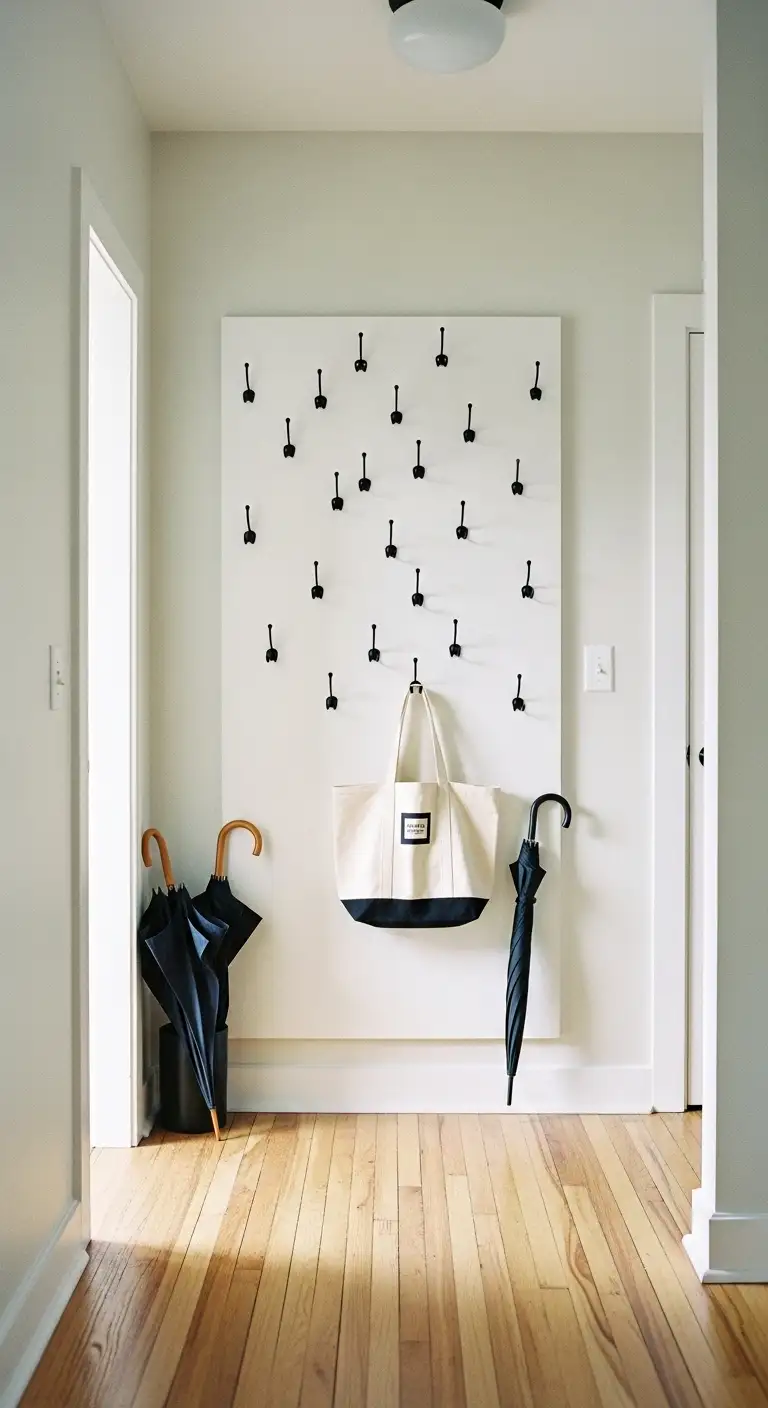
My favorite part about a pegboard is that it grows with you. You can rearrange the hooks and shelves whenever your storage needs change without re-drilling anything. In a small entryway, a 24×24-inch panel handles a lot.
Pegboards come painted in white, black, and natural wood finishes now. They’re not the garage version anymore. A painted panel with brass or black hooks runs $40 to $90 depending on the size and finish. Mount it with 3M heavy-duty strips if drilling isn’t an option. It holds more than you’d expect when the hooks are positioned well.
The same logic behind flexible storage for small spaces applies just as well to other rooms where wall real estate gets wasted.
14. Use a Small Dresser as an Entryway Table
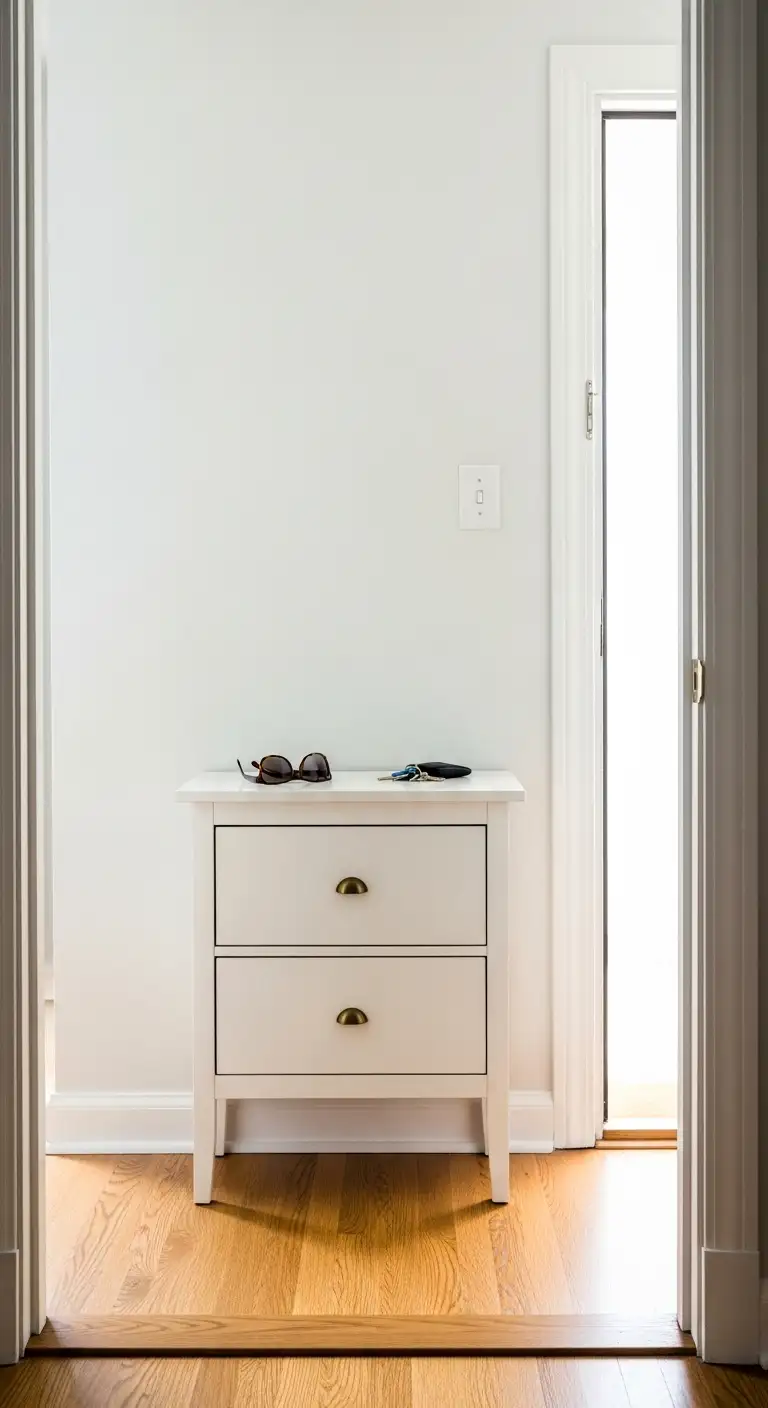
This sounds odd but it works really well. A small two-drawer dresser, about 24 inches wide and 12 inches deep, sits against the wall and hides all the stuff that usually ends up in a pile. Sunglasses, chargers, extra masks, dog leashes, all of it disappears inside the drawers.
Check Facebook Marketplace for older dressers. I’ve seen solid wood ones for $20 to $50 all the time. Paint it one color to modernize it and add new hardware for another $10 to $20. Total cost comes in well under $100. The surface on top becomes your landing zone. Clean lines, closed storage, done.
Facebook Marketplace dressers are just one of many budget finds worth tracking down when you’re furnishing a small apartment without overspending.
15. Add a Clip-On Reading Light Instead of Rewiring
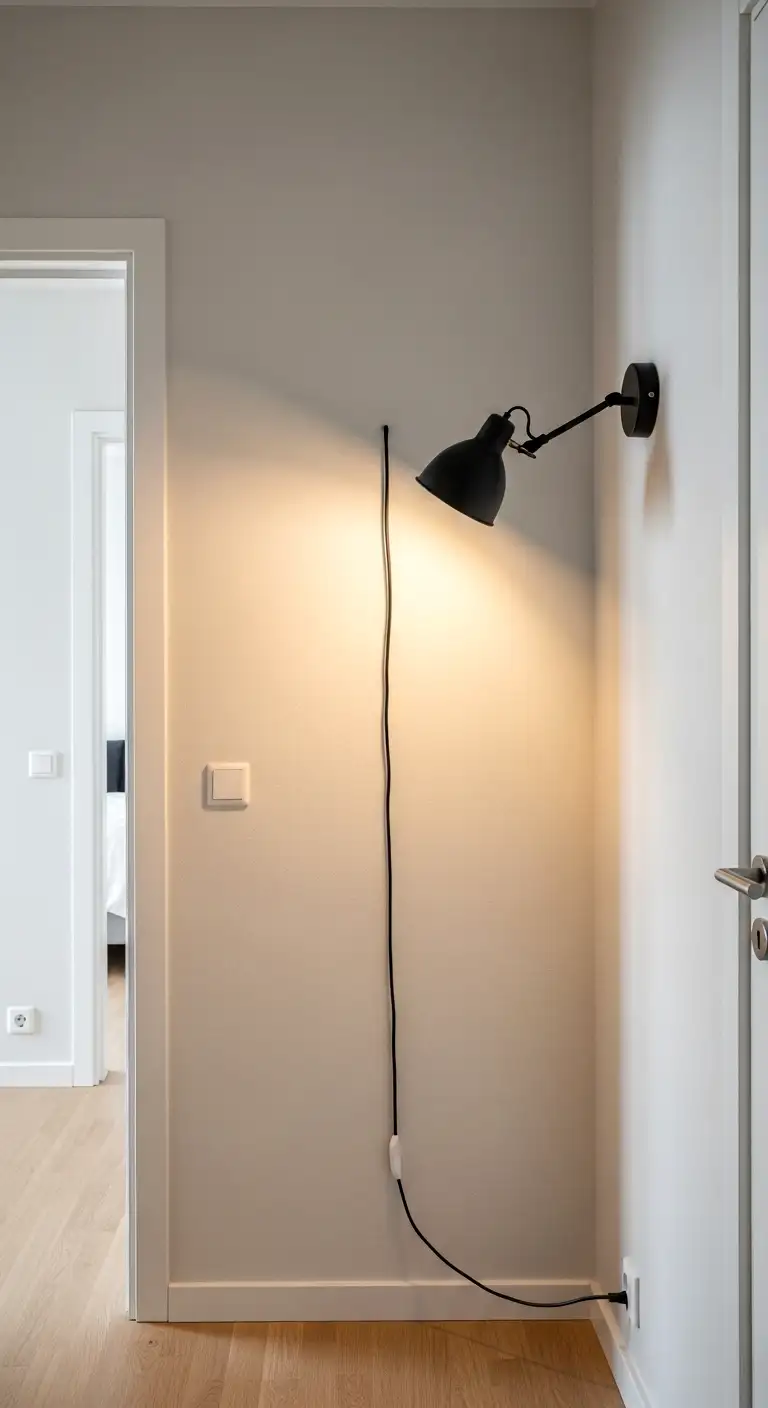
If your entryway has no overhead light at all, a plug-in clip light or swing-arm lamp is the answer. You don’t need an electrician. You don’t need to hardwire anything. Just plug it in and aim it at the wall.
A plug-in swing arm sconce from Amazon or Ikea runs $25 to $65. The cord can be hidden with a simple cord cover in the same color as your wall. This runs about $8 to $12. Good lighting in an entry isn’t optional if you want the space to feel finished. It’s the thing people notice even when they don’t know what they’re noticing.
16. Hang a Corkboard or Memo Board for Daily Notes
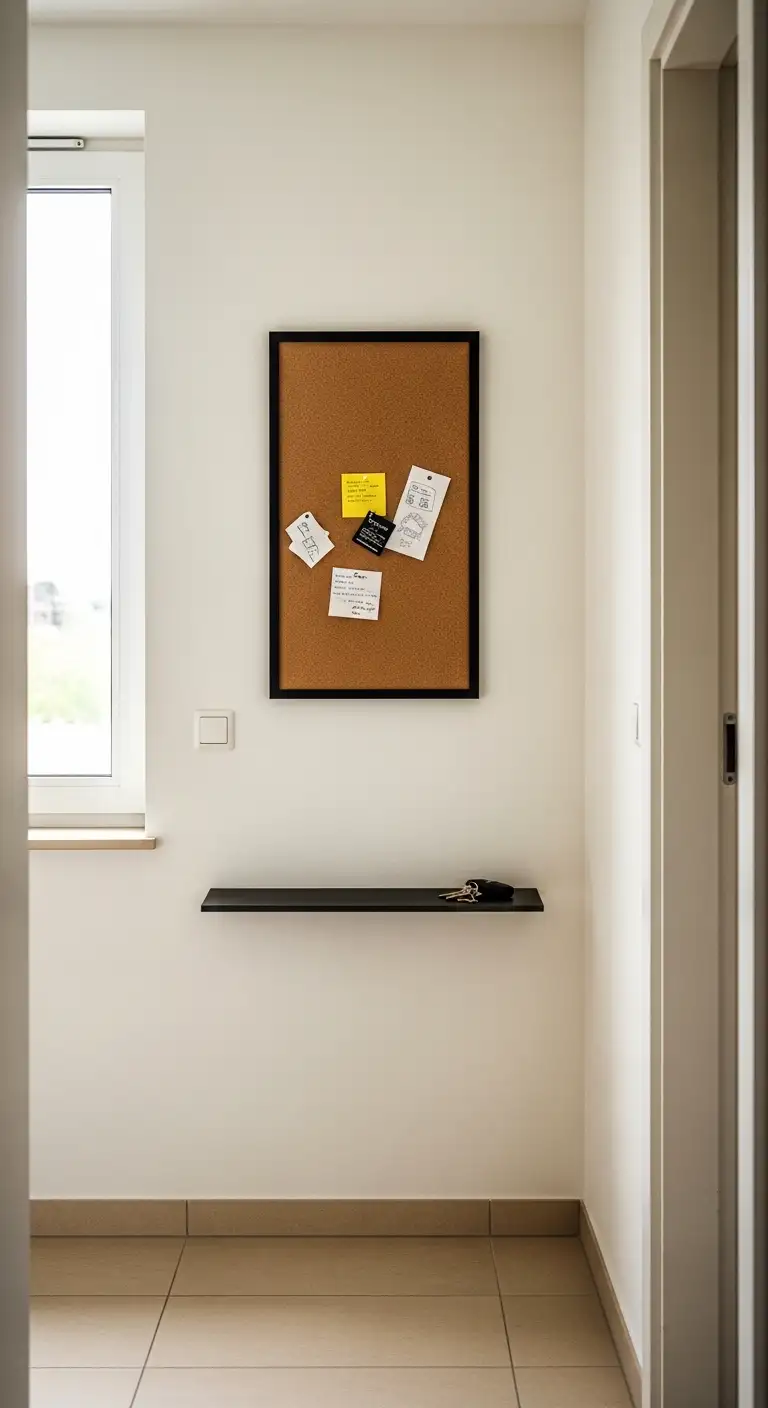
A small corkboard near the door keeps the “don’t forget” stuff off the counter and out of your head. Permission slips, parking passes, grocery lists, reminders, they all live in one spot and you see them right as you leave.
A round or rectangular corkboard runs $10 to $25. Frames corkboards look more finished than bare cork. You can also use a magnetic chalkboard or a simple pegboard square with clips if you want something that feels more intentional. Keep it small, around 12×16 inches. Big boards in small spaces look like a school hallway.
17. Lay a Tall Wicker Basket for Umbrellas and Bags
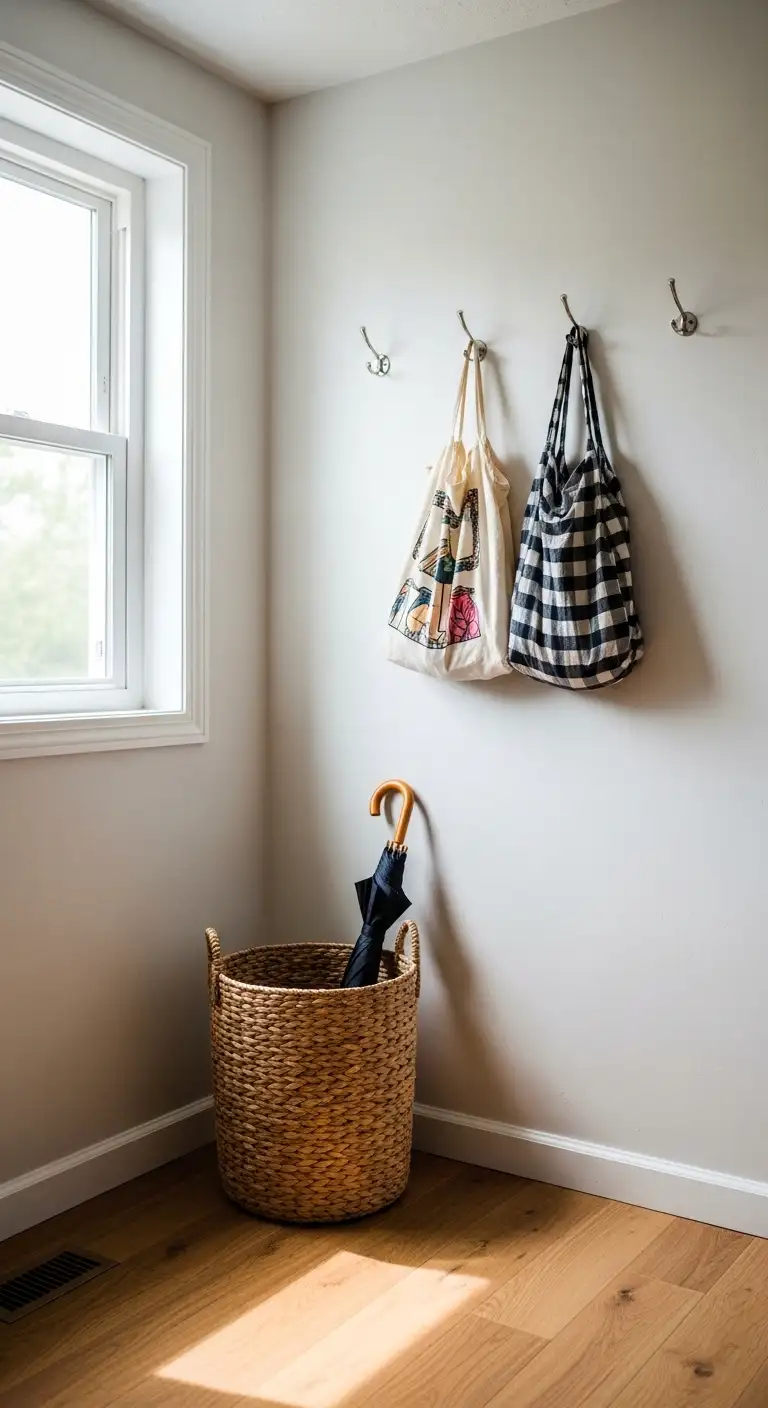
A tall narrow basket in the corner of the entry holds umbrellas, reusable shopping bags, yoga mats, and everything else that doesn’t have a home. It’s soft, it’s renter safe, and it looks good.
(Took me ages to figure this out.) I kept buying little storage solutions when what I needed was one big basket in the corner. A wicker or seagrass basket that’s about 18 to 24 inches tall runs $20 to $55 at places like Target or World Market. It replaces the pile that would otherwise live on your floor and makes it look intentional.
18. Use a Rope or Fabric Hanging Organizer
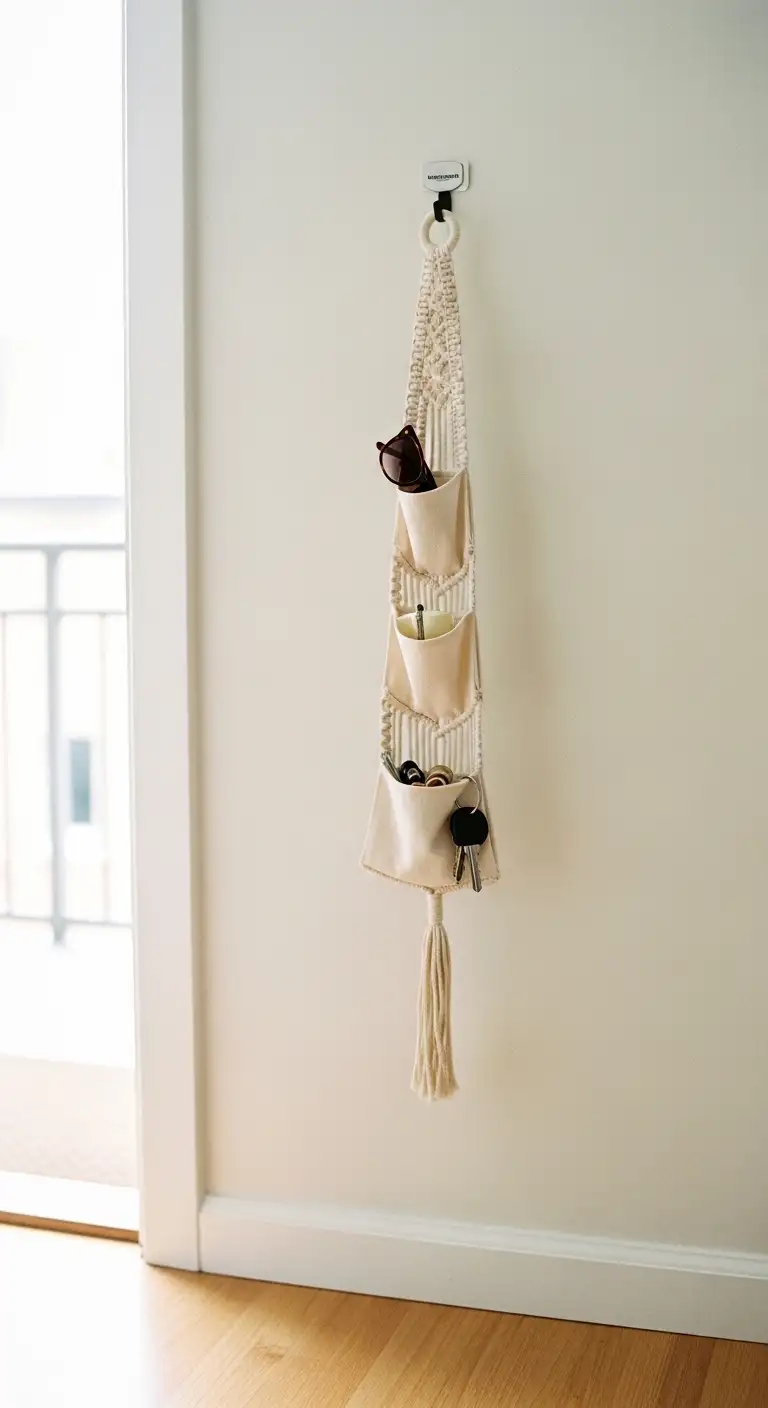
A macrame or cotton rope hanging organizer takes up zero floor space and zero counter space. It hangs from a Command hook and gives you three to five pockets for smaller items. Keys, sunglasses, a spare charger, lip balm, all the pocket-sized things you grab on the way out.
These run $18 to $40 on Etsy or Amazon. They work especially well in entries where there’s literally no furniture at all. One hook on the wall, one organizer hanging from it, and you’ve created a station out of nothing. The natural texture also adds something warm without adding any visual weight.
19. Put a Low Stool or Cube Ottoman Near the Door
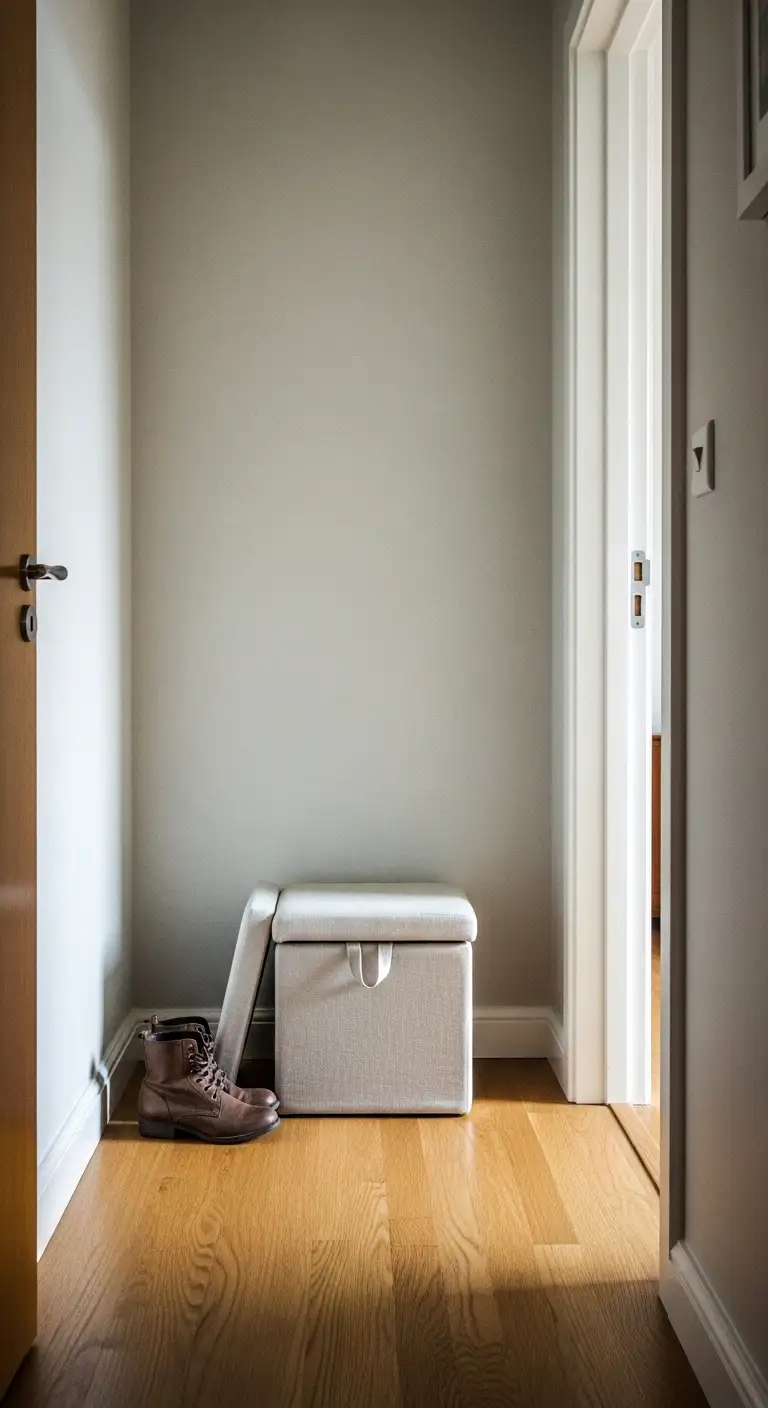
Sitting down to put your shoes on sounds like a small thing until you don’t have somewhere to sit. A small cube ottoman or stool at 16 to 18 inches tall gives you that seat and doubles as extra storage if you get a lidded version.
Target’s Room Essentials line has cube ottomans for around $30 to $45. If you get one with a removable lid, you can store seasonal scarves, gloves, or shoe care supplies inside. Keep it small, under 16 inches square, so it doesn’t block your path. Push it against the wall when you’re not using it.
20. Label Your Zones and Commit to Them
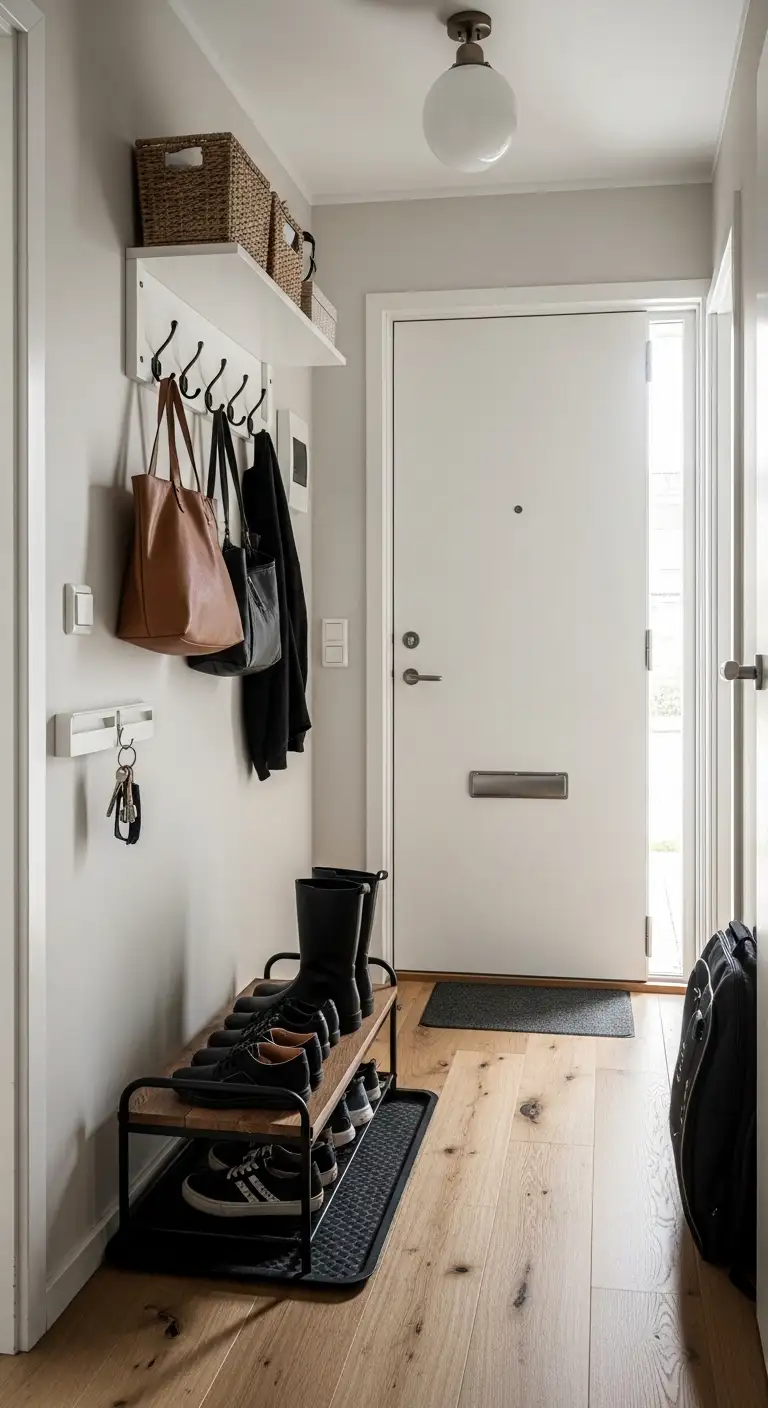
Here’s the one that holds everything else together. Every entryway system fails when there are no rules. Zones work. Keys go in one spot. Shoes go on the tray. Bags hang on the hook. That’s it.
You don’t need to label anything physically. Just decide. The more specific you are about where things live, the less your entry reverts to chaos. I promise this is what separates a space that looks good for two weeks from one that stays clean. The furniture and the decor are easy. The habit is the actual fix.
Final Thoughts on Small Apartment Entryway Ideas
You don’t need a renovation. You need a system, a couple of pieces, and a decision about where things live. The ideas in this list work because they focus on real problems: no floor space, no drilling, no budget for a designer. A narrow shelf, a warm bulb, a boot tray, and a mirror can do more for a small entry than a full furniture set that’s too big for the space.
Start with one thing today. The boot tray or the key organizer. Put it in place and use it for a week. Once that habit forms, add the next piece. Small spaces get fixed in small steps, not all at once.
If you’re setting up a new place and thinking through every room in your apartment from scratch, a full checklist can help you prioritize where to spend and where to save.
If you want more ideas like this for every room in your apartment, homelypop.com has a lot more where this came from. Real budgets, real solutions, nothing that requires you to own your own home.


