
21 Small Balcony Garden Apartment Ideas for Renters on a Real Budget

Your balcony is four feet wide and you’re staring at concrete, a plastic chair, and maybe a dead plant from last summer. It doesn’t feel like a garden. It feels like wasted space.
I put together 21 ideas specifically for apartment balconies, from vertical planters to compact water features. Every idea on this list was chosen because it actually works in tight spaces, doesn’t need a landlord’s permission, and fits a budget somewhere between $100 and $300 total. This isn’t for people with sprawling terraces or renovation budgets. If you’re renting a small balcony garden apartment and want real greenery without real chaos, you’re in the right place. These ideas are all achievable.
By the end of this list, you’ll know exactly where to start and what to spend first.
If you’re also thinking about a ground-level setup, there are some great ways to make outdoor space feel bigger worth browsing before you commit to a direction.
What to Know Before You Start a Small Balcony Garden
- Most apartment balconies hold 15–40 lbs per square foot. Check yours before loading up pots.
- Wind at higher floors dries out soil twice as fast. Water more often or use self-watering pots.
- A $20 moisture meter prevents the most common plant killer: overwatering.
- South and west-facing balconies get the most sun. North-facing ones need shade-tolerant plants.
- Renter tip: adhesive hooks rated for 5+ lbs work on most railings without drilling.
- Terracotta pots are porous and crack in frost. Use plastic or resin pots if temperatures drop below freezing.
- Grouping plants together raises humidity around them, which cuts down on watering and stress.
- Budget reality: $50–$80 covers three solid starter plants plus basic soil. Start there before buying decor.
1. Install a Vertical Pocket Planter

Vertical space is the secret weapon of any small balcony garden. When floor space runs out, the wall or railing becomes your growing zone. A fabric pocket planter hung over a railing can hold 12 to 20 plants in the same footprint as one large pot.
These run about $15 to $30 online and they’re stupid easy to set up. Fill them with herbs like basil, mint, and parsley and you’ve got a functional kitchen garden hanging right there. I used one on a 6-foot railing section and it held nine plants without sagging. Water runs through fast, so check moisture daily in summer.
2. Use a Tiered Plant Stand
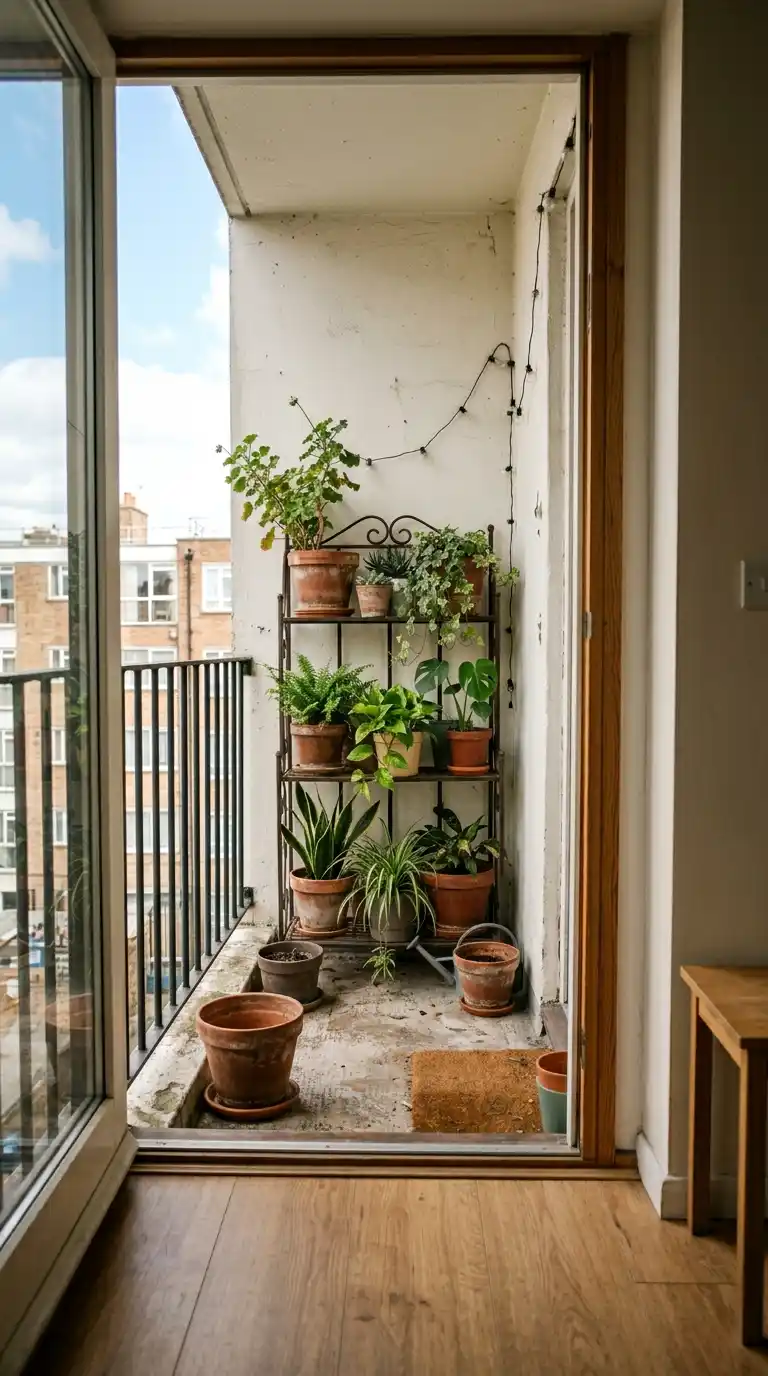
Here’s a simple shift that makes a huge difference: instead of spreading pots across the floor, stack them. A three-tier metal plant stand fits in roughly 18 by 18 inches of floor space and holds six to nine pots depending on size.
You can find these for $25 to $50 at most home stores or online. Wrought iron ones hold up better outdoors than the lightweight bamboo versions, which warp in rain. When I tried this in my own space, I went from a cluttered balcony with pots scattered everywhere to something that actually looked like a garden. The height variation makes the whole thing feel intentional.
More Ideas:

3. Grow Herbs in a Railing Planter Box

Railing planter boxes clip right onto your balcony railing without any drilling. They sit outside the railing, so they don’t eat into your floor space at all. Most boxes fit railings between 1.5 and 3.5 inches wide, so measure yours first.
A decent set of two runs $20 to $40. Fill them with herbs you actually use: rosemary, thyme, cilantro, chives. Herbs don’t need much depth, so shallow railing boxes work perfectly. The bonus is that most herbs are pest-resistant and look full pretty quickly after planting. Give them good drainage holes or the roots will rot.
4. Add a Folding Bistro Table and One Chair
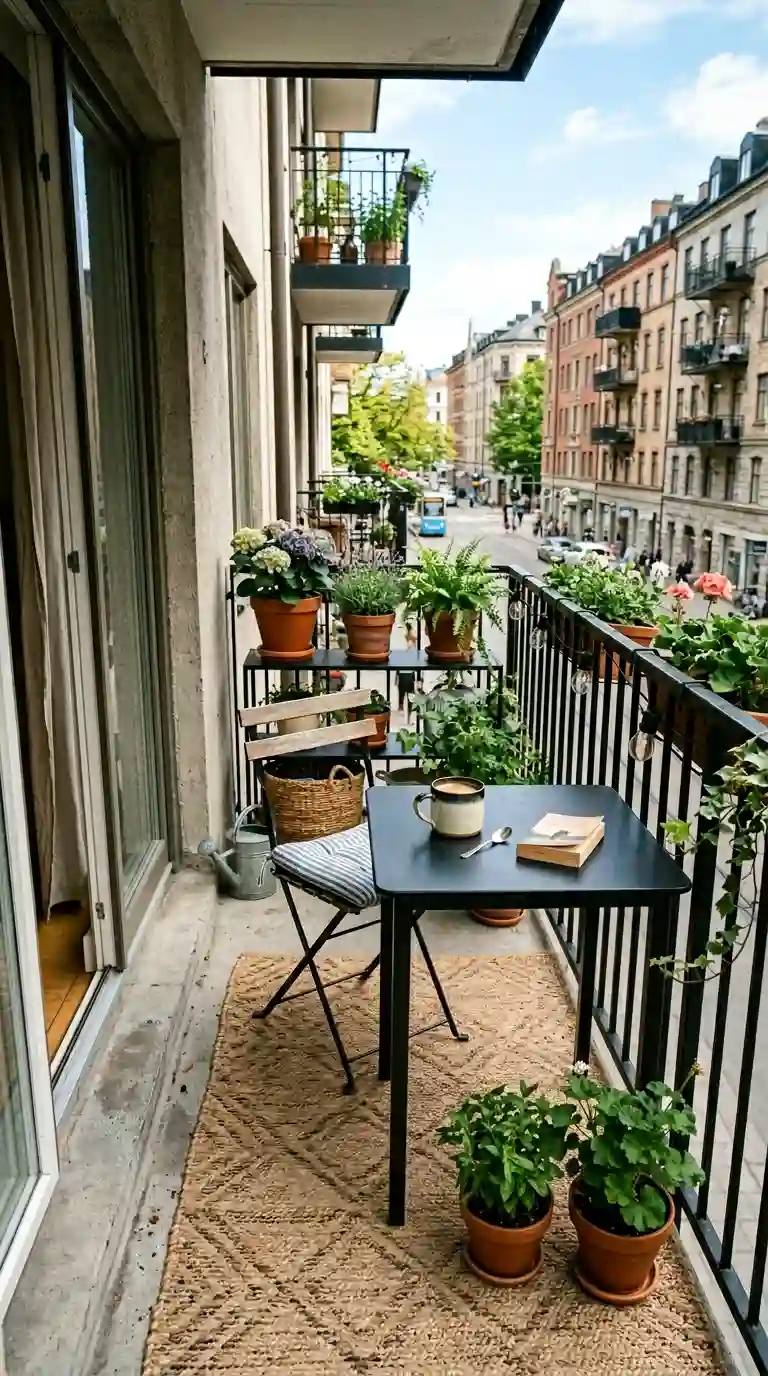
A balcony with zero seating doesn’t get used. That’s just reality. Even one small bistro table and a single chair turns a forgotten concrete slab into a place you’ll actually go in the morning with coffee.
Before you buy, it helps to look at compact furniture that earns its place so you don’t end up with something oversized.
Look for folding bistro sets in metal or resin wicker. They fold flat when not in use and most fit in a corner. Prices range from $60 to $120 for a two-piece set. The table doubles as a plant stand, which makes it pull double duty in a small space. Position it where it gets morning light and you’ll want to sit out there more than you’d expect.
5. Hang String Lights Along the Railing
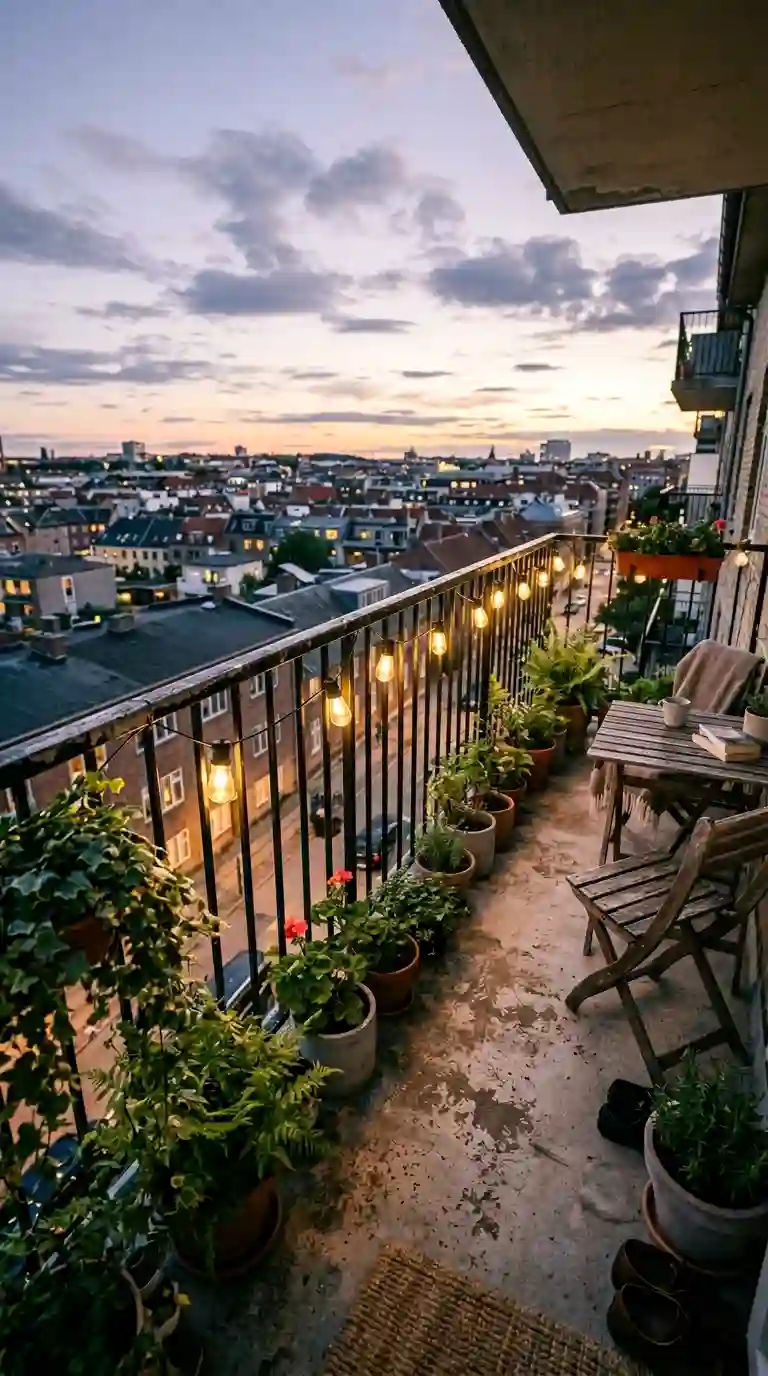
So here’s the thing about string lights: they’re doing more than just light. They define the space. A balcony with string lights feels like a room. Without them it feels like a ledge.
Outdoor-rated solar string lights run $15 to $35 and need no outlet. Clip them along the inside edge of your railing or drape them from hooks on the wall. Warm white (2700K to 3000K) looks the most natural and flattering around plants. And honestly, once you see your balcony at night with lights on, you’ll wonder why you waited. Really good return for the cost.
If you want to see how lighting ideas that transform a space come together with plants and seating, terrace setups are a great reference.
6. Plant a Dwarf Tomato in a Grow Bag

You don’t need a raised bed to grow food. A fabric grow bag holds soil, drains perfectly, and can sit anywhere on your balcony floor. Dwarf tomato varieties like Tiny Tim or Tumbling Tom were literally bred for containers this small.
A 5-gallon grow bag costs about $5 to $10, and one dwarf tomato plant from a nursery runs $3 to $8. Put it in your sunniest spot, water every day in summer, and feed with a liquid tomato fertilizer every two weeks. I was skeptical about this one but the first season I tried it I got more tomatoes than I could keep up with from a single bag in about 4 square feet of space.
More Ideas:
7. Create a Mini Privacy Screen with Bamboo Poles
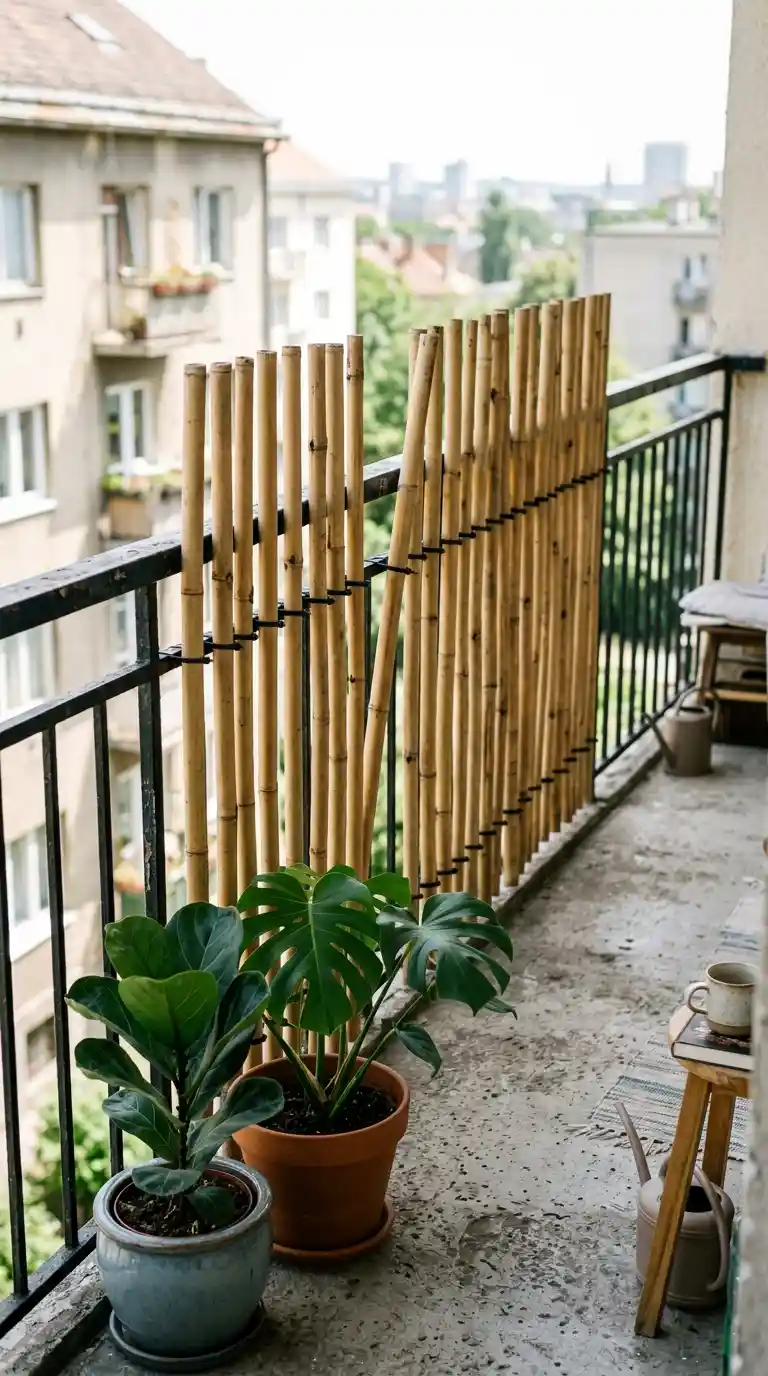
If your balcony faces another building or a busy street, bamboo poles zip-tied to your railing create a quick privacy wall. You’re not blocking wind, just line of sight. It makes the space feel much more contained and calm.
A bundle of natural bamboo poles (about 12 poles, 4 to 6 feet tall) costs $20 to $35. Zip-tie them vertically along the inside of your railing at even intervals. Leave small gaps between poles so air moves through but you still get privacy. This works without any drilling and most landlords won’t have an issue with it.
If bamboo isn’t quite your style, there are other screening ideas that still look good and work just as well for renters.
8. Set Up a Self-Watering Planter for Low Maintenance
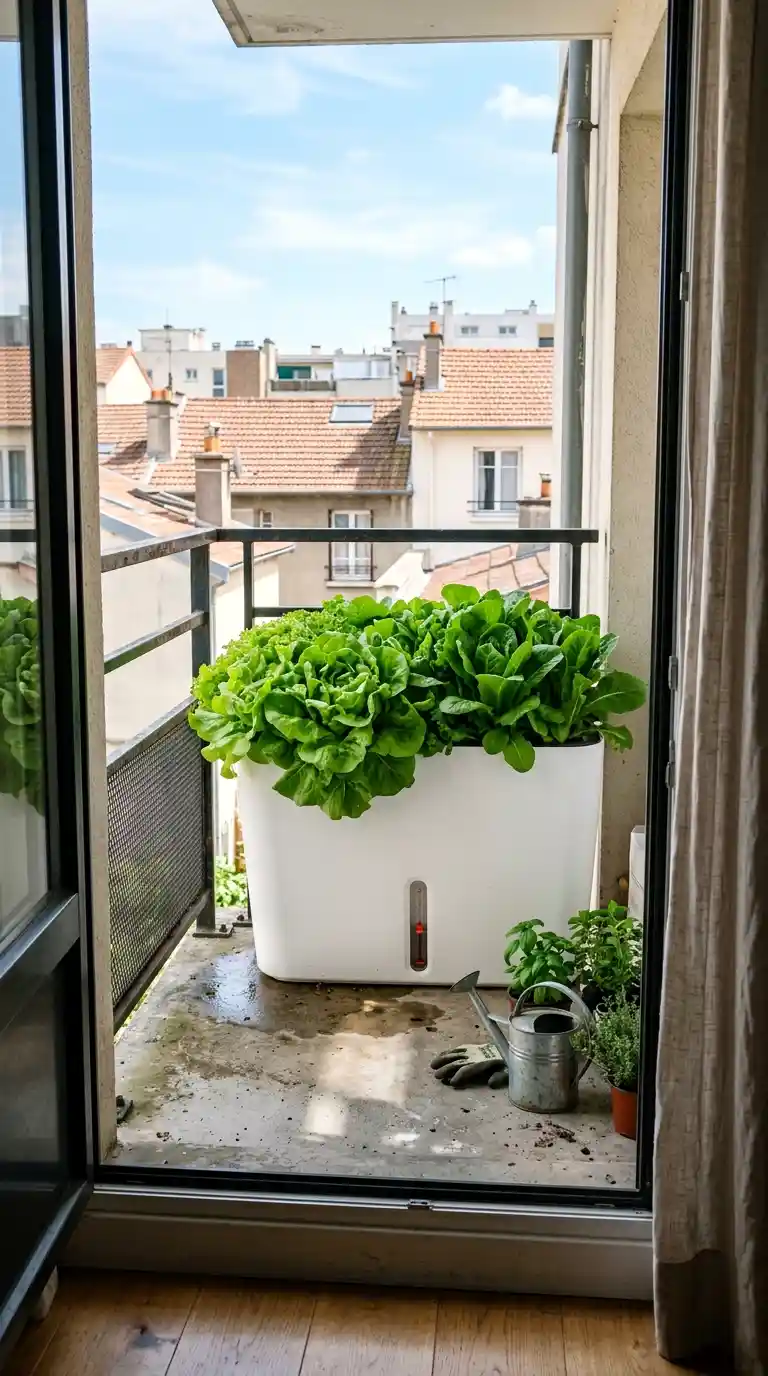
Self-watering planters have a reservoir at the bottom that feeds water up to the roots. You fill the reservoir every few days instead of watering daily. This is the single best thing for anyone who travels or forgets to water.
These planters start at about $20 for a basic 12-inch version and go up to $60 for larger ones with visible water level indicators. They work best for leafy herbs, lettuce, and flowers. Put your most thirsty plants in these and your drought-tolerant ones in regular pots. Huge time saver (took me ages to figure this out, honestly).
9. Add a Small Solar Water Fountain
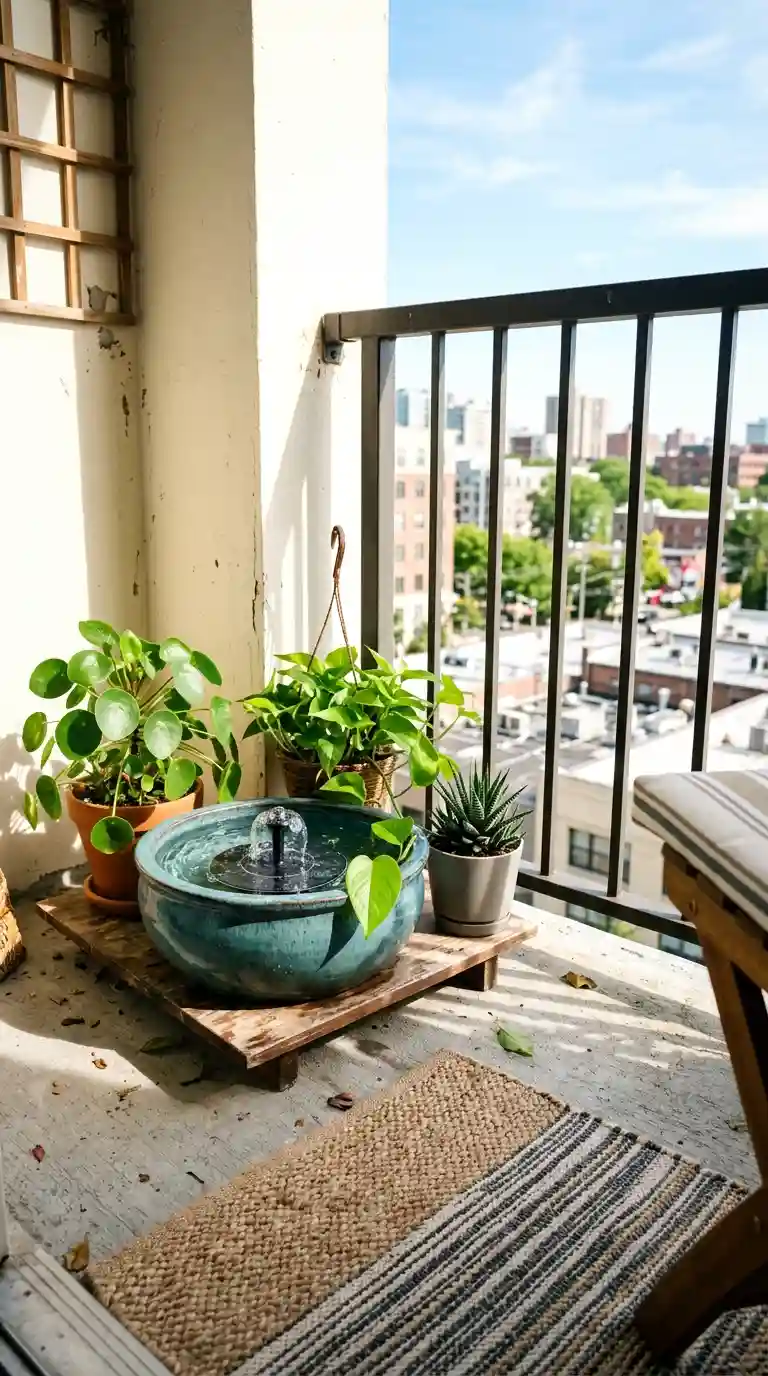
A small outdoor solar fountain adds sound, movement, and a sense of calm. On a city balcony, the white noise helps block street sounds. It’s a surprisingly functional thing, not just decorative.
Solar-powered tabletop fountains run $25 to $60. They don’t need wiring or a drain. Just a bowl of water, sunlight, and the solar panel does the rest. Place it in your sunniest corner and surround it with a few low plants. The whole setup takes maybe 10 minutes and it changes the feel of the space completely. No noise, no motor smell, just quiet trickling water.
10. Plant Trailing Vines in Hanging Baskets

Hanging baskets let you add volume above eye level, which makes a small balcony feel layered and full instead of flat. Trailing plants like sweet potato vine, bacopa, or string of pearls cascade down and look very full very quickly.
Standard 12-inch hanging baskets with coco liner run $8 to $15 each. Hang them from ceiling hooks using adhesive rated for outdoor use, or screw a hook into the soffit if your balcony has an overhang. Water these daily in summer since they dry out fast. Two or three hanging baskets at different heights adds more visual impact than the same number of floor pots.
11. Use Outdoor Rugs to Define the Space
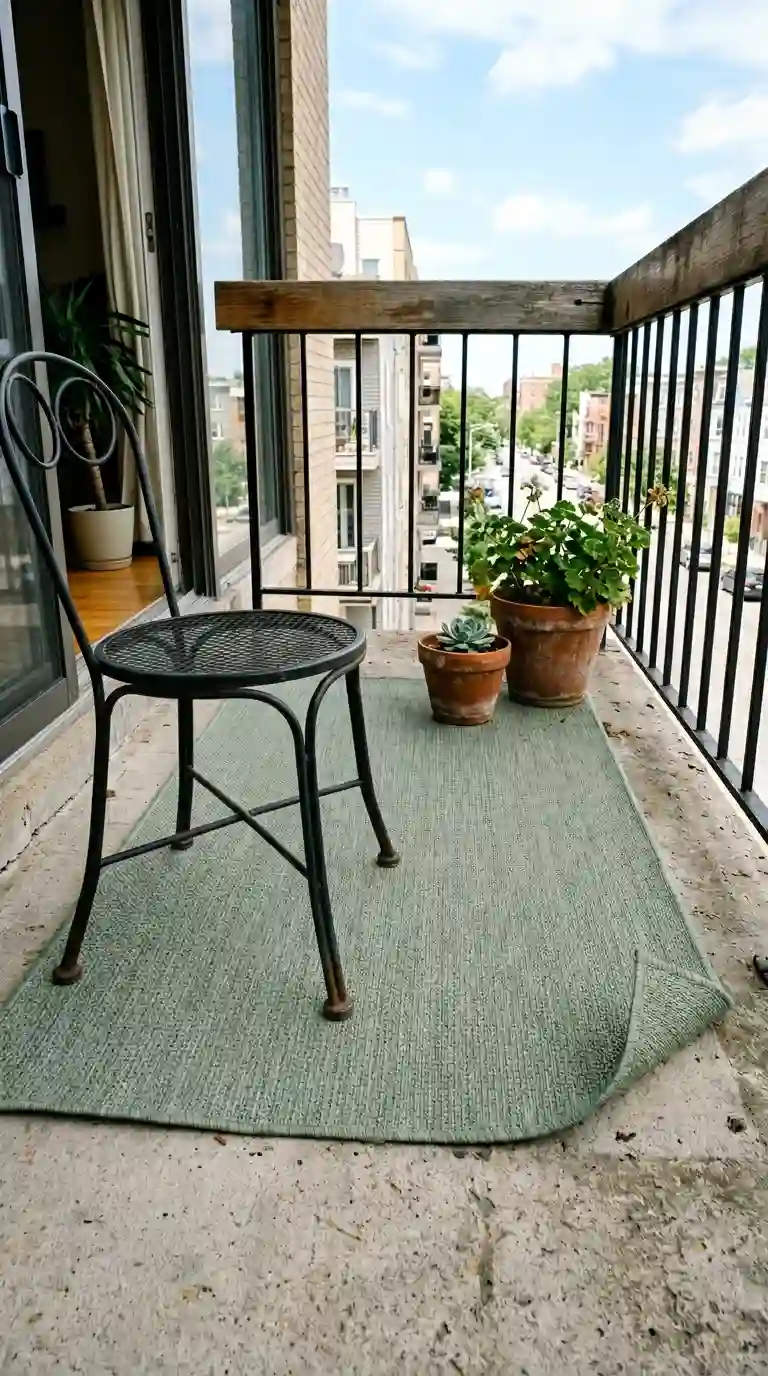
A floor is a floor until you put a rug on it. Then it’s a room. An outdoor rug on a concrete balcony changes the whole feel immediately, and it’s one of the fastest updates you can make.
Outdoor-rated rugs (polypropylene or recycled plastic) start at $30 for a 4×6 foot size and clean easily with a hose. Choose a pattern that works with your plants: terracotta or sage tones look especially natural. Measure your space before ordering. Most small balconies work best with a rug that leaves 6 to 8 inches of bare floor around the edges. That border keeps it from feeling cramped.
12. Grow Strawberries in a Vertical Tower Planter
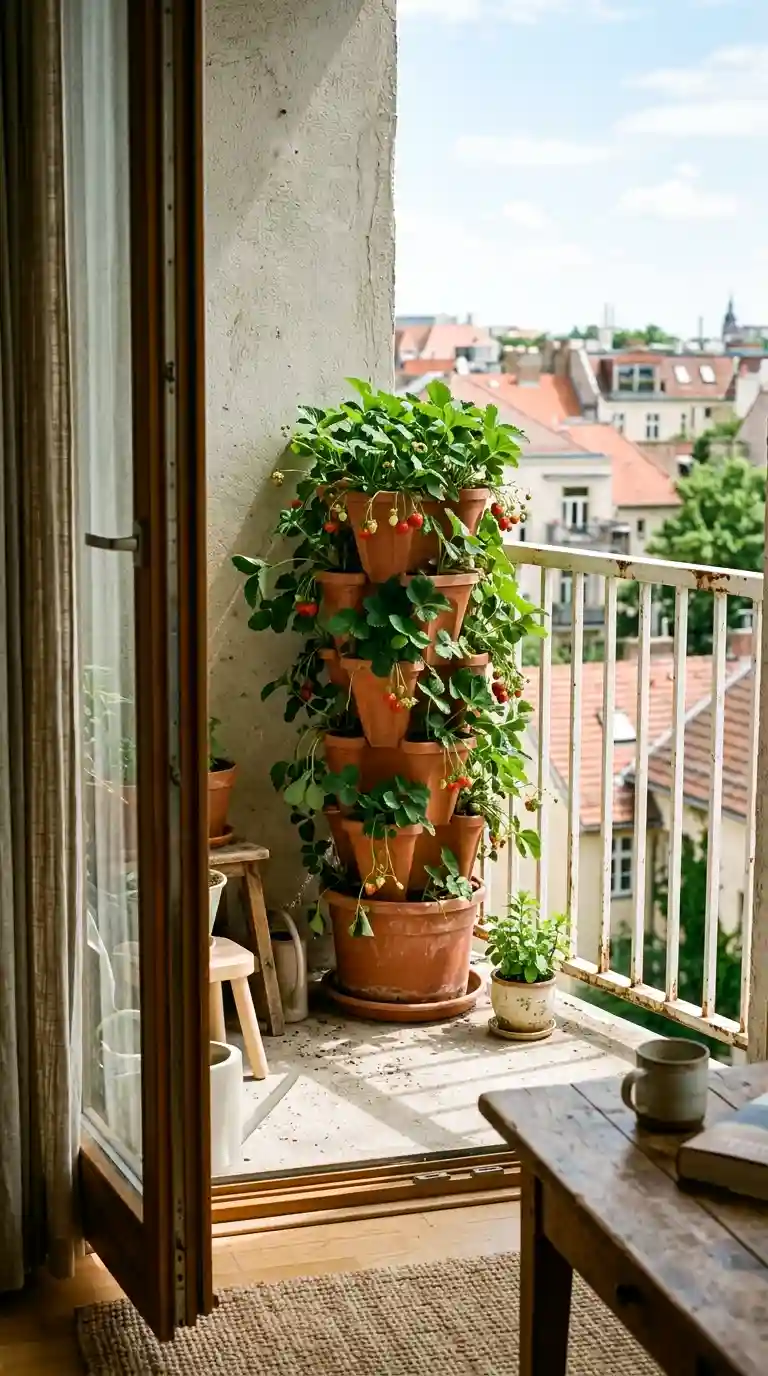
A strawberry tower planter is a cylinder with pockets all the way around. You plant strawberries in each pocket and the whole thing is maybe 12 inches in diameter. It produces actual fruit in a footprint smaller than a doormat.
Tower planters designed for strawberries run $20 to $40. They need at least 6 hours of direct sun and consistent watering, so pair them with your sunniest rail-facing spot. Everbearing varieties produce fruit from spring through fall. The real win here is that kids go absolutely wild for them and the visual is genuinely impressive for how little floor space it uses.
More Ideas:
13. Add a Compact Outdoor Storage Bench
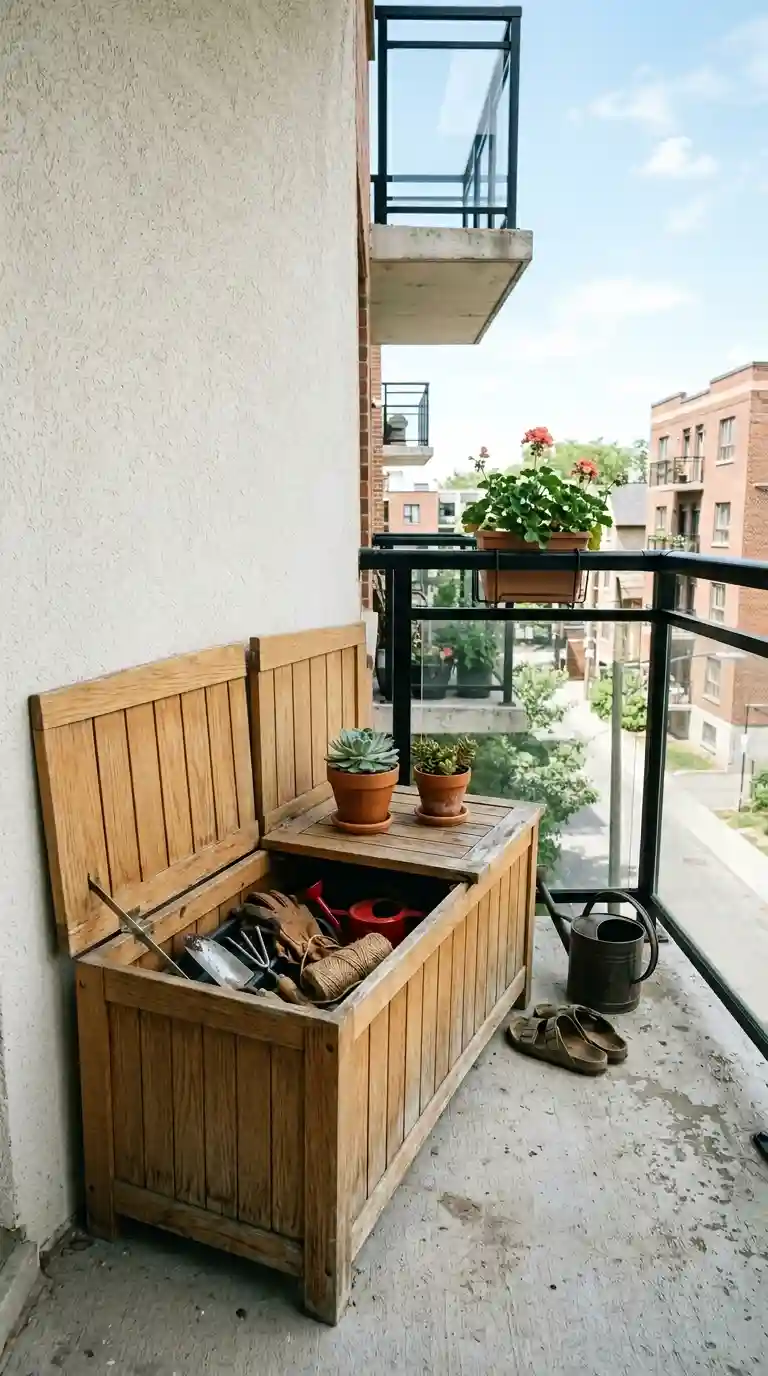
Storage under a balcony bench means you can keep soil bags, gardening tools, and extra pots out of sight. A bench that doubles as storage turns dead floor space into function without adding any visual clutter.
If you’re also dealing with tight indoor space, small apartment storage that actually works covers a lot of the same thinking.
Outdoor storage benches with weatherproof lids run $60 to $120. Look for ones with a flat top rated to hold weight so you can set pots on top of the lid. This essentially turns your bench into a second planter surface. Put low maintenance succulents up there and your most-used tools inside. Two functions, one piece of furniture.
There are more approaches to hidden storage that doubles as seating if you want to see how other setups handle the same problem.
14. Plant a Lavender in a Terra-Cotta Pot
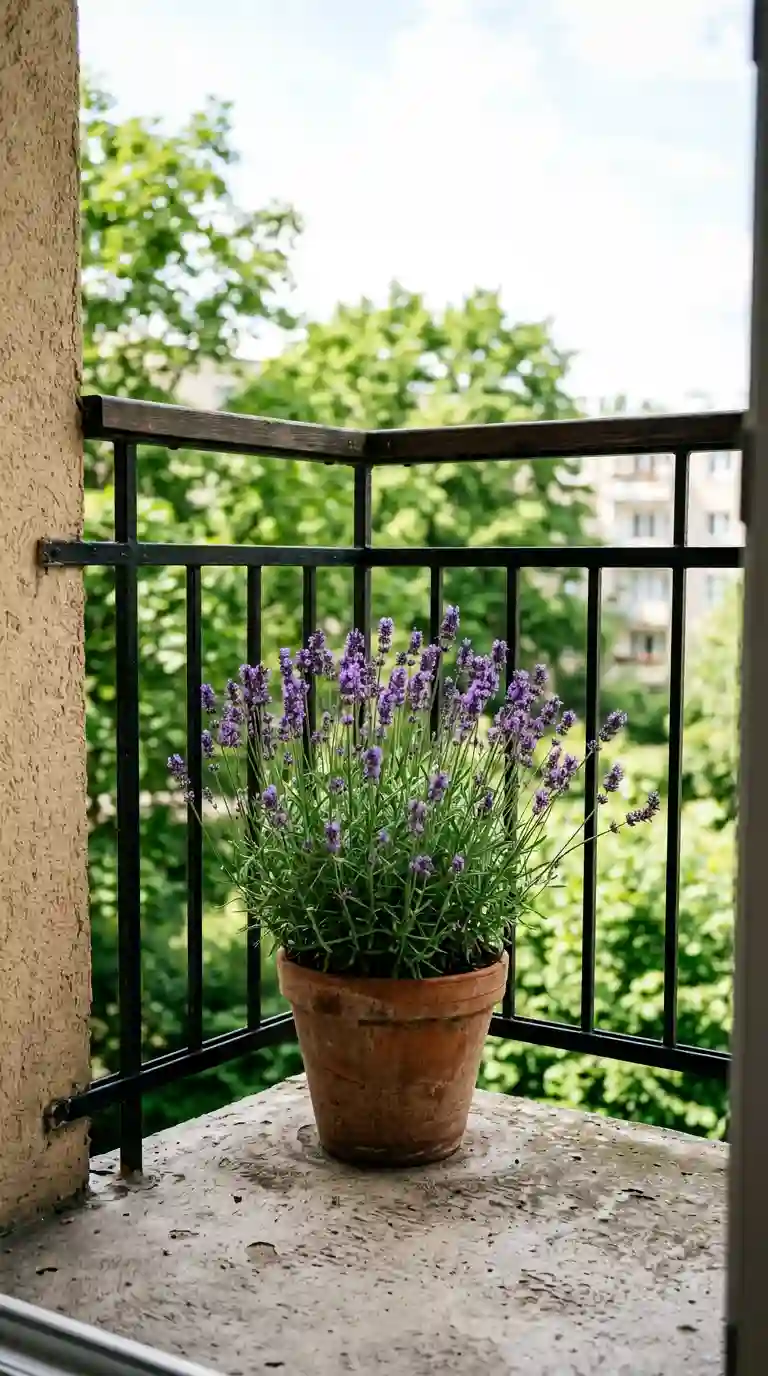
Lavender is one of those plants that looks like it belongs in a fancy garden but asks for almost nothing in return. Full sun and well-draining soil. That’s it. And the scent on a warm evening is genuinely worth it.
A single lavender plant costs $5 to $12 at a nursery. Put it in a terra-cotta pot at least 12 inches wide (terra-cotta drains well, which lavender needs), and use a gritty or sandy soil mix. Keep it on your sunniest railing corner. It blooms in late spring and early summer and comes back the next year in most climates. Bees love it too, which matters for pollination if you’re growing food nearby.
15. Build a Simple Herb Wall with Magnetic Jars

Magnetic spice jars stuck to a metal sheet mounted on your wall or fence can hold small herb plants. It looks clean, takes up zero floor or shelf space, and reads as a design feature rather than a garden supply situation.
A magnetic spice jar set runs $15 to $25. Mount a 12 by 18 inch steel sheet using adhesive mounting strips (no drilling needed) and stick the jars to it. Fill with small herbs like thyme, oregano, or chives. Herbs in tiny jars dry out quickly so check moisture every day. But the visual impact for the cost is really hard to beat.
16. Add a Wooden Crate as a Planter
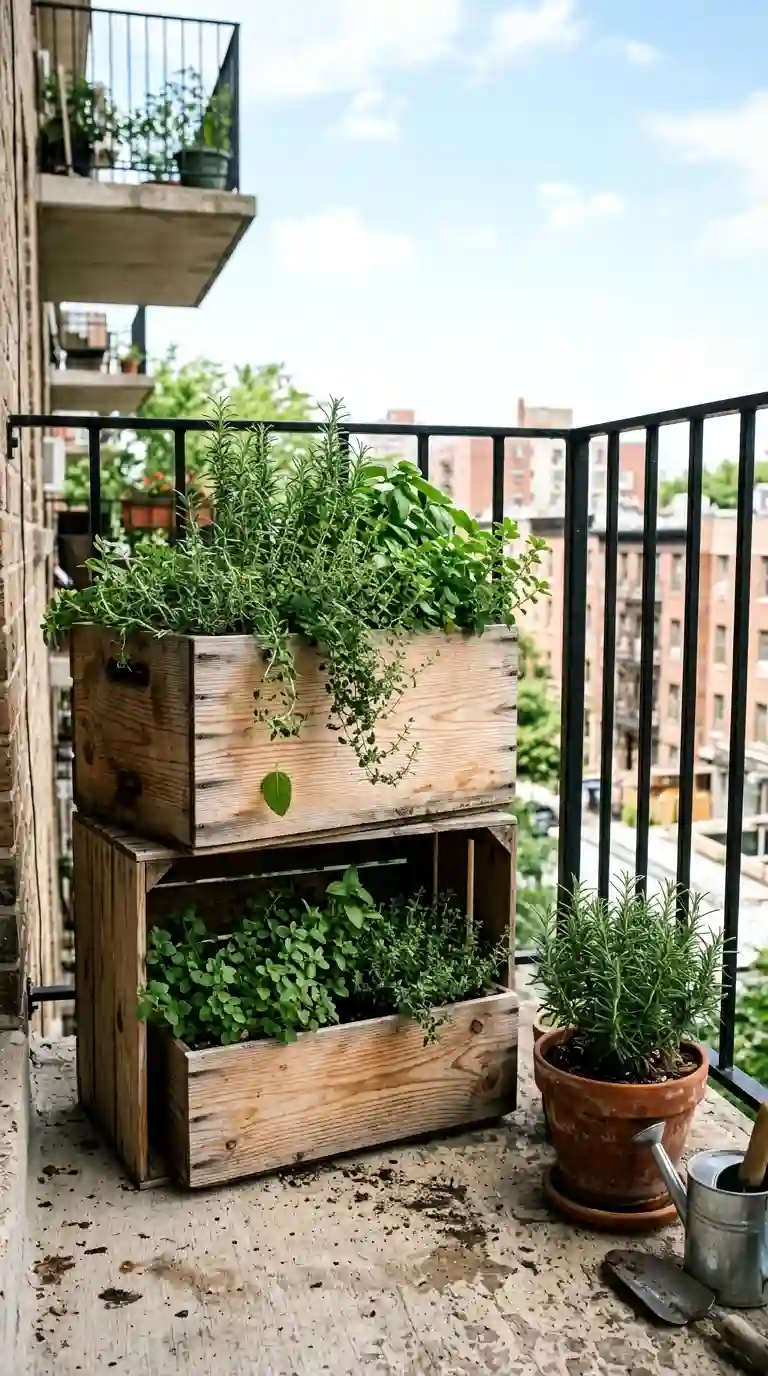
Wooden crates have a warm, organic look that sits naturally next to plants. Line a crate with plastic sheeting (stapled inside), add drainage holes at the bottom, and it becomes a planter box in about ten minutes. This is the one that surprises people the most for how good it looks.
Wooden crates from craft stores or flea markets run $8 to $20 depending on size. Seal the outside with outdoor wood stain or tung oil to slow weathering. Plant leafy greens, flowers, or trailing herbs in them. Stack two different-sized crates at different heights for more visual interest without spending more.
For more on layering containers at different heights, flower pot arrangements worth copying shows how that plays out across a range of styles.
17. Hang a Mirror to Reflect Light and Space
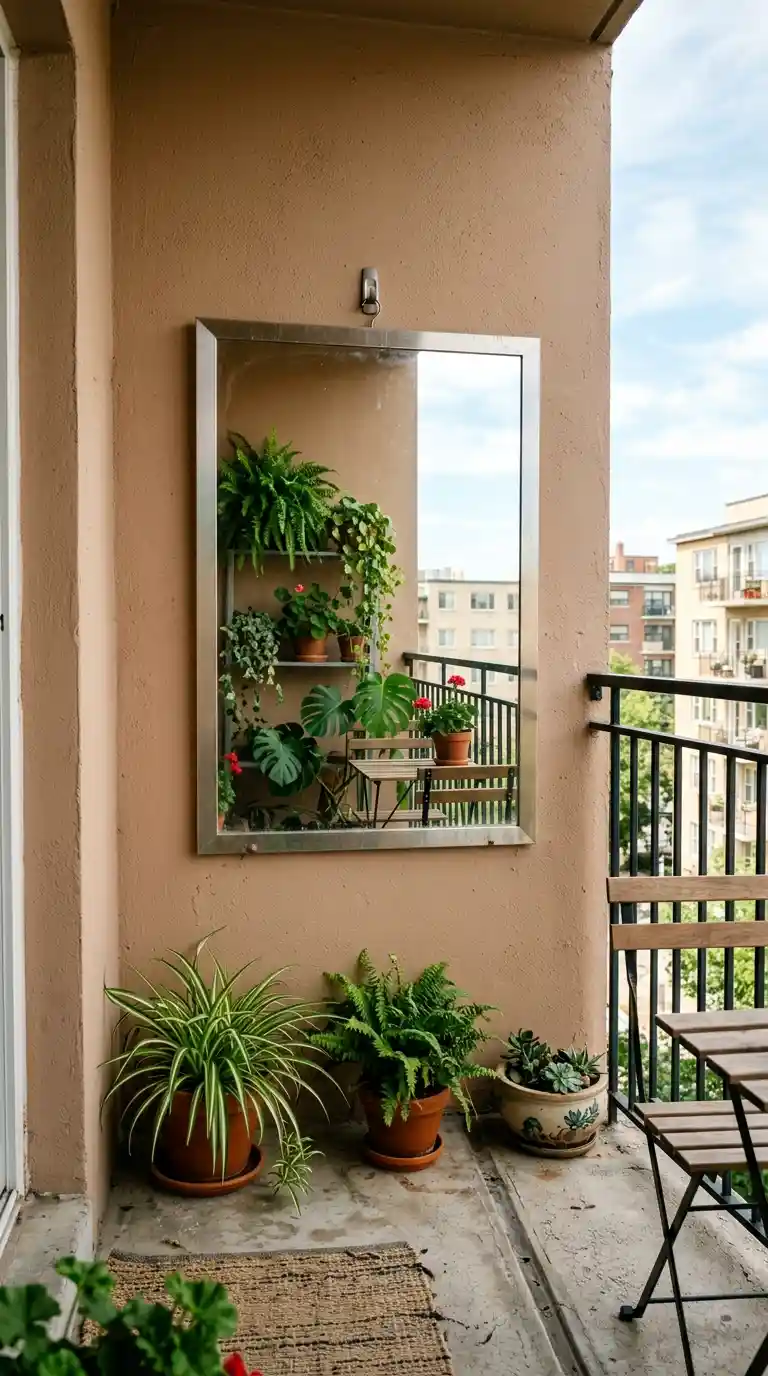
An outdoor-rated mirror on a wall or fence bounces light back into the balcony and makes the space look larger. It’s a trick interior designers use indoors and it works just as well outside.
Look for acrylic or lightweight metal-framed mirrors rated for outdoor use. Sizes around 12 by 18 inches run $20 to $45. Position it where it reflects your plants or the sky, not the building across from you. Hang with heavy-duty adhesive strips or a railing hook. A mirrored surface near plants amplifies both the light and the depth of the space.
18. Plant a Dwarf Fig or Citrus Tree in a Large Container

A dwarf fruit tree on a balcony sounds ambitious but it isn’t. Dwarf fig trees and dwarf citrus (lemon, lime, or kumquat) grow happily in a 15 to 25 gallon container and produce real fruit.
Dwarf trees run $30 to $80 at nurseries. Use a large, lightweight resin pot and a well-draining potting mix with some added compost. Make sure your balcony floor can handle the weight, and this is where knowing your load limit from the info section matters. These trees need 6 to 8 hours of sun and regular feeding during the growing season. It’s the statement plant that anchors the whole balcony.
19. Add a Small Greenhouse Box for Seed Starting

A mini tabletop greenhouse (basically a clear plastic box with a lid and ventilation) lets you start seeds earlier in the season and protect tender plants from unexpected cold snaps. It costs almost nothing to run.
These compact seed-starting greenhouses run $15 to $35. Place them in your sunniest spot in late winter and start tomatoes, peppers, or herbs 6 to 8 weeks before your last frost date. Once seedlings are big enough, move them to their permanent pots. You end up spending far less on nursery plants because you’re starting from seed yourself.
20. Grow Microgreens in a Simple Tray

Microgreens grow in a shallow tray, take 7 to 14 days from seed to harvest, and produce some of the most nutritious leaves you can eat. No big pots, no mess, and you don’t even need full sun for most varieties.
A basic microgreen growing tray setup (two trays, growing medium, and seeds) runs $20 to $40 total. Sunflower, pea shoots, and radish microgreens are the most beginner-friendly. Keep the tray in indirect light or under a small grow light. You’ll harvest and replant every two weeks all season. It’s the most productive food per square inch of anything on this list. No joke.
21. Set Up a Rainwater Collection Barrel (Micro Version)

Full-size rain barrels aren’t practical for apartment balconies, but a 5 to 10 gallon collapsible collection bucket positioned under a drainage point is. Every time it rains, you collect free water for your plants.
Collapsible outdoor buckets run $10 to $20. Check with your building if there are any restrictions on balcony drainage collection, but most apartments have no rule against it. Collected rainwater is slightly acidic, which most plants prefer to tap water. Even filling a single bucket per rain event can cut your watering costs significantly across a full growing season.
Final Thoughts on Small Balcony Garden Ideas
What you’ve got now is a complete picture of what’s possible on even the smallest apartment balcony. You don’t need a yard. You don’t need a huge budget. Most of what I covered here fits under $150 when you pick the pieces that actually match your space. The big themes are simple: grow up, not out, and pick plants that earn their footprint by being useful or giving you something back.
Start with the railing planter box or a basic herb pocket planter this weekend. One piece. Get it up, fill it with mint or basil, and see how you feel about the space. That single change often flips the whole way you look at a balcony.
If you want to pull the whole look together beyond plants, there’s a solid collection of balcony decor ideas for renters that covers everything from rugs to lighting to furniture.
If you want more ideas like this, homelypop.com has a lot more content built around real homes, real budgets, and no fluff. Worth a look.