

The Ultimate First Apartment Checklist: Essentials to Pack and Buy

Moving into your first apartment means figuring out what you actually need versus what you think you need and once the essentials are handled, here are some ideas on making your first apartment actually feel like home that are worth keeping in mind as you go. A first apartment checklist is basically a room-by-room list of every item you need to buy or bring to make your new place functional. We’re talking plates and bowls, a shower curtain liner, a basic tool kit, all of it. It saves you from three things: overspending, forgetting something obvious, and standing in your new kitchen with zero way to cook dinner.
This guide covers everything: a copyable checklist by room, a moving timeline, paperwork to sort out, and tips to keep costs down. Most things link to Amazon or IKEA, but read the money-saving section first. You can cut the total cost by a lot if you shop smart.
Copyable First Apartment Checklist (By Room)
Here’s a quick-reference version you can copy into your notes app or share with a roommate. Full details and nice-to-haves are in each section below.
Kitchen: plates and bowls, drinking glasses and mugs, silverware, knives (chef’s, serrated, paring), cutting board, measuring cups and spoons, cooking utensils, can opener, rimmed baking sheet, pots and pans, colander, food storage set, dish drying rack, trash can
Living Room: sofa, coffee table, TV or streaming setup, lamp, curtains or blinds, throw blankets
Bedroom: mattress and bed frame, mattress protector, sheets (two sets), pillows, blankets, dresser or clothes storage, hangers, nightstand, lamp, laundry hamper
Bathroom: shower curtain, liner, and hooks, bath mat, towels (two sets), hand soap, toilet paper, toilet plunger, trash can
Laundry: detergent, dryer sheets or wool dryer balls, hamper, drying rack, iron and ironing board
Cleaning: all-purpose cleaner, bathroom cleaner, toilet brush, broom and dustpan, mop, vacuum, sponges, window cleaner
Tools: hammer, screwdrivers (flathead and Phillips-head), measuring tape, nails and wall hooks, Allen wrench
Safety: first-aid kit, smoke detector, fire extinguisher, batteries, extension cords
What Should I Do Before Moving into a New Apartment?
Do these 6 things before move-in day:
- Walk through the apartment with your landlord and write down every scratch, stain, or damage you see on a move-in inspection form. Take photos too. This keeps your security deposit safe when you eventually move out.
- Read your lease start to finish. Pay close attention to pet policies, guest rules, subletting restrictions, and what happens if you need to break the lease early.
- Set up utilities electricity, gas, water, and internet before move-in day. Some take several days to activate, so don’t leave this for the last minute.
- Get renter’s insurance. It’s cheap, often $15–$30/month, and covers your belongings if there’s a fire, theft, or water damage. Your landlord’s policy covers the building. Not your stuff.
- Change your address with the post office, your employer, your bank, and any subscriptions you have.
- Measure your rooms and doorways before buying any furniture. A couch that won’t fit through your front door is an expensive mistake. Ask me how I know.
More Ideas:




What Should Be On My Move-In Checklist?
A move-in checklist really has two parts: a pre-move inspection checklist for documenting the apartment’s condition, and a first apartment essentials checklist for everything you need to buy or bring. This article focuses on the essentials list. For the inspection part, walk each room carefully and write down any existing damage before you unpack a single box.
Kitchen Items
The kitchen list assumes you’ll cook at home occasionally. Nothing fancy, just the ability to make a real meal.

Essentials:
- Plates and bowls (at least 4 of each)
- Drinking glasses and mugs
- Silverware (forks, knives, spoons — 4 of each)
- Knives: one chef’s knife, one serrated knife, one paring knife, plus kitchen shears
- Cutting board
- Measuring cups and spoons (look for measurements stamped into the handle, not just painted on the paint wears off)
- Cooking utensils: at minimum one spatula, one rubber scraper, one spoon
- Can opener
- Rimmed baking sheet
- At least one pot big enough to make pasta
- At least one pan big enough to sauté meat
- Colander or strainer
- Food storage set
- Ziploc bags or Stasher bags
- Chip clips
- At least one large bowl (a nesting set with lids is better)
- Oven mitts
- Dish towels (flour sack towels are cheap and absorbent, more so than the cute printed ones)
- Dish soap and dishwashing detergent
- Dish drying rack
- Sponge or dish cloth
- Trash can and trash bags
Nice-to-have:
- Toaster or toaster oven
- Blender
- Coffee maker
- Mixer
- Cookie sheet
- 9×13 pan, 8×8 pan, muffin tins, bread pan
- Rice cooker
- Specialty glassware (wine glasses, etc.)
- Knife sharpener
- Water bottles
Budget note: Buying everything on the essentials list runs roughly $375 before you add a table and chairs. If you want to stretch that budget even further down the line, here are some tips on keeping your kitchen setup costs reasonable without skipping anything you actually need. Throw in a basic table and chairs set and you’re close to $500. Thrift stores and garage sales can bring that number way down, especially for kitchen stuff like plates, bowls, and pots.
Living Room Items
Think about how you’ll actually use the space: relaxing, working from home, having people over, or all three. If your living room also needs to fit a dining area, here are some living room layouts that work in tight apartment spaces that handle both functions without the room feeling cramped. That’s what determines what you actually need.

Essentials:
- Comfortable sofa or seating
- Coffee table (an ottoman or storage trunk works too)
- TV or a way to stream shows (smart TV, laptop with HDMI cord, or projector)
- Lamp
- Curtains and/or blinds (check if your landlord provides these)
- A place for your keys near the door
Nice-to-have:
- Bookshelf
- Throw blankets and pillows
- Area rug (especially on hard floors)
- Speaker system
- Plants
- Artwork and decorations
Budget note: If you need a new couch, IKEA’s Ektorp is one of the most budget-friendly options out there and gets consistently decent reviews. Check Facebook Marketplace first though. People sell barely-used furniture all the time, usually because they’re moving and can’t take it with them.
More Ideas:
Bedroom Items

Essentials:
- Mattress and bed frame (a twin is fine if you need to save space or money)
- Mattress protector — this protects your investment and keeps the mattress cleaner over time
- Sheets, two sets — you’ll want a spare when one is in the wash
- Pillows
- Blankets, duvet, or quilt
- Dresser or alternative clothes storage
- Hangers
- Nightstand (a side table or even a small shelf works)
- Lamp you can turn off from bed
- Laundry hamper
- Shoe storage (a rack, an over-the-door holder, or a large bin)
Nice-to-have:
- Curtains and blackout blinds
- Full-length mirror
- Storage bench at the foot of the bed
- Under-bed storage containers
- Headboard
- Décor and wall art
- Alarm clock
Budget note: The cheapest new setup for a mattress, frame, mattress protector, and two sets of sheets runs about $450 total. Before you finalize your bedroom list, here are some bedroom essentials worth knowing before you shop that help you decide what’s actually worth spending on first. IKEA is a solid starting point for the frame and mattress if there’s a store near you.
Bathroom Essentials
If your apartment has two bathrooms, stock each one.

Essentials:
- Shower curtain, liner, and hooks
- Bath mat (one inside the tub, one on the floor)
- Set of towels: washcloth, hand towel, bath towel — two sets ideally
- Hand soap and soap dispenser
- Toiletries
- Toilet paper
- Toilet plunger
- Trash can with a lid
- Tissues
Nice-to-have:
- Shower caddy or in-shower organizer
- Bathroom storage (over-the-toilet cabinet, small shelves)
- Makeup mirror with lighting
- Hair dryer
- Artwork or decorations
Budget note: Stocking a bathroom from scratch runs about $125. If you want to make that $125 go further while still ending up with a bathroom that feels put together, here are some bathroom basics that stretch a tight first-apartment budget worth looking at. These items wear out and get replaced with most moves anyway, so don’t put too much money into towels or bath mats your first time around.
Laundry Supplies

Before signing your lease, confirm whether the unit has in-unit laundry, a shared laundry room in the building, or neither. And whatever setup you’re working with, here are some ideas on laundry organization that works in any size space that keep things from piling up fast. If neither, find the nearest laundromat before you actually need it.
Essentials:
- Laundry detergent (check whether your machine is high efficiency — HE — before buying)
- Dryer sheets or wool dryer balls
- Stain remover
- Bleach
- Laundry hamper
- Drying rack (for delicates or air-dry items)
- Iron
- Ironing board (apartment-size boards take up less space)
Nice-to-have:
- Mesh bags for delicates
- Fabric steamer
- Sewing kit for minor repairs
More Ideas:
Cleaning Supplies

Some apartments aren’t as clean as you’d expect on move-in day. Honestly, pack your cleaning supplies in your car, not the moving truck, so you can get to them right away.
- All-purpose cleaner
- Bathroom and tub cleaner
- Toilet bowl cleaner and toilet brush
- Broom and dustpan
- Mop or Swiffer
- Vacuum (a stick vacuum works fine for smaller spaces)
- Sponges and scrub brushes
- Cleaning cloths or old rags
- Window and mirror cleaner
- Duster
Budget note: Cleaning supplies are tough to find secondhand. Your best bet for free stuff is parents who have extras lying around or a Buy Nothing group in your neighborhood.
Tools and Supplies
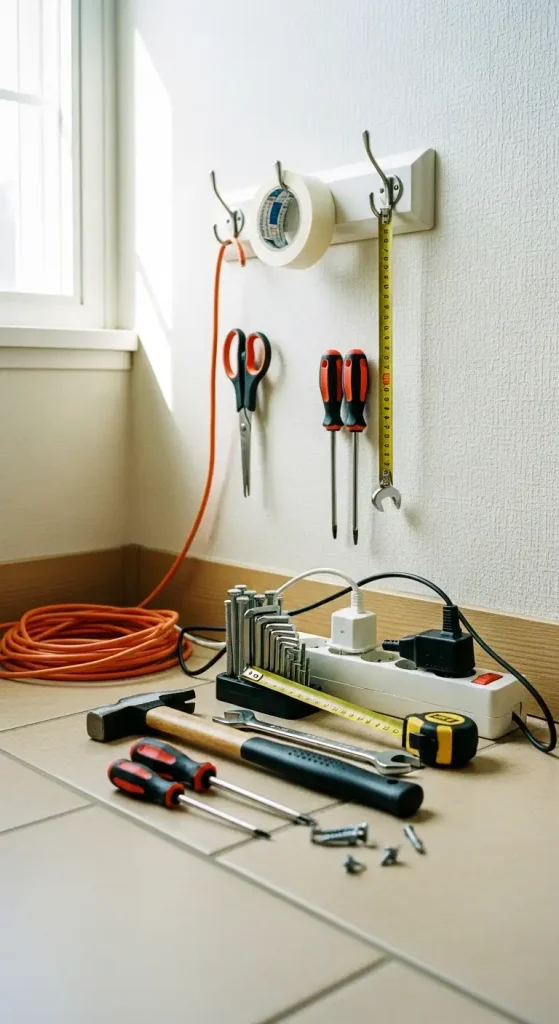
Your landlord handles major repairs, but you’ll still need a basic kit for hanging things and fixing small issues.
- Hammer
- Screwdrivers (flathead and Phillips-head)
- Allen wrench set
- Measuring tape
- Nails of varying sizes
- Screws of varying sizes
- Nails and wall hooks
- Power strip and extension cords
- Scissors
- Tape (scotch, packaging, and duct)
- Lightbulbs (grab a few before you need them)
Important Documents
Keep these in one labeled folder or binder:
- Lease agreement
- Renter’s insurance policy
- Landlord and building management contact info
- Utility account numbers
- Tax records
- ID documents (passport, Social Security card)
- Vehicle registration and insurance
- Medical records and health insurance cards
If you don’t have renter’s insurance yet, get a quote before move-in day. It typically runs $15–$30/month and covers your belongings against fire, theft, and water damage. Your landlord’s policy covers the building structure. Not your laptop, your furniture, or your clothing. That part’s on you.
Office Essentials
- Desk and chair (if you work or study from home)
- Monitor or second screen
- Desk lamp
- Power strip with surge protector
- Printer (if needed)
- Pens, notebooks, and basic stationery
- File folder or document organizer
- Headphones
Safety Essentials

- Smoke detector (confirm your apartment has working ones and test them on move-in day)
- Carbon monoxide detector
- Fire extinguisher
- First-aid kit
- Batteries (AA, AAA, and 9V)
- Flashlight
- Fire exit ladder (for second floor or higher)
- Emergency contact list posted somewhere visible
Move-In Day Kit (Don’t Pack This Away)

Keep this bag or box in your car, not in the moving truck, so it’s right there the moment you arrive.
- Toilet paper
- Hand soap
- Towels
- Phone charger
- Snacks and water
- Basic cleaning supplies
- Trash bags
- Box cutter or scissors
- Medications
- A change of clothes
- Bedding for the first night
- Paper plates and plastic utensils
Paperwork & Admin Checklist
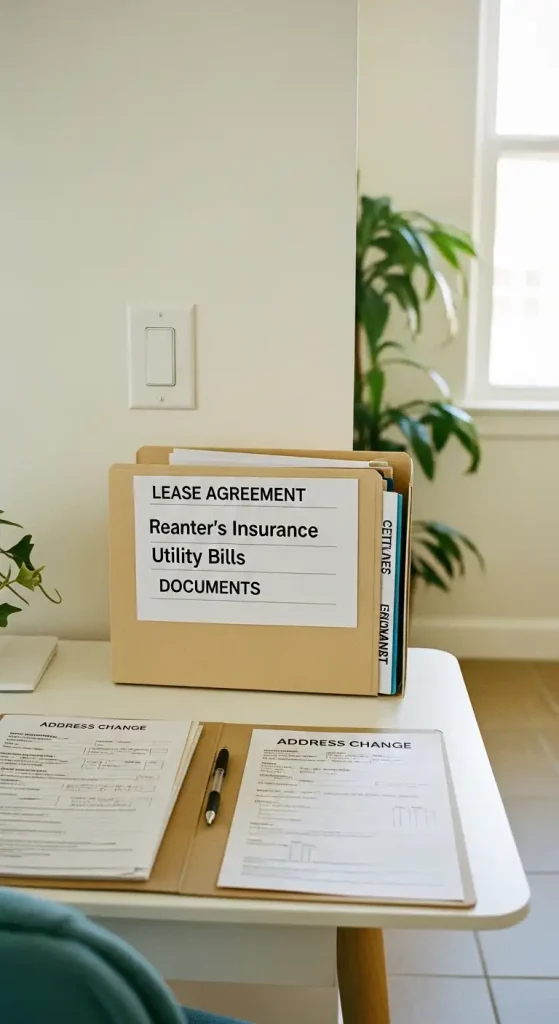
Handle these tasks in the first two weeks:
- Sign and store a copy of your lease
- Get renter’s insurance
- Set up electricity, gas, water, and internet
- Change your address with USPS (United States Postal Service)
- Update your address with your employer, bank, and subscriptions
- Register your vehicle in your new state or county (if applicable)
- Update your driver’s license address
- Introduce yourself to neighbors and find out building rules (noise hours, recycling, package delivery)
- Save your landlord’s contact number and know the protocol for maintenance requests
Moving Timeline Checklist
30 Days Before
- Give notice to your current landlord (if applicable)
- Book a moving truck or hire movers
- Start collecting boxes and packing supplies
- Sell, donate, or toss items you won’t bring
- Set up utilities to start on move-in day
- Begin shopping for items on this checklist, furniture especially, since delivery takes time
- Get renter’s insurance
- Notify your employer, bank, and subscriptions of your upcoming address change
14 Days Before
- Confirm moving truck or movers
- Start packing non-essentials
- Change your address with USPS
- Set up internet service (installation wait times can run long)
- Label every box by room
- Pack your move-in day kit separately
- Do a walkthrough of your new apartment if possible and take photos of any existing damage
Tips to Make This Checklist Work for You
Start with what you actually need this week. You don’t need a fully stocked apartment on day one. Focus on: somewhere to sleep, a way to eat, a working bathroom, and basic cleaning supplies. The rest can wait until your next paycheck.
Check with roommates first. If you’re moving in with someone, sort out shared items like cleaning supplies, kitchen appliances, and living room furniture before you both end up buying duplicates.
Use this list in phases. Buy essentials before you move in, then fill in the nice-to-haves over the first few months. Trying to buy everything at once is overwhelming and gets expensive fast.
Measure before you buy. Check room dimensions and doorway widths before ordering any furniture. A lot of apartment doorways are narrower than standard, and some IKEA pieces need partial assembly just to fit through the door.
Learn How to Furnish an Apartment

Furnishing a first apartment doesn’t mean buying everything new. Furnishing a first apartment doesn’t mean buying everything new — and if you want a full picture of furnishing a small apartment without overspending, this breakdown covers the whole process from start to finish. Here are the 3 best sources for budget furniture.
Facebook Marketplace is consistently the best place for secondhand furniture. Nearly everything turns up there: sofas, dressers, bed frames, dining tables. Most of it is barely used. Filter by distance and check it daily when you’re actively looking.
IKEA is the best option when you’re buying new and watching your budget. Pieces like the Ektorp sofa, Pello chairs, and basic bed frames are reasonably priced and have held up well for a lot of first-apartment renters. Use IKEA for furniture and Amazon or Target for smaller items.
Family hand-me-downs are free. Before you buy anything, ask relatives if they have furniture, kitchen items, or household goods sitting around unused. Most people are more than happy to pass things along to someone who actually needs them.
What to Buy, Where to Buy It, and How to Keep Costs Down

How to save money on first apartment essentials
Buy secondhand as much as possible. This goes especially for furniture, which gets expensive fast. Check Facebook Marketplace, thrift stores, and garage sales before anywhere else. Kitchen items thrift really well too. Plates, bowls, pots, and pans show up constantly at Goodwill and estate sales. If you find a thrift store with high stock, especially in areas where older residents are moving or downsizing, you can furnish most of your kitchen for under $100.
For things that are harder to find secondhand, like cleaning supplies, bedding, and bathroom basics, Amazon and Target are solid. Marshalls and similar discount stores often have kitchen items, towels, and décor at lower prices than the big retailers.
What’s the total cost of these apartment essentials?
Buying every essential item on this list runs approximately $1,750. It breaks down roughly like this:
- Kitchen: ~$500 (including basic table and chairs)
- Bedroom: ~$450
- Bathroom: ~$125
- Cleaning supplies and tools: ~$175
- Living room: ~$500
Don’t forget…
Buying secondhand for furniture and kitchen items can cut that total nearly in half. And if relatives can contribute anything, even a pot, a lamp, or extra towels, take it. Every item you don’t have to buy is money that stays in your pocket for rent or your security deposit.
Essentials Purchasing Tips

1. Make a list of favorites and continuously check until the item goes on sale
Add things to your Amazon wishlist or Target favorites. Prices on specific items, especially bedding, small appliances, and kitchen tools, drop regularly. And once the essentials are in place, here are some storage solutions worth adding as you settle in that keep everything organized as your space fills up. Check back every week or two instead of buying at full price on day one.
2. Look for the same item at multiple stores
Prices on identical or near-identical products vary between Amazon, Target, Walmart, and IKEA. A quick search before buying often finds the same item $10–$20 cheaper somewhere else. For Prime members, check whether shipping costs actually make Amazon the best deal. Sometimes it doesn’t.
3. See if relatives are giving away hand-me-down furniture
Before spending anything, just ask. Parents, grandparents, aunts and uncles often have spare kitchen items, extra towels, or furniture sitting in a basement or garage going unused. Most are glad to pass it along rather than keep storing it. A hand-me-down couch or kitchen table works just as well as a new one, and it costs nothing.