
22 Open Plan Decorating Ideas for Your Apartment (Real Budget, Real Results)

Your apartment is one big room that somehow feels like it’s nothing at all. You can see the kitchen from the couch, the “dining area” is just a table floating in the middle, and every zone blurs into the next. It’s frustrating.
These 22 open plan decorating ideas were pulled from real apartment dwellers, not design magazines. Each idea was chosen because it works in a rental, fits a $100–$300 budget, and solves a specific problem you’re probably living with right now. You’ll find zone-defining tricks, furniture hacks, lighting fixes, and storage ideas that cost real money in the real world.
This list is for renters and apartment owners working with $100–$300 total, not people doing a full renovation. If you want to gut-renovate your open floor plan, this isn’t for you. But if you want results you can actually pull off this weekend, you’re in the right place.
By the end of this article, you’ll know exactly how to make your open plan apartment feel like it has purpose, flow, and zones that actually work.
If you’re working with a combined layout, there are some creative ways to divide shared spaces that might already be on your radar.
What to Know Before You Start Open Plan Decorating
- Open plan apartments under 600 sq ft need at least one “anchor” piece per zone to stop the space from feeling shapeless.
- Plan your zones on paper first. Most people skip this and regret it after buying furniture.
- A single large area rug (8×10 ft) costs $80–$200 and does more zone-defining work than almost anything else.
- Most renters overlook vertical space. Going up with shelves adds storage without eating floor space.
- Common mistake: buying furniture that’s too small. An 84-inch sofa looks right in open plans. A 60-inch one gets swallowed.
- Avoid plugging lamps into the same outlet as your TV. Circuit overload is a real fire risk in older apartments.
- Freestanding shelves used as room dividers can warp if overloaded. Keep each shelf under 30 lbs for safety.
- Furniture with legs lifts the visual floor and makes small open plans feel bigger over time.
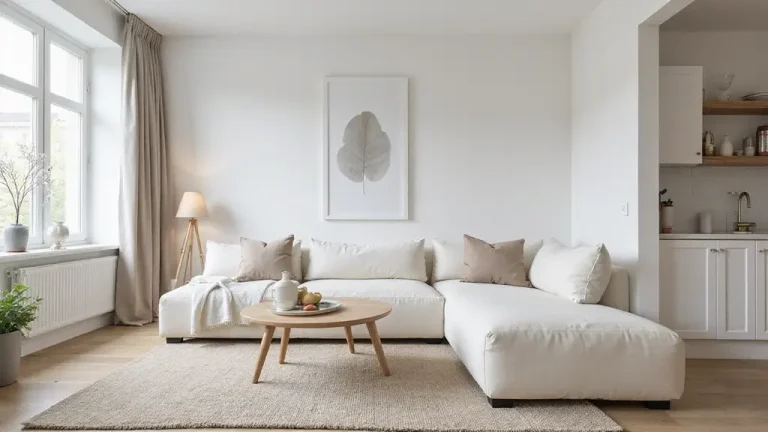
1. Use a Large Area Rug to Define the Living Zone

The most affordable zone-defining move in any open plan apartment is a rug. One correctly sized rug under your sofa and coffee table instantly tells your brain “this is the living room.” It separates it from the kitchen or dining area without a single wall going up.
Go for at least an 8×10 ft rug. Anything smaller and it just floats awkwardly. When I tried this in my own space, I was shocked how much the room snapped into place overnight. You can find decent flat-weave rugs in this size for $90–$150. Jute works really well in open plans because it doesn’t compete visually with everything else.
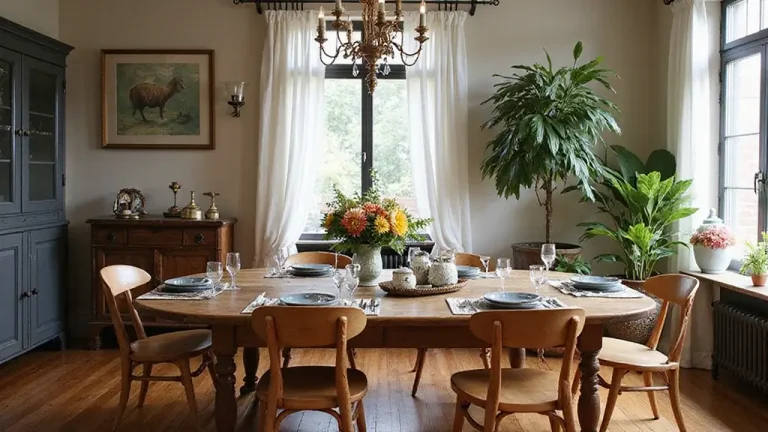
2. Hang Curtains Floor to Ceiling as a Soft Room Divider

You don’t need walls to divide a space. A curtain rod installed near the ceiling with long panels hanging down to the floor creates a soft visual barrier between your living and sleeping areas. It’s removable, so it’s renter-friendly. And it adds serious warmth to an otherwise flat space.
Use a tension rod or damage-free ceiling brackets. Linen or cotton panels in cream or off-white work in almost every apartment because they don’t compete with existing colors. A set of two 84-inch panels runs about $30–$60 at most home stores. Add a second rod and double the panels if you want more coverage.
More Ideas:


3. Place Your Sofa Facing Away from the Kitchen

Here’s a simple layout trick that costs nothing: turn your sofa so its back faces the kitchen. In most open plans, sofas get pushed against walls, which makes the whole space feel like a waiting room. Floating the sofa and facing it away from the cooking area creates an instant psychological “room” for the living zone.
This also gives you a natural traffic lane behind the sofa, which is how people actually move through open spaces. You’re not losing square footage. You’re using it smarter. Pair this with your area rug and you’ll have a defined lounge zone without spending a cent.
For more on this, there’s a deeper look at living room layout tricks that actually work when a dining table is in the same footprint.
4. Add a Bookshelf as a Partial Room Divider

A tall open bookshelf placed between two zones works as a divider without closing off the space. You keep the airiness of the open plan but add some visual structure. The shelves face one zone, the back faces another, and everything stays connected.
IKEA’s KALLAX or BILLY shelves run $60–$120 and are easy to move if you change your mind. Style one side for the living zone and leave the other more utilitarian for storage. (This one is so underrated.) The partial height, around 60–72 inches, is the sweet spot. Full-height shelves can feel like real walls, which sometimes works but can also make low-ceilinged apartments feel cramped.
5. Use Pendant Lights to Mark the Dining Zone
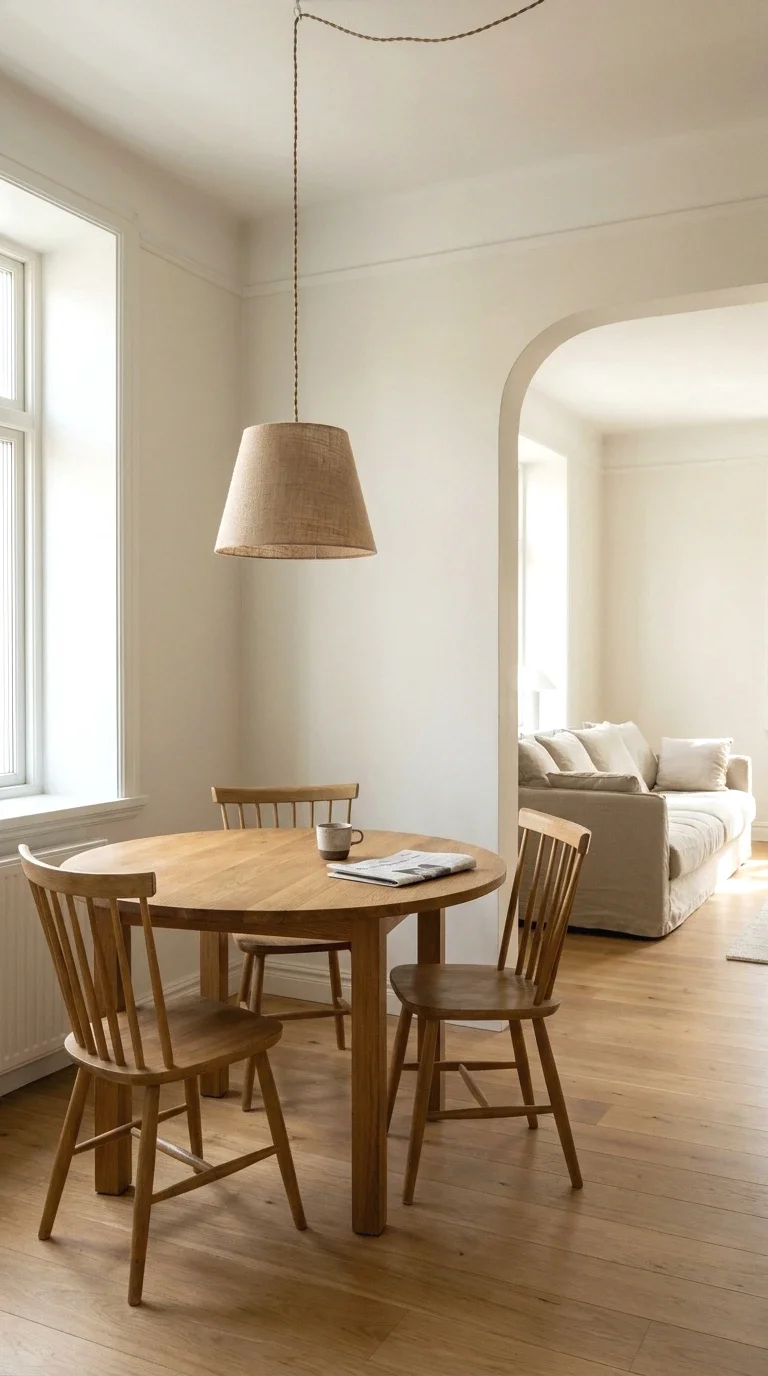
Lighting is one of the most powerful zone-defining tools you have. A pendant light hung directly over your dining table says “this is the dining area” without any furniture rearranging required. It draws the eye down and anchors the space.
Plug-in pendant lights are the go-to for renters. You run the cord up the wall, tack it with adhesive clips, and plug into a standard outlet. No electrician needed. A decent plug-in pendant runs $40–$80. Look for ones with a fabric cord because they look more intentional. Warm bulbs at 2700K make the eating area feel separate and more welcoming than harsh overhead lighting.
6. Paint an Accent Wall in One Zone Only
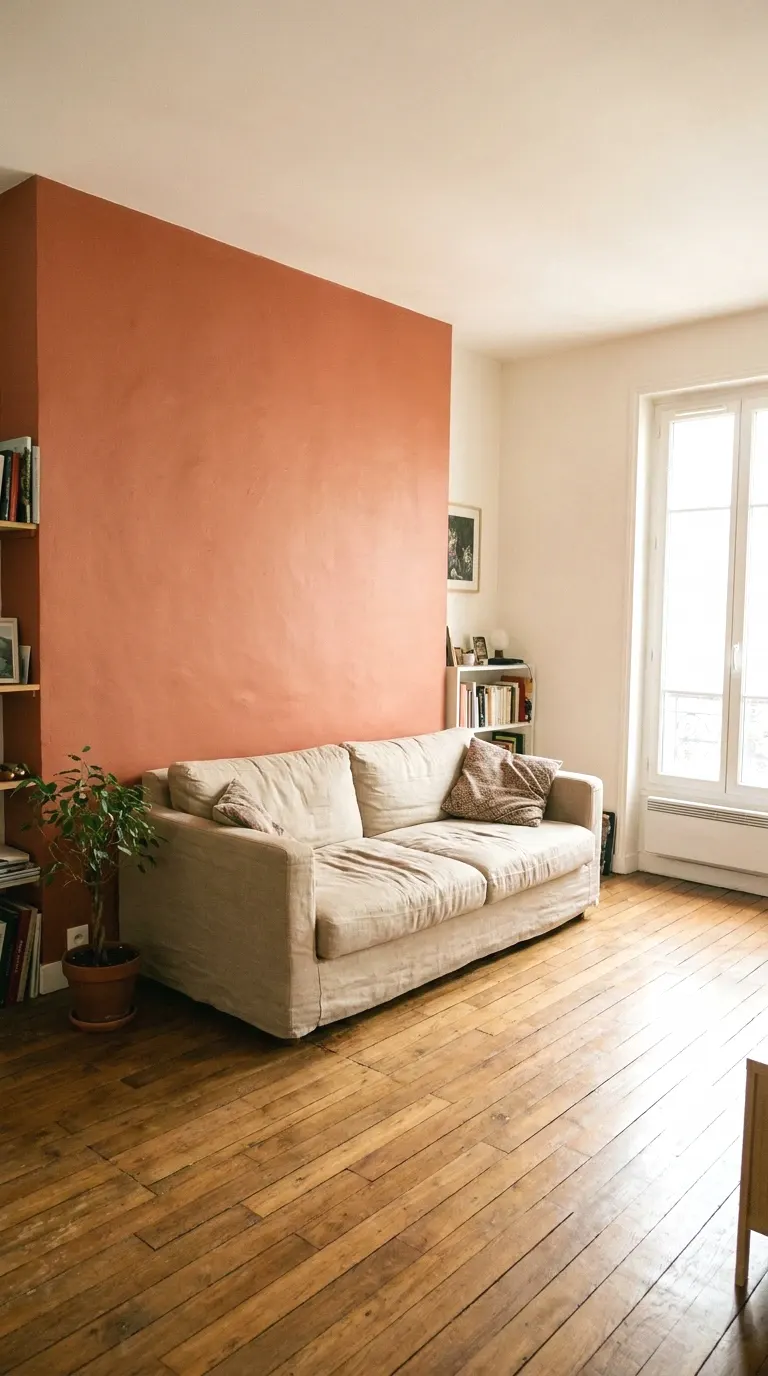
If your apartment allows painting, painting just one wall in one zone is one of the fastest ways to create separation. You’re not repainting the whole apartment. Just one wall behind the sofa or behind the bed. That single color change signals a shift in space.
Deep terracotta, warm sage, or dusty blue all work well in open plans because they’re warm enough to feel intentional without darkening the space. A quart of paint covers a single accent wall and costs around $15–$25. If you’re nervous about color, go two shades darker than what feels safe. The slightly bolder choice almost always looks better in person.
More Ideas:
7. Layer Your Lighting with Floor Lamps

Open plan apartments often rely on one overhead light for the whole space, which flattens everything. Floor lamps in the corners of your living zone create pools of warm light that make that area feel distinct from the rest of the apartment. It’s the difference between “one big room” and “a few connected spaces.”
Position a floor lamp behind or beside the sofa, angled toward the wall or ceiling. Arc floor lamps are great for open plans because they extend over seating areas without taking up floor space near the furniture. Budget arc lamps start around $50–$80. Add a warm smart bulb for about $10 and you can dim it from your phone. Seriously works.
There are plenty of lighting ideas worth borrowing from real apartments that pull this layered approach off really well.
8. Use a Console Table Behind the Sofa as a Zone Transition
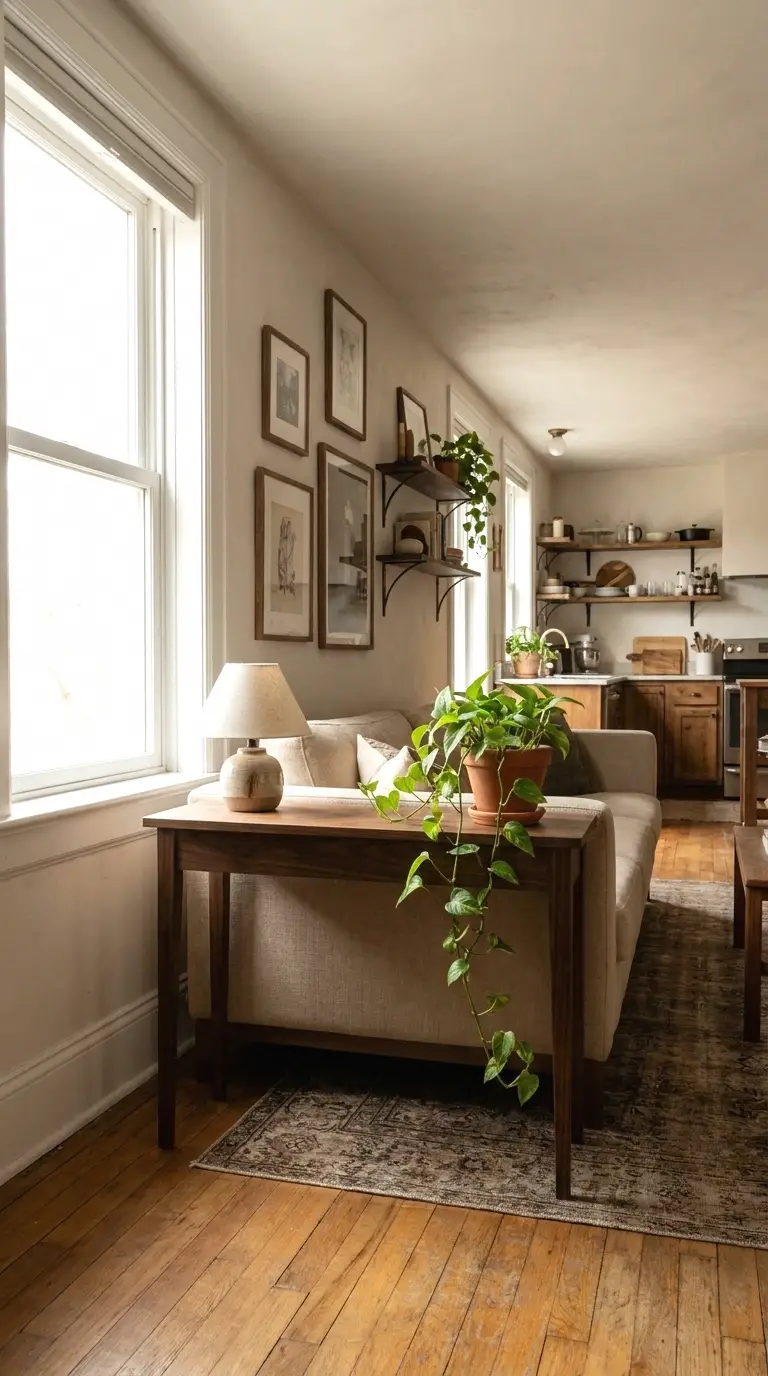
A narrow console table placed directly behind your floating sofa does two things at once. It defines the back boundary of your living zone and gives you a surface for lamps, plants, or a small tray. It’s the detail that makes an open plan look like it was designed on purpose.
Console tables in wood or metal start around $60–$100. You want one that’s roughly the same height as the back of your sofa or just slightly taller, around 28–32 inches. Style it simply: one lamp, one small plant, maybe a candle. Don’t overcrowd it. The whole point is to mark the edge of the zone without turning it into a storage shelf.
If you want to get the proportions right, it helps to look at console table styling behind a sofa before you buy.
9. Hang Wall Art in Zone-Specific Groupings
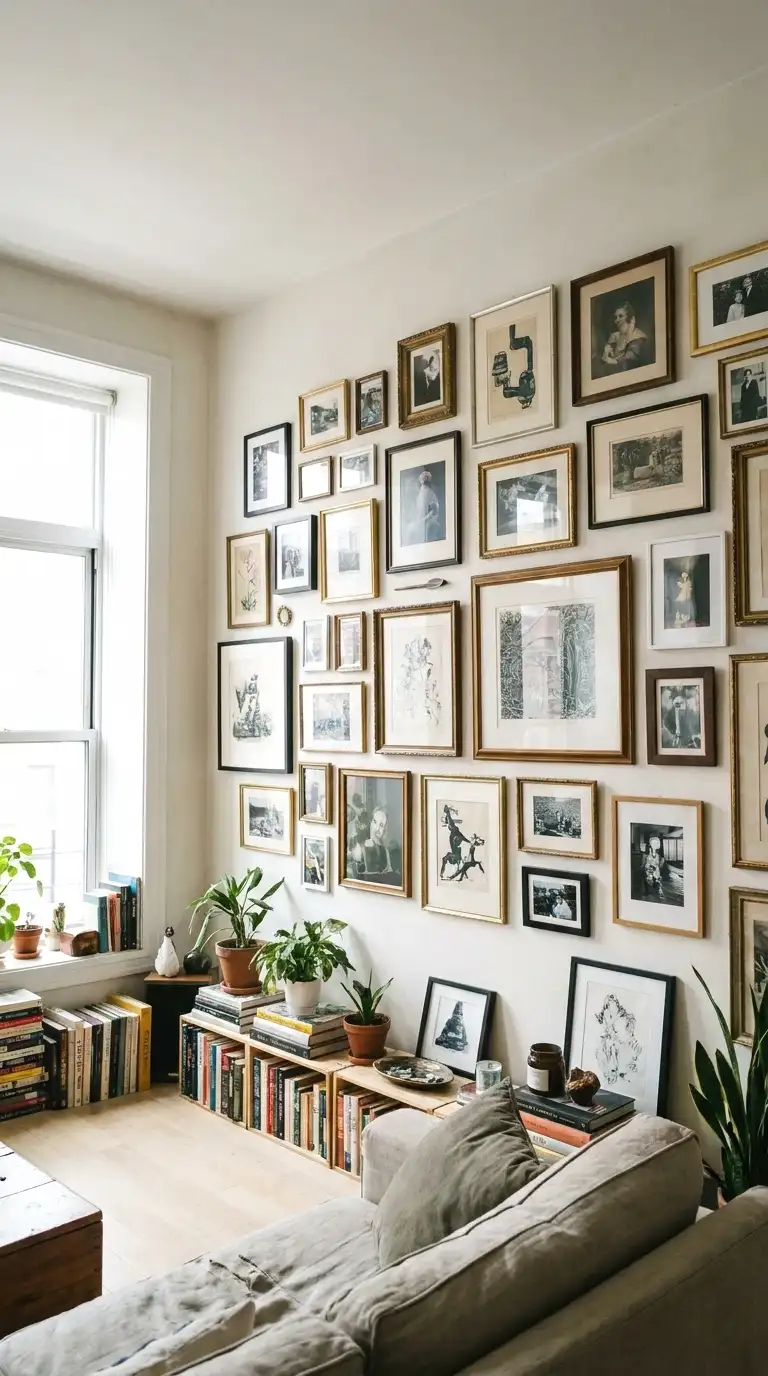
Art placement tells people subconsciously where one area ends and another begins. A gallery wall behind the sofa belongs to the living zone. Framed prints above the dining table belong to the dining zone. Keeping art contained to its zone stops the whole apartment from feeling like one undifferentiated wall of stuff.
Gallery walls don’t have to be expensive. A mix of frames from thrift stores plus printed photos or downloaded art prints keeps costs under $40–$60 for a whole wall arrangement. Use command strips so you don’t damage the walls. The key is grouping tightly, within a few inches between frames, so it reads as one intentional piece rather than scattered individual prints.
It’s worth looking at how a gallery wall changes a room before you start hanging anything, because placement makes or breaks it.
10. Get a Dining Table That Doubles as a Desk

In a real apartment, you’re probably working from home at least some days. A dining table that pulls double duty as a workspace means you’re not cramming a separate desk into an already tight open plan. One surface, two functions. That’s how small spaces survive.
A round table with a 48-inch diameter seats four comfortably and takes up less floor space than a rectangular one. Prices range from $80–$200 for solid options in wood or MDF. Go round if you can, because there are no corners to navigate around. When I tried this in my own place, having a round table completely changed the flow around the dining zone.
Finding the right apartment dining table that earns its space is worth spending extra time on before committing.
More Ideas:
11. Use Matching Storage Baskets to Unify the Space

Open plans get messy fast because everything is visible from everywhere. A set of matching baskets or bins used across multiple zones creates visual cohesion without a single piece of furniture changing. The repetition of one material or color ties the space together.
Seagrass or woven cotton baskets in the same neutral are the most versatile. Get four or five in the same style: one for throw blankets by the sofa, one for shoes near the entry, one under the kitchen island. A set of three mid-size baskets runs about $25–$40. The sameness is the point. It makes the open plan feel edited instead of random.
If storage is still feeling like a problem after the baskets, there are broader storage solutions for open apartment layouts that go beyond surface-level fixes.
12. Mount Your TV on the Wall to Free Up Floor Space

A TV stand in an open plan apartment eats floor space and adds another piece of furniture that has to be “placed” somewhere. Mounting the TV on the wall frees up that floor area and makes the living zone feel less cluttered. Plus, it looks more intentional.
Basic TV wall mounts start at $20–$40 for fixed versions. If you want a tilting or swiveling mount, budget $40–$80. Renters sometimes worry about wall holes, but a single mounted TV typically leaves two to four small holes. Most landlords accept that as normal wear. If yours doesn’t, there are no-drill TV mount systems that clamp to furniture, starting around $60.
13. Add a Room Screen or Folding Divider

A folding room divider is one of the most flexible tools in an open plan apartment. Set it up between the sleeping and living areas at night for visual privacy. Fold it away in the morning when you want the space to breathe. No permanent installation, no tools, no damage.
Rattan and bamboo screens give a warm, natural texture and cost $60–$120 for a three-panel version. Wood-framed fabric panels are quieter and more neutral, starting around $80. The trick is to not use it as a permanent wall replacement. Keep it movable. That flexibility is exactly what makes open plan living work for real daily life.
14. Go Vertical with Floating Shelves in the Kitchen Zone

The kitchen in an open plan apartment is always visible, so it has to look as intentional as the rest of the space. Floating shelves above the counter or beside the window add storage and make the kitchen zone feel designed rather than functional-only.
Two floating shelves in pine or MDF run about $15–$30 each plus brackets. Stagger the heights slightly, one at 18 inches above the counter and one at 32 inches, so they don’t look too uniform. Keep what’s on display consistent: all white dishes, all matching jars, all wooden utensils. One mixed-up shelf can make the whole kitchen zone look chaotic, especially in an open plan where you see it from the sofa.
More Ideas:
15. Use a Bench at the End of the Bed as a Zone Marker

In a studio or open plan one-bedroom, the bed is often the hardest zone to define because it’s a sleeping area in a living space. A bench placed at the foot of the bed does a surprisingly good job of marking the boundary. It gives the sleeping zone a “foot” that stops it from bleeding into everything else.
Upholstered benches in neutral fabric cost $60–$120. Wood benches with a simple finish run slightly less, around $50–$100. The bench also gives you somewhere to sit while you put on shoes, which is one of those small practical wins that adds up. (Took me ages to figure this out.) Go for something 48–54 inches wide to match a standard queen bed.
16. Style Your Kitchen Island as Part of the Living Zone
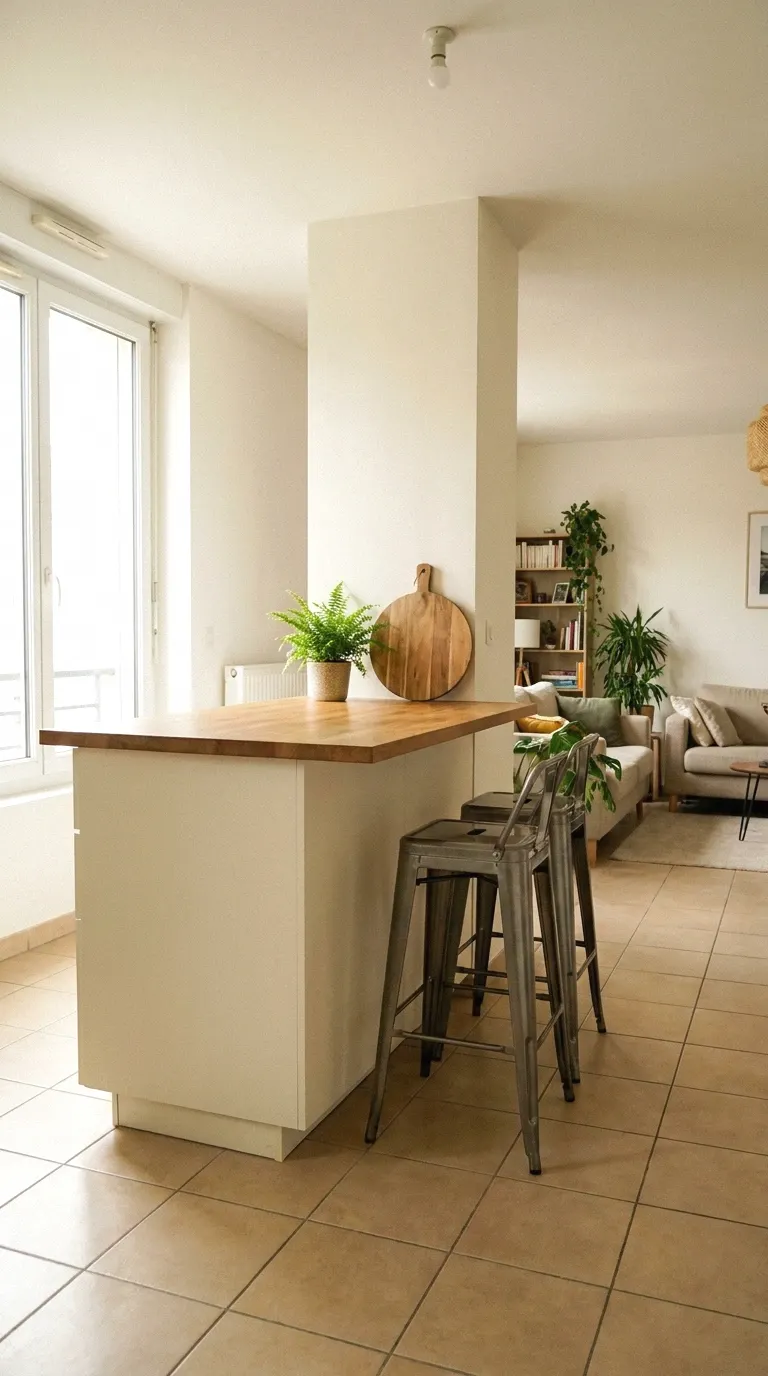
If your open plan apartment has a kitchen island or breakfast bar, it’s actually the bridge between your kitchen and living areas. Style it that way. A small plant, a bowl of fruit, one nice cutting board displayed upright. Make it look like it belongs to both spaces.
Bar stools are the practical piece here. The right stool height for a standard 36-inch counter is 24–26 inches. For a 42-inch island, go 28–30 inches. Two decent stools run $60–$130 depending on material. Metal or wood both work. Avoid plastic if the stools will be visible from the living zone because cheap plastic reads cheap from across the room.
17. Bring in Plants at Different Heights

Plants do something in open plan spaces that furniture can’t: they add organic vertical interest that makes zones feel layered. A tall fiddle leaf or bird of paradise in one corner, a trailing pothos on a shelf in another zone, a small succulent on the dining table. Each one anchors a zone with something living.
Vary the heights intentionally. Floor-level plants, mid-height on a stand, and higher shelf plants create a visual rhythm that moves your eye through the space. A floor-level plant stand costs $20–$40. The plants themselves range from $10 for a small pothos to $50–$80 for something like a monstera in a nice pot. You don’t need many. Three well-placed plants beat ten random ones.
18. Use the Same Wood Tone Throughout

One thing that makes open plan apartments look pulled together is repeating the same wood tone across multiple pieces. It doesn’t matter if the pieces are different styles. If the coffee table, the floating shelves, and the dining chairs share a similar warm oak or walnut tone, the eye reads it as intentional.
And honestly, this costs nothing extra if you’re already buying furniture. Just check the undertones before you buy. Warm amber, medium walnut, and light natural oak all read as “same family” from a distance. Cold grey-washed woods or very dark espresso don’t mix as easily. When you shop secondhand, this is the filter that helps most. Skip the piece if the wood tone is a mismatch.
More Ideas:
19. Install Dimmer Switches for Zone-Specific Moods

This is a low-cost, high-impact upgrade most renters overlook. Replacing a standard light switch with a dimmer lets you control the mood of each zone independently. Kitchen bright for cooking, dining warm for eating, living zone low for relaxing. The same apartment feels like three different spaces.
Smart dimmers or plug-in dimmer adapters start at $10–$20 and require no electrician for plug-in versions. For hardwired dimmers, basic ones run $15–$25 and take about 20 minutes to install if you’re comfortable with a screwdriver. Check your lease first. Most landlords are fine with switch swaps as long as you put the originals back before you move out.
20. Add a Mirror to Visually Expand One Zone

A large mirror in the right spot makes a zone feel twice its size. In an open plan apartment, the best placement is usually in the living zone or dining area, not the bedroom, because that’s where you most need the feeling of expanded space. Lean it against the wall or hang it at eye level.
Full-length mirrors (48×24 inches or larger) run $40–$100. Antique-style or arched mirrors add visual interest beyond just reflection. Position a mirror to reflect the best part of the room, a window, a lamp, a plant, not the kitchen clutter. Where a mirror reflects matters as much as where you put it.
21. Create an Entryway Zone Even If There Isn’t One

Most apartments don’t have a defined entryway. The front door just opens into the living room and things pile up immediately. Creating a small, intentional entry zone stops the clutter before it spreads into the open plan. It’s one of those things that makes the whole apartment feel more organized.
A small wall-mounted coat hook ($15–$30) plus a narrow bench or shoe rack ($30–$60) plus a small tray for keys ($10–$20) gives you a functional entry for under $100. If there’s no wall space, a freestanding coat stand works in the corner. The point is that “entry stuff” has a home, so it doesn’t migrate to the sofa or kitchen counter.
There are more ways to style a small entry zone than most people realize, even when the space is just a few square feet.
22. Keep One Zone Visually Simple on Purpose
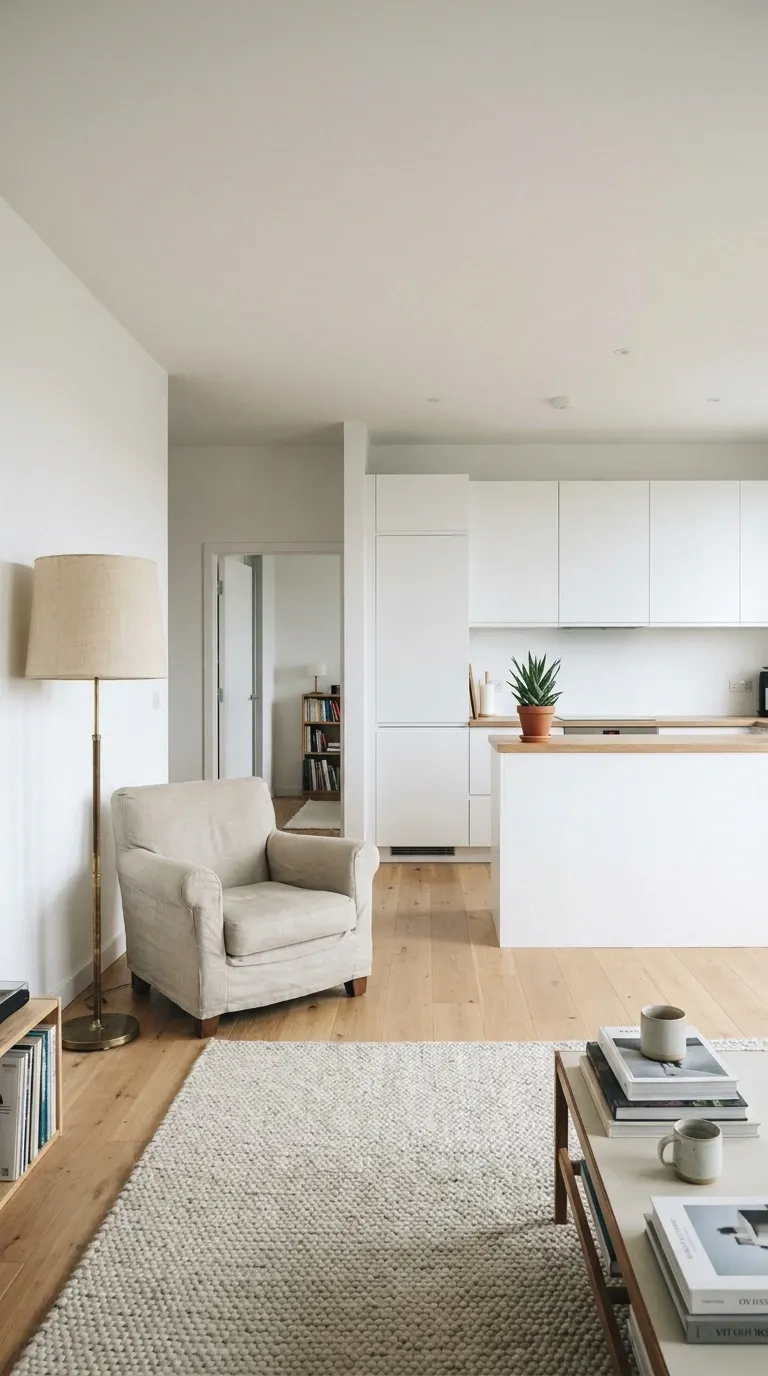
Here’s what nobody tells you about open plan decorating: you don’t style every zone equally. One zone, usually the kitchen or bedroom area, should be quieter and less decorated than the others. That visual rest gives the eye somewhere to relax, which makes the more styled zones read stronger.
A simple zone doesn’t mean empty. It means fewer pieces, a more neutral palette, and nothing decorative that competes for attention. In practice this looks like a plain white kitchen with nothing on the counter except one plant, or a bedroom side with just a lamp and a book. The contrast is what makes the whole open plan feel balanced.
More Ideas:
Final Thoughts on Open Plan Decorating Ideas
You now have 22 real, doable ideas that work in real apartments on real budgets. The themes that matter most here are zone definition, lighting layers, and visual repetition. Get those three working together and even a 500 sq ft studio starts to feel like it has a layout that was designed rather than assembled randomly.
Start with the rug. One 8×10 rug under your sofa, this weekend, before you change anything else. See what it does to the living zone. It’s the single highest-impact move on this list and it costs less than most furniture pieces. That’s your first step.
And if you want a broader starting point, there’s solid guidance on how to pull together a cohesive small space from scratch.
If you want more ideas like this, homelypop.com has a lot more where this came from. Real budgets, real apartments, real results.