

22 Backyard Park Ideas That Make Your Yard Feel Like a Real Outdoor Destination

Your backyard has been sitting there, half-finished and a little sad, and every summer you say you’ll fix it. You walk outside, see the bare patches of grass and the forgotten lawn chair, and walk right back in. It’s not laziness. It’s just that nobody told you where to actually start.
This list covers 22 real backyard park ideas pulled from homeowner forums, outdoor design communities, and actual builds people documented online. Each idea was included because it works in a normal yard, fits a real budget, and doesn’t require a contractor. The ideas range from simple seating setups under $50 to full play zones in the $200 to $300 range.
This is for you if you have a backyard of any size and want it to feel intentional and usable. If you’re expecting resort-level landscaping for under $100, this isn’t that. But if you want a yard your family actually wants to spend time in, you’re in the right place.
By the end of this, you’ll have a clear picture of what your backyard can look like and a shortlist of ideas you can actually act on this weekend.
If you’re still figuring out how you want the space to function, there are plenty of ways to use your outdoor space that might spark a direction.
What to Know Before You Start Your Backyard Park Setup
- Sun mapping matters first: note which areas get shade by 3pm before placing seating.
- Grass under a swing set wears out within one season. Budget $40 to $60 for rubber mulch underneath.
- Most backyard park projects run $150 to $250 total when buying second-hand or off-season.
- Zoning rules in some areas restrict permanent structures over 200 sq ft without a permit.
- People often buy furniture before measuring. Measure your usable space in feet first.
- Outdoor string lights fail fast in rain if not rated IP44 or higher. Check the label.
- Cedar and teak hold up outdoors without sealing. Pine needs a coat every year.
- Gravel paths cost around $1.50 per sq ft and last years longer than bark alone.
1. Set Up a Shaded Seating Corner

You don’t need a pergola to get shade. A large offset patio umbrella, around 10 to 11 feet, can cover a full seating area without taking up ground space. Position it on the north or east edge of a table so it blocks afternoon sun directly. This one move makes the whole yard feel more usable from about noon onward.
The umbrella runs $80 to $150 at most home improvement stores, and a decent weighted base costs another $30 to $50. Look for ones with a crank tilt feature. It sounds small but being able to angle the canopy without moving the base saves you from constantly fighting the sun in the afternoon hours.
If you’re starting from scratch with no furniture at all, it helps to look at seating ideas that hold up outside before committing to anything.
2. Add a Simple Gravel Pathway

Paths do something interesting to a yard. They give it a sense of layout, like there’s somewhere to go. Even a single straight path from your back door to a seating area or garden bed makes the yard feel planned. Use pea gravel or crushed limestone, both of which cost around $5 to $8 per 50-pound bag.
Dig about 3 inches down, lay a weed barrier fabric first, and fill with gravel. For a path that’s 2 feet wide and 12 feet long, you’ll need roughly 6 to 8 bags. Edge it with metal landscape edging to keep the gravel from spreading. The whole project runs about $60 to $90 and takes an afternoon.
For more budget-friendly backyard ground cover options that go beyond gravel, there are a few approaches worth comparing before you dig.
More Ideas:

3. Install a Hammock Between Two Trees

The hammock is one of those ideas I held off on for years because I thought I needed specific tree spacing. Turns out you just need two trees that are 10 to 15 feet apart and at least 6 inches in diameter. That covers most mature backyards. A good Brazilian-style cotton hammock runs $40 to $80 and holds up through full summers without fading badly.
Use tree straps instead of screws. They’re safer for the tree and rated for up to 400 pounds at around $15 a pair. Hang the hammock about 18 inches off the ground when empty, which puts you at a comfortable seated height when it sags under your weight. And yes, the napping is as good as it looks.
4. Build a DIY Fire Pit Seating Circle

A simple fire pit ring from a big box store costs $30 to $60. The seating around it is where most people overspend. Skip the patio furniture sets. Instead, grab 3 to 4 cedar garden benches or even wide tree stump slices, which you can sometimes find free on local Facebook groups or buy cut for $10 to $20 each.
Arrange seating in a loose circle about 3 feet from the pit edge, which is the safe minimum distance from open flame. Fill the ground inside the circle with sand or pea gravel to keep the area clean and reduce fire risk. Total cost to do this properly sits around $100 to $150 if you source benches secondhand.
If you want something more permanent than a ring, there are fire feature designs for small yards that give you the same warmth with better structure.
5. Hang Outdoor String Lights Along a Fence

String lights change the entire feel of a yard after dark. Run them along the fence line, overhead between two posts, or draped through a tree canopy. Use warm white bulbs at 2700K for that soft park-at-dusk kind of glow. Go with globe bulbs, the ones that are 1.5 to 2 inches wide, for the most coverage per strand.
A 48-foot strand with 15 bulbs runs about $25 to $40 at home stores or online. For a full fence line of 30 feet, you’ll need one strand. For an overhead span across a 12 by 14-foot patio, use two strands in a zigzag pattern. Get a weatherproof outdoor timer for around $12 so they turn on automatically at dusk.
6. Create a Kids’ Nature Corner

You don’t need a full play structure to give kids a space they’ll actually use. A small corner with a mud kitchen, a sandbox, and a few stepping stones is honestly more interesting to most kids under 8 than a plastic slide. A basic wooden mud kitchen kit runs $60 to $90, and a cedar sandbox frame you build yourself costs about $30 in lumber.
When I tried this in my own space, I was surprised at how long kids stayed occupied. Add a few old pots, spoons, and some dirt and water access, and they’ll be out there for hours. Keep it contained to a 6 by 6-foot corner so it doesn’t take over the whole yard.
If you want to expand beyond the mud kitchen setup, there are more ideas for a dedicated space for kids to play outside that scale with the yard size.
More Ideas:
7. Put in a Lawn Bowling or Bocce Court
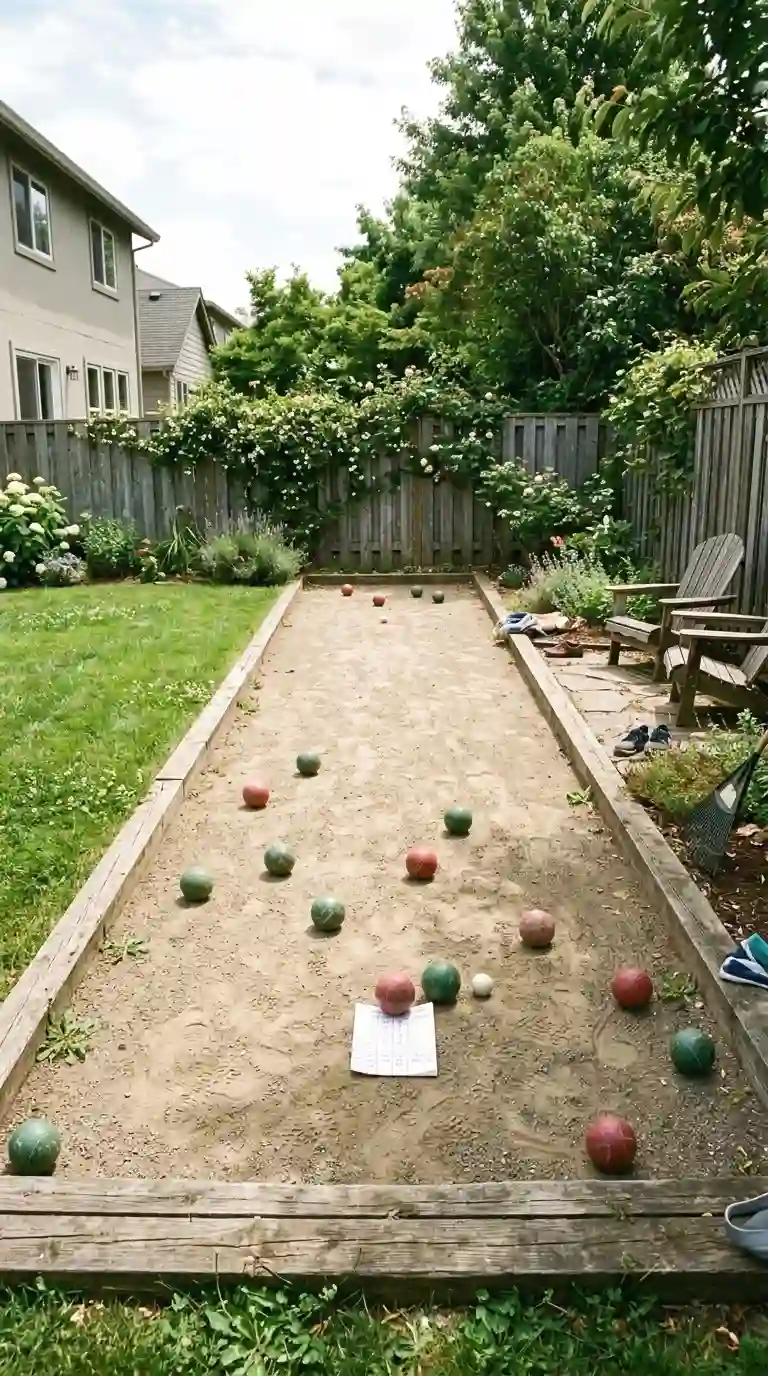
This is so underrated. A bocce set costs $25 to $50 and requires no permanent installation. You just mark out a flat 10-foot by 60-foot strip of grass (or a shorter version works too) and you have a game anyone can play. Families with older kids and adults both use it constantly.
For a more defined court, top-dress the strip with decomposed granite or fine gravel. It gives the balls a more predictable roll and defines the space visually. A 10-by-20 foot version is plenty for casual backyard play and costs about $80 to $100 in materials if you want the defined surface. Otherwise, just play on the grass.
8. Add a Raised Garden Bed as a Visual Anchor

A raised garden bed along one edge of the yard gives the space a boundary and makes it feel more park-like. You don’t need to grow vegetables. Even low-maintenance plants like lavender, ornamental grasses, or black-eyed Susans fill the space and add structure without much work.
A cedar raised bed kit, 4 feet by 8 feet, runs $50 to $80 at most garden centers. Fill it with a mix of topsoil and compost, which comes to about $20 to $30 for a bed that size. Place it along a fence or at the far edge of the yard so it frames the space rather than cutting through the middle of it.
9. Set Up a Backyard Movie Area

All you need is a white bedsheet or a $30 to $50 projector screen, a portable projector ($80 to $150 range works fine outdoors), and a Bluetooth speaker. Set it up against a fence or hang the sheet between two posts. It only works well after dark, but that’s exactly when backyard spaces go unused for most families.
Lay a few outdoor blankets and floor cushions on the grass in front. Skip formal seating here. The low-to-the-ground, pile-of-blankets setup is actually the most comfortable for watching something outside. An outdoor movie night once a week turns the backyard into a space people look forward to.
10. Install a Simple Pergola Frame

A pergola sounds like a big project, but a freestanding 10 by 10-foot kit takes about 4 hours to assemble and costs $200 to $300. It doesn’t require posts set in concrete if you use weighted anchor plates, which most kits now include. It defines space, creates overhead structure, and gives you something to hang lights or plants from.
Leave the top open or add lattice panels on one side for partial privacy. Over time, grow a climbing plant like wisteria or a trumpet vine up the posts. In two seasons, you’ll have a fully shaded structure that looks like it was designed into the yard from the beginning.
For yards with kids, there are also backyard structures worth building yourself that pair well with a pergola frame and don’t need a contractor.
More Ideas:
11. Lay a Pea Gravel Seating Pad

Grass under outdoor furniture always looks rough and worn. A simple pea gravel pad, about 10 by 12 feet, gives the seating area a clean base that holds up through rain and foot traffic. Dig 3 inches down, lay weed fabric, and fill with pea gravel. Edge it with steel landscape edging to keep it defined.
The materials for a 10 by 12-foot pad cost roughly $80 to $120 depending on gravel prices in your area. It looks cleaner than bare dirt, drains instantly after rain, and requires basically zero maintenance year to year. Place a few pavers or flat stepping stones at the entry point so you’re not dragging gravel inside.
12. Add a Water Feature on a Budget

Moving water is a huge part of what makes public parks feel calming. You can get that same effect with a small solar-powered fountain that sits on the ground or in a container. A decent solar fountain runs $25 to $50 and works without any electrical hookup. Place it in a wide planter filled with water, or use a pre-formed pond basin from a garden center.
I was skeptical about this one but the sound difference it makes is real. Even a small trickle breaks up the silence and makes the yard feel alive. Add a few aquatic plants like water hyacinth around the fountain to finish the look. The whole setup costs around $60 to $90 total.
13. Create a Dedicated Reading Nook

An outdoor reading nook doesn’t need a custom-built bench. Find a shaded corner along a fence, add a weather-resistant chair or loveseat, a side table, and a small outdoor rug. That’s the whole formula. The key is making it feel separate from the main seating area so it reads as its own destination in the yard.
A good outdoor chair runs $60 to $120. Outdoor rugs in the 4 by 6-foot range cost $30 to $60. Add a tall outdoor planter on one side for privacy and you’ve got a spot that feels like it’s meant for sitting and staying. A small side table or upside-down crate holds a drink and a book.
14. Hang a Porch Swing from a Tree Branch
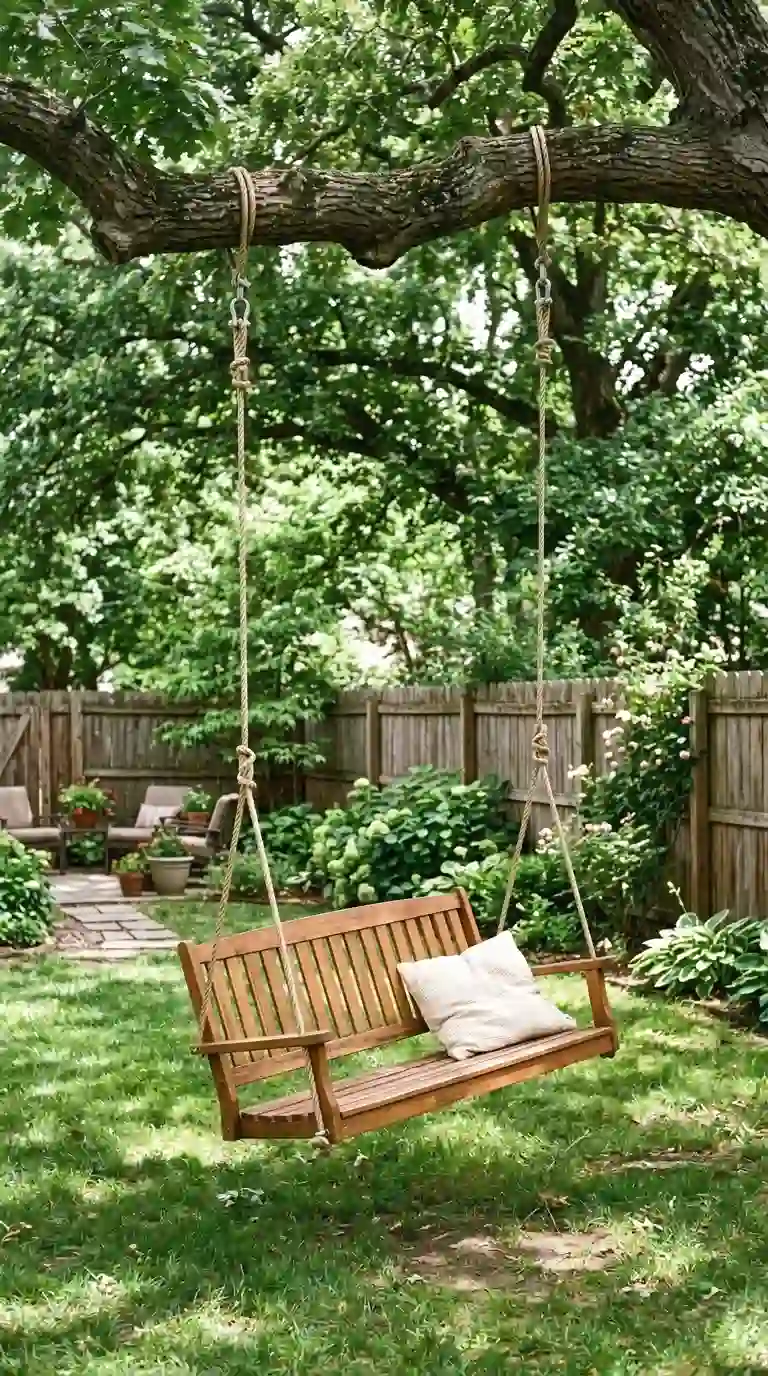
A tree swing is one of those things that makes a yard feel like a real place to spend time. A simple wooden slatted porch swing runs $80 to $130 and hangs from two heavy-duty eye bolts rated for at least 400 pounds. Use a branch that’s at least 8 inches in diameter and mostly horizontal with no visible cracks.
Use 3/4-inch braided polyester rope, not nylon, because polyester holds up to UV exposure much better. Tie it at the right height so the seat hangs about 17 to 19 inches off the ground. This one always ends up being the most used thing in the yard.
More Ideas:
15. Build a Simple Stepping Stone Path

Stepping stones through grass give a yard structure and protect the lawn from a worn-out walking trail. You can buy pre-cast concrete stepping stones for $2 to $8 each at garden centers. For a path that’s 15 feet long with stones placed 18 inches apart, you need about 10 stones. Total cost: under $60.
Press them into the ground so the surface sits flush with the grass. If they’re sitting too high, a mower will hit them. Dig a shallow depression for each one, set it in, and press it level. After a few weeks, the grass fills in around the edges and it looks like it’s been there forever.
If you want to tie paths and planted areas into a cohesive layout, there are simple path and garden zone layouts that show how it all comes together visually.
16. Set Up a Backyard Badminton or Volleyball Net

A portable net kit covers both badminton and volleyball and runs $30 to $60 at sporting goods stores. It sets up in 15 minutes, folds flat for storage, and turns any flat stretch of yard into an activity zone. You don’t need a perfect lawn. Gravel or packed dirt works fine.
Standard net widths for backyard badminton are 20 feet, and you’ll need a flat open area of about 20 by 44 feet for a full court. But half that works for casual play. It’s one of those things that gets set up once and stays up all summer because it’s too much fun to take down.
17. Add Outdoor Lanterns Along a Path

Low-voltage solar path lights do the job but they look generic. Outdoor lanterns, the kind you set on the ground or hang from a hook, look much more like a real park. You can find weather-resistant metal lanterns for $15 to $30 each at home stores. Set them every 4 to 5 feet along a path or at the edges of a seating area.
Use candles inside for the warmest look, or swap to battery-operated flame-flicker bulbs if you don’t want to relight them constantly. Either way, the effect at night is completely different from standard solar stakes. Took me ages to figure out that lanterns are the move here.
18. Plant a Tree for Shade and Anchoring

If your yard doesn’t have a mature tree, planting one is the long-term move. A young red maple or flowering dogwood in a 5-gallon pot costs $30 to $60 at a nursery. In 5 years, it’ll be 10 to 15 feet tall and actually casting shade. Positioning it in the southwest corner of the yard blocks the worst afternoon sun.
Dig the hole twice as wide as the root ball and no deeper than the root flare. Water deeply twice a week for the first full season. Add a 3-inch ring of mulch around the base, about 2 feet out, to hold moisture. This is the only idea on this list that gets better every single year.
More Ideas:
19. Create a Designated Pet Zone

If you have a dog, carving out a dedicated area for them does a lot for the rest of the yard. Use a section of the yard that already gets worn down, fence it loosely with a low metal garden border, and fill it with pea gravel or decomposed granite. Dogs prefer it to muddy grass, and it keeps one zone clean instead of the whole yard getting wrecked.
The materials run $40 to $80 for a 10 by 10-foot zone. Add a shaded shelter using a basic dog house ($40 to $70) or a low canopy tent. Dogs adapt fast to having a defined space and you’ll stop finding random holes dug across the lawn.
20. Add a Planter Wall for Privacy and Structure

A row of tall planters filled with ornamental grasses or bamboo creates a natural wall without building a fence. Use planters that are at least 24 inches tall. Fill them with a fast-growing grass variety and in one season you’ve got a screen that’s 4 to 6 feet tall. Arrange 3 to 5 planters in a row with 18-inch gaps between them.
Each large planter costs $20 to $40. A bag of potting mix runs about $8 to $12. So for five planters fully set up, you’re looking at $140 to $210. It defines space, adds greenery, muffles noise from neighbors, and looks like something you planned from the start.
If planters alone don’t give you enough separation, there are also privacy screens that double as decor and work alongside greenery without looking like a barrier.
21. Install an Outdoor Chalkboard or Art Station

This one is great for yards with kids but honestly adults use it too. Attach a sheet of chalkboard-painted plywood to a fence panel. You can use any exterior plywood at $20 to $30 for a 4 by 4-foot sheet, then coat it with two layers of chalkboard paint ($10 a can). Seal the edges with exterior caulk and it holds up through weather.
Hang a small bag of chalk on a hook beside it. Kids use it for games, art, scorekeeping for yard games, whatever they feel like. It turns a blank fence section into an active zone and you don’t need to add a thing beyond the board and chalk.
22. Set Up a Permanent Outdoor Dining Area

A dedicated outdoor dining spot is what makes a backyard feel like a destination rather than just extra space. You don’t need a full outdoor kitchen. A solid table with four to six chairs, placed on a defined surface like gravel or pavers, does the job completely.
A good weather-resistant acacia wood table runs $150 to $250 and holds up outdoors with minimal care. Pair it with folding chairs at $20 to $30 each for flexibility. Place the table close enough to the back door that carrying food out isn’t a chore. Once you eat outside a few times, going back inside feels like the wrong choice.
If you’re thinking about giving the dining area a more defined surface to sit on, there are outdoor dining setups worth copying that combine decking with the table placement really well.
More Ideas:
Final Thoughts on Backyard Park Ideas
You’ve got 22 ideas here, and the real thread running through all of them is this: backyards feel like parks when they have defined zones, usable surfaces, and a reason to stay outside. It doesn’t take a full renovation. It takes a few deliberate moves placed in the right spots.
Start with one thing that solves your biggest frustration right now. If shade is the issue, fix that first. If the kids have nowhere to go, carve out a corner for them this week. One change at a time is still forward.
If you want more ideas like this, homelypop.com covers every room and every budget. There’s always something worth trying.


