
21 DIY Play Structures for Kids You Can Build This Weekend (Under $300)

Your backyard is just sitting there, and your kids are bored inside again. You’ve seen those massive wooden playsets at big box stores. They cost $800 minimum, take three weekends to assemble, and wobble after the first rain.
This list covers 21 DIY play structures for kids ideas I actually researched, from real parent builds on Reddit and backyard forums, not Pinterest fantasy boards. Each idea was picked because it works in real yards with real tools and budgets between $100 and $300. You’ll find everything from simple swings to full climbing setups, with material types, approximate costs, and build tips included.
This is for parents and caregivers with a basic set of tools, a weekend afternoon, and a backyard or patio space. It’s not for anyone wanting a commercial-grade playset that seats 12. These builds are modest, safe, and completely doable without a contractor.
By the end of this list, you’ll have a clear, specific plan you can start this week, from picking materials to making the first cut.
Before you dive in, it helps to browse some outdoor play spaces worth building to get a feel for what fits your yard and your kids’ ages.
What to Know Before You Start DIY Play Structures
- Most injuries happen from falls above 5 feet, so keep climbable platforms at 4 feet or under for kids under 6.
- Pressure-treated lumber is the go-to for ground contact, but look for ACQ-treated wood, not older CCA (it contains arsenic).
- Budget reality: a solid single-tower swing set with slide runs $150 to $250 in materials alone.
- Most people forget to budget for hardware. Bolts, lag screws, and brackets can add $30 to $50 quickly.
- Common mistake: skipping post anchors and just burying wood. Anchors last 3x longer and keep posts from rotting at soil level.
- Add 6 inches of wood mulch or rubber mulch under all play structures for impact cushion.
- Sand down all lumber before kids touch it. A quick pass with 80-grit sandpaper prevents splinters on every edge.
1. Single Post Swing Set
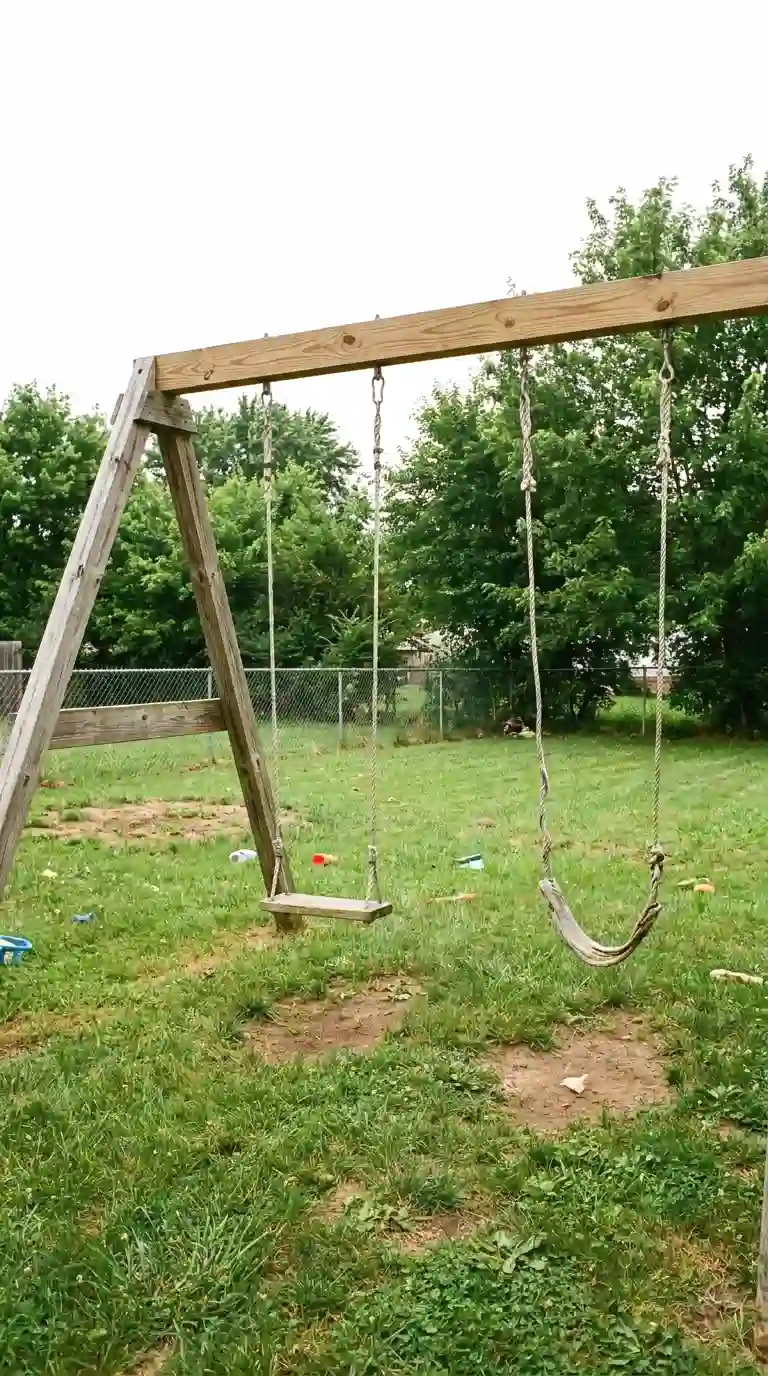
A single post A-frame swing is the easiest backyard build that kids actually go back to every single day. You need two 4x4x10 posts, a crossbeam, two swing hangers, and basic chain or rope. The whole thing takes about three hours if you’ve done any kind of basic woodworking before.
Materials will run you $60 to $90 at a hardware store. Set the posts 8 feet apart for a standard two-swing setup. Make sure you use galvanized lag screws on the crossbeam joint, not regular wood screws. I’ve seen A-frames fail at that exact joint because someone went cheap on hardware.
If you’re also rethinking how the rest of the yard functions, there are some simple ways to use yard space that work alongside play structures without fighting for room.
2. Low Wooden Climbing Wall

You can attach a climbing wall to the side of your garage, fence, or a freestanding wooden frame. Cut a sheet of 3/4-inch plywood (4×8 feet) and drill t-nut holes every 8 inches in a grid pattern. Bolt in colorful climbing holds, which you can buy as a set for around $25 online.
Mount the panel at a slight angle, about 5 to 10 degrees back, so younger kids don’t fight straight vertical. The whole build including plywood, t-nuts, holds, and mounting hardware lands around $70 to $100. Kids love this one more than you’d expect.
More Ideas:

3. Rope Ladder Between Two Trees

So here’s the thing about rope ladders. If you have two trees at least 6 feet apart, you already have most of the structure. Buy 1-inch natural manila rope (about $15 for 50 feet) and wooden dowels or rungs cut from a 1.5-inch dowel rod. Drill holes through each rung, thread the rope, and tie overhand knots below each step.
Space the rungs 10 to 12 inches apart and hang the finished ladder between the trees at a height kids can reach from the ground. This costs under $40 total. I tried this in my own yard and it held up through a full summer without any issues.
4. Backyard Balance Beam

The balance beam is so underrated as a play structure. Kids use it constantly, it doubles as a garden border, and it costs almost nothing. Use a 4×4 cedar or pressure-treated beam, 8 to 10 feet long, and set it on two short wooden risers about 4 inches off the ground.
Sand every edge smooth and stake the risers into the ground so it doesn’t shift. Total cost is around $20 to $35. Cedar smells great, resists rot naturally, and looks really nice after a year of weathering. You can line up two or three beams end to end for a longer course if kids want more challenge.
5. PVC Pipe Sprinkler Arch

Here’s a summer play structure that costs almost nothing and takes 30 minutes to set up. Get a 10-foot length of 3/4-inch PVC pipe, bend it into an arch, and push each end into the ground. Drill small holes along the top third and connect one end to your garden hose with a PVC adapter.
Kids run through it, bikes go through it, everyone ends up soaking wet and happy. The full setup costs $15 to $25. Add a few more arches side by side for a full sprinkler tunnel. This one’s seasonal but it gets heavy use from May through August.
6. Sandbox With Wooden Frame

A sandbox is still one of the most played-with structures for kids under 7. Build a simple frame from four 2×10 boards in an 8×8-foot square, corner-joined with metal brackets. Line the bottom with landscape fabric to block weeds and bugs, then fill with play sand (you’ll need about 10 to 12 bags).
Frame lumber costs around $40 to $60. A lid made from two hinged plywood panels keeps cats out overnight and doubles as seating during the day. The whole build runs $80 to $120. I was skeptical about whether my kids would actually use it, but three years later it’s still their first stop outside.
More Ideas:
7. Wooden Platform Fort

A ground-level platform fort gives kids a defined space to call their own without any fall risk. Build a simple 4×4-foot deck frame from 2×6 lumber, add a plywood floor, and surround it with low 2×4 walls (about 18 inches high). Add a basic roof of corrugated plastic panels over a simple ridge frame.
This sits fully on the ground, so no footings or anchors are needed. Wood costs run $100 to $150. You can add a door opening, a small window cutout, or paint the whole thing. Kids treat this like a real house. It’s worth every hour of build time.
Adding a bench or small seating area nearby works really well here, and there’s plenty of low-cost outdoor furniture that fits a backyard build without overcomplicating the space.
8. Tire Swing

A single tire swing hanging from a tree limb is one of the most used play structures in any yard. You need a solid limb (at least 8 inches in diameter), a 5/8-inch eye bolt rated for 500 lbs or more, a length of 1-inch nylon rope, and a used tire (often free from tire shops).
If your yard backs onto a patio or small hardscape area, it’s worth looking at patio layouts that work for kids so the swing has enough clearance on all sides.
Drill through the tire for drainage, tie a bowline knot at the tire end, and use a carabiner at the top for easy removal. Total cost with hardware: $20 to $40. Just confirm the branch is live wood, not dead, before you load it up with a 60-pound kid spinning at full speed.
9. Wooden Teepee Frame

A wooden teepee is one of the most versatile outdoor play structures because it works on grass, gravel, or patio. Get five 8-foot wooden dowels (1.5-inch diameter) and tie them at the top with jute rope in a classic lashing knot. Space the feet out in a circle about 5 feet wide.
You can hang canvas, outdoor fabric, or old bedsheets around the outside. The frame itself costs around $25 to $35. Add string lights inside on summer evenings and it becomes the most popular spot in the yard. (Took me ages to figure this out, but the lashing is easier than it looks.)
10. Stepping Stone Obstacle Course

Line up a series of landscape stepping stones, wooden rounds, or paver stones in a winding path across the yard. Space them 12 to 18 inches apart for a jump-step challenge. You can mix heights by stacking two pavers at some spots and using flat single stones at others.
A set of 10 concrete stepping stones from a hardware store runs about $30 to $50. Wooden rounds cut from a log add a natural look for free if you have the right wood around. Kids run this course in circles, time each other, and race all afternoon. It’s low build time with high daily play value.
More Ideas:
11. Slackline Between Two Trees
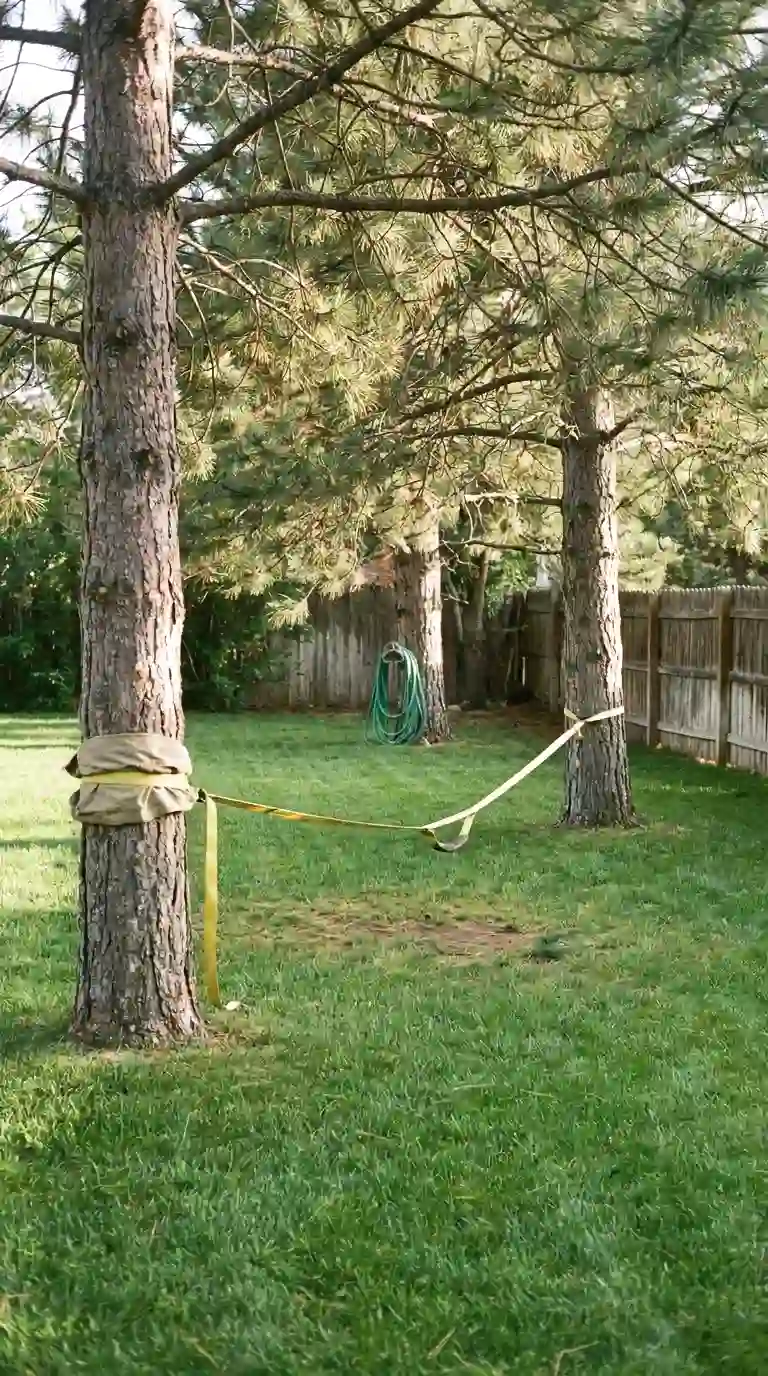
A slackline is basically a wide nylon strap tensioned between two trees at ankle height. Kids walk it, bounce on it, and do tricks on it. At ground level, falls are no big deal. Buy a beginner slackline kit, which comes with tree protectors and a ratchet tensioner, for about $25 to $40.
Set it up at 12 to 18 inches off the ground between two trees at least 10 feet apart. Wrap the tree protectors tight before attaching anything to protect the bark. This is one of the few play structures that older kids and adults actually use together, which makes it great for mixed-age backyards.
12. DIY Mud Kitchen

A mud kitchen is a workbench-height station where kids mix dirt, water, leaves, and whatever else they find into imaginary “food.” Build it from an old pallet or 2×4 lumber frame with a basic plywood top. Drill a hole in the center and drop in a metal mixing bowl for the “sink.”
The whole build uses scrap wood or costs $20 to $40 in fresh lumber. Add old pots, spoons, and a small shelf below for supplies. Kids aged 2 to 8 play at mud kitchens for hours with zero screen time in sight. It’s messy, yes. It’s also genuinely worth it.
Keeping the supplies organized between play sessions is easier than it sounds, and there are some smart storage solutions for outdoor gear that tuck neatly into a corner of the yard.
13. Hanging Knotted Rope Climb

A knotted climbing rope hung from a solid tree branch or A-frame is one of the best upper-body builders you can put in a yard. Use 1.5-inch natural fiber rope, about 12 to 15 feet long, and tie large overhand knots every 12 inches starting 2 feet from the bottom.
Mount it to a branch using an eye bolt with a safety latch carabiner. The rope itself costs $20 to $35. Teach kids to grip the rope above a knot and step on the knot below. It looks simple. It’s actually a serious workout that kids ask for more than almost anything else in the yard.
14. Small Raised Playhouse Platform
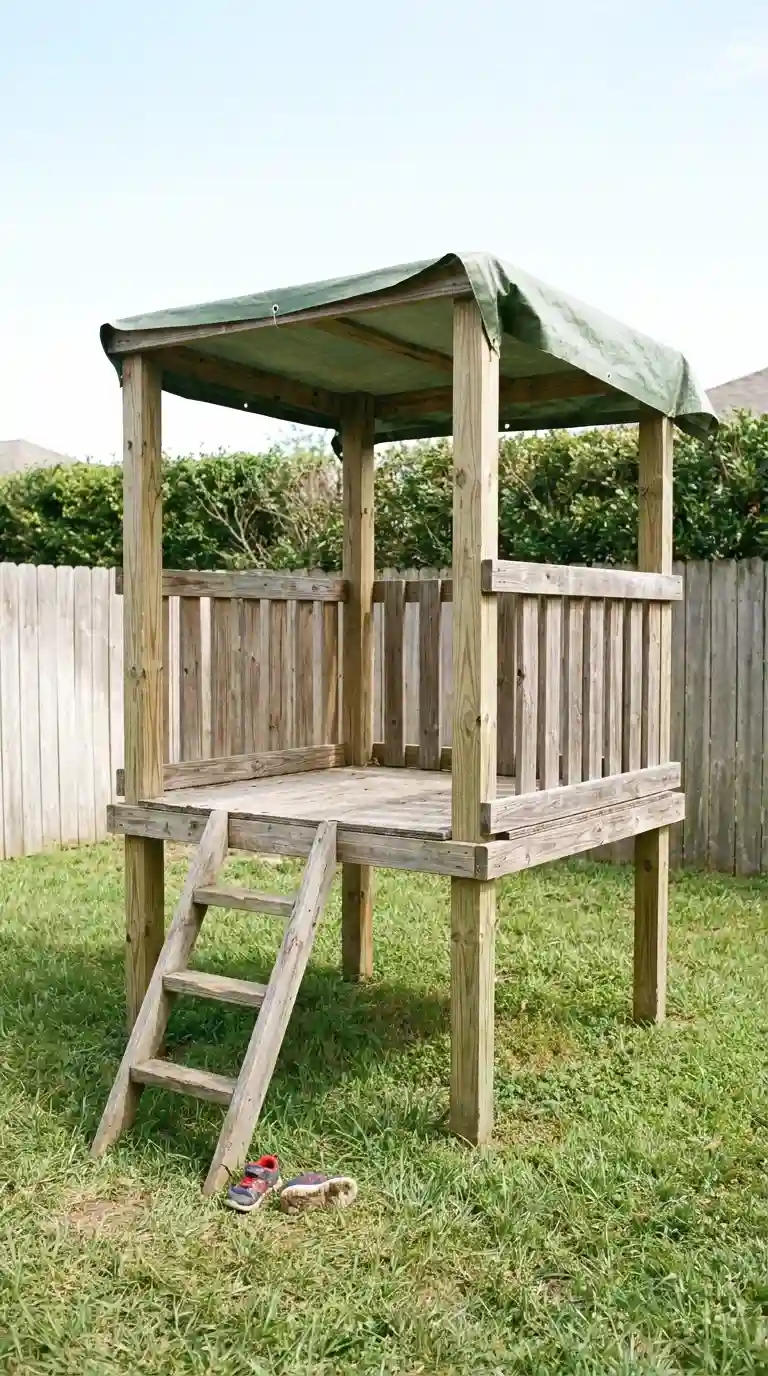
Raise a simple 4×6-foot platform 24 to 30 inches off the ground on four 4×4 posts set in concrete footings. Add a plywood floor, a simple railing on three sides, and a short wooden ladder on the open fourth side. This is technically a small elevated fort without a roof.
Materials cost $120 to $180. Keep the rail height at 36 inches on all open edges and make sure the ladder rungs are no more than 10 inches apart. Add a canvas tarp for roof coverage if you want shade. It feels like a real treehouse to a 5-year-old.
For anything elevated like this, looking at outdoor structures that handle weather well gives you a useful reference for finishes and materials that hold up season after season.
More Ideas:
15. Water Table From a Stock Tank
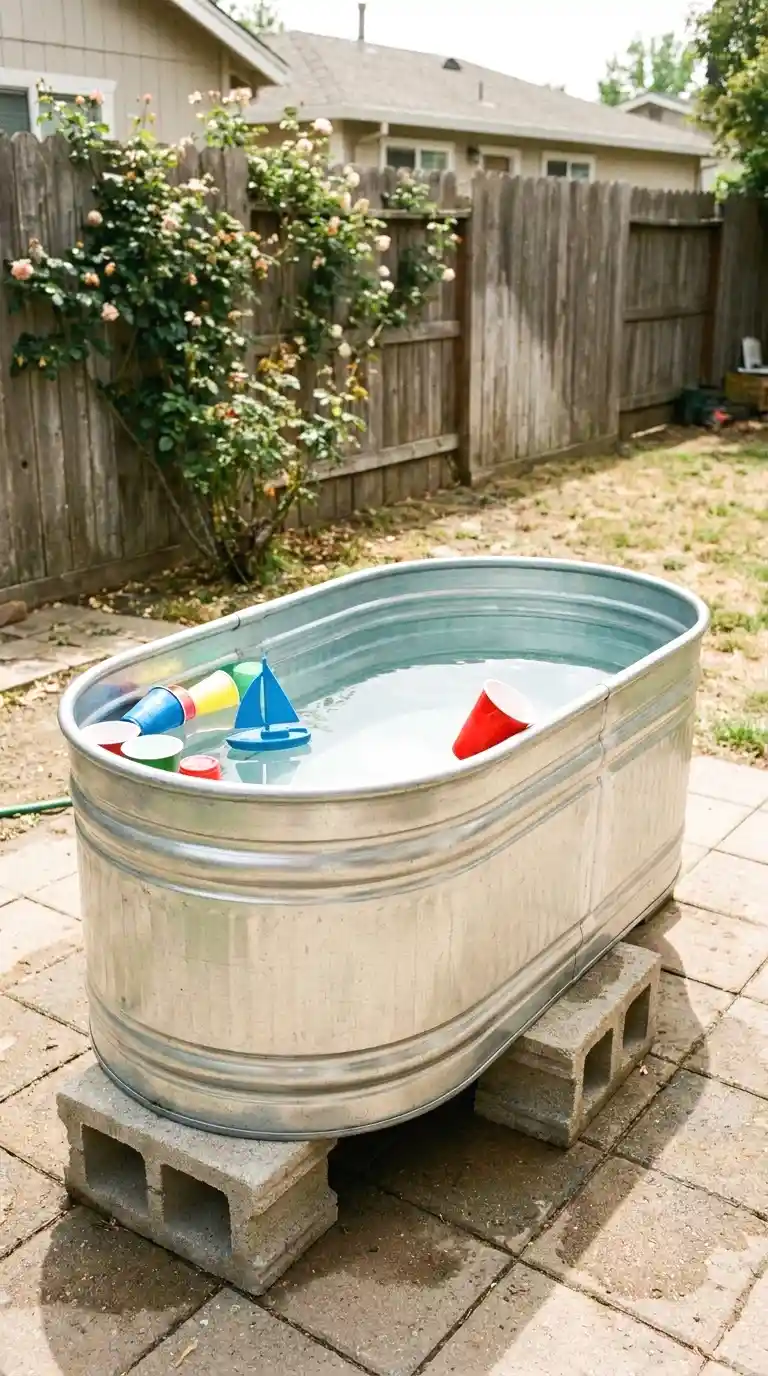
A galvanized stock tank (oval, 2 feet wide by 4 feet long) set on two stacked landscape blocks makes a perfect outdoor water play table at the right height for toddlers and younger kids. Fill it with water, add cups, funnels, and toy boats, and you have hours of outdoor play for under $80.
Stock tanks cost $50 to $70 at farm supply stores and last basically forever. Drain it by tipping it slightly after use or drill a small plug hole in the bottom corner. This is one of those builds where the “structure” is almost none and the play value is enormous.
16. Cargo Net Climber

A cargo net stretched between two wooden posts gives kids a flexible climbing surface that swings slightly as they move, which makes it harder and more fun than a fixed wall. Use 3/4-inch polyester cargo net, cut to size, and attach to two 4×4 posts set 5 feet apart in the ground.
Nets cost $40 to $60 for a 5×8-foot section. Set the posts at 7 feet tall and angle the net slightly for easier climbing. Anchor each net corner with a bolt and washer through the post. This holds up to multiple kids at once and works for ages 4 and up with no issues.
17. Simple Wooden Slide Frame

A slide doesn’t need a full playset. Build a simple angled wooden ramp frame from 2x4s at a 30-degree angle and attach a plastic slide sheet on top. The slide sheet (a pre-made plastic molded slide) costs $40 to $60 online. The frame lumber runs another $30 to $40.
The full structure is about 6 feet tall at the top platform and can sit against a fence for added stability. Total build: under $120. Sand the wood frame smooth and paint it with exterior deck paint to protect it. Kids treat it like a full commercial slide with zero of the commercial price tag.
18. Outdoor Chalkboard Panel
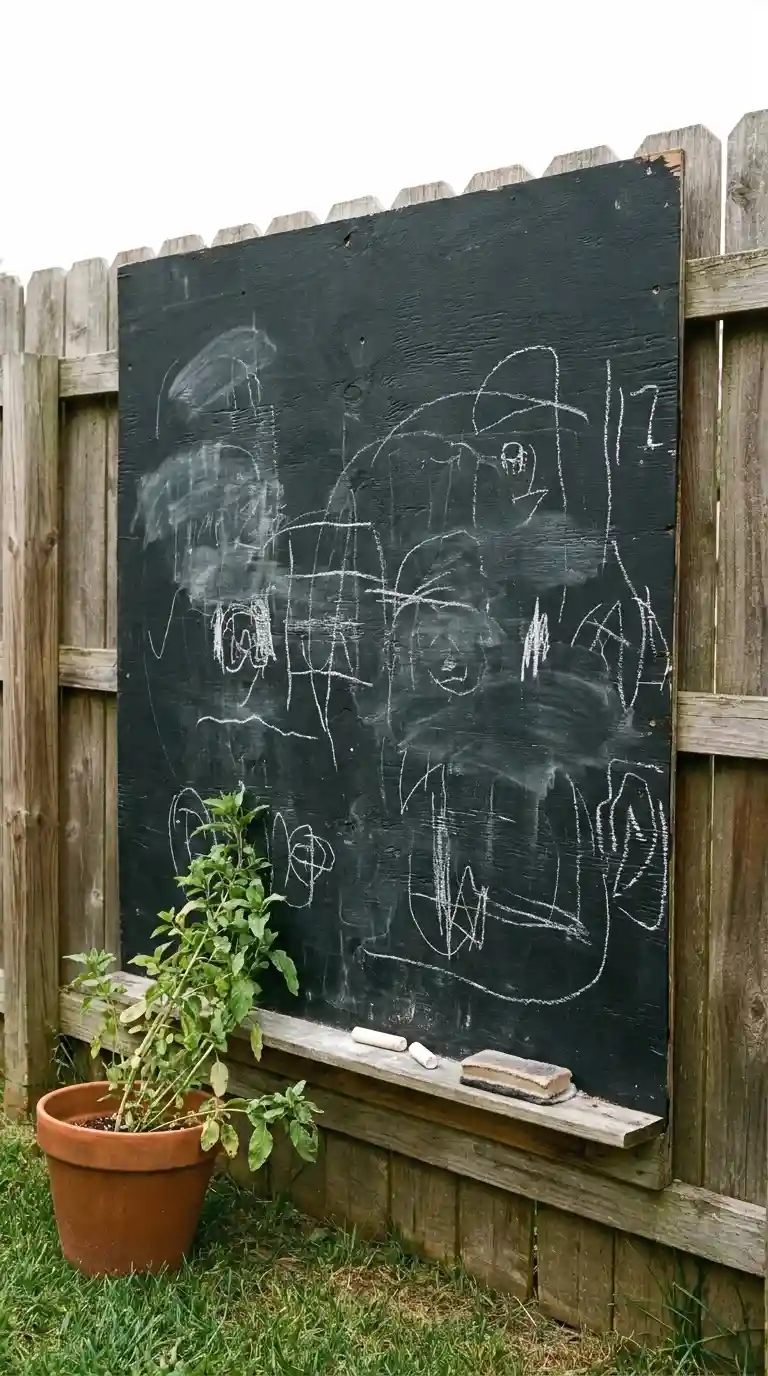
Mount a 4×4-foot sheet of 3/4-inch plywood to a fence or freestanding frame and paint it with two coats of chalkboard paint. This is $30 to $45 total and takes a Sunday afternoon to build and dry.
Kids draw, write, erase, and start over hundreds of times. Hang it at 2 to 3 feet off the ground so younger kids can reach the bottom. Add a small wood ledge below for chalk storage. It’s not a physical play structure, but it extends outdoor time by a solid hour every day.
More Ideas:
19. Garden Hose Obstacle Tunnel

Use two or three large wire tomato cages bent into a tunnel shape and covered with outdoor fabric or shade cloth. Stakes hold each arch down, and you connect them end to end to build a crawl tunnel about 6 to 8 feet long. Cost: $25 to $40 for cages and fabric.
Kids army-crawl through it, chase each other, or use it as a “fort entry.” Add solar string lights inside for evening play. It collapses flat for storage in winter. This is one of those builds where the simplicity is the whole point. Seriously works.
If your yard is on the smaller side or borders a neighbor’s fence, it’s worth checking out some privacy ideas for smaller backyards before you finalize where everything sits.
20. Log Balance Course

Collect 3 to 5 thick fallen logs (or buy cedar landscape logs from a home center for $5 to $10 each) and half-bury them upright in the ground at different heights. Kids hop from log to log as part of a course through the yard.
Bury each log 6 to 8 inches deep and pack soil tightly around the base. Sand the tops flat and smooth. Total cost: $20 to $50. You can also set them horizontally and stake them in place as a series of hurdles or crawl-over obstacles. This is a flexible build that grows with the yard design.
21. DIY Backyard Zipline
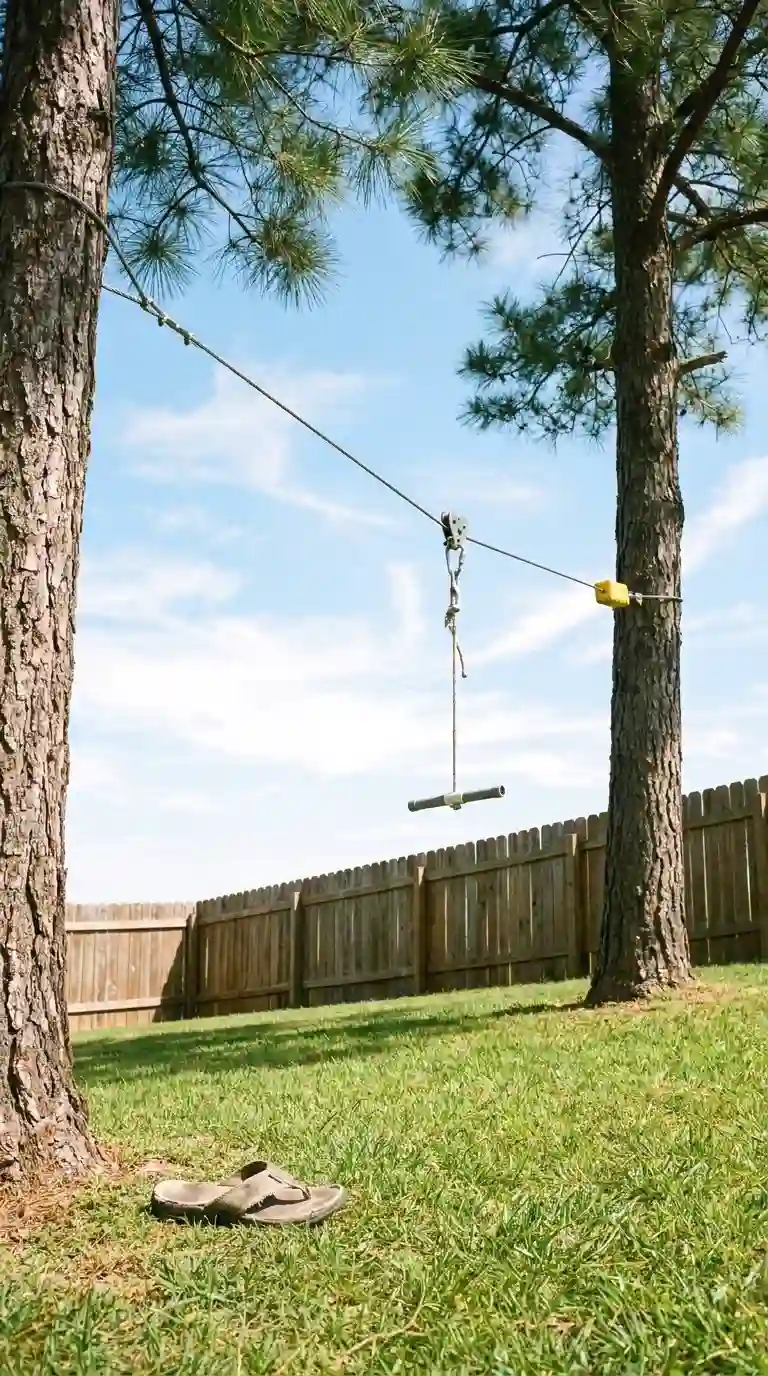
A short zipline between two trees or posts is the highest-reward structure on this list and totally buildable on a budget. You need a steel cable (3/16-inch galvanized, rated 1,200 lbs), two end anchors, a trolley pulley, and a handle made from rope or PVC pipe.
Set the cable at a 3 to 5 percent downhill angle so the rider glides naturally and slows toward the end. A 30-foot run with all hardware runs $130 to $180. Add a stop block or bungee at the far end to absorb arrival. Keep the start height at 5 feet or less for safe launch and landing.
Once the zipline is in place, adding some outdoor lighting that extends play time into the evening makes the whole setup feel much more complete.
Final Thoughts on DIY Play Structures for Kids
You’ve got 21 real builds here, from a $15 sprinkler arch to a proper backyard zipline. What ties them together is this: every one of them can be done by a regular person with a Saturday, a few basic tools, and a budget that doesn’t require a second mortgage. The builds that take a full weekend (like the platform fort or raised playhouse) give the most lasting use. The quick ones like the balance beam and knotted rope add daily play in under an afternoon.
Pick one thing and start this weekend. Not the full list. Just one. If your kids are under 6, start with the sandbox or balance beam. If they’re older, the zipline or cargo net climber will be the first thing they run to every time they’re outside.
If you want more ideas like these, homelypop.com has a lot more where this came from, from backyard builds to budget-friendly outdoor setups for every yard size.
There are also more yard and outdoor build ideas that cover everything from planting to hardscaping if you want to keep improving the space around your new play structures.