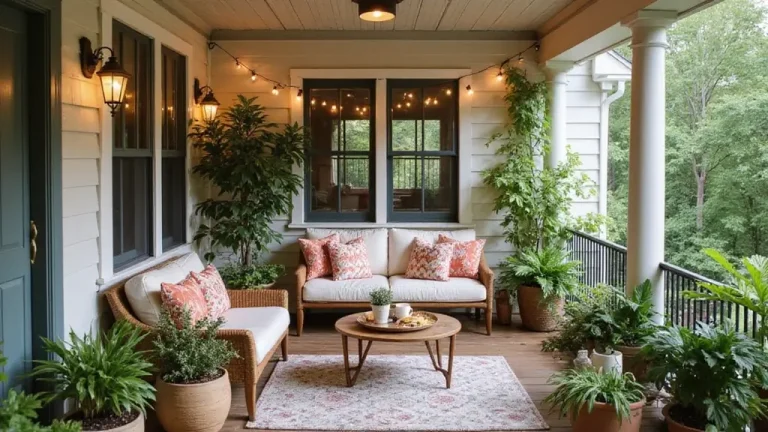

19 DIY Kids Outdoor Play Area Ideas You Can Build at Home

You don’t really notice how much potential your outdoor space has until you watch a kid turn an ordinary corner into something completely their own and if you’ve been thinking about turning your outdoor space into something real, this collection gives you a solid place to start. That’s usually the moment people start looking for kid’s outdoor play area ideas that actually work for real homes, not catalog setups, not perfect lawns. Just something that gets used.
It’s not about picture-perfect. It’s about building a space that invites movement, imagination, and just enough chaos to keep things interesting.
This collection covers 19 DIY kids outdoor play area ideas you can build at home. You’re not getting one fixed design or a strict process here. Instead, it’s a mixed bag of ideas showing what works, what keeps kids coming back, and how simple setups can feel surprisingly engaging. Some lean playful, others are more carefully thought out in how they’re put together. But all of them are meant to help you see your space a little differently and actually do something with it.
How to Turn Your Backyard Into a Fun Kids Adventure Zone Fast
- Pick one small zone in your yard, even just a corner, and define it as the play area using mats, grass patches, or sand so it feels like a dedicated space rather than just part of the yard.
- Build one simple feature first like a tire swing, sandbox, or water table using cheap or recycled materials instead of trying to do everything at once.
- Use what you already have at home, old tires, wooden pallets, ropes, and buckets, and repurpose them into climbing, balancing, or digging activities.
- Create 2 to 3 activity stations like a mud kitchen, an obstacle path, and a drawing wall so kids can rotate instead of getting bored quickly.
- Make it safe fast by checking for sharp edges, securing anything that can tip over, and adding soft ground like sand, grass, or foam mats underneath the spots where kids play most.
1. DIY Mud Kitchen Setup
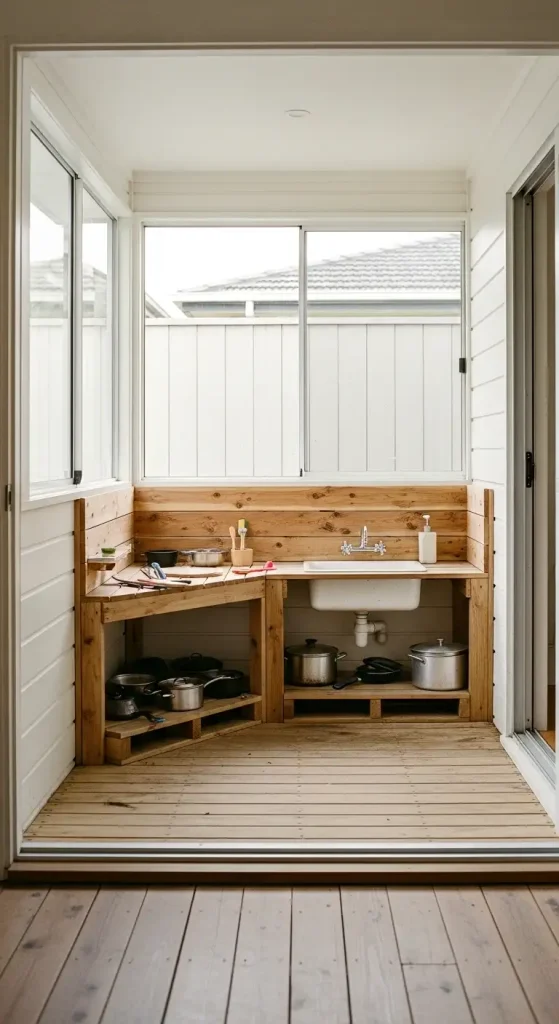
Honestly, a mud kitchen might be the best thing I’ve ever added to our yard. Grab some old pots, pans, a beat-up sink, and a few pallets from the curb or a thrift store, then set it up in a corner of your yard. Real homeowners say their kids use these daily, and I completely believe it.
The whole setup runs under $50 if you scavenge most of the pieces. You get hours of imaginative, sensory play without buying a single fancy toy. Cleanup is just a hose down. So underrated.
2. You Need Shade First
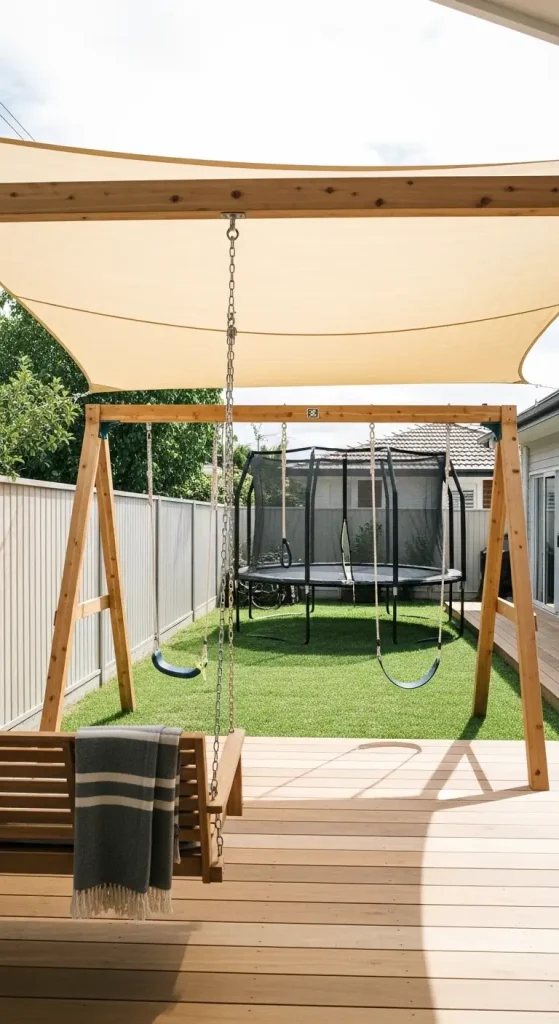
Here’s what nobody tells you when planning a backyard for kids: skipping shade is the mistake you’ll regret most. I’ve seen it happen. The swing set sits empty all afternoon because it’s just too hot out there. Add a canopy, a sail shade, or plant a fast-growing tree like a “Perfect Purple” privacy tree for natural cover.
Homeowners found that once shade hit, their trampolines and swing sets actually got used all day. It keeps play safe from UV rays and makes the whole space feel welcoming even at peak sun hours.
More Ideas:

3. Loose Parts Play Revolution

And honestly, this one changed everything for us. Pine cones, rocks, sticks, shells, logs, boulders. Free or nearly free, and kids treat them like building blocks for obstacle courses, forts, and balancing challenges year-round. Real parents were genuinely surprised how much creative mileage these simple finds delivered compared to expensive fixed equipment.
Just pile them in a dedicated corner of the yard. No rules, no instructions. All imagination. If the pile starts taking over, these ideas on keeping loose materials tidy and accessible will help you contain it without killing the fun. That’s it.
4. Rubber Mulch for Safe Surfacing
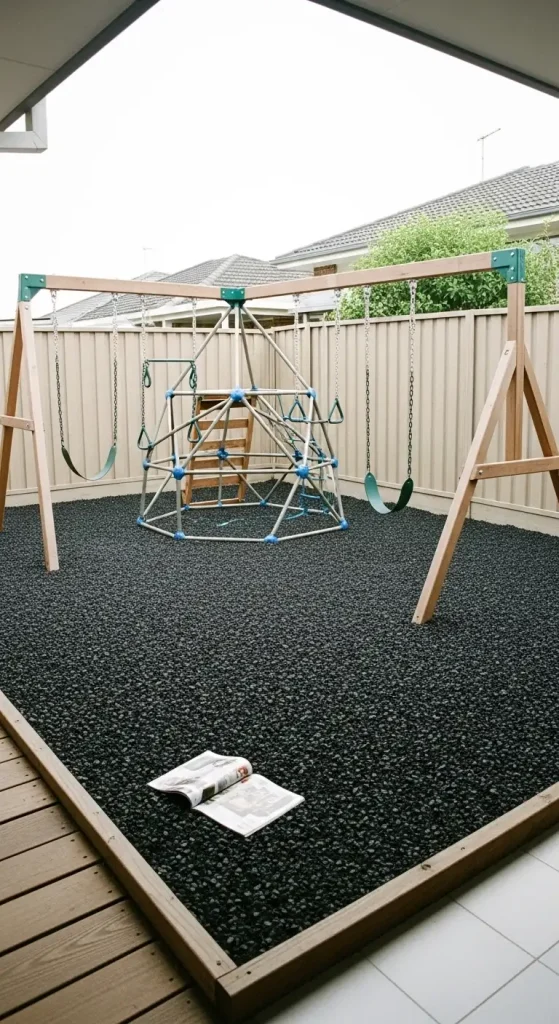
Rubber mulch was one of those things I didn’t think would matter much. I was wrong. Put down a 3-foot safety border around your play equipment and it actually stays put, no staining feet, no tracking inside. Homeowners raved that it lasted years while grass died fast under heavy use.
Pair it with paver paths for smooth transitions from your deck to the play zone. No ugly gaps, no tripping hazards. It just works, and once it’s down you basically forget about it.
5. Water Table Sensory Station
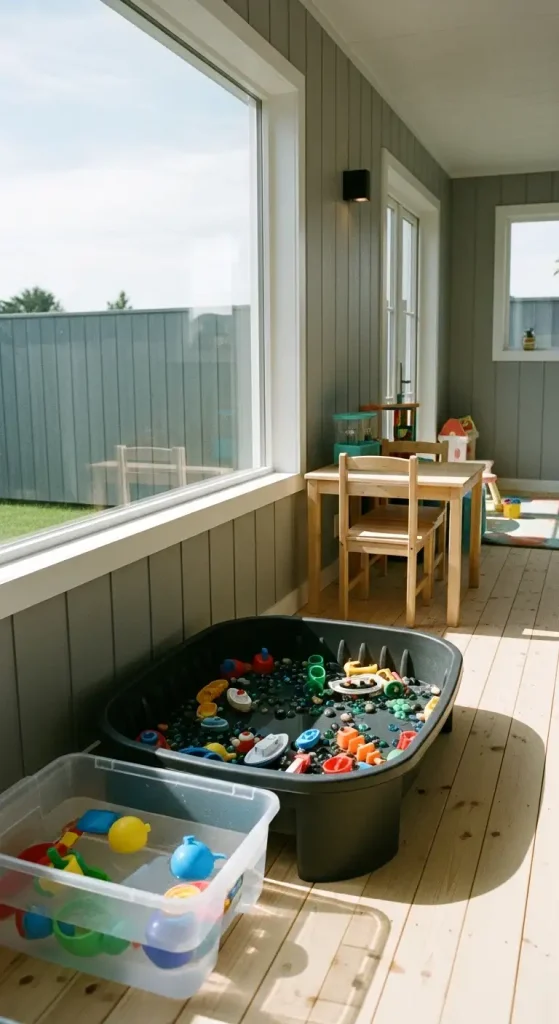
A large Rubbermaid bin is genuinely the best water table you can get. Fill it with toy boats, waterwheels, colored ice cubes, glass pebbles, bubbles, or little animals and watch kids get completely absorbed in it. The scooping and pouring keeps them busy for way longer than you’d expect. You can refresh the theme daily, which means it stays interesting.
The whole thing costs next to nothing beyond the bin itself. Calm, focused, sensory play on warm days without spending much at all. If you have younger kids in the mix, here are some sensory play setups little ones gravitate toward that pair really well with a water station like this.
6. Balance Beam Fun on a Dime
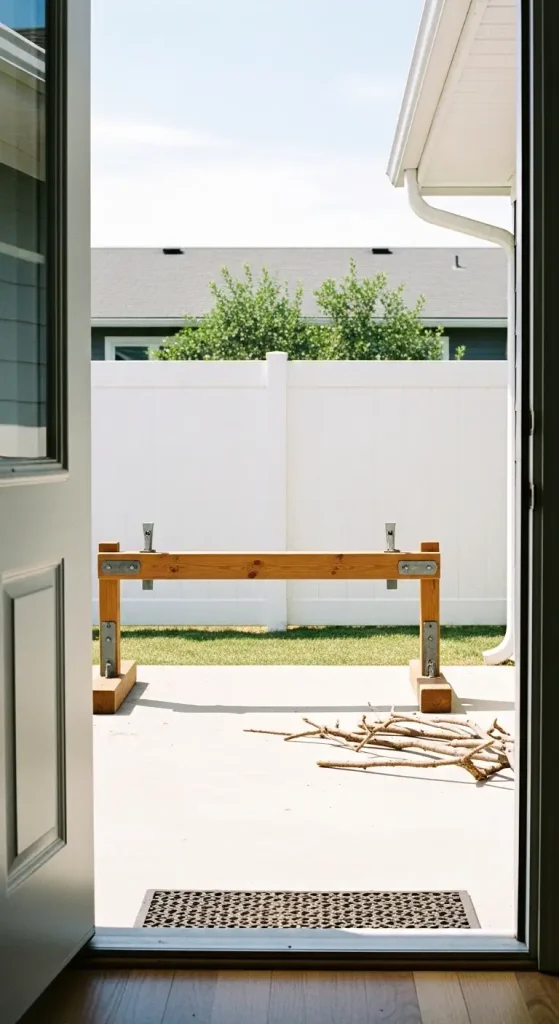
I know this sounds too simple, but a 6-foot DIY wooden balance beam really delivers. Grab cheap wood from the hardware store, build it out, and mount doorstops halfway across for extra flicking games that actually help with fine motor skills.
Kids love the challenge of it. Parents found it adds real variety without eating up much space, which makes it perfect for narrow yards, think 11 ft x 30 ft townhouse spots. Big fun, small footprint.
More Ideas:
7. All-in-One Activity Hubs
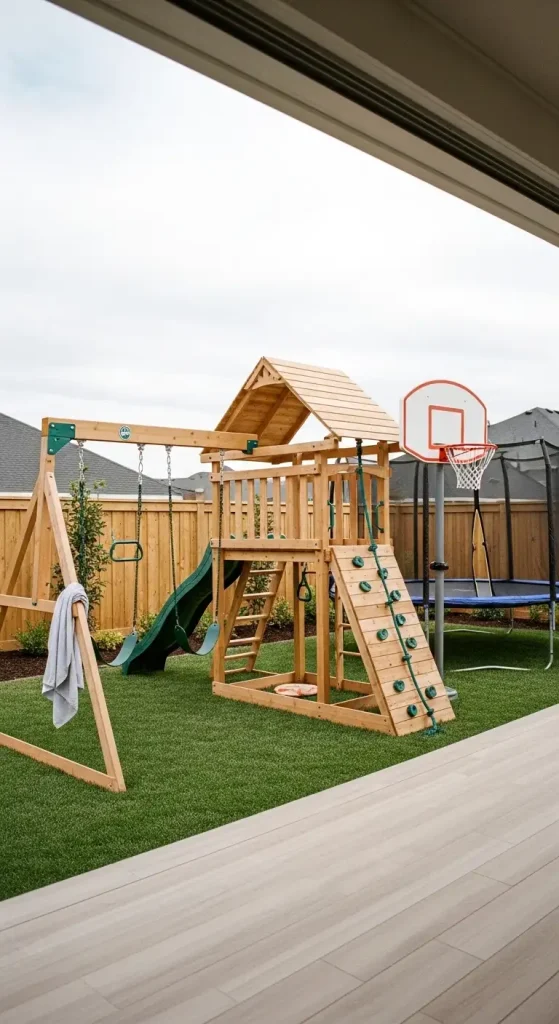
So here’s the thing with all-in-one hubs. They’re genuinely worth looking into right now. The best setups pair swings, slides, and climbing walls with trampolines, ziplines, or basketball goals all in one structure. Add shade canopies or fast-growing trees for hot climates and the whole thing actually gets used. What I really like is that modular sets adapt as kids grow. You add or remove parts without replacing everything.
Real setups blend into landscaping with cedar finishes and rock walls, so it looks like it belongs there rather than just dropped in the yard. For ideas on how to tie the whole thing together visually, these deck designs that connect to backyard play zones show how the transition from house to yard can actually look intentional.
What I’ve Learned About Creating a Kids Outdoor Play Area
If I’m being real with you, creating a kids outdoor play area isn’t about building something Pinterest-perfect. It’s about creating a space your kids actually use every single day without you constantly telling them to “go play outside.” One thing that helps with that is giving your play zone a defined boundary, it makes the space feel purposeful and keeps kids naturally drawn to it. That shift took me a while to figure out.
When I first started putting together outdoor setups, I focused way too much on how things looked. Clean designs, matching colors, all that. But kids don’t care about any of that. They care about movement, imagination, and freedom. Once I leaned into that, everything changed.
Focus on Variety, Not Just One Big Setup
Here’s what I’ve learned after years of testing different kids outdoor play area ideas at home.
Variety always beats complexity. You don’t need one big complicated structure. You need multiple small zones that each do one thing well. Think in terms of:
- A climbing area
- A messy play zone like water, sand, or mud
- A quiet corner
- Something that moves like swings or a zipline
When you give kids options, they naturally rotate between them, which keeps them engaged way longer than a single main attraction.
Don’t Overbuild. Simple Wins Every Time.
This is a mistake I made early on. I’d spend days building something elaborate, only to realize my kids preferred the simplest setup right next to it.
A basic mud kitchen or a few wooden planks for balancing can outperform expensive structures if you place them right and make them easy to use. And use what you already have. Old tires, wooden pallets, leftover planks, even buckets and ropes can turn into some of the best play features. Some of the most used setups I’ve ever created cost almost nothing.
Think About Flow and Accessibility
Another thing most people overlook is flow. You want the space to feel easy to move through.
If kids have to stop, think, or ask for help to use something, they’ll lose interest fast. Keep everything within reach, visible, and easy to figure out so they can move freely from one activity to another without getting stuck.
Use “Invitations to Play”
One trick I always use is setting up what I call “invitations to play.”
Instead of just placing equipment, I stage it slightly. I might leave a few toy trucks near the sand area or hang a rope with a bucket near a climbing frame. It quietly shows kids what they can do without you having to explain anything. Sounds small. It really isn’t.
Build Something They Won’t Outgrow Quickly
Build for growth. That’s the big one.
Don’t make everything age-specific. If your setup only works for your child’s current age, you’ll be rebuilding it in two years. Create layers instead. A simple climbing frame can get more challenging over time if you add small upgrades or new elements as they grow.
Accept the Mess. It Means It’s Working.
Accept that it’s going to get messy. Dirt, water, scattered toys. That’s a sign your kids are actually using the space. That’s the whole point.
The goal isn’t a perfect backyard. It’s a space your kids feel excited to run to every single day. Focus on fun over perfection, movement over design, and flexibility over structure, and you’ll end up with something that actually becomes part of their daily life instead of something they ignore after a week.
8. Thrift Store Treasures
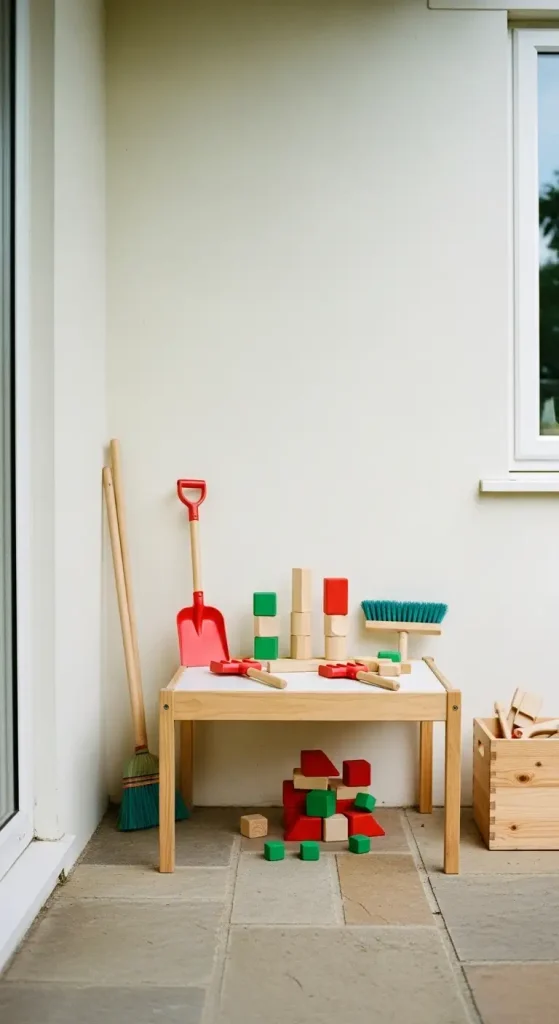
Thrift stores are seriously underused for this stuff. Block sets are around $14, small tables for $6, and you’re already set up well. Then grab child-sized tools like shovels, brooms, and watering cans and hand them over. Kids get genuinely excited to maintain their own space, watering plants they actually picked out or sweeping paths they use.
One mom said her kids eagerly care for hardy plants and love having real tools more than she ever expected. That sense of responsibility does something for them. It’s real, and it shows.
9. Homemade Water Wall Magic

Old frames, hoses, funnels, and buckets. That’s really all this takes. Mount a recycled water wall against a fence or deck and you’ve got something that delivers 4-plus years of sensory play and actual learning. Parents were genuinely blown away by how much engagement simple flowing water creates compared to store-bought toys.
And honestly, kids come back to it again and again. It costs almost nothing to build, holds up well, and does more for focused outdoor play than most things twice the price.
10. Paver Paths for Smooth Flow

Adding paver paths from the deck to the play area is one of those changes that sounds minor but fixes a lot at once. Awkward grade drops, drainage issues, ugly mulch edges, it all gets sorted. And honestly, it just looks way nicer. It does add a bit to the budget, I won’t pretend otherwise.
But homeowners say it’s worth it every time, no more pooling water after rain, no more rough transitions that trip kids up. Safety and looks, both improved. That combination is hard to argue with.
11. Cedar Wood Playsets That Blend In

Cedar playsets are having a real moment heading into 2025 and 2026, and I get why. Decay-resistant cedar with no chemical treatments, paired with rock walls, rope bridges, and log accents, creates something that actually looks like it belongs in your yard. Homeowners love that these sets blend into landscaping instead of sticking out.
Add as new line Final text: “If that integrated look is what you’re going for, this is a great resource on landscaping that makes play areas blend right in without a major overhaul. Pick one with solar lights or a built-in picnic table and you’ve got something that works morning through evening. Classic material, smart design.
12. Budget-Friendly DIY Total Makeover
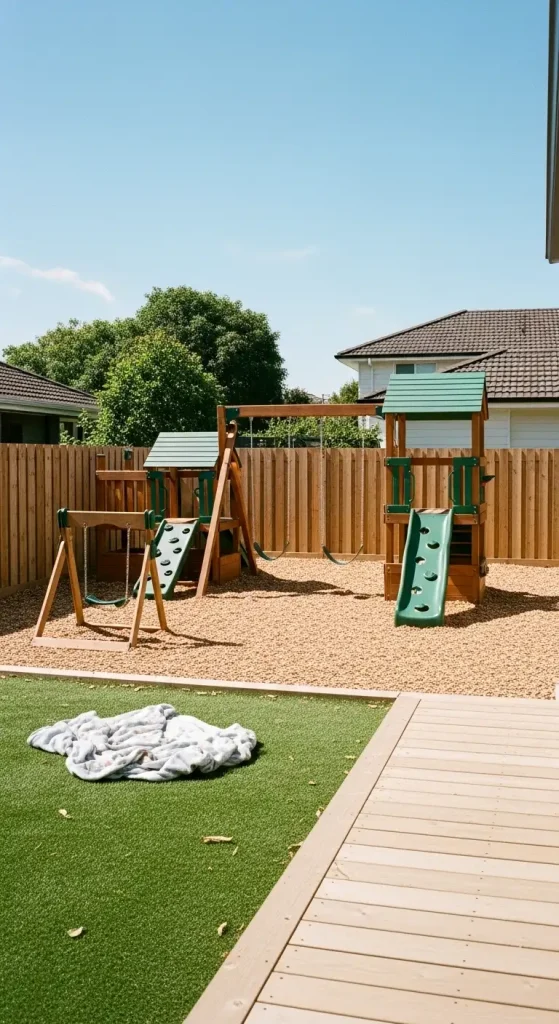
I was skeptical about this one. A full DIY playground for around $3,200 including turf sounds too good compared to the $14,000-plus quotes professionals throw at you. But real families are pulling it off. Start small with thrift finds and build up piece by piece.
The savings end up being big enough that people add shade, rubber mulch, and paver paths without stressing over the budget. It’s doable. Worth trying before you call anyone.
More Ideas:
13. Tire Swing Upgrade

Here’s a classic that’s even better horizontal. Mount an old tire flat instead of vertical and you get easier spinning plus room for more than one kid at a time. Auto shops usually give tires away for free, so the main cost is strong rope and a bit of time.
It takes up almost no space, which makes it great for narrow yards, think 80 ft x 20 ft sections. Hang it from an existing tree or sturdy beam and you’re done. Simple upgrade, big payoff.
14. Zipline for Big Thrills

Ziplines keep showing up in backyard setups and it’s easy to see why. They add real adventure without needing a huge footprint. Pair one with a swing set or climbing wall and suddenly the whole structure gets way more use. Parents report kids lining up for turns all afternoon, which is exactly what you want.
While you’re upgrading, here are some other outdoor upgrades that make the backyard feel complete once the play zone is sorted. Land it on rubber mulch to keep the stopping point safe. That part matters more than people think.
15. Play Gardens in Planters
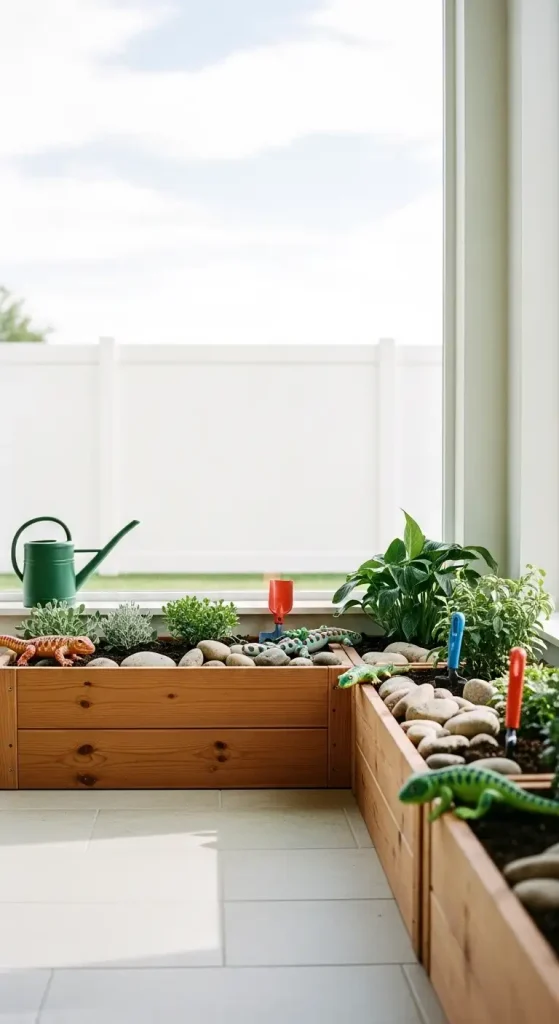
Large planters work really well as mini play gardens, and this one surprised me. Fill them with rocks, toy lizards, small tools, and hardy plants kids actually pick out themselves. They water and tend everything with real child-sized watering cans.
But here’s the part nobody expects: kids get completely absorbed in what I’d call “scientific dirt exploration.” Bugs, magnifying glasses, digging around. It turns into something way bigger than a planter.
16. In-Ground or Netted Trampolines
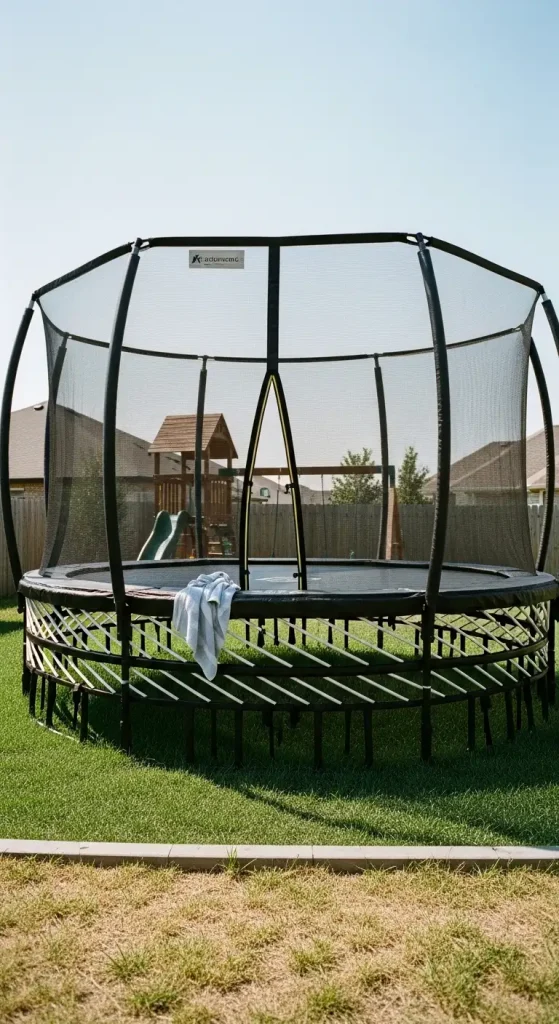
Trampolines with proper enclosure nets or in-ground installs are trending hard right now, and honestly they deserve the attention. They fit into all-in-one hubs without looking out of place and give kids serious bounce without the fall risk of older basic models. Homeowners say these feel more permanent and hold up longer too.
Worth the upgrade if you’re already putting a trampoline in the yard. And if you’re watching the budget while pulling all of this together, these budget-friendly ways to finish the outdoor setup keep costs manageable without cutting corners.
17. Pedal Go-Karts as Add-Ons

Pedal go-karts are showing up more and more as compact add-ons, and they make a lot of sense. They’re small enough for most yards, great for coordination practice, and kids just love racing around open lawn space. The real win here is what parents noticed: when the main playset starts feeling old, the go-kart gets picked up daily.
It extends the life of the whole outdoor setup without adding much space or cost. Smart add-on that doesn’t get enough credit.
18. Inclusive Ground-Level Features
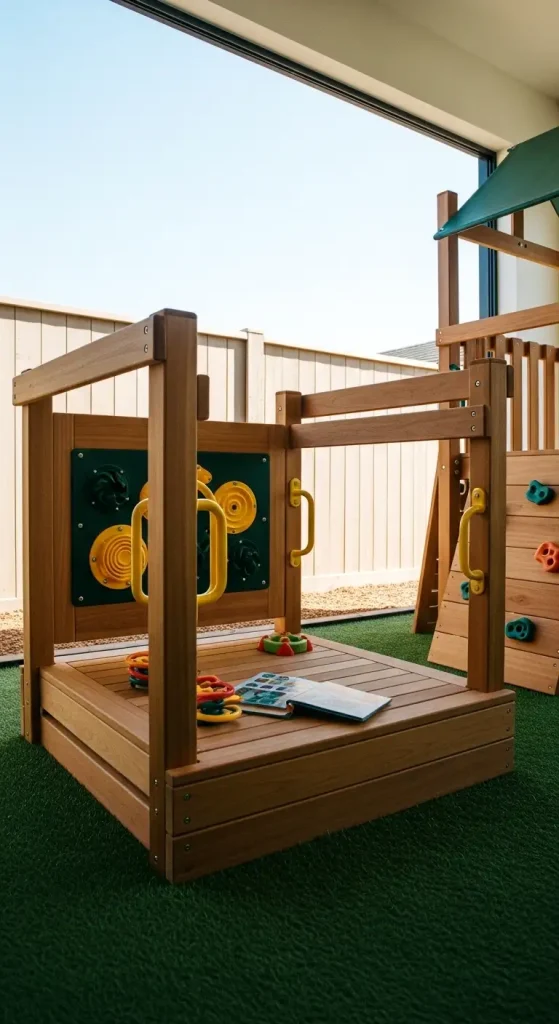
And this one matters more than people give it credit for. Sensory panels, wider platforms, low climbing walls, these ground-level features mean every kid can actually join in, no matter their age or ability. It makes the space genuinely welcoming for siblings or friends with different needs rather than leaving anyone on the sidelines.
Real setups add easy-access sand or water play too. A good backyard works for everyone who shows up. That’s the whole point.
19. Eco-Friendly Material Choices
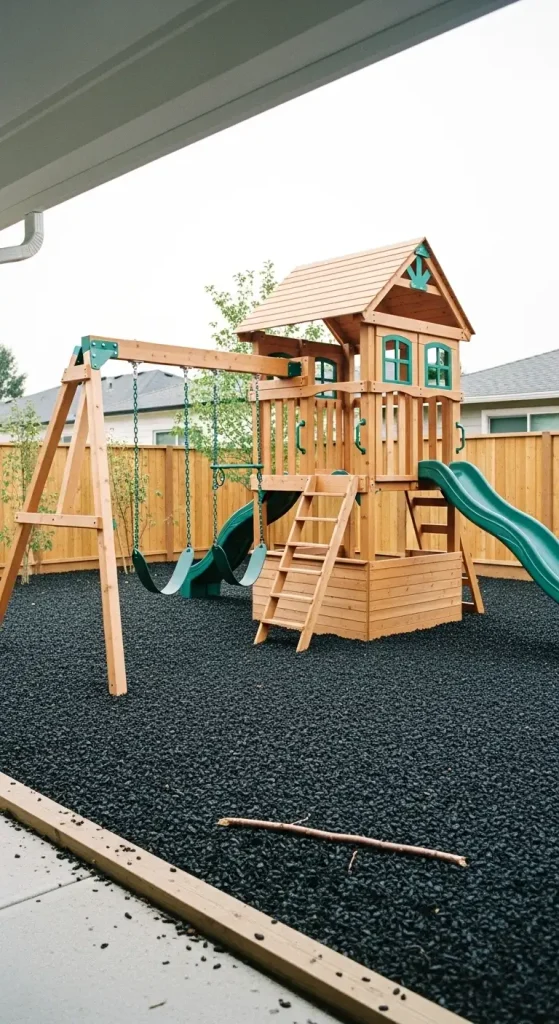
Sustainable picks are worth it, and not just for the planet. Renewable cedar resists bugs and rot naturally, which means less maintenance over time. Recycled rubber mulch doesn’t stain feet or track inside, and non-toxic finishes keep the whole space safe for kids who touch everything.
Homeowners noticed both the practical side and the peace of mind that comes with it. Better materials, fewer headaches long-term. That’s a pretty straightforward case for going eco-friendly from the start. Once the play area is sorted, there are plenty of other affordable backyard projects worth exploring that follow the same smart-spending approach.