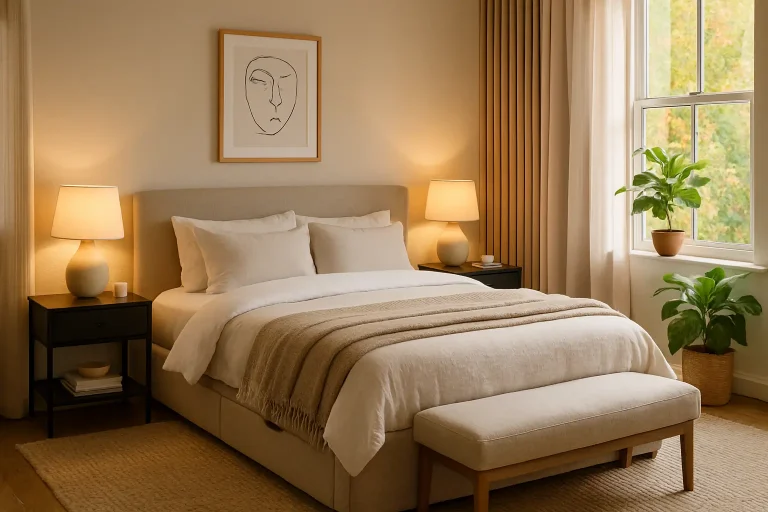

21 Men’s Decorating Ideas for a Space That’s Bold, Stylish, and Uniquely Yours

Your place looks fine. But fine isn’t what you actually want. You’ve got furniture that sort of matches, walls that are blank, and a room that feels like it belongs to nobody in particular. That’s the problem. It doesn’t feel like you yet.
This list covers 21 men’s decorating ideas pulled from real rooms, real budgets, and real feedback from guys who figured this out the hard way. Each idea was picked because it works in apartments, rentals, and owned homes alike, costs somewhere between $30 and $300, and doesn’t require a contractor or a designer. Some are quick weekend fixes. Some take a little more thought.
This is for guys working with $100 to $300 who want results that actually look intentional. It’s not for people redoing an entire floor plan or starting from scratch with a blank check. If you’ve got $30 and a free Saturday afternoon, most of these are achievable.
By the end, you’ll know exactly which changes will make the biggest difference in your space and where to start first.
If you’re starting from scratch in a new place, there’s a solid collection of real budget apartment decorating wins worth browsing before you buy anything.
What to Know Before You Start Men’s Decorating Ideas
- Most decorating mistakes come from buying furniture before choosing a color direction.
- Stick to two or three main colors max. More than that and the room starts reading as messy.
- Budget reality: a good rug, the single item that ties a room together most, runs $80 to $200 for the right size.
- Lighting is the most overlooked part of a room. Bad overhead lighting kills the mood no matter what else you do.
- Common mistake: hanging art too high. Eye level means center of the piece at 57 to 60 inches from the floor.
- If you rent, removable products now hold real weight without wall damage. 3M strips hold up to 16 lbs per set.
- Furniture that does two jobs (storage bench, bed with drawers) lasts longer and works harder in smaller rooms.
- Dark walls actually make smaller rooms feel more grounded, not more cramped, when done with the right lighting.
1. Anchor the Room With a Dark Accent Wall
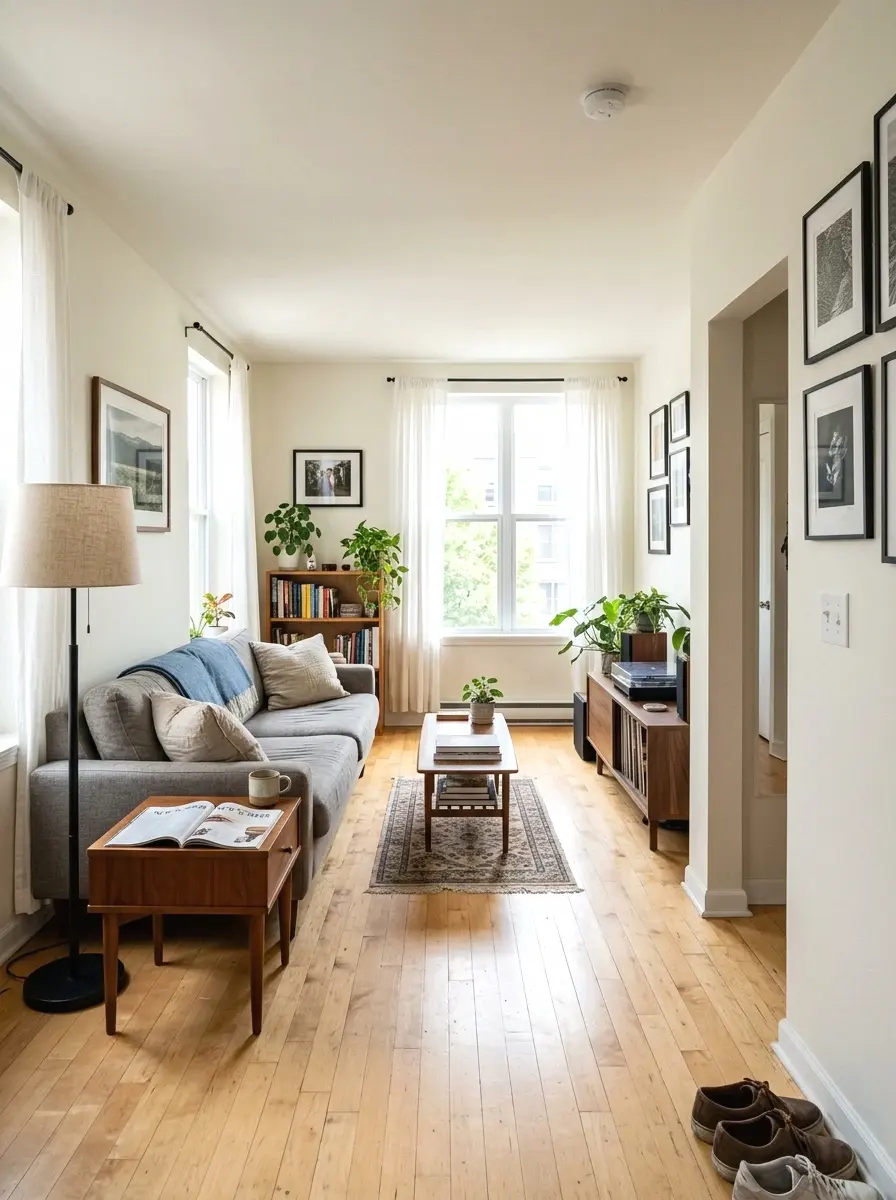
The single biggest change you can make in a room without touching a single piece of furniture is painting one wall dark. I’m talking deep navy, charcoal, forest green, or near-black. Pick the wall your sofa or bed faces and go for it.
If you’re unsure which direction to take, there’s a helpful breakdown on how to transform a room with wall color that covers both dark and light options.
When I tried this in my own space with a dark green called Jasper by Farrow and Ball (or the Behr match at $45 for a gallon), the whole room snapped into focus. It gave everything a backdrop. The furniture looked more intentional. The art stood out. And the room felt like it belonged to someone with a point of view.
2. Swap Every Light Bulb to Warm White
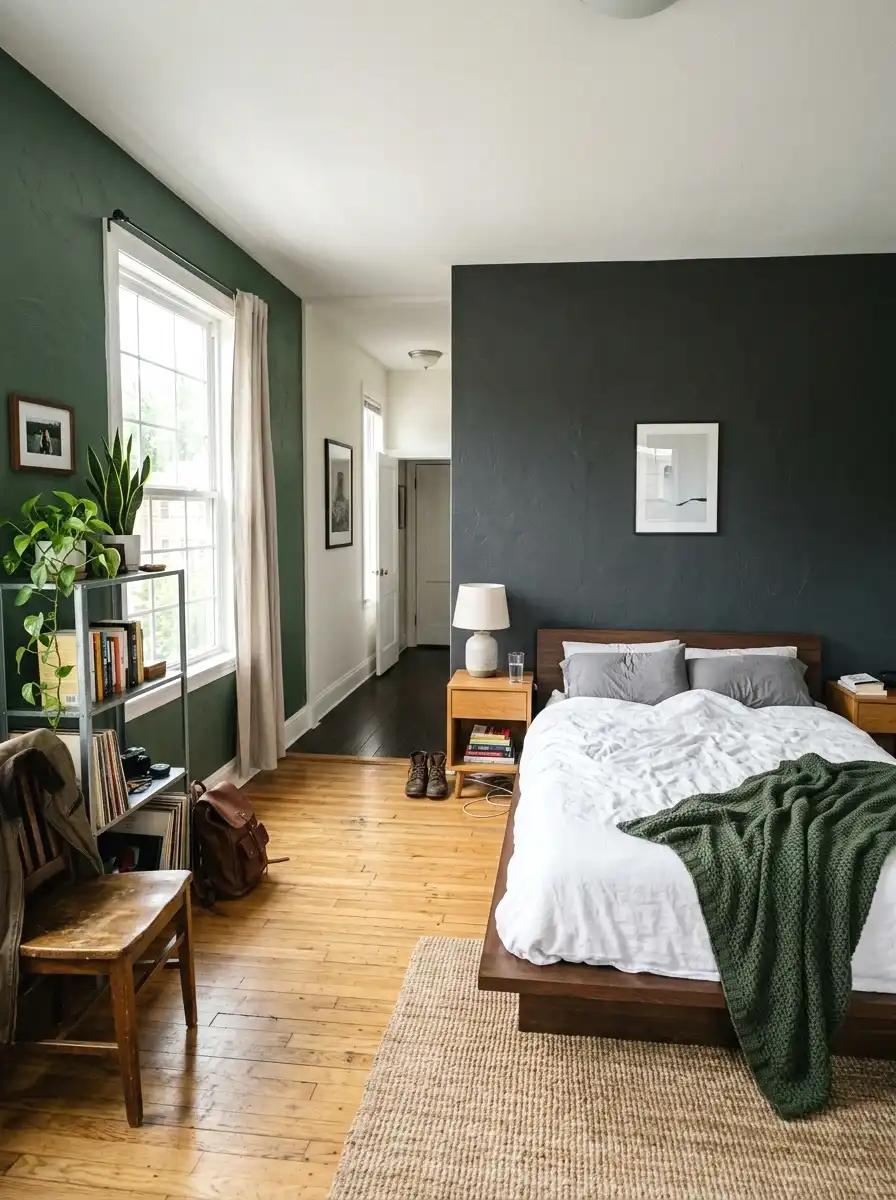
Here’s a change that costs about $15 and fixes something most guys don’t even realize is the problem. Cool white or daylight bulbs make a room feel like a waiting room. Warm white bulbs, specifically 2700K, make a room feel lived-in and settled.
Replace every bulb in the main living space at once. Don’t mix color temperatures in the same room. The shift is immediate and kind of embarrassing once you see it because you’ll wonder why you didn’t do it sooner. Philips Warm Glow LED 4-packs run about $12 at any hardware store.
More Ideas:

3. Add a Large Rug That Actually Fits the Space

So here’s the thing most people get wrong: they buy a rug that’s too small. In a living room, the front legs of every major piece of furniture should sit on the rug. That usually means you need at least an 8×10 or a 9×12. A rug that floats in the middle of the room with no furniture touching it looks like a bath mat.
A solid-colored or low-pattern rug in charcoal, cream, or dark olive works in almost any room. IKEA’s STOENSE or LOHALS rugs hit that size for $80 to $150. Ruggable makes washable versions if spills are a real concern in your house.
4. Use a Gallery Wall With Intentional Spacing
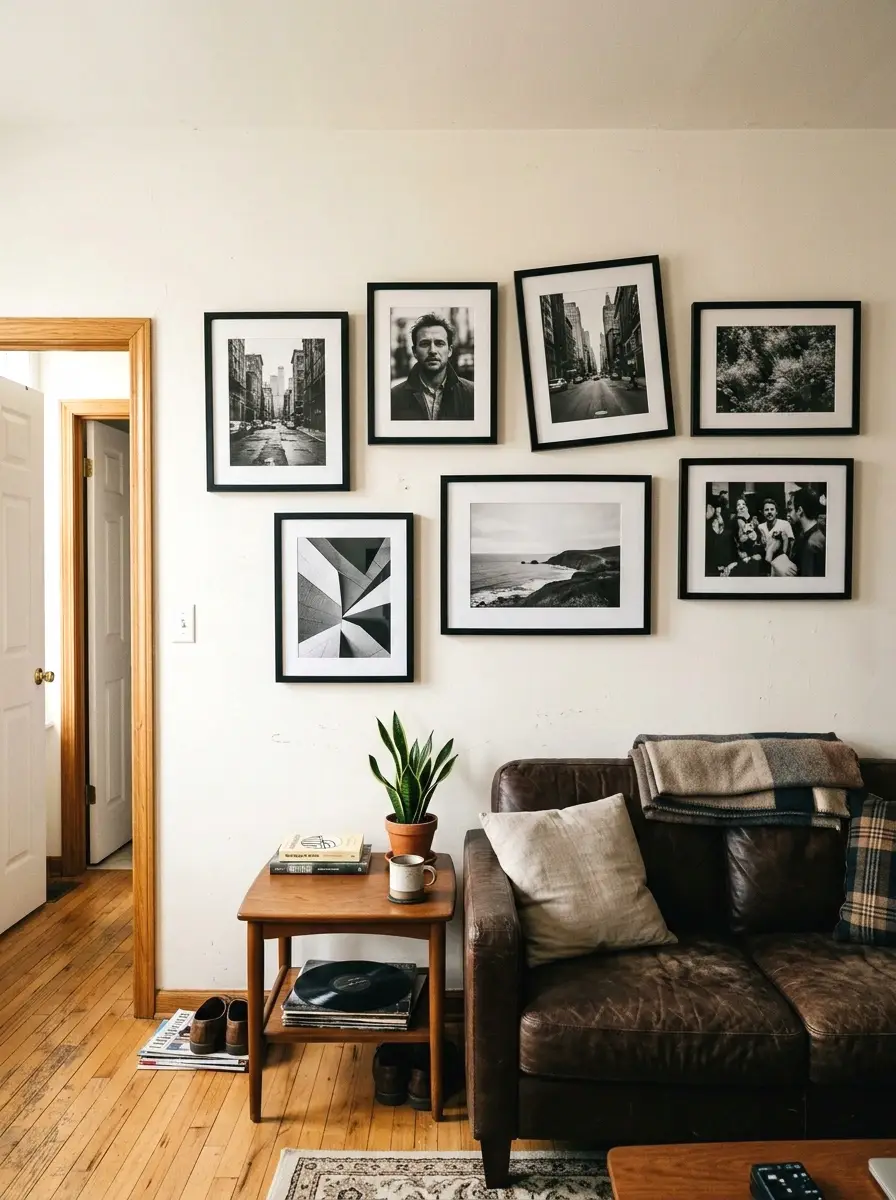
The gallery wall is not played out. It’s just been done badly too many times. The key is keeping 2 to 3 inches between every frame and sticking to one frame finish (all black, all natural wood, all brass) so it reads as a set rather than a collection of random things.
Print black and white photography, architectural sketches, maps, or sports art at places like Framebridge or even Walgreens. You can build a 6 to 8 piece gallery wall for $80 to $150 total if you keep the frames simple. Plan the whole layout on the floor first, photograph it, then hang.
5. Bring In One Statement Chair
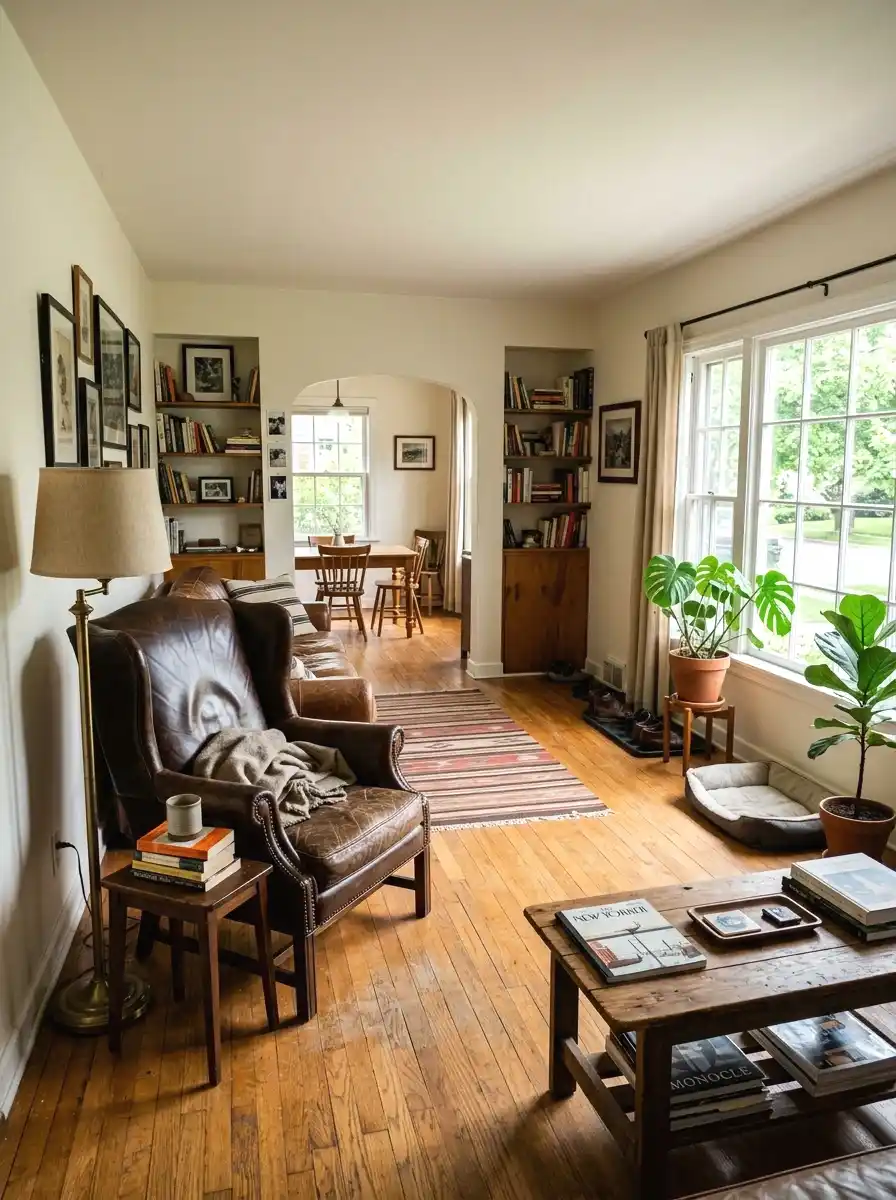
You probably have a sofa. What you might not have is a chair that says something on its own. A leather accent chair, a boucle armchair, a canvas camp-style chair in a corner with a floor lamp next to it reads as intentional. It gives the room a second focal point.
This doesn’t have to cost a lot. Facebook Marketplace and Craigslist regularly have good leather or fabric accent chairs for $40 to $100. Reupholstering a solid thrift find costs $150 to $250. A new accent chair from Article or CB2 runs $200 to $350. Worth it if it’s the right piece because it changes the whole layout of a room.
6. Hang Curtains From Ceiling to Floor
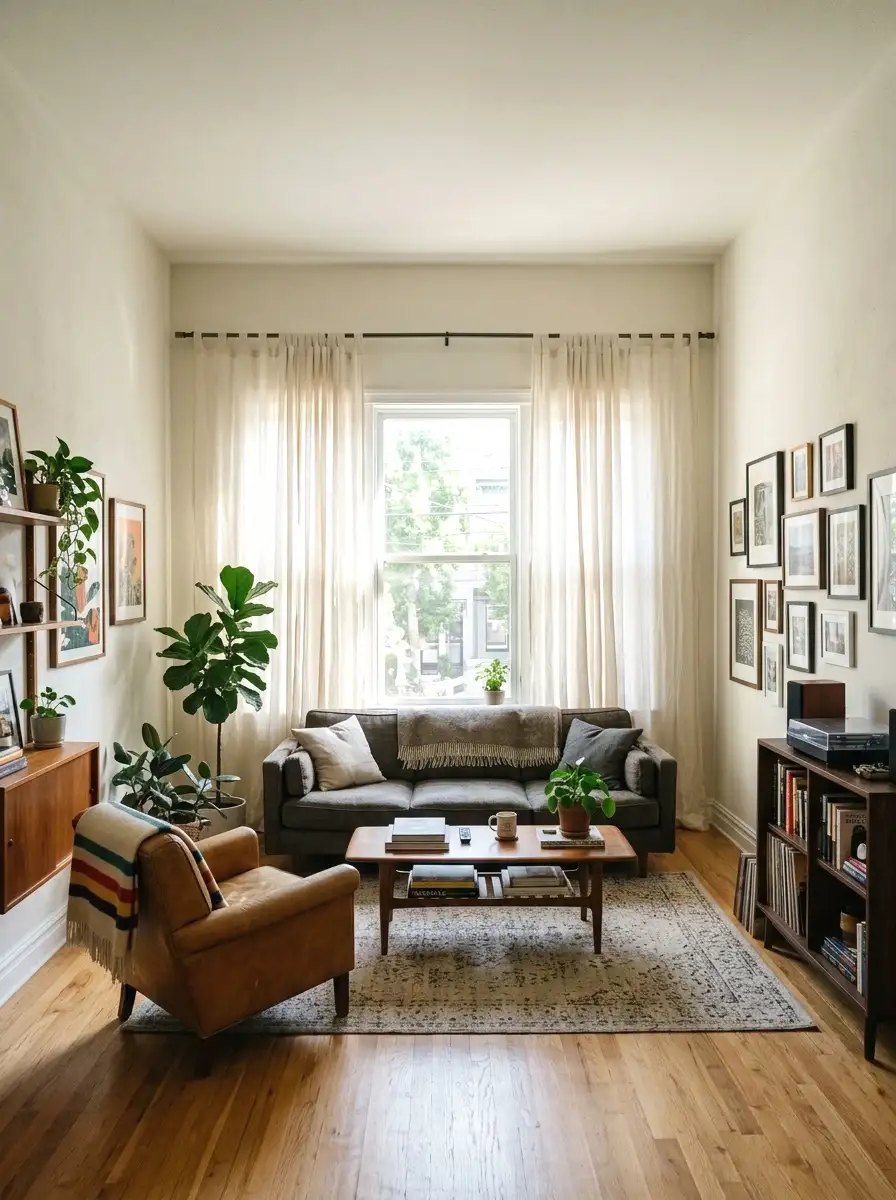
Most guys hang curtains wrong. They put them just above the window frame, which makes the window look short and the ceiling look low. Hang the rod as close to the ceiling as you can get it and let the curtains drop all the way to the floor. The room immediately feels taller and more considered.
Linen-look curtains in off-white, dark grey, or olive work in almost any space. IKEA DYTAG or Amazon Basics Linen-Look panels cost $30 to $60 for a pair. Use a curtain rod that extends beyond the window frame on each side (4 to 6 inches per side) so the panels frame the window instead of covering it.
More Ideas:
7. Get a Floor Lamp With a Warm Shade

Overhead lighting is functional. Floor lamps are what make a room feel like someone actually lives there. (this one is so underrated) A good floor lamp in the corner behind a reading chair or next to a sofa creates a pool of warm light that’s completely different from the flat wash of a ceiling fixture.
Arc floor lamps are having a big moment right now and for good reason. They create a curve of light over a seating area without taking up surface space. The TaoTronics arc lamp and several similar versions on Amazon run $60 to $100. Pair it with a warm white 2700K bulb (see idea 2) and the difference is immediate.
8. Add Open Shelving With Real Objects

Floating shelves look clean, hold a lot, and let you show the things that actually tell a story about who you are. Sports memorabilia, a handful of books, a plant, a bottle of whiskey, and a framed photo all work on the same shelf when there’s enough breathing room between them.
The rule is: don’t fill every inch. Leave 30 to 40 percent of the shelf empty. That open space is what makes the things you do display look picked, not hoarded. IKEA LACK shelves are $15 each. Floating bracket shelves in black iron from Amazon run $20 to $30 for a set and hold up to 50 lbs.
For more examples of open shelf styling with breathing room, it helps to see how others have spaced things out in practice.
9. Try a Vintage or Industrial Desk Setup

A dedicated workspace matters even if you only use it for an hour a day. And a desk setup done right is one of the most photo-worthy areas in an apartment. Go for a raw wood or butcher block top with black or dark metal legs. Add a small monitor arm, a single plant, and a good desk lamp.
For ideas on styling a corner reading setup or work area that still feels like a living space, this is worth a look.
IKEA ALEX drawers paired with a solid wood countertop is the move a lot of guys swear by. Total cost is around $150 to $220. Or pick up a vintage drafting desk or industrial steel-leg table from a thrift shop or Facebook Marketplace for $50 to $100. Cable management from Amazon clips onto the desk and hides the cords for another $10.
10. Layer Your Bedding in Two or Three Textures
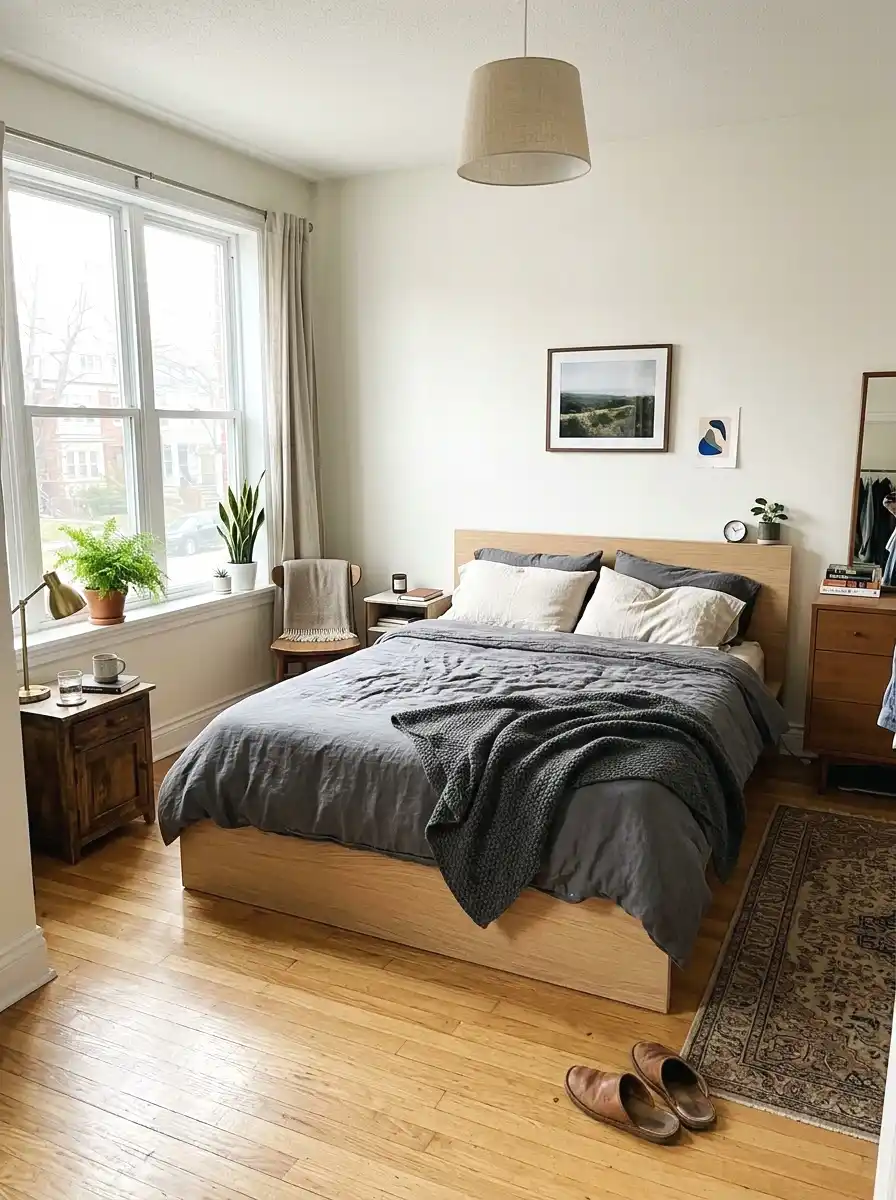
A bed that looks like it was made once and never thought about again is a missed opportunity. The fix is easy: two pillows in a solid pillowcase, two pillows in a different texture or pattern, a duvet in one base color, and a throw blanket folded at the foot. That’s four layers. It’s enough.
There’s a great set of examples on layering textures on a bed that shows exactly how the stacking works in real rooms.
The textures don’t have to match perfectly. Linen and cotton work together. A chunky knit throw over a smooth duvet works. Charcoal, navy, and off-white are the easiest neutrals to build around. You can put together this whole setup for $60 to $120 if you shop IKEA, H&M Home, or Amazon.
More Ideas:
11. Mount Your TV Instead of Using a Stand

A TV stand takes up floor space and usually looks like it came with the apartment. Mounting the TV to the wall (or on a full-motion wall mount) frees up the floor, lets you run cables inside the wall or through a cable raceway, and just looks cleaner.
A full-motion mount from Amazon costs $25 to $50 and works with most screen sizes from 32 to 65 inches. If you rent and don’t want to put large holes in the wall, a TV console at a lower height with the TV sitting centered on it still looks far better than most generic media stands. The key is keeping the console proportional to the screen size.
12. Use a Pegboard for Functional Wall Storage

The pegboard has moved out of garages and into kitchens, offices, and living rooms because it works. You can hold tools, headphones, cables, plants, shelves, hooks, and organizers all on one wall-mounted board, and rearrange it whenever you want.
For a home office or entryway, a black pegboard from IKEA SKADIS or a raw plywood pegboard runs $25 to $60. Add hooks and small shelves from the same line. It’s practical, it looks intentional, and it turns a blank wall into something that earns its place. Seriously works.
13. Paint or Stain Old Furniture Instead of Replacing It
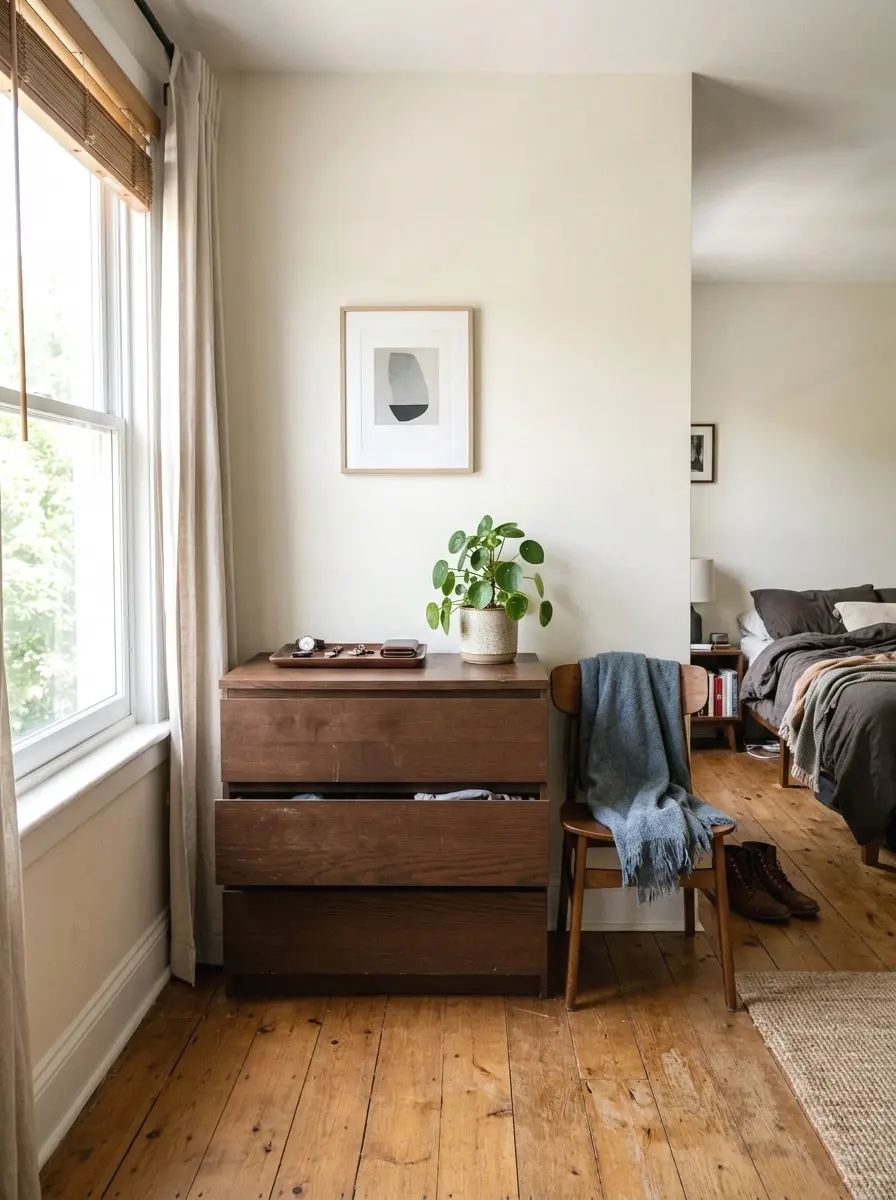
I was skeptical about this one but refinishing a dresser or coffee table you already own is often a better outcome than buying something new in the same price range. A can of spray paint in matte black, satin brass, or dark walnut stain runs $8 to $20.
Sand lightly, prime if you’re going over raw wood, and apply two thin coats. The results look clean and the piece gets a second life that feels like something you chose rather than something you settled for. IKEA HEMNES dressers in particular respond really well to this treatment because the wood takes stain evenly.
14. Add a Large Indoor Plant
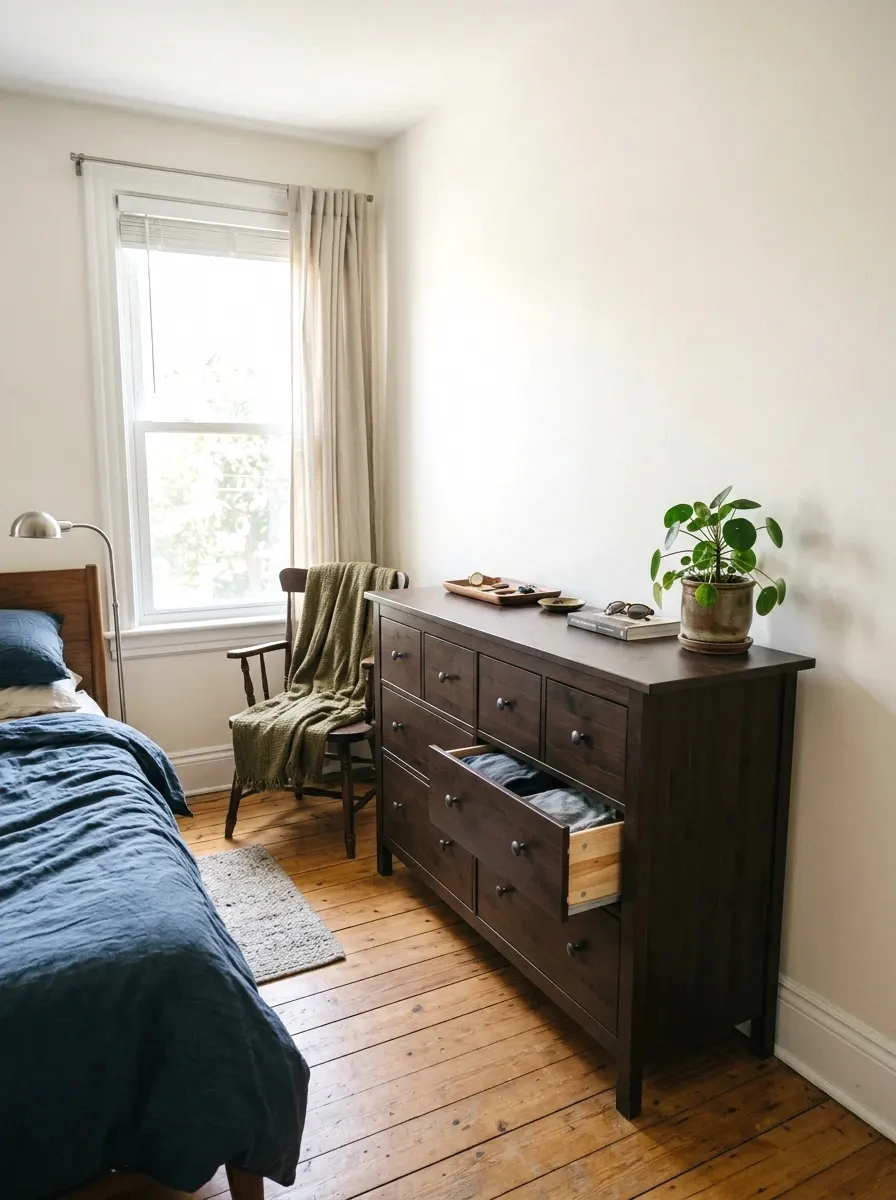
A plant does something no piece of furniture can: it signals that something is alive in the room. And it softens hard surfaces (wood, metal, concrete) with something organic. A large fiddle leaf fig, monstera, or snake plant in a good pot reads as a deliberate design choice, not an afterthought.
Snake plants are the right starting point if you travel or forget to water things. They handle low light, weeks without water, and still look sharp. A 3 to 4 foot snake plant from a local garden center or Home Depot runs $20 to $40. A ceramic or concrete pot adds $15 to $30. Total investment under $70.
More Ideas:
15. Install a Dimmer Switch

This is the most underrated $15 home upgrade that basically no one talks about. A standard dimmer switch replaces your existing light switch in about 15 minutes with a screwdriver. Once it’s in, you can drop the overhead light to 30 percent and the room completely changes character.
(took me ages to figure this out) Most LED bulbs are dimmer-compatible now, but check before you buy. Lutron Caséta or the basic Leviton decora dimmer work with most fixtures and run $12 to $25. If you rent, keep the original switch in a drawer and swap it back when you leave.
16. Frame and Display Something Unexpected
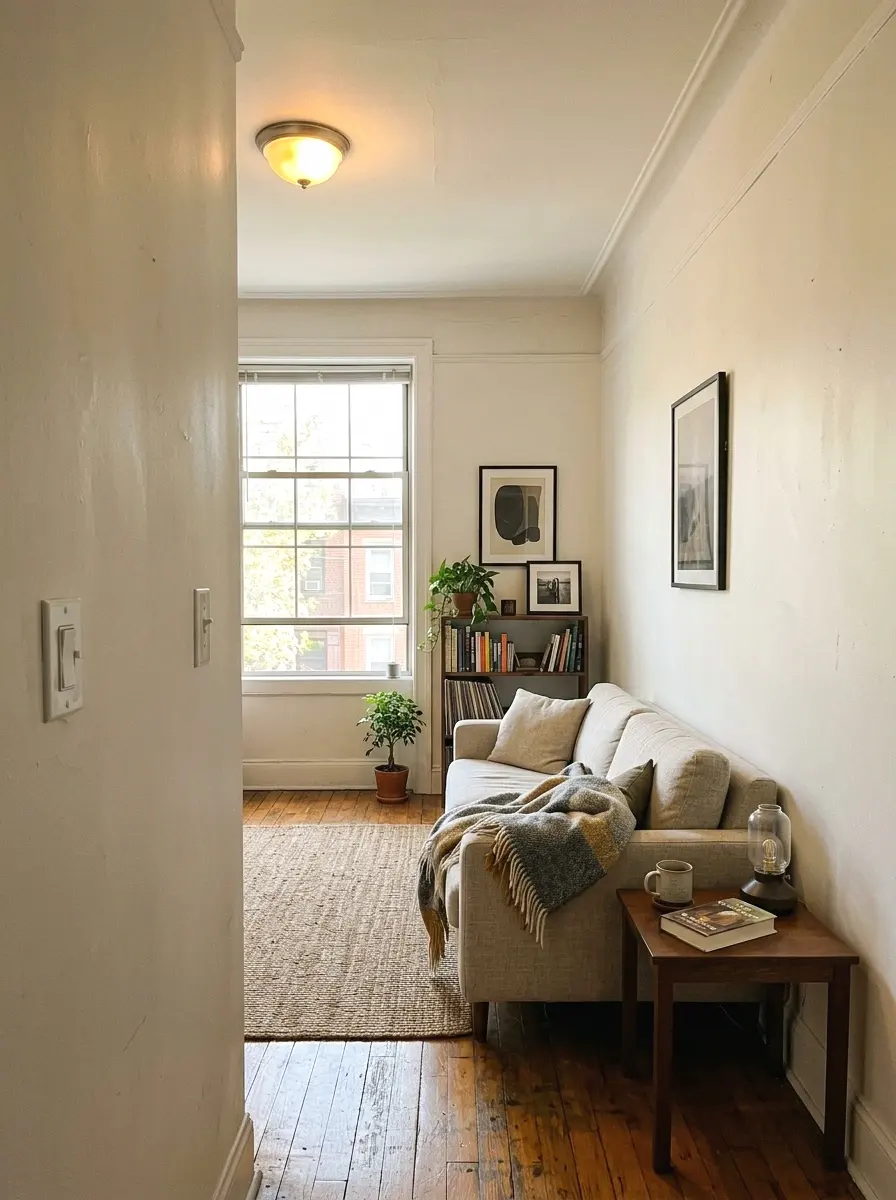
Not every piece of wall art needs to be a print or a painting. Frame a vintage map, a page from an old magazine, a piece of sports memorabilia, a vinyl record sleeve, a blueprint, or a hand-drawn sketch. What you frame tells people more about you than a generic motivational print ever will.
If the wall behind your display piece still feels bare, there are some accent wall approaches worth considering that go beyond paint alone.
IKEA RIBBA frames in black or white run $6 to $15 each. A custom mat cut to fit from a local frame shop adds another $10. The object you’re framing can cost nothing at all if it’s something you already own or printed at home. A 16×20 print from Walgreens Photo runs about $7.
17. Use a Bar Cart or Drinks Station

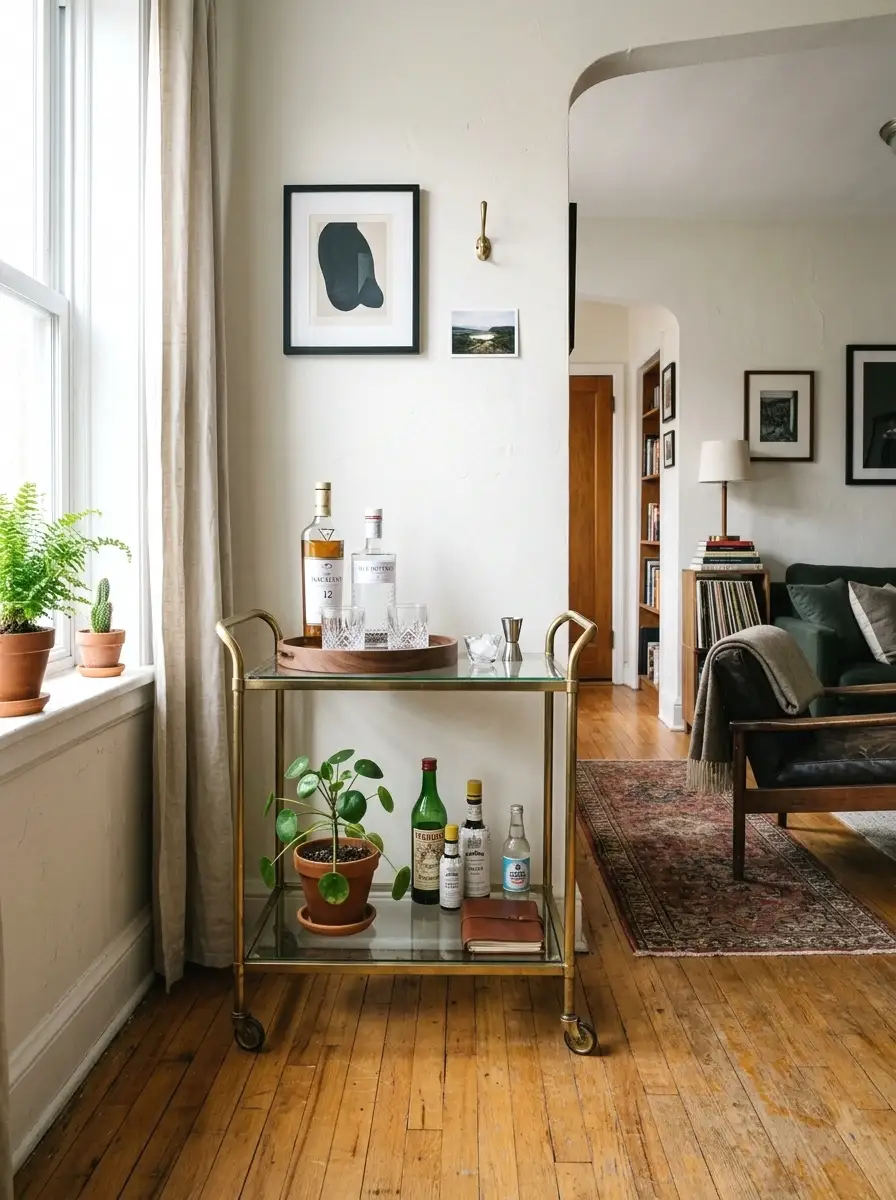
A bar cart isn’t about having a collection of bottles. It’s about giving a corner of the room a purpose and a point of view. Even a small cart with two or three bottles, a few glasses, and a plant or candle on top reads as intentional and grown-up.
Bar carts from Amazon, Target, or IKEA run $40 to $120 depending on size and material. Gold or brass finish looks clean against a dark wall. Matte black suits a more industrial or minimal room. You can also use a small side table or a vintage trolley from a thrift shop. Add a round tray to contain everything and it looks considered.
18. Hang a Mirror Strategically
A mirror does two things: it makes the room look bigger and it bounces light around. But placement matters. Hanging a mirror on a wall that faces a window doubles the natural light in the room. Hanging it above a sofa or behind a bar cart gives the room depth.
A large round mirror with a thin metal frame reads modern and current. A chunky raw wood or black metal frame reads more industrial. Sizes from 24 to 36 inches in diameter hit the sweet spot for most walls. IKEA KNAPPER at $49 or Amazon options in the $40 to $80 range work well. Don’t go too small. A mirror that’s too small looks like a mistake.
More Ideas:
19. Build a Cohesive Entryway
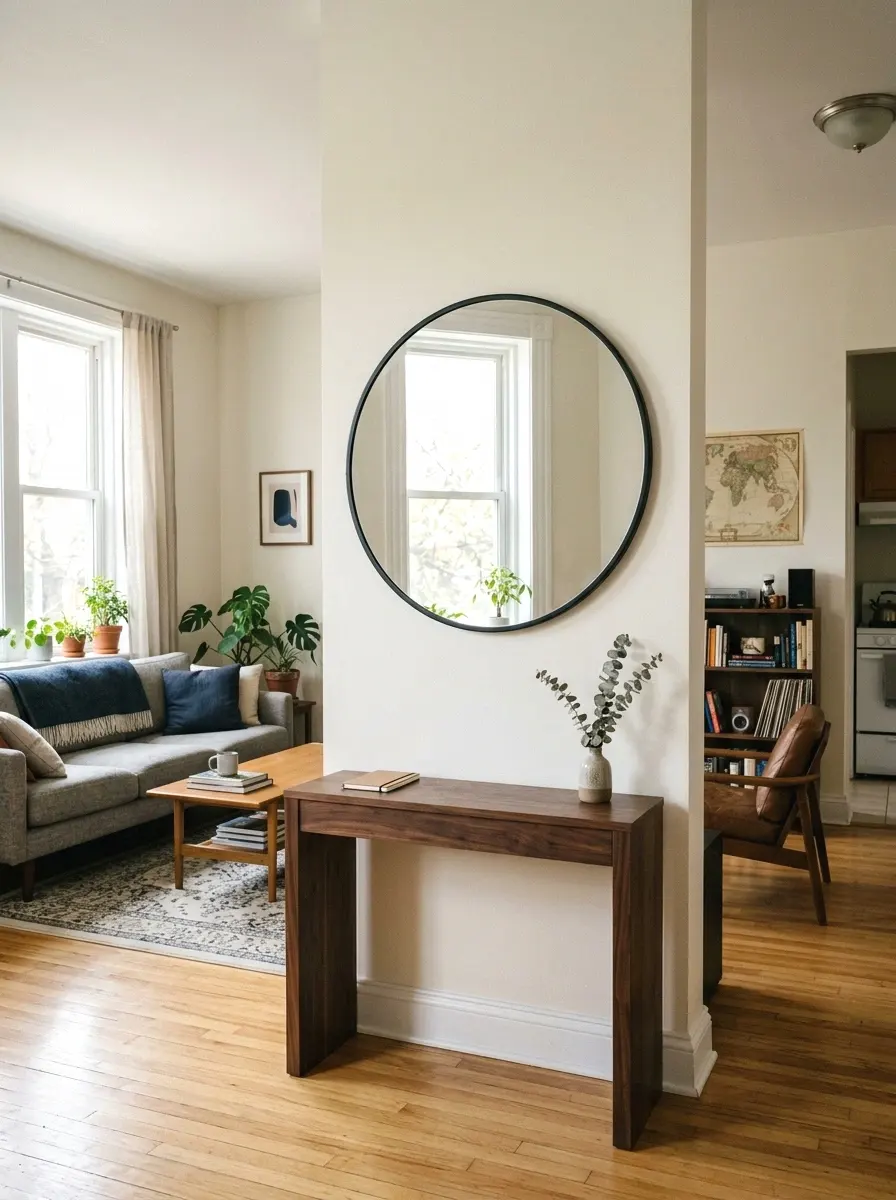
The entryway is the first thing you see when you walk in and the last thing guests see when they leave. Most guys ignore it completely. A bench or stool, a wall hook for bags and coats, a small shelf or tray for keys, and one piece of wall art is all it takes to make it feel like it was planned.
If you want to see what a finished version looks like, there are some solid entryway ideas that actually work in tight rental spaces.
A slim entryway bench runs $50 to $100. A floating shelf with hooks underneath is $25 to $40. Keep the palette tight here, one or two colors that connect to the rest of the apartment. Even a renter-friendly command strip hook set ($15) plus a shelf and a small plant turns a dead hallway wall into an entry that actually works.
20. Add a Throw Blanket and Two Accent Pillows

The fastest way to make a sofa or bed look pulled together is a throw blanket and two accent pillows that you actually picked. Not matching. Not random. Just intentional. A cotton or linen throw in grey, camel, or dark navy plus two pillows in a complementary texture or pattern is enough.
The rule: keep pillow covers in the same color family as your main furniture but in different materials (a solid plus a subtle texture). This adds depth without chaos. IKEA pillow inserts run $5 each. Covers from H&M Home, Target’s Threshold line, or Etsy sellers hit $12 to $25 each. Total cost under $60 for the whole setup.
If the whole living area still feels like it needs a direction, there’s a practical guide on getting a small living room pulled together fast.
21. Create a Reading Nook in Dead Space
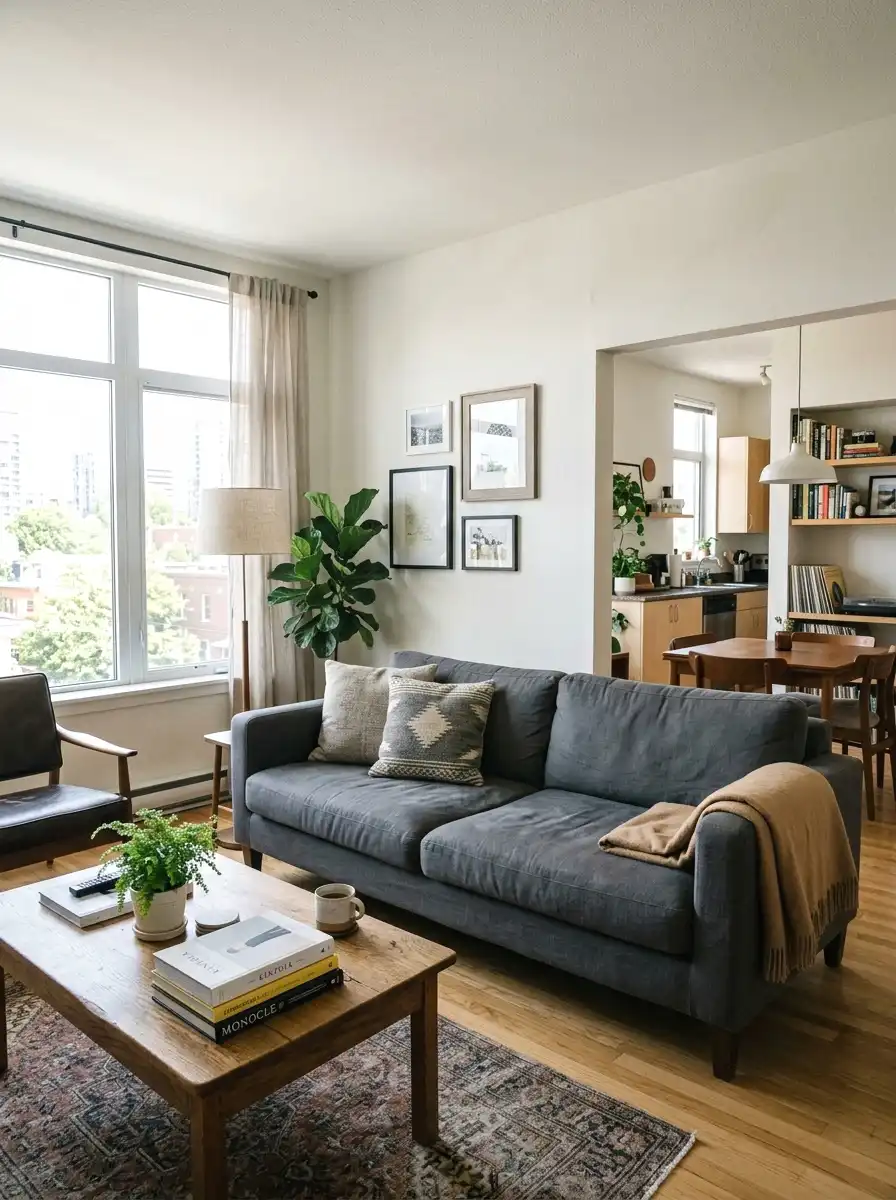
Every apartment has a corner that’s doing nothing. A chair, a floor lamp, a small side table, and a stack of books or a plant turns that dead corner into the most used spot in the room. It makes the apartment feel bigger because the space is purposeful.
The chair doesn’t need to be expensive. A secondhand leather chair or a simple canvas director’s chair works. A clip-on or small arc lamp handles the lighting. Add a small round side table for $20 to $30 from IKEA or Amazon. The whole setup can come together for $80 to $150 and it becomes the corner everyone gravitates toward.
Final Thoughts on Men’s Decorating Ideas
You don’t need to redo everything at once. Most of the ideas here come down to three things: light, layer, and anchor. Fix the lighting, add some texture to your furniture, and give each room one strong focal point. Do those three things and the space will start to feel like yours.
Start with the lighting. Swap the bulbs this weekend, see how it changes the room, and go from there. One small change is enough to build momentum. And it costs less than a dinner out.
If you want more ideas like this, homelypop.com has a lot more real-budget decorating content for every room in the house.
The bachelor apartment section in particular has more real budget decorating by room if you’re working through a full space.