
22 Bachelor House Ideas for a Space That Looks Seriously Impressive

Your place works. It has a couch. It has a bed. It has a TV. But when someone walks in, nothing about it says you actually live there on purpose. It looks like you moved in six months ago and just never finished. That specific feeling, of a space that functions but doesn’t reflect you, is what this is about.
These 22 bachelor house ideas come from real research across forums, homeowner communities, and design spaces where guys have documented what actually worked and what they wish they’d done sooner. Each idea was picked because it’s specific, budget-friendly, and gives you a real visual result. Most fall in the $100 to $300 range, and a few cost almost nothing.
This list is for guys working with a real budget and a real apartment or house, not a renovation budget. If you’re looking for a full gut renovation guide, this isn’t it. But if you want your space to look like you put thought into it, without hiring anyone, these ideas are achievable.
By the end, you’ll know exactly which changes create the biggest visual shift and where to start first.
If you want a sense of what that looks like before you start, there are some solid examples of real spaces built around personality worth browsing first.
What to Know Before You Start Bachelor House Decorating
- Dark paint on one wall reads as intentional design, not a mistake, if you pick a true deep tone like navy or forest green.
- Plan your furniture layout before buying anything. Most rooms work with the sofa facing the main light source.
- A $20 dimmer switch changes the entire mood of a room. Most people skip this and wonder why their space feels harsh.
- Overhead lighting alone is what makes a place look unfinished. Lamps at eye level fill that gap.
- Rugs under $150 usually look cheap at the edges after a year. Budget at least $180 for a 5×8 that holds up.
- Most people hang art too high. Center it at roughly 57 inches from the floor, not eye level when standing.
- Matte finishes on walls hide imperfections better than satin and photograph darker than they look in store.
1. Anchor the Room With a Real Rug
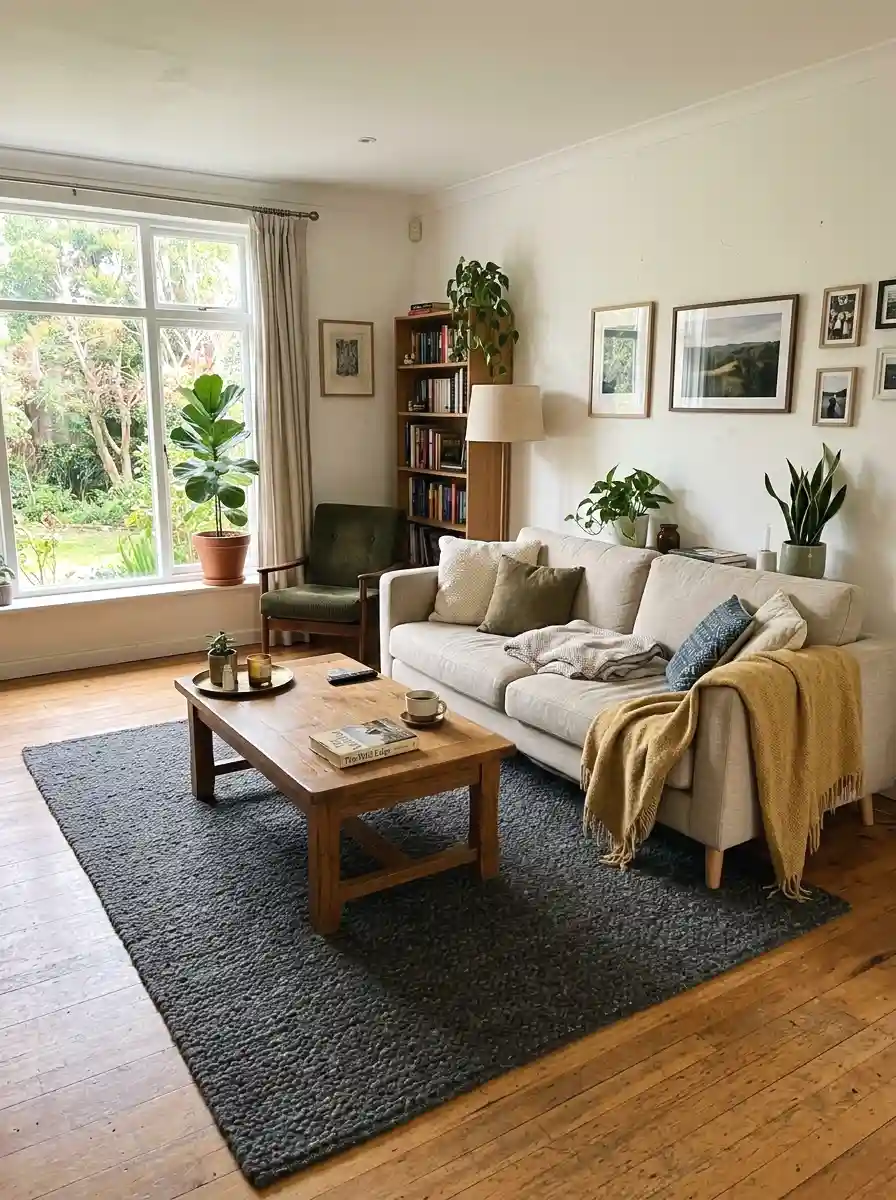
The single most common complaint I see from guys who feel like their place looks “off” is that there’s no rug, or the rug is too small. A rug anchors the furniture and makes a room feel like a room instead of a showroom floor. Front legs of the sofa on the rug, back legs off. That’s the standard move and it works every time.
For a living room, aim for at least a 8×10. A 5×8 feels right until the furniture goes on it, then it looks like a bath mat. Wool-blend rugs in charcoal, rust, or off-white hold up best and don’t show dirt the way cream ones do. Expect to spend around $150 to $250 for something that won’t curl at the corners after a month.
If you’re still deciding on texture and tone, there are some wool and low-pile options worth considering depending on your room’s overall palette.
2. Get Proper Lamps (Not Just Overhead Lights)
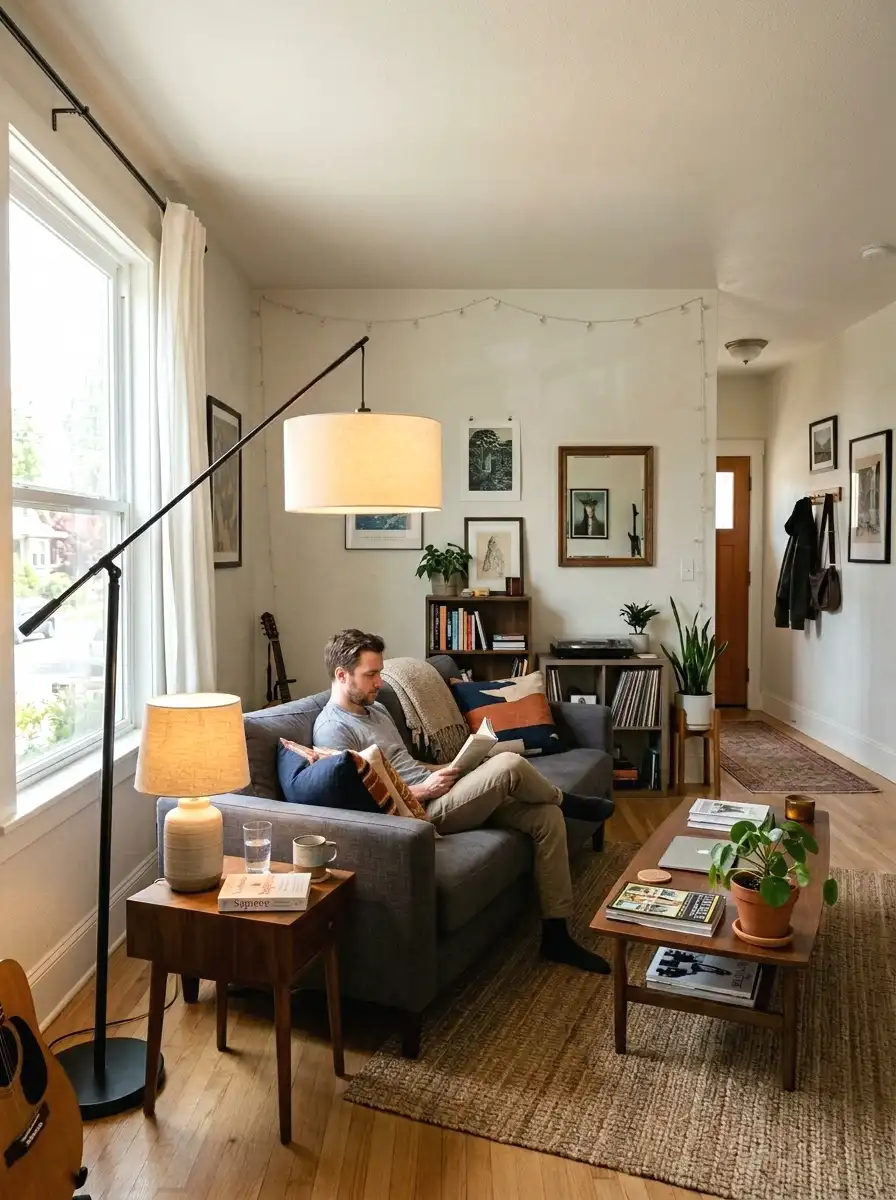
So here’s the thing about overhead lighting. It lights everything the same way, which means it lights nothing well. Lamps at different heights, a floor lamp near the sofa and a table lamp on a side table or desk, create layers of light that actually make a space feel thought-out. It’s one of those shifts that sounds small until you do it.
I was skeptical about this one but after adding two lamps to my living room, the overhead light hasn’t been switched on in months. Get shades in linen or off-white, not the white plastic kind that come as defaults. Floor lamps run $60 to $120 at most places. Add a warm bulb (2700K) and the space changes entirely.
For anyone setting up a work area at home too, layered lighting done right makes a big difference in how that corner feels.
More Ideas:
3. Paint One Wall a Dark Color
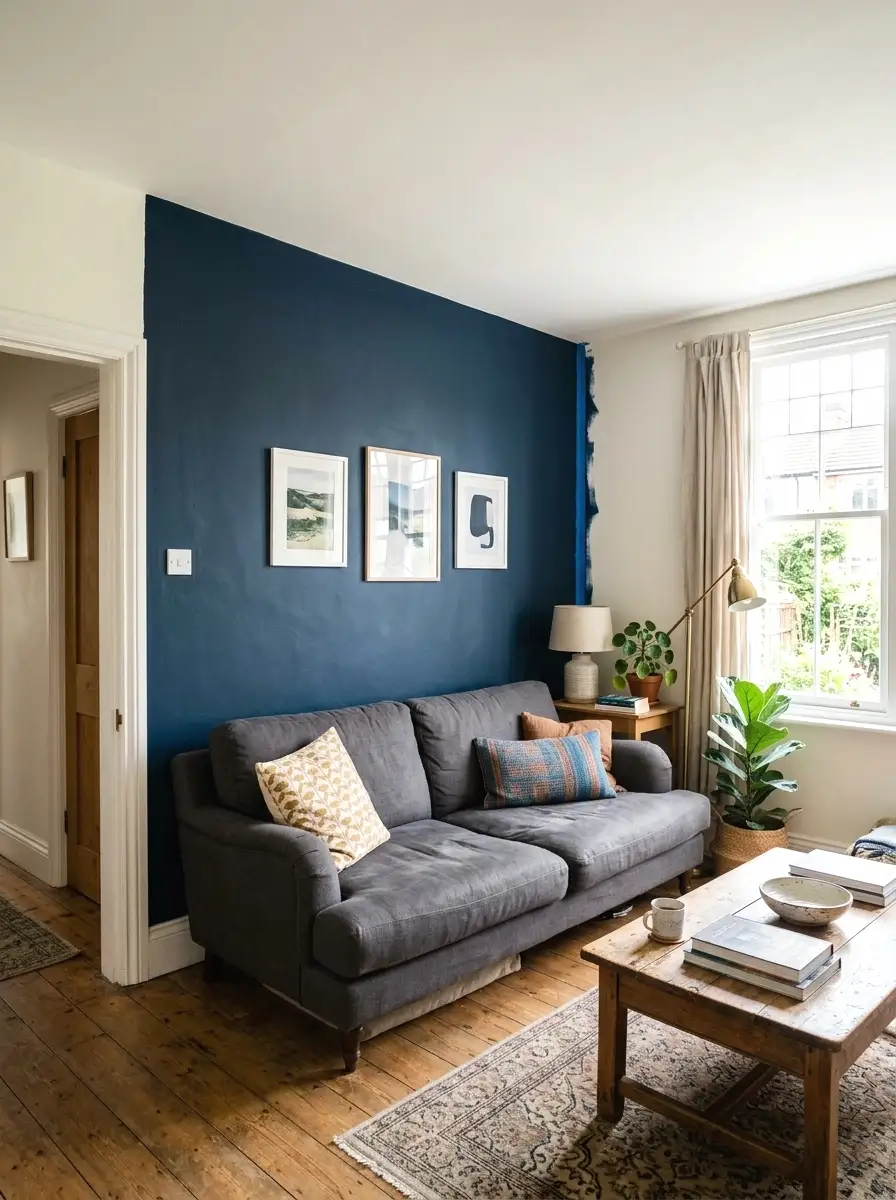
A single dark wall, called an accent wall, doesn’t require you to paint the whole room. Deep navy, forest green, charcoal, and warm black all work well in living rooms and bedrooms. The key is picking a true, saturated color and not a “greige” that looks like a mistake. One wall takes two hours and a single quart of paint, which runs about $20 to $35.
This is one of the highest-impact things you can do per dollar spent. The wall behind the sofa or behind the bed works best. It frames the furniture and makes the whole setup look deliberate. Use painter’s tape at the edges, two coats minimum, and don’t rush the dry time between coats.
If you’re unsure which direction to go with color or finish, there are some dark accent wall ideas that actually work across a range of room sizes.
4. Add a Full-Length Mirror
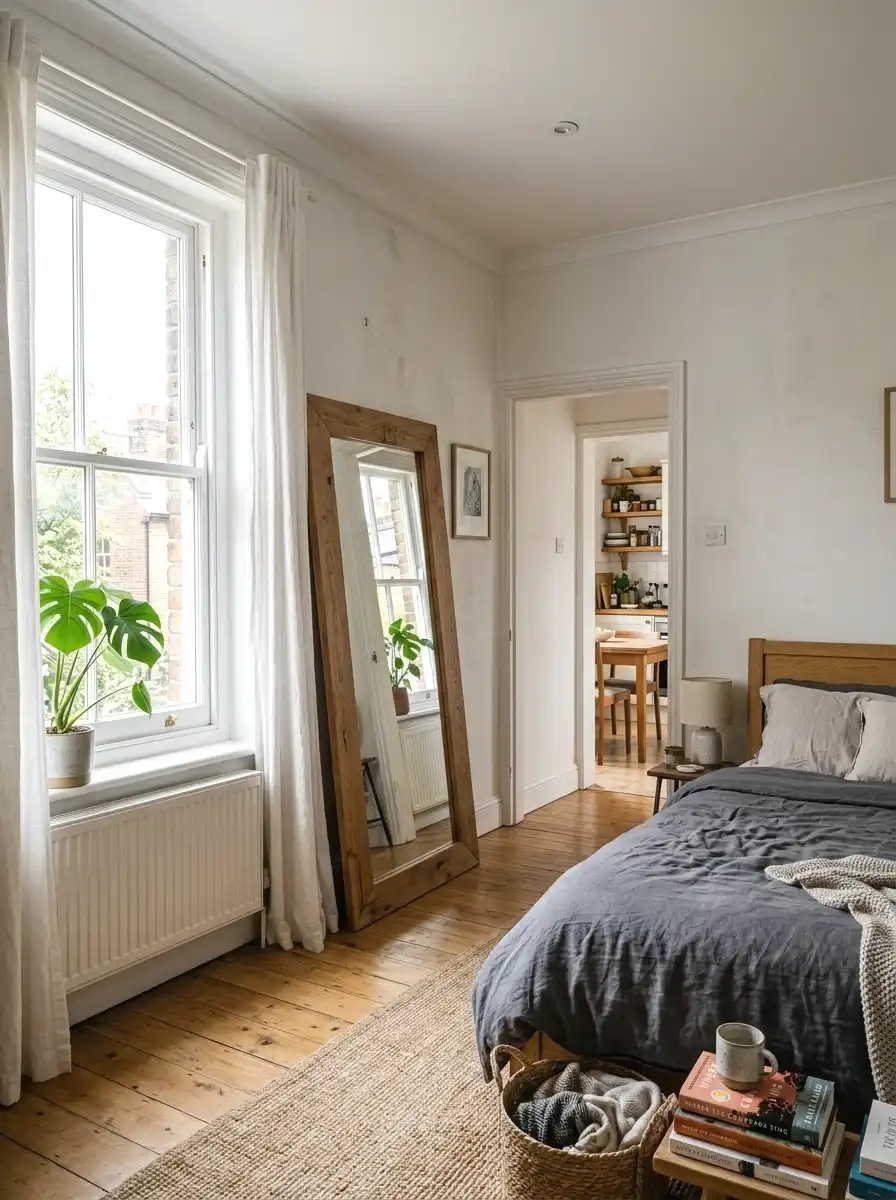
A full-length mirror does two things. It makes a space feel bigger, and it gives you somewhere to actually check how you look before leaving the house. Both of these are useful. Lean it against a wall at a slight angle rather than mounting it flush, and it looks more purposeful than a bathroom mirror bolted to a door.
Ikea’s Hovet mirror is around $150 and holds up. Thrift stores often have wood-framed versions for $20 to $40 that look genuinely good once you clean them up. Put it in a corner of the bedroom or just inside the entryway. Either spot works. The visual depth it adds to smaller rooms is real.
5. Use a Gallery Wall to Fill Dead Space
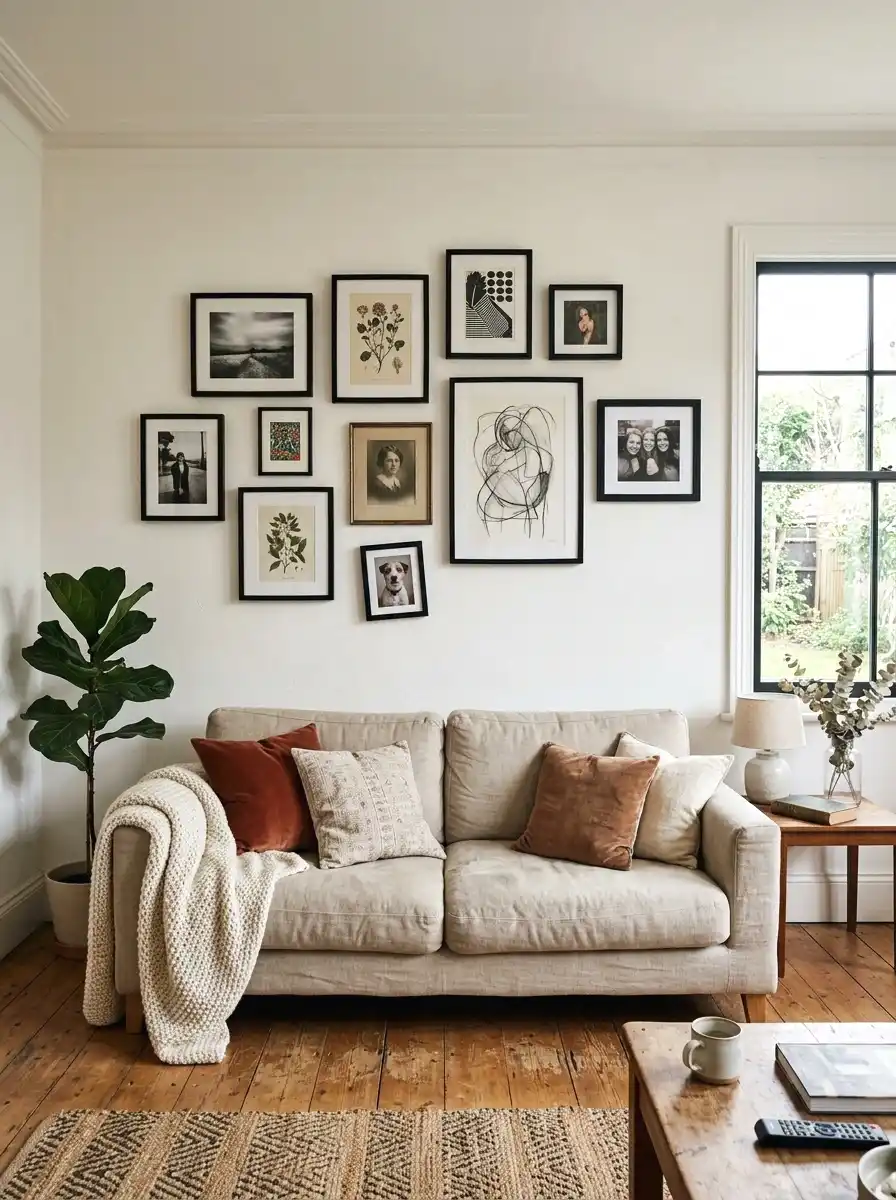
A blank wall that’s wider than your sofa or bed will always look unfinished. A gallery wall, a cluster of frames at different sizes, fixes that without needing one massive expensive piece. The trick is to keep all frames the same finish, black or natural wood, and vary the sizes rather than the style.
Lay the arrangement out on the floor first before putting a single nail in the wall. Center the cluster at 57 inches from the floor. Mix art prints, black-and-white photos, and maybe one small object or shelf. Frames from Ikea or thrift stores run $3 to $15 each. A full gallery wall of 8 to 12 pieces can cost under $100 if you source them right.
6. Upgrade Your Bedding
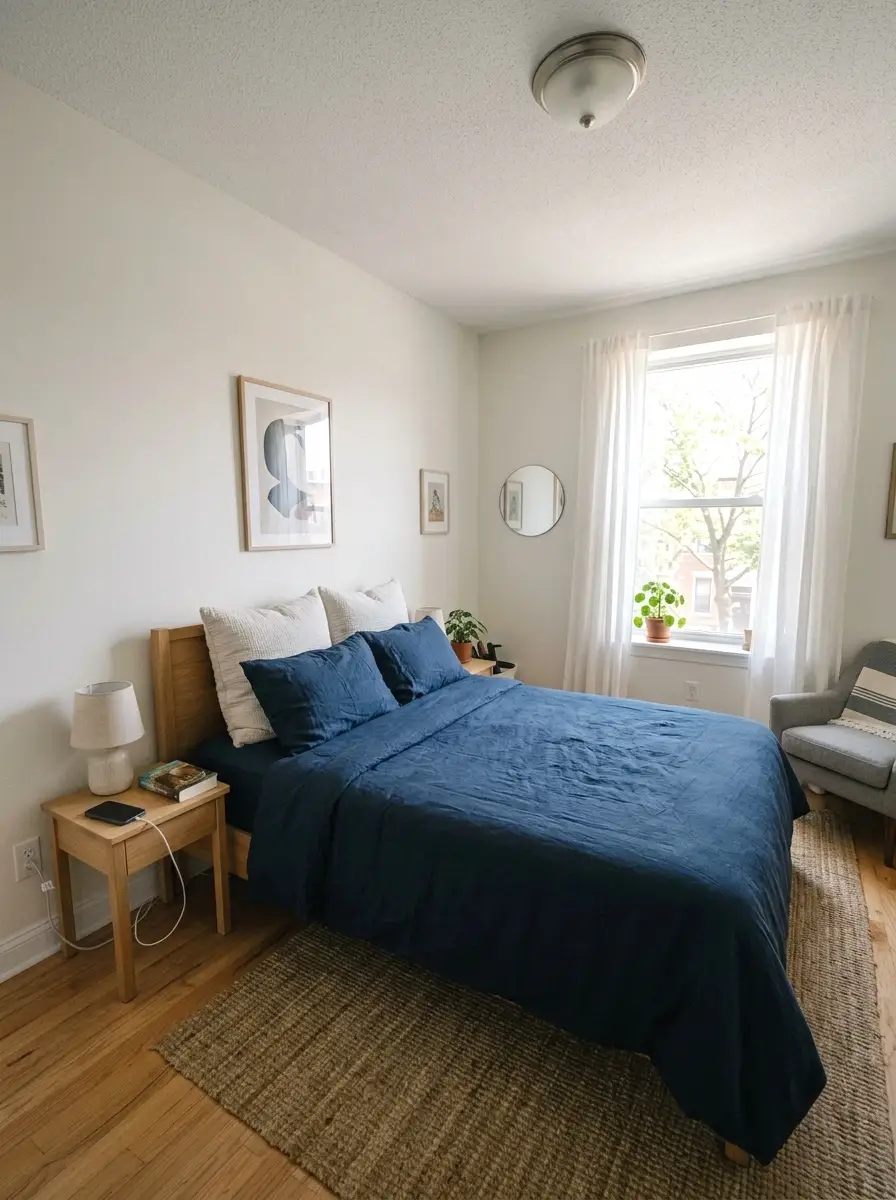
Your bedroom is private space, but you spend a third of your life there. Bedding that looks good and feels good is not a luxury. A solid-color duvet in charcoal, navy, slate, or off-white instantly makes a bed look like it belongs in a hotel rather than a college dorm. (this one is so underrated by guys who otherwise spend money on good stuff)
Thread count above 400 for percale cotton is the standard to aim for. Brooklinen, Parachute, and Target’s Threshold line all make decent options in the $60 to $150 range for a full set. Get two matching pillowcases plus two euro shams and your bed goes from functional to actually good-looking in about five minutes.
Pairing solid bedding with the right furniture around it is where most bedroom upgrades that hold their look start to come together.
More Ideas:
7. Get a Proper Coffee Table
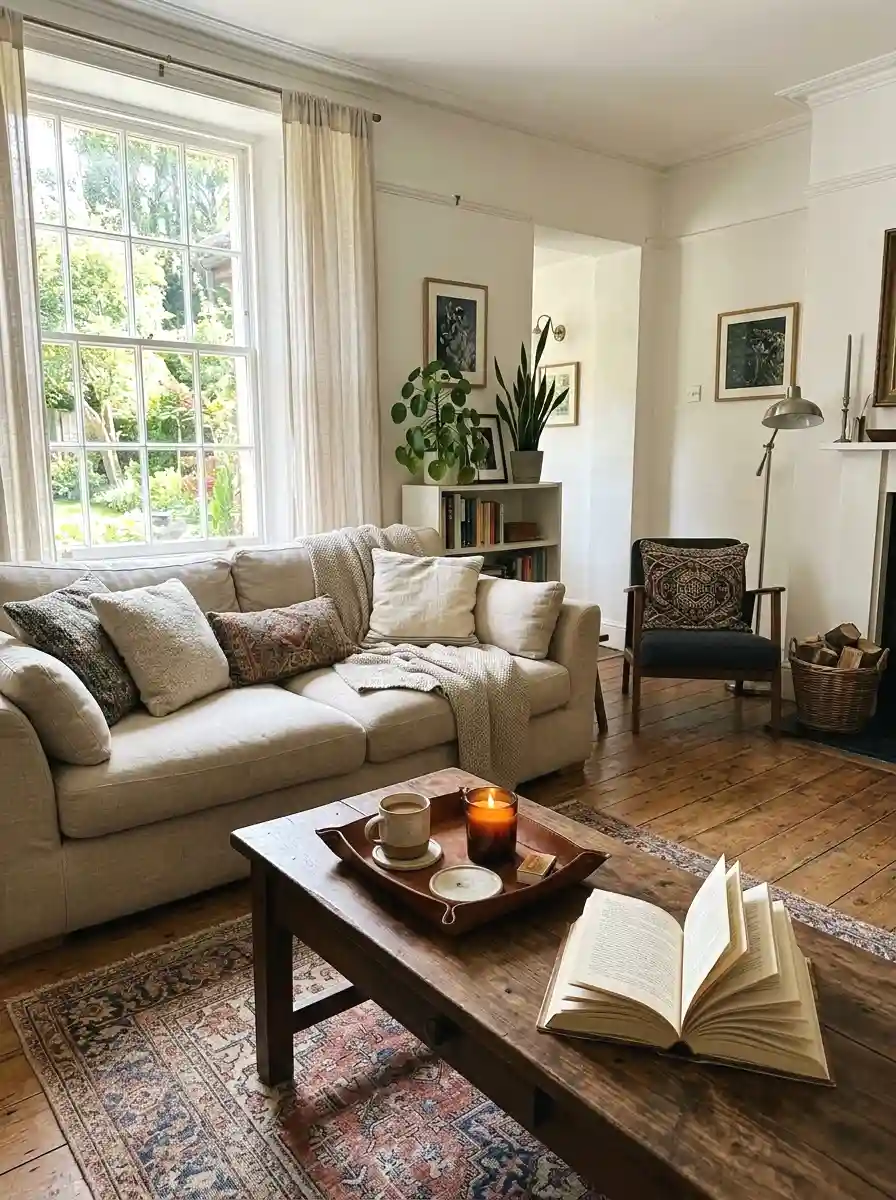
A folding tray table or an ottoman doing double duty as a coffee table is a holdover from first apartments. A real coffee table, even a simple wood slab or metal-frame version, grounds the seating area and gives the room a finished structure. It’s the piece that tells people the space was set up on purpose.
Solid wood or metal-leg tables in the $100 to $250 range last years and don’t wobble. Aim for a length that’s about two-thirds the length of your sofa. Keep it clear of clutter most of the time. One small tray with two or three objects, a candle, a coaster, something small, is all that needs to be on it.
8. Add Open Shelving for Display Space
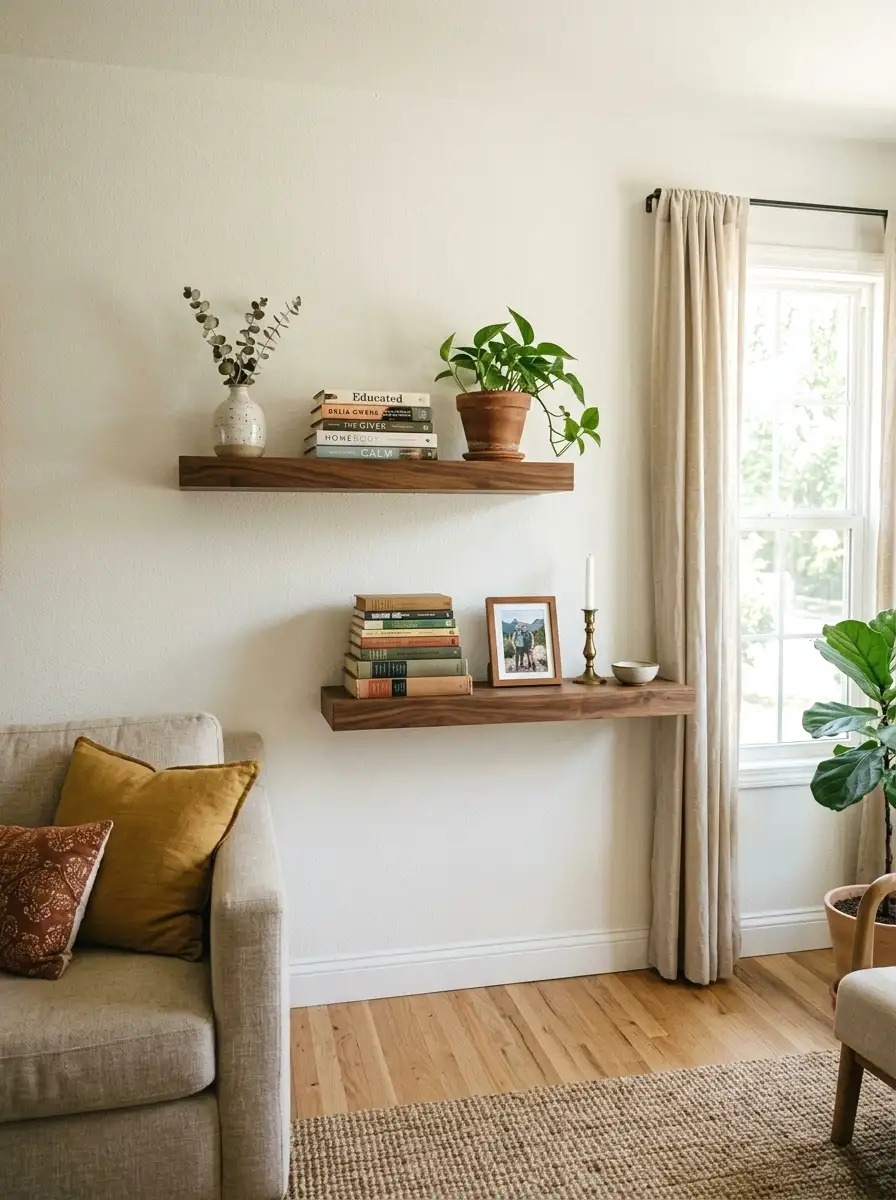
The right shelving does two things: it gives you storage and lets you show a few things that say something about who you are. Floating shelves in walnut veneer or raw wood, about 24 to 36 inches wide, cost $25 to $60 each and are easy to mount if you find a stud.
Keep what goes on them minimal. Three to five objects per shelf maximum, a plant, a book stack turned sideways, one piece of art or a framed photo, something with texture like a small ceramic. The negative space around the objects is part of the look. More is never more here.
Seeing how open shelving looks in real rooms with limited square footage can help you figure out the right scale before you mount anything.
9. Hang Curtains Close to the Ceiling
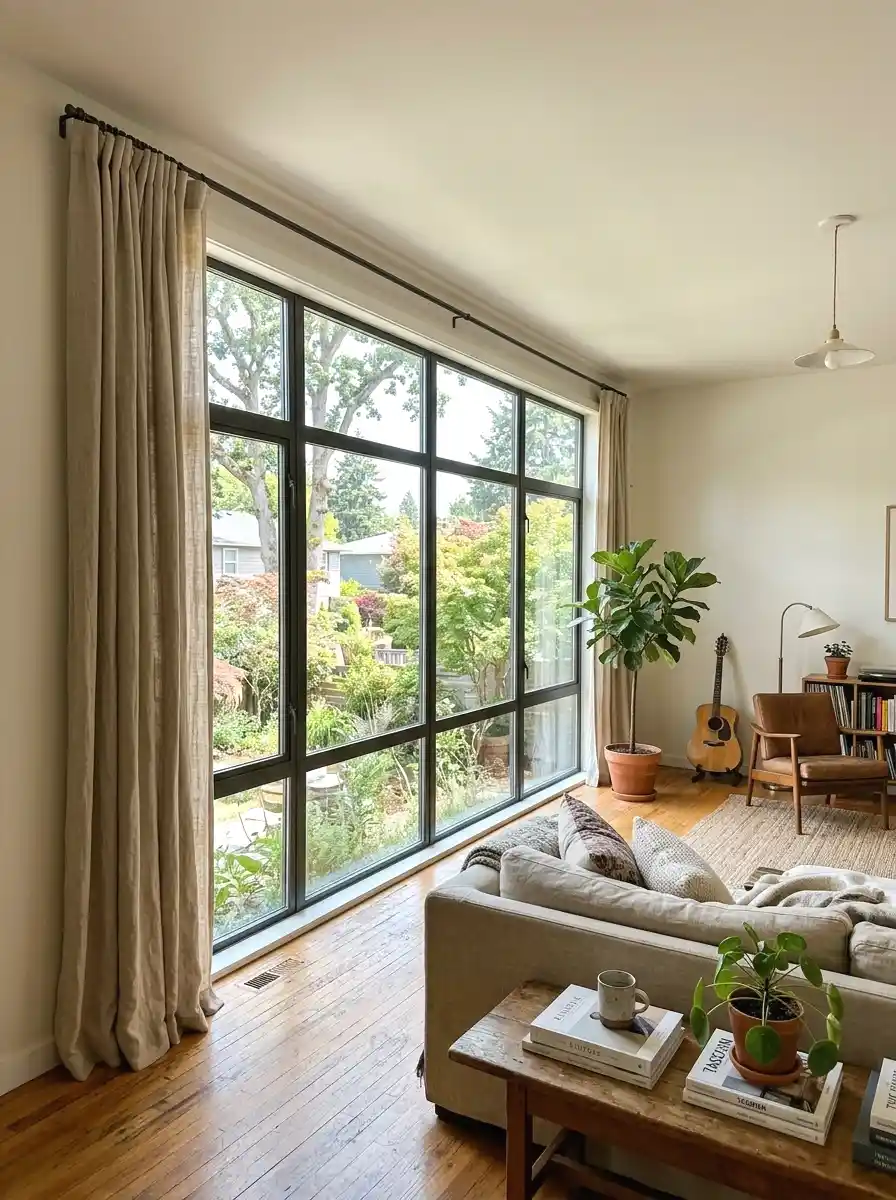
Most people hang curtain rods at window height. The right move is to mount them 4 to 6 inches below the ceiling and let the curtains drop all the way to the floor. This makes every window look bigger, the ceiling feel higher, and the room feel like it was decorated by someone who actually knows what they’re doing.
Linen or velvet curtains in charcoal, off-white, or warm cream work in most living rooms and bedrooms. Ikea’s Sanela velvet panels are around $40 per pair and hold up well. Make sure each panel is wide enough to clear the window fully when pushed open. A rod to panel ratio of 1:2.5 works well.
Pairing high-hung curtains with the right wall color is one of those curtain height tricks most people miss until they see it done together.
10. Bring in One Large Plant
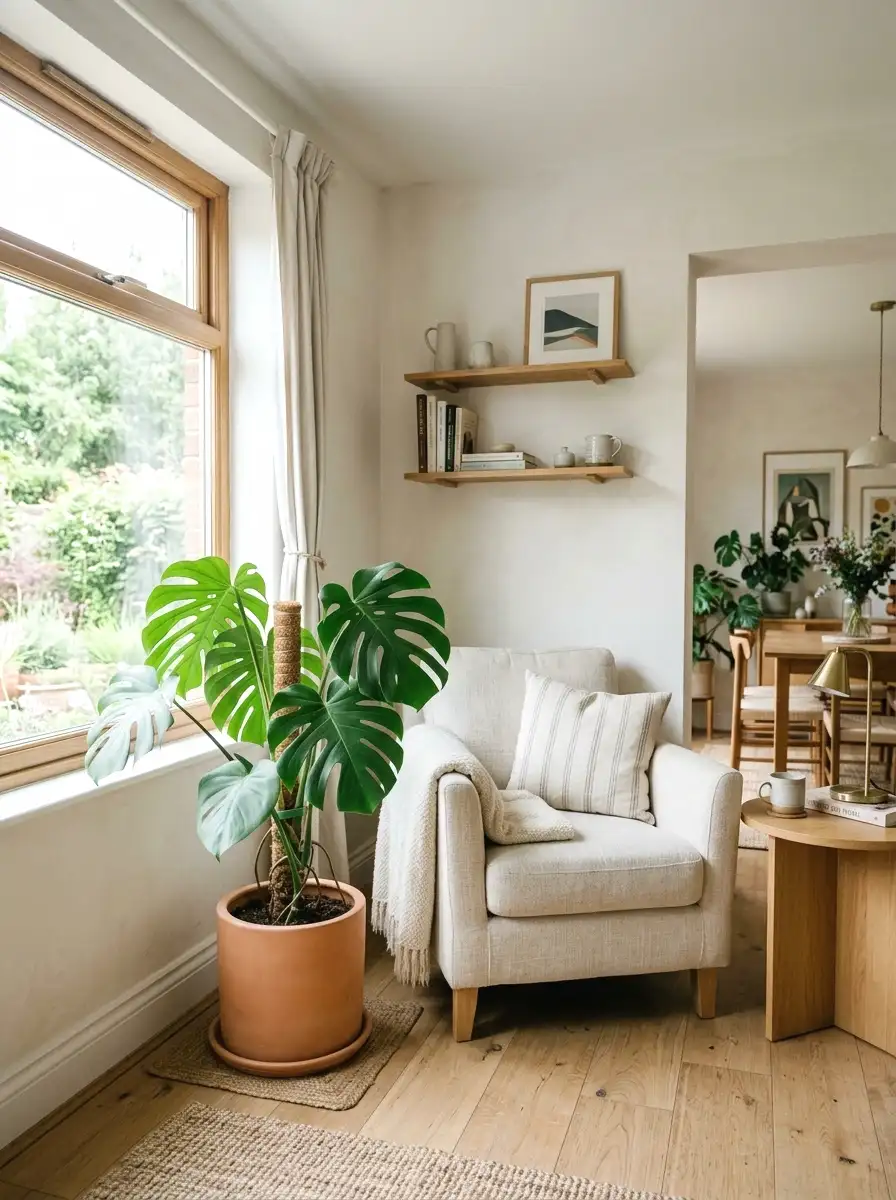
One big plant does more for a room than four small ones scattered around. A fiddle-leaf fig, snake plant, or monstera in a proper ceramic pot adds scale, life, and texture that no shelf object can match. The pot matters as much as the plant. Terracotta, matte white, or concrete all look intentional. Generic plastic nursery pots do not.
A healthy monstera or fiddle-leaf in a 10 to 12-inch pot runs $30 to $60 at most nurseries. Add a $20 to $40 ceramic pot and you’ve got a statement piece for under $100. Snake plants are the best call if you’re worried about keeping things alive. They survive almost complete neglect, which is the honest truth.
More Ideas:
11. Upgrade Your Light Switch Plates
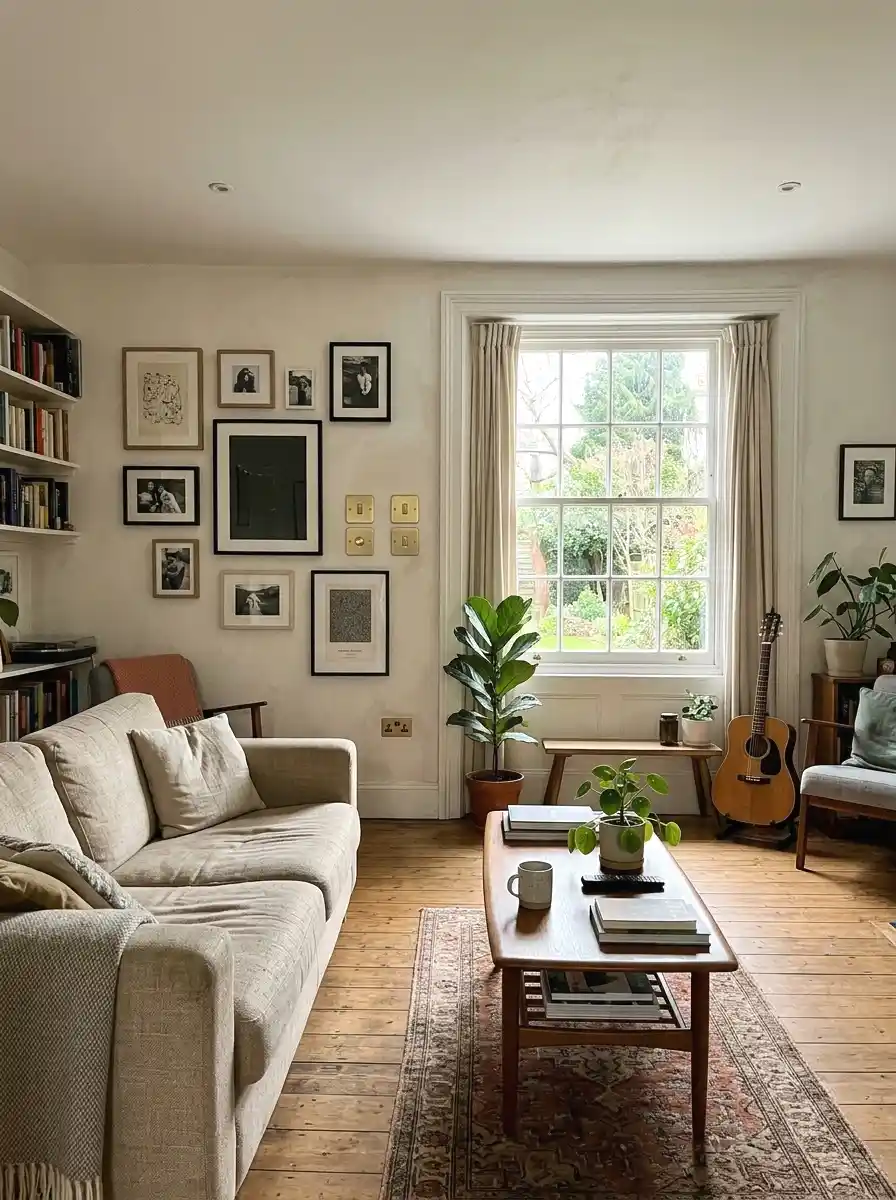
This sounds too small to matter. It doesn’t matter until you paint a room and everything looks great except the yellowed plastic covers over every switch. Brushed brass, matte black, or stainless switch plates cost $4 to $8 each and take two minutes to swap out. They’re the kind of detail that makes a room feel finished.
You need a single flathead screwdriver. That’s it. Most homes have 6 to 12 switch plates total. Budget $50 and a Saturday afternoon to do the whole place. Screwless magnetic covers look particularly clean if you want a more polished finish. Home Depot and Amazon both carry them in every metal finish.
12. Use a Console Table Behind the Sofa
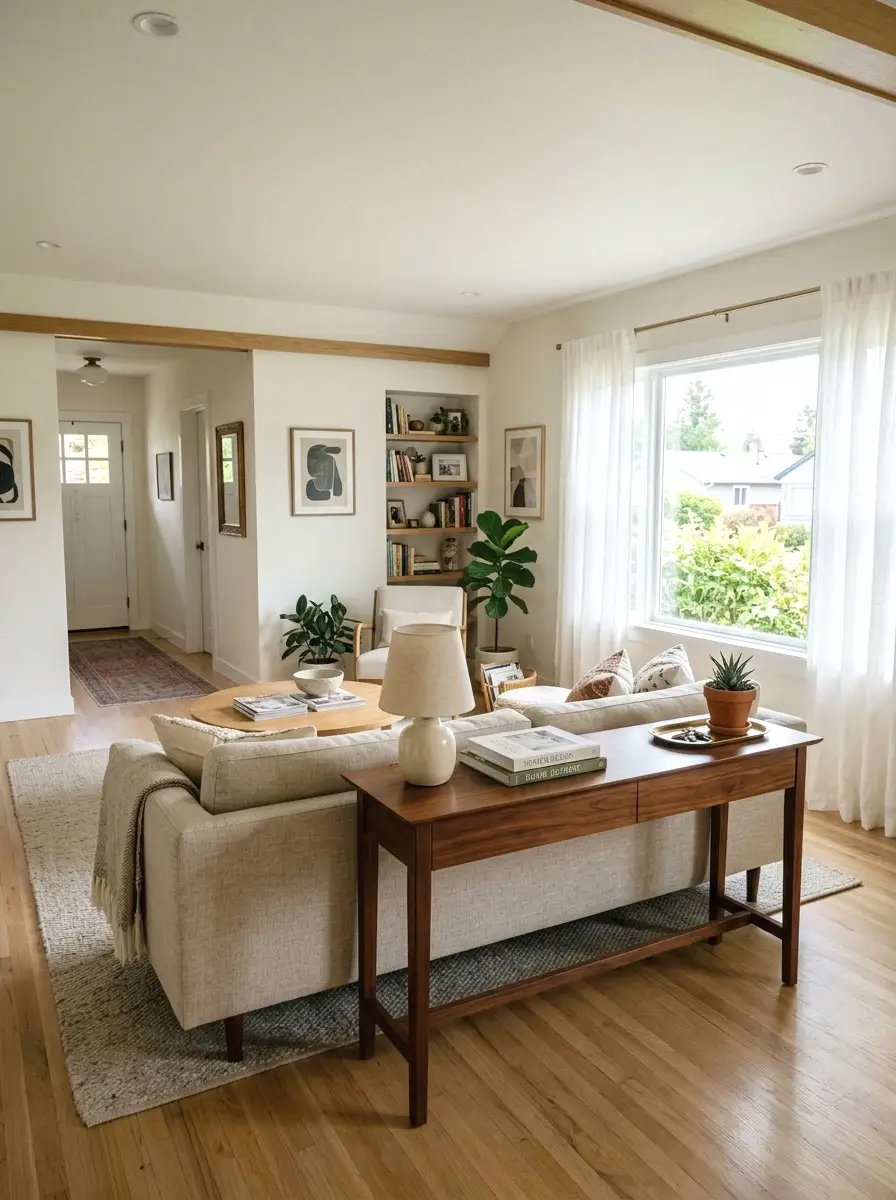
If your sofa floats in the middle of the room instead of against a wall, there’s often awkward dead space behind it. A narrow console table, 10 to 12 inches deep, placed right behind the sofa fills that gap and gives you a surface for a lamp, a couple of books, or a low plant. It also visually defines the back of the seating area.
When I tried this in my own space, it immediately made the floating sofa setup look like a deliberate zone instead of furniture that didn’t fit against any wall. Most console tables in solid wood or metal run $80 to $180. Look for anything under 14 inches deep so it doesn’t stick out awkwardly into foot traffic.
13. Add a Bar Cart
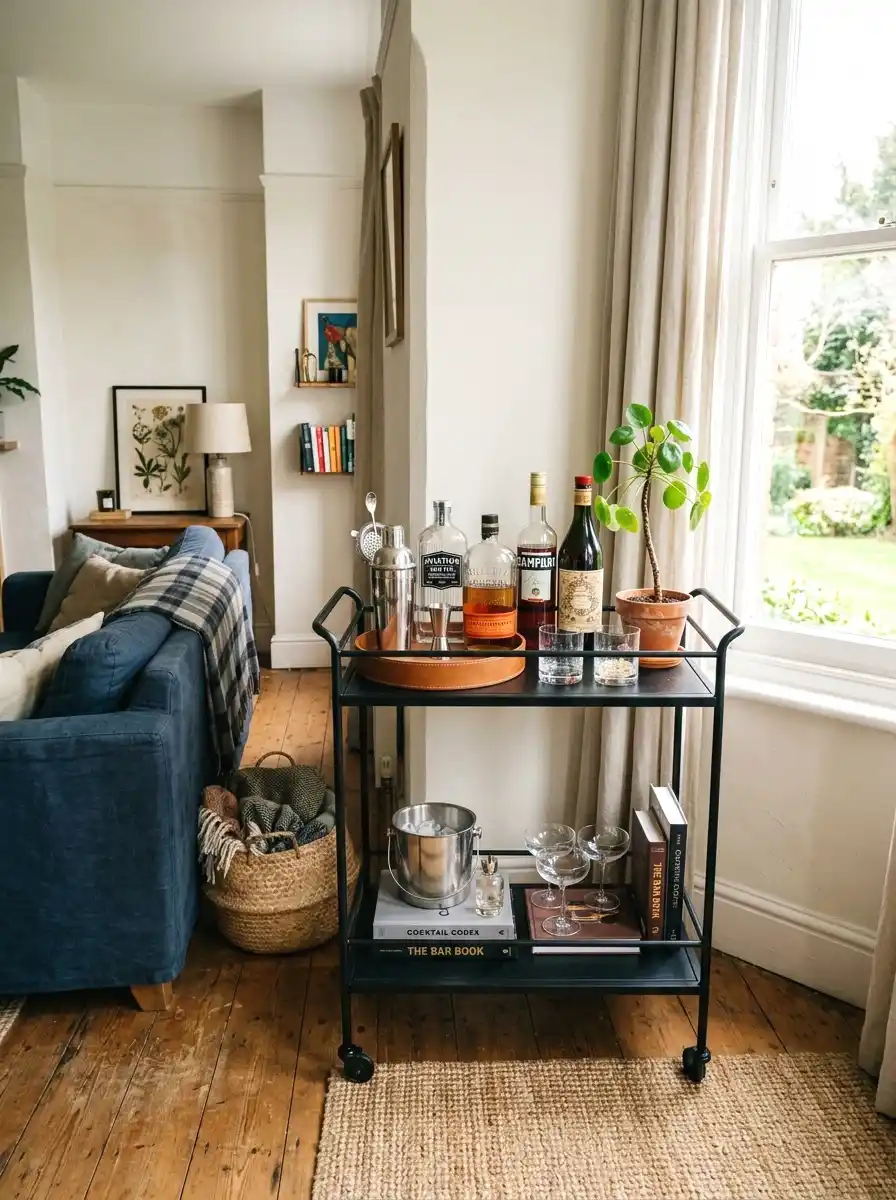
A bar cart in the living room or dining area signals something specific: you have people over, and you’re prepared for it. It’s a functional piece that doubles as display space. You don’t need to be a cocktail person. A few bottles, a couple of glasses, a small plant or candle, and it looks intentional.
Metal or acrylic carts with wheels run $60 to $150. Brass and black finishes both look good and hold up to a couple of bumps. Keep it stocked but not cluttered. Four to six bottles maximum, a small tray for the tools, one or two plants or an object. It should look like you set it up, not like it’s a garage sale on wheels.
14. Invest in One Good Chair
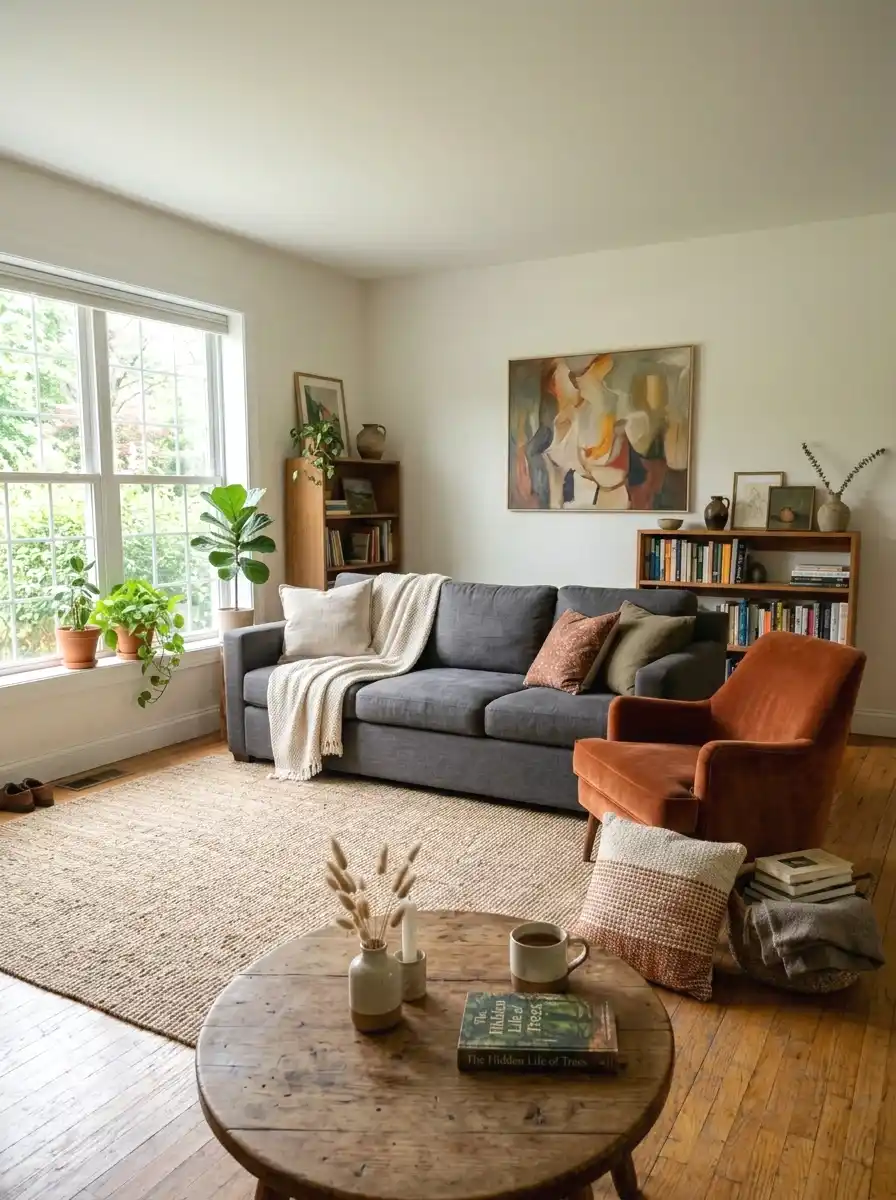
A sofa plus a chair creates a conversation area. A sofa alone is just seating in front of a TV. One decent accent chair, something with an interesting silhouette, a curved back, hairpin legs, or a different fabric from the sofa, makes a room feel like it was actually arranged rather than furnished.
Accent chairs in the $150 to $300 range from CB2, Wayfair, or Article are solid options. Boucle, leather, and velvet all hold up well. Avoid matching it to the sofa color exactly. The contrast is the point. A chair in rust, forest green, or warm tan next to a charcoal sofa makes both look more intentional than if they matched.
More Ideas:
15. Mount Your TV on the Wall
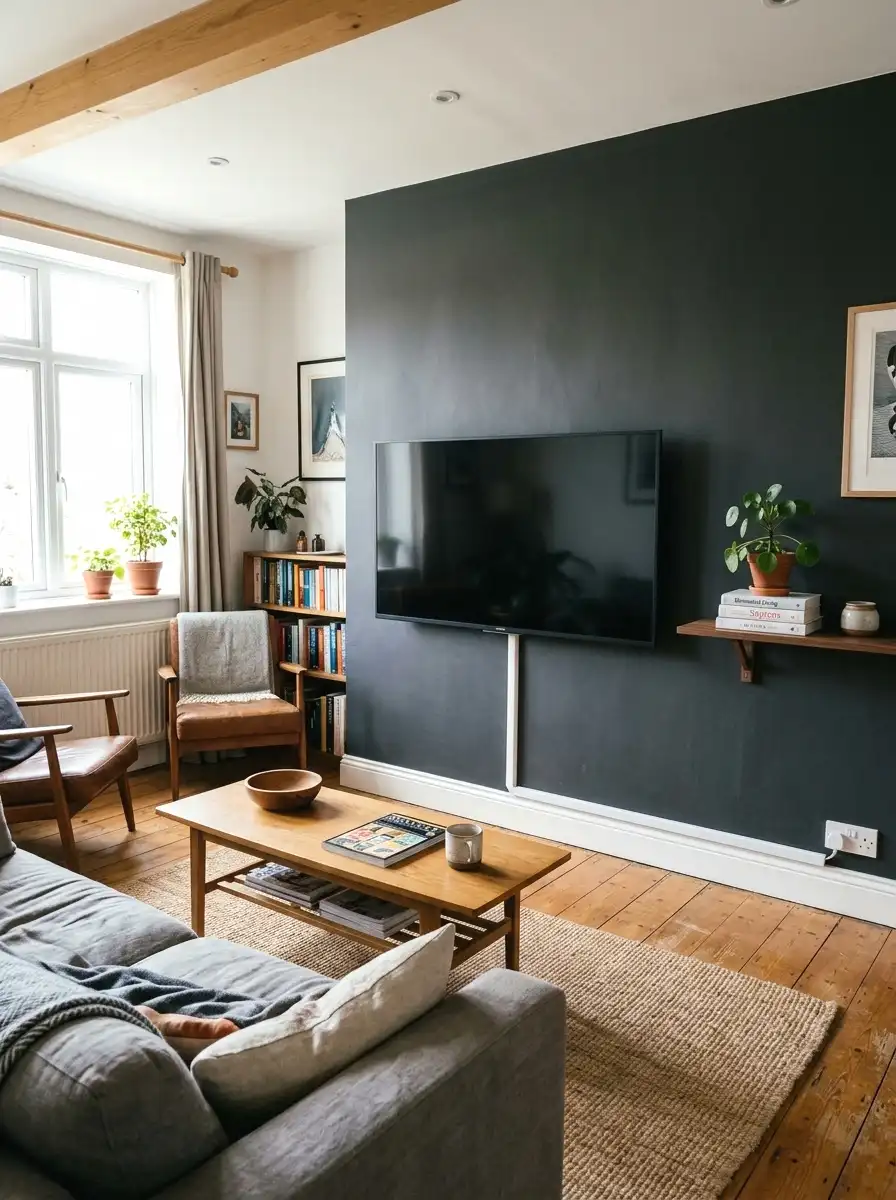
A TV sitting on a stand, especially on a cheap entertainment center, is one of the things that makes a place look unfinished fastest. Mounting it to the wall at eye level when seated, typically 42 to 48 inches from floor to center of screen, cleans up the whole wall and makes the room feel more like a real space.
Wall mounts run $20 to $60 and most include everything you need. If you’re in a rental, use a TV stand that has the TV at the right height and run the cords through a cable management channel on the wall. That alone makes a big visual difference. Exposed cord clusters are the number one thing that undermine an otherwise decent setup.
16. Use a Tray to Organize Surfaces
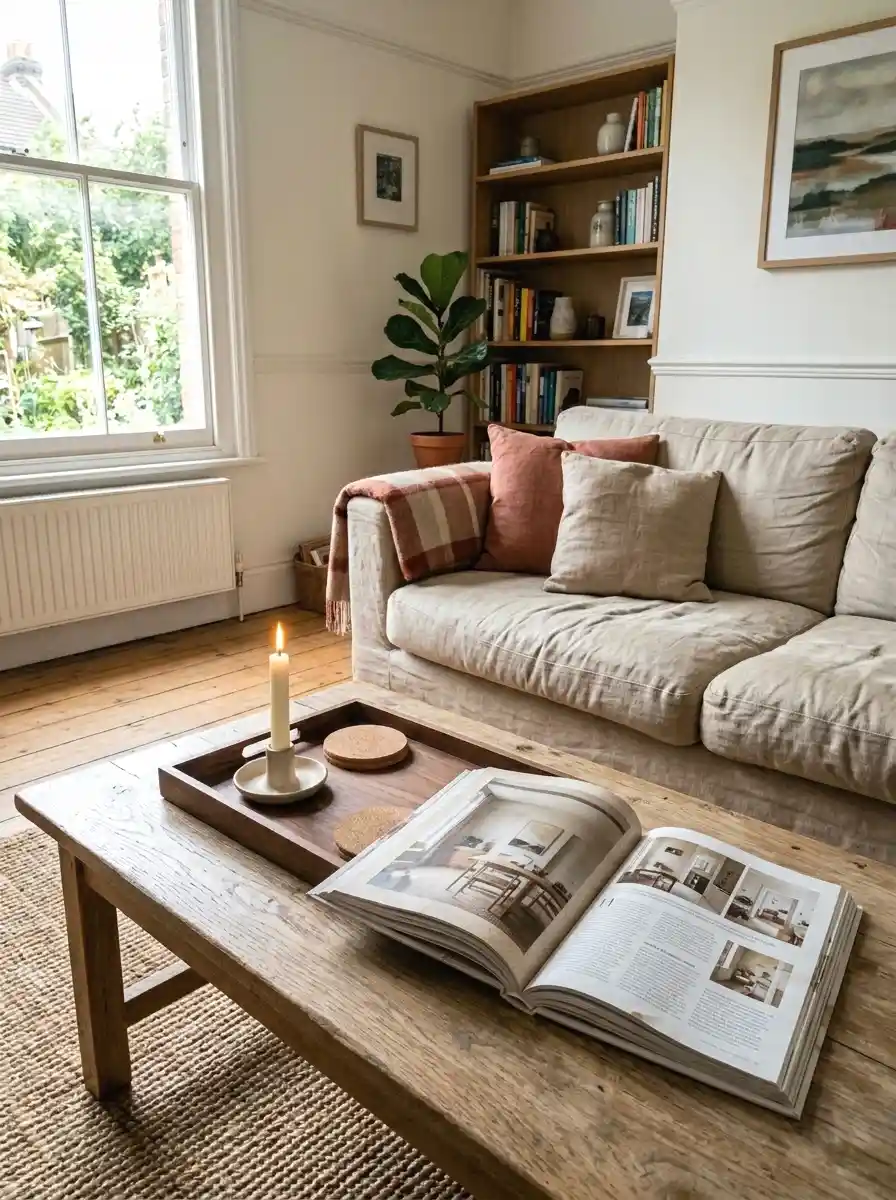
Any flat surface without a tray, a coffee table, a console, an entryway shelf, looks like clutter even when it’s not much. A tray creates a defined zone and makes whatever is inside it look like a collection rather than stuff that got put down. This is the cheapest organizing trick that also genuinely improves how a room looks.
Leather, wood, and brushed metal trays all work. Stay away from plastic. A 10 to 14-inch tray on a coffee table with two or three objects inside reads as styled. The same objects without the tray read as mess. Trays run $15 to $45 at most home stores. One per surface is the rule.
17. Get a Proper Entryway Setup
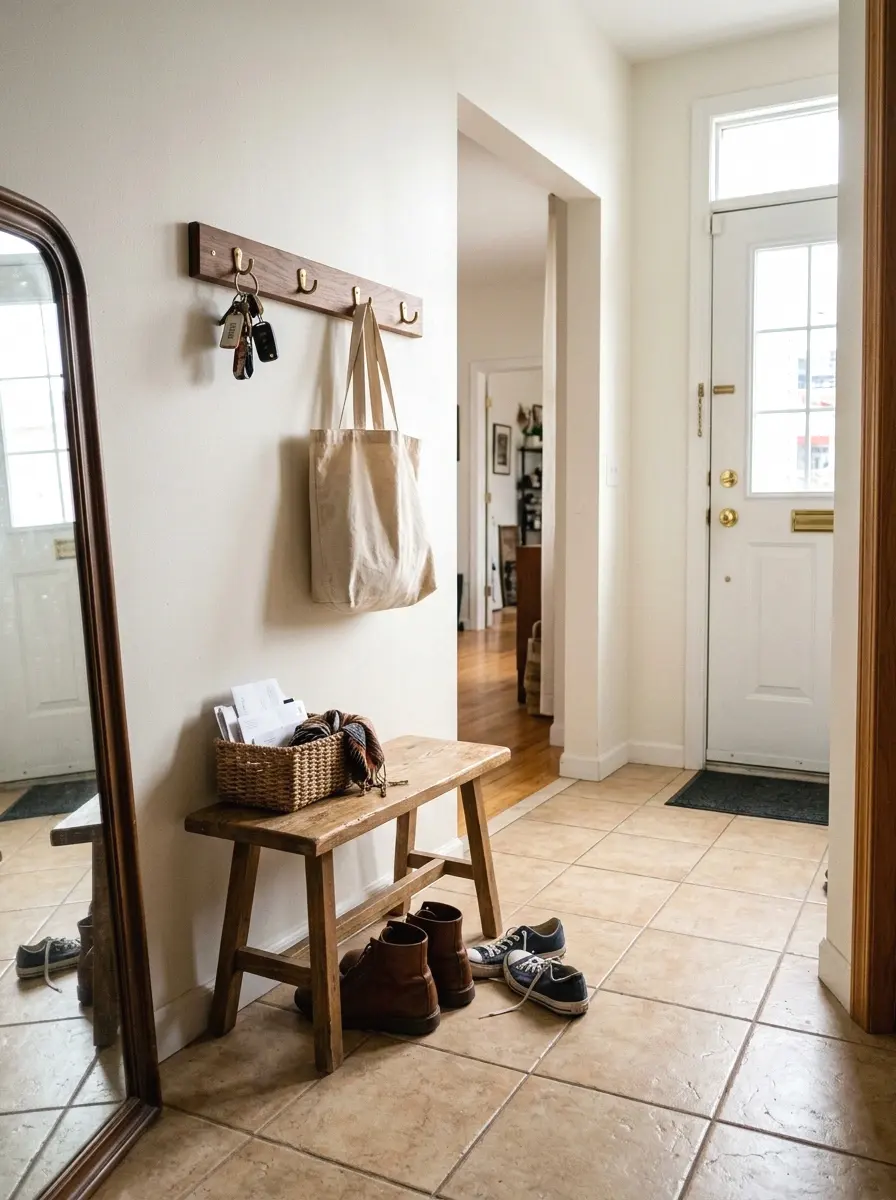
The entryway is the first thing anyone sees, including you when you walk in every day. A hook rail for keys and bags, a small bench or shoe rack, and one piece on the wall, a mirror, a small print, something, makes the transition feel like you thought about it. Most bachelor pads skip the entryway entirely.
A floating hook rail in walnut or black metal runs $30 to $60. Add a small bench for $40 to $80 and a mirror for another $30 and you’ve built a proper entryway for under $180. It doesn’t need to be big. Even a 3-foot wall can hold a hook rail and a mirror and feel complete.
18. Use Warm White Bulbs Everywhere
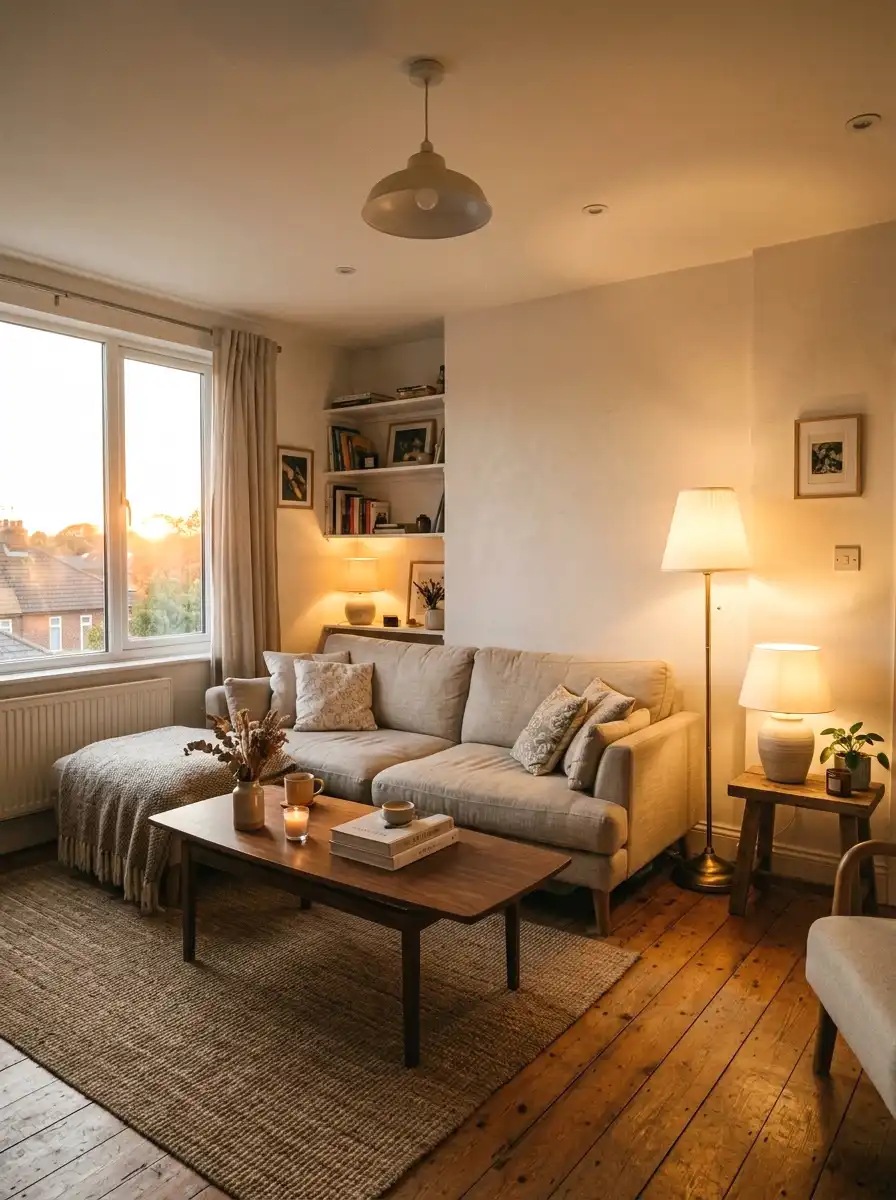
Cool white or daylight bulbs, the ones that read 5000K or 6000K on the box, make spaces look like a dentist’s office. Warm white at 2700K is what makes a room feel like somewhere you want to be in the evening. Most bachelor spaces have whatever bulbs were in the sockets when they moved in, and they’re almost always the wrong ones.
Swap every bulb in the main living areas for 2700K LEDs. A pack of 6 runs $10 to $15. Smart bulbs that dim are a step up and give you more control, but even the basic swap makes a difference that’s immediately obvious. Do this before you buy anything else. The effort-to-payoff ratio is as good as it gets.
More Ideas:
19. Add Texture With Throw Pillows
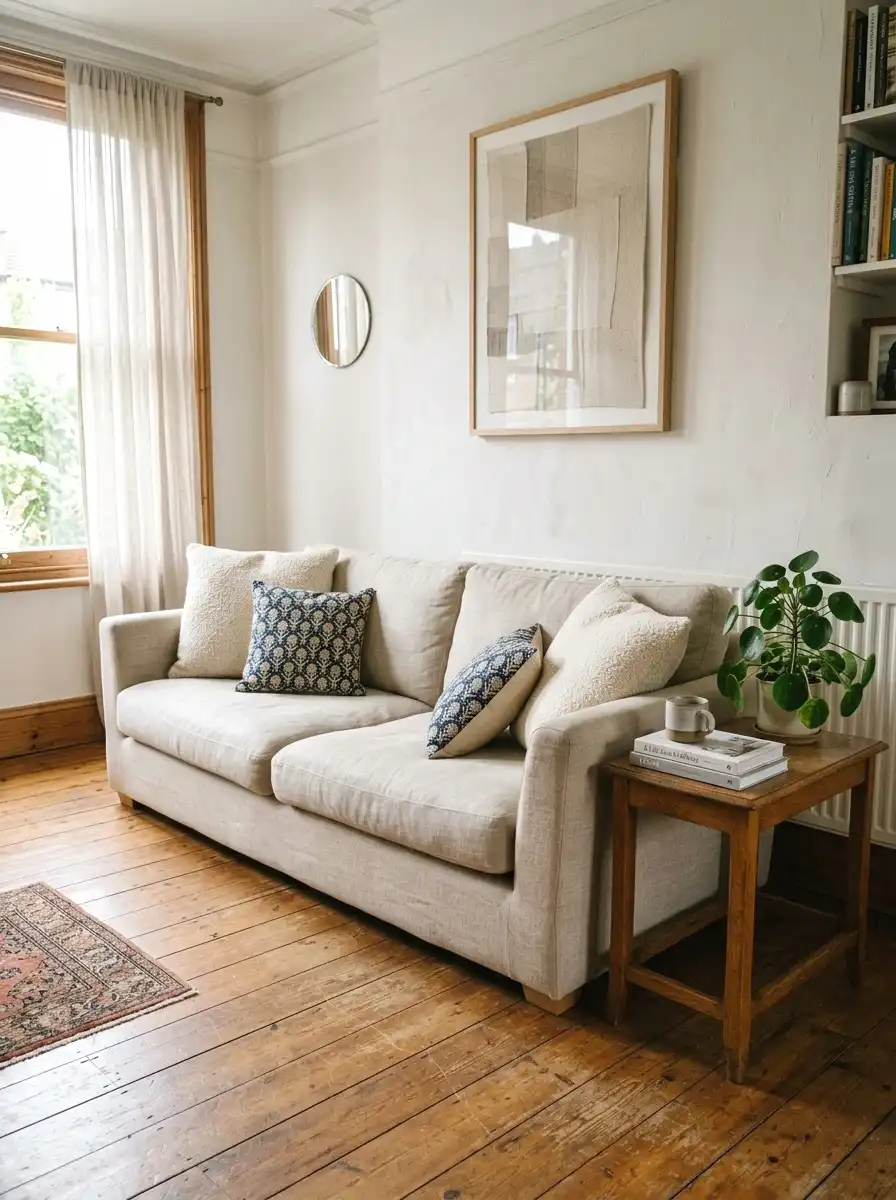
Four throw pillows on a sofa sounds like something you’d read in a lifestyle magazine and ignore. But a sofa with no pillows looks like a waiting room, and that’s worth solving. The formula that works: two solid pillows in a fabric that has texture, boucle, linen, or knit, plus two smaller pillows in a pattern or contrasting color.
Keep all four within the same color family, which means they can share one or two of the same tones without matching exactly. Sets run $40 to $80 for four decent quality covers. Get covers with zippers so you can swap them out when they wear. Don’t overstuff the sofa. Four is the ceiling for most three-seat sofas.
20. Frame Your TV Wall With Shelving
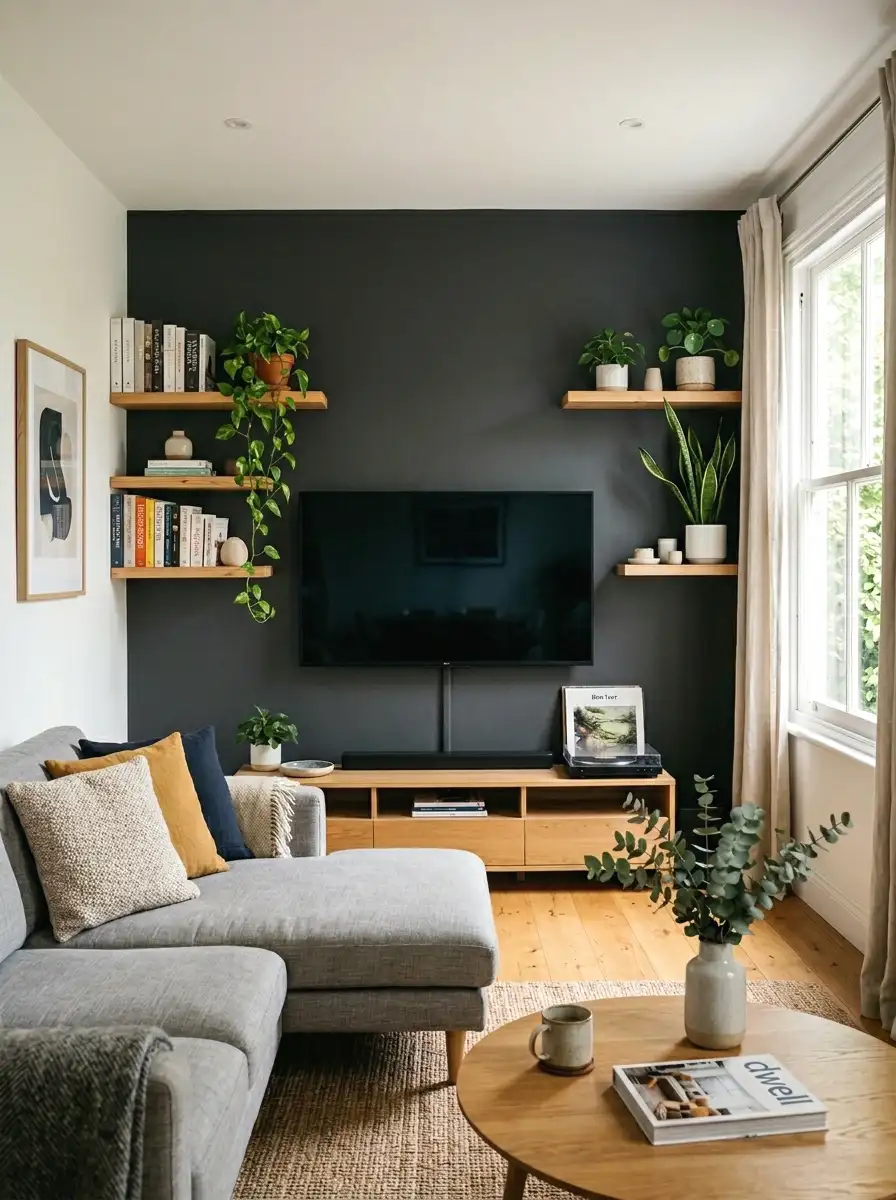
If your TV is mounted or on a stand, the wall around it is almost always bare and unbalanced. Floating shelves on either side of the TV at staggered heights turn that dead wall space into a display area and frame the screen in a way that looks thought-out. This is a very common approach in design-forward apartments, and it works.
Use shelves that are 24 to 30 inches wide and keep them asymmetric, one higher on the left, one mid-height on the right. Put real things on them, a plant, a book stack, one or two objects. Avoid filling them up. The goal is balance, not storage. Total cost for two brackets and boards runs $50 to $120.
21. Define Zones With Lighting
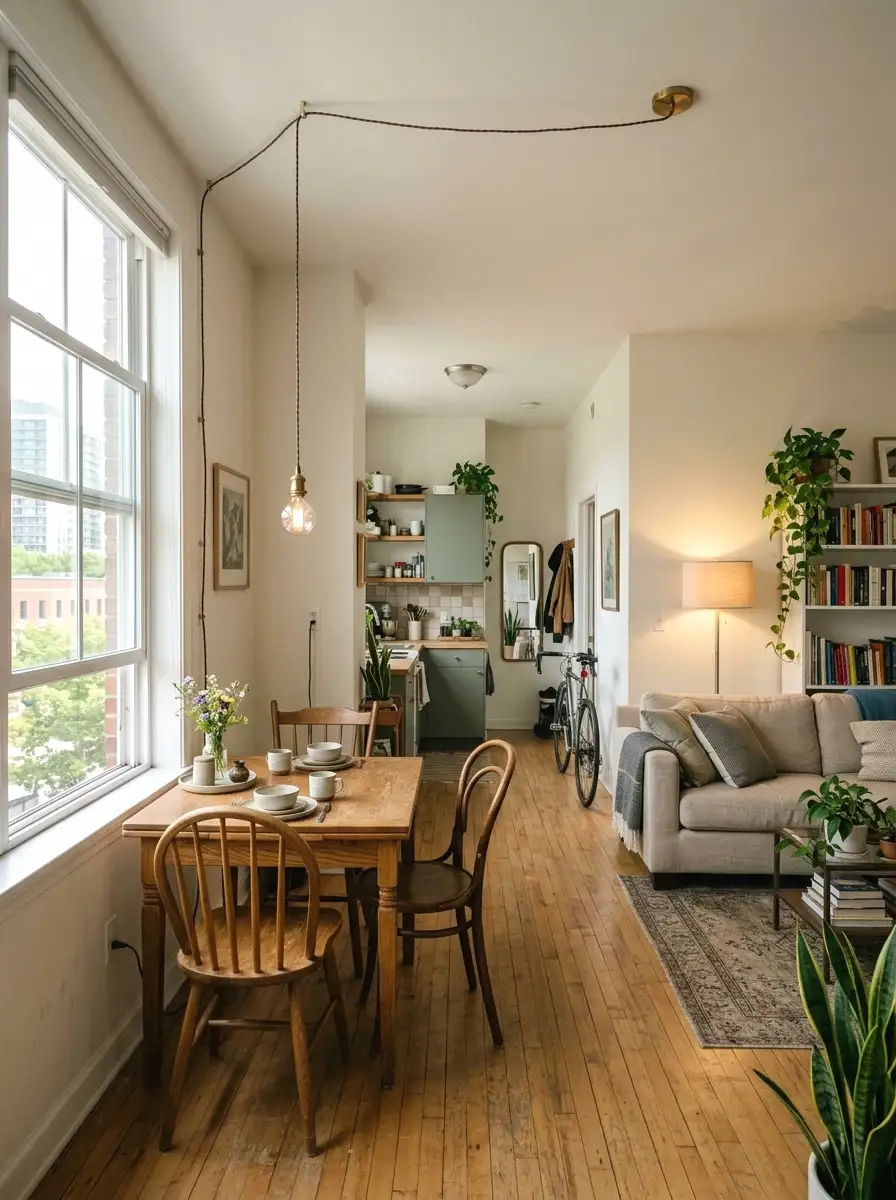
In open-plan spaces or studios, lighting is how you tell the room where one area ends and another begins. A pendant light or a cluster of Edison bulbs over a dining area, a floor lamp near the reading chair, a desk lamp in the work area. Each zone gets its own light source, and the room suddenly has structure that furniture alone doesn’t create.
Pendant lights on a plug-in cord are the easiest no-electrician option. They run $40 to $100 and hang from a ceiling hook with the cord run along the wall. Add a cord cover in matte black or white and it looks intentional. (took me ages to figure this out) Zoned lighting is the move that makes even a small studio feel like it has multiple rooms.
If you’re working with a studio or open-plan layout specifically, there are some studio setups that make small spaces work without the room feeling crowded.
22. Put a Clock on the Wall
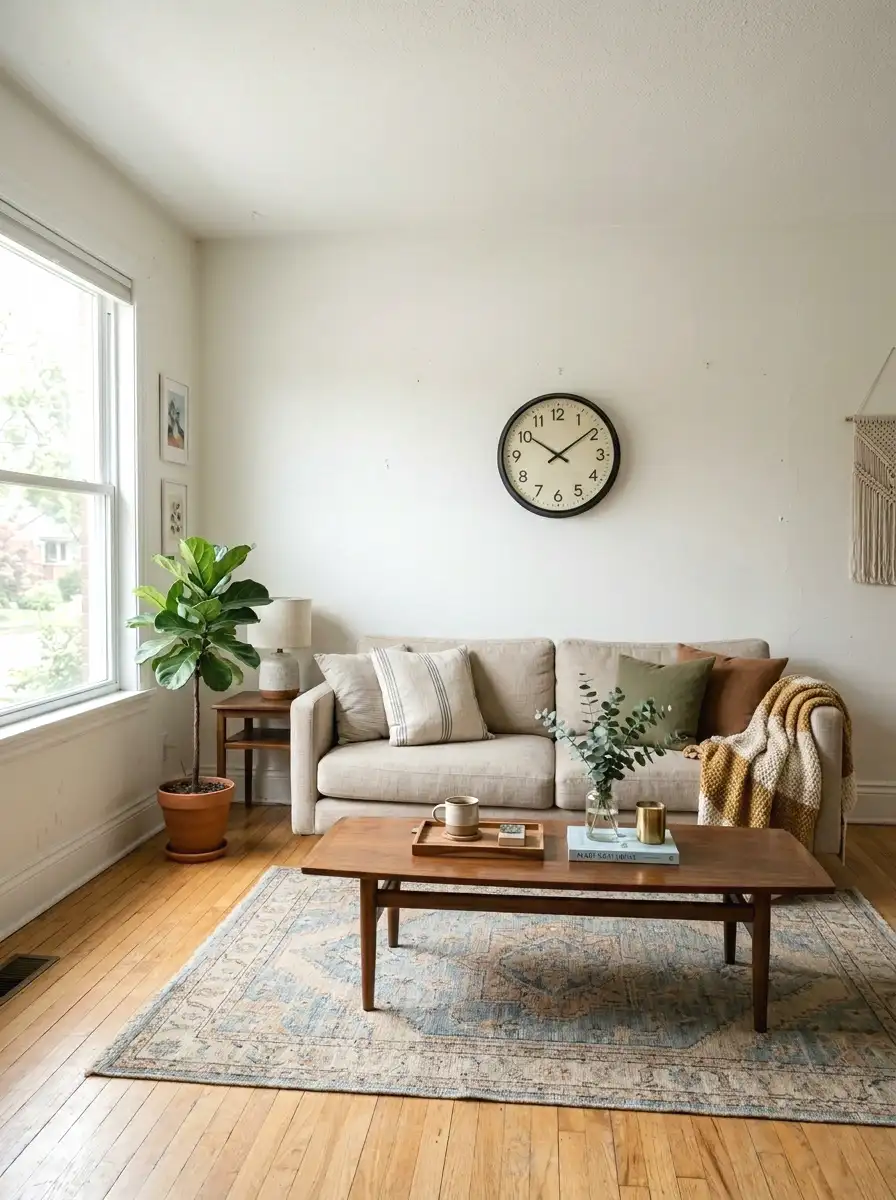
Not a digital clock. An analog wall clock in a clean design, a large face in black, wood, or brushed metal, does something specific to a wall that’s hard to explain until you see it. It’s functional, it reads as grown-up, and it gives the eye a fixed point on any wall that needs one. It also makes it clear you’re not just treating walls as dead space.
A 12 to 18-inch clock with a clean face runs $25 to $60 at most home stores or on Amazon. Avoid fussy Roman numeral designs unless that’s genuinely your style. Minimal Arabic numerals or a no-number face in black or natural wood both work in most spaces. Mount it at eye level when seated if it’s going in the living room.
More Ideas:
Final Thoughts on Bachelor House Ideas
What you’ve got now is a clear picture of how a few focused changes create a space that looks like you actually care about it. The ideas that carry the most weight, lighting, rugs, one real statement piece, and surfaces that aren’t chaotic, work together. You don’t need all 22. Pick five that match where your space is right now.
Start with the lighting. Swap the bulbs this weekend. It costs $15 and takes ten minutes, and the shift is immediate. Once the light feels right, everything else you add after that lands better.
If you want more ideas like these, homelypop.com covers real home setups across every room and budget. Worth a look when you’re ready for what comes next.
You’ll find room-by-room ideas for your next move organized by space and style across the site.