
22 Decorating Ideas for Small Apartments That Actually Work

Your apartment is small and it’s starting to feel like a problem you can’t solve. You’ve tried rearranging furniture twice. Nothing helped. That’s the part nobody warns you about. Decorating Ideas For Small Spaces
These 22 ideas came from real research, not a design magazine shoot. I looked at what renters were actually doing in 300-square-foot studios and 500-square-foot one-bedrooms, what worked, what they spent, and what fell flat. The list covers wall tricks, furniture swaps, lighting fixes, and storage ideas across budgets from $10 to around $300. Each idea made the cut because it’s doable without a contractor, a landlord’s blessing, or a big budget.
This is for renters and owners living in apartments under 800 square feet with a budget between $100 and $300 total. If you’re looking to gut-renovate or spend $1,000 plus, this isn’t that. But if your goal is a space that feels bigger, calmer, and actually yours, that’s exactly what you’ll get here.
By the time you finish reading, you’ll have a clear plan for which changes to make first and how to make your apartment feel like a home.
If you want a head start on the budget side, there are plenty of budget-friendly ways to feel at home without spending much at all.
What to Know Before You Start Decorating a Small Apartment
- Small spaces show clutter three times faster than larger rooms, so editing is the first real design move.
- Measure your floor plan before buying anything. A sofa that’s 4 inches too wide kills traffic flow.
- A $15 can of white paint on one wall can make a room feel 20 to 30 percent bigger without renovation.
- Most people overbuy storage bins first and under-use vertical wall space, which is free real estate.
- Skipping a floor plan sketch is the most common mistake. Fix it with a free app like RoomSketcher before spending a dollar.
- Peel-and-stick products need clean, dust-free walls or they’ll peel in two weeks. Wipe the surface first.
- Flat-packed furniture from brands like IKEA holds up fine for 3 to 5 years when assembled correctly with the included hardware fully tightened.
1. Use a Full-Length Mirror to Double Your Space
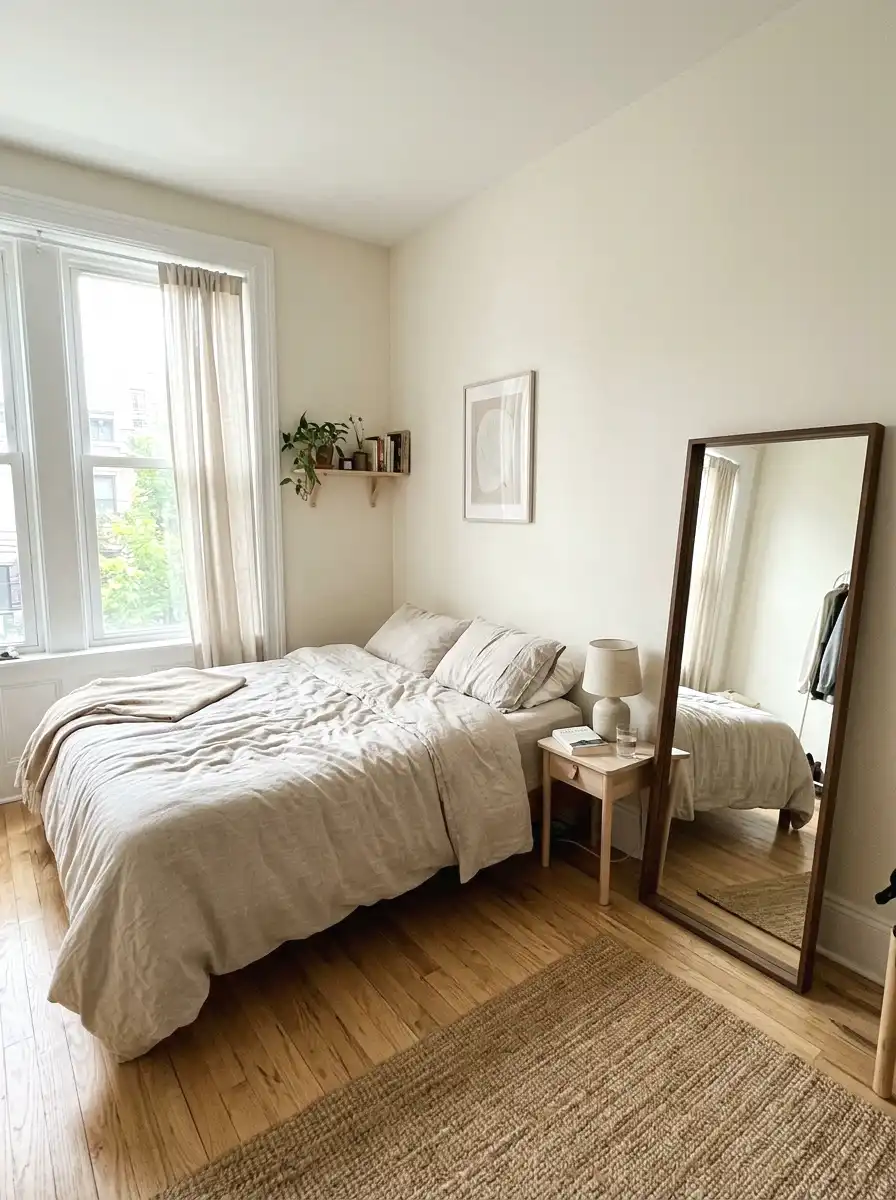
Mirrors are one of the most underrated tools in a small apartment. A full-length mirror propped against a wall or mounted behind a door bounces light across the room and tricks the eye into reading the space as much bigger than it is. It sounds like a cliche until you actually try it.
I added a 65-inch floor mirror to my studio bedroom corner and the room felt like it grew overnight. Mirrors in this size range cost between $40 and $90 at most home stores, and they don’t require any drilling if you lean them. The effect is immediate and it costs almost nothing for what you get.
2. Hang Curtains High and Wide
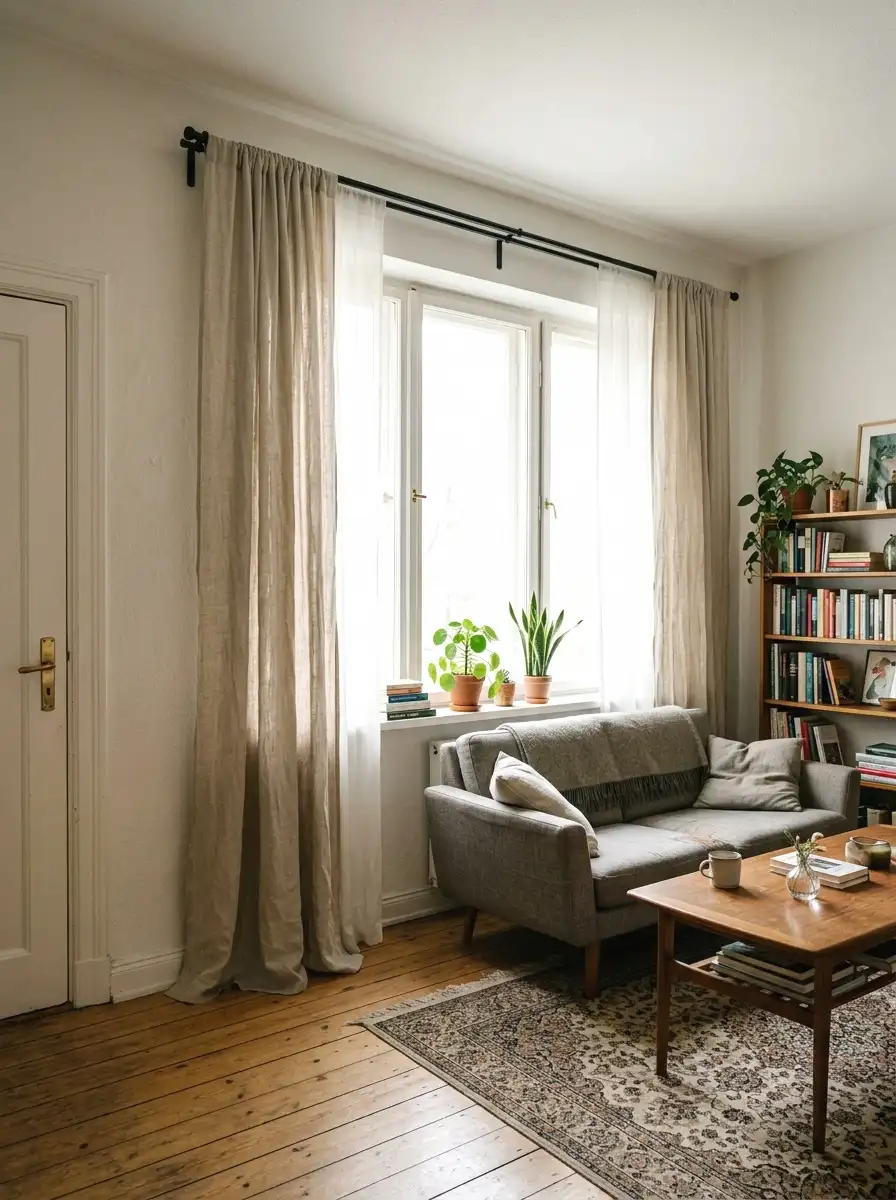
Here’s what nobody tells you about curtains in small apartments: the rod placement matters more than the fabric. When you hang the rod close to the window frame, the window looks short and the ceiling feels low. Move the rod up to 4 or 5 inches below the ceiling and extend it 8 to 10 inches past the window on each side.
This one change makes windows look massive and ceilings feel tall. Curtain panels that puddle slightly at the floor add to that effect. A basic rod from a hardware store runs about $15 to $25, and linen-look curtains start around $30 a pair. That’s under $60 for a room that suddenly has better proportions.
More Ideas:



3. Switch to a Raised Bed Frame
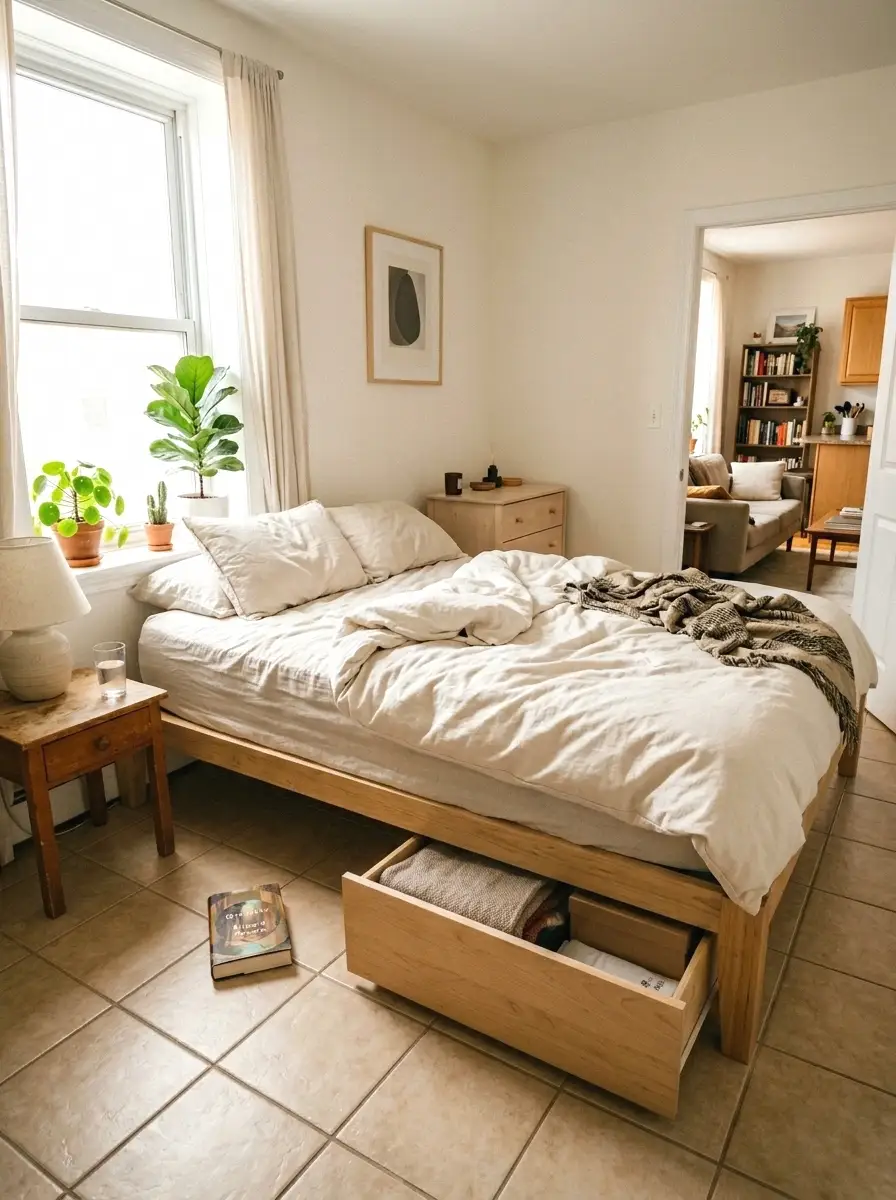
The floor is the most wasted space in a small bedroom. A platform bed frame with legs, or a bed with built-in storage drawers underneath, gets your mattress up off the ground and opens up visual breathing room in the room. When you can see floor space beneath furniture, the room reads as bigger.
A raised frame with under-bed drawers gives you an extra 20 to 30 gallons of hidden storage, which is a serious amount in a small apartment. Bed frames like this run from $120 to $250 depending on size. If you go the simple legs route, even a set of furniture risers at $15 to $20 adds 3 to 4 inches of clearance and changes how open the room feels.
4. Add a Pegboard Wall in the Kitchen or Entryway
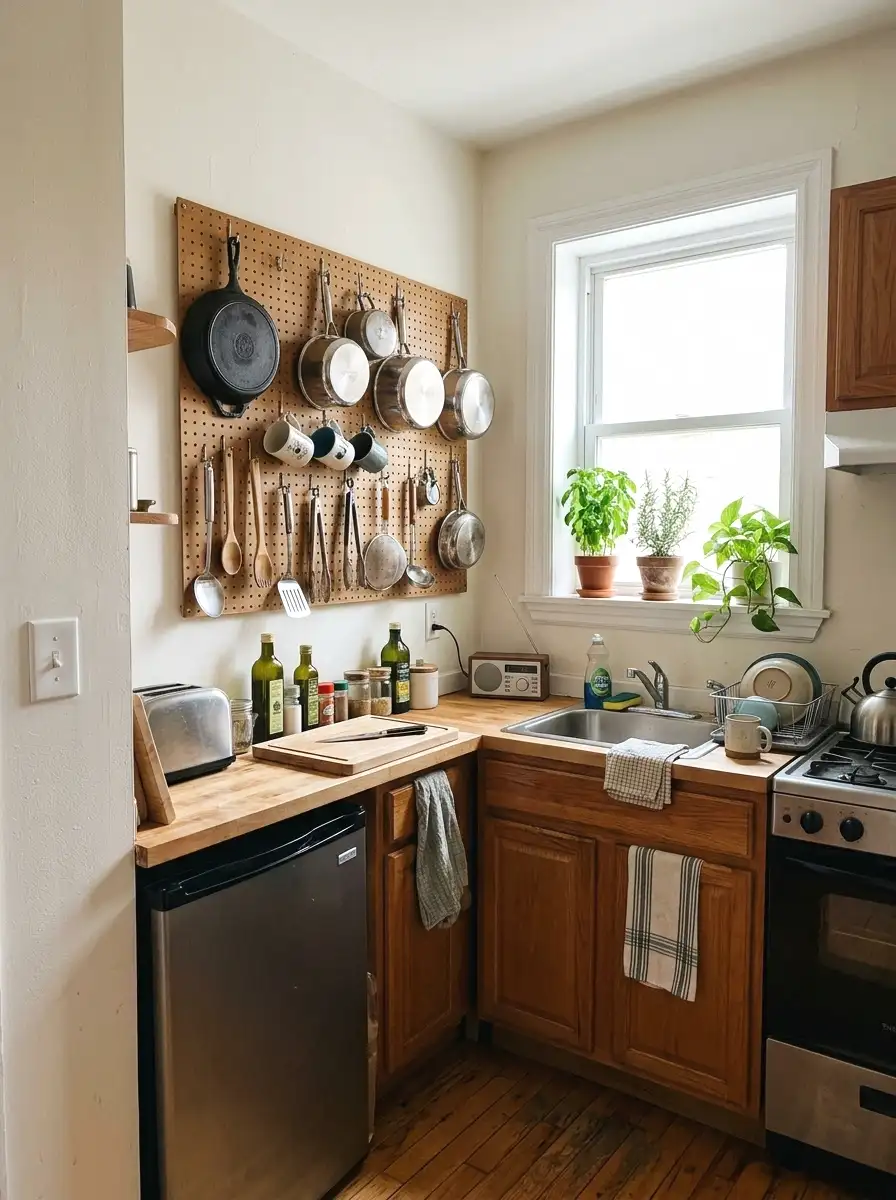
A pegboard is one of those solutions that looks like a DIY project but actually solves real storage problems. Mount one in the kitchen above the counter and you can hang pots, utensils, small shelves, and herb planters without using any cabinet space. In the entryway, it holds keys, bags, hats, and dog leashes off the floor.
A 2×4-foot pegboard sheet costs about $15 at a hardware store. You’ll need standoff mounts to give it clearance from the wall and hooks that run another $10 to $20. Total investment is under $50. When I tried this in my own kitchen, I cleared out an entire drawer just by hanging things I used every day.
5. Go Vertical With Floating Shelves
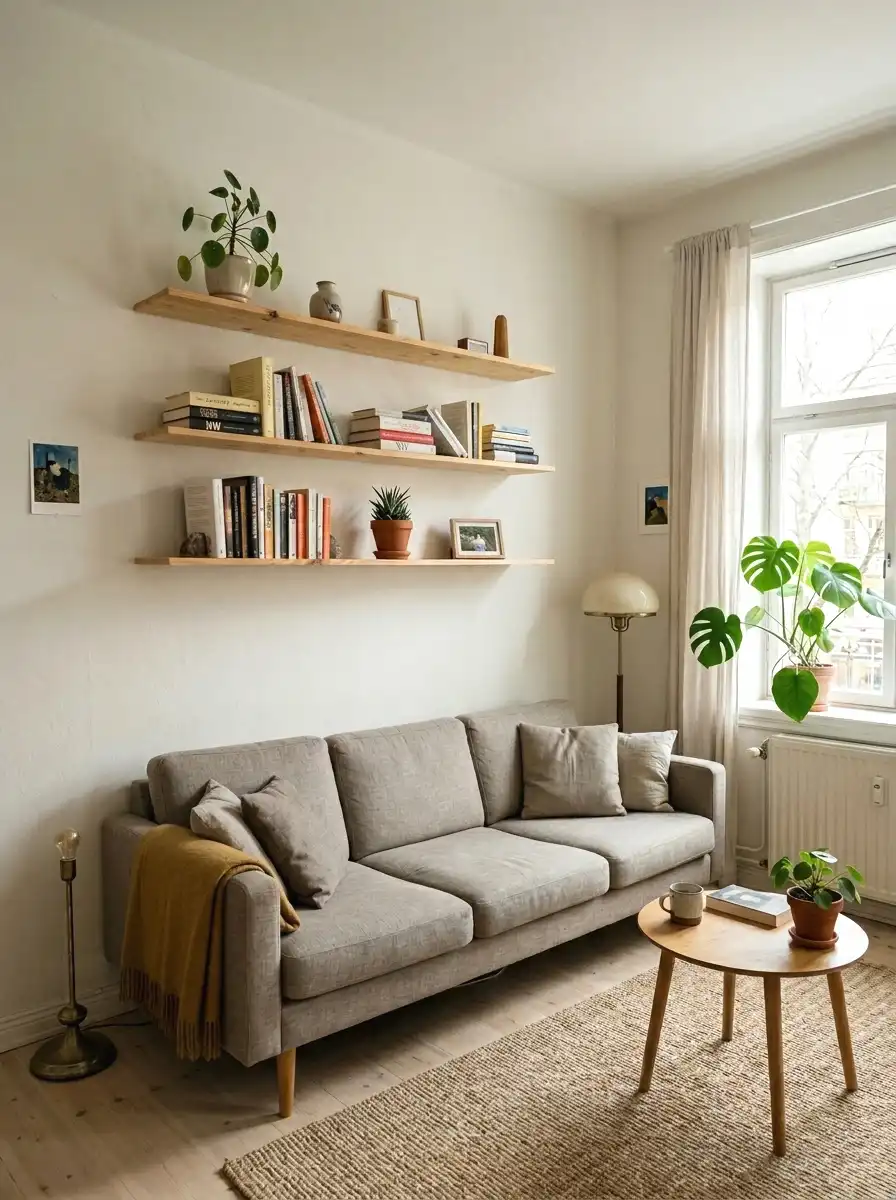
Vertical space is the thing most small-apartment renters ignore completely. Your walls above furniture level are empty and they don’t have to be. A set of floating shelves installed 12 to 15 inches apart going up toward the ceiling turns dead wall space into storage and display without touching your floor plan.
Three shelves at $20 to $35 each gives you around 15 to 18 linear feet of storage for books, plants, boxes, and decor. Use the top shelves for things you rarely need and keep the lower ones for everyday items. Stick to one color across all the shelves so the wall reads as one unit instead of a cluttered collection.
6. Replace a Solid Sofa with a Loveseat or Settee
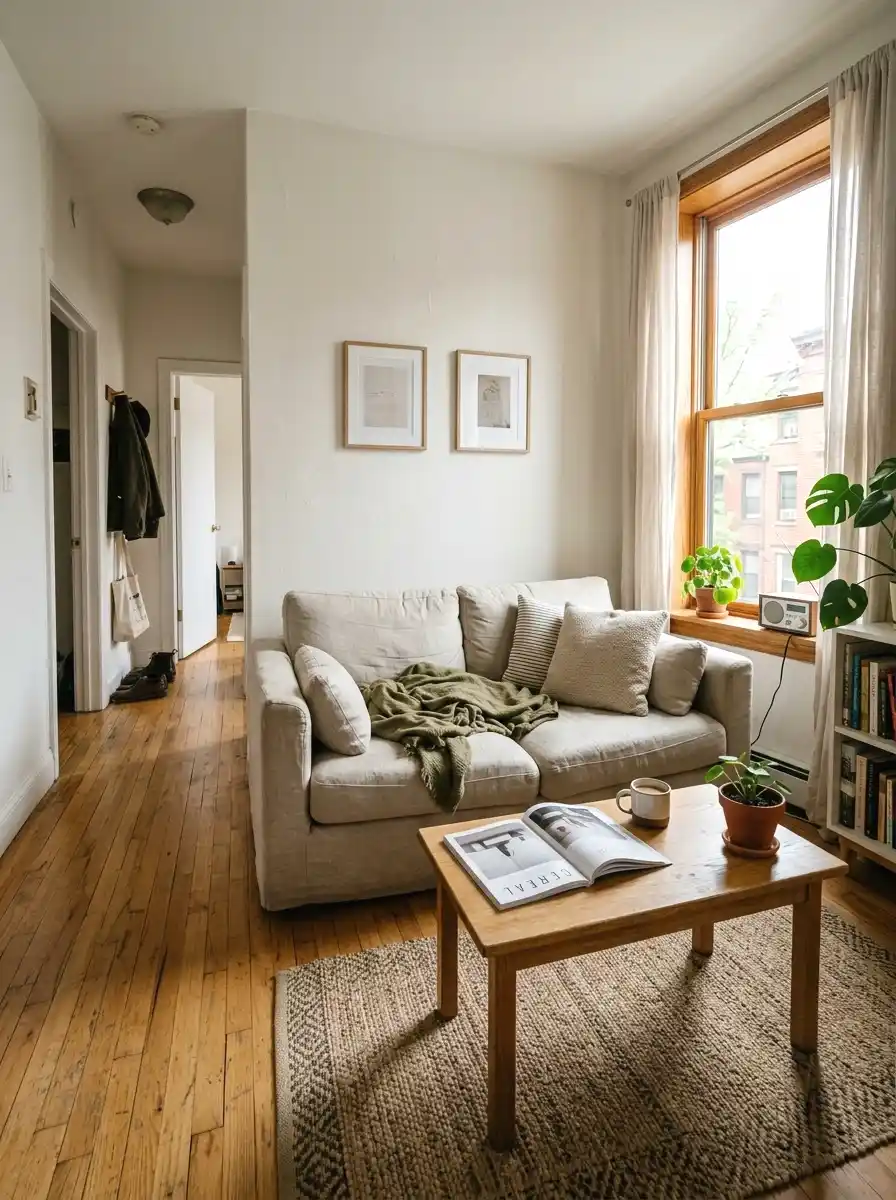
A full-size three-seater sofa in a small living room isn’t just taking up floor space. It’s blocking traffic, making the room feel stuffed, and probably leaving no room for a coffee table. A loveseat or apartment-sized sofa at 60 to 72 inches wide fits the same two people but frees up 18 to 24 inches of floor.
The difference feels dramatic. You’ll suddenly have room to add a small coffee table, a plant, or a second chair. Apartment-sized sofas aren’t a compromise, they’re the right size for the room you’re actually working with. Most run between $200 and $400, and the space you get back is worth every dollar.
More Ideas:
7. Try Removable Wallpaper on One Wall
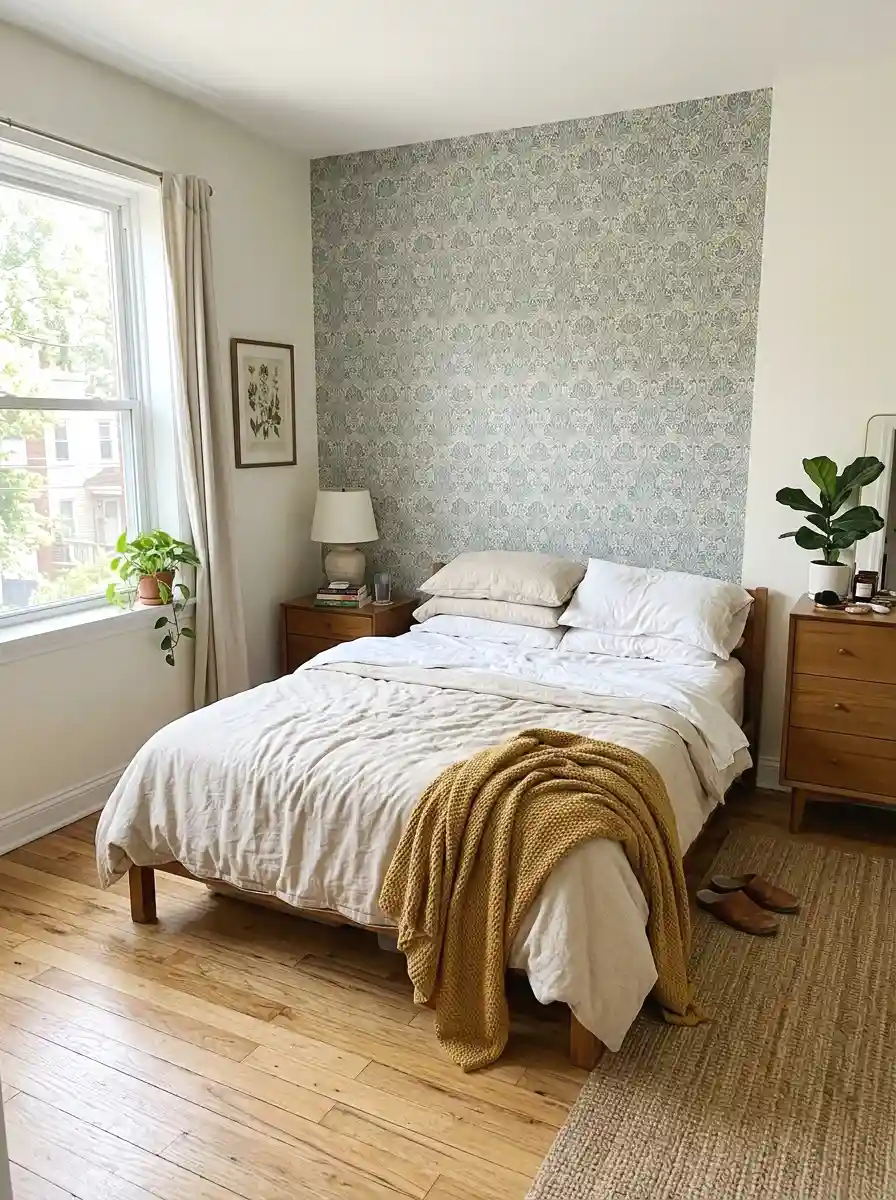
One patterned wall changes the whole personality of a room. Removable peel-and-stick wallpaper is renter-safe, repositionable, and comes in hundreds of patterns. You pick one wall, usually behind the bed or sofa, and you apply it like a giant sticker. When you leave, it peels off clean.
Removable wallpaper runs about $1.50 to $3.50 per square foot. A queen headboard wall, roughly 54 square feet, costs $80 to $190 in materials. The look you get is significant. What was a flat boring room now has a focal point, and that focal point makes everything else in the room look more intentional.
8. Use a Console Table Behind the Sofa
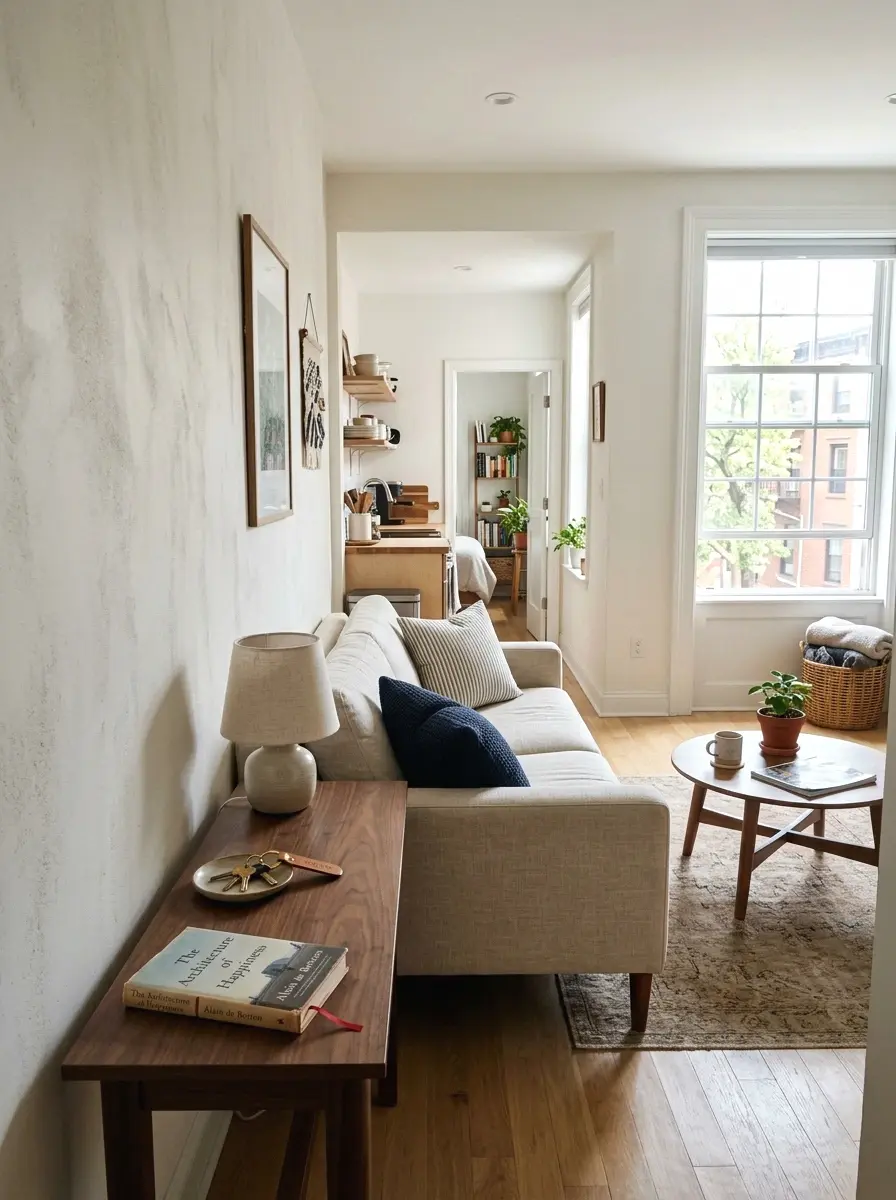
When you float your sofa away from the wall, a narrow console table behind it becomes a hardworking piece. It acts as a room divider, an extra surface for a lamp or plants, and it fills the gap without adding bulk. Console tables are typically 10 to 14 inches deep so they barely take up any floor space.
This works especially well in open-plan studios where you need a visual break between the living and sleeping areas. A console table at $60 to $120 anchors the sofa, gives you a place to charge your phone at night, and makes the room feel more like a real living room. It’s one of those tiny changes with an outsized effect.
If you’re working with a studio layout specifically, there’s a lot more on making a studio feel more organized and livable.
9. Swap Overhead Lights for Floor and Table Lamps
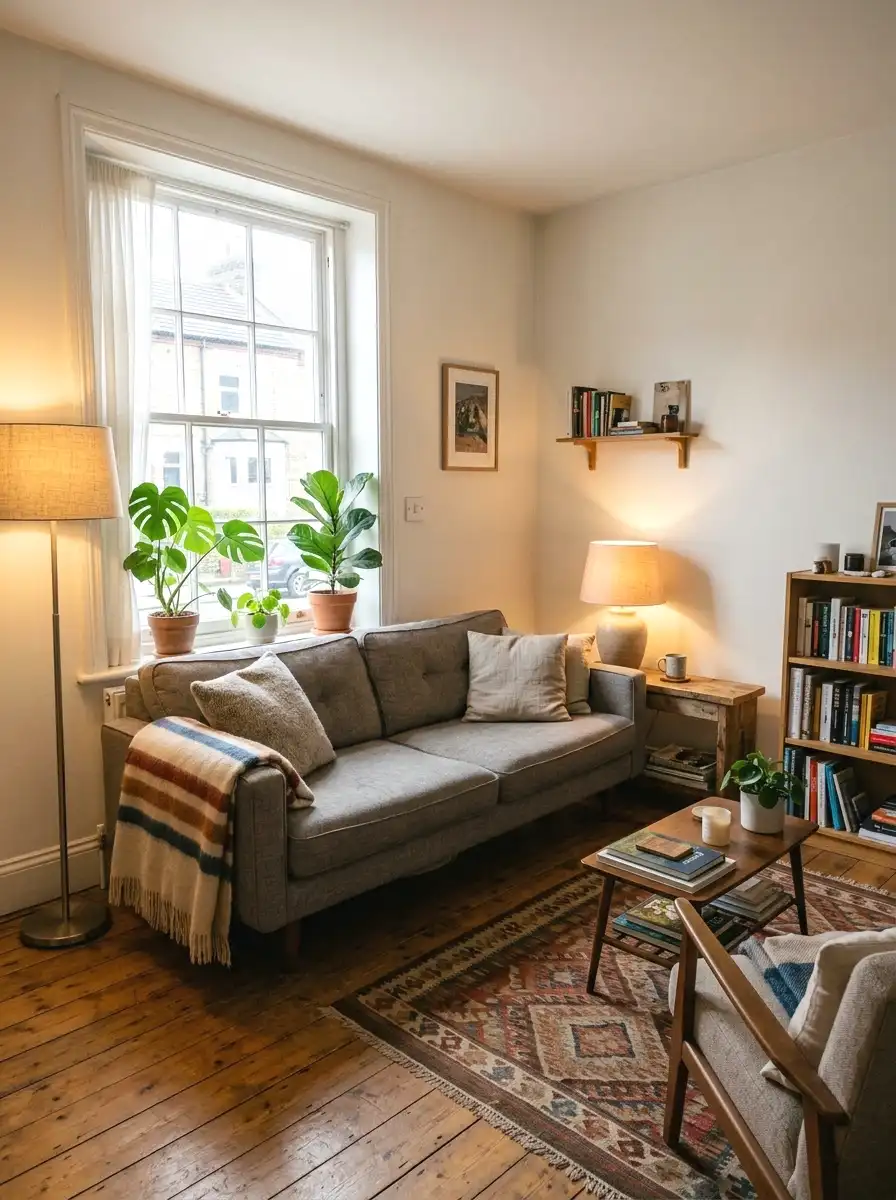
Overhead lighting in an apartment is usually terrible. One harsh ceiling fixture makes a room look like a waiting room. Replacing it with two or three lamps at different heights creates warmth, texture, and the feeling of separate zones in the same space.
You don’t have to remove the overhead light. Just stop using it as the main light source. Add a floor lamp in a corner and a table lamp on a side table. Bulbs matter here: 2700K warm white is the sweet spot. Lamps start at $25 to $40 at stores like Target or IKEA, and the difference between overhead-only lighting and layered lighting is bigger than almost any other change you can make.
Getting layered lighting right is one of the biggest factors in how cozy a small room actually feels.
10. Mount Your TV on the Wall
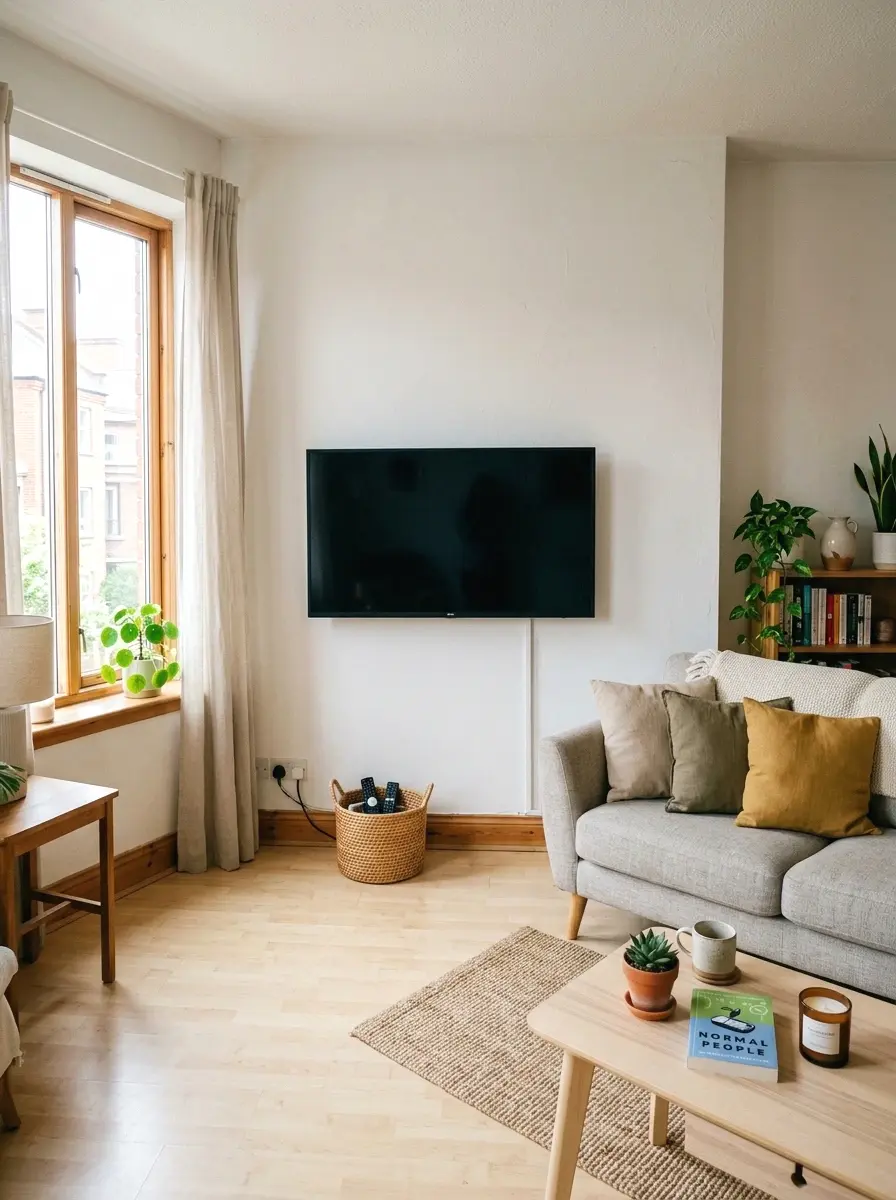
A TV sitting on a console or dresser eats up floor space and usually sits too low for comfortable viewing anyway. Wall mounting moves it to eye level, frees up the surface underneath, and makes the whole wall feel intentional. You can store a small basket or two under a floating TV shelf for remotes and cables.
TV wall mounts cost $20 to $40 for a fixed mount and $30 to $60 for a tilting one. If the idea of drilling into your apartment wall makes you nervous, there are TV mount systems that use a floor-to-ceiling tension pole instead. They run about $80 to $120 and leave zero marks on the wall. I was skeptical about this one but the open floor space it creates is genuinely noticeable.
More Ideas:
11. Add a Room Divider or Bookshelf as a Partition
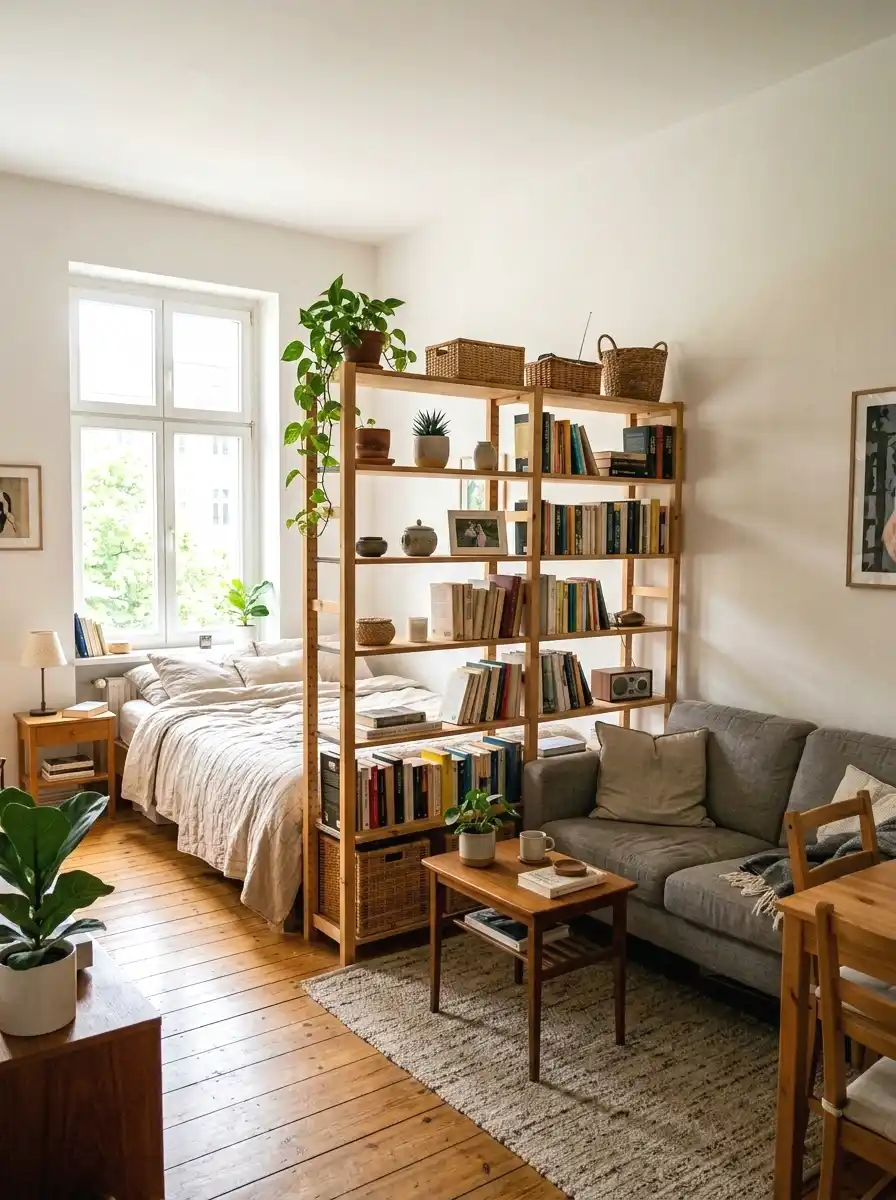
Studios and open-plan apartments benefit enormously from a visual break between zones. A tall open bookshelf, around 60 to 72 inches high, placed perpendicular to a wall creates a bedroom area without building a wall. It separates the space visually without blocking light.
A five-shelf IKEA KALLAX or BILLY unit does this well and costs under $100. You can store books, baskets, and decor on both sides. It’s storage and a room divider in one piece of furniture. The bedroom side stays private and the living side stays open. That division alone makes the space feel more organized and livable.
There are even more approaches to dividing a studio without walls if this idea resonates with your layout.
12. Choose Furniture With Exposed Legs
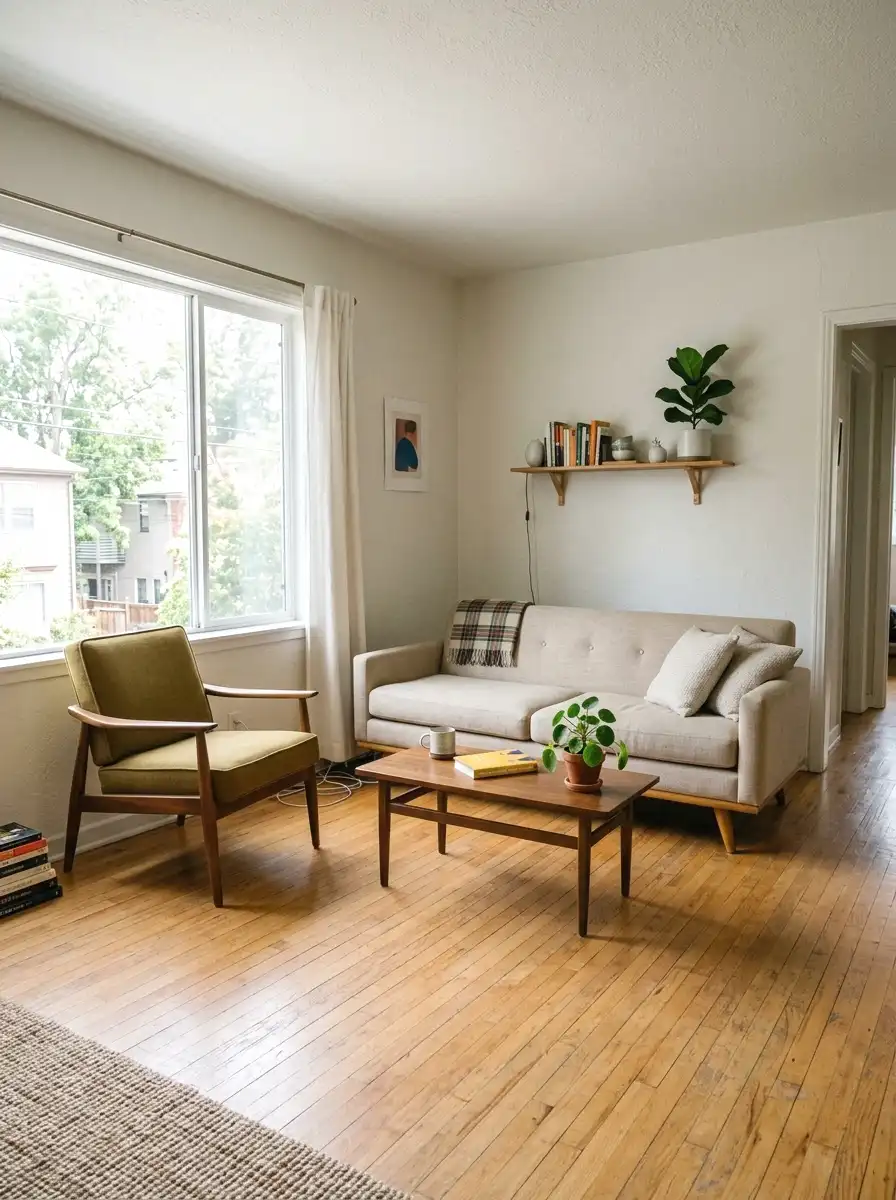
Furniture that sits directly on the floor without legs makes a room feel heavy and low. Sofas, chairs, and side tables with exposed legs let light pass underneath and make the floor feel more continuous. That continuity makes the room feel larger.
So here’s the thing: you don’t need to replace all your furniture at once. Even swapping one blocky piece for a legged version makes a difference. A mid-century style accent chair with tapered legs runs $80 to $180 and brings in that clean, open look. Over time you can swap other pieces. The visual effect adds up gradually.
13. Bring In a Large Area Rug
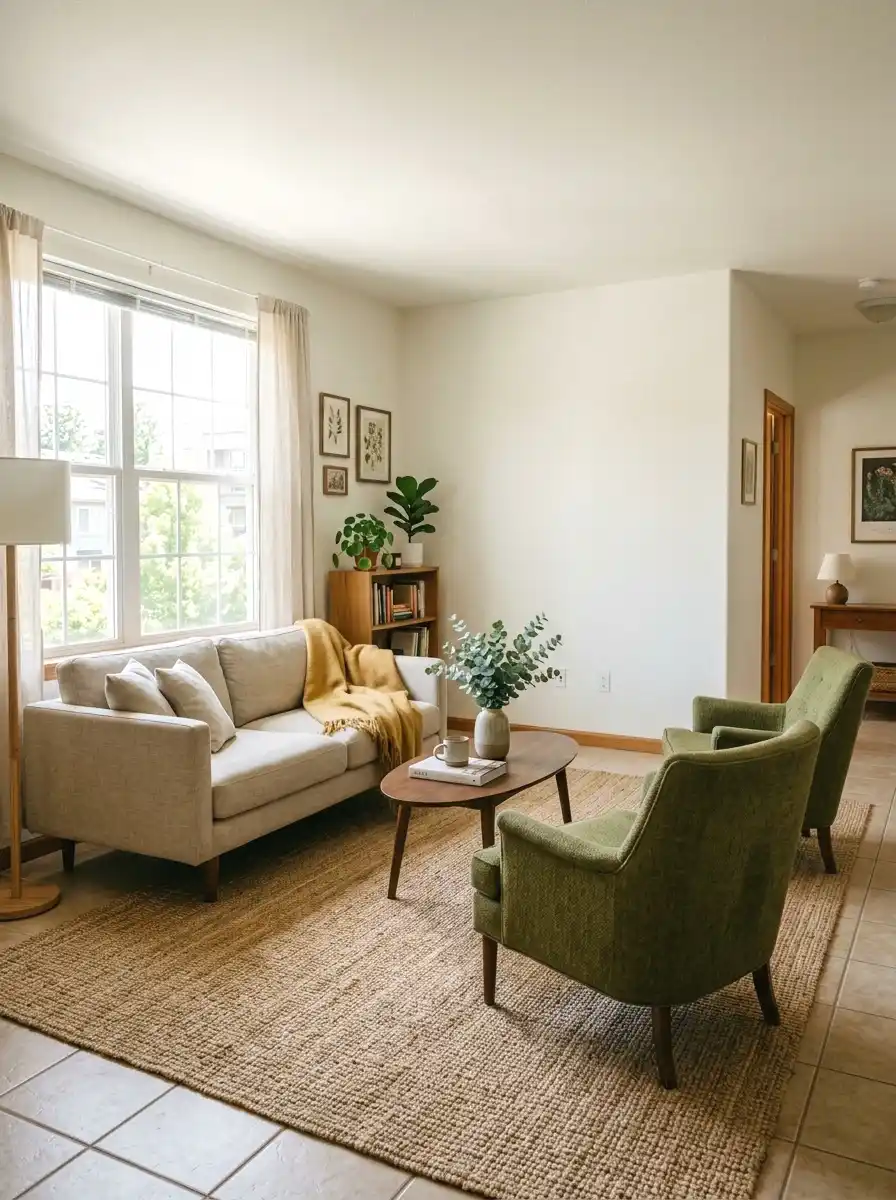
A rug that’s too small is worse than no rug. A rug that floats in the middle of the room with furniture legs hanging off the edge makes everything look disconnected and the room looks smaller. The right rug is big enough for all front legs of major furniture pieces to sit on it.
In a living room, that usually means an 8×10 or 9×12 rug depending on the layout. A large jute or flatweave rug in that size runs $80 to $200 and is one of the best investments in a small apartment. It anchors the furniture, defines the zone, and pulls the room together. The whole space reads differently when the rug is properly sized.
This principle applies just as much when your living room also has to fit a dining area — here’s a look at how rugs anchor a small living room in those setups.
14. Paint the Ceiling the Same Color as the Walls
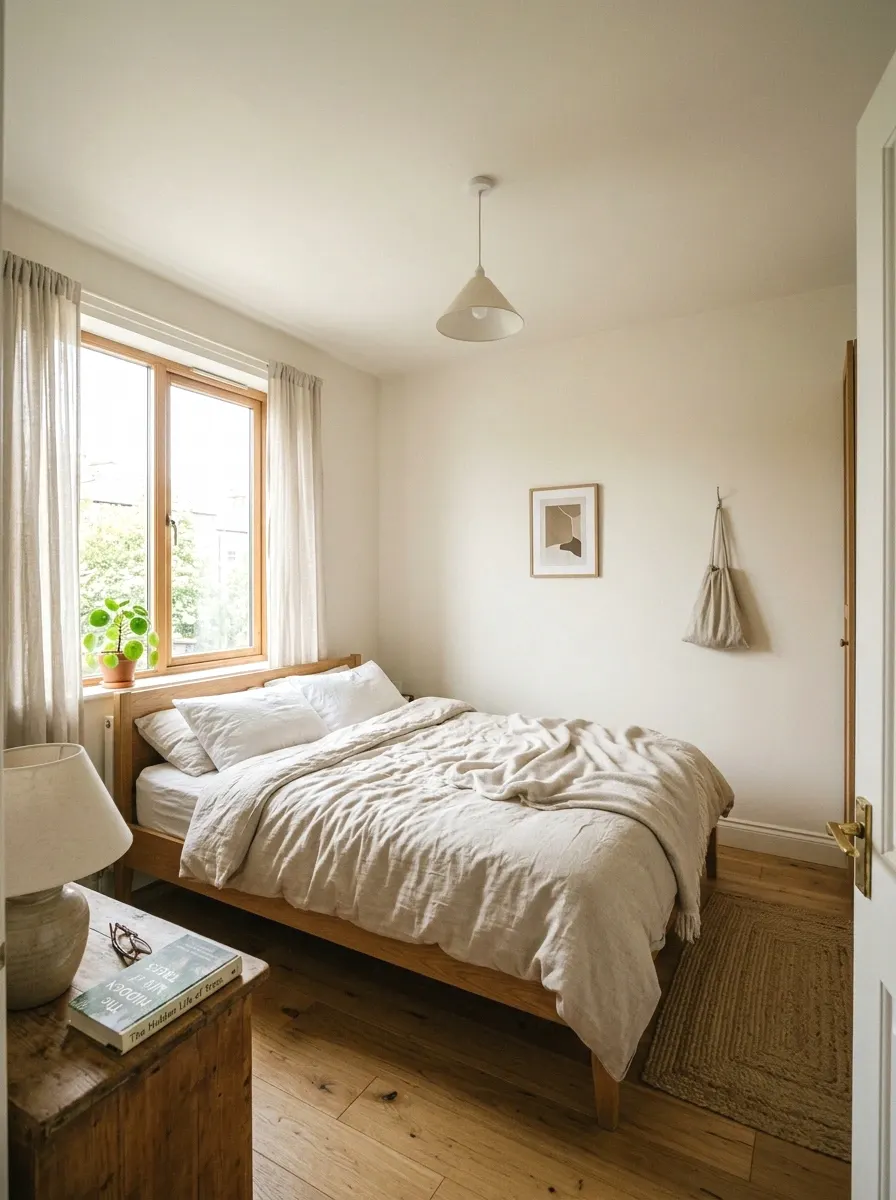
Most people paint their ceiling white and their walls a color. That horizontal line where the colors meet makes the room feel boxed in. When you paint the ceiling the same color as the walls, especially a light color, the room feels taller and more like an envelope of space.
This works particularly well in smaller rooms under 150 square feet. You’ll use about one extra quart of paint, which costs $12 to $20. The prep time is the same as a regular paint job. The ceiling doesn’t disappear into white. Instead, the room feels more cohesive and the height feels taller. Counterintuitive, but it works.
More Ideas:
15. Use Ottomans That Double as Storage
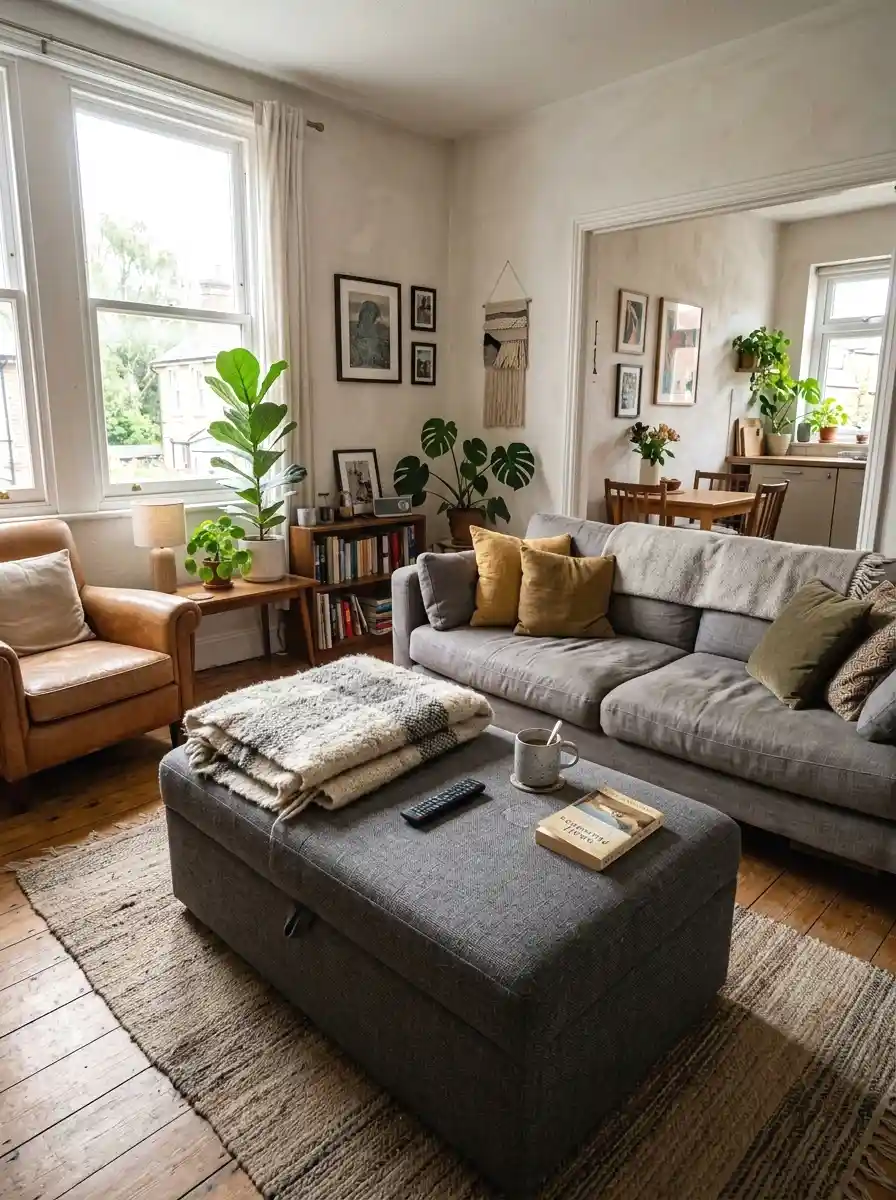
A coffee table is often the least efficient piece of furniture in a small living room. It holds drinks and a remote, and that’s about it. An ottoman with a removable lid does the same surface work but stores blankets, board games, or seasonal items inside.
Cube ottomans in the $40 to $80 range are everywhere and most hold a surprising amount. A larger upholstered ottoman with storage runs $80 to $150. You free up closet space, you get a soft place to put your feet, and your living room doesn’t look cluttered. That’s three wins from one piece of furniture. Took me ages to figure out why I kept buying coffee tables when this was sitting right there.
16. Hang Artwork in a Tight Grid
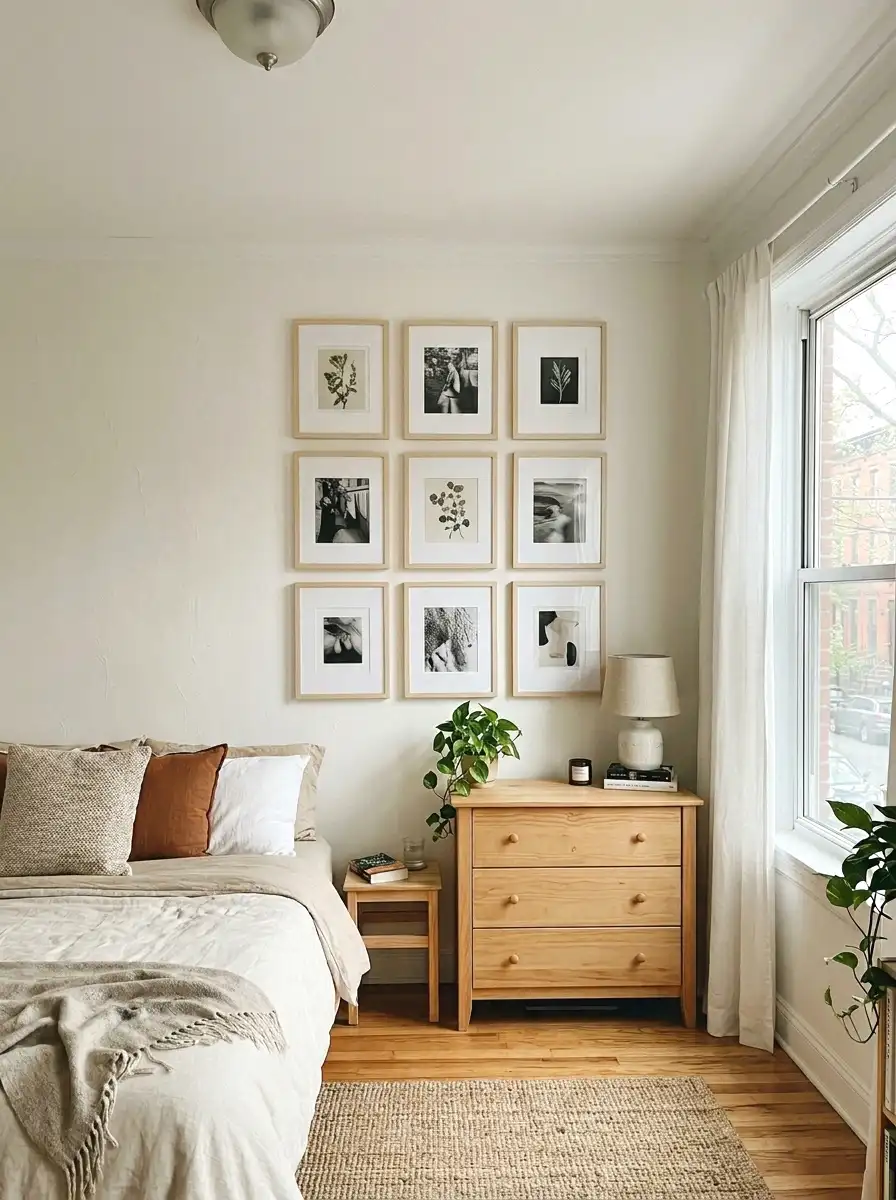
Scattered small artwork on a wall makes the space feel random and visually noisy. But a tight grid of 4 to 9 matching frames turns the same wall into something that looks curated and deliberate. The trick is consistent spacing, 2 to 3 inches between each frame, and uniform frame sizes or a mix of two sizes maximum.
Print your own photos or download free printable art to keep costs down. IKEA RIBBA frames come in multipacks and run about $8 to $15 each. A grid of nine 5×7 frames costs under $80 in frames and almost nothing in prints. It fills a wall properly and the result looks like something from a design account, not a random assortment of art.
17. Add Under-Shelf Lighting
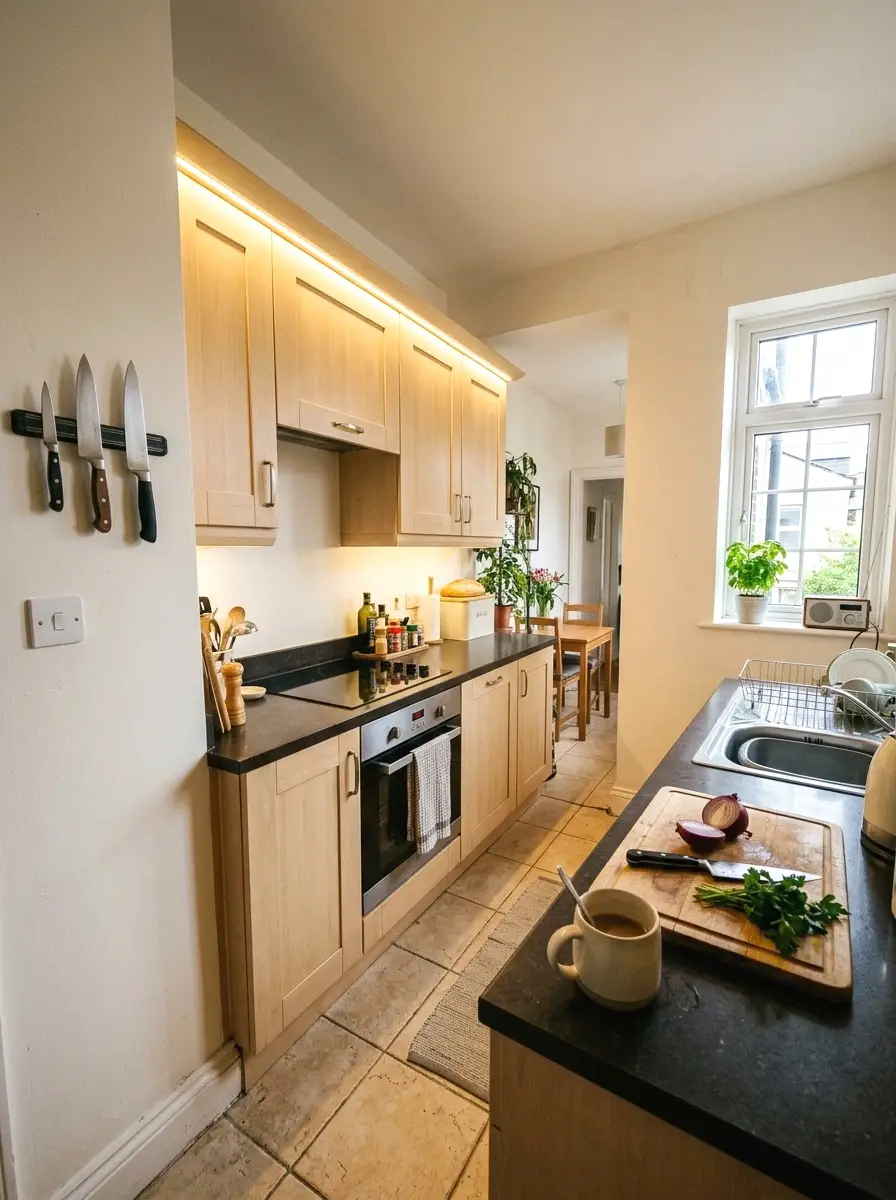
Kitchens and home offices in small apartments almost always feel dark. Under-cabinet LED strip lights change that instantly. They throw light directly onto your work surface, make the room feel less dim, and cost almost nothing to run. The installation is peel-and-stick in most cases.
LED strip light sets cost $15 to $35 and plug into a standard outlet. You can cut them to the length you need. Warm white (2700K to 3000K) looks the best. The under-shelf glow separates your kitchen visually from the rest of the space and makes the whole apartment feel less like one flat box. It’s $20 that does real work.
18. Replace Cabinet Hardware in the Kitchen
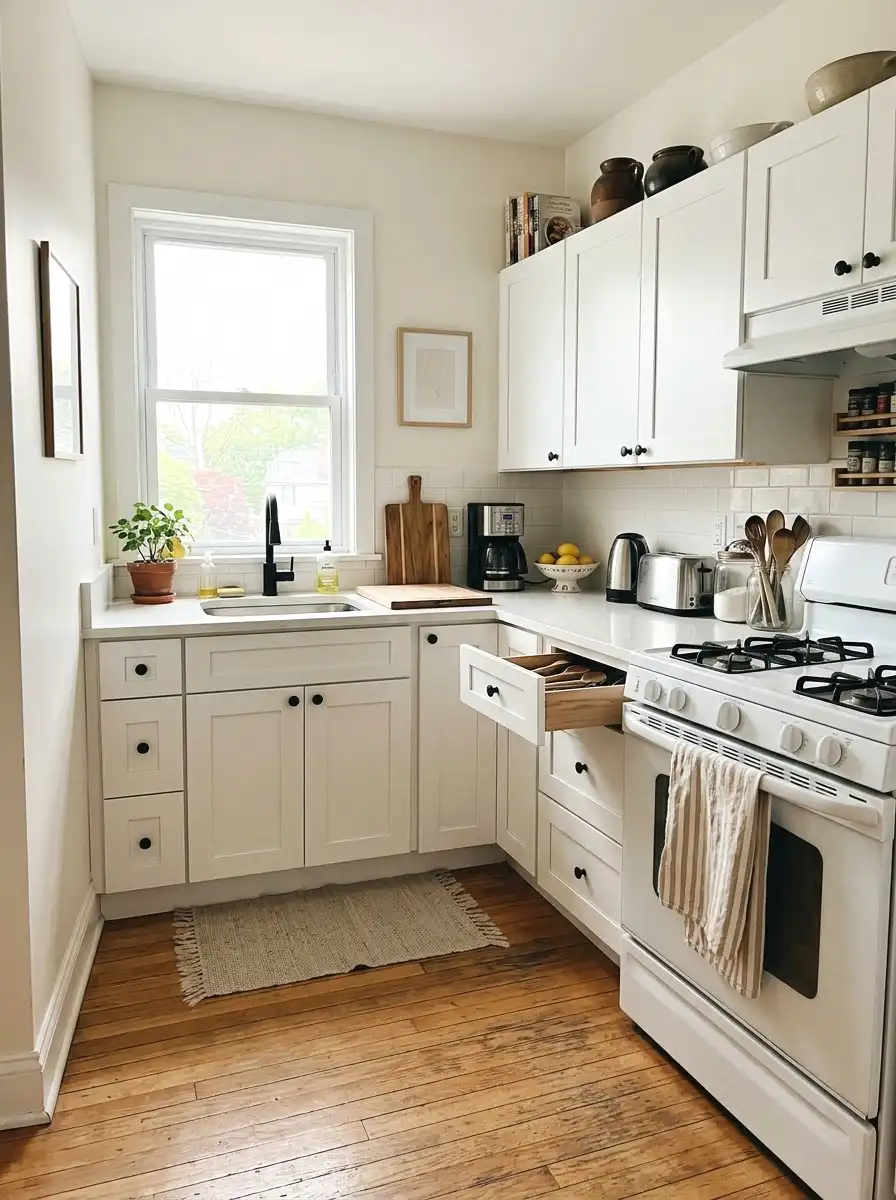
You can’t always repaint rental kitchen cabinets. But you can change the hardware. Swapping out builder-grade silver knobs for matte black or brushed brass hardware costs $2 to $5 per knob and takes about 30 minutes with a screwdriver. It’s one of the fastest visual updates you can make.
A kitchen with 20 cabinet knobs costs $40 to $100 to update completely. The before and after difference is real. Black hardware reads as more modern and intentional. Brushed brass reads as warmer and more elevated. When you move out, you swap the originals back and take the new ones with you. Easy, reversible, and genuinely effective.
More Ideas:
19. Use a Ladder Shelf in the Bathroom or Bedroom
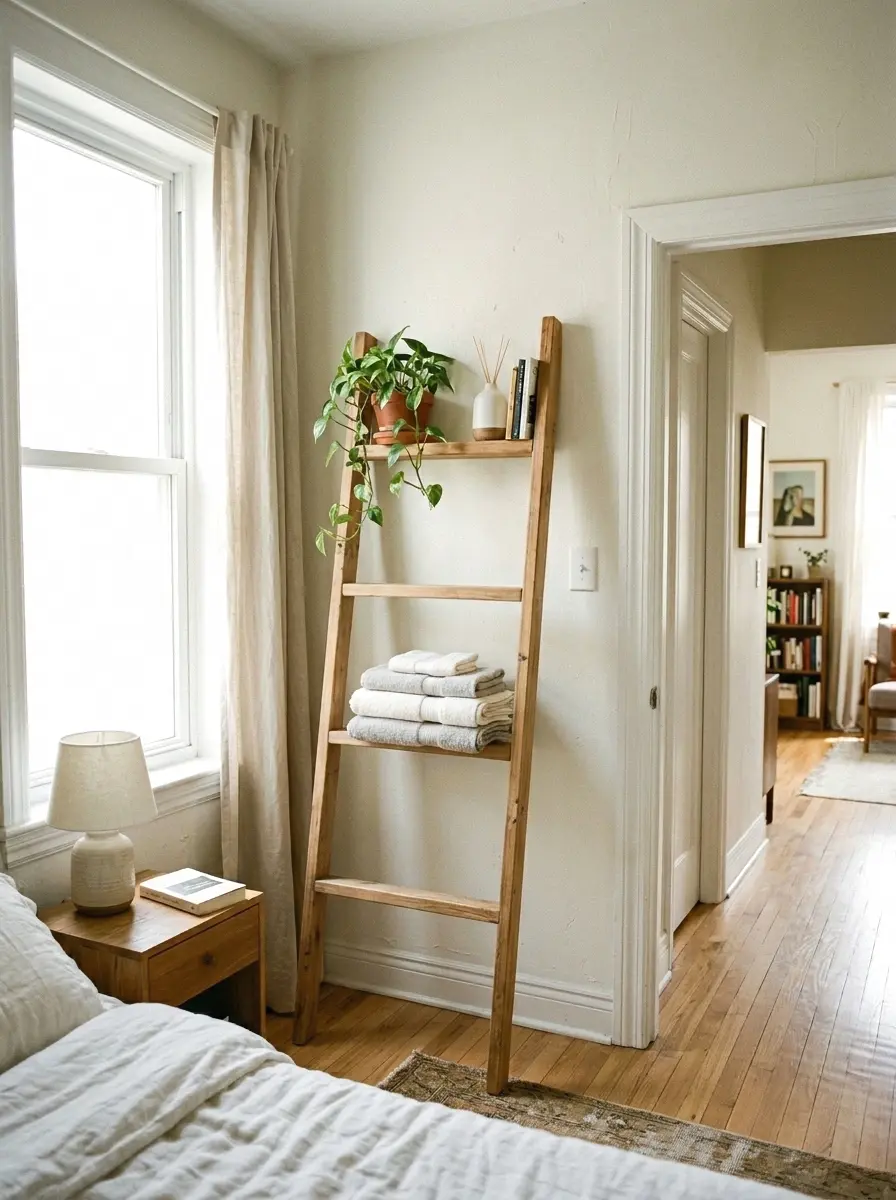
Ladder shelves are one of the few pieces of furniture that look better in a small space than in a big one. They lean against the wall, they use vertical space, they don’t need mounting, and they hold a lot for something so thin. In the bathroom, they hold towels and toiletries. In the bedroom, they hold plants, books, and folded items.
A wood or metal ladder shelf runs $40 to $90 and fits into corners where nothing else will go. The leaning design means no tools required. Lean it against a wall, load it up, and you’ve added storage without taking up any meaningful floor space. That’s the whole pitch, and it delivers.
20. Create a Focal Point With a Statement Plant
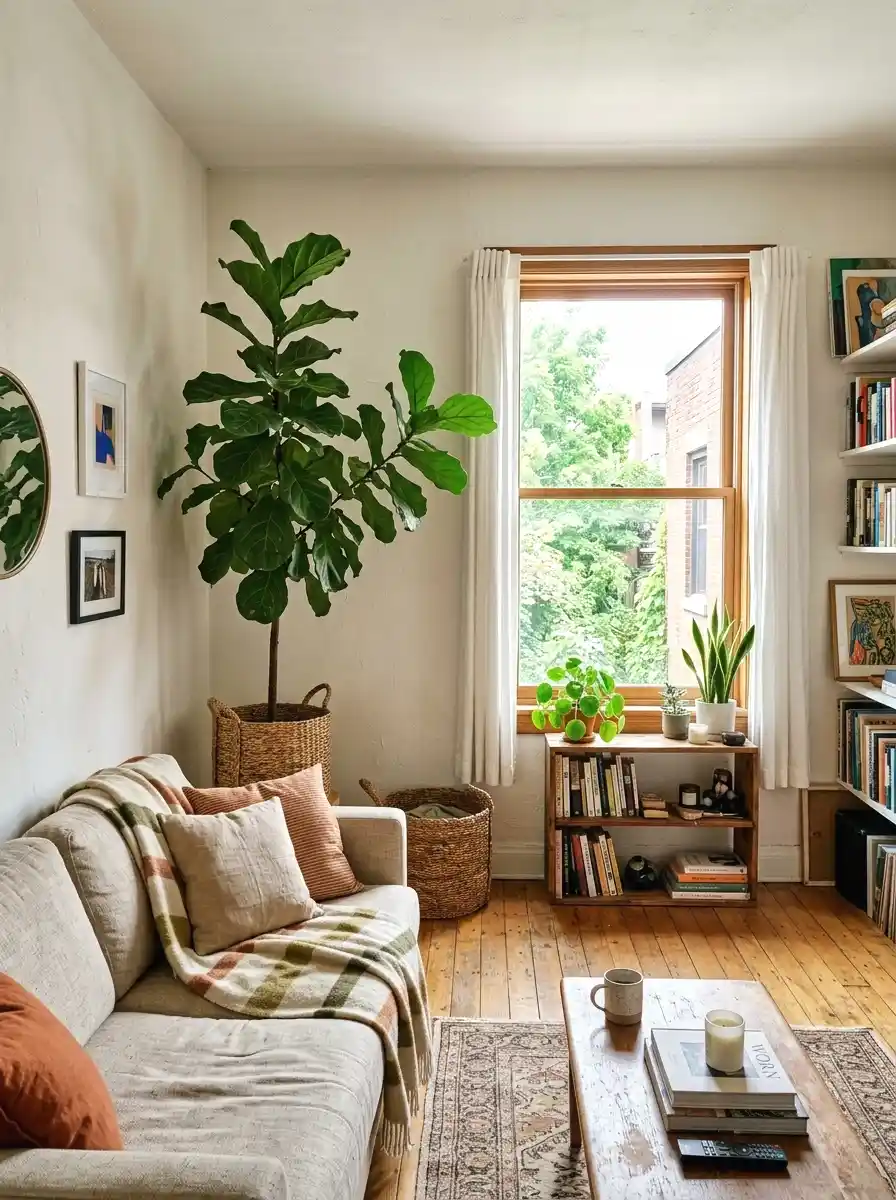
A large plant in the right corner does something that no piece of furniture quite matches. It adds height, softness, texture, and color without cluttering the room. A fiddle-leaf fig, monstera, or large snake plant in a corner draws the eye up and makes the room feel more alive and layered.
Tall plants run $30 to $80 at garden centers or plant shops. Add a $15 to $25 ceramic or basket planter and you’ve got a real focal point for under $100. The bonus is that plants also improve air quality slightly, though that’s a secondary benefit. The main one is that the room feels less flat and more interesting. One big plant does more than six small ones scattered around.
21. Install a Tension Rod Under the Sink
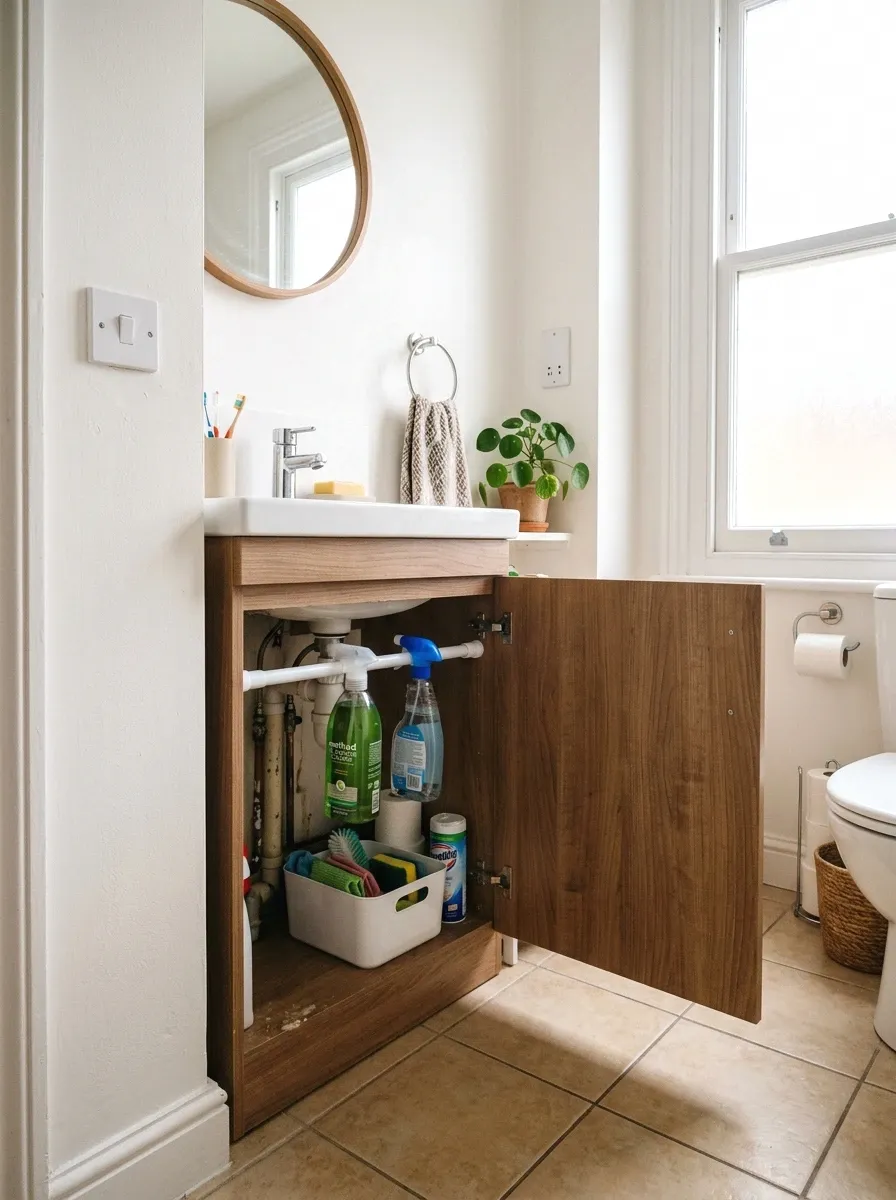
The cabinet under every kitchen and bathroom sink is wasted space in most apartments. It’s awkward to access and pipes take up the middle. A tension rod installed horizontally across the inside of the cabinet creates an extra hanging level. You can hang spray bottles, cleaning supplies, and small baskets off it and suddenly the space is organized.
Tension rods cost $5 to $10 and take 30 seconds to install. No tools, no drilling, no damage to the cabinet. The space under your sink goes from a jumbled mess to a functional storage zone instantly. Add a small plastic bin on the floor level for overflow and you’ve organized the most chaotic cabinet in the apartment for about $15 total.
If under-sink organization sparked something, there are plenty more vertical storage ideas worth trying across the rest of the apartment.
22. Style Open Shelving in Threes
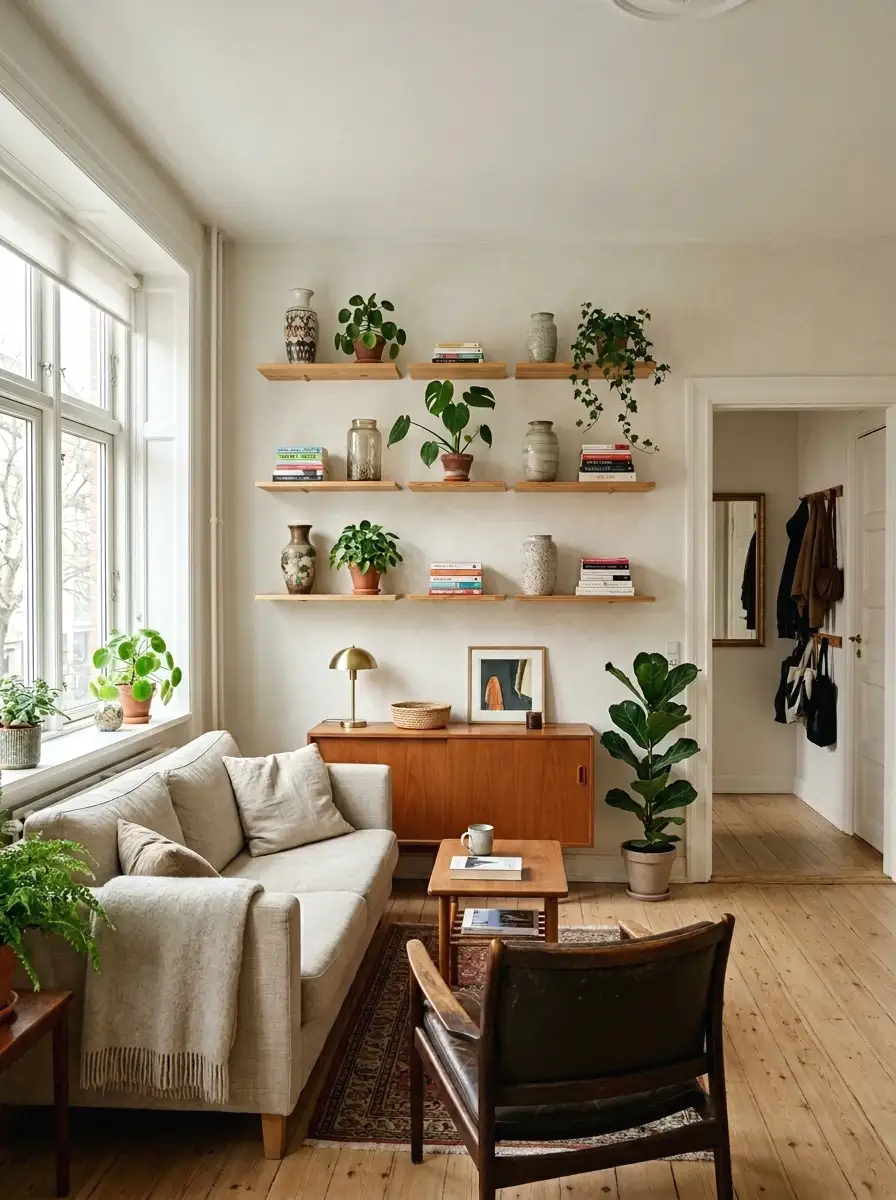
If you have open shelves anywhere in your apartment, whether in the kitchen, living room, or bedroom, how you style them matters as much as what you put on them. Random items grouped in odd numbers, especially threes, look intentional. One tall item, one medium item, and one low item per cluster gives each shelf visual structure.
This is one of those things that sounds fussy until you see the difference. A shelf styled in threes looks designed. The same shelf with everything lined up at the same height looks like a storage unit. You don’t need to buy anything new to do this. Just rearrange what you already have. Group by height, leave a little breathing room between clusters, and step back.
Open shelving styled this way works especially well in open-plan layouts where those shelves are visible from multiple angles — there’s more on shelf styling that looks intentional in those spaces.
More Ideas:
Final Thoughts on Decorating Ideas for Small Spaces
You now have 22 specific changes you can make to your apartment, most of them under $100 and none of them requiring a contractor or a landlord’s sign-off. The through-lines are pretty consistent: use vertical space, reduce visual weight on the floor, control your lighting, and make deliberate choices instead of defaulting to whatever fills the space.
Start somewhere that costs almost nothing. Rehang your curtains higher this weekend. Move your existing furniture away from the walls by a few inches. Rearrange what’s on your shelves into clusters of three. Small moves like that show you what the bigger ones might do, and they cost nothing.
For a room-by-room take on decorating on a budget, there’s a deeper guide that walks through each space with the same practical approach.
If you want more ideas like these, homelypop.com has room-by-room guides, budget breakdowns, and a lot more where this came from.