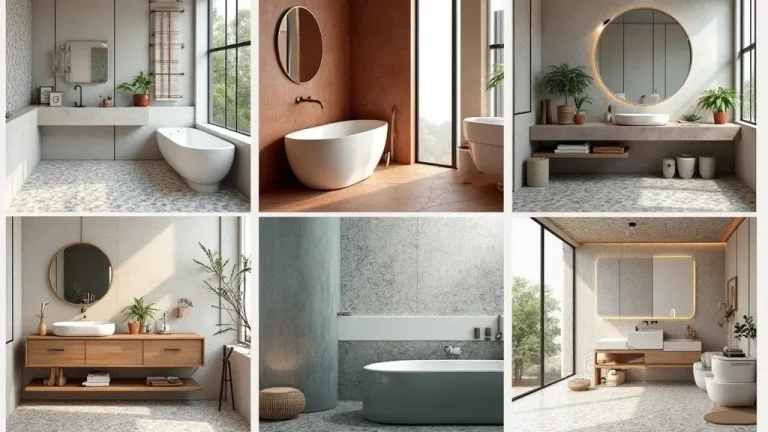

18 Vintage Neutral Bathroom Ideas That Actually Work on a Budget

Your bathroom looks fine. That’s the problem. It doesn’t feel like anything. The walls are builder white, the fixtures are builder chrome, and every time you walk in you think “one day I’ll fix this” and then walk right back out. You’re not looking for a full renovation. You’re looking for the kind of change that makes you stop for a second when you catch it in the morning light.
This list has 18 vintage neutral bathroom ideas, and they’re not random pins I scraped together. Each one was chosen based on what real homeowners tried, what actually held up, and what you can pull off for $100 to $300 total if you’re careful. The categories range from wall and lighting fixes to hardware swaps, textiles, and those tiny finishing details that do most of the heavy lifting.
This is for you if your budget sits somewhere between $100 and $300 and you want real change without touching the plumbing. It’s not for someone planning a gut renovation. Results are achievable even in rental bathrooms with zero power tools.
By the end of this, you’ll have a clear picture of what a vintage neutral bathroom actually takes and where to start first.
If you’re working with a tight footprint, there’s plenty of small bathroom decor worth stealing from other styles too.
What to Know Before You Start a Vintage Neutral Bathroom
- Vintage neutral doesn’t mean beige on beige. It means warm whites, aged creams, soft putty, and muted sage working together.
- Plan your “anchor piece” first. One strong item, like a mirror or vanity, sets the whole direction.
- Budget reality: a full look is doable for $150 to $250 if you shop secondhand for at least 3 items.
- Most people overlook the ceiling. Painting it warm white instead of bright white makes the whole room feel softer.
- Common mistake: buying too many textures at once. Stick to two: one rough (linen, rattan) and one smooth (ceramic, glass).
- Ventilation matters for vintage styling. Moisture warps wood frames and peels wallpaper within months in a poorly vented bathroom.
- Long-term tip: seal unsealed ceramic or terracotta accessories annually so they don’t absorb mold.
1. Swap the Mirror for an Arched or Oval Vintage-Style Frame
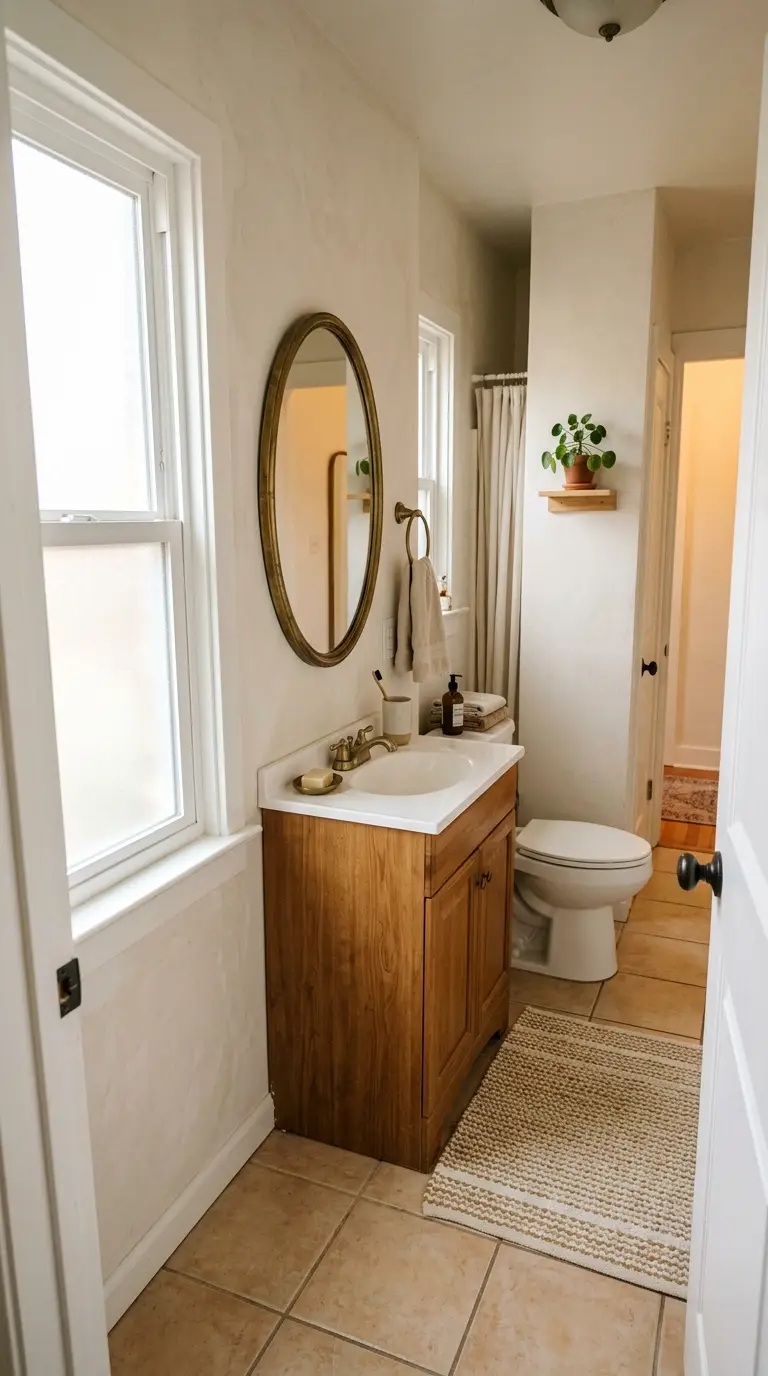
The builder mirror is one of the fastest things to kill a bathroom’s personality. It’s big, it’s flat, and it’s doing nothing for you. Swapping it out for an arched or oval frame in aged brass, antique gold, or matte black instantly shifts the whole tone. You don’t need to spend a lot. IKEA’s Langesund oval mirror runs around $30, and thrift stores regularly carry ornate frames for under $20.
The trick is sizing. Go slightly smaller than your current mirror, not bigger. A mirror that’s 24 to 28 inches wide in a small bathroom actually looks more intentional than one that fills the wall. When I switched mine out for a narrow arched frame, it was the one change that made guests ask if I’d renovated the whole room. It hadn’t cost me $35.
2. Add Warm Edison Bulbs to Your Existing Fixture

So here’s the thing about bathroom lighting: most people ignore it completely, and it’s making their space look way harsher than it needs to. Cool white bulbs in the 4000K to 5000K range give that flat, clinical glow. Warm Edison-style bulbs in the 2200K to 2700K range change the entire mood. You’re looking at $8 to $15 for a two-pack,
It’s the same principle behind warm tones that change a room across every vintage-leaning space.
and they fit any standard socket.This works especially well with vintage decor because the warm glow plays off aged metals, cream tiles, and linen textures better than cool light ever will. If your current fixture has multiple bulbs, replace them all at once so there’s no mismatched color temperature. That’s it. One weekend, no tools, $15.
More Ideas:


3. Use Removable Vintage-Inspired Wallpaper on One Accent Wall
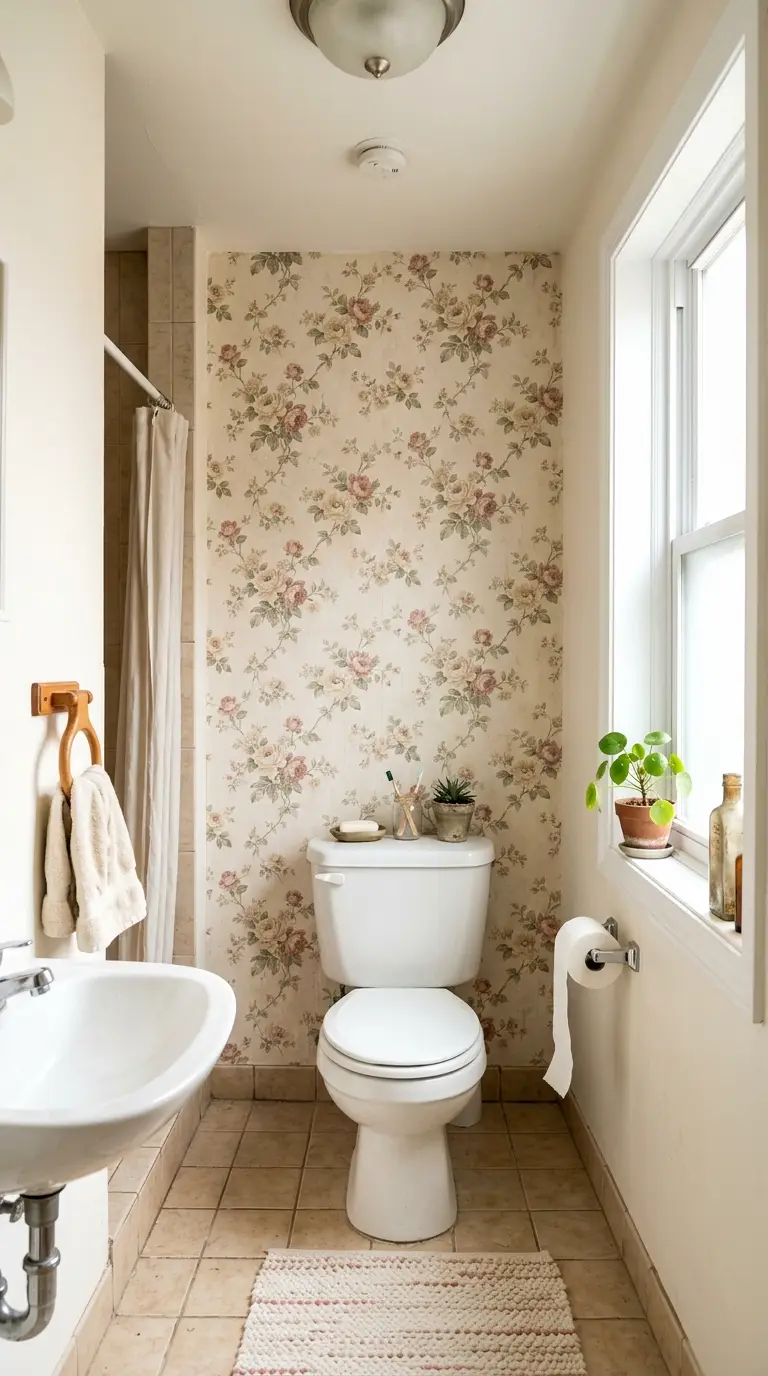
You don’t need to paper the whole room. One wall behind the toilet or the vanity is enough, and removable peel-and-stick options have come a long way. Patterns that work really well for a vintage neutral look include faded florals, small damask prints, soft toile, and antique tile-look designs in cream, sage, or dusty rose. Brands like Chasing Paper or Spoonflower carry exactly these.
A standard accent wall in a small bathroom (around 40 square feet) costs $60 to $100 in removable wallpaper. Measure carefully before you order. Apply slowly, starting at the top, and use a credit card to smooth out bubbles as you go. It comes off clean when you move or change your mind, which means renters can absolutely do this.
If you’ve enjoyed playing with wallpaper patterns for period-style rooms, that same instinct translates well here.
4. Replace Chrome Hardware With Aged Brass or Unlacquered Brass

Chrome is fine. It’s just not interesting. Aged brass and unlacquered brass faucets, towel bars, and cabinet pulls have that warm, slightly imperfect look that reads as vintage without being kitsch. A towel bar swap costs $15 to $40 depending on the brand. A toilet paper holder is another $10 to $25. If you’re on a tight budget, start with the small stuff.
Unlacquered brass will develop a patina over time, which is the point. It looks lived-in and real. If you want more control, aged brass finishes stay consistent and need less care. The main rule is consistency: pick one finish and use it on everything. Mixing brass and chrome always looks like a mistake you haven’t fixed yet.
Farmhouse-leaning bathrooms have long known which hardware finishes worth upgrading first, and brass is always near the top.
5. Layer in Linen or Waffle-Weave Towels in Cream and Warm White

I was skeptical about this one, but the towels really do matter. Standard white cotton towels from a big box store look fine until you see what textured linen or waffle-weave towels do in the same space. The texture catches light differently, and the slightly off-white or natural linen tone reads as warmer and more curated than bright white.
You don’t need a full set right away. Start with two hand towels and one bath towel, all in the same color family (cream, oat, or undyed linen). Fold them loosely instead of rolling them tight. A loose fold looks more relaxed and a little more European, which suits the vintage neutral vibe. Budget around $30 to $60 for a starter set from places like Target’s Hearth and Hand line or Amazon.
Minimalist bathrooms offer a useful reference for textile choices that soften a space without adding clutter.
6. Install a Vintage-Style Tray on Your Vanity Counter
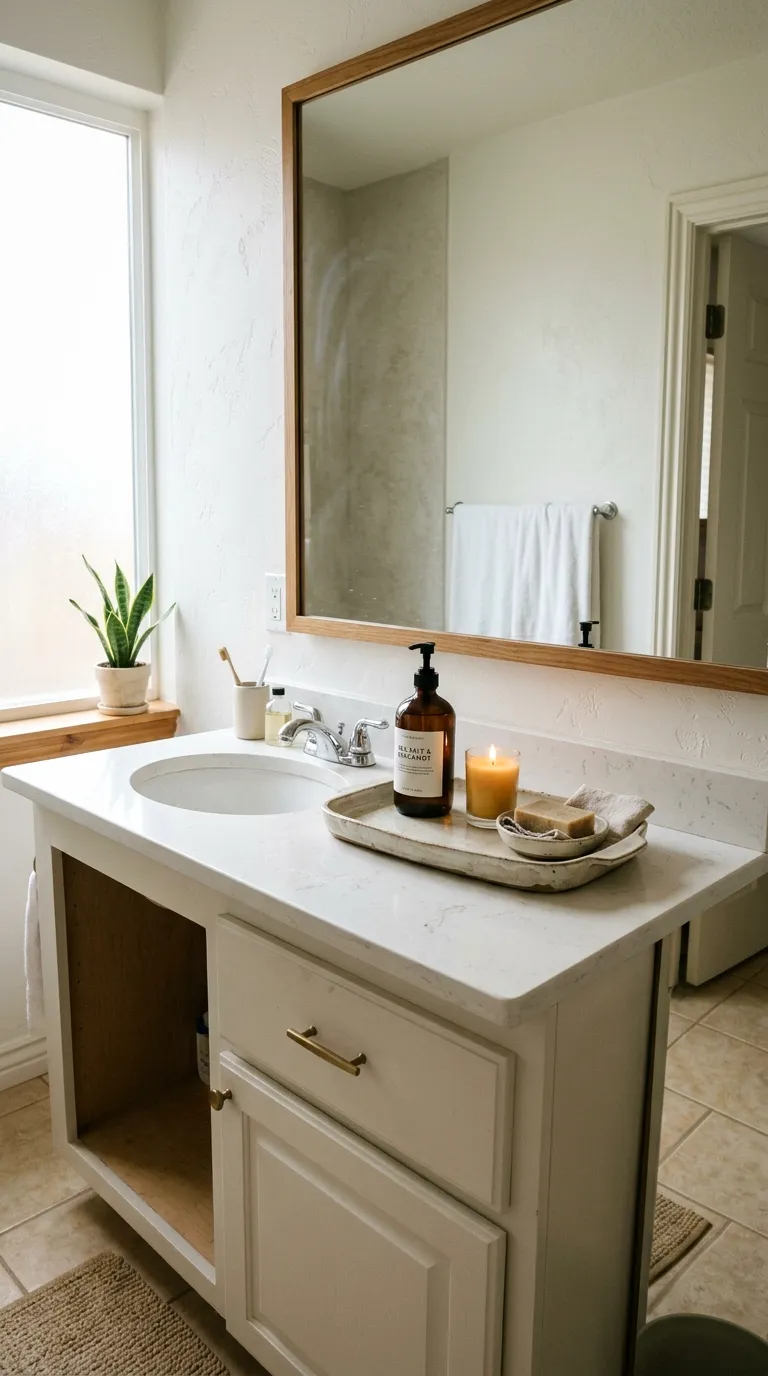
The counter gets messy fast, and a tray fixes that by giving everything a home. For a vintage neutral bathroom, look for aged ceramic trays, marble slab trays, or terracotta trays in earthy, muted tones. These run $15 to $45 at most home goods stores or on Etsy. The goal is to corral your everyday items (hand soap, face wash, a candle) into one organized cluster so the counter looks intentional.
The size matters. A tray that’s too big fills the whole counter and looks cluttered. A tray that’s 10 to 14 inches long works well for most standard vanities. Style it with odd numbers: three items, not four. Add something that has height (a tall soap dispenser or small glass bottle) next to something low and flat (a small dish or candle).
For a deeper look at counter styling that feels considered rather than crowded, there’s a lot more to explore.
More Ideas:
7. Add a Rattan or Bamboo Storage Basket

Here’s a fix that does two things at once: storage and texture. A woven rattan or bamboo basket adds that warm, organic material mix that vintage neutral spaces rely on. Use it under the sink, next to the toilet, or on a shelf as a towel holder. Sizes range from small (8 to 10 inches) for toiletries to larger (14 to 16 inches) for spare towels.
These are everywhere right now so prices are good. Target, TJ Maxx, and Amazon all carry decent rattan baskets in the $12 to $35 range. The thing most people miss is that rattan works better when it’s slightly imperfect. A beat-up thrift store basket with a patina to it looks better in a vintage space than a brand-new perfectly woven one. Check your local thrift store before you buy new.
8. Swap Your Plastic Soap Dispenser for a Ceramic or Glass One

This sounds minor. It’s not. A plastic pump dispenser in basic white or clear reads as temporary, like you haven’t gotten around to making the bathroom real yet. A ceramic dispenser in cream, sage, or matte white, or a vintage-look glass bottle with a pump, signals that the space has been thought about.
Ceramic dispensers run $10 to $25 on Amazon or at HomeGoods. Glass bottles with metal pumps are often even cheaper when you buy them as refillable options. The other win here is that refillable dispensers save money over time. You buy a good soap in bulk, refill it, and stop paying for plastic bottles. One small swap, but it changes how the whole counter reads.
9. Hang a Small Botanical Print or Antique-Style Art Piece

Bathrooms almost never have art, which means adding one piece makes an outsized impact. For a vintage neutral bathroom, the best options are small framed botanical prints, antique anatomy illustrations, faded map reproductions, or simple black-and-white sketches. These are easy to find on Etsy for $5 to $15 as digital downloads you print yourself.
Frame it simply. A thin black or aged wood frame in the 5×7 or 8×10 range works well without competing with everything else. Hang it at eye level near the mirror or on a blank wall next to the door. Make sure you use a moisture-resistant frame or seal the back of the print so steam doesn’t warp it over time. This one detail makes people feel like the bathroom has a personality.
10. Use a Wooden Bath Caddy Across the Tub
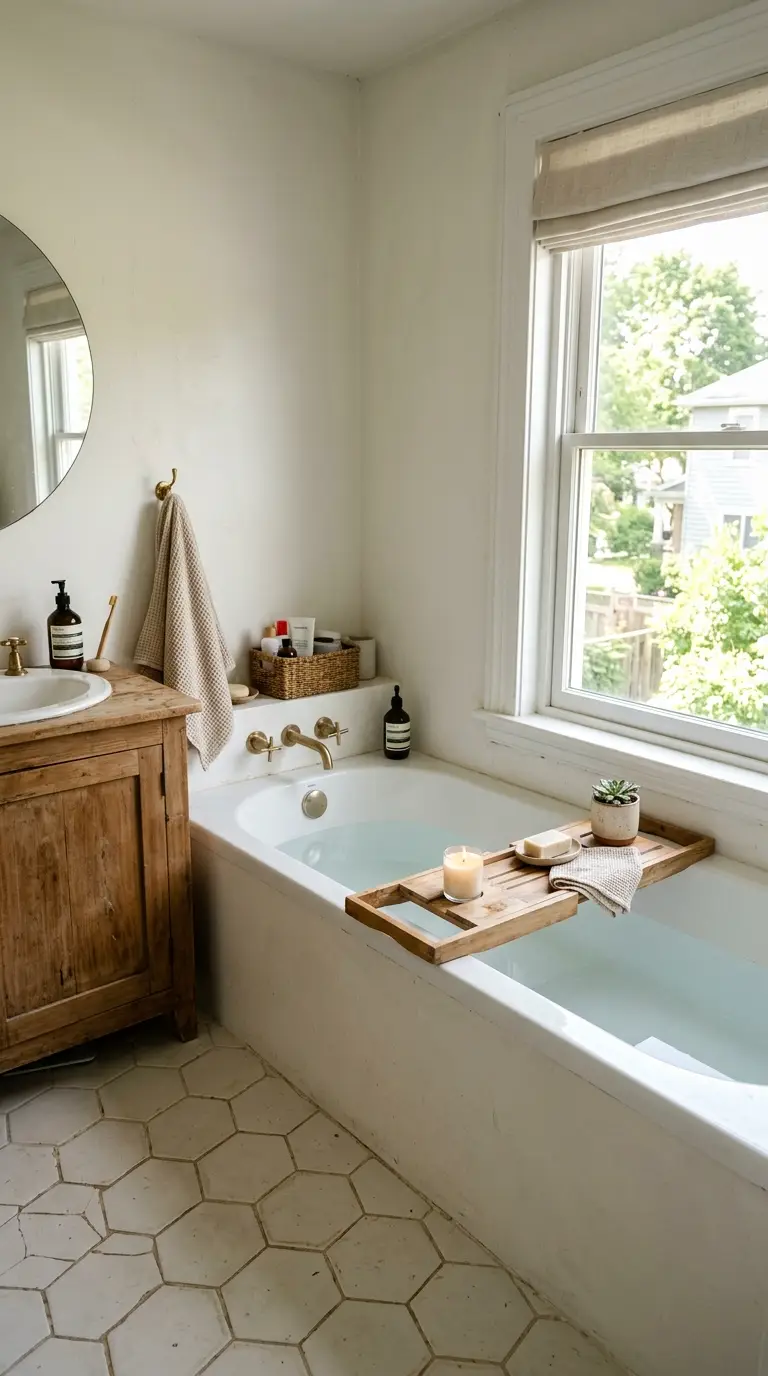
A teak or acacia wood bath caddy laid across the tub is one of the most recognizable signals of a well-styled bathroom. It reads as intentional, and it holds your candle, your book, your soap, and anything else you want within reach during a bath. Teak caddies are genuinely water-resistant and will last for years if you dry them occasionally. They run $25 to $55 depending on size and brand.
Look for a caddy with at least one adjustable arm so it fits your tub properly (most standard tubs are 55 to 60 inches wide). The finish matters too: a lighter teak or honey-toned acacia fits the warm, vintage neutral palette better than dark-stained wood, which can read heavy. Style it with just two or three items so it doesn’t look like a shelf you forgot to empty.
More Ideas:
11. Paint the Vanity a Soft Earthy Tone
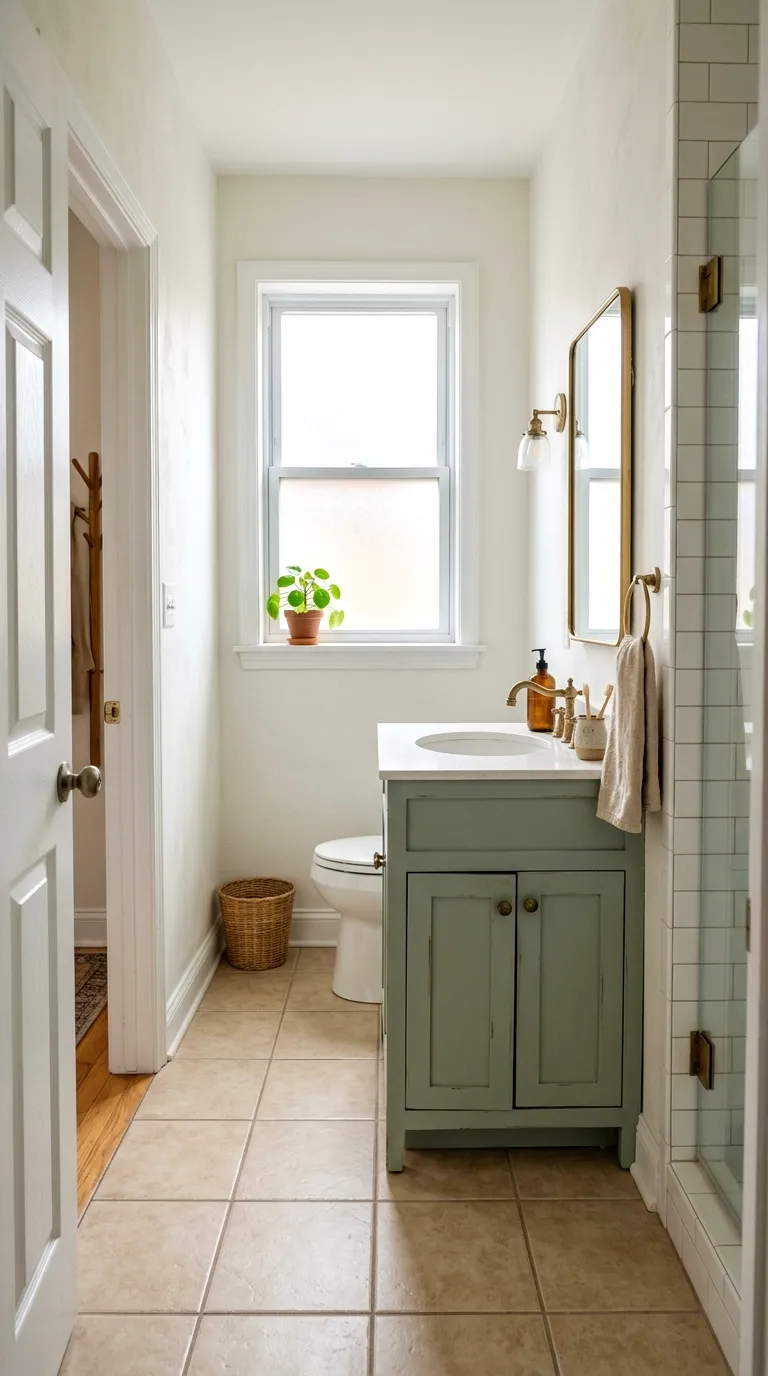
If your vanity is a sad oak or flat white box, paint is the answer. This is the most effort item on this list but it’s also one of the biggest visual payoffs. Chalk paint in shades like Farrow and Ball’s “Elephant’s Breath,” Benjamin Moore’s “Pale Oak,” or any dusty sage or warm greige will completely reframe the space. A quart of chalk paint runs $20 to $40 and covers a standard single vanity easily.
You don’t need to sand or prime with chalk paint, which makes the job fast. Clean the surface well, apply two thin coats, and seal it with a clear furniture wax or water-based topcoat. The whole job takes a weekend. Do the doors and drawer fronts, not just the base, and swap the pulls to aged brass at the same time for the full effect.
Japandi bathrooms lean on the same earthy paint tones for a vanity, making them a useful reference if you’re still deciding on a shade.
12. Hang Floating Shelves in a Warm-Toned Wood

The bathroom often has wall space that’s just doing nothing. A set of floating shelves in natural walnut, light oak, or pine with a warm stain gives you both storage and a visual anchor. For a vintage neutral look, avoid dark espresso finishes and go with lighter, more golden-toned woods. IKEA’s Lack shelves in a wood finish run about $15 each, or you can find solid wood options for $20 to $40 per shelf.
Style the shelves with a mix of functional items (soap, small plants) and decorative ones (vintage bottle, small ceramic). Keep it sparse. Two or three things per shelf max. When I added shelves in my own bathroom, I overfilled them first and then pulled half the stuff off. Less is almost always better. The shelf itself is the statement.
The same logic applies to shelf arrangements that stay minimal while still making the walls feel alive.
13. Add a Small Potted Plant or Propagation Vase
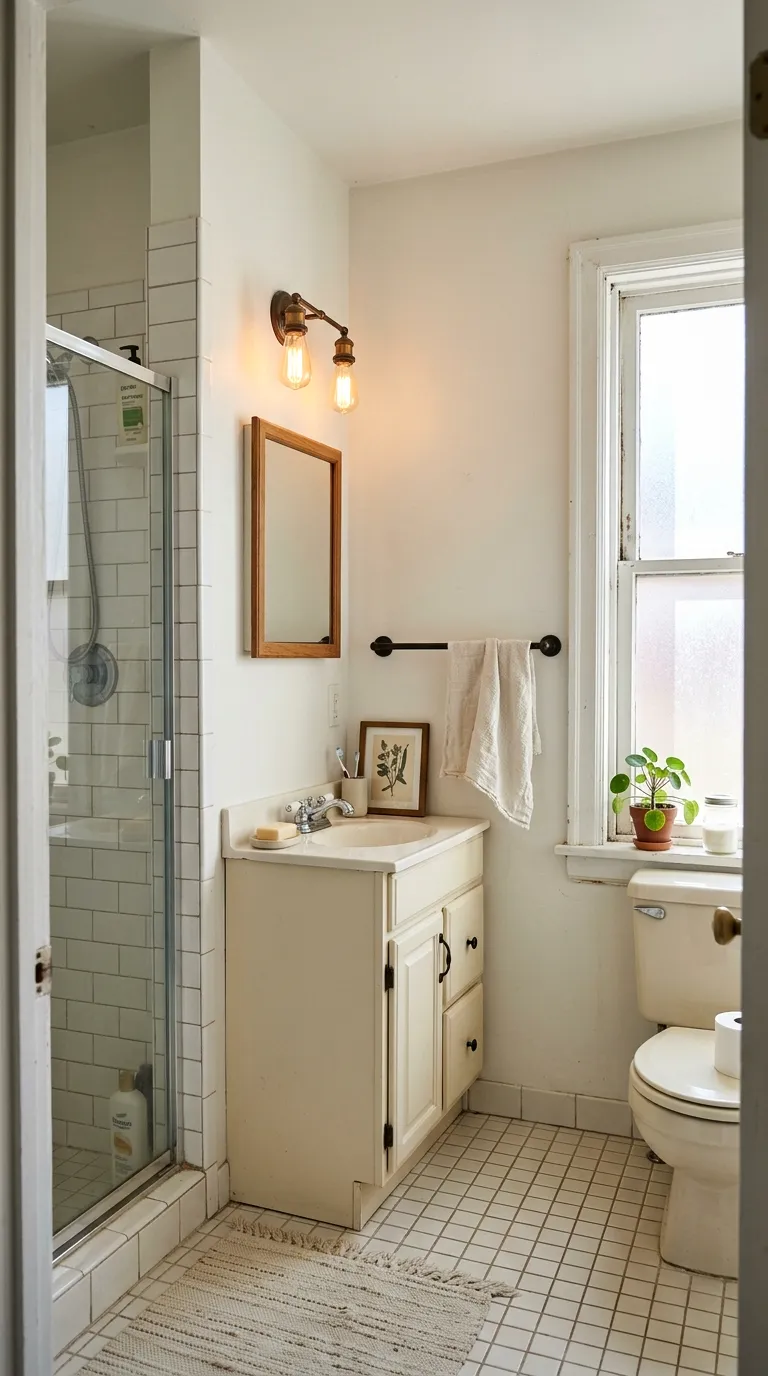
Plants work in bathrooms if you pick the right ones. The best options for low-light, high-humidity spaces are pothos, heartleaf philodendron, snake plants, or air plants. No natural light needed for most of these. A small potted plant on the counter or shelf, or a single stem in a vintage glass bottle as a propagation vase, adds organic texture without requiring much effort.
A small terra cotta pot with a pothos cutting costs under $10 total. If you go the propagation route, all you need is a glass bottle filled with water and a cutting from a friend’s plant. It’s free and it looks genuinely nice. The terra cotta pot itself is perfectly on-brand for a vintage neutral space: earthy, simple, and slightly imperfect.
14. Switch to a Fabric or Woven Shower Curtain
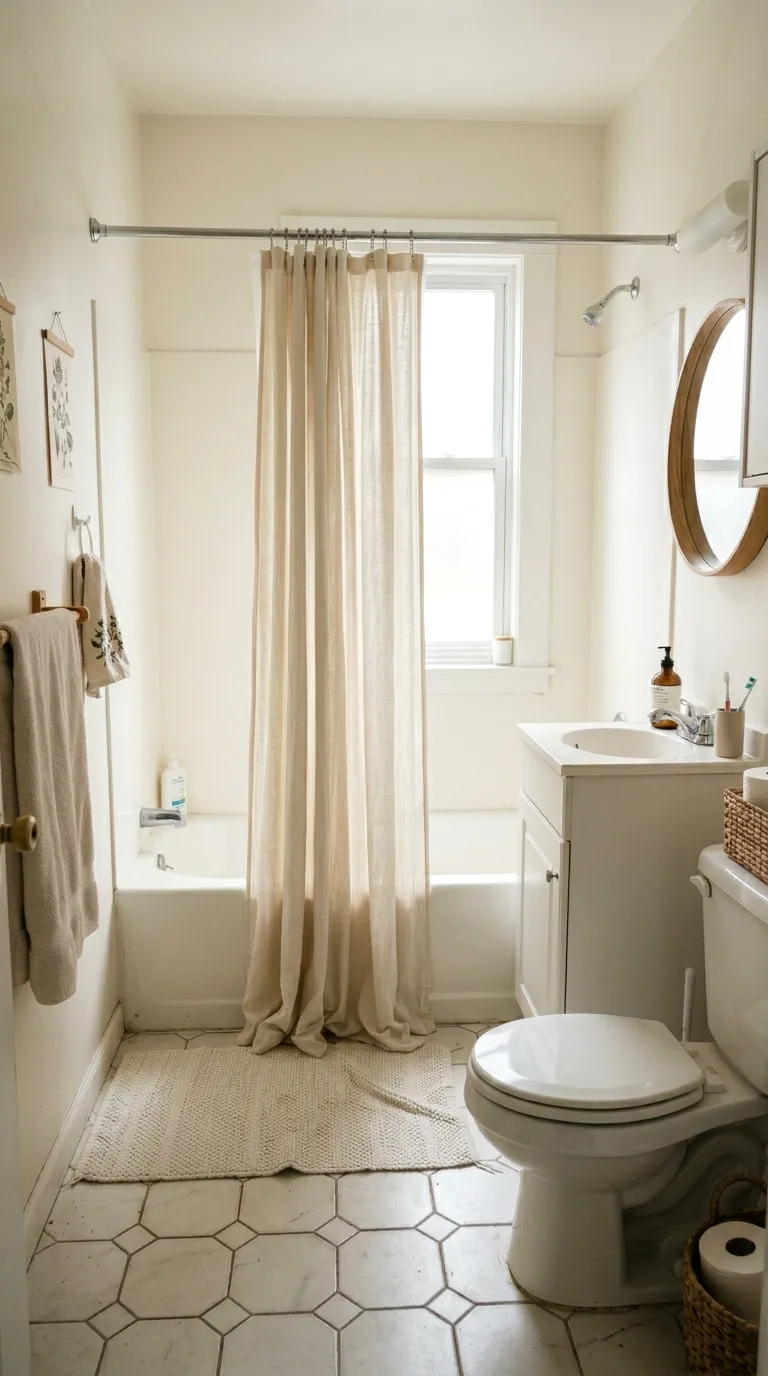
The plastic liner stays (you need it), but your outer curtain can do a lot of work. A linen-look, cotton waffle, or woven fabric curtain in white, cream, or soft stripe adds texture and warmth that a standard polyester curtain can’t touch. These are surprisingly affordable: H&M Home, Target, and IKEA all carry fabric shower curtains in the $20 to $50 range.
Look for one with subtle texture rather than a bold pattern. Vertical linen stripes or a solid waffle weave reads as vintage and calm without competing with other details in the room. Make sure you’re buying a curtain that reaches the floor or just above it (a 72×72 or 72×84 depending on your rod height) so it hangs with a soft, relaxed drape rather than floating above the tub.
More Ideas:
15. Place a Small Vintage-Style Stool or Side Table
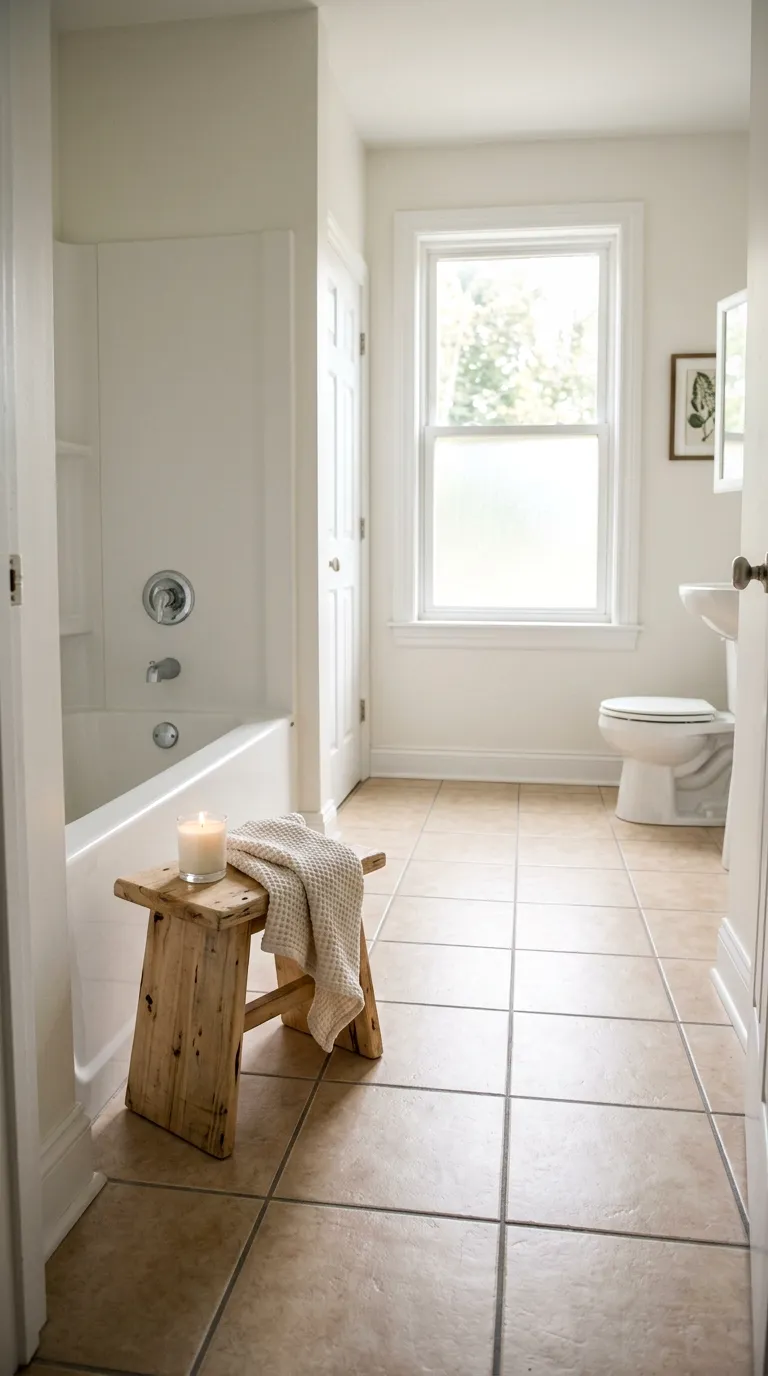
This is so underrated. A small wooden stool or low side table next to the tub or beside the vanity gives the bathroom a lived-in, layered quality that most spaces lack. Use it for a candle, a stack of small hand towels, or just a plant. Stools in natural wood, painted white, or with a slightly distressed finish all fit the vintage neutral palette.
Thrift stores are the best place for this. A solid wood step stool or small side table for $5 to $15 is common in most secondhand shops. If you want something new, IKEA’s Frosta stool in birch is $20 and works beautifully in a warm, minimal bathroom. Sand it lightly and apply a coat of tung oil or furniture wax to protect it from moisture over time.
16. Add a Cotton or Jute Bathroom Rug
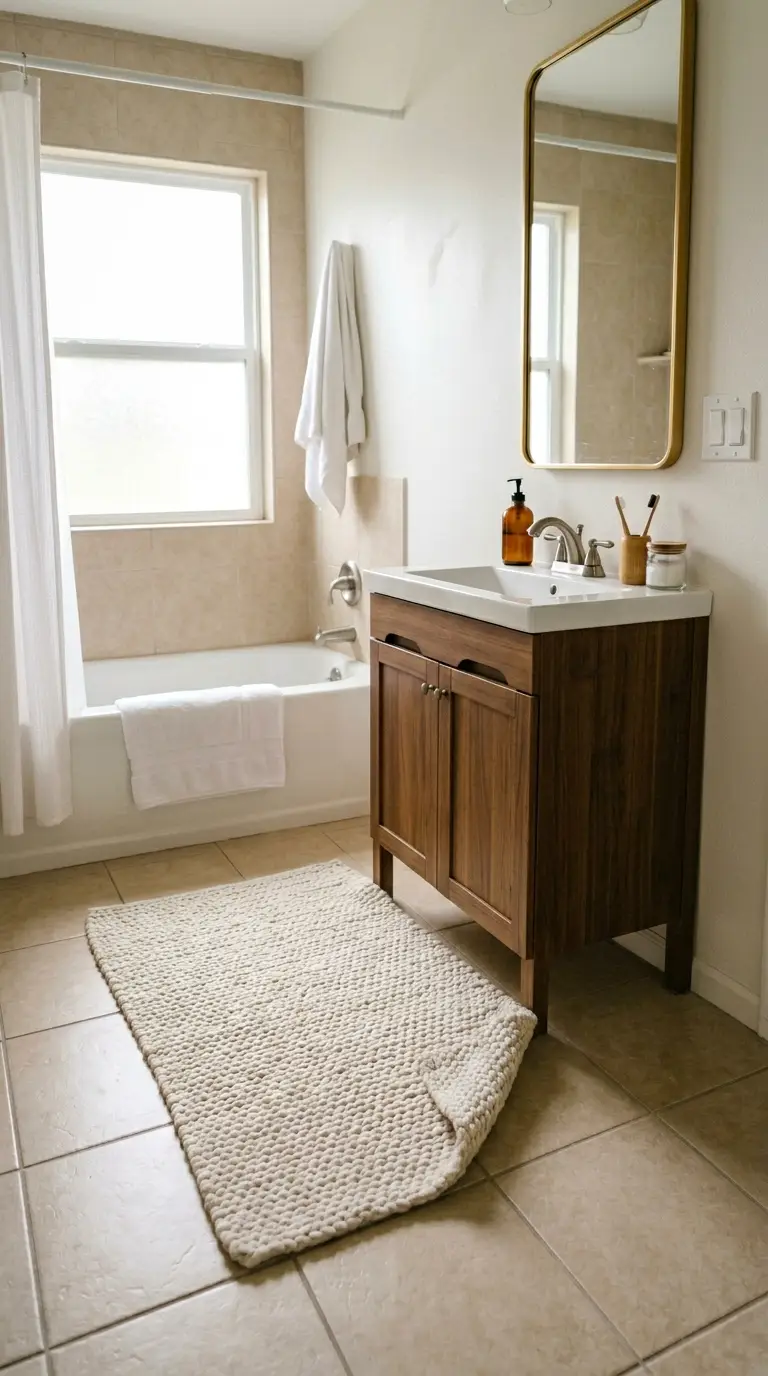
The rug is one of the most visible surfaces in a bathroom and one of the easiest to change. For a vintage neutral look, skip the memory foam bath mat in bright white. Go for a cotton woven rug, a jute blend, or a low-pile runner in cream, ivory, sand, or faded terracotta. These lie flatter, wash better, and look significantly more considered than standard bath mats.
A cotton woven bath rug runs $20 to $50 at most home goods stores. The size should fit your space without touching the toilet or vanity. In most small bathrooms, a 20×32 or 24×36 mat works well in front of the tub or shower. Wash it regularly (cotton and jute hold moisture) and replace it every one to two years.
17. Use a Vintage Apothecary Bottle Set for Counter Styling
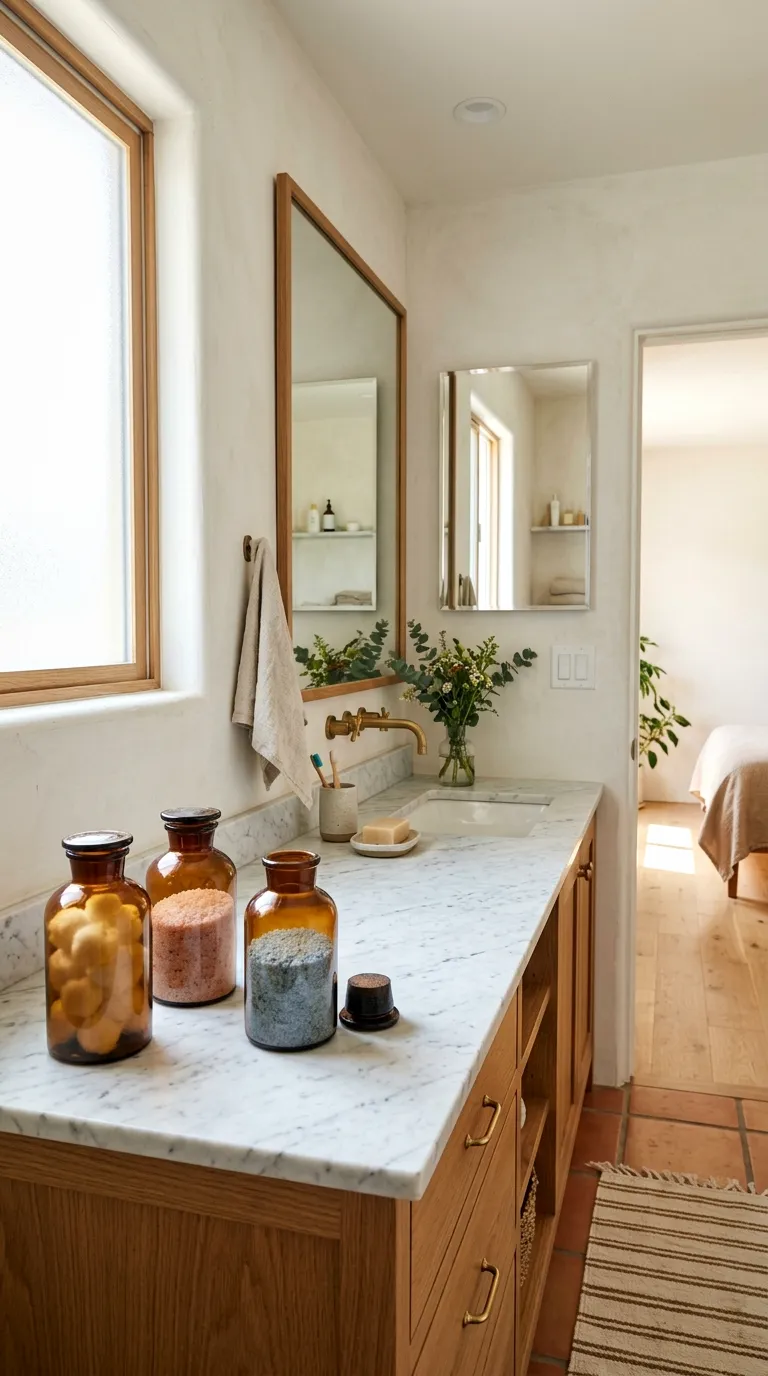
Took me ages to figure this out, but grouping a few vintage-look apothecary bottles on your counter is one of the easiest ways to make a bathroom look styled without trying too hard. Fill them with cotton balls, q-tips, or bath salts instead of leaving those items in their plastic packaging. You can find amber glass bottle sets on Amazon for $10 to $20 for a three-piece set.
The trick is the fill. Clear glass with white cotton balls or light-colored bath salts reads clean and soft. Amber glass with dark bath salts or dried herbs reads more vintage and earthy. Either works. Line them up in a slight diagonal rather than a perfectly straight row. The small imperfection in arrangement makes it look like it happened naturally instead of being placed by someone trying to make it look natural.
18. Replace the Toilet Seat With a Solid Wood Option
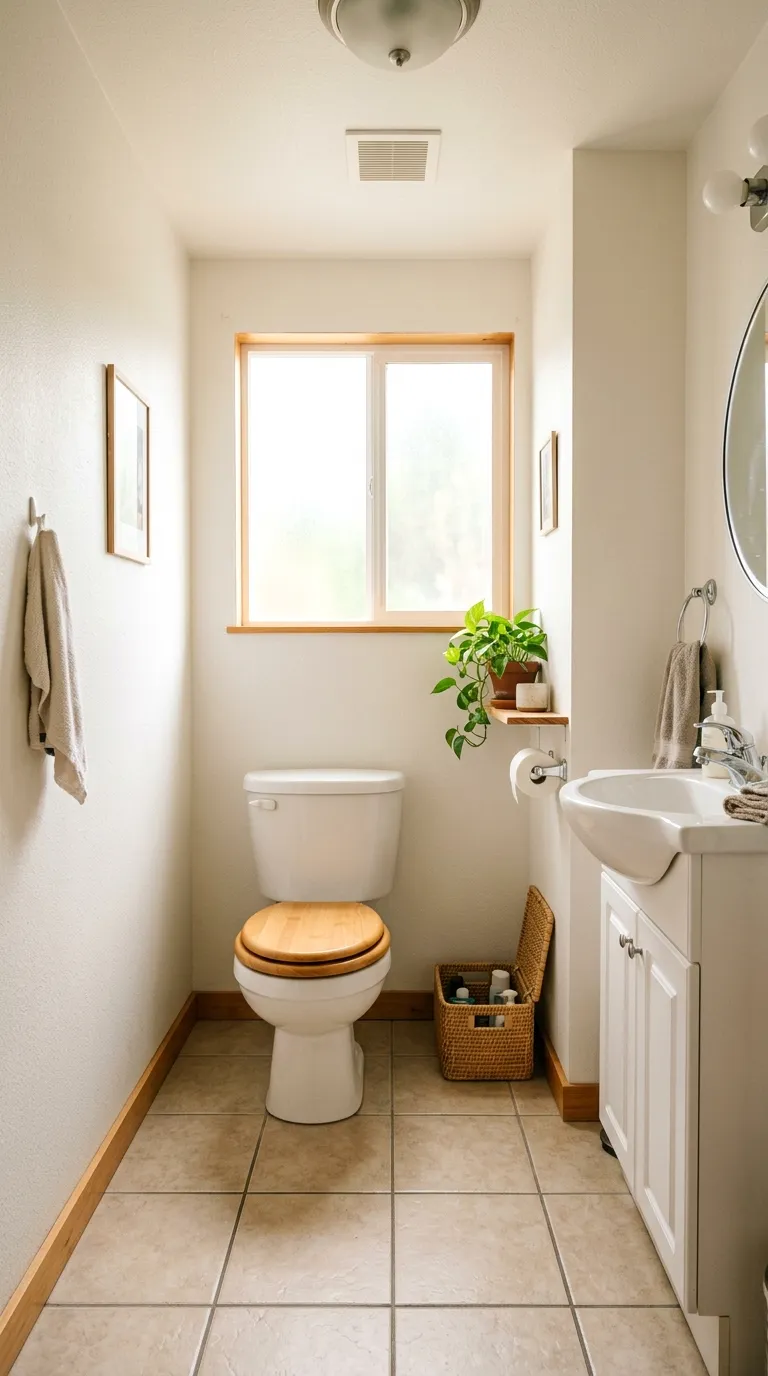
This sounds odd but it works. Standard plastic toilet seats in bright white look fine in a modern bathroom and completely out of place in a vintage-styled one. A solid wood seat in natural, white, or light grey reads completely differently. It has weight to it, literally and visually. Bemis and Mayfair both make solid wood seats that run $25 to $55 and fit standard toilet sizes.
Installation takes about five minutes and no plumber. You remove two bolts, lift the old seat, set the new one, and tighten. That’s genuinely it. The visual impact is higher than you’d expect, because the toilet is a large object in a small room. Matching a natural wood seat to your shelf wood or your rattan basket ties the whole scheme together without any extra effort.
More Ideas:
Final Thoughts on a Vintage Neutral Bathroom
What you’ve got now is a real framework, not just a wishlist. The ideas here work in three directions: surface changes like mirrors, hardware, and rugs that cost the least and deliver fast; texture layers like towels, baskets, and curtains that add depth; and anchor moves like painting the vanity or adding shelves that do the most long-term work. You don’t need all 18. Pick five or six that match your space and budget and go from there.
Start with the mirror or the lighting. One swap this weekend. That’s all it takes to see whether the direction feels right before you spend another cent.
Antique-leaning bathrooms are another great reference for layered looks that hold together without feeling overdone.
If you want more ideas like these, homelypop.com has a lot more where this came from, organized by room and budget so you’re not scrolling through things that don’t apply to you.