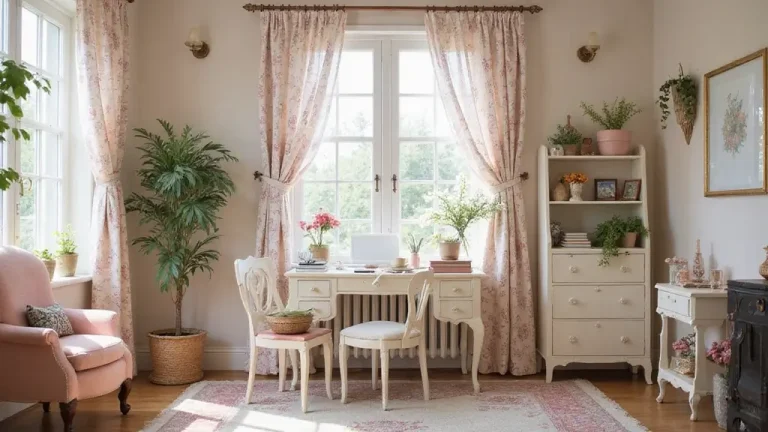

18 Antique Bathroom Decor Ideas That Actually Work on a Real Budget

Your bathroom feels generic. It’s fine. It functions. But every time you walk in, something feels off, like it belongs to no one in particular. You want that old-world warmth, that layered, collected-over-time look, and you have no idea where to start without it looking like a junk shop.
This list covers 18 antique bathroom decor ideas pulled from real homeowners, design forums, and people who’ve actually done this on tight budgets. Each idea was picked because it’s specific, affordable, and works in a real bathroom, not a photoshoot set. Price ranges run from $15 to $250, and the list covers renters, small bathrooms, and people working with builder-grade fixtures.
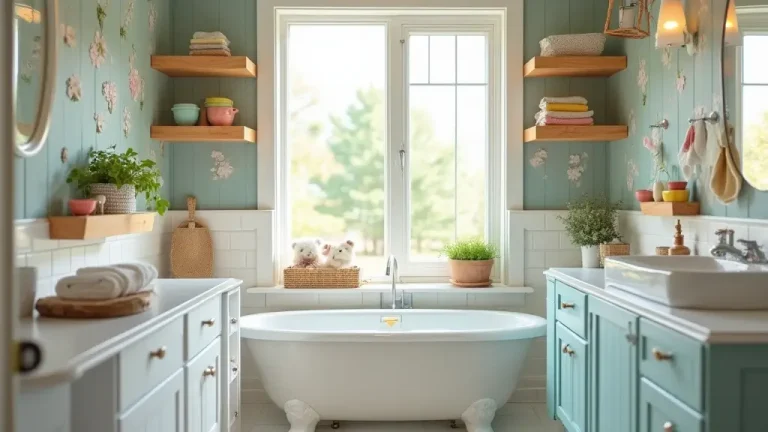
If you’re working with $100 to $300 total, this is for you. It’s not for anyone doing a full gut renovation or buying bespoke furniture. And yes, you can get a genuinely polished result in this range.
By the end, you’ll have a clear set of ideas you can start this week, ranked and ready to go in any order that fits your space.
If your bathroom is on the smaller side, there’s a whole world of small space styling done right that pairs perfectly with this approach.
What to Know Before You Start Antique Bathroom Decor
- Moisture is the number one enemy: real wood antiques near showers warp fast without a coat of polyurethane or wax.
- Map your wall space before buying frames or shelves. 18 inches above a toilet is the sweet spot for most floating shelves.
- Reproduction antique hardware runs $8 to $30 per piece and looks just as good as originals from a distance.
- Most people overlook the ceiling. A warm-toned bulb (2700K) does more for that old-world feel than most decor pieces.
- Common mistake: mixing too many metals. Pick one (brass or oil-rubbed bronze) and stick to it across all hardware.
- Humidity-safe paint is not optional. Standard flat paint peels in bathrooms within 6 months.
- Vintage mirrors from thrift stores or Facebook Marketplace usually need only a new hanging bracket, not a full restoration.
- Vintage mirrors from thrift stores or Facebook Marketplace usually need only a new hanging bracket, not a full restoration.
1. Swap Plain Towel Bars for Antique Brass Hardware
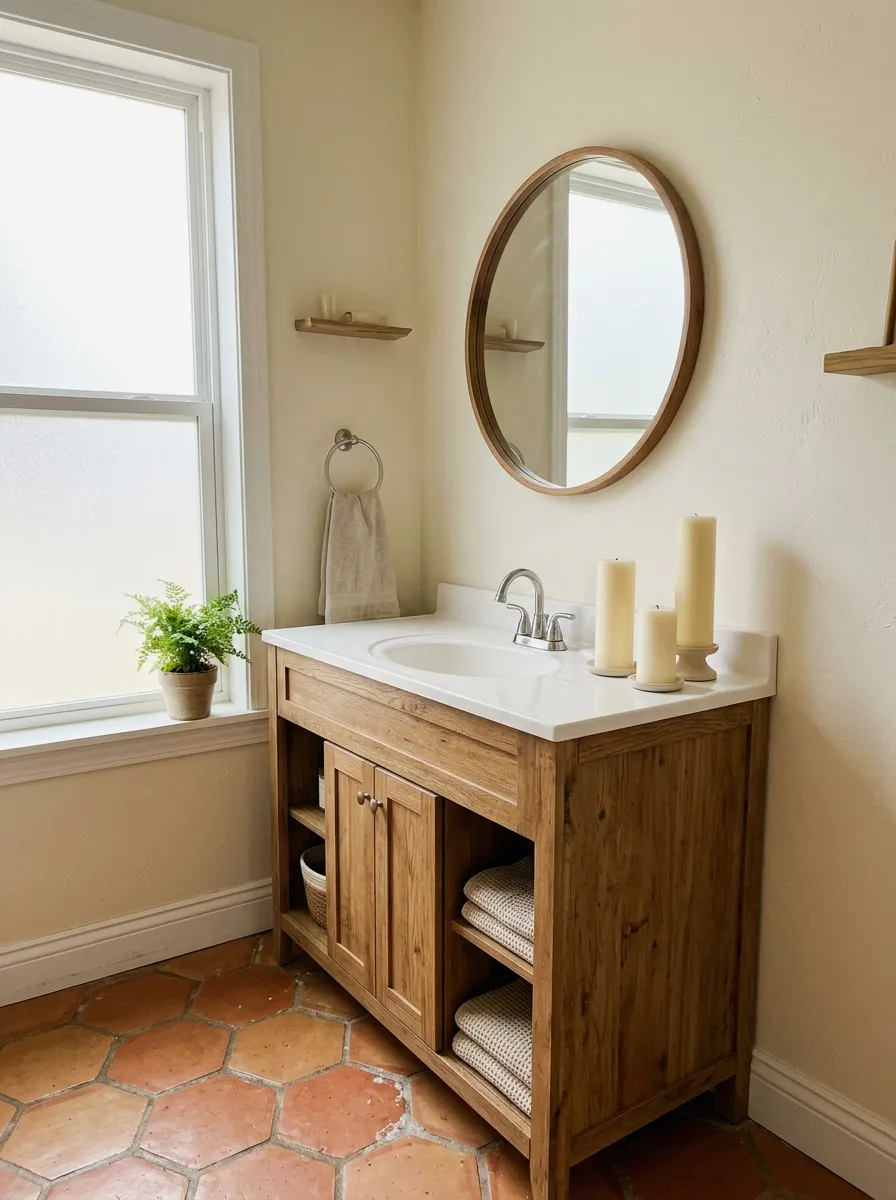
The hardware in a bathroom is small but it reads from the doorway. Swapping out chrome towel bars for antique brass or oil-rubbed bronze versions is one of the fastest ways to shift a bathroom toward that old-world look. A basic set, bar plus robe hook plus toilet paper holder, runs $45 to $90 depending on the brand.
When I tried this in my own space, I was shocked how much the room changed with just those three swaps. Nothing else moved. Same tiles, same vanity, same mirror. The brass just pulled it all together and made the room feel like it had a point of view instead of being a collection of random choices from a big-box store.
Pairing that new hardware with well-styled shelving is where the look really comes together — here’s how others have pulled off a cohesive hardware finish across a room.
2. Hang a Vintage-Style Framed Mirror

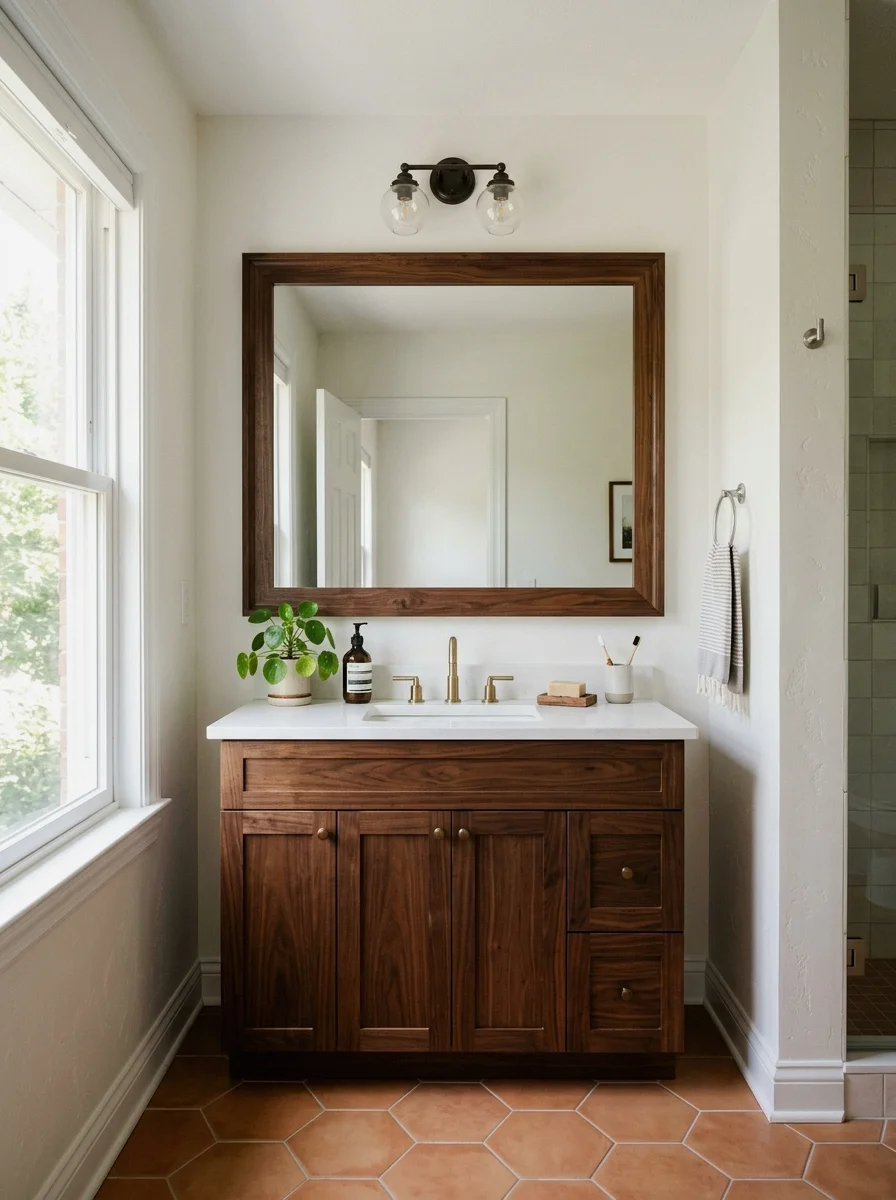
You can find ornate gold or dark wood framed mirrors at thrift stores for $10 to $40, and they do more work than almost anything else in the room. The frame style, whether it’s carved wood, gilded resin, or tarnished silver, sets the whole tone. A mirror that’s 24 by 36 inches is the standard sweet spot for most single-sink vanities.
Here’s what nobody tells you: a frame painted in Rust-Oleum’s “Aged Gold” spray ($6 a can) on a plain mirror from IKEA gets you a look that’s identical to a $200 antique find. Two light coats, let it dry fully, and the result is a convincingly aged finish. Check the back of thrifted mirrors for moisture damage before hanging.
If you want to go further with what you hang, there are plenty of mirrors that double as statement pieces worth considering alongside your frame choice.
More Ideas:

3. Add Open Wooden Shelving with Vintage Styling

A simple floating shelf in aged oak, walnut, or any stained wood immediately reads as “collected over time” rather than “assembled from a box.” A 24-inch shelf with hidden brackets runs about $30 to $60 at most hardware stores. Style it with a mix of apothecary jars, folded towels, and one or two small vintage objects.
The key is intentional clutter. Three mismatched but complementary items look curated. Seven random things look like a mess. I’d suggest styling it with odd numbers: a tall jar, a short candle, and one small framed print is all you need on a single shelf. Make sure you hit a stud when mounting, or use toggle bolts rated for at least 30 pounds.
For countertop styling that ties into the same collected feel, there’s solid guidance on vintage-leaning open shelf styling worth reading alongside this.
4. Use Apothecary Jars for Storage
So here’s the thing about apothecary jars: they solve a storage problem and add decor at the same time. Cotton balls, q-tips, bath salts, and even spare soap bars look completely different in a wide-mouth glass jar with a cork or metal lid than they do in a plastic organizer. A set of three jars runs $15 to $35 on Amazon or at HomeGoods.
Amber or clear glass both work. Amber glass has more of an old pharmacy look, which leans more antique. Clear glass shows off what’s inside, which works best when the contents are visually consistent (all white cotton, all similar-sized items). Either way, this is one of the easiest swaps on the list, and it’s fully reversible if you rent.
5. Install a Vintage-Style Faucet

A faucet replacement sounds scary but most single-hole or three-hole faucets are a straightforward DIY swap with basic tools and about an hour of time. Vintage-style faucets with cross handles or porcelain lever handles in matte black or antique brass run from $60 to $180, and they change the entire vanity area instantly.
The cross-handle style is the most classic antique look, think early 1900s European bathroom. Brands like Kingston Brass and Moen both make affordable versions that look polished and last well. Turn off the water supply valve under the sink before starting. If the shut-off valve hasn’t been touched in years, test it first. Seized valves are the main complication in an otherwise simple job.
6. Try Shiplap or Beadboard Wallpaper
Real shiplap in a bathroom is a weekend project and runs $2 to $4 per square foot installed. But peel-and-stick beadboard wallpaper gives you the same visual for about $30 to $60 for a full accent wall, and renters can take it down without damage. Beadboard is the paneling style with narrow vertical grooves, and it reads as classic Victorian or farmhouse antique depending on the paint color you pair with it.
White or cream paint with beadboard pulls straight vintage. Navy or forest green with white beadboard gives you a moody English bathroom feel. The wallpaper version needs a smooth wall surface to adhere properly. Fill any holes or rough patches first, then apply. Work from the center of the wall out to keep the pattern symmetrical.
Farmhouse bathrooms have long used beadboard and shiplap in creative ways — these period-accurate wall treatments worth trying show how it translates in real homes.
More Ideas:
7. Frame Out Your Bathroom Mirror

Builder-grade bathrooms come with a plain rectangular mirror glued to the wall. It’s practical and it looks like nothing. Adding a frame directly around that existing mirror is a $25 to $60 project and looks like a full fixture replacement when done right. You can buy mirror frame kits or cut simple moulding from a hardware store and paint it any finish you want.
Antique bronze, aged gold, or dark walnut are the best colors for an old-world look. The moulding just sits against the glass and is secured with adhesive. Measure carefully and cut corners at 45 degrees, which any mitre box can handle. This one is (so underrated). I see it done in real homes far less often than I should, and the result is genuinely impressive for such a low investment.
8. Lay a Patterned Vintage-Style Bath Rug
The floor is one of the most visible surfaces in a bathroom and one of the easiest to change. A rug with a Persian, Moroccan, or classic floral pattern immediately grounds the space in vintage territory. A 20 by 32-inch bath rug in those styles runs $25 to $70 depending on material and brand.
Avoid rugs with synthetic backings directly on tile, as they can discolor the grout over time. Look for a rug with a cotton or wool pile and a non-slip backing that doesn’t include rubber. Wash it frequently since bathrooms have high humidity and rugs hold moisture. A rug with darker, muted tones (burgundy, navy, forest green, cream) looks more authentically vintage than bright, saturated colors.
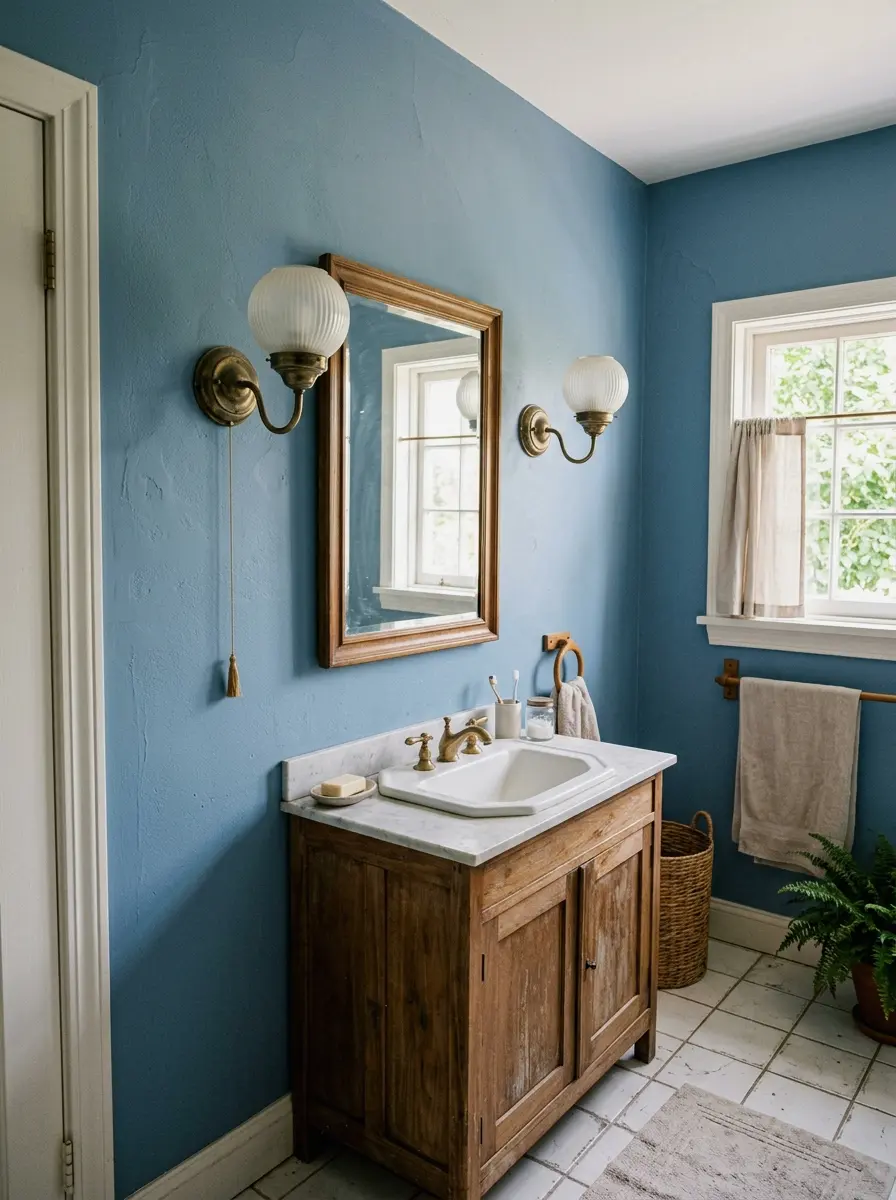
9. Mount Antique-Style Wall Sconces

Overhead bathroom lighting is almost always harsh and flat. Replacing it or supplementing it with wall sconces adds warmth and that layered old-world feel. Antique-style sconces in brass or black with frosted glass globes run $40 to $120 for a pair. If your bathroom has an existing outlet, plug-in sconces are a renter-friendly option with no wiring needed.
The placement matters. Sconces mounted at eye level on either side of a mirror (about 60 to 65 inches from the floor to center) are the most flattering and the most historically accurate. This is how early 20th century bathrooms were lit before overhead fixtures became standard. Pair them with a 2700K warm white bulb and the bathroom will feel completely different after dark.
If layered lighting for an old-world atmosphere is a priority, spa-style approaches to bathroom ambiance borrow a lot from the same playbook.
10. Incorporate an Antique or Vintage Stool
A small stool near the tub or vanity does two things: it adds function and it adds character. A wooden stool with tapered legs or a cane-seat design in natural or painted finish is one of the most recognizable antique bathroom props, and you can find real vintage versions at estate sales or Craigslist for $20 to $60.
Use it to hold folded towels, a plant, or a tray with candles and a soap dish. It doesn’t need to do any actual sitting work. The visual presence of a piece with aged wood and old proportions changes how the whole room reads. And honestly, if you find one with some original paint still on it, don’t refinish it completely. That worn patina is exactly what makes it look real.
More Ideas:
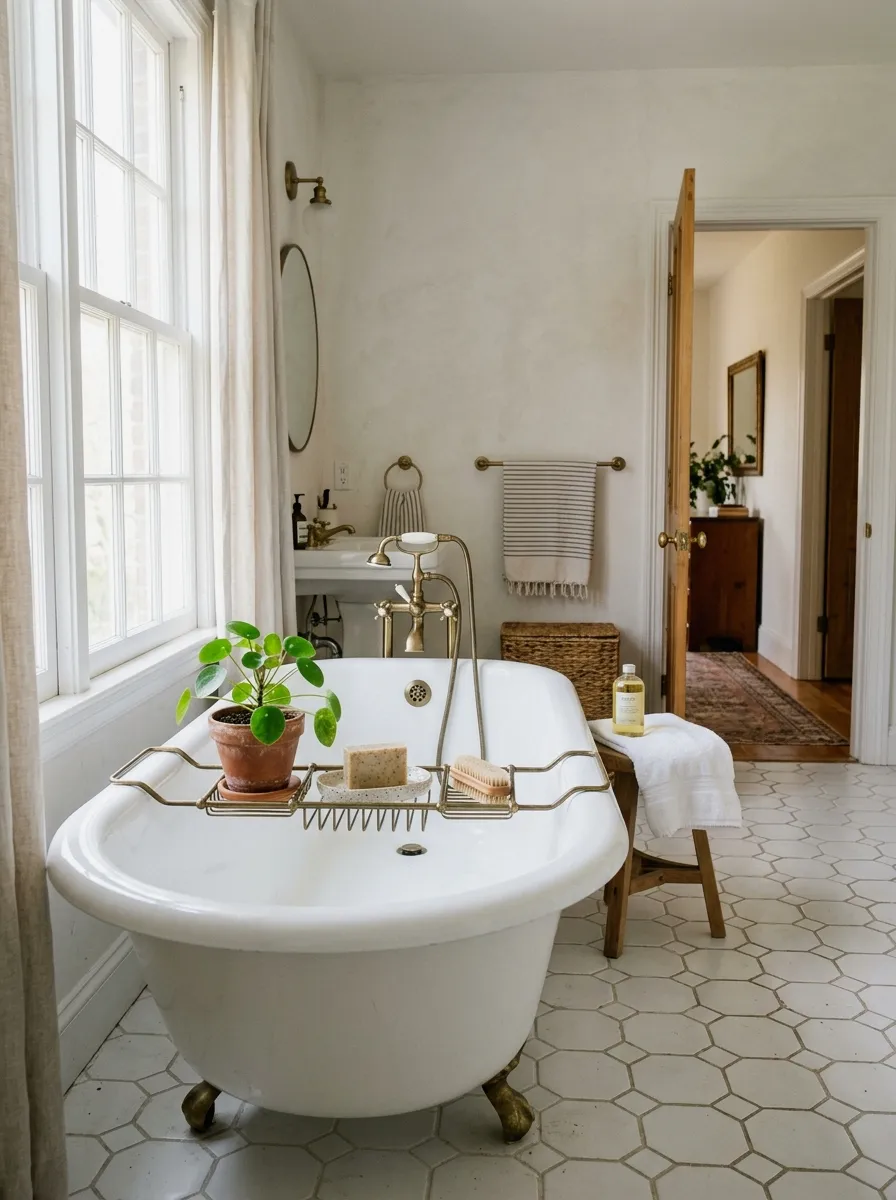
11. Add a Clawfoot Tub Caddy or Tray

If you have a freestanding or built-in tub, a bath caddy in antique brass or oil-rubbed bronze is a functional piece that reads completely vintage. These adjustable trays span the width of a tub and hold a book, candles, and a small glass. Brass versions run from $40 to $90, and they are one of the most visible statement pieces in the room.
Even if you don’t take long baths, a styled tray sitting across the tub (with candles, a small plant, and a bar of soap on a dish) photographs beautifully and adds layered interest when the bathroom is in everyday use. The antique-finish versions age well and develop a slightly darker patina over time, which actually improves the look.
12. Display Botanical or Vintage Art Prints

Framed prints are one of the most affordable ways to shift the aesthetic of a room. Vintage botanical illustrations, anatomical drawings, or old map reproductions printed on cream or sepia-toned paper are all widely available as free downloads on sites like Rawpixel or for $5 to $15 on Etsy. A matching set of two or three in simple black or gold frames makes the biggest impact.
Group them tightly, with 2 to 3 inches between frames, on a single wall section rather than spacing them out across the whole bathroom. A tight gallery feels collected. Wide spacing feels random. Humid bathrooms can cause paper prints to warp over time, so use acrylic-glazed frames rather than glass, and keep prints away from direct shower splash.
13. Introduce a Pedestal Sink (or Dress Up the One You Have)
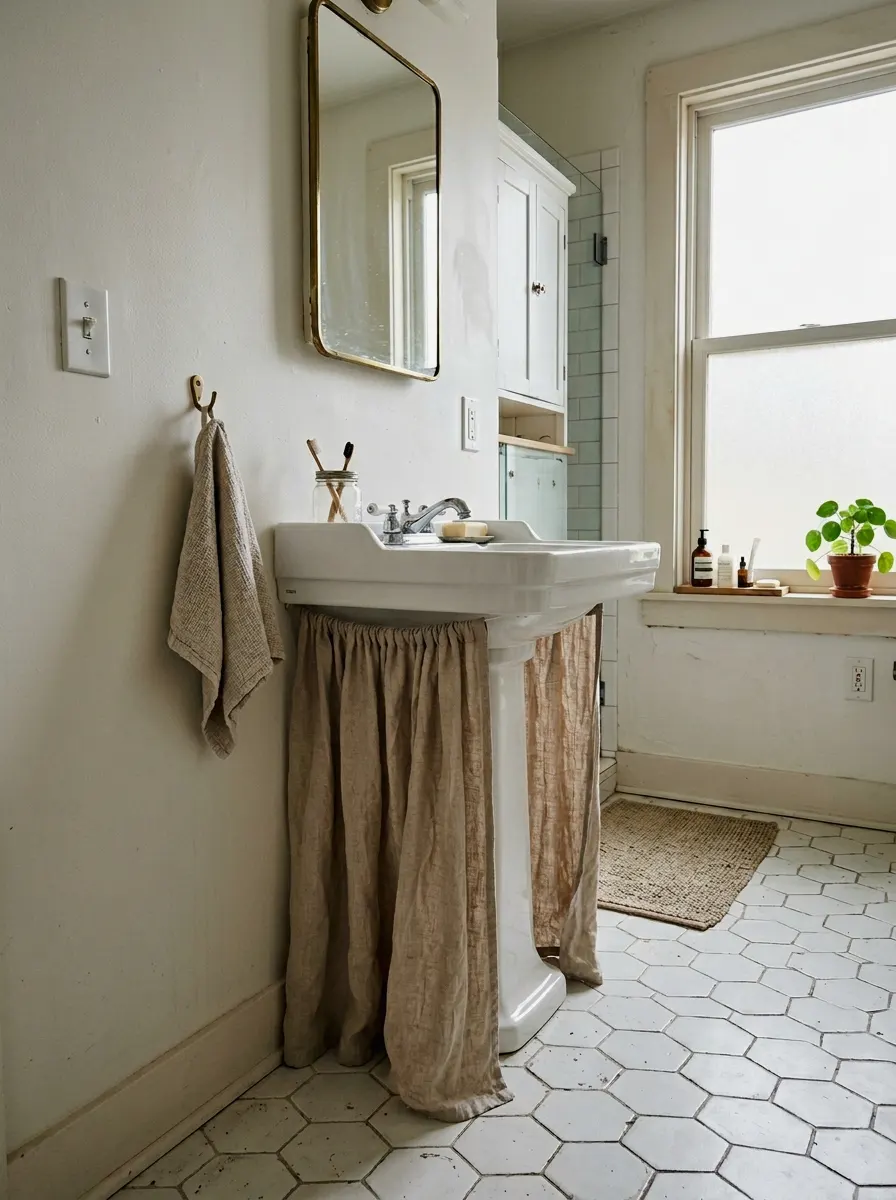
Pedestal sinks are one of the most iconic antique bathroom fixtures. If you’re an owner considering a vanity swap, a basic pedestal sink starts at about $150 to $250 and installs in a day. For renters or anyone keeping their existing sink, adding a simple linen sink skirt around an under-sink cabinet or exposed plumbing gives a similar old-world softness.
Sink skirts in linen or cotton (fabric you can make yourself or buy pre-made for $20 to $40) were common in early 1900s bathrooms before closed vanity cabinets became standard. They hide storage and add a draped, soft texture that reads as vintage without a single permanent change. Use tension rods or clip rings to hang the fabric without any adhesive.
Boho bathrooms lean into soft textures that read as genuinely vintage, and there are plenty of crossover ideas worth pulling from.
14. Use Vintage Soap and Accessory Dishes

The soap dish is a small thing. But when it’s a small cast-iron piece with a fish or leaf motif, or a white ceramic dish with a blue transfer print, it reads completely differently than a plastic tray from a drugstore. Vintage-style soap dishes, toothbrush holders, and tumblers in matching sets run $15 to $45 for a complete set.
I was skeptical about this one but the difference is real. The bathroom counter is one of the first places your eyes land, and a cohesive set of accessories in one period-appropriate finish (matte white ceramic, aged brass, or milk glass) ties the whole vanity together. Shop thrift stores specifically for milk glass pieces, which are widely available and still affordable, usually $3 to $10 per piece.
More Ideas:
15. Paint with Period-Appropriate Colors

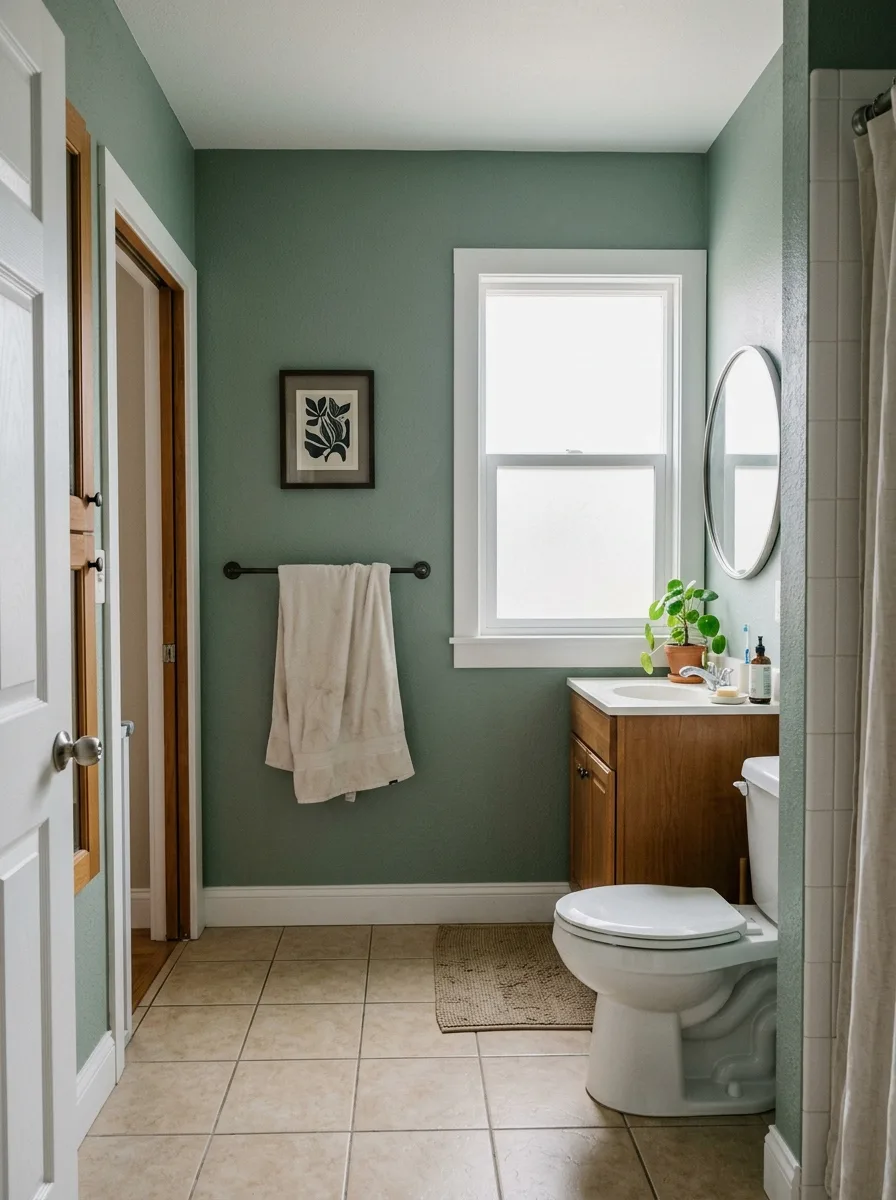
Most modern bathrooms come in stark white or grey. Antique bathrooms used much more specific color: dusty sage, warm cream, slate blue, muted terracotta, or deep navy. A gallon of bathroom-rated satin paint runs $30 to $55 and covers the walls completely. The color alone can shift a bathroom from generic to genuinely characterful.
The best colors for an antique bathroom look are those that feel slightly unsaturated, a little aged. Benjamin Moore’s “Pale Smoke,” Sherwin-Williams’ “Rainwashed,” or Farrow and Ball’s “Pigeon” are all real antique-leaning bathroom colors that show up consistently in period restorations. Avoid pure bright whites (they read modern) and go for creams or off-whites like “White Dove” or “Navajo White” if you want a light base.
For contrast, seeing how minimalist bathrooms handle color palettes that feel aged and lived-in can help you land on the right tone without going too dark.
16. Add a Freestanding Towel Rack with Vintage Styling

A freestanding towel rack is a renter-approved, no-holes-required way to add height and texture to a bathroom. Vintage-style versions in antique brass or black iron with X-frame or traditional ladder designs run $35 to $80. They hold towels, yes, but they also fill vertical space and give the bathroom a furnishings-based feel rather than a fixtures-only feel.
The ladder style is the most popular and easiest to find. A 64-inch tall version fits comfortably in most bathrooms without overwhelming the room. Style it with slightly uneven towel folding, meaning don’t try to make it look showroom-perfect. A towel casually draped over one rung and folded neatly on another reads as real and lived-in, which is exactly the feel antique bathroom decor is going for.
17. Install a Vintage-Inspired Medicine Cabinet

Medicine cabinets went from standard in 1920s bathrooms to almost invisible in 2000s renovations. They’re coming back. A surface-mounted medicine cabinet with an antique-style frame in aged silver or brass runs $80 to $180 and adds storage without losing wall space. The surface-mount version requires only four screws, no cutting into walls.
Look for cabinets with interior mirrored shelves and three-way doors, which were standard in early 20th century bathrooms. The exterior frame is the part that shows, so prioritize that finish. A cabinet with visible metal hinges in an aged finish reads antique even if the interior is completely modern. This is one of the longer-lasting upgrades on the list, useful every single day.
18. Layer Candlelight and Warm Lighting

The last step in an antique bathroom isn’t a product you buy. It’s the light. Candles on the vanity, around the tub, and on a shelf or stool shift the atmosphere entirely. Pillar candles in aged beeswax or ivory tones, or taper candles in old-style holders, are period-accurate and still widely used in real homes. A set of three pillar candles runs $12 to $25.
Pair candles with a dimmer switch on your main light (a standard dimmer swap runs $15 and takes 20 minutes) and warm-tone bulbs at 2700K or lower. The combination of candlelight, warm bulbs, and antique fixtures is what makes a bathroom feel genuinely old-world instead of just decorated. No other single change delivers as much atmospheric shift for as little money.
More Ideas:
Final Thoughts on Antique Bathroom Decor Ideas
What you’ve got now is 18 ways to build an antique bathroom without tearing anything out or spending a fortune. Most of these ideas work together. The hardware and lighting set the foundation. The accessories, art, and textiles layer on top. And the color on the walls ties it all together.
Start with the lighting. Swap one bulb to 2700K warm white this weekend and see what the room already looks like. Then pick one hardware piece, a towel bar or soap dish, in antique brass. You’ll feel the direction immediately, and from there the rest of the list is just layering.
If you’re working with a larger vanity or double sink layout, there’s a separate guide on finishing touches that tie a room together at that scale.
If you want more ideas like these for every room in your home, homelypop.com covers all of it. Real budgets, real homes, ideas that actually hold up.