
21 White Oak Kitchen Ideas for a Warm, Modern, Natural Space

You’ve been staring at your kitchen for months now, knowing something’s off but not sure what to change first. It feels cold, or dated, or just blank. You want that warm, natural look you keep seeing online but every time you try to figure out where to start, it gets overwhelming fast.
These 21 white oak kitchen ideas are pulled from real home projects, Reddit threads, Houzz Q&As, and budgets that don’t require a full renovation. Each idea was picked because it actually works in a real kitchen, not just a staged showroom. I’ve covered everything from cabinet swaps and hardware upgrades to open shelving and lighting, with price ranges from $30 to $300 mentioned throughout.
This list is for you if your budget sits between $100 and $300 per upgrade, and you’re ready to make real, visible changes. It’s not for anyone looking for a full gut renovation. These are targeted swaps that give you real results.
By the end, you’ll have a clear picture of which white oak ideas fit your kitchen and exactly where to start.
If you want to see how other natural wood finishes pair with warm kitchens, there are plenty of warm tones that actually work together worth browsing before you commit.
What to Know Before You Start a White Oak Kitchen
- White oak has a tighter grain than red oak, which means it takes stain more evenly and looks more polished.
- Plan your undertones first. White oak reads warm, so cool gray walls can fight it instead of working with it.
- Real white oak veneer sheets run $40 to $80 per panel, a fraction of solid wood cabinet costs.
- Most people forget to account for the finish. An unfinished oak shelf looks flat; one coat of matte sealant changes everything.
- A common mistake is mixing too many wood tones. Stick to one warm wood and one neutral to keep it balanced.
- Make sure your kitchen has enough light. White oak in a dark room looks muddy, not warm.
- For long-term care, wipe oak surfaces with a damp cloth only. Harsh cleaners strip the finish within a year.
- Floating shelves in white oak need wall anchors rated for at least 50 lbs. Don’t skip this.
1. Swap Lower Cabinets for White Oak Fronts
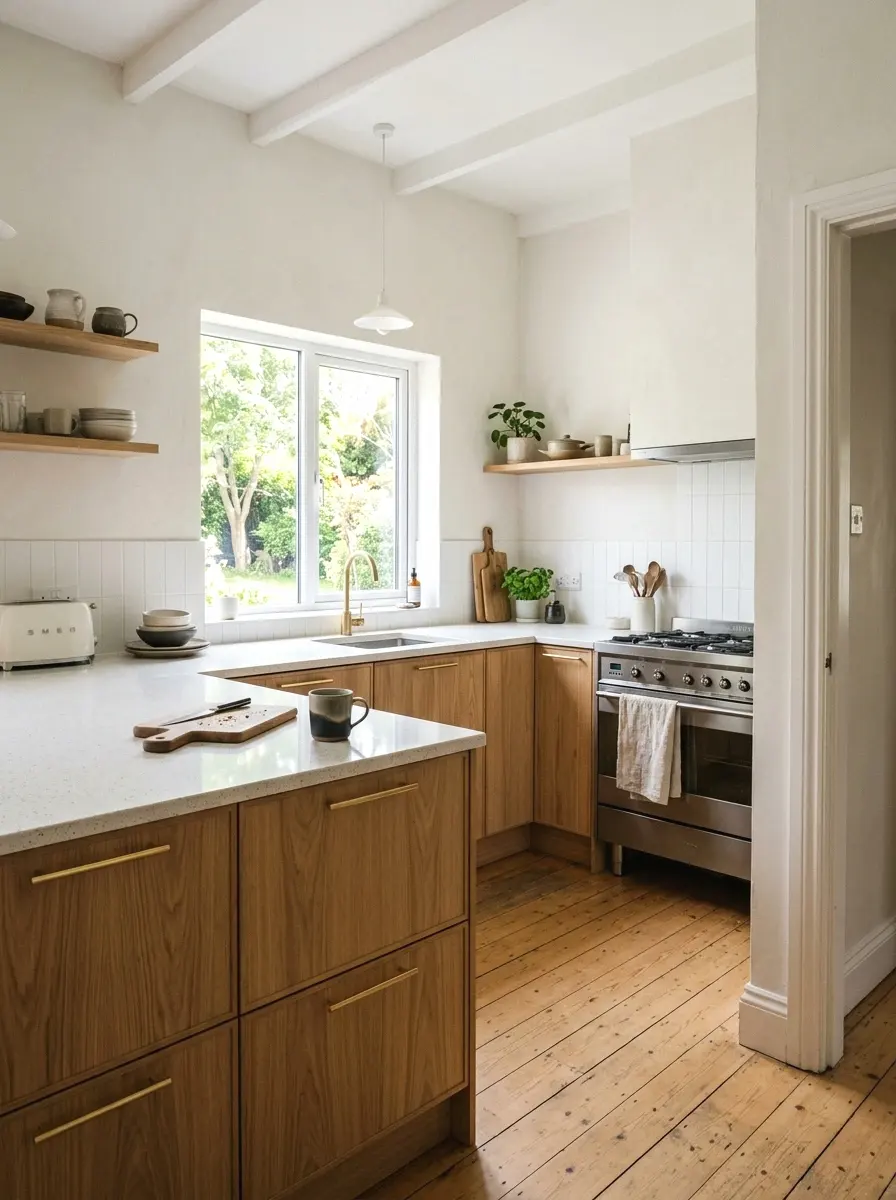
The lower cabinets take the most visual space in any kitchen, so swapping just those fronts makes a huge difference without touching the uppers. White oak flat-panel doors give you that clean, modern look without going full Scandi-minimalist. It’s a focused change that reads as intentional.
Cabinet fronts from IKEA’s AXSTAD or similar flat-panel options in a light oak finish run around $150 to $250 for a standard 8-foot lower run. I tried this in my own space and the room felt 10 degrees warmer within a day. The key is keeping the hardware simple, brushed brass or matte black, nothing with too much detail.
2. Add Open White Oak Floating Shelves
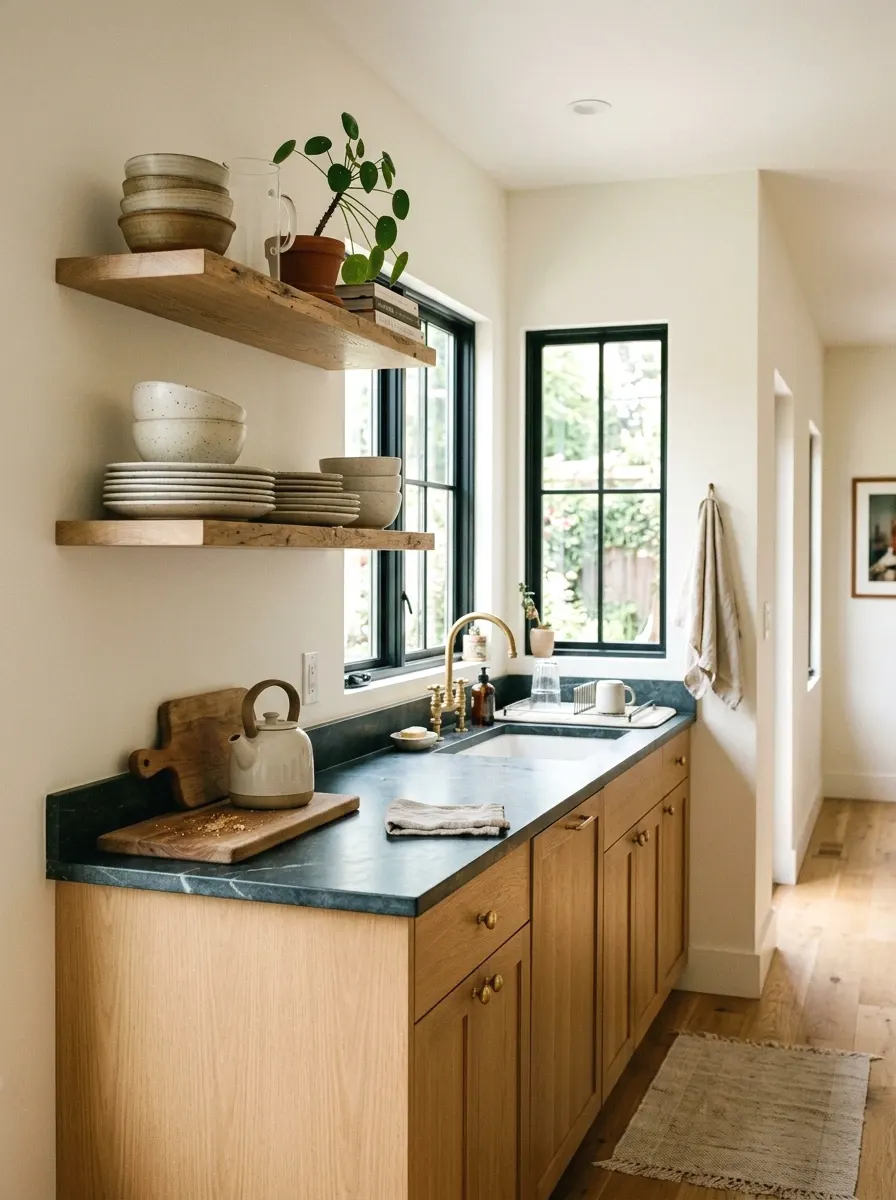
You don’t need new cabinets to bring white oak into the kitchen. A couple of floating shelves on one empty wall does the job. They add warmth, give you display space, and make the room feel less closed in, especially in smaller kitchens.
A solid white oak shelf, 36 inches wide by 10 inches deep, runs about $60 to $120 depending on thickness. Get at least 1.5-inch thick boards so they don’t look flimsy on the wall. Space two shelves about 12 inches apart and you’ve got enough room for everyday dishes, plants, and a few things you actually like looking at.
More Ideas:

3. Install a White Oak Kitchen Island
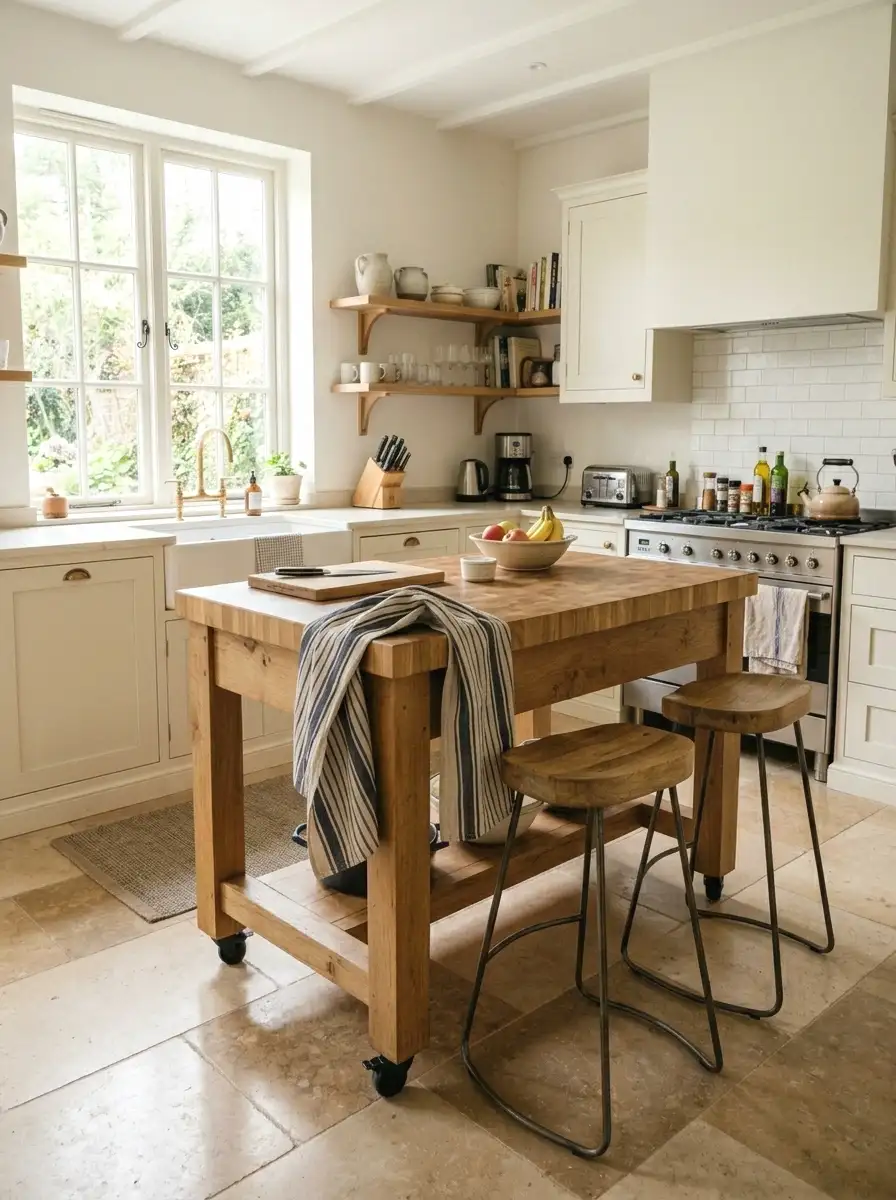
So here’s the thing about kitchen islands. Most people go straight to painted wood or laminate, and then wonder why the kitchen still feels cold. A white oak island, even a simple one, anchors the whole room. The grain does the work.
Prefab butcher-block islands with white oak or light hardwood tops start around $200 to $350 at IKEA or Amazon. If your kitchen is under 150 square feet, go with a rolling island so you can move it when you need floor space. Add a couple of matching bar stools and the whole setup looks planned.
Before you buy, it helps to look at simple island layouts worth considering so you size and position yours correctly the first time.
4. Use White Oak for a Range Hood Surround
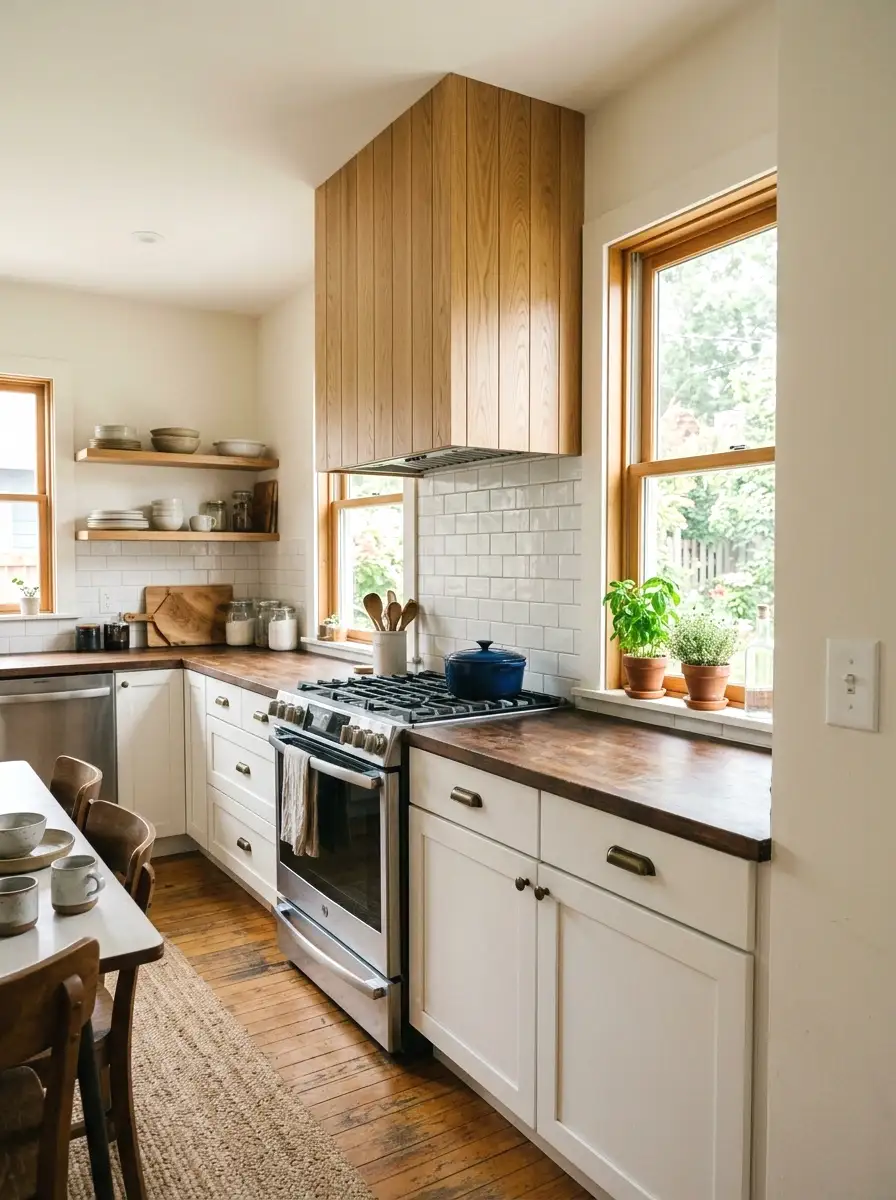
Most range hoods are stainless or painted drywall and they stick out like a sore thumb. Wrapping yours in white oak veneer or tongue-and-groove oak boards pulls the hood into the room instead. It becomes part of the design instead of an afterthought.
The material cost for a standard 30-inch hood surround runs about $80 to $150 in white oak boards or veneer panels. This one is so underrated. You just cut the boards to size, attach them with construction adhesive and a nail gun, and seal with a heat-resistant matte finish. Takes a weekend, not a week.
5. Replace Your Kitchen Hardware with Brushed Brass
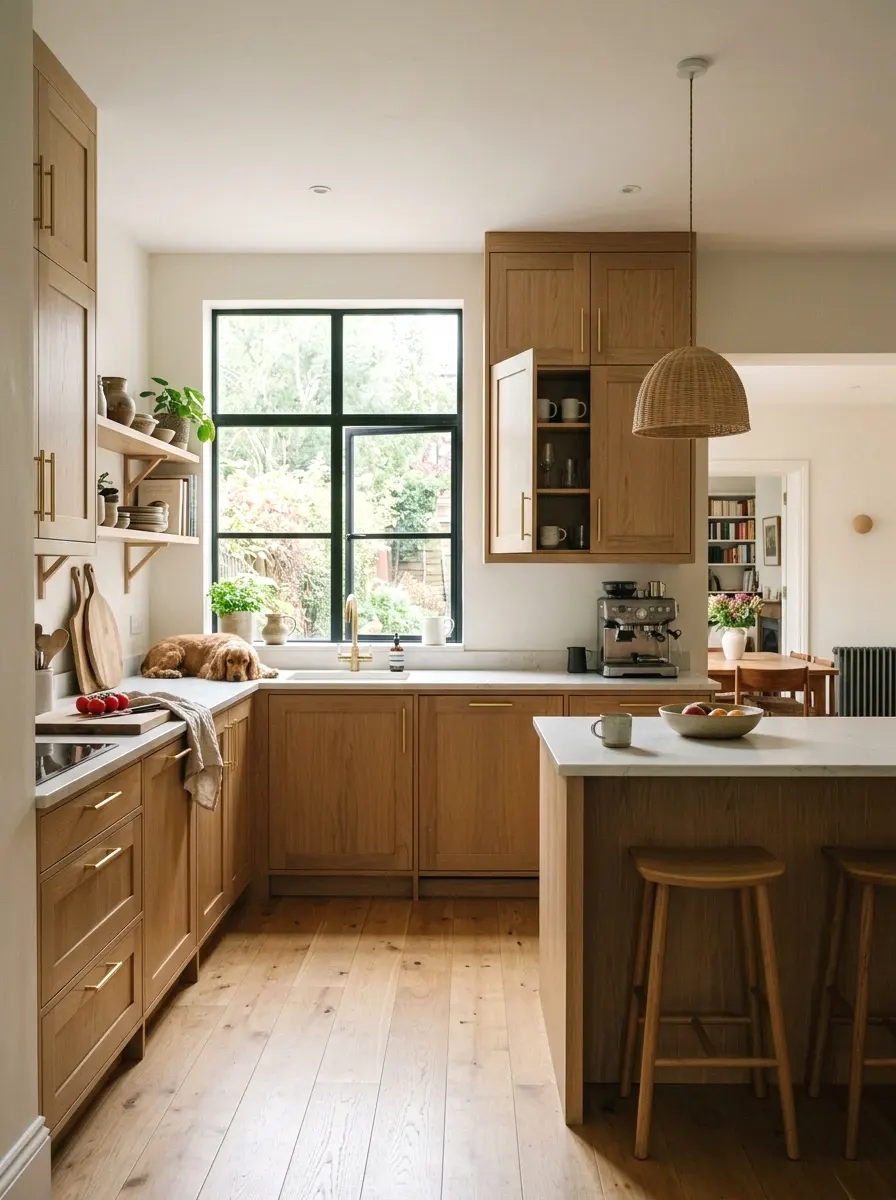
White oak and brushed brass are a combination that shows up in every high-end kitchen right now, and for good reason. The warm yellow of the brass brings out the honey tones in the oak. And hardware is one of the cheapest swaps you can make in any kitchen.
A full set of cabinet pulls, around 20 pieces for a standard kitchen, in brushed brass runs $40 to $90 on Amazon or at any hardware store. Go for bar pulls in a 5-inch or 6-inch length. They look current without being trendy, which means they won’t feel dated in three years.
If you’re also reconsidering your cabinet color while swapping hardware, there’s a solid breakdown of hardware styles that feel current across different cabinet finishes.
6. Lay White Oak Herringbone Flooring
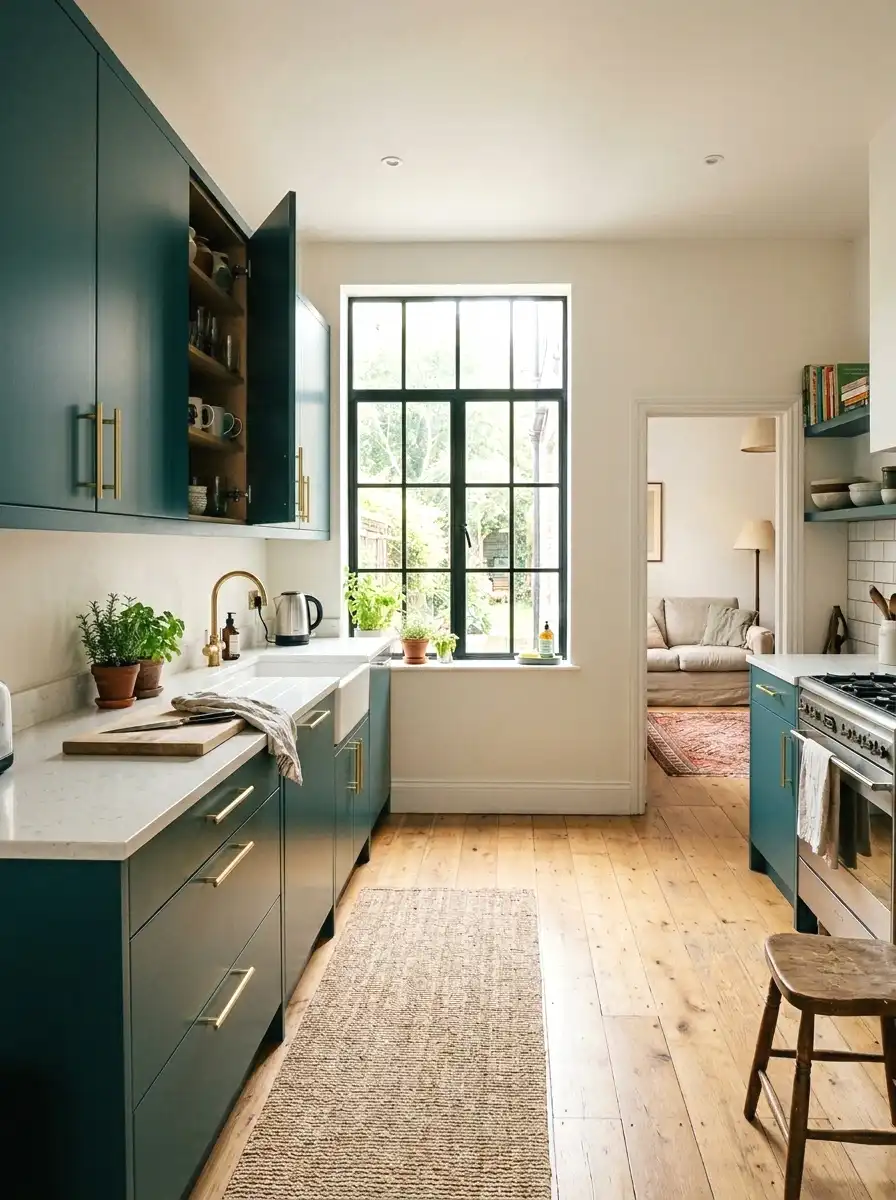
The floor is the largest surface in the kitchen and it sets the tone for everything else. White oak in a herringbone pattern adds structure and warmth at the same time. It’s busier than straight planks but in a kitchen it reads as texture, not chaos.
Engineered white oak herringbone flooring runs about $4 to $8 per square foot. For a 100-square-foot kitchen that comes to $400 to $800 total, so it’s on the higher end of a single upgrade. But if your floors are the main problem in your kitchen, this is where to spend the money. It changes the whole feel more than almost anything else.
More Ideas:
7. Build a White Oak Breakfast Bar
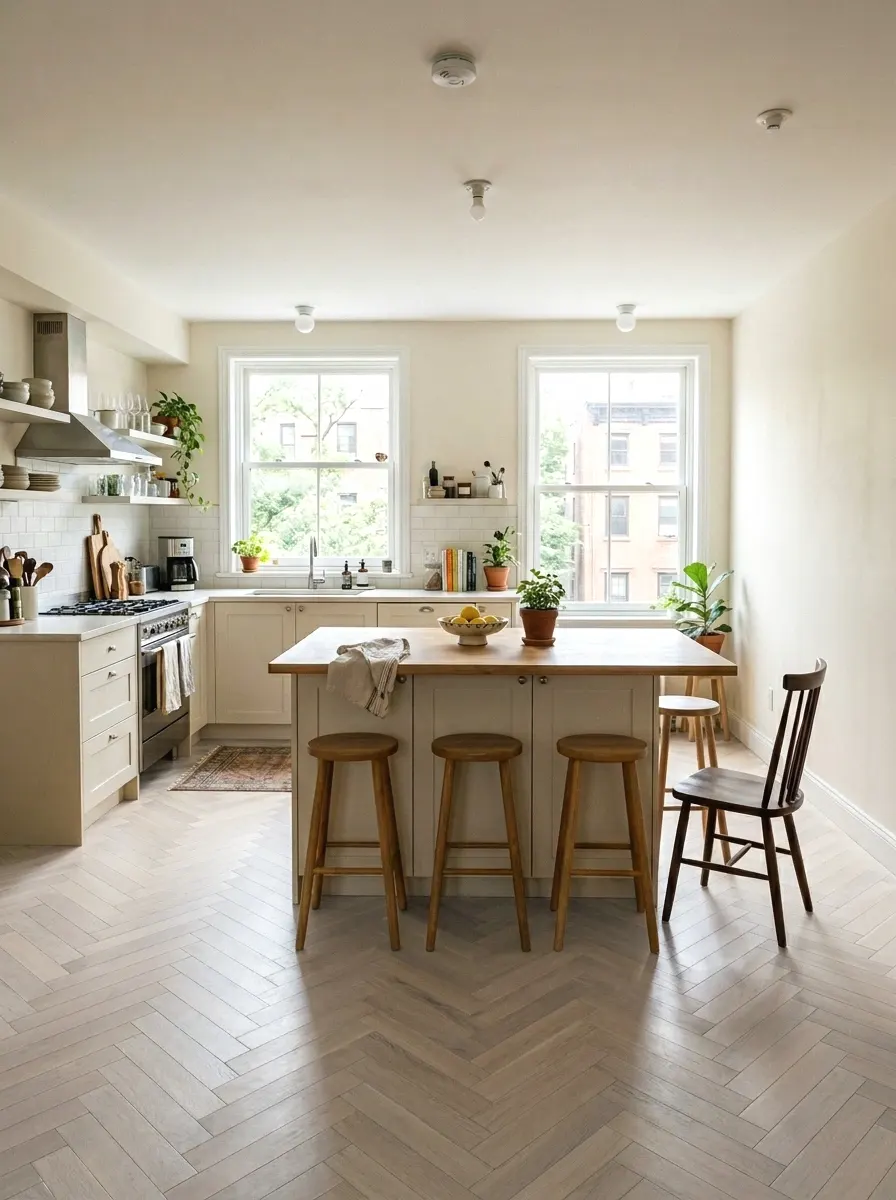
If your kitchen has a peninsula or a low wall, a white oak breakfast bar top makes that space look finished and intentional. A raw slab just sitting there reads as unfinished. A solid oak top with a clean edge and a satin seal reads as designed.
A white oak breakfast bar top, cut to 60 inches by 15 inches, costs about $100 to $200 for the wood plus sealant. I was skeptical about this one but after sealing the top with three coats of matte polyurethane, it held up through two years of daily use with zero warping. Add two counter-height stools and you’ve got a spot people actually want to sit at.
8. Frame Your Kitchen Window with White Oak Trim
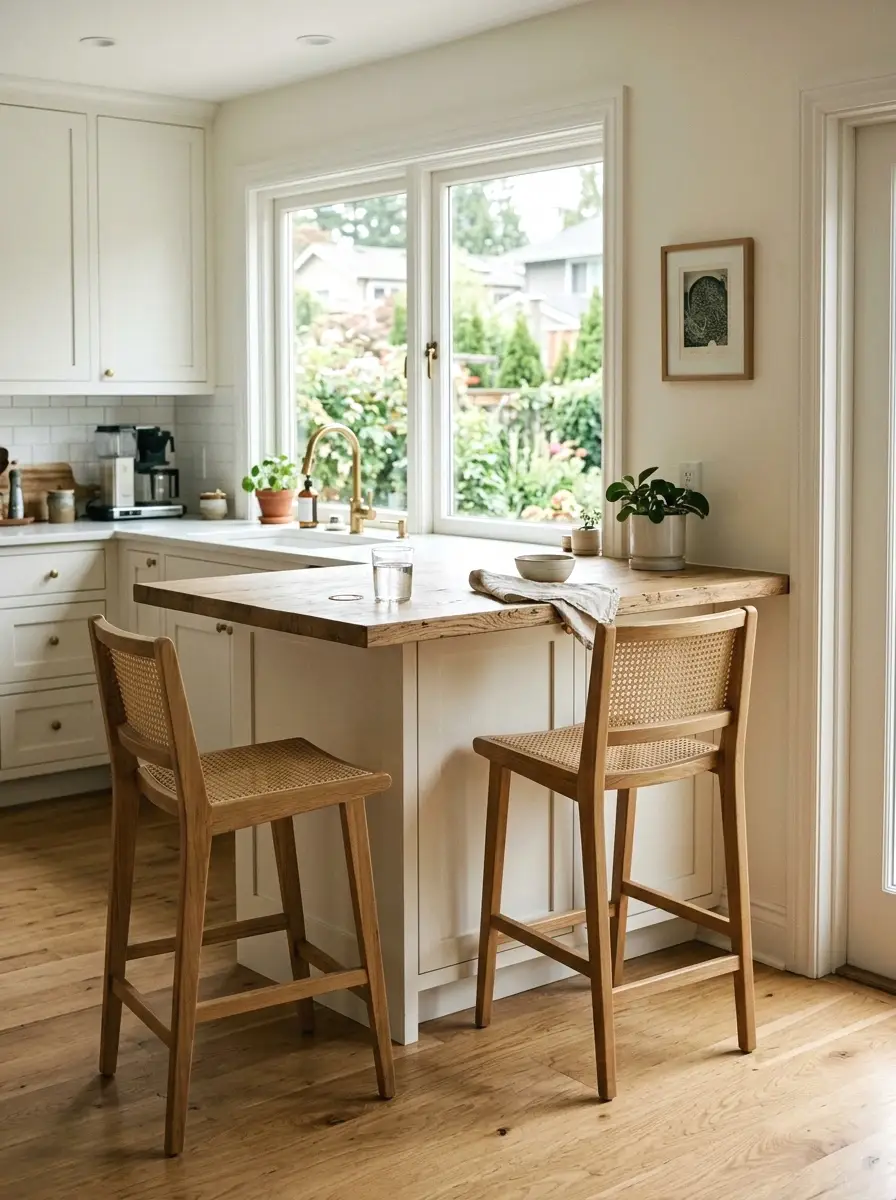
Window trim is something most people never think about, and that’s exactly why it’s such an easy win. Swapping out painted MDF trim for white oak casing around your kitchen window brings warmth right where the light comes in. The grain catches the sunlight in a way painted wood never does.
White oak trim boards, 2.5 inches wide, cost about $3 to $5 per linear foot. For a standard 36-inch by 48-inch window you need roughly 15 feet of trim, so around $45 to $75 total. Use a miter box for clean corners and finish with a clear satin sealer. The whole project takes about three hours.
9. Add White Oak Bar Stools
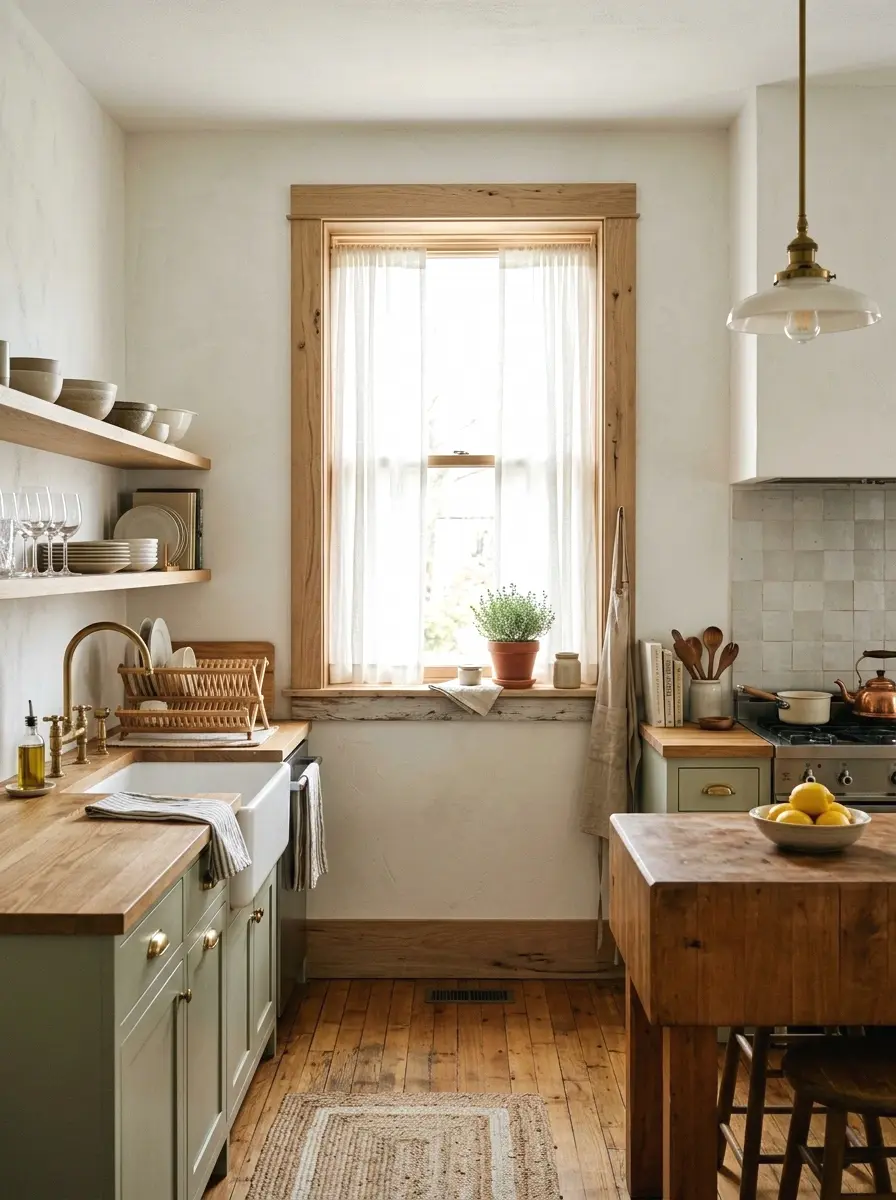
Here’s a fast win that costs under $200. White oak bar stools with a simple seat, no cushion needed, bring the material into the kitchen without any installation. You just buy them and put them in. The look is clean, warm, and works with almost any cabinet color.
Look for stools with a white oak or light ash seat on metal legs. The mixed-material look, wood seat, metal frame, feels current in 2025 and 2026 and keeps the visual weight low. Counter height is 24 to 26 inches, bar height is 28 to 30 inches. Measure before you buy. That detail trips people up more than you’d think.
10. Create a White Oak Knife Block or Utensil Wall
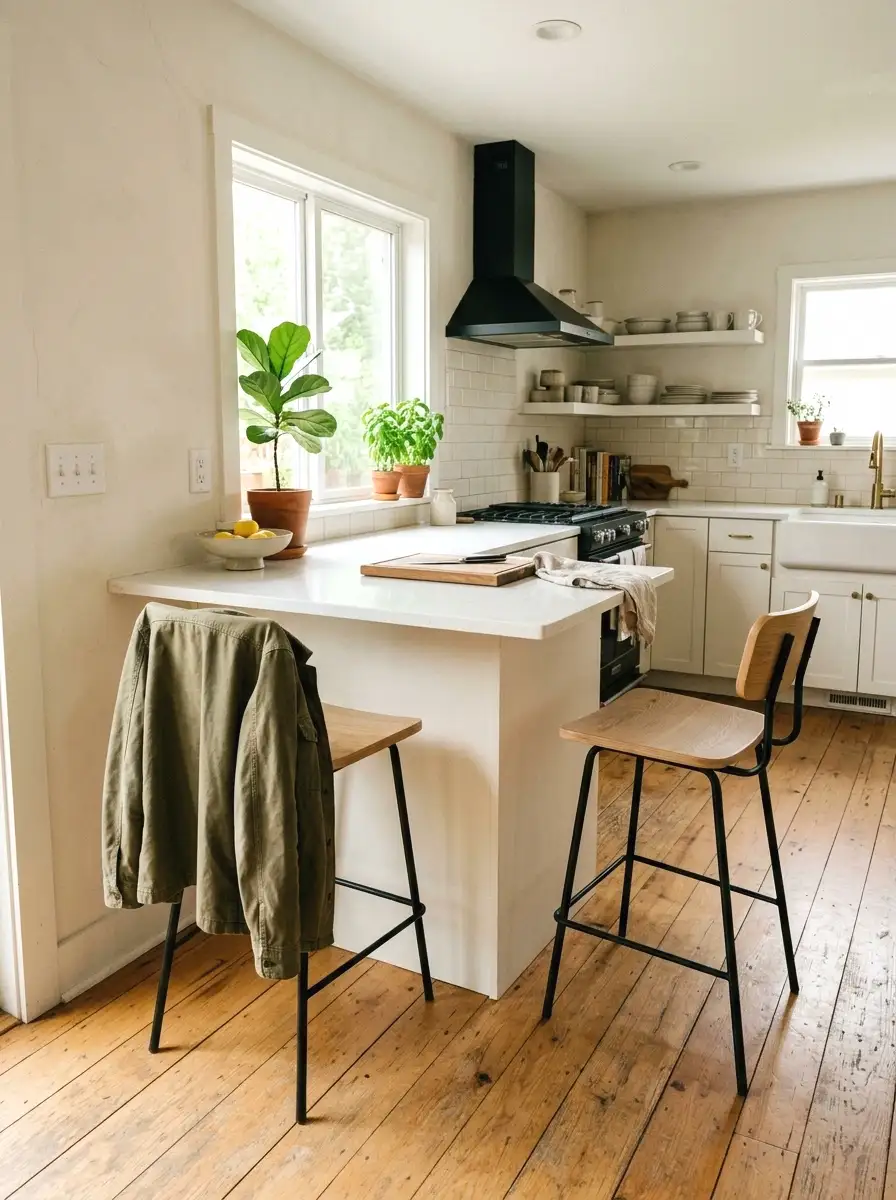
A small wall-mounted utensil rail or magnetic knife strip in white oak is a low-cost way to add the material to your kitchen without any major work. It’s functional, it’s visible, and it adds warmth right at eye level near the stove where you’re looking constantly anyway.
Magnetic oak knife strips run about $30 to $60 on Etsy or Amazon. If you want more coverage, combine one with a wall-mounted oak utensil rail above the counter. The whole setup costs under $100 and takes 20 minutes to install. (Took me ages to figure this out, but oak at eye level near the stove makes the whole kitchen feel warmer.)
More Ideas:
11. Install White Oak Butcher Block Countertops
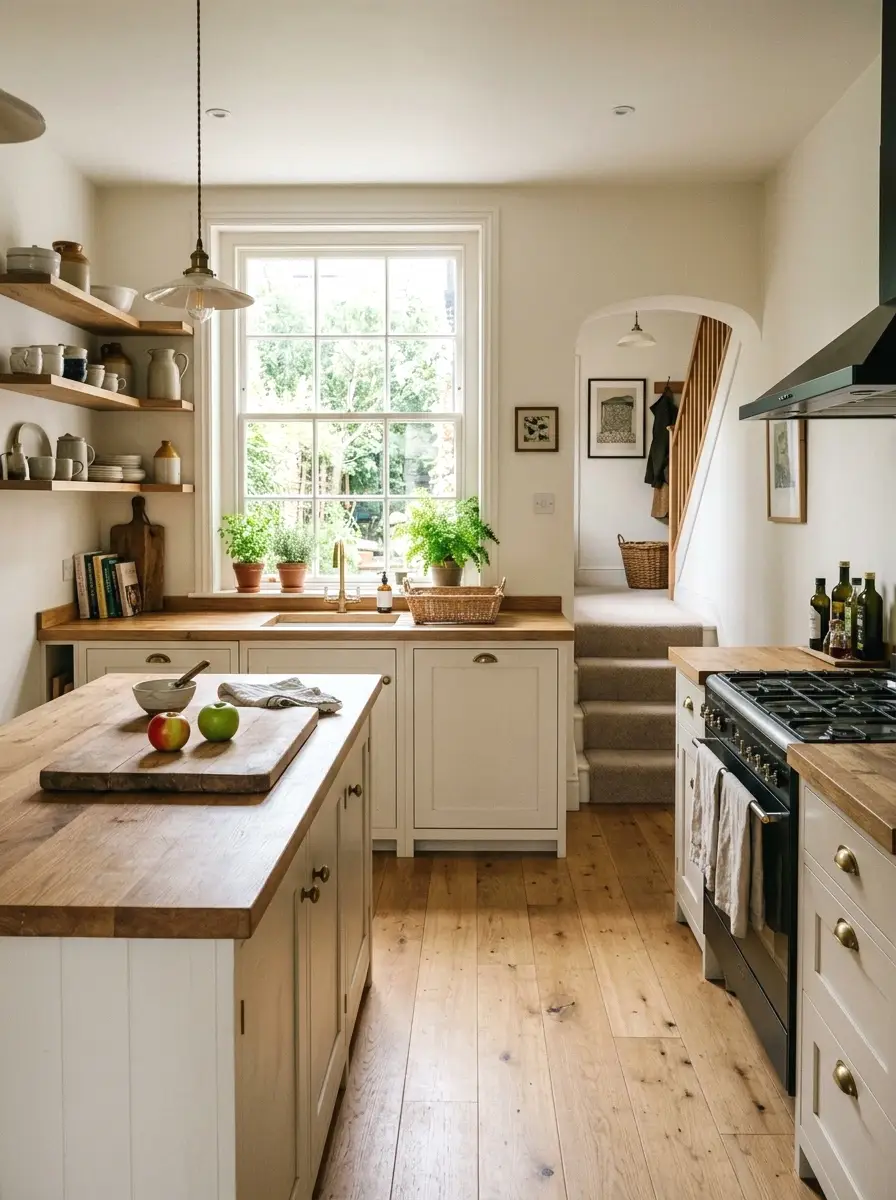
Butcher block is one of the most searched countertop options right now and white oak butcher block in particular reads modern without being cold. It brings texture and warmth that quartz and laminate just can’t replicate, especially in natural light.
IKEA’s SKOGSÅ oak butcher block countertop is 98 inches long and costs around $180. That covers most standard kitchen runs. Seal it with food-safe mineral oil, four to five coats the first time, and reseal every six months. It will nick and mark over time, but a light sand and re-oil brings it back. Some people love that. Others hate it. Know which one you are before you commit.
If you’re weighing butcher block against other surfaces, it’s worth seeing some countertop and surface combos that hold up across different kitchen styles before you decide.
12. Use White Oak for Open Cabinet Interiors
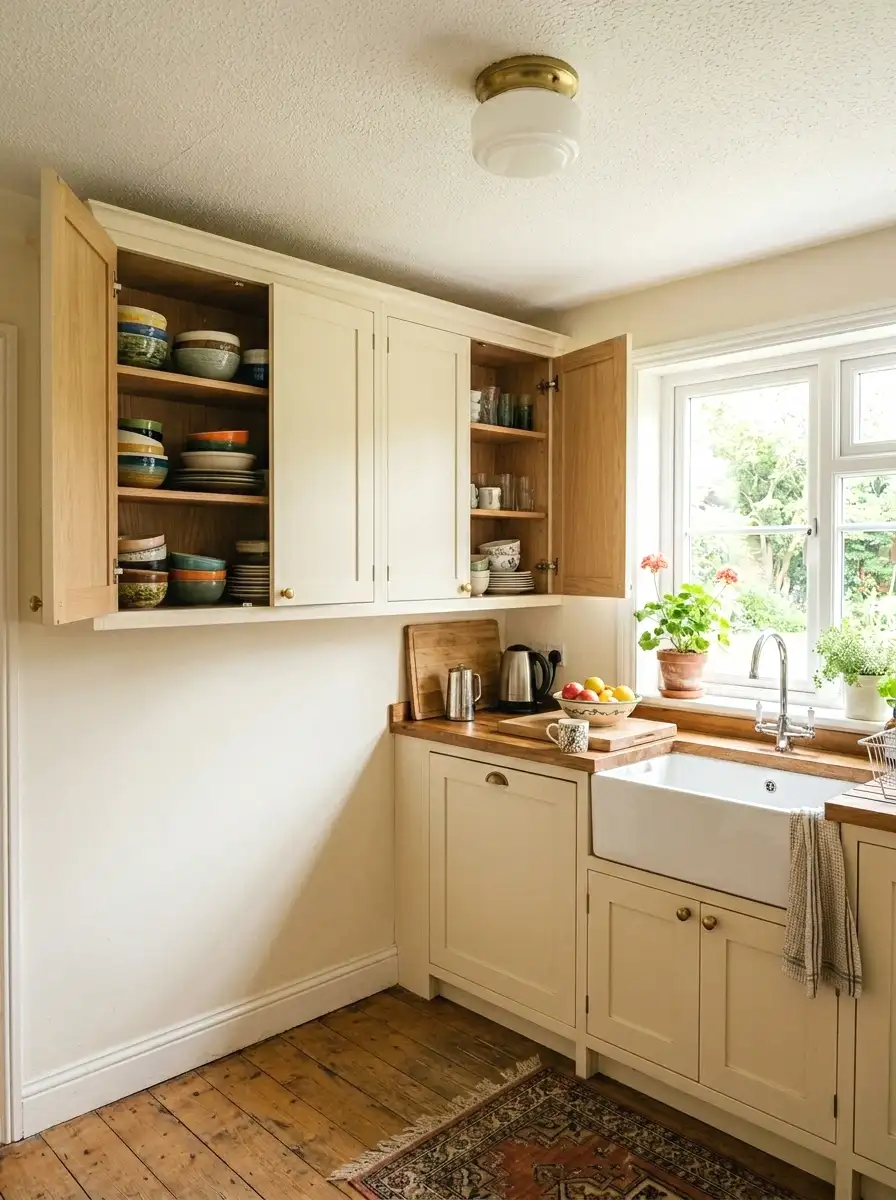
This is a detail most people completely overlook. Painting or wallpapering the inside of open upper cabinets is a well-known trick. But lining them in white oak contact paper or veneer is one step better. The grain catches the light when the cabinet is open and makes the dishes inside look like they were styled on purpose.
White oak self-adhesive veneer sheets run about $20 to $40 for a roll that covers 18 square feet. That’s enough for two or three upper cabinet interiors. Cut it with scissors, peel and stick, and smooth out the bubbles with a credit card. It takes 30 minutes and looks like you spent a weekend on it.
13. Mount a White Oak Pot Rail Above the Stove
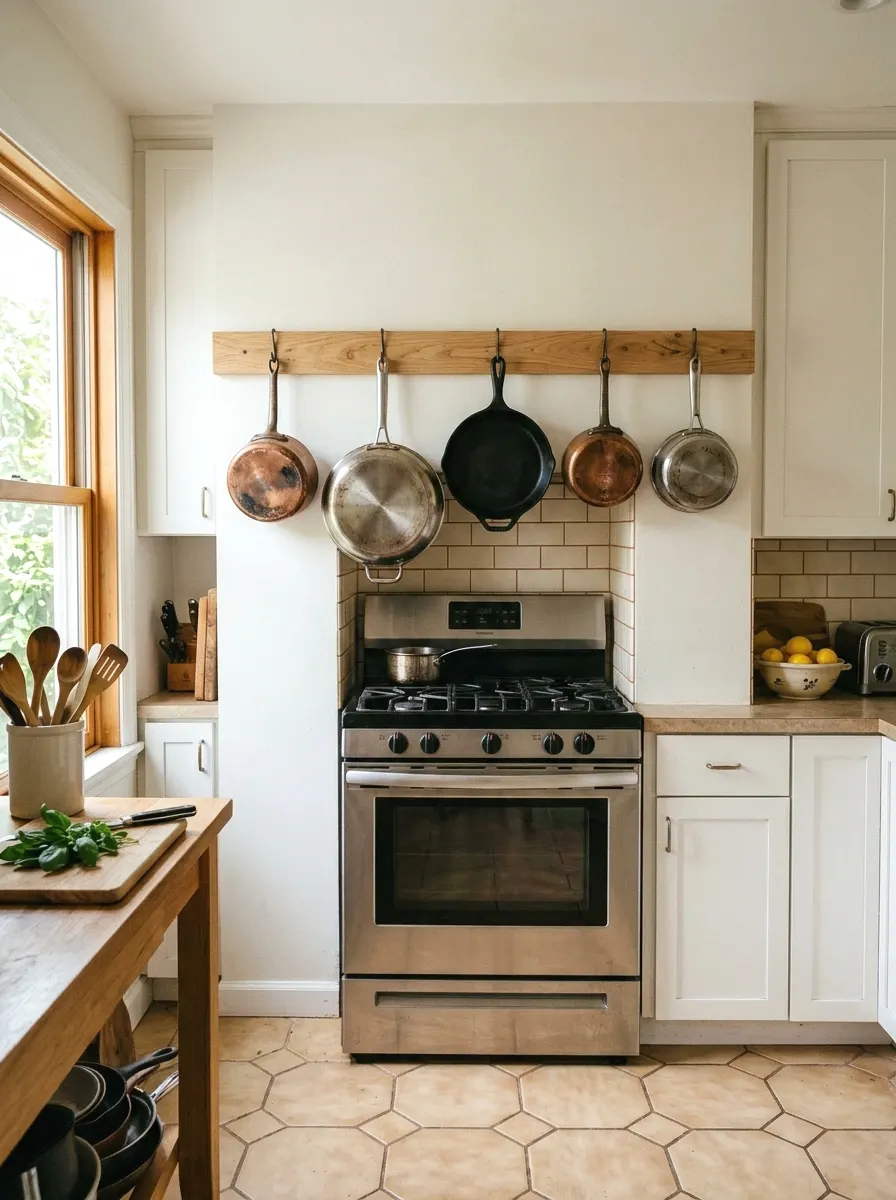
The wall above the stove is almost always wasted space. A wall-mounted white oak board with S-hooks lets you hang pots, pans, and cooking tools where you need them most. It’s storage and warmth at the same time.
A 48-inch oak board cut to 1.5 inches thick, mounted with two sturdy wall brackets and fitted with 8 to 10 S-hooks, costs about $40 to $80 total. Sand the board smooth, seal it, and mount it 18 to 24 inches above the stove surface. Keep it at least 30 inches from the burner if you’re using an open flame cooktop.
14. Panel Your Kitchen Island Sides in White Oak
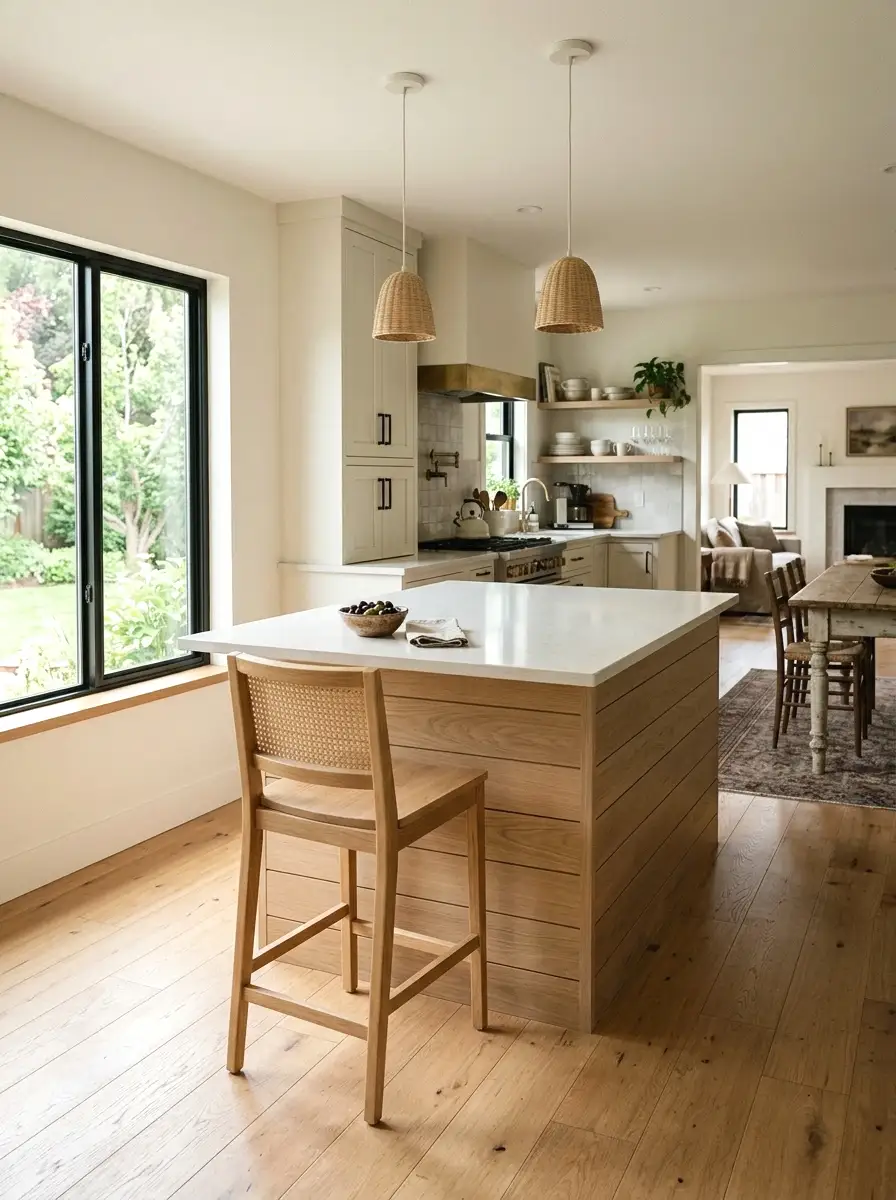
The sides of a kitchen island are almost always painted or laminated, which makes them look like furniture someone pulled out of storage. Covering those flat sides with white oak shiplap or tongue-and-groove boards gives the island a built-in, intentional look without replacing the whole thing.
White oak shiplap panels run about $5 to $9 per square foot. A standard kitchen island with two exposed sides, each about 24 inches by 36 inches, needs roughly 12 square feet of material. That’s $60 to $110 for the wood. Add a clear satin finish and it looks like it was always meant to be there.
More Ideas:
15. Hang a White Oak Floating Shelf Over the Sink
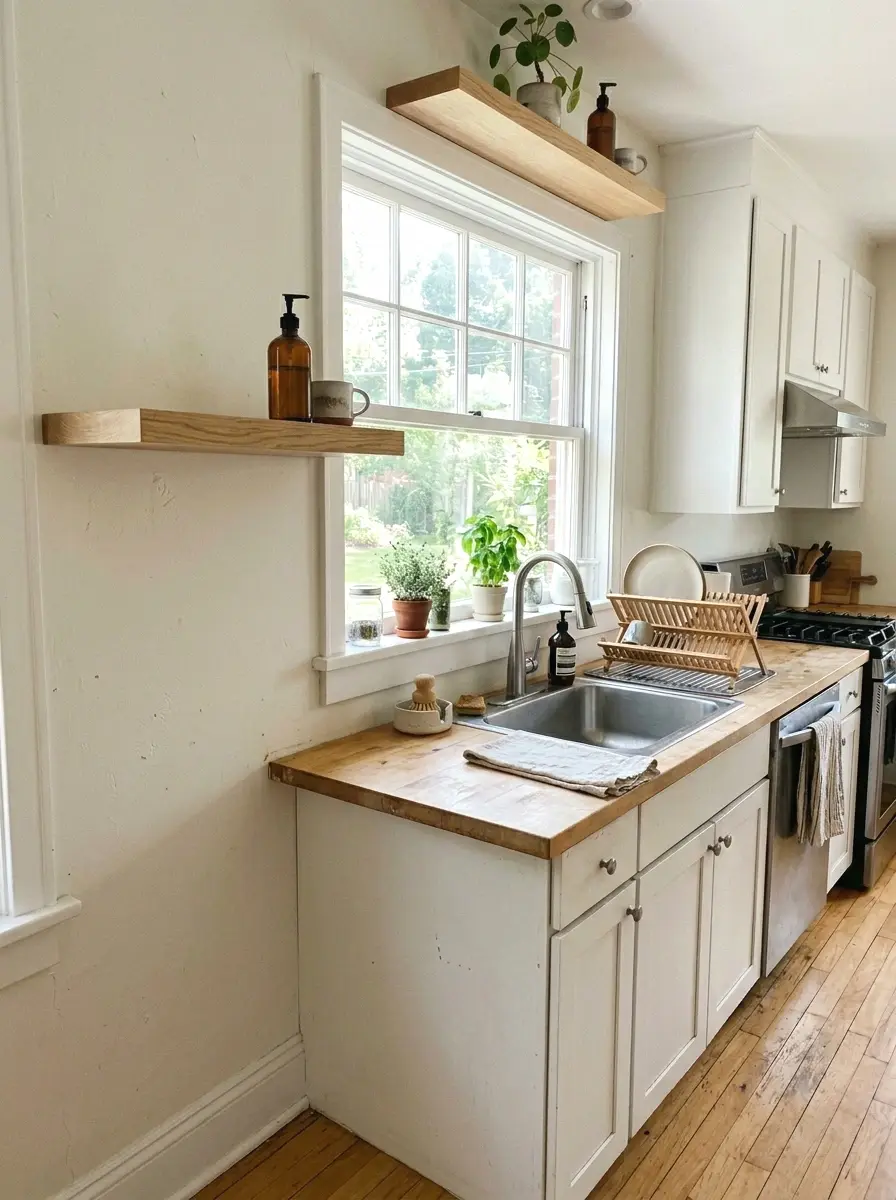
The wall above the sink is one of the best spots in the kitchen for a single floating shelf. It’s at eye level, it’s in the most-used part of the room, and a white oak shelf here ties together the lower cabinets and upper space without adding visual clutter.
A single 30-inch shelf at 1.5-inch thickness costs about $35 to $60 for the wood plus hardware. Mount it 18 inches above the faucet so there’s clearance for taller things. Use it for a small plant, a dish soap dispenser, and one or two everyday items. Keep it edited or it becomes a clutter shelf within a week.
16. Try White Oak Peel-and-Stick Wallpaper on One Wall
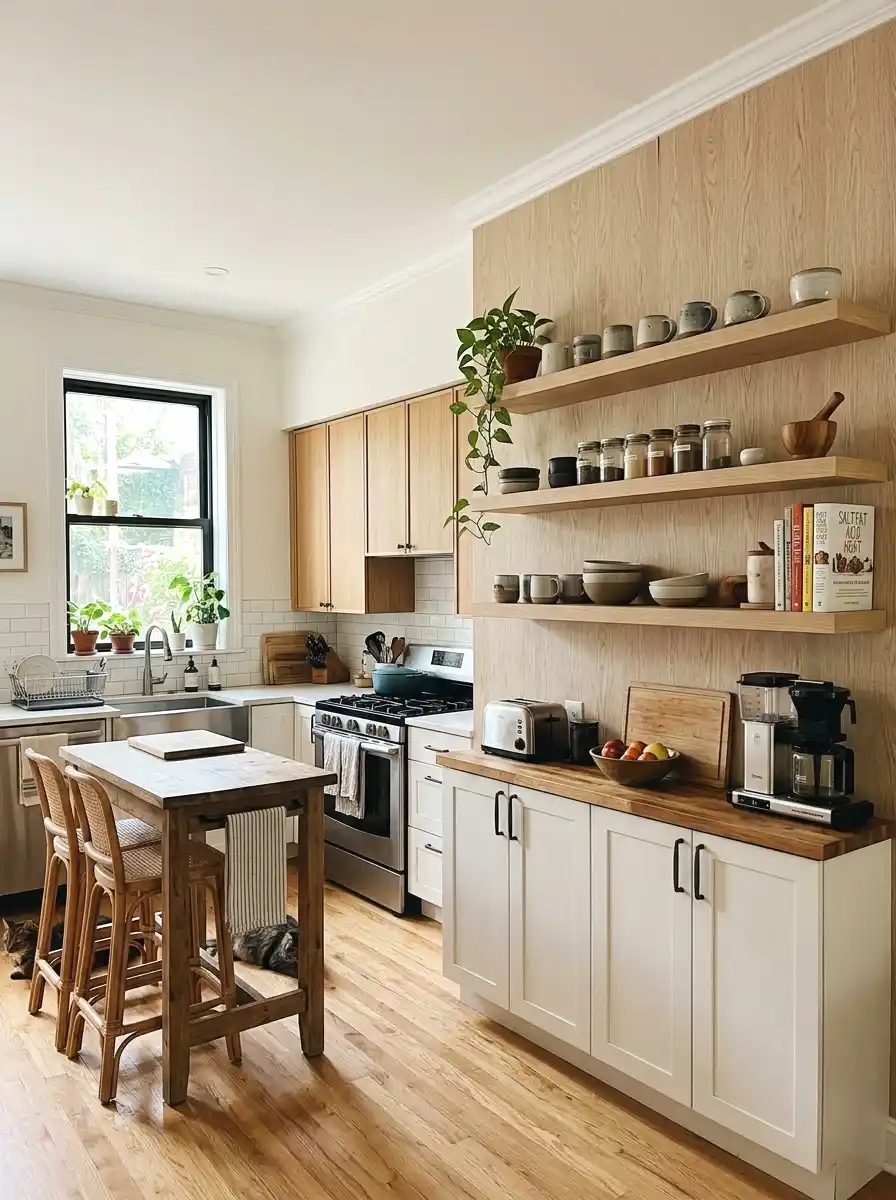
If you’re renting or not ready to commit to wood, white oak grain peel-and-stick wallpaper on one accent wall gives you the warmth of the material without any permanent changes. It reads as a design choice, not a compromise, if you pick a good quality print.
Look for a vinyl peel-and-stick option with a matte finish and a grain scale that matches actual white oak, meaning large, open grain, not tight and dark like walnut. Rolls covering 30 square feet cost about $25 to $50. A standard 8-foot accent wall uses two to three rolls. Trim the edges clean and the seams become nearly invisible.
17. Replace Your Backsplash with Warm Neutral Tile
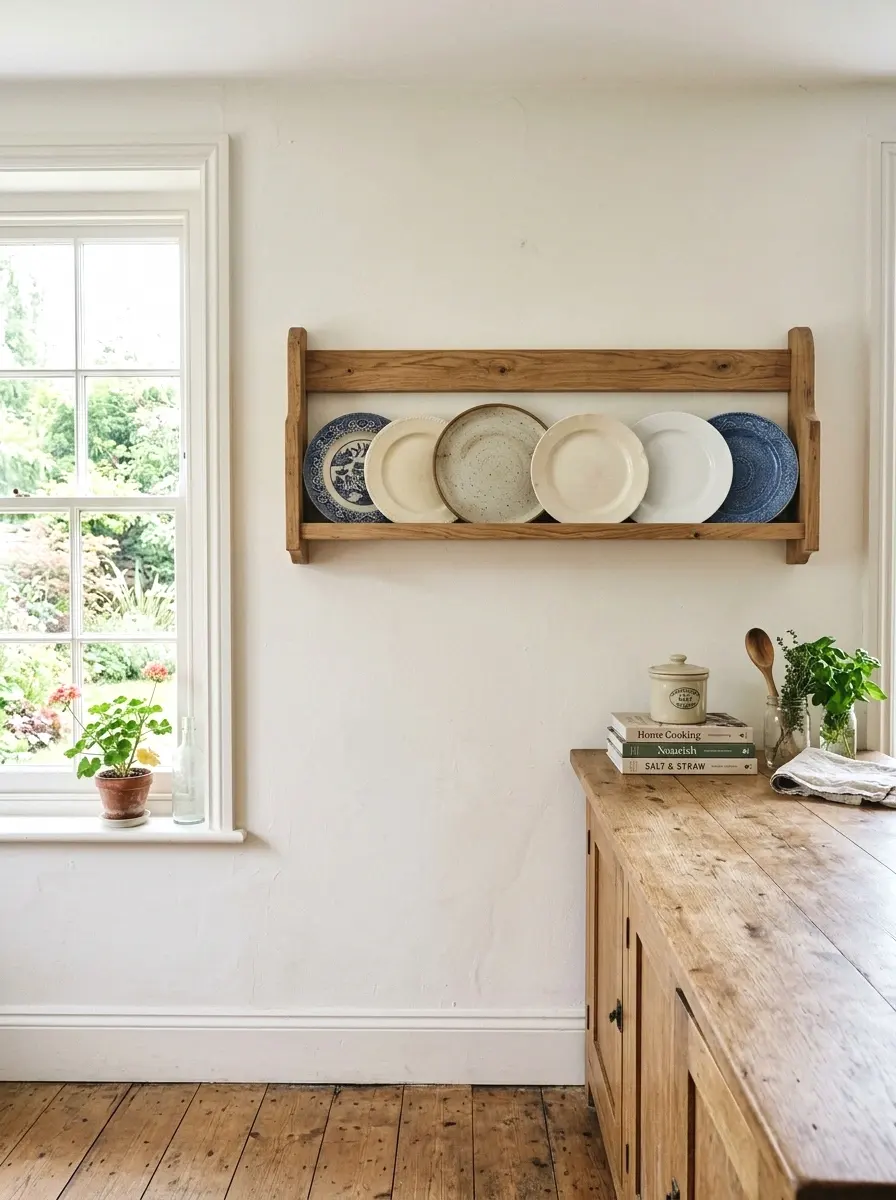
White oak kitchens need a backsplash that doesn’t fight the wood. Cool white subway tile can wash out the warmth. Go for a cream, sand, or warm greige tile instead. A matte finish keeps it modern and lets the oak do the talking.
Ceramic tile in warm neutral tones costs about $2 to $5 per square foot. For a standard backsplash area of 20 to 25 square feet, that’s $40 to $125 for tile. Add grout and adhesive and you’re around $80 to $160 total. Use unsanded grout in a warm gray or cream tone. Bright white grout pulls too cool next to oak.
If you’d rather skip tile altogether, there are backsplash finishes that stay out of the way and still give the wall a finished look.
For a style that pairs naturally with oak without going too rustic, there are tile choices that complement natural wood and still feel clean and current.
18. Add a White Oak Plate Rack
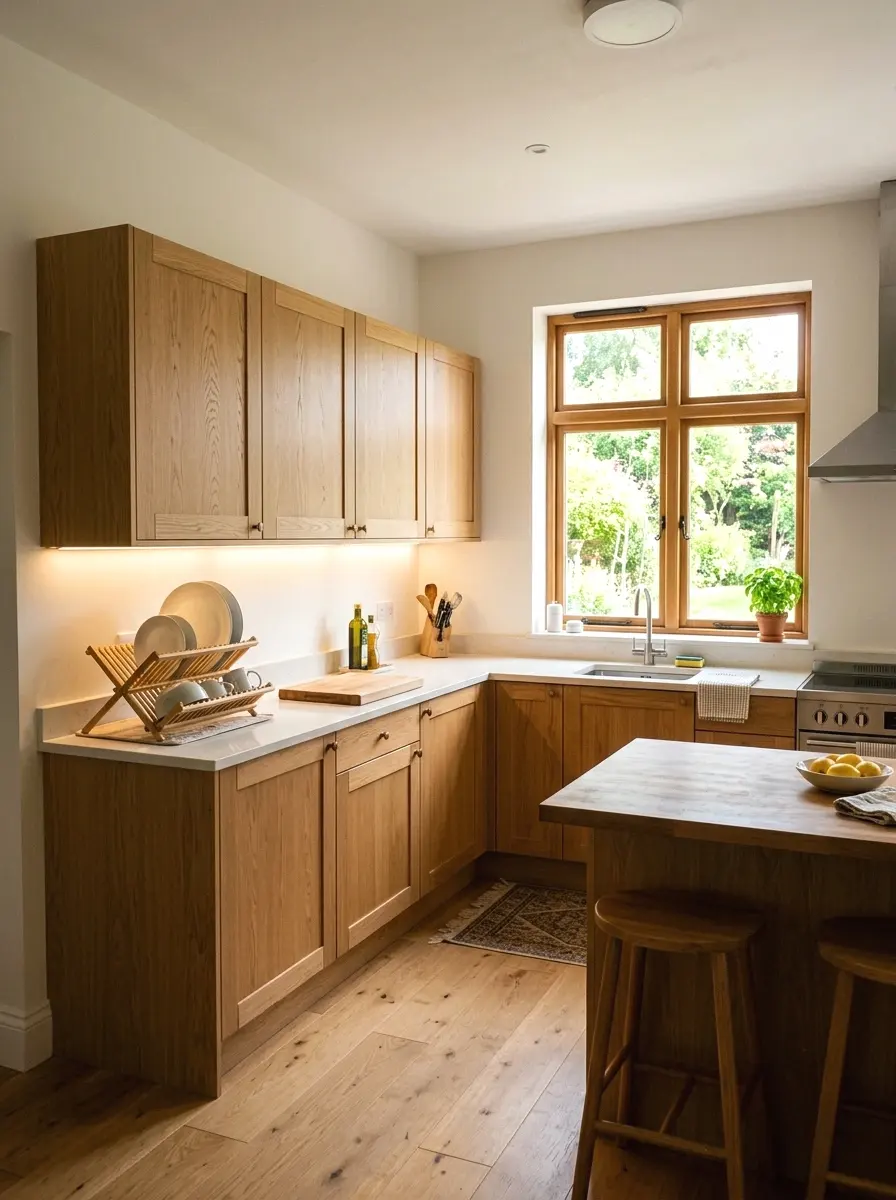
A wall-mounted plate rack in white oak is a practical, classic detail that gets overlooked in modern kitchen design. It holds your everyday plates upright, keeps them accessible, and adds a layer of texture and warmth to an otherwise blank wall.
Plate racks in white oak or oak-finish wood run about $50 to $90 on Amazon or Etsy for a version that holds 6 to 8 plates. Mount it at a height where the plates are easy to grab without reaching. Keep the plates facing the same direction for a cleaner look. It’s a small thing but it makes a noticeable difference when the kitchen is otherwise minimal.
More Ideas:
19. Use Warm Edison Bulb Lighting Under Cabinets
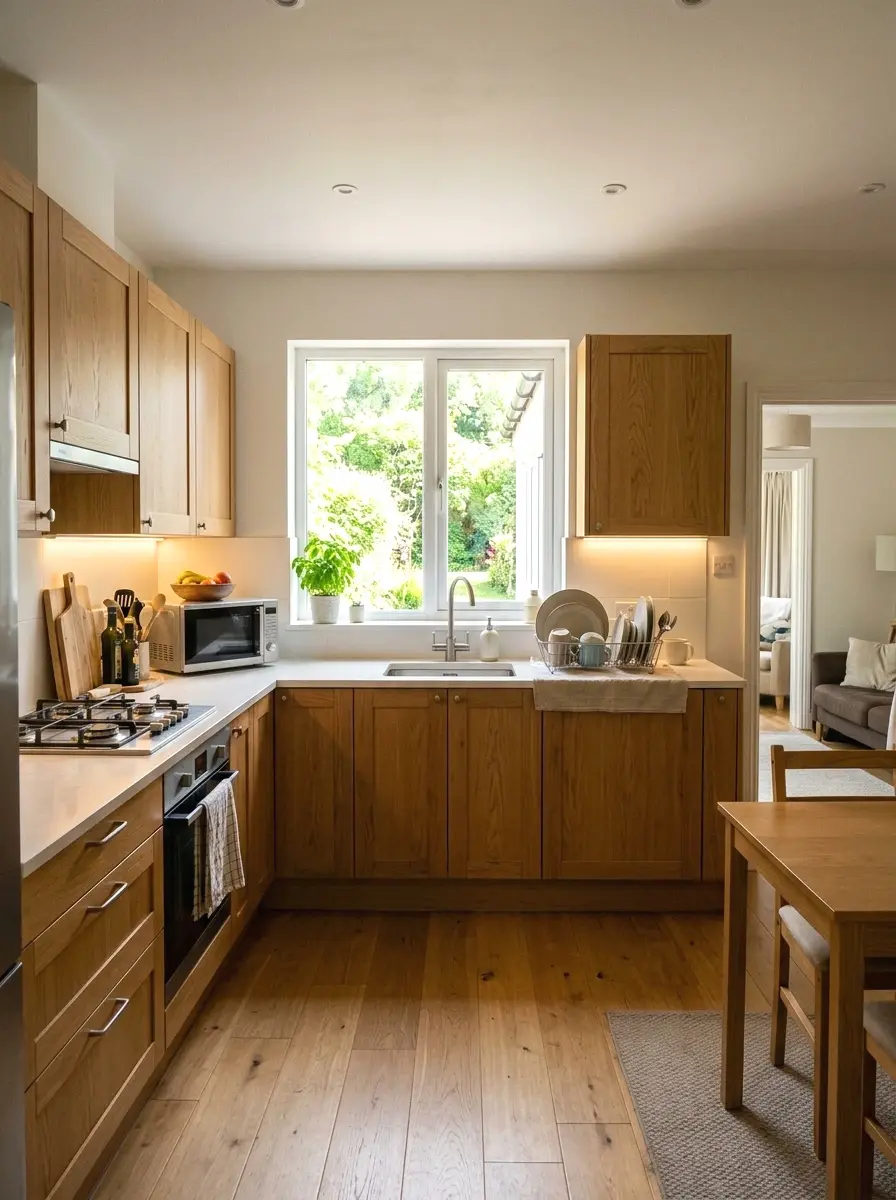
Lighting is where most white oak kitchens fall flat. Cool white LED strips under cabinets wash out the wood grain and make it look gray instead of warm honey. Switching to warm white or Edison-style under-cabinet lights (2700K or lower) brings out the actual color of the oak.
Plug-in warm LED strip lights run about $20 to $45 for an 8-foot kit. No hardwiring needed for most, just plug in and stick to the underside of the upper cabinets. The difference between a 4000K cool white and a 2700K warm white under white oak is bigger than most people expect.
20. Install a White Oak Pantry Door
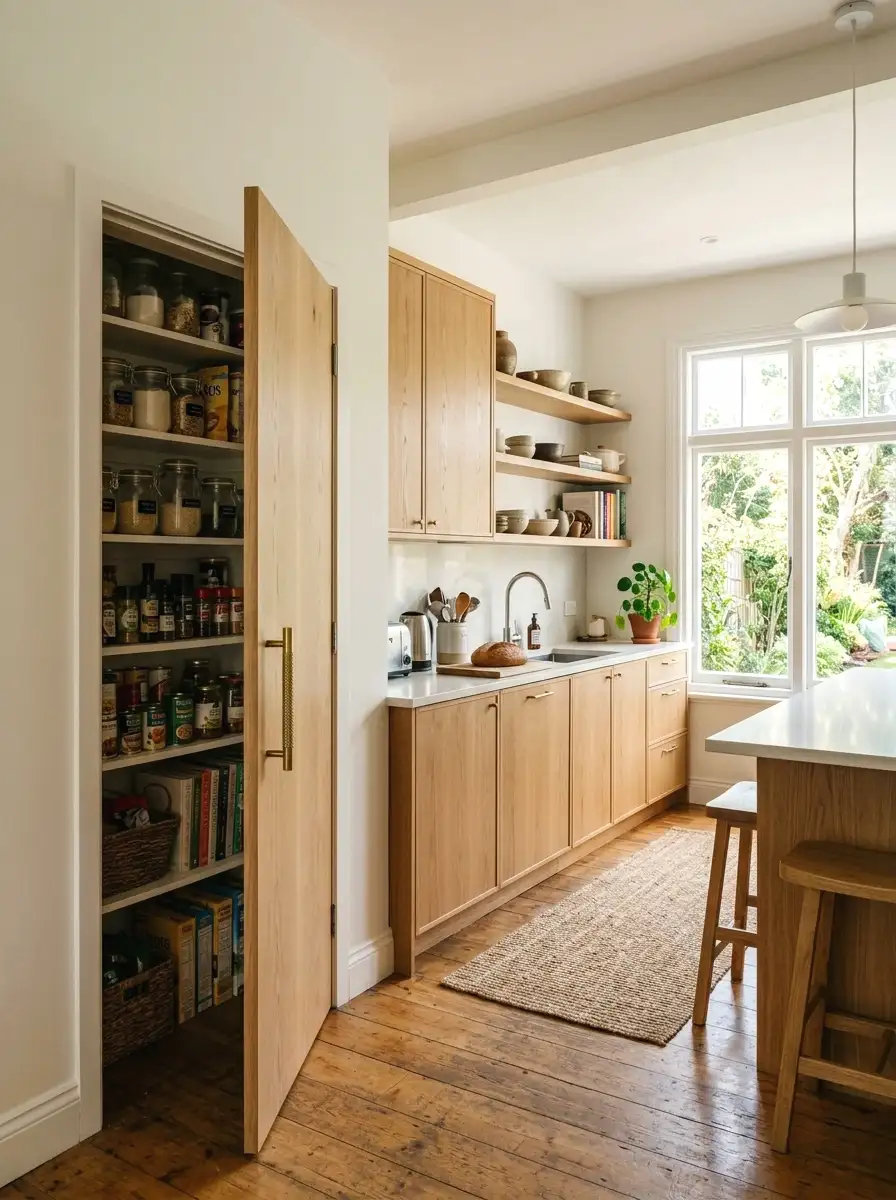
If you have a pantry or a closet that opens into the kitchen, swapping the door for a white oak slab door is one of the highest-impact changes per dollar you can make. The door is a large flat surface right in the kitchen sightline, and a warm wood door against painted walls looks like it was designed that way.
A solid-core slab door in oak or oak veneer runs about $80 to $180 at home improvement stores. You might need to trim it to fit your opening, which requires a circular saw and a straight edge. Finish with the same clear satin sealer you use on your shelves for consistency. The whole swap including hardware costs under $250.
21. Bring in White Oak Through a Dining Table or Bench
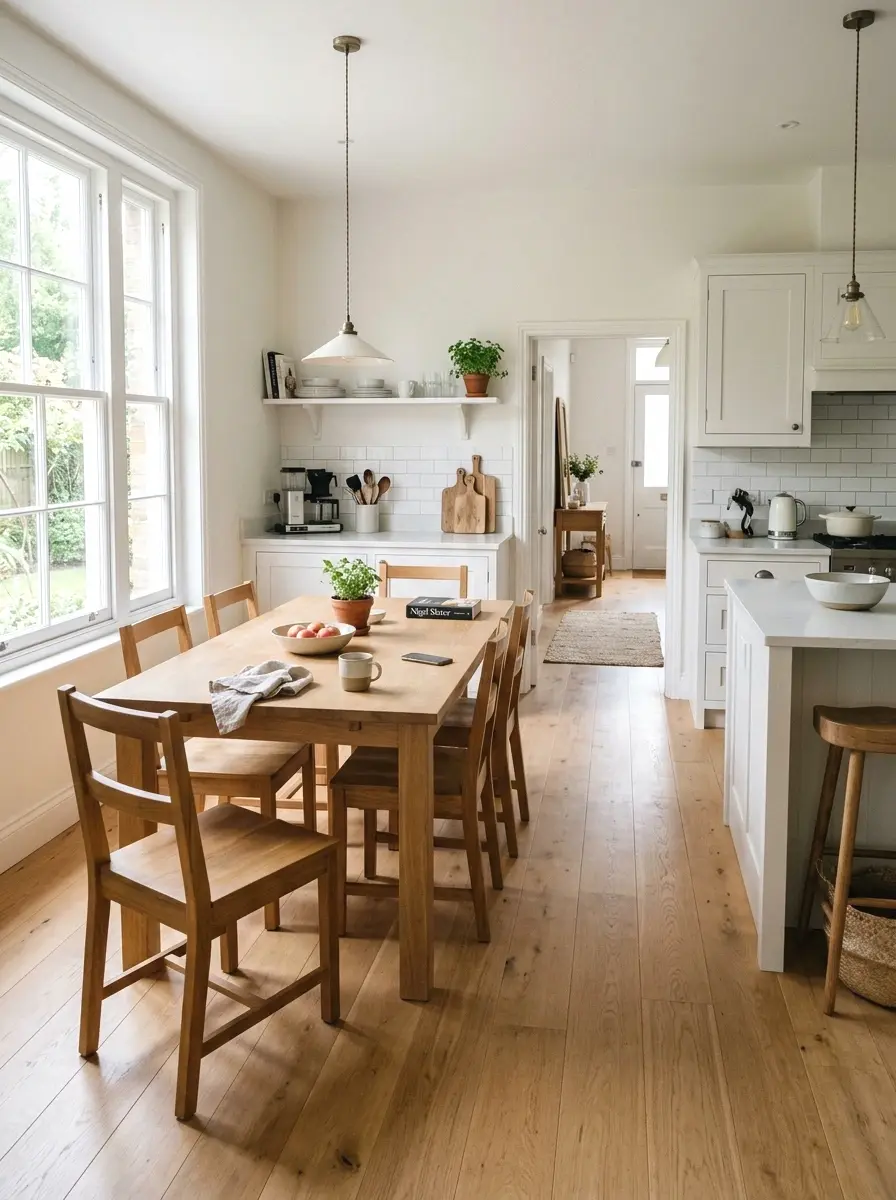
If your kitchen opens to a dining space, a white oak dining table or a simple bench seat carries the material into the next room in a way that feels intentional. You don’t need to redo the kitchen completely if the materials flow naturally from one space to the next.
A solid white oak dining table, round or rectangular, starts around $200 to $400 for a four-person size from places like Article or IKEA. A smaller bench in white oak runs about $80 to $160. The idea is to connect the kitchen and dining area with the same warm wood so the whole space reads as one cohesive design instead of two separate rooms.
For a color direction that ties wood tones into the broader room without overcomplicating it, take a look at kitchen spaces that feel cohesive throughout.
More Ideas:
Final Thoughts on White Oak Kitchen Ideas
What you’ve got now is a full range of ways to bring white oak into your kitchen, from big moves like flooring and cabinet fronts to small wins like hardware swaps and shelf additions. The through-line is warmth. These ideas work because white oak reads natural and calm in a room that can otherwise feel hard and cold.
Pick one thing and start there. If you’re not sure where to begin, go with the floating shelf above the sink. It’s under $60, takes an afternoon, and shows you exactly how white oak will feel in your specific kitchen before you commit to anything bigger.
If you’re still figuring out how to sequence these changes without overspending, there’s a whole set of upgrade ideas that stay on budget and still make a visible difference.
If you want more ideas like these, homelypop.com has a lot more where this came from, all written for real homes and real budgets.