
22 Kitchen Countertops and Backsplashes Combinations That Look Really Nice Together

You’ve been staring at your kitchen for weeks now. The countertop feels wrong. The backsplash is just there. And every time you open a tab to look up ideas, you end up more confused than when you started. That’s the problem with kitchen design advice online. It’s all staged homes and six-figure renovations that have nothing to do with your actual kitchen.
This list covers 22 real countertop and backsplash combinations that actually work together. I went through hundreds of homeowner forums, renovation threads, and real project photos to build this. Every combo is here because real people tried it, liked it, and said so. Some of these work under $300. Some are splurges. Most sit somewhere in the middle.
This is for people spending $100 to $1,500 on a kitchen refresh, renter or owner. It’s not for someone redesigning from scratch with a contractor on speed dial. But if you want your kitchen to feel like it was put together on purpose, you’re in the right place.
By the end, you’ll know exactly which pairing suits your kitchen’s style and where to start first.
And if your cabinets are white, there are some white cabinet pairings worth seeing before you finalize anything.
What to Know Before You Start Picking Countertop and Backsplash Combos
- Undertones matter more than color. A “white” tile can kill a warm countertop if it pulls blue or green.
- Measure your backsplash area before buying tile. A standard 9-foot kitchen needs roughly 30 sq ft of tile.
- Budget reality: basic tile + butcher block combo can run $150 to $400 total for a small kitchen.
- Most people forget grout color. Dark grout with light tile creates pattern. Light grout disappears.
- If your cabinets are busy, keep the backsplash quiet. Two statement pieces fight each other.
- Seal new countertops before grouting backsplash. Grout splatter on unsealed stone is permanent.
- Peel-and-stick backsplash tiles top out around 5 years of real-world durability before edges lift.
- Honed finish countertops hide fingerprints better than polished, especially in dark tones.
1. White Quartz with Subway Tile in Classic White
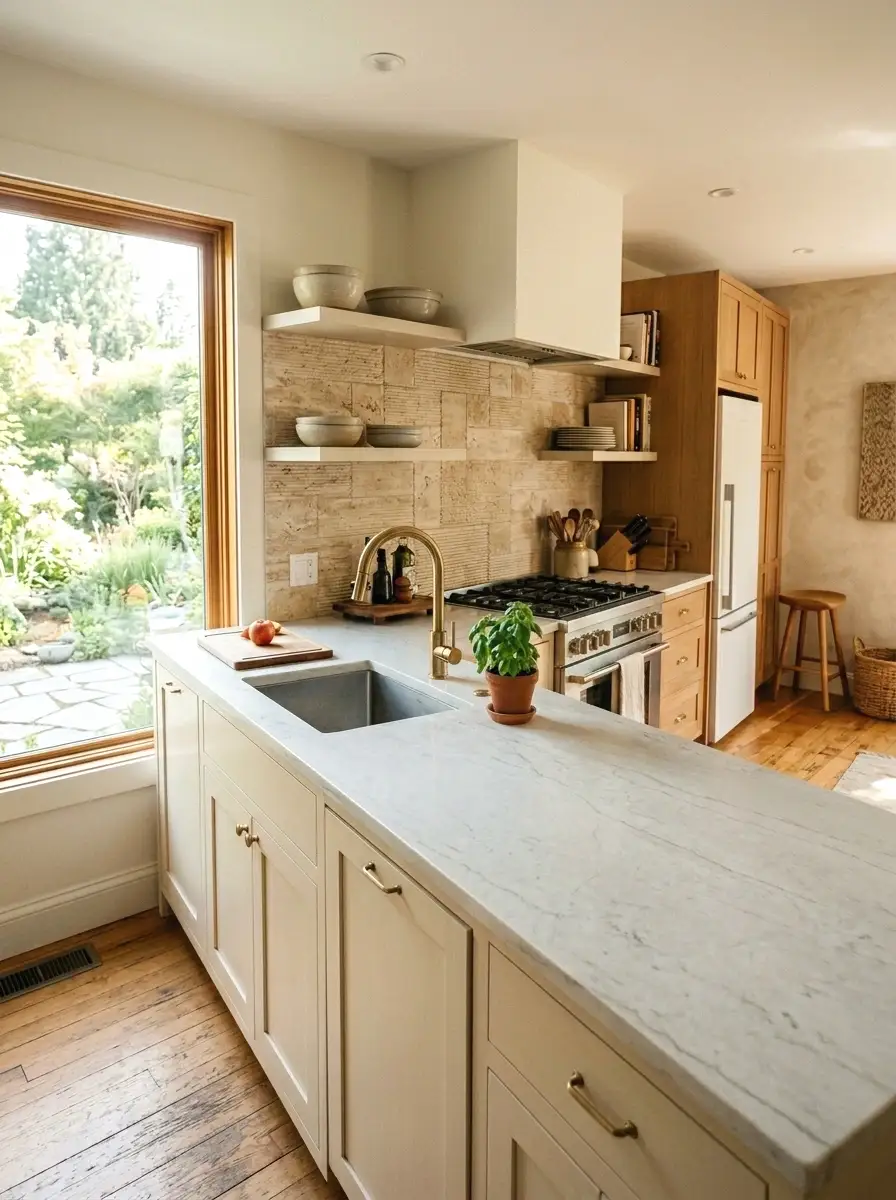
White quartz paired with white subway tile is probably the most common combo out there, and I used to think it was boring. Then I actually saw it done right in a small galley kitchen, and it clicked. The key is the grout. Go with a medium gray grout, not white, and suddenly the whole backsplash has shape and the quartz reads warmer by comparison. Without that contrast, everything disappears into one flat white wash.
White quartz runs about $55 to $90 per square foot installed, and subway tile can be as low as $1.50 per square foot for a basic 3×6 ceramic. You’re looking at a manageable cost if you’re tiling just the 18-inch standard backsplash zone. This one works best in kitchens that get decent natural light. In a dark kitchen, the all-white combo can feel a bit clinical rather than clean.
2. Butcher Block with White Zellige Tile

Butcher block is warm, natural, and you can sand it down when it gets scratched. Pair it with zellige tile, that handmade Moroccan tile with the irregular surface and slightly shimmery glaze, and you get something that looks like it belongs in a boutique restaurant, not a budget kitchen. The slight variation in each zellige tile plays really well against the wood grain in the butcher block.
Butcher block costs around $30 to $60 per linear foot for a standard 25-inch depth slab. Zellige tile is pricier, usually $15 to $35 per square foot, but you only need it behind the stove or along one wall to get the full effect. I was skeptical about this one but the contrast between matte warm wood and the slightly glossy, handcrafted tile is genuinely one of the nicest kitchen looks I’ve seen on a real budget.
More Ideas:


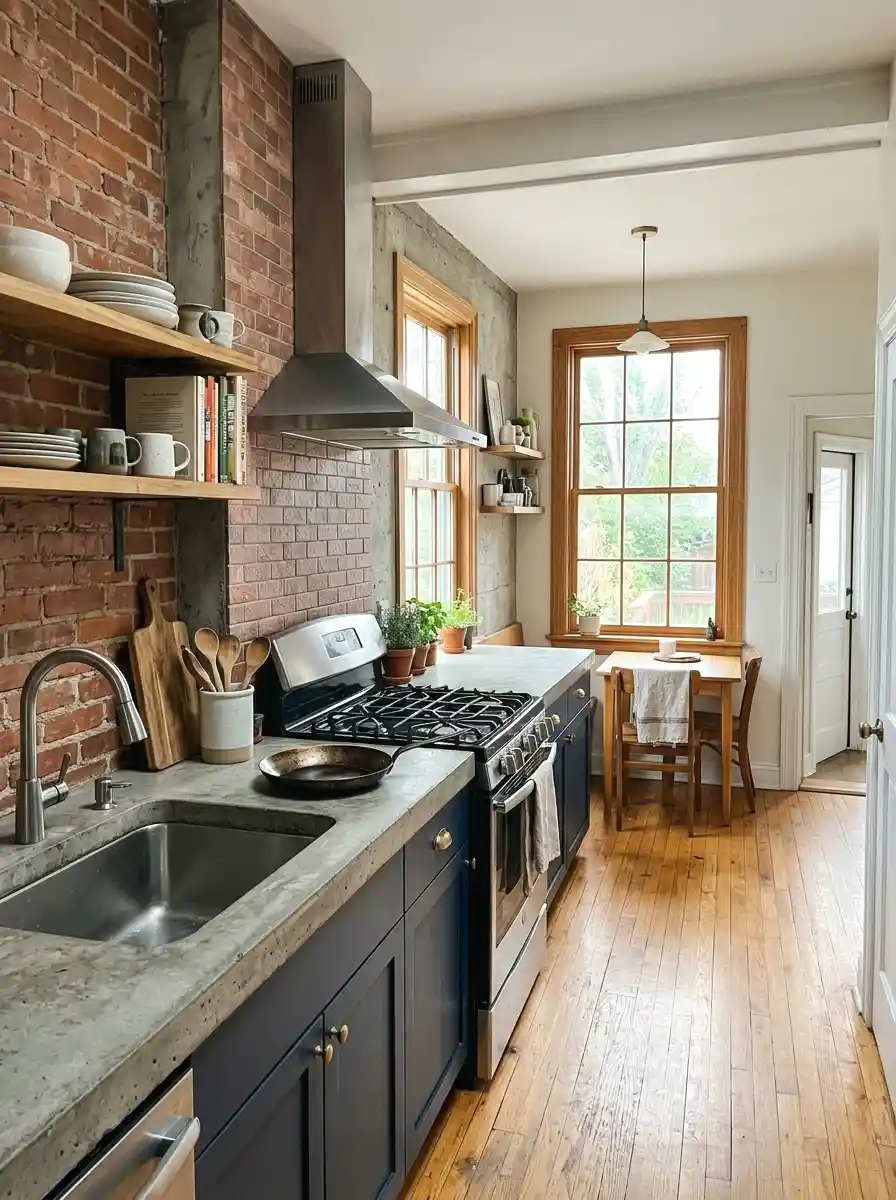
3. Concrete Countertop with Raw Brick Backsplash

So here’s something that feels industrial but lands warm. A poured or precast concrete countertop alongside a real or faux brick backsplash gives you a mix of textures that’s genuinely grounding. Both materials have natural variation, so the kitchen feels lived-in and real from the moment you install it. No need to worry about it looking too perfect.
Precast concrete slabs run $65 to $135 per square foot installed, but DIY concrete kits exist for around $200 to $350 for a small kitchen and can look really good if you’re patient. Faux brick panels are around $2 to $6 per square foot and install in a day. Real thin brick veneer tiles cost more, around $8 to $15 per square foot, but they hold up much better long term around the stove where heat and grease are constant.
4. Black Granite with White Marble-Look Tile

Black granite countertops were everywhere in the early 2000s and then kind of disappeared. They’re coming back now, and for good reason. Black granite is heat resistant, scratch resistant, and pretty forgiving with crumbs. Pair it with a white marble-look porcelain tile for the backsplash and you get a high-contrast kitchen that photographs really well but also just looks sharp in person every day.
The marble-look porcelain is a smart call here because real marble on the backsplash would be expensive and fussy to seal. Porcelain gives you the same visual without the upkeep. Black granite is typically $40 to $80 per square foot installed. White porcelain tile in a marble pattern runs about $3 to $12 per square foot depending on the quality and size. Use a thin white grout line to keep the look clean.
If you’re still narrowing down your tile direction, there are more tile styles worth exploring across different countertop tones.
5. Laminate Wood-Look Countertop with Terracotta Tile

Laminate has gotten really good in the last few years. The wood-look options in particular look convincing enough that most guests won’t question it. Pair a warm oak or walnut-toned laminate with terracotta tile on the backsplash and you’ve got a warm, earthy kitchen that feels current. The burnt orange of terracotta picks up the warm undertones in the wood grain and the two just click.
Laminate countertops are the most budget-friendly option here, usually $20 to $45 per linear foot installed. Terracotta tile for backsplash runs about $3 to $8 per square foot for standard 4-inch tiles. Seal the terracotta before grouting because it’s naturally porous and will stain around the stove otherwise. This combo is also really renter-friendly if you’re using peel-and-stick terracotta-look tiles instead.
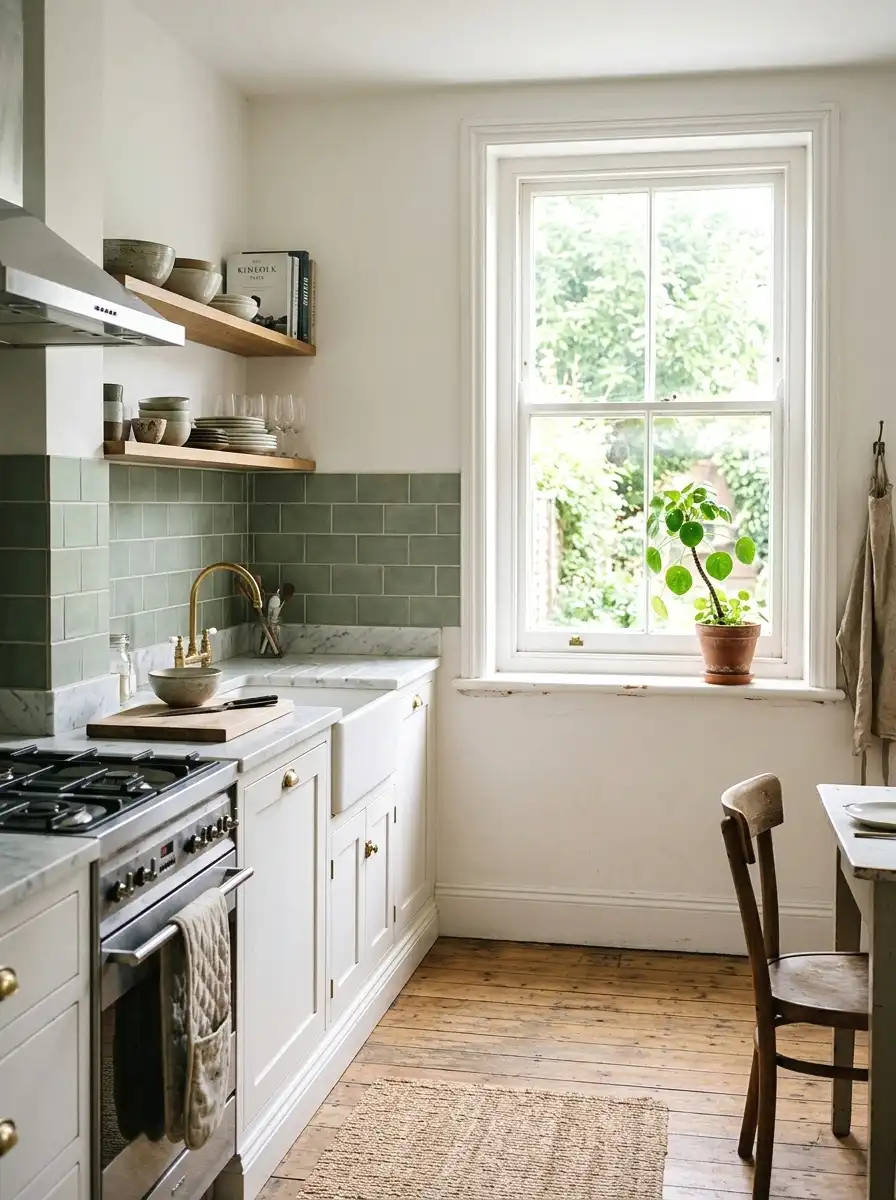
6. Carrara Marble with Sage Green Ceramic Tile
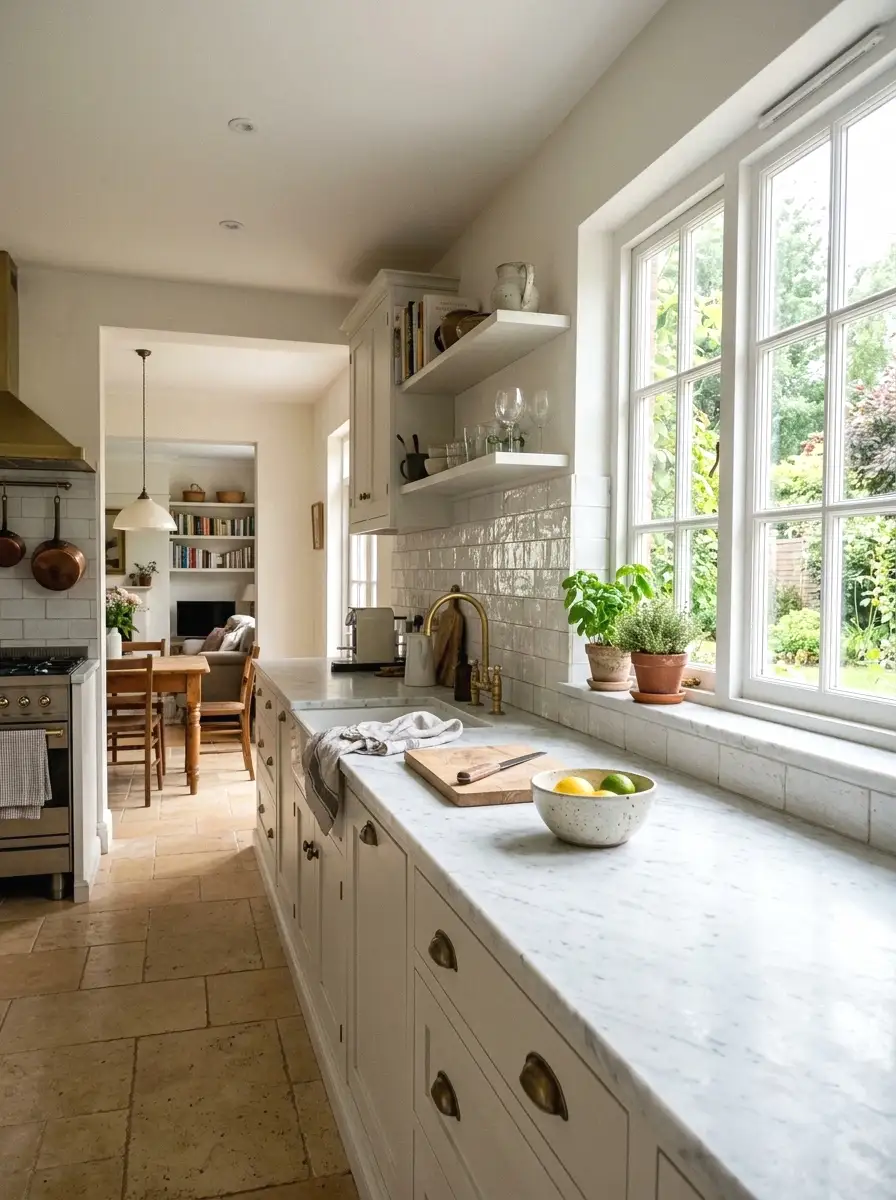
Carrara marble is classic. It’s cool, white, with those soft gray veins that look polished without trying too hard. On its own it can feel cold, especially in a north-facing kitchen. But pair it with sage green ceramic tile behind it, and the whole room warms up immediately. The green pulls the gray in the marble slightly warmer and makes the white really pop.
Real Carrara is around $60 to $120 per square foot installed and requires sealing every year or two. If that’s too much, Carrara-look quartz runs $55 to $100 per square foot and needs zero maintenance. Sage green ceramic tile is easy to find at most home improvement stores for $2 to $7 per square foot. Use a soft warm white grout, not a stark white, to keep the look gentle rather than graphic.
More Ideas:
7. Dark Soapstone with White Handmade Tile

Soapstone has a matte, velvety look that you don’t see much in mass-market kitchens and that’s exactly why I like it. It’s naturally dark charcoal to black, it’s heat resistant enough to set a hot pan directly on it, and it develops a natural patina over time that actually looks better as it ages. Pair it with white handmade tile, the kind with slightly uneven surfaces and soft edges, and the pairing is really something.
Soapstone runs $70 to $120 per square foot installed. It does need occasional rubbing with mineral oil to keep its color even, which sounds like a chore but takes maybe ten minutes every few months. Handmade white tile in a 4×4 or 5×5 size costs about $8 to $18 per square foot. The slight imperfection in the handmade tile contrasts the smooth density of the soapstone in a way that feels intentional. (This one is so underrated and I can’t figure out why.)
If this artisan direction appeals to you, there are farmhouse backsplash ideas that hold up well with natural stone surfaces.
8. White Laminate with Peel-and-Stick Mosaic Backsplash
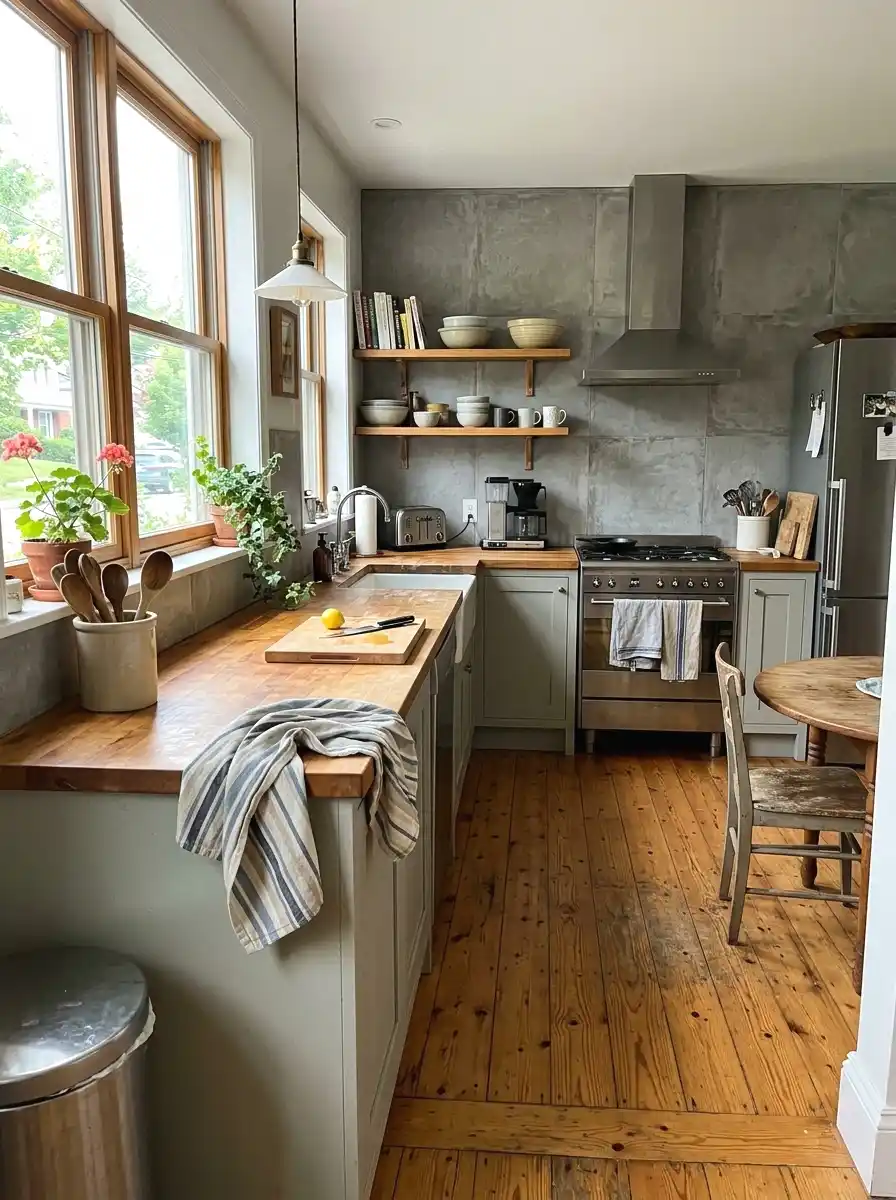
If your budget is tight or you’re renting, this is the combo to know. White laminate countertop, clean and simple, paired with a peel-and-stick mosaic tile backsplash. Mosaic peel-and-stick options have improved a lot and there are some really convincing glass tile and marble chip patterns available now for $2 to $6 per square foot.
When I tried this in my own place a few years ago, I was shocked at how much it changed the kitchen. The mosaic adds texture and detail that draws the eye away from the fact that the countertop itself is basic. The key is choosing a mosaic with at least two or three tones that pull from the rest of your kitchen, whether that’s your cabinet color, your appliances, or even just a bowl you keep on the counter. One flat color peel-and-stick tile looks cheap. A multi-toned mosaic looks picked.
9. Quartz in Warm Cream with Navy Blue Subway Tile

This is a bolder choice and it absolutely pays off. A warm cream or off-white quartz countertop is soft and versatile on its own. Add a navy blue subway tile backsplash and the kitchen suddenly has a point of view. The navy reads deep and grounding rather than cold, especially with warm-toned cabinets or wood floors nearby.
Warm cream quartz is widely available and usually sits at the lower end of quartz pricing, around $50 to $80 per square foot installed. Navy subway tile in standard 3×6 ceramic format runs about $2 to $5 per square foot. Go with a lighter grout in gray or cream rather than matching it to the navy. Dark grout on dark tile loses all the definition and makes the backsplash look like a flat wall of color instead of a tile pattern.
For kitchens that lean toward a beach or coastal feel, there are coastal tile looks that actually work with both light and bold countertops.
10. Recycled Glass Countertop with Plain White Tile
Recycled glass countertops are exactly what they sound like. Pieces of post-consumer glass set in a concrete or resin base. The effect is subtle sparkle throughout the surface, like the countertop has a texture you keep noticing. It’s genuinely unique and pretty at the same time. Plain white tile behind it is the right call because the countertop is already doing the work visually.
Recycled glass countertops run $65 to $125 per square foot depending on the glass content and finish. The higher the glass ratio, the more visible the sparkle. Plain white ceramic tile in a large format, say 4×12 or even 4×16, keeps the backsplash feeling clean without competing. This is a case where simple is actually a creative choice. The countertop carries the personality and the backsplash just frames it.
More Ideas:
11. Walnut Butcher Block with White Subway Tile
Walnut butcher block is darker and richer than standard maple or pine butcher block, and it reads more finished even without doing much else. Pair it with classic white subway tile and you’ve got the kind of kitchen that shows up in renovation before-and-after posts because the transformation always looks significant even when the actual work wasn’t that dramatic.
Walnut butcher block costs more than other wood options, usually $50 to $90 per linear foot, but it’s worth it if you can stretch the budget because the color depth makes everything around it look more polished by association. Oil it with food-safe mineral oil before use and every few months after. White subway tile at $1.50 to $4 per square foot keeps the total project cost reasonable. Use white grout for a seamless look, or light gray if you want the tile to read more defined.
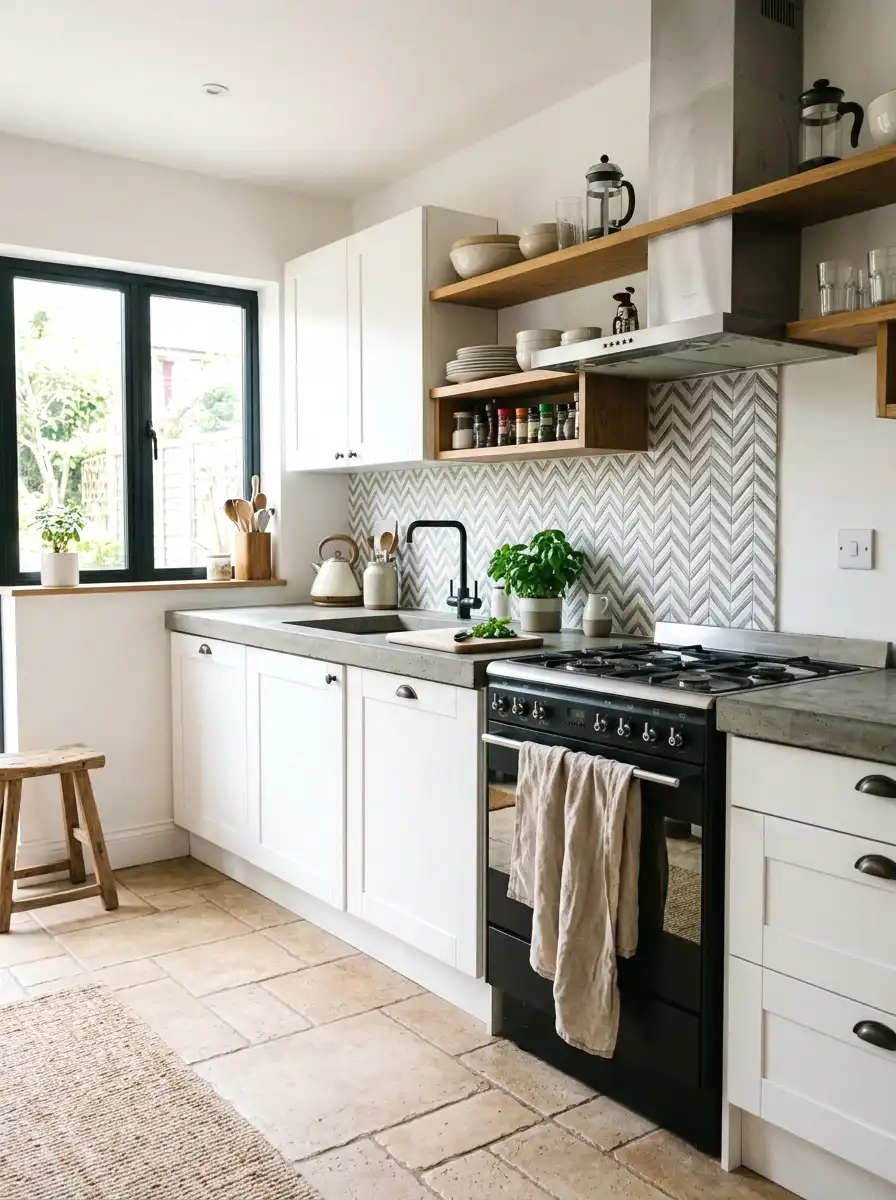
12. Concrete with Chevron Tile in White and Gray

Concrete countertops pair well with pattern because the concrete itself is visually neutral. A white and gray chevron tile backsplash adds rhythm and movement to the wall without going loud. The chevron zigzag pattern reads graphic but not trendy in the way that some patterns date quickly.
A small chevron tile in 2×4 or 3×6 cut on a diagonal runs about $4 to $10 per square foot for ceramic. This works really well in a narrow kitchen where the backsplash is one of the main visual surfaces you see from the doorway. The pattern gives the eye somewhere to go. Concrete countertop costs vary widely from $25 for a DIY kit up to $130 installed, so this combo can scale to your budget.
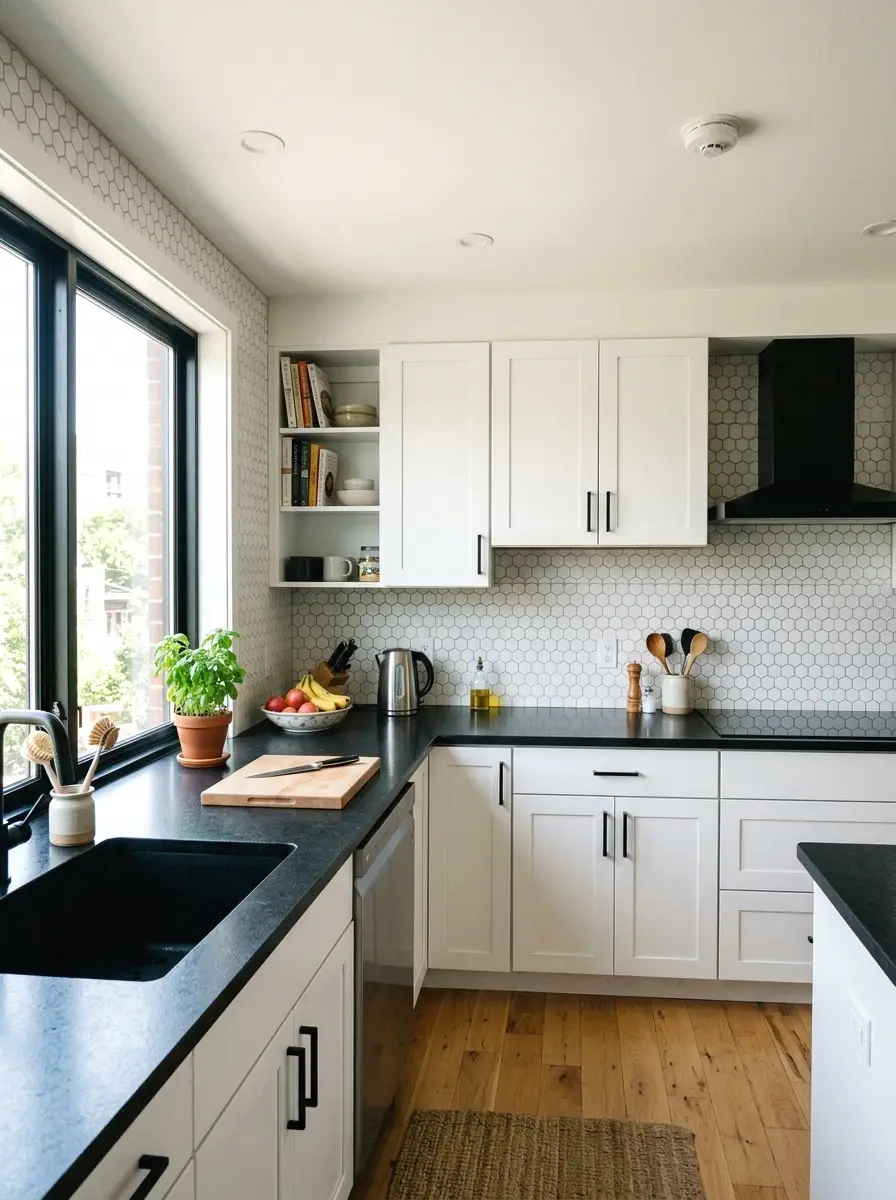
13. Granite in Absolute Black with White Hexagon Tile

Absolute black granite is as dark as granite gets. It’s striking in the best way and it makes everything else in the kitchen stand out against it. Small white hexagon tile on the backsplash, the kind in 1-inch or 2-inch sizes, gives you a vintage mosaic look that contrasts the modern flatness of the black granite.
Black granite is usually $45 to $85 per square foot installed. Small hexagon mosaic tile sheets are easy to work with since they come on mesh backing, and a decent quality option runs $3 to $9 per square foot. Use a light gray grout rather than pure white because pure white grout shows every speck of kitchen debris almost immediately. This is a high-drama kitchen look that surprisingly works in small kitchens because the contrast makes the space feel deliberate rather than cramped.
14. Quartz in Soft Gray with Long Plank White Tile

Long format tile, anything in a 4×16 or 6×24 size, has a quieter, more architectural feel than standard subway tile. Pair a soft gray quartz countertop with long white plank tiles stacked vertically on the backsplash and the kitchen feels taller. It’s a simple visual trick and it really works in kitchens with low ceilings.
Soft gray quartz is one of the most versatile countertop choices you can make because it sits between warm and cool without committing hard to either. It costs around $50 to $85 per square foot. Long plank ceramic tile runs $2 to $8 per square foot. Stacking them vertically rather than horizontally is the move here. Horizontal long tiles make a kitchen feel wider and lower. Vertical makes it feel taller and airier.
More Ideas:
15. Butcher Block with Cement Look Tile

Cement look tile has the flat matte surface and subtle texture of actual cement tile without the sealing and maintenance requirements. Pair it with butcher block and you’ve got a kitchen that leans into natural materials without feeling rustic or farmhouse-coded. It’s more modern than that, more subdued.
Cement look porcelain tile runs about $3 to $9 per square foot and is extremely durable because it’s porcelain underneath the finish. Butcher block at $30 to $60 per linear foot completes the look without blowing the budget. This combo works especially well with flat-front cabinetry in white, cream, or pale gray because the cabinets stay quiet and the countertop-backsplash pairing does the visual talking.
If the natural materials angle is calling you, rustic tile pairings for warm kitchens cover a lot of similar ground.
16. White Quartz with Emerald Green Subway Tile
Here’s one that feels risky on paper and looks really good in reality. White quartz, clean and bright, paired with emerald green subway tile behind it. The green is bold but not overwhelming because the white quartz grounds it. This works especially well with brass or gold hardware because the metal bridges the two colors into something that looks considered.
White quartz is around $55 to $90 per square foot installed. Emerald green subway tile in ceramic is surprisingly easy to find now and runs $3 to $7 per square foot. Go with a white or cream grout to let the tile color be the statement rather than the grout lines. This is a look that photographs extremely well and also holds up in person because the green reads deep and rich rather than loud.
If you’re still drawn to a lighter backsplash overall, there are white kitchen backsplash directions to consider that pair well with bolder countertop choices.
17. Honed Marble with Crackle Glaze White Tile

Honed marble has a matte surface instead of the high polish you usually see, and it feels softer and more natural because of it. Pair it with crackle glaze white tile on the backsplash and you’ve got a kitchen that feels genuinely artisan. The crackle texture in the tile glaze catches light in small ways that you keep noticing throughout the day.
Honed Carrara marble costs about $70 to $130 per square foot and does require sealing twice a year. If that feels like too much maintenance, honed Carrara-look quartzite gives a similar look with less upkeep. Crackle glaze tile runs about $5 to $15 per square foot and is usually found at tile specialty stores rather than big box stores. Worth the extra stop because the visual texture is noticeably better than flat glaze options.
18. Quartz in Calacatta Pattern with Stacked Stone Tile

Calacatta is a bold marble pattern, think thick dramatic gray veins on white, and it reads loud on a countertop. Pair it with stacked stone tile on the backsplash and you’ve got two textures that compete in the best possible way. The organic natural surface of the stacked stone balances the graphic drama of the Calacatta pattern.
Calacatta quartz runs about $65 to $110 per square foot. Stacked stone panels, usually in a 6×24 interlocking panel format, cost around $10 to $25 per square foot depending on the stone type. Quartzite and slate versions are the most durable for kitchen use. (Took me ages to figure out that the stone panel format makes installation dramatically easier than individual stone tiles, which shift and need constant adjustment.)
More Ideas:
19. Bamboo Countertop with White Penny Tile

Bamboo countertops are underrated. They’re harder than most hardwoods, naturally antimicrobial, and run about $20 to $50 per linear foot. Pair them with white penny tile, the small circular tile in a mosaic format, and the backsplash adds a playful vintage element that works really well against the natural warm tone of the bamboo.
Penny tile in white ceramic or porcelain runs about $5 to $12 per square foot. The small circular format creates a lot of grout lines, which does mean more grout to seal, but the visual payoff is worth it. Use a slightly warm-toned grout, something in a linen or light greige, rather than stark white grout which can look harsh against the organic warmth of the bamboo. This combo is especially nice in small kitchens because the penny tile adds detail without overpowering a tight space.
20. Black Quartz with Brass and Black Encaustic Tile
Black quartz countertops are a bold starting point and the backsplash needs to meet that energy. Black and brass encaustic tile, the geometric cement tile with a printed pattern, does exactly that. The brass tones in the tile pull the hardware in the rest of the kitchen together and the black in the tile connects back to the countertop so everything reads as intentional.
Black quartz is usually $60 to $100 per square foot. Encaustic cement tile runs $8 to $20 per square foot and needs to be sealed before grouting and again after. It’s a higher-maintenance backsplash than ceramic, but the look is genuinely one of a kind. This is the combo I’d choose for a kitchen that has relatively plain cabinets because the countertop and backsplash together carry the whole room’s personality.
For a cleaner, more current take on patterned tile, modern farmhouse backsplash approaches tend to balance bold countertops really well.
21. Light Concrete with Blue and White Delft-Style Tile

Light gray concrete, whether real or a poured laminate look, is a clean neutral base. Pair it with blue and white Delft-style tile, the classic Dutch pattern tile with illustrated floral or geometric designs, and the kitchen gets a story. It doesn’t feel farmhouse or twee. It feels more like a home that someone actually lives in and has collected things for.
Delft-look tiles are widely available in ceramic reproductions for $5 to $15 per square foot. Real hand-painted Delft tiles are significantly more, $25 to $70 each, but you only need a few as accents among plain white tiles to get the effect without the full cost. This is a mix-and-match approach where most of the backsplash is plain white tile and every fifth or sixth tile is a Delft pattern. Looks intentional. Costs much less.
22. Quartzite in Soft White with Raked Travertine Tile

Quartzite looks like marble but is significantly harder and more stain resistant. In a soft white or pale ivory tone, it reads fresh and natural without the maintenance anxiety of real marble. Pair it with raked travertine tile, travertine with a textured combed surface rather than polished, and you’ve got a backsplash that adds dimension without adding color.
Quartzite runs $60 to $130 per square foot installed depending on the origin and pattern. Raked or brushed travertine tile for backsplash is about $8 to $18 per square foot and has a naturally warm ivory and tan tone that picks up the same warmth in the quartzite. Use an unsanded grout in a warm beige tone to blend the grout lines rather than making them visible. The whole effect is layered and textural without being complicated or loud.
More Ideas:
Final Thoughts on Kitchen Countertops and Backsplashes
You’ve got 22 real combinations now, not mood board fantasies, but pairs that people have actually put in their kitchens and liked. A few things run through most of them. Tone matters more than color name. Texture contrast between the counter and the tile makes both surfaces read better. And restraint on one surface usually means you can go bolder on the other.
Start with the backsplash. It’s the lower-stakes surface of the two. Pick up a few sample tiles from a home improvement store, hold them against your current countertop, and live with them for a day or two. That single step will tell you more than scrolling for hours ever will.
And if you’re working with a tight overall budget, there are budget kitchen refresh ideas that deliver real impact without touching the big structural stuff.
While you’re sampling tiles, it’s also worth thinking about wall colors that pair well with white cabinets since the three surfaces interact more than most people expect.
If you want to keep exploring, homelypop.com has more kitchen ideas, room guides, and budget-specific projects. It’s all real-home stuff, no staged shoots or designer price tags.