
22 Small Efficiency Apartment Ideas That Actually Make It Feel Bigger

Your studio feels like a hallway with a bed in it. Everything is too close, nothing has a place, and the “living area” is just wherever you’re standing. It’s frustrating in a way that’s hard to explain to someone who hasn’t lived it. Small Efficiency Apartment Ideas.
This list covers 22 ideas pulled from real apartment forums, renter Q&As, and people who’ve actually figured out how to live well in under 500 square feet. Each idea was chosen because it solves a real problem, costs something specific, and doesn’t require a contractor or a landlord’s permission. The budget stays between $100 and $300 for most of the bigger moves.
This is for renters in small efficiency apartments who want things to feel more functional and put together without doing a full renovation. If you’re looking for a designer makeover with custom built-ins, this isn’t that. But if you want a space that works better by next weekend, keep reading.
By the end, you’ll have a clear set of changes you can make in a small space that add up to a real difference in how the whole apartment feels.
If you want a broader starting point, there’s a full breakdown of studio living done right that covers layout and flow before you buy a single thing.
What to Know Before You Start Decorating a Small Efficiency Apartment
- Vertical space is your biggest asset. Most apartments have 8 to 9 foot ceilings that go totally unused.
- Measure your floor plan before buying anything. Furniture that’s 2 inches too wide changes everything.
- A full room repaint can cost as little as $40 in paint. Lighter walls reflect more light than any lamp will.
- Most people forget the back of doors. That surface holds a surprising amount of storage.
- Mistake: buying a sofa before measuring the walk path. You need at least 30 inches of clearance to move around comfortably.
- Anchor furniture to walls if your lease allows. Even light shelves can tip in smaller spaces.
- Peel-and-stick solutions save walls but check your lease first. Some landlords still charge for adhesive residue.
- Good lighting matters more in small spaces. One overhead bulb in a 300 sq ft room creates shadows that make it feel smaller.
1. Use a Room Divider to Create Zones
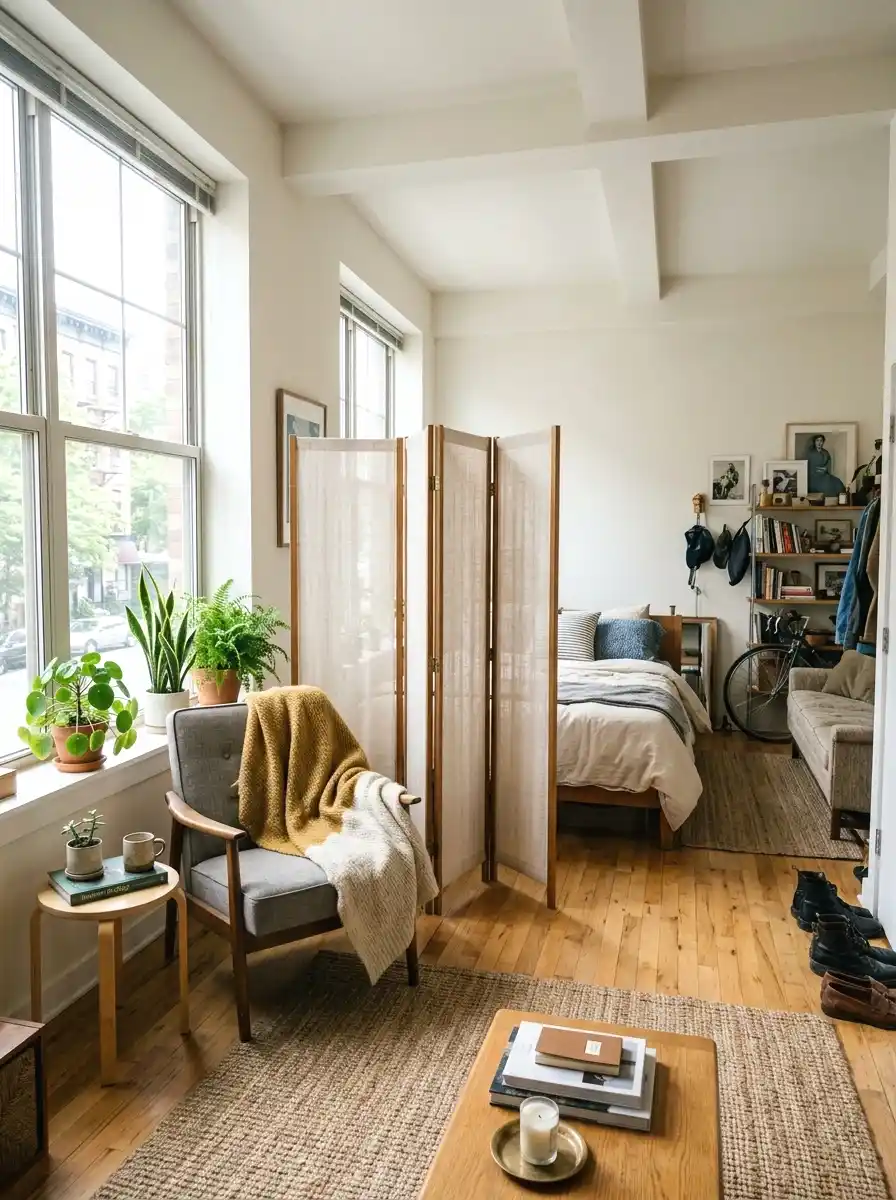
Living in one open room doesn’t mean everything has to bleed together. A room divider, even a simple folding screen around $40 to $80, gives your brain permission to treat different parts of the room as different spaces. That mental separation matters more than you’d think.
I tried a sheer curtain on a tension rod instead of a solid divider, and it worked even better. The light still passed through, so the space didn’t shrink visually. You get the zone without the cave effect. Look for curtain panels that are at least 84 inches tall for proper visual weight.
2. Mount Your TV on the Wall
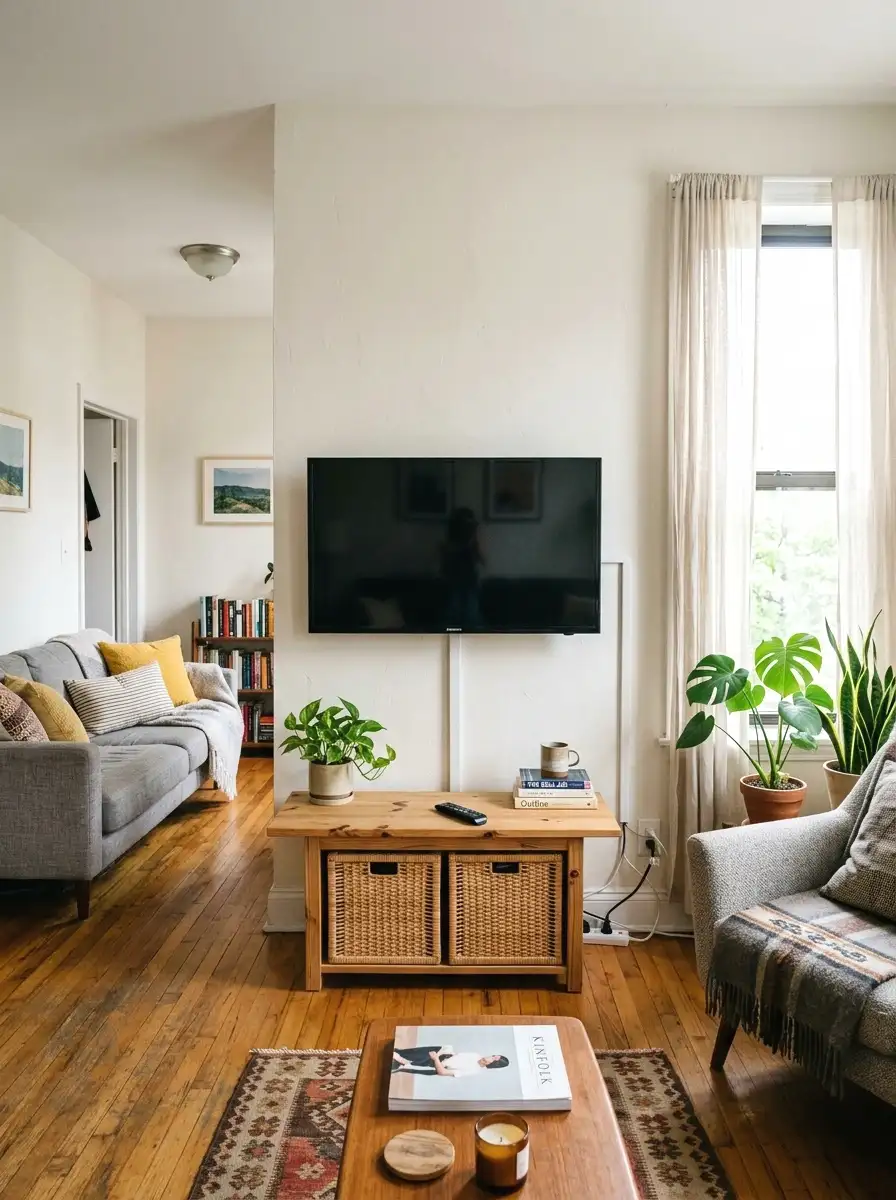
So much floor and surface space gets eaten up by TV stands in small apartments. A wall mount kit runs around $25 to $40, and once the TV is up, you free up an entire surface below it for something that actually needs a home, like a storage bench or a low console with baskets.
The cords are the only annoyance. A simple cable raceway from any hardware store costs about $10 and keeps things clean. Your landlord usually can’t object to a couple of small wall anchor holes if you patch them on the way out.
More Ideas:


3. Add a Loft Bed or Bed Riser
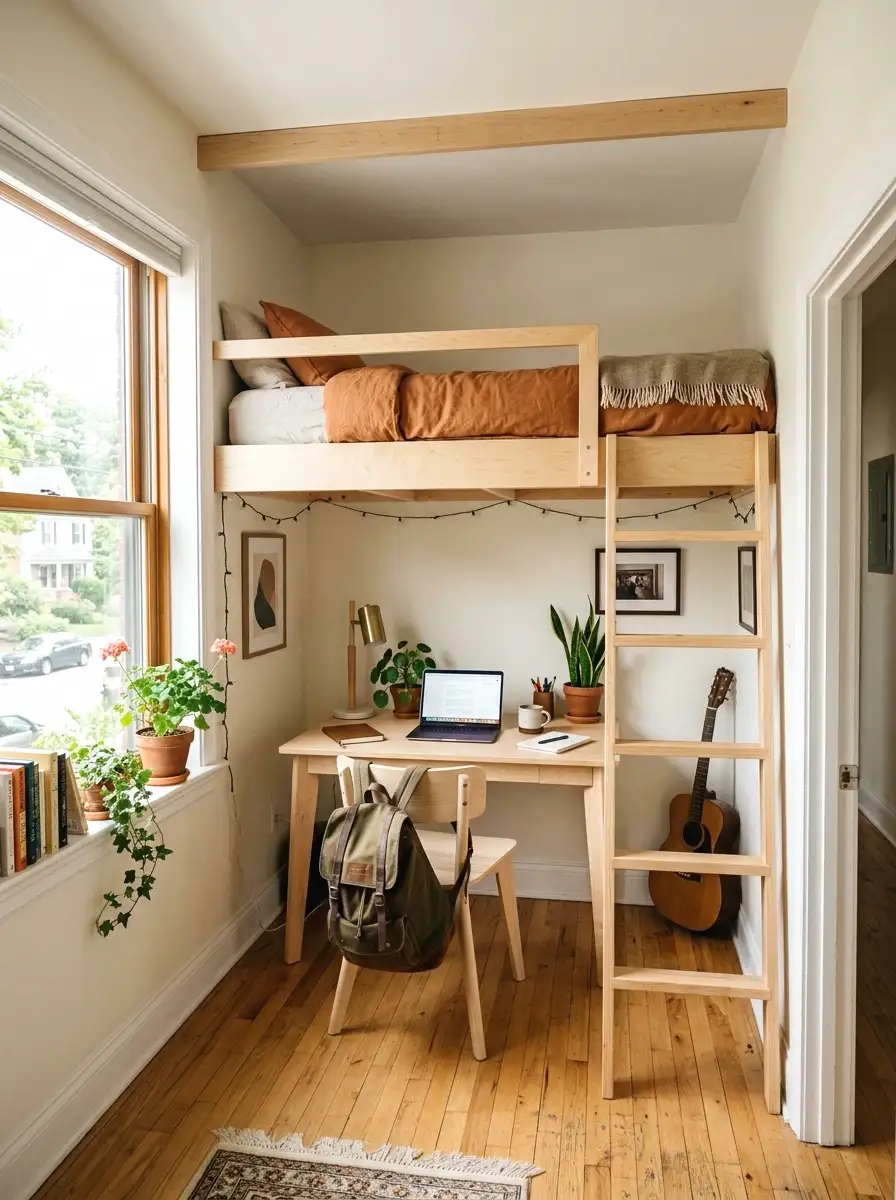
Here’s the single biggest square footage unlock in an efficiency: get your bed off the floor. A loft bed frame that lifts your mattress 5 to 6 feet high opens up the entire footprint underneath for a desk, a dresser, or a small seating area. Frames start around $200 to $300.
If a full loft isn’t your thing, bed risers at around $20 to $30 give you 6 to 8 inches of under-bed clearance, which is enough for rolling storage bins. That hidden square footage is completely wasted in most apartments.
4. Get a Fold-Down Wall Desk
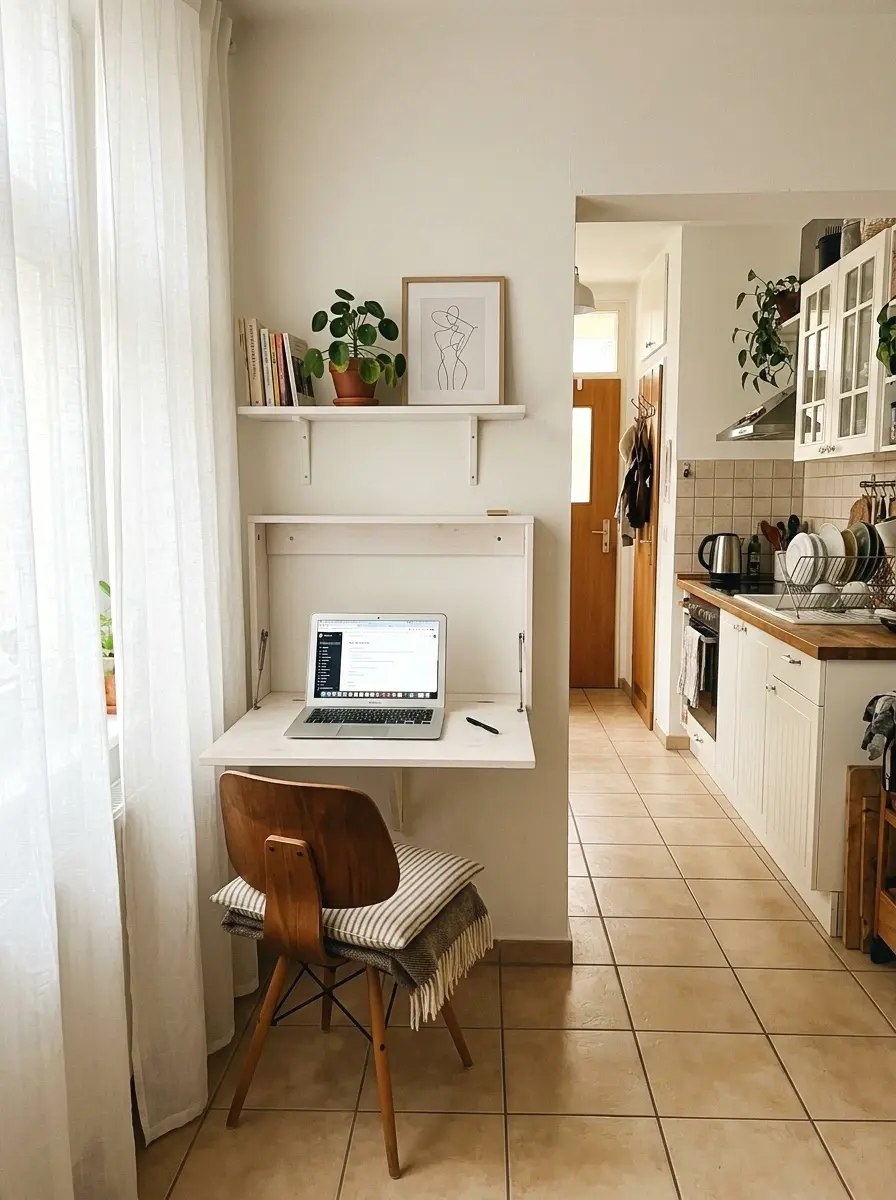
You don’t need a dedicated office corner. A fold-down desk, sometimes called a Murphy desk, mounts flat against the wall and folds up when you’re done. When it’s closed, it looks like a cabinet or a picture frame. Open, it gives you a real work surface.
If you want options beyond the standard Murphy desk, there are more styles built around a real work surface that folds away when you’re finished.
These run about $80 to $150 online and come in sizes from 24 to 36 inches wide. Mine sits right next to the kitchen and I genuinely forget it’s there when it’s folded up. That was the whole point.
5. Replace Solid Curtains With Sheer Panels
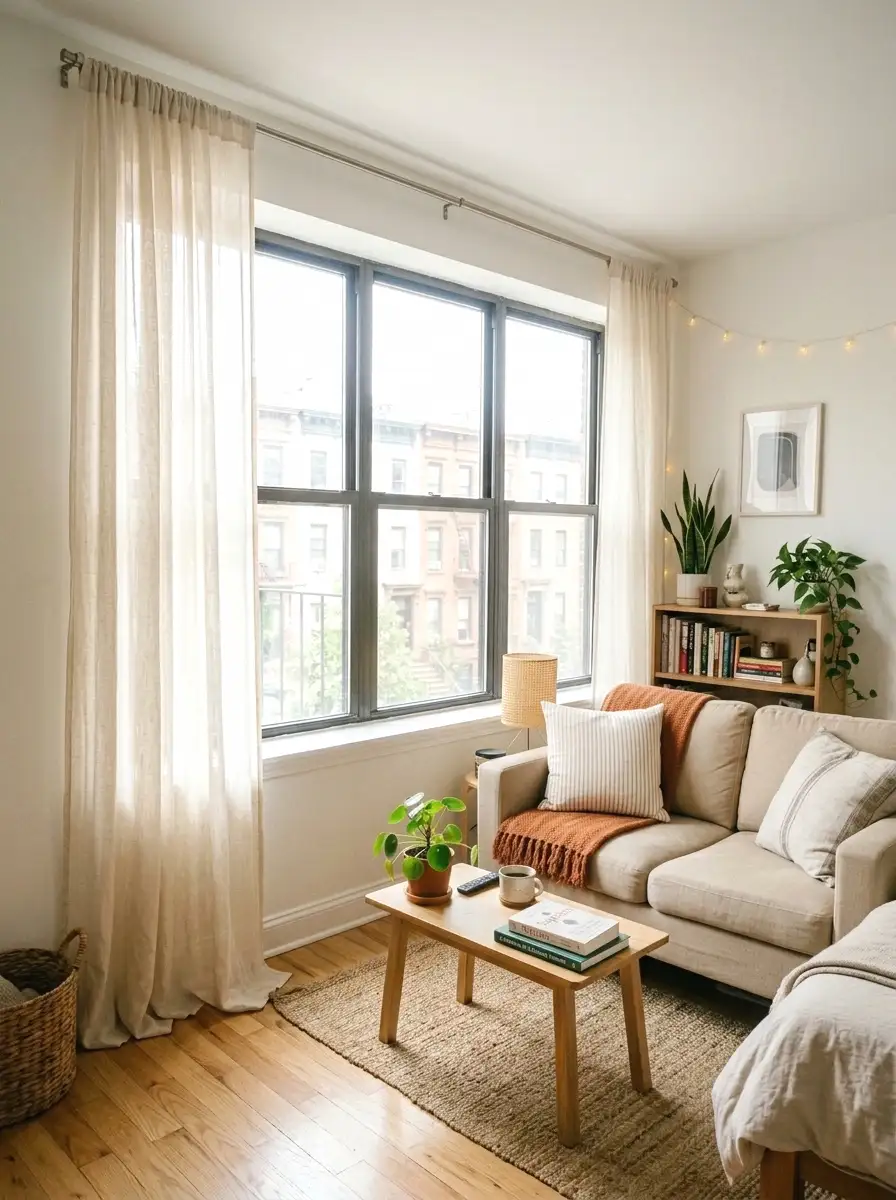
Heavy curtains in a small room absorb light and make the walls feel closer. Swapping to sheer white or cream panels keeps your privacy while letting natural light fill the whole space. That alone changes how open the room feels, without moving a single piece of furniture.
Sheer panels from IKEA or Amazon run $15 to $30 per pair. Hang them close to the ceiling, not just above the window frame. Floor-to-ceiling curtains make the ceiling feel higher. That’s a trick people pay decorators for.
6. Use a Pegboard in the Kitchen
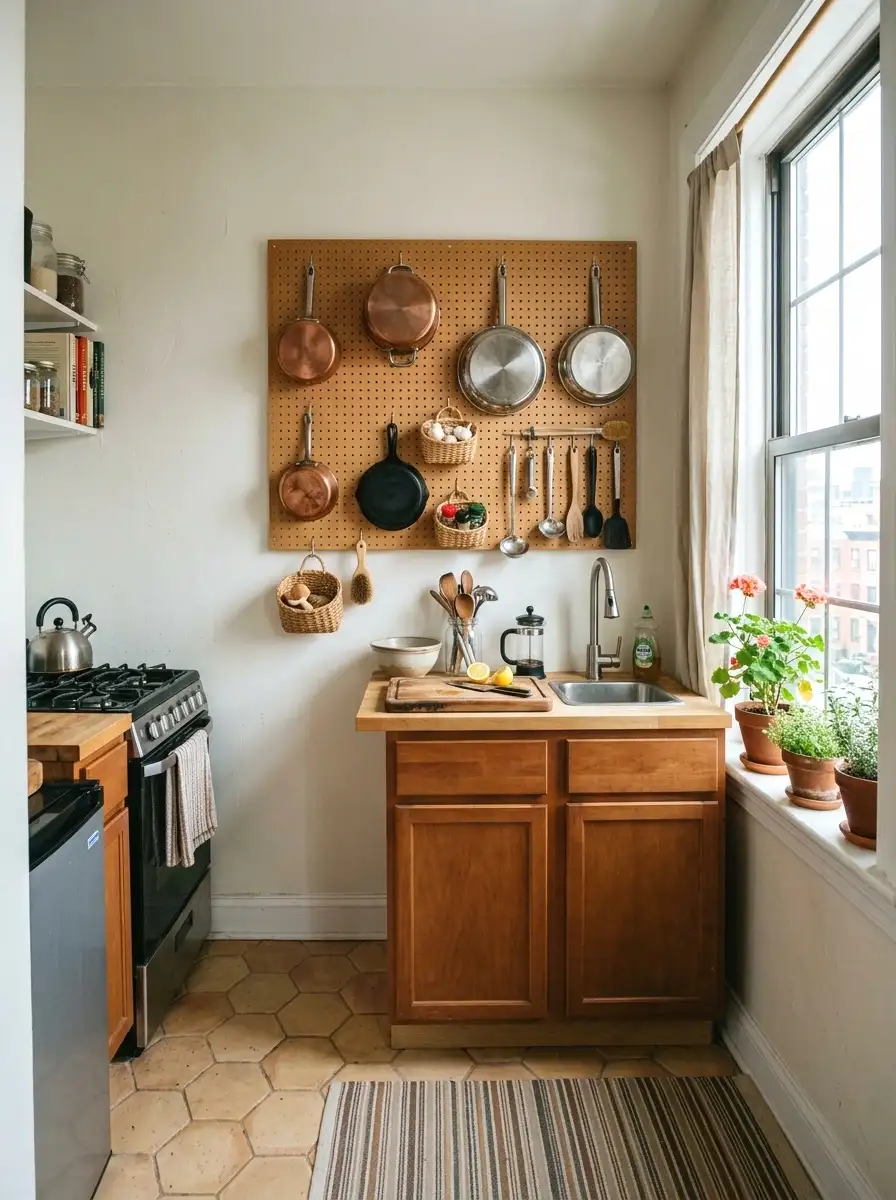
Counter space in efficiency kitchens is almost always a joke. A pegboard mounted on one wall gives you a place to hang pots, utensils, cutting boards, and even small shelves for spices. It keeps everything visible and off the surfaces you actually need to use.
A 24 by 48 inch pegboard costs about $20 to $30 at any hardware store. Add hooks and small baskets for another $15 or so. Paint it to match your wall and it looks intentional. When I tried this in my own space, I cleared half my counter in one afternoon.
The same logic applies to the sink area, and there are some clever tricks for tight kitchen spaces that carry over directly from bathroom setups.
More Ideas:
7. Put a Mirror Opposite Your Window
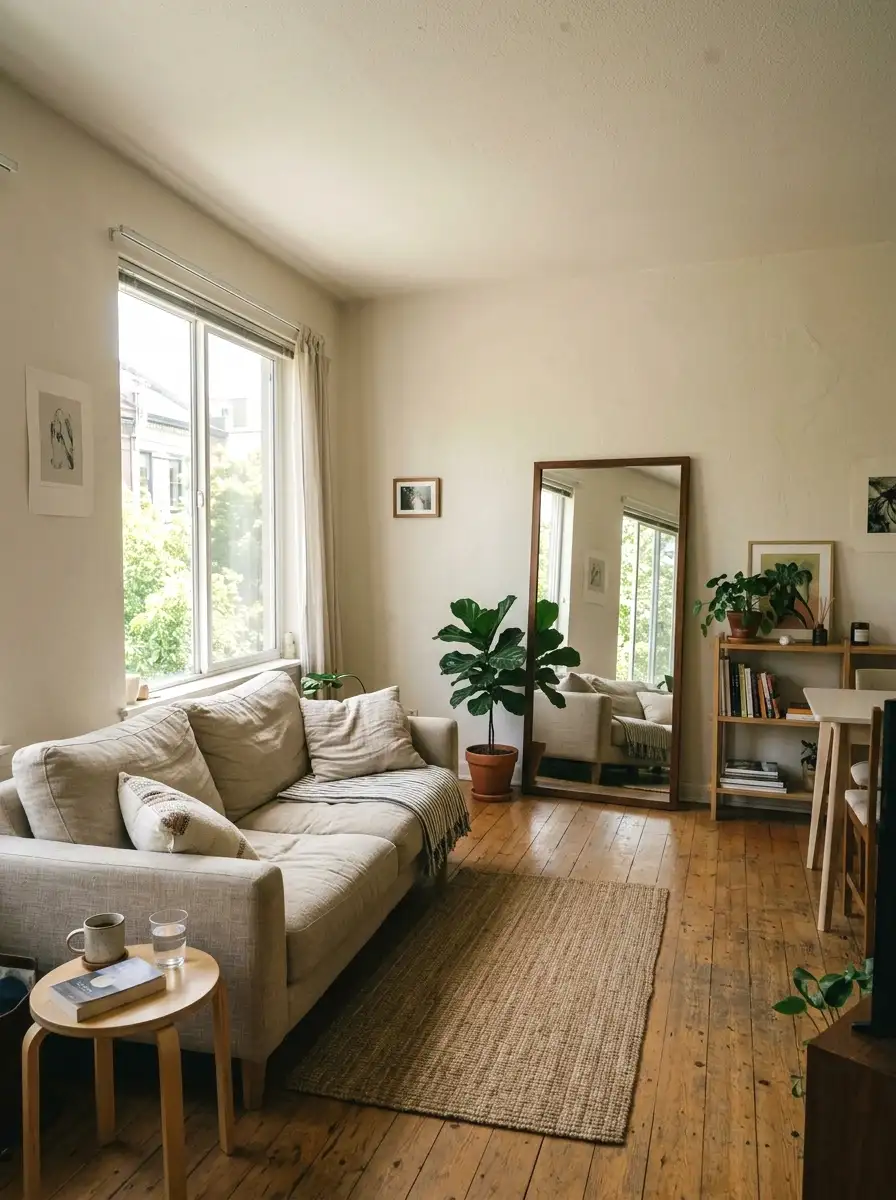
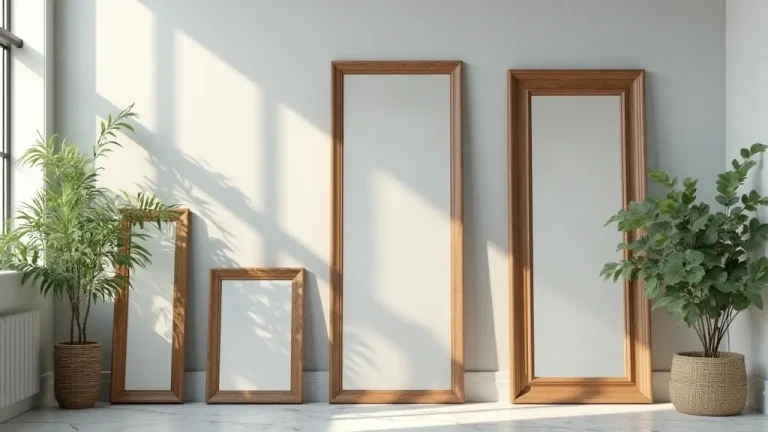
A large mirror placed directly across from your main window essentially doubles the natural light in the room. The light bounces off the glass and fills corners that would otherwise stay dim and flat. It also makes the room read as deeper than it actually is.
Mirrors in the 24 by 36 inch range go for $30 to $70. A full-length mirror leaned against the wall works just as well as a mounted one, and it’s renter-friendly. This one is so underrated, especially compared to how much people spend on extra lighting.
8. Add Floating Shelves Above Every Door Frame
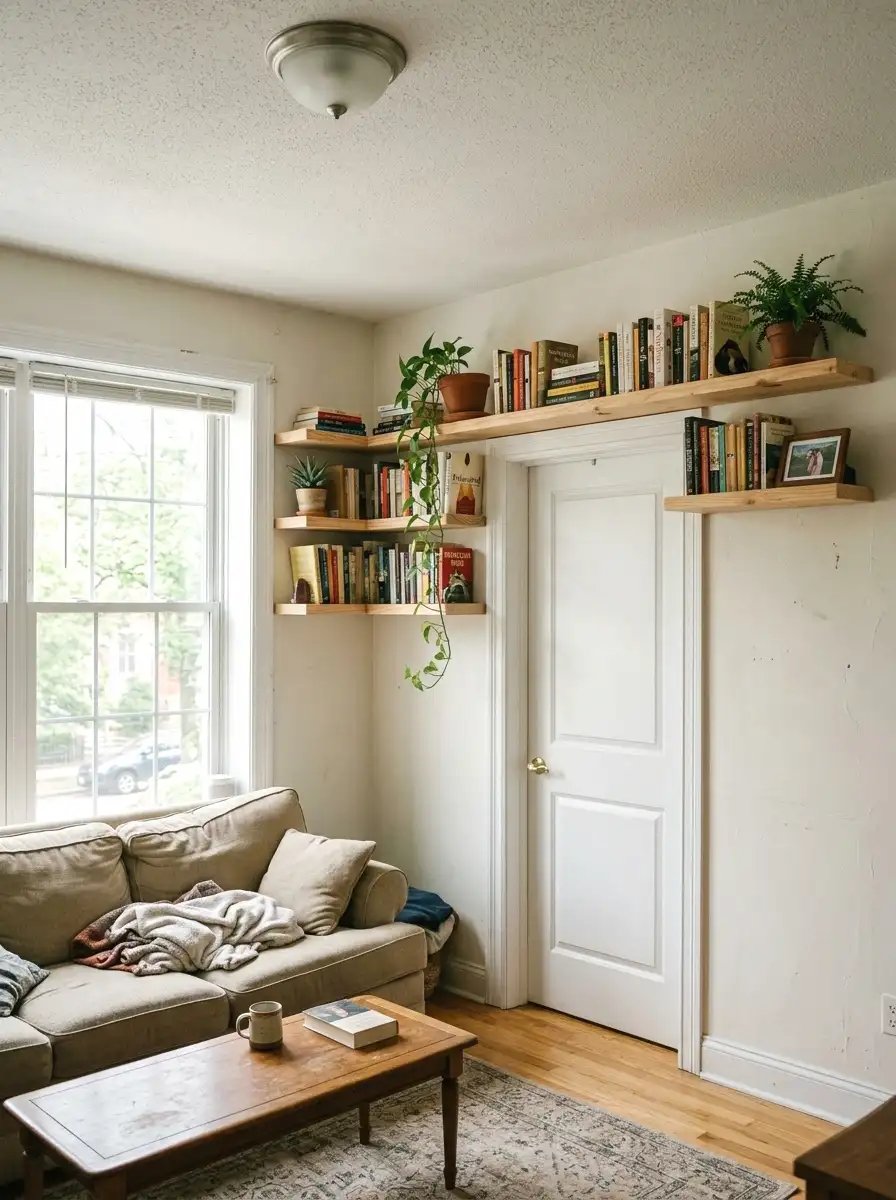
The space above your door frames is dead space in almost every apartment. Floating shelves installed 6 to 8 inches above each door frame give you real storage without touching your floor plan. Use them for books, plants, baskets, or anything you want out of daily reach.
A set of two floating shelves runs about $25 to $40. The installation takes two anchor points per shelf. That’s it. Go all the way around the room if you want a serious storage boost. The height also draws the eye up, which makes the room feel taller.
For more ideas that stack without crowding a small room, this guide on apartment storage that actually works is worth a look.
9. Invest in a Storage Ottoman
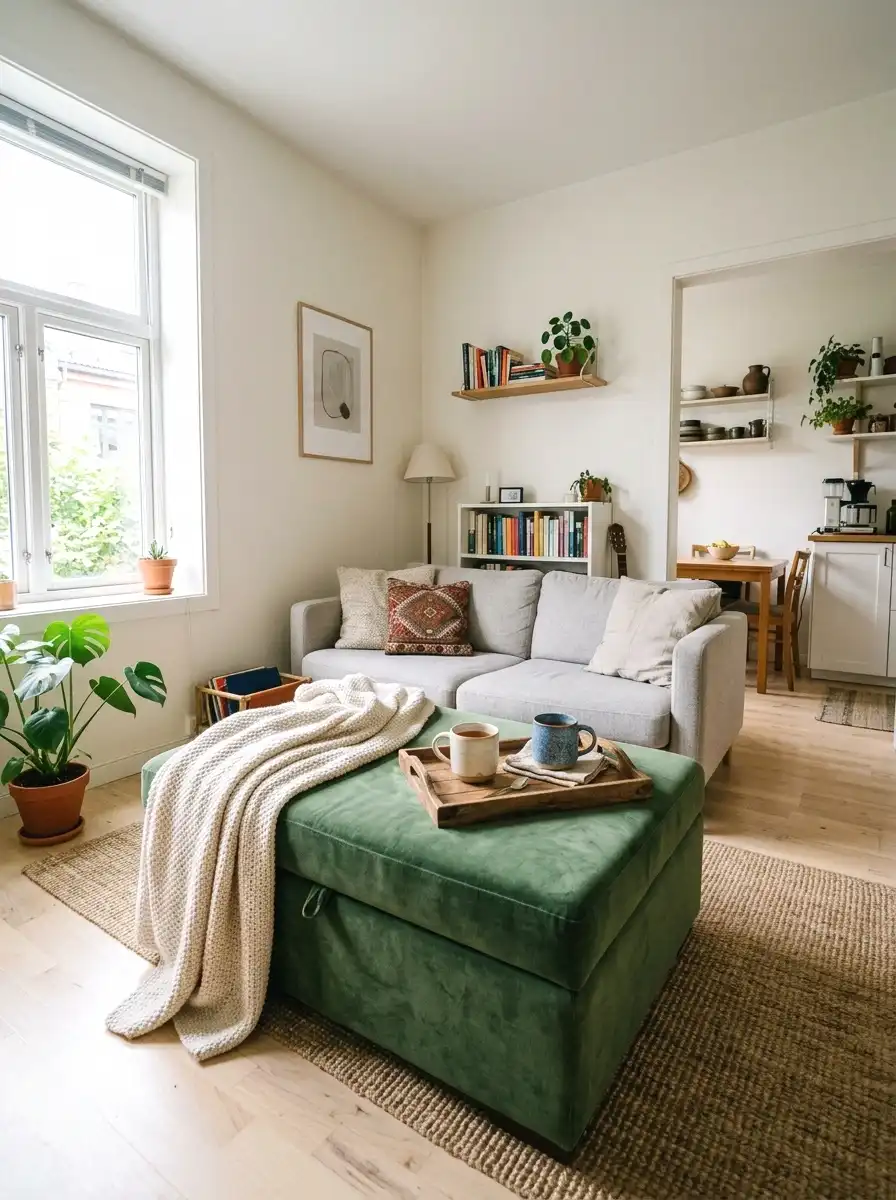
A storage ottoman does three things at once: seat, footrest, and hidden storage. In an efficiency apartment, any piece of furniture that only does one thing is a waste of square footage. A good storage ottoman holds blankets, extra pillows, power strips, whatever you need off the floor.
They start around $40 to $60 for simple fabric cubes and go up to $150 for larger tufted versions. A 30 by 30 inch square holds more than you’d expect. Put a tray on top and it also works as a coffee table. That’s three functions from one piece.
10. Swap Your Dining Table for a Drop-Leaf Table
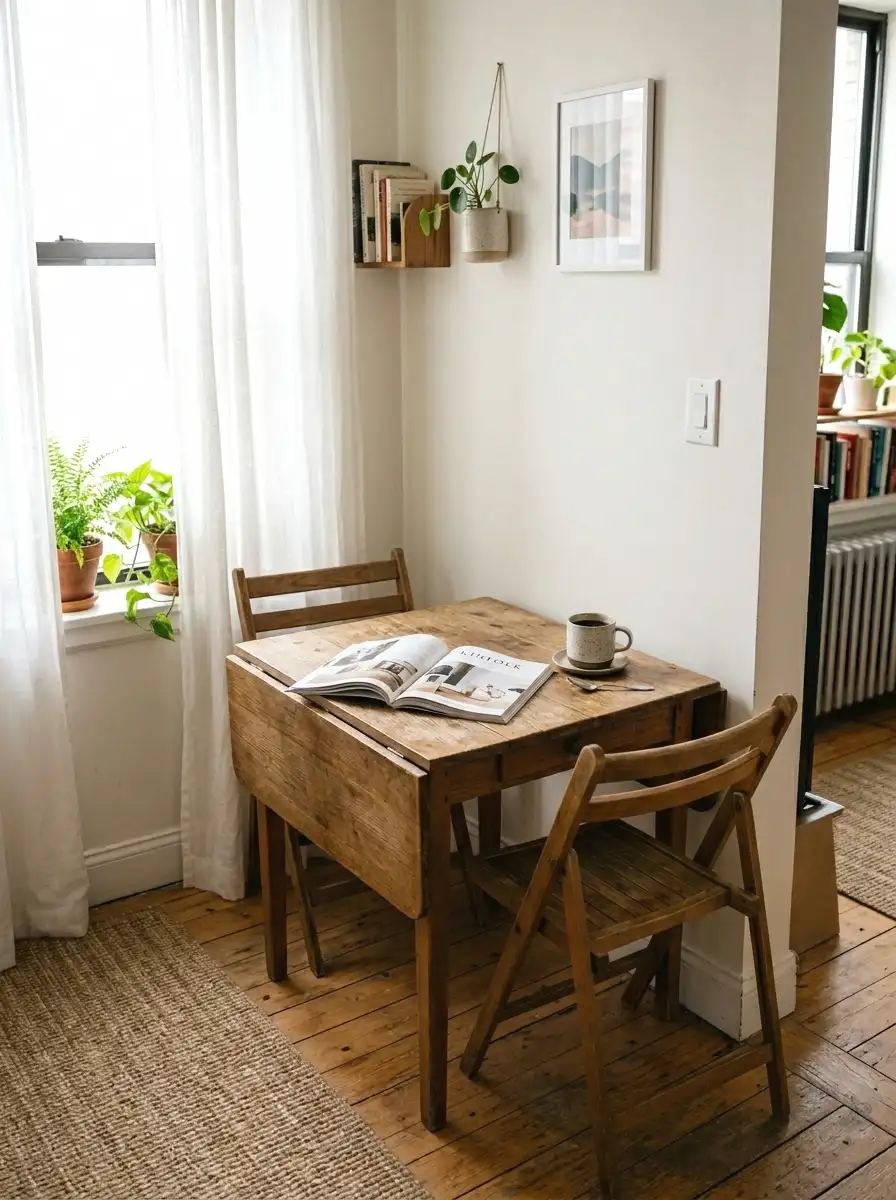
A standard 4-person dining table in a small studio is absurd. Most people eat alone or with one other person, and the table sits at full size 90% of the time, eating up floor space for no reason. A drop-leaf table folds down to about 12 to 15 inches when the leaves are down, then opens to seat 4 when you actually need it.
These run $80 to $180 at IKEA, Target, or secondhand on Facebook Marketplace. Pair it with folding chairs that hang on a wall hook and you’ve solved the dining problem without giving up square footage permanently.
There’s a solid roundup of drop-leaf and compact table options specifically sized for apartments if you want to compare before buying.
More Ideas:
11. Use Command Hooks on Every Blank Wall
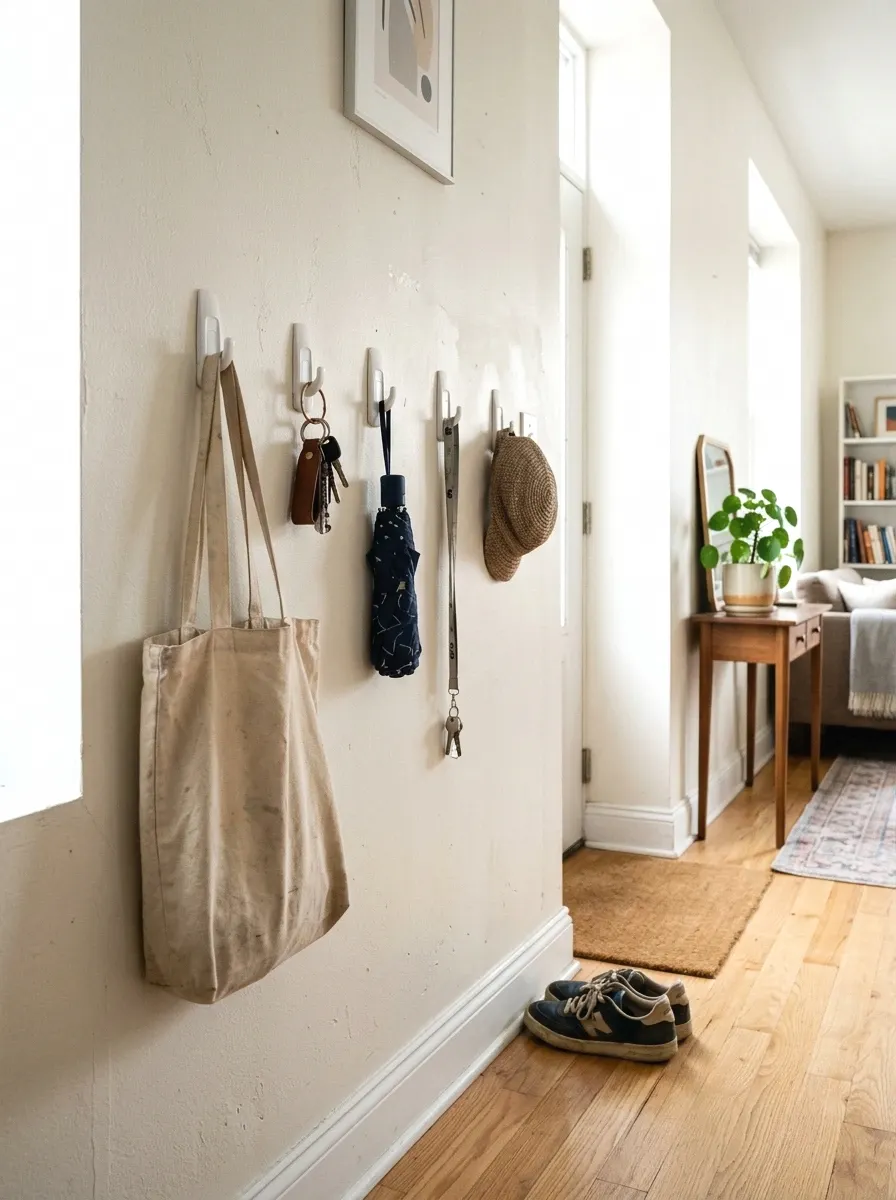
Blank walls in a small apartment are a storage opportunity. Command hooks hold bags, hats, coats, headphones, keys, umbrellas, and more. A pack of 9 medium-strength hooks costs about $10 and holds up to 3 pounds each. That’s $10 to clear your counters and floors.
The trick is to be intentional about placement. Group hooks by function, a row near the door for daily items, one in the bathroom for towels, one beside the bed for your bag. When things have a designated spot, the whole apartment looks less chaotic.
12. Choose a Sofa With Exposed Legs
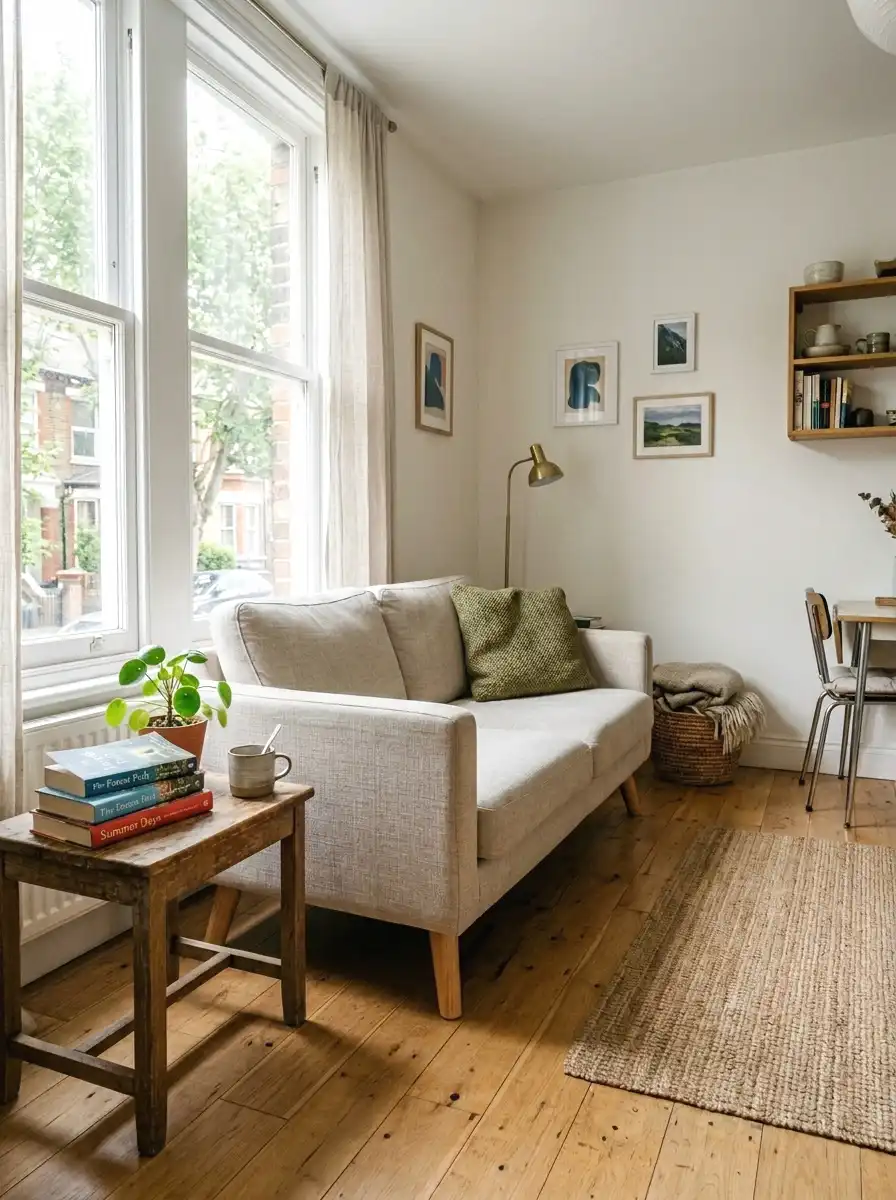
Sofas that go all the way to the floor make a small room feel heavier and more packed. A sofa with exposed legs, even just 4 to 6 inches off the floor, lets light pass underneath. Your eye reads that gap as open space, which makes the room breathe.
This isn’t a small detail. I was skeptical about this one but the difference in photos of before and after is noticeable. Most mid-range sofas in the $200 to $400 range come in both styles. Always go with the legs when you’re working with under 400 square feet.
13. Try a Tension Rod Under the Sink
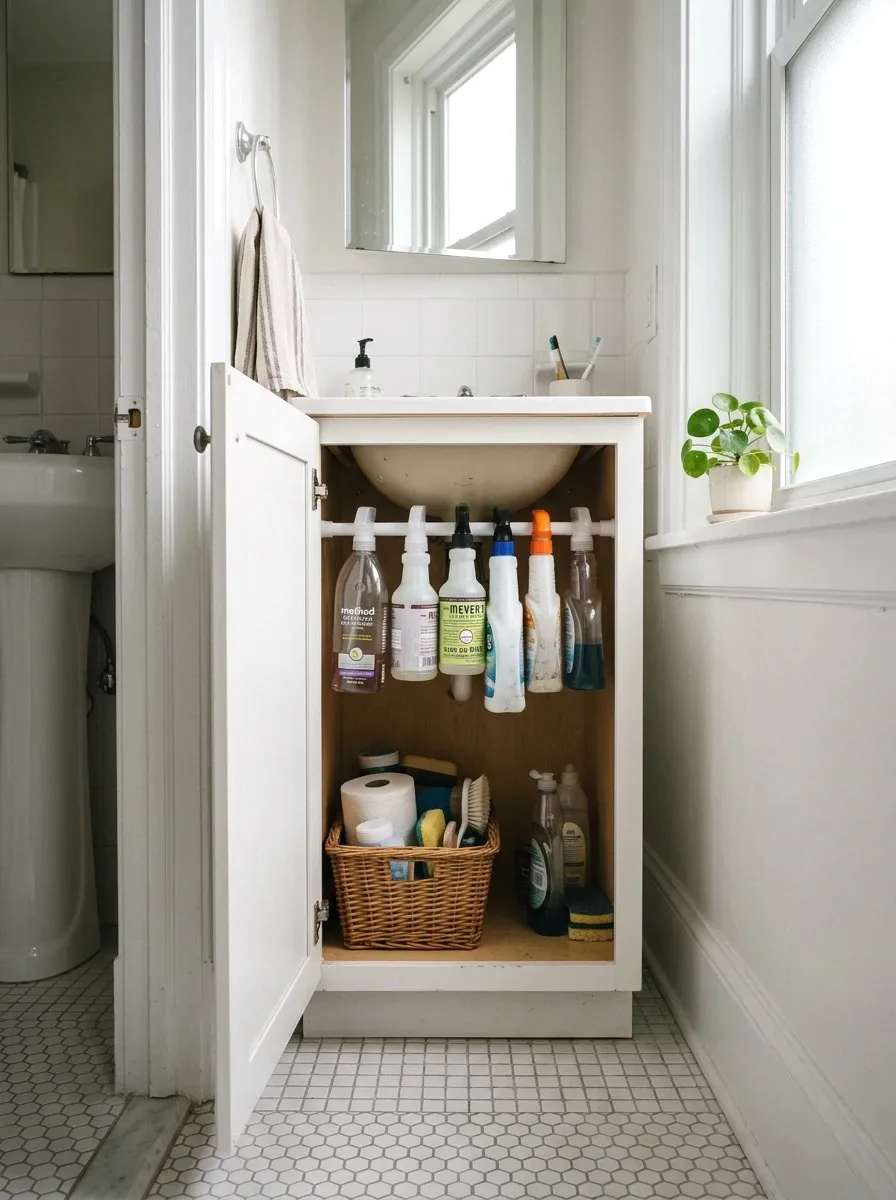
The cabinet under your kitchen or bathroom sink is usually one tall open space that wastes the top half entirely. A simple tension rod installed horizontally in the middle gives you a second level. Hang spray bottles from it and put everything else on the shelf below.
Tension rods cost $5 to $10. This took me ages to figure out, but once I did, I cleared so much random clutter from my bathroom counter. Add a small bin below the rod for sponges and cleaning supplies and you’ve got a genuinely organized cabinet.
14. Hang a Vertical Garden or Plant Wall
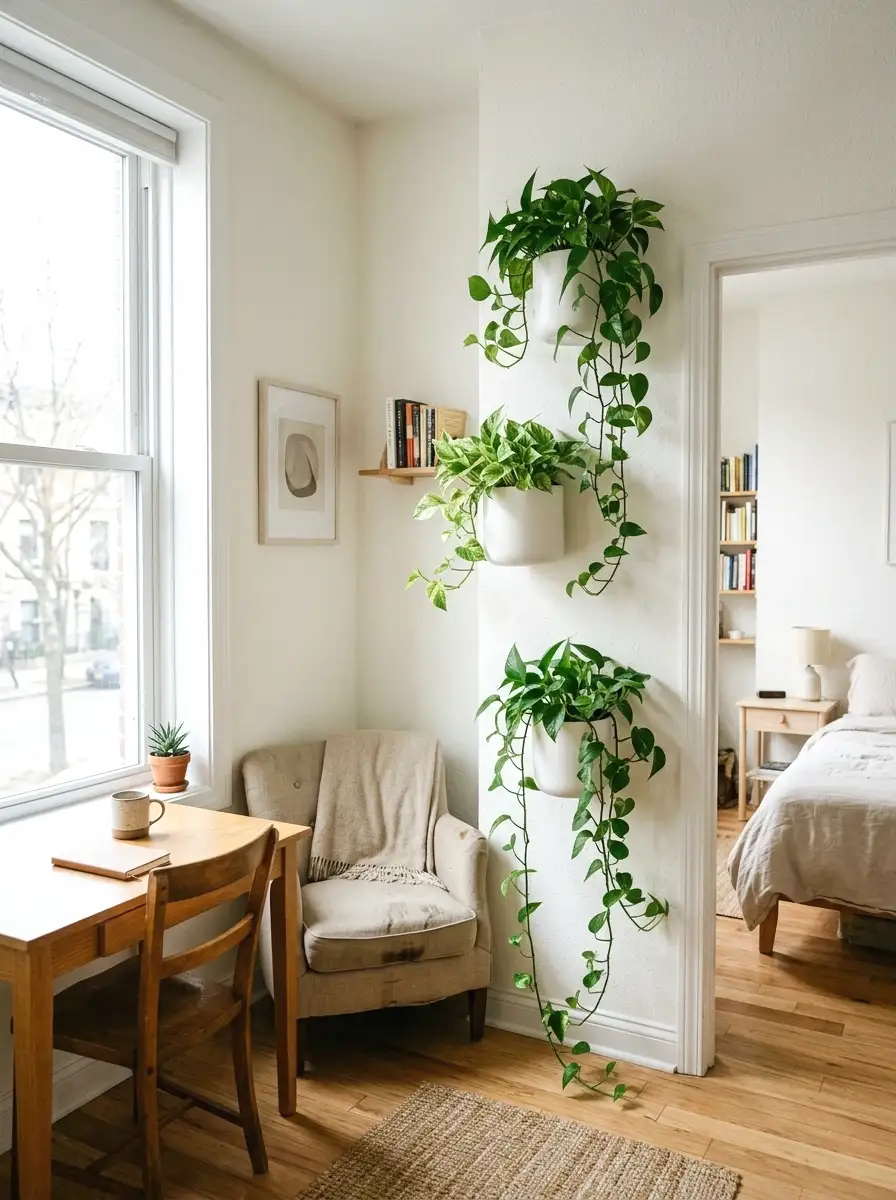
Plants make a space feel lived in and warm. But floor plants in a small apartment compete with your furniture for the same floor space. A vertical plant wall or a set of wall-mounted planters stacks plants without taking any floor space at all.
Wall planters come in sets of 3 to 5 for about $20 to $40. Mount them near a window for light. Succulents and pothos are the most forgiving if you’re not a consistent waterer. A green corner on a white wall gives the whole room a focal point without costing much.
More Ideas:
15. Use Light Paint Colors on All Walls
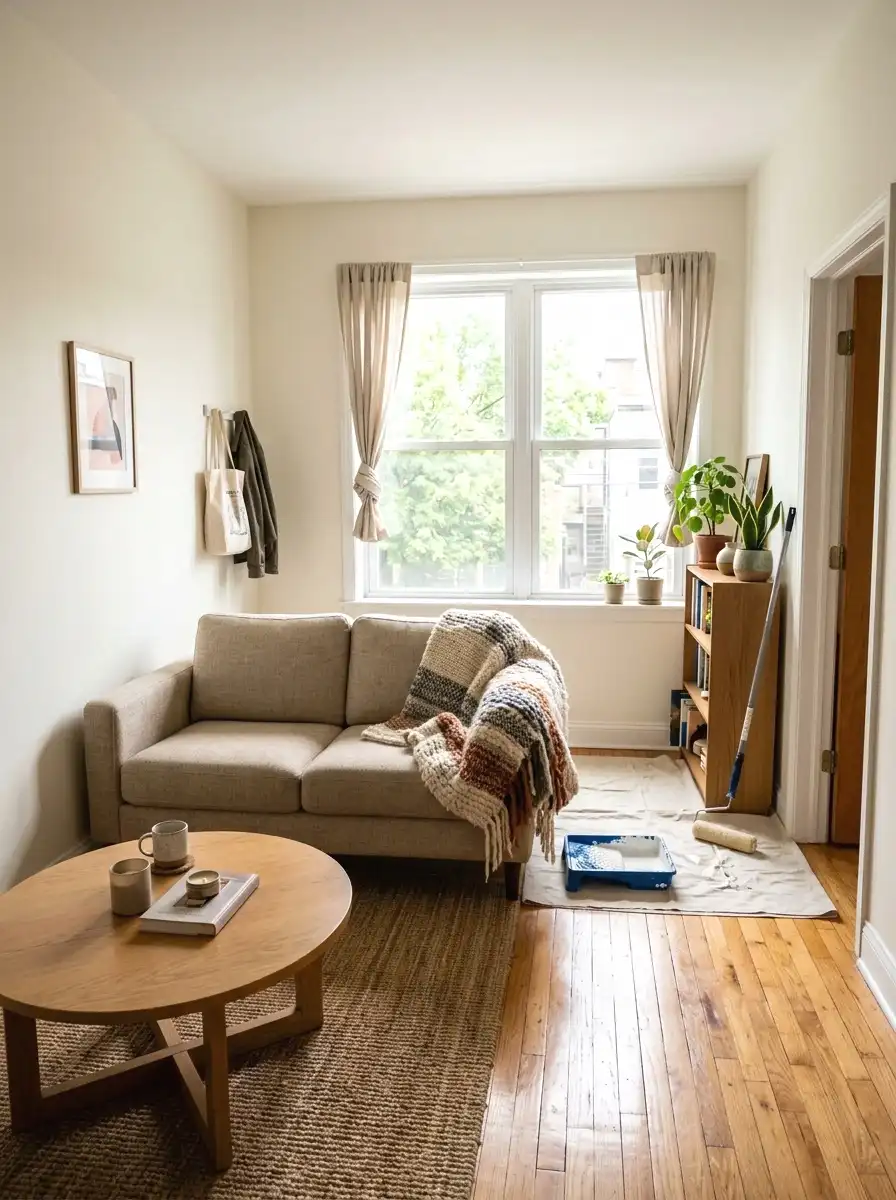
Paint is the highest-return update in any small apartment. A room painted in a warm white, soft greige, or pale sage reflects more light and visually pushes the walls outward. A gallon of quality wall paint runs $30 to $50, and most efficiency apartments need 2 gallons total.
The color temperature matters. Warm whites like cream and off-white feel open without feeling clinical. Cool whites can feel stark in a room that doesn’t get a lot of direct sun. Test a sample on your wall before committing. That $5 sample will save you from repainting.
16. Install Under-Bed Rolling Storage
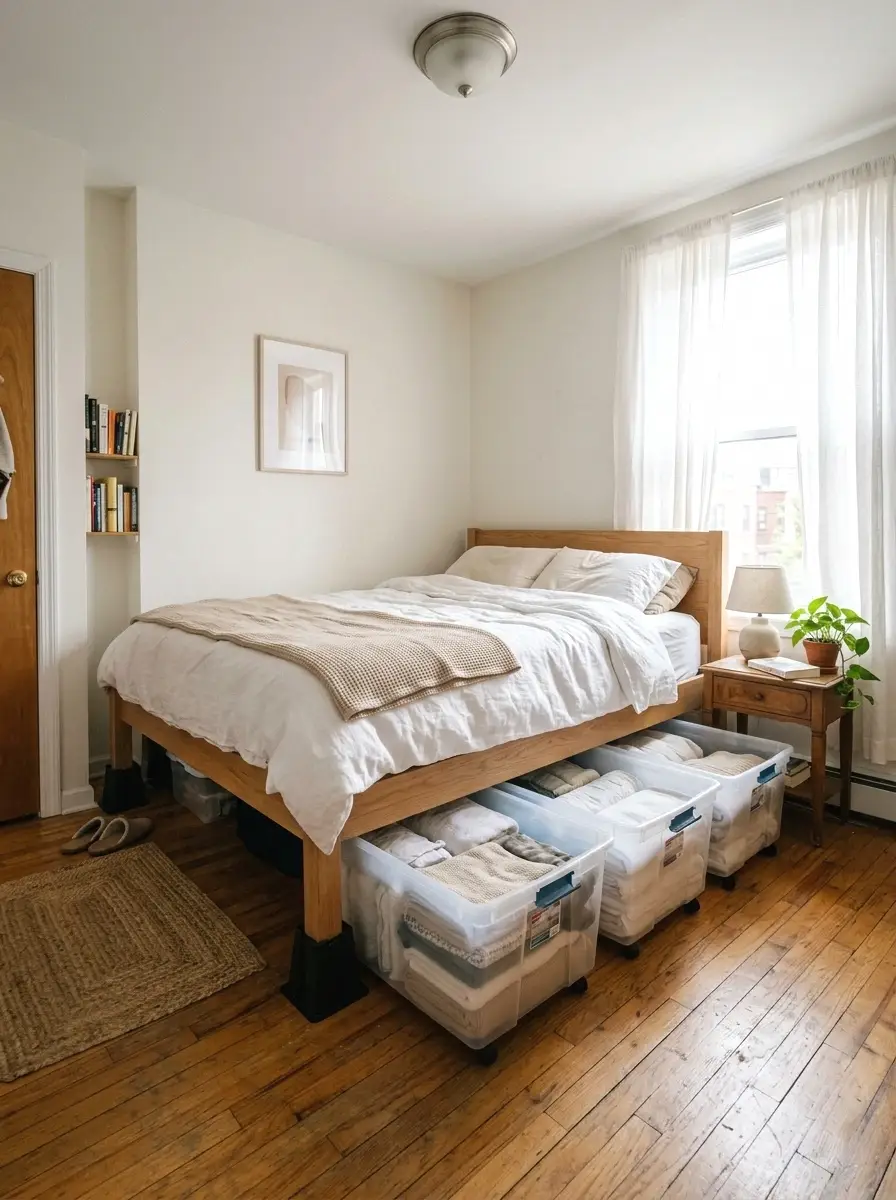
This goes with the earlier point about bed risers, but deserves its own mention because so many people skip it entirely. Rolling storage bins that fit under a standard bed frame give you around 10 to 15 cubic feet of hidden storage. That’s room for seasonal clothes, shoes, extra linens, or anything bulky.
A set of 4 rolling bins runs about $30 to $50. Label each one. The rolling part matters because reaching all the way to the back of a static bin under a bed is annoying enough that you stop using it. Wheels fix that.
17. Add a Thin Entryway Table Behind Your Door
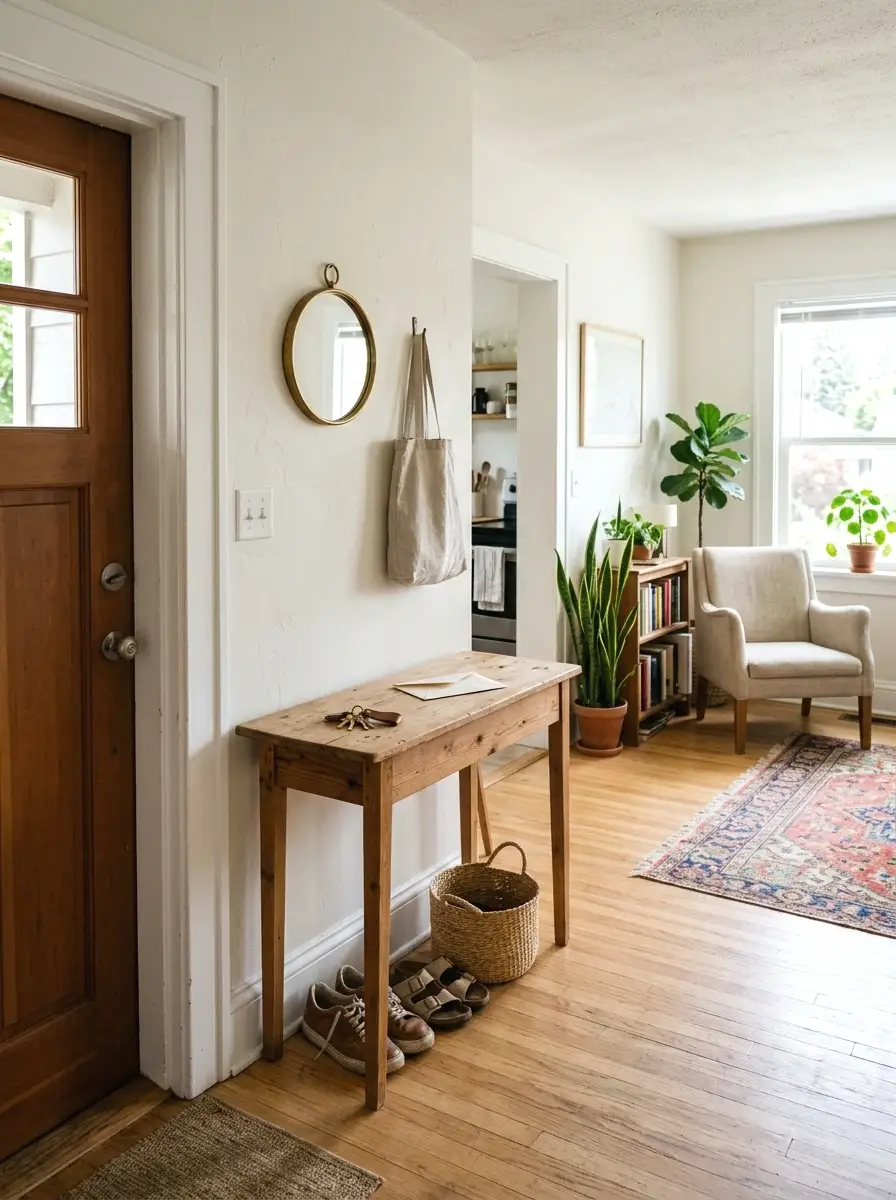
Most efficiency apartments open directly into the main living space with no entryway at all. A slim console table, 10 to 12 inches deep, placed behind the front door or just inside it gives you a landing zone for keys, mail, bags, and shoes without blocking the door.
Tables this thin start around $40 to $80. A small basket underneath holds shoes. A hook strip above it handles the rest. You’re not building a mudroom, just giving your entry a purpose. It makes the apartment feel more organized from the second you walk in.
If you want to take the entryway further without adding bulk, there are some clever approaches to entry zones in minimal apartments that work even without a dedicated foyer.
18. Swap Overhead Lighting for Layered Lamps
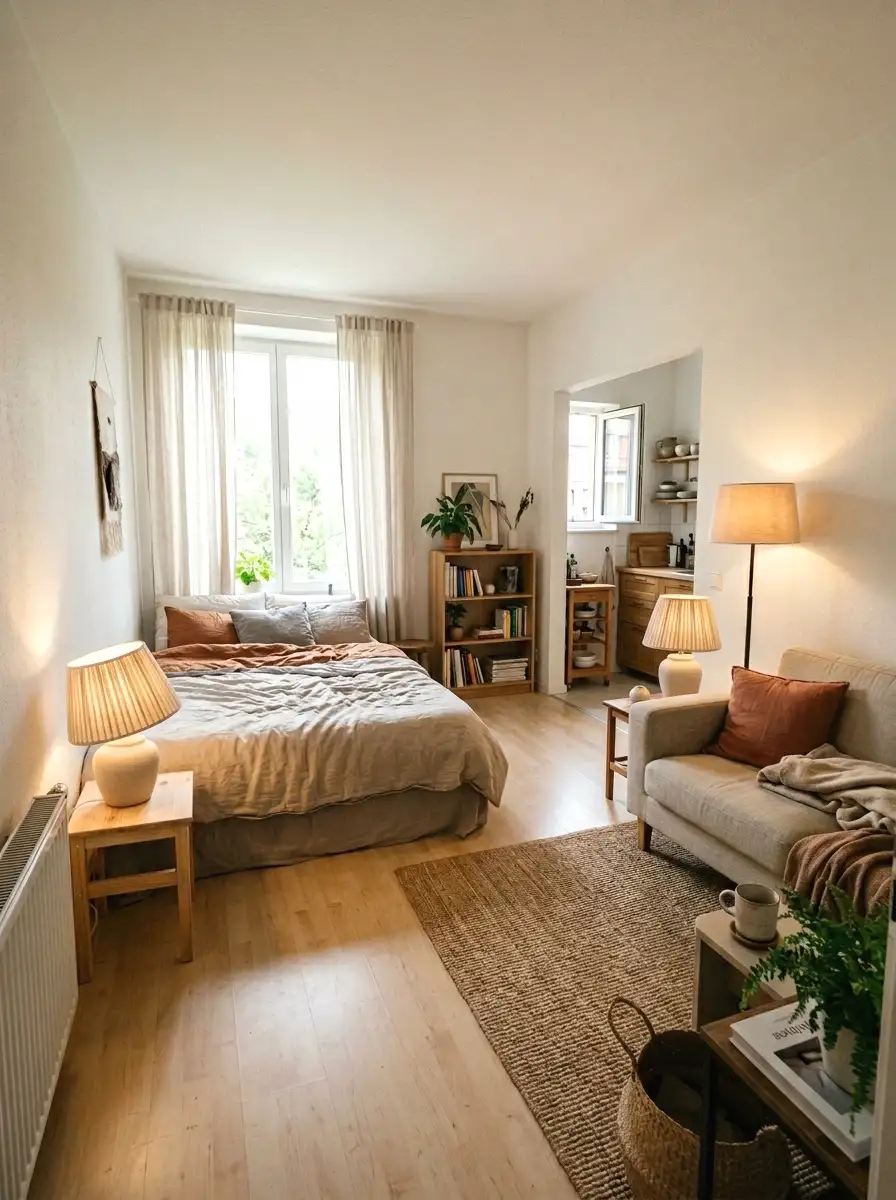
One bright overhead light in a small apartment creates harsh shadows and makes the room feel like a waiting area. Switching to layered lighting, two or three small lamps at different heights, gives the room depth and warmth. That feels like more space even when the square footage hasn’t changed.
A decent table lamp goes for $20 to $40. Floor lamps with adjustable necks are useful too, around $40 to $60. Put one near the seating area, one near the bed, and one near the desk if you have one. Three lamps and no overhead. Big difference.
Layered lighting is one of the fastest ways to make a room feel pulled together, and there’s more on small space lighting that changes rooms over at the cozy apartment guide.
More Ideas:
19. Use Lucite or Glass Furniture
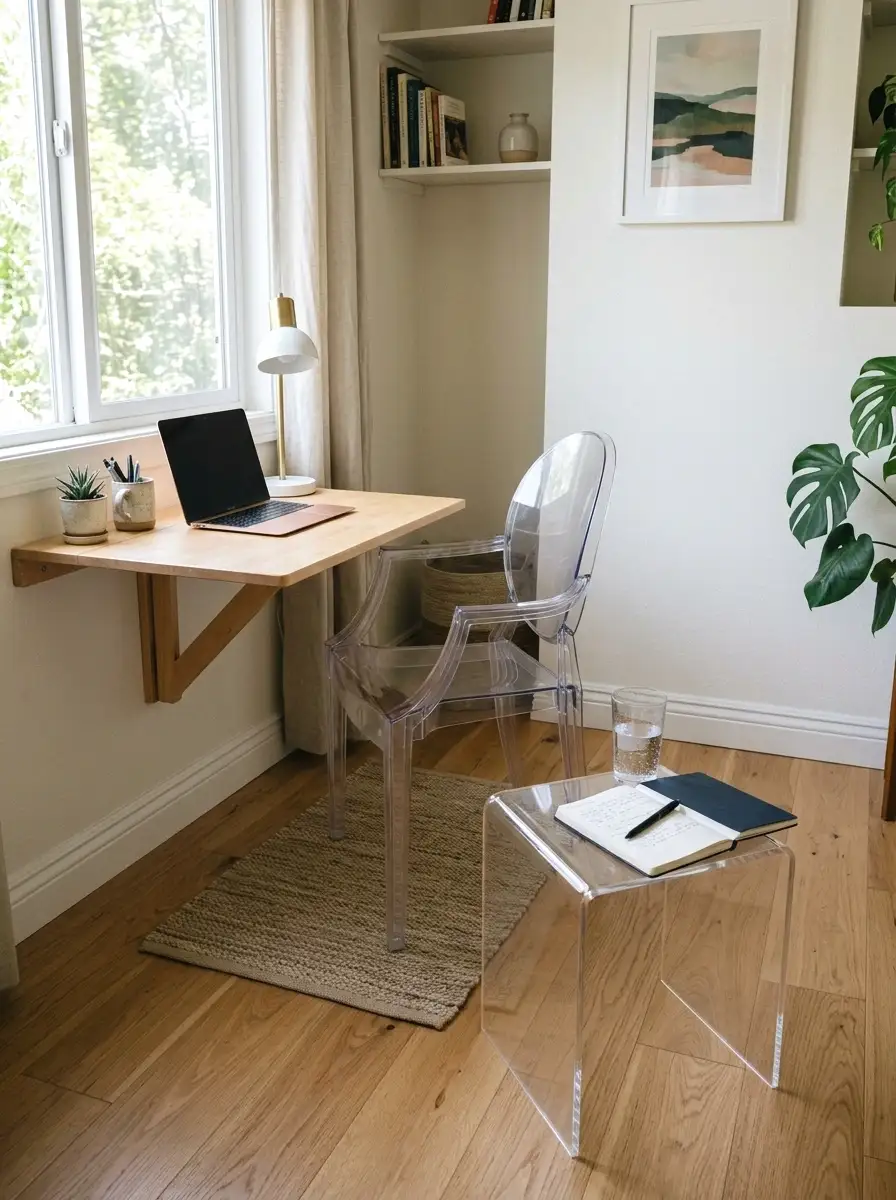
Furniture made from clear acrylic, also called Lucite, or glass takes up visual space without blocking sightlines. A clear acrylic chair next to a desk reads as almost invisible. A glass-top side table lets the eye pass through to the floor. Both tricks make the room feel less crowded.
Acrylic chairs start around $80 to $120. Small acrylic side tables run $30 to $50. These work especially well in tight corners where a solid piece of furniture would feel like it’s closing in. The material tends to stay in style, so it’s a good investment for a small space.
20. Add a Full-Length Mirror to the Back of a Door
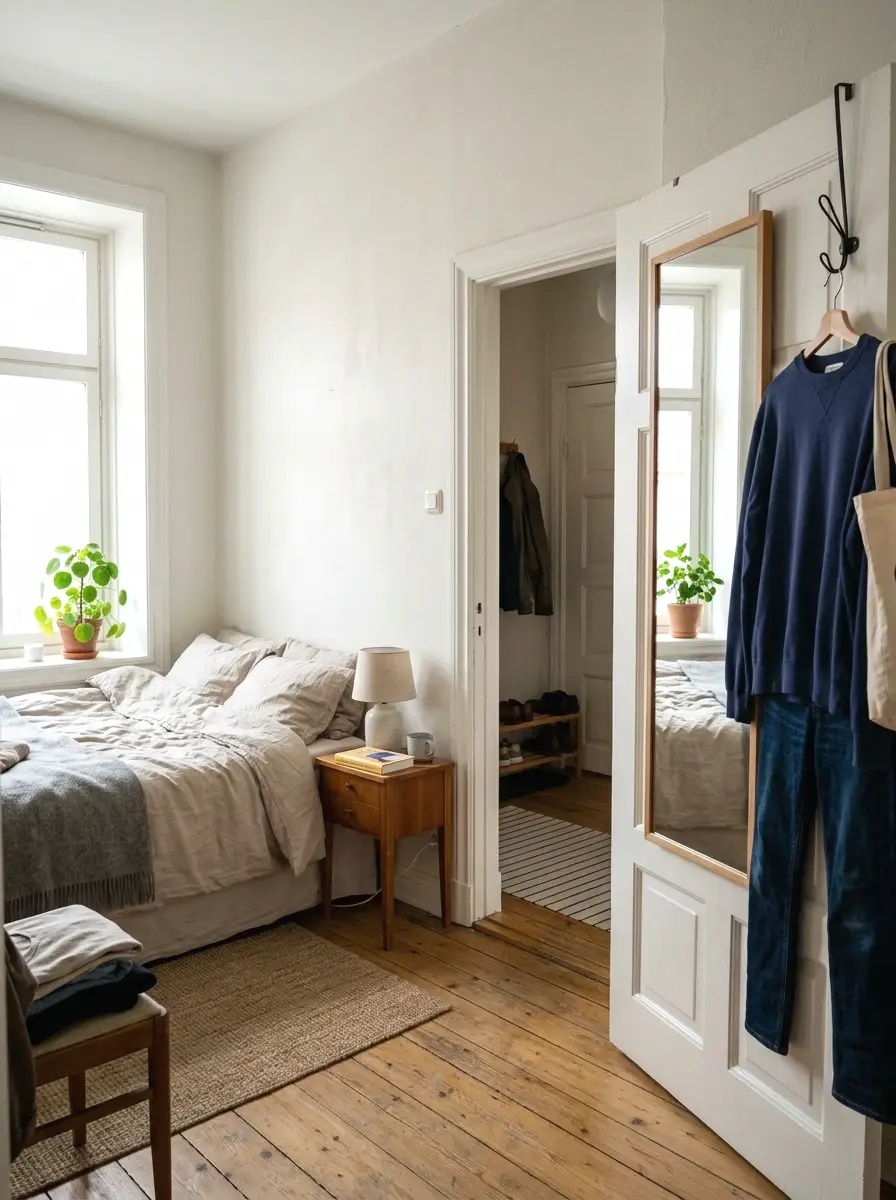
The back of your bedroom or bathroom door is blank in most apartments. A full-length mirror mounted there gives you a functional mirror without using any floor or wall space. It’s also just practical, you can check your whole outfit without a dedicated mirror area.
Over-the-door mirror hooks cost about $10. The mirror itself, 48 to 60 inches, runs $30 to $60. Total spend under $70 and you’ve added a mirror, a visual depth trick, and practical function to a space that was literally doing nothing before.
21. Install a Curtain Around Your Closet
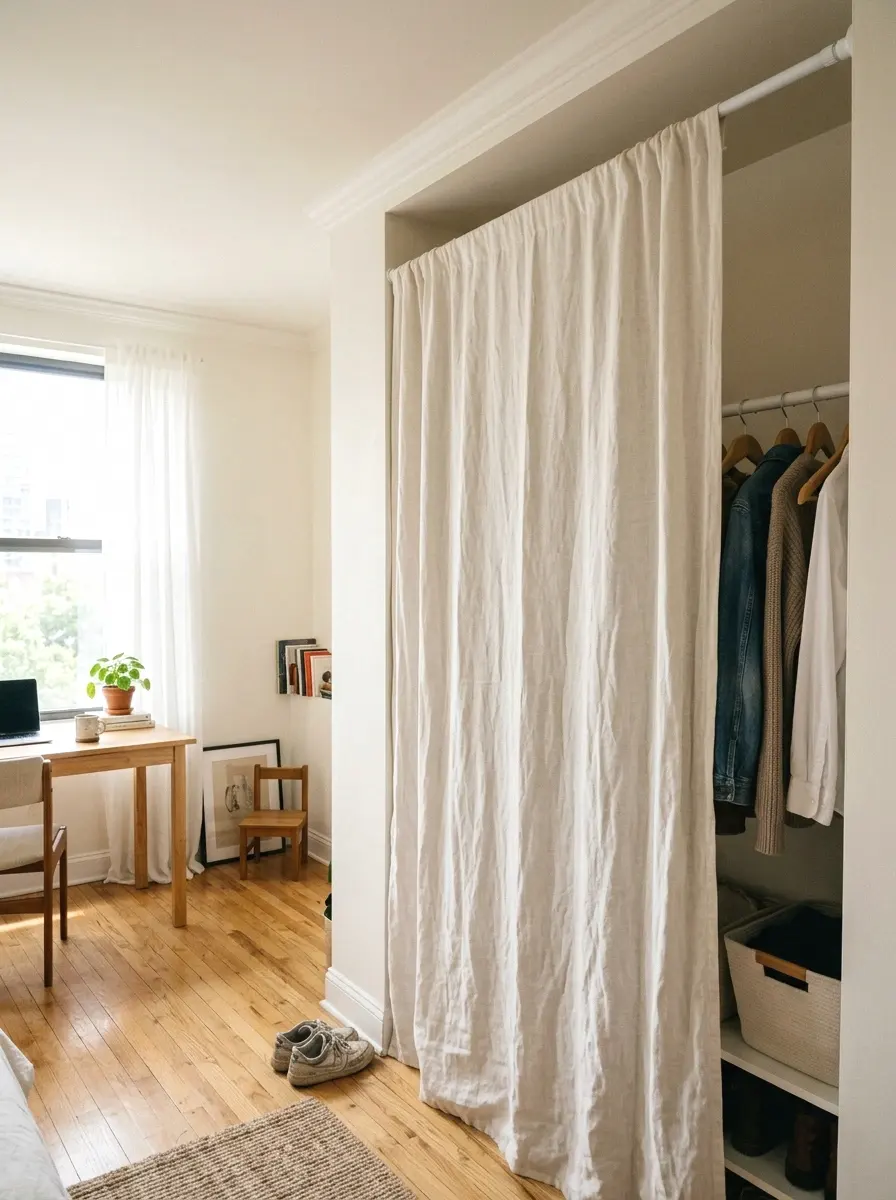
If your efficiency has an open closet or a shallow wardrobe area without a door, a ceiling-mounted curtain rod with a light linen curtain cleans the whole thing up. It hides visual clutter, creates a separation between your clothes and your living space, and costs almost nothing.
A tension rod that spans the closet opening runs $10 to $15. Curtain panels $15 to $25 per pair. That’s under $40 to contain the one area of a small apartment that tends to look the messiest. And you can do it in an afternoon without any tools.
22. Use a Bookshelf as a Room Divider
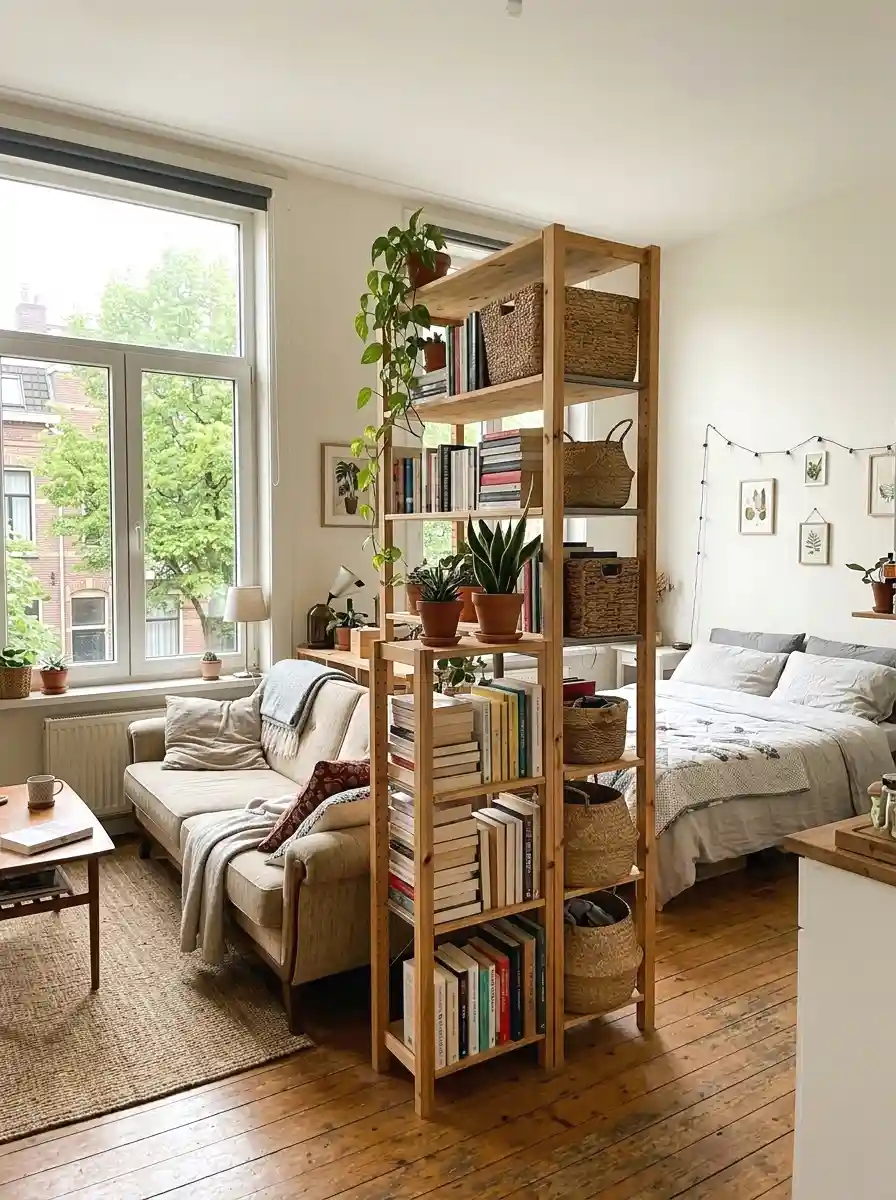
The last idea is one of my favorites. A tall open bookshelf, positioned perpendicular to the wall, creates a room divider that also stores things. It separates your sleeping area from your living area, gives you shelf space on both sides, and because it’s open, it doesn’t block light.
A KALLAX unit from IKEA is 57 inches tall and about 57 inches wide. It costs around $100 and takes a couple of hours to build. Anchor it to the wall for safety. Fill one side with books and decor, use the other side for baskets and bedroom items. Two zones, one piece of furniture.
The bookshelf divider pairs well with other space-saving furniture worth knowing if you’re still figuring out how to carve up the rest of the room.
More Ideas:
Final Thoughts on Small Efficiency Apartment Ideas
You don’t need to do all 22 of these. Nobody does. But even 4 or 5 of the right ones, the bed lift, the wall-mounted TV, the layered lighting, and a mirror placement, can shift how the entire apartment feels to live in. Small spaces respond quickly to intentional changes. That’s actually one of the good things about them.
Start somewhere specific. Pick one area that bothers you the most right now, maybe it’s the clutter with no home, or the room that feels dark no matter what. Make one change this weekend. See how it lands before moving on to the next thing.
If you want more ideas like these, homelypop.com has a lot more for small spaces, rentals, and real budgets without the fluff.
Start with this list of budget-friendly small apartment upgrades that stays under $300 for most changes and covers a lot of the same problems.