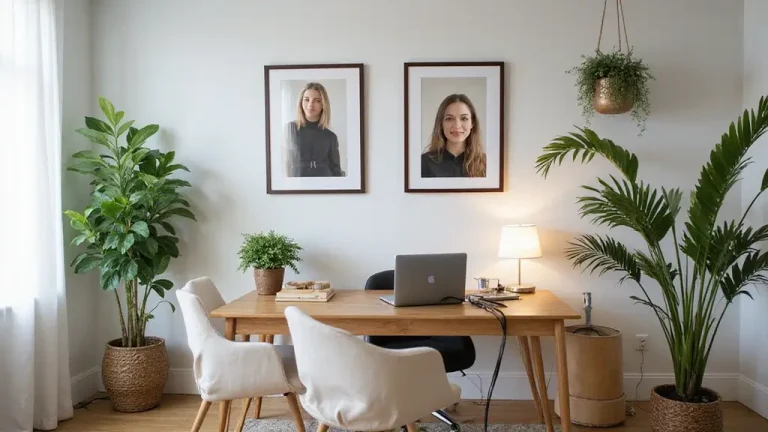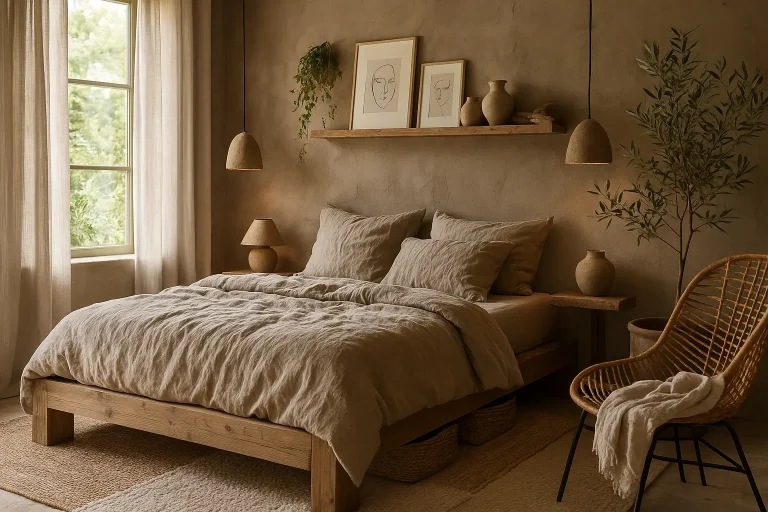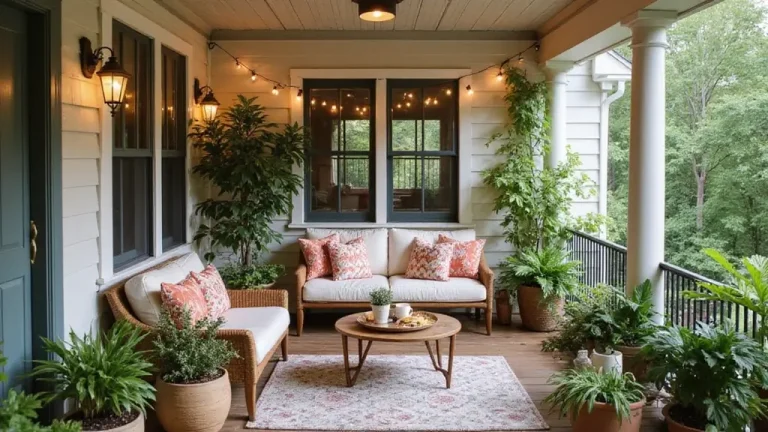

23 Small Space Design Hacks for Apartments That Actually Work

Your apartment feels like a shoebox and no amount of rearranging seems to fix it. You’ve moved the couch three times. You’ve tried decluttering. It still feels tight, dim, and a little suffocating. That’s not a you problem. It’s a space problem, and there are real fixes for it. Small Space Design Hacks for Apartments
These 23 ideas come from digging through real apartment setups, renter forums, and home decor communities where people share what actually worked in 400 to 800 square foot spaces. Each idea was picked because it solves a specific problem, fits a realistic budget, and doesn’t require a contractor or a landlord’s permission. Most fall in the $100 to $300 range.
This list is for renters and apartment dwellers who want real results without a full renovation. It’s not for people with unlimited budgets or open-plan lofts. If you’re working with limited square footage and don’t want to spend thousands, these ideas are built for you.
By the end, you’ll have a clear set of practical changes you can actually do this month, in the apartment you’re already living in.
If you’re starting from scratch, there are some creative ways to use every inch that pair well with what you’ll find below.
What to Know Before You Start Small Space Design
- Rooms under 200 sq ft benefit most from vertical storage, not floor-level furniture.
- Plan your layout on paper first. Moving furniture twice wastes a full weekend.
- Budget at least $50 for command strips, anchors, and basic hardware before you start.
- Most people overlook the ceiling. A light fixture swap costs $30 and changes the whole mood.
- Common mistake: buying storage bins before measuring. Always measure the shelf first.
- Peel-and-stick products fail on textured walls. Test a small corner first.
- Furniture with legs shows more floor and makes rooms feel larger than pieces that sit flat.
- Paint finish matters. Flat paint absorbs light. Eggshell reflects it back into the room.
1. Use Curtains Hung at Ceiling Height
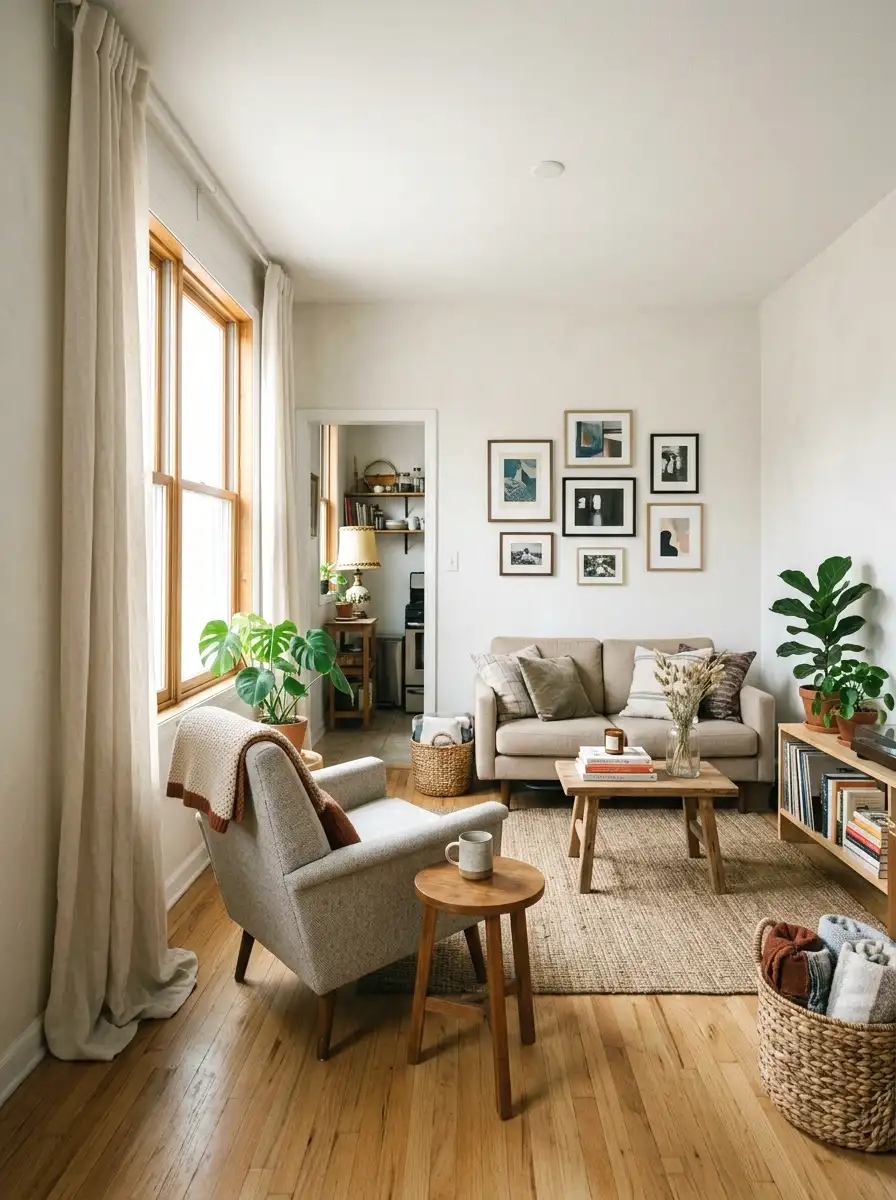
The fastest way to make a room feel taller is to hang curtains at the ceiling, not at the window frame. Most people mount the rod right above the window, which cuts the wall in half visually. Move it up to within two or three inches of the ceiling and watch the room stretch.
You don’t need to buy new curtains for this. Just move the rod up and let the fabric pool slightly at the floor. Curtains that touch or graze the floor always look more intentional than ones that hover above it. This costs nothing if you already have curtains. New curtain rods run about $15 to $25.
For open-plan apartments especially, getting pooling curtains done right is what separates the space from feeling polished versus makeshift.
2. Add a Full-Length Mirror on One Wall
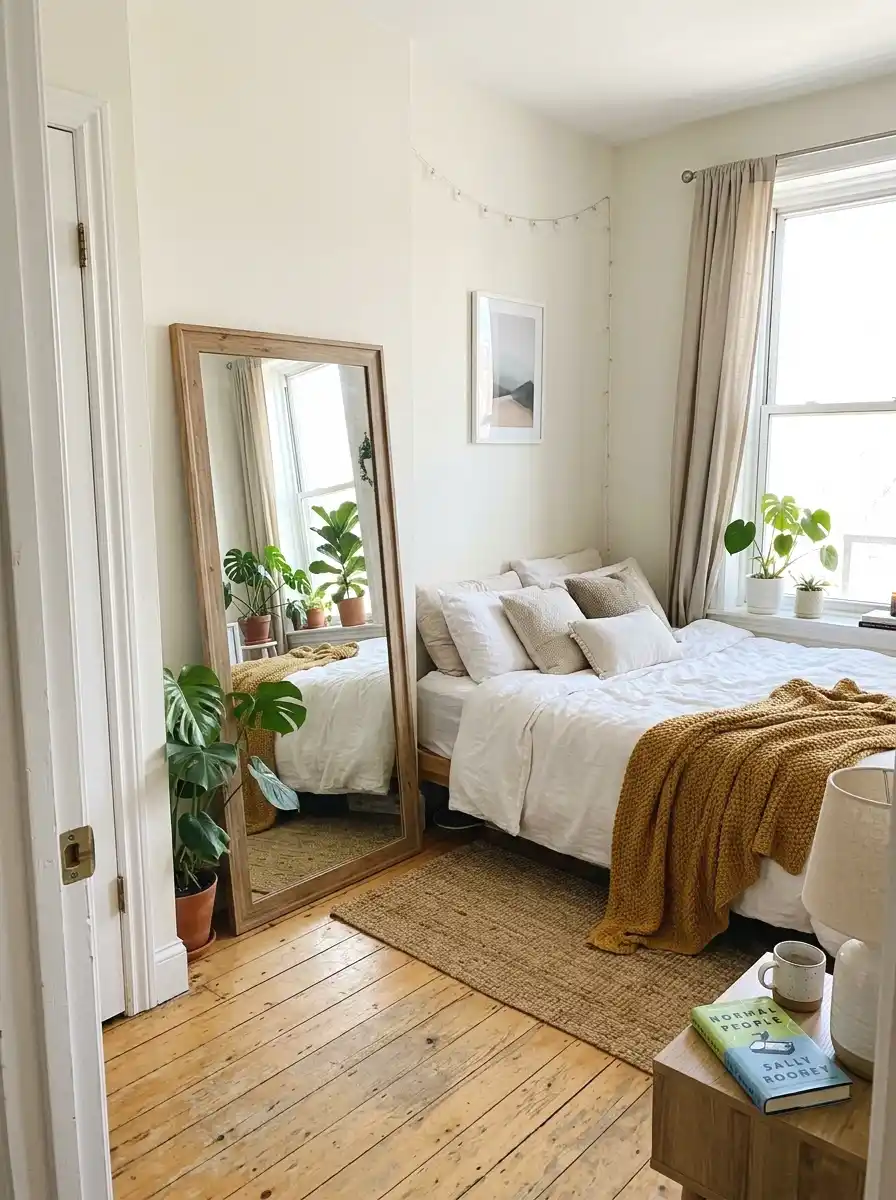
Mirrors are one of the most effective tools in a small apartment and they’re constantly underused. A full-length mirror on a blank wall bounces light around and makes the room look noticeably wider. It’s not a trick. It genuinely changes how your eye reads the space.
When I tried this in my own space, I was surprised how much it opened up a dark hallway. A leaning mirror costs $40 to $80 at most home stores. Mount one flat against the wall or angle it slightly. Avoid covering windows with it since you want to reflect light sources, not block them.
More Ideas:

3. Swap Your Coffee Table for an Ottoman
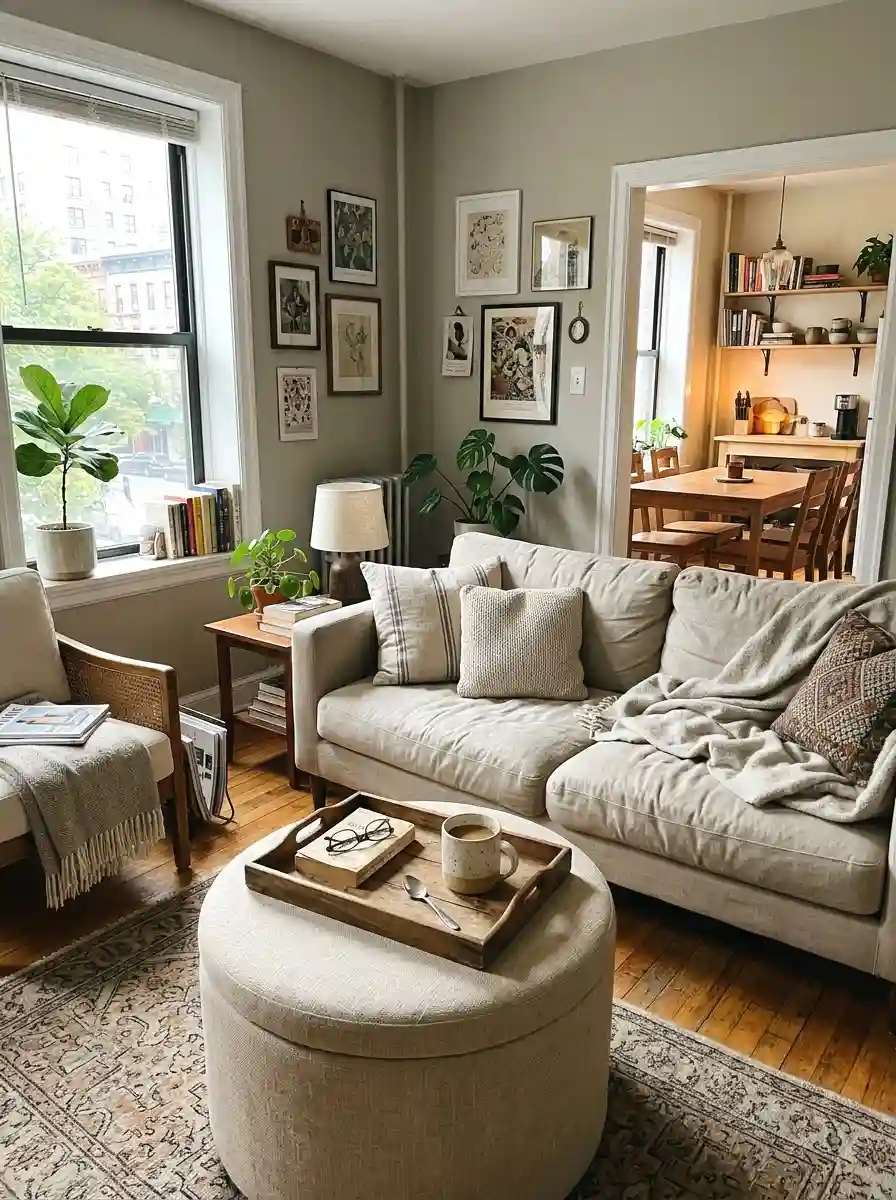
A solid coffee table in a small living room blocks sightlines and takes up visual weight. An ottoman does the same job but feels lighter, especially if it’s upholstered. Better yet, use a storage ottoman and get rid of the table entirely.
You get a surface for drinks, hidden storage inside, and something you can move with one hand when you need more floor space. Look for ones with a removable tray top. These run $60 to $150 depending on size. Go for a solid neutral like cream, tan, or charcoal gray so it doesn’t compete with everything else.
There are plenty of storage ottoman options worth considering if you want to compare styles before committing.
4. Mount Your TV on the Wall
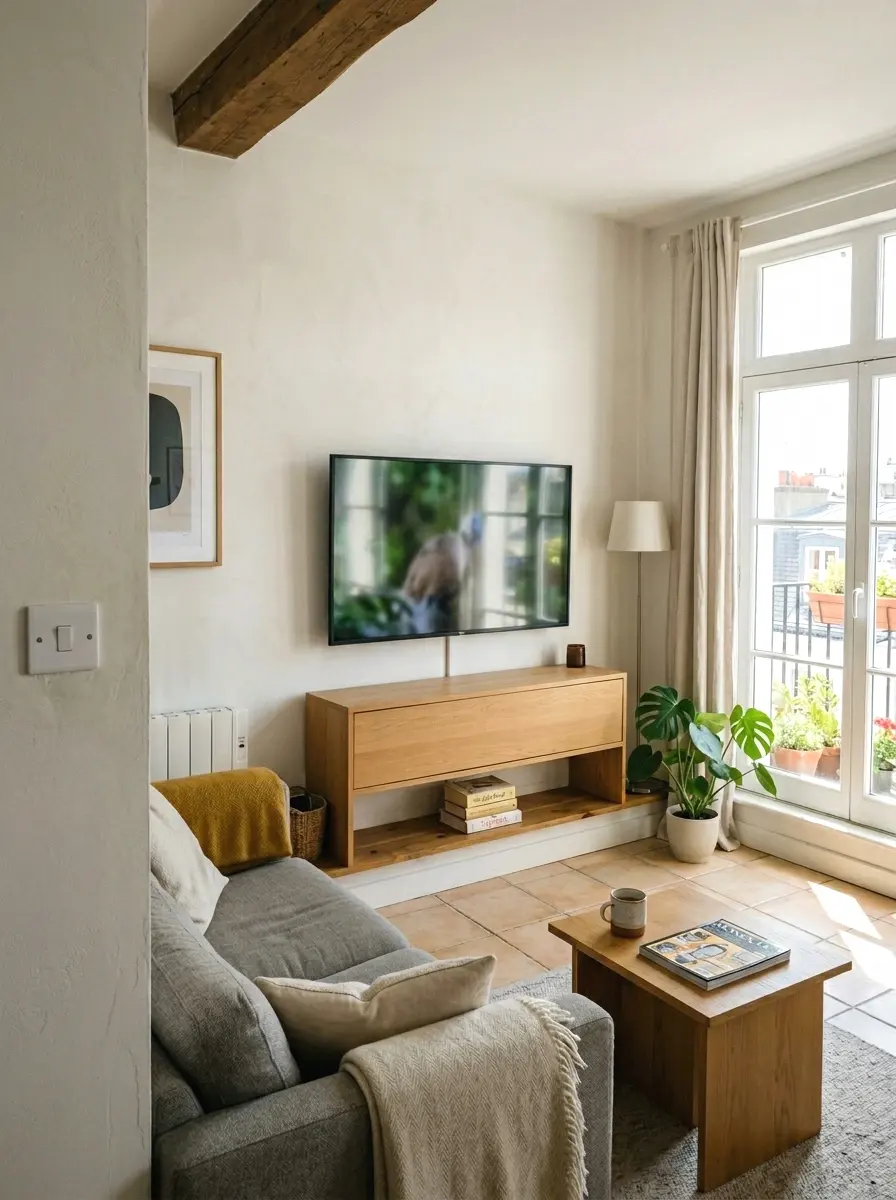
A TV stand takes up floor space you probably don’t have. Mounting the TV directly on the wall frees up that entire footprint and gives you the lower surface back for storage or nothing at all. It also looks cleaner.
TV wall mounts cost $20 to $45. Most apartments allow this with a patch kit when you leave. The patch takes ten minutes and a $5 spackle pen. If the idea still makes you nervous, there are no-drill TV mounting systems that use furniture anchors instead of wall screws, though they’re less stable for larger screens.
5. Bring In Furniture with Visible Legs
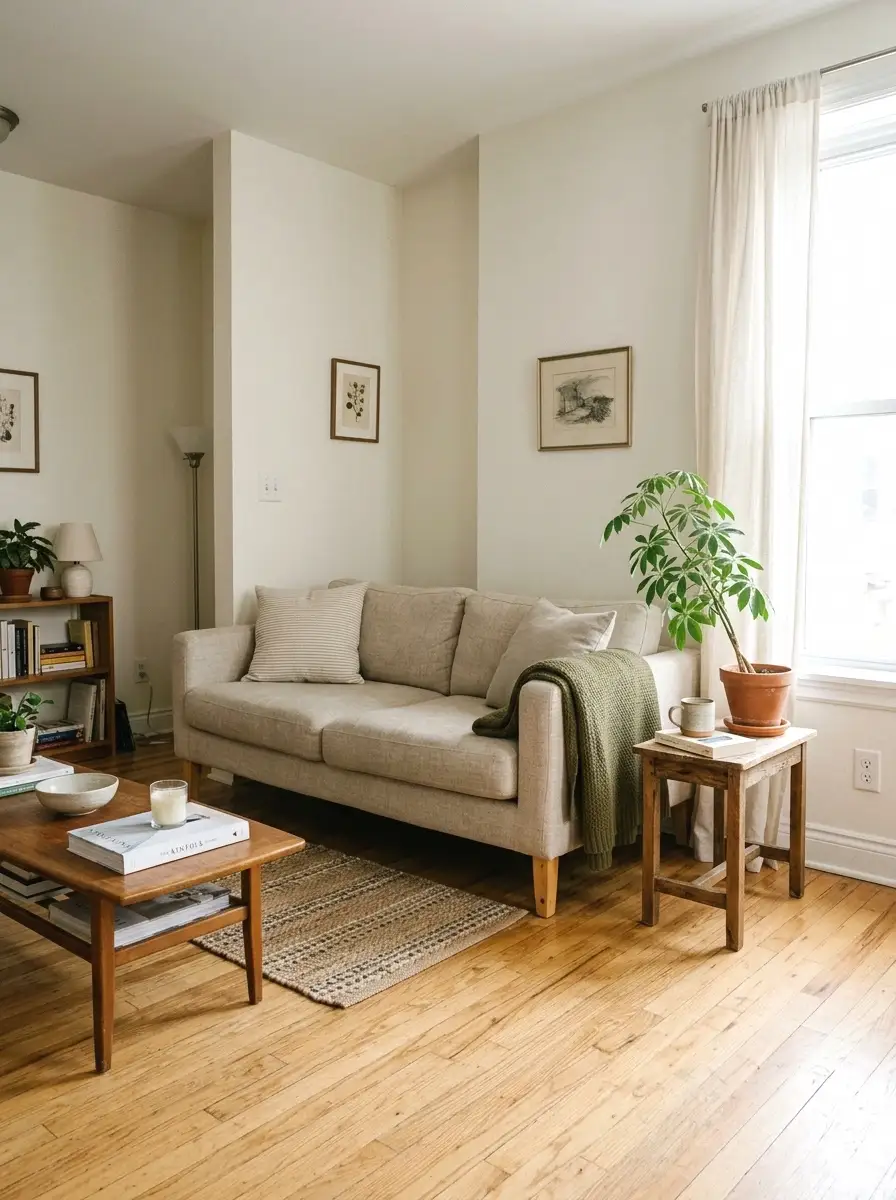
Sofas, chairs, and shelving units that sit directly on the floor make rooms look packed. Furniture with legs, even just three or four inches of clearance, shows the floor beneath it and creates visual breathing room. It’s subtle but it really does work.
This is something I was skeptical about but the difference in photos is obvious. You don’t have to replace everything. Swap one low piece first. A sofa with legs costs about the same as one without. If you already own a low sofa, add small wooden furniture risers for around $12 to $20.
6. Install Floating Shelves Instead of Bookcases
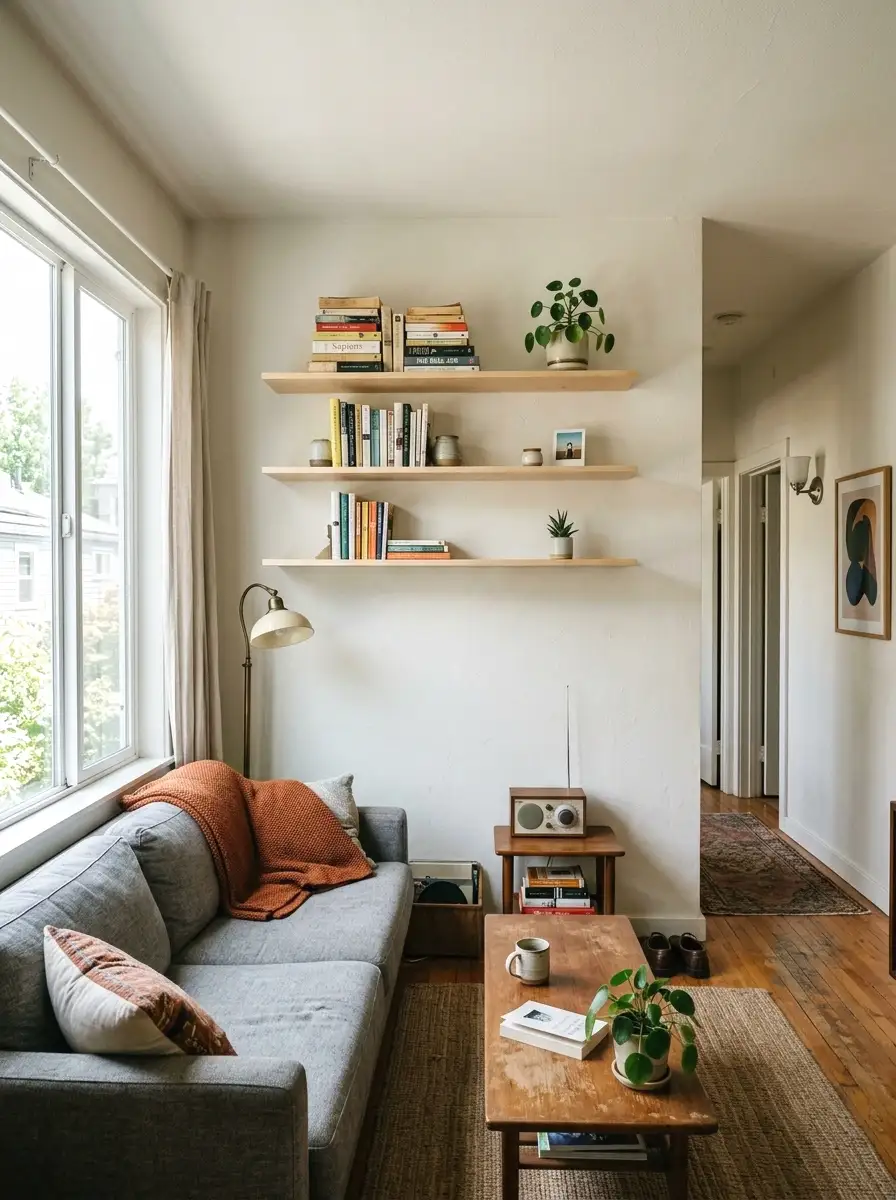
A bookcase on the floor eats square footage. Floating shelves go on the wall and keep your floor clear. You get the same storage capacity without losing that footprint, and the room stays walkable.
Go up as high as you can reach comfortably. Shelves installed close to the ceiling draw the eye up and make walls feel taller. A set of three floating shelves runs $30 to $60 at most hardware stores. White shelves on white walls almost disappear, which keeps the look clean. Warm wood on a light wall adds texture without visual weight.
More Ideas:
7. Use a Daybed Instead of a Sofa in a Studio
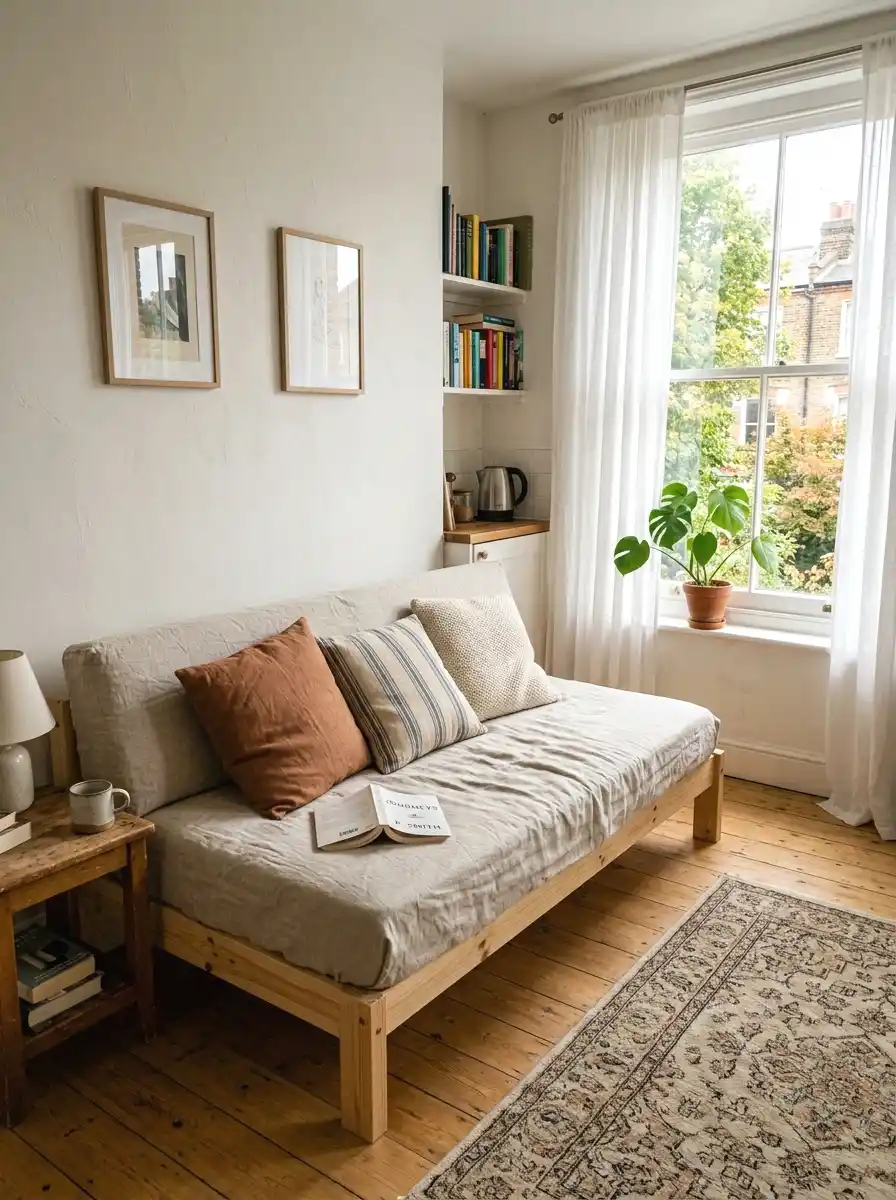
In a true studio apartment where the living area and sleeping area are the same room, a daybed pulls double duty without looking like a cot. During the day it reads as a sofa. At night it’s a bed. That’s a lot of function in one piece.
Look for a daybed frame with a backboard and side rail so it looks intentional, not temporary. Pair it with a fitted slipcover in a solid color like dusty blue, olive, or warm white. Add two or three throw pillows in a different texture. Total cost for a basic daybed setup is around $150 to $300.
8. Choose a Light Color for Your Largest Wall
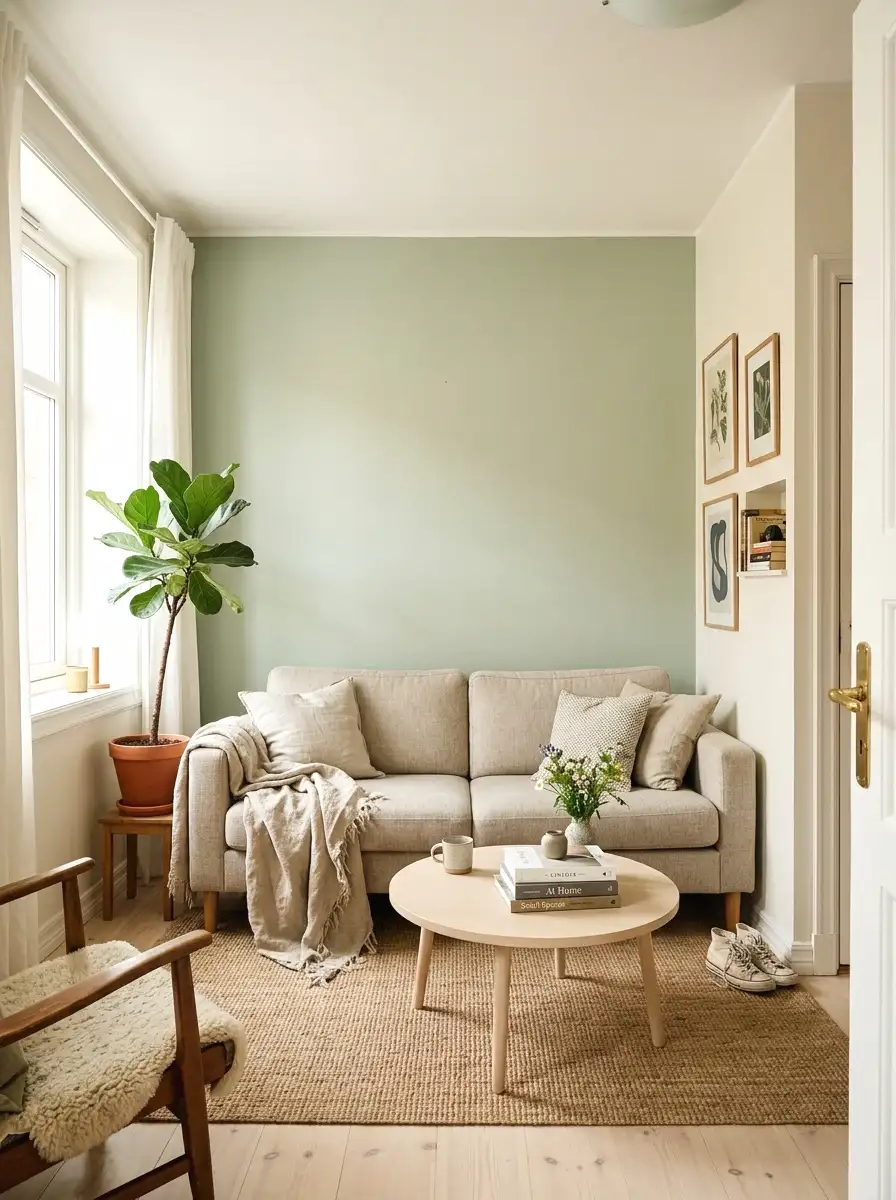
Dark walls feel warm but they close in fast in small apartments. If you’re allowed to paint, go with a warm off-white, very light greige (that’s a gray-beige mix), or pale sage green on your largest wall. These tones reflect light without feeling cold or clinical.
If you can’t paint, removable peel-and-stick wallpaper in a very light pattern does something similar. Look for ones with a tiny textured or geometric print rather than large florals, which can overwhelm a small room. Peel-and-stick panels run about $30 to $60 for one accent wall depending on square footage.
9. Replace Overhead Lighting with Layered Lamps
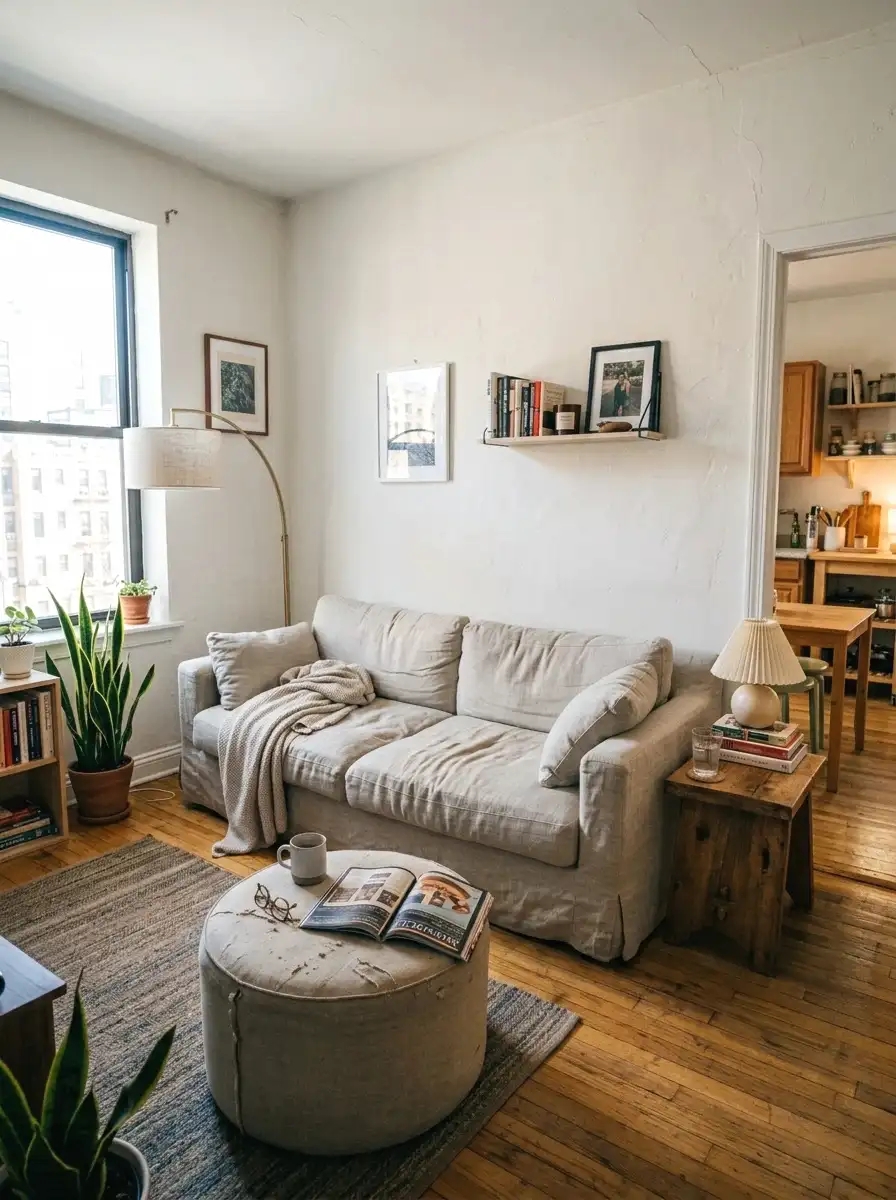
Single overhead lighting is the number one reason small apartments feel depressing at night. It casts everything in flat light and makes the ceiling feel low. Replace it, or supplement it, with three light sources at different heights.
Use a floor lamp in one corner, a table lamp on a surface, and either an LED strip under a shelf or a small plug-in sconce on the wall. Warm bulbs (2700K to 3000K on the Kelvin scale) are the key. That range gives off a soft amber tone that makes a room feel three times warmer after dark. A basic layered lighting setup costs $60 to $120.
If you want to see layered lighting that actually works in real apartment setups, it’s worth browsing a few examples before you buy.
10. Use a Rug to Anchor Each Zone
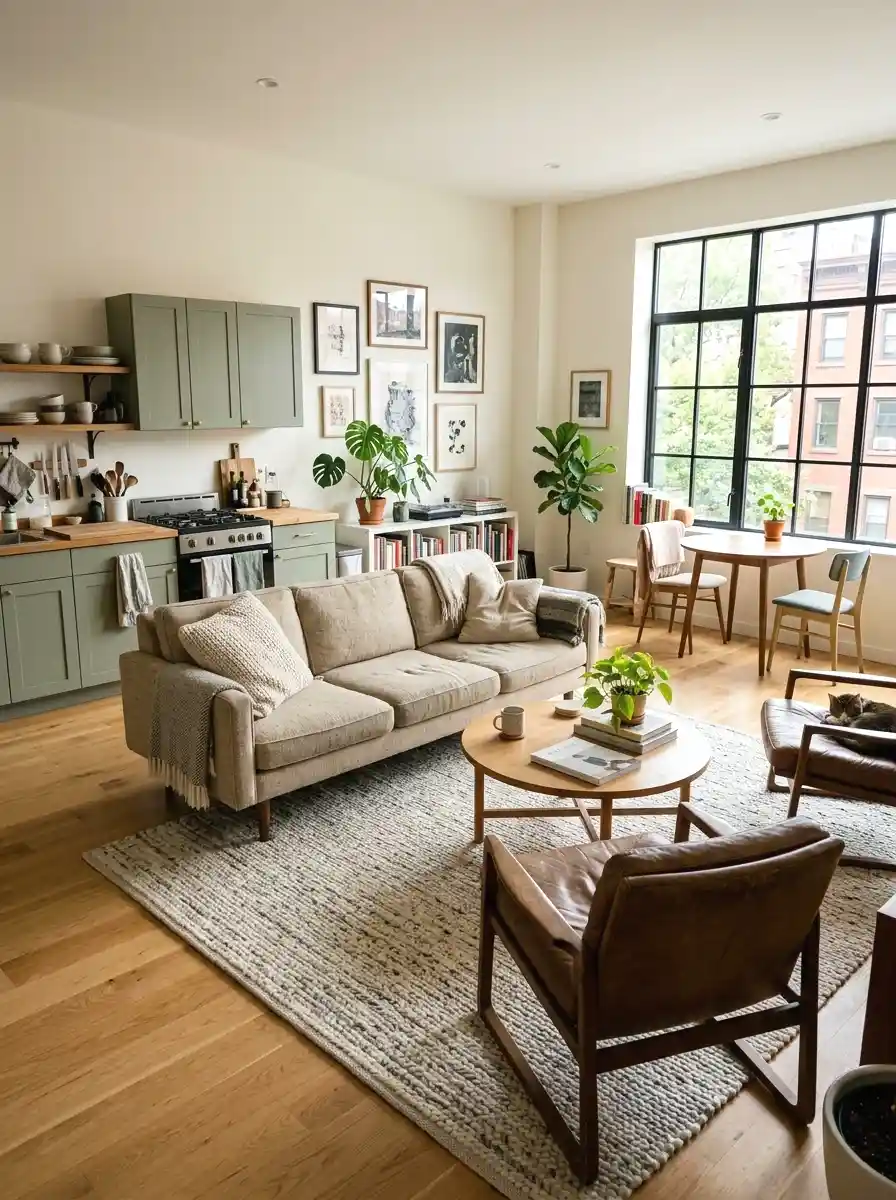
In an open-plan studio, a rug does something surprisingly important. It tells the eye where one zone ends and another begins. Without it, everything blurs into one continuous floor and the space feels formless.
In a living area, the rug should be large enough that the front legs of your sofa and chairs sit on it. A rug that’s too small floats in the middle of the room and looks like a mat. For a typical apartment living room, an 8×10 rug is often the right size. Budget rugs in solid tones or low-key patterns run $80 to $200 on sale.
More Ideas:
11. Go Vertical with Your Kitchen Storage
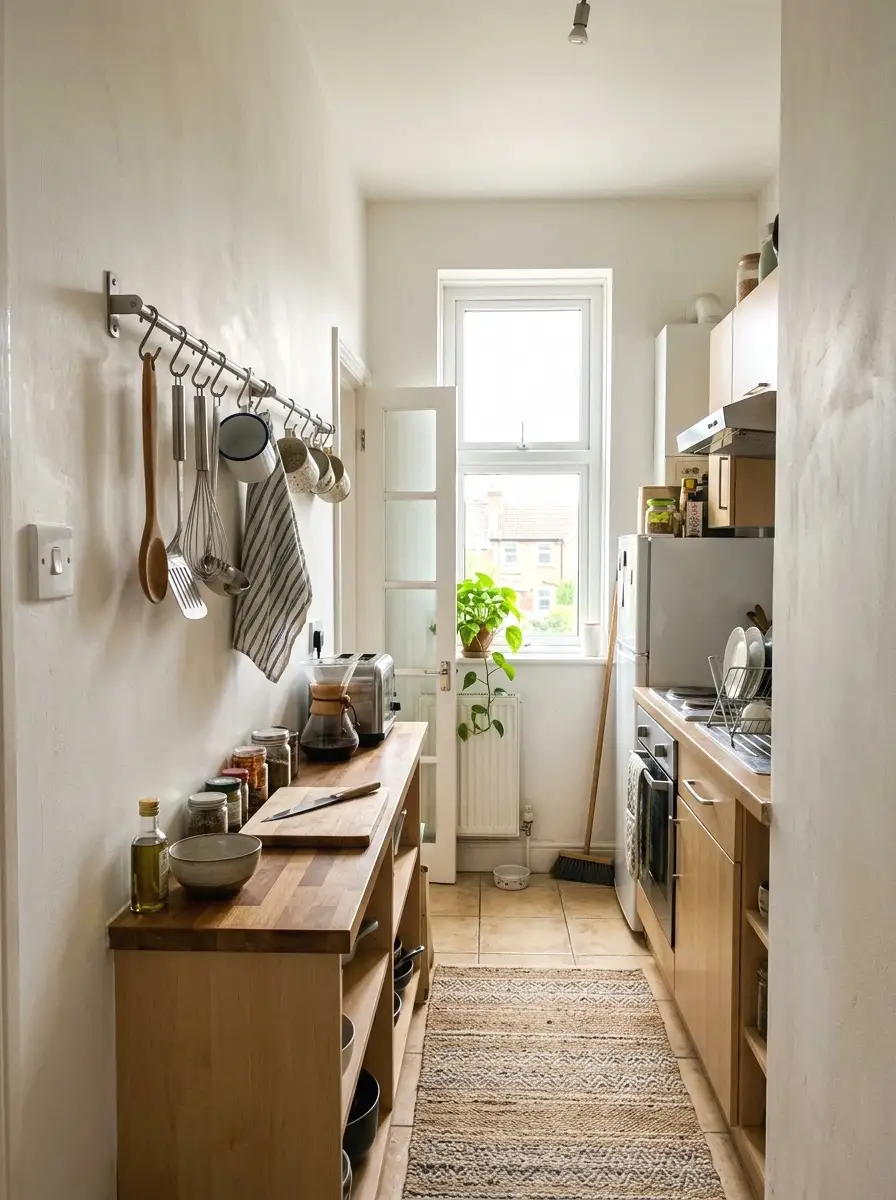
Cabinet space in small apartment kitchens runs out fast. The answer is the wall above your counter. A simple mounted rail with hooks and S-hooks holds utensils, small pans, mugs, and dish towels without taking up any counter or drawer space.
This one is so underrated, especially in galley kitchens where counter space is basically one long strip. IKEA’s KUNGSFORS rail system is around $15. You can also use a pegboard painted to match the wall for a cleaner look. Add baskets or hooks to the pegboard for $10 to $20 more and you’ve built a full organizer for under $35.
12. Try a Room Divider to Create Zones
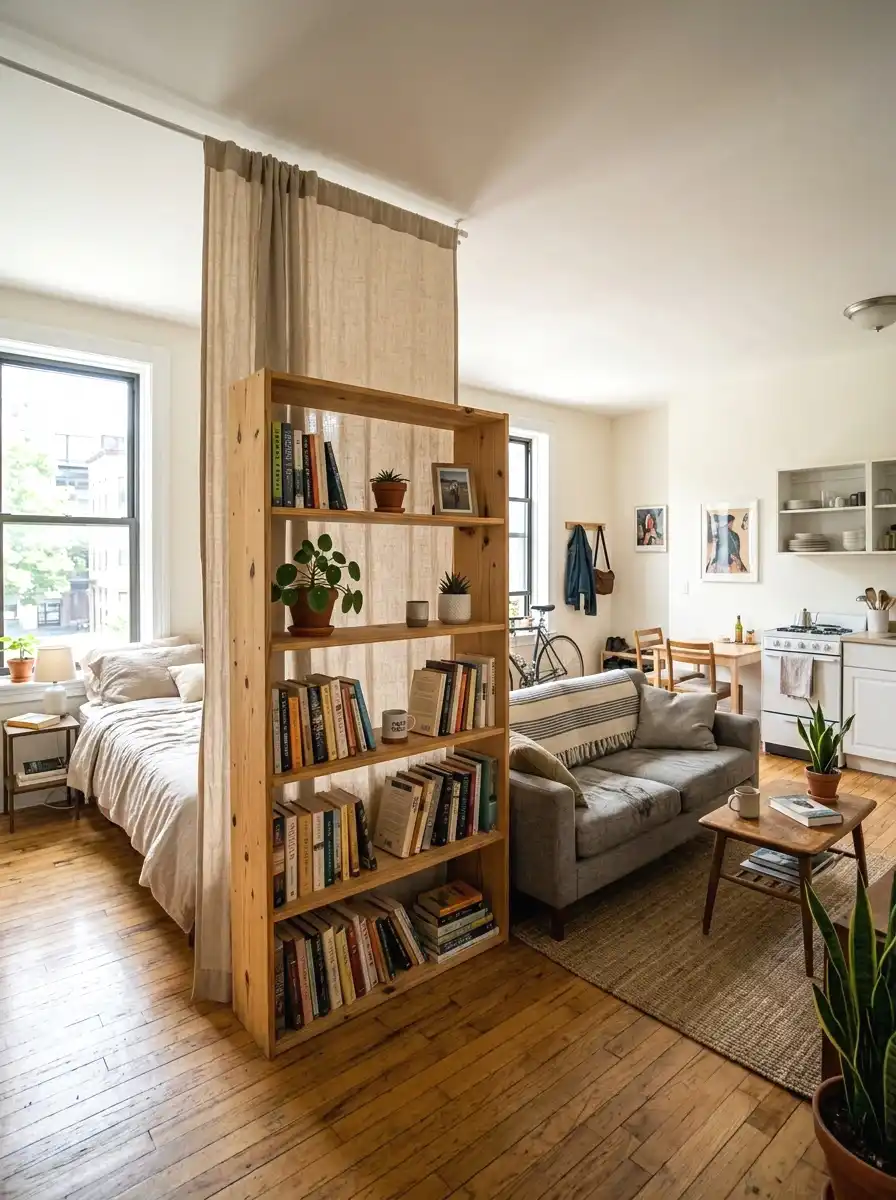
Open studio apartments feel larger when you define separate zones, but the last thing you want is a wall cutting through the space. A bookcase, curtain panel, or open shelving unit used as a divider does the job without permanently breaking up the room.
A curtain hung on a ceiling-mounted track is the most flexible option. It slides open when you want the full space and closes to separate sleeping from living. Ceiling curtain tracks run about $40 to $80. For a more permanent look, a half-height open bookcase placed perpendicular to the wall creates a divider and extra storage at the same time.
If you’re working through the full layout, there’s a lot to learn about dividing a studio without losing space from people who’ve done it in real apartments.
13. Use Under-Bed Storage Fully
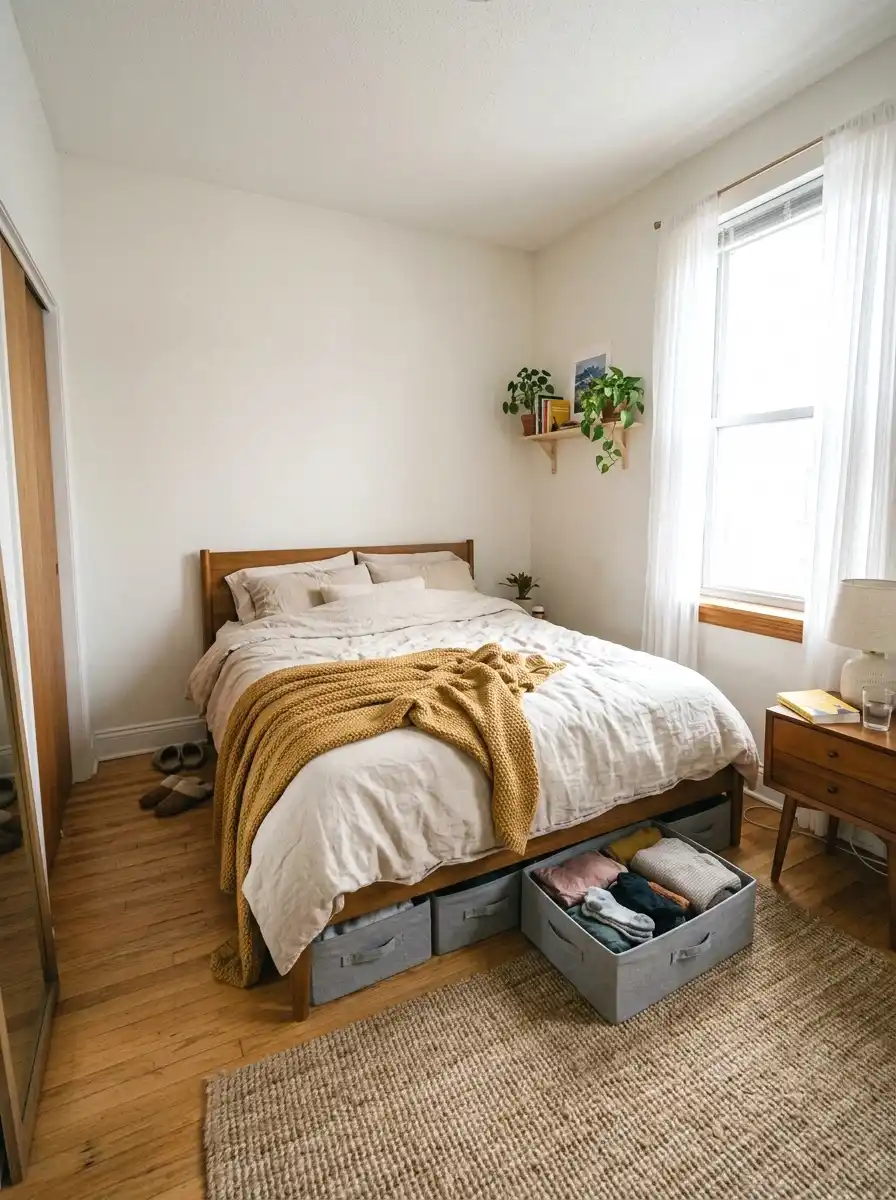
The space under your bed is free square footage you’re probably not using. A bed with built-in drawers is the best version of this, but flat rolling bins work just as well and cost almost nothing.
Get low-profile bins with lids, around four to five inches tall, and use them for seasonal clothes, extra bedding, or shoes. Vacuum storage bags can compress bulky items like winter coats or extra pillows down to almost nothing. A set of four under-bed storage containers runs $20 to $35. It’s not exciting but (took me ages to figure this out) it’s one of the easiest wins in a small apartment.
14. Put a Bench at the End of Your Bed
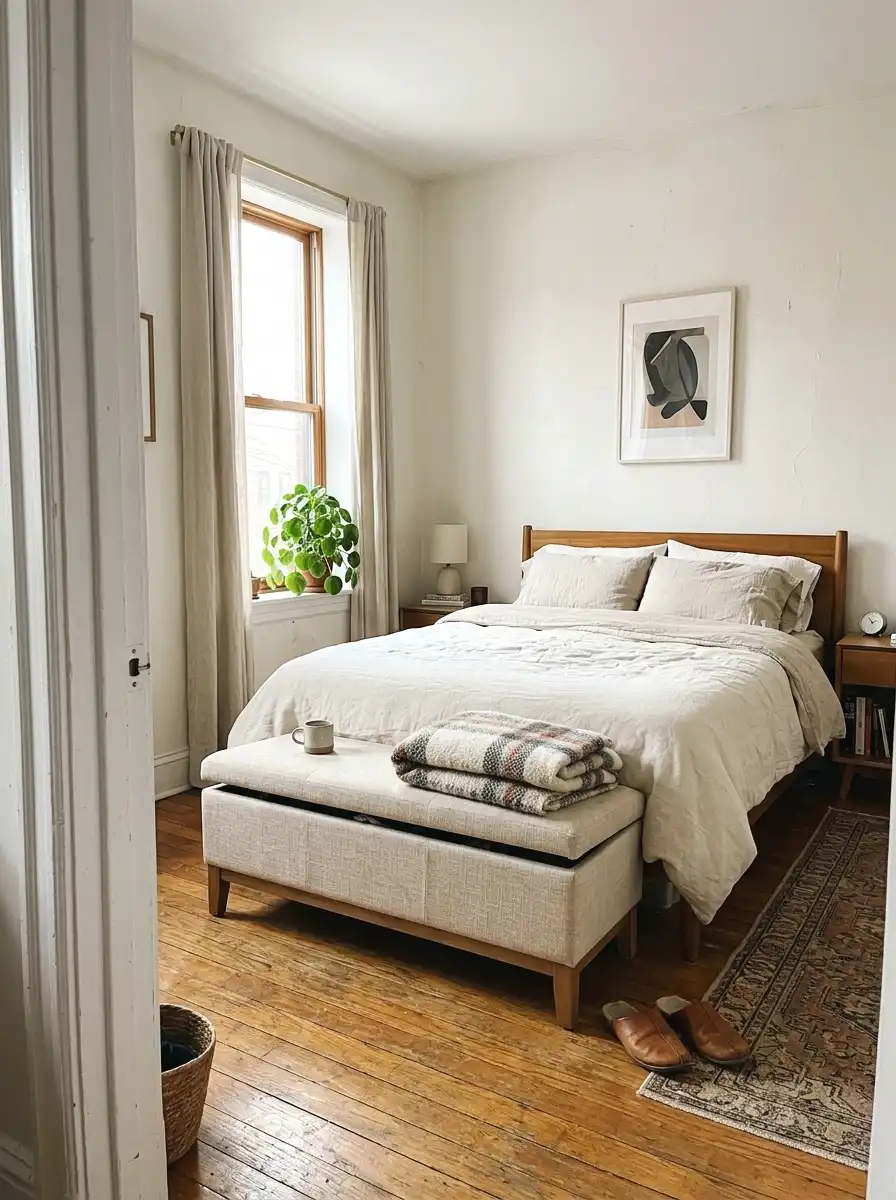
A storage bench at the foot of the bed adds seating, a place to set things down, and hidden storage all in one piece. In a bedroom too small for a dresser, this can hold folded items inside while looking like actual furniture on the outside.
Look for upholstered benches with a hinged lid. Sizes around 42 to 48 inches wide fit most queen beds without blocking the pathway. These run $70 to $150 depending on material. Linen and boucle textures are easy to maintain and don’t show every mark the way smooth vinyl does.
More Ideas:
15. Hang Artwork in a Vertical Column
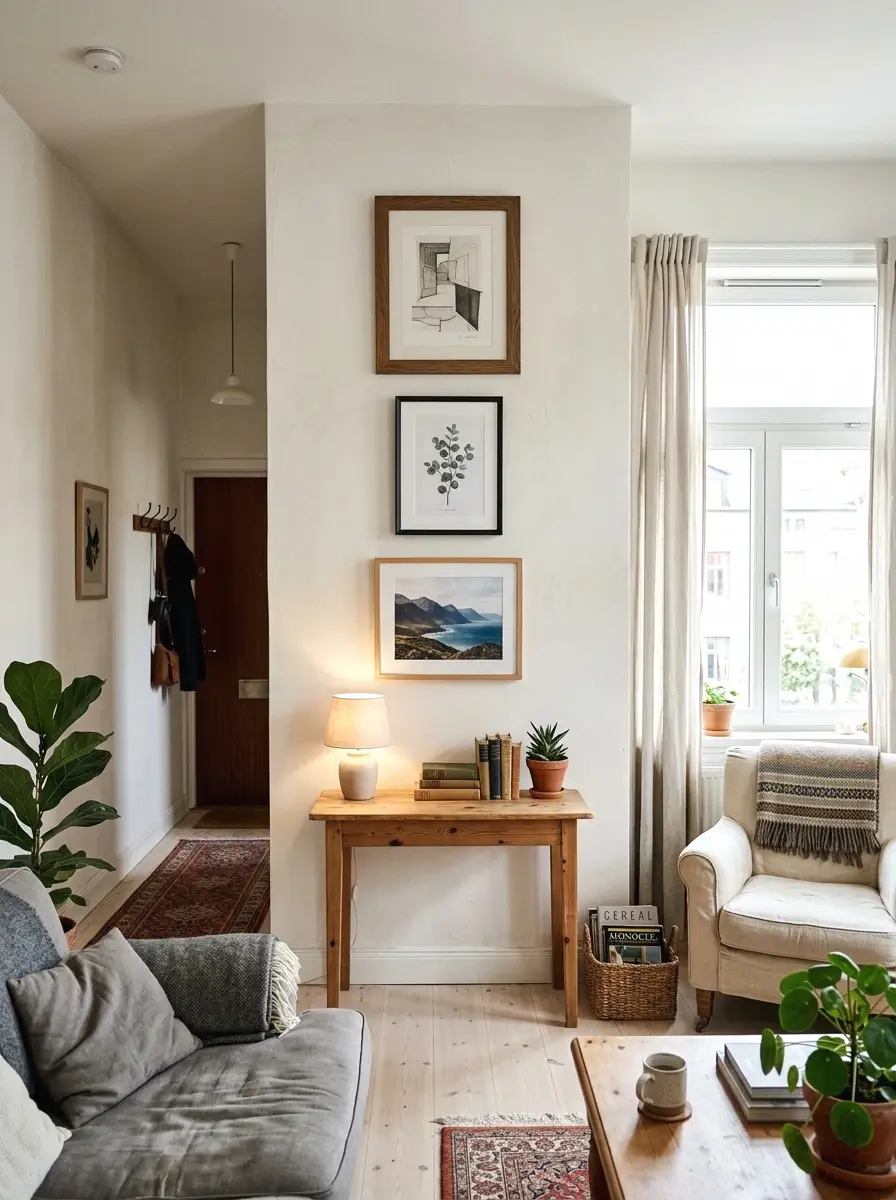
Most people hang art at eye level in a horizontal row. In a small apartment, hanging pieces in a vertical column instead draws the eye up and makes ceilings feel taller. It also uses less wall width, which matters when walls are short.
Three pieces stacked from chest height to near the ceiling in a narrow hallway or above a console table looks intentional and interesting. Use matching frames for a clean result or mix black and natural wood for something more casual. Frame sets at discount home stores run $10 to $30 each.
16. Add a Pegboard in the Entryway
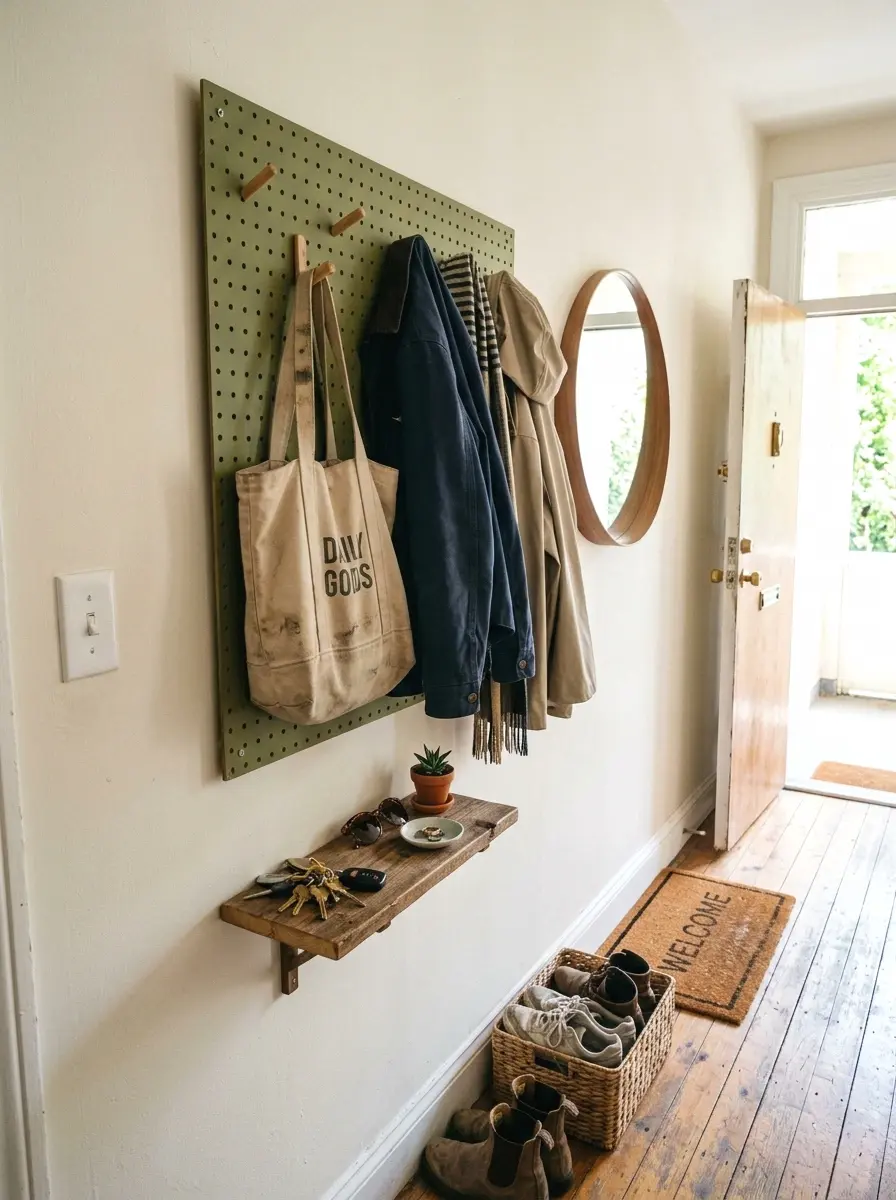
Entryways in apartments are almost always too small for furniture. A pegboard mounted on the wall near the door solves the whole problem. Hooks for coats and bags, a small shelf for keys and mail, and a mirror to check yourself on the way out.
A 24 by 24 inch pegboard costs around $15 at hardware stores. Paint it to match the wall and it blends in. Paint it a contrast color and it becomes a feature. Add a mix of hooks, small shelves, and baskets for another $20 to $30. Total for a full entryway organizer is around $40 to $50.
If your entry is really cramped, there are more approaches to pulling off an apartment entryway on a small budget that go beyond the pegboard.
17. Use Transparent or Acrylic Furniture
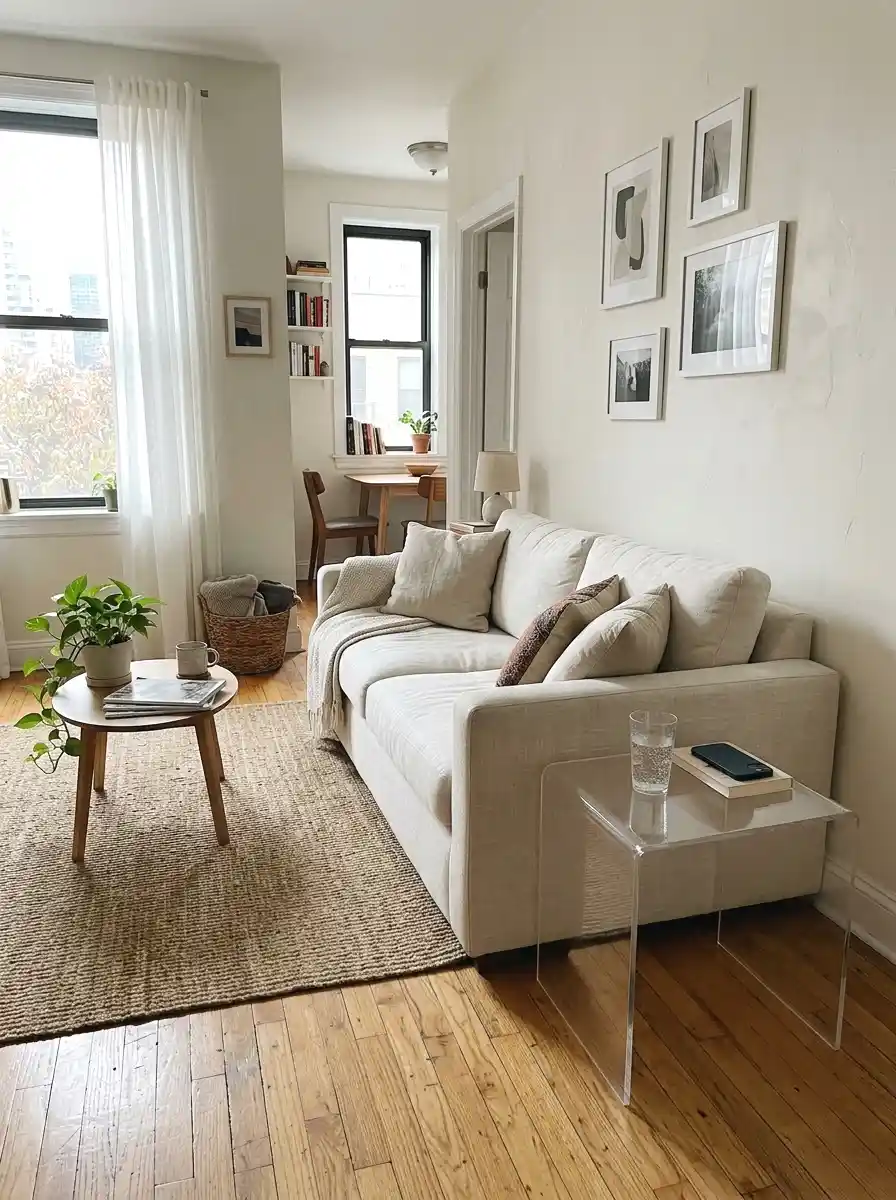
Furniture you can see through takes up less visual space than solid pieces. An acrylic chair, a glass coffee table, or a lucite side table does its job without blocking the eye’s path across the room. It’s a small thing but it makes a real difference in tight spots.
Acrylic side tables run about $30 to $60. A ghost-style acrylic chair is around $80 to $150. These work especially well in small bedrooms or studios where there’s one main walking path that solid furniture would interrupt. Clean with a microfiber cloth since acrylic scratches with paper towels.
18. Install a Murphy Bed If You Can
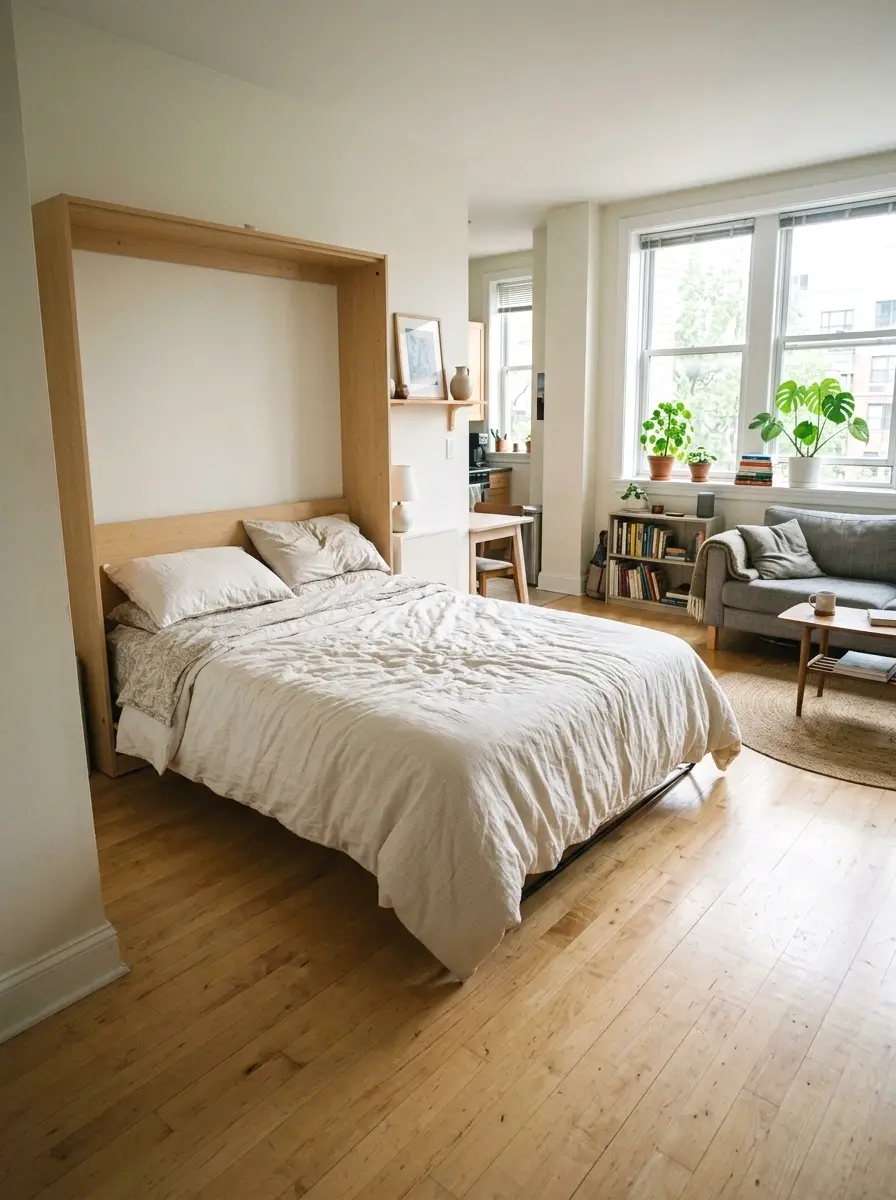
If you’re in a studio and sleep takes up most of your square footage, a wall-mounted Murphy bed is the biggest possible win. During the day it folds up flush against the wall. You get your entire floor back. At night it folds down in about 30 seconds.
Murphy bed kits from places like IKEA or online furniture retailers run $300 to $600 for a DIY version. It’s at the top of the budget range here but nothing else frees up as much space. Some landlords will allow this if you agree to restore the wall when you leave. Worth asking.
For a full breakdown of Murphy bed and Murphy bed alternatives in genuinely tight apartments, there are setups that show exactly how much floor you get back.
More Ideas:
19. Choose Slim-Profile Furniture
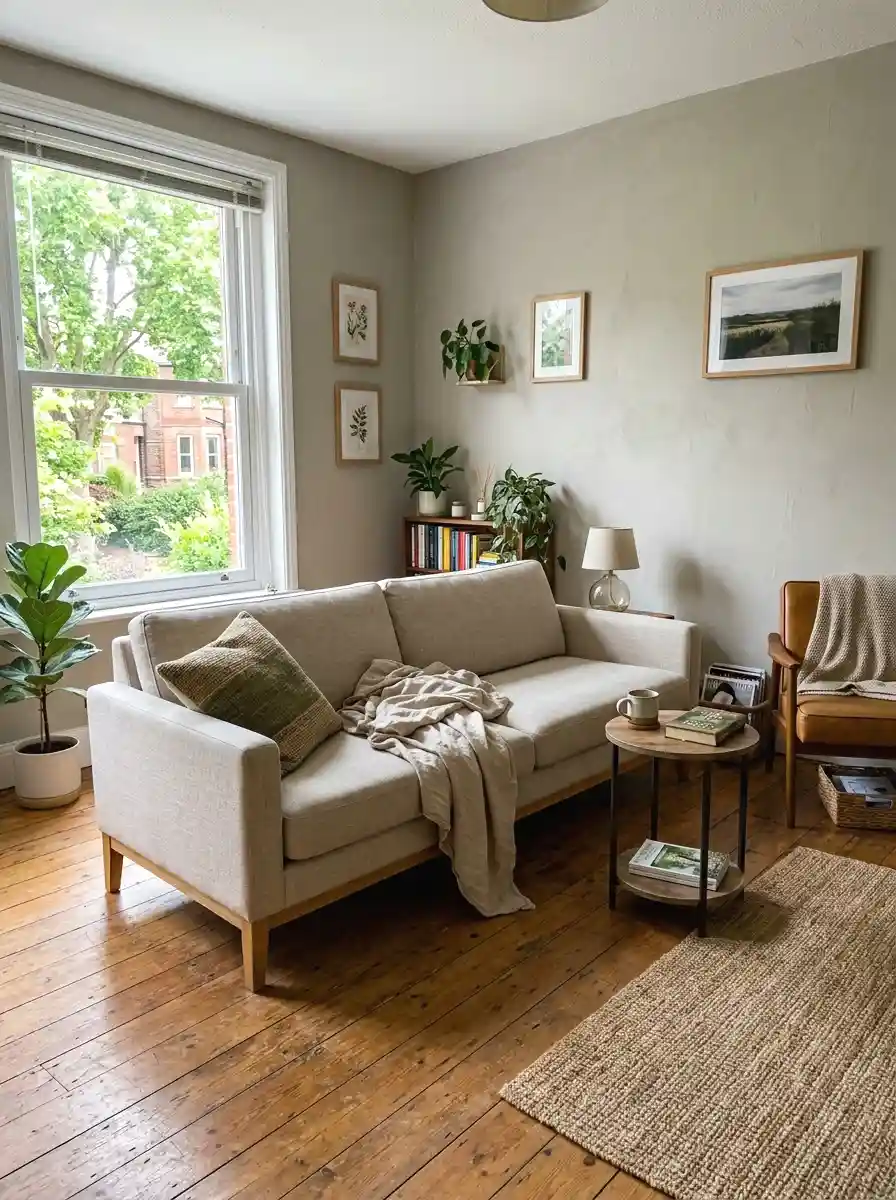
Furniture scale matters enormously in small apartments. A deep sectional that fits in a large house will swallow a 300 square foot living room. Look for sofas with a seat depth of 32 to 34 inches instead of the standard 38 to 40 inches. Same function. Much smaller footprint.
The same applies to dining chairs. Slim metal or bentwood chairs take up a fraction of the visual and physical space of upholstered dining chairs. Apartment Therapy forums recommend measuring your actual walking paths (aim for at least 36 inches of clearance) before buying any large furniture.
20. Use Mirrored or Glass Cabinet Fronts
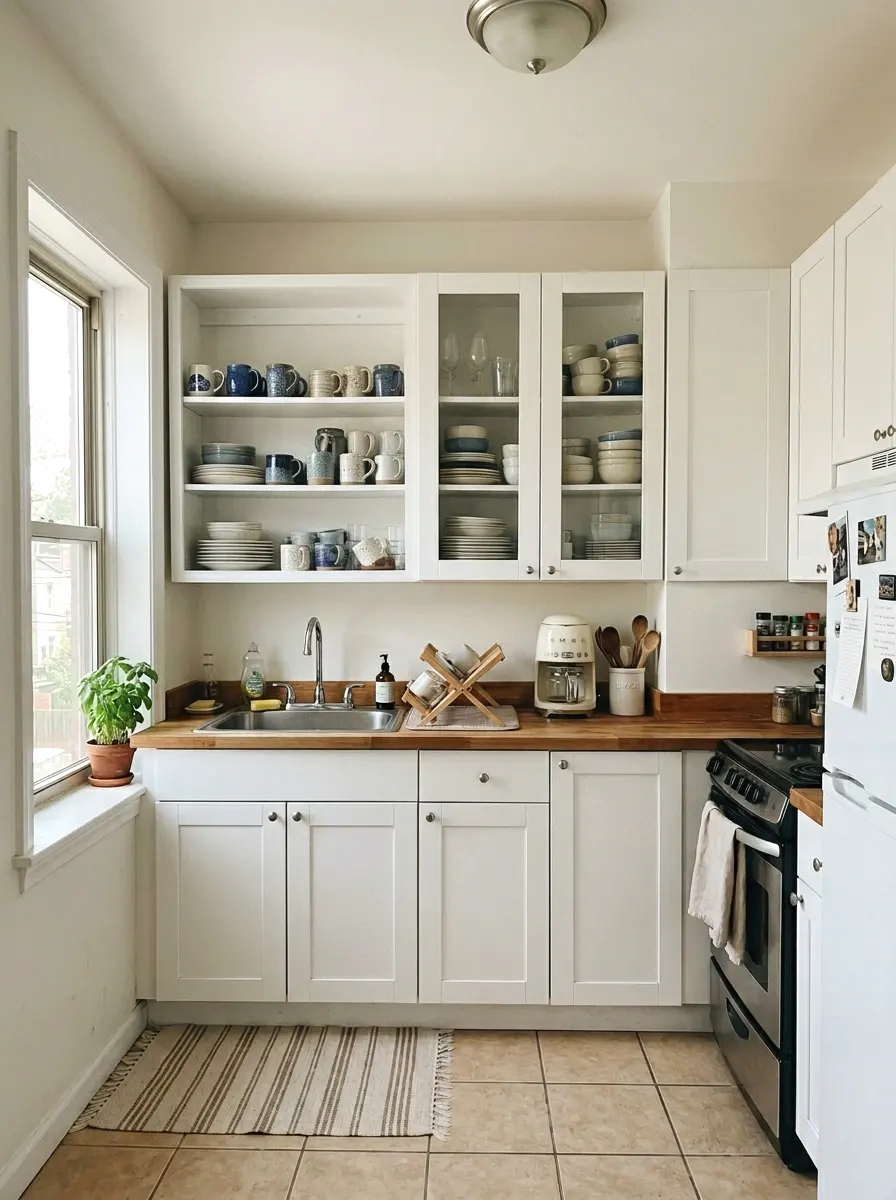
If you have standard flat-front kitchen or bathroom cabinets, replacing just one or two doors with mirrored or glass-panel fronts breaks up the visual weight. It gives the eye something to rest on and reflects light back into the room.
You don’t have to replace all the doors. Even one or two glass-front cabinets in the kitchen feels intentional and adds depth. Glass inserts for cabinet doors can be cut at most hardware stores for $10 to $20 per piece. This works best if the inside of the cabinet is tidy enough to see.
21. Try Window Film to Add Privacy Without Curtains
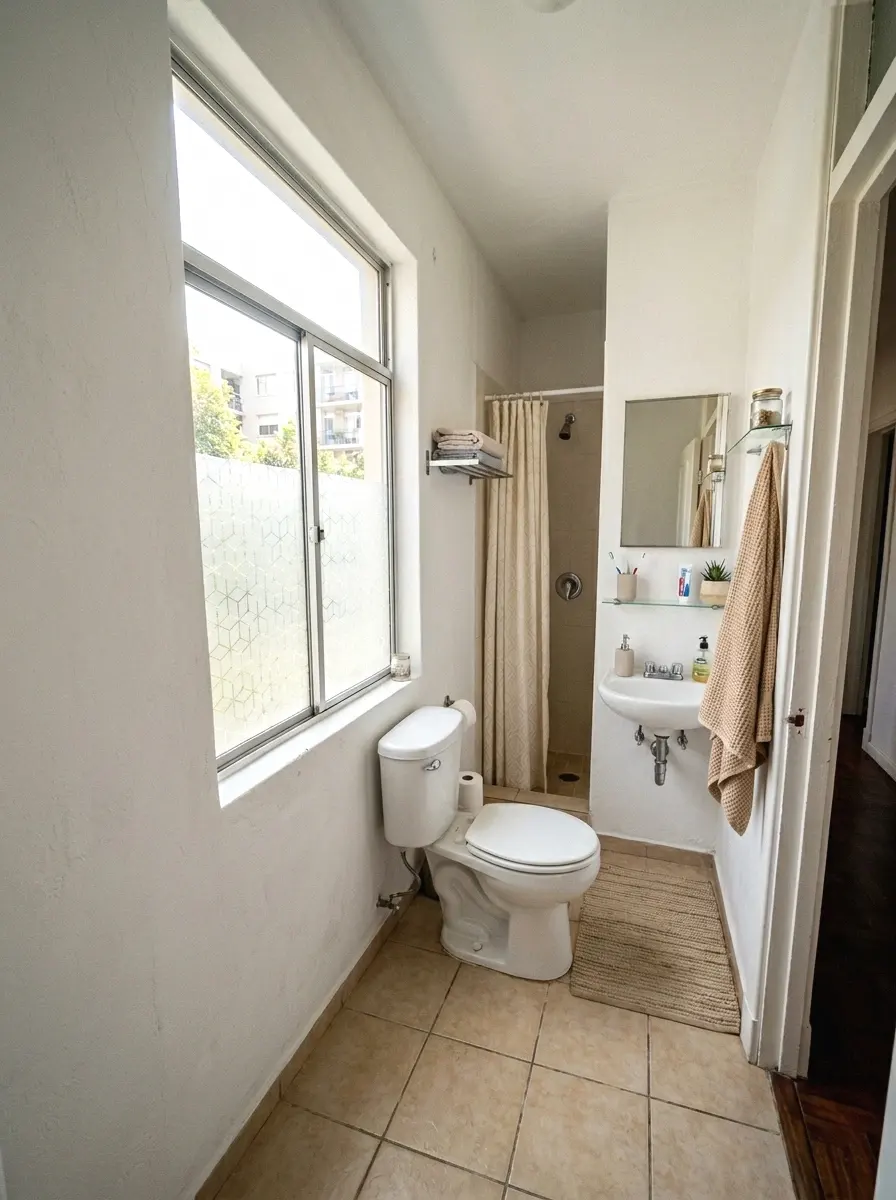
Heavy curtains on small windows block light and make rooms feel smaller. Frosted or patterned window film gives privacy in bathrooms or street-facing windows while letting full light through. No fabric, no rods, no visual clutter.
Window film rolls cost $15 to $30 and apply with water, no adhesive. They come off cleanly when you leave. There are frosted solids, geometric patterns, and botanical prints depending on how much character you want. This works well in small bathrooms where curtains would look odd and block the only natural light source.
22. Mount Bedside Shelves Instead of Nightstands
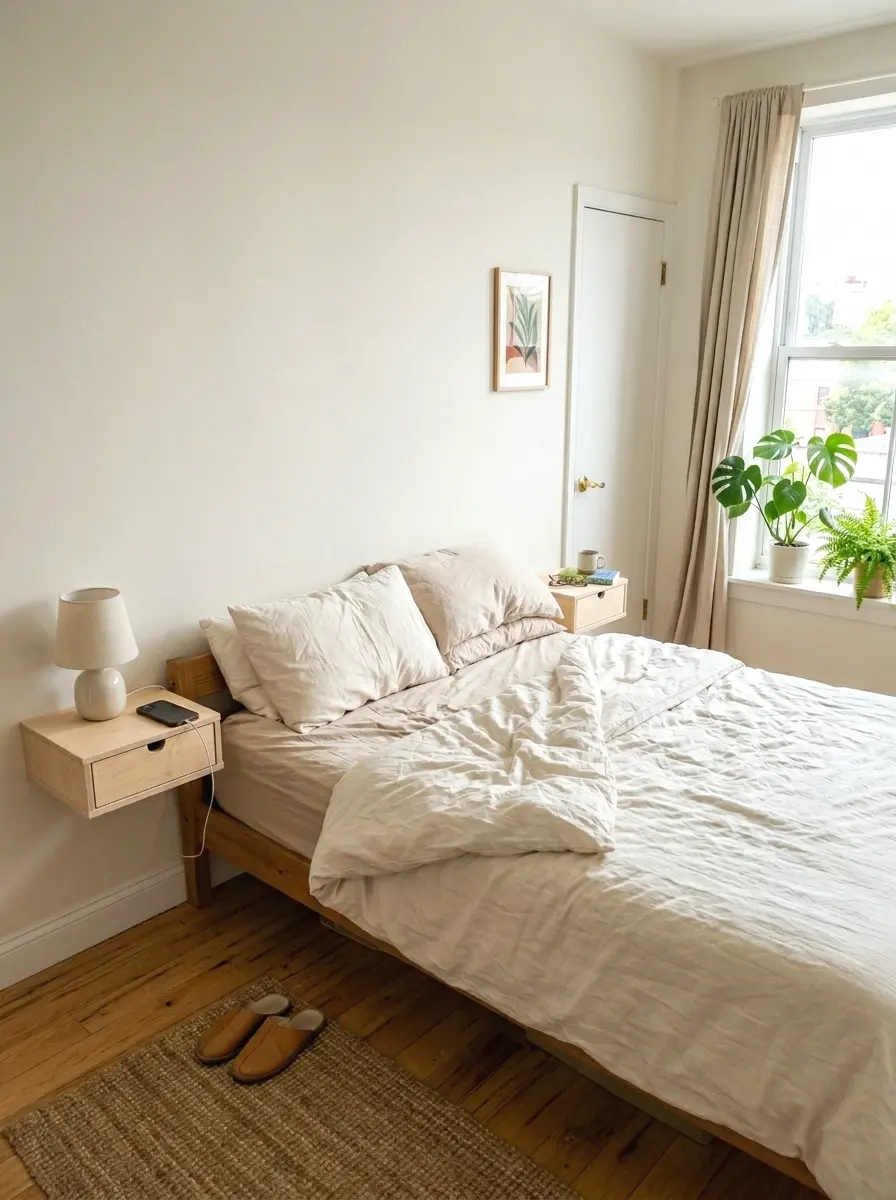
Nightstands in a small bedroom take up floor space on both sides of the bed, which eats into the walking path fast. Wall-mounted bedside shelves do the exact same job and keep the floor completely clear.
A simple floating shelf six to eight inches deep, mounted at mattress height, holds a lamp, a phone, a glass of water. That’s everything a nightstand does. Two shelves cost about $20 to $40. Add a small peel-and-stick hook below each one for hanging headphones or reading glasses. Seriously works.
More Ideas:
23. Use a Fold-Down Wall Desk
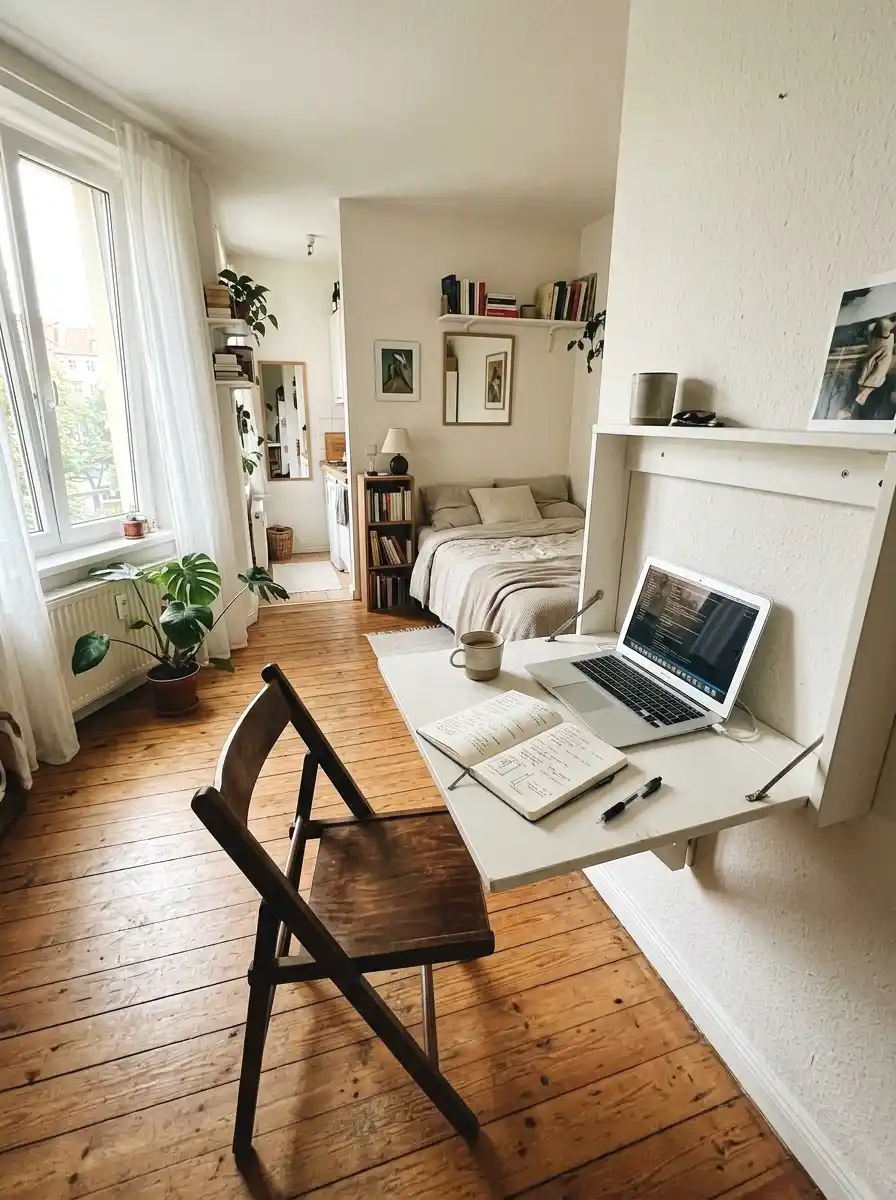
If you work from home in a small apartment and don’t have a separate office, a fold-down wall desk is the most space-efficient option there is. When you’re working, it’s a desk. When you’re done, it folds flat against the wall and completely disappears.
Most fold-down desks mount with four screws and fold out to a 24 by 18 inch or 30 by 18 inch surface. They hold a laptop comfortably and some include small shelves above. These run $80 to $180 depending on material. Pair it with a wall-mounted or folding chair that also stores flat and the whole setup takes up almost no space when closed.
The same folding principle applies to dining too — fold-down table ideas for tight rooms can replace a full dining setup without sacrificing function.
Final Thoughts on Small Space Design Hacks
You now have 23 specific, practical changes you can make to your apartment without a contractor or a landlord’s blessing. Most of them come down to three things: using vertical space instead of floor space, letting more light move through the room, and choosing furniture that doesn’t block sightlines. Those three ideas solve about 80% of small apartment problems.
Start with one thing this weekend. Not the whole list. Pick the lighting or the mirror or the curtain rod height. Make that one change, live with it for a few days, and see what shifts. Real progress in a small apartment happens in steps, not overhauls.
If you want to keep building on that momentum, there’s a solid collection of small apartment changes that compound fast when you apply them room by room.
If you want more ideas like these, homelypop.com covers real home setups across every room and budget. There’s a lot more where this came from.