

Apartment Decor for First-Time Renters Who Have No Idea Where to Start

You just got your keys and the apartment feels like a stranger’s place, not yours. Boxes everywhere. Bare walls. No idea what to hang, what to buy, or what’s even allowed. That panic is normal.
I dug into what actually works for renters figuring this out for the first time, pulling from real budget breakdowns, renter forums, and store pricing at places like IKEA and Target. This covers lighting, furniture, walls, and layout for small apartments in the $100 to $500 range.
This guide is for renters on a tight budget who want their space to feel like home fast. It’s not for anyone doing a full renovation. You don’t need a big budget to make real progress here.
By the end, you’ll know exactly what to buy first, what to skip, and how to make your apartment feel like yours without losing your deposit.
What to Know Before You Start Apartment Decor
- Most leases ban drilling into walls, so removable hooks matter
- Lighting changes a room more than paint ever will
- A $200 rug often does more than a $500 couch
- Landlords rarely repaint between tenants, budget for it yourself
- Command strips hold less weight than people think, check limits
- Buying furniture in stages beats one big splurge
- Blackout curtains pay for themselves in energy savings
- Storage bins under the bed solve most small closet problems
1. Lighting: The Cheapest Upgrade With the Biggest Payoff
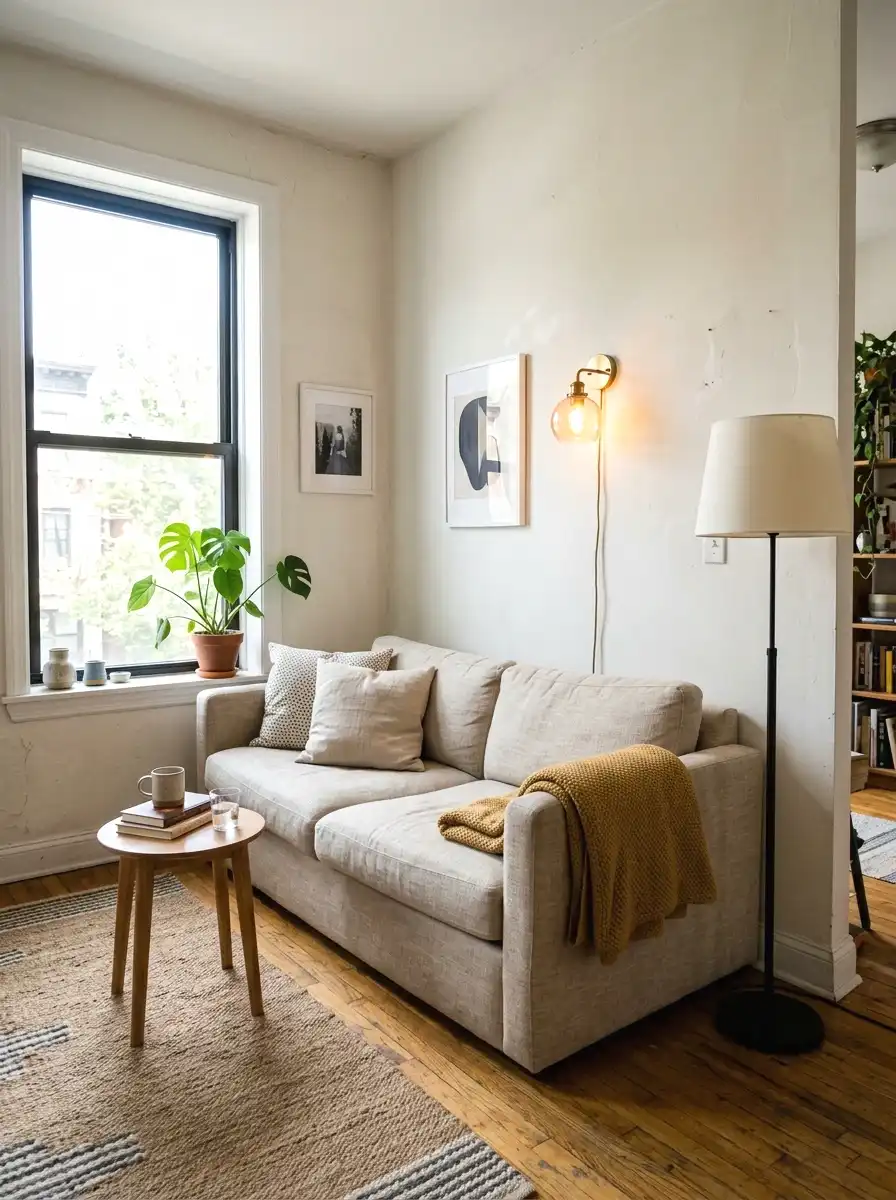
Most apartments come with one harsh overhead light and that’s it. Swapping that single bulb for a warmer tone, something around 2700K, changes how the whole room feels within minutes. It’s the cheapest fix in this entire guide and most people skip it.
I was skeptical about this one but a $12 bulb from Home Depot made my living room feel less like a waiting room. Add a floor lamp for $35 to $60 and a couple of plug-in sconces near the couch. Total cost usually lands under $100.
Here’s what actually happens once you layer lighting. The room stops feeling flat. Shadows soften, corners stop looking empty, and the space photographs better too if you ever want to sell things or post it online.
Skip anything that needs hardwiring since most leases don’t allow it anyway. Stick to lamps, plug-in fixtures, and smart bulbs you can control from your phone. It’s a small investment that changes the whole mood of a rented space.
More Ideas:

2. Furniture: What to Buy First and What Can Wait
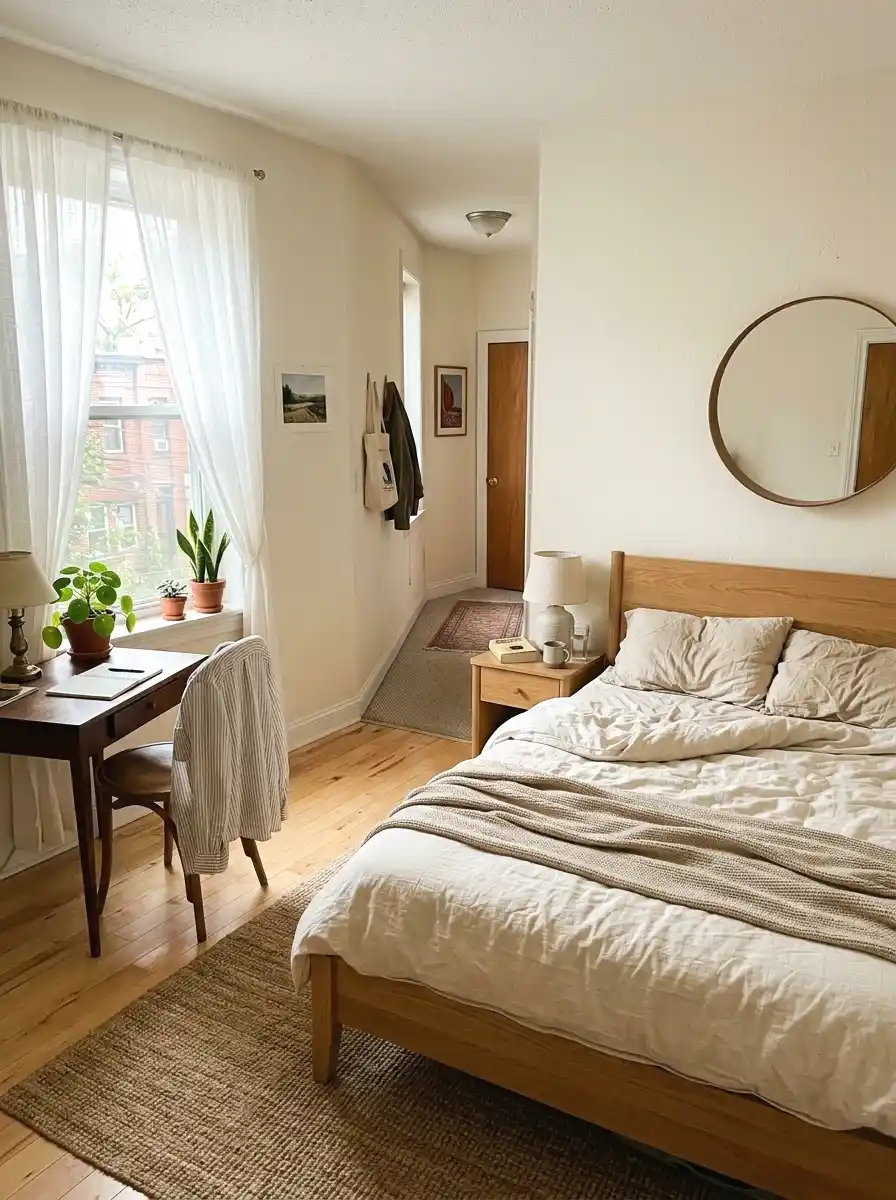
You don’t need to furnish every room in month one. Start with a bed frame, a couch, and one table. Everything else, including that accent chair you’re eyeing, can wait until you’ve lived in the space a few weeks and know how you actually move through it.
A basic full size mattress runs $200 to $400 at places like IKEA or Wayfair, and a simple frame adds another $80 to $150. That’s a real number, not a guess, and it’s the one purchase worth spending a little more on since you’ll use it every night.
So here’s the thing nobody tells you. Renters often buy a couch too early and regret the size once they see how it fits the room. Measure your space first. A 70 inch loveseat fits most studio apartments better than a full sized sofa.
Hold off on shelving units, side tables, and decorative pieces. Those come later once you understand which corners of the apartment actually get used.
3. Walls: Making Them Yours Without Losing Your Deposit
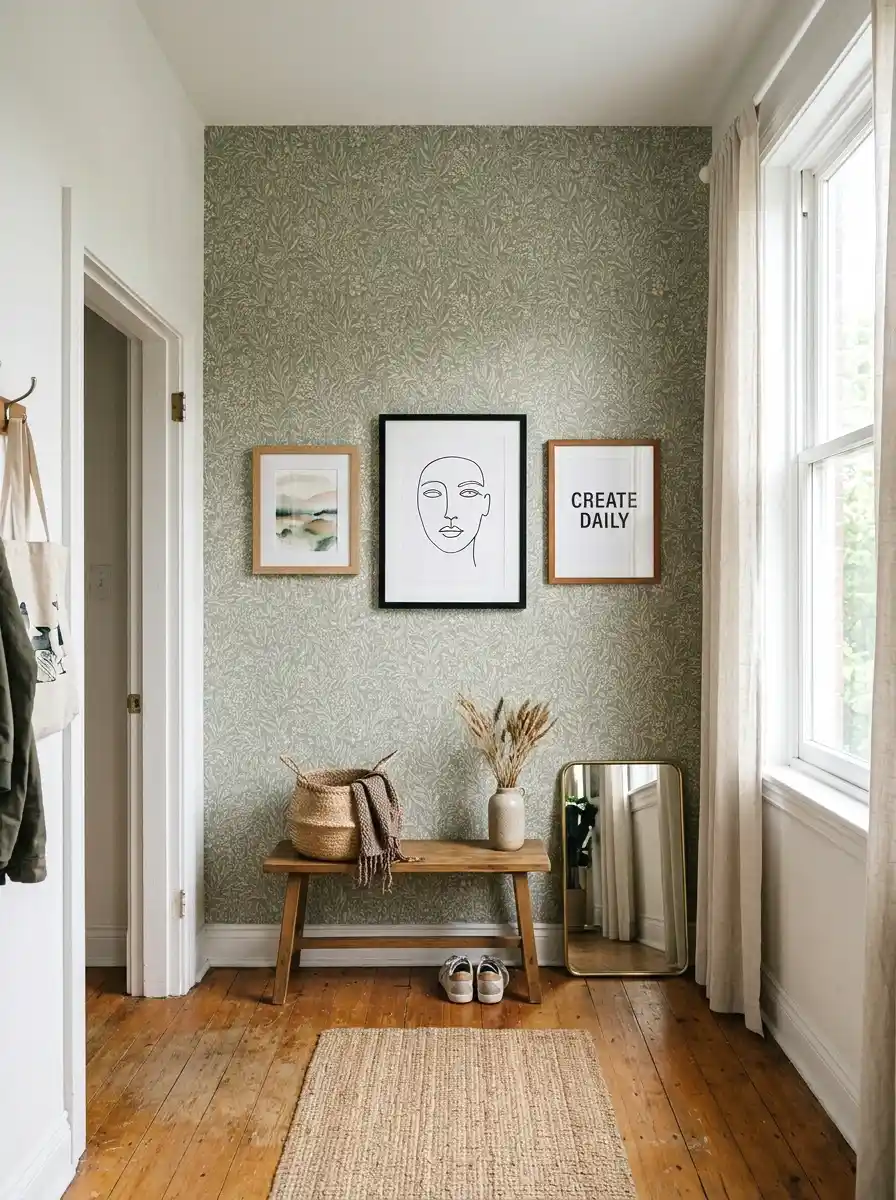
Bare white walls are the number one complaint from first-time renters. The fix isn’t paint, most leases don’t allow it or charge a repainting fee when you move out. Removable wallpaper and command strip frames solve this without touching your deposit.
Peel and stick wallpaper from Target runs $25 to $40 per roll and covers one accent wall easily. It comes off clean if you follow the instructions and don’t rush it. Command strips hold picture frames up to about 16 pounds, so check the weight limit before hanging anything heavier.
I tried this in my own space last year and was surprised how much three framed prints changed the entryway. Group them low, around eye level, not high near the ceiling like a lot of tutorials show. It makes the space feel more lived in.
Mirrors work well here too. A $60 leaning mirror from Amazon adds light and makes a small apartment look bigger without any drilling at all.
More Ideas:
4. Layout: Small Space Tricks That Actually Work
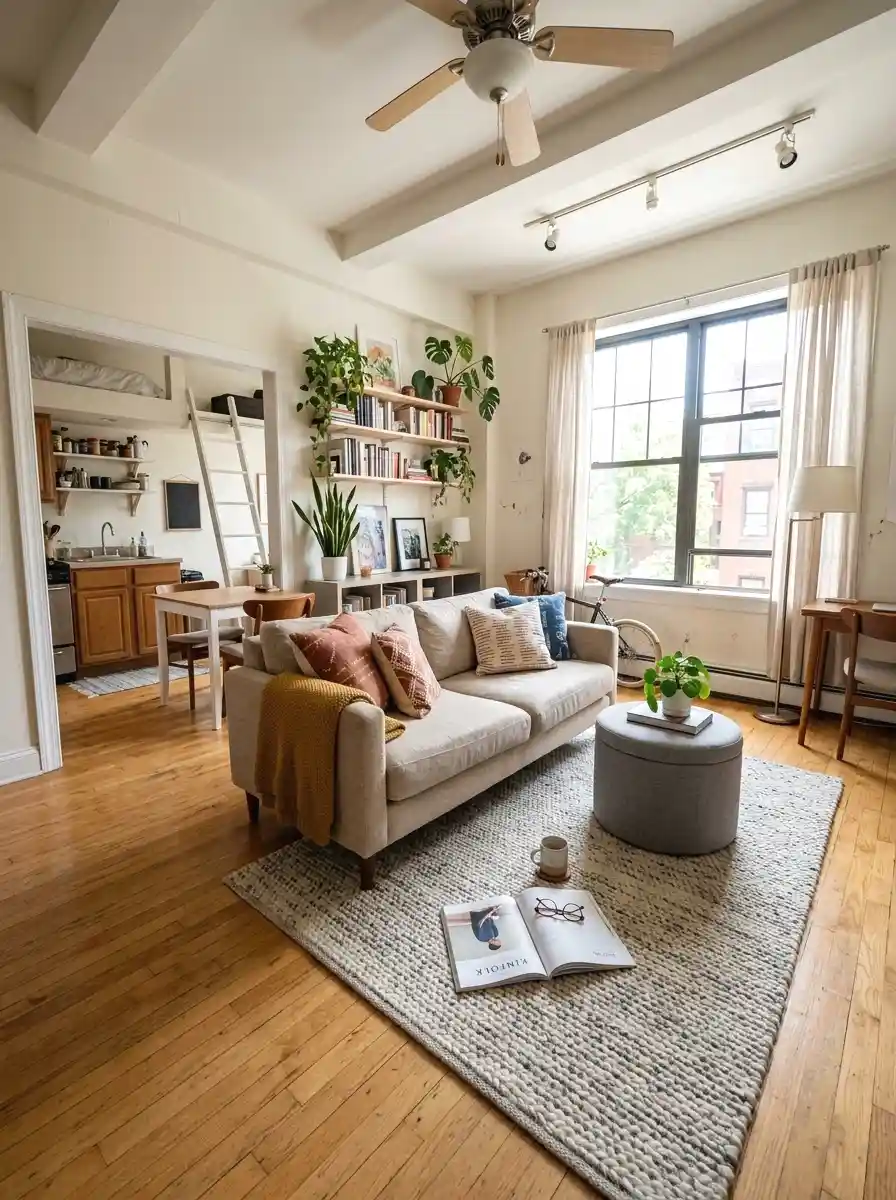
Apartment layouts rarely make sense right away. The couch that looked great in the showroom photo might block your only window once it’s actually in the room. Walk the space empty first and picture how you move through it before buying anything.
Float furniture away from walls when you can. It sounds backwards but pulling a couch a few inches off the wall and angling it toward the room makes small apartments feel bigger, not smaller. Designers call this breaking the box, though it’s really just angles.
Multi-use pieces save money and space both. An ottoman with storage inside, around $70 at Target, replaces a coffee table and a junk drawer at once. A daybed works as a couch by day and guest bed when needed.
Took me way too long to figure this out, but rugs define zones in studio apartments better than furniture does. A rug under the couch says living room. A rug under the table says dining room, even in one open space.
5. Storage and Organization: Solving the Space You Don’t Have
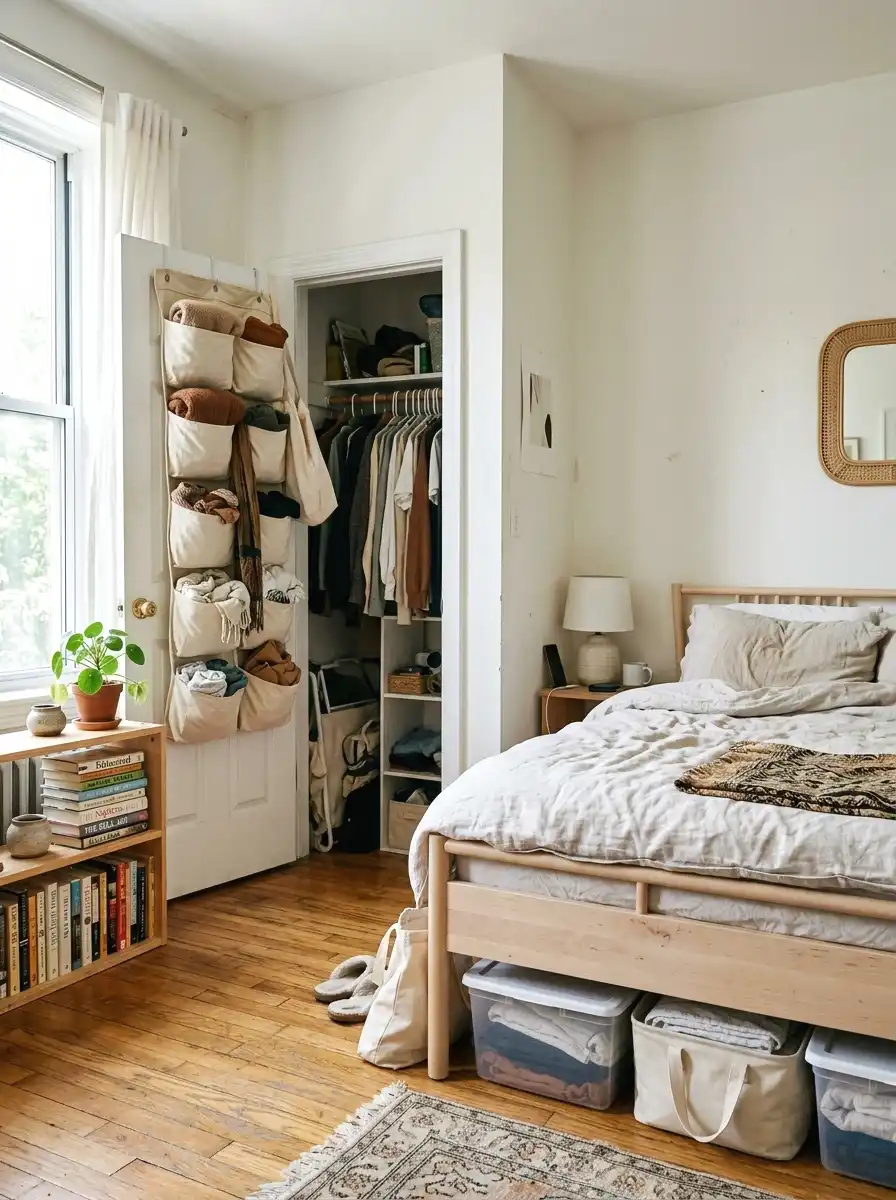
Closets in apartments are almost always smaller than you expect. Under-bed storage bins, around $20 for a set of two, solve most of that problem without adding furniture. Vertical space matters more than floor space once you start to declutter a small apartment.
Over-the-door organizers work in kitchens and bathrooms both. A $15 organizer from Amazon holds spices, cleaning supplies, or toiletries without a single screw. Renters overlook vertical space constantly, and it’s usually the easiest fix in the whole apartment.
Here’s what actually happens if you skip this step. Clutter builds fast in small apartments and it’s harder to fix once boxes and bins pile up in corners. Organizing early, even loosely, saves a lot of frustration two months in.
Buy a few matching bins early on. It’s a small thing but it makes shelves and closets look put together instead of random, and it helps the whole apartment feel more organized without spending much at all.
More Ideas:
Quick Tips for Apartment Decor
- Swap one bulb to a warmer tone first, it costs under $15
- Measure doorways before buying a couch over 72 inches wide
- Use command strips rated for the item’s actual weight
- Buy furniture in stages instead of all at once
- Rugs define separate zones in one-room apartments
- Keep a $50 buffer for things you forget, like curtain rods
- Under-bed bins solve most small closet problems fast
The Bottom Line on Apartment Decor for First-Time Renters
You’ve got the basics now. Lighting first, furniture in stages, and walls that make the place feel like yours without risking your deposit. None of this needs to happen at once, and honestly, it shouldn’t. A rushed apartment often looks rushed.
Start with the lighting. Swap one bulb this weekend and notice how different the room feels by Sunday night. That’s the whole project, one small step, not a full weekend renovation.
If you want more ideas like this, homelypop.com has a lot more where this came from, room by room, budget by budget.


