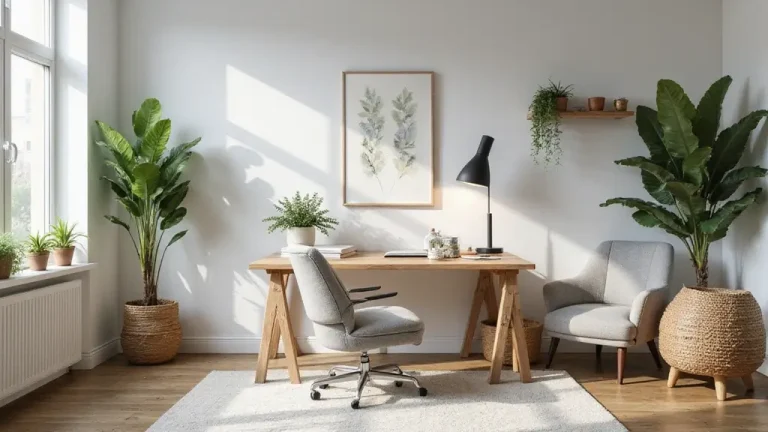

Apartment Decor for First-Time Renters Who Can’t Drill Holes or Damage Walls

Your landlord said no holes in the walls and now you’re staring at bare white walls wondering how anyone makes a rental feel like home. You keep scrolling apartment decor for first-time renters and every idea seems to need a drill you don’t own and a deposit you can’t risk.
Here’s what changes that. This guide pulls together over a dozen damage-free ideas that actually held up in real rentals, not just Pinterest boards. It covers lighting, wall treatments, storage, and furniture, all picked because they worked without a single nail hole, and most fit inside a $100 to $500 budget.
This is for renters who want their space to feel like theirs without losing a cent of their security deposit. It’s not for people who own their place and can drill freely. Either way, the results here are real and doable.
By the end, you’ll know exactly which products, brands, and tricks to use, and which walls to leave alone completely.
What to Know Before You Start Decorating a Rental
- Command strips hold up to 16 lbs, check the weight rating before you hang anything heavy.
- Measure your walls first. Most rental bedrooms run 10×12 feet, which limits big furniture.
- Budget reality: a full no-drill room refresh runs $150 to $400 for lighting, rugs, and wall decor.
- Most renters forget to check their lease for a “no adhesive” clause before buying anything.
- Common mistake: peeling command strips too fast. Pull straight down slowly or you’ll take paint with it.
- Test any adhesive product on a hidden spot of wall first, some paints react badly.
- Removable wallpaper can stay up two to three years without yellowing if applied on primed walls.
1. Lighting: The Cheapest Upgrade With the Biggest Payoff
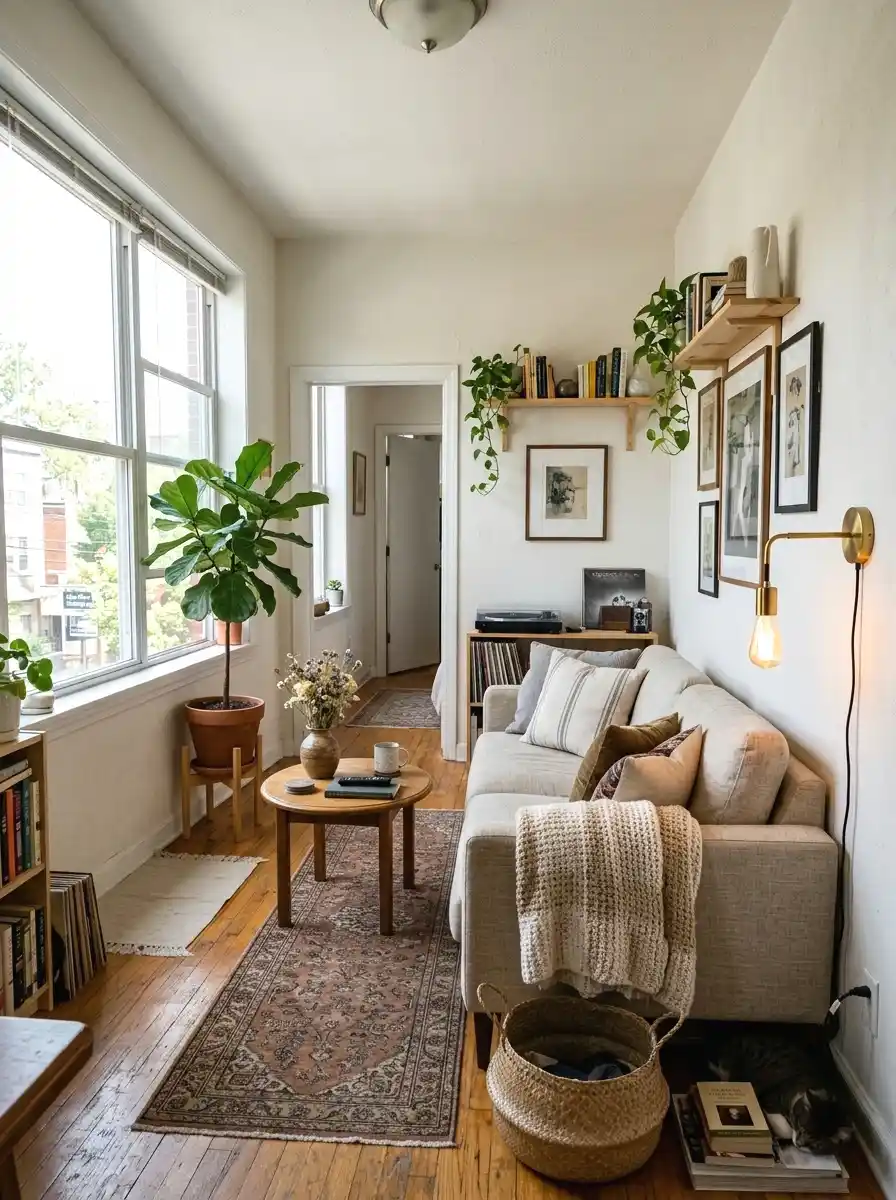
I always tell people to start with lighting because it costs the least and changes the most. Swapping a harsh overhead bulb for a warm 2700K LED runs about $8 at Home Depot, and it makes the whole room feel warmer instantly. No landlord will ever notice, and no drill is involved.
Plug-in wall sconces are the real find here. IKEA sells one for around $25 that mounts with adhesive hooks instead of wiring into the wall. You get the look of a hardwired fixture for a fraction of the cost and zero permanent changes.
Floor lamps and torchieres also solve the “no overhead light” problem a lot of older apartments have. A decent one from Target runs $40 to $70 and gives you actual reading light instead of one weak bulb in the middle of the ceiling.
I was skeptical about plug-in sconces at first, though they’d look cheap. They didn’t. In my own place, two sconces flanking the couch made the living room look twice as put together for under $60 total.
More Ideas:


2. Wall Decor Without a Single Hole
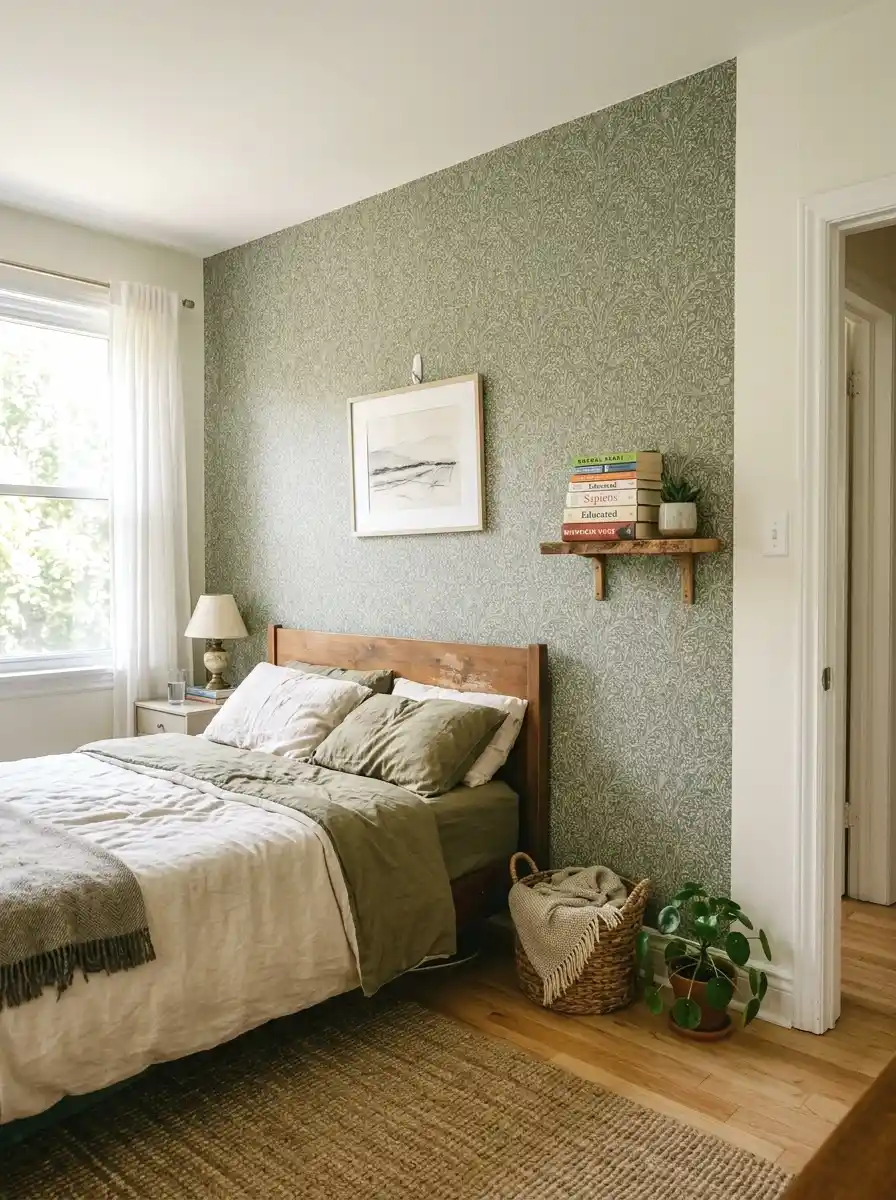
Command strips are the obvious answer, but the specific kind matters. The heavy duty picture hanging strips from 3M hold framed art up to 16 lbs, and they cost about $12 for a pack of four at Lowe’s. Regular strips will sag under anything heavier than a poster.
Removable wallpaper has come a long way. Peel and stick options at Target run $30 to $50 per roll and can cover one accent wall for around $120. Just make sure your walls are painted, not textured plaster, or it won’t stick right.
Washi tape grids are the budget move. For under $10 you can tape a geometric pattern across a wall that looks intentional and peels off clean, even after a year. It’s not for everyone, but it works.
The mistake I see most is people hanging mirrors with regular tape instead of mirror-rated adhesive strips. Mirrors are heavier than they look, so spend the extra few dollars on strips rated for the actual weight.
3. Storage and Organization That Doesn’t Touch the Walls
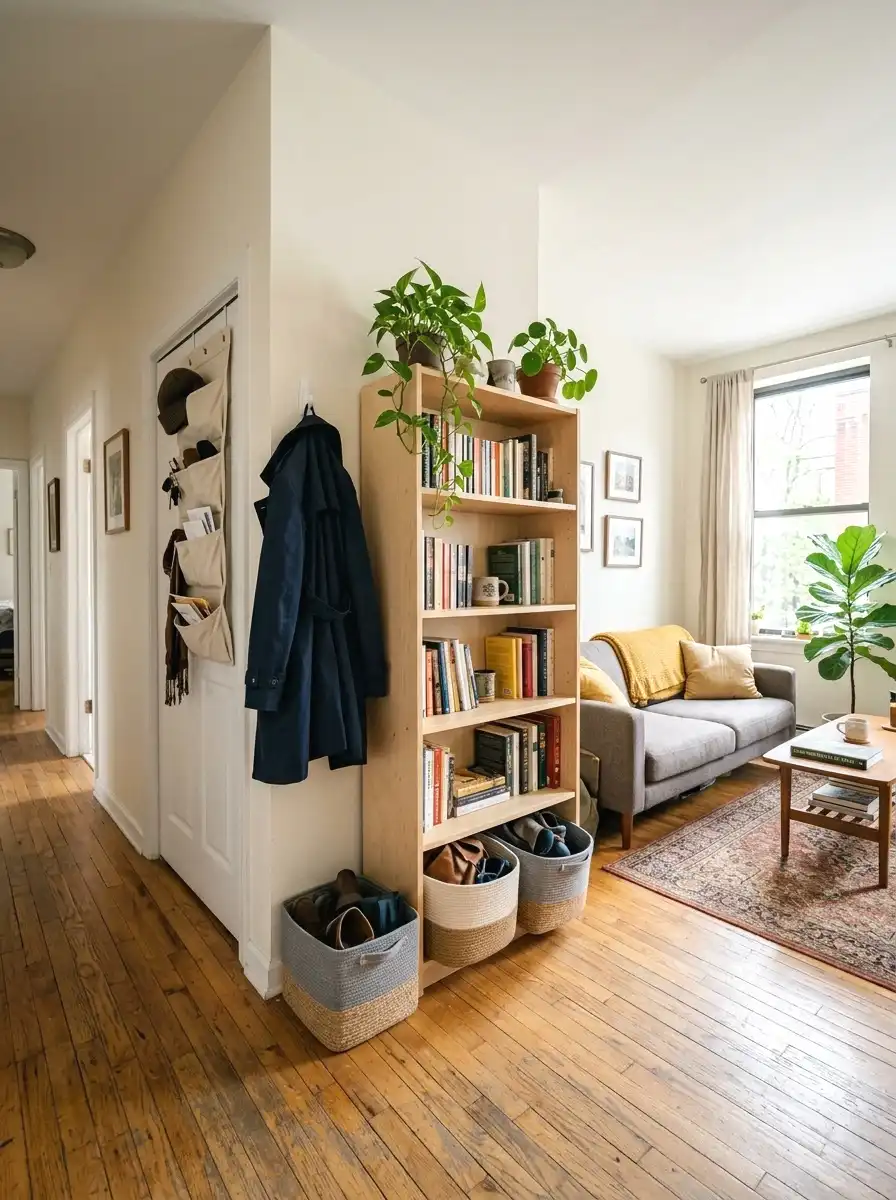
Renters overlook storage until move-in day chaos hits. Freestanding shelving units solve this without a single screw into drywall. A basic bookshelf from IKEA runs $60 to $90 and gives you display space plus hidden storage in bins below.
Over-the-door organizers are underrated. They hang on the door frame itself, not the wall, and cost $15 to $25 at Amazon. Great for closets, bathrooms, or a kitchen with zero cabinet space.
Command hooks rated for coats and bags hold up to 5 lbs each and cost about $1 apiece. Line three or four by the entryway and you’ve solved the “where do my keys go” problem for less than $5.
Rolling carts, the kind with wheels and drawers, work in kitchens and bathrooms where built-in storage is thin. IKEA’s Raskog cart runs $40 and moves wherever you need it, no installation required.
More Ideas:
4. Furniture: What to Buy First and What Can Wait
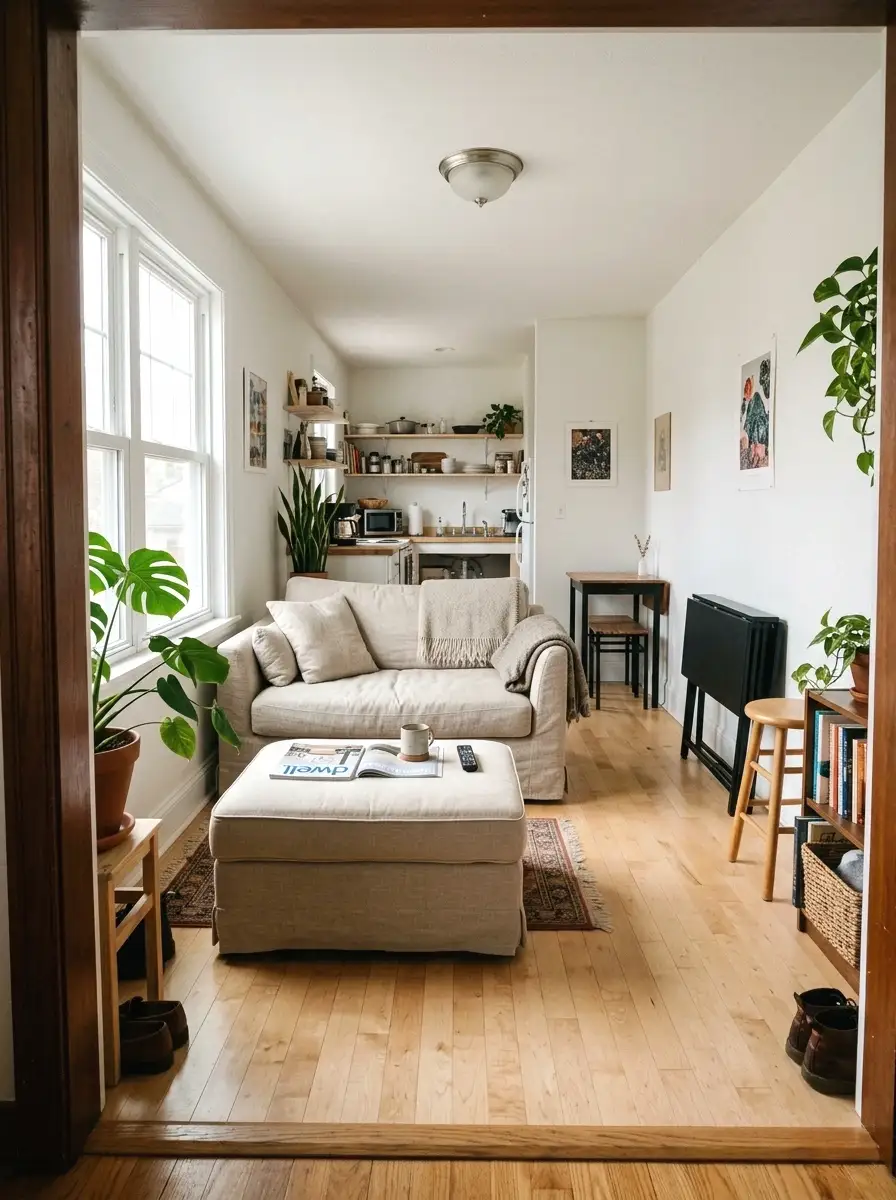
Buy your bed and a real couch first. Everything else can wait. A queen mattress foundation from Amazon runs $150 to $250, and a basic loveseat from Wayfair starts around $300. These are the pieces you use every day, so don’t skimp here.
Skip the coffee table at first if money’s tight. A large ottoman doubles as a table and extra seating, and costs less, around $80 to $120 at Target. It’s a smart placeholder until you find something you actually like.
Dining sets can wait too, especially if you’re in a studio. A folding table costs $40 and stores flat when you’re not using it. Renters in small spaces almost never regret waiting on this one.
When I moved into my first apartment, I bought a full dining set immediately and regretted it. It barely fit and I ended up selling it at a loss six months later. Buy the space-flexible version first, upgrade once you know your real layout.
5. Renter-Specific Tricks for Deposit-Safe Decorating
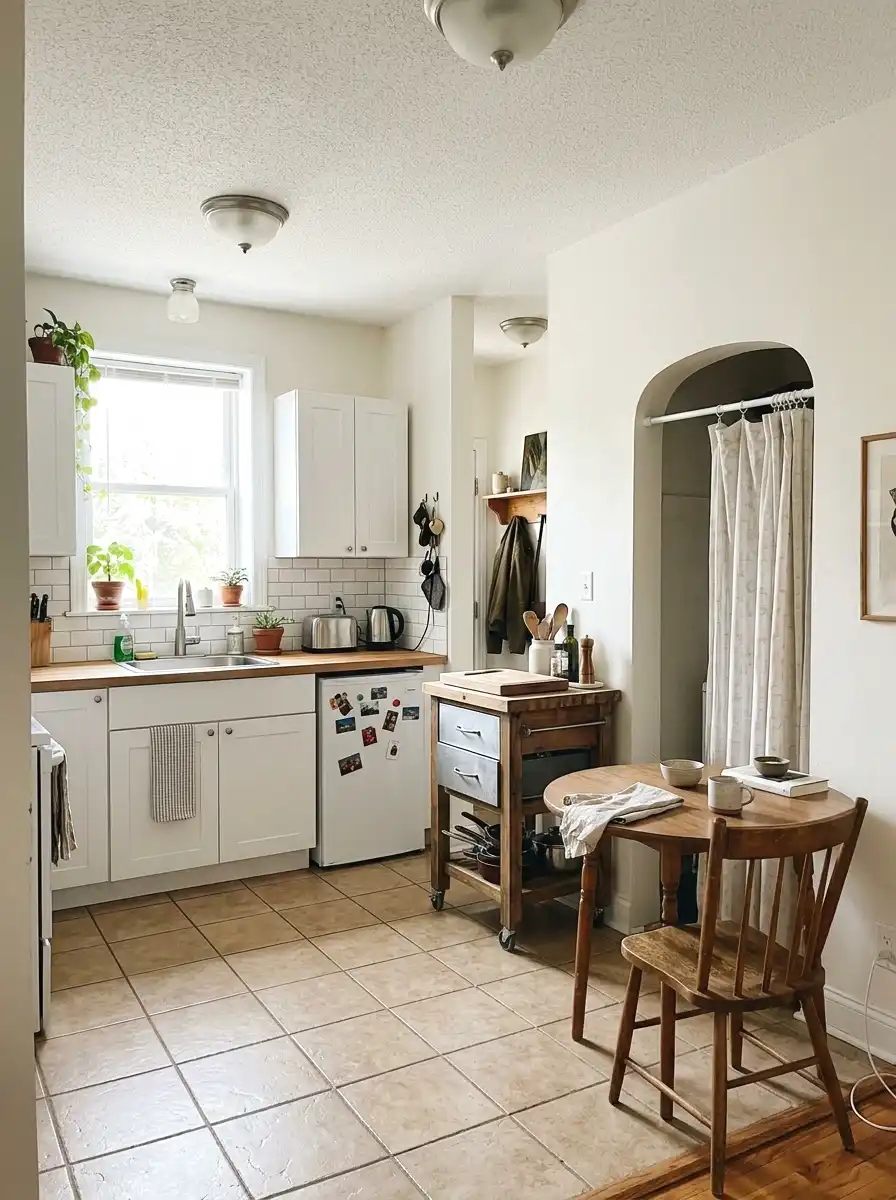
Peel and stick tile works on backsplashes and even bathroom floors temporarily. It runs $8 to $15 per square foot at Lowe’s and comes off clean when you move, protecting your deposit completely.
Tension rods hold curtains, room dividers, and even small shelves without any wall damage. A basic one costs $10 to $20 and adjusts to fit almost any doorway or alcove.
Rugs do more heavy lifting than people expect. A 5×7 rug from Wayfair for $80 to $150 defines a whole seating area and covers up dated flooring most rentals have. It also adds real resale value if you ever bring it to your next place.
Keep a folder of before photos on move-in day. It sounds small, but it protects your deposit if there’s ever a dispute about pre-existing wear versus something you caused.
More Ideas:
Quick Tips for Apartment Decor for First-Time Renters
- Always test adhesive on a hidden spot before committing to a full wall.
- Keep your total decor budget under $500 for a full one-bedroom refresh.
- Measure doorways before buying furniture, most are 30 to 32 inches wide.
- Save your command strip receipts, most brands offer a damage guarantee.
- Rotate rugs every few months so they wear evenly.
- Photograph your walls before and after hanging anything removable.
Final Thoughts on Apartment Decor for First-Time Renters
You’ve got real options now, ones that don’t put your deposit at risk. Lighting changes the whole feel of a room for under $50, and storage pieces like rolling carts or over-the-door organizers solve the space problems most rentals come with.
Start with the lighting. Swap one bulb, add one sconce, this weekend. See how much warmer the room feels before you touch anything else.
If you want more ideas like this, homelypop.com has a lot more where this came from.
Frequently Asked Questions About Apartment Decor for First-Time Renters
What’s the best way to hang pictures without damaging rental walls?
Use heavy duty command strips rated for your frame’s weight, usually $12 for a four pack. They hold up to 16 lbs and peel off clean if you pull straight down slowly.
How much does it cost to decorate a first apartment on a budget?
Most no-drill refreshes run $150 to $400 depending on how many rooms you’re doing. Lighting and rugs give the biggest visual change for the least money spent.
Can removable wallpaper damage painted walls?
No, as long as the wall is painted and not textured plaster. Test a small section first, and it should peel off clean even after two to three years up.