
26 Apartment Decor for Couples Who Both Work From Home in a Small Space

You’re both on back to back calls and one of you is stuck typing on the kitchen counter again. That’s not a home office, that’s survival mode. Apartment decor for couples who both work from home in a small space isn’t about buying more stuff. It’s about making two jobs fit in one room without anyone losing it by 2pm.
I pulled together 26 ideas after digging through renter forums, Home Depot and IKEA pricing pages, and a pile of Reddit threads from couples who actually tried this. Most pieces run $100 to $700, and everything here is picked for real apartments, not showroom photos. This is for couples who need two work zones and don’t want a renovation to get there.
If you own a 2,000 square foot house, some of this won’t apply to you. But if you’re renting 600 to 900 square feet and sharing it with a partner and two laptops, this is written for you. It’s doable, even if your current setup feels like organized chaos.
By the end, you’ll have real ways to split your space, cut down on noise, and make two work areas that don’t fight each other for the same corner.
What to Know Before You Start Apartment Decor for Couples
- A 6 foot rolling cart can double your storage without touching a wall
- Plan your outlets first. Extension cords under a shared desk get messy fast
- Budget reality: a proper room divider runs $150 to $400 at Wayfair or Target
- Most couples overlook lighting until one person is squinting on a 3pm call
- Common mistake: buying one huge desk instead of two smaller ones that flex
- Keep 30 inches of walking space between any two work zones if you can
- Cheap rugs under $60 change how a shared room sounds during calls
- Renters should look for tension rods and removable hooks, not drilled shelving
1. Back to Back Desks With a Shared Spine Shelf
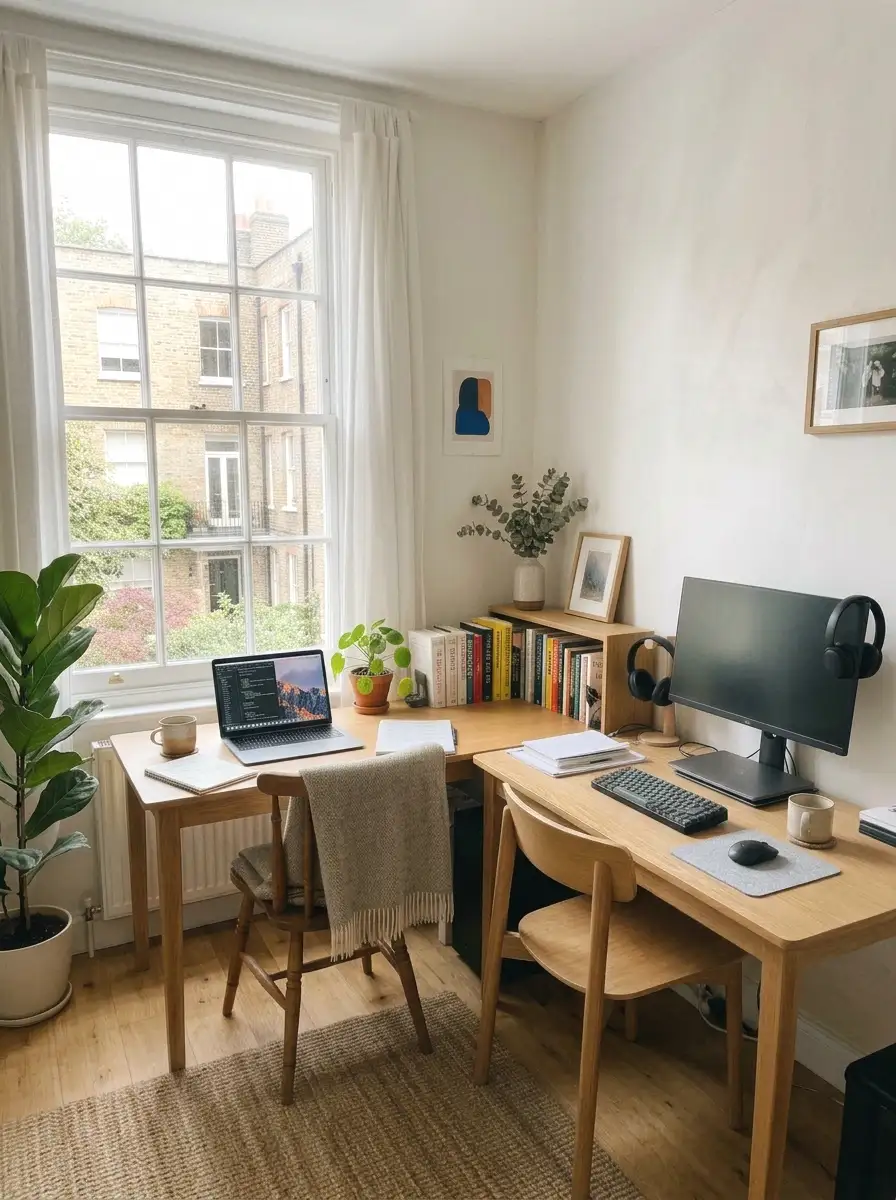
So this is the setup I see recommended more than anything else for two people working in one room. You put two desks back to back with a low shelf running between them, like a spine down the middle. It gives you a visual break without losing floor space, and both of you still get natural light if the desks sit near a window.
I tried this exact layout in a friend’s one bedroom and it worked better than I expected. A basic IKEA shelf unit runs about $80 to $150 depending on size, and it holds books, plants, or a small printer. Keep it under 30 inches tall so you can still see each other and don’t feel boxed in.
2. A Bookshelf Room Divider Instead of a Wall
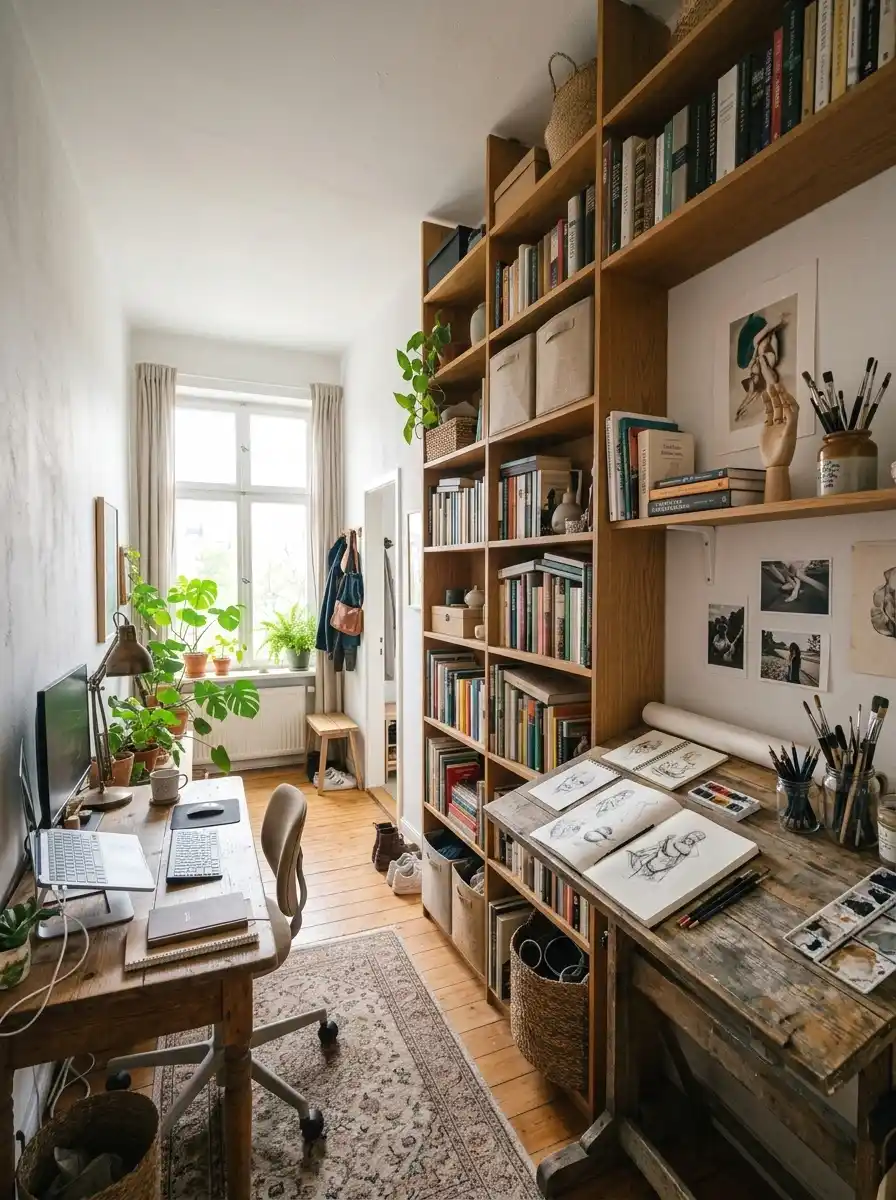
You don’t need to build anything to split a studio into two zones. A tall open bookshelf, the kind without a solid back, does the job and still lets light through. West Elm and IKEA both sell these in the $200 to $450 range, and open shelving means it doesn’t feel like a barrier.
Load the side facing your partner with books and bins so it stays functional on both faces. This is so underrated because most people jump straight to buying a folding screen. A shelf gives you storage and privacy at once, which a screen never does.
More Ideas:

3. Matching Desks in Different Wood Tones
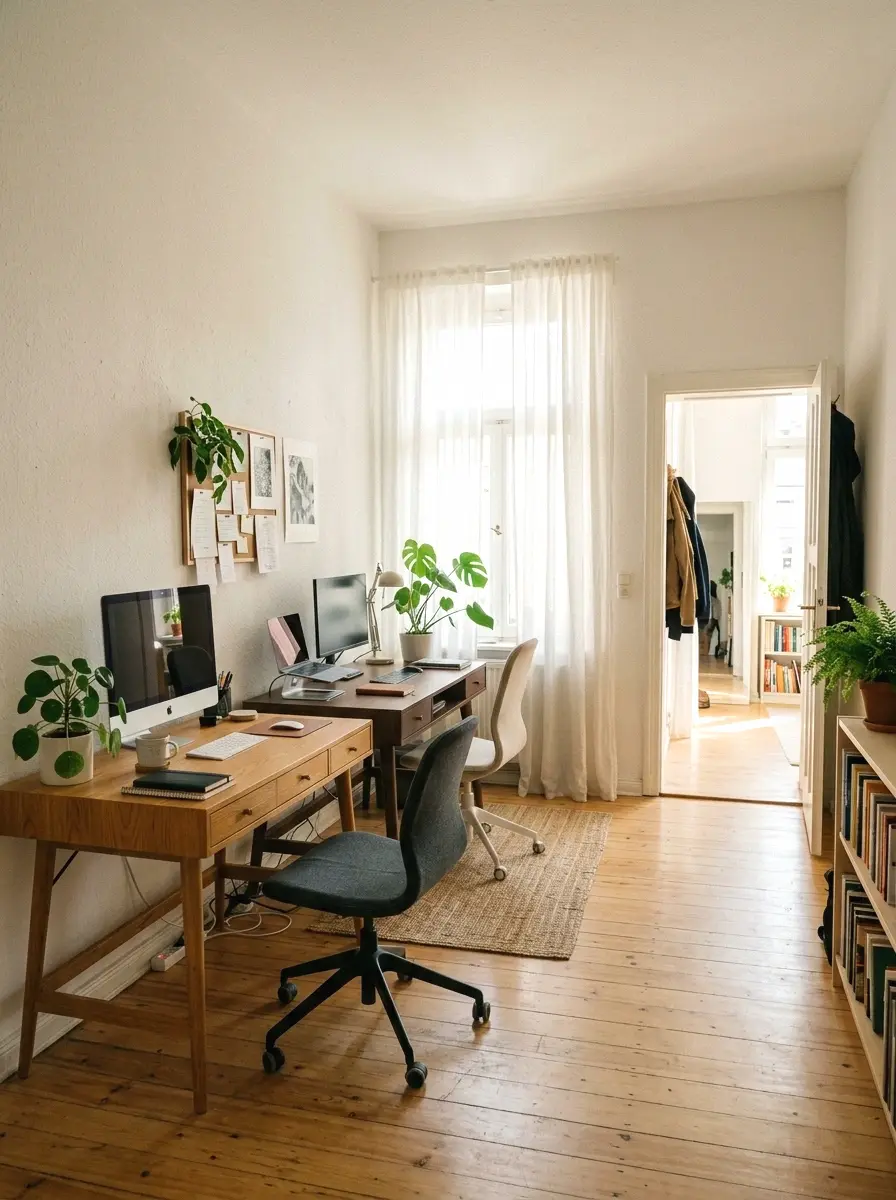
Here’s a small trick that changes how a shared room feels. Instead of buying two identical desks, pick the same shape in two different finishes, like oak and walnut. It signals “this is your zone, this is mine” without saying a word, and it still looks put together instead of mismatched.
A simple 40 inch desk in either finish runs $120 to $250 at IKEA or Wayfair. This detail took me ages to figure out on my own apartment, but once you see it in someone else’s place, it makes total sense. Two desks, two identities, one room.
This approach is especially useful for couples with completely different styles.
4. Under Desk Cable Trays to Kill the Clutter
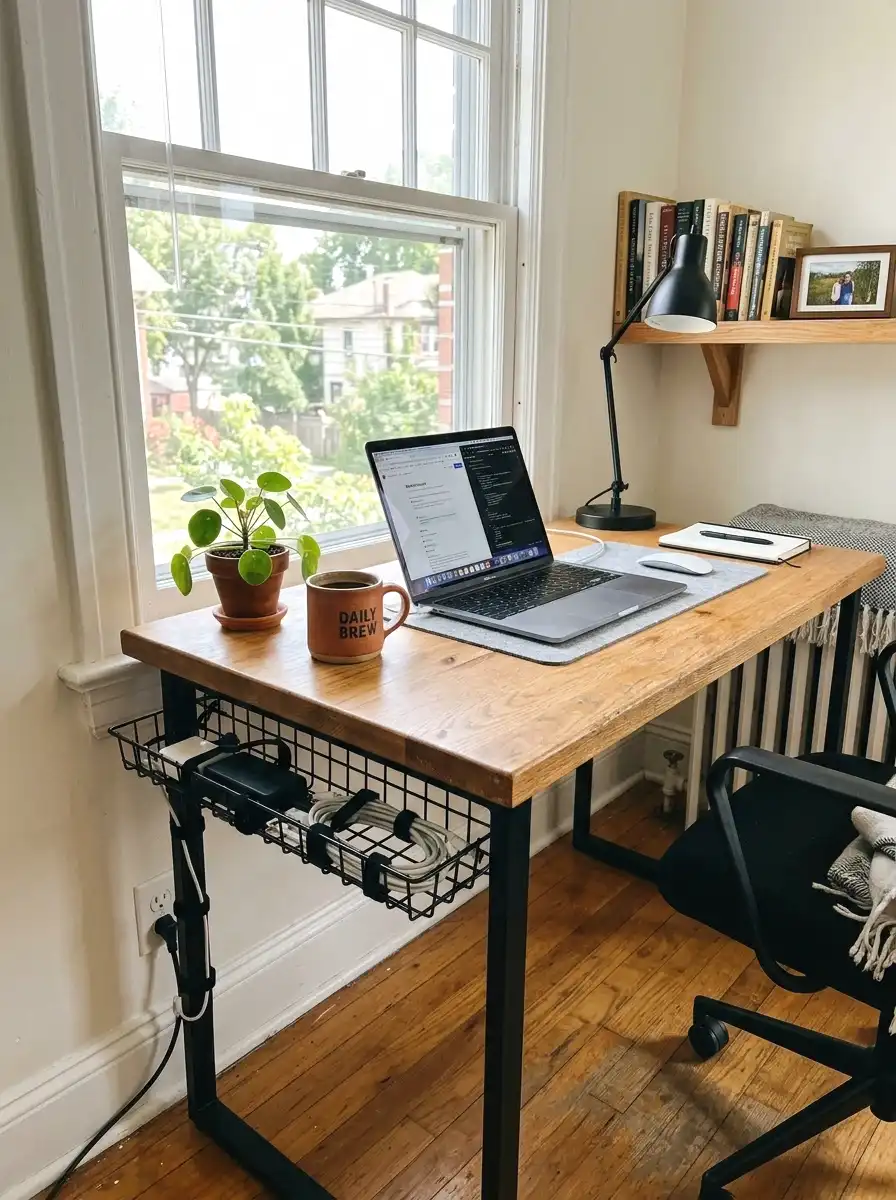
You know that pile of cords tangled under a shared desk that makes video calls stressful because someone’s foot is stuck in it. A $20 to $35 cable tray screwed under the desk lip hides everything and takes fifteen minutes to install. It’s one of the cheapest upgrades on this whole list.
Most cable trays fit desks up to 48 inches wide, so measure first. Amazon sells basic steel trays for under $25 with decent reviews from renters. Do this before anything else on your list. It’s a small fix that removes a daily annoyance for both of you.
5. A Curtain Track Divider for Renters
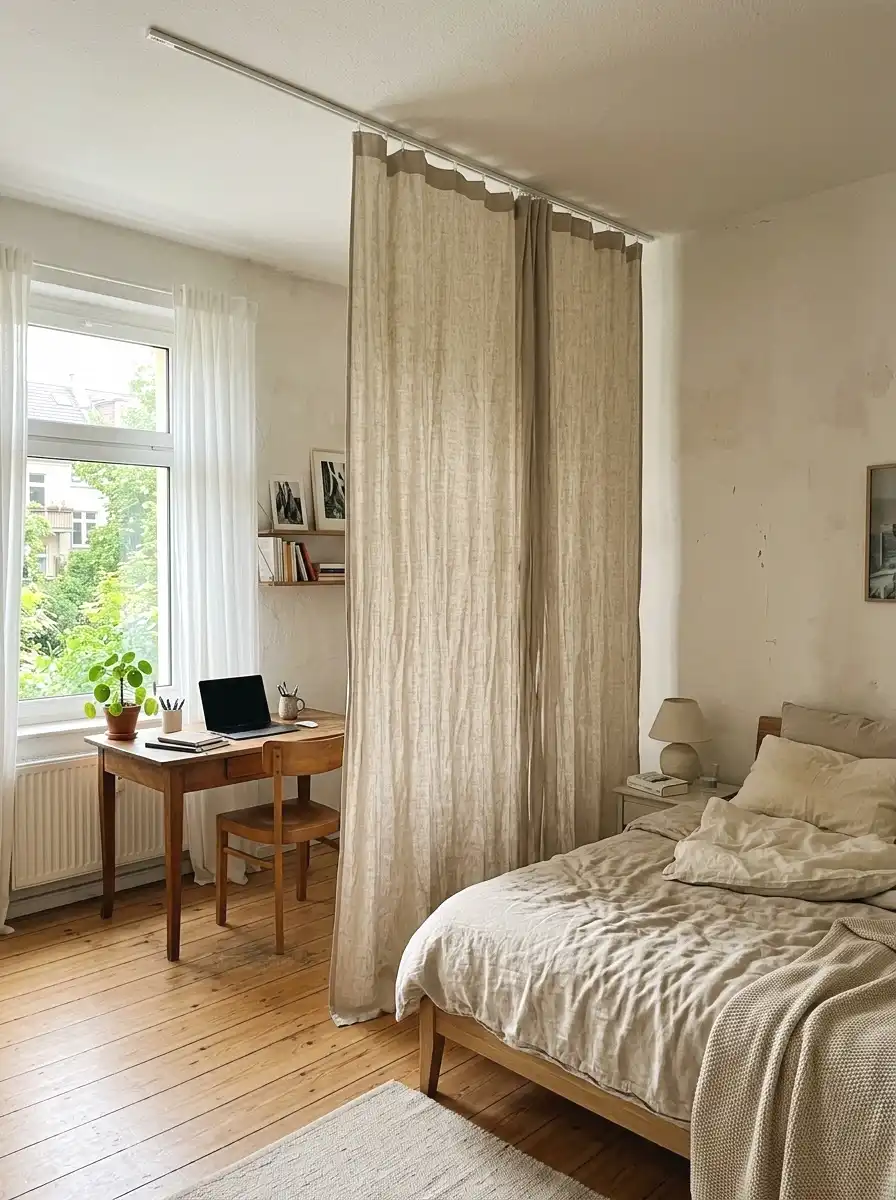
If drilling isn’t an option, a ceiling mounted curtain track lets you split a room without touching the walls. Home Depot sells basic tracks for $40 to $90, and you can hang any curtain panel you want, heavy for privacy or sheer for light. It’s one of the few dividers you can fully remove when you move out.
I was skeptical about this one at first because curtains can feel flimsy. But a blackout panel actually blocks sound better than you’d expect during calls. Plan for 8 to 10 feet of track depending on your room width, and budget an extra $30 to $60 for panels.
6. Two Monitor Arms Instead of Monitor Stands
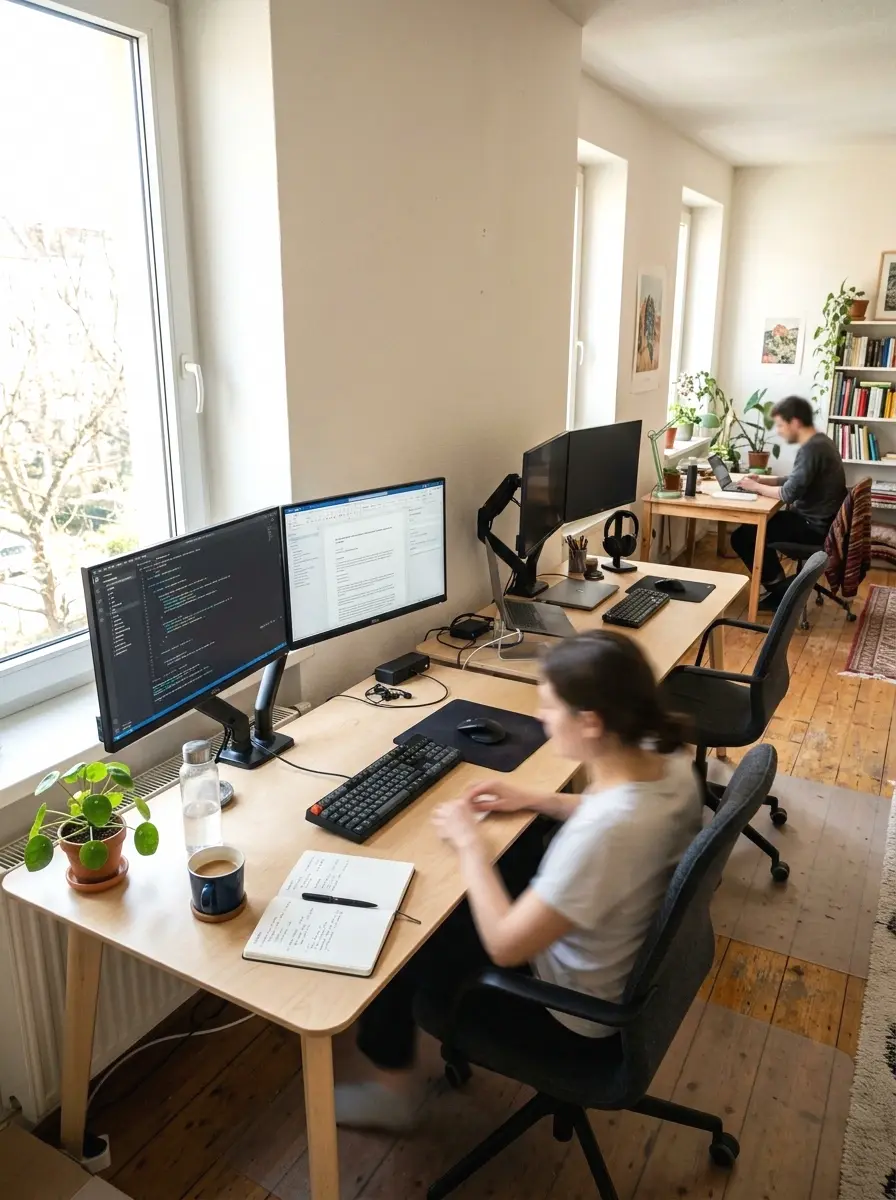
Desk space disappears fast when you’re both working in one room, and a monitor stand eats up 8 to 10 inches you don’t have. A clamp on monitor arm, usually $35 to $70 each, frees up that whole footprint for notebooks, coffee, or a second screen. It also lets you angle your monitor away from your partner’s video calls.
This is a small change that makes a bigger difference than people expect. Most arms clamp onto desks up to 2.5 inches thick, so check your desk edge before you buy. Once it’s up, you’ll wonder why you waited so long.
More Ideas:
7. A Room Divider With Built In Shelving

Instead of a plain screen, look for a divider panel with cubbies built in, usually $180 to $350 at Wayfair. You get privacy and storage in one piece of furniture, which matters a lot when square footage is tight. Slide it between two desks and it instantly reads as two rooms instead of one.
Measure your ceiling height before ordering since most of these run 5 to 6 feet tall. Anything taller can make a small apartment feel closed in. This is a solid middle ground between a full wall and a flimsy folding screen that tips over.
8. Color Coded Desk Zones
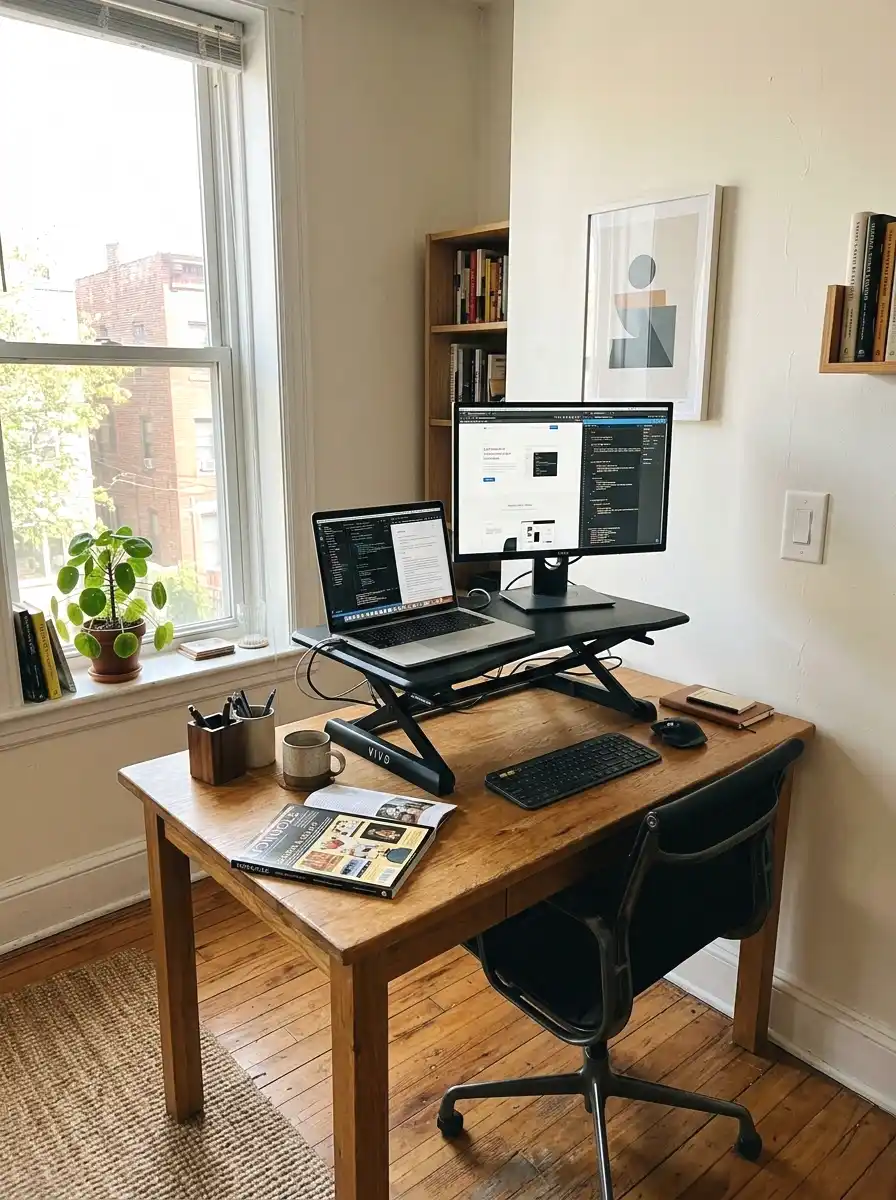
You can split a shared room visually just with paint and accessories, no construction needed. Pick one accent color for your zone and a different one for your partner’s, then carry it through in a lamp, a mug, or a small rug. It’s a simple way to make two work areas feel separate even when they’re twelve feet apart.
A gallon of accent paint runs $35 to $55 at Home Depot if you’re doing an accent wall behind one desk. This works especially well in a studio where you can’t physically divide the room. Two colors, two zones, zero construction.
Consider exploring wall paint colors that transform a room’s feel without major renovations.
9. A Standing Desk Converter to Share
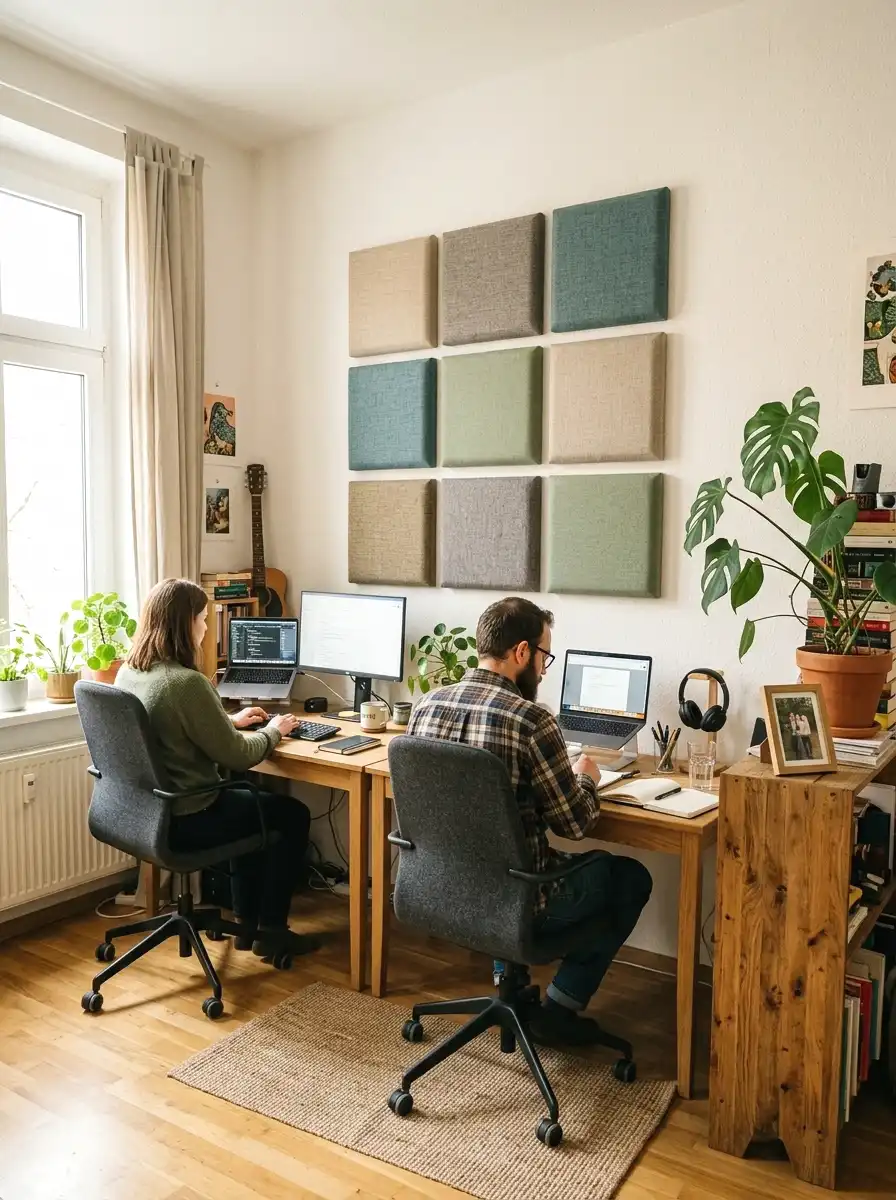
Full standing desks cost $400 to $700 and take up permanent floor space, which isn’t ideal when you’re already tight on room. A converter that sits on top of your existing desk runs $90 to $180 and can move between your zone and your partner’s if you take turns. It’s the budget move for couples who want flexibility without the price tag.
Look for one rated for at least 20 pounds if you’re stacking a monitor on top. Fully Jarvis and a few IKEA models fall in this price range. Swapping it between desks takes about a minute once you get the hang of it.
10. Acoustic Panels Behind Each Desk
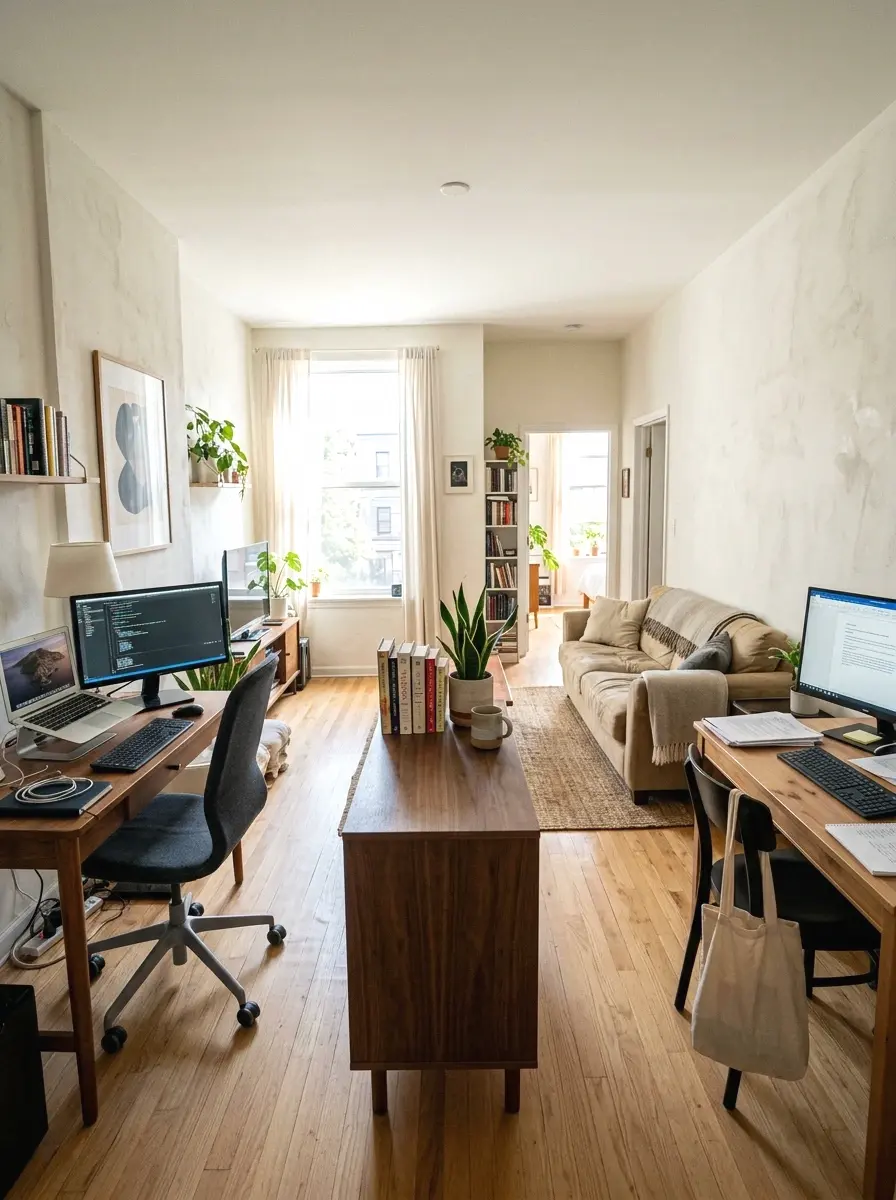
Two people on calls in one room means overlapping voices, and that gets old fast. A set of foam acoustic panels, usually $50 to $90 for a pack of 12, mounted behind each desk cuts down on echo and muffles your voice from bleeding into your partner’s call. They come in fabric wrapped versions too if foam looks too much like a studio.
I tried plain foam first and honestly it helped more than I expected for the price. Stick them at ear height behind your chair, not above your head, for the best effect. This is one of those upgrades nobody notices until it’s missing.
More Ideas:
11. A Shared Credenza as a Room Anchor
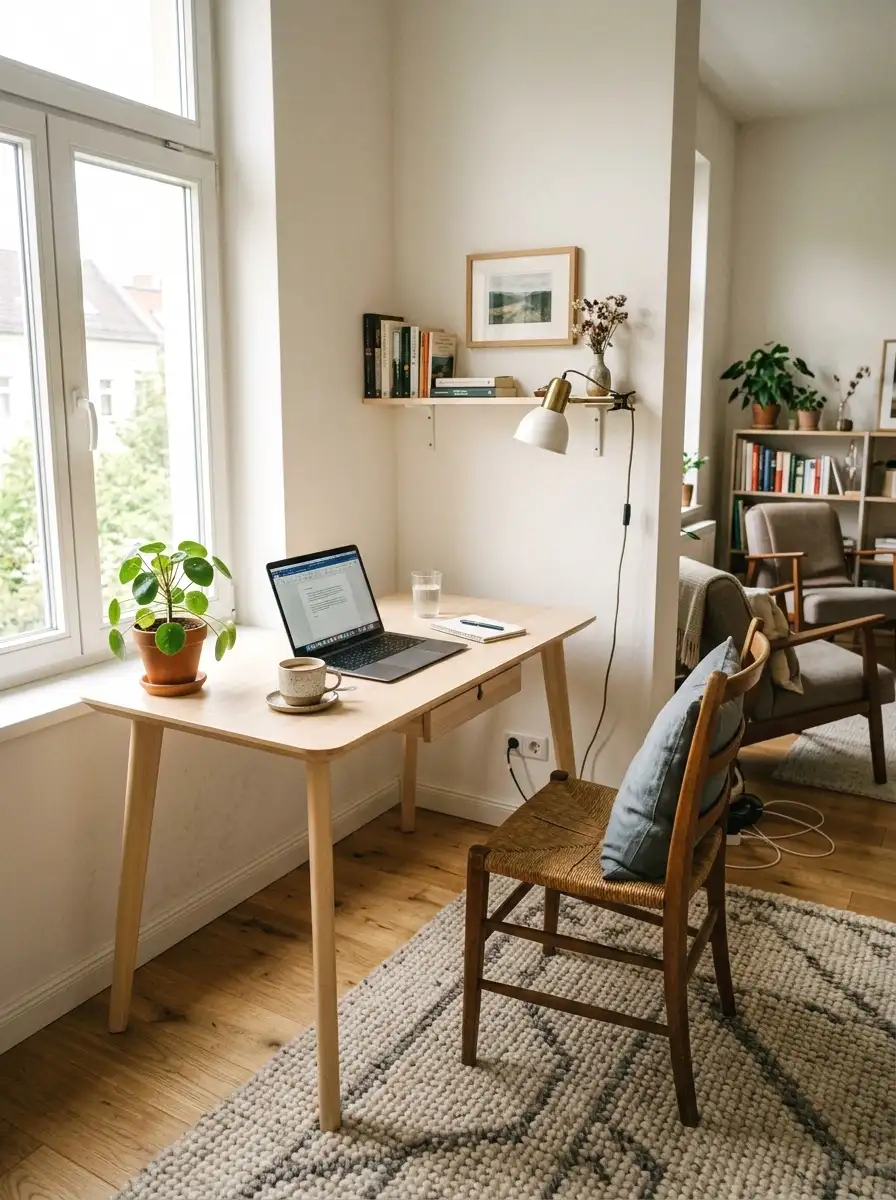
A low credenza, around $250 to $500 at West Elm or Wayfair, works as a visual line splitting a room while doubling as storage for both of you. Put it perpendicular to the wall between your two desk zones instead of pushed flush against it, and it reads like a partial wall.
This is the piece that ties a shared layout together instead of just two desks facing different directions. Look for one around 30 inches tall so it doesn’t block sightlines completely. Store shared printer paper, chargers, and files inside so neither desk gets cluttered.
12. Noise Cancelling Rugs Under Each Chair

A thick wool or wool blend rug under each desk chair does more for sound than people expect, especially in an apartment with hard floors. Budget $80 to $180 for an 5×7 depending on material, and pick a low pile so your chair still rolls fine. Hard floors bounce sound between two work zones more than carpet ever will.
And this matters more if you’re on the second floor or higher, since it also cuts down on noise for the neighbors below. Wool blends hold up better than cheap synthetic rugs long term. It’s not glamorous, but it’s one of the better $100 fixes on this list.
13. A Fold Down Wall Desk for the Smaller Zone
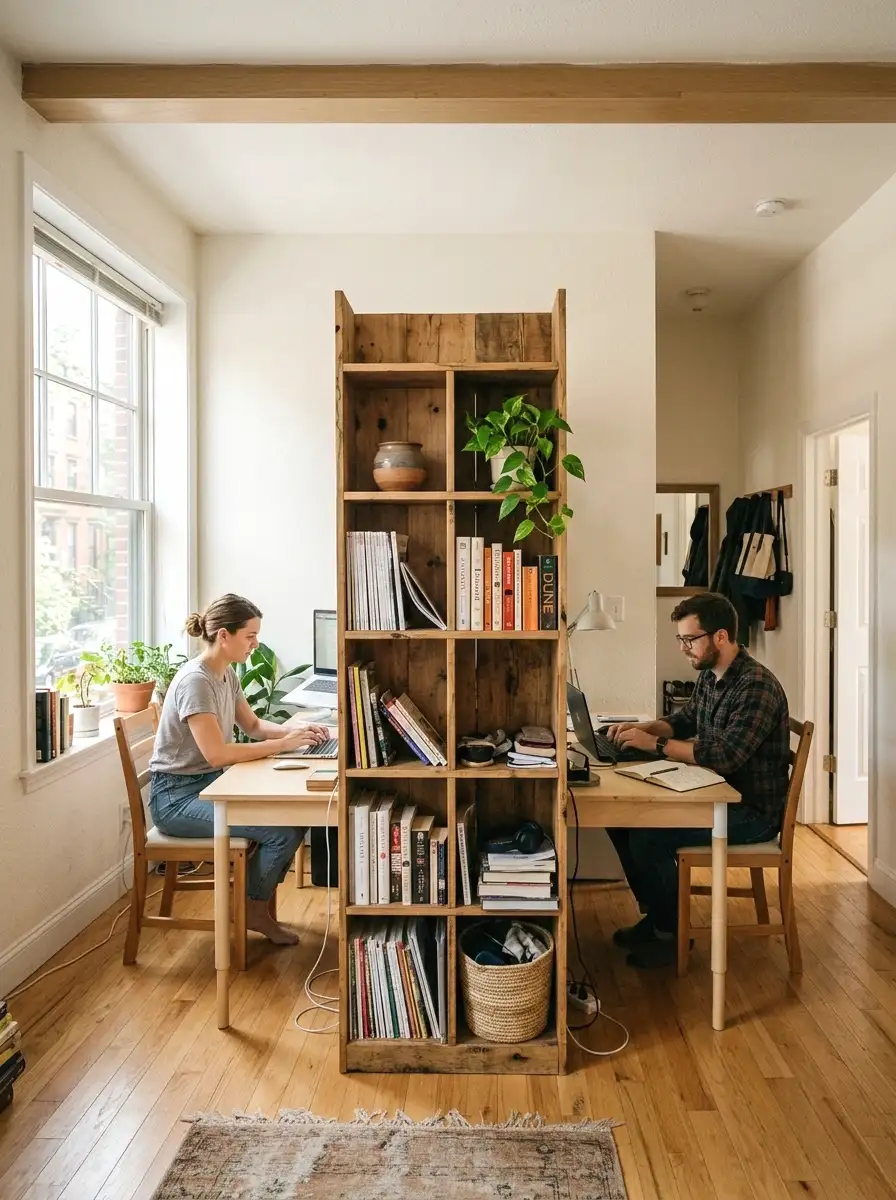
If one of you needs less desk space, a fold down wall mounted desk, usually $100 to $220, gives you a work surface that disappears when you’re done. It’s especially useful in a one bedroom where the second desk has to live in a hallway or closet nook.
I installed one of these in a narrow hallway once and it turned dead space into a real work spot. Look for one rated to hold at least 40 pounds if you’re using a laptop and monitor. Folded up, it’s basically invisible, which matters when floor space is already tight.
This is one of many tiny apartment ideas for space saving that can make a big difference.
14. Two Task Lamps With Different Warmth
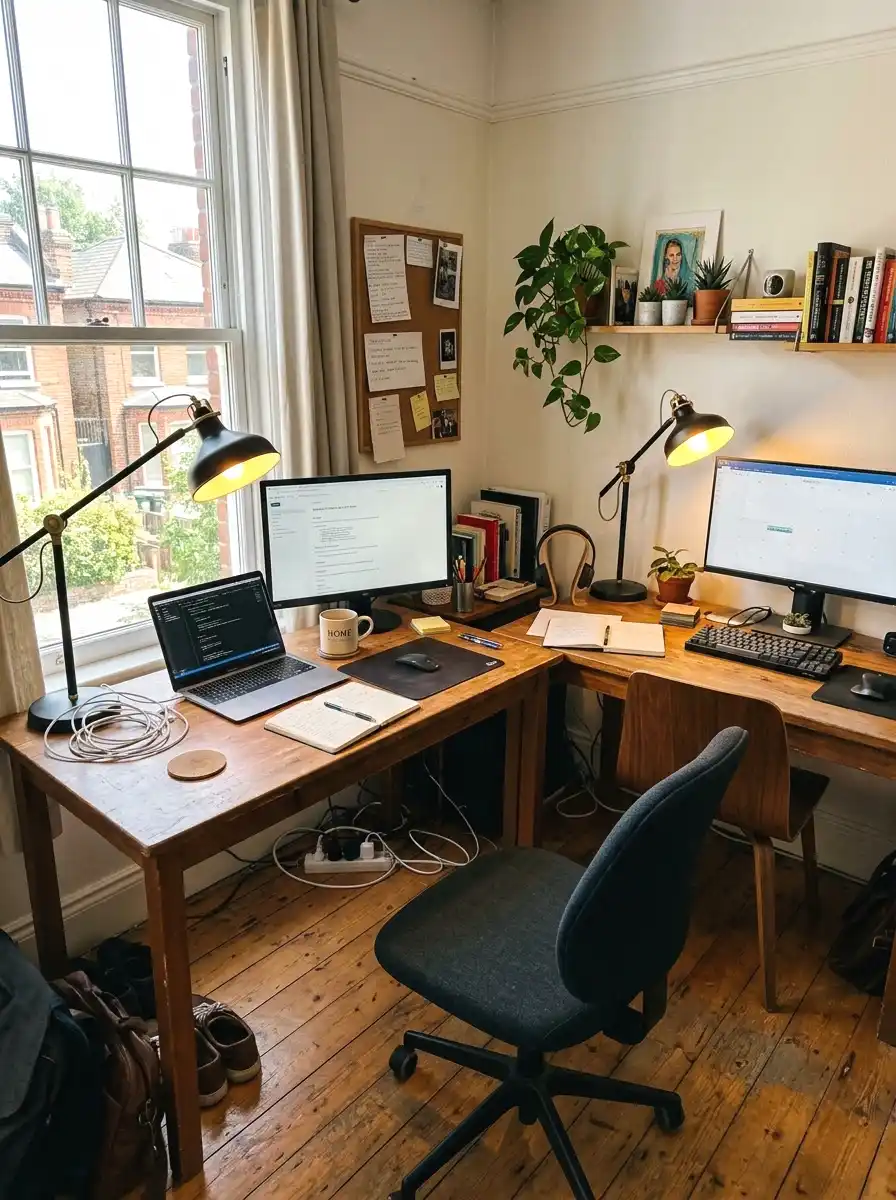
Overhead lighting alone makes video calls look flat and uneven, especially with two people in frame at different times. A $30 to $60 task lamp per desk, angled toward your face instead of the ceiling, fixes that instantly. Pick warmer bulbs, around 2700K, for a look that’s easier on the eyes during long days.
This is a cheap fix people skip because it seems minor. But so here’s the thing, good lighting is the difference between looking tired on camera and looking normal. IKEA and Target both carry decent task lamps under $40 if you’re watching the budget.
More Ideas:
15. A Tall Plant as a Soft Divider
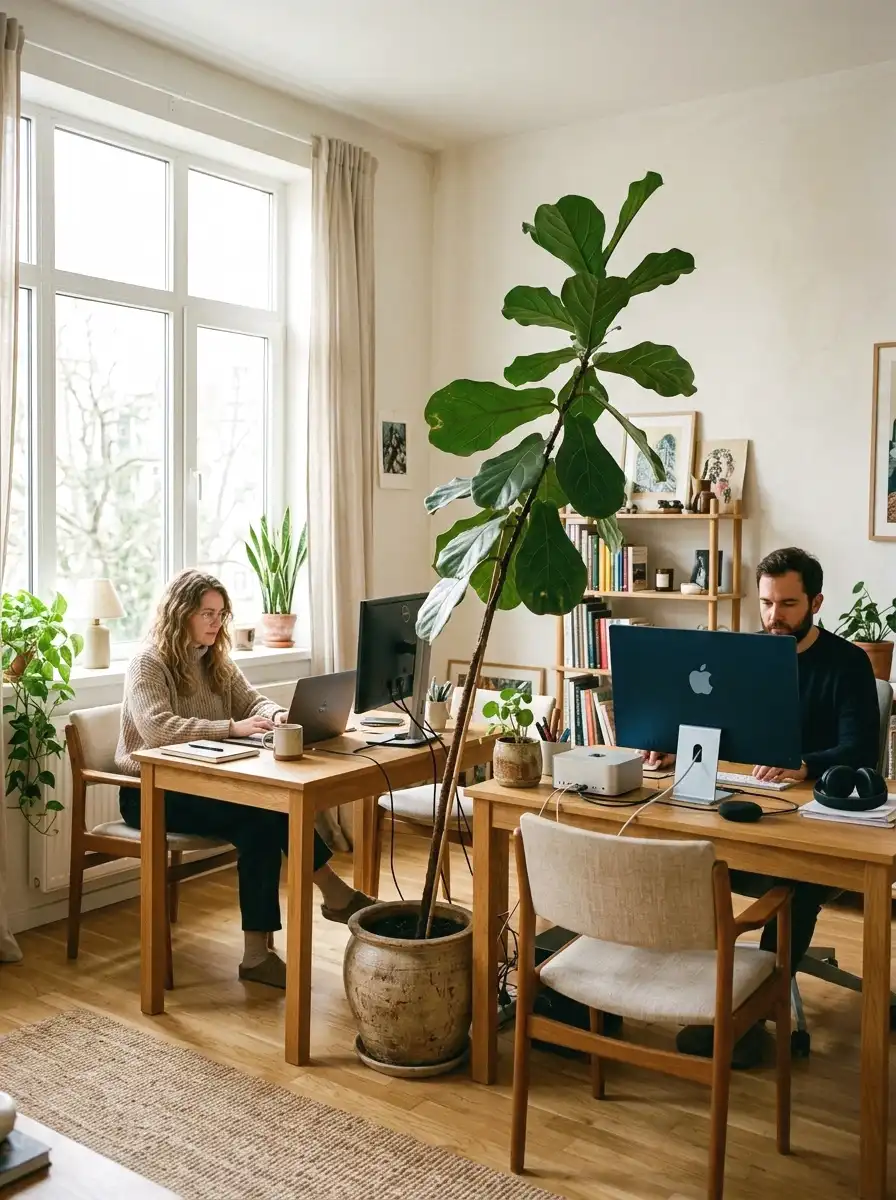
A 5 to 6 foot fiddle leaf fig or artificial version, running $60 to $150 depending on real versus fake, works as a soft visual break between two desks without blocking light or airflow. It’s not a hard barrier like a shelf, but it signals separation while adding some life to a room full of screens and cords.
If you’re not confident with plant care, the artificial versions from Target or Home Depot look convincing now and need zero maintenance. Place it at the corner where your two zones meet rather than dead center. It softens the whole layout without taking up real floor space.
16. A Shared Whiteboard Wall Instead of Two Calendars
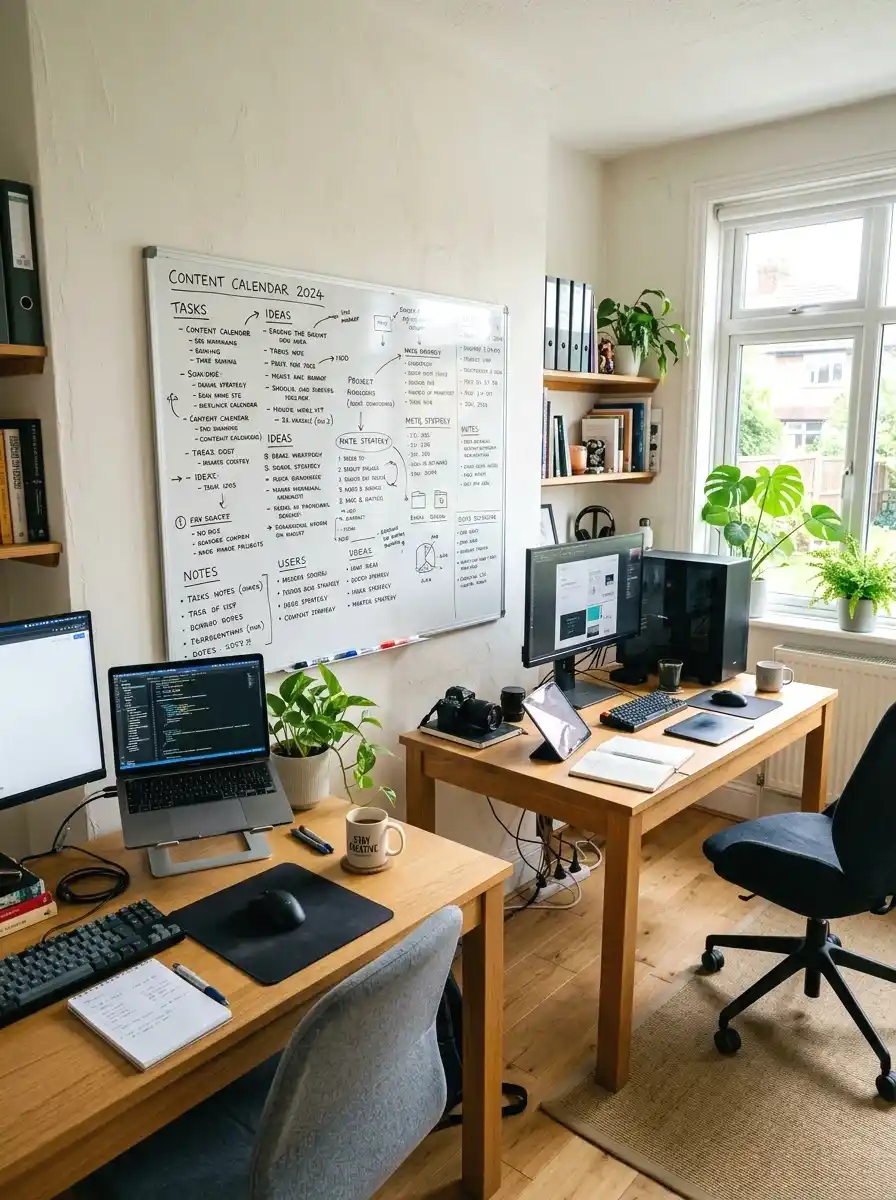
Instead of each of you keeping separate sticky notes and calendars, a $40 to $90 whiteboard mounted between your desks keeps shared deadlines and reminders in one spot. It also doubles as a quick privacy cue. Flip a small sign to “on a call” so you’re not interrupting each other mid meeting.
This sounds small but it cut down on a lot of “wait, are you free right now” moments in the couples I read about. A 24×36 inch board from Amazon or Staples covers most needs. Mount it at a height you can both reach from your own desk.
17. Blackout Curtains for Overlapping Call Times
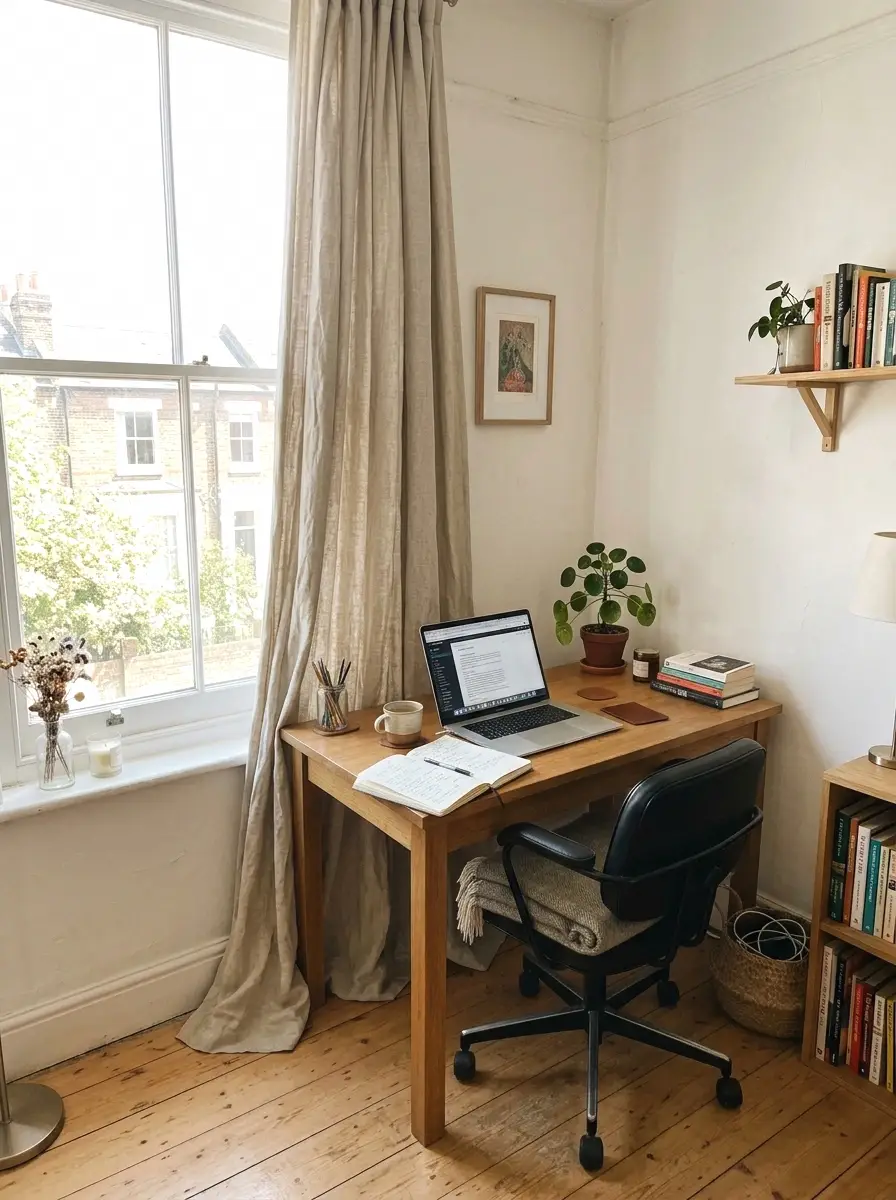
If your windows face each other’s desks, harsh light at different times of day can wreck a video call for one of you while the other is fine. Blackout curtains, $50 to $120 a panel at Pottery Barn or Target, let you control glare without losing the whole window. Cracking them partway during overlapping calls keeps both screens readable.
This one surprised me because I assumed blackout curtains were just for bedrooms. But in a shared work room they solve a real daily problem. Measure your window width and add a few inches on each side so the panel actually blocks light at the edges.
18. A Narrow Console Table for the Tight Zone
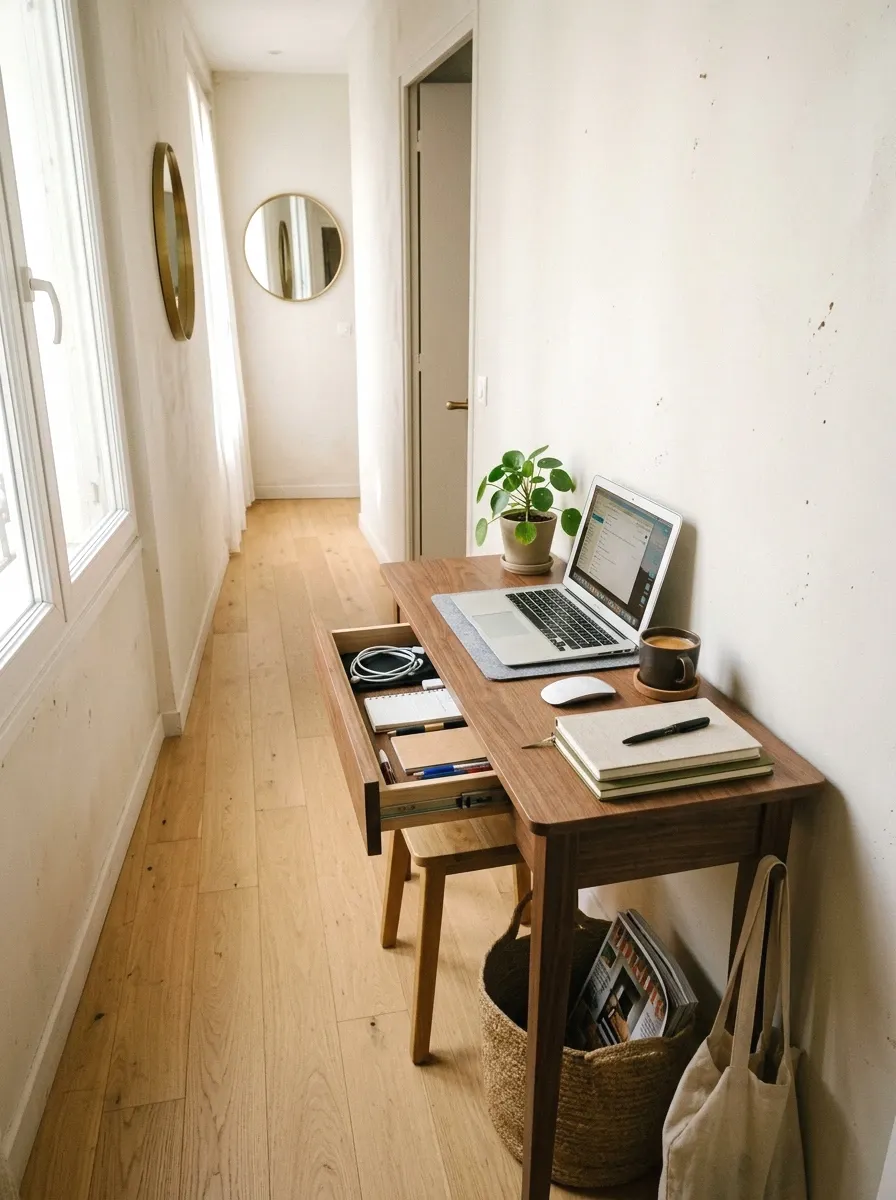
When one desk has to squeeze into a hallway or the end of a room, a narrow console table, about 12 to 16 inches deep and $90 to $200, fits where a standard 24 inch desk won’t. It’s not ideal for spreading out paperwork, but for laptop only work it does the job without eating the whole space.
Look for one with at least one drawer so cords and chargers have somewhere to hide. Wayfair has several under $150 in this depth range. This is the move when your apartment genuinely doesn’t have room for two full sized desks.
It’s a smart solution often seen in small studio apartment design where every inch counts.
More Ideas:
19. Under Desk Storage Bins Instead of a Filing Cabinet
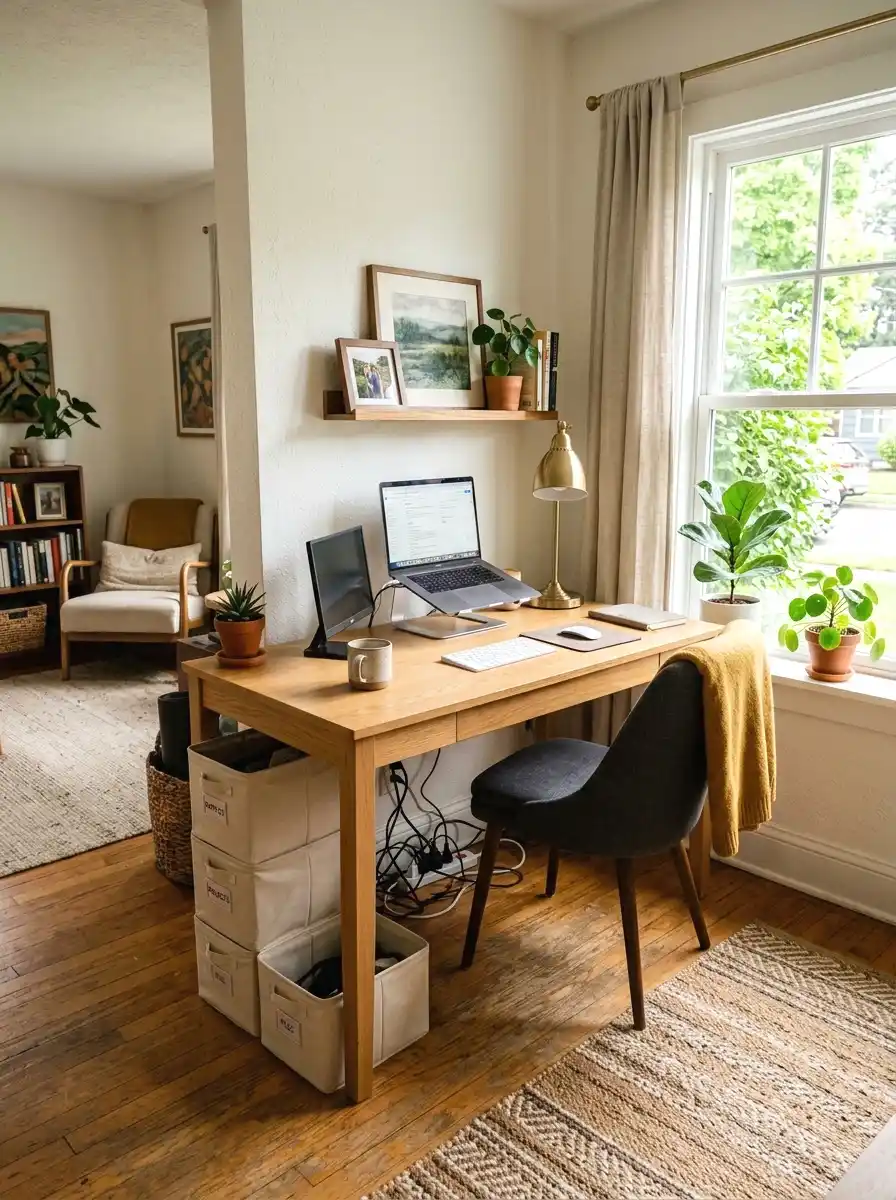
A full filing cabinet, even a small one, eats 15 inches of floor space you probably don’t have twice over. Stackable fabric bins under $40 for a set of three slide under most desks and hold files, cords, and office supplies without the bulk. Each of you gets your own set so nothing gets mixed up.
This is such a simple swap but it freed up more floor space than I expected when I tested it. IKEA’s basic canvas bins run about $8 to $15 each. Label them if you’re both prone to losing track of shared supplies.
20. A Room Divider Screen With Storage Pockets
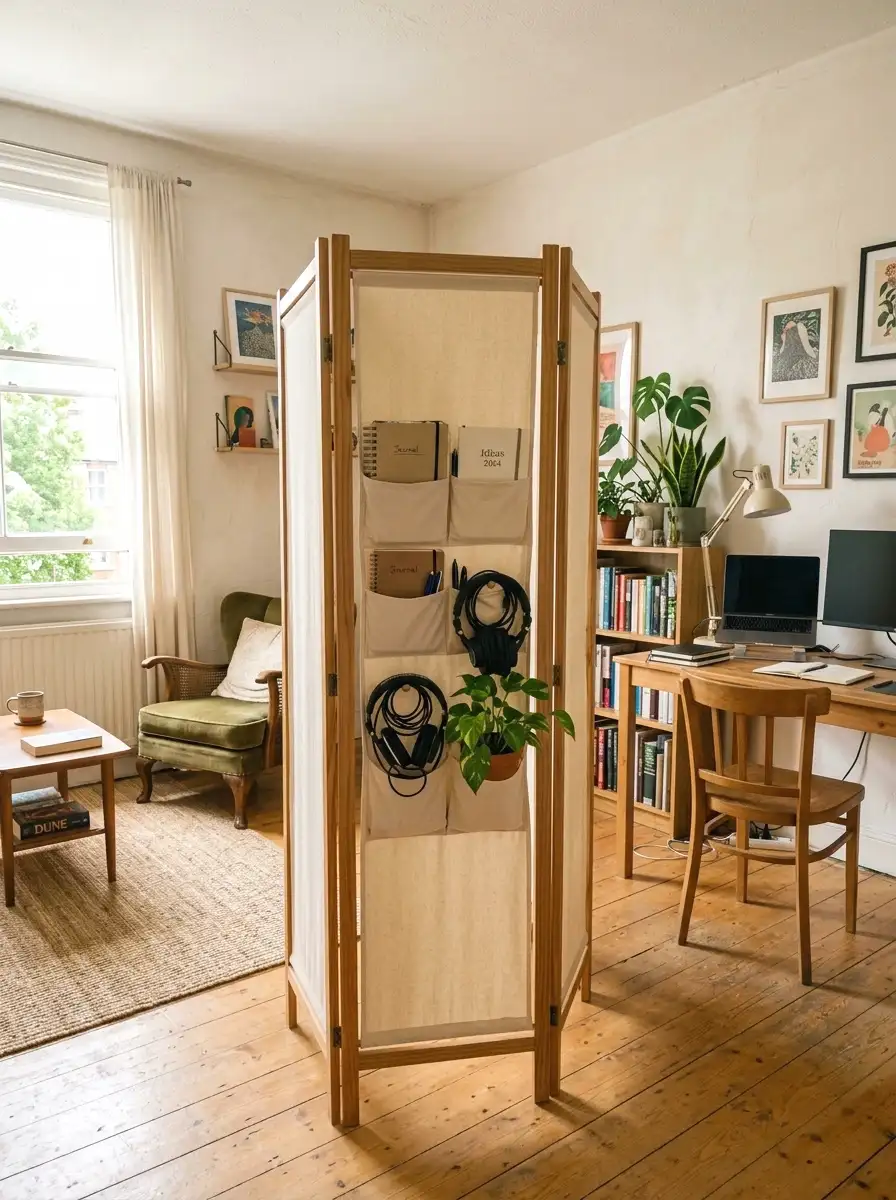
Folding screens are common, but the ones with built in fabric pockets, $70 to $150 at Amazon or Target, let you tuck notebooks, chargers, and headphones right into the divider itself. It saves desk clutter and gives each side of the screen its own little organization system.
Three panel screens around 5.5 feet tall work well for a seated work zone without making the ceiling feel low. This one’s easy to overlook because plain screens are everywhere, but the pocket version earns its price by doing double duty.
21. A Shared Charging Station on Neutral Ground
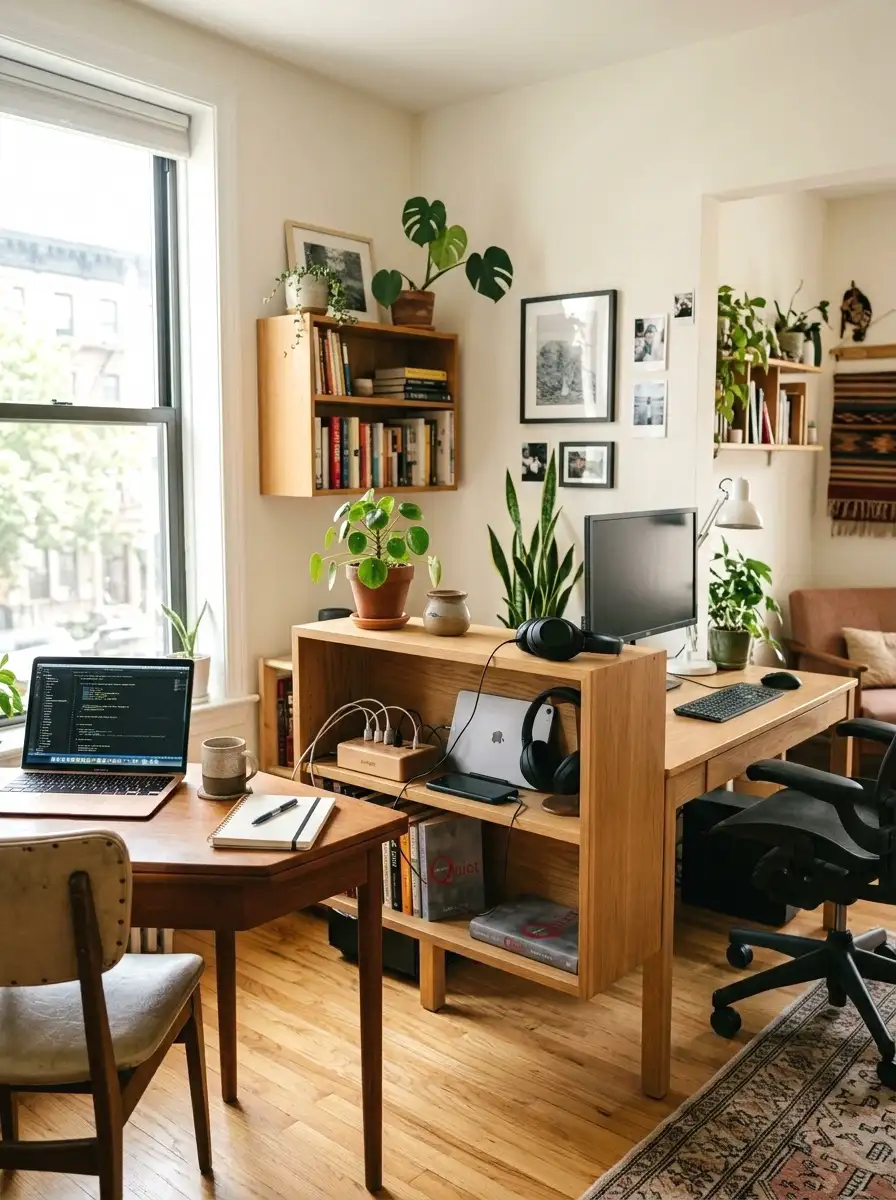
Instead of both of you hunting for the one outlet near your desk, a $30 to $60 charging station placed on neutral shelf space between your zones keeps cords, phones, and headphones organized in one spot. It’s a small thing, but it stops the daily “have you seen my charger” back and forth.
Anker and Belkin both make multi port stations in this price range that handle phones, tablets, and watches at once. Put it somewhere both of you pass on the way to your desk, like near the door or on the shared credenza.
22. Two Different Chair Heights for Different Desk Setups
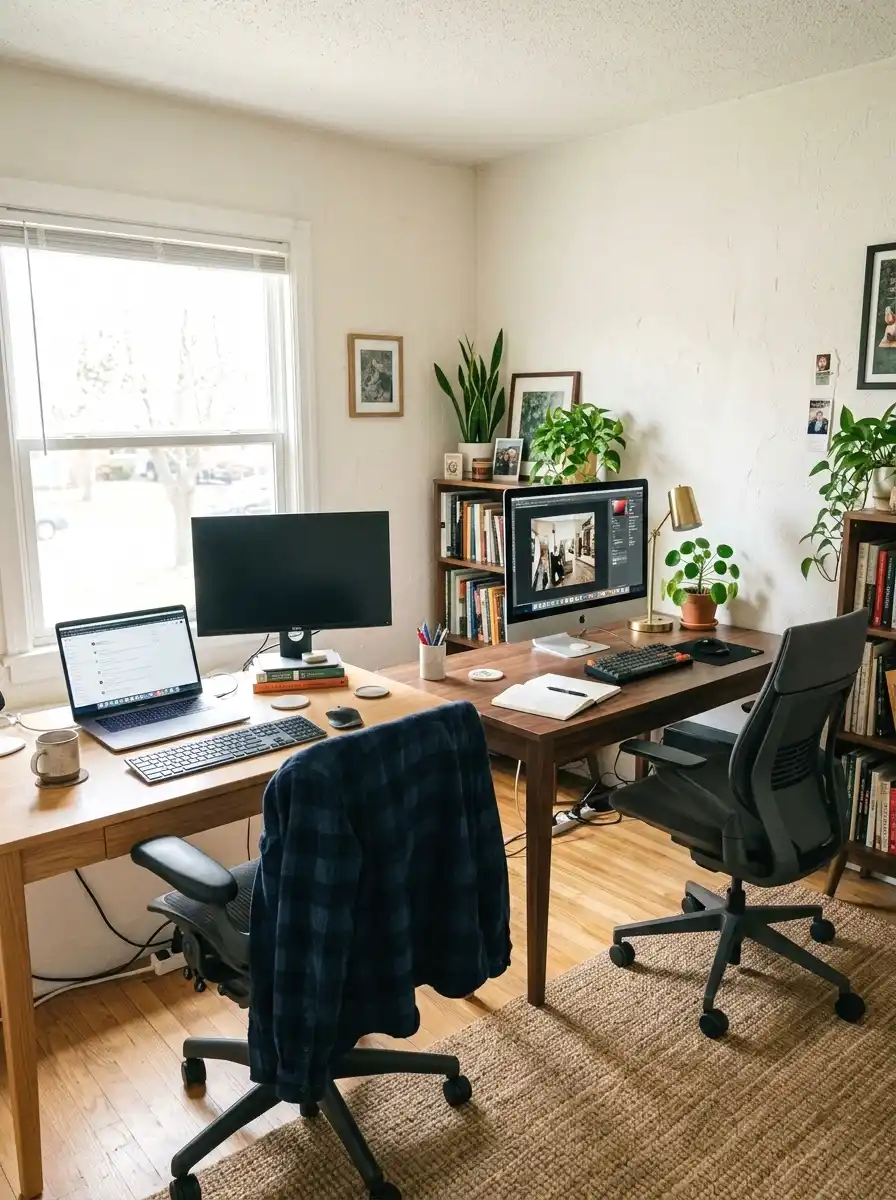
If your desks aren’t the same height, which happens a lot with mismatched furniture, matching chair height to each desk matters more than matching chair style. A basic ergonomic chair runs $150 to $300 at Amazon or Office Depot, and getting the height right prevents the wrist and neck strain that builds up over months of desk work.
I ignored this for way too long in my own setup and paid for it with a sore neck. Sit down and check that your elbows rest at desk height before you commit to a chair. It matters more than the color or the fabric ever will.
23. A Pegboard Above the Smaller Desk
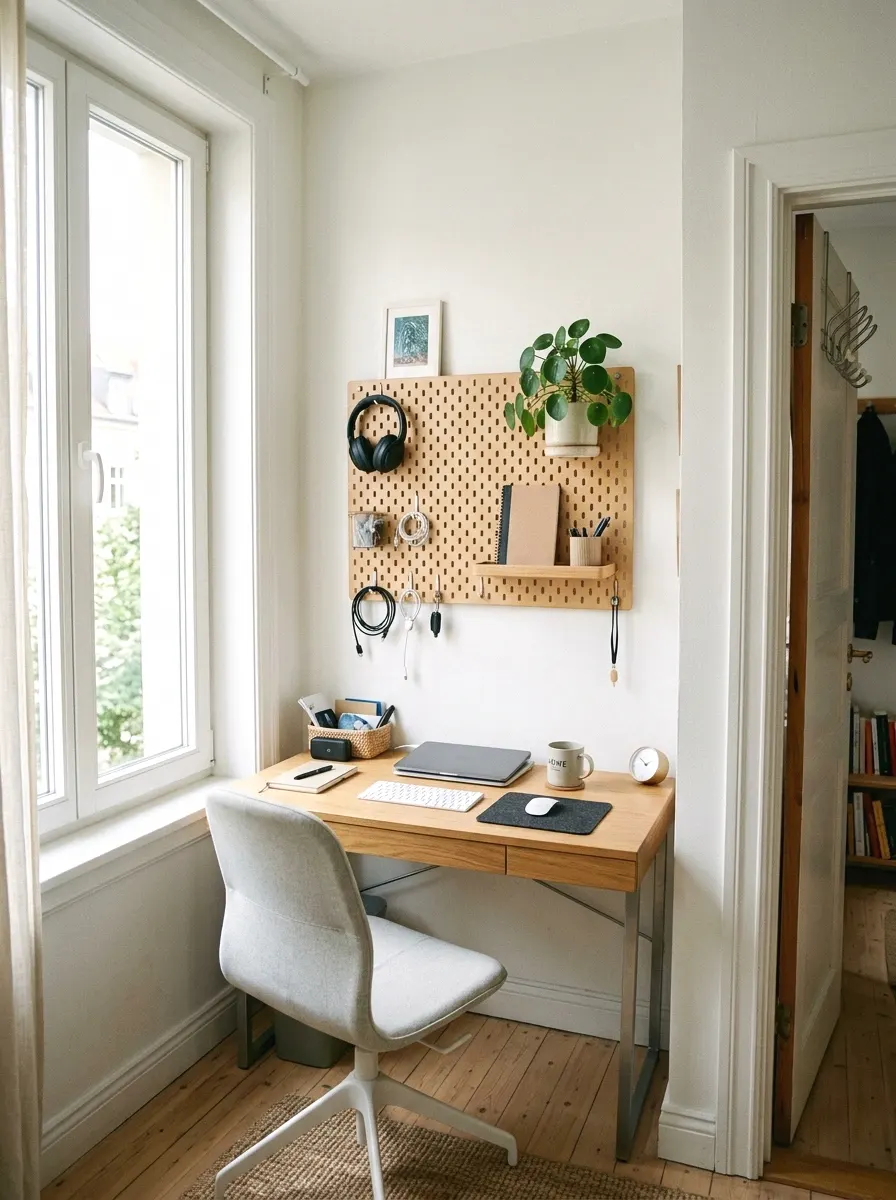
Wall mounted pegboard, $25 to $50 for a 2×4 foot panel at Home Depot, gives the tighter desk zone vertical storage instead of eating floor space. Hang headphones, small plants, or notebooks right on the wall so the desk surface stays clear for actual work.
This is especially useful for renters since pegboard only needs a couple of screws or even command strips for lighter loads. Paint it to match your wall color if you want it to blend in rather than stand out. Small desk, big storage, zero floor space lost.
This is a key strategy for effective home office organization ideas, especially in compact areas.
24. A Sound Machine for Overlapping Calls
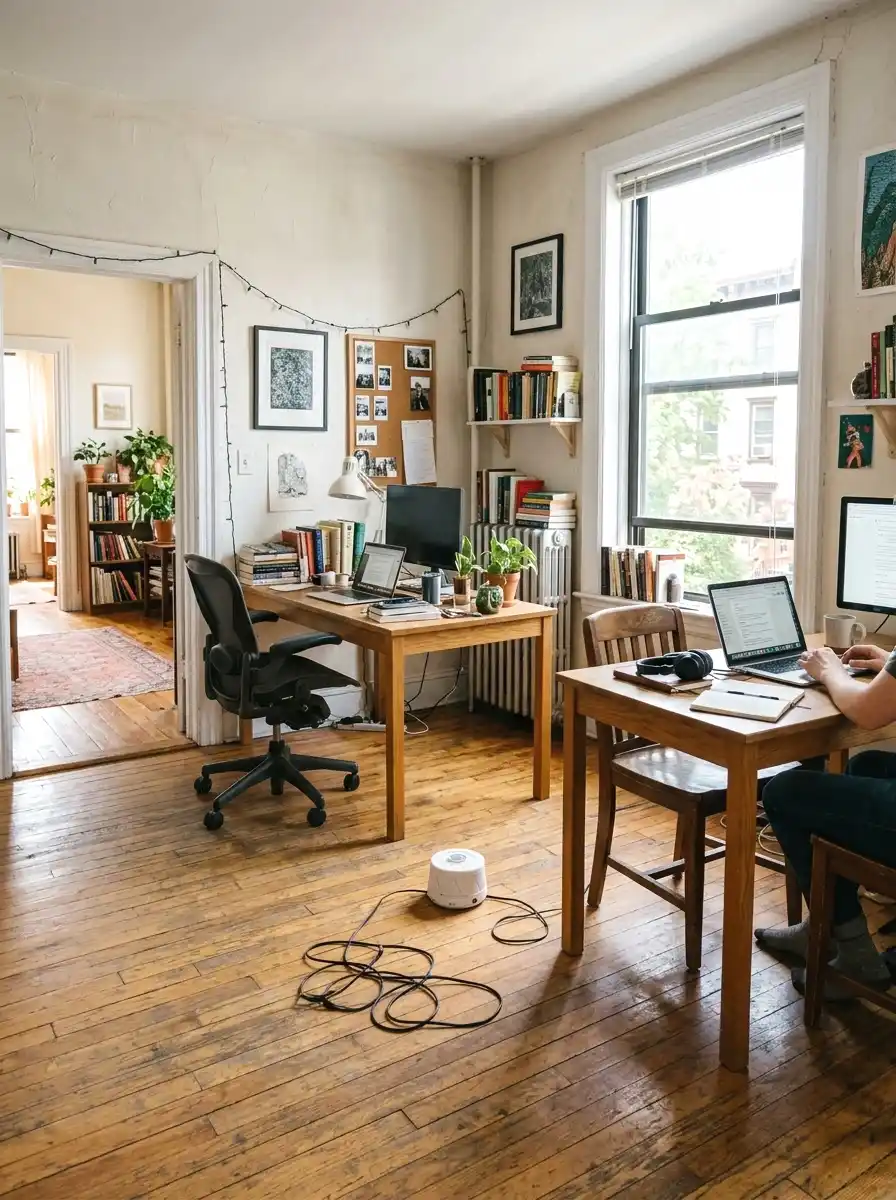
When you’re both on calls at the same time in one room, a small white noise or sound machine, $25 to $45 at Target or Amazon, placed between your desks can soften the overlap so neither of you hears every word of the other’s meeting. It’s not a full fix, but it takes the edge off in a genuinely tight layout.
And honestly, this is one of those cheap fixes that punches above its price. Look for one with adjustable volume and a few sound options so you’re not stuck with one static hum all day. Place it low, near the floor between zones, for the most even coverage.
25. A Shared Plant Shelf to Soften Hard Edges

Two desks, two monitors, and a bunch of cords can make a shared room feel sterile fast. A simple wall shelf, $30 to $70, holding a few small plants above the space between your desks adds some warmth without taking up desk real estate. It also gives your video call background something other than a blank wall.
Pick low maintenance plants like pothos or snake plants if neither of you has a great track record keeping things alive. This is a small budget item but it changes how the whole room feels day to day, especially by the third or fourth month.
26. A Weekly Layout Reset Ritual
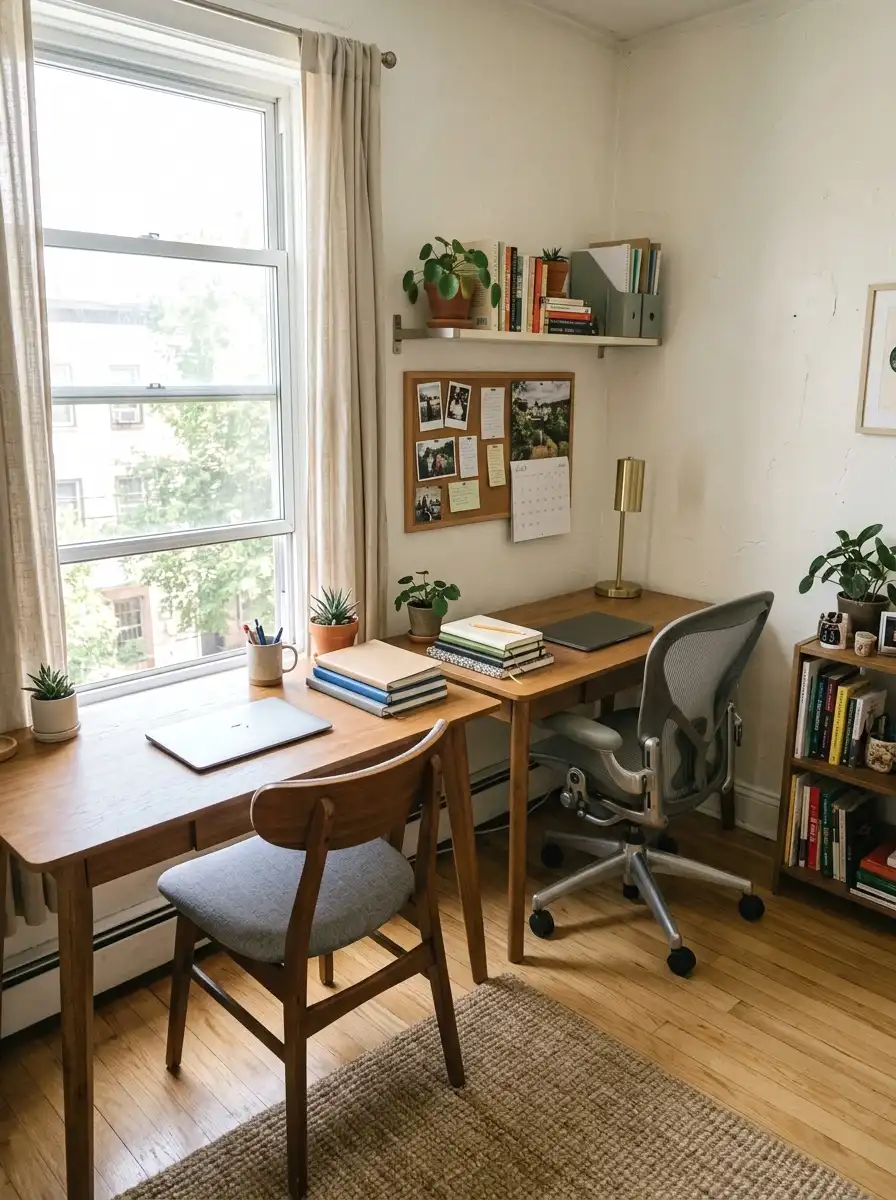
This last one isn’t a purchase, it’s a habit, and it might matter more than anything else on this list. Once a week, reset both desks, clear the shared surfaces, and check if the current layout is actually still working now that your schedules might have shifted. Apartments change how they’re used over time, and a layout that worked in month one can start to feel cramped by month four.
Ten minutes on a Sunday is enough. It also keeps resale value in mind if you’re renting and eventually showing the apartment, since a clutter free layout photographs and shows better than one buried in cords and papers.
Final Thoughts on Apartment Decor for Couples
You now have real ways to split a shared apartment into two work zones without a renovation or a huge budget. Whether it’s a shelf between desks, better lighting, or just fixing the cord chaos under your table, small changes add up fast when two people are working from the same square footage every day.
Start with one thing this weekend. Grab a cable tray or swap in a task lamp and just see how much calmer the room feels with that one fix in place.
For more inspiration, explore a wide range of apartment decor ideas to personalize your living space.
Frequently Asked Questions About Apartment Decor for Couples
What’s the best apartment decor for couples who both work from home in a small space?
A shelf or low credenza placed between two desks works best because it splits the room visually without blocking light or airflow. Pair it with acoustic panels and separate task lighting so calls don’t overlap and each of you gets a distinct work zone.
How much does it cost to set up two work from home zones in one apartment?
Most couples spend $100 to $700 total depending on furniture choices. A basic setup with a divider, two lamps, and cable management can land under $300, while adding matching desks and ergonomic chairs pushes closer to $700.
Can renters divide a room without drilling holes?
Yes. Curtain tracks, freestanding shelves, folding screens, and tension rods all create separation without permanent changes, which matters for keeping your deposit and preserving resale value if the unit is ever shown or sold.