
22 Tiny Home Decorating Ideas for Your Apartment (Real Budget, Real Results)

Your apartment feels like a shoebox. You’ve tried rearranging. You’ve tried decluttering. It still just feels small, cramped, and kind of depressing to come home to. That’s a hard thing to sit with every single day. Tiny Home Decorating Ideas
This list covers 22 real decorating ideas pulled from people who actually live in small spaces, not designers with 2,000 square feet to play with. Each idea was chosen because it solves a specific problem, fits a budget between $100 and $300, and works whether you own or rent. Some of these cost under $20. A few go up to $150, but every one earns its spot.
This is for renters and apartment dwellers who want real results without hiring anyone. If you’re looking for a full renovation or have a flexible five-figure budget, this list isn’t for you. But if you want your place to feel noticeably better by next weekend, you’re in the right spot.
If you’re starting from scratch, there’s a whole guide on apartment decorating on a tight budget that pairs well with this list.
By the end of this, you’ll have a clear plan for making your small apartment feel bigger, warmer, and actually like yours.
What to Know Before You Start Decorating a Tiny Home
- Rooms under 400 sq ft benefit most from keeping 60% of floor space clear.
- Natural light is free. Removing heavy curtains costs nothing and changes everything.
- Most renters spend $150 to $250 on their first round of small-space updates.
- Vertical space above eye level is the most wasted resource in small apartments.
- Hanging art too low is one of the most common mistakes. Aim for 57 to 60 inches to center.
- Command strips hold up to 16 lbs and leave no wall damage when removed correctly.
- Furniture with legs creates visual breathing room. Pieces that sit flat on the floor shrink a room.
- Rugs under 5×7 feet rarely anchor a space. Size up even if it feels too big at first.
1. Use a Light Rug That’s Bigger Than You Think You Need
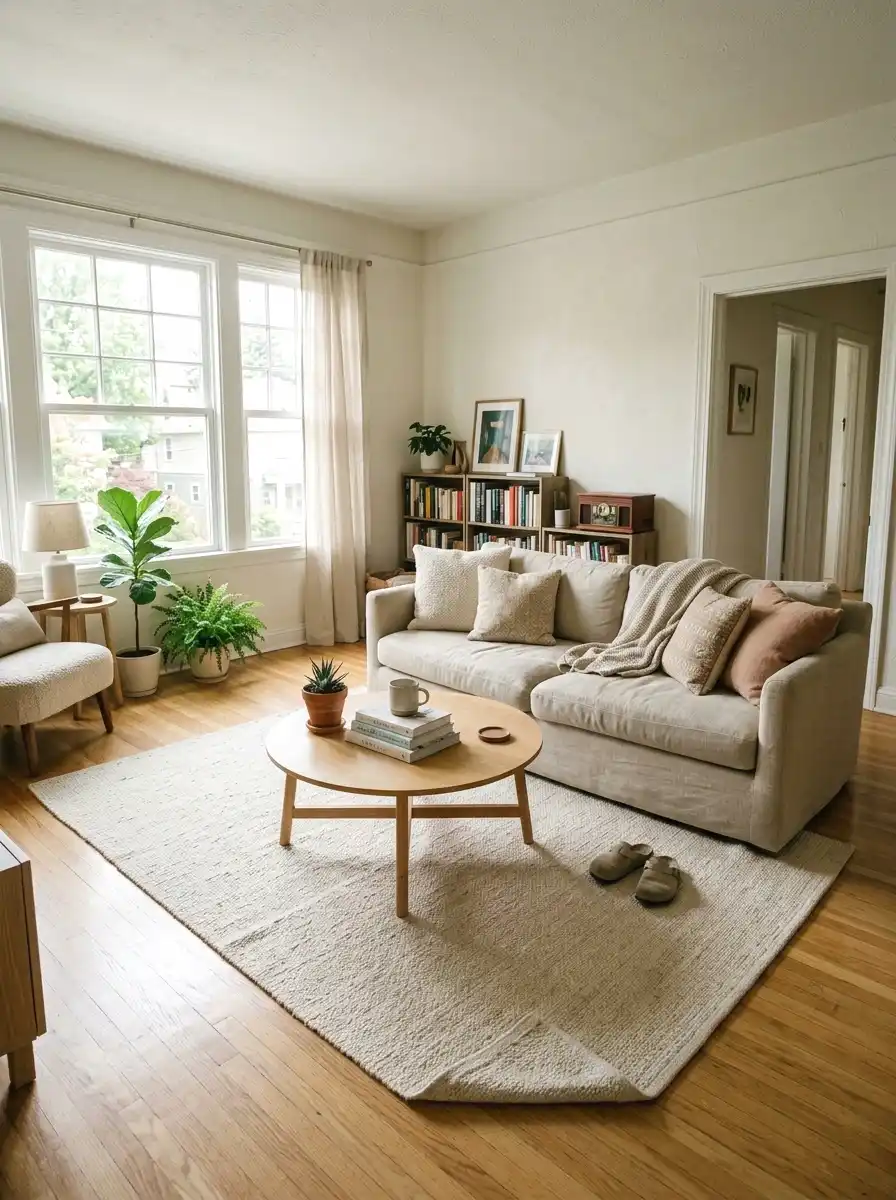
The rug situation in most small apartments is backwards. People buy small rugs to “not overwhelm” the space, and it ends up making everything look more cramped. I made this mistake for two years before someone finally told me to go bigger.
A cream or oatmeal-colored rug in a 6×9 or 8×10 size visually anchors your furniture and makes the floor feel continuous, not chopped up. You can find solid low-pile options on Ruggable or Amazon for $80 to $140. The lighter the color, the more the room opens up. And yes, light rugs are washable now. No excuses.
While you’re rethinking the floor, it’s also worth looking at storage solutions that actually save space so your surfaces stay clear.
2. Swap Overhead Lights for Layered Lamps
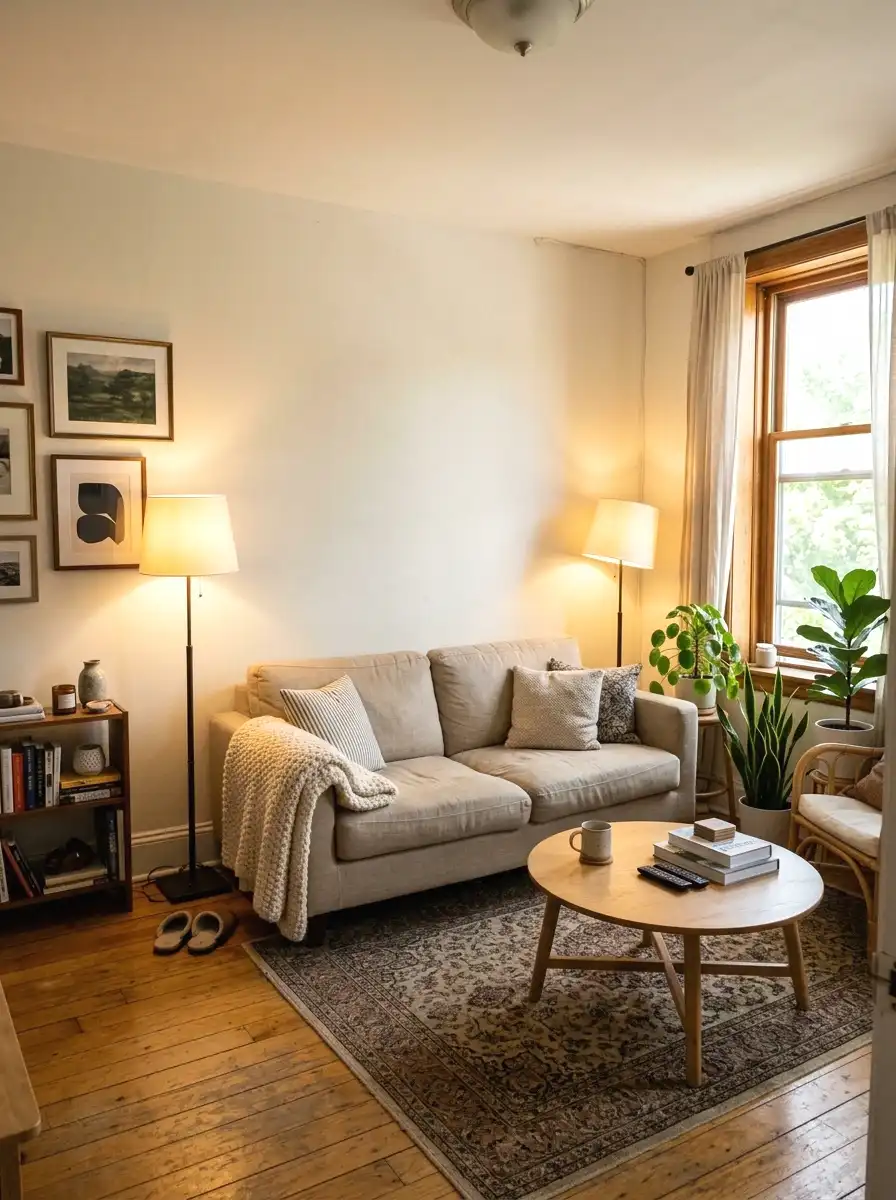
Overhead lighting is usually the worst thing in a small apartment. It flattens the room, casts harsh shadows, and makes everything feel like a waiting room. Turn it off and see how different the same space feels with a couple of lamps running instead.
Two floor lamps or a mix of a table lamp and a plug-in sconce, all set to warm bulbs (2700K), will make your space feel twice as welcoming. Budget around $40 to $90 for two decent lamps from IKEA or Target. Warm light does more for a small space than almost any piece of furniture.
More Ideas:


3. Mount Your TV to Free Up Surface Space
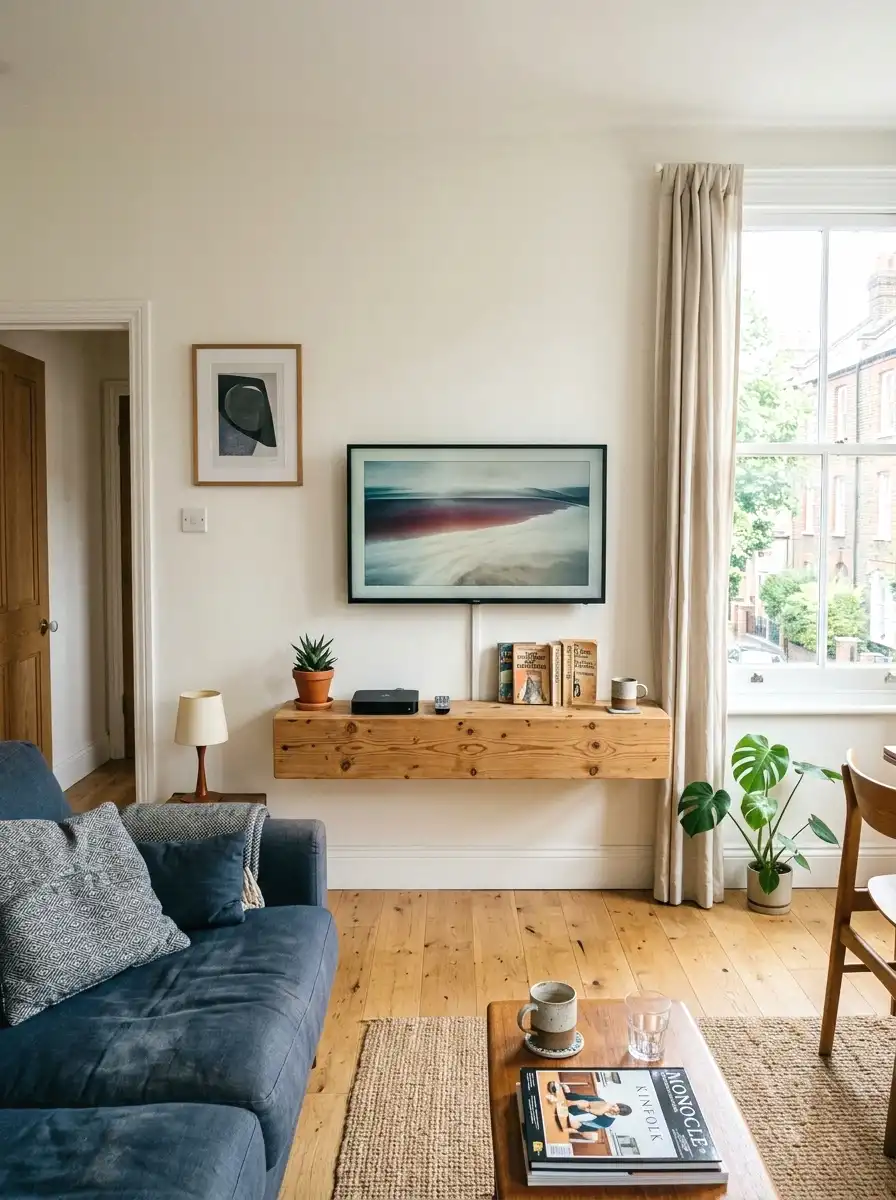
Here’s something most people don’t consider until they’re deep into decorating: the TV stand takes up a surprising amount of visual and physical space. Mounting the TV to the wall opens up the floor beneath it and makes the wall feel intentional, not just functional.
A basic tilting mount runs $25 to $40 and most come with all the hardware you need. The install takes about 45 minutes if you find a stud. When I tried this in my own place, the living room instantly felt like it had more room, even though nothing else moved. Add a floating shelf below for your devices and you’re done.
4. Add a Full-Length Mirror Somewhere Unexpected
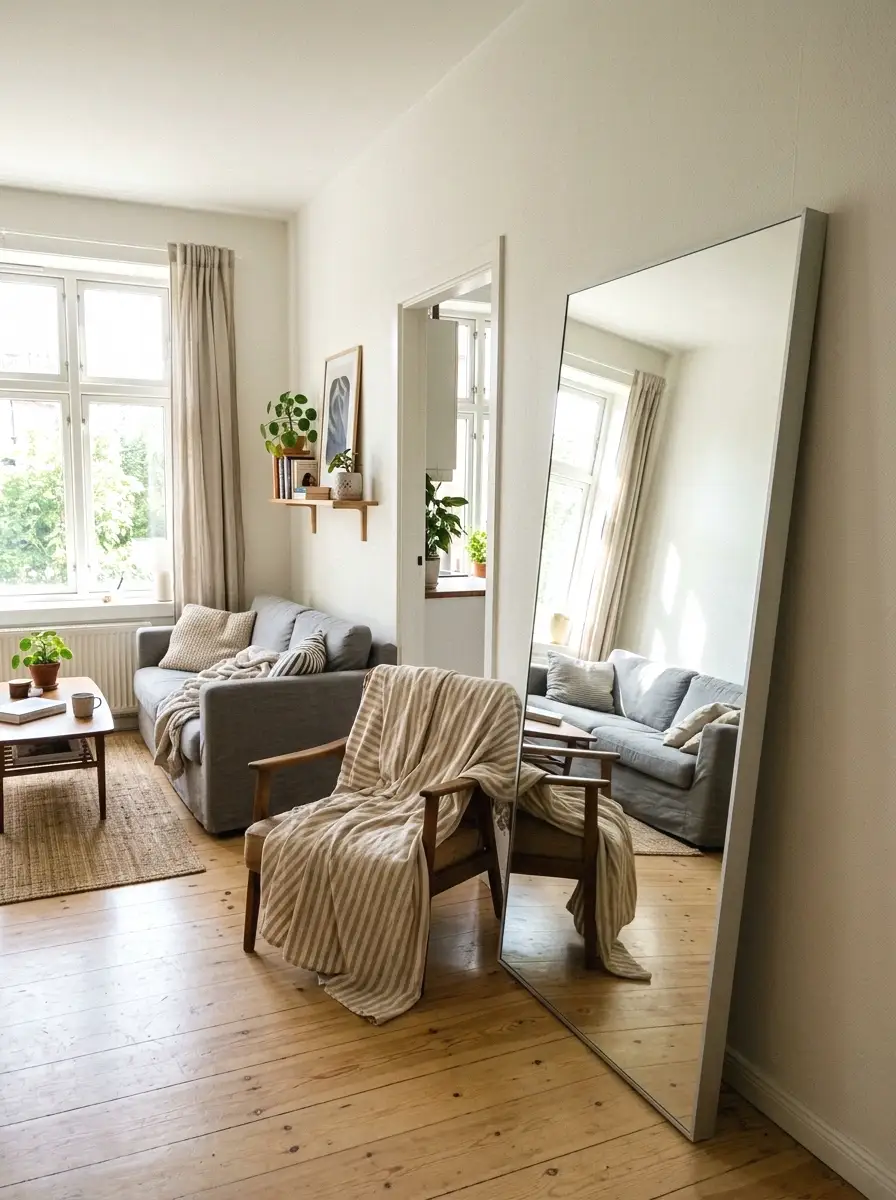
Mirrors are the oldest trick in the book but people still under-use them. A full-length mirror on a wall (not just behind a door) reflects light and the opposite side of the room, making the space feel like it goes on further than it does. Seriously works.
Lean one against a wall at an angle or hang it horizontally to make a low-ceiling room feel taller. A basic frameless mirror from IKEA (the HOVET or NISSEDAL) runs $50 to $80. If you want a framed one with more style, check thrift stores first. A good mirror in the right spot is one of the highest-return moves you can make in a small apartment.
5. Put Plants on Shelves, Not Just the Floor
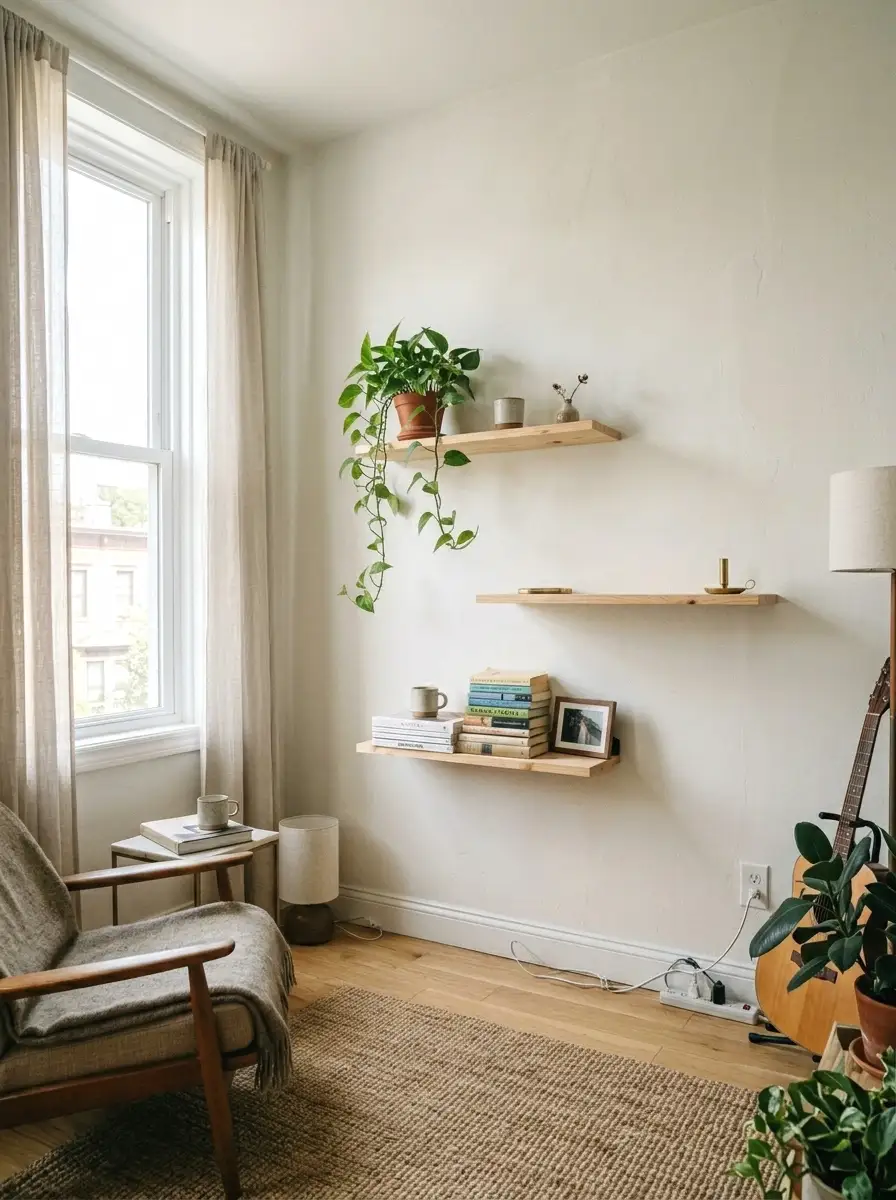
Floor plants are fine but they eat square footage. When you move your plants up to shelves, windowsills, or floating wall shelves, the floor stays clear and the eye gets drawn upward. That vertical movement makes the ceiling feel higher.
A set of floating shelves from IKEA (LACK series) runs about $15 to $25 each. Cluster small plants like pothos, snake plants, or trailing string of pearls up there and you get the same green feeling without losing floor space. This is especially useful in studios where every square foot of floor is doing double duty.
If your whole apartment is one open room, there’s a deeper look at how to style a studio layout that covers zoning and furniture placement.
6. Use Curtains That Go Floor to Ceiling
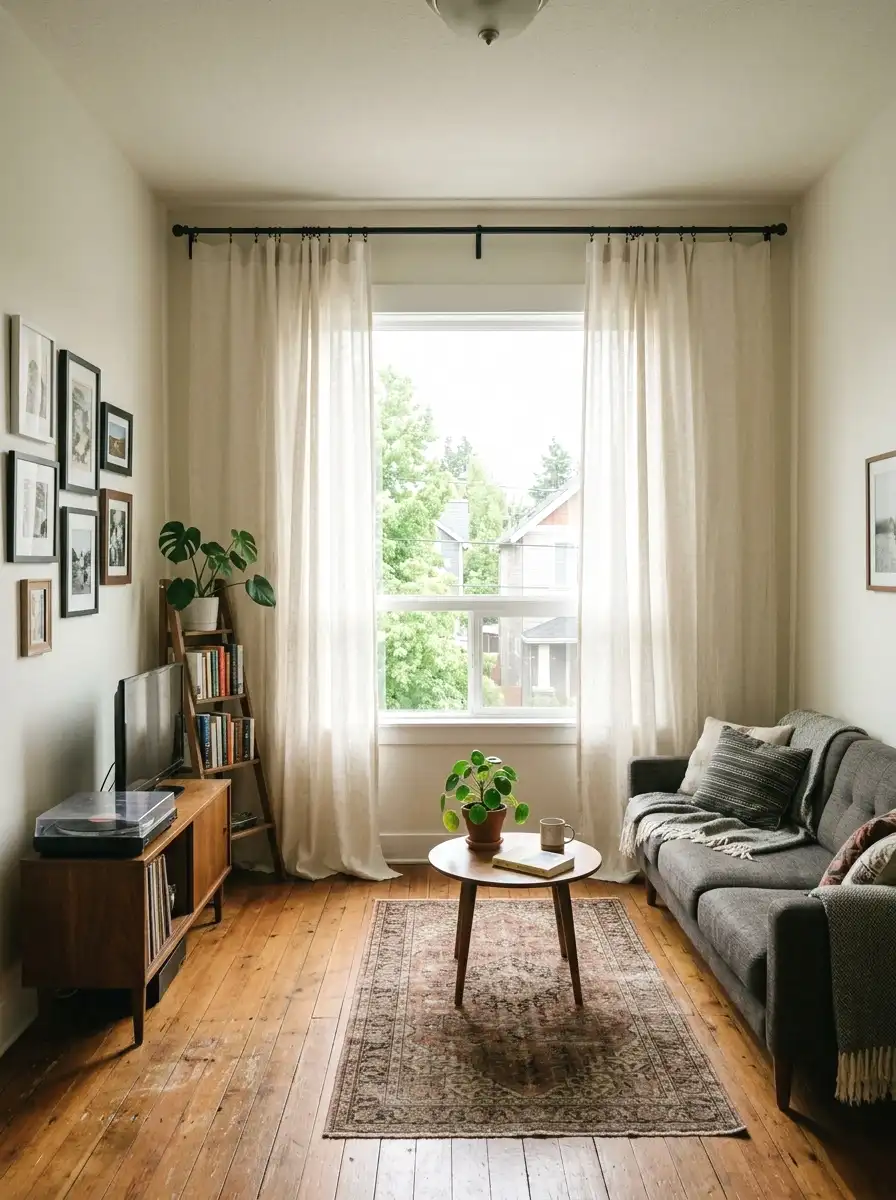
Most apartments come with curtains that hang just above the window and end just below it. That setup makes windows look smaller and ceilings feel lower. Hanging curtains as high as possible, right near the ceiling, and letting them go all the way to the floor is the fix.
You don’t need expensive curtains for this. IKEA LENDA panels in off-white run about $20 to $30 per panel. Two panels on a tension rod mounted close to the ceiling will make your window look dramatically bigger and the room feel taller. The only cost is the rod and a bit of time.
More Ideas:
7. Replace a Bulky Coffee Table with an Ottoman
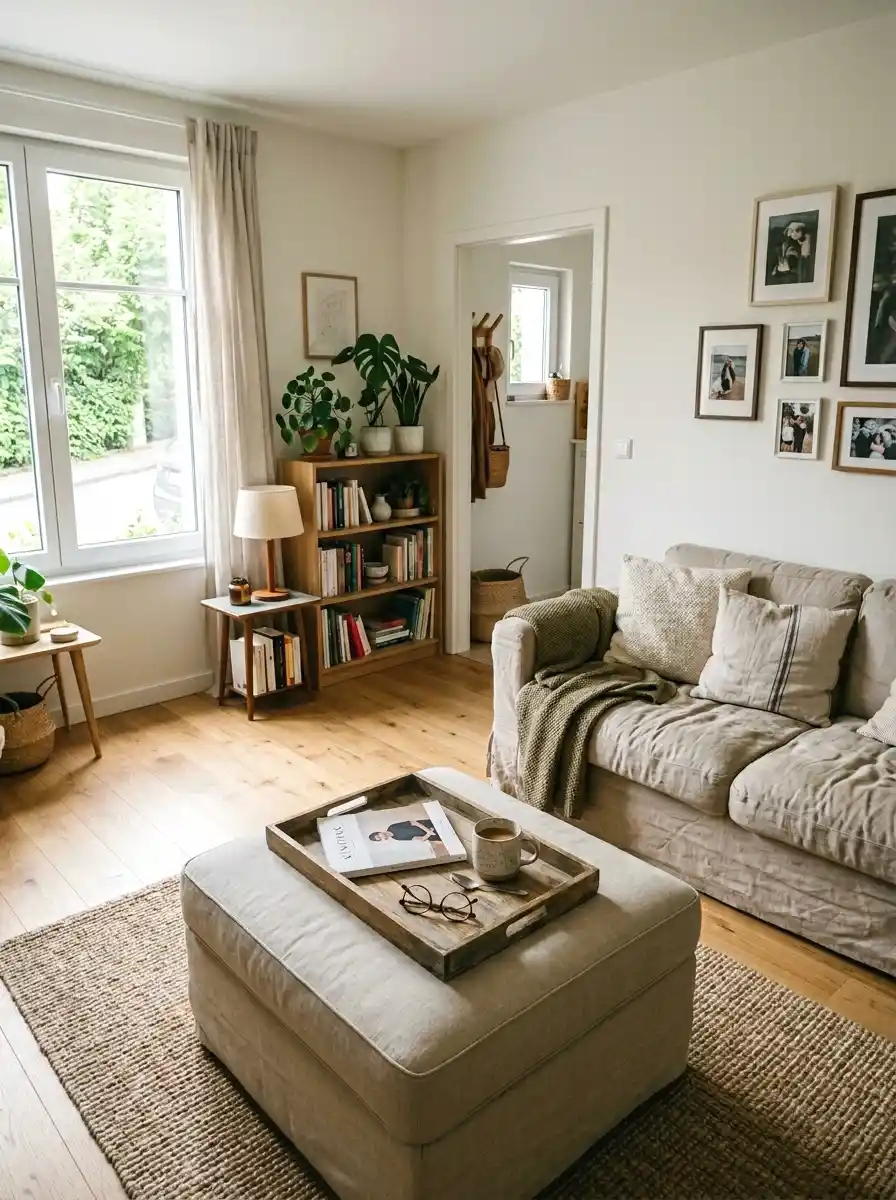
Coffee tables with solid legs and heavy bases make small living rooms feel crowded. Swapping one out for a round or square storage ottoman is one of the best small-space trades you can make. The ottoman holds stuff inside, doubles as extra seating, and feels less visually heavy.
A fabric storage ottoman from Target or Amazon runs $50 to $90. Add a wooden tray on top and it works as a coffee table surface. I was skeptical about this one but the difference in how open the room felt was immediate. Round edges also mean fewer shins getting bumped in tight spaces.
8. Go Vertical with Floating Shelves in the Kitchen
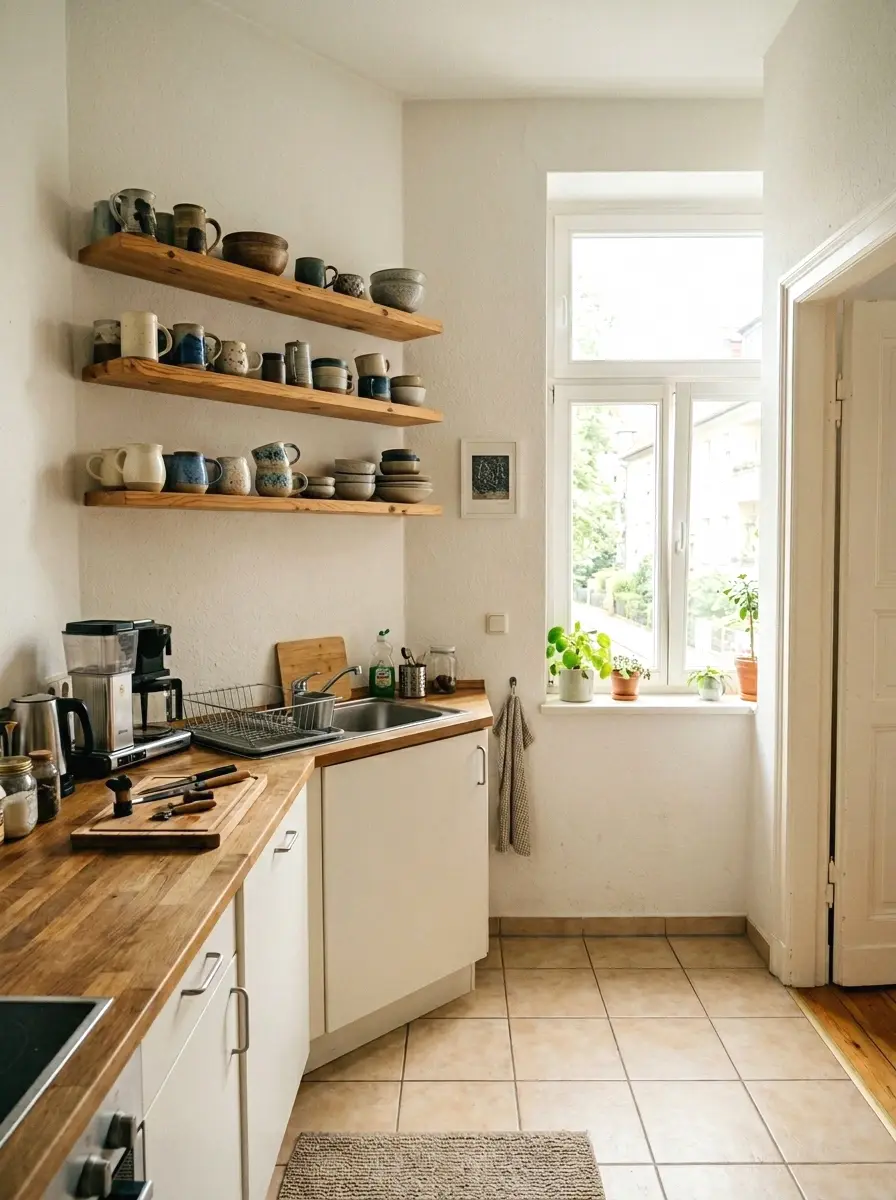
Kitchen storage is always tight in small apartments. Instead of cramming everything into limited cabinet space, use the wall above your counter. A row of floating shelves between counter height and the top of your cabinets gives you real, accessible storage without taking up any floor space.
Budget $30 to $60 for two or three wood shelves from IKEA or Home Depot. Use them for everyday items like mugs, spices, and small bowls. Keeping them tidy (one consistent type of storage jar goes a long way) makes the kitchen look organized instead of cluttered. This one is so underrated.
For more floating shelf ideas worth stealing, the same approach works in other tight rooms too.
9. Choose Furniture with Exposed Legs
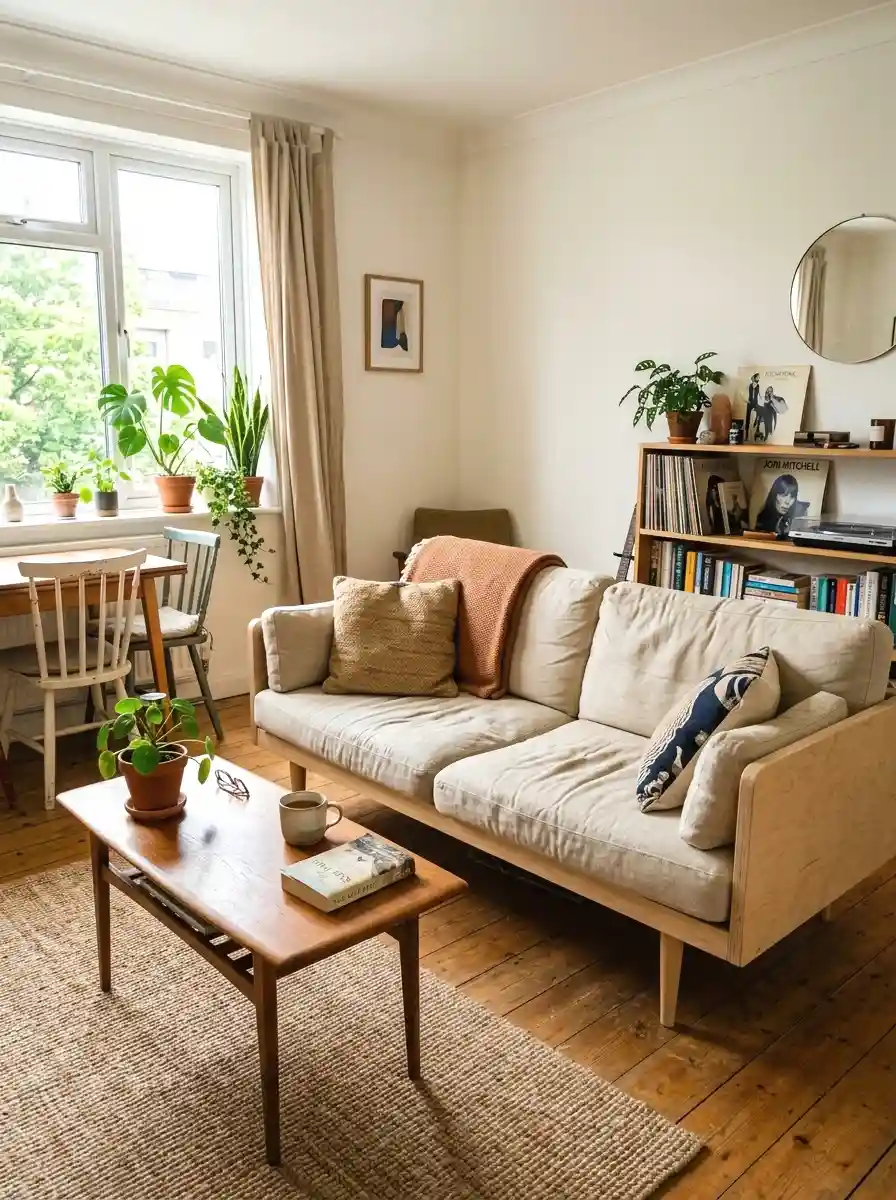
Sofas, beds, and chairs that sit directly on the floor create a visual wall of solid mass. When furniture has legs, even short ones, you can see the floor beneath it. That gap adds airiness and makes a room feel less stuffed.
Look for sofas on legs at IKEA (ÄPPLARYD, KIVIK) or West Elm’s sale section. The price difference between legged and slab-bottom pieces is often not significant, so it’s more about knowing to look for it. Even bed frames with legs make a bedroom feel more open than a low platform frame that sits flush to the floor.
10. Use One Bold Accent Wall Instead of Decorating Every Wall
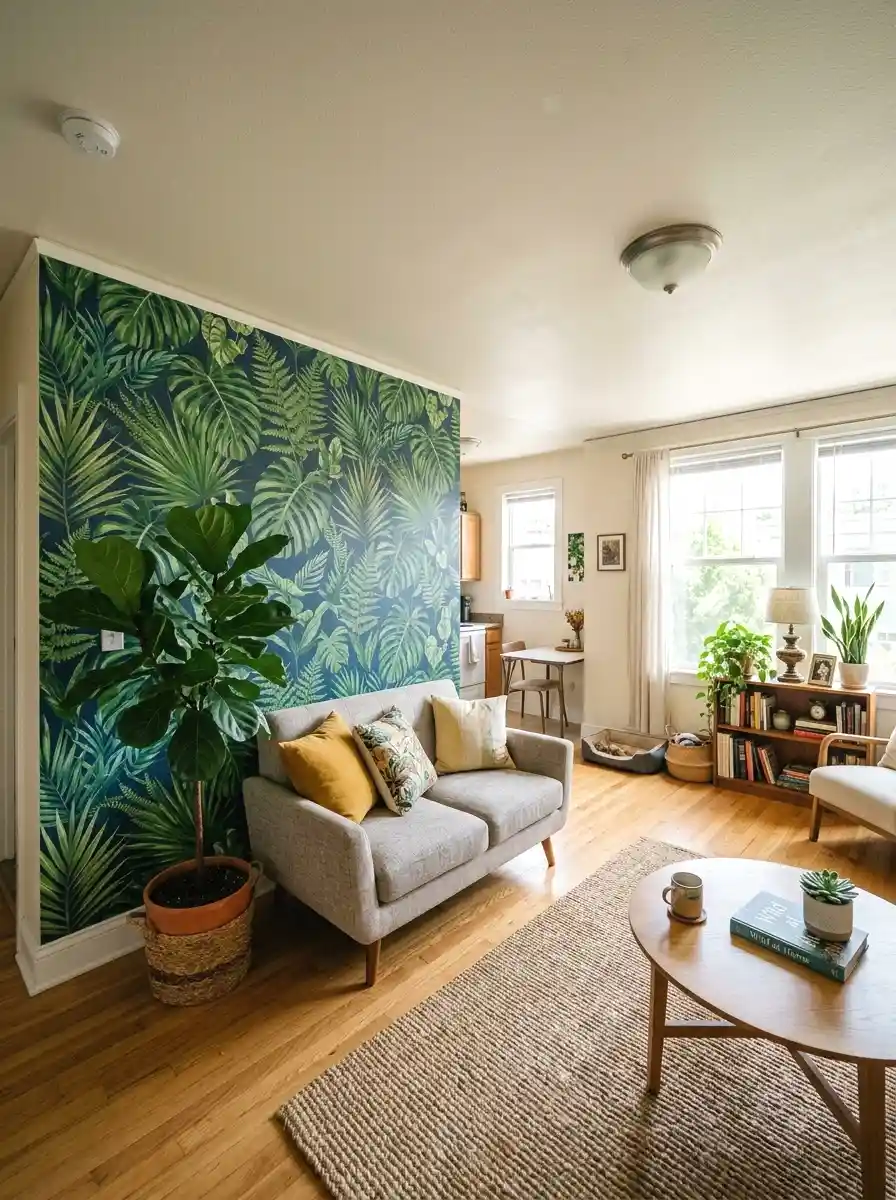
Trying to decorate all four walls of a small room usually ends up looking busy and overwhelming. Picking one wall and doing something bolder with it, whether that’s a different paint color, removable wallpaper, or a gallery arrangement, anchors the whole room without crowding it.
Removable peel-and-stick wallpaper panels from brands like Tempaper or NuWallpaper run $30 to $80 for an accent wall depending on size. For renters, this is a no-risk option. Choose something with a pattern that has some scale to it: large botanicals, wide geometric shapes, or textured plaster looks work better in small spaces than tiny all-over prints.
If you want to see how the single-wall approach plays out across different styles, there’s a full roundup of accent wall ideas for any room.
More Ideas:
11. Add a Bench at the End of Your Bed
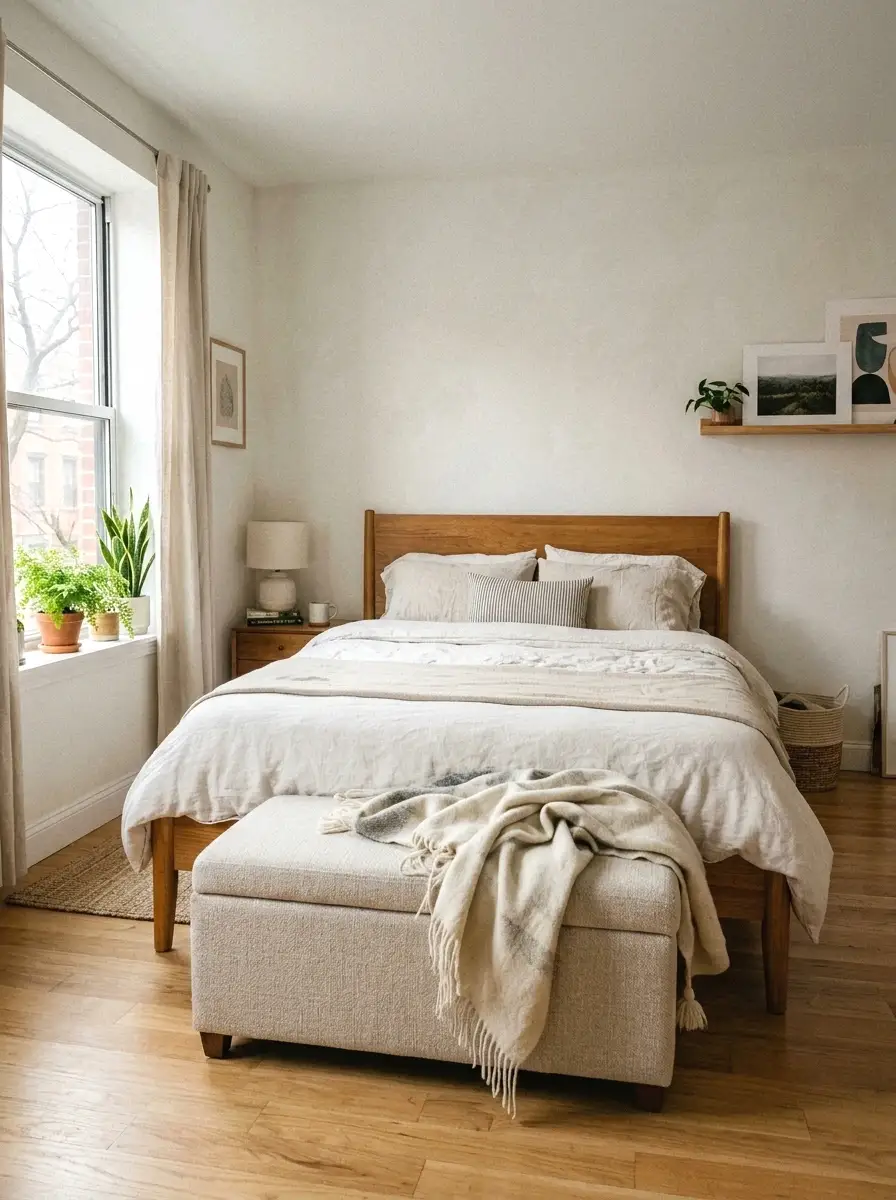
Small bedrooms usually have dead space at the foot of the bed that goes completely unused. A simple storage bench fills that gap, gives you somewhere to sit while putting on shoes, and adds storage for extra blankets or bags. It makes the bedroom feel finished in a way most small rooms don’t.
An entryway or bedroom bench with storage from IKEA or Amazon runs $60 to $120. Keep it proportional. In a room where the bed is a queen, a 44 to 48 inch bench fits well. This also visually separates the “sleeping zone” from the rest of a studio, which matters a lot if you’re trying to make one room feel like two.
12. Hang Art in a Tight Cluster, Not Spread Out
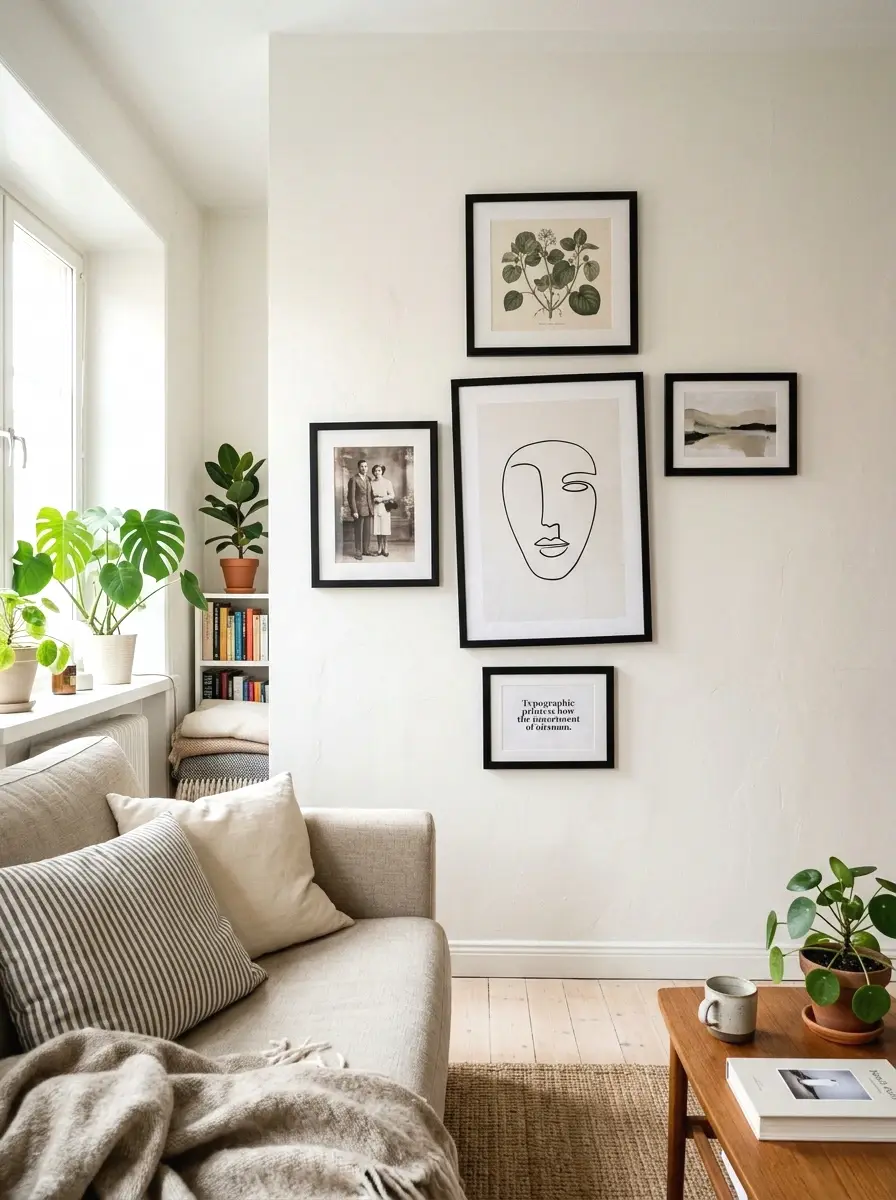
People spread art all around the walls of a small room thinking it’ll make it feel fuller. What it actually does is pull the eye in five directions and make the space feel scattered. A tight cluster of three to five pieces on one wall is far more effective.
Keep pieces within a few inches of each other. Mix sizes but stick to one or two frame finishes, like all black or all natural wood, so it reads as intentional. You can build a solid gallery wall for $40 to $80 using thrifted frames, printed photos, or inexpensive art prints from Desenio or Artifact Uprising.
13. Use a Pegboard in the Entryway
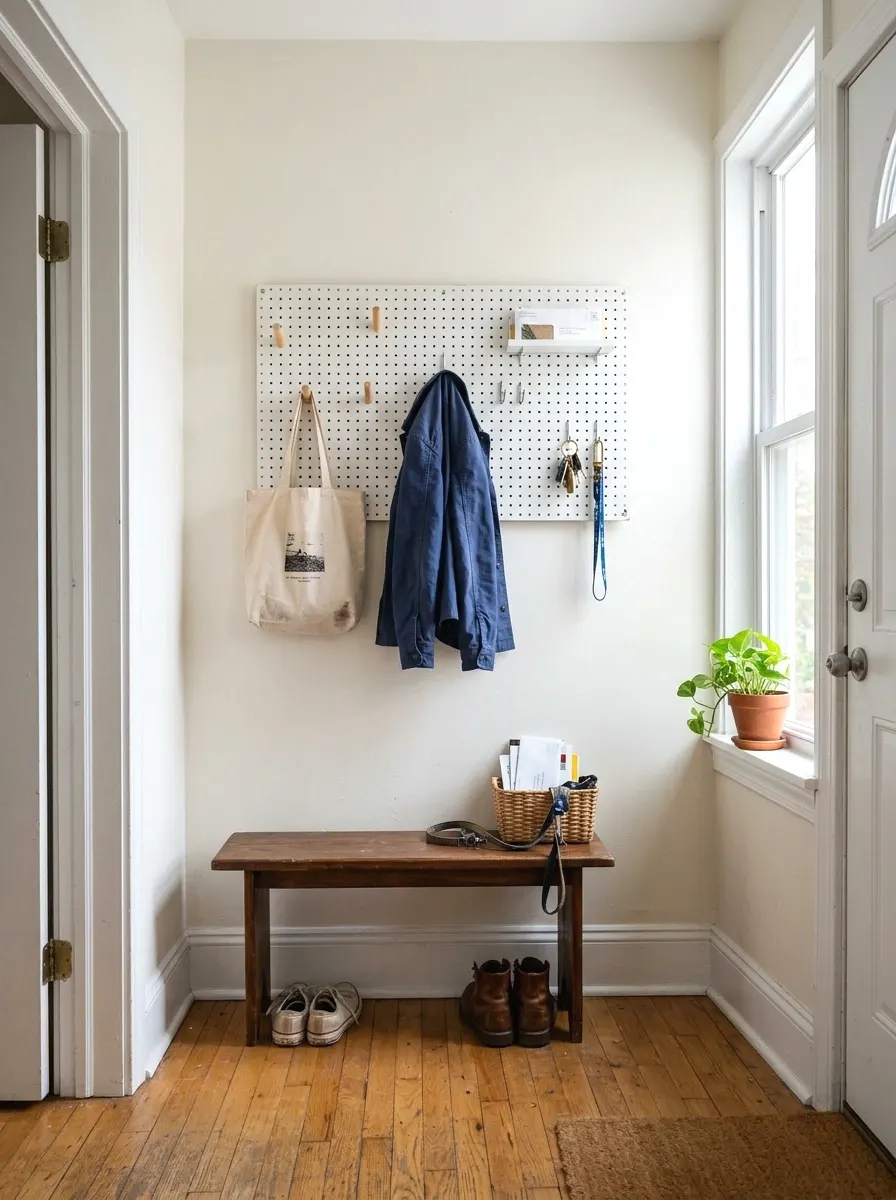
Entryways in apartments are often just a wall and a floor with no real function. A pegboard gives you somewhere to hang bags, keys, coats, and accessories without needing a mudroom or built-in storage. It turns dead wall space into a working system.
A standard 16×32 inch pegboard sheet from Home Depot runs around $10 to $15. Add a coat of paint in a color that matches your wall and mount it with proper wall anchors. Peg hooks and shelves are a few dollars each. The whole setup can come in under $40 and it looks intentional when done right.
14. Swap Generic Blinds for Woven Wood Shades
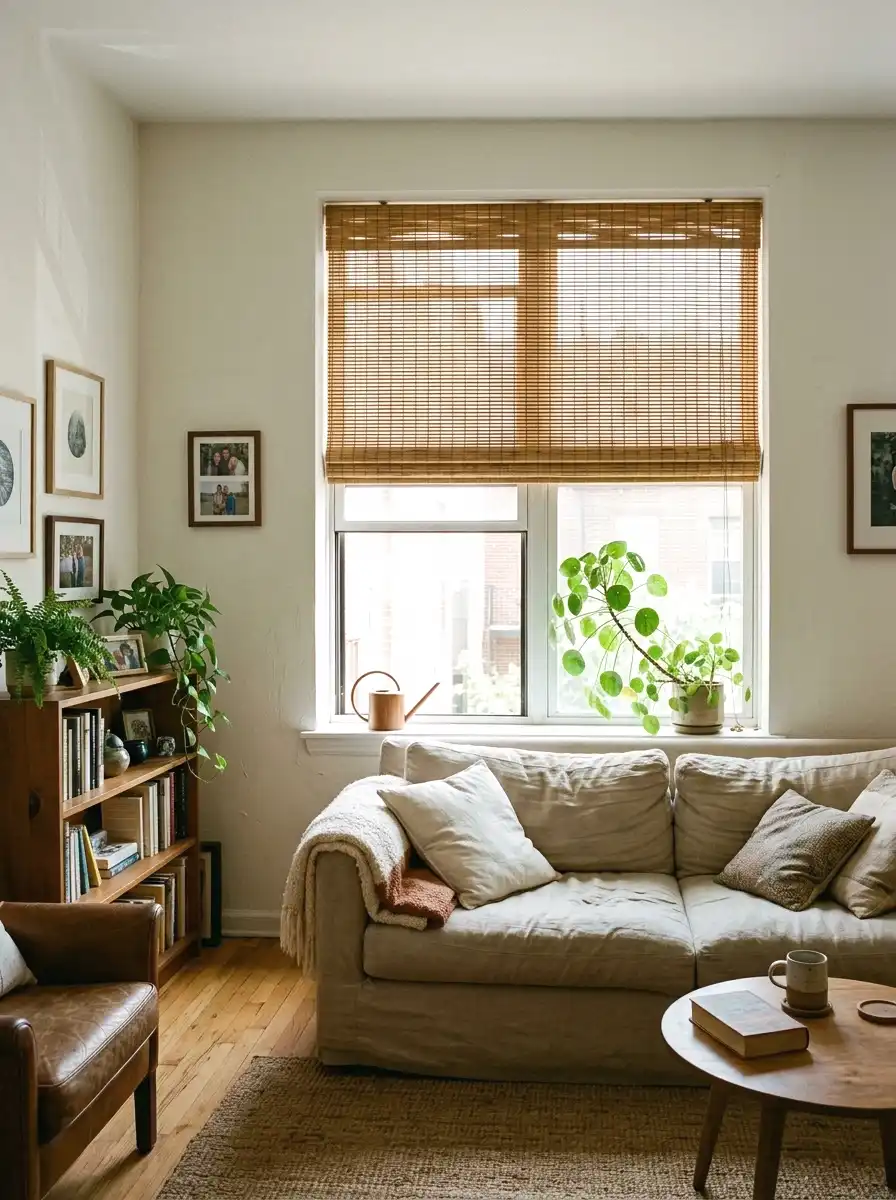
Cheap white or gray blinds that come standard in most apartments are functional but they flatten the look of a room. Woven wood or bamboo shades add warmth and texture without adding visual weight. They filter light in a soft, natural way that changes the feel of a whole room.
You can find cordless woven shades at Home Depot, Lowe’s, or online at Select Blinds for $30 to $70 per window. Most standard apartment windows are 24 to 36 inches wide, so sizing is straightforward. This is one of the best per-dollar upgrades in a small space because it addresses both light and style at the same time.
More Ideas:
15. Keep a Consistent Color for Your Storage Boxes and Baskets
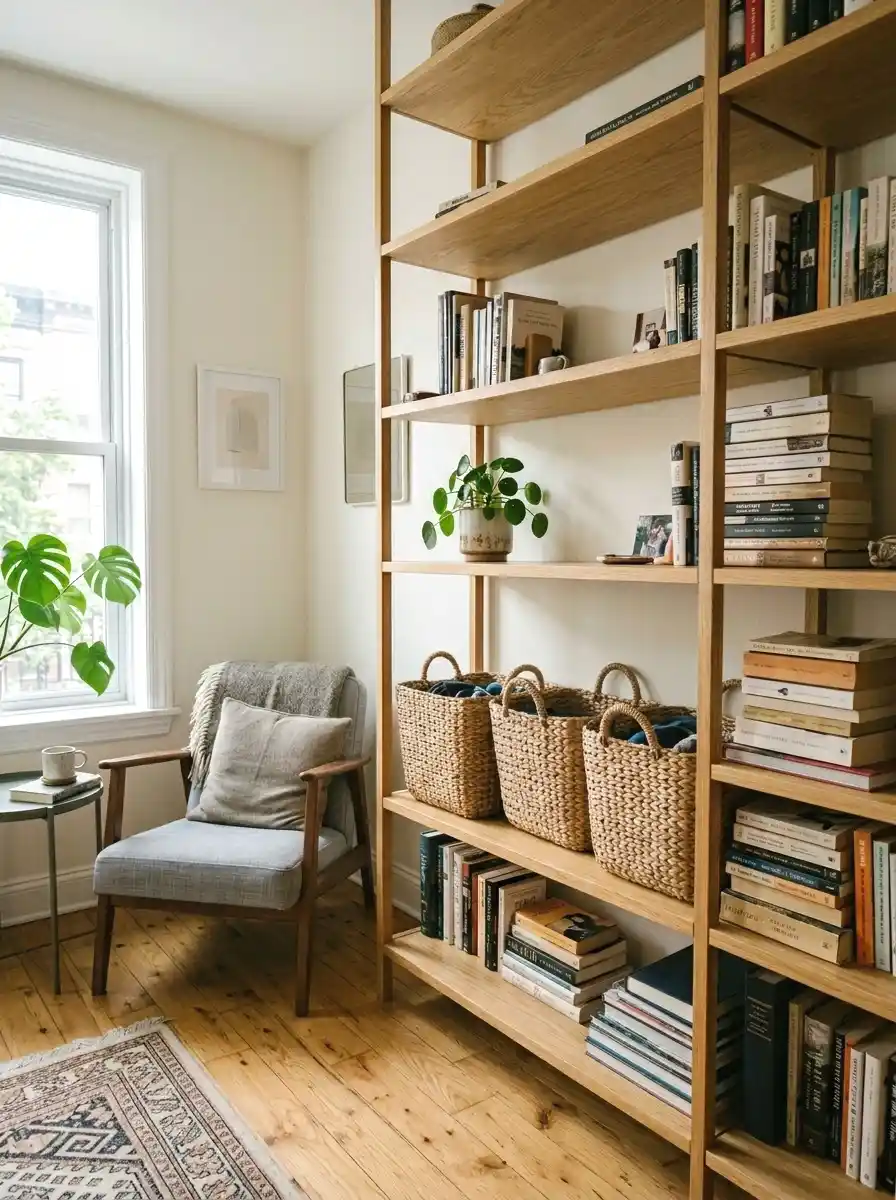
Open shelving and visible storage areas look messy in small spaces unless everything is the same color or material. Mixing a black bin, a tan basket, a clear box, and a patterned tote on the same shelf creates visual noise that makes the room feel smaller.
Pick one basket type and stick to it. Natural seagrass, white fabric, or black wire baskets all work well. A set of six matching baskets from IKEA, Target, or Amazon runs $25 to $50. The repeat of one material across a shelf or storage unit creates a calm, polished look without spending much. (Took me ages to figure this out.)
16. Add a Room Divider or Bookcase as a Studio Separator
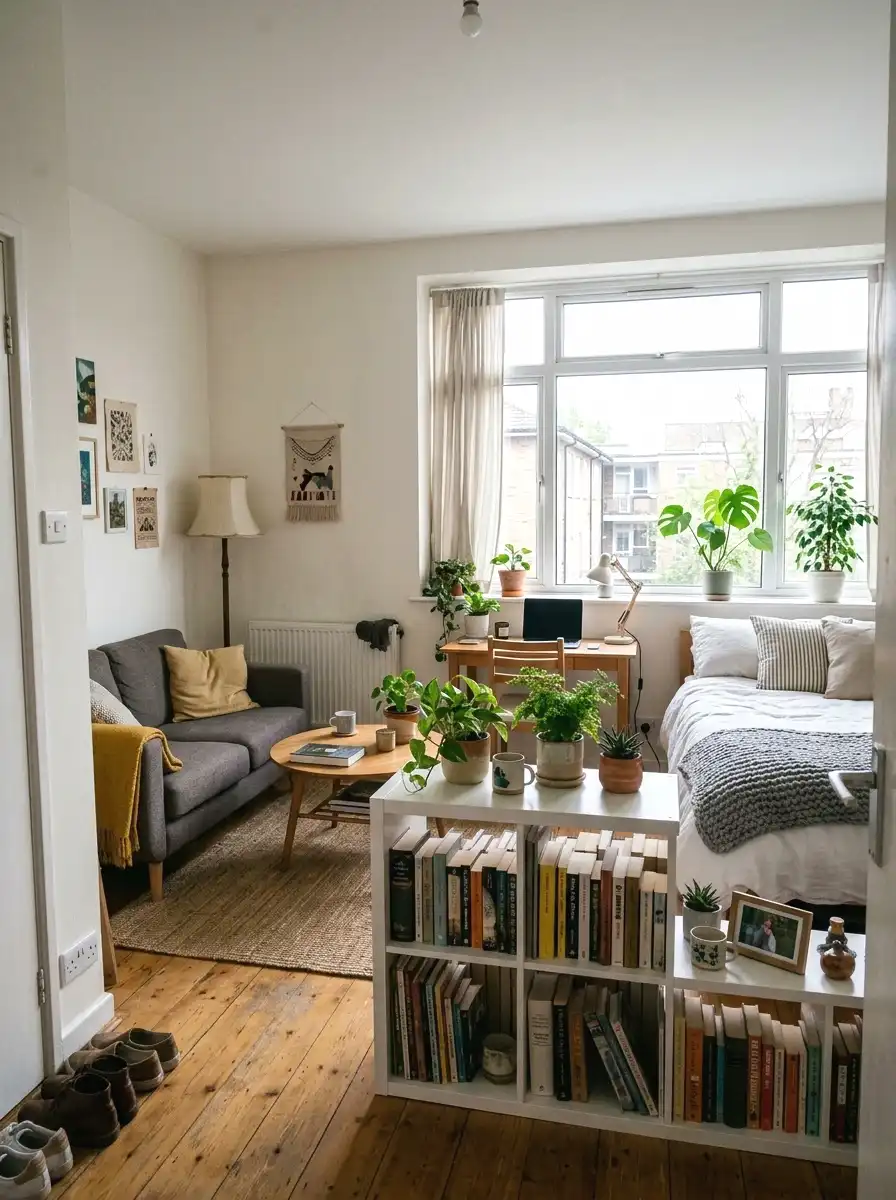
Studios are hard to live in when every function of your home is visible from every other function. A bookcase (turned sideways, used as a room divider) or a folding screen creates a soft boundary between your sleeping area and your living space. It doesn’t block light but it does create zones.
The IKEA KALLAX in the 4×4 or 4×2 configuration works well for this. At $60 to $120 depending on size, you get storage and a visual divider in one piece. Fold the open side toward the living area and use it for books, plants, and display items. The back side faces the bedroom and can stay simple.
17. Put a Small Desk in an Alcove or Corner
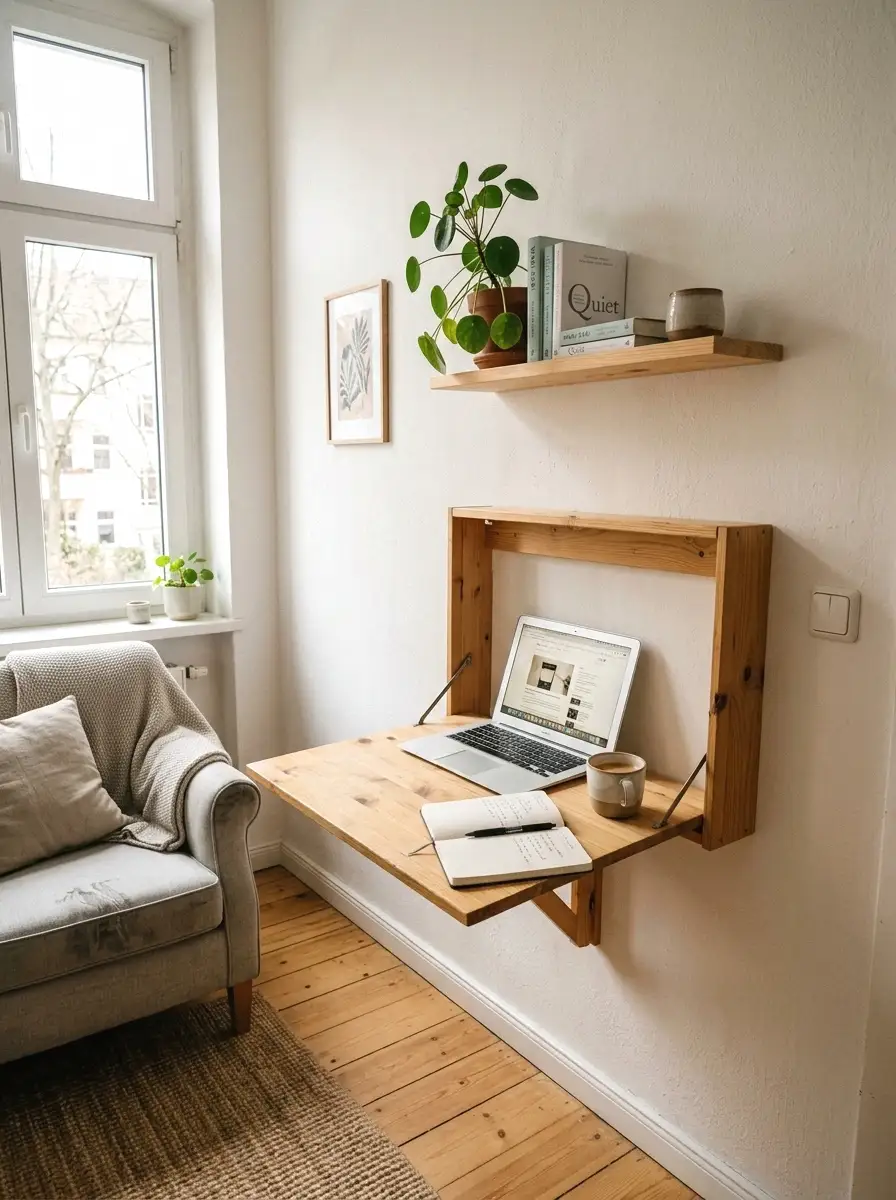
Working from home in a small apartment usually means the table or couch becomes a default office. That bleeds work stress into your living space and makes both feel worse. Even a narrow corner desk, 24 inches wide, creates a dedicated work spot that the rest of the room doesn’t have to carry.
Wall-mounted fold-down desks from IKEA (NORBO or BJÖRKUDDEN) run $60 to $100 and take up almost no space when folded up. Attach one to a wall near an outlet. Add a single shelf above it and a decent chair and you’ve got a real workspace in about 12 square feet of floor space.
18. Use Scent Intentionally as Part of the Space
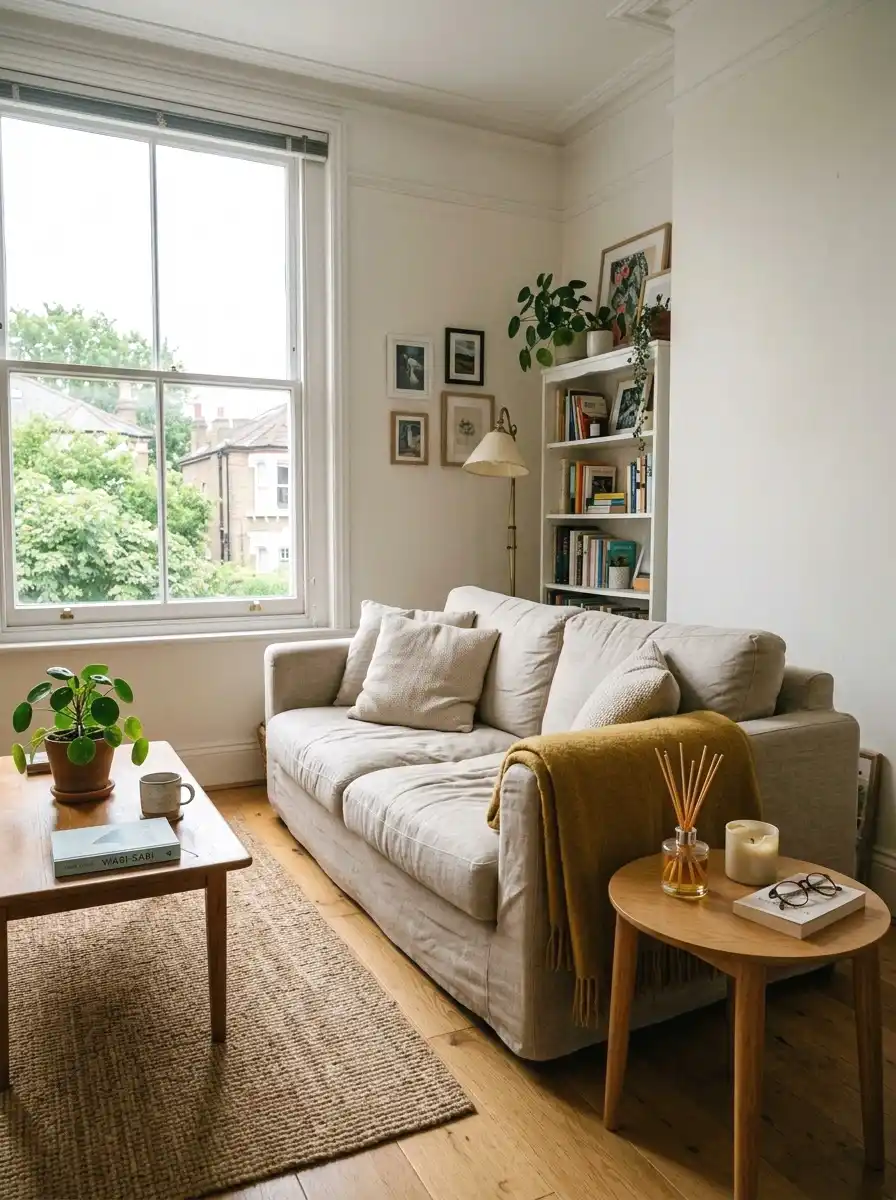
This might sound less like decorating but it’s not. How a space smells affects how it feels. Small apartments trap cooking smells, pet odors, and that vague “apartment smell” fast. Having a consistent, clean scent changes how you experience the room every time you walk in.
A good reed diffuser or a soy wax candle in one or two scents you actually like runs $15 to $35. Cedar, linen, eucalyptus, and sandalwood work well for small spaces because they’re clean rather than heavy. Run an air purifier if you have one. The goal isn’t to mask odors but to give the space its own quiet character.
More Ideas:
19. Layer Throw Blankets and Pillows in One Color Family
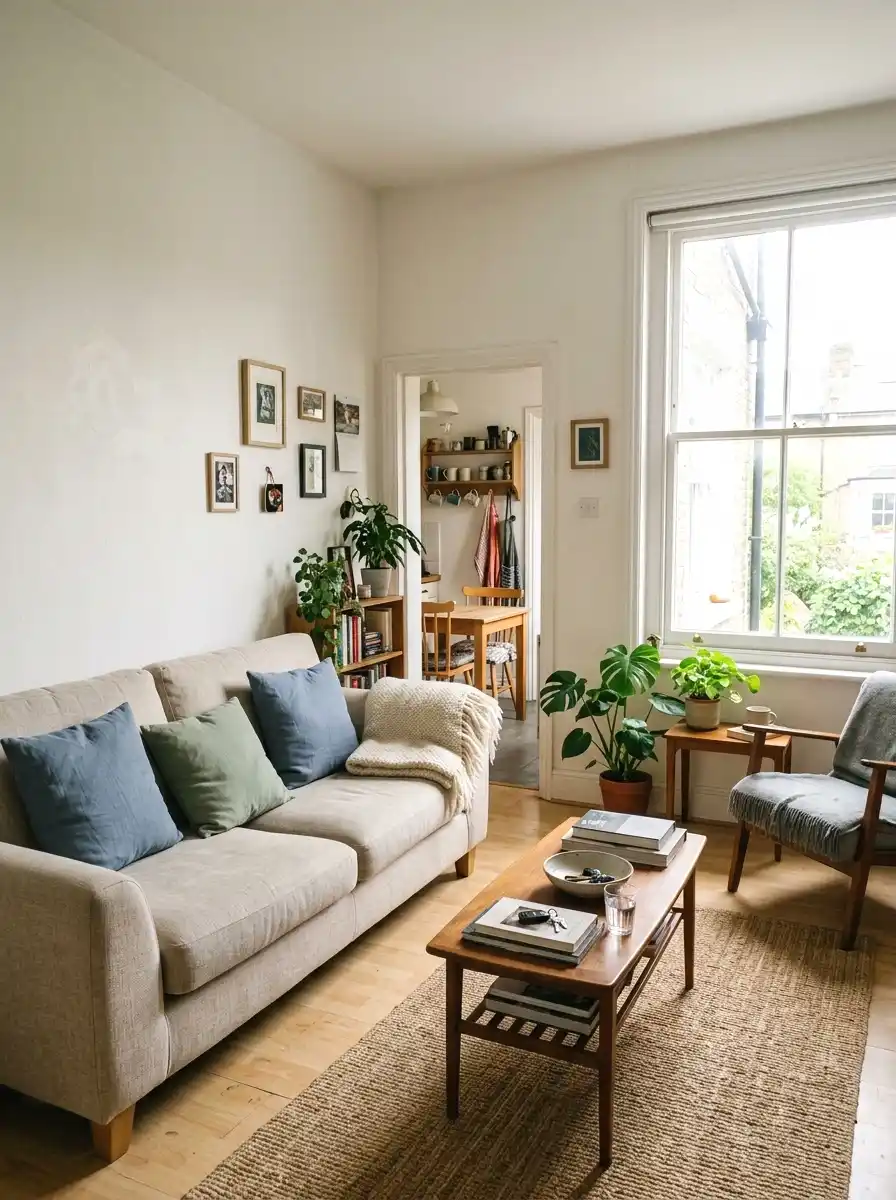
Throw pillows and blankets in a bunch of different colors and patterns are one of the fastest ways to make a small room look chaotic. But done right, they’re also one of the cheapest ways to add depth and warmth. The trick is to stay within one tight color family.
Pick two or three colors that sit next to each other on the color wheel, like dusty blue, sage, and warm white, and buy everything in those tones. Two throw pillows and one folded blanket in those shades on a couch or bed pulls the whole room together. Budget $30 to $70 for a set from Target, H&M Home, or TJ Maxx.
20. Use an Entryway Console Table, Not Just a Rack
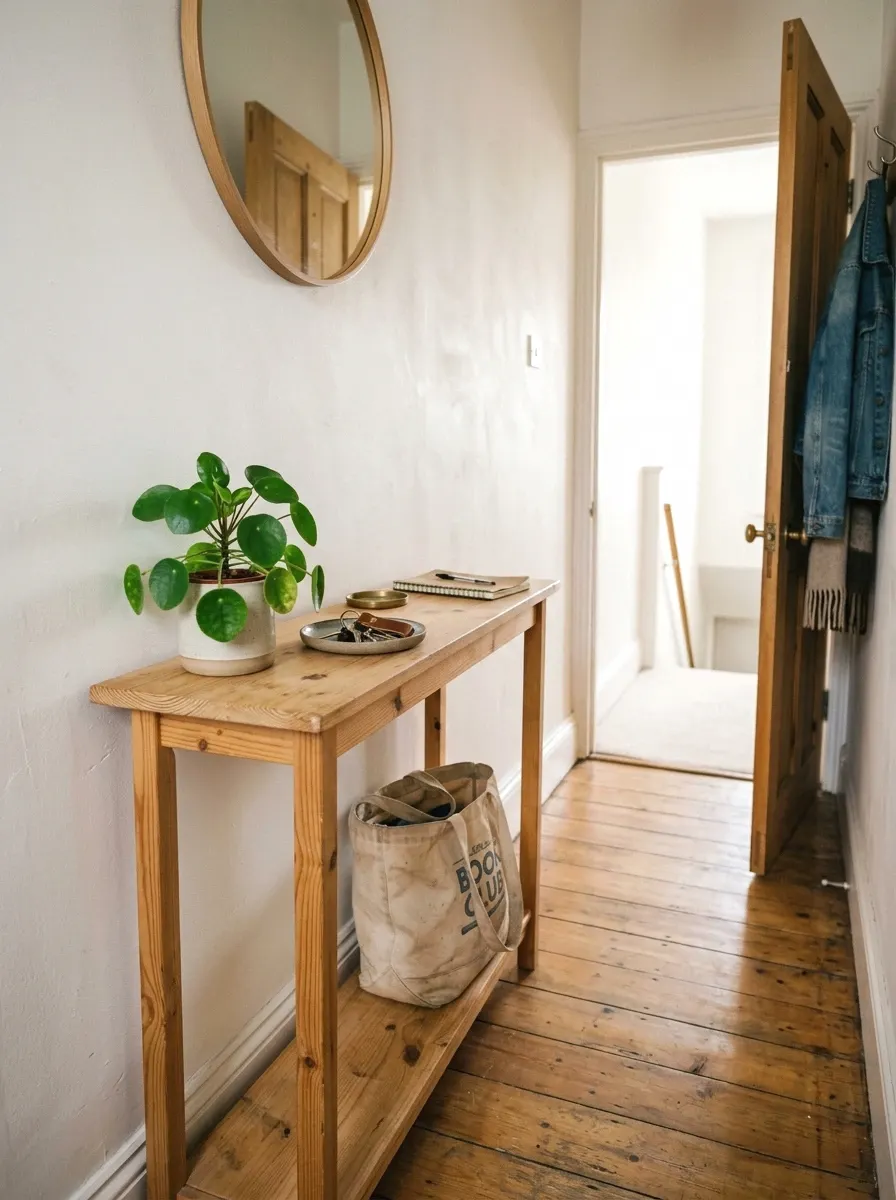
A coat rack at the door handles one thing. A slim console table handles everything: keys, bags, mail, shoes on the shelf below, a small plant or lamp on top. It makes your entryway feel like an actual room rather than just the space in front of the door.
Look for tables no deeper than 12 inches so they don’t block the path. Options from IKEA, Amazon, or Target run $50 to $110. A narrow console with one shelf below gives you real storage and a styled surface without eating space. Add a small mirror above it and the entryway starts doing real work for the apartment.
For more small entryway setups that work hard in tight spaces, there are some clever layouts worth looking through.
21. Try a Canopy or Curtains Around Your Bed
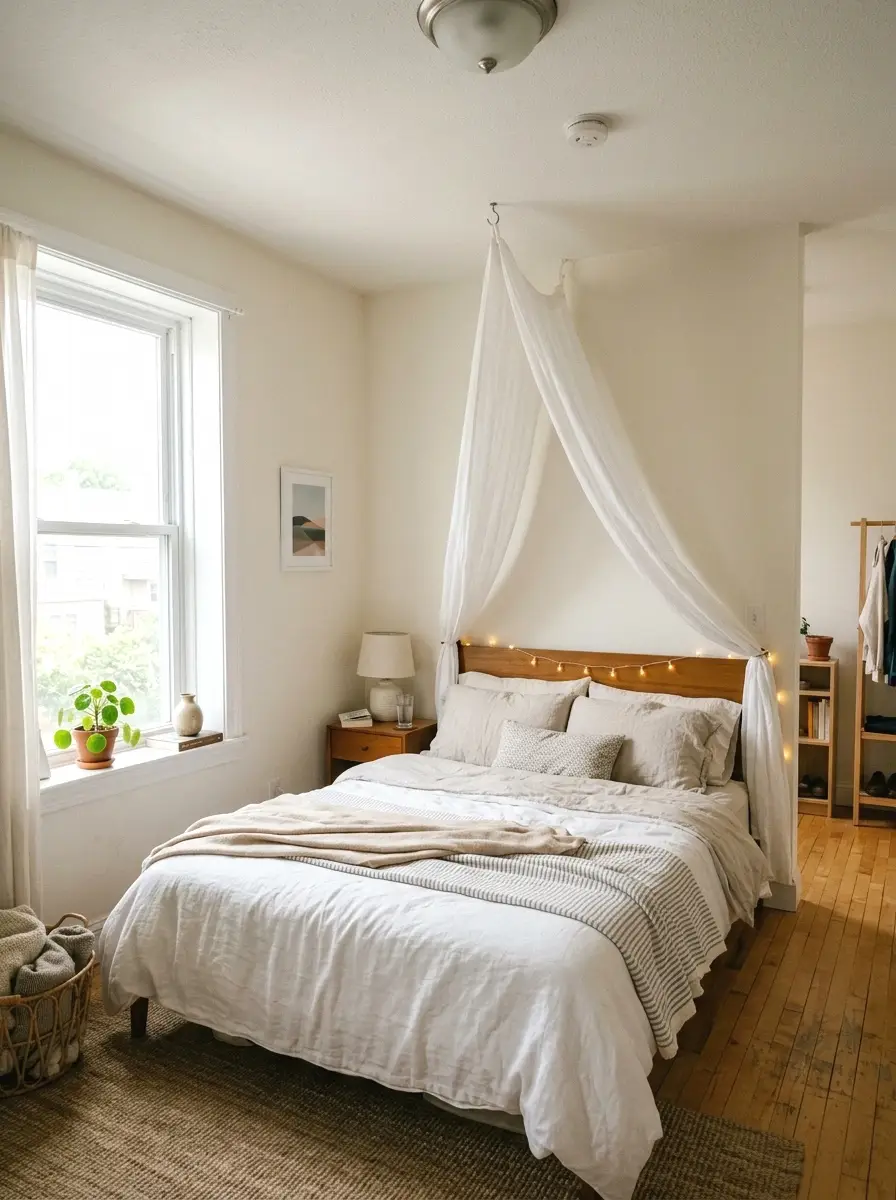
This one feels a little extra but it genuinely works. Hanging a light canopy or thin curtain panels around your bed creates a “room within a room” feel, especially in studios. It makes the sleeping area feel private and separate, which is something small apartments almost never have.
A basic bed canopy from Amazon runs $25 to $50 and installs with a ceiling hook. For something with more character, use two curtain rods mounted side by side above the headboard and hang sheer panels on either side. The effect is architectural and warm. It also photographs really well if that matters to you.
If you want to take the bedroom further, there’s a solid collection of cozy bedroom ideas on any budget that goes well beyond the canopy.
22. Declutter to a “One In, One Out” Rule Before Decorating Anything
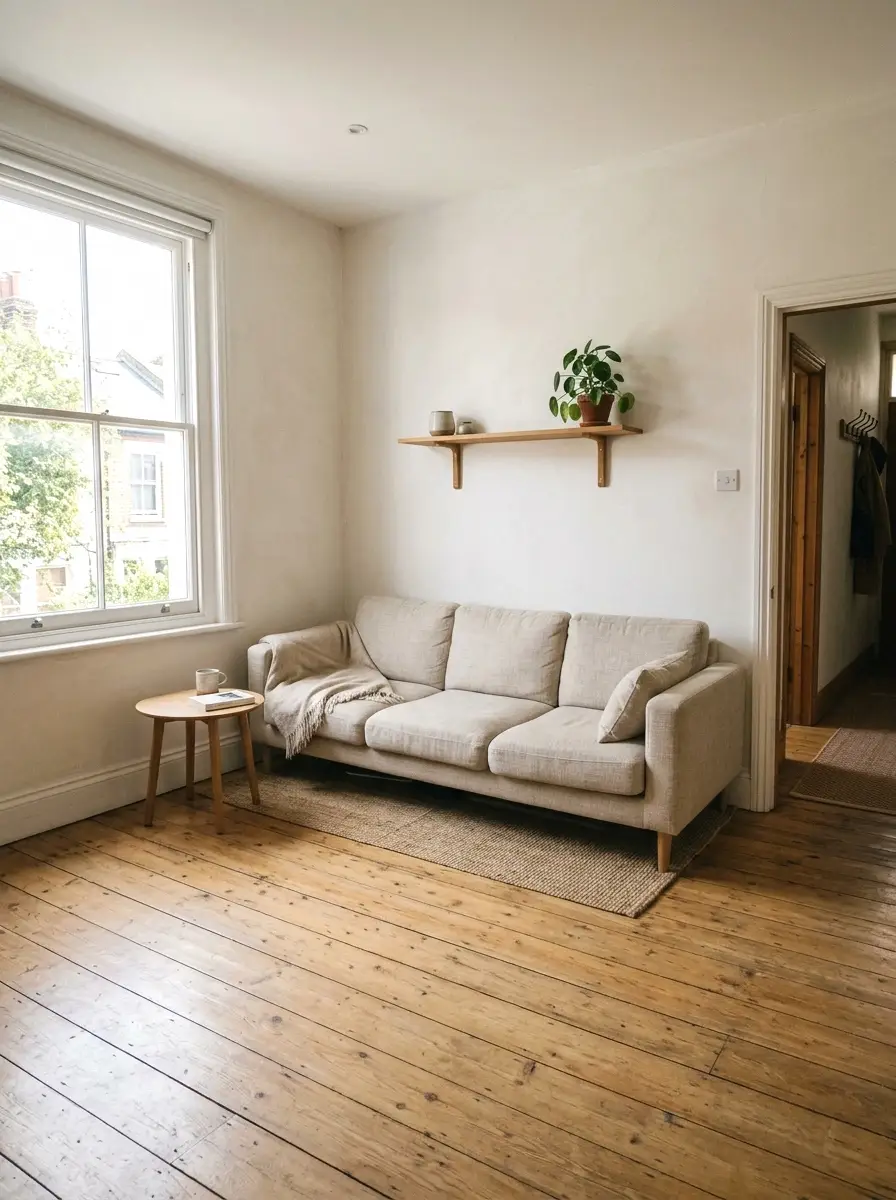
Here’s the thing about small spaces: decorating on top of clutter just hides it temporarily. The most important thing you can do before any of the above is commit to a simple rule. Every time something new comes in, something old goes out.
This isn’t about becoming a minimalist. It’s about keeping the volume of stuff matched to the actual size of the space. A small apartment that has 20% less stuff in it automatically feels bigger. Sell, donate, or store off-site anything that doesn’t earn its place. The decorating changes you make after that will actually show up.
More Ideas:
Final Thoughts on Tiny Home Decorating
You now have 22 specific things you can actually do in a small apartment, most of them under $100 and nearly all renter-friendly. The biggest themes here are light, vertical space, and visual calm. Get those three things working for you and the apartment feels different at a level that’s hard to explain but immediately noticeable.
Start with the lighting this weekend. Swap the overhead for a lamp. It costs almost nothing and it’s the fastest way to see what a real difference a small change makes. Once you feel that, the rest of the list gets a lot easier to take on.
Once you’ve got the lighting sorted, browsing room decor ideas for real spaces can help you figure out which changes to tackle next.
If you want more ideas like these, homelypop.com covers all kinds of rooms and budgets. There’s a lot more where this came from, and it’s all written for real spaces, not showrooms.