
21 Farmhouse Utility Room Ideas for a Hardworking, Beautiful Space

Your utility room is doing a lot. Laundry, cleaning supplies, pet gear, bags you don’t know where to put. It’s working hard. But it looks like a storage unit you lost a fight with.
These 21 farmhouse utility room ideas come from real research: homeowner forums, project photos from actual budgets, and the kind of tips that show up in Reddit threads at midnight when someone’s finally fixing a space they’ve ignored for years. Each idea was picked because it solves a real problem and looks genuinely nice doing it. Most sit in the $100 to $300 range, but I’ll flag the cheaper wins too.
This list is for people who want function and something that looks like they meant it. If you want a full designer renovation at $5,000+, this isn’t that. But if you’re working with a modest budget and a room that needs to earn its keep, you’re in exactly the right place.
By the end, you’ll have a clear sense of which changes will make the biggest difference in your specific space.
Before you dive in, it’s worth looking at some storage solutions worth stealing early so you’re not buying things twice.
What to Know Before You Start a Farmhouse Utility Room
- Farmhouse style works best in utility rooms because it already assumes things will get used hard.
- Measure your ceiling height before buying shelving. Most open-shelf systems are designed for 8-foot ceilings.
- Budget reality: a full shiplap wall costs $150 to $400 in materials depending on room size.
- Most people overlook the floor. A $60 rubber mat can do more for the feel than $200 of decor.
- Common mistake: buying a rag basket before knowing where it will actually sit. Measure first.
- If your utility room has a drain, check it before putting down any flooring or rugs.
- Painted cabinets last longer if you use a cabinet-specific paint, not regular wall paint.
- Semi-gloss or satin finishes wipe clean much better than flat in a room that gets splashed.
1. Add Open Wood Shelving Above the Washer and Dryer
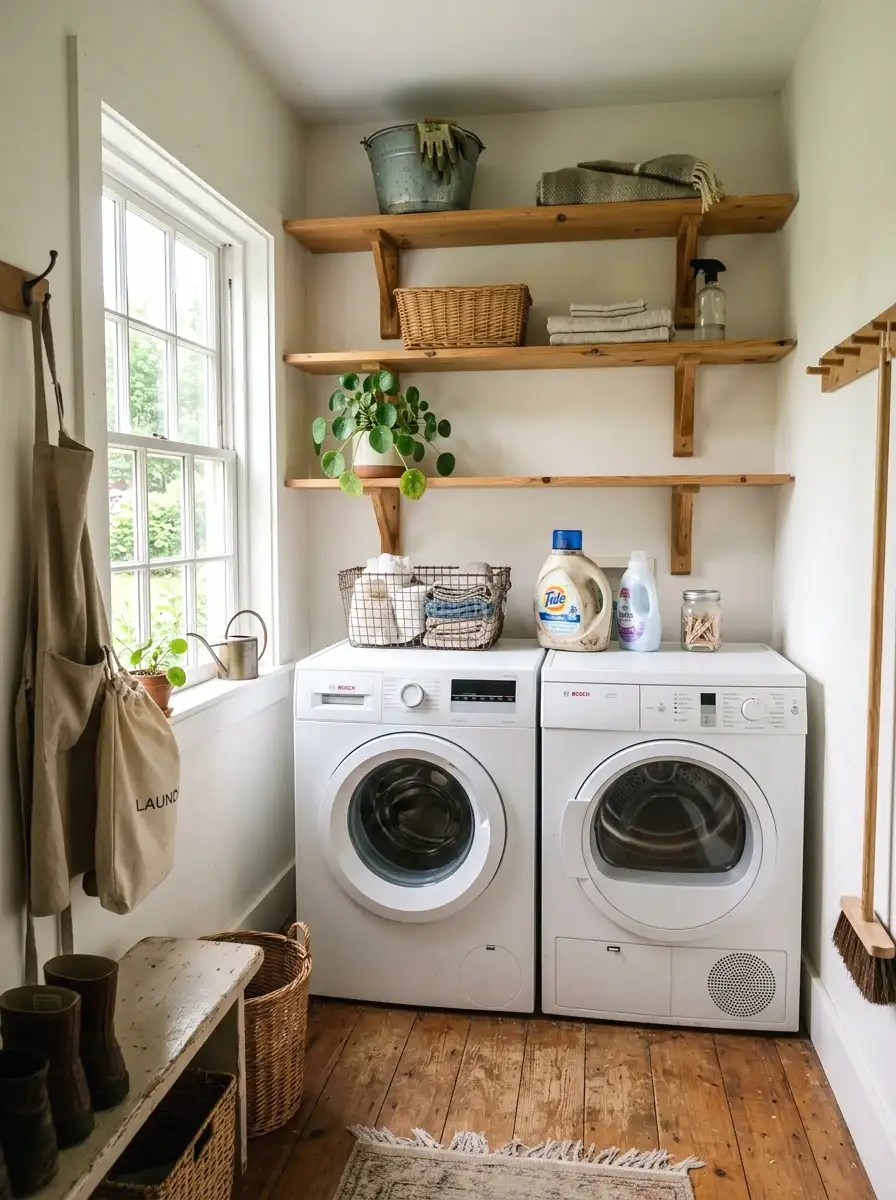
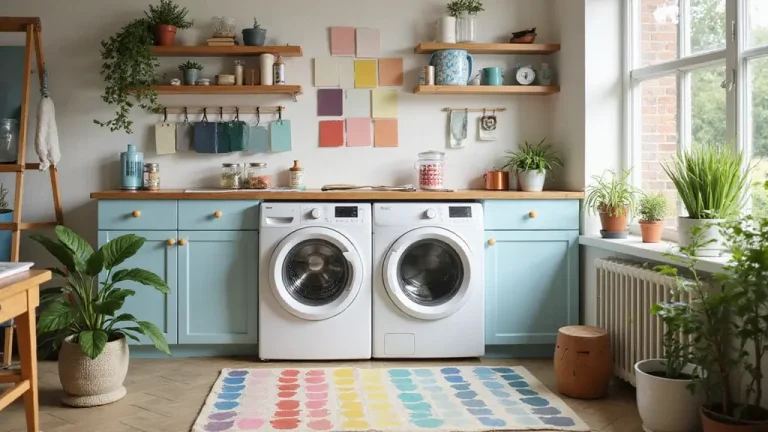
The space above your machines is probably empty right now, and that’s just wasted wall. Open wood shelves, pine or poplar cut to size, mounted with basic brackets, give you real storage and bring in that warm farmhouse feel immediately. It doesn’t look like a laundry room anymore. It looks considered.
I’ve seen this done for under $80 when people buy unfinished pine boards and stain them themselves. Two shelves, 12 inches deep, running the full width of your machines gives you enough room for detergent, dryer sheets, a basket for lost socks, and a small plant if you want one. Just make sure your brackets can hold the load, especially if you’re putting heavy supplies up there.
If you’re unsure about shelf height and bracket options, there’s a breakdown that covers the most common configurations for this exact setup.
2. Install Shiplap on One Wall
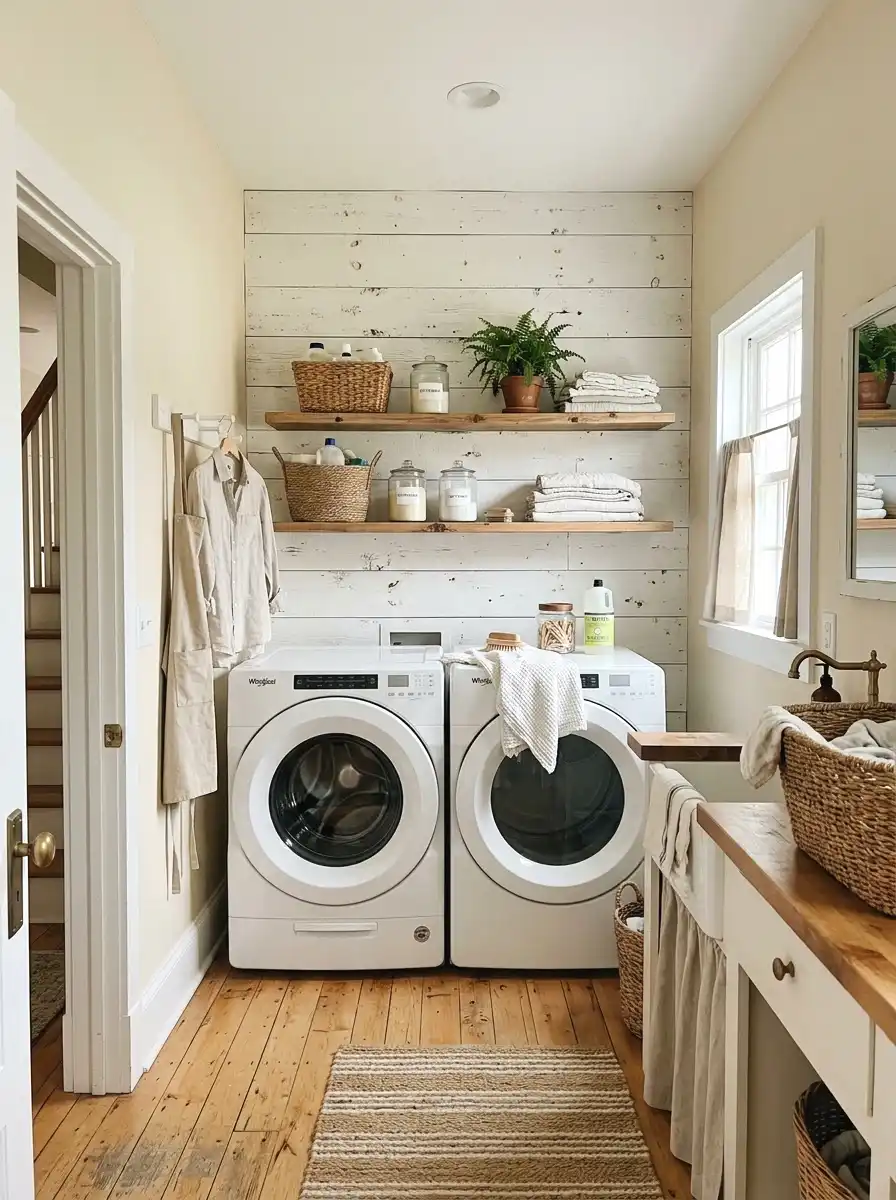
You don’t need to shiplap the whole room. One wall, usually the one the machines sit against or the longest blank wall, is enough to give the space its whole personality. Real shiplap is pine boards with a small gap between each one. It reads as intentional and classic at the same time.
Primed and painted white, one shiplap wall in an average utility room (around 8 by 10 feet) costs roughly $150 to $250 in materials. You can do it yourself in a day if you rent a nail gun. If white feels plain, a soft warm gray or sage green works really well in a utility room that gets natural light.
3. Hang a Vintage-Style Utility Sink
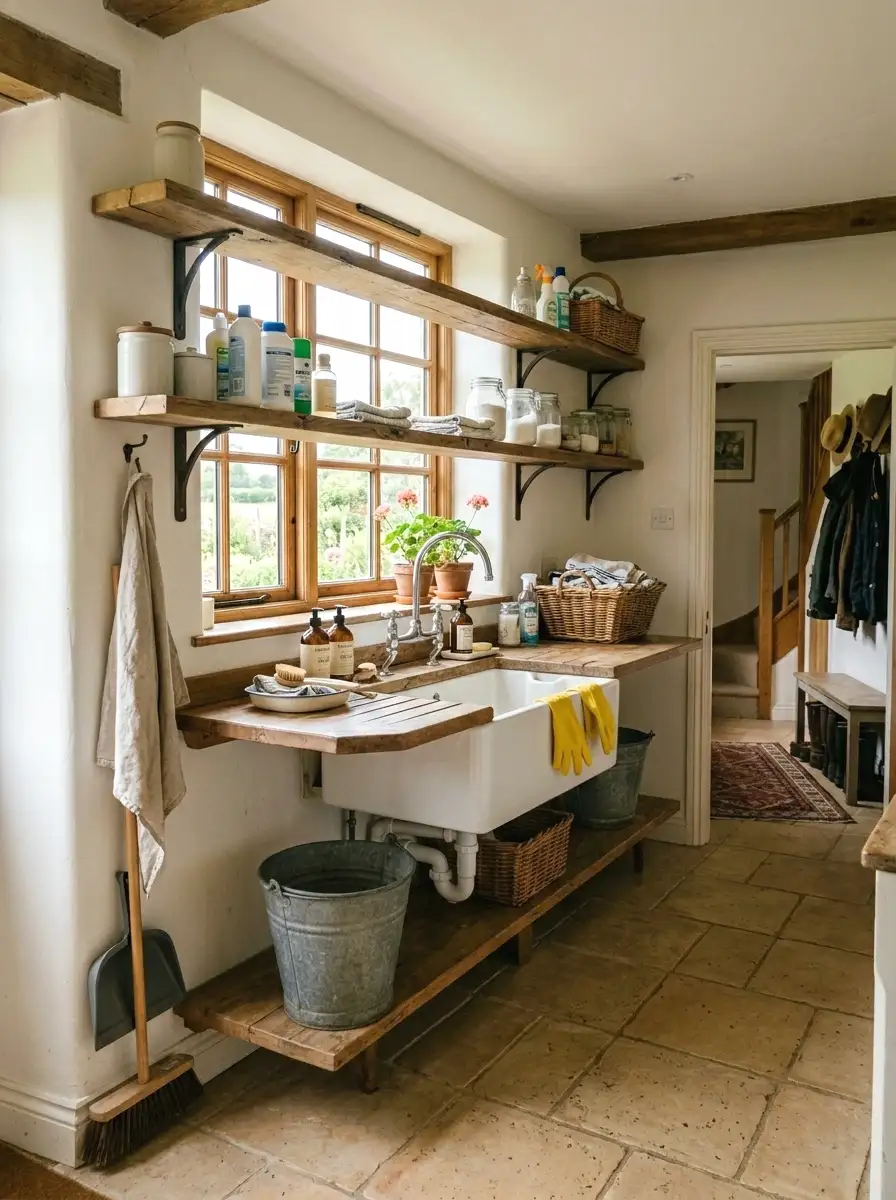
The big farmhouse apron sink in a utility room is a real working upgrade, not just a style choice. You can hand-wash muddy boots, soak stained clothes, fill mop buckets, and bathe a small dog without using your kitchen sink. It handles the dirty work your kitchen sink shouldn’t have to.
Cast iron apron sinks run from $200 to $600 depending on brand and size. But there are composite versions in the $150 to $250 range that look very similar and hold up fine in a utility room. If plumbing is already in place, swapping the sink is a weekend project. That big open bowl is the single item people notice first in a farmhouse utility room.
4. Paint the Cabinets a Deep Muted Color
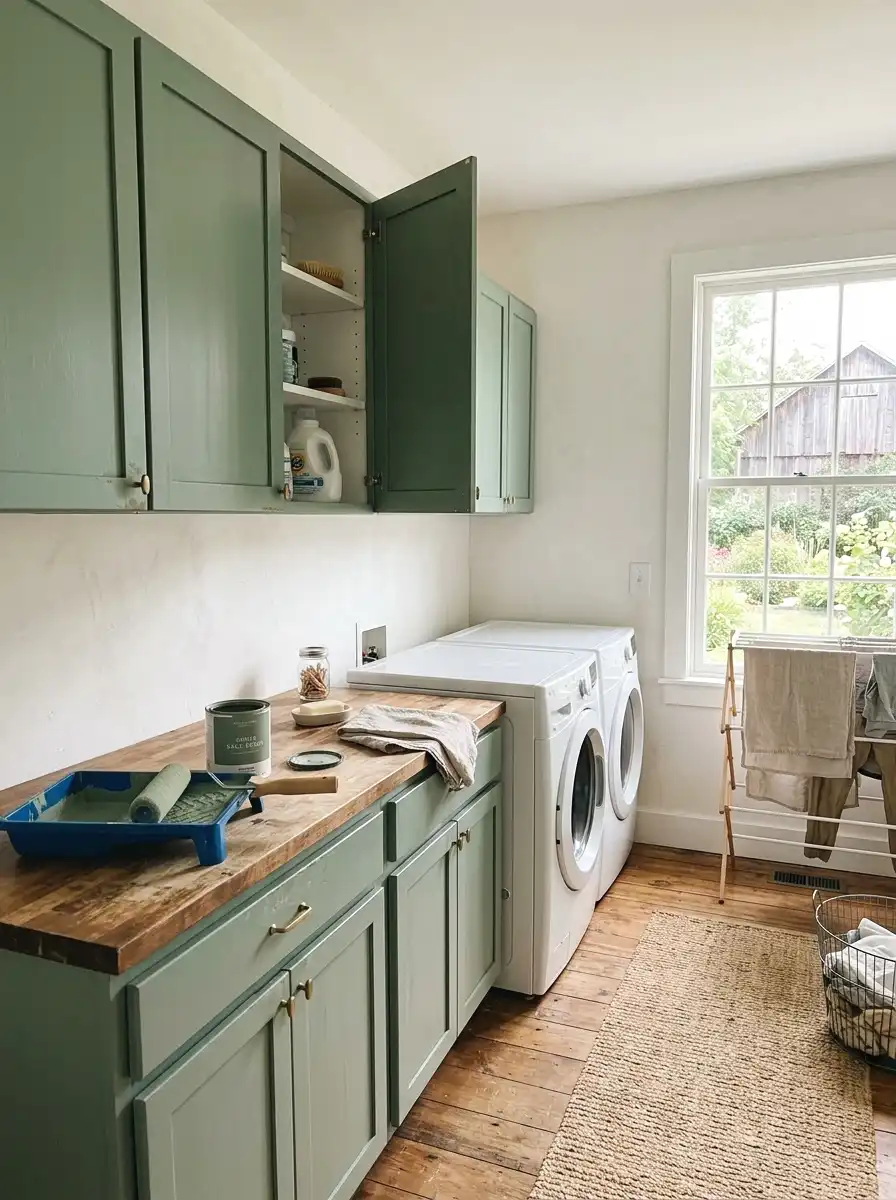
If your utility room has existing upper or lower cabinets that look dated or beat up, paint is your fastest fix. Skip white for a second and think about a muted navy, dusty sage, or warm charcoal. Those tones read as intentional farmhouse and hide wear much better than white does in a working room.
A quart of cabinet paint runs about $25 to $40. You’ll need primer, sandpaper, and a foam roller for a clean finish. The whole project, including drying time between coats, takes a weekend. When I painted my own laundry cabinets a muted teal, it changed the whole feel of the room for about $35 in supplies.
If you’re still deciding on a direction, there’s a solid roundup of cabinet color ideas that hold up in rooms that actually get used.
5. Use Wire Baskets for Sorting and Storage
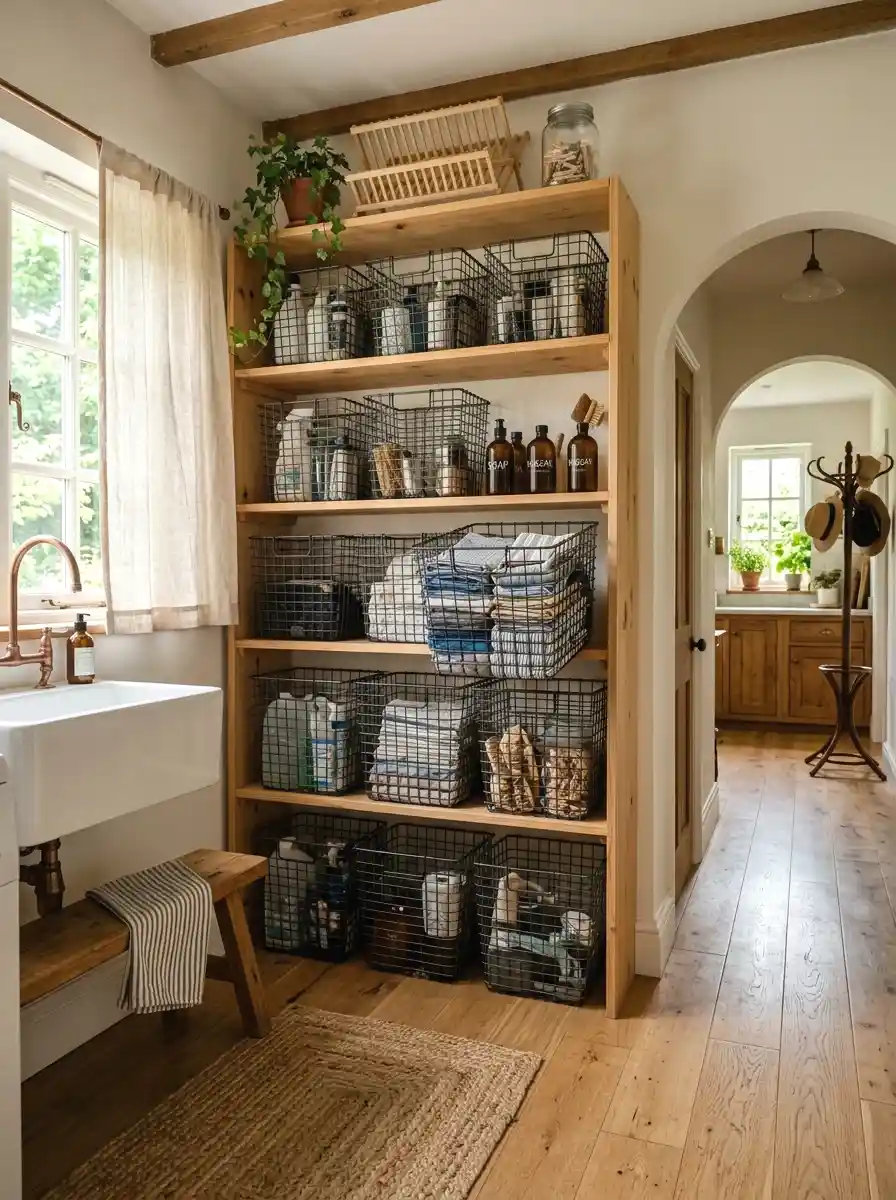
Wire baskets, the kind with a matte black or galvanized finish, are one of the most practical things you can put in a utility room. They let you see what’s inside, they breathe so damp items don’t mildew, and they look like they belong in a farmhouse space without trying too hard.
Stack them on open shelves or slide them under a folding table. Use one for items that need to go back upstairs, one for cleaning rags, one for pet supplies. A set of three wire baskets runs $30 to $60. The galvanized ones are classic. The matte black ones feel more modern but still fit a farmhouse look without a problem.
6. Put Up a Wooden Peg Rail Along One Wall
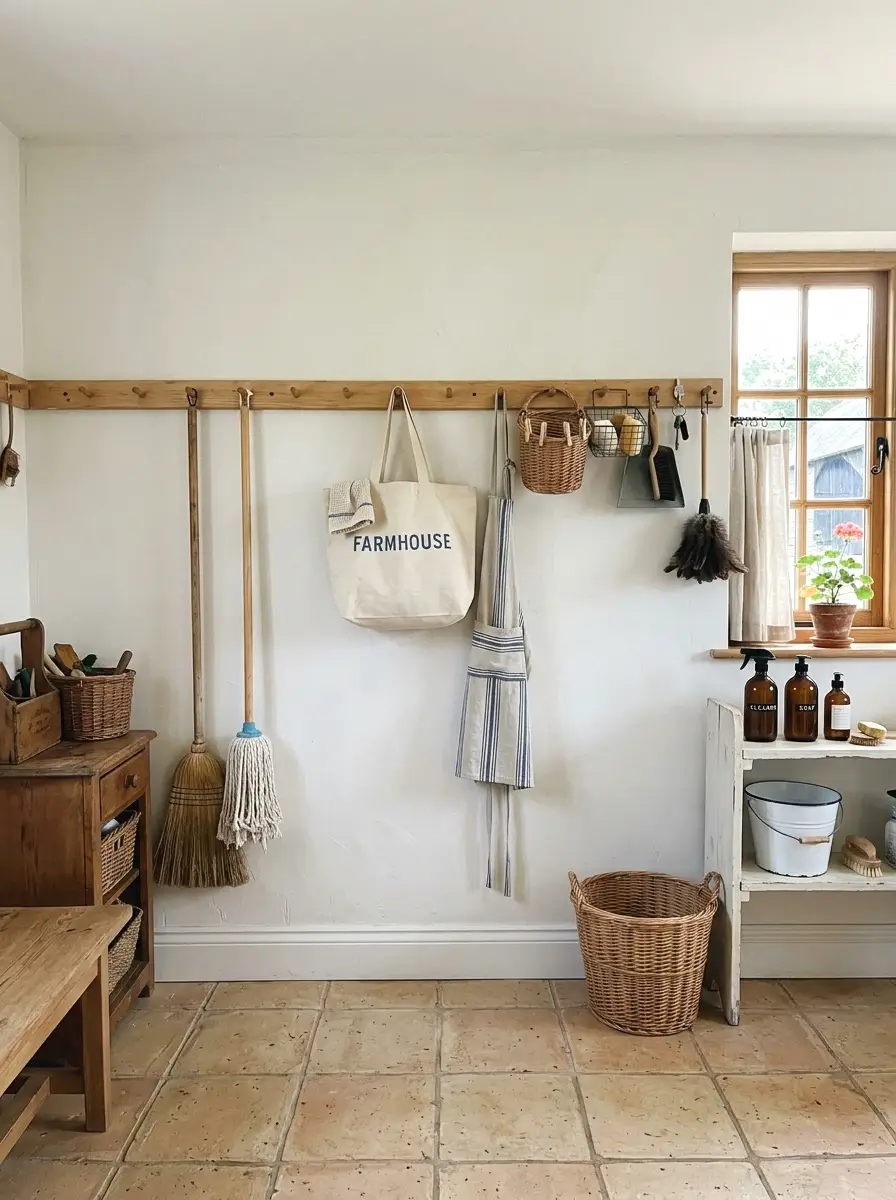
A peg rail is one of those things that looks simple and ends up being the most used piece of storage in the room. You hang a wooden rail with evenly spaced pegs and suddenly you have a place for mops, brooms, bags, aprons, dog leashes, and jackets. Everything is visible and nothing is piled on the floor.
A 48-inch shaker peg rail kit costs $30 to $60 at most hardware stores. You mount it like a curtain rod, into studs if possible. Paint it white to match the wall for something subtle, or leave it natural wood for contrast. This is the one thing I recommend first when someone tells me their utility room always looks messy. It’s usually a storage problem, not a design one.
7. Add a Folding Table or Built-In Folding Counter
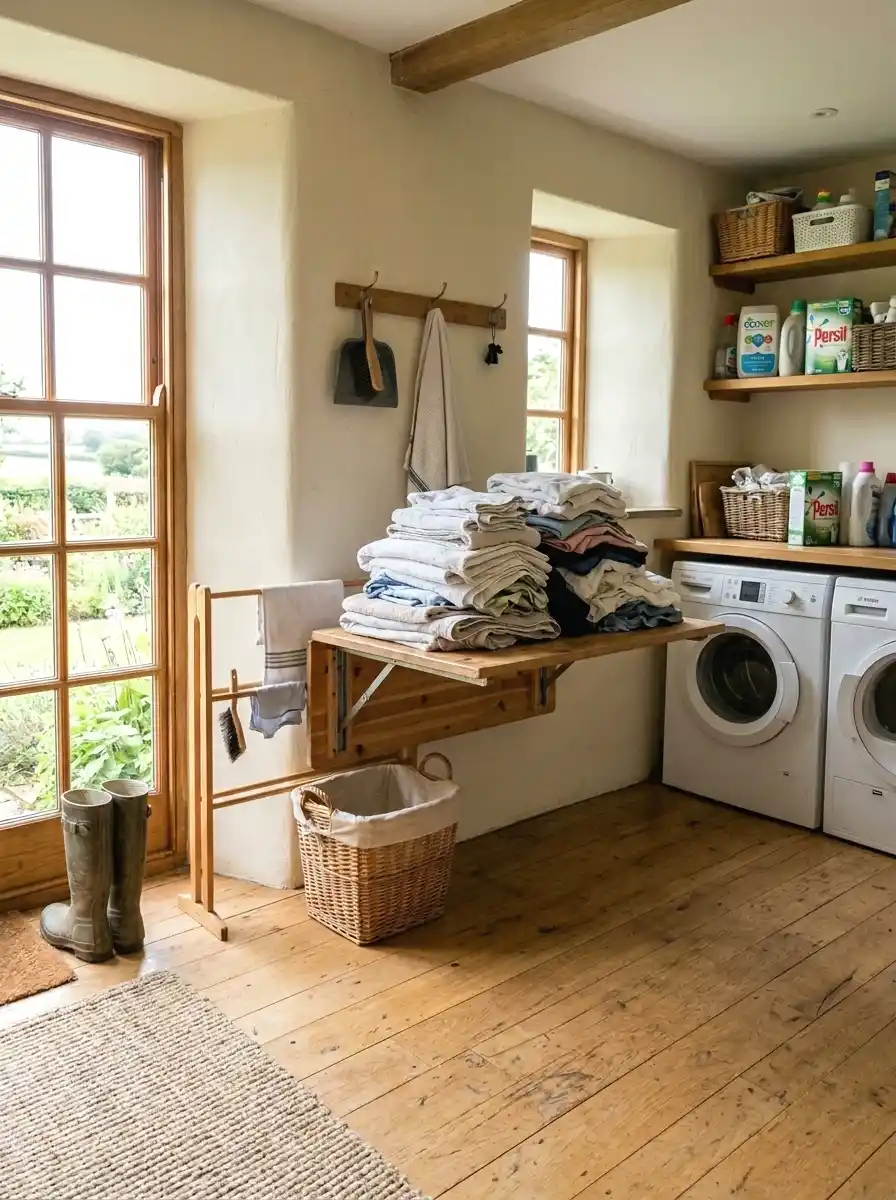
If you’re folding laundry on top of the machines or on your bed, you already know how much you need a dedicated surface. A wall-mounted folding table solves this without taking up floor space permanently. It folds flat when you don’t need it and gives you a solid work surface when you do.
Wall-mounted folding tables run from $60 to $150. Look for ones with a wood top and metal legs for a farmhouse-compatible look. If you have the wall space and want something fixed, a simple butcher block counter over lower cabinets or a washer-dryer pedestal works really well and gives you counter storage underneath too.
For anyone planning the layout from scratch, there are some well-thought-out folding counter and workspace layouts worth seeing before you commit.
8. Swap Out the Light Fixture
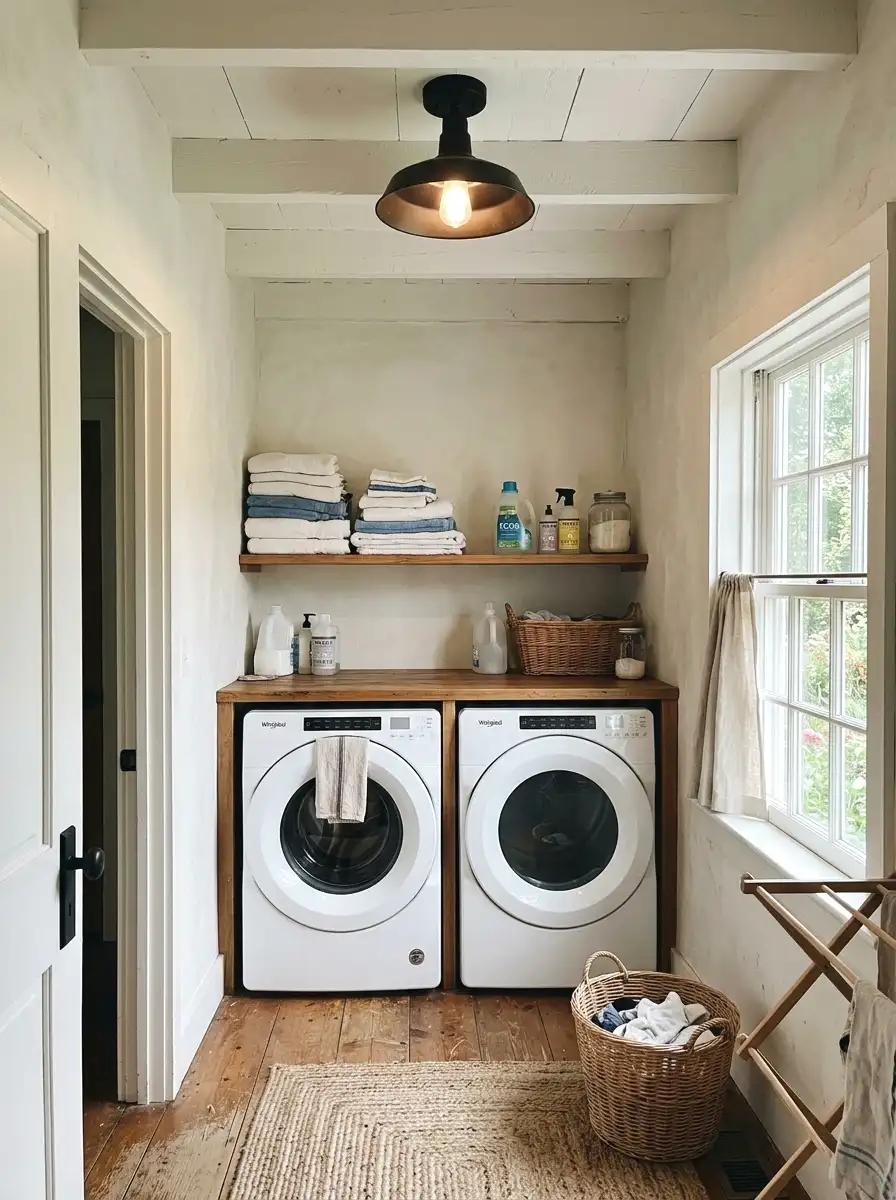
Most utility rooms have one bare bulb or a basic flush-mount fixture that makes the space feel like a basement. Swapping to a cage pendant, a schoolhouse globe, or even a simple black barn-style fixture changes the whole atmosphere. Good light makes work easier and the room feel like someone actually thought about it.
A hardwired fixture swap costs $30 to $100 for the fixture if you do the swap yourself. If you’re renting or don’t want to deal with wiring, a plug-in pendant light (you just need an outlet nearby) is a good middle option. Warm white bulbs, around 2700K, do a lot more for the farmhouse feel than cool daylight bulbs.
If you want to go deeper on this, there’s a dedicated look at lighting fixtures that actually work here without over-complicating things.
9. Use a Galvanized Tub or Bucket for Cleaning Supplies
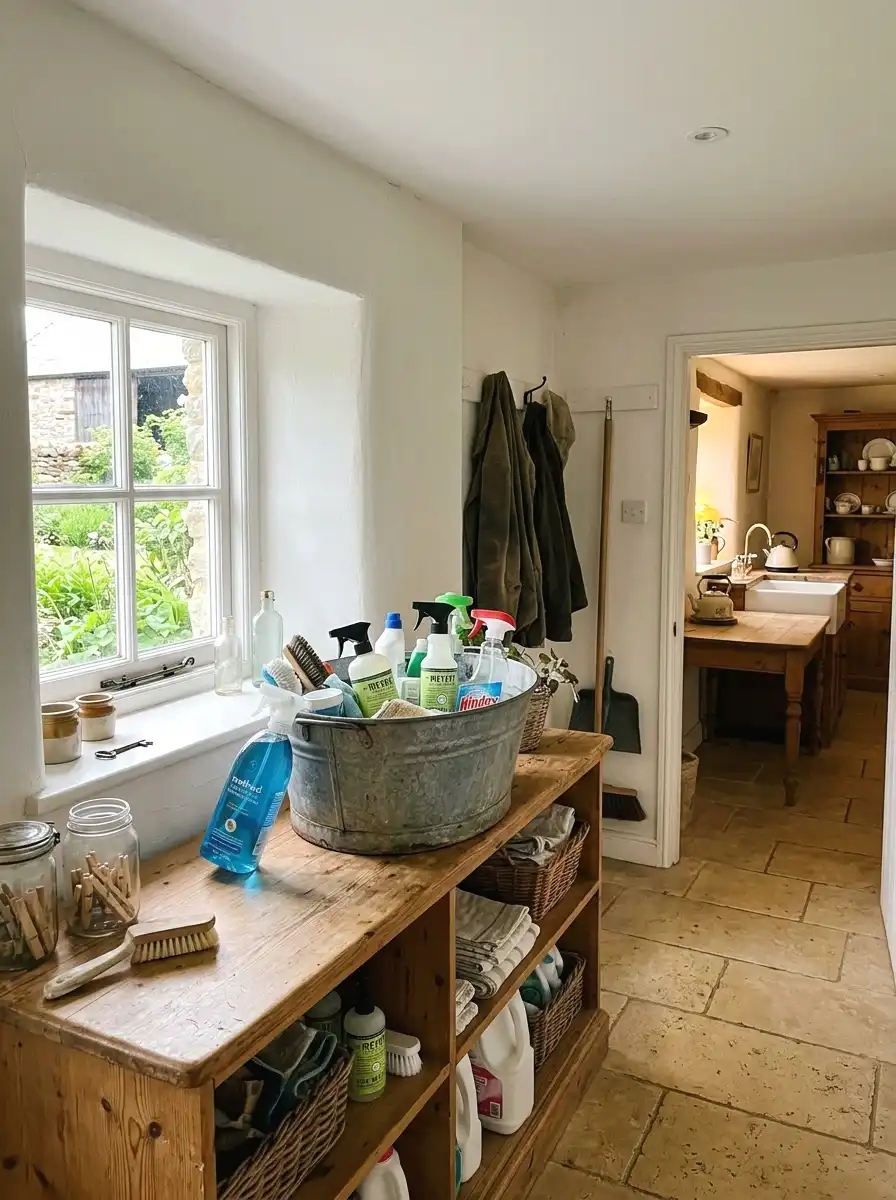
Here’s something so simple it almost feels like cheating: move your cleaning supplies from under the sink into a large galvanized metal tub or bucket on a shelf. It keeps things organized, hides mismatched spray bottles, and fits a farmhouse space without buying anything designed for it.
A galvanized metal tub from a farm supply or hardware store runs $10 to $25 depending on size. You can also find them at thrift stores regularly. It’s one of those zero-design decisions that ends up looking like you planned it. (This one is so underrated.) Group similar things together inside and you’ve got a functional storage system that takes about five minutes to set up.
10. Lay Down Durable Farmhouse-Style Tile
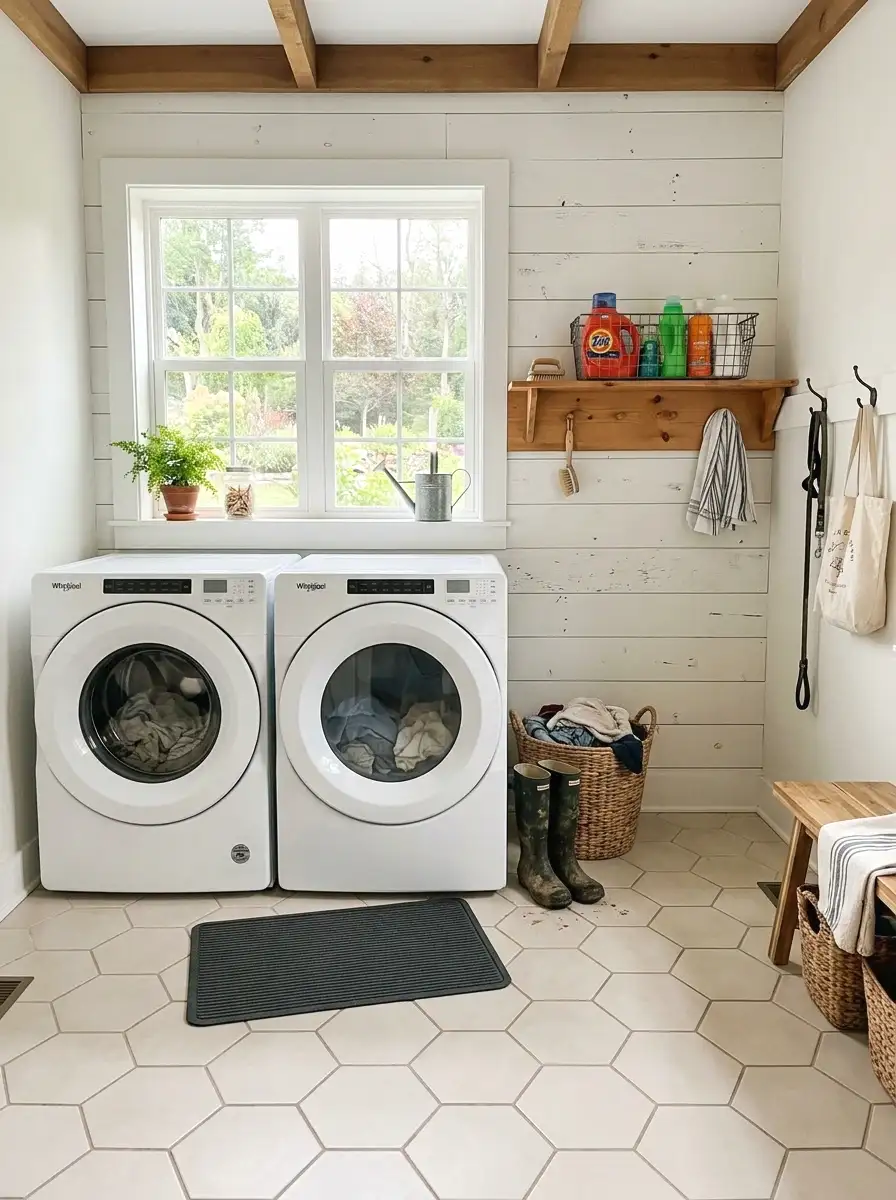
The floor in a utility room takes a beating. Water, dirt, cleaning chemicals, heavy appliances. A nice vinyl plank or porcelain tile that looks like aged stone or light wood reads well in a farmhouse space and holds up to actual use without looking sad in a year.
Vinyl plank flooring runs $1.50 to $3 per square foot for DIY-friendly click-lock options. A small utility room around 50 to 60 square feet costs $100 to $200 in materials. Hexagonal tile, the kind with a matte finish, is another classic farmhouse option that’s easy to clean and hides grout issues better than large-format square tiles do.
There’s a helpful comparison of tile and flooring picks for hard-use rooms if you want to see the options side by side before buying.
11. Add a Chalkboard or Framed Chalkboard Panel
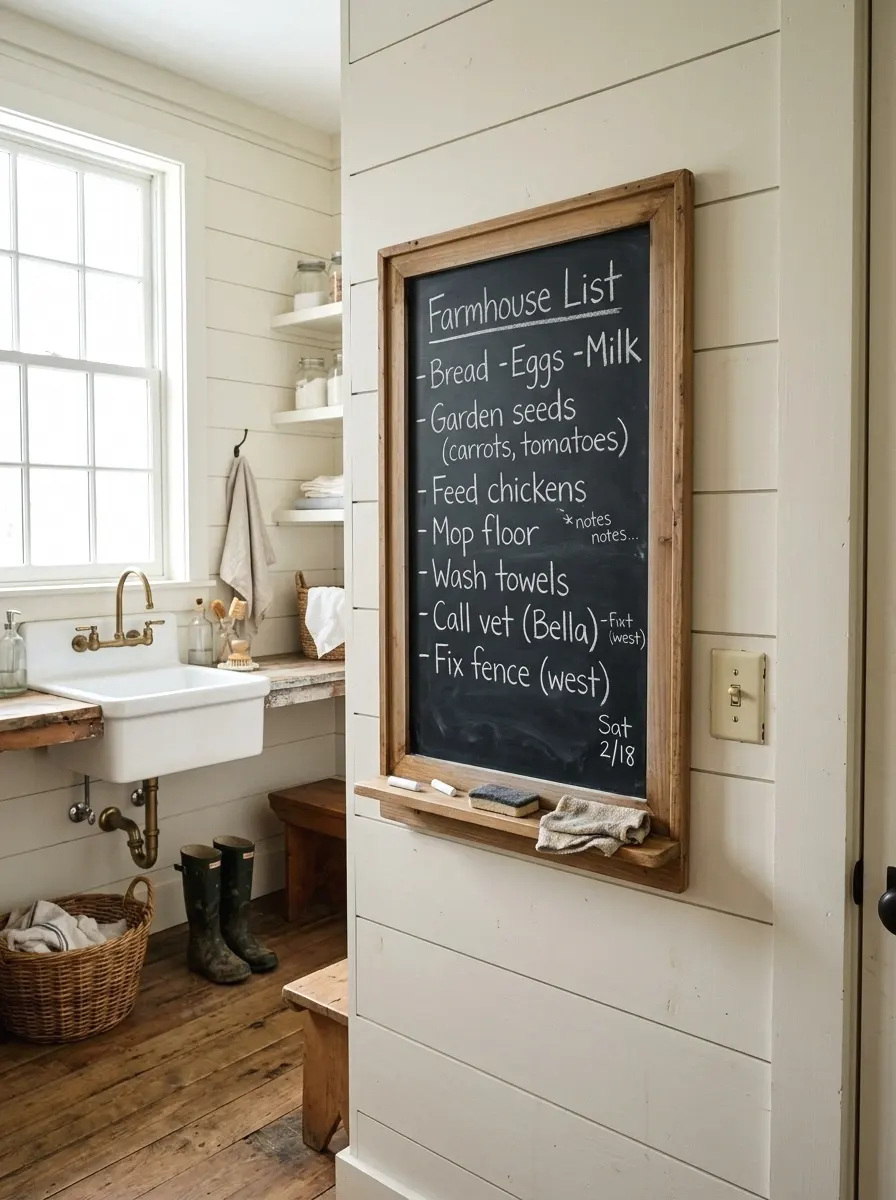
A chalkboard panel on the wall of a utility room sounds old-fashioned and then you get one and realize how useful it is. Write the cleaning schedule. Note what laundry products you’re running low on. Label which basket is which. It’s functional in a way that a printed label system isn’t, because you can change it whenever you want.
A framed chalkboard panel in a wood frame looks genuinely nice on a shiplap or painted wall. Sizes around 18 by 24 inches run $25 to $50. If you want to save money, buy a sheet of chalkboard paint and apply it directly to a section of wall or to an old picture frame with a board behind it. Total cost under $15.
12. Hang Curtains Under Open Shelves or the Sink
If your utility room has open shelving at the base level or an exposed sink cabinet, a simple cotton curtain panels hides the clutter behind without the cost of building real cabinet doors. It’s the same trick used in old farmhouse kitchens, and it works just as well in a utility room.
Use a simple tension rod mounted inside a cabinet frame or a basic curtain rod across the front. Unbleached cotton muslin, ticking stripe, or a simple grain-sack style fabric all work well. The fabric cost is usually $10 to $30 depending on how much you need. It’s a rental-friendly solution too since you’re not building anything permanent.
13. Mount a Drying Rack on the Wall
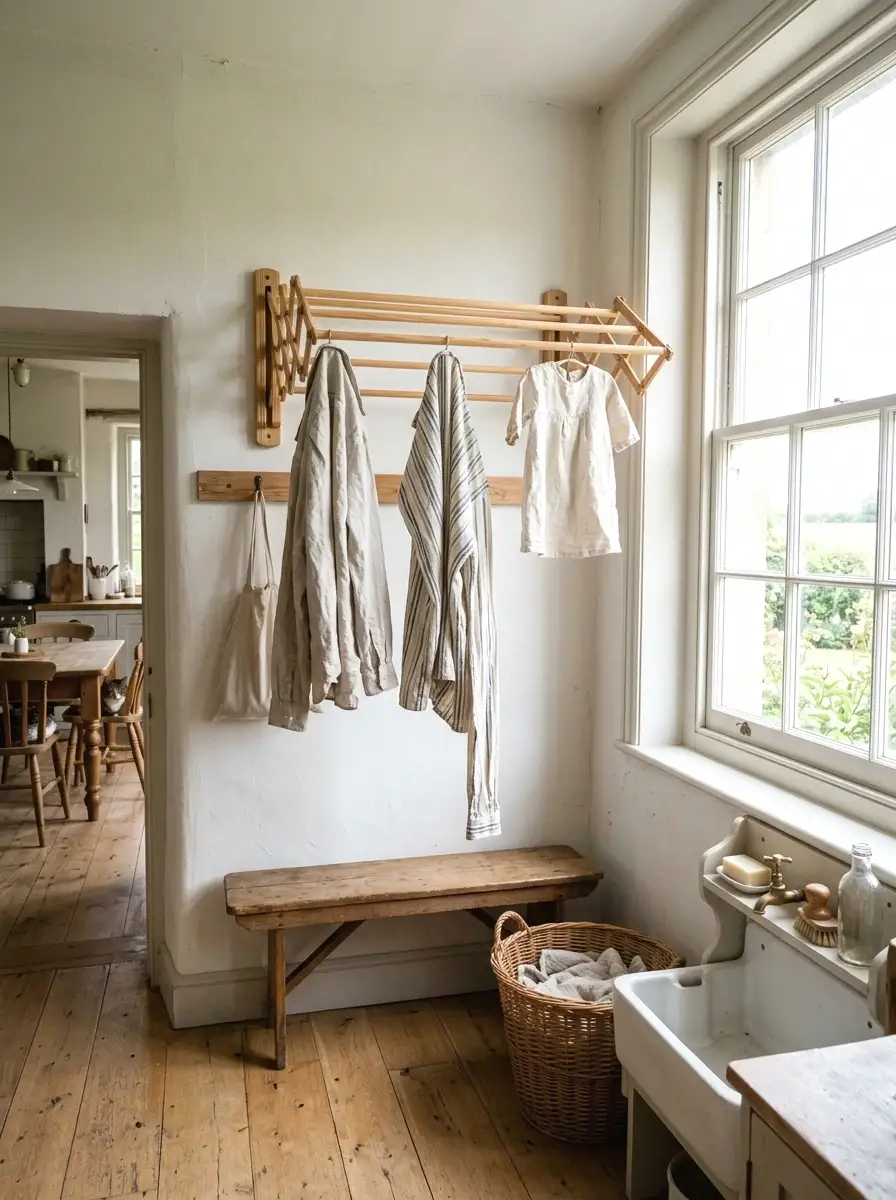
A wall-mounted drying rack that folds out when you need it is one of the smarter things you can add to a farmhouse utility room. It keeps hand-wash items off the floor, off the machines, and off the backs of chairs. When it’s not in use, it folds flat against the wall and takes up almost no visual space.
Wall-mounted wooden drying racks with fold-out arms run $40 to $90. The ones made from solid wood with a whitewashed or natural finish look nice against a shiplap or painted wall. Mount it near a window if possible so items dry faster. I was skeptical about this one but it ended up being the thing I use every single day.
14. Use Labels Everywhere
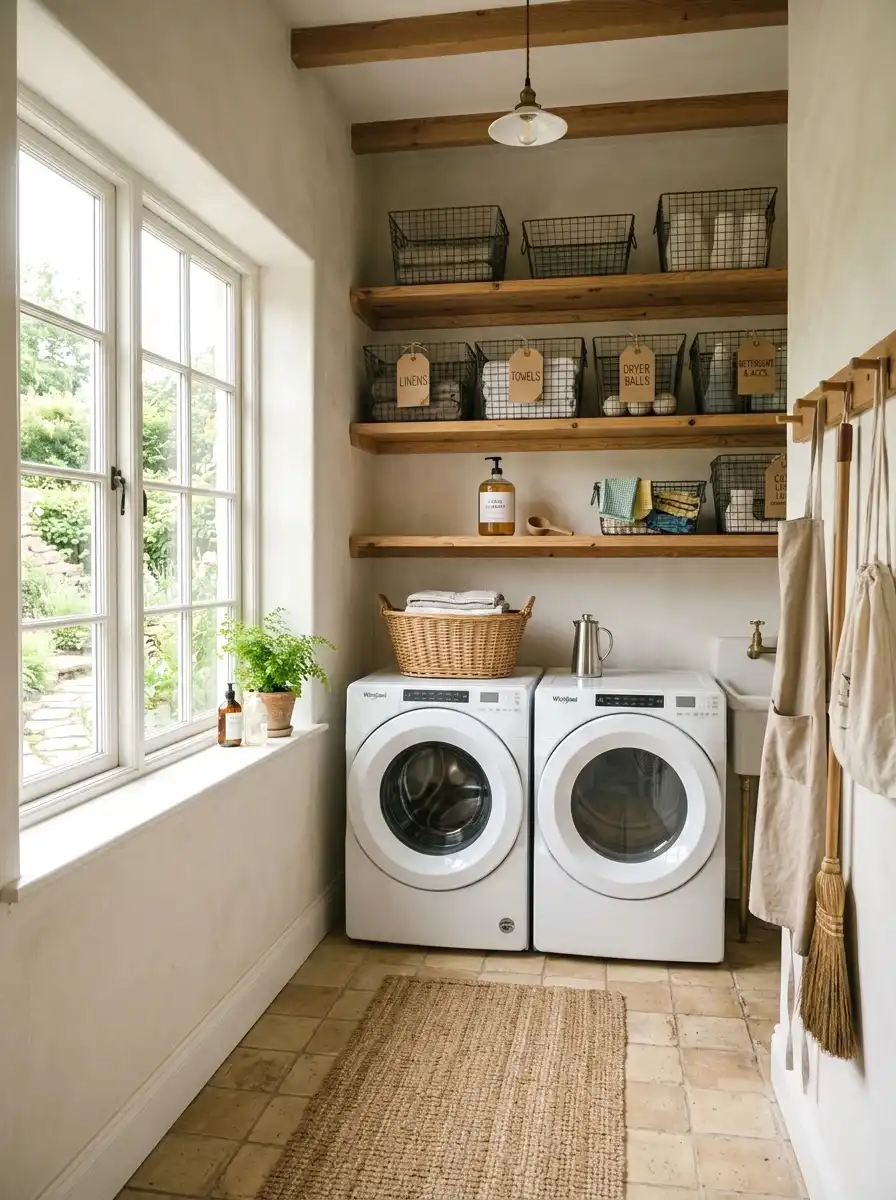
It sounds too practical to be a design tip, but labeled storage actually changes how a farmhouse utility room looks and works. When every basket, bin, and shelf has a clear label, the room feels less like a dumping ground and more like a room someone manages well. Farmhouse-style labels in a kraft paper or handwritten style fit the aesthetic perfectly.
You can print labels at home or buy sets of adhesive kraft labels for $8 to $15. A label maker with a simple black-on-white tape is also classic. For a nicer look, small chalkboard tags with twine loops tied to baskets are around $10 to $20 for a set. The specificity matters. “Dog towels” is more useful than “pets.”
Once the function side is sorted, it’s easier to layer in some decorative touches that still earn their place without making the room feel overdone.
15. Paint the Walls a Warm Neutral
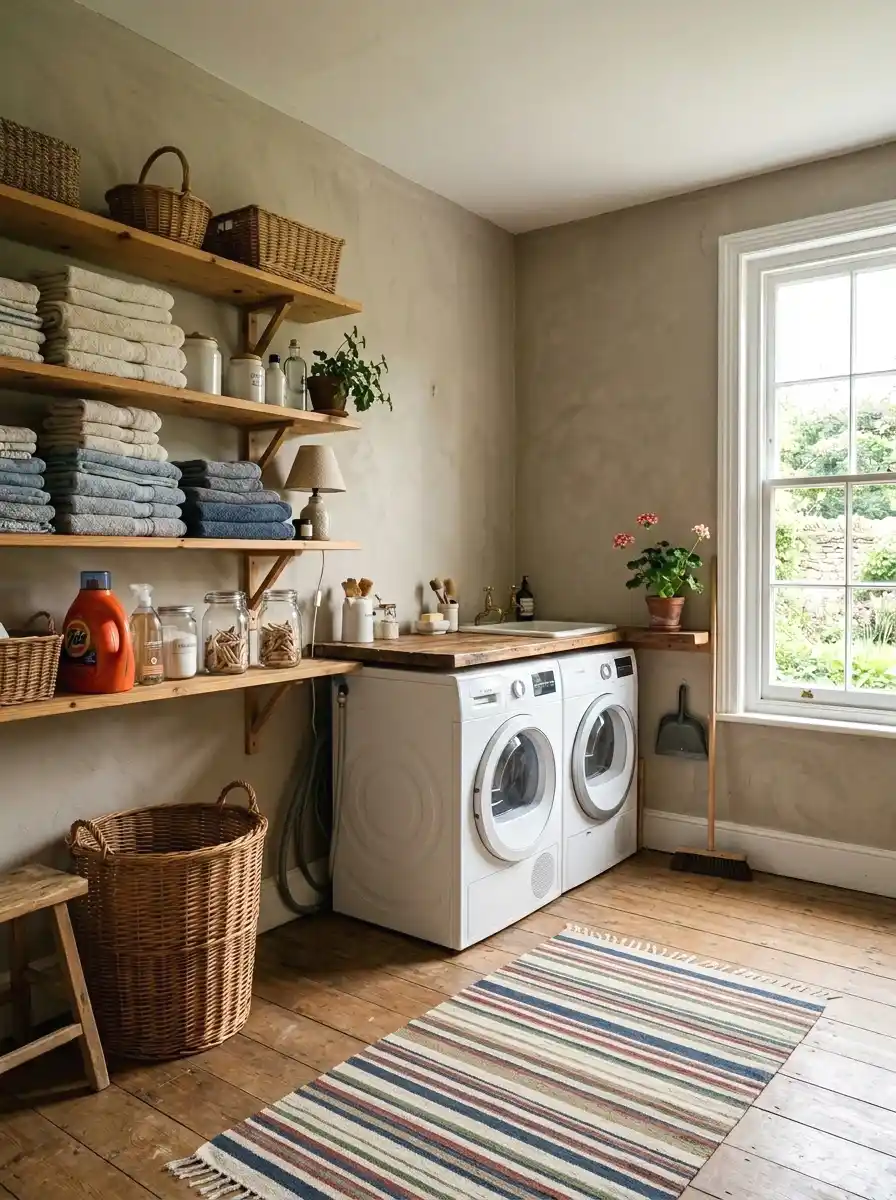
White is fine. But a warm off-white, a soft cream, or a greige (a mix of gray and beige) does more for a farmhouse utility room than bright white does. It makes the space feel warmer and more finished without any additional decor. The right wall color does a lot of heavy lifting.
Warm neutrals that work well include Benjamin Moore White Dove, Sherwin-Williams Accessible Beige, or any soft cream from your local paint store’s own line. A gallon of paint runs $35 to $60 and covers most small utility rooms with two coats. Don’t skip primer if you’re going over a dark or stained existing color.
16. Build a Simple Mudroom Bench Near the Entry
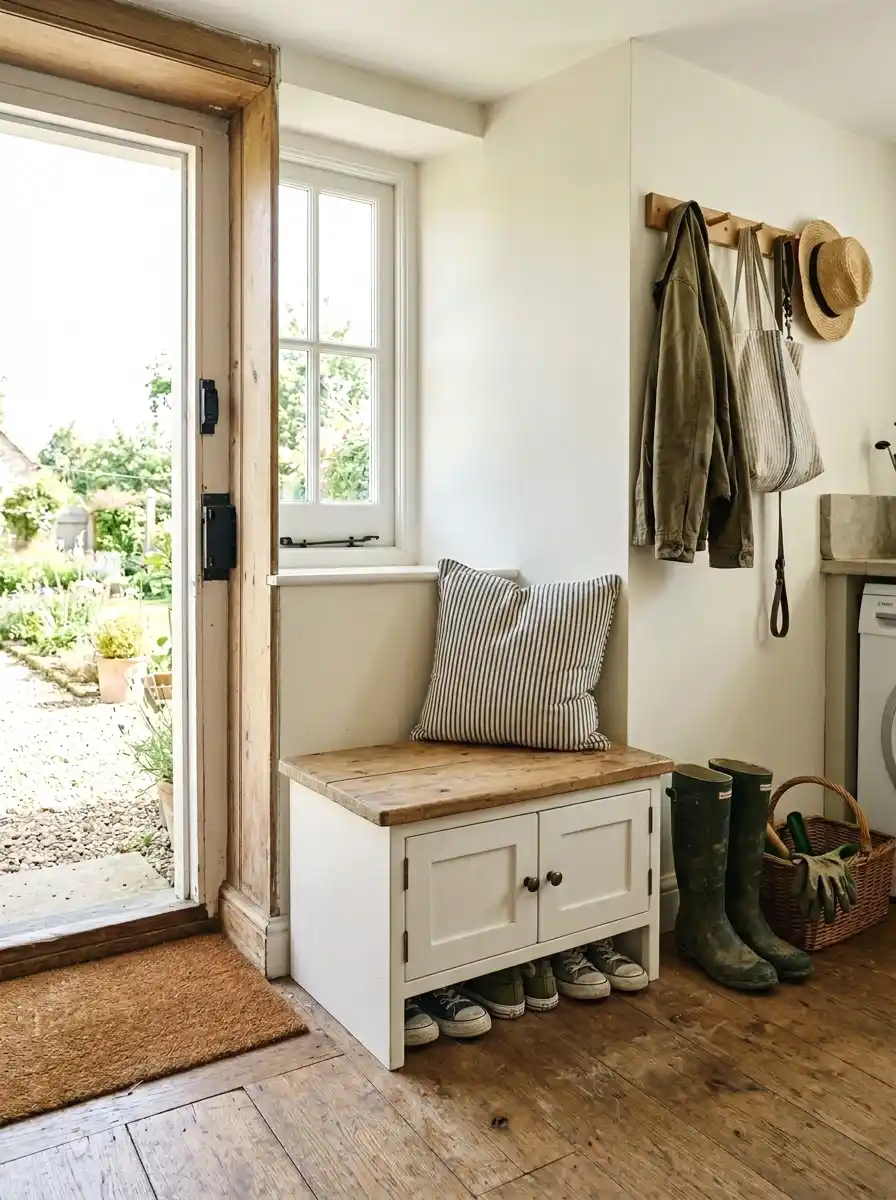
If your utility room connects to a back door or garage entry, a small bench with storage underneath is one of the most practical additions you can make. Sit down to take off shoes. Store boots in the cubbies. It makes the room work harder without adding more stuff to the floor.
A basic storage bench in a farmhouse style, wood top with painted base, runs $80 to $200 depending on size. Or build one from a few boards and a simple box frame for $40 to $60 in lumber. Add a cushion on top in a simple ticking stripe or canvas fabric for about $20 and it looks genuinely nice, not like a DIY project that got finished halfway.
If your utility room shares space with a back entry, there are some mudroom entry ideas that do double duty without requiring a full renovation.
17. Add Plants (The Right Ones)
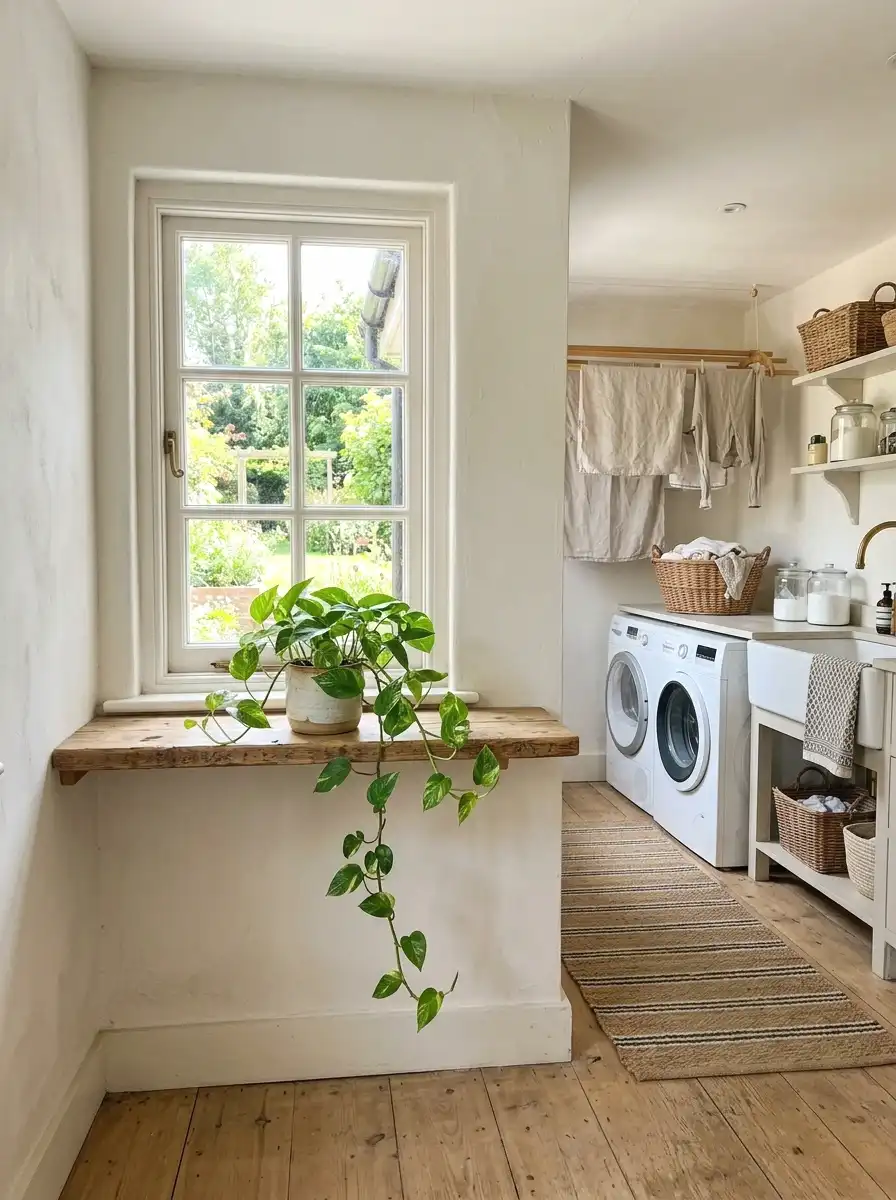
A utility room doesn’t get much love in the plant department, but a few well-chosen plants do a lot for the atmosphere. The key is picking ones that actually survive the conditions: low light, humidity from the machines, and a room that may go days without anyone opening the window.
Pothos, snake plants, and spider plants are the reliable choices for this space. They handle low light and humidity without complaining. A 4-inch pothos from a garden center runs $5 to $12. Put one on a shelf near the window or hang one in a simple ceramic pot on a hook. One or two is enough. A whole shelf of plants in a utility room starts to look like a greenhouse.
18. Install Floating Shelves for Decor and Supplies
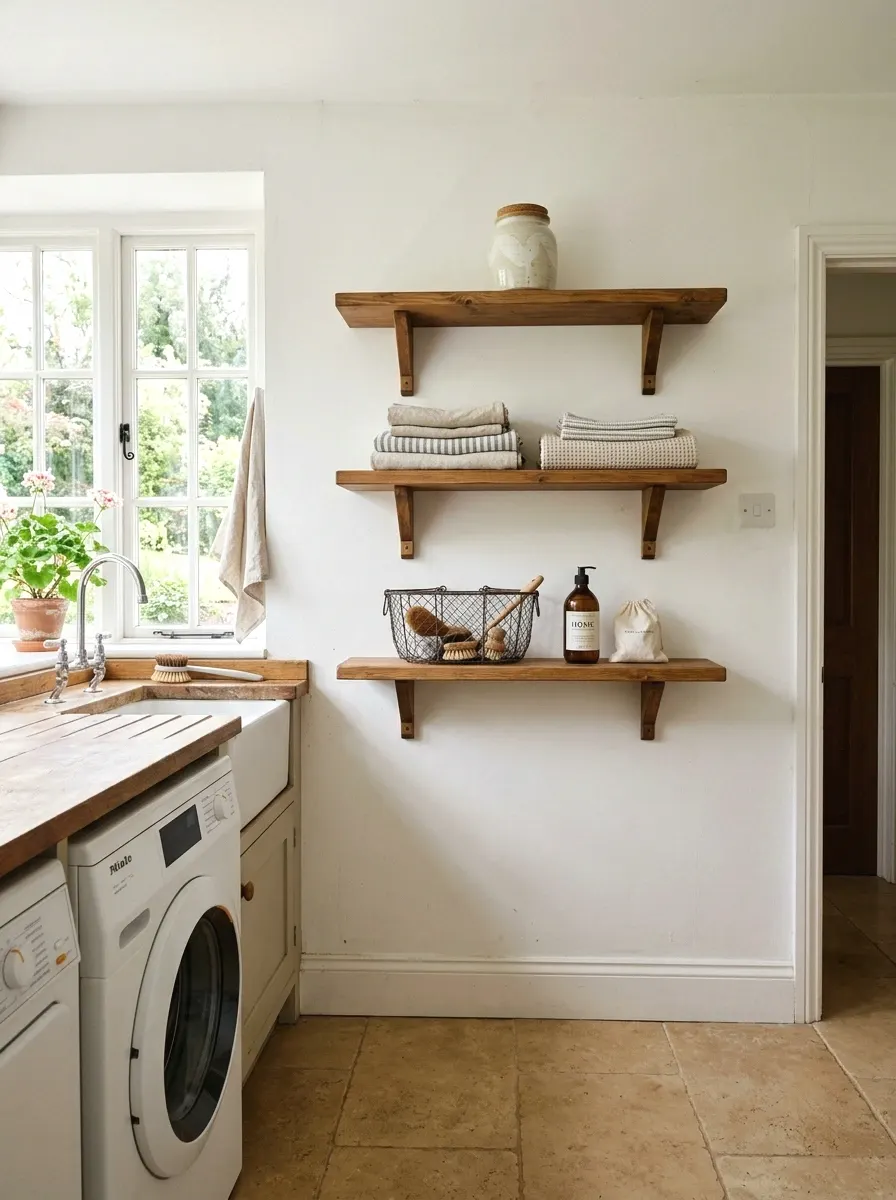
Floating shelves, the kind without visible brackets, look clean and work in almost any wall space including narrow walls and awkward corners. In a farmhouse utility room, a set of two or three floating shelves in a stained pine or white-painted wood give you surface space and a place to put something that looks nice without taking over the room.
A single floating shelf around 24 to 36 inches wide runs $20 to $50. A set of three from the same line keeps things looking consistent. Use the top shelf for something decorative, a small plant or a ceramic jar, and the lower shelves for actual supplies. (Took me ages to figure out that mixing decor and function on shelves looks better than keeping them separate.)
19. Add a Farmhouse-Style Clock
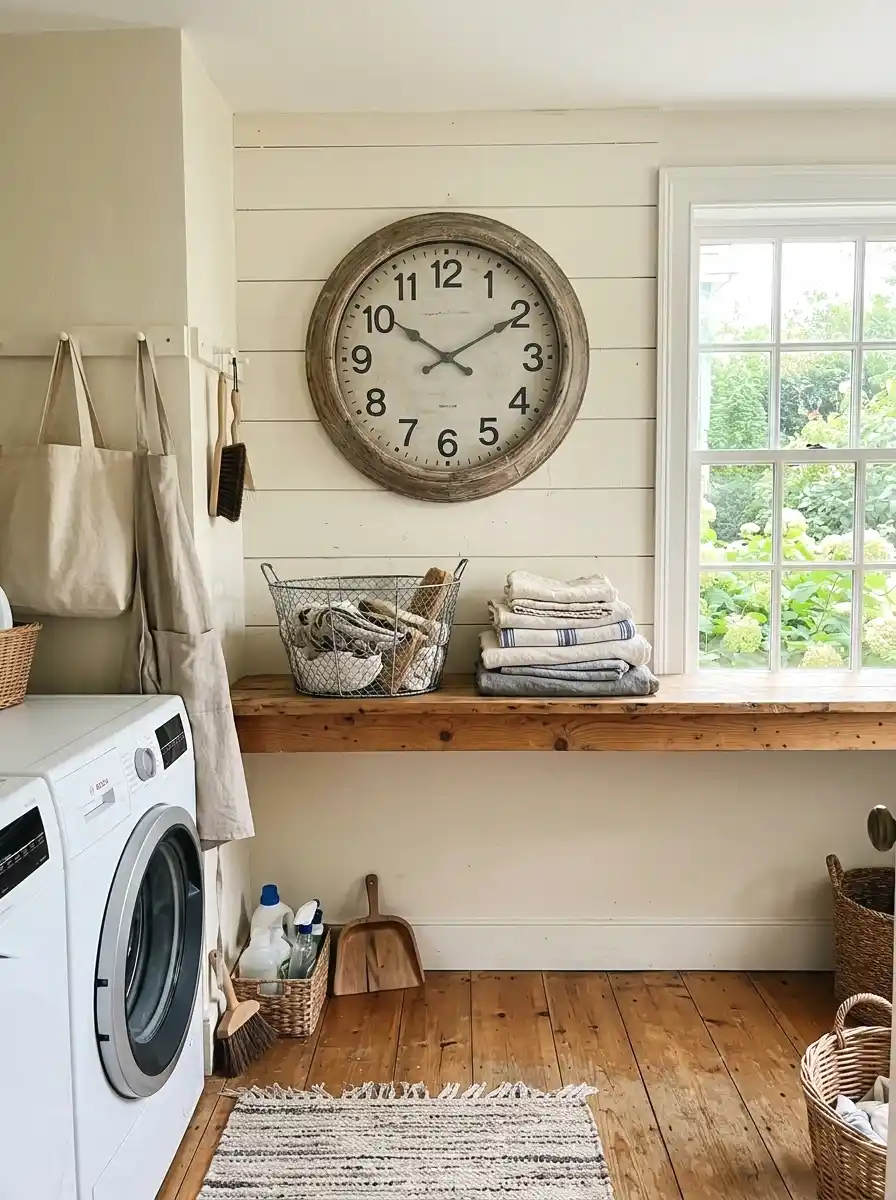
A large round clock with a simple face, black numerals, and a wood or metal frame sounds like a small thing. But in a utility room, a clock on the wall actually gets used. You’re checking laundry cycles, timing a soak, seeing if you need to leave in ten minutes. It works and it fills wall space in a way that feels intentional.
Farmhouse-style clocks in the 16 to 24-inch range run $25 to $60. Look for ones with a matte finish on the face and a simple frame. Distressed wood frames are a classic farmhouse choice. Metal frames in black or aged bronze work just as well. Avoid anything too decorative or ornate. A utility room needs a clock, not a centerpiece.
20. Use a Ladder as a Display and Drying Element
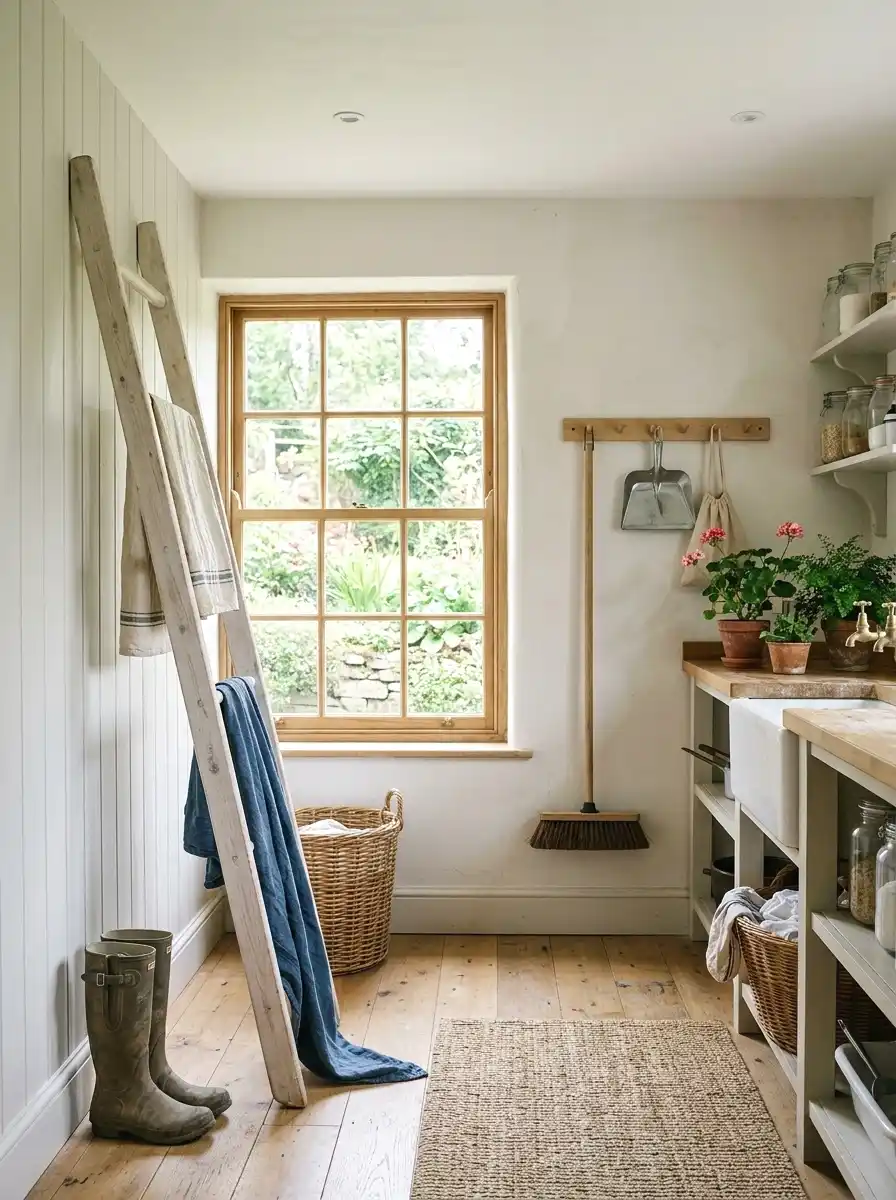
A plain wood ladder leaned against the wall costs almost nothing and does two things at once. Hang clean laundry over the rungs while it finishes drying. Drape some extra towels or a woven blanket over it for texture. It looks like a farmhouse prop but it’s actually useful, which is the whole point.
An old wooden ladder from a thrift store or yard sale runs $5 to $20. A new decorative leaning ladder in a pine or whitewashed finish runs $30 to $60. Sand it smooth so nothing snags on it. If you want to use it specifically for drying, space the rungs are at least 12 inches apart so air can move through.
21. Frame the Window With Simple Cotton Curtains
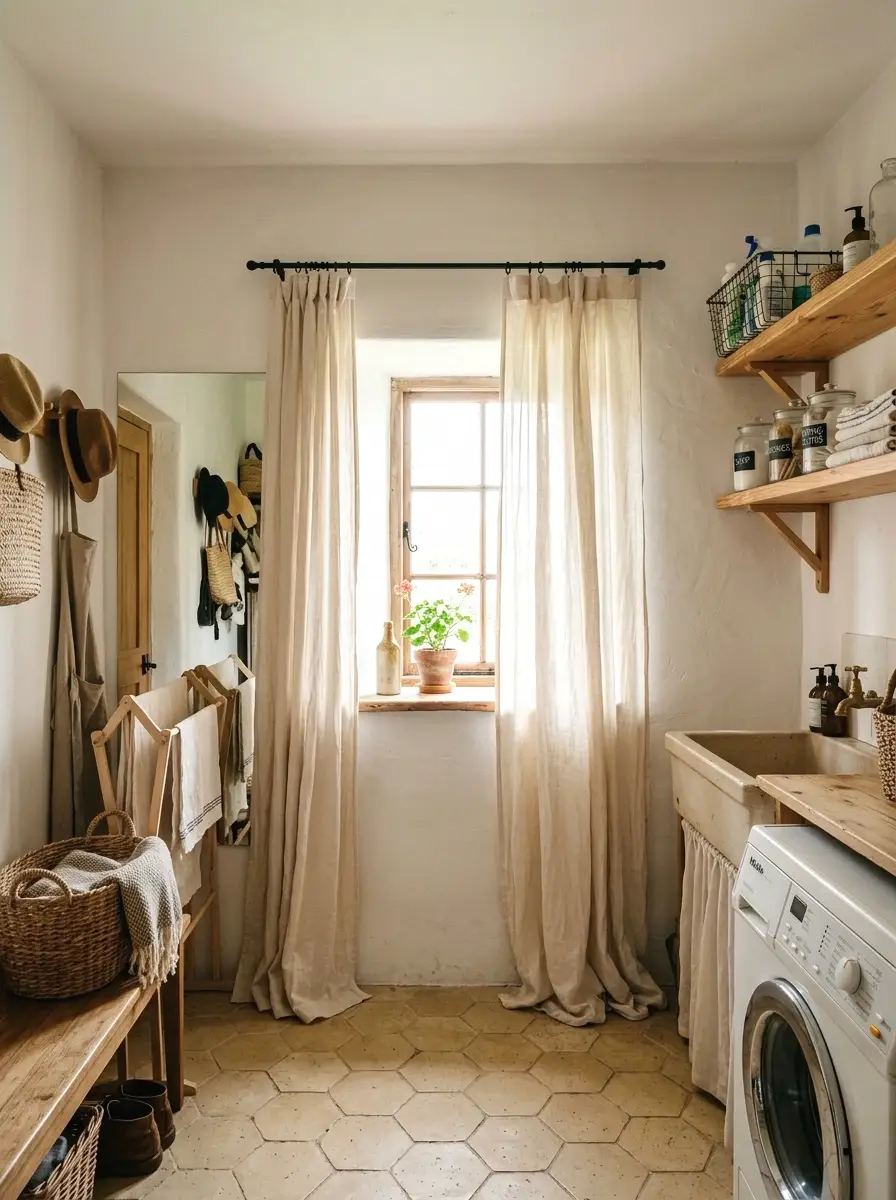
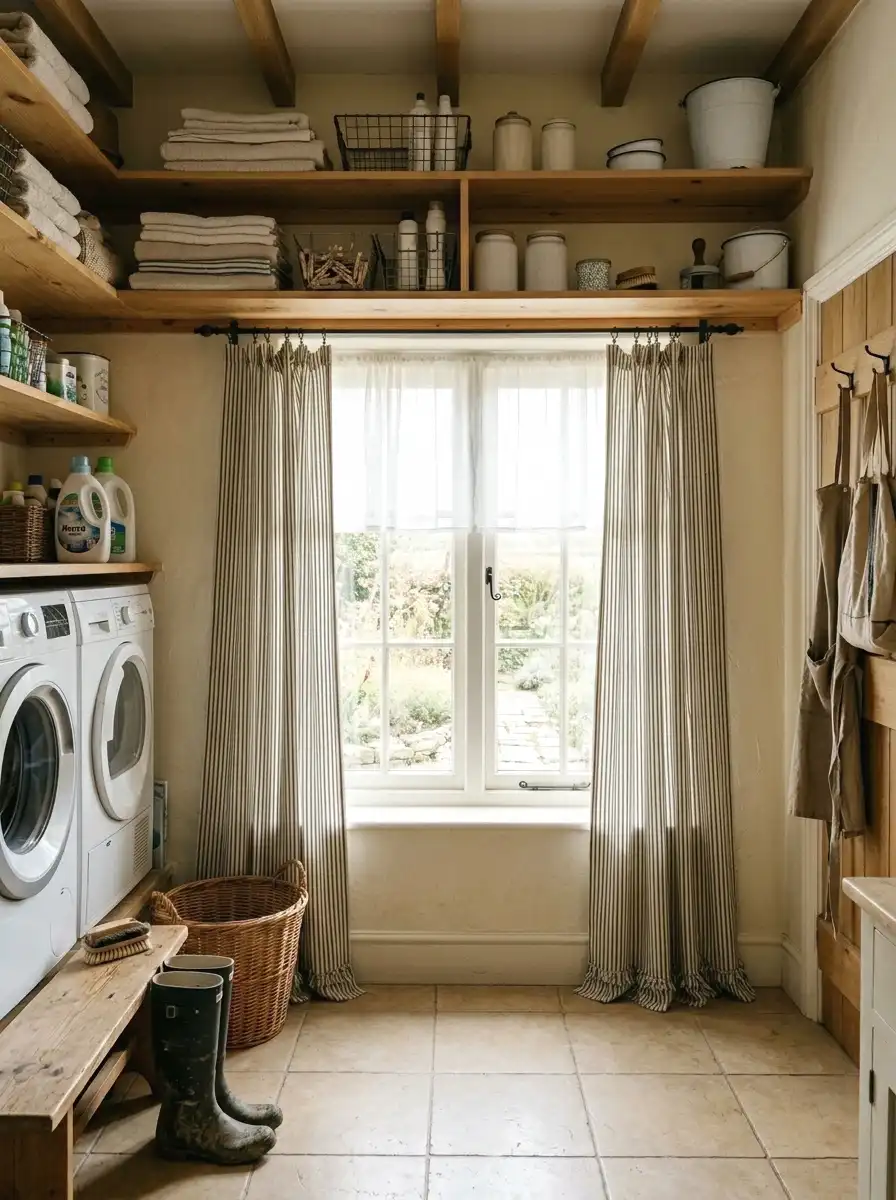
If your utility room has a window, frame it. A simple curtain in a classic farmhouse fabric, grain-sack stripe, linen, or unbleached muslin, makes the window look like it was designed rather than just happened to be there. It softens the room without hiding the light.
A pair of basic cotton curtain panels in a 48-inch width runs $20 to $45. Keep them short enough that they don’t touch the floor or sit near the machines. A white or cream curtain on a simple black iron rod ties into almost any other farmhouse elements you’ve added. Skip the valance. Just clean panels. That’s all this room needs.
Final Thoughts on Farmhouse Utility Room Ideas
You’ve now got 21 ways to make a utility room that works harder and looks like you meant it. The through-line across all of it is the same: start with the storage, get the walls sorted, then add the small details that give the space a real feel. You don’t need all 21. Pick four or five that solve your specific problems.
Start with the peg rail or the open shelving. Something that fixes the mess before you add anything nice-looking. One weekend, one project. See how much lighter the room feels when things have places to go.
And if you want to keep going, there’s a whole gallery of farmhouse laundry rooms on real budgets that might spark the next project.
If you want more ideas like these, homelypop.com has a lot more where this came from. Real budgets, real rooms, real results.