
22 Apartment Decor for Remote Workers Who Need to Separate Work From Home Mentally

Your living room is your office. Your bedroom is your break room. And by 3 PM on a Tuesday, you genuinely can’t tell if you’re working or just sitting. That blur is real. And it’s exhausting.
This list covers 22 apartment decor ideas for remote workers who need an actual mental boundary between work and home, not just a desk shoved in the corner. Each idea was picked because it does something specific for how your brain reads your space. The budget range stays between $100 and $700 total, with most individual items landing well under $200. Some items are physical dividers. Some are lighting tricks. Some are just small shifts that signal “work is done” to your brain in a way that actually sticks.
This guide is for renters and apartment dwellers working with one room, a studio, or a one-bedroom. If you’re expecting a full home office renovation with a dedicated room and a door that locks, that’s not what this is. But if you’re working with 400 to 800 square feet and a real budget, every idea here is doable.
Also, explore apartment decor for couples who both work from home.
By the end, you’ll have a clear picture of what to change, what to buy, and how to make your apartment feel like two places at once.
What to Know Before You Start Apartment Decor for Remote Workers
- Visual boundaries work on your brain even when walls don’t. Your mind reads zones through color, lighting, and texture.
- Plan your work zone before buying anything. Pick a corner, a wall, or a nook first.
- A $40 area rug under your desk can do more for mental separation than a $300 shelf setup.
- Most renters worry about drilling. Over 80% of the ideas here are deposit-safe and require zero holes.
- The biggest mistake people make is mixing work items into the rest of the living space. Keep cables, notebooks, and work gear out of your “home” zone.
- Natural light placement matters. Face your desk toward a window, not away from it.
- Ergonomic chairs from brands like Amazon Basics or IKEA start around $80 and protect your body over years of daily use.
- Warm-toned bulbs (2700K) in your living area and cool-toned bulbs (4000K–5000K) at your desk create a powerful zone switch.
1. A Dedicated Desk Rug
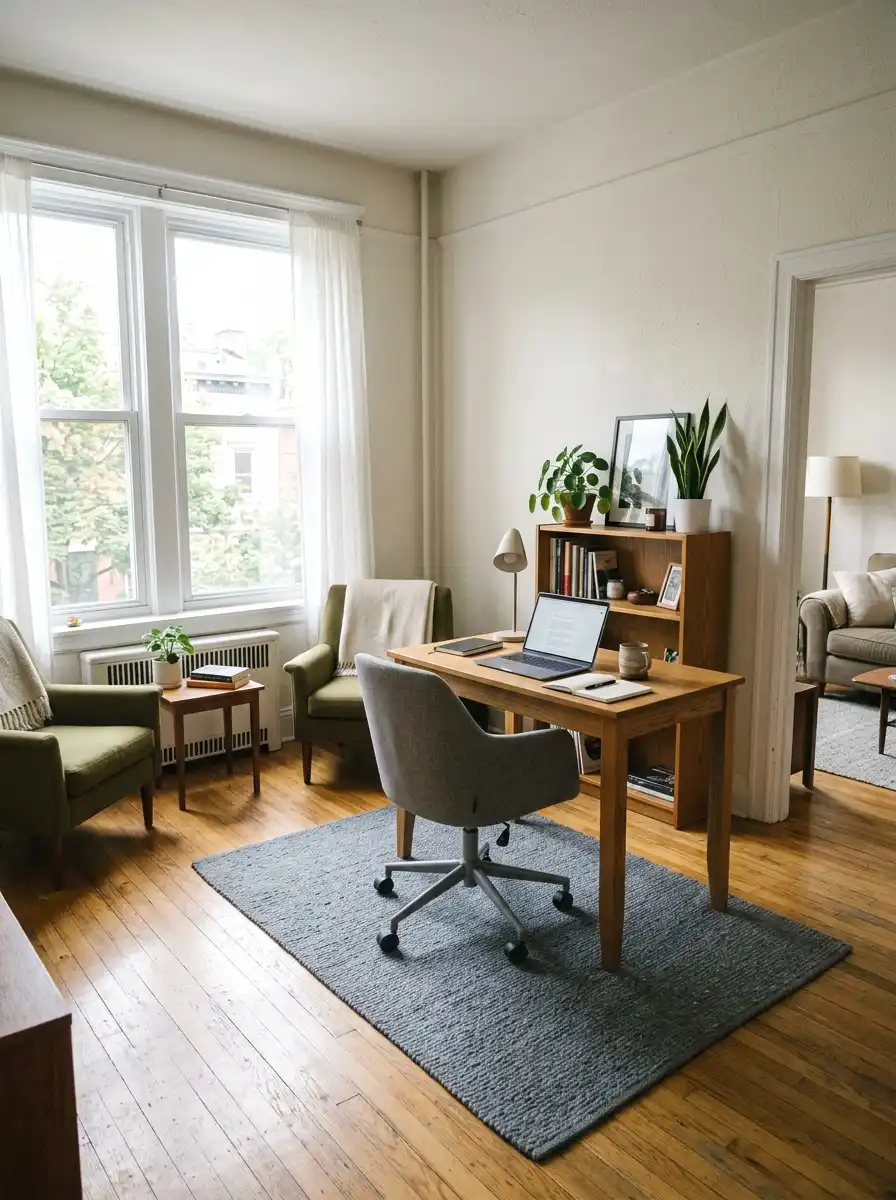
So here’s the thing nobody talks about enough: a rug under your desk does more work than you’d think. Your brain is wired to read zones through floor surfaces. The moment you step off the rug at the end of the day, something actually shifts. It’s subtle. But it’s real. I didn’t believe it until I tried it.
Go for a rug that’s at least 4×6 feet so the chair rolls onto it fully. A flatweave or low-pile option in a neutral tone like slate gray, warm cream, or dusty sage works well because it doesn’t compete with the rest of the room. At Target, you can find solid options in the $45 to $90 range. Wayfair carries a wider selection starting around $60.
2. A Tension Rod Curtain Divider
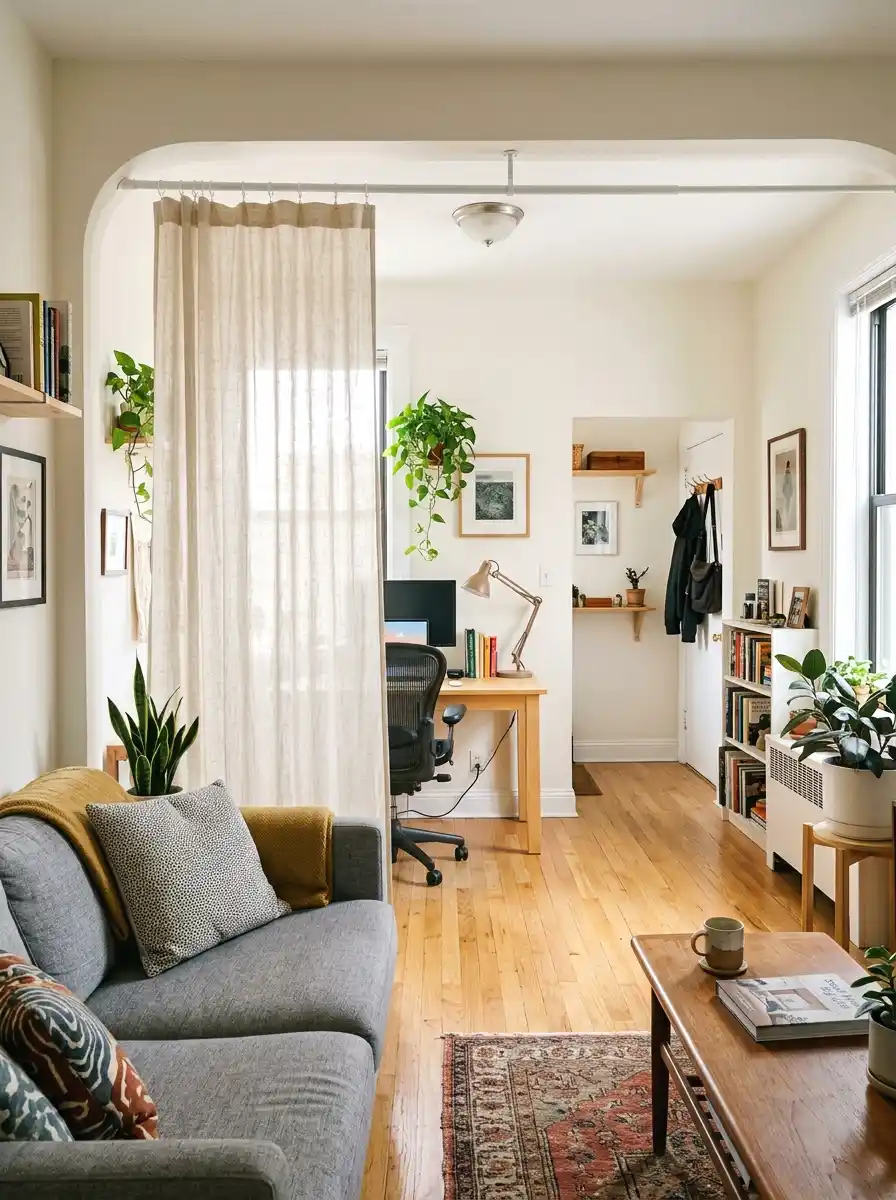
The most affordable boundary you can create in a studio or open-plan apartment is a curtain on a tension rod. No drilling. No damage. No deposit issues. You stretch the rod between two walls or use a ceiling-mounted IKEA VIDGA track system for about $20 to $25 per section, hang a linen panel in front of your desk area, and your workspace disappears the second you pull it closed.
This works especially well in studio apartments where the desk faces a living area. Linen panels in off-white or light gray still let daylight through while creating a visual block. A full setup, including rod and two panels, runs about $40 to $80 at IKEA or Amazon. When I first tried this in my own space, I was shocked at how fast the “work brain” switched off just from pulling that curtain shut.
Working with an open plan layout without a dedicated room is its own design challenge, and the curtain divider is one of the most renter-friendly answers to it.
3. A Bookshelf Zone Divider
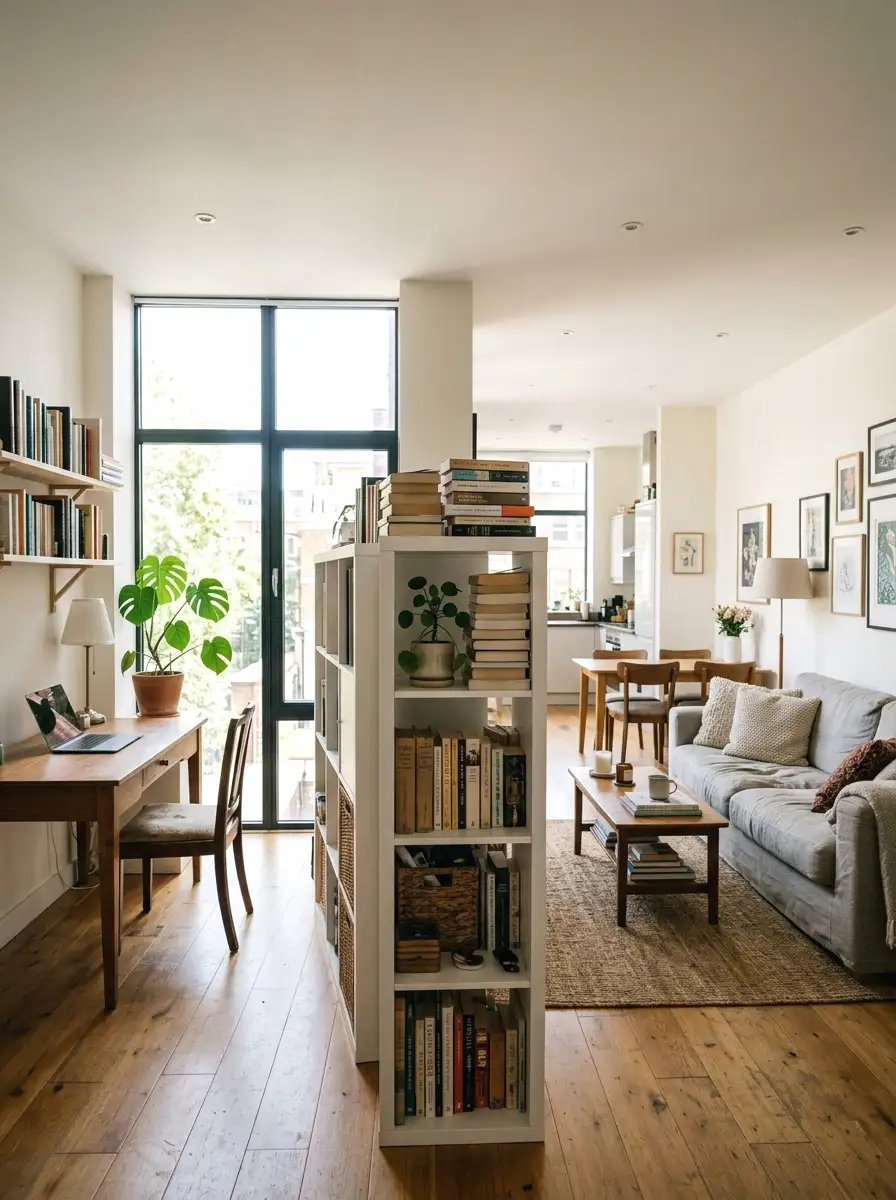
An open-backed bookshelf used as a room divider is the classic move for a reason. It gives you storage on both sides and draws a clear line between your desk zone and your living zone without closing off the room. The IKEA KALLAX is the most popular option at around $130 to $200 depending on size. You get cubes for books, plants, small baskets, or decorative objects.
Place it perpendicular to a wall so it sticks out into the room and creates a visual “wall” that your eye reads as a boundary. Fill the living-side cubes with personal items and the work-side cubes with notebooks, chargers, and supplies. It’s a surprisingly polished setup and also adds real resale value to how furnished the space looks overall.
Also, explore kitchen and living room divider ideas.
4. A Dedicated Desk Lamp With a Different Bulb Temperature
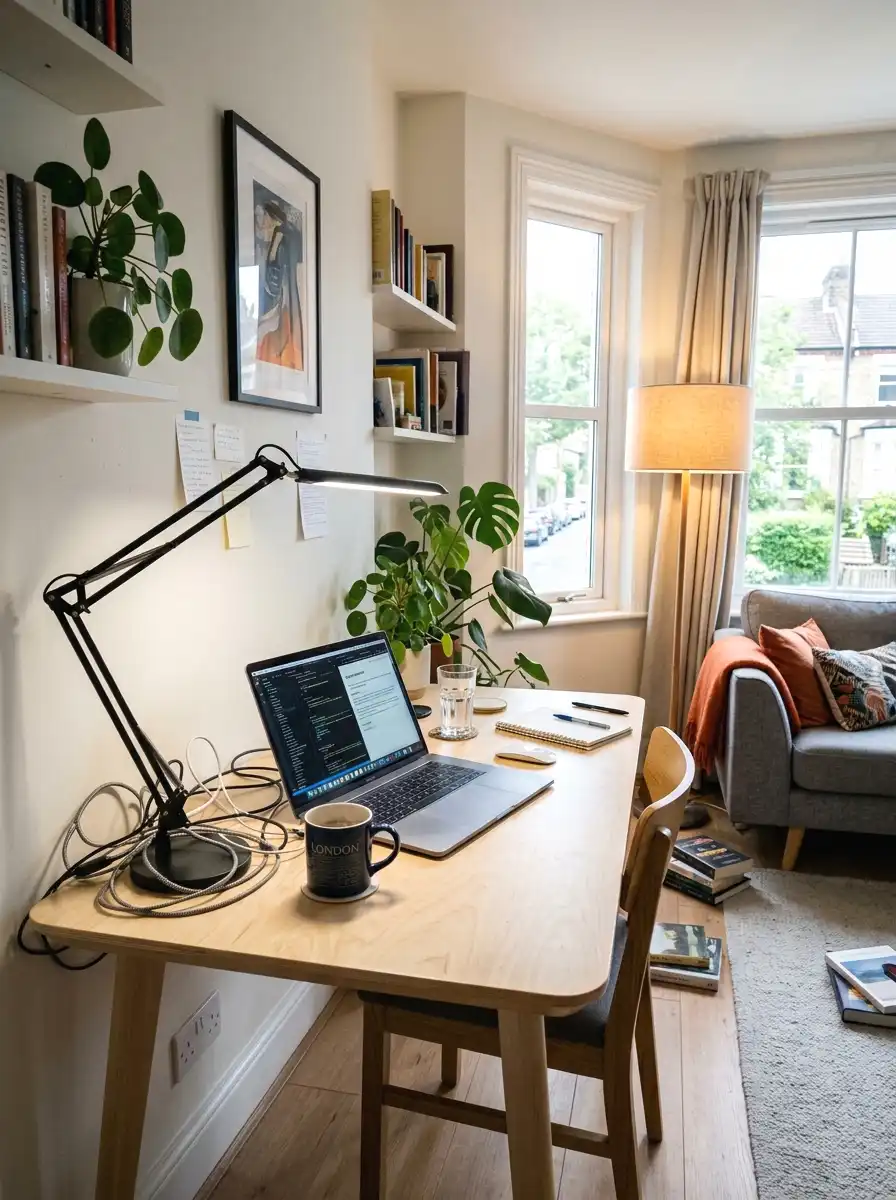
Here’s the lighting trick that costs almost nothing but changes everything. Your overhead lights stay warm and ambient, around 2700K, which feels like home. Your desk lamp uses a cool daylight bulb, around 4000K to 5000K, which feels like work. The difference between those two zones is immediate and it trains your brain over time.
A decent LED desk lamp with adjustable color temperature runs $25 to $60 on Amazon. Brands like TaoTronics and BenQ make solid options used by people who spend eight-plus hours at a screen. Switch the desk lamp on when work starts, switch it off when it ends. That one ritual, just flipping a single lamp, does more for your mental boundary than you’d expect. It sounds basic. It seriously works.
If you want the desk area itself to stay visually calm and distraction-free, setting up a minimal focused workspace is worth thinking through before you add any accessories.
5. A Freestanding Folding Screen
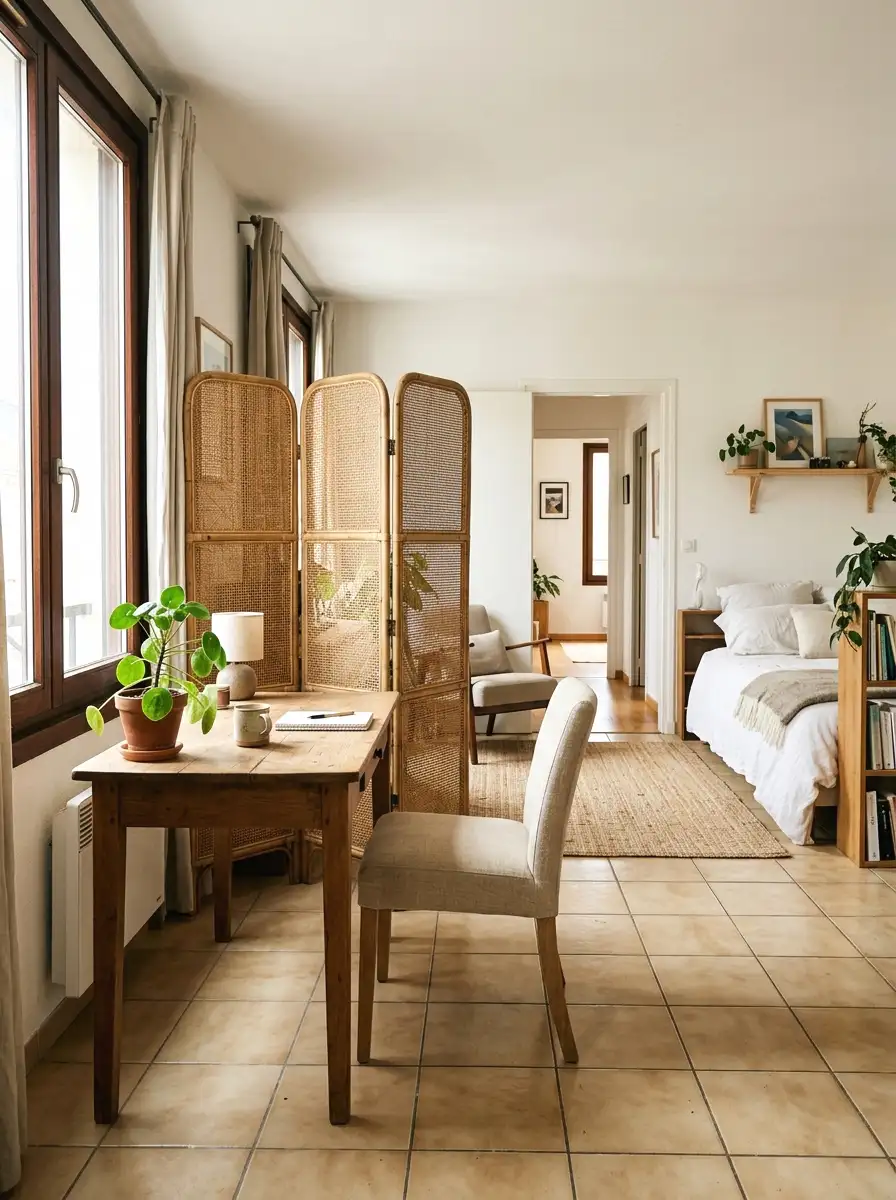
A folding room divider screen is the fastest way to create a physical boundary in any apartment layout. You unfold it at the start of the day and fold it away at night if you need the space back. Options at Walmart start around $57 for a basic 3-panel fabric screen that’s 71 inches tall and 102 inches wide. Wood and rattan options start around $100 to $150 at Wayfair.
Position it behind or beside your desk to separate it from a bedroom or living area. Rattan and bamboo styles blend well with most apartment aesthetics without looking like a temporary fix. The folding screen is also one of the best video call backgrounds you can create on short notice. Beats explaining why your unmade bed is visible.
6. Wallpaper on the Desk Wall Only
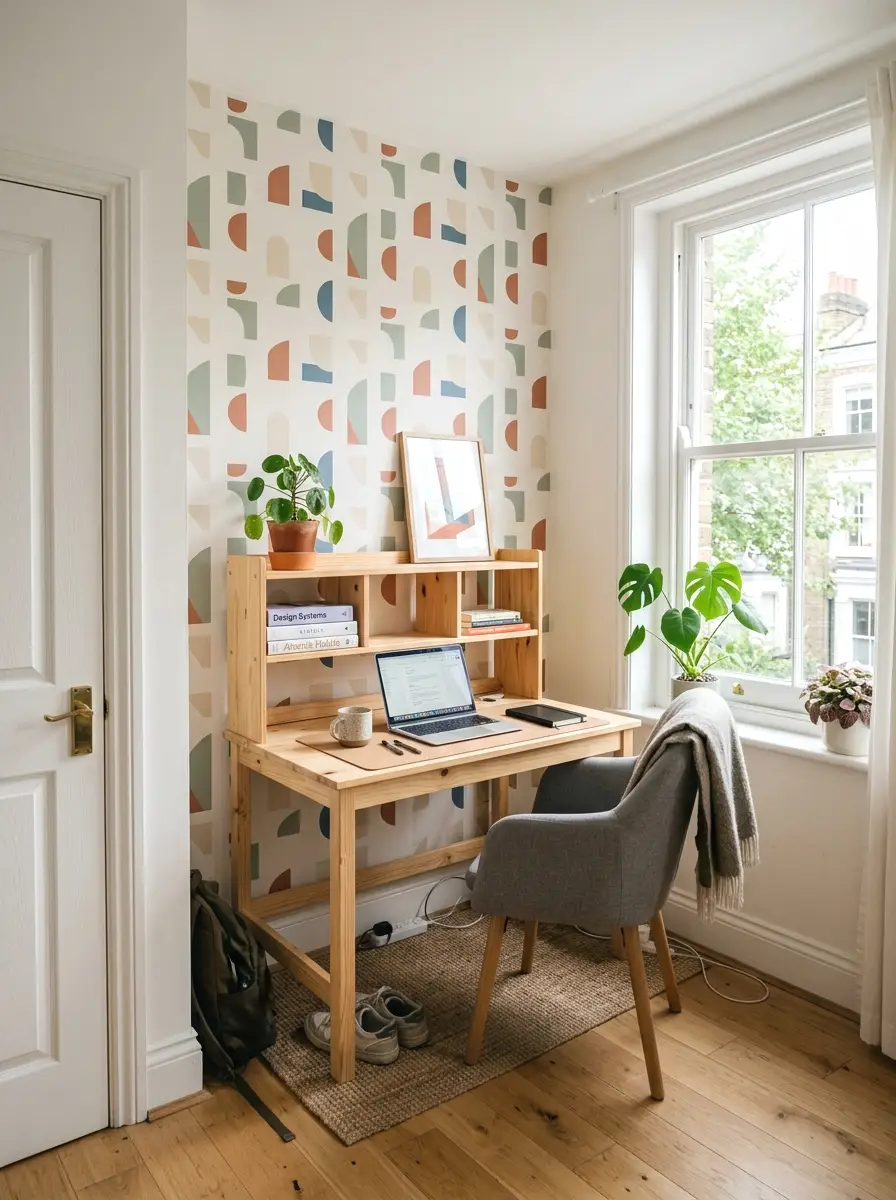
Peel-and-stick removable wallpaper is one of the most underrated apartment upgrades for remote workers. Instead of painting (which most leases don’t allow), you add a feature wall behind your desk that signals “this is a different zone.” Your brain reads that pattern change the same way it reads a door. The desk wall becomes its own space.
Patterns that work well include soft geometric prints, linen textures, and nature-inspired designs in sage, terracotta, or charcoal. Brands like Tempaper and RoomMates sell peel-and-stick options for around $30 to $60 per roll, and most desk walls need just one or two rolls. Peel it off cleanly when you move and your deposit stays safe. This one always surprises people with how much it changes the whole feel of a small workspace.
7. A Wall-Mounted Fold-Down Desk
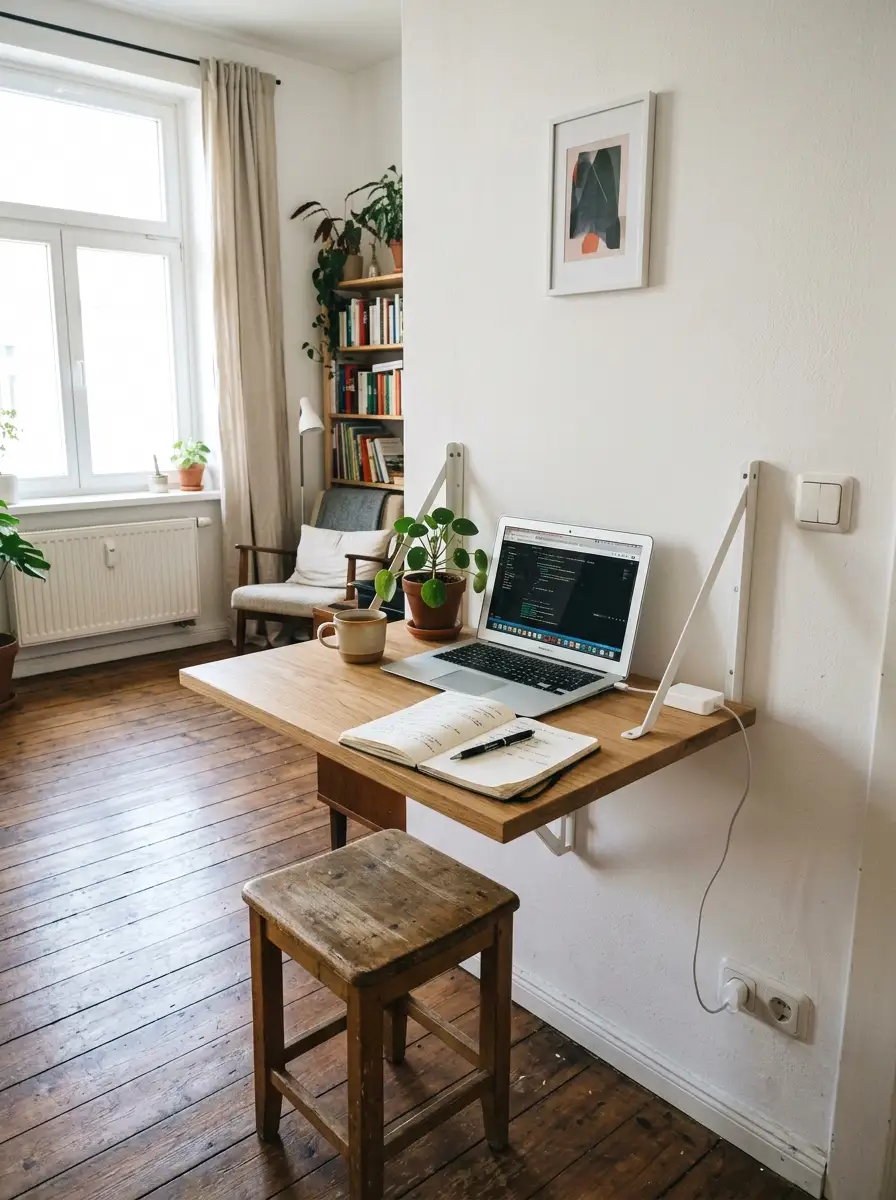
If your apartment is small and you don’t want a desk taking up permanent floor space, a wall-mounted fold-down desk is a smart upgrade. When it’s open, it’s your work zone. When it’s folded up, the wall looks like furniture or decor. The visual signal is strong: folded means done. That physical act of folding the desk closed at the end of the day works as a shutdown ritual in the same way leaving an office building does.
IKEA’s NORBERG wall-mounted drop-leaf table runs about $50 and works as a basic desk. More finished options at Wayfair run $120 to $250. Most mount with just four screws and hold standard laptop and monitor setups. Pair it with a small stool or folding chair that also tucks away and you’ve got a full workstation that disappears completely.
8. A Cord Management Box or Cable Tray
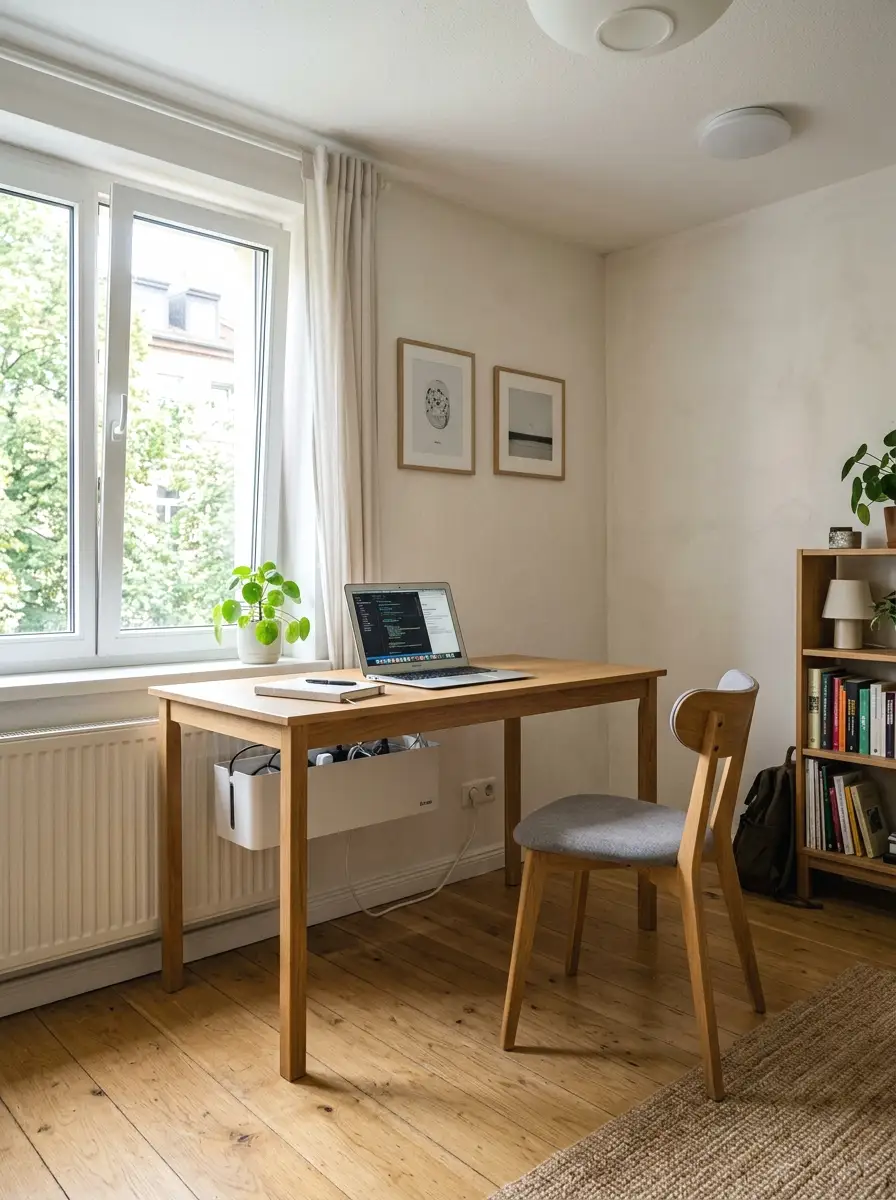
This one sounds boring. It is not. Exposed cables are a visual cue that work is happening, and your brain picks that up even when you’re not trying to work. You sit on your couch to watch a show and there’s a tangle of power cords snaking across the floor. Your nervous system doesn’t fully relax. Took me ages to figure this out.
Cable management boxes from Amazon run $15 to $30 and hide power strips, chargers, and extra cords completely. A cord clip set for about $8 keeps cables along the back edge of the desk out of sight. When the cables are hidden, the workspace reads as cleaner and your brain gets a cleaner “off” signal when you step away. It’s a $25 fix that quietly makes everything else work better.
9. Two Different Throw Pillow Sets
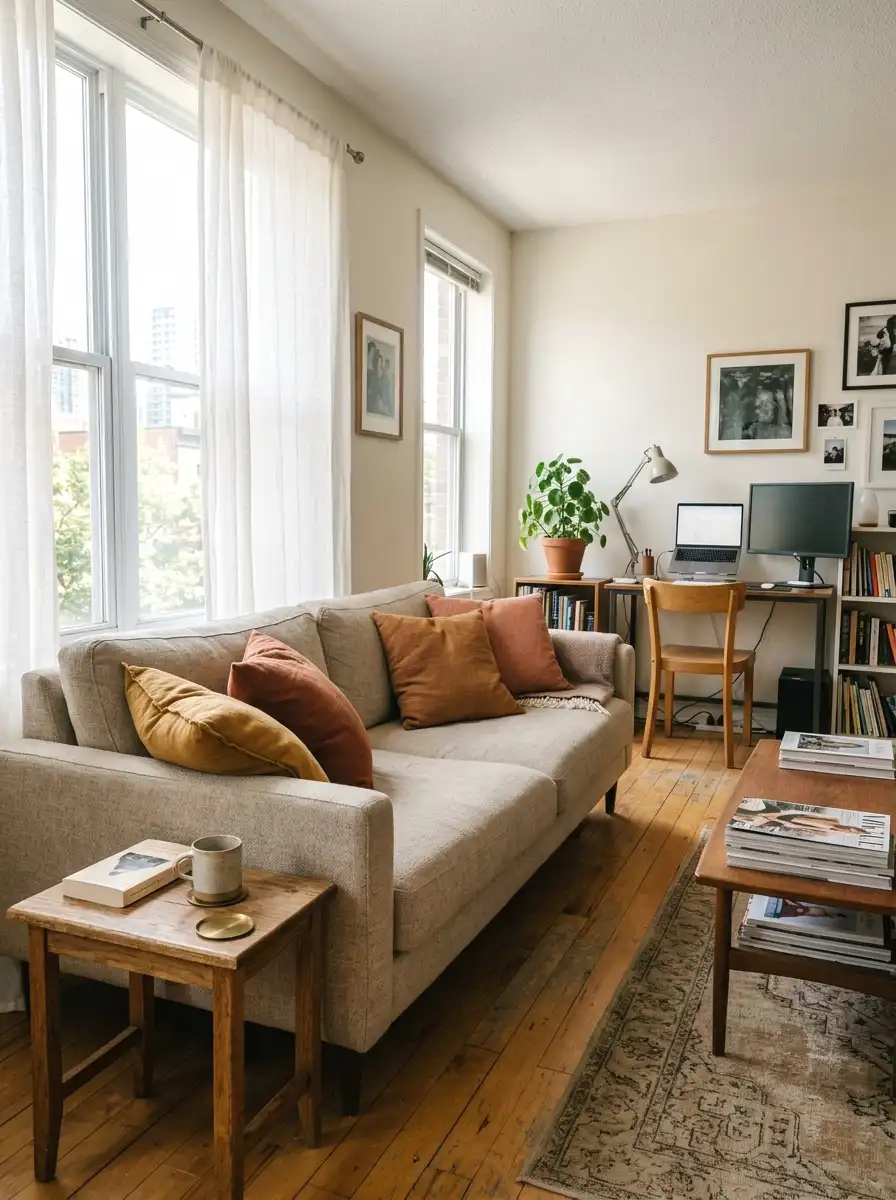
This idea is more psychological than decorative. Your sofa is your rest zone. Your desk area has its own look. The moment you close the laptop and move to the couch, switching out a single throw pillow or draping a different blanket sends a small but clear signal. Two different textures and colors for two different modes.
Keep your sofa pillows in a warm, soft palette, think rust, ochre, terracotta, or dusty rose. Keep your desk chair or the area near your workspace in a cooler or more neutral tone, slate, off-white, or moss green. It doesn’t need to be dramatic. Even one dedicated “home mode” throw blanket draped on the sofa that you never bring near the desk creates a micro-ritual your brain learns to read. Sets of two throw pillows run $20 to $50 at Target or Amazon.
10. A Dedicated Work Plant (Not on Your Couch Side)
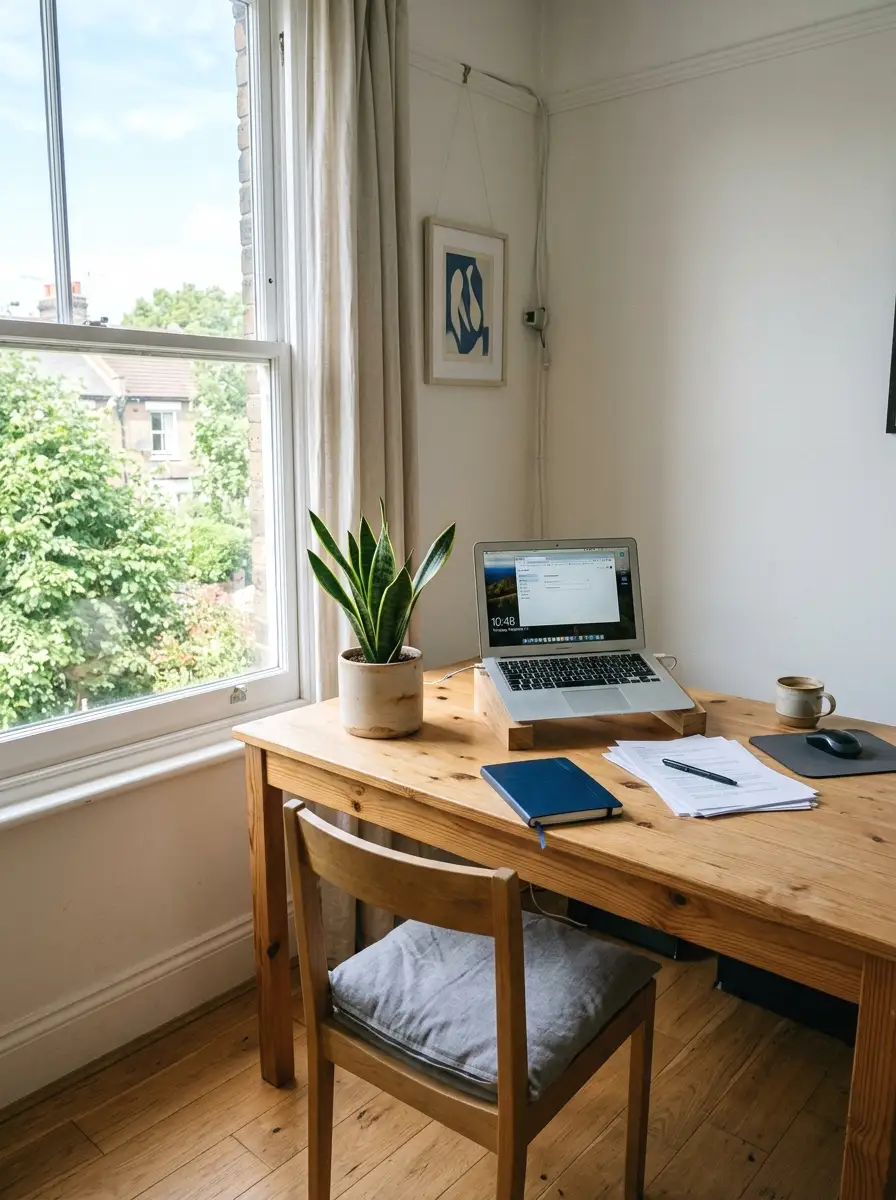
Plants help with focus, air quality, and general mood, which is well documented at this point. But the specific trick for remote workers is keeping one plant exclusively in the work zone and different plants in your living zone. The work plant anchors the desk visually and makes the area feel like its own environment, not just a corner of your bedroom.
Good desk plants that handle low light and irregular watering include pothos, snake plants, and ZZ plants. A 4-inch pothos in a simple ceramic pot from a local nursery or Home Depot runs about $8 to $15. A larger snake plant in a 6-inch pot runs $15 to $25. Place it at desk level, not on a shelf above you. It grounds the zone and adds a bit of life without adding clutter. (This one is so underrated.)
11. A Pegboard for Desk Zone Wall Organization
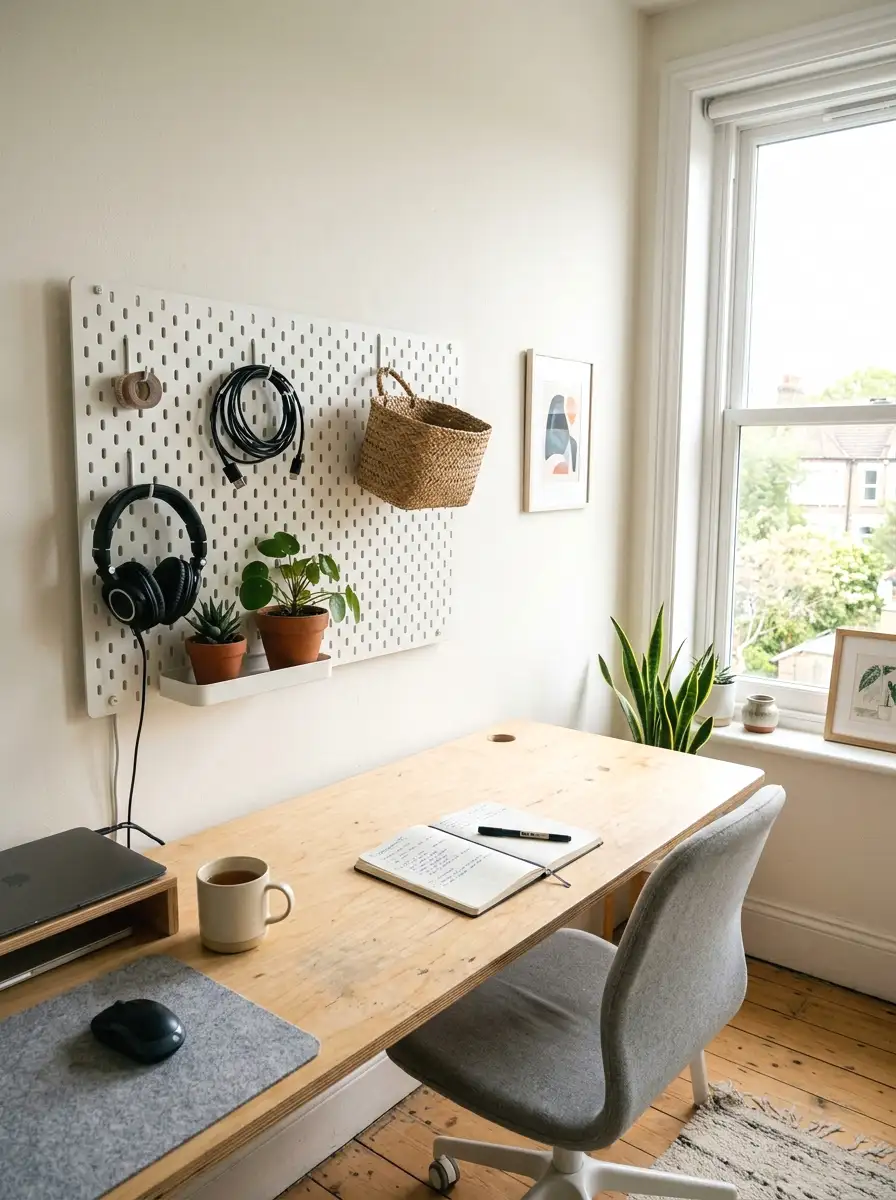
A pegboard above or beside your desk does two things at once. It organizes your work supplies so they’re visible and accessible during work hours, and it keeps everything clearly contained in the work zone so none of it migrates to the rest of the apartment. Hooks, shelves, and small bins let you hang cables, notepads, scissors, headphones, and reference materials.
Pegboards at Home Depot start around $15 for a 2×4-foot panel. Accessory hook kits run another $10 to $20. You can mount it with wall anchors or use a freestanding pegboard frame if drilling isn’t an option. Paint it the same color as the desk wall for a built-in look. The visual effect is a workspace that looks intentional and contained, not like office chaos spreading across your apartment.
Beyond the pegboard itself, thinking through wall decor ideas for a home office can help you design the full zone in a way that actually holds up over time.
12. A Smart Plug With a Work Hours Schedule
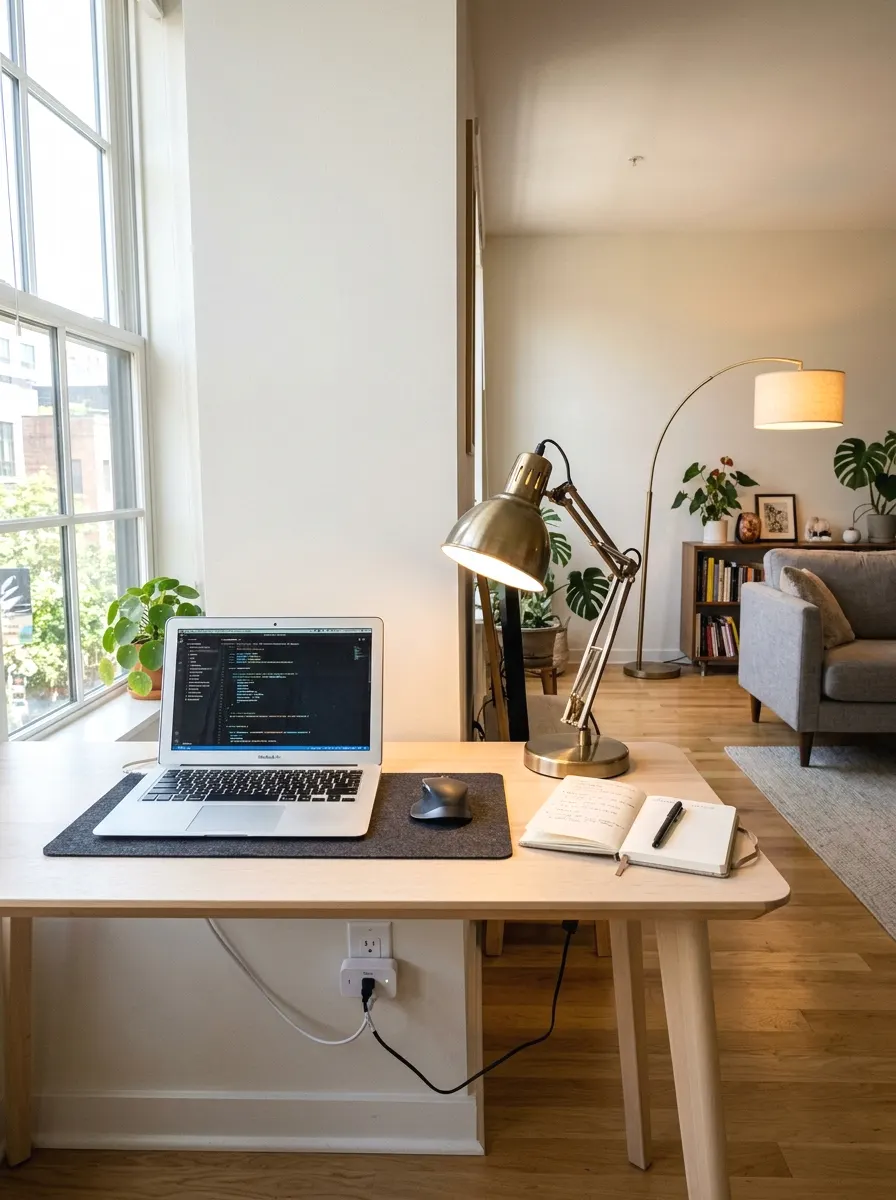
This one bridges decor and smart home territory. A smart plug (about $10 to $15 on Amazon) lets you put your desk lamp and monitor on a scheduled on/off routine. Set it to power on at 8 AM and cut off at 6 PM. The physical act of your desk lamp turning off on its own at the end of the day is a surprisingly effective end-of-work signal.
Pair this with a different smart plug on a floor lamp in your living area that turns on at the same time work powers down. You’re literally switching environments with your lighting at a scheduled time. It costs about $25 total for two smart plugs and takes ten minutes to set up in your phone’s app. Once it’s running, the apartment starts managing the boundary for you instead of you having to remember.
13. A Closed-Storage File Cabinet or Rolling Cart
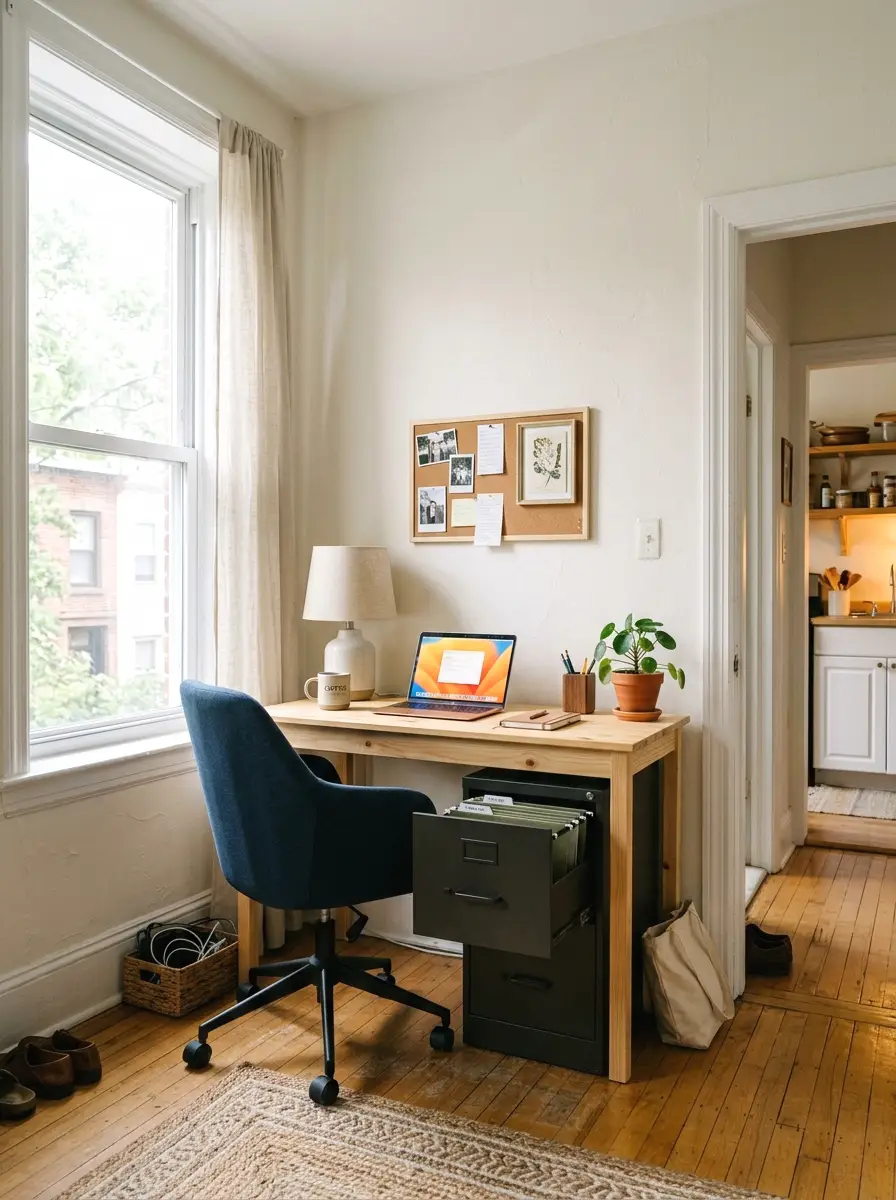
Open shelves with visible work papers, notebooks, and folders are a constant visual reminder that work exists. Closed storage makes it disappear. A rolling cart with a lid or a small two-drawer file cabinet with a smooth front face literally puts work out of sight. Out of sight genuinely helps out of mind.
IKEA’s ALEX drawer unit runs around $130 and fits under most desks. A basic rolling file cart from Amazon starts at $35 to $60. At the end of the day, slide the cart under the desk or roll it into a closet if you have one. Closed. Done. Work is contained. That contained look, where nothing work-related is sitting in your visual field while you rest, matters more for long-term mental health than most people realize until they try it.
There are more storage solutions that keep work gear contained without eating up floor space if the rolling cart alone isn’t enough for your setup.
14. A Monitor Arm Instead of a Monitor Stand
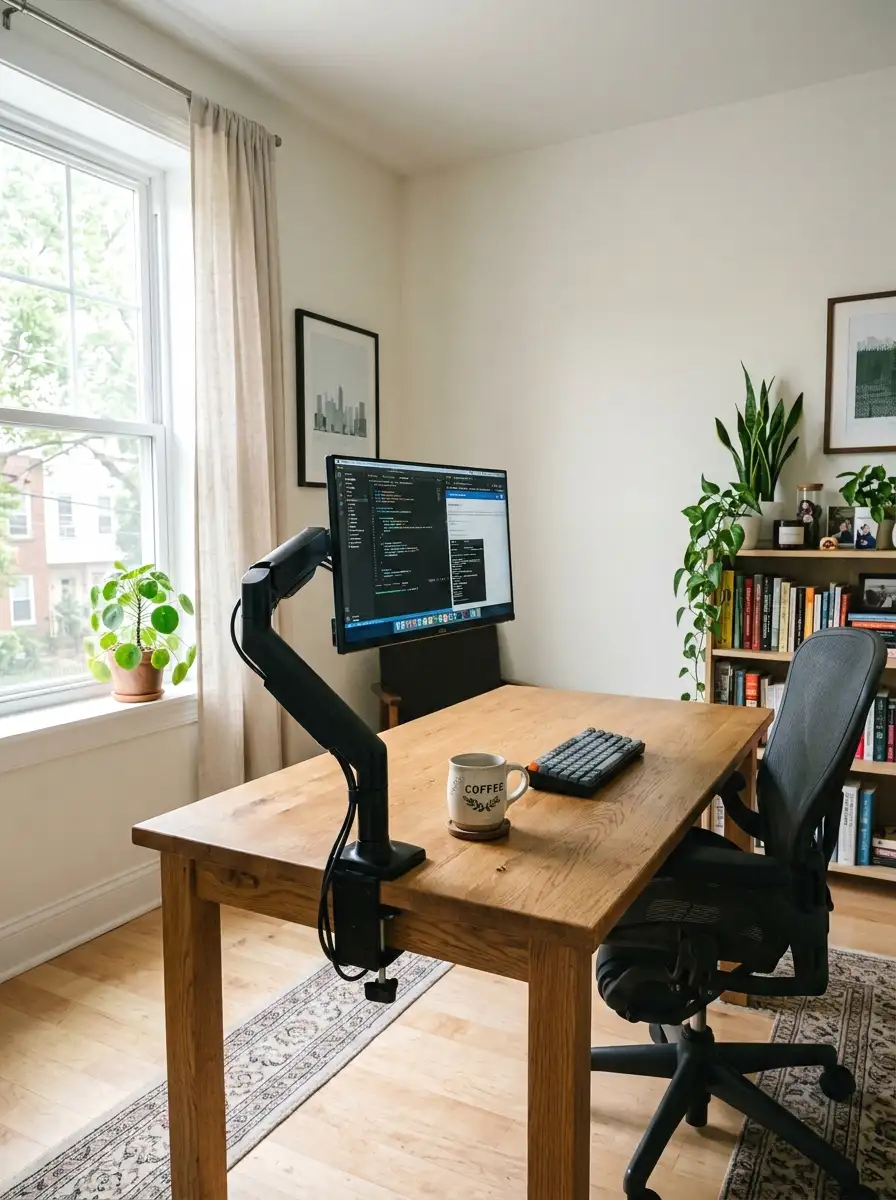
This isn’t just an ergonomic upgrade, it’s a zone management tool. A monitor arm mounts to the edge of your desk and lets you swing the screen completely out of your sightline when work is over. Instead of a big screen staring at you from across the room at 9 PM, you swing it away and the desk looks like a small side table. The visual anchor of a large monitor is gone.
Monitor arms at Amazon start around $25 for basic single-arm options. Mid-range arms with cable management built in run $50 to $90. Most clamp to the desk edge without any drilling. Pair with a monitor that’s 24 to 27 inches and you’ve got a workspace that essentially disappears in off-hours. It also reduces back and neck strain from poor screen angle, which is a long-term investment in your health.
15. A White Noise Machine or Acoustic Panel
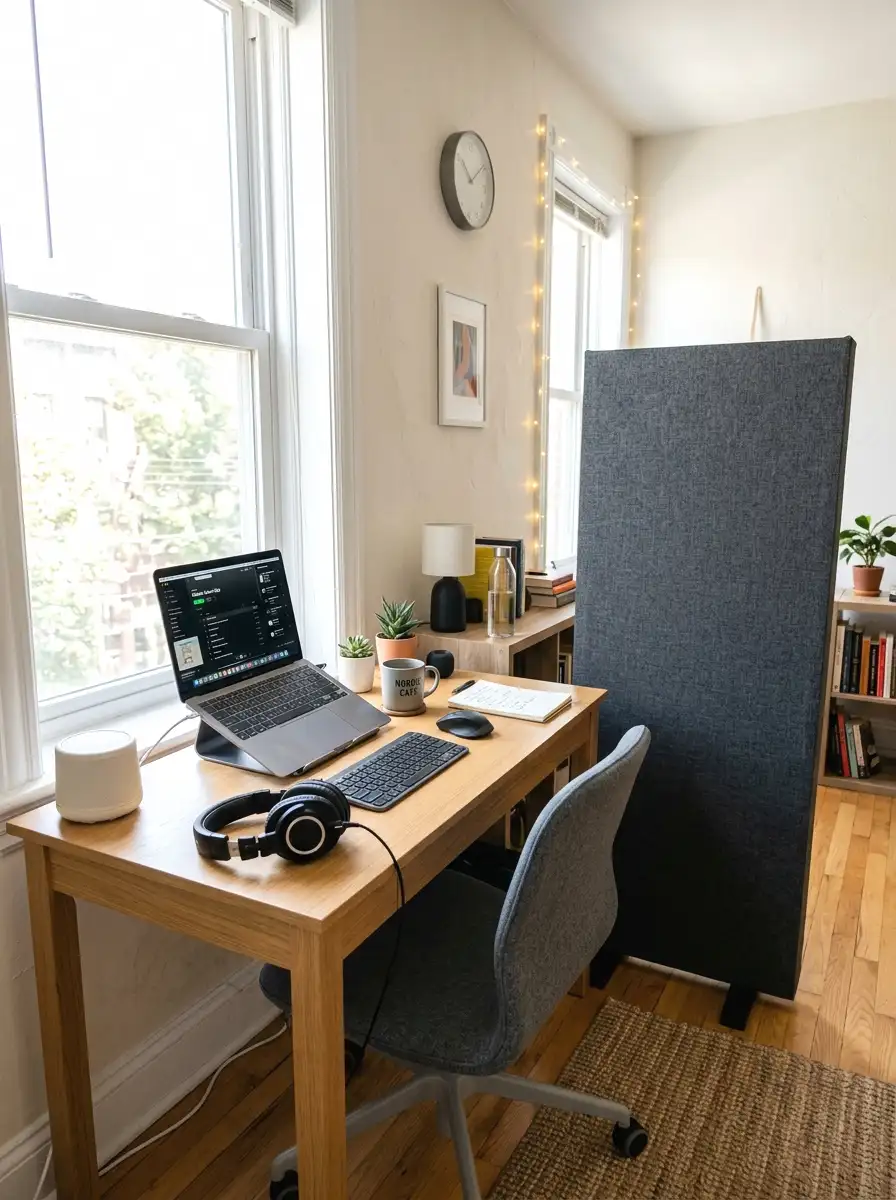
Noise is a boundary. Or, the lack of sound management is a boundary problem. If your apartment is small, sound bleeds from your work zone to your rest zone constantly. A white noise machine at your desk during work hours creates an audio bubble that separates you from household noise and household members from your calls. At the end of the day, you switch it off and the audio environment shifts.
LectroFan and Marpac Dohm are two reliable brands with machines starting around $30 to $50. A step up is a freestanding acoustic panel on Amazon or Walmart starting around $140. These panels in slate gray or charcoal absorb ambient sound, clean up your video call audio, and also visually anchor the work zone as a distinct area. For renters in thin-walled apartments, this is one of the most practical investments on the list.
16. A “Work Is Done” Candle Ritual Spot
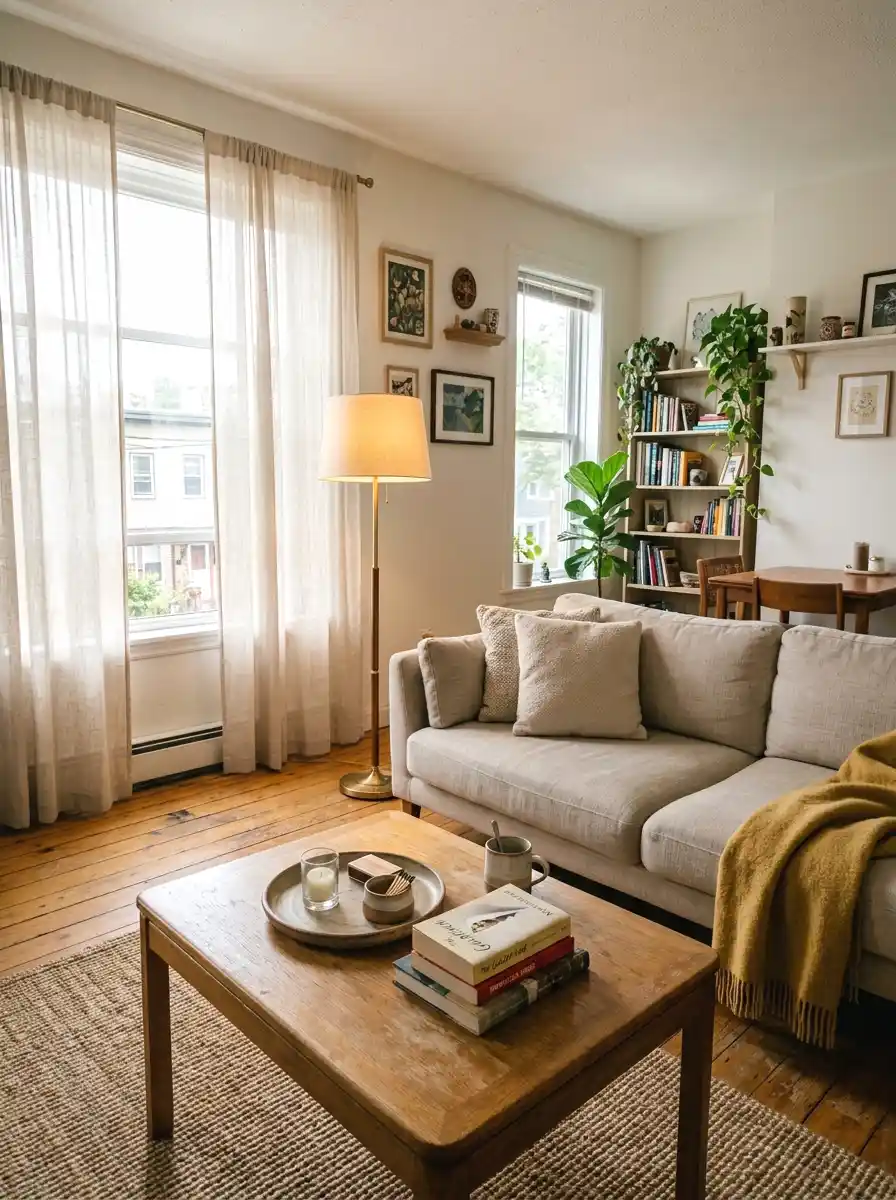
This sounds a little soft. Hear me out. Your work zone has its own light and its own visual identity. Your rest zone needs one too. A candle on a tray on your coffee table or side table, lit only after work hours, becomes a sensory signal that is remarkably powerful over time. Smell is directly tied to memory and mood. Your brain learns: candle lit means home mode.
Pick one consistent scent and only use it after work. Lavender, cedar, or eucalyptus all work well. Candles from Target’s Threshold line run $8 to $15. A small tray to group the candle, a small plant, and a matchbox holder runs another $15 to $30. Total investment under $50. The ritual of walking to that spot, lighting the candle, and settling into the couch is a ten-second act that tells your nervous system the workday is done. It’s the closest thing to a commute-home moment that an apartment can give you.
17. Removable Peel-and-Stick Floor Tiles Under the Desk
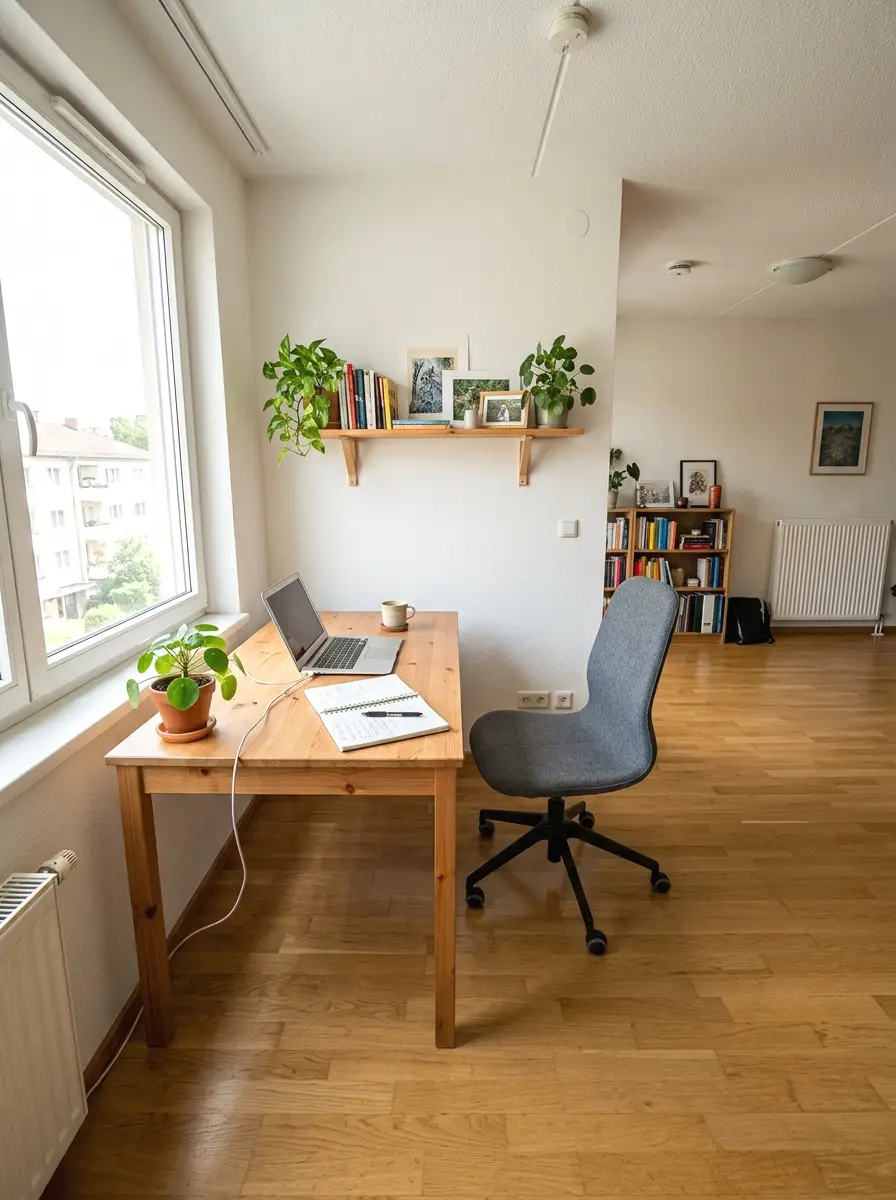
Here’s one most people don’t think of. Instead of a rug (or in addition to one), peel-and-stick vinyl tiles under your desk create a visual floor boundary that reads as “different zone.” They come in wood grain, stone, or geometric patterns and most cost $1.50 to $3.00 per tile at Home Depot or Lowe’s. A 4×5 foot section under a desk needs about 20 to 30 tiles, so the cost runs $30 to $90 total.
They lift off without damaging most apartment floors and are one of the more interesting deposit-safe options out there. The visual effect is a floor texture change that your eye picks up immediately, even from the couch. Your brain registers the desk as sitting in its own defined patch of the room, not floating in the same space where you eat and sleep. It’s a subtle effect with a disproportionate mental impact.
18. A Headphone Hook and Dedicated Off Switch Spot
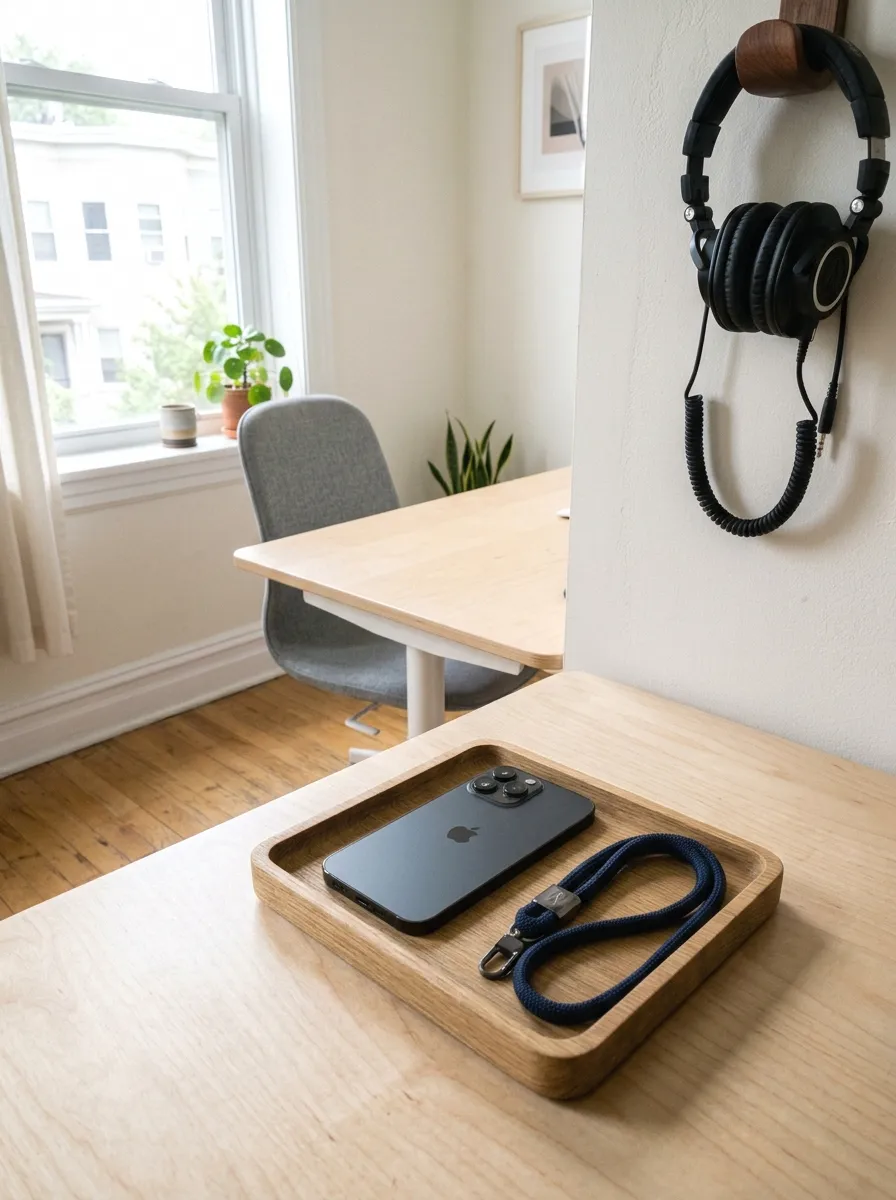
The problem with remote work gear is that it follows you. Your headphones end up on the couch armrest. Your laptop charger snakes under the coffee table. Every misplaced item is a visual reminder that work is still happening, or could happen, at any moment. A headphone hook beside the desk ($8 to $15 on Amazon) and a small tray where you physically set your phone and work badge at the end of the day create a containment ritual.
The act of hanging up headphones, dropping your badge in the tray, and setting the phone face-down is a physical shutdown sequence. It’s the digital equivalent of clocking out. It takes about five seconds and it’s one of those habits that sounds overly simple right up until the day you realize you’ve stopped reaching for your phone during dinner. Set this spot up at the edge of your desk zone so it’s clearly in the work area and not migrating anywhere else.
19. Floating Shelves With Personal Photos Above the Couch (Not the Desk)
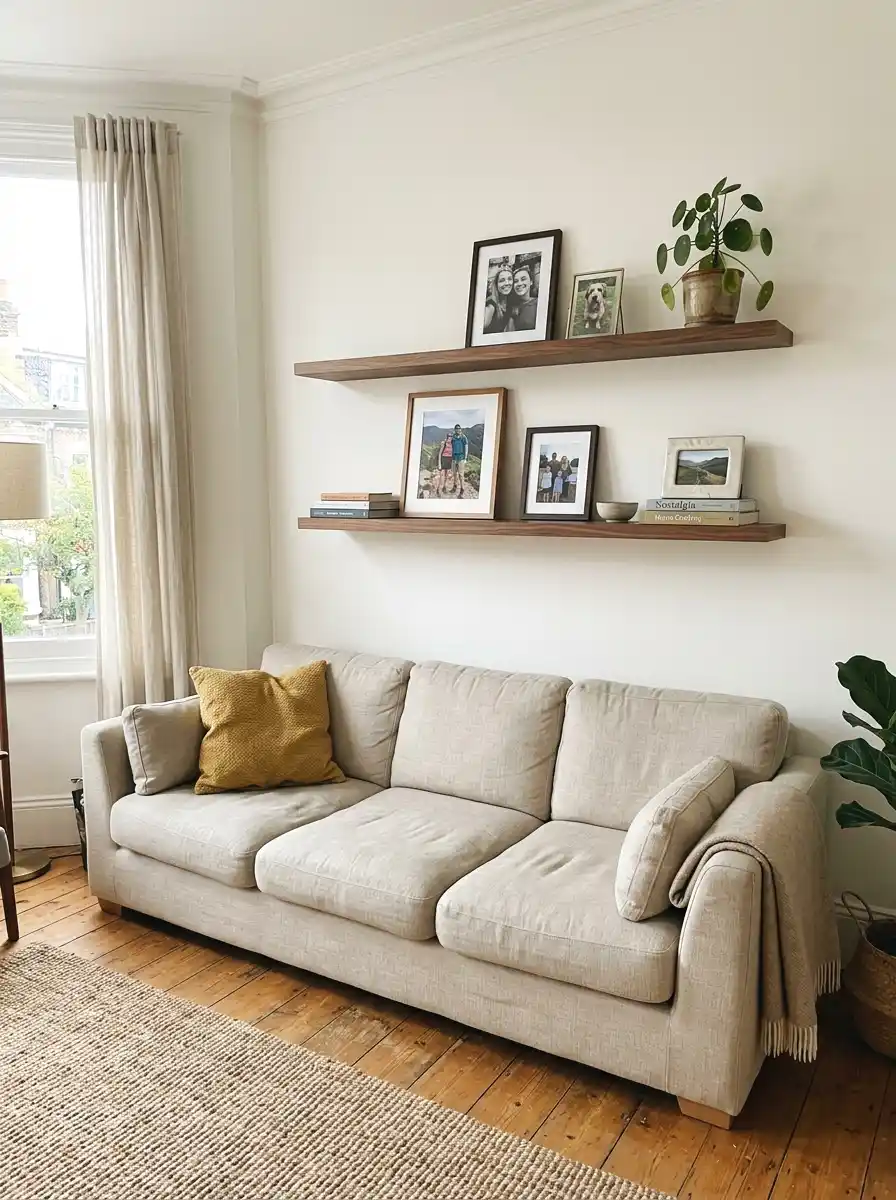
Your desk wall should feel like work. Professional, clean, maybe one nice plant. Your living wall should feel like home. Personal photos, art, and items that have nothing to do with your job anchor the rest of the apartment as personal space. This separation of what goes on which wall is a real design strategy, not just decoration.
Floating shelves from Amazon or IKEA run $20 to $60 for a set of two. Stick with a warm finish like walnut or white oak to keep the living area feel distinct from the more functional desk zone. Print a few personal photos from a service like Shutterfly (prints start at about $0.10 each) and frame them simply. The contrast between “work wall” and “home wall” is something your brain reads every time you walk past it. Over time, the boundary gets clearer.
20. A Floor Lamp in the Living Zone Only
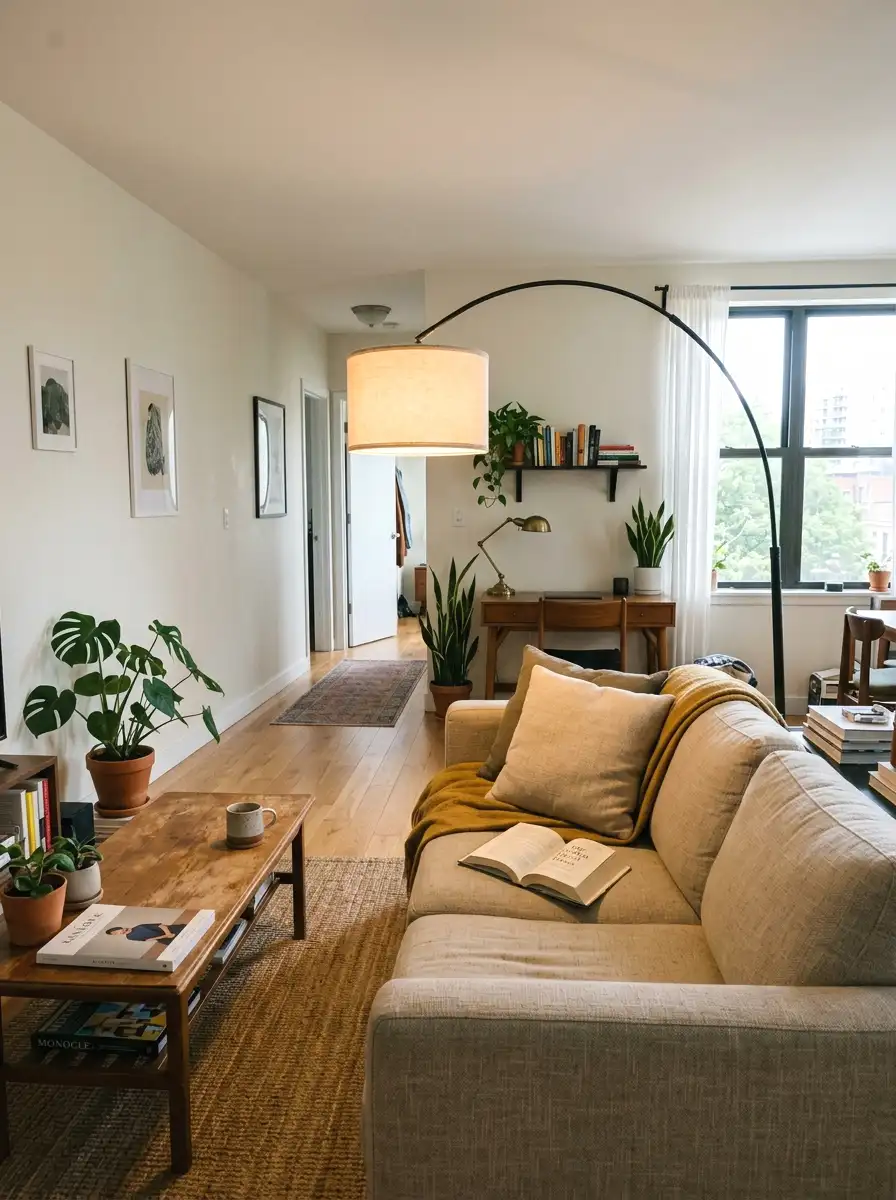
Zone lighting is the fastest and cheapest way to make two spaces feel genuinely different in the same room. The desk has its own task lamp. The living area has its own floor lamp. A warm arc floor lamp positioned over the couch or reading chair costs $60 to $150 at Wayfair or Target. Turn it on when work ends, and that pool of warm light draws you physically to the rest zone.
The visual effect of a floor lamp is that it creates a lit environment around where you’re sitting, separate from the overhead light that covers the whole room. It makes the couch feel like a destination rather than just another place in the same space. I was skeptical about this one for a while because it seemed like too simple a fix. But the shift in how the room felt after 6 PM once that lamp was on was genuinely noticeable within the first week.
21. A Monitor Privacy Screen That Signals End-of-Day
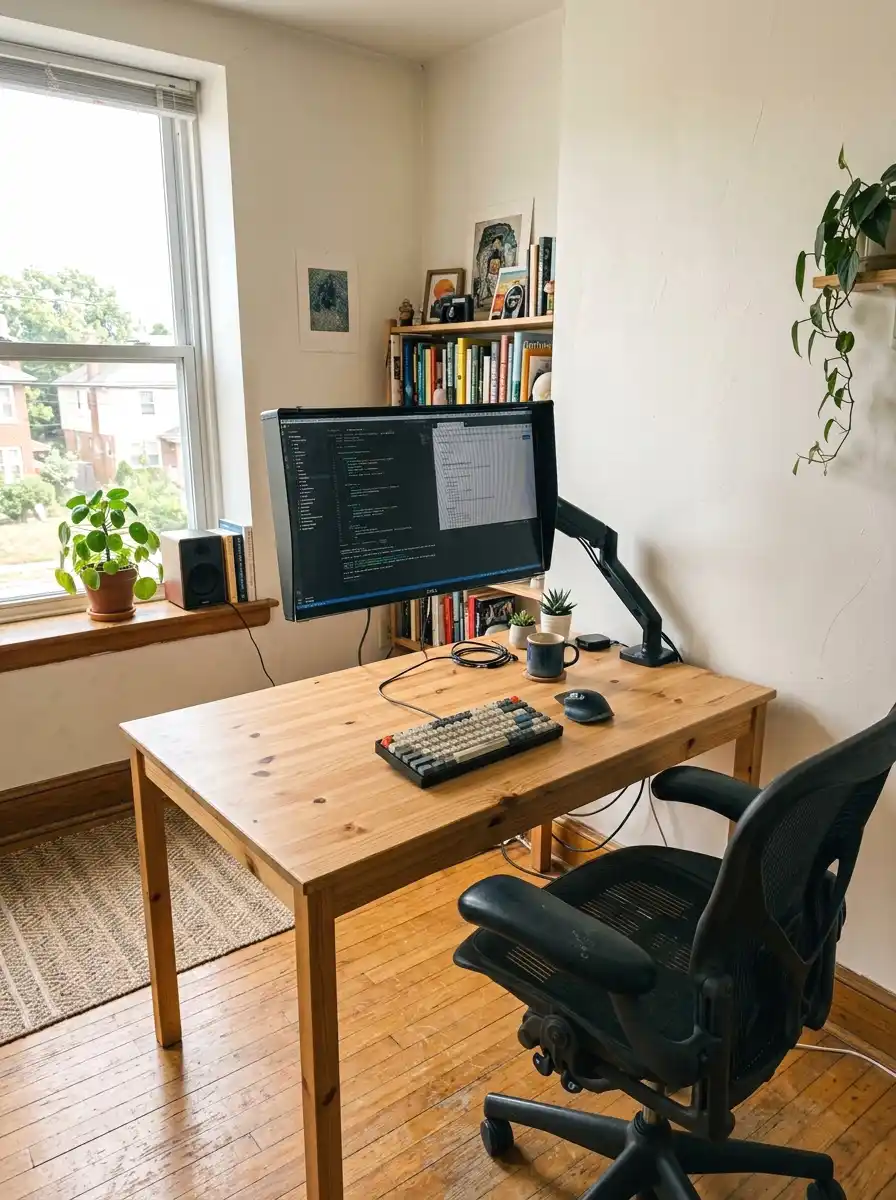
A monitor privacy screen is a thin filter that clips over your display and narrows the viewing angle so only you can see it clearly from the front. At the end of the day, you can flip it off to the side or slide it off completely. But more than the privacy function, it’s a visual cue. When the filter is on, it’s work time. When it’s off, the screen is either away (via your monitor arm) or clearly inactive.
Privacy screens at Amazon for 24 to 27-inch monitors run $30 to $60. Brands like 3M make reliable options with easy clip-on installation. For people who work near partners or roommates, it also adds a layer of actual data privacy during sensitive video calls or document work. It’s a practical purchase with an added psychological function: one more object that signals mode.
Also, explore work from home office setup.
22. A “Work Clothes” Hook Near the Desk
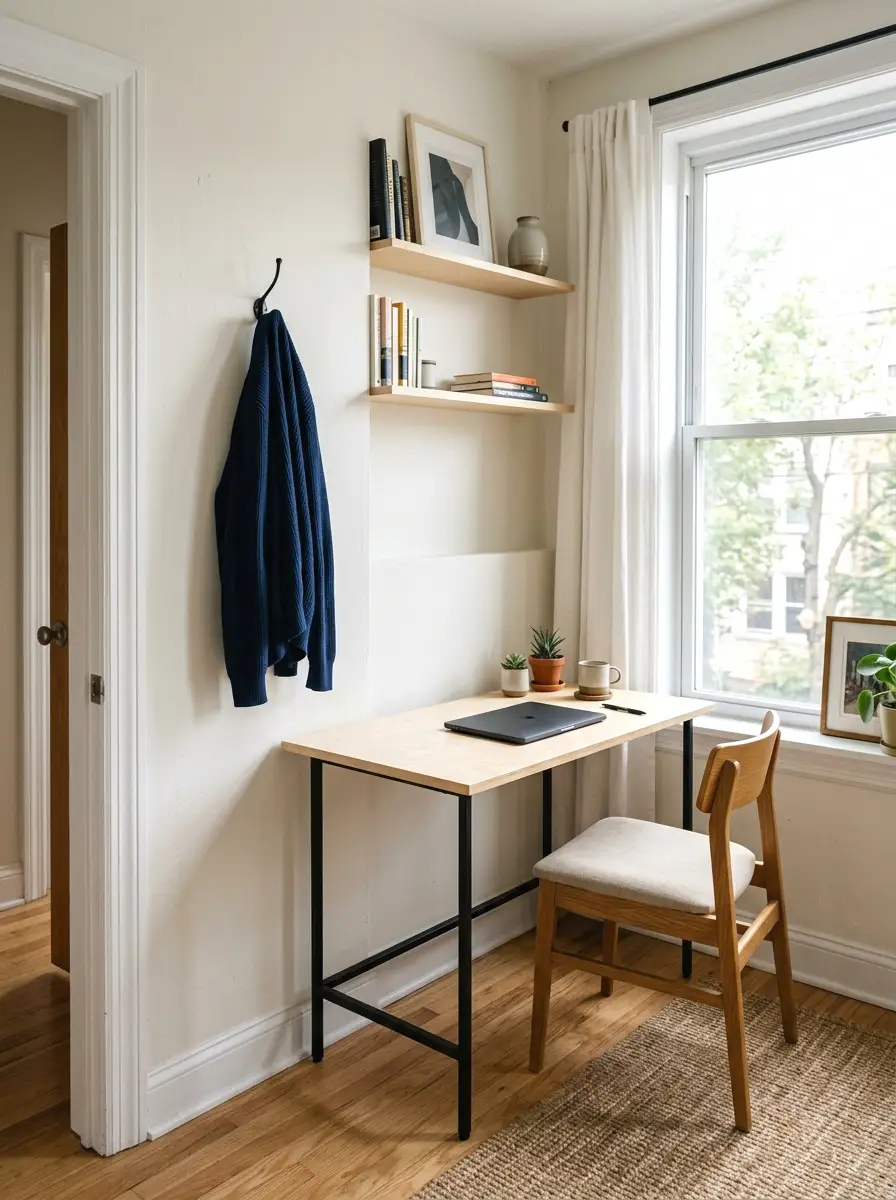
And finally, this is the most behavioral one on the list, but it works because it’s physical. Hang a hook near your desk zone specifically for a work cardigan, a blazer, or even just a specific pair of shoes you wear during work hours and nothing else. When you put them on, your brain shifts. When you take them off and hang them on that hook at the end of the day, the shift reverses.
A wall hook at IKEA runs $3 to $15. You don’t need to get dressed formally. Just one consistent item, a dedicated work layer, that lives on that hook and only comes off the hook during work hours. It sounds too small to matter. It doesn’t feel small once you’re doing it consistently. It’s the same reason nurses and doctors change out of scrubs before leaving the hospital. The clothes signal the mode, and your brain eventually does the switching automatically.
Final Thoughts on Apartment Decor for Remote Workers
The goal here was never to help you spend a lot of money or fake a home office you don’t have. Most of what makes apartment decor for remote workers actually work isn’t expensive furniture. It’s consistent signals, your desk lamp, your rug, your candle, your headphone hook, and the way each of those things tells your brain what mode it’s in. You’re not building a wall. You’re training your environment to do the switching for you.
Start with lighting. Pick up a cool-temperature desk lamp and swap the bulb in your living area lamp to something warmer. Do that this weekend, before anything else. Notice the difference in how the two zones feel. That one change costs under $40 and it’s the clearest proof that this stuff works.
If you want to go deeper on lighting ideas that shift the mood of a room, there’s a lot more to explore once you’ve nailed the basic lamp swap.