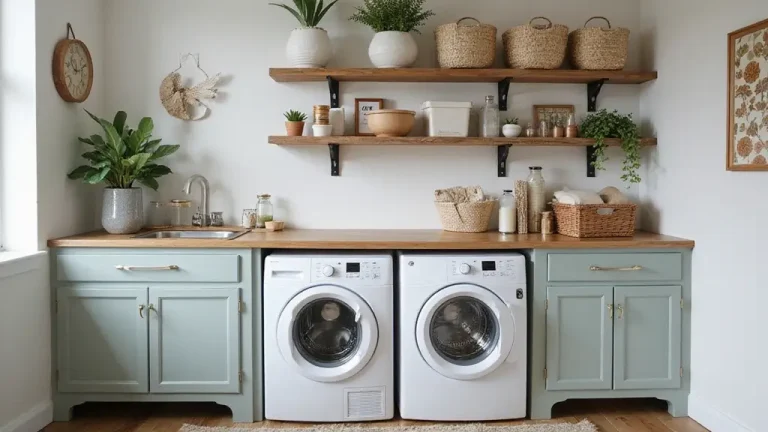

24 Apartment Decor for Remote Workers Who Need a Home Office With No Spare Room

Working from a kitchen table because your apartment has zero extra space is exhausting. You’re stacking your laptop on yesterday’s dishes, your “desk chair” is a dining seat that’s killing your back, and your background on video calls looks like a laundry day. It’s not cute.
This guide covers 24 apartment decor ideas for remote workers who need a real workspace but have no spare room to work with. Each idea was picked because it solves an actual problem: bad lighting, zero storage, no visual separation between work and home life. Price ranges run from around $30 to $700, and everything here is renter-friendly unless noted.
This is for people working with budgets between $100 and $700 who are done cramming their work life into whatever corner is left. If you want a home office renovation with custom built-ins, this isn’t that. But if you want a real, functional work setup inside your apartment? You’re in the right place.
By the end of this guide, you’ll know exactly which setup works for your space, your budget, and your actual life.
What to Know Before You Start Apartment Decor for Remote Workers
- A dedicated work zone, even 4 square feet, improves focus more than any productivity app.
- Measure your wall space before buying anything. Many desks are 40–48 inches wide and won’t fit where you think they will.
- Budget reality: a functional work corner with desk, chair, and lighting runs $150–$400 at IKEA or Amazon.
- Most people forget acoustics. Soft furnishings like rugs and curtains absorb sound during calls.
- Common mistake: buying a desk before choosing a chair. Chair comfort dictates how long you can actually work.
- Renters should use adhesive hooks and removable command strips to avoid losing their deposit.
- Long-term tip: buy a desk with at least one drawer. You’ll need it within a month.
1. The Floating Wall Desk
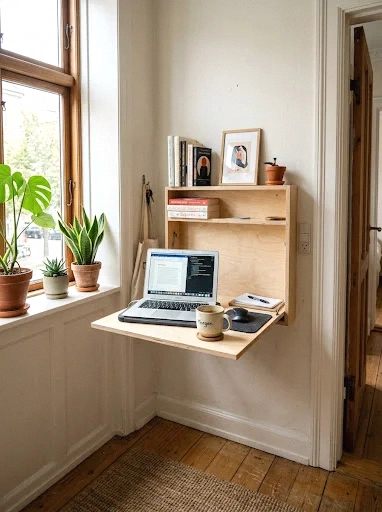
A floating desk is what I’d put in every small apartment if I could. You mount it directly to the wall, and it takes up zero floor space when it folds up. IKEA’s NORBERG wall-mounted drop-leaf table runs about $60 and holds a laptop, a monitor, and a small lamp without any drama. It folds flat when your workday ends, which means your living room stays a living room.
When I installed one in a 400-square-foot studio, the setup took about 45 minutes and a stud finder. The key is mounting it to studs, not just drywall, so the desk can actually hold weight. Once it’s up, you’ve got a permanent desk that disappears at 5pm. That’s the whole game for remote workers in apartments.
2. The Closet Office (Cloffice)
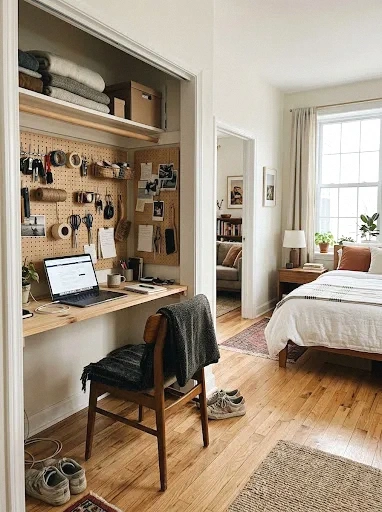
So here’s the thing: if you have a closet you’re using for random storage, you have a home office. Pull everything out, add a shelf at desk height (about 28–30 inches from the floor), and hang a pegboard on the back wall for supplies. You can do this whole setup for under $150 using materials from Home Depot.
The best part is closing the doors when you’re off the clock. Your work disappears completely. No visual reminder that emails exist. I’ve seen people fit a full monitor, a small printer, and all their supplies into a 36-inch-wide closet. Add a small LED strip light inside for about $15, and it’s one of the most functional work setups you can build in an apartment.
3. Behind-the-Sofa Desk Setup
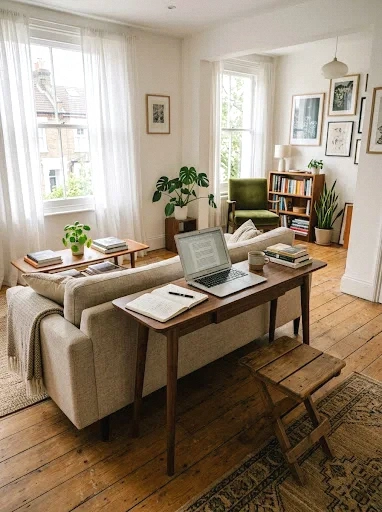
Most sofas don’t touch the wall. That gap, usually 10–18 inches, is a legitimate workspace. A narrow console table (also called a sofa table) at desk height sits right behind your couch and gives you a surface that reads as decor from the front of the room. Wayfair has options in the $80–$150 range that look like real furniture.
There’s a full breakdown of how to style a narrow table behind the couch if you want to see how other people have pulled this off.
You can work from a stool or a folding chair pulled up behind the sofa, and nobody walking into your apartment would even know it’s a desk. This works especially well for one-bedroom apartments where the living room is the only option. Add a small task lamp on one end and a little basket for your cables and chargers, and you’ve got an actual office that doubles as a console table.
4. The Window Ledge Desk
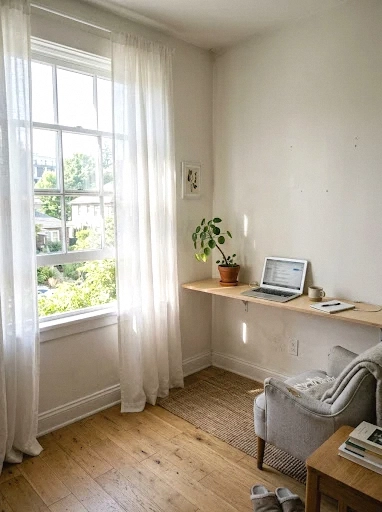
Here’s a setup most people walk right past. If you have a window with a ledge or a wall right beside it, a narrow floating shelf at desk height gives you natural light without taking up real estate. Natural light is genuinely the best upgrade for remote workers, and it costs nothing once the shelf is in.
You’re looking at a shelf that’s about 10–12 inches deep and 36–48 inches wide. At IKEA, that’s the LACK series, around $25–$40. Mount it at standing-desk height if you want to alternate between sitting and standing, which a lot of people find helpful for long work days. A basic monitor arm keeps your screen at eye level. Total setup: under $100.
5. The Room Divider as Office Wall
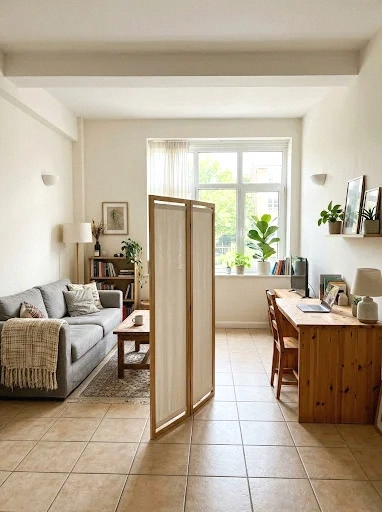
When you’re working in a studio or open-plan apartment, the biggest problem isn’t desk space. It’s the fact that your work zone bleeds into your living zone and your sleeping zone, all at once. A freestanding room divider or folding screen ($50–$200 at Target or Amazon) creates a visual boundary that your brain actually respects.
Put your desk on one side of the divider, your couch on the other. That’s it. You’ve created a separate “room” without any walls, permits, or landlord conversations. Some dividers have built-in shelving, which is even better for small apartments. After a week or two, you’ll notice you stop checking work emails from the couch. The physical separation does something real to how you work.
6. The Pegboard Command Center
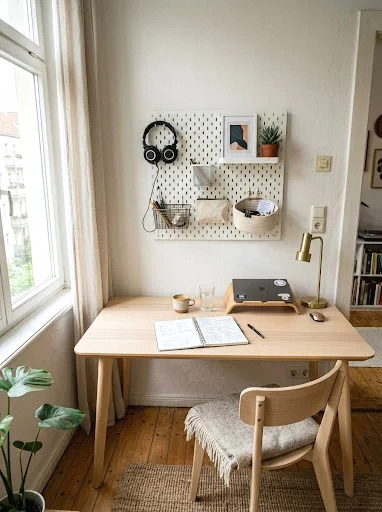
Pegboards are one of the most underrated storage and decor tools for remote workers in apartments. A 24×24-inch pegboard on your wall above your desk holds headphones, small shelves, a calendar, cable clips, and supply bins without touching your desk surface. Home Depot sells pegboard panels for around $20, and the hooks and accessories are another $15–$30.
The reason this works so well is that your desk stays clear. A clear desk is a real productivity tool, not a vibe. When everything you need is up on the wall and visible, you stop wasting time digging through drawers. Paint the pegboard a color that works with your room and it looks like a design choice, not a work necessity. (This one is so underrated.)
If you want more ideas for wall decor that actually does something useful behind your desk, there are some solid options worth looking at.
7. Murphy Bed with Integrated Desk
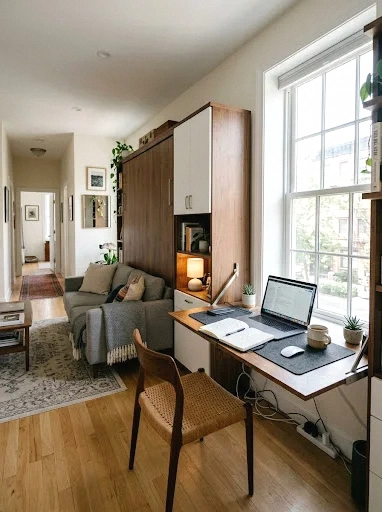
If budget is flexible and you’re in a studio apartment, a Murphy bed with a built-in desk is genuinely one of the smartest investments you can make. When the bed folds up, the desk surface folds down. You get a full bedroom and a full office in the same footprint. These run $700–$1,500 depending on brand and size, with brands like Wayfair and Costco carrying lower-cost versions.
I was skeptical about this one but the engineering on modern Murphy beds is much better than the old fold-down designs. The desk typically locks into place so it doesn’t wobble while you work. It does involve wall-mounting, so check your lease first. But for someone stuck in a studio who works from home full time, this might be the single best home improvement you can make.
8. Adjustable Standing Desk (Compact Size)
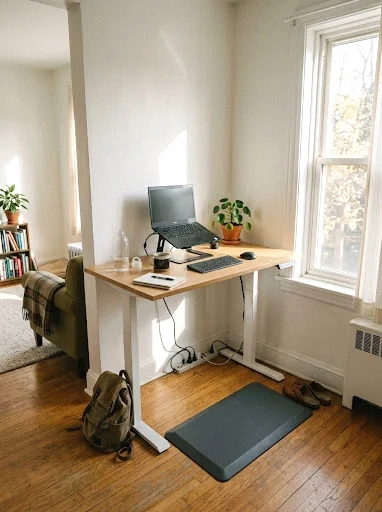
Not all standing desks are big. Flexispot and VIVO make compact electric standing desks in 40-inch widths that fit into tight corners without dominating the room. They run $200–$350 and let you switch between sitting and standing throughout the day, which helps a lot on long calls or when your focus drops after lunch.
The investment pays off in how much more you can actually work. Sitting all day in a dining chair wrecks your back and kills your energy. A standing desk doesn’t solve everything but alternating positions keeps you more alert without caffeine tricks. Pair it with an anti-fatigue mat (around $35 at Amazon) and you’ve got a setup that supports real full-time remote work.
9. The Bookshelf Office
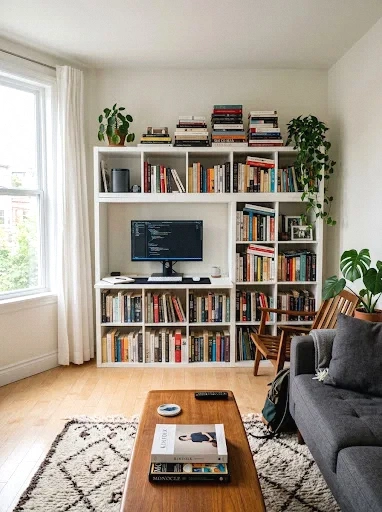
A tall bookshelf, 72 inches or more, does three things at once in a small apartment: storage, decor, and office. Clear one or two shelves at seated eye height, add a small monitor stand, and slide in a chair. You’ve got a recessed desk inside furniture that already belongs in your living room.
IKEA’s KALLAX or BILLY series gives you a lot of flexibility here, both under $150. You can mix work supplies on one shelf, books on another, and decor on a third so the whole unit looks intentional rather than chaotic. This works especially well for people who need to keep their work materials organized and visible without dedicating a full desk to the cause.
10. Tension Rod Under-Desk Storage
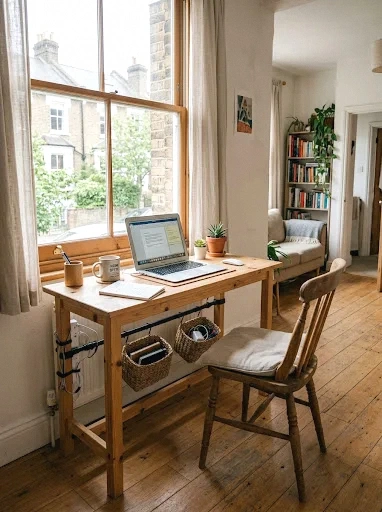
Here’s what nobody tells you about small desks: you lose half their usefulness because you have nowhere to put anything. A tension rod mounted under your desk, between the two legs, gives you an instant hanging bar for small baskets, cable management clips, and lightweight supply holders. The rod costs under $10 and the baskets are another $10–$20 at Target.
It keeps your desk surface clear without adding furniture. You hang a basket for your chargers, one for notebooks, one for whatever else you’re always digging for. The whole thing takes about 10 minutes to set up, it’s completely removable, and it doesn’t touch the walls. One of the most useful $20 improvements I’ve found for apartment desks.
11. A Real Desk Chair (Not a Dining Chair)
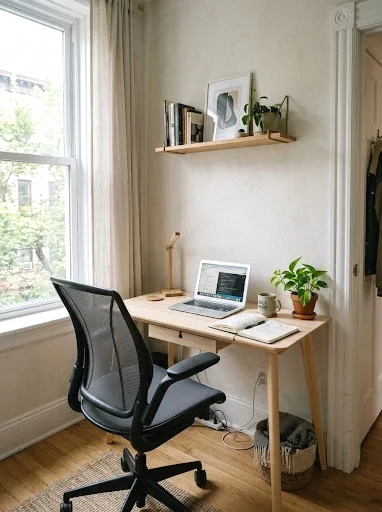
The single most common mistake remote workers make in apartments is using a dining chair as a desk chair because “it saves space.” It doesn’t. It just guarantees back pain by noon and terrible posture on every video call. A proper ergonomic chair doesn’t have to take over the room.
IKEA’s JÄRVFJÄLLET runs about $230. Branch’s chair is around $350. Both are slim enough to tuck under most desks and actually support your back through an eight-hour day. If you’re working full time from home, this is the one area where stretching your budget matters for your actual health and your work quality. The property value here is in how many more productive hours you get per day.
12. Curtain Divider for the Work Zone
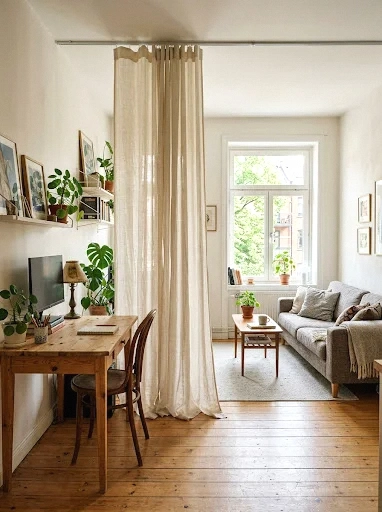
A curtain hung from the ceiling on a track or tension rod is one of the fastest and most deposit-safe ways to create a separate office feel inside a bigger room. A floor-to-ceiling curtain costs $30–$80 at IKEA or Amazon, and tension rod systems for ceiling tracks are under $50.
Pull the curtain closed when you’re on calls. Open it when you want the room back. You get a visual signal that work time is separate from everything else, which is surprisingly important for remote workers who struggle to mentally clock out. Pick a fabric that matches your room so the curtain reads as decor, not a room divider MacGyvered together on a Tuesday.
13. Monitor Arm Instead of a Monitor Stand
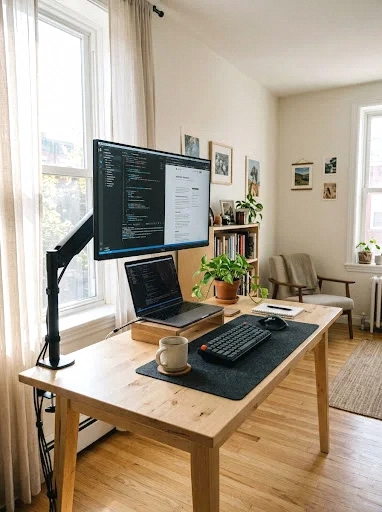
A monitor stand takes up desk space. A monitor arm clamps to the desk edge, lifts your monitor off the surface entirely, and gives you back 8–12 inches of usable desk real estate. Ergotron makes a solid single-monitor arm for around $45 on Amazon, and installation takes about 20 minutes.
At the same time, having your screen at proper eye height (so the top of the monitor is at or just below eye level) is one of the most practical ergonomic improvements you can make for long workdays. Neck pain from looking down at a laptop screen is real, and it builds up over months. A monitor arm plus a laptop stand solves this for under $80 total.
14. Acoustic Panel as Wall Art
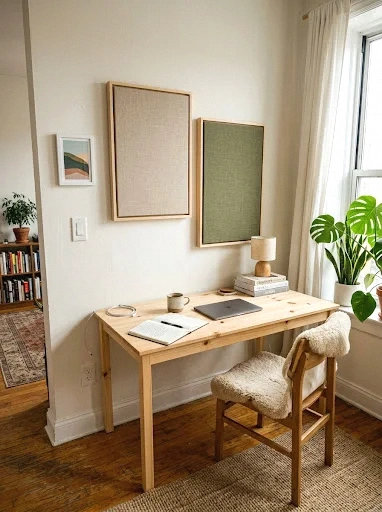
Open apartments are loud on calls. Hard floors, high ceilings, and bare walls bounce sound around in a way that makes you sound like you’re talking from inside a parking garage. Acoustic foam panels covered in fabric look exactly like framed wall art and absorb sound without any complicated installation.
You can buy pre-covered acoustic panels on Amazon and Etsy for $40–$120 per panel, or DIY them with acoustic foam and fabric for about $25 each. Hang two or three panels on the wall behind or beside your desk. Your video calls will sound noticeably cleaner, and your desk wall gets actual art. Guests won’t know what they are.
15. A Dedicated Desk Lamp (Not Overhead Light)
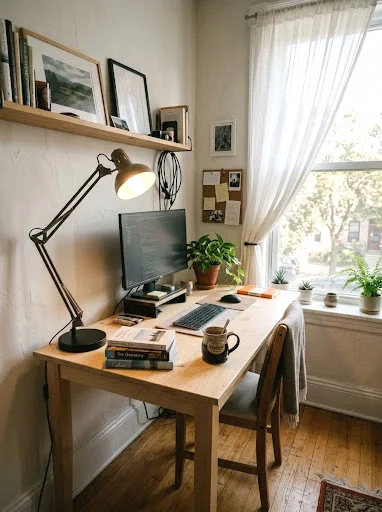
Overhead apartment lighting is almost universally bad for working. It creates glare on screens, shadows on your face during video calls, and general eye strain over time. A proper desk lamp with a warm-to-cool adjustable bulb ($30–$80 at IKEA or Amazon) fixes all three problems at once.
For video calls specifically, a ring light or a lamp placed slightly in front of and above your face gives you even, flattering light that makes you look awake and present. The BenQ ScreenBar clips right to your monitor for around $60 and gives you glare-free, adjustable lighting without taking up any desk space. Worth every dollar if you’re on camera regularly.
16. Cable Management Box
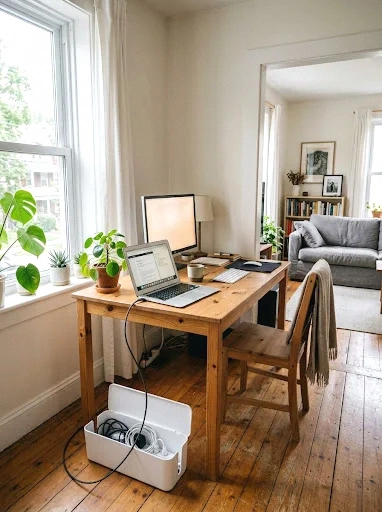
Cables are the thing that makes even nice apartment office setups look messy. A cable management box ($15–$30 at Amazon) hides your power strip, adapter bricks, and excess cable length inside a ventilated box that sits on or under your desk. From two feet away, it’s invisible.
This is one of those details that, once you do it, you wonder how you ever worked without it. A clean desk surface makes it easier to focus and makes video calls look more professional behind you. Pair it with velcro cable ties for the cords running to your desk, and the whole setup takes under 30 minutes to sort out properly.
17. Foldable Desk for Ultra-Small Spaces
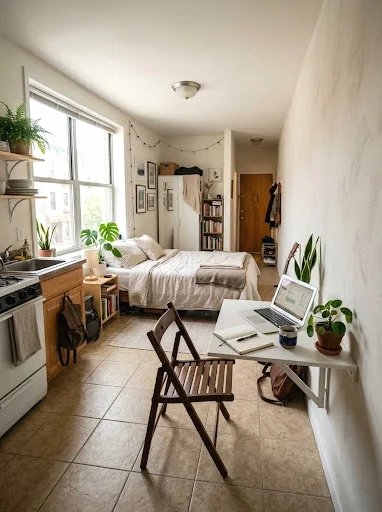
When your apartment is genuinely tiny and every square foot matters, a foldable desk that hangs on the wall and folds fully flat is the most space-efficient option available. Brands like Prepac and BORA make folding wall desks in the $80–$150 range that give you a 20×30-inch work surface that disappears completely when not in use.
The trade-off is that you’re working on a smaller surface, so it’s best for laptop-only setups. But for anyone in a studio or micro-apartment who uses a laptop as their primary work machine, this setup means you get your living space back every evening. Fold it up, it looks like a cabinet door. Nobody knows there’s an office in there.
18. Vertical Storage Tower Next to the Desk
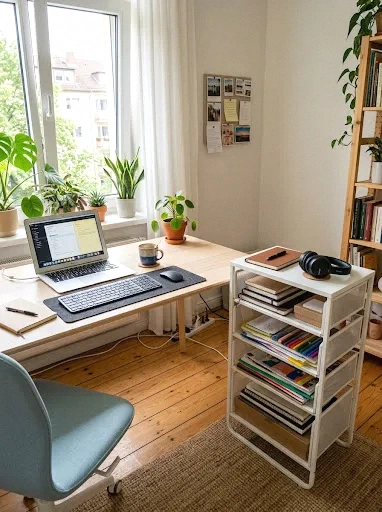
Small desks run out of surface quickly. A slim storage tower (12 inches wide, 3–4 feet tall) placed right next to your desk extends your storage vertically without taking up much floor space. These are everywhere at IKEA, Target, and Wayfair in the $40–$100 range.
Use the top shelf for your most-used items, like notebooks and headphones. Middle shelves for supplies. Bottom shelf for things you grab once a week. When everything has a place, you stop shuffling things around to find what you need, and your desk stops becoming a junk collector. The organizational benefit sounds small until you’re three months into working from home and your desk has become an archaeological dig.
If vertical storage isn’t quite enough, there are more desk and storage ideas for tight spaces that go deeper on keeping everything organized.
19. The Secondhand Desk Upgrade
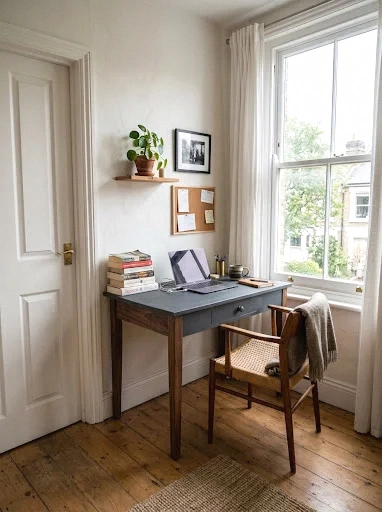
And here’s something I think people undervalue: a solid secondhand desk, refinished with a coat of chalk paint or a wood stain, often beats any new desk in the $100–$200 price range for both looks and durability. Facebook Marketplace and Craigslist consistently have solid wood desks for $20–$80 that, with a weekend afternoon and $30 in supplies from Home Depot, become genuinely nice pieces.
Older desks are often built from solid wood instead of particle board, which means they’re heavier, more stable, and last longer. You’re also not assembling 47 IKEA parts. A real wood desk also adds something to your apartment that flat-pack furniture can’t quite do, a sense that your workspace is a real part of your home rather than a temporary fix.
20. Dedicated Work Basket or Bag
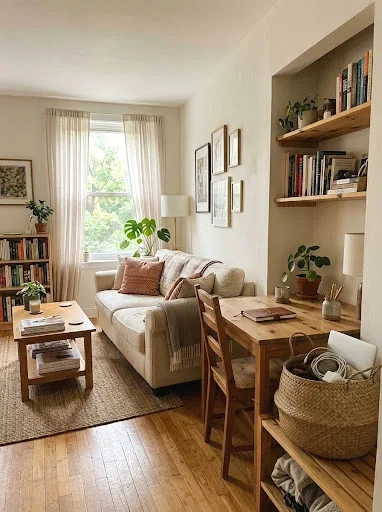
This idea sounds too simple, but it’s one of the most effective things for mental separation between work and home in a small apartment. Get one basket or bag that holds everything work-related: laptop, charger, notebooks, headphones. When work is done, everything goes in the basket. The basket goes on a shelf or in a closet. Work is over.
The basket costs $15–$40. The psychological benefit is real. When your work stuff is packed away and out of sight, your brain stops treating your apartment like an office after hours. Remote workers in small spaces often struggle with the feeling that they’re always at work. This is one of the simplest ways to fix that without reorganizing your entire apartment.
Also, explore couples who both work from home.
21. Monochrome Desk Wall
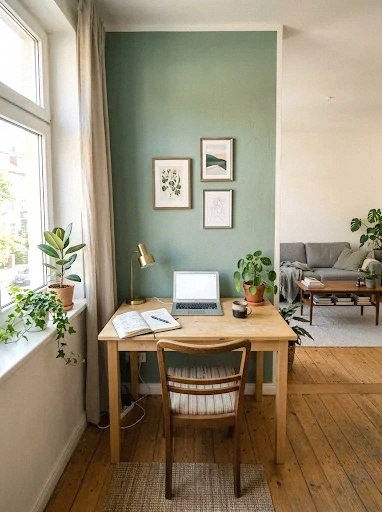
When your desk is inside a living room or bedroom rather than a separate room, visual cohesion matters a lot. Painting the wall behind your desk one color, usually a shade darker or more saturated than the rest of the room, creates a visual “zone” that makes the workspace feel intentional. A quart of paint at Home Depot runs about $18–$25.
This is one of those tricks that does more than it looks like on paper. The color change signals to your brain (and to people on your video calls) that this is a specific area with a specific purpose. It also makes your desk look like a design decision rather than a piece of furniture parked wherever it fit. Pick a color that works with what’s already in the room.
22. Under-Desk Treadmill for Long Days
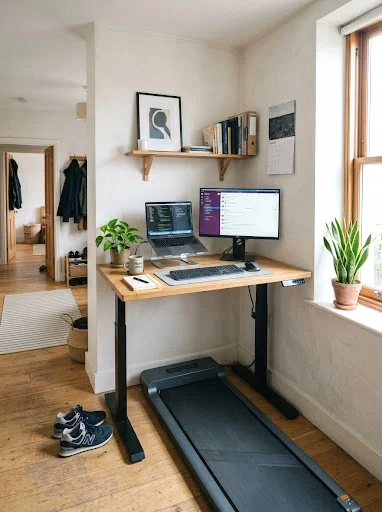
For remote workers logging eight or more hours at a desk in an apartment, movement is a real problem. An under-desk treadmill like the ones from WalkingPad runs $300–$500 and fits under most sit-stand desks. You walk at 1–2 mph while working, which doesn’t disrupt typing or calls but keeps your body moving.
This feels like a luxury item until month three of working from home when you realize you’ve taken fewer than 2,000 steps some days. The health impact of that kind of sedentary behavior builds up. An under-desk treadmill isn’t just a wellness product, it’s a functional tool for anyone doing this full time. Pair it with a standing desk and it becomes a genuinely useful part of your home office setup.
23. Smart Plug for Work/Life Boundary
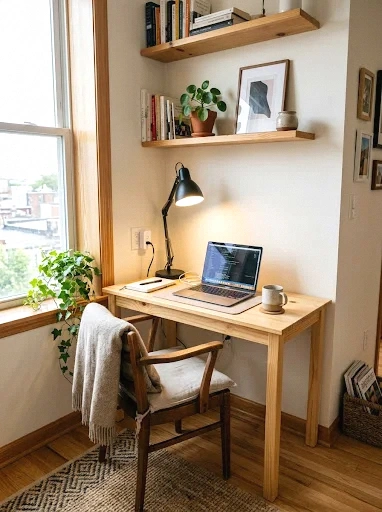
A smart plug ($15–$25 at Amazon or Target) connected to your desk lamp creates a clean, automatic boundary between work time and personal time. Set it to turn the lamp off at 6pm every day. When the light goes off, work is done. It sounds minor but the physical signal of a light switching off is surprisingly effective for remote workers who struggle to stop working.
The eco-friendly side benefit is that you stop leaving devices on standby all night. You can also set the lamp to turn on at your start time, which helps with the transition into work mode in the morning. Smart home tools don’t have to be complicated to be genuinely useful in a small apartment work setup.
24. Gallery Wall Behind Your Desk
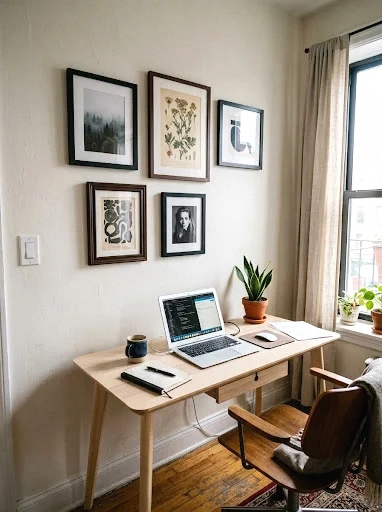
The thing behind your head on video calls is the first thing everyone on the call notices. A gallery wall with 3–5 framed prints in similar frames makes your workspace look pulled together without requiring any furniture or decor beyond the wall itself. IKEA frames are $8–$20 each. Prints from Etsy or Printable Art sites run $5–$15 each.
Total cost for a solid gallery wall: under $100. The art you pick says something about you, which on video calls is actually a real professional asset. A cohesive wall behind you looks intentional and put-together in a way that a white apartment wall or a bookshelf overflowing with random stuff doesn’t. Pick art that you genuinely like and that works with your room’s colors.
Final Thoughts on Apartment Decor for Remote Workers
You don’t need a spare room to have a real home office. What you need is a defined spot, the right desk setup for your space, and a few things that separate work from the rest of your life. A floating desk in the corner, a pegboard above it, a proper chair, and a good lamp will do more for your workday than any productivity system you’ve ever tried.
Start with one thing. If your chair is bad, fix that first. If your lighting is making every call look like you’re in a cave, a desk lamp is the $40 fix. Pick the one thing that’s actively making your workday worse right now, solve it this week, and build from there.