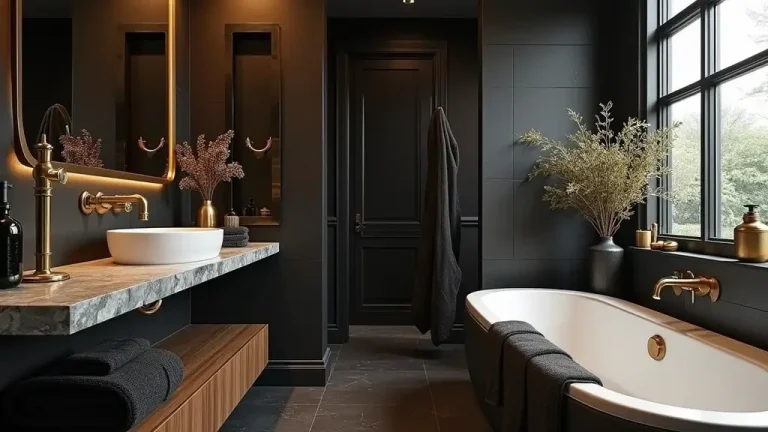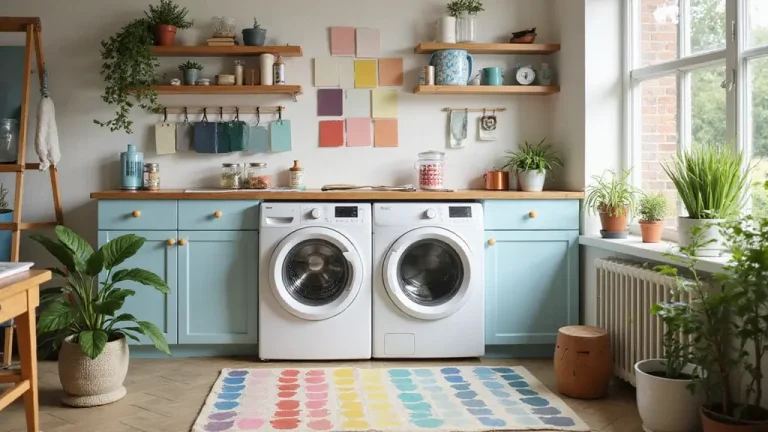

25 Apartment Decor for Couples With Completely Different Styles Who Need to Compromise

You love clean lines. Your partner wants a warm, cluttered reading nook. Every trip to Home Depot turns into a quiet standoff in the paint aisle, and neither of you wants to give in.
I pulled together 25 apartment decor ideas for couples after digging through Reddit threads, Houzz Q&As, and real price tags at IKEA and Wayfair. Each idea works for renters and owners, most fall between $100 and $700, and every one was picked because it lets two different tastes live in the same room without a fight.
This list is for couples sharing under 900 square feet who want their place to feel like both of you live there. It’s not for anyone chasing a magazine-perfect look overnight. Compromise decor takes a little patience, but it’s absolutely doable.
By the end, you’ll have a room that mixes both your styles without looking like two apartments taped together. Here’s where to start.
What to Know Before You Start Decorating for Two Different Styles
- A 60/40 split (one style leads, the other accents) works better than a true 50/50 mix
- Budget $100 to $700 total, most couples land near $350 for a full living room refresh
- Most people forget to agree on a “no” list before shopping, which saves return trips
- The biggest mistake is buying big furniture first. Start with textiles and small pieces
- Rugs are the easiest common ground. They set the tone without picking a side
- Keep receipts. Wayfair and Target both allow 90 day returns on furniture
- Neutral walls plus one bold accent wall lets both styles show up in the same space
- Mixed metal finishes (brass and matte black) actually raise resale value in small ways
1. The One Rug Rule
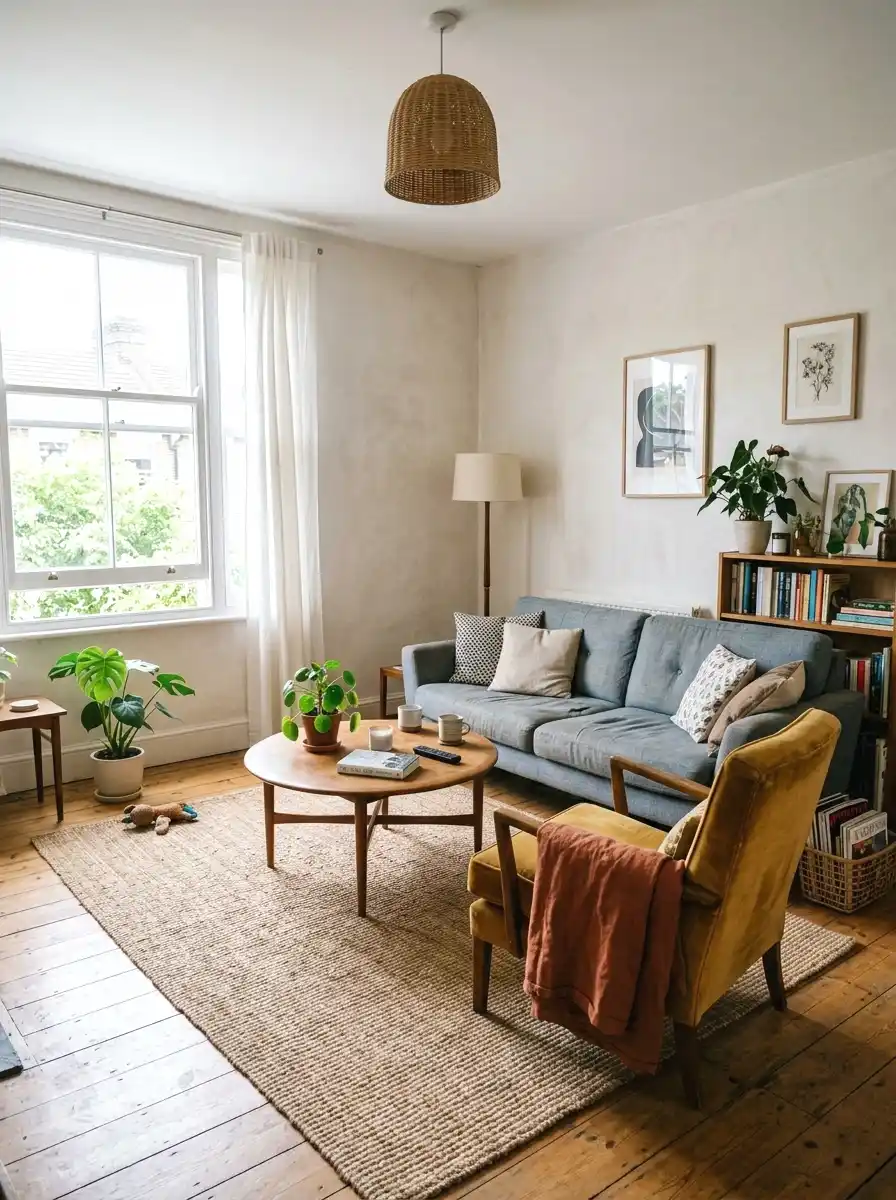
So here’s the thing about rugs. They’re the cheapest way to merge two styles because they sit under everything else and quietly tie a room together. A jute rug with clean geometric lines works for the minimalist partner, while a warm rust or terracotta color works for the partner who wants coziness.
I found a 6×9 jute blend rug at Target for around $90, and it instantly made a mismatched couch and armchair look intentional. Pick one rug you both actually like before buying anything else. It sounds small, but it saves you from three return trips later.
2. Split the Room Into Zones
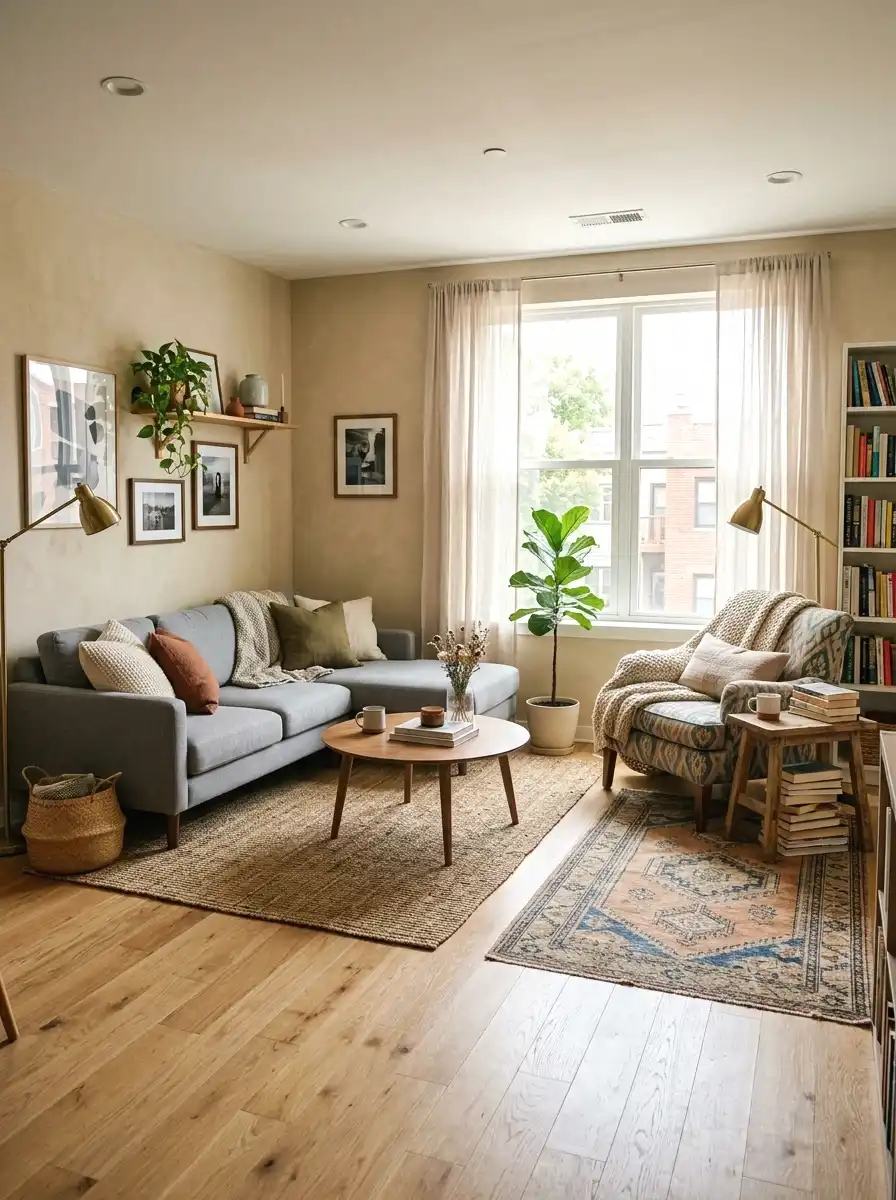
You don’t have to blend every corner. Split your apartment into zones instead, one for sleek furniture, one for the more layered, textured look. A reading nook by the window can go full maximalist while the main seating area stays clean.
This works especially well in apartments under 700 square feet where rooms flow into each other anyway. I was skeptical about this one but it actually stopped most of our arguments. Each of you gets a spot that feels like yours, and the whole apartment still reads as one home.
More Ideas:



3. Agree on One Neutral Base Color
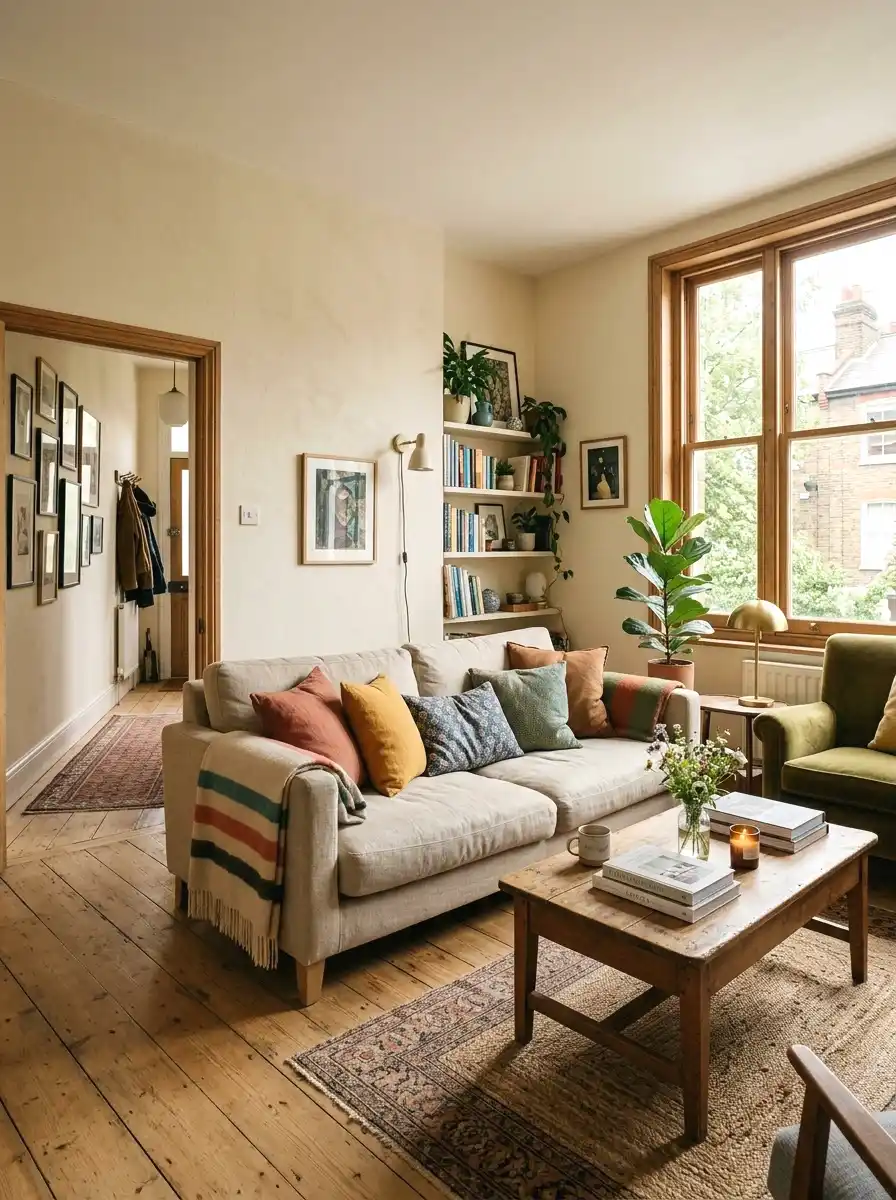
Pick a single neutral, cream, warm gray, or greige, and paint the main walls that color. Neutral bases cost less too. A gallon of Behr neutral paint runs about $38 at Home Depot, which covers most apartment living rooms.
Once the walls are neutral, both styles can layer on top without clashing. The minimalist partner gets a calm backdrop. The partner who loves color and texture can add throw pillows, art, and blankets without the walls fighting them. It’s the easiest budget move on this whole list.
4. Mix Furniture Silhouettes on Purpose
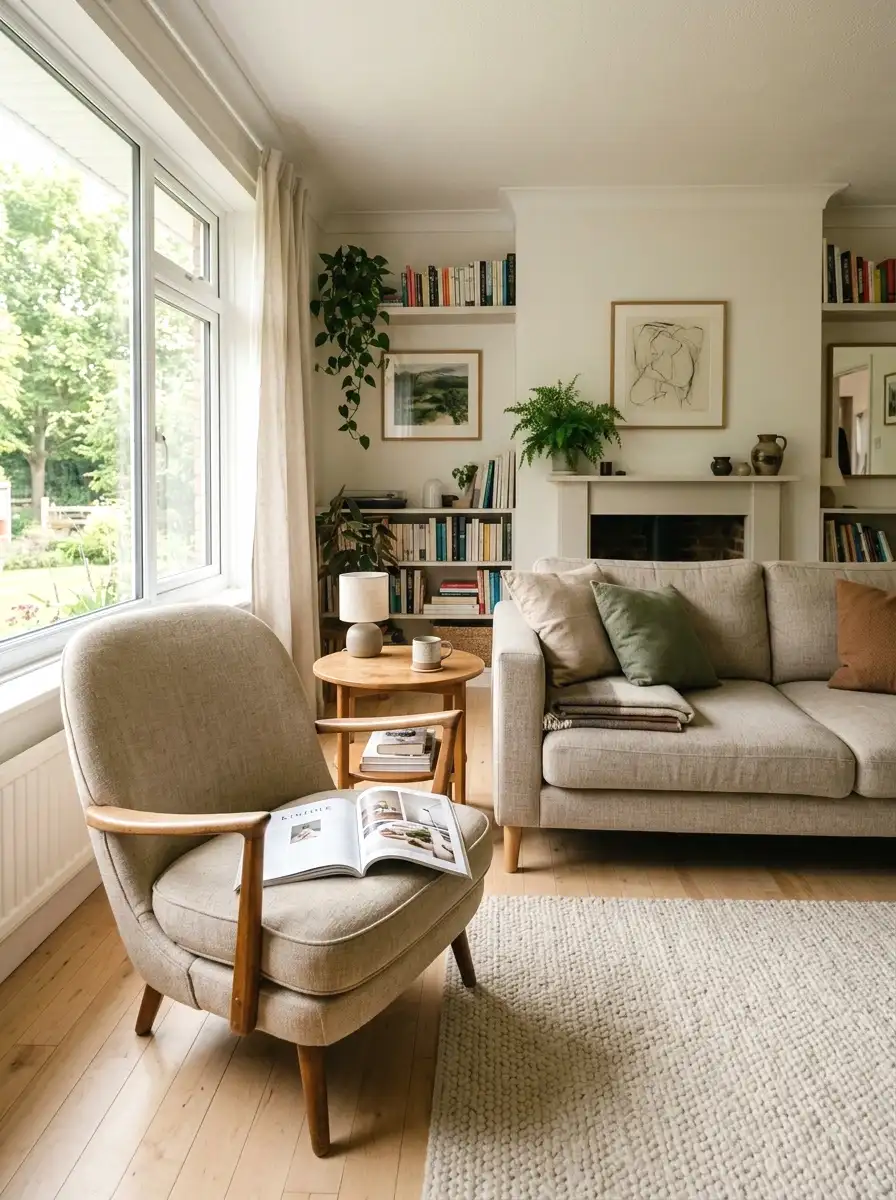
You don’t need matching furniture. A clean modern sofa can sit next to a slightly worn, curved vintage chair and it still works if the fabric colors relate. This is called “eclectic pairing,” basically mixing shapes that share a color family.
I mixed a straight edged IKEA sofa with my partner’s rounded vintage armchair from a thrift store, and the trick was reupholstering the chair in a fabric that matched the sofa’s undertone. Reupholstery runs $150 to $300 depending on the piece, but it’s cheaper than buying new.
5. Let Lighting Be the Compromise Piece
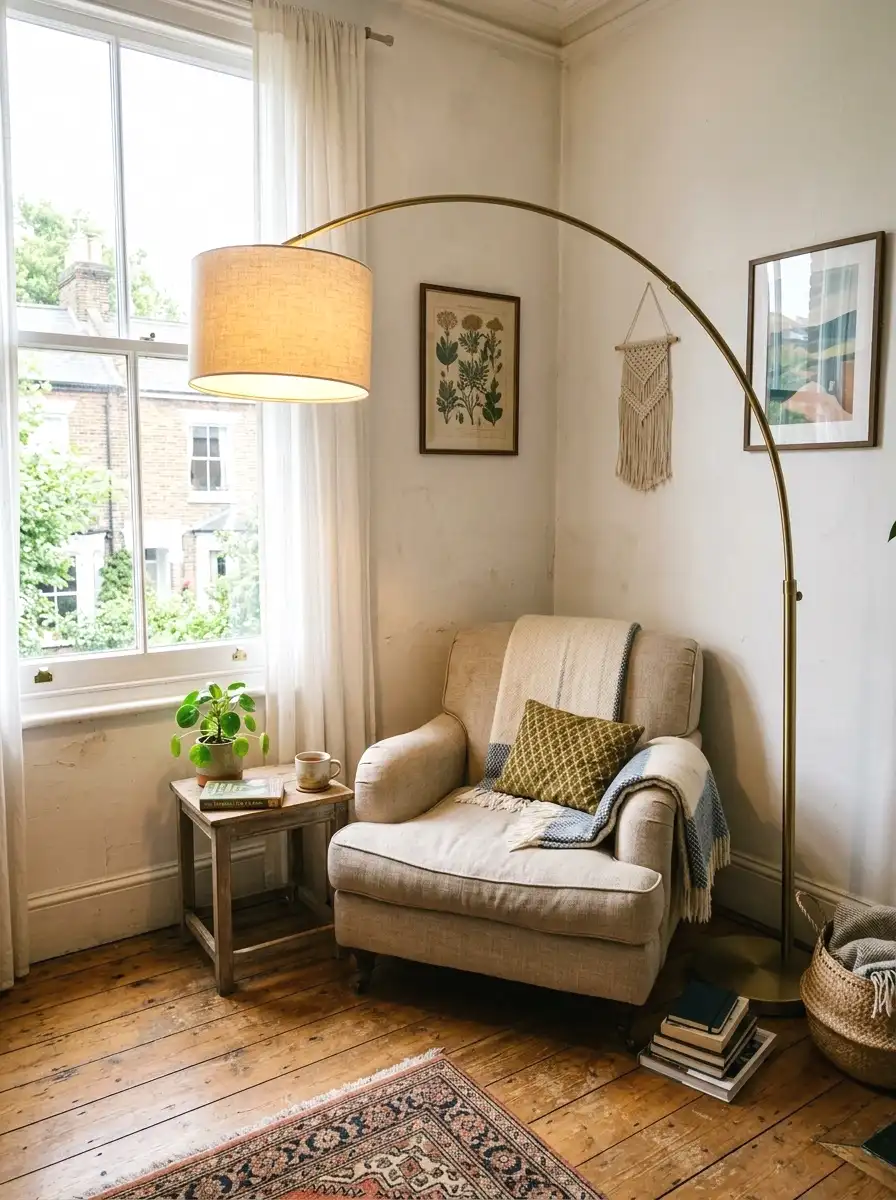
Lighting fixtures are small enough that nobody feels like they are lost. A brass arc floor lamp reads modern and warm at the same time, which makes it a safe pick when styles disagree.
West Elm sells a brass arc lamp for around $250, but similar styles show up at Wayfair closer to $120. Swap your overhead bulbs for warm white (2700K) instead of cool white too. It softens sharp modern furniture and makes maximalist decor feel less busy. Small change, big difference.
6. Use a Gallery Wall to Blend Art Tastes
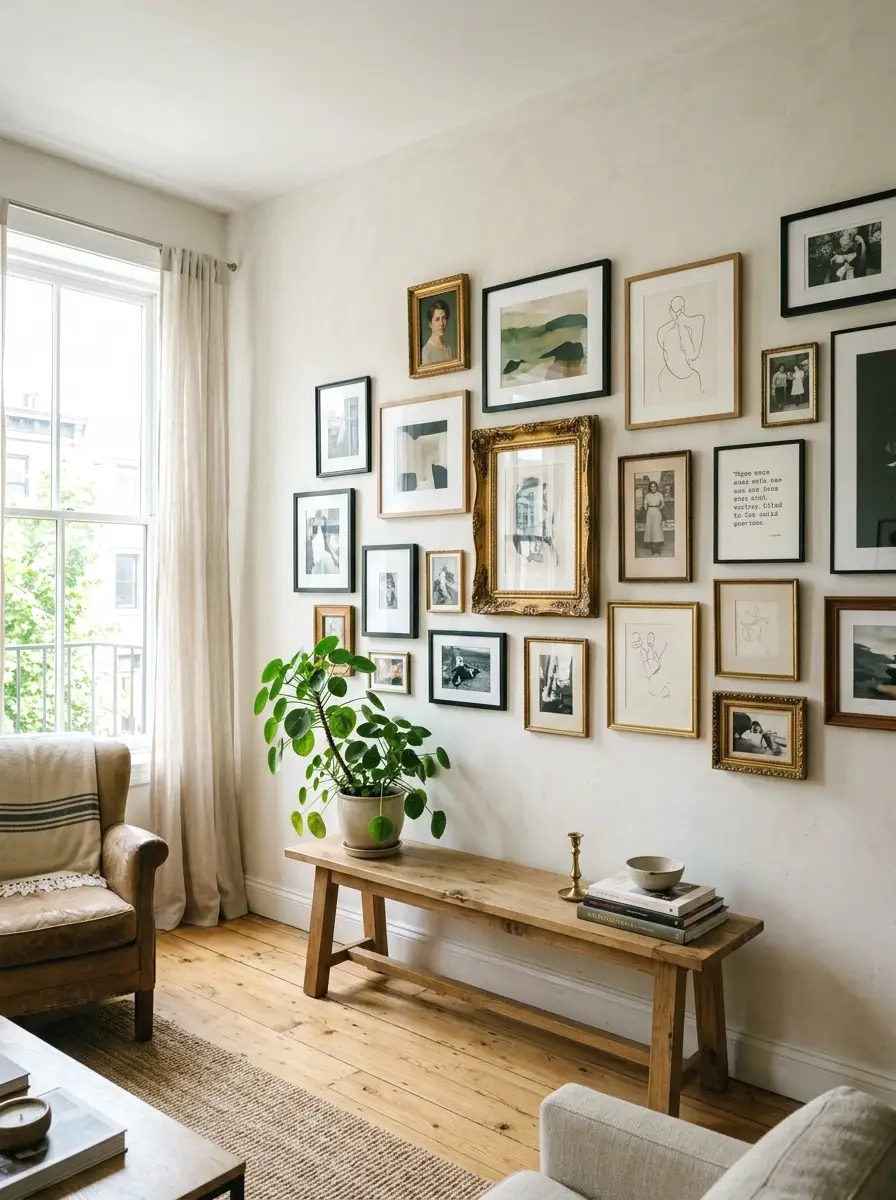
A gallery wall lets both of you hang what you love without one style dominating. Mix a few clean black frames (for the minimalist) with one or two ornate or colorful frames (for the maximalist partner). The trick is keeping the frame colors consistent even if the art inside varies wildly.
We spent about $60 on frames from Target and used art we already owned. Lay everything out on the floor first before hammering anything into the wall. Took me ages to figure this out, but it saves a lot of nail holes.
More Ideas:
7. Pick One “Statement” Piece Each
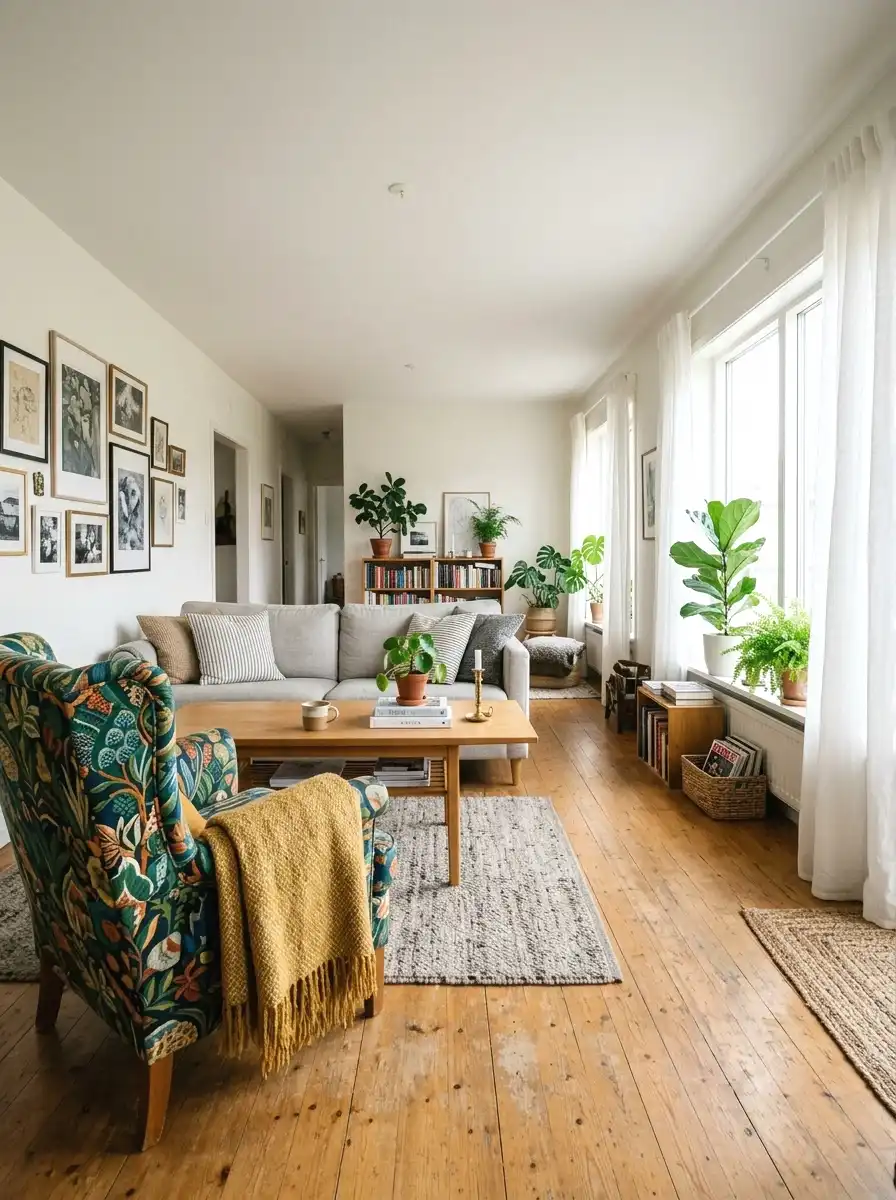
Give each partner one item they get full control over. Maybe it’s a bold patterned armchair for one person and a simple wood coffee table for the other. Naming it upfront (literally saying “this is your piece”) takes the pressure off every other decision.
This worked better than any joint shopping trip we tried. Each statement piece cost around $200 to $300, which fits well inside a $700 total room budget. And somehow, once each of you has your piece, you stop needing to win every other argument.
8. Layer Textiles Instead of Buying New Furniture
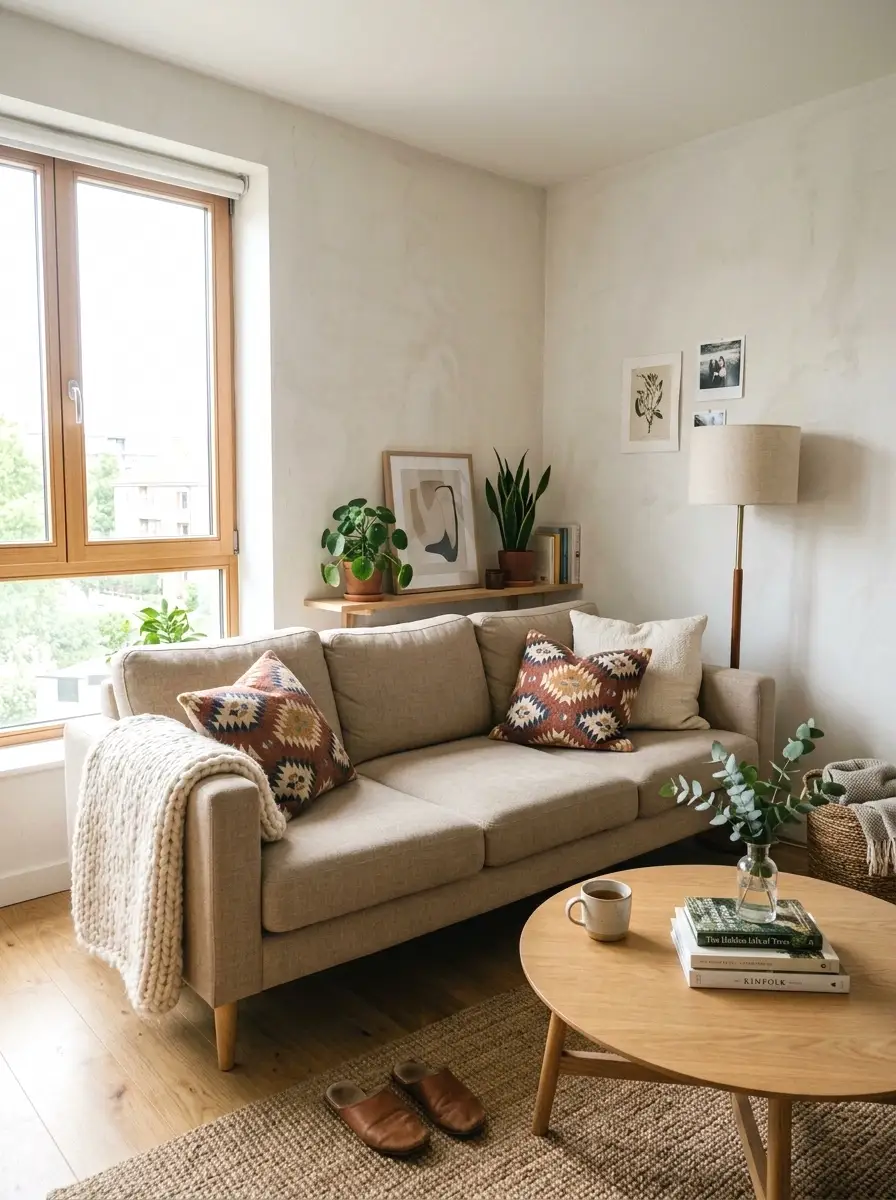
Throw blankets, pillow covers, and textured curtains change a room’s feel without replacing a single piece of furniture. A chunky knit throw over a modern sofa softens sharp edges instantly and costs $35 to $60 at IKEA.
This is the cheapest way to test a maximalist look before committing. If it doesn’t work, you’re only out $40, not $2,000 on a new sectional. My personal note: this one is so underrated for couples who can’t agree on furniture shopping yet.
9. Use Curtains to Set the Mood, Not Just Block Light
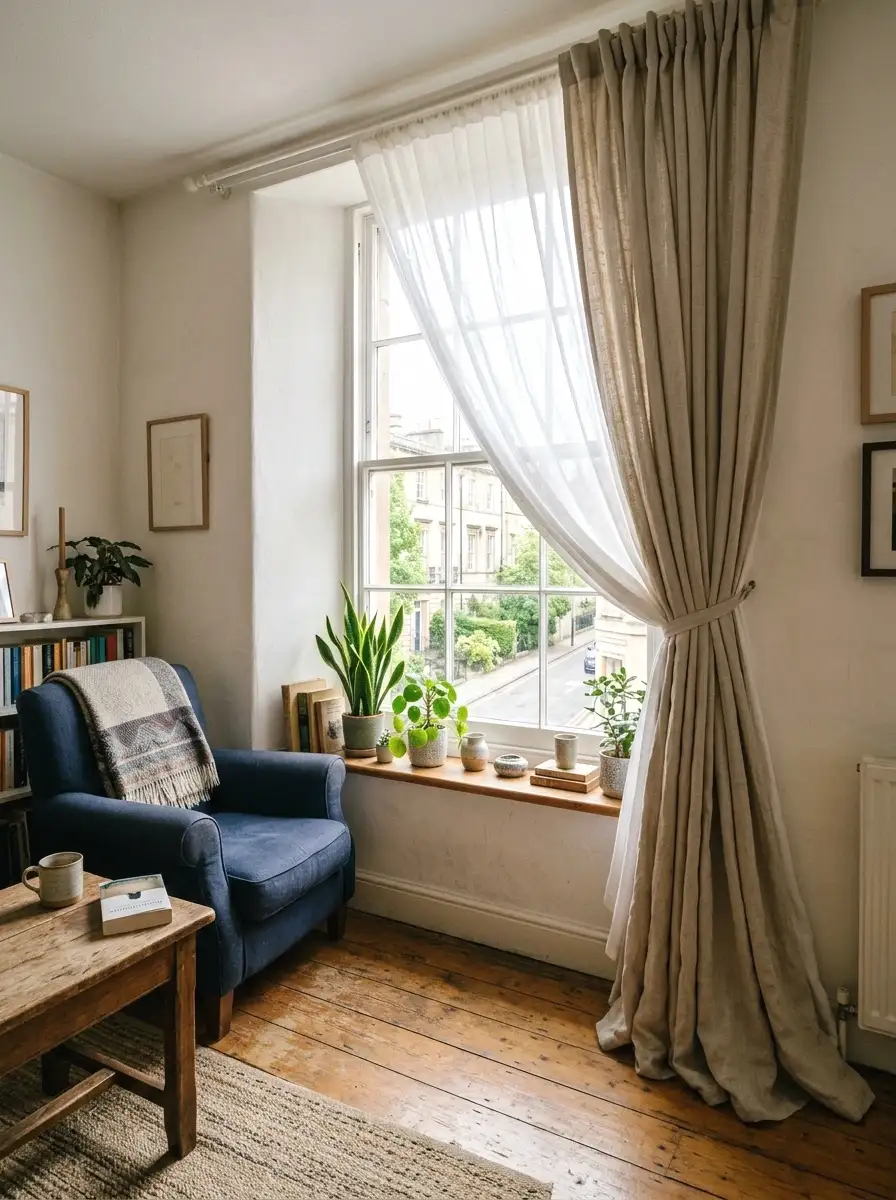
Curtains do more work than people expect. Linen curtains in a warm cream feel relaxed and layered, while blackout curtains in a solid charcoal feel clean and modern. You can actually use one on each side of a room divide if your apartment is open concept.
Amazon sells linen blend curtain panels for about $45 a pair. Measure your window width and multiply by 1.5 to 2 times for a properly gathered look, not a flat, stretched one. That extra fabric makes a real difference.
10. Let One Person Choose the Coffee Table

The coffee table sits in the center of the room, so it carries a lot of visual weight. Let the partner who leans more traditional or maximalist pick this one, since a warm wood tone coffee table softens a room full of clean lined furniture.
A solid oak coffee table from World Market runs around $280, while a similar look shows up used on Facebook Marketplace for $80 to $120. Either way, this piece becomes the anchor that both styles orbit around.
More Ideas:
11. Mix Metal Finishes With Intention

Don’t force yourselves to pick one metal finish for everything. Matte black hardware feels modern, brass feels warm and traditional, and mixing both across a room (black switch plates, brass lamp) actually looks more collected than matching everything.
Home improvement stores sell finish swap kits for cabinet hardware around $25 to $40 for a full set. This is a small, cheap project that changes how the whole kitchen or entryway feels. When I tried this in my own space, it fixed a room that felt stuck between two ideas.
12. Use Open Shelving as Neutral Ground
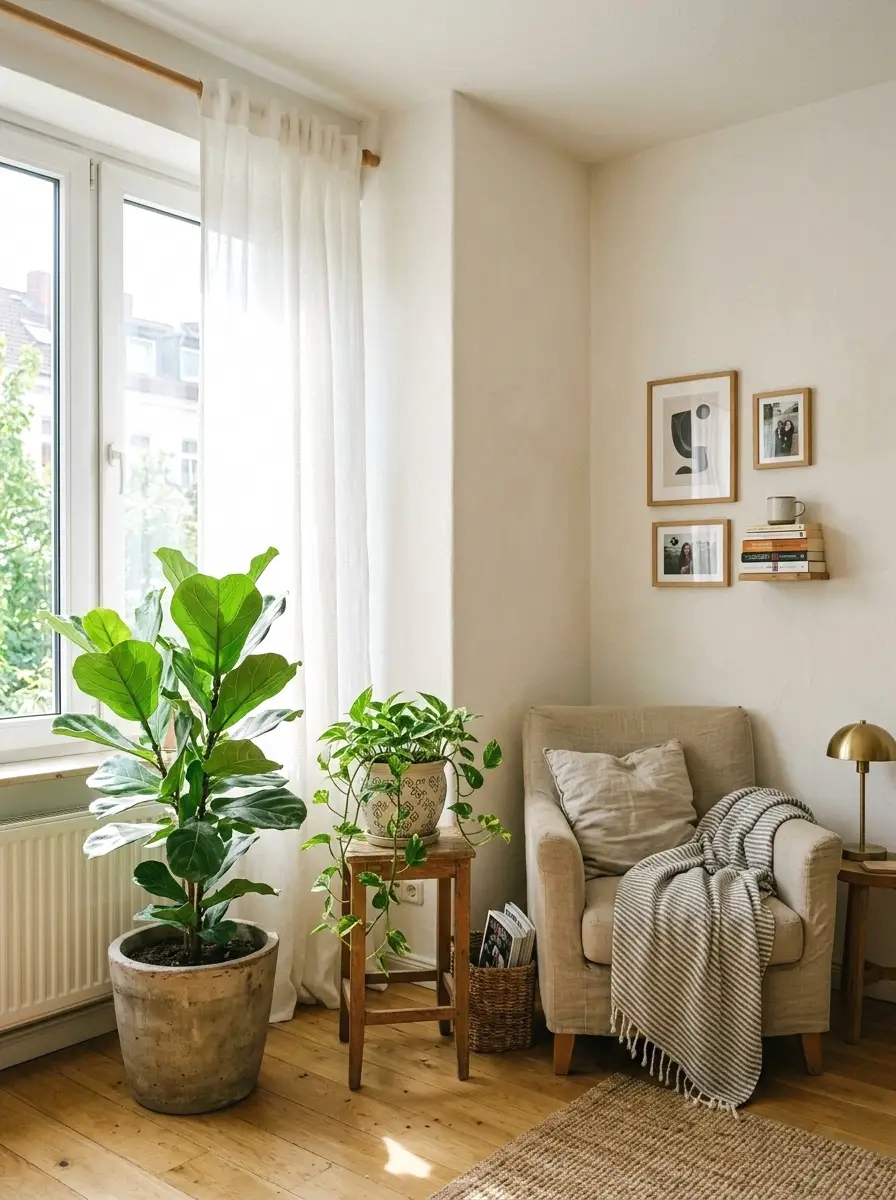
Open shelves let both of you display your own stuff side by side. One shelf for minimalist ceramics, one shelf for a partner’s book collection or plants. It reads as curated even when it’s really just two collections next to each other.
A basic floating shelf set from IKEA costs about $40 for three shelves. Install them at slightly staggered heights instead of a perfect grid. It looks more natural and gives each collection its own breathing room.
13. Choose a Plant Style Together

Plants are one of the few decor choices most couples agree on fast. A few large leafy plants (like a fiddle leaf fig) read modern and clean, while smaller potted herbs or trailing pothos plants feel warmer and more layered.
You can mix both. One large plant in a plain concrete pot for the modern look, a few small trailing plants in patterned pots for the cozier feel. Plants at Home Depot start around $15 to $40 depending on size, which makes this an easy low-risk buy for both of you.
14. Set a “One In, One Out” Rule for Clutter
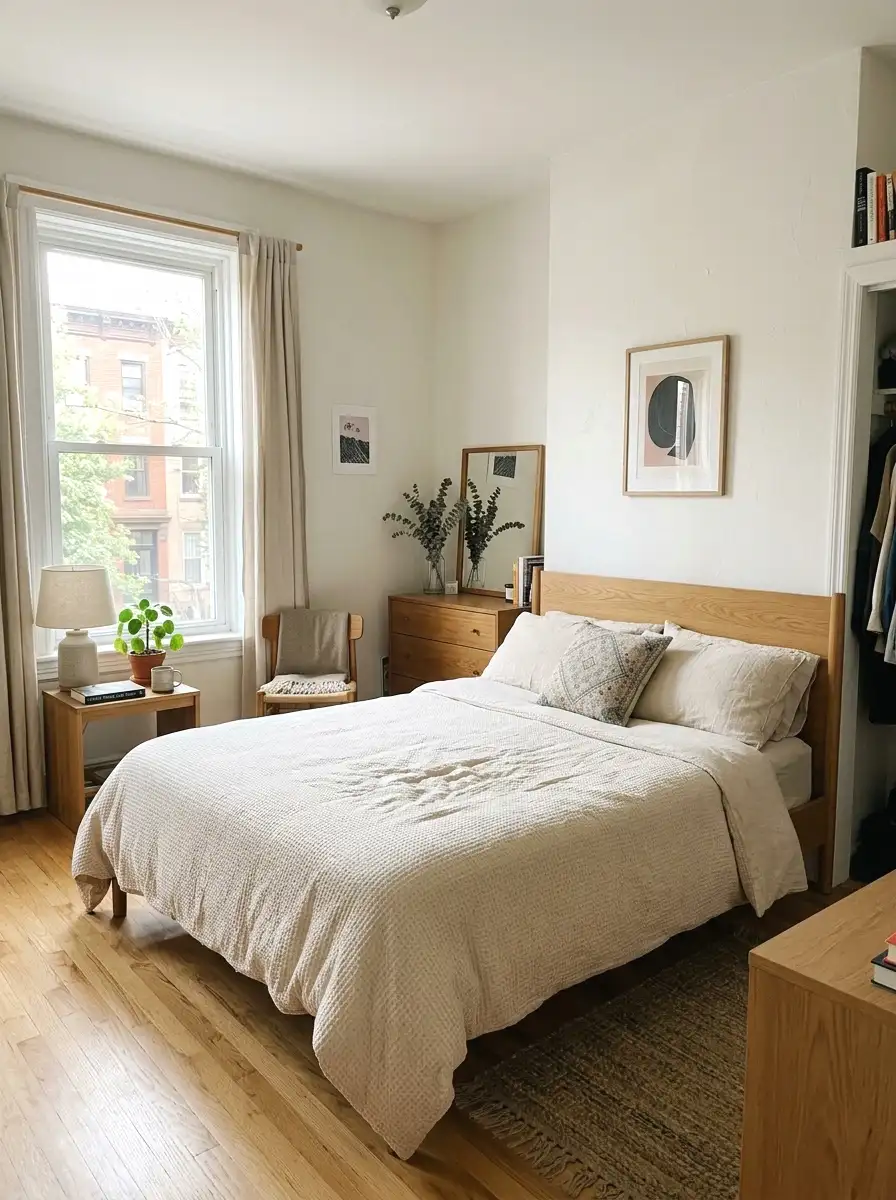
If one partner leans maximalist and the other wants things minimal, decide on a simple rule. For every new decor item that comes in, one has to go. This keeps the maximalist happy (still adding things) while keeping the space from feeling overwhelming for the minimalist partner.
This rule alone solved more arguments in our apartment than any single purchase did. It’s free, it takes zero dollars, and it forces both of you to actually think about what you’re buying instead of grabbing things impulsively at Target.
More Ideas:
15. Use a Room Divider to Give Each Style Its Own Space
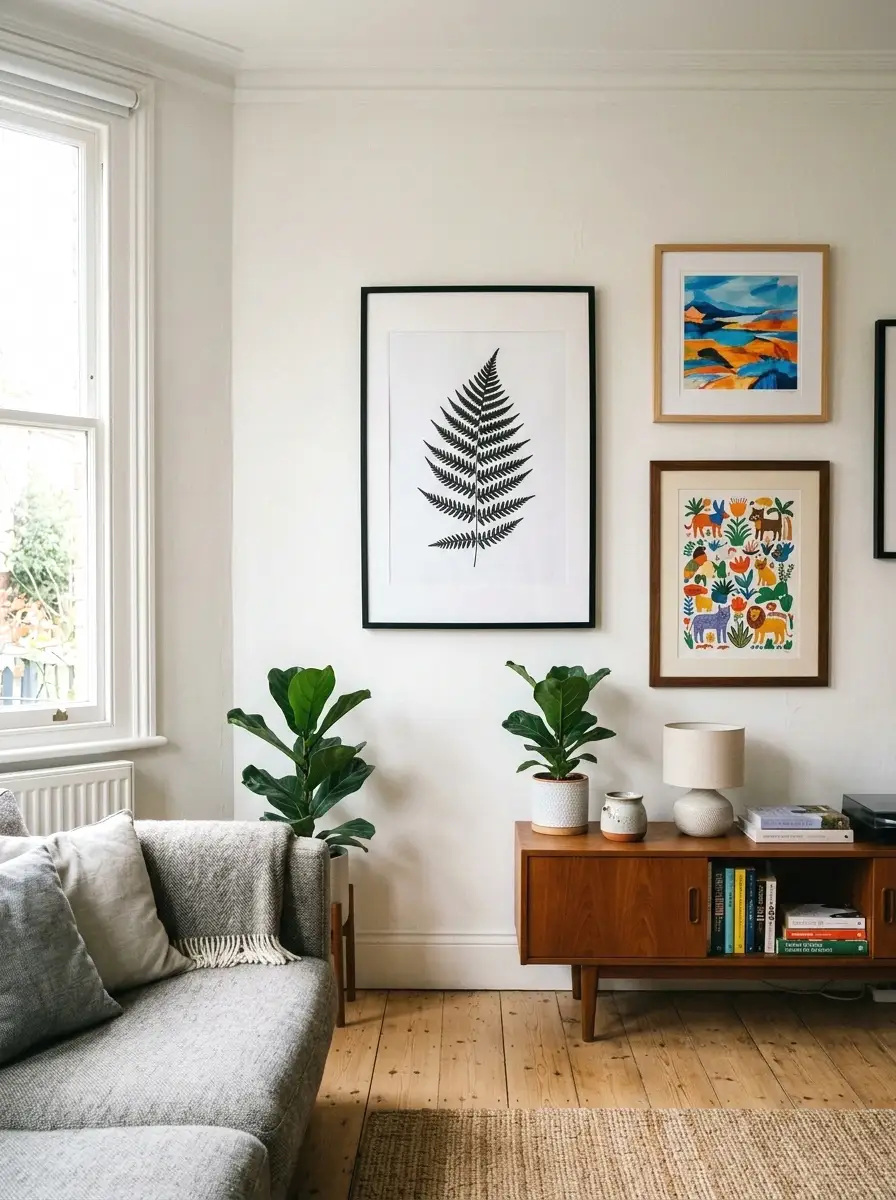
If your apartment is one open room, a slatted wood room divider or a woven screen can split the space visually without walling anything off. One side can lean into a cleaner look, the other into a warmer, layered style.
A bamboo folding screen runs about $90 to $150 at Wayfair. This works especially well for studio apartments where you can’t build actual walls. So here’s the thing, it also adds privacy if one of you works from home and the other doesn’t.
16. Pick Bedding That Splits the Difference
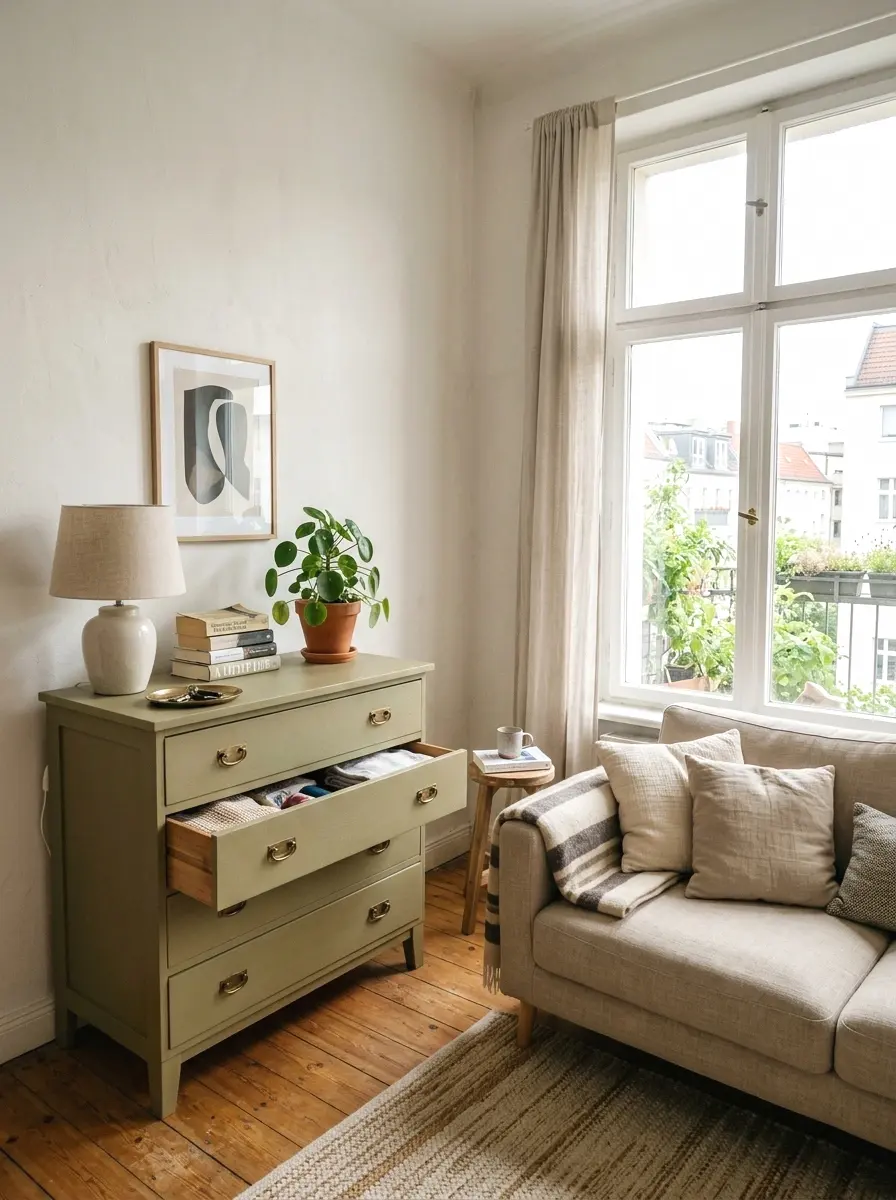
Bedding is intimate and personal, so it’s often where style disagreements get heated fastest. A solid, textured duvet in a neutral tone (waffle weave or linen look) works as a middle ground. Add one patterned throw pillow for the partner who wants more visual interest.
A queen size linen duvet cover from Target runs around $70 to $90. It’s affordable, it’s not overly styled either direction, and it washes well too, which matters more than people expect once you actually live with it daily.
17. Use Wall Art Size to Balance Busy vs Simple
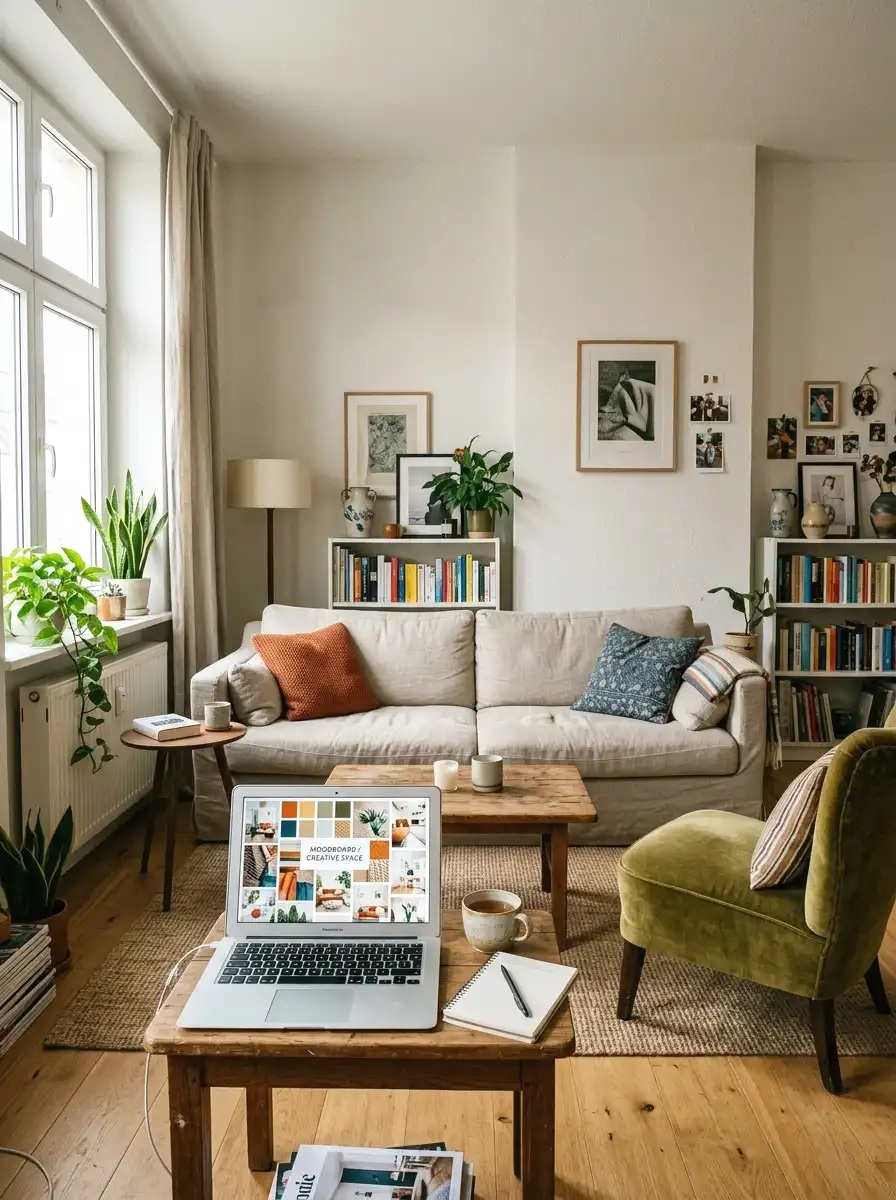
If one of you wants bold, colorful art and the other wants simple black and white prints, hang them at different scales instead of fighting over which style wins. One large simple print next to two or three smaller, colorful ones creates balance instead of competition.
Etsy and Amazon both sell print sets that let you mix and match without spending more than $80 total, frames included. Keep frame colors matching even when the art inside varies. That consistency is what makes it look planned instead of accidental.
18. Choose One Piece of Vintage or Secondhand Furniture Together
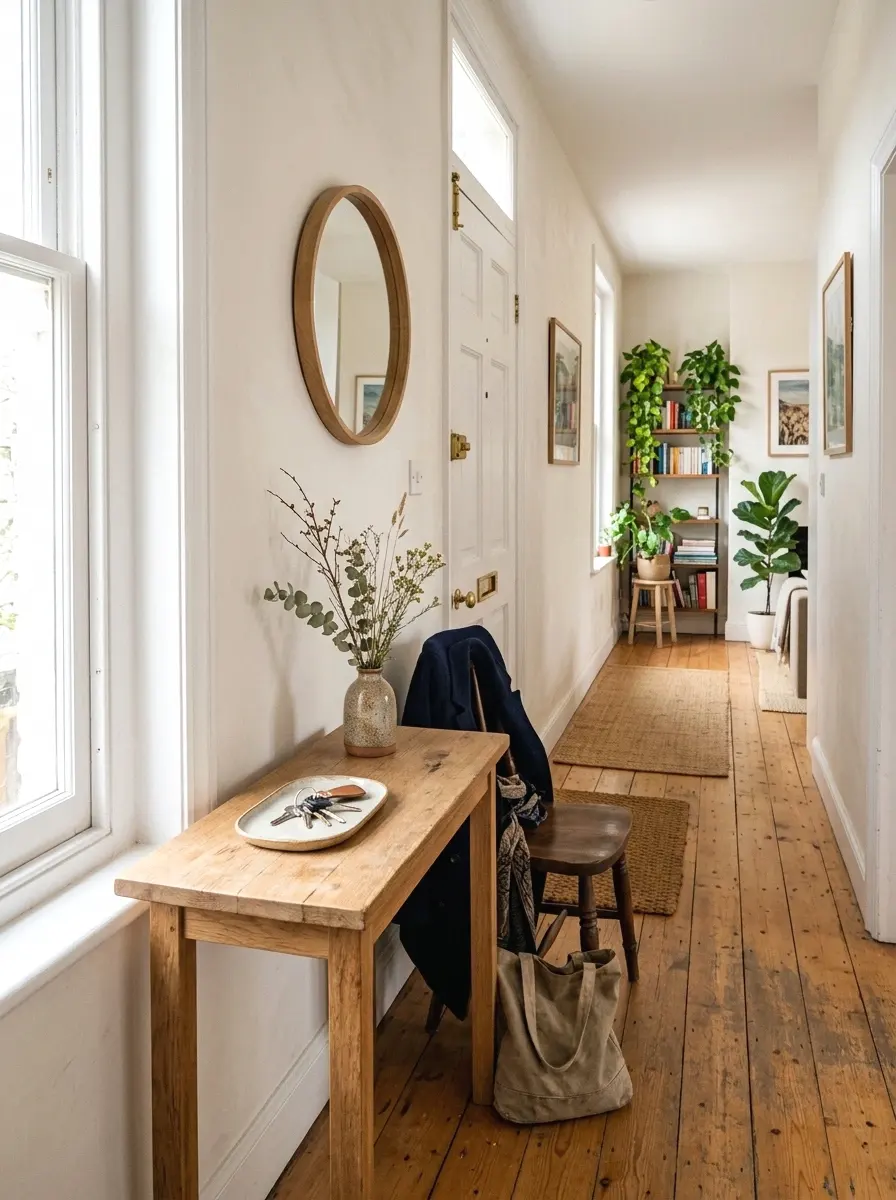
Thrifted or vintage furniture naturally bridges styles because it usually has some age and character but can be updated to feel more current. A vintage dresser refinished in a simple, clean paint color works for both a modern lover and someone who wants warmth.
Facebook Marketplace pieces run $30 to $150 depending on condition, and refinishing supplies (sandpaper, primer, paint) cost about $40 more. I was wrong about this one at first. I thought it would look outdated, but it ended up being our favorite piece in the apartment.
More Ideas:
19. Set a Shared Pinterest Board Before Shopping
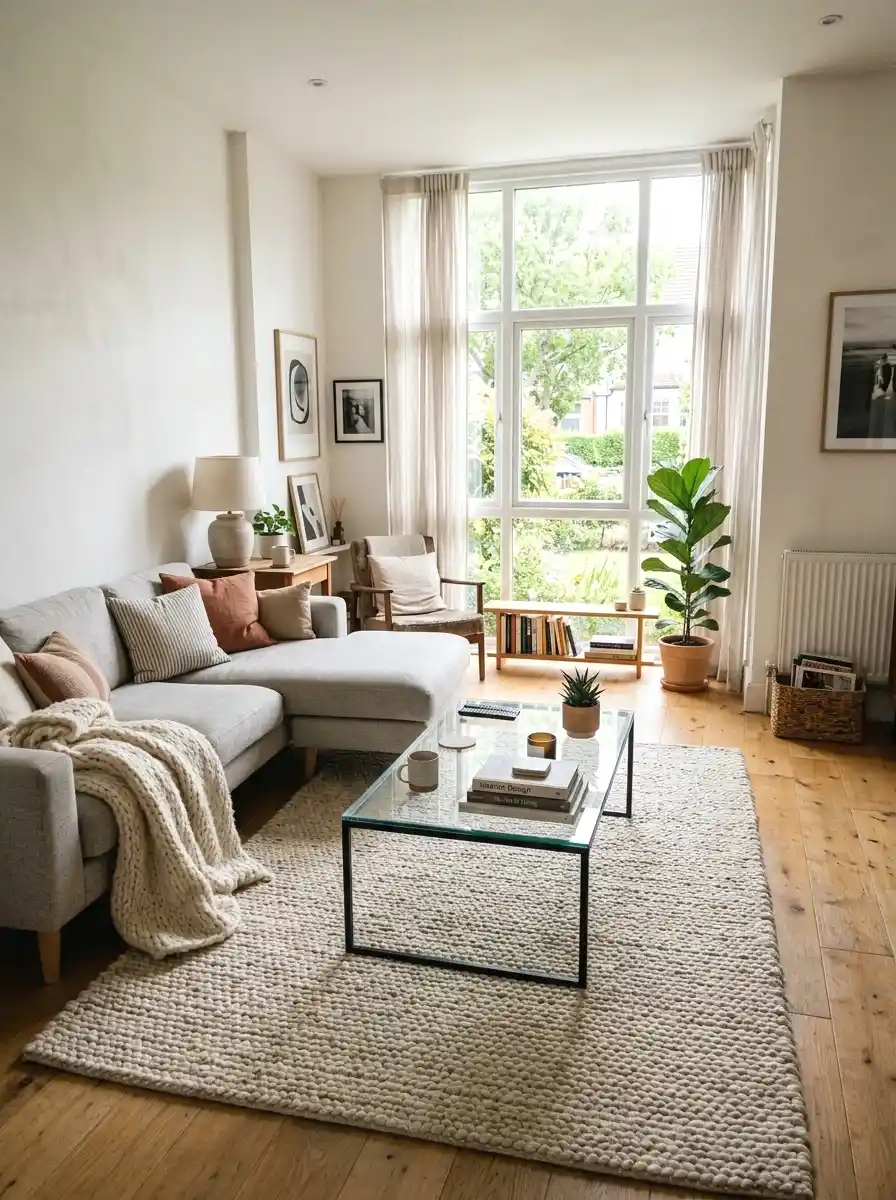
Before either of you buys anything, build one shared board and each pin 10 to 15 images. Look for overlap, not identical taste, just repeated colors, textures, or shapes. That overlap becomes your shared direction.
This step is free and takes maybe 30 minutes, but it saves hours of arguing in stores later. Couples who skip this step tend to buy things that clash because nobody agreed on a direction first. Do this before you touch your wallet.
20. Use a Console Table to Merge Entryway Styles
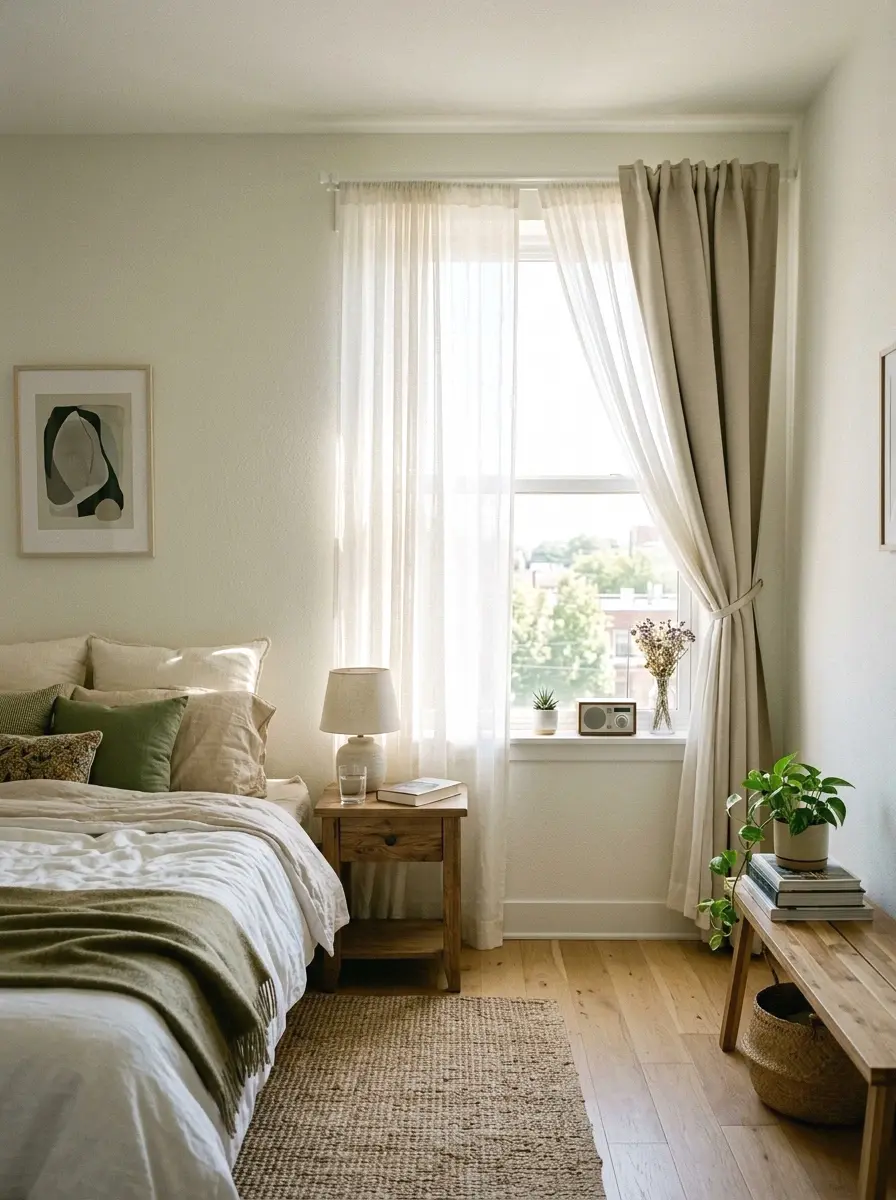
Your entryway sets the tone for the whole apartment, and it’s small enough that compromise is easy. A simple wood console table with clean legs holds a catchall tray for keys (practical, modern) plus a small vase or candle (warmer, personal touch).
A console table from IKEA runs about $80 to $130. This is one of the first things guests see, so getting it right matters more than people expect. Plus it’s a low pressure spot to test mixing styles before doing it in the living room.
21. Balance Hard and Soft Materials in Every Room
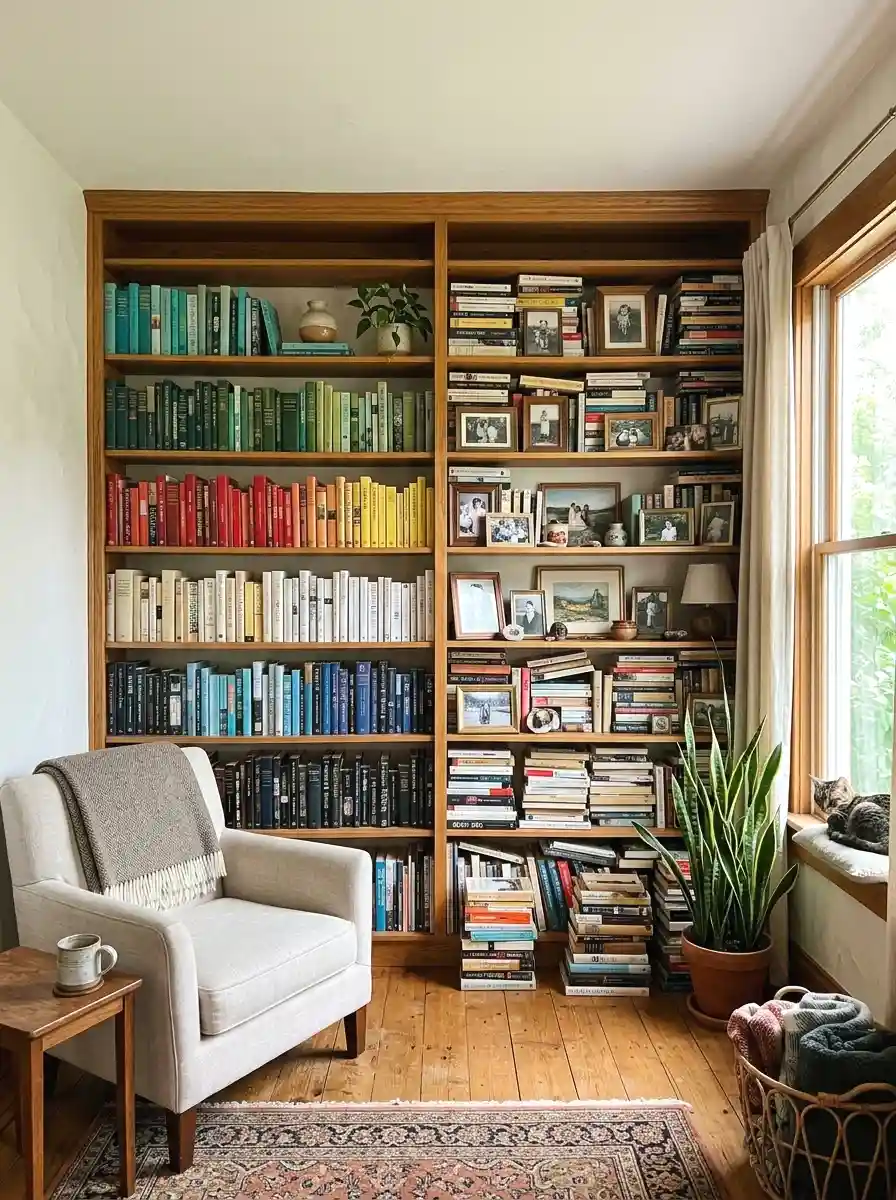
If one partner loves hard surfaces (glass, metal, stone look laminate) and the other wants soft textures (velvet, knit, wool), make sure every room has both. A glass coffee table with a chunky wool rug underneath satisfies both without either person losing.
This rule is free to apply, you’re just paying attention to what you already have or plan to buy. When shopping, ask “does this room have at least one hard surface and one soft texture?” If not, that’s your next purchase.
22. Choose Window Treatments That Work for Both Schedules

This one’s practical, not just aesthetic. If one of you wakes up early and the other sleeps in, layered curtains (a sheer plus a blackout panel) let you both get what you need. Sheers keep the room feeling open and modern during the day, blackout panels handle late sleepers.
A blackout and sheer curtain bundle from Amazon runs around $55 to $75 for a standard window. This tip came up constantly on Reddit threads about couples with different schedules, and it’s one people wish they’d done sooner.
23. Give the Bookshelf a Split Personality
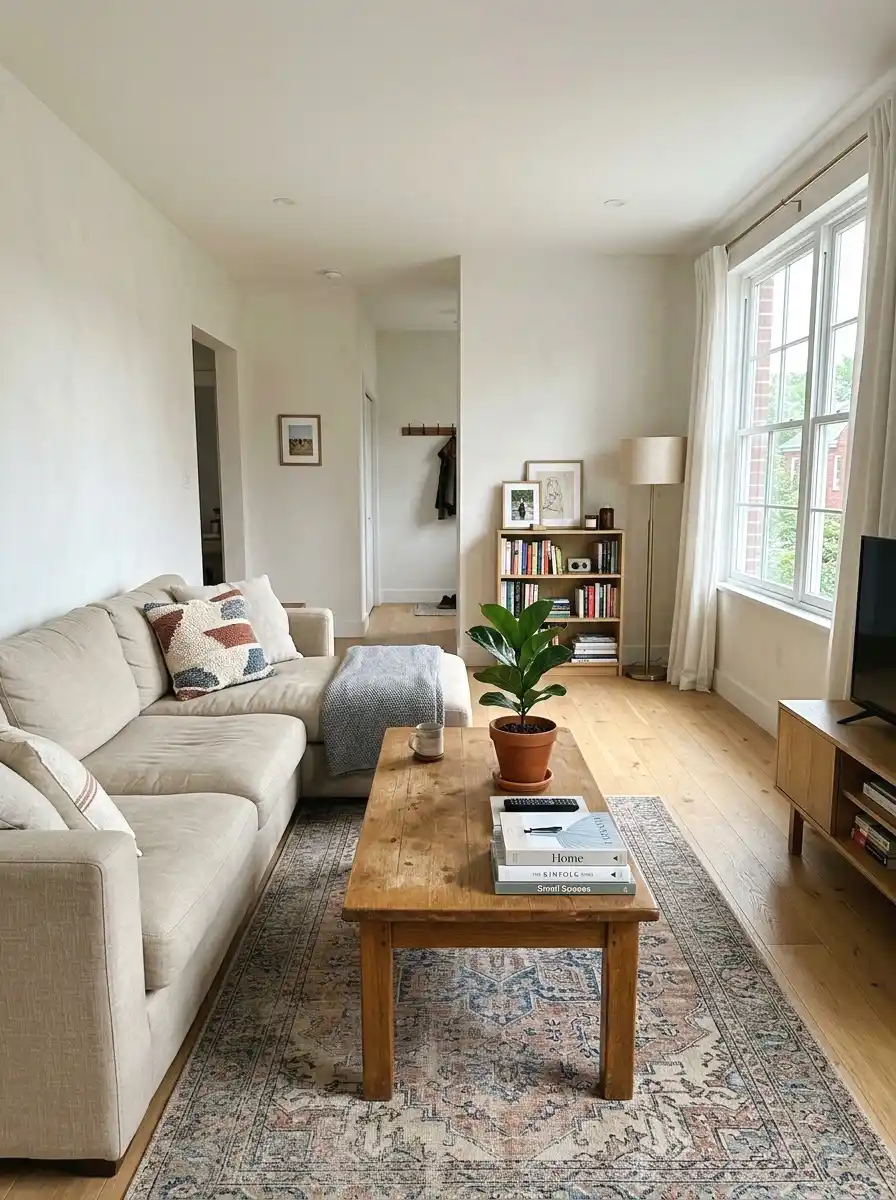
Bookshelves are one of the easiest places to blend two styles because they naturally hold different objects. Organize one side by color and size for a cleaner, modern look, and let the other side stay more layered with mixed objects, photos, and books stacked however they land.
A basic bookshelf from IKEA costs $60 to $100 depending on size. My personal note: don’t force full symmetry here. A slightly imperfect shelf actually reads as more lived in and less staged, which works for both styles anyway.
24. Use Scent and Sound as a Shared Layer
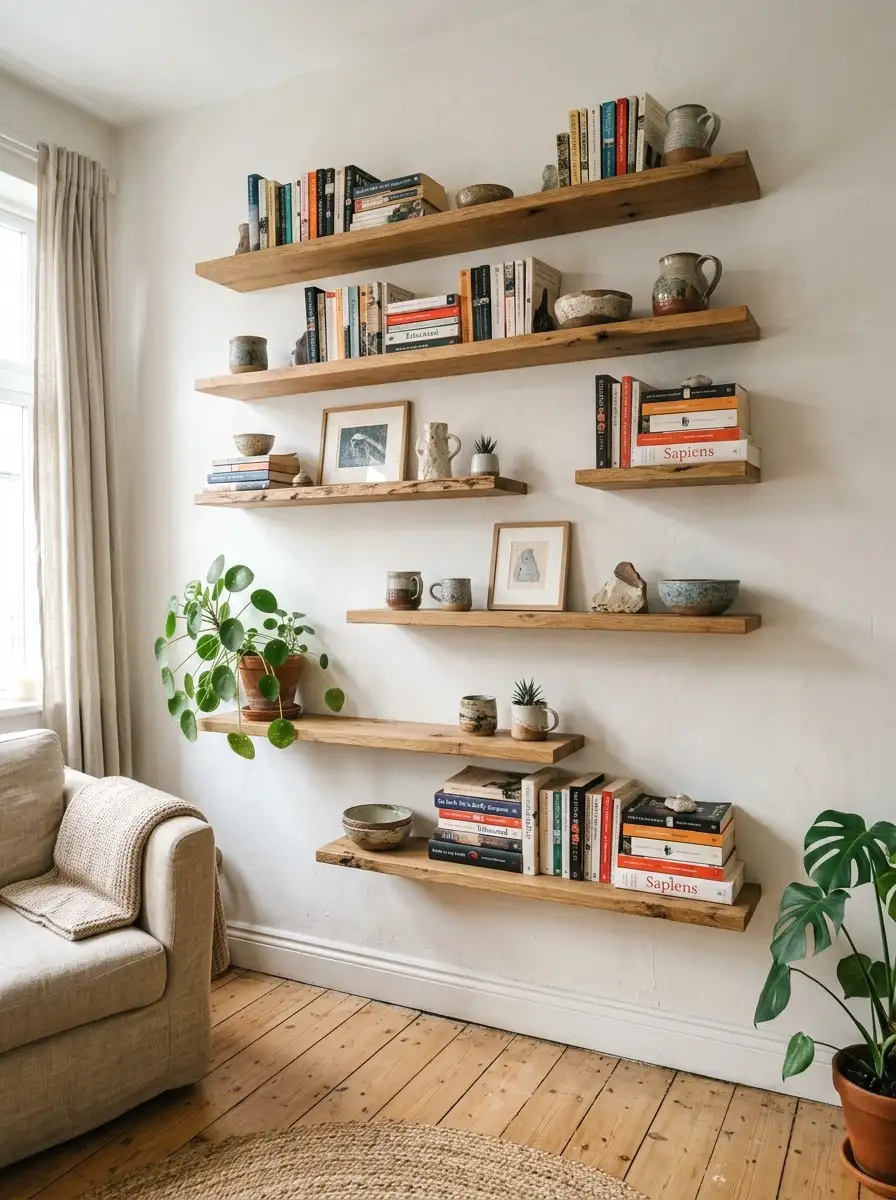
Decor isn’t only visual. A shared candle scent (something neutral like fig or sandalwood) and a small speaker for music create a mood that ties a mismatched room together in a way visuals alone can’t. This costs very little and affects how the whole apartment feels daily.
Target sells candles in the $15 to $25 range, and most couples already own a speaker. This tip surprised people the most in research, since it’s not furniture or paint, but it changes the feel of a room fast and it’s basically free if you already have the pieces.
25. Revisit the Room Every Few Months
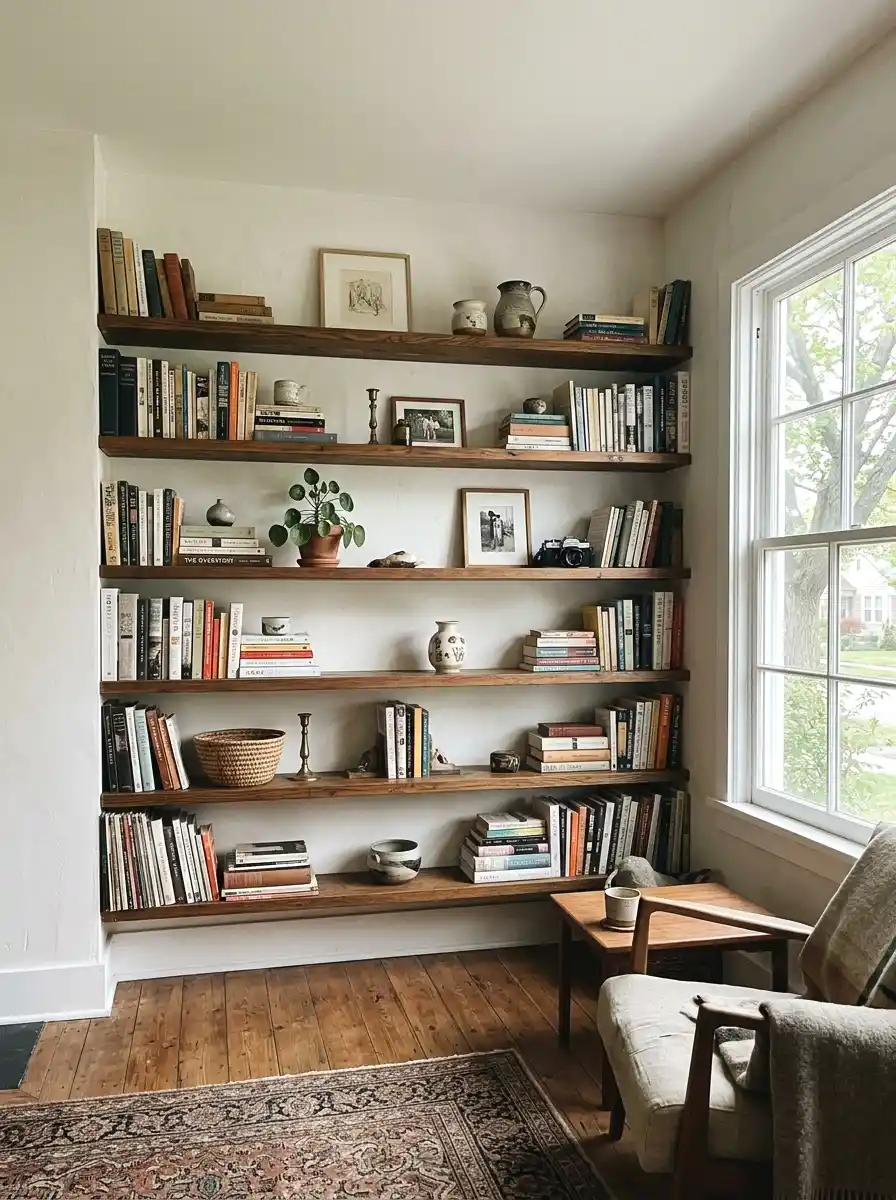
Styles shift as you live together longer, so don’t treat your first setup as final. Walk through the apartment every few months and ask what’s not working anymore. Swap one or two small items instead of redoing the whole room at once.
This keeps costs low too, usually under $100 per refresh instead of another $700 overhaul. And honestly, most couples said their apartment felt most “them” after the second or third round of small changes, not the first.
Final Thoughts on Apartment Decor for Couples
You’ve got real tools now, from shared rugs and neutral bases to zones and statement pieces that let both of you keep your own taste without one style taking over. None of this requires picking a winner. It just needs a little planning before you shop.
Start small this weekend. Build that shared Pinterest board together, or pick out one rug you both actually like. One step now beats a big overwhelming redo later.