
20 Laundry Room in Bathroom Closet Ideas That Actually Work

You squeezed a washer and dryer into a bathroom closet and now the whole setup looks like an afterthought. The doors don’t close right, there’s nowhere to put detergent, and folding anything in there feels like origami inside a phone booth. It’s functional, barely. But it doesn’t have to feel this way. Laundry Room in Bathroom Closet
This list covers 20 real ideas pulled from actual homeowners, renters, and small-space obsessives who’ve been in the exact same spot. Each idea was picked because it solves a specific problem: wasted vertical space, ugly exposed machines, zero counter space, or storage that just doesn’t fit. Most ideas fall somewhere in the $30 to $200 range, and a few cost almost nothing.
This is for people working with a closet that’s roughly 3 to 5 feet wide and already has a stacked or side-by-side unit in it. If you’re planning a full laundry room addition or you’ve got a dedicated mudroom, this isn’t for you. But if your washer lives behind a folding door next to a toilet, you’re in the right place. These fixes are genuinely doable.
By the end of this, you’ll have a clear picture of how to make that small closet feel like it was meant for laundry all along.
If your setup is slightly larger but still tight, there’s some small-space storage worth stealing from other compact configurations too.
What to Know Before You Start Your Bathroom Closet Laundry Setup
- Stacked units need at least 80 inches of ceiling clearance; measure before buying any overhead storage.
- Most bathroom closets run 24 to 30 inches deep. Front-loaders work better here than top-loaders for that reason.
- Budget $50 to $80 just for organizational accessories before touching the machines themselves.
- Moisture builds up fast in enclosed closet laundry spaces; a small vent or louvered door makes a real difference.
- Skipping a drip tray under the washer is a common regret. A plastic tray costs about $20 and saves the floor.
- Use moisture-resistant paint if you’re repainting inside the closet. Regular wall paint peels within months.
- Pull-out shelves on the side walls last longer than over-door organizers, which tend to sag after six months.
- Label everything. When the closet is closed, you forget what’s where fast.
1. Add a Shelf Directly Above the Machines

The space above a stacked washer-dryer unit is one of the most wasted spots in any closet laundry setup. I’m talking about 12 to 18 inches of open air that most people never touch. One fixed shelf up there changes everything. You suddenly have a landing spot for detergent, dryer sheets, and a small basket for whatever comes out of pockets.
A basic melamine shelf from a hardware store runs about $15 to $25. Get a bracket that holds at least 50 pounds since detergent bottles are heavier than you think. If the closet is 30 inches wide, a 28-inch shelf fits without any cutting. Install it at a height where you can reach it without straining, usually around 6 feet from the floor.
If you want to take that overhead approach further, there are more ways to handle vertical wall storage done right in a tight laundry space.
2. Use a Tension Rod for Hang-Dry Clothes

Here’s something that costs under $10 and solves a real problem. A tension rod installed inside the closet, just above the machines or off to the side, gives you a place to hang shirts, delicates, or anything that can’t go in the dryer. It takes maybe five minutes to set up and no tools at all.
Get a rod rated for at least 15 pounds so it doesn’t sag under wet clothes. Adjustable rods that go from 24 to 36 inches work well for standard closet widths. When it’s not in use, it disappears completely. I use mine almost every laundry day and can’t believe I waited so long to put one in.
If hanging laundry is a regular part of your routine, there are more hang-dry setups that actually work in smaller spaces.
More Ideas:




3. Mount a Fold-Down Ironing Board on the Wall

So many people skip this because they assume it’s complicated or expensive. It’s not. A wall-mounted fold-down ironing board installs with four screws and folds flat when you’re done, taking up about 4 inches of depth against the wall. You don’t need a separate ironing room or a full-sized board leaning in a corner somewhere.
These boards typically run $40 to $80 and come in sizes that fit inside a standard 30-inch closet. Look for one with a built-in iron rest on the side so you’re not setting a hot iron on a shelf. When it’s folded up, it looks like a cabinet door. (This one is so underrated.)
For people who do more folding than ironing, there are also folding counter ideas for tight spaces that work along the same principle.
4. Put a Magnetic Strip on the Side Wall

The side wall inside a closet, the one you see when the door opens, is almost always blank. A magnetic strip mounted there holds small metal items like safety pins, stain remover pen caps, scissors, and even a few small spray bottles with magnetic backs. It keeps the stuff you reach for all the time within arm’s reach without eating into any shelf space.
Magnetic tool strips are sold at hardware stores for around $10 to $15 and come in 12 or 18-inch lengths. You only need two screws. Get one with a strong enough pull for heavier items if you plan to hang spray bottles. This is one of those ideas that sounds minor until you try it.
5. Install Louvered Closet Doors Instead of Solid Ones

Solid bifold doors trap heat and moisture inside a closet laundry space, especially if the dryer exhausts inside the room. Louvered doors, the kind with angled slats, let air circulate while keeping the machines hidden. The ventilation alone extends the life of the machines and prevents that musty smell that closed laundry closets get.
Replacing standard bifold doors with louvered ones costs $50 to $120 for a standard 36-inch opening. Most come pre-primed and ready to paint, which means you can match any bathroom color. Installation is straightforward if the hinges and track are already in place from your old doors. It’s a small swap with a real payoff.
6. Try a Slim Rolling Cart Between the Wall and Machine

If there’s even 4 to 6 inches of space between the side of a machine and the closet wall, a slim rolling cart fits in there. These carts hold detergent, fabric softener, dryer sheets, and a dozen other small things you’d otherwise pile on top of the machine or leave on the bathroom counter. You pull it out when you need it, push it back when you don’t.
Slim laundry carts run about $25 to $50 and come in white, black, or wood-tone finishes. The rolling wheels make them easy to pull out even in tight spots. Measure that gap carefully before buying. Many people measure 5 inches and find a cart that claims to be 5 inches but has handles that push it to 6. Add an inch of buffer.
More Ideas:
7. Use the Back Wall for a Pegboard
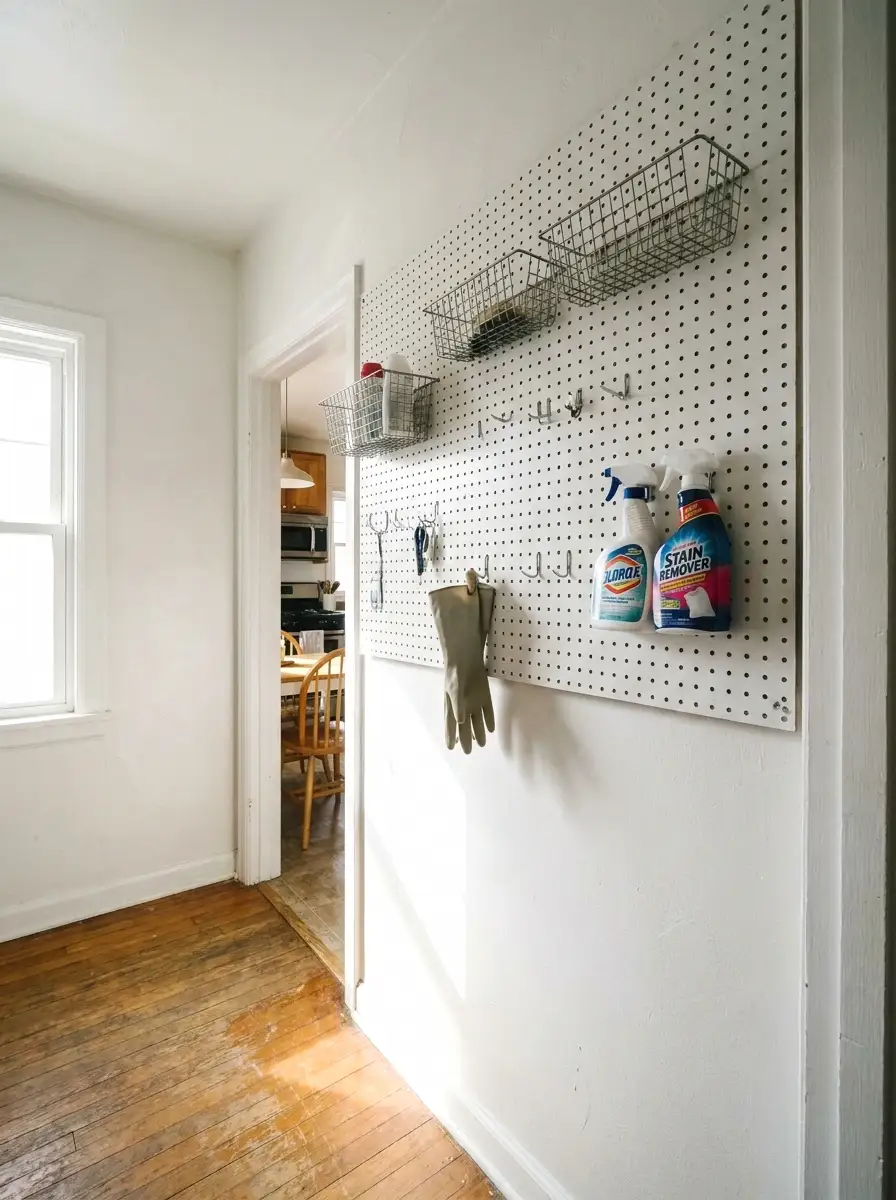
A pegboard on the back wall of the closet, behind or beside the machines, turns dead space into real storage. You can hang mesh baskets, hooks, small shelves, and holders for everything from cleaning gloves to stain remover sticks. The modular nature of pegboard means you can rearrange it as your needs change without putting new holes in the wall.
If you ever expand beyond closet-only storage, there are cabinet layouts worth planning around before you commit to anything permanent.
A 24 by 24-inch pegboard sheet costs about $10 at a hardware store. Add a pegboard kit with hooks and baskets for another $15 to $20. Paint it first if you want it to look built-in rather than like a garage wall. White pegboard inside a white closet almost disappears, and the items hanging from it look organized.
If you like the modular approach, there are other pegboard-style shelving options that stay neat even in high-humidity spots.
8. Swap Plastic Bins for Clear Stackable Canisters

Most people toss laundry pods, dryer sheets, and powder detergent in their original packaging and call it a day. The packaging is bulky, doesn’t stack, and looks cluttered. Swapping everything into clear canisters with tight-fitting lids cuts the visual chaos in half and lets you see exactly how much product you have left.
A set of three clear canisters runs about $15 to $25. Look for ones with wide mouths so you can scoop powder easily. Square canisters stack better than round ones in tight shelf spaces. I switched mine about a year ago and it genuinely made the closet feel more put together without changing anything else.
9. Add a Wall-Mounted Lint Bin

Lint traps get emptied and then the lint ends up somewhere, usually the machine top or the bathroom trash, which is across the room. A small wall-mounted bin right next to the dryer solves this. You pull the trap, empty it into the bin, and the lint is contained in one place until trash day.
Small wall-mounted bins with a lid cost around $10 to $20. Mount one at dryer height on the side wall. Some people use a magnetic bin that sticks directly to the dryer door, which works just as well and doesn’t need any installation. Either way, the goal is to create a permanent home for lint so it stops landing on every surface nearby.
10. Run Command Hooks Along the Inside Door Panel

The inside surface of a bifold or single door is another overlooked spot. Command hooks in a row hold reusable bags, a small mesh pouch for lost socks, a lint roller, or a few hangers. The door closes flat over everything, so there’s no added bulk when the closet is shut.
Large Command hooks hold up to 5 pounds each and cost about $4 to $6 for a pack of four. Arrange them in two rows if the door panel is wide enough. Don’t overload them. Two medium hooks per door panel is plenty before things start to feel crammed. The goal here is quick access, not maximum capacity.
More Ideas:
11. Paint the Inside of the Closet a Dark Color

This sounds counterintuitive but hear me out. Painting the inside of a laundry closet a deep color like navy, charcoal, or deep green makes the machines look intentional instead of shoved in. The machines are usually white or silver. Against a dark wall, they almost look designed. Against a white wall, they just look like appliances in a closet.
Dark interior paint costs the same as any other paint, around $20 to $35 for a quart. That’s more than enough for a small closet interior. Use a moisture-resistant eggshell or semi-gloss finish since closets near showers hold humidity. One coat usually covers it if you go dark over white with a good primer first.
12. Install a Recessed Shelf in the Side Wall

If you’re willing to do a little more work, a recessed shelf cut into the drywall between studs gives you storage that doesn’t eat into any floor or machine space at all. The shelf sits inside the wall, flush with the surface, and you lose nothing in terms of the already-tight clearance in the closet. It’s a real carpenter move, but it’s not that hard.
Studs are typically 16 inches apart, so your recessed shelf will be about 14.5 inches wide. That’s enough for a row of detergent pods or a few folded cloths. The materials cost under $30 if you’re comfortable doing it yourself. Add a small LED strip light inside the recess and it looks like it was designed that way. (Took me ages to figure this out, but so worth it.)
13. Use a Wall-Mounted Drying Rack That Folds Flat

A fold-flat wall-mounted drying rack is different from a tension rod. It extends out from the wall like a row of dowels, holds several garments at once, and then folds completely flat, about 2 inches deep, when you’re done. It’s ideal for a small closet because you get real capacity without any permanent floor or ceiling footprint.
These racks run about $30 to $60 and are typically mounted at shoulder height on a side wall. They hold 8 to 15 pounds depending on the model. Make sure you’re mounting into studs since wet laundry is heavier than it looks. A good one lasts for years with no maintenance.
14. Label Every Container and Shelf Zone

You’re going to share this closet with someone, or your future self will forget what’s where, or a guest will need to run a quick load and have no idea what’s going on. Labels fix all of this. Clear containers with blank labels on the front, shelf sections marked with a label maker, a laminated card inside the closet door listing the wash settings. These cost almost nothing.
A basic label maker runs about $20. You can also print and laminate simple labels for free using any word processing program. The point isn’t to be precious about it. It’s to make the closet functional for anyone who opens it, not just the person who organized it. Takes about 20 minutes to label a whole closet properly.
More Ideas:
15. Hang a Small Mirror on the Inside Door

A small mirror mounted on the inside door of the laundry closet seems random until you realize why it works. You check for lint, spots, and wrinkles right where you’re doing laundry. You catch things before they make it to the dryer. And it adds a small hit of light reflection that makes the inside of the closet feel less cave-like when the door is open.
A frameless adhesive mirror, about 8 by 10 inches, costs around $10 to $15. You don’t need to drill anything. Adhesive mounting strips hold it flat and remove cleanly if you’re renting. Position it at face height so it’s actually useful while you’re standing in front of the machines.
16. Add a Battery-Powered LED Strip Inside the Closet

Most bathroom closets get light from the bathroom overhead, which means the inside of the closet stays pretty dark. A battery-powered LED strip mounted to the underside of the top shelf or inside the door frame lights up the space the moment you open it. You can see what you’re grabbing without squinting.
Battery LED strips cost about $10 to $20 and last months on a set of batteries if you’re only running them during laundry sessions. Some come with a motion sensor that turns them on automatically when the door opens. That’s the version worth spending a little more for. Stick it to a surface inside the door frame and forget about it.
If you want to go beyond a single strip, there are other lighting upgrades that cost almost nothing but make the whole space easier to use.
17. Use a Hamper with Divided Sections

A hamper that separates darks, lights, and delicates inside the closet means you’re sorting as you go, not the night before laundry day. A divided hamper with two or three sections fits in the same footprint as one big basket but does three times the work. No more dumping everything out on the bathroom floor to sort.
Divided hampers with removable bags run about $25 to $50. Look for ones that are narrower than 18 inches if your closet floor space is tight. Ones with handles on the bags let you carry a section directly to the machine. It’s a boring but genuinely useful upgrade, and once you use one, you won’t go back.
If sorting is just one piece of the puzzle, there’s a broader look at organizational storage that fits oddly shaped rooms like this one.
18. Mount the Detergent Shelf at Machine Height, Not Above It

Most people put a shelf too high above the washer, which means you’re reaching and pouring from overhead. That leads to spills. And detergent on a washer top is one of the stickiest messes imaginable. A shelf mounted right at the side of the machine, at the same height as the control panel, lets you pour without lifting the bottle over your head.
Side-mounted shelves work better than top-mounted ones in this case. A simple L-bracket shelf on the side wall, positioned so it sits at washer control level, costs about $15 to $25 to put up. It keeps your detergent accessible, at the right angle, and dramatically reduces the chance of a mess. Simple fix with a real impact.
More Ideas:
19. Get a Stain Remover Station in One Spot

When I tried this in my own space, I was skeptical it would make a difference. Grouping all stain treatment supplies in one small caddy, stain stick, spray bottle, brush, and a clean white cloth, and keeping that caddy in one fixed spot inside the closet, actually changed how fast I dealt with stains. Instead of hunting for the spray bottle or giving up and throwing it in dirty, everything was right there.
A small plastic caddy costs $5 to $10. Line it with a waterproof liner in case anything leaks. Keep it at a height where you can grab it one-handed while holding the stained item in the other. This one is about building a habit through setup. When the tools are in one spot, you use them.
20. Finish with a Scent Bar or Dryer Ball Holder

The last thing a laundry closet needs is to smell like it’s been closed up for a week. A cedar block, lavender sachet, or a small wall-mounted holder for wool dryer balls adds a finishing layer that makes the whole space feel intentional rather than purely functional. It’s the detail that makes a guest notice the closet looks and smells like it belongs.
Cedar blocks run about $5 to $8 and last for months. Wool dryer ball sets cost around $10 to $20 and replace dryer sheets entirely, which also means fewer products to store. A small wooden rack mounted on the side wall to hold three dryer balls takes up almost no space and looks sharp against a dark painted wall. It’s the right note to end on.
Final Thoughts on Laundry Room in Bathroom Closet Ideas
You now have 20 concrete ways to make a bathroom closet laundry space feel like it was thought out. The common threads across this list are vertical space, ventilation, and building habits through good setup. Most of these fixes cost under $50, take under an hour, and don’t require a contractor.
Start with the shelf above the machines. That one thing, done this weekend, costs $20 and immediately gives you a surface to work with. Everything else can layer in from there at whatever pace makes sense.
If you’re ready to tackle more than one fix at once, there’s a full roundup of budget-friendly laundry room overhauls that won’t require tearing anything out.
If you want more ideas like these, homelypop.com covers a lot of small-space and budget home topics in the same practical way. Worth a look when you’re ready for the next project.