
Apartment Decor for First-Time Renters on a Minimum Wage Budget

You checked your bank account again and it’s still not enough for a full apartment setup. That’s the reality for a lot of first time renters. Apartment decor mistakes happen fast when you’re scared to spend money.
I’ve spent weeks digging through Reddit threads, Home Depot receipts, and real renter stories to put together a complete guide that actually works on a tight budget. This covers furniture, lighting, storage, and wall decor for renters spending between $100 and $500 total, not per room.
This guide is for renters working with $100 to $500 and a lease that says no drilling. It’s not for anyone with a full furniture budget or a house they own. You can still make a place feel like home.
By the end, you’ll know exactly what to buy first, what to skip, and how to avoid the first apartment mistakes that cost renters their deposit.
1. What to Know Before You Start Apartment Decor
- Landlords keep security deposits over nail holes, so removable hooks matter
- Buy furniture in this order: bed, seating, storage, then decor
- The average security deposit deduction for wall damage runs $50 to $200
- Most renters overspend on decor before buying basic storage
- Renters forget curtains, and cheap blinds cost $15 to $25 at Walmart
- Command strips hold up to 16 pounds and peel off clean
- Particleboard furniture warps near humidity, so keep it away from windows
2. Furniture: What to Buy First and What Can Wait

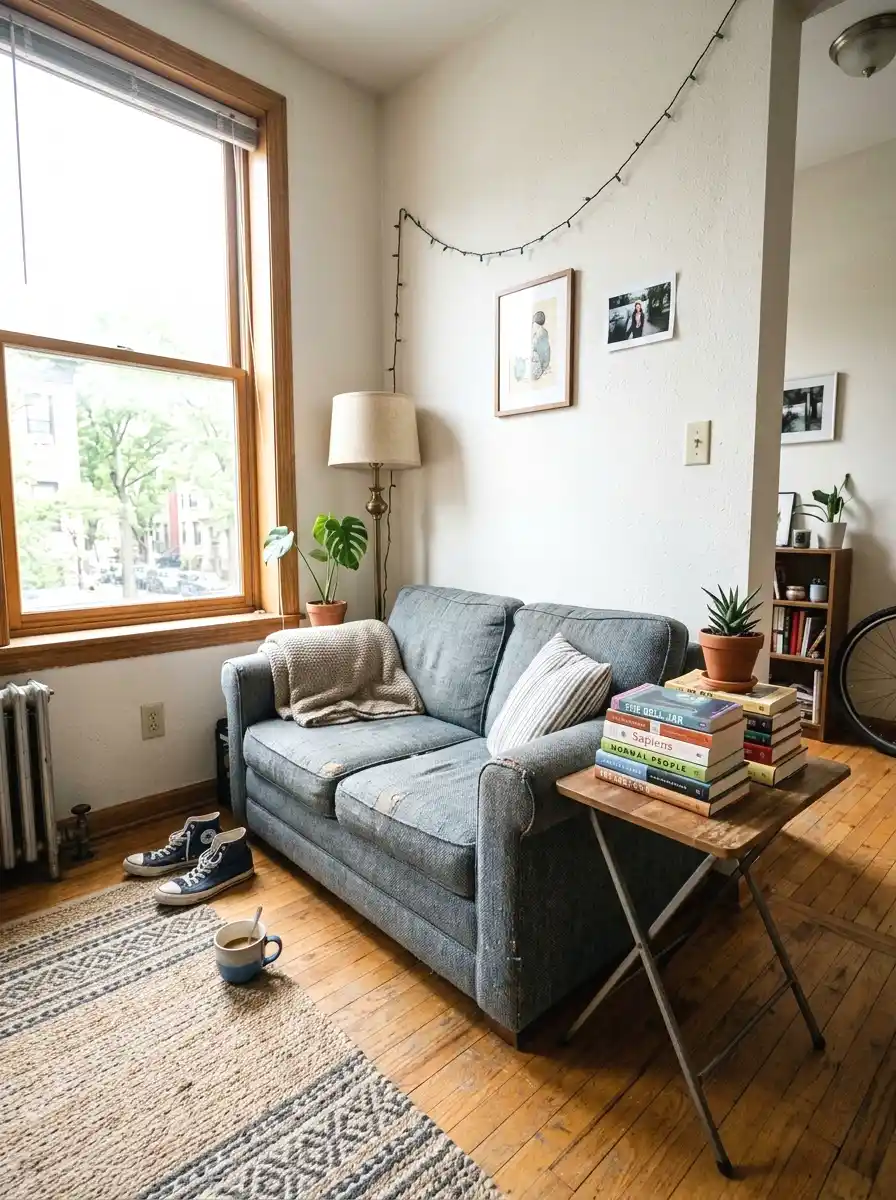
I made this mistake myself. I bought a coffee table before I had anywhere to sit. Buy seating first. A basic loveseat from Facebook Marketplace runs $50 to $100 if you’re patient and check listings daily. IKEA’s cheapest sofa, the Kivik, starts closer to $400, so used furniture saves real money here.
Your bed matters more than people think. A mattress on the floor works for a month, but your back will hate you. Walmart sells bed frames for $40 to $60, and a queen mattress on sale at Target can run $150 during a clearance event. That’s most of your budget gone right there, so plan around it.
Skip the dining table at first. A folding table from Home Depot costs $25 and works fine until you save up. Skip end tables too. Milk crates or a stack of books work as a side table, and nobody visiting will care.
Here’s what actually happens: people buy a full living room set on a payment plan and regret it within six months. Don’t finance furniture on a minimum wage budget. Buy used, buy slow, and upgrade later when your income changes.
More Ideas:



3. Lighting: The Cheapest Upgrade With the Biggest Payoff
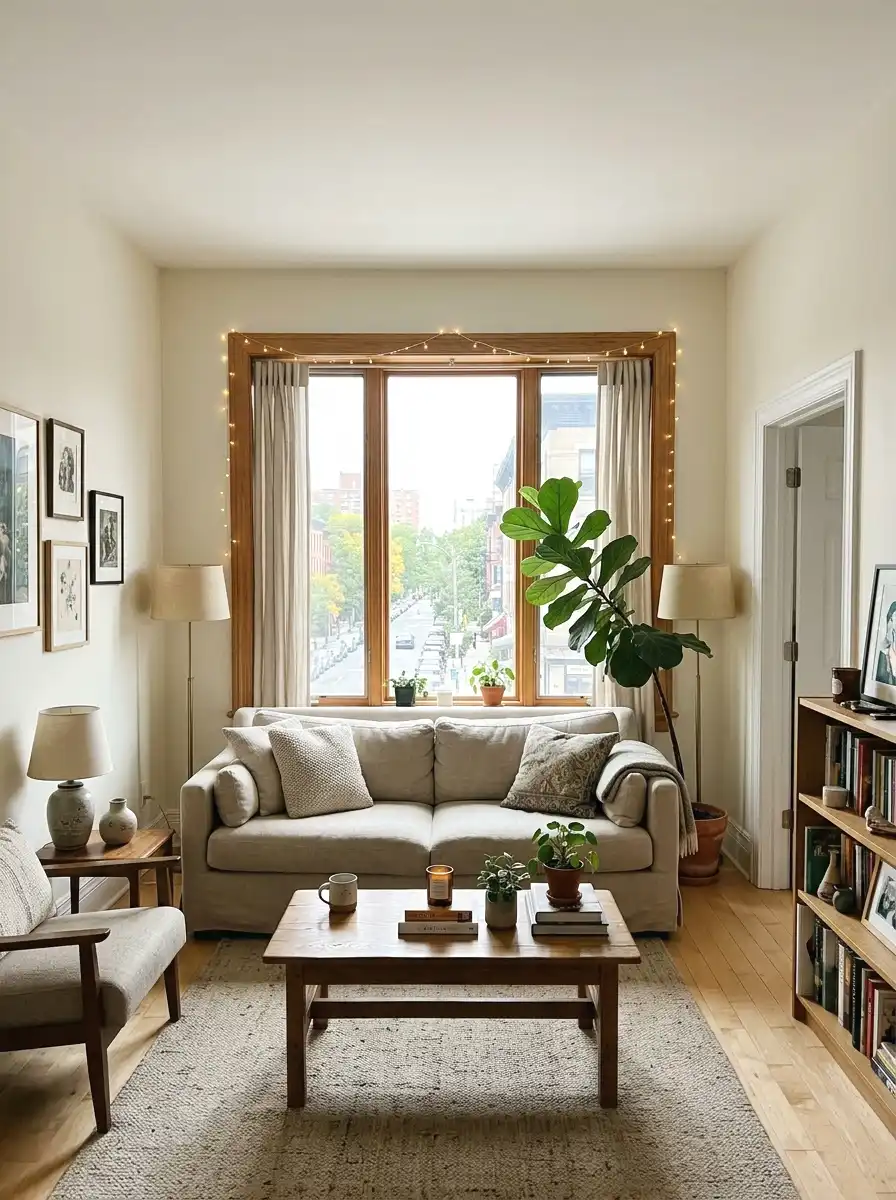
Overhead lighting in most apartments is harsh and unflattering. So the fix here is cheap. A floor lamp from IKEA costs $20 to $35 and changes how a whole room feels at night. Add a warm bulb, not a cool white one, and the difference is huge.
I was skeptical about this one but string lights actually work. A 20 foot strand costs $12 to $18 on Amazon and gives a room warmth without any wiring or landlord permission needed. Just don’t leave them plugged in overnight, that’s a fire risk nobody mentions.
Lamps beat ceiling fixtures for renters because you take them with you. Buy two or three small lamps instead of one big one. It spreads light around the room and hides the fact you don’t have furniture yet.
Here’s what nobody tells you: dimmer plugs exist for lamps and cost about $10. You don’t need to rewire anything. Just plug the lamp into the dimmer, plug that into the wall, and you control the brightness without touching your lease.
4. Storage and Organization: Small Space Solutions That Actually Work
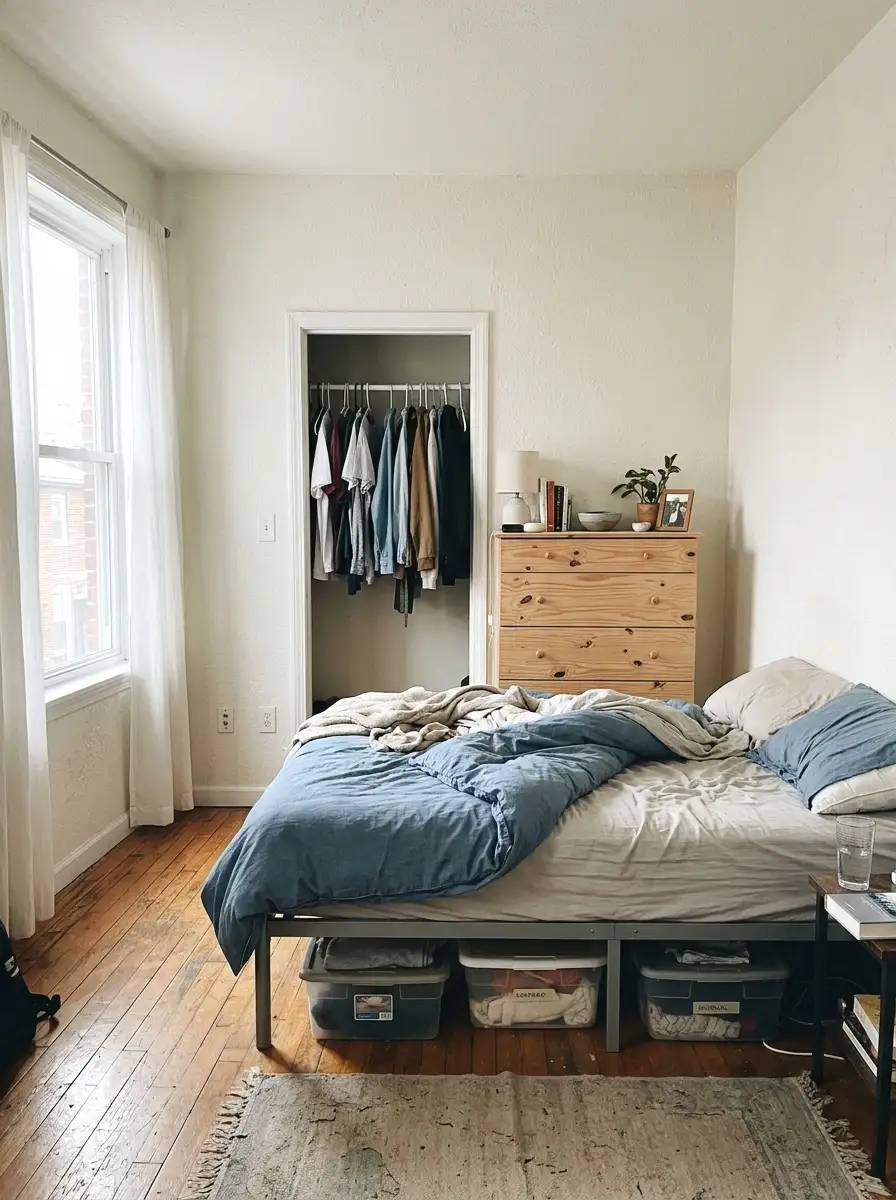
Renters underestimate how much storage costs. A basic dresser is not optional and skipping it means clothes on the floor for months. IKEA’s cheapest dresser, the Rast, runs about $50 unfinished, and painting it costs another $10 in supplies.
Under bed storage bins are the most underrated fix I know. A set of three from Target costs $25 and hides off season clothes, extra sheets, or shoes you don’t wear daily. This one is so underrated, and it took me ages to figure this out myself.
Closet organization matters more in small apartments. A tension rod from Home Depot costs $12 and adds a second hanging level without drilling anything. That alone can double your closet space in older apartments with tiny closets.
Declutter before you organize. It sounds backward, but buying storage for stuff you don’t need wastes money. Go through your things first, then buy bins and shelves for what’s actually left. This saves $30 to $50 in unnecessary storage purchases most renters make.
More Ideas:
5. Renter Friendly Wall Decor: No Drill, No Deposit Risk

Command strips are the backbone of renter decor. They hold picture frames, mirrors, and even small shelves without a single hole. A pack of the medium size costs $8 to $10 at Walmart and holds most decor items just fine.
Removable wallpaper is worth the splurge if you have $40 to spare. Peel and stick versions from Target or Amazon go up in an afternoon and peel off clean at move out. One accent wall usually costs $35 to $50 depending on the pattern you pick.
Tapestries are the cheapest wall fix I know. A large one costs $15 to $20 and covers a huge amount of wall space instantly. Hang it with a tension rod instead of nails, and it comes down in seconds when you move.
When I tried this in my own space, I skipped frames entirely and used washi tape to hang postcards and prints. It costs almost nothing, just your time, and it looks intentional instead of like an afterthought. Small moves like this add up to a real style without spending real money.
6. Common First Apartment Mistakes and How to Avoid Them
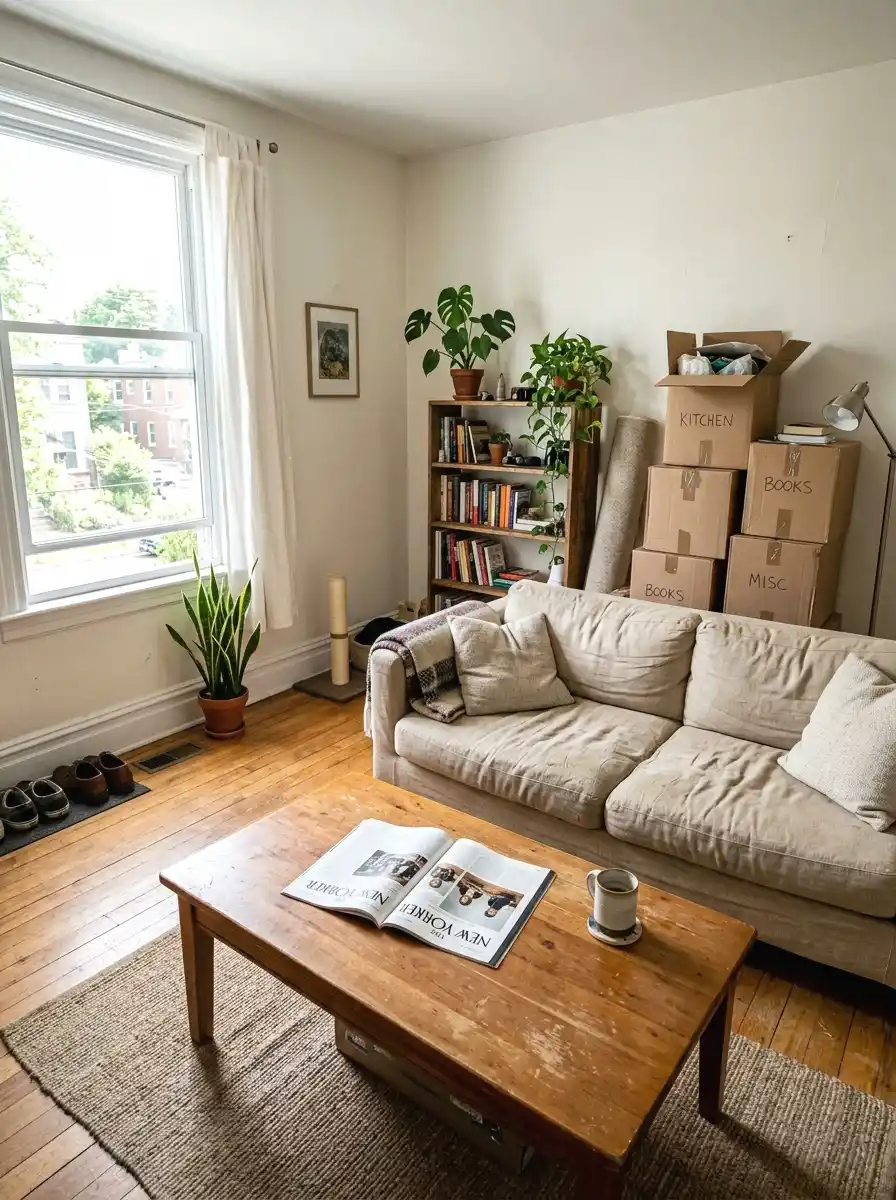
The biggest first apartment mistakes I keep seeing involve buying furniture too fast. People walk into a store, panic about the empty space, and buy whatever’s on sale. Slow down. An empty room for two weeks costs nothing.
Another mistake is skipping renters insurance to save money. It runs about $15 a month and covers your stuff if something goes wrong, way cheaper than replacing everything yourself. Skipping it to save $15 a month is not worth the risk if a pipe bursts.
People also forget resale value doesn’t apply to rentals the way it does to owned homes, but the furniture you buy still needs to hold up. Cheap particleboard furniture from bargain stores often falls apart within a year, so spending slightly more on solid wood pieces from a thrift store is usually the better long term investment.
Last mistake: painting without checking your lease. Some landlords allow it, most don’t, and repainting before you move out can cost you your full deposit. Ask first, always, before touching a wall with color.
More Ideas:
Quick Tips for Apartment Decor First-Time Renters
- Buy seating before decor, always, even if the room looks empty
- A 20 foot string light strand runs $12 to $18 and adds instant warmth
- Command strips hold up to 16 pounds without damaging walls
- Measure your space before buying furniture, a couch over 84 inches won’t fit most apartment doors
- Thrift stores often beat IKEA prices for solid wood pieces
- Keep receipts for anything over $50 in case you need to return it
- Budget $15 a month for renters insurance before buying decor
Final Thoughts on Apartment Decor for First-Time Renters
You now have a real plan instead of a panic buy. Start with furniture and lighting, add storage next, and let wall decor come last once the basics feel solid. That order alone avoids most first apartment mistakes people make.
Start with one lamp and a string light strand this weekend. See how much warmer the room feels before you spend another dollar on anything else.
If you want more ideas like this, homelypop.com has a lot more where this came from.
Frequently Asked Questions About First Apartment Mistakes
What’s the biggest mistake first-time renters make with decor?
Buying furniture too fast out of panic. Most people regret at least one purchase made in the first two weeks. Wait, measure your space, and check used listings before buying anything new or on a payment plan.
How much should a first apartment budget really cost?
Most renters spend $300 to $500 to get a functional apartment, not counting rent. That covers a bed frame, basic seating, lighting, and storage. Decor and extras can wait until your budget allows more.
Can you decorate an apartment without drilling holes?
Yes. Command strips, tension rods, and removable wallpaper let you decorate without touching the walls. These options protect your security deposit and come down clean when you move out.