

21 Beautiful Small Living Room With Dining Areas That Will Transform Your Home!

If you’ve ever tried to make a small space feel both stylish and functional, you already know how tricky it is to balance comfort, layout, and everyday practicality without the room feeling crowded. That’s exactly why I’ve become a little obsessed with the idea of a small living room with dining area, because when it’s done right, it changes the whole feel of how a home works and how people actually live in it.
Over the years, I’ve seen tiny apartments, compact homes, and even awkward floor plans turn into surprisingly beautiful spaces simply by rethinking how the living and dining zones work together. Many of these layouts also appear in smart space-saving apartment layout ideas, where every piece of furniture has to work twice as hard.
In this article, you’ll find 21 beautiful small living rooms with dining area ideas that show just how creative and elegant these combinations can be. This isn’t a step-by-step design guide, but a curated collection of inspiring spaces that reveal clever layouts, smart styling decisions, and the small details that make these rooms feel open, welcoming, and effortlessly put together.
By the time you finish scrolling through these ideas, you’ll start noticing just how much potential even the smallest living room can hold.
How to Implement It Immediately
- Use a small round dining table instead of a rectangular one so it takes less visual space and allows easier movement around the room.
- Place the dining table directly behind the sofa to naturally separate the living and dining zones without adding walls or bulky dividers. You can also explore creative divider ideas for open living spaces that separate zones without closing the room off.
- Choose dining chairs that slide fully under the table, or go with slim armless chairs to keep the area from feeling crowded.
- Add a single rug under the living area only to visually define the lounge space while keeping the dining side open and uncluttered.
- Install wall shelves or a slim sideboard near the dining area for storage so you avoid large cabinets that overwhelm a small room.
1. Go Round with Your Dining Table
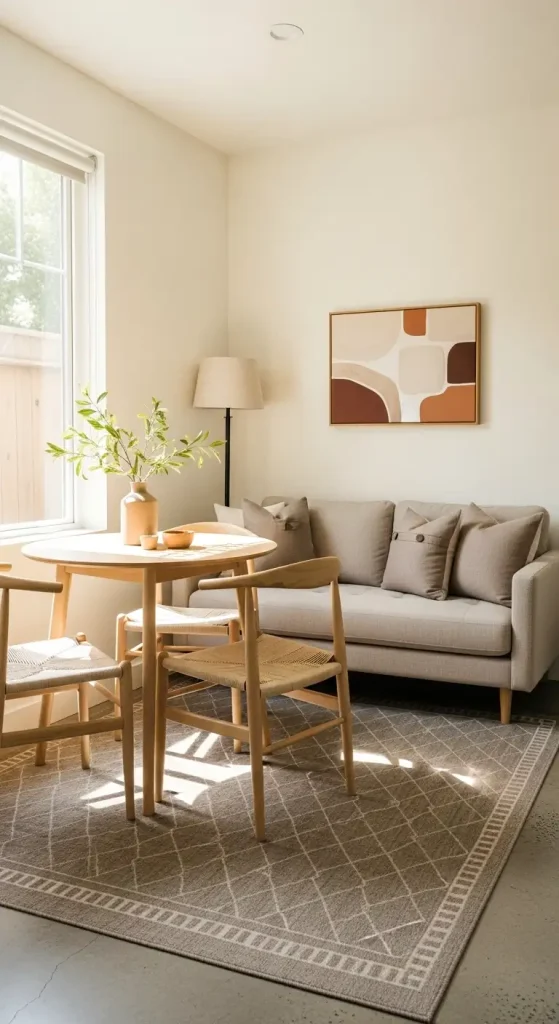
Round tables are a game-changer in tiny living-dining combos. I love how a 30-inch bistro table seats 2 to 4 people without sharp corners cutting into your walking path.
Real people swear by tucking them in corners or right behind the sofa – it keeps traffic moving and kills that cramped feeling you get with big rectangles. In apartments under 750 sq ft, this one choice opens up space you didn’t even know you had. Some homes even replace the table entirely with stylish kitchen island and dining combinations that merge cooking and dining zones.
2. You Need to Try a Banquette Setup

Picture an L-shaped bench hugging the wall, maybe tile-framed for easy cleaning, paired with a narrow table. It doubles as extra seating and dining without eating floor space.
People who added banquettes, some even convert them into daybeds, say it fits perfectly in 10×13 ft rooms and suddenly they can host more friends without stress. This feels custom but costs way less than you’d expect.
Love this luxury style? You’ll also like:
More Ideas:


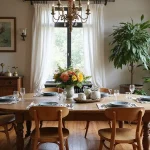
3. Zone with Rugs the Smart Way

Here’s the trick most people miss at first: use a smaller rug just under the dining area instead of one giant one covering everything. Dropping from an 8×11 ft rug to something more targeted carves out clear living and dining zones without needing walls or screens.
Throw a pendant light or big mirror above the table and the spaces feel separate but still connected. It keeps your open combo working for both TV nights and proper meals.
4. Stackable Chairs Are Your Best Friend

So many people buy bulky chairs that sit empty most days. Switching to stackable or rolling ones that tuck under the table or roll into a closet when not needed is such a simple fix.
Wayfair’s Lilian steel slat-back stackables get a lot of love because they’re affordable and actually look good. In small studios around 550 sq ft, this swap alone frees up room for kids to play or just some breathing space.
5. Float Your Sofa for Better Flow

Pushing everything against the wall actually makes rooms feel smaller – I know, counterintuitive. Try floating your sofa with its back toward the dining area so it defines the zones naturally.
Real people found that letting furniture sit close, even less than 1 ft between zones, creates way better flow and coziness than leaving big empty gaps. It’s one of those things that looks really intentional once you actually try it.
6. Multi-Purpose Pieces Save the Day

Lift-top coffee tables that convert to dining height, benches with removable boards for storage, modular sectionals you can rearrange, these are absolute lifesavers.
In tight 240-600 sq ft spaces, people who invested in convertible furniture cut clutter fast and made their combo room work twice as hard. You get TV seating by day and extra dining or guest spots by night without buying more stuff.
Love this luxury style? You’ll also like:
More Ideas:
7. Pick Neutrals with a Warm Twist

Stick mostly to neutral and monochrome palettes so the room doesn’t feel chaotic, then add warmth with taupe rugs, natural woven textures, or rising 2026 favorites like darker woods and travertine.
Grey marble tabletops on round tables look expensive but stay visually calm. One orange accent chair can pop without overwhelming everything – it’s subtle, but it makes the whole space feel alive. This warm palette also appears in cozy modern farmhouse living room inspiration that mixes neutral tones with layered textures.
What I’ve Learned Designing Small Living Rooms With Dining Areas
I’ve spent years figuring out how to make small spaces actually work, and if there’s one thing I’ve learned, it’s that a small living room with a dining area doesn’t have to feel cramped or awkward. When it’s designed well, it can feel even more intentional and cozy than a large open space. Many homeowners borrow inspiration from cozy French country living room ideas that balance comfort with elegance.
Most people think the biggest challenge is the lack of square footage. And honestly, that’s not the real problem. The real issue is how the space gets divided and how the furniture is chosen.
I made this mistake early on when I first started experimenting with small layouts in my own apartment. I tried squeezing in full-size furniture because I thought smaller pieces would make the room feel cheap or temporary. The result? Everything felt tight and uncomfortable.
Once I started approaching the space differently, everything changed.
Think in Zones, Not Separate Rooms
The first thing I always tell people is to think of the living and dining areas as zones instead of completely separate rooms. In a small space, the goal isn’t to force a hard divide. It’s to create a natural flow so both areas feel connected but still serve their purpose.
A few things that have consistently worked for me: use furniture that defines space – a small sofa, console table, or even a rug can quietly signal where the living area ends and the dining begins.
Choose compact dining setups, since round tables or narrow rectangular tables usually work better because they allow easier movement around them.
And keep visual weight light – furniture with slimmer legs, open bases, or lighter colors helps the room feel less crowded. These principles also show up in simple small living room decorating ideas that focus on layout and flow.
Avoid the Most Common Small-Space Mistake
One trick I learned the hard way is to avoid overfilling the room. When space is limited, every piece needs to earn its place. If something isn’t functional or doesn’t add to the layout, it probably doesn’t belong there.
A lot of people assume more furniture makes a space feel complete, but in a small living room with a dining area, the opposite is usually true. The more breathing room you leave between pieces, the more comfortable the space actually feels.
Use Lighting to Define Each Area
Lighting plays a bigger role than most people expect. A simple pendant light over the dining table instantly creates a dedicated dining zone without taking up any floor space at all. A floor lamp or wall lighting can anchor the living area and make it feel intentional.
Over time I realized something interesting. Small living room and dining combinations actually force you to be more thoughtful with design. You can’t rely on extra space to hide mistakes. Every decision matters.
But when you get it right, the space feels balanced, comfortable, and surprisingly stylish. And some of the most beautiful homes I’ve seen were the ones where the living room and dining area had to share the same space.
8. My Favorite Budget Hack for Core Pieces

You can pull off a solid bistro table plus chairs for under $500-$1,000 if you shop right. Think CB2’s Babylon 30″ round Toronto grey marble table or Target’s Threshold woven benches.
Homeowners on tight budgets said these affordable picks held up well and looked way pricier once styled. No need to drop $3k on a table set when options like these exist and honestly perform just as well.
9. Add a Pendant or Mirror to Define the Space

The fastest way to signal “this is the dining spot” without building anything? Hang a pendant light over the table or lean a big mirror nearby. It draws the eye and makes the zone feel like it belongs there.
People who tried this in awkward 14×10 ft layouts said it stopped the couch-TV-table battle and made meals feel intentional even in a small footprint.
10. Curved Furniture Changes Everything

A large curved or L-shaped sofa can actually make a small room feel bigger and more thought-through. It anchors the space without blocking paths and adds that cozy, wrapped-in vibe.
Real setups showed curved pieces work better than straight ones for flow in combo rooms. And honestly – this one is so underrated. Once you see it in person, you’ll wonder why everything isn’t curved.
11. Diagonal Placement Opens Up the Room

Placing furniture at a slight angle instead of squaring everything to the walls can completely change how a space reads. In tricky 10×13 ft or 14×10 ft layouts, angling the sofa or table creates natural paths and stops the room from feeling boxed in.
People who tried this said it made traffic flow smoother and the whole combo area look bigger without touching a single wall.
12. I Was Skeptical About Low Benches Blocking Windows

When I tried this in my own space, I genuinely thought it would look weird or make things darker. But a low banquette or bench right under a window creates the coziest reading nook or extra seating spot.
It doesn’t block light much at all, and people love how it turns dead window space into something actually useful. In small apartments, this adds function without stealing any square footage.
Love this luxury style? You’ll also like:
More Ideas:
13. Modular Sectionals Give You Flexibility

Modular sofas like the ones from Vetsak let you rearrange pieces whenever life calls for it. One day it’s a big L for movie nights, the next it’s split to open up better dining access.
People in 550 sq ft studios said this adaptability made hosting so much easier and kept the room from feeling stuck in one configuration. Worth the slightly higher price tag for how often it saves the situation.
14. Keep Tables Close – Less Than a Foot Apart

Here’s something that surprised a lot of people: letting your living and dining zones sit really close, even under 1 ft between them, actually improves flow and makes everything feel more lived-in.
Big empty gaps just waste space. The closeness creates something intentional instead. Real setups proved this beats the “leave breathing room” advice pretty much every time.
15. Add Storage Wherever You Can

Benches with built-in storage or removable boards under the table keep clutter out of sight. In combo rooms where storage is always tight, these multi-use pieces stop piles from taking over surfaces.
Homeowners said skipping hidden storage was their biggest regret, once they added it, the whole space felt calmer and more pulled together. It’s one of those things that seems minor until it isn’t.
16. Darker Woods and Travertine Are Heating Up

For 2025-2026, warmer and richer materials like darker woods, travertine stone, and marble are showing up everywhere in small spaces. Pair them with neutral bases so it doesn’t get too heavy.
Grey marble tabletops on round tables or travertine accents give a luxe feel without trying too hard. It’s a subtle material upgrade that makes budget setups look way more current.
17. Avoid Oversized Non-Modular Stuff

One mistake I keep seeing over and over: buying big, fixed furniture that overwhelms the room and blocks every natural path. In apartments under 750 sq ft, oversized pieces turn cozy into cramped really fast.
Stick to smaller, movable, or modular items so you can tweak the layout when life changes, it’s genuinely the difference between a space that works and one that stresses you out daily. This same rule applies in creative ideas for compact apartments where oversized furniture quickly overwhelms the room.
18. Layer Textures for Depth Without Clutter

Natural woven textures on benches or rugs, plus tufted or fringed accents on pillows, add real personality without making things feel busy. People layering thoughtful patterns in neutral palettes said it gave their small combo room warmth they couldn’t get any other way.
Took me ages to figure this out, by the way – start small with one or two textures and build from there. Don’t go all in at once. If you’re experimenting with textures and accents, browse inspiring living room decor concepts for more styling inspiration.
19. Total Budget Reality Check
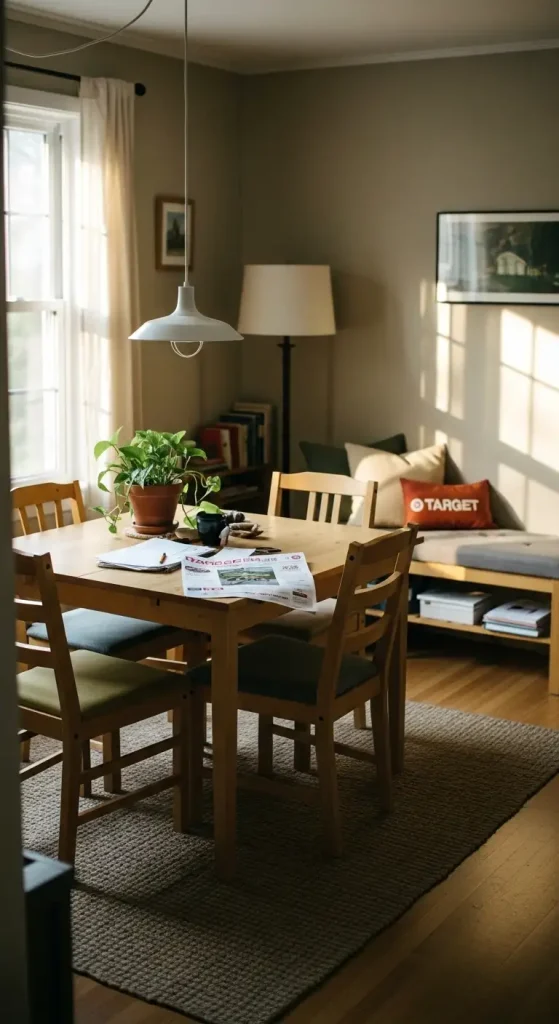
Most real homeowners land between $3,000 and $8,000 for the full setup – furniture, lighting, rug, and accents combined. You can split it smart: maybe $3k on the table and chairs, then $1k-$2k each on lighting and a rug.
Knowing this range upfront helps you plan without sticker shock, especially when affordable finds from Target or Wayfair keep the total in check.
20. Embrace the Open Plan with Subtle Dividers

The debate between permanent walls and fully open layouts goes on, but subtle zoning wins for most people. Rugs, pendants, or even art can divide without closing anything off.
Many were surprised by how well multi-use setups feel both intimate and practical at the same time. In small footprints, leaning into intentional open plans makes daily life easier and honestly a lot more enjoyable.
21. Round Tables Beat Rectangles Every Time

Round or oval dining tables really do maximize seating and movement in tight combo spaces – way better than rectangular ones. In real small footprints like 240-600 sq ft studios, people who switched said they could finally walk around without bumping hips on chair corners.
The lack of sharp edges preserves flow so nothing feels squeezed during meals or when guests are over. Simple shape, big difference. You can also explore stylish round dining table setups that work perfectly in small dining areas.


